Skip to content

Asking for a dress quote sounds simple. A brand sends a photo, asks for a unit price, and waits for a number. In real production, that number is only useful when the factory understands the dress clearly enough to estimate fabric consumption, sewing time, trims, lining, pattern work, sampling effort, quality risk, packing needs, and delivery expectations. A satin slip dress, a mesh bodycon dress, a corset mini dress, and a sequin evening dress may all be called “dresses,” but they do not carry the same cost logic.
Brands should send a clear dress type, reference images, tech pack if available, size chart, fabric direction, color plan, trims, quantity, target price, sample needs, launch date, private label requirements, packaging details, shipping destination, and any testing or compliance expectations before asking for a dress quote. The more complete the information, the more accurate and stable the quotation becomes.
The problem is not that brands ask too early. The problem is that many ask with the wrong information. One image can show the mood, but it cannot show fabric weight, lining, stretch direction, stitching method, grading rules, or carton packing. A serious quote is not only a price. It is the first test of whether a factory understands the product, the brand, and the production risk behind the design.
What Does a Dress Factory Need First?
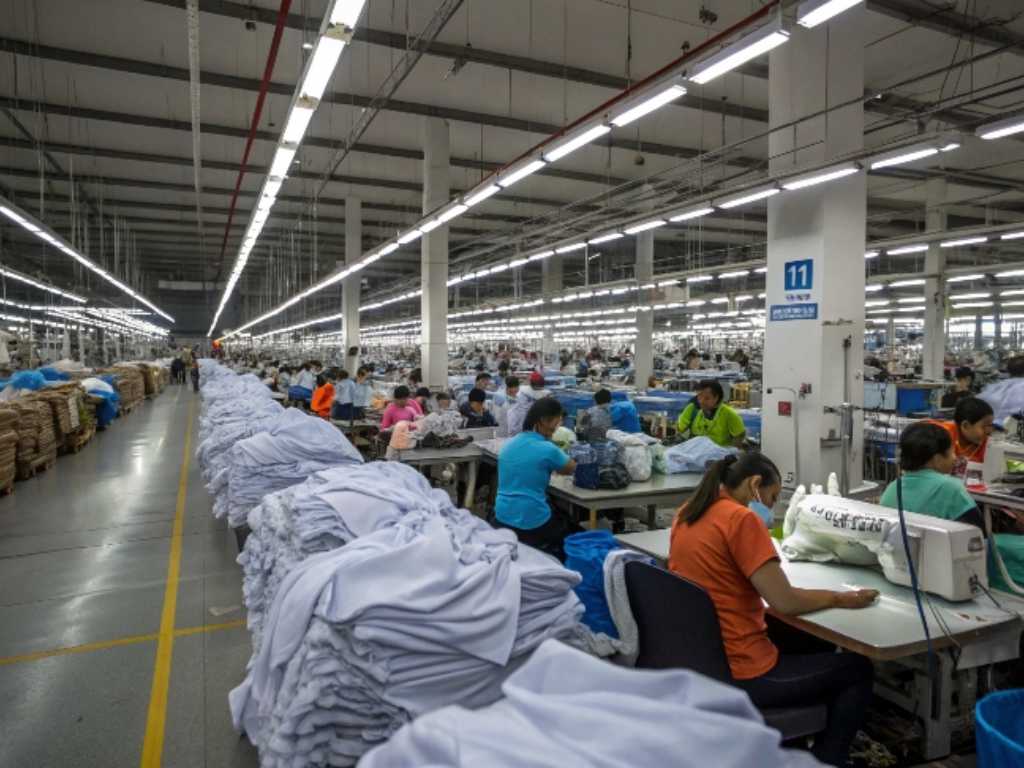
A dress factory first needs enough product information to judge whether the style can be quoted, sampled, or sent back for clarification. The most useful first files are dress type, front and back references, fabric direction, size range, quantity per color, sample purpose, target delivery date, and any known trims or packing needs. When these points are clear, the quote is closer to real production cost rather than a rough guess.
A dress quote should not begin with only one question: “How much is this?”
For most custom dress projects, that question is too early unless the factory knows what “this” means in production terms.
A photo can show style direction, but it does not show fabric weight, lining structure, zipper type, stitch method, inside finishing, size grading, color split, order volume, or packing method. These details decide whether a dress is simple, moderate, or high-risk to produce.
For example, two black mini dresses may look similar in a product image. One may be a single-layer stretch knit dress with basic overlock seams. The other may be a lined corset mini dress with boning, cups, invisible zipper, structured panels, and topstitching. The first one may be suitable for faster sampling and higher production efficiency. The second one may need pattern review, fit testing, trim confirmation, support structure testing, and stricter QC before bulk production.
Before asking for a quote, a brand should prepare enough information for the factory to answer five practical questions:
- Can the factory make this dress well?
- What fabric and trims are needed?
- How much work is involved in sampling and bulk production?
- Does the quantity match the production model and material MOQ?
- Can the required delivery date be achieved without increasing quality risk?
These questions are not paperwork. They protect cost accuracy, sample direction, launch timing, and future bulk consistency.
For a custom dress manufacturer, the first review usually separates inquiries into three levels.
| Inquiry Level | What the Brand Sends | What the Factory Can Provide |
|---|---|---|
| Early idea | 1–3 reference images, dress category, rough quantity, target market | Feasibility opinion and broad cost direction |
| Development ready | Reference images, fabric direction, size range, quantity per color, sample purpose, target date | More realistic quote range and sampling suggestions |
| Quote ready | Tech pack, size chart, BOM, fabric swatch, trim details, color plan, packing needs | Detailed quotation, sample cost, MOQ review, and production timeline |
The stronger the first inquiry, the fewer assumptions appear inside the quotation. A quote built on assumptions often changes later. A quote built on real product information is easier to trust, compare, and move into sampling.
What Is the Dress Type?
The dress type is the first piece of information a factory needs because it sets the production logic. A mini dress, midi dress, maxi dress, bodycon dress, corset dress, satin slip dress, resort dress, party dress, and evening dress do not use the same pattern rules, sewing time, fabric consumption, or QC focus.
A clear dress type helps the factory understand the basic product path before reviewing details. For example, a bodycon dress usually needs attention to fabric stretch, recovery, chest-waist-hip measurement, side seam balance, and size stability after wear or wash. A satin slip dress usually needs control over fabric slipping, seam puckering, neckline shape, strap length, and pressing marks. A corset dress often needs support structure, boning placement, cup position, lining, panel shaping, and stronger fit review.
A useful inquiry should name the dress type in a production-friendly way.
- Instead of writing “black dress,” write “lined black satin midi dress with side slit.”
- Instead of writing “party dress,” write “stretch mesh ruched mini dress with lining and adjustable straps.”
- Instead of writing “long dress,” write “printed chiffon maxi dress with full lining and back zipper.”
This small change helps the factory review the style faster. It also reduces the risk of receiving a price based on the wrong construction level.
If the style belongs to a collection, the category should be stated as well. Occasionwear, resortwear, clubwear, wedding guest, office dress, or premium ecommerce launch all have different expectations. A dress for a partywear drop may focus on visual impact and body fit. A dress for resortwear may focus on lightness, drape, print direction, comfort, and packing recovery. A dress for a retail-ready program may need stronger label, barcode, carton, and size-ratio control.
The factory does not only need to know what the dress looks like. It needs to know where the dress will be sold, how it will be worn, and what level of finish the brand expects.
Which Reference Files Help?
Reference files help a factory see the intended shape, proportion, detail, and finish. The most useful references are front view, back view, side view, close-up detail photos, inside construction photos, fabric photos, original sample photos, sketches, line sheets, or a short note explaining what should be kept and what should be changed.
One model photo is rarely enough for a serious quote. A model photo may hide the zipper, lining, back opening, inner support, hem finish, seam position, fabric thickness, and actual dress length. A factory may understand the mood but still need to guess the construction.
A stronger reference package usually includes:
| Reference File | What It Helps Confirm |
|---|---|
| Front image | Neckline, waistline, length, silhouette, main design |
| Back image | Closure, back coverage, strap structure, zipper position |
| Side image | Fit, slit height, drape, body shape, skirt balance |
| Close-up image | seams, trims, lace, buttons, ruching, hardware |
| Inside image | lining, cups, boning, seam finish, support structure |
| Fabric photo | texture, shine, transparency, stretch direction |
| Original sample photo | real construction and fit reference |
| Sketch or line sheet | collection plan, style code, colorway, range logic |
When sending reference files, the brand should explain the role of each file. A reference image may be used for silhouette only, neckline only, fabric mood only, or construction direction. Without a note, the factory may not know which part is important.
For example:
- “Please follow the neckline and waist shape from image 1, but use the back strap from image 2.”
- “The fabric should feel close to matte satin, not shiny bridal satin.”
- “We like the ruching direction, but the final dress should be less tight at the hip.”
- “This image is only for mood. We will adjust the design for our own brand.”
These short notes prevent confusion and protect the brand from receiving a quote based on the wrong interpretation. They also help the factory avoid copying another style too literally and instead build a custom version suitable for production.
What Is the Quote Purpose?
A factory needs to know why the quote is being requested. The same dress can be reviewed differently depending on whether the brand needs an early cost estimate, a sample quotation, a supplier comparison, or a confirmed bulk production price.
If the quote is for early planning, the factory can work with reference images, estimated quantity, and fabric direction. The result may be a price range, not a locked unit price. This is useful when the brand is building a collection budget or deciding whether a style is commercially realistic.
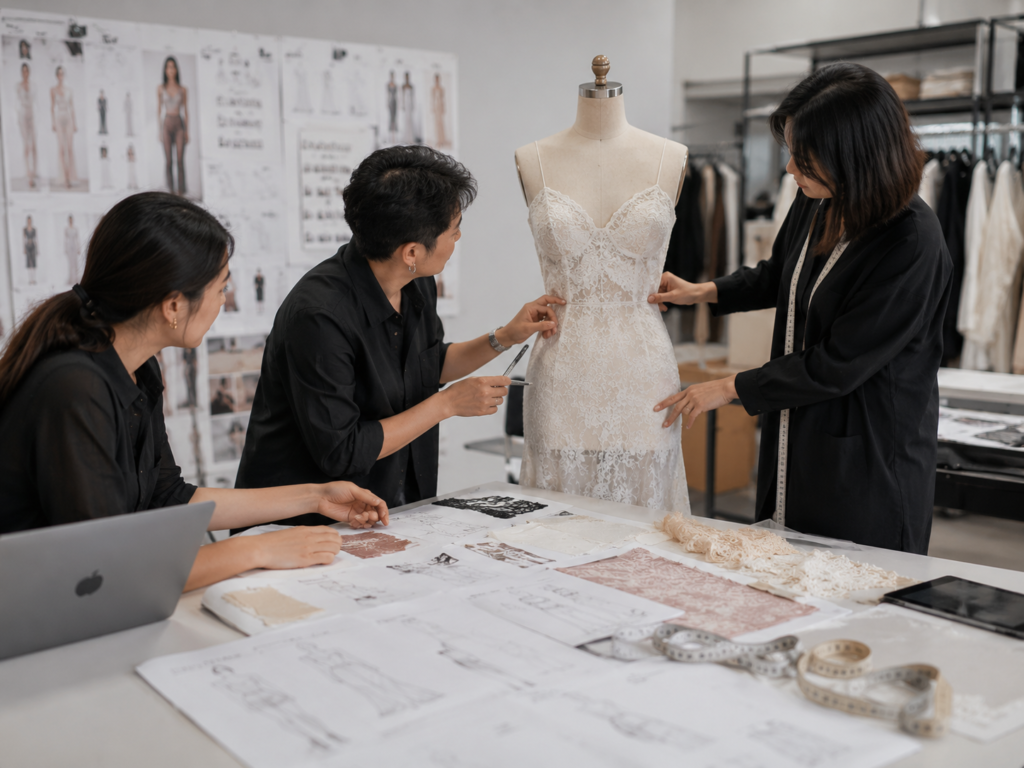
If the quote is for supplier comparison, the information must be more controlled. Every factory should receive the same files: same reference, same fabric direction, same quantity, same size range, same packing requirement, and same delivery destination. Otherwise, the quotes will not be comparable. One factory may quote without lining, another may include lining. One may quote basic packaging, another may include private label packing. The lower number may simply exclude important costs.
If the quote is for sampling, the factory needs to know the sample purpose. A first sample is used to test style and construction. A fit sample is used to test measurement and wearing effect. A photo sample must look strong enough for content, campaign, or sales presentation. A PP sample becomes the production standard before bulk. These samples do not carry the same requirements.
If the quote is for bulk production, the factory needs stronger files. The brand should send tech pack, size chart, BOM, trim details, approved sample comments, color plan, quantity breakdown, packing instructions, and delivery date. A bulk quote without these details can only be provisional.
A practical way to state quote purpose is:
- “We need an early cost range before deciding whether to sample.”
- “We are comparing factories for a 500 pcs first order.”
- “We need sample cost and estimated bulk price before tech pack finalization.”
- “We have an approved sample and need final bulk quotation.”
This helps the factory respond at the right level. It also makes the communication more efficient because the factory can avoid asking unnecessary questions or giving a price that does not match the decision stage.
Is the Style Ready for Sampling?
A style is ready for sampling when the factory can understand the target look, basic measurements, fabric direction, construction details, trim needs, and sample goal. It does not need to be perfect, but it must be clear enough to make a sample without too much guessing.
A dress is usually not ready for sampling if the brand only sends a mood image and says “make something similar.” That may work for a very early design discussion, but it is not enough for a controlled sample. Sampling needs decisions.
Before sampling, the brand should confirm at least:
- Dress type and length
- Front and back reference
- Fabric direction or fabric swatch
- Size range and base sample size
- Key measurements or target fit
- Lining requirement
- Closure method
- Major trims
- Quantity plan
- Sample purpose
- Target launch or delivery date
If these details are missing, the factory can still help, but the first stage may need to become product development rather than direct sampling. That means the factory may first review structure, suggest fabric, clarify trims, check MOQ, and recommend construction before making the sample.
For dress products, the base sample size is especially important. A sample made in XS will not show the same fit balance as a sample made in M or L. A bodycon dress needs stretch and recovery checked around bust, waist, and hip. A corset dress needs support and cup position checked carefully. A maxi dress needs length and hem balance checked on the expected wearer height.
Sampling should also consider production repeatability. A beautiful one-piece sample is not enough if the design cannot be made consistently in bulk. The factory should review whether the fabric can be sourced again, whether the trims are stable, whether the sewing process can be repeated, and whether the dress can pass inspection after production.
A simple readiness table can help brands judge their own files before sending an inquiry.
| Sampling Readiness Item | Ready | Needs Work |
|---|---|---|
| Dress type is clearly named | Factory can classify production route | Only says “dress” or “similar style” |
| Front and back views are available | Construction can be reviewed | Only one model image |
| Fabric direction is known | Material cost and risk can be estimated | No fabric type or hand feel |
| Base sample size is confirmed | Pattern can begin correctly | No size standard |
| Quantity plan is realistic | MOQ and cost can be reviewed | No order plan |
| Sample purpose is stated | Right sample standard can be used | No clear sample goal |
| Timeline is visible | Development route can be planned | Only says “urgent” |
A style does not need to be fully finished before contacting a factory. But the first inquiry should make clear which parts are confirmed and which parts need factory support. That honesty helps both sides work faster. It also prevents the common problem where a brand expects a firm quote while the factory is still guessing half of the product.
Which Product Details Affect Price?
Dress price is shaped by fabric, lining, trims, construction, decoration, size range, color count, quantity, sample work, packing, QC, testing, and delivery timing. A clear photo may show the look, but the final quote depends on what the factory must buy, cut, sew, press, inspect, pack, and repeat in bulk.
A dress quote is not built from the word “dress.” It is built from production details.
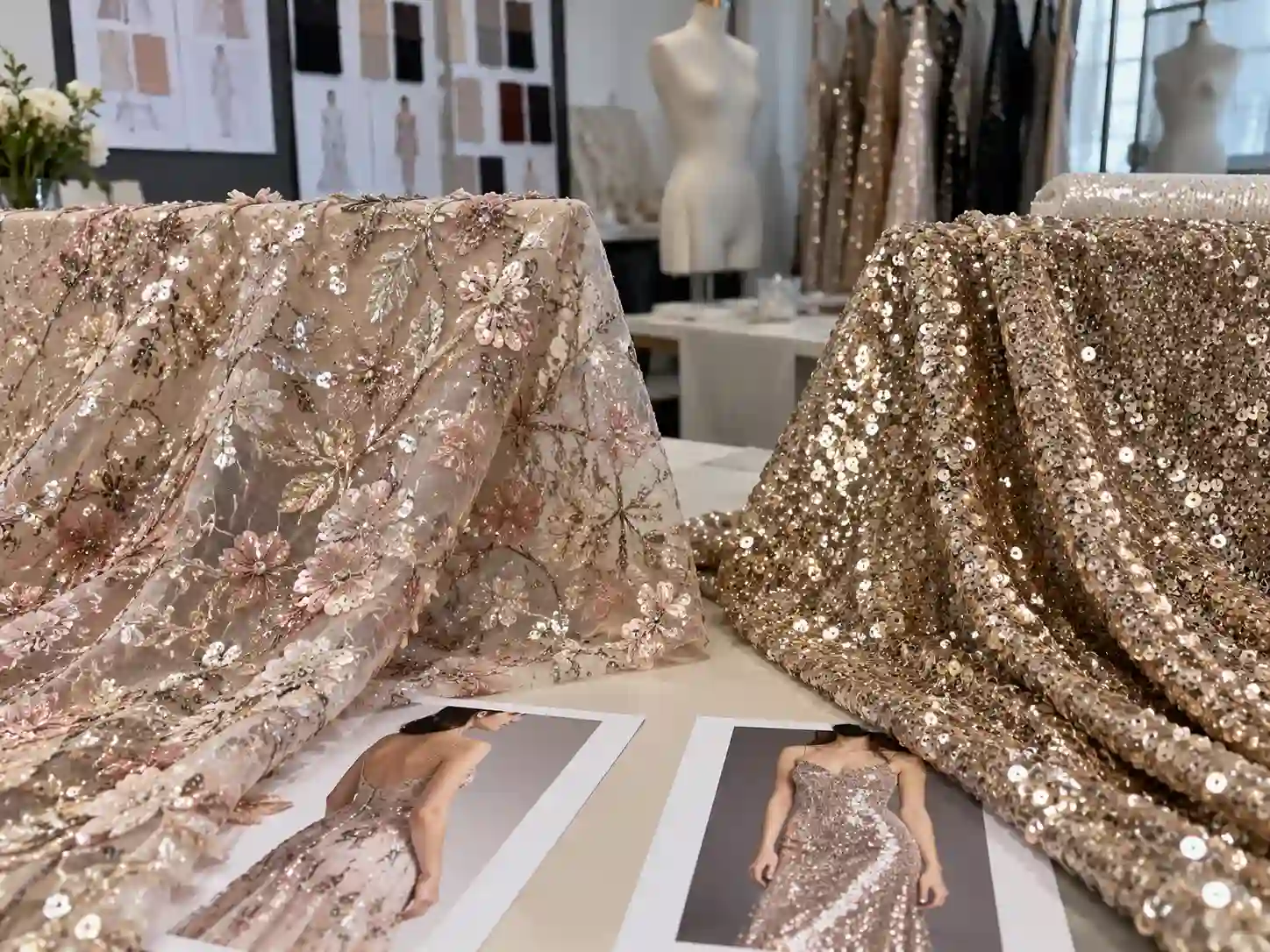
Two dresses may look close in a website image but sit in completely different cost levels. A single-layer jersey bodycon dress may be fast to cut, sew, press, and pack. A satin corset mini dress may need multiple panels, lining, cups, boning, invisible zipper, fit adjustment, pressing control, and slower sewing. A sequin dress may use a simple silhouette but still cost more because cutting is slower, seams are thicker, needle breakage is more common, and packing must protect the surface.
The most common quoting mistake is sending only a front image and expecting a stable unit price. The front image may hide the back zipper, inner lining, bust support, elastic, hem finish, fabric thickness, or decoration method. When these details are missing, a factory can only quote from assumptions. Assumptions often change after sampling.
A useful quote request should make price drivers visible before the first number is given. For dress production, the main price drivers usually fall into five groups: material cost, labor cost, development cost, risk cost, and delivery cost.
| Cost Area | What Affects It | What to Send Before Quote |
|---|---|---|
| Fabric cost | Fabric type, weight, width, stretch, consumption, color, MOQ | Fabric swatch, fabric name, GSM, composition, target hand feel |
| Trim cost | Zipper, lining, cups, boning, buttons, labels, hangtags, packaging | Trim list, photos, color, quality level, placement |
| Labor cost | Panels, layers, ruching, pleats, corset structure, decoration | Front/back views, inside photos, construction notes |
| Development cost | Pattern work, first sample, fit sample, revision, PP sample | Tech pack, size chart, fit notes, sample purpose |
| Risk cost | Satin marks, mesh tearing, lace matching, sequin damage, shrinkage | Fabric details, quality standard, testing needs |
| Delivery cost | Urgent timeline, split shipment, packing, carton method, destination | Launch date, warehouse date, shipping method, packing guide |
A lower quote is not always a cleaner quote. Sometimes it only means several costs have not been included yet. A reliable dress quote should show what has been assumed and what still needs confirmation.
For example, if a quote does not mention lining, it may not include lining. If packaging is not discussed, the price may only include basic folding. If the sample purpose is not clear, the sample fee may not cover fit correction or PP standard development. If the size range is missing, grading and fabric consumption may be underestimated.
A better way to read a dress quote is to ask: “What exactly has been included in this number?”
| Question to Check | Why It Matters |
|---|---|
| Is the quoted fabric confirmed or assumed? | Different fabrics can change both cost and production risk. |
| Does the quote include lining? | Full lining, partial lining, and no lining create different material and labor costs. |
| Are trims included? | Zippers, cups, boning, labels, and packing materials add real cost. |
| Is the quantity per color clear? | MOQ and fabric buying are usually calculated by style and color. |
| Is the sample cost separate? | Sample work often includes pattern, fabric preparation, sewing, checking, and communication. |
| Are private-label items included? | Labels, hangtags, barcode stickers, polybags, and cartons affect the final garment cost. |
| Is the lead time realistic? | Rush production may limit fabric choices or increase operational pressure. |
The goal is not to make every dress cheaper. The goal is to control cost without weakening the final appearance, fit, comfort, or delivery reliability.
What Is the Fabric Direction?

Fabric direction is often the largest visible cost driver, but the name alone is not enough. “Satin,” “mesh,” “lace,” “jersey,” and “chiffon” are broad words. Each one can include many grades, weights, stretch levels, surface finishes, and supplier MOQ rules.
For a useful quote, the factory needs more than the fabric category. It needs to know composition, approximate weight, width, stretch direction, transparency, hand feel, surface shine, drape, shrinkage risk, color requirement, and whether the fabric is stock, dyed, printed, certified, or specially developed.
A satin slip dress can use lightweight shiny satin, matte satin, stretch satin, thick satin, acetate satin, recycled polyester satin, or silk-like satin. The garment name may stay the same, but fabric consumption, sewing difficulty, pressing risk, color stability, and cost can change sharply.
| Fabric Detail | Why It Affects Price |
|---|---|
| Composition | Polyester, viscose, cotton, nylon, elastane, recycled fibers, and blends carry different costs. |
| Weight | Heavier fabric usually costs more per meter and may affect shipping weight. |
| Width | Narrower width can increase fabric consumption and cutting waste. |
| Stretch | Stretch fabric needs recovery testing and fit control. |
| Transparency | Sheer fabric may require lining or double-layer construction. |
| Color | Custom dyeing may increase MOQ and lead time. |
| Surface | Satin, velvet, sequin, and lace need slower handling and stronger QC. |
| Certification | OEKO-TEX, recycled, organic, or other fabric requirements may affect sourcing and price. |
A strong inquiry can say:
- “Matte stretch satin, medium weight, soft drape, not too shiny, suitable for a lined midi dress.”
- “Power mesh with good recovery, semi-sheer, for ruched bodycon styles.”
- “Lightweight printed chiffon, soft hand feel, full lining required, suitable for resort maxi dresses.”
These details allow the factory to suggest realistic fabric options instead of guessing from a photo. If fabric has not been finalized, sending a target hand feel, fabric swatch, or competitor fabric reference helps the factory match a practical production route.
Which Trims Are Needed?
Trims look small on a product page, but they can change price, sample timing, comfort, and bulk quality. A dress may need invisible zipper, metal zipper, buttons, hook and eye, adjustable strap sliders, elastic, bra cups, boning, underwire, anti-slip tape, lining, lace trim, rhinestones, sequin trim, woven labels, care labels, size labels, hangtags, barcode stickers, polybags, and cartons.
Every trim has a specification. A zipper has length, color, tape quality, puller style, and smoothness. A bra cup has size, thickness, shape, softness, and placement. Boning has width, flexibility, end finish, and comfort risk. A woven label has size, yarn quality, edge finish, color accuracy, and skin feel.
A quote request should not simply say “with zipper” or “with label.” It should explain what kind of zipper or label is needed.
| Trim Type | Cost and Risk Point |
|---|---|
| Invisible zipper | Length, smoothness, color matching, side or back placement |
| Metal zipper | Higher trim cost, weight, visual finish, skin contact |
| Bra cups | Cup size, softness, support level, sewing position |
| Boning | Structure, comfort, end protection, panel alignment |
| Adjustable straps | Slider quality, color match, strap width |
| Lace trim | Width, pattern, edge quality, placement, matching |
| Rhinestones or beads | Application method, density, handwork, loss risk |
| Labels and hangtags | Artwork, material, MOQ, approval time |
| Polybags and cartons | Thickness, size, barcode, carton mark, warehouse rule |
A structured dress with cups and boning cannot be quoted like a simple cami dress. A private-label order with woven labels, care labels, hangtags, barcode stickers, and carton marks cannot be quoted like an unbranded sample.
The safest approach is to send a trim sheet or simple trim table. Even if some trims are not final, mark them as “to be confirmed.” That helps the factory separate confirmed cost from pending cost.
How Complex Is the Construction?
Construction decides labor time. Labor time decides much of the unit price. A clean dress with few panels and a simple seam path is faster to produce. A dress with ruching, pleats, corset panels, cut-outs, lace placement, layered mesh, boning, lining, or hand decoration needs more development and slower sewing.
A factory will usually review construction through three questions: How many steps are needed? How hard is each step to repeat? How much checking is needed before packing?
A bodycon dress may look simple, but if the fabric has high stretch and strong recovery requirements, the sewing team must control tension, side seam balance, neckline stretch, hem waviness, and measurement after wear or wash. A satin dress may have fewer seams, but every stitch mark and pressing mark becomes more visible. A lace dress may need edge placement, pattern matching, lining color review, and careful trimming. A corset dress may need panel control, bust support, boning channel, cup positioning, zipper stability, and fit testing.
| Construction Detail | Typical Cost Impact |
|---|---|
| Full lining | More fabric, cutting, sewing, pressing, and inspection |
| Double-layer mesh | More cutting and alignment control |
| Ruching | More sewing time and symmetry checking |
| Corset structure | More pattern work, support trims, fitting, and QC |
| Pleats | More preparation, pressing, and position control |
| Cut-outs | More edge control and fit risk |
| Lace placement | More matching, cutting, and seam planning |
| Slit | More reinforcement and length control |
| Strapless neckline | More support structure and fit testing |
| Low back | More balance control and coverage review |
A strong quote request should show front, back, side, and detail views. Inside construction photos are especially valuable. If the dress has lining, cups, boning, zipper, inner elastic, facing, binding, or special seam finish, include close-up images or short notes.
When construction details are not shown, a factory may quote the simplest version. That price may look attractive, but it may not match the product the brand expects.
Are Special Processes Required?
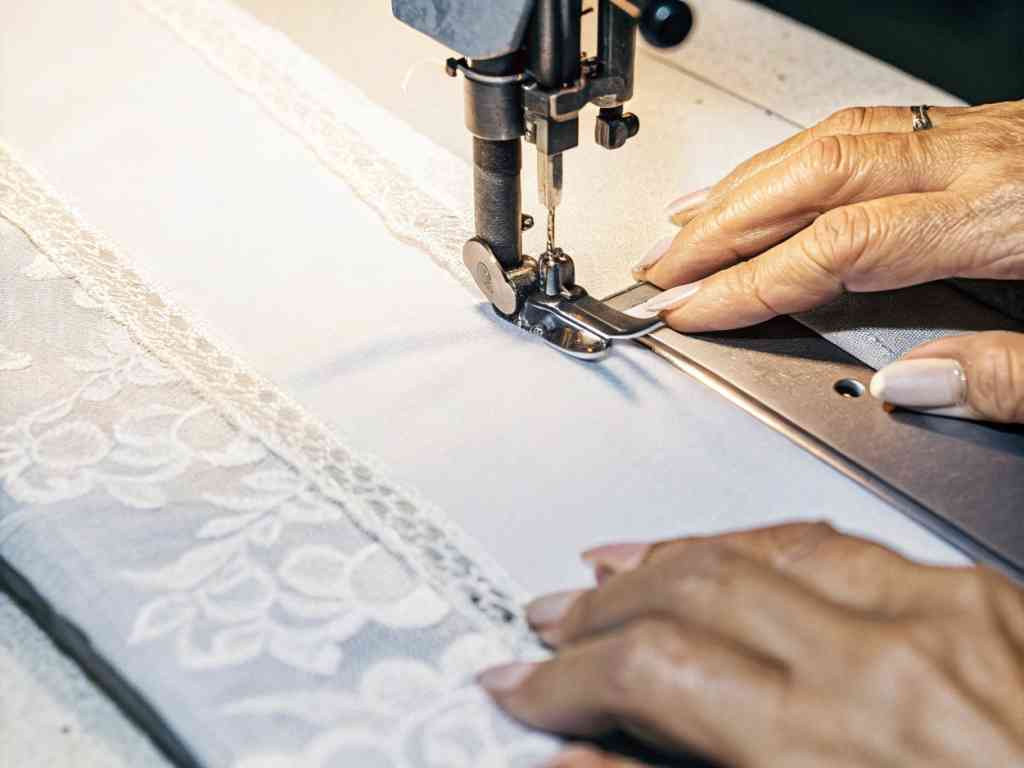
Special processes often create the biggest gap between a quick quote and a real quote. Printing, embroidery, pleating, garment dyeing, washing, hand beading, rhinestone application, sequin placement, lace appliqué, bonding, laser cutting, and special finishing may require extra suppliers, artwork approval, testing, sampling, and production sequencing.
A special process is not only a visual detail. It changes the order of production.
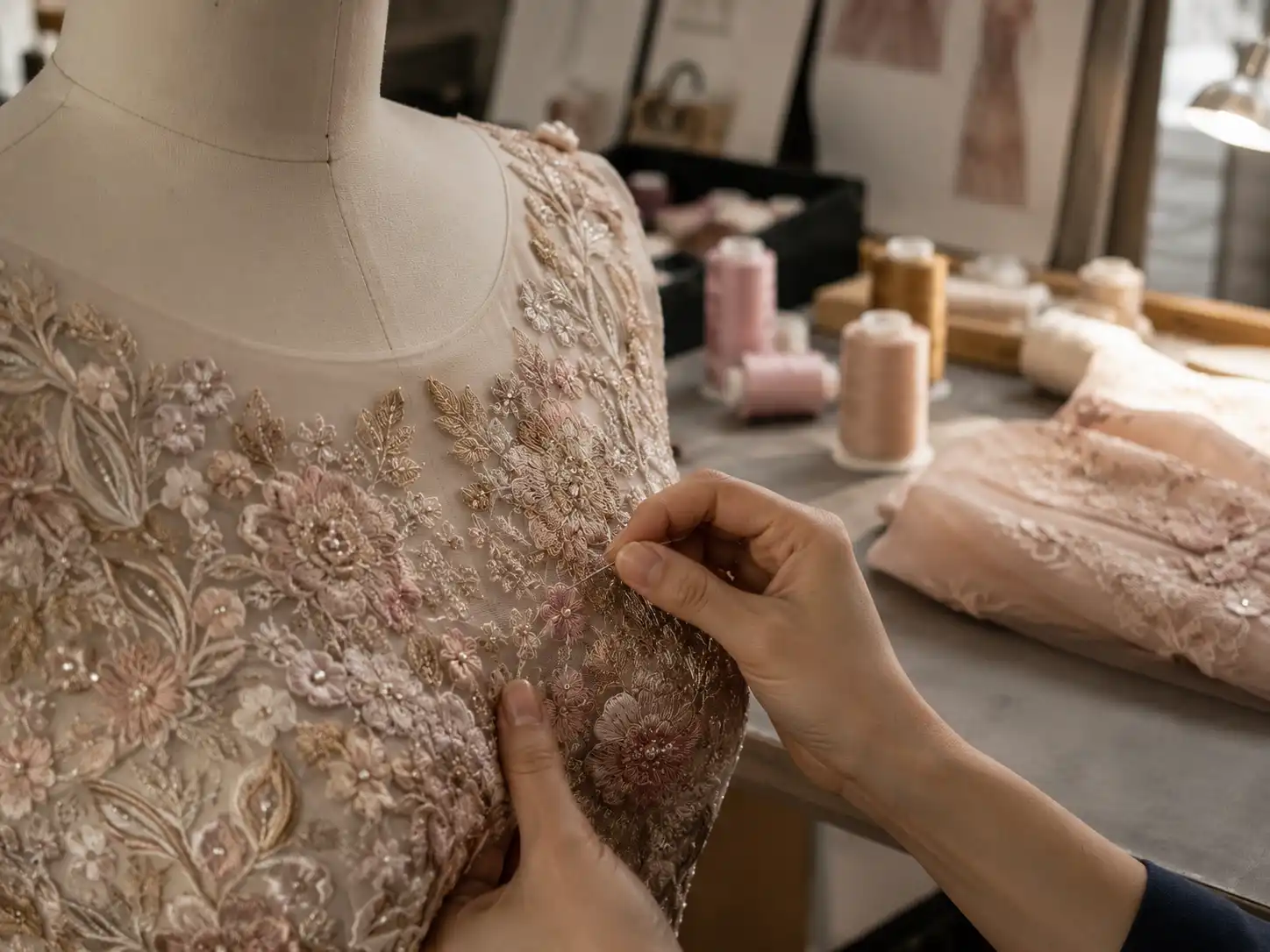
Placement print may need artwork size, fabric test, color strike-off, panel positioning, and cutting alignment. Embroidery may need stitch count, thread color, backing choice, and placement confirmation. Pleating may need fabric testing before cutting. Beading and rhinestones may need attachment method, density, weight review, skin comfort review, and inspection after packing.
| Special Process | Information Needed Before Quote |
|---|---|
| Artwork file, size, color, placement, repeat, fabric base | |
| Embroidery | Artwork, stitch area, thread color, backing, density |
| Pleating | Pleat type, width, direction, fabric suitability |
| Rhinestones | Size, density, placement, heat-set or hand-applied method |
| Beading | Bead type, weight, spacing, handwork level |
| Sequins | Fabric type, sequin size, seam method, lining need |
| Garment dyeing | Fabric composition, shrinkage tolerance, color target |
| Washing | Wash effect, shrinkage control, hand feel, color change |
| Lace appliqué | Placement, edge finish, sewing method, repeatability |
A photo of a beaded dress does not show bead size, weight, density, stitch method, or whether the beadwork can survive bulk packing. A print mood image does not show whether artwork is ready, whether colors are Pantone-matched, or whether the print must align across seams.
If special processes are involved, the quote request should include artwork files, placement drawings, size specs, process notes, and expected durability level. If files are not ready, ask for an estimated process range rather than a final cost.
Special processes can be valuable, but they should be controlled early. Otherwise, the sample may look exciting while the bulk price, lead time, or QC risk becomes difficult later.
What Technical Files Should Brands Send?
Brands should send a tech pack, size chart, BOM, reference images, fabric swatch, trim card, label artwork, packaging requirements, target price, and launch date before asking for a dress quote. When these files are complete, a factory can review structure, fabric, trims, pattern work, sample cost, bulk price, MOQ, and timeline with far fewer assumptions.
Technical files turn a dress idea into production language. A product image may show the mood, but a factory still needs measurable information: garment length, bust, waist, hip, neckline depth, strap width, lining length, zipper position, fabric composition, trim placement, stitching method, colorway, packing method, and tolerance.
For custom dress production, technical files do three jobs.
- They reduce guessing before quotation.
- They protect the intended fit and construction during sampling.
- They create a clear production standard before bulk work begins.
A strong file set does not need to be over-designed. It needs to be clear enough for a pattern maker, fabric team, sampling room, quotation team, QC team, and packing team to understand the same garment in the same way.
A dress quote based on incomplete files often becomes a temporary estimate. A quote based on complete files is easier to compare, approve, and move into sampling. The difference is important because many dress costs are hidden inside small technical choices: lining, cups, boning, zipper, hem finish, seam allowance, fabric width, stretch direction, decoration placement, carton packing, and size grading.
| Technical File | Main Purpose | Impact on Quote Accuracy |
|---|---|---|
| Tech pack | Shows design, measurements, BOM, construction, labels, packing notes | Very high |
| Size chart | Defines garment measurements, base size, grading, tolerance | Very high |
| BOM | Lists fabric, lining, trims, labels, packaging materials | Very high |
| Reference images | Shows visual direction, proportion, detail, and styling | Medium to high |
| Original sample | Provides real garment structure, fit, measurements, and finishing | High |
| Fabric swatch | Confirms hand feel, weight, stretch, color, transparency | High |
| Trim card | Confirms zipper, buttons, cups, boning, elastic, labels | High |
| Label artwork | Confirms private-label requirements | Required for private label |
| Packaging guide | Confirms polybag, carton, barcode, SKU, folding, warehouse rules | Required for retail or ecommerce |
| Target price | Helps match fabric, trim, and construction choices to budget | High |
| Launch date | Supports sample, PP sample, bulk, packing, and shipping planning | High |
A factory can begin with different levels of information, but each level leads to a different type of response.
| File Completeness | Factory Review Path | Expected Result |
|---|---|---|
| Complete tech pack + size chart + BOM | Structure review, material review, quotation, pattern development | Detailed quote and sample plan |
| Incomplete tech pack | Missing measurements, fabric, trims, construction, labels, and packing notes are clarified first | Quote range or partial quote |
| Reference image only | Style structure analysis, fabric direction, measurement clarification | Early feasibility review |
| Original sample available | Sample measurement, construction breakdown, pattern conversion | Strong development path |
| Sketch only | Product direction is converted into technical details | Development support before quote |
| Line sheet available | Styles are grouped by fabric, category, priority, and launch plan | Collection-level quote planning |
| Fabric swatch available | Fabric behavior is reviewed before pattern and construction decisions | Better material and fit judgment |
| Very little information | Only broad review is possible | No precise quote or formal sample plan |
Technical documents do not slow the process. Poor files slow the process. Missing measurements, unclear fabric, vague trims, and no packing requirements can add days of back-and-forth before the first sample even starts. A clean file set often saves more time than rushing a quote.
Do You Have a Tech Pack?
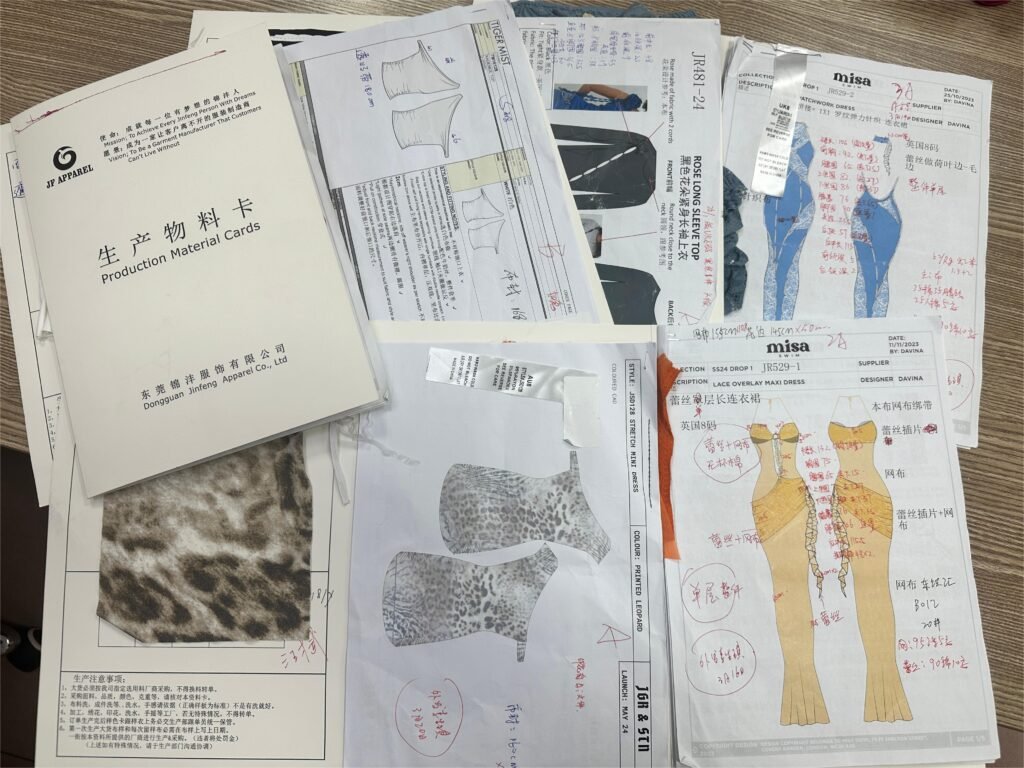
A tech pack is the main production file for a custom dress quote. It should show the design clearly enough for a factory to understand the garment before cutting fabric or making a pattern.
For dress production, a useful tech pack usually includes style name, style code, flat sketch, front view, back view, detail views, colorways, base size, size chart, points of measure, tolerance, fabric information, trims, construction notes, stitching notes, lining details, label placement, packing notes, and revision history.
A dress tech pack should not only show the outside. Many important costs sit inside the garment. If a mini dress has a built-in bra cup, boning, power mesh lining, invisible zipper, or anti-slip tape, those details must appear in the file. If a satin slip dress has French seams, narrow straps, side slit, bias cut, or partial lining, those notes affect sewing time and risk.
| Tech Pack Section | What to Include | Why It Matters |
|---|---|---|
| Style information | Style name, code, category, season, collection | Keeps project files organized |
| Flat sketch | Front and back technical sketch | Shows shape without model distortion |
| Detail views | Neckline, zipper, strap, slit, ruching, lining | Reduces missing construction details |
| Fabric notes | Composition, weight, stretch, width, color, finish | Supports material quotation |
| Construction notes | Seam type, hem finish, lining method, support structure | Supports labor and risk review |
| Measurements | POM, base size, grading, tolerance | Supports pattern and fit planning |
| Trims | Zipper, cups, boning, buttons, labels, hangtags | Supports material and MOQ review |
| Packing notes | Polybag, barcode, carton mark, folding | Supports final delivery cost |
A weak tech pack often looks polished but lacks factory-useful detail. Beautiful presentation pages are not enough if the file does not show measurements, material specs, inner structure, or trim placement. A clean Excel or PDF tech pack with accurate information is more useful than a visually impressive file with missing production data.
For early-stage designs, a draft tech pack is still valuable. Mark unknown items clearly with “to be confirmed.” A factory can then separate confirmed cost from pending cost. For example, fabric may be open, but size range and construction may already be confirmed. That distinction helps the quote stay practical.
Is There a Size Chart?
A size chart is one of the most important files for dress development because fit errors usually cost more than document preparation. A dress can look correct on a hanger and still fail on the body if bust, waist, hip, length, neckline, strap, slit, or hem measurements are unclear.
A good size chart should include base size, full size range, points of measure, garment measurements, tolerance, and grading rules. For stretch dresses, the chart should also consider fabric recovery, negative ease, and fit intention. For woven dresses, ease, lining length, zipper placement, and movement allowance become more important.
| Dress Measurement | Why It Should Be Confirmed |
|---|---|
| Bust | Controls chest fit, support, and wearing security |
| Underbust | Important for corset, bustier, and structured dresses |
| Waist | Controls body proportion and sample balance |
| Hip | Critical for bodycon, midi, sheath, and fitted styles |
| Front length | Controls visual length and size balance |
| Back length | Helps avoid uneven hem and poor back fit |
| Strap length | Affects neckline, bust coverage, and comfort |
| Neckline depth | Controls coverage and brand fit standard |
| Armhole | Affects comfort and body movement |
| Slit height | Affects appearance, walking comfort, and risk |
| Hem sweep | Controls movement, drape, and fabric consumption |
| Lining length | Prevents lining exposure and transparency issues |
Many dress sampling problems come from unclear size standards. US, UK, EU, AU, alpha sizes, plus sizes, petite, and tall ranges can follow different expectations. A factory should not be asked to guess the target fit from a reference photo alone.
If a brand already has a proven fit block, send it. If a prior dress sold well, share its measurement chart or physical sample. If returns often happen around bust, waist, hip, length, or strap fit, mention those points before sampling. Fit history helps avoid repeating the same problem in a new style.
Tolerance should also be included. A realistic tolerance tells QC how much variation can be accepted in bulk. A common mistake is setting every measurement too tight without considering fabric stretch, sewing method, and pressing. Overly narrow tolerance may create unnecessary rejection risk. Overly loose tolerance may lead to inconsistent fit. The size chart should balance brand standard with production reality.
What Should the BOM Include?
A BOM, or bill of materials, lists every material needed to make, finish, label, pack, and ship the dress. It is one of the clearest ways to prevent hidden costs.
A dress BOM should include shell fabric, lining, interlining, zipper, buttons, hooks, elastic, cups, boning, wire, lace trim, mesh panels, thread, labels, hangtags, hang strings, barcode stickers, polybags, tissue paper, carton, and any special packaging item. Each item should have material, color, size, placement, supplier code if available, and status.
| BOM Item | Information to Add | Common Risk if Missing |
|---|---|---|
| Shell fabric | Composition, weight, width, color, supplier | Wrong hand feel or price change |
| Lining | Fabric type, color, length, stretch | Transparency or comfort issue |
| Zipper | Type, length, color, placement | Bulging, poor match, wrong closure |
| Cups | Size, shape, thickness, position | Poor bust support |
| Boning | Type, length, channel placement | Discomfort or weak structure |
| Elastic | Width, stretch, placement | Tightness or loose recovery |
| Lace trim | Width, pattern, color, placement | Poor matching or uneven edge |
| Labels | Artwork, size, material, placement | Skin irritation or brand error |
| Hangtags | Artwork, paper, string, hole position | Retail presentation issue |
| Barcode | SKU, barcode file, sticker position | Warehouse receiving error |
| Polybag | Size, thickness, warning text | Wrinkle, poor packing, compliance issue |
| Carton mark | Marking rule, PO, SKU, color, size | Shipment sorting problem |
For a simple dress, the BOM may be short. For an occasion dress, private-label program, or retail-ready order, the BOM can become a key control document.
The BOM also helps cost control. If a target price is tight, the factory can review which materials create the most cost pressure. Maybe the shell fabric can be substituted while the trim quality stays strong. Maybe full lining can become partial lining if transparency and comfort allow. Maybe a custom metal trim can be replaced with an available version to reduce MOQ and lead time.
A BOM should be updated after every sample revision. If fabric changes, lining changes, zipper changes, cup changes, or packing changes, the BOM must change as well. Otherwise, the bulk order may follow old information and create avoidable mistakes.
Are Fit Notes Available?
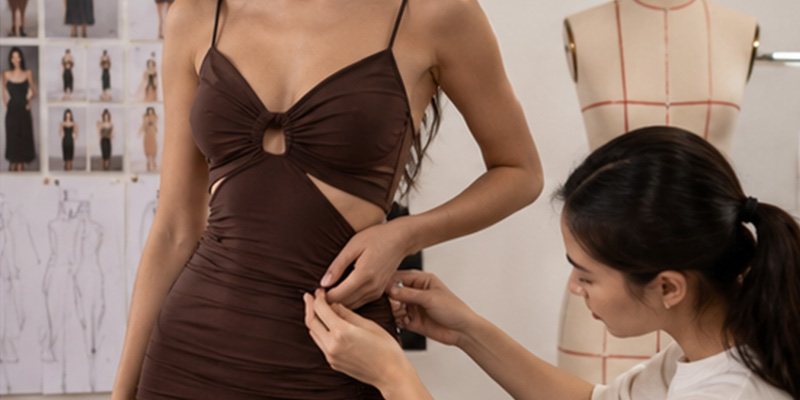
Fit notes are often more useful than a long explanation because they show what has already been tested. A fit note tells the factory what needs to change after a sample, fitting session, or internal review.
Useful fit notes include measurement changes, body feedback, comfort comments, visual balance, fabric reaction, construction concerns, and final approval status. For example: raise neckline 1 cm, reduce waist 2 cm, increase hip ease 1.5 cm, shorten strap 1 cm, lower slit 3 cm, change lining length, reduce bust cup thickness, adjust back opening, smooth side seam, or improve zipper flatness.
| Fit Note Type | Example | Production Value |
|---|---|---|
| Measurement change | Reduce waist by 2 cm | Updates pattern and size chart |
| Visual balance | Waistline sits too low | Adjusts body proportion |
| Comfort issue | Armhole feels tight | Improves wearing function |
| Fabric reaction | Satin puckers at side seam | Changes sewing method or fabric handling |
| Support issue | Bust area feels unstable | Reviews cups, lining, boning, strap |
| Movement issue | Slit too high when walking | Adjusts slit height and reinforcement |
| Bulk concern | Ruching not symmetrical | Adds QC and sewing control point |
| Approval note | Fit approved with strap change | Updates PP sample requirement |
Fit notes should be specific. “Make it better” is not useful. “Raise front neckline by 1 cm and reduce strap length by 0.8 cm” is useful. The factory can update the pattern, sample, measurement chart, and later QC standard.
For dress products, fit notes should focus on body zones where problems often appear: bust, waist, hip, strap, neckline, armhole, back opening, slit, lining, zipper, hem, and overall length. For stretch dresses, include comments after wearing or movement. For satin, chiffon, lace, mesh, and sequin styles, include comments about surface, transparency, seam tension, and comfort.
Fit notes should also record what must not change. If the body length is approved, say so. If the neckline shape is approved but strap length must change, separate the two points. Clear approval language prevents the next sample from fixing one issue while damaging another.
A practical sample comment table can look like this:
| Area | Current Issue | Required Change | File to Update |
|---|---|---|---|
| Front neckline | Too low | Raise 1 cm | Pattern, measurement chart |
| Strap | Too long | Shorten 0.8 cm | Pattern, trim spec |
| Waist | Loose at side seam | Reduce 1.5 cm total | Pattern, size chart |
| Lining | Shows below shell | Shorten lining 2 cm | BOM, construction note |
| Zipper | Slight bulging | Adjust seam allowance and pressing | Sewing instruction, QC checklist |
| Slit | Too high | Lower 3 cm | Pattern, measurement chart |
Fit notes are not only for sampling. They become part of the production record. When the approved sample becomes the PP standard, fit comments should be transferred into updated pattern files, measurement charts, BOM, sewing instructions, QC checklists, and packing requirements. Without that transfer, a corrected sample may not become corrected bulk production.
A strong technical file set gives the factory more than information. It creates alignment. The design team sees the same dress as the pattern maker. The sourcing team sees the same cost basis as the quotation team. The production team sees the same standard as QC. That is how a quote becomes a sample, and how a sample becomes repeatable bulk production.
How Do Quantity and Timeline Affect Cost?
Quantity and timeline affect dress cost through fabric purchasing, trim MOQ, cutting efficiency, sewing-line planning, sample rounds, QC workload, packing method, and shipping route. A larger, well-organized order usually gives the factory more room to control cost. A rushed, fragmented, multi-color order usually increases unit price, lead-time pressure, and quality risk.
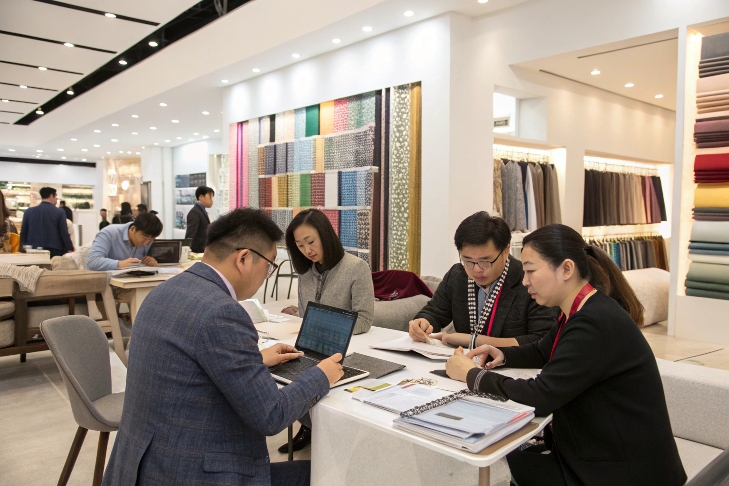
A dress quote is not only a calculation of fabric and sewing. It is also a planning decision.
A factory needs to know whether the order is 200 pcs in one color, 400 pcs across two colors, 1,200 pcs across six colors, or a 20-style seasonal collection with several delivery windows. These structures do not use the same fabric buying method, cutting plan, sewing-line setup, inspection route, or packing schedule.
A common misunderstanding is thinking that total quantity alone decides price. In custom dress manufacturing, quantity is usually reviewed by style and color, not only by total units. For example, 200 pcs in one style and one color is very different from 200 pcs split across four styles and five colors. The total number may look the same, but the production reality is completely different.
A higher quantity can improve cost in several areas. Fabric can be purchased more efficiently. Cutting markers can be optimized. Sewing teams can stay on the same style longer. Trim buying can meet supplier MOQ more easily. Packing materials can be prepared with less waste. QC standards can be repeated across a larger batch.
A lower or fragmented quantity usually creates the opposite effect. More setup time is spread over fewer garments. More colors create more fabric lots. More sizes create more measurement checking. More style changes create more production-line adjustment. More urgent timing increases pressure on sampling, material sourcing, QC, and shipping.
Timeline has the same impact. A planned calendar gives room for fabric confirmation, sample revision, PP sample approval, bulk material purchase, production, inspection, packing, and shipping. A compressed calendar may require stock fabric, simplified trims, fewer revisions, air freight, or split shipment. These decisions can protect launch timing, but they may also change cost.
The most useful quote request does not only ask for price. It gives the factory enough planning information to estimate the real cost path.
| Planning Factor | What the Factory Needs | Cost Impact |
|---|---|---|
| Quantity per style | Units for each style code | Affects pattern setup, cutting, sewing efficiency |
| Quantity per color | Units for each colorway | Affects fabric MOQ, dye lot control, cutting plan |
| Size ratio | XS–XL or numeric size breakdown | Affects grading, measurement checks, packing ratio |
| Fabric status | Stock, custom dyed, custom printed, certified, imported | Affects MOQ, cost, lead time |
| Sample stage | First sample, fit sample, revised sample, photo sample, PP sample | Affects development cost and calendar |
| Bulk date | Latest production completion date | Affects production-line allocation |
| Warehouse date | Latest arrival date at warehouse or forwarder | Affects shipping method and packing schedule |
| Delivery method | Express, air, sea, FOB, DAP, DDP by project | Affects final landed cost |
| Packing method | Folded, hanger, retail-ready, ecommerce-ready | Affects labor, materials, carton volume |
A clean order plan allows the factory to separate product cost from time pressure. Without that separation, the quote can look simple but still hide later changes.
What Is the Order Quantity?
Order quantity should be shown by style, color, and total units. A single total number is not enough for a serious dress quote.
A useful format looks like this:
| Style Code | Dress Type | Color | Quantity | Size Range |
|---|---|---|---|---|
| DR-101 | Satin midi dress | Black | 300 pcs | XS–XL |
| DR-101 | Satin midi dress | Champagne | 300 pcs | XS–XL |
| DR-102 | Mesh bodycon mini | Wine | 250 pcs | XS–XL |
| DR-103 | Chiffon maxi dress | Floral print | 400 pcs | XS–XL |
This format helps the factory review fabric consumption, production allocation, cutting efficiency, trim buying, label preparation, and QC workload. It also prevents a common mistake: assuming that one total order quantity applies equally to every color or style.
For many custom dress projects, MOQ is calculated by style and color. If one dress has two colors, each color may need to meet the minimum production requirement. If several styles are grouped into one collection, each style still needs its own review because each style may use different fabric, trims, patterns, and sewing time.
Quantity affects unit cost in practical ways.
| Quantity Structure | Production Effect | Cost Direction |
|---|---|---|
| 200 pcs, 1 style, 1 color | Minimum efficient custom production route | Standard starting point |
| 400 pcs, 1 style, 2 colors | Separate color control and fabric planning | Cost depends on color split |
| 1,000 pcs, 1 style, 1 color | Better cutting and sewing efficiency | More room for cost control |
| 1,000 pcs, 5 styles | More pattern and line setup | Less efficient than one style |
| 1,000 pcs, 10 colors | More fabric lots and color management | Higher coordination cost |
| 2,000+ pcs, repeated style | Stronger material planning and line efficiency | Better bulk cost potential |
The factory also reviews whether the quantity supports the requested fabric. Stock fabric may work for smaller planned orders. Custom-dyed satin, exclusive print, special lace, certified fabric, sequin fabric, or custom packaging may require higher supplier MOQ. A quote may change if the fabric supplier requires a minimum that exceeds the garment order plan.
A practical inquiry should therefore avoid saying only “around 500 pcs.” It should say “500 pcs total, 250 pcs black and 250 pcs ivory, sizes XS–XL, same fabric and same trim.” That one sentence gives the factory a much stronger basis for pricing.
Which Colors and Sizes?
Colors and sizes affect cost because they change fabric purchasing, dye-lot control, cutting separation, measurement checking, packing ratio, and warehouse labeling.
A style with 600 pcs in one color can often be planned more efficiently than the same 600 pcs divided into six colors. Six colors may require six fabric lots, six cutting groups, six packing labels, six SKU sets, and stronger color control. If the fabric is custom dyed, each color may also need separate lab dip, approval, dyeing MOQ, and lead time.
Size range has a different but equally important effect. A simple XS–XL range inside one order is easier to plan than a wide range including petite, tall, plus size, or multiple regional size systems. More sizes mean more grading work, more measurement points, more size labels, more packing sorting, and more QC measurement records.
A clear color and size plan should include:
- Color name
- Color code or Pantone, if available
- Quantity per color
- Size range
- Size ratio
- Main label and size label requirement
- SKU or barcode plan, if available
- Packing ratio by color and size
A practical size ratio table can look like this:
| Size | Ratio | Quantity for 600 pcs |
|---|---|---|
| XS | 10% | 60 pcs |
| S | 25% | 150 pcs |
| M | 30% | 180 pcs |
| L | 25% | 150 pcs |
| XL | 10% | 60 pcs |
If no sales data exists yet, an estimated ratio is still better than leaving the factory to guess. For repeat orders, past sell-through data should guide size planning. If M and L sold faster in the previous drop, the next order should not blindly repeat the first ratio.
For dress categories, size planning also connects directly to fit risk. Bodycon dresses need more control around bust, waist, hip, and recovery. Corset dresses need support and cup placement across sizes. Maxi dresses need length grading and hem balance. Mini dresses need safe length control across size range. A wider size range may require more pattern checking before bulk production.
Color and size planning should not be treated as a spreadsheet formality. It affects cost, fit, stock risk, warehouse accuracy, and final sell-through.
When Is the Launch Date?
The launch date tells the factory how much room exists for product development, sampling, production, inspection, packing, and shipment. It should be shared before quotation, not after sample approval.
A strong timeline includes at least two dates:
- Planned launch date
- Latest warehouse arrival date
These dates are different. The launch date is when the dress goes live, reaches store floors, or enters campaign release. The warehouse arrival date is when goods must arrive early enough for receiving, scanning, allocation, photography, steaming, relabeling, or distribution.
A factory works backward from the required arrival date.
| Stage | Why It Needs Time |
|---|---|
| File review | Checks style, fabric, trims, size chart, quote scope |
| Fabric sourcing | Confirms available fabric, color, MOQ, lead time |
| First sample | Tests structure, fabric, sewing method, initial fit |
| Fit revision | Adjusts pattern, measurements, neckline, length, support |
| PP sample | Confirms final pre-production standard |
| Material purchase | Orders fabric, lining, trims, labels, packaging |
| Bulk cutting | Requires fabric inspection, relaxing, marker, cutting |
| Sewing | Depends on style complexity and line availability |
| Inline QC | Catches issues before all pieces are finished |
| Final QC | Checks measurement, appearance, workmanship, packing |
| Packing | Applies labels, tags, barcodes, polybags, cartons |
| Shipping | Depends on route, destination, customs, freight method |
If the schedule is tight, the factory may need to adjust the product path. Stock fabric may be safer than custom-dyed fabric. Available trims may be safer than custom hardware. A simpler lining method may be safer than a complicated internal structure. Air freight may be needed instead of sea freight.
A rushed order does not always mean impossible. It means trade-offs must be made openly. The worst situation is a late timeline combined with unclear files, custom fabric, many colors, wide size range, and strict packing rules. Each unclear point adds delay risk.
A useful timeline message looks like this:
“We plan to launch in early September. Goods should arrive at our warehouse by August 15. We need one fit sample and one PP sample before bulk. Please review whether this schedule works with stock satin and private-label packing.”
This gives the factory enough context to discuss a realistic route instead of promising an unsafe date.
How Should Samples Be Planned?
Samples affect both cost and timeline because each sample has a different purpose. A first sample, fit sample, revised sample, photo sample, salesman sample, PP sample, and golden sample should not be treated as the same thing.
A first sample checks whether the style can be built. A fit sample checks whether the dress works on the body. A revised sample confirms changes after feedback. A photo sample needs strong appearance for content, sales, or campaign use. A PP sample confirms the final standard before bulk production. A golden sample becomes the sealed reference for production and QC.
| Sample Type | Main Purpose | Cost and Timeline Impact |
|---|---|---|
| First sample | Tests style structure and basic construction | Requires pattern, fabric, trims, sewing |
| Fit sample | Tests body fit and measurements | May require pattern correction |
| Revised sample | Confirms changes after feedback | Adds time but reduces bulk risk |
| Photo sample | Supports product photos or sales presentation | Needs cleaner finish and correct visual effect |
| Salesman sample | Supports wholesale or showroom selling | May need stronger presentation standard |
| PP sample | Confirms pre-production standard | Required before controlled bulk production |
| Golden sample | Sealed reference for production and QC | Protects bulk consistency |
Sample cost is not the same as bulk unit cost. A sample carries pattern work, material preparation, trim preparation, cutting, sewing, measurement checking, communication, and sometimes revision planning. The factory may make only one or a few pieces, so the cost per sample is naturally higher than bulk production.
Sample planning should be connected to order quantity and launch timing. If the planned order is 200 pcs per style/color, the sample route should be focused and efficient. If the order is part of a larger seasonal collection, sample review may need to group styles by fabric, structure, or launch priority.
For example:
- Satin dresses should test seam smoothness, pressing marks, lining, and zipper flatness.
- Mesh bodycon dresses should test stretch recovery, transparency, lining coverage, and side seam balance.
- Corset dresses should test cup position, boning comfort, bust support, and zipper tension.
- Sequin dresses should test skin comfort, seam thickness, needle risk, and packing protection.
A clear sample plan avoids wasting money on the wrong sample. A photo sample should not be treated as final bulk approval if fit, fabric, trims, and construction are not confirmed. A PP sample should not be changed freely after approval, because the purpose of PP approval is to lock the production standard.
A practical sample plan should answer:
- Which sample is needed first?
- Which size should be sampled?
- Which fabric will be used?
- Are trims final or substitute?
- Who will review fit?
- How many revision rounds are expected?
- When must PP sample be approved?
- When must bulk production start?
A clean sample plan protects the launch calendar. It gives enough room to fix the dress before production, not after hundreds of pieces have already been cut.
For custom dress quotes, quantity and timeline should be sent together. Quantity shows production scale. Timeline shows production pressure. When both are clear, the factory can give a more serious answer: whether the order can be accepted, how the price should be structured, what risks need review, and which production route protects both cost and quality.
What Brand and Delivery Details Matter?
Brand and delivery details matter because a dress is not finished when sewing is finished. Labels, hangtags, care content, barcode files, SKU stickers, polybags, carton marks, packing ratio, warehouse rules, shipping destination, delivery window, and confidentiality terms all affect the quote, the timeline, and the final handover. If these details are missing before quotation, the unit price may look lower but fail to include the real cost of branded delivery.

A custom dress order usually has two layers of work.
The first layer is the garment itself: fabric, pattern, fit, trims, sewing, pressing, and QC.
The second layer is brand delivery: label placement, care label content, hangtag, barcode, SKU label, polybag, carton mark, warehouse label, packing list, shipment documents, and launch timing.
Many production delays happen in the second layer. The dress may be approved, but the care label file is missing. The barcode may not scan. The carton mark may not match warehouse requirements. The polybag may be too small for a satin maxi dress. The hangtag may arrive late. The carton ratio may not match the receiving plan. These problems do not always look dramatic, but they can delay shipping, create warehouse rejection, increase repacking cost, or damage brand presentation.
Before asking for a dress quote, brand and delivery details should be shared as early as possible. These details help the factory quote more accurately, prepare materials earlier, and avoid last-minute changes after bulk production has already started.
| Detail Area | What to Send | Why It Affects Quote or Delivery |
|---|---|---|
| Main label | Artwork, size, material, color, placement | Affects label cost, MOQ, sewing position, brand appearance |
| Size label | Size system, size range, placement | Prevents size mix-up during packing |
| Care label | Fiber content, wash symbols, origin, language | Needed for compliance and customer use |
| Hangtag | Artwork, paper type, finish, string, placement | Affects retail presentation and material lead time |
| Barcode | Barcode file, SKU table, sticker size, scan rule | Needed for ecommerce and warehouse receiving |
| Polybag | Bag size, thickness, warning text, sticker position | Affects packing cost and garment recovery |
| Carton mark | PO, style, color, size, carton number, destination | Prevents shipment and warehouse sorting errors |
| Packing ratio | Color-size ratio per carton | Affects picking, receiving, allocation, and inventory |
| Warehouse guide | Label position, carton format, barcode rule | Prevents rejected or delayed delivery |
| Shipping route | Destination, port, warehouse, forwarder, incoterm | Affects documents, timeline, carton planning |
| NDA needs | Design files, sample photos, label files, launch plans | Protects unpublished product and brand information |
A dress quote without brand delivery details is often incomplete. It may only include a basic sewn garment. For a private-label dress order, the quote should reflect the garment as it will actually leave the factory: labeled, tagged, packed, sorted, boxed, and ready for the next step.
Do You Need Private Label?
Private label requirements should be included before quotation if the dress will be sold under the brand’s own name. These details are not small decoration items. They are part of the finished product and affect cost, material lead time, approval steps, QC checks, and packing workflow.
Private label can include main label, size label, care label, logo label, hangtag, hang string, barcode sticker, SKU label, size sticker, color sticker, branded polybag, thank-you card, brand sticker, carton mark, and warehouse label.
A simple private label checklist can look like this:
| Private Label Item | Information Needed Before Quote | Common Problem if Missing |
|---|---|---|
| Main label | Logo file, size, material, color, placement | Wrong label size, wrong placement, poor skin comfort |
| Size label | Size system, label size, placement | Size confusion during packing |
| Care label | Fabric content, care symbols, language, origin | Reprint needed after fabric changes |
| Hangtag | Artwork, paper weight, finish, string type | Delayed tag approval or wrong brand feel |
| Barcode sticker | Barcode file, SKU table, sticker size | Barcode cannot scan or SKU mismatch |
| Polybag sticker | Style, color, size, barcode, warning text | Warehouse receiving issue |
| Carton mark | PO, style, color, size, carton count | Shipment sorting error |
| Warehouse label | Warehouse format and label position | Repacking before delivery |
For a quote, the factory needs to know whether these items are supplied by the brand or developed through the factory. Supplied materials still need checking, counting, storage, and sewing or packing labor. Factory-developed materials need artwork review, supplier MOQ confirmation, sample approval, production time, and QC.
Care labels need special attention. The final fiber content depends on confirmed shell fabric, lining, and trim composition. If fabric changes after sampling, care label content may need to change too. A care label printed too early may become unusable after material adjustment.
Label placement should also be confirmed. A woven label at the back neck, side seam care label, hem label, heat-transfer logo, or external brand patch all use different sewing or application methods. Some placements may not work well on mesh, lace, satin, or bodycon styles because of transparency, stretch, or skin contact.
A clear private label request can say:
“We need woven main labels, size labels, care labels, hangtags, barcode stickers, individual polybags, and carton marks. We will provide logo artwork, barcode file, SKU table, care content, and warehouse guide before sample approval.”
That sentence gives the factory enough information to include the right packing and label route in the quote.
Which Packing Method?
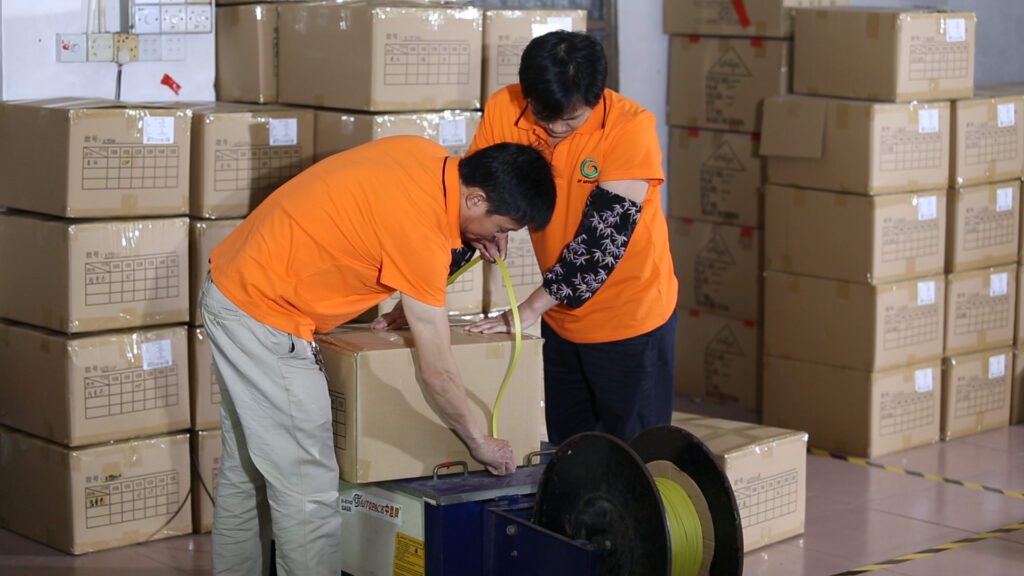
Packing method affects cost, product condition, carton volume, freight cost, warehouse efficiency, and first impression after unpacking. A basic folded polybag is not always suitable for every dress. Satin, chiffon, mesh, lace, sequin, velvet, corset, and long occasion dresses may need different packing care.
A folded mini dress in jersey can usually recover well after packing. A satin maxi dress may crease easily if folded too tightly. A sequin dress may scratch other garments if packing is too dense. A corset dress may lose shape if compressed. A lace dress may snag if the polybag is too narrow. These risks should be reviewed before bulk packing begins.
Common packing options include:
| Packing Method | Suitable For | Key Details to Confirm |
|---|---|---|
| Individual folded polybag | Ecommerce, DTC, standard dress orders | Fold method, bag size, barcode position |
| Hanger packing | Boutique, showroom, selected retail programs | Hanger type, garment cover, carton height |
| Tissue-assisted folding | Satin, chiffon, lace, delicate surfaces | Tissue size, fold line, crease protection |
| Shape-protection packing | Corset, structured bodice, padded styles | Cup support, carton density, pressure points |
| Sequin-protection packing | Sequin, bead, rhinestone dresses | Reverse fold, surface protection, carton pressure |
| Color-size carton packing | Warehouse receiving and retail allocation | Size ratio, color separation, carton mark |
| Mixed-size carton | Ecommerce or warehouse allocation | SKU control, barcode check, packing list accuracy |
Polybag size is often underestimated. A bag that is too small can crush the garment, create wrinkles, damage embellishment, or make the product look cheap after opening. A bag that is too large may increase carton volume and look messy. For ecommerce-ready packing, the bag should fit the folded garment, sticker placement, barcode scan area, and any warehouse warning text.
Carton density also matters. A carton packed too tightly may reduce freight volume, but it can damage satin, velvet, sequins, boning, cups, or delicate trims. A carton packed too loosely may increase shipping cost and allow garments to move too much during transit.
Before quotation, the brand should confirm whether the order needs:
- Individual polybag
- Hangtag and string
- Barcode sticker
- Size sticker
- Color sticker
- SKU label
- Thank-you card
- Brand sticker
- Tissue paper
- Hanger packing
- Dust bag
- Carton mark
- Warehouse label
- Packing list by carton
A practical packing instruction can say:
“Each dress should be folded into an individual polybag with hangtag, barcode sticker, size sticker, and SKU label. Pack by color and size ratio. Carton mark should show PO number, style code, color, size ratio, carton number, gross weight, net weight, and destination warehouse.”
This level of detail helps the factory quote packing materials, labor, carton size, QC checks, and document preparation more accurately.
Where Will Goods Ship?
Shipping details should be shared before bulk quotation because destination, freight method, carton size, delivery window, warehouse rules, and documents can affect final cost and timing. Even when freight is not included in the unit price, the factory still needs shipping information to prepare packing and export documents correctly.
A factory should know the destination country, delivery city, port or airport, warehouse address if available, preferred forwarder, shipping method, required delivery date, and whether the order will ship in one batch or split batches.
A simple delivery table can help:
| Shipping Detail | Example | Why It Matters |
|---|---|---|
| Destination country | United States, United Kingdom, Australia | Affects documents, care label planning, routing |
| Delivery point | Port, airport, 3PL warehouse, retail warehouse | Affects carton label and booking method |
| Shipping method | Express, air, sea, truck after import | Affects cost and delivery speed |
| Forwarder | Brand-appointed forwarder or factory-coordinated | Affects handover process |
| Incoterm | EXW, FOB, CIF, DAP, DDP if agreed | Defines cost responsibility |
| Ship date | Goods ready date | Affects production and packing timeline |
| Arrival date | Warehouse receiving deadline | Affects shipping route choice |
| Split shipment | First batch air, balance sea | Helps protect launch and cost balance |
For launch-driven dress orders, shipping planning should start before bulk production finishes. If goods must arrive by a fixed date, the factory can work backward from the warehouse arrival deadline. A late shipping discussion often leaves only expensive options, such as air freight or express delivery.
Split shipment can be useful when launch timing and cost control both matter. For example, the first 20–30% of a dress order may ship by air for campaign launch or early selling, while the remaining quantity ships by sea. This can help protect the sales calendar without putting the full order into high-cost freight.
Warehouse rules also matter. Some warehouses require barcode labels on a specific side of the polybag. Some require carton labels in a fixed format. Some reject cartons if PO number, SKU, color, size, quantity, or carton sequence is missing. These rules should be sent before packing materials are prepared.
A strong delivery note can say:
“Goods will ship to our Los Angeles 3PL warehouse. We use our appointed forwarder. Please prepare carton marks with PO, style code, color, size ratio, carton number, gross weight, net weight, and barcode label according to our warehouse guide. We may need the first 200 pcs by air and the balance by sea.”
This gives the factory a realistic delivery picture before cost and timeline are finalized.
Are NDA Terms Needed?
NDA terms should be discussed before sharing unpublished designs, original samples, tech packs, patterns, label artwork, barcode data, packaging files, campaign plans, order quantities, or pricing information. For dress brands, confidentiality is not only about protecting one sketch. It also protects launch timing, private-label identity, supplier strategy, and future collection plans.
Confidential information may include:
- Tech pack
- Original sample
- Pattern file
- Size chart
- Fit comments
- Fabric and trim plan
- Label artwork
- Hangtag artwork
- Care label content
- Barcode file
- SKU table
- Packaging instruction
- Carton mark format
- Unreleased collection images
- Order quantity
- Target price
- Launch calendar
- Warehouse information
A serious manufacturer should treat these files as project information, not marketing material. Sample photos, brand names, packaging files, and private project details should not be posted, reused, or shown publicly without written permission.
NDA is especially important for:
- New seasonal collections
- Designer labels
- Influencer or celebrity collaborations
- Unreleased occasionwear drops
- Private-label retail programs
- Original sample development
- Exclusive fabric or trim direction
- High-volume repeat-order styles
NDA should not feel like a barrier. It creates a clear working boundary before more detailed files are exchanged. In practical terms, it tells both sides how files, photos, samples, patterns, brand names, packaging materials, and project information should be handled.
A simple NDA request can say:
“Before sending the full tech pack, original sample photos, label artwork, and launch plan, we would like to sign an NDA. The files are for quotation, sampling, and production review only and should not be shared publicly or used for other projects.”
For factory review, NDA does not replace product information. The quote still needs style details, materials, quantity, and delivery requirements. NDA simply makes the file exchange safer and clearer.
Brand and delivery details should be treated as part of the quote, not as afterthoughts. A dress order is not only cut and sewn. It is labeled, packed, checked, documented, shipped, and received. When these details are shared early, the quote becomes more realistic, the packing process becomes smoother, and the final product is closer to what the brand expects to deliver.