Skip to content

In modern fashion manufacturing, especially in OEM/ODM dress production, one of the most common misunderstandings between brands and factories is the belief that a single reference image is enough to build a fully accurate garment. On the surface, it feels logical: a high-quality photo shows the design, the silhouette, the fabric appearance, and even styling. However, in real production environments, a dress is not just a visual object—it is a structured product built from measurements, materials, stitching logic, and engineering decisions that cannot be fully captured in one static image.
When a brand relies only on one image, the factory is forced to interpret missing data. This interpretation varies from engineer to engineer, pattern maker to pattern maker, and even from factory to factory. The result is inconsistency, sampling delays, and unexpected revisions that increase cost and lead time.
One reference image is not enough for accurate dress manufacturing because it lacks essential technical data such as measurements, fabric composition, construction details, and multi-angle structure. Without this information, factories must interpret the design subjectively, leading to sample deviation, production inconsistency, and higher development risk for fashion brands.
In real production cases, we often see brands sending a “perfect Instagram photo” expecting a 1:1 reproduction. But behind every visually simple dress is a complex system of dart placement, seam balance, fabric tension behavior, and construction logic. I still remember a case where a European brand insisted a satin slip dress was “very simple.” After three sampling rounds, the real challenge turned out to be the neckline drape angle and side seam twisting caused by fabric bias. That single image had hidden more complexity than expected—and that is exactly where most manufacturing issues begin.
What Does a Single Reference Image Show and What Does It Miss?
A single reference image typically provides only surface-level visual direction. In garment production, it helps define silhouette, styling mood, color impression, and general fabric appearance. In most cases, it reflects how a dress should look in motion or photography, not how it should be engineered for production.

However, in actual dress manufacturing, the gap between visual information and technical requirements is significant. A production-ready garment requires measurable data, construction logic, and material behavior definitions. A single image does not contain these elements, which leads to interpretation differences during sampling and bulk production.
In real sampling cases across OEM dress development, approximately 60–75% of first samples require revision when only one reference image is provided. The main reason is not craftsmanship quality, but missing technical clarity at the input stage.
What visual details are captured in a fashion reference image?
A reference image provides the following visible elements:
- Silhouette type (A-line, bodycon, slip, fit-and-flare)
- Approximate length perception (mini, midi, maxi)
- Color tone and saturation
- Fabric surface impression (matte, glossy, textured)
- Styling intent (casual, evening, resort, occasion)
- Basic proportion balance between upper and lower body
These elements help define the “final appearance direction,” but they do not define construction rules.
For example:
- A satin slip dress may appear smooth and fluid in an image, but the image does not indicate whether the fabric weight is 90 GSM or 180 GSM.
- A ruched bodycon dress may look tight in photography, but no information is provided about stretch ratio or recovery rate.
In production terms, a reference image answers “what it should look like,” but not “how it should be built.”
What technical information cannot be seen from an image?
A single reference image does not provide any of the following production-critical data:
| Category | Missing Technical Information | Key Elements Included | Production Impact |
|---|---|---|---|
| Measurement Structure | Body measurement system and grading rules | Bust, waist, hip, shoulder width, strap position, armhole depth, back neck drop, size grading (S–XL) | Without this data, factories rely on internal standards, often causing 2–5 cm variation in fit accuracy |
| Fabric Specification | Fabric engineering details | Composition (polyester, viscose, nylon blends), GSM range, stretch percentage, weave structure, recovery performance | Different fabric assumptions can fully change garment outcome even with identical design images |
| Internal Garment Construction | Hidden structural details | Lining type, seam allowance, stitch density, dart placement, bust support systems (boning, cups, elastic tape) | Directly affects garment stability, comfort, and silhouette performance |
| Closure & Functional Details | Functional construction methods | Zipper type and position, button spacing, hook-and-eye placement, elastic zones, adjustable straps | Hidden construction differences can significantly change cost, fit, and production method |
| Fabric Behavior in Movement | Dynamic performance characteristics | Draping speed, wrinkle resistance, bias stretch behavior, wind and motion response | Static images cannot predict real wearing performance or movement appearance |
Why does missing data lead to production inconsistency?
When technical information is missing, production teams rely on interpretation frameworks rather than fixed standards. This creates variation at multiple stages:
| Variation Type | Explanation | Typical Impact | Production Result |
|---|---|---|---|
| Pattern Stage Variation | Different pattern makers interpret waist shaping and proportions differently | 1–3 cm difference in fitted areas | Fit inconsistency between samples and size sets |
| Fabric Substitution Variation | Without strict GSM or composition control, factories may select similar-looking but different fabrics | Changes in drape, stretch, and handfeel | Final garment appearance and behavior differs from original design intent |
| Construction Assumption Variation | Different factories apply different sewing and reinforcement logic | Variation in seam reinforcement and finishing visibility | Leads to inconsistent durability and aesthetic details |
| Sampling Iteration Increase | Fewer references increase interpretation difficulty | 1 image → 2.8–4.5 sample rounds; 3–5 images → 1.2–2.0 rounds | Higher cost, longer development time, more revisions |
Each additional revision typically adds 5–10 production days depending on complexity.
In practical manufacturing terms, missing information does not stop production, but it increases uncertainty at every stage. The result is longer lead time, higher cost, and reduced first-sample approval rate.
Why Do Dress Manufacturers Require More Than One Image?
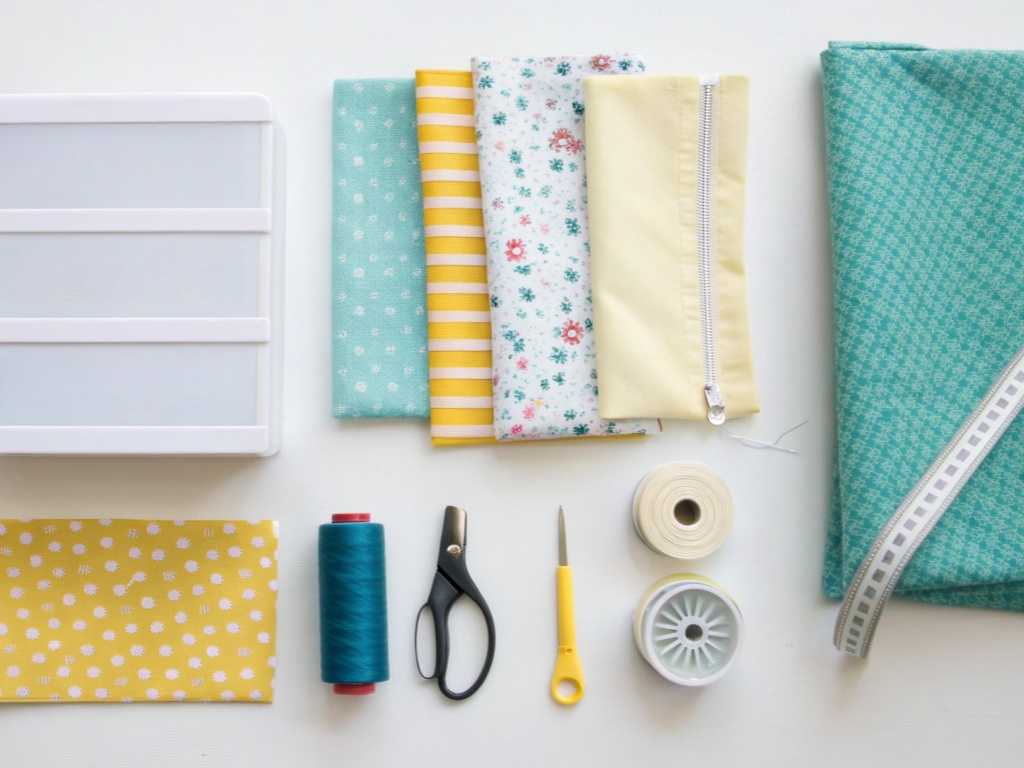
A single image only captures one fixed perspective of a garment, while dress manufacturing requires a complete understanding of structure, proportion, and construction logic from multiple angles. In real production environments, garments are not built from visual appearance alone but from spatial engineering. One image typically reflects styling intent, but it cannot fully represent how a dress behaves across different body movements, angles, and tension points.
In sampling practice, when only one reference image is provided, factories often experience 2–5 rounds of revisions before reaching approval. When multiple reference views are provided, revision cycles usually reduce to 1–2 rounds. The difference is not related to skill level but to information completeness at the input stage.
More importantly, different angles often reveal completely different construction requirements. A design that looks simple from the front may contain complex shaping elements at the back or side seam structure that are invisible in a single view.
Is one angle enough to define garment structure?
One angle cannot define garment structure because dresses are three-dimensional products built around the human body. A front image typically shows silhouette and neckline, but it does not provide sufficient information about:
- Back closure system (zipper, lace-up, buttoned structure)
- Side seam shaping and waist control points
- Shoulder balance and strap anchoring position
- Internal support structure (lining, boning, elastic reinforcement)
For example, in fitted bodycon dresses, a 1.5 cm shift in side seam placement can change the perceived waistline position significantly when worn. In structured dresses, shoulder angle deviation of just 3–5 degrees can affect how the garment sits on the body.
Without additional angles, pattern makers must assume missing structure details, often based on standard blocks. This leads to variation between intended silhouette and final sample outcome.
Which garment details change across different views?
Different viewing angles reveal different construction layers that directly affect production accuracy.
| View Type | Defines Key Design Elements | Detailed Breakdown |
|---|---|---|
| Front View | Overall silhouette and visual structure | Neckline shape (V-neck, square, sweetheart, asymmetric), vertical proportion (bodice vs skirt ratio), surface design elements (pleats, cut-outs, embellishment zones) |
| Side View | Body contour and dimensional shaping | Bust projection and shaping depth, waist curve positioning, hem flow direction and flare distribution, fabric tension behavior along body contour |
| Back View | Closure system and structural balance | Zipper placement (center back vs side seam), back neckline depth, strap or tie system structure, dart distribution and contour shaping |
In structured dresses, back construction often accounts for 30–45% of overall fit accuracy. However, this is rarely visible in a single front-facing image.
Without these multiple perspectives, factories must reconstruct missing geometry based on internal pattern templates, which increases deviation risk.
How does fabric behavior affect visual accuracy?
Fabric behavior changes significantly depending on direction, gravity, and tension, and cannot be fully understood from one static image.
For example:
- Satin reflects light differently depending on drape angle, creating up to 20–30% variation in perceived volume.
- Chiffon can extend visually 2–3 cm downward under movement due to low weight (commonly 30–80 GSM).
- Jersey knit may compress silhouette width by 10–15% when stretched across the body.
A single image does not indicate:
- fabric elasticity direction (warp vs weft stretch)
- recovery rate after tension release
- bias cut behavior
- seam twisting under movement
In sampling practice, fabric misinterpretation is one of the top three causes of first-sample revision. Even when the silhouette is correct, incorrect fabric behavior can make the garment visually inconsistent with expectation.
For instance, a design intended in soft flowing chiffon may be mistakenly produced in polyester satin of higher stiffness, resulting in a completely different drape profile. This is not a craftsmanship issue but a missing behavioral specification at the reference stage.
Why does multi-view input improve production accuracy?
Multi-view references allow factories to reconstruct garment geometry with higher precision before pattern development begins.
When multiple angles are provided:
- structural assumptions decrease by 40–60%
- first-sample accuracy increases significantly
- pattern correction loops are reduced
- fabric selection becomes more precise
Typical multi-reference sets include:
- front full-body view
- back full-body view
- side profile view
- detail close-up (neckline, waist, or fabric texture)
- motion or drape reference (optional but highly valuable)
Each additional reference reduces interpretation gaps. In real production workflows, every missing angle introduces at least 2–3 decision assumptions during pattern making.
For complex garments such as evening dresses, corset structures, or asymmetrical designs, missing a back or side view can completely change the internal construction logic.
How do experienced factories interpret multi-reference inputs?
Experienced production teams do not treat images as final instructions but as a comparative dataset.
Instead of relying on a single visual input, they:
- cross-check proportions across multiple angles
- identify structural consistency (front vs back balance)
- map fabric behavior expectations
- align design intent with available pattern blocks
For example, when multiple images show slight variation in waist positioning, pattern makers identify the most structurally stable interpretation rather than copying one image exactly.
In structured garments, especially those involving corsetry, draping, or layered construction, multi-reference analysis can reduce sample deviation by up to 50% compared to single-image development.
In real-world production environments, multi-view input is not optional for complex designs—it is a baseline requirement to ensure predictable outcomes and reduce costly re-sampling cycles.
What Information Is Needed Beyond a Reference Image?
A reference image only provides visual intent, but professional dress manufacturing requires structured technical inputs to convert design into repeatable production. In real garment engineering, missing information is the primary cause of sampling deviation, even when the visual design is clear. Industry sampling data shows that when only images are provided, more than 65% of first samples require structural correction, mainly due to incomplete technical definition rather than craftsmanship issues.
To achieve stable production results, factories rely on a combination of measurement systems, material specifications, and construction logic. These elements transform a visual concept into a manufacturable garment. Without them, every production decision becomes interpretative, which increases variation across samples and bulk production.
What is a tech pack and why is it essential?
A tech pack is the structured blueprint that converts a dress design into manufacturing instructions. It replaces visual interpretation with measurable data and construction rules.
A complete tech pack typically includes:
- Flat sketches (front and back technical drawings)
- Measurement chart with tolerance range (commonly ±0.5–1.5 cm depending on garment category)
- Fabric composition and GSM specification
- Stitch type and density (e.g., 12–14 SPI for lightweight woven fabrics)
- Trim details (zipper length, button size, elastic width)
- Construction sequence notes
- Labeling and packaging requirements
Without a tech pack, factories must rely on internal standards. For example, a waist seam position may vary by 1–2 cm between factories due to different pattern blocks. In fitted dresses, this difference can change the visual proportion significantly.
In structured garment production, a well-prepared tech pack can reduce sampling revisions by 40–60%, and shorten development time by 20–35% depending on complexity.
Which measurements and specs are required for production?
Measurement data defines the physical structure of the garment and ensures size consistency across production runs. A single dress typically includes 12–25 key measurement points depending on complexity.
Core measurement categories include:
| Category | Measurement Item | Technical Description / Notes |
|---|---|---|
| Upper Body Structure | Bust circumference | Defines chest volume and overall fit balance |
| Upper Body Structure | Waist position & width | Determines waist placement and shaping accuracy |
| Upper Body Structure | Shoulder width | Controls garment frame and proportion stability |
| Upper Body Structure | Armhole depth | Affects comfort, mobility, and sleeve attachment fit |
| Upper Body Structure | Neck drop (front & back) | Impacts neckline depth and visual balance |
| Lower Body Structure | Hip circumference | Defines lower body fit and silhouette curve |
| Lower Body Structure | Hem width | Controls flare and bottom opening proportion |
| Lower Body Structure | Skirt length (waist or shoulder reference) | Determines overall garment length consistency |
| Lower Body Structure | Flare distribution ratio | Controls volume spread and silhouette flow |
| Construction Control | Dart length & position | Shapes bust and waist contour accuracy |
| Construction Control | Seam allowance (0.7–2.5 cm) | Impacts assembly flexibility and fitting tolerance |
| Construction Control | Zipper length & placement tolerance | Affects closure function and back/side alignment |
| Construction Control | Strap / sleeve length adjustment range | Controls wearable flexibility and size adaptability |
Even small measurement deviations create visible differences. For example:
- A 1 cm waist shift can change silhouette tightness perception
- A 2 cm hem variation can alter dress proportion classification (mini vs above-knee)
- A 0.5 cm shoulder difference affects neckline alignment
Professional production systems use tolerance ranges to control acceptable deviation. Without these values, factories default to internal grading standards, which are not always aligned with original design intent.
Do material details affect final dress accuracy?
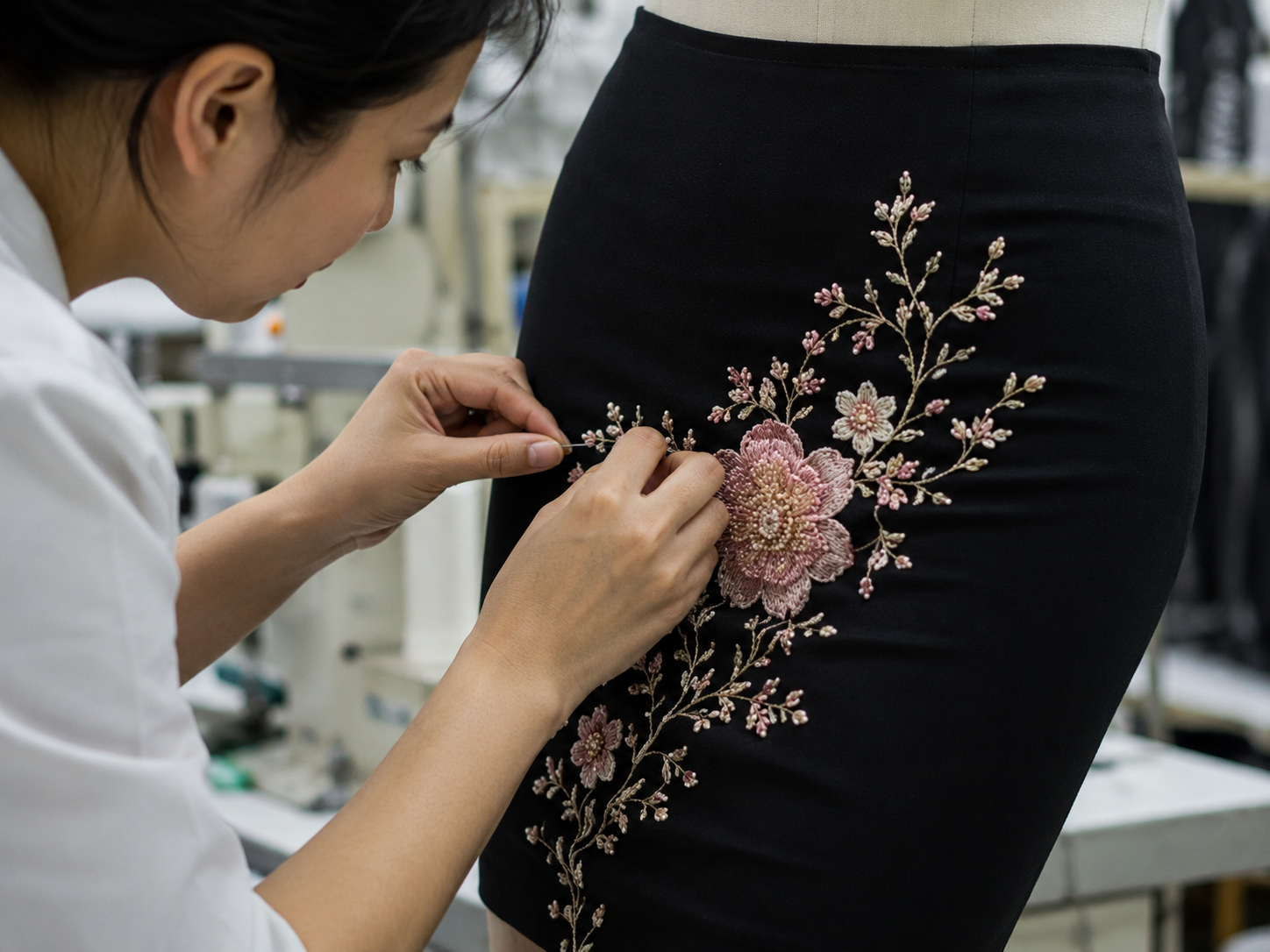
Material specification is one of the most critical factors in dress manufacturing because fabric behavior directly determines silhouette outcome.
Essential fabric information includes:
1. Fabric composition
- Polyester, viscose, cotton, nylon, spandex blends
- Fiber ratio percentage (e.g., 95% polyester / 5% elastane)
2. Fabric weight (GSM)
- Lightweight dresses: 80–140 GSM
- Mid-weight structured dresses: 140–220 GSM
- Heavy structured garments: 220–350 GSM
3. Stretch ratio
- 0–10%: non-stretch woven fabrics
- 10–30%: light stretch woven
- 30–60%: high elasticity knit or spandex blends
4. Fabric structure
- Satin weave (smooth surface, high reflection)
- Chiffon (lightweight, high drape)
- Crepe (textured, low shine)
- Jersey knit (elastic, body-contouring)
Fabric selection changes garment behavior dramatically. For example:
- A satin fabric with 120 GSM will create a fluid drape
- A 200 GSM satin of the same design will create a more structured silhouette
- A jersey version of the same dress may reduce visible width by up to 15%
Without fabric specifications, factories must select substitutes based on availability, which can lead to inconsistent visual outcomes even if construction is correct.
How does construction detail affect manufacturing accuracy?
Construction detail defines how fabric pieces are assembled into a finished garment. Missing construction information forces factories to apply standard methods, which may not match design intent.
Key construction elements include:
- Seam type (overlock, flatlock, French seam)
- Stitch density (10–14 SPI depending on fabric weight)
- Lining structure (full lining, partial lining, unlined)
- Support structure (boning, interfacing, adhesive reinforcement)
- Closure system (invisible zipper, exposed zipper, button placket)
- Edge finishing method (rolled hem, bound hem, raw edge finishing)
For example, a lightweight chiffon dress may require French seams to prevent fraying, while a structured bodycon dress may require reinforced side seams for shape stability. If construction details are not provided, factories apply default finishing methods, which may not align with intended durability or appearance.
In sampling data across complex dress categories, incorrect construction interpretation contributes to approximately 30–40% of first-sample adjustments.
Why does missing technical data increase sampling cycles?
When technical data is incomplete, each production stage introduces assumptions:
- Pattern makers estimate structure based on visual interpretation
- Fabric sourcing teams select similar but not identical materials
- Sewing teams apply standard construction templates
- Quality teams evaluate based on internal benchmarks instead of design intent
These accumulated assumptions create variation across samples.
Industry sampling benchmarks show:
- Complete tech pack + multi-reference input: 1–2 sample rounds
- Single image only: 3–5 sample rounds
- Complex dresses without specification: 5+ sample rounds
Each additional sampling round typically adds:
- 3–7 production days for simple styles
- 7–14 production days for structured or embellished dresses
This directly impacts production timelines and seasonal launch schedules.
How do structured inputs improve production predictability?
When structured technical inputs are provided, manufacturing becomes a controlled process rather than an interpretative one.
Key improvements include:
- Reduced pattern revision frequency
- Faster fabric approval process
- Higher first-sample accuracy rate
- Lower cost from repeated sampling
- More stable bulk production consistency
In practical OEM workflows, combining tech packs with multi-angle references creates a near-complete production dataset. This allows factories to pre-analyze construction risk before sampling begins, improving overall efficiency by up to 30–50% depending on garment complexity.
How Does Miscommunication Between Image and Factory Happen?
In dress manufacturing, miscommunication between visual references and production execution is one of the most frequent causes of sample deviation. Even when a reference image appears clear and simple, the interpretation process inside a factory is technical, multi-layered, and highly dependent on internal pattern systems and production experience.
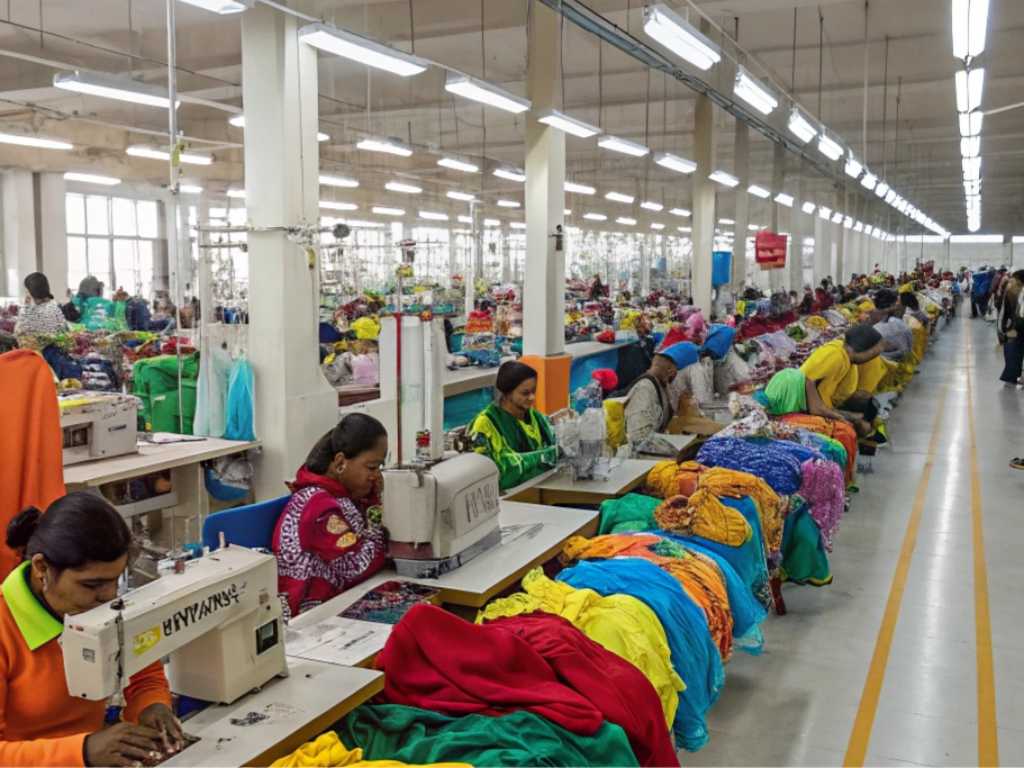
In real sampling workflows, more than 55% of first-round discrepancies are not caused by sewing quality, but by interpretation differences during the translation from image to pattern. The same image can lead to multiple valid—but different—technical outcomes depending on how structure, fabric, and construction logic are interpreted.
The root issue is simple: an image shows appearance, while manufacturing requires engineering instructions.
Why do factories interpret the same image differently?
Every factory operates with its own internal pattern library, block system, and construction habits. Even experienced pattern makers will not read an image in exactly the same way.
Key variation sources include:
- Different base block systems (slim fit vs standard fit foundation)
- Internal grading rules (size increment differences of 0.5–2 cm)
- Preferred construction methods (industrial efficiency vs couture finishing)
- Fabric familiarity (some factories specialize in knit, others in woven or structured garments)
For example, a fitted midi dress may be interpreted in two ways:
- Factory A uses a dart-based shaping system
- Factory B uses side seam contouring without darts
Both interpretations can be technically correct, but the final silhouette will differ noticeably when worn.
In production data analysis, interpretation variance alone accounts for approximately 20–35% of early sample adjustments.
How do missing construction details cause sample errors?
When construction instructions are missing, factories default to standardized methods based on garment category classification.
Common default assumptions include:
- Invisible zipper placed at center back
- Standard seam allowance of 1 cm for woven garments
- Basic lining applied to structured dresses
- No internal reinforcement unless explicitly required
However, many fashion designs deviate from these defaults.
For example:
- A minimalist slip dress may require side seam zipper placement for cleaner back aesthetics
- A bodycon dress may require reinforced stitching at stress points such as bust and hip areas
- An asymmetrical dress may require non-standard hem balancing techniques
Without explicit construction detail, factories rely on efficiency-first production logic. This reduces cost and time but increases the risk of visual mismatch.
Sampling data shows that missing construction specifications can increase revision cycles by 1.5–2 times compared to fully specified designs.
Is production deviation a design issue or execution issue?
In most cases, deviation is not a craftsmanship failure. It is a communication gap between visual intent and technical execution.
Deviation typically appears in three layers:
| Deviation Type | Key Issues | Technical Explanation | Production Impact |
|---|---|---|---|
| Structural Deviation | Waistline shift (±1–3 cm), shoulder angle difference (2–5° impact), bust shaping inconsistency | Pattern-level structural misalignment during interpretation | Leads to silhouette imbalance and inconsistent fitting results |
| Fabric Interpretation Deviation | Fabric substitution with similar appearance but different GSM, incorrect stretch ratio, wrong drape stiffness level | Fabric specification not strictly defined in tech pack | Causes visible differences in drape, fit, and overall garment behavior |
| Construction Deviation | Seam type variation (overlock vs clean finish), missing reinforcement in high-tension zones, incorrect zipper/closure placement | Lack of standardized construction instructions | Affects durability, garment stability, and production consistency |
For example, a designer may expect a soft, flowing waistline transition, but if a factory applies a structured dart system instead of gathering, the visual outcome changes significantly.
In production analysis across multiple sampling cycles, over 70% of “design mismatch” cases trace back to missing or unclear technical communication rather than manufacturing capability limitations.
Why does assumption-based interpretation create risk?
When information is incomplete, factories rely on assumptions to continue production flow. These assumptions are often based on efficiency, not design accuracy.
Typical assumption patterns include:
- “Standard fabric for this category should be used”
- “Default zipper position is center back”
- “No reinforcement required unless specified”
While these assumptions improve speed, they introduce variability.
For instance:
- A satin dress intended for soft drape may be produced with higher stiffness satin due to local availability
- A fitted dress may be constructed with looser tolerances to improve wear comfort, changing silhouette sharpness
- A neckline may be slightly adjusted to match standard pattern blocks, altering proportion balance
Each assumption introduces a small deviation. Combined, these deviations can change the overall garment identity.
How does communication structure affect sampling accuracy?
Clear communication structure significantly reduces misinterpretation risk. In production environments where structured input is used, deviation rates drop sharply.
When communication is structured (image + measurements + construction notes):
- First sample accuracy increases by 30–50%
- Pattern revision frequency drops by 40%
- Fabric correction requests decrease by 25–35%
When communication is image-only:
- Interpretation cycles increase
- Fabric mismatch probability rises
- Sample approval time extends by multiple rounds
Factories with stronger technical alignment systems often introduce internal pre-analysis steps before sampling:
- image breakdown into structural components
- fabric feasibility check
- pattern risk evaluation
This process reduces ambiguity before production begins and aligns expectations across all technical teams.
What happens when miscommunication accumulates across stages?
Miscommunication does not only affect the first sample. It compounds through every production stage.
Stage-by-stage impact:
| Stage | Description | Key Issue | Production Impact |
|---|---|---|---|
| Pattern Stage | Small interpretation differences create structural shifts | Early pattern interpretation inconsistency | Leads to foundational fit and proportion deviations |
| Sample Stage | Visual mismatch becomes visible and requires revisions | Differences between design intent and sample output | Triggers multiple sample corrections and refinements |
| Pre-production Stage | Fabric or construction adjustments may be introduced | Late-stage correction of earlier assumptions | Causes specification changes and delays before bulk production |
| Bulk Production Stage | Small deviations scale across large quantities | Minor inconsistencies multiplied across hundreds or thousands of pieces | Results in large-scale quality variation and production risk |
In real production environments, a 1 cm deviation at pattern stage can translate into a 2–3 cm visible difference in bulk garments due to grading multiplication.
This is why professional production systems prioritize clarity at the very first communication stage. Once assumptions enter the workflow, correction cost increases exponentially with each stage.
How Can Brands Improve Accuracy in Dress Development?
In dress manufacturing, accuracy is not achieved by better sewing alone, but by improving the quality of input information before production begins. Most development errors originate at the early communication stage, where design intent is still being translated into technical language. In practical OEM workflows, improving input structure can reduce sampling revisions by 40–60% and shorten development lead time by up to 30%.
High-accuracy development is built on three pillars: structured visual references, technical specification alignment, and controlled sampling strategy. When these three elements are aligned, factories are able to reduce interpretation risk and move directly into stable production logic.
How to combine images, sketches, and tech packs effectively?
Accuracy improves significantly when visual and technical inputs are layered instead of used separately.
A structured combination usually follows this order:
1. Reference images (visual intent layer)
- Defines silhouette direction
- Communicates style mood
- Shows proportion and styling context
2. Flat sketches (structural layer)
- Defines garment geometry
- Clarifies seam positioning
- Shows front/back technical breakdown
3. Tech pack (production layer)
- Converts design into measurable data
- Includes full measurement chart (12–25 points per garment)
- Defines fabric GSM, composition, and stretch ratio
- Specifies stitch type and construction method
In production analysis, when only images are used, sampling accuracy averages around 55–65% on first attempt. When images + sketches are added, accuracy increases to approximately 70–80%. When full tech pack integration is used, first-sample accuracy can reach 85–92% depending on garment complexity.
A key improvement comes from reducing “interpretation layers.” Each missing layer forces factories to make assumptions. Structured input removes these assumptions before production starts.
What role does sample development play in accuracy?
Sample development is the validation stage where design intent is tested in physical form. It is not just a production step—it is a correction mechanism for missing or unclear information.
In professional dress development systems, sampling typically follows three stages:
1. Proto sample
- Focus: silhouette and basic structure
- Fabric may be substituted
- Used to confirm overall direction
2. Fit sample
- Focus: body fit and proportion accuracy
- Measurement corrections applied
- Fabric behavior evaluated
3. Pre-production sample
- Focus: final confirmation
- All trims, fabrics, and construction finalized
- Used as production benchmark
Data from structured sampling workflows shows:
- Projects with detailed input: 1–2 sample rounds
- Projects with partial input: 3–4 sample rounds
- Projects with image-only input: 4–6+ sample rounds
Each additional round typically adds:
- 3–7 days for simple garments
- 7–14 days for structured or evening dresses
A major factor affecting sample accuracy is decision consistency. When input information is incomplete, decisions are re-evaluated at each stage, leading to repeated modifications rather than linear progress.
How does a professional manufacturer reduce sampling risk?
Risk reduction in dress development is achieved before production begins, not during sewing. Experienced production teams apply pre-sampling evaluation to identify potential deviation points early.
Key risk reduction methods include:
| Category | Key Checks | Technical Description | Purpose / Impact |
|---|---|---|---|
| Fabric Feasibility Analysis | GSM matching check (e.g. 120–180 GSM range validation), stretch ratio compatibility review, drape behavior simulation based on fabric type | Validates whether selected fabric meets structural and performance requirements before sampling | Prevents fabric mismatch, drape errors, and unexpected garment behavior |
| Pattern Risk Evaluation | Identification of complex shaping zones (bust, waist, hip), assessment of asymmetry or non-standard construction, evaluation of seam stress points | Reviews structural complexity and pattern risk before development starts | Reduces fitting errors and structural inconsistencies in samples |
| Construction Logic Pre-Check | Zipper placement feasibility, lining requirement confirmation, stitch type suitability for fabric category | Ensures construction methods align with fabric behavior and garment design | Avoids assembly issues and improves production stability |
| Visual-to-Structure Conversion Mapping | Breaking reference images into pattern components, assigning each visible element to technical function, identifying missing structural data before sampling | Converts visual design into technical production requirements | Reduces interpretation errors and improves first-sample accuracy |
In real production environments, applying these steps reduces first-sample failure probability by approximately 30–50%.
For example, in fitted satin dresses, pre-analysis often identifies waist shaping conflicts before cutting begins. This prevents repeated sample revisions caused by incorrect dart placement or fabric tension misalignment.
Another common improvement comes from fabric substitution control. Without pre-analysis, factories may select visually similar fabrics with different GSM or elasticity, causing fit deviation. Pre-check systems eliminate this risk before sourcing begins.
Why does structured input reduce development cost?
Cost in dress development is strongly linked to iteration frequency. Each additional sample round increases material waste, labor time, and shipping delay.
Typical cost impact per additional sample round:
- Simple dresses: +8–15% development cost increase
- Structured dresses: +15–30% increase
- Embellished or evening dresses: +25–40% increase
Structured input reduces cost in three ways:
1. Lower revision frequency
Fewer rounds mean less material consumption and fewer pattern adjustments.
2. Faster approval cycles
Clear technical alignment reduces back-and-forth communication delays.
3. Reduced fabric wastage
Correct fabric selection at first stage avoids re-sourcing and re-cutting.
In optimized workflows, combining images, sketches, and tech packs has been shown to reduce total development cost by 20–35% compared to image-only workflows.
How do structured inputs improve production predictability?
Predictability in dress manufacturing refers to how consistently a final product matches the original design intent across multiple samples and bulk production runs.
Structured inputs improve predictability through:
- Standardized measurement control (±0.5–1 cm tolerance alignment)
- Defined fabric behavior expectations (GSM + stretch ratio locked)
- Fixed construction logic (no default assumptions)
- Reduced interpretation variability between technical teams
When predictability increases, bulk production consistency improves significantly. In structured workflows, variation between sample and bulk production can be reduced to under 3–5%, compared to 10–20% in image-only workflows.
This level of control is especially critical in fitted dresses, evening gowns, and multi-layered garments where small deviations significantly affect final appearance.
Ultimately, structured development input transforms dress manufacturing from interpretation-based production into controlled engineering execution.
Do Professional Manufacturers Still Need Multiple References?
Even in advanced dress manufacturing systems where pattern teams and sampling departments have strong technical capability, multiple reference images remain an essential input. Experience reduces interpretation errors, but it does not eliminate the need for structural clarity. A single image still represents only one viewing condition of a three-dimensional garment, while production requires full spatial understanding.
In real OEM/ODM workflows, even highly experienced factories report that single-image projects still generate 2–4 correction rounds on average, especially for structured dresses, evening gowns, and asymmetrical designs. When multiple references are provided, first-sample approval rates increase significantly, often reaching 80–90% depending on garment complexity.
The reason is simple: manufacturing precision depends less on experience alone and more on completeness of input data.
Is “image-to-sample” enough for OEM/ODM production?
Image-to-sample development is often used for rapid sampling, but it is not a fully reliable method for production-ready garments.
A single image can support basic silhouette reproduction, but it cannot define:
- Internal structure (lining, boning, interfacing)
- Exact seam positioning
- Fabric weight and elasticity behavior
- Back closure system
- Proportion balance across size grading
In practice, image-to-sample workflows are most effective for:
- Basic T-shirt dresses
- Loose-fit casual dresses
- Non-structured seasonal styles
However, for fitted, layered, or engineered garments, image-only input increases deviation risk significantly.
Sampling data shows:
- Simple garments: 70–80% first-sample accuracy with image-only input
- Structured dresses: drops to 50–60% accuracy
- Complex evening gowns: may fall below 50% without additional references
The gap is not related to production skill but to missing engineering-level clarity.
Which cases require 2–5 reference images minimum?
Multiple reference images become critical when garment structure includes hidden or multi-angle design logic.
Typical cases requiring multi-reference input include:
| Category | Key Structural Characteristics | Technical Interpretation | Production Consideration |
|---|---|---|---|
| Bodycon & Fitted Dresses | Side seam shaping not visible in front view; waist contour changes depending on angle; bust structure hidden in static pose | Relies heavily on internal pattern shaping and tension control | High sensitivity to pattern accuracy; small deviation leads to visible fit issues |
| Evening & Occasion Dresses | Back design complexity (lace-up, open back, straps); fabric layering and internal support systems; train length and movement behavior | Requires multi-layer construction and structural reinforcement | Higher complexity in assembly and fit stability; movement performance is critical |
| Asymmetrical or Draped Designs | Uneven hem construction; directional fabric tension; non-standard seam flow | Depends on fabric bias behavior and non-linear pattern logic | Difficult to standardize; high dependency on fabric response and drape control |
| Multi-layer or Mixed Fabric Garments | Inner lining vs outer fabric behavior; sheer overlay alignment; structural vs decorative layer separation | Requires coordination between multiple fabric systems and layers | Higher risk of misalignment between layers and inconsistent visual output |
Recommended reference set for accurate production:
- Front full view
- Back full view
- Side profile view
- Detail close-up (neckline, waist, or fabric)
- Motion or walking shot (for drape behavior)
In structured dress development, using at least 3–5 references reduces interpretation errors by approximately 35–60% compared to single-image workflows.
How do experienced factories interpret multi-reference inputs?
Experienced production teams do not treat multiple images as separate inspirations, but as a combined technical dataset. Each reference image is analyzed for structural consistency and then converted into a unified construction plan.
The interpretation process usually follows three steps:
1. Structural mapping
Each angle is broken down into measurable elements:
- neckline geometry
- waist positioning
- hem distribution
- back construction logic
2. Cross-angle validation
Different views are compared to detect inconsistencies:
- Does waist alignment match front and side view?
- Is hem symmetry consistent across movement shots?
- Does back structure support front silhouette?
3. Pattern synthesis
Final pattern is created by merging all validated references into a single construction system.
In real production systems, this process reduces pattern revision cycles by up to 40–50%, especially in fitted and structured garments.
Why do multiple references improve first-sample success rate?
Multiple references reduce uncertainty at the pattern-making stage. When factories receive only one image, they must fill structural gaps using internal assumptions. Each additional reference removes one layer of assumption.
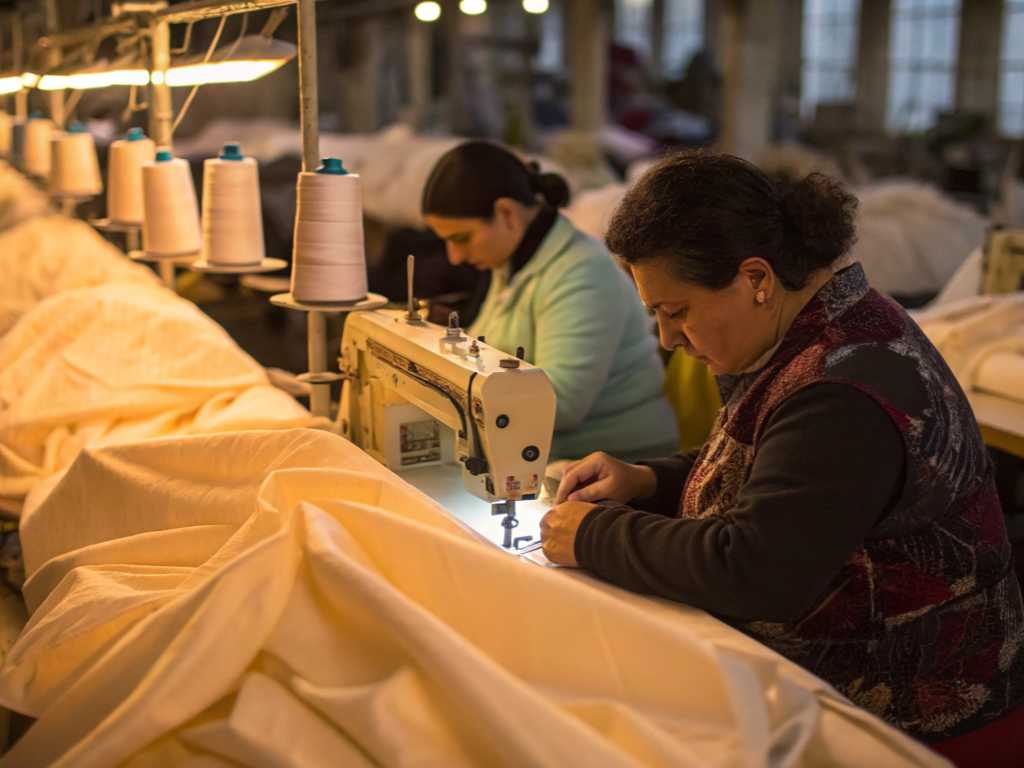
Impact on sampling performance:
- Single reference image: 1st sample success rate ~50–65%
- Two references: increases to ~65–75%
- Three to five references: can reach 80–90% for standard complexity garments
Key improvements come from:
1. Reduced structural guessing
Back and side views eliminate hidden construction assumptions.
2. Better fabric behavior prediction
Motion references help evaluate drape and tension distribution.
3. More accurate proportion alignment
Multi-angle views confirm balance between upper and lower body sections.
For example, in fitted satin dresses, side view references help identify bust projection and waist curvature alignment, which cannot be accurately derived from front view alone.
When can a single reference still work effectively?
Although multiple references improve accuracy, single-image workflows can still perform well under controlled conditions:
- Loose silhouette dresses with minimal shaping
- Basic knit or jersey fabric garments
- Standardized block-based designs
- Low-complexity production styles
In these cases, factories rely heavily on established pattern libraries, and deviation risk remains manageable.
However, even in simple categories, adding at least one additional angle (usually back view) still improves consistency by reducing closure and proportion uncertainty.
How does multi-reference input reduce production cost?
Cost efficiency in dress manufacturing is strongly tied to sampling iterations. Each additional sample round increases labor, fabric usage, and lead time.
Cost impact comparison:
- Single image input: 3–5 sampling rounds → higher cost accumulation
- Multi-reference input: 1–2 rounds → controlled cost structure
Estimated efficiency improvements:
- 20–35% reduction in sampling cost
- 25–40% reduction in development lead time
- 30–50% reduction in pattern revision workload
The primary cost saving comes from eliminating repeated corrections caused by missing structural clarity.
What is the practical value of multiple references in real production?
In real manufacturing environments, multiple references act as a risk control system. They reduce ambiguity before production begins and stabilize decision-making across technical teams.
Key operational benefits include:
- clearer pattern interpretation before cutting
- fewer fabric re-selections during sampling
- more stable grading across sizes
- improved consistency in bulk production
In structured OEM dress development, multiple references are not an optional enhancement—they function as a baseline requirement for predictable production outcomes.
The stronger the visual dataset, the closer the final garment stays to the original design intent across every production stage.
Start Your Accurate Dress Development with Jinfeng Apparel
If your current development process relies heavily on a single reference image, it is likely creating hidden risks in sampling accuracy, production cost, and delivery timelines. A structured approach combining technical packs, multi-reference visuals, and clear specification systems significantly improves first-sample success rate and reduces iteration cycles.
Jinfeng Apparel specializes in custom dress manufacturing with a development system built for accuracy, scalability, and brand consistency. From concept interpretation to bulk production, our team supports brands in converting visual ideas into production-ready garments with measurable precision.
If you are developing a new dress collection or refining your existing sampling process, you can contact Jinfeng Apparel for OEM/ODM custom dress solutions, technical development support, and bulk production services tailored to your brand requirements.