Skip to content

Mini dresses are not simply “short dresses.” In manufacturing reality, they are one of the most precision-sensitive garment categories because they combine tight silhouettes, short hem balance, body movement exposure, and high visual impact in a compact structure. A deviation of even 1–2 cm in waist positioning or hem curvature can change the entire visual proportion on the body. This is why brands often experience frustration when a mini dress looks perfect in a sketch but fails during sampling or bulk production.
Mini dress manufacturing is a structured process that transforms design concepts into wearable garments through technical development, fabric selection, pattern making, sampling, and bulk production. Each stage ensures fit accuracy, fabric stability, and production consistency. Factories rely on tech packs, measurement grading, and quality control systems to ensure scalable results across different sizes and order quantities.
The real complexity begins when a reference image meets factory reality. A design that looks effortless on social media often contains hidden production challenges—fabric stretch behavior, lining structure, seam tension, and body movement compatibility. At Jinfeng Apparel, these challenges are not treated as obstacles but as engineering variables that define whether a mini dress can move from concept to stable commercial production.
The deeper story behind mini dress manufacturing is not just about sewing. It is about translating emotion-driven fashion into measurable industrial logic—without losing the aesthetic intention that made the design attractive in the first place.
What Defines a Mini Dress in Manufacturing Terms?
Mini dresses in manufacturing are defined by a combination of controlled garment length, tight silhouette engineering, and precise proportion balancing across waist, hip, and hem zones. Unlike longer garments, there is almost no “visual buffer” in mini dresses—every 0.5–1 cm deviation directly changes the perceived fit and commercial appeal.

In production practice, a mini dress is typically classified by hem length range, body coverage ratio, and silhouette intensity rather than fashion styling alone. Factories treat it as a high-precision short garment category where pattern accuracy and fabric behavior directly determine whether a design can scale into bulk production.
A mini dress in manufacturing terms is a short-length garment usually ranging from 75–95 cm in total length, designed to end mid-thigh or higher depending on grading size. It requires strict control of waist positioning, hip balance, and hem alignment. Due to limited fabric coverage, even small measurement deviations significantly affect fit accuracy and visual proportion.
What Length Range Defines a Mini Dress?
In factory production, mini dress length is not a fixed number but a graded range based on market and size scaling. Most manufacturers use a base size (usually S or M) as the reference point, then apply grading rules across sizes.
| Size | Typical Length Range | Variation Control |
|---|---|---|
| XS | 73–78 cm | ±0.5 cm |
| S | 75–80 cm | ±0.5 cm |
| M | 78–83 cm | ±1.0 cm |
| L | 80–86 cm | ±1.0 cm |
| XL | 82–90 cm | ±1.0–1.5 cm |
In production reality, the most critical control point is not the absolute length, but the hem positioning relative to body height zones. A 2 cm shift can move the dress from “elegant mini” to “too short risk category,” especially in export markets with strict compliance expectations.
Factories also adjust length based on fabric type:
- Stretch fabrics → tighter tolerance control (±0.5 cm)
- Woven fabrics → slightly flexible tolerance (±1 cm)
- Structured fabrics → strict alignment due to stiffness visibility
What Silhouette Types Are Considered Mini Dresses?
Mini dress manufacturing is categorized by silhouette construction logic rather than aesthetics. Each silhouette changes how patterns are drafted, how seams are distributed, and how fabric behaves during movement.
Common production silhouettes include:
- Bodycon mini dress (tight stretch fit, high elasticity requirement)
- A-line mini dress (controlled flare, balance between waist and hem volume)
- Ruched mini dress (adjustable gathering zones for fit flexibility)
- Corset mini dress (internal structure with boning or reinforced lining)
- Slip mini dress (bias-cut or minimal structure, fabric flow priority)
Each silhouette carries different production difficulty levels. For example:
- Bodycon styles require precise stretch mapping across hip zones
- Corset styles require internal structure alignment within ±1 cm tolerance
- Ruched styles require controlled fabric distribution to avoid asymmetry
Factories usually classify these into low / medium / high complexity production tiers, which directly impacts sampling time and cost structure.
How Does Body Ratio Control Affect Mini Dress Production?
Mini dress manufacturing is heavily dependent on proportional engineering. Since the garment covers limited body area, small shifts in ratio create visible imbalance.
Key proportional control zones include:
- Shoulder-to-waist ratio
- Waist-to-hip transition curve
- Hip-to-hem visual balance line
Factories often use “visual balance mapping” to ensure:
- Waistline does not sit too high or too low (target tolerance ±1 cm)
- Hip curve follows natural body contour without distortion
- Hemline remains horizontally stable during movement
A common production issue occurs when grading increases size but fails to maintain proportional scaling. For example, increasing hip width without adjusting waist curve often leads to a “box effect,” especially in stretch fabrics.
To prevent this, manufacturers apply graded pattern logic rather than linear scaling, ensuring each size maintains consistent visual proportion rather than just dimensional increase.
Why Fabric Behavior Defines Mini Dress Classification?
Fabric selection is one of the strongest classification factors in mini dress manufacturing because it directly determines structure stability and fit reliability.
Typical fabric categories and production behavior:
| Fabric Type | Stretch Level | Production Impact |
|---|---|---|
| Jersey knit | High stretch | Easy fit, risk of deformation |
| Rib knit | Medium-high | Stable body fit, good recovery |
| Satin blend | Low-medium | Elegant look, requires precision cutting |
| Mesh | High stretch | Risk of distortion in seams |
| Woven crepe | Low stretch | Structured silhouette, less flexibility |
Factories evaluate fabric based on:
- Elastic recovery rate (how well it returns after stretch)
- Vertical and horizontal stretch balance
- Shrinkage after washing (target ≤3%)
- Seam stability under tension
Mini dresses made with unstable fabrics often fail during bulk production because small inconsistencies become amplified across repeated wear and washing cycles.
What Makes Mini Dresses High-Precision Garments?
Mini dresses are considered high-precision garments due to their limited structural tolerance and high visual exposure. Unlike long dresses or layered garments, there is no room to conceal production imperfections.
Key precision requirements include:
- Hemline deviation control within ±0.5–1 cm
- Seam alignment consistency across body panels
- Symmetry control between left and right side seams
- Waist positioning accuracy relative to base size
A major challenge in production is that mini dresses react strongly to:
- Fabric tension differences during sewing
- Cutting inconsistencies in small pattern pieces
- Elastic recovery variation after stitching
Because of this, factories implement tighter inspection standards compared to other garment categories. Many production teams treat mini dresses as “fit-sensitive SKUs,” requiring additional inline QC checkpoints during sewing and finishing stages.
How Is a Mini Dress Design Converted into a Tech Pack?
In mini dress manufacturing, converting a design into a tech pack is the stage that determines whether a visual idea can be reproduced accurately in real production conditions. A sketch or reference image only shows appearance, but a tech pack translates that appearance into measurable construction logic—covering every detail from fabric behavior to stitch density.
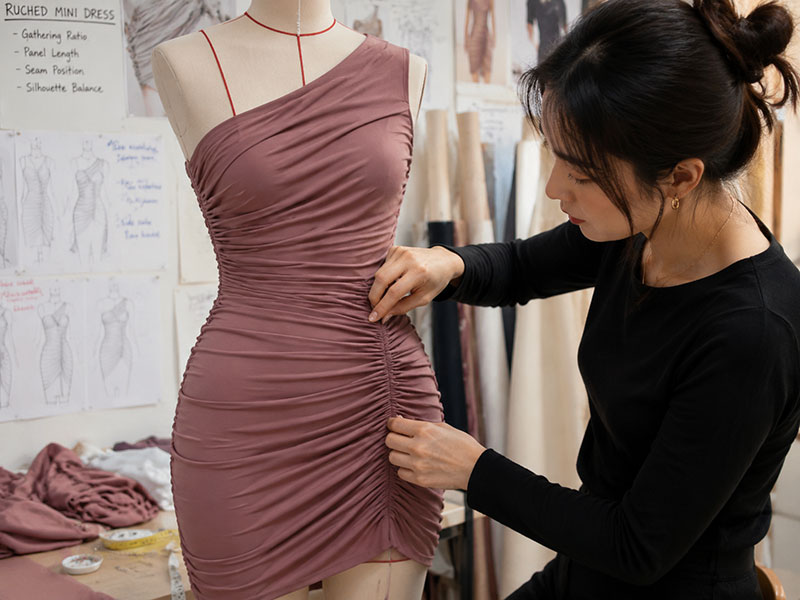
In factory practice, especially for tight silhouettes like mini dresses, a tech pack is not documentation—it is the production control system. It defines how the garment is cut, assembled, graded, and inspected. When this step is incomplete or unclear, sampling cycles increase, and fit stability in bulk production becomes inconsistent.
A mini dress design is converted into a tech pack by translating visual references into structured production data, including measurements, fabric specifications, stitching details, grading rules, and construction instructions. This ensures factories can reproduce the design accurately across sampling and bulk production with controlled fit, consistent sizing, and stable fabric behavior.
What Information Must Be Converted from Design to Tech Pack?
A mini dress design contains visual intent, but factories require structured production inputs. The conversion process focuses on turning aesthetic elements into measurable production data.
Core conversion elements include:
- Flat sketch breakdown (front, back, side structure logic)
- Key measurements (length, waist, bust, hip)
- Fabric specification (composition, GSM, stretch level)
- Construction method (seam type, lining, stitching density)
- Trim details (zipper, elastic, boning, labels)
| Design Element | Tech Pack Output | Production Purpose |
|---|---|---|
| Visual sketch | Flat technical drawing | Pattern creation reference |
| Style idea | Measurement chart | Size standardization |
| Fabric image | Fabric spec sheet | Material control |
| Decoration | Trim list | Assembly accuracy |
Missing even one of these elements often leads to assumption-based sampling, which increases revision rounds and cost.
How Are Measurements Structured in Mini Dress Tech Packs?
Measurement conversion is the foundation of tech pack accuracy. Mini dresses require tighter tolerance control because small deviations are highly visible.
Typical measurement structure includes:
- Garment length (base size + grading rule)
- Bust circumference
- Waist position and width
- Hip circumference
- Hem opening or flare width (if applicable)
- Shoulder width and strap length (for sleeveless styles)
Factories usually apply tolerance control standards:
- Stretch fabrics: ±0.5–1 cm
- Woven fabrics: ±1 cm
- Structured garments: ±0.5 cm for critical zones
A key production risk appears when grading is linear instead of proportional. For example, increasing bust width without adjusting waist curve often creates distortion in body balance, especially in fitted mini dresses.
Proper tech packs include not just numbers, but grading logic explanation, ensuring each size maintains consistent visual proportion.
How Is Fabric Specification Translated into Production Data?
Fabric conversion is one of the most critical steps in tech pack development because fabric behavior directly influences fit outcome.
A complete fabric specification includes:
- Fabric composition (polyester, nylon, cotton blend, etc.)
- Weight (GSM range, e.g., 180–320 GSM for knit mini dresses)
- Stretch percentage (horizontal/vertical stretch ratio)
- Recovery performance (shape retention after stretch)
- Dyeing requirements and color standard reference (Pantone code)
| Fabric Type | Key Tech Pack Data | Production Risk if Missing |
|---|---|---|
| Jersey knit | Stretch + GSM | Over-loose fit or sagging |
| Satin blend | Weight + finish | Slippage in seams |
| Rib knit | Recovery rate | Size deformation |
| Mesh | Elastic ratio | Seam distortion |
Without this conversion, factories may choose visually similar fabrics that behave differently in production, leading to inconsistent bulk results.
How Are Construction Details Defined in Tech Packs?
Construction detail conversion ensures that design intent is translated into repeatable manufacturing instructions.
Key construction elements include:
- Seam type (overlock, flatlock, invisible stitch)
- Stitch density (stitches per cm)
- Lining structure (full lining, partial lining, unlined zones)
- Closure system (invisible zipper, side zip, back zip)
- Internal support (boning, elastic band, interfacing)
Mini dresses require extra attention in seam placement because tight silhouettes amplify structural errors. Even a slight seam deviation can affect garment symmetry and body alignment.
Factories also define stress points, such as:
- Side seams under arm movement tension
- Waist seams under stretch load
- Hemline stability during walking motion
These details ensure the garment maintains shape during real wear conditions, not just in static fitting.
What Are Common Gaps in Tech Pack Conversion?
Many production delays come from incomplete or unclear conversion rather than technical inability.
Common gaps include:
- Missing lining specification
- No clear stretch requirement definition
- Undefined waist placement reference point
- Lack of seam allowance standards
- No clear grading rule explanation
These gaps force factories to interpret design intent, which increases sampling iterations. In mini dress production, each revision cycle typically adds 5–10 days to lead time.
A strong tech pack eliminates interpretation risk by converting all visual decisions into measurable production rules.
Why Tech Pack Accuracy Determines Sample Success?
Tech pack accuracy directly affects first sample success rate. In mini dress production, factories rely on the tech pack as the only reference point for pattern making and sampling.
When tech packs are precise:
- First sample accuracy improves significantly
- Fit correction cycles reduce by 30–50%
- Bulk production consistency becomes more stable
- Fabric waste and re-cutting decrease
When tech packs are incomplete:
- Multiple sampling rounds are required
- Fit deviations increase in bulk production
- Fabric selection errors become more likely
In practice, tech pack quality often has a greater impact on production success than design complexity itself.
How Does Fabric Selection Affect Mini Dress Production?
Fabric selection is one of the most decisive factors in mini dress manufacturing because it directly controls fit stability, silhouette behavior, comfort level, and production consistency. Unlike longer garments where structure can be hidden or corrected through draping, mini dresses expose every fabric weakness immediately—especially in tight silhouettes such as bodycon, ruched, and corset styles.
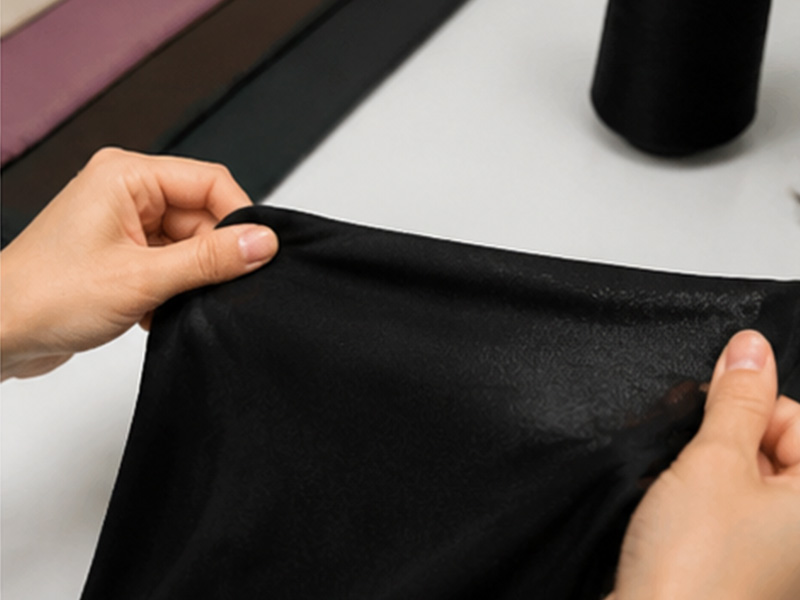
In production practice, fabric is not selected for appearance alone. It is evaluated as a functional system that must support cutting precision, stitching stability, and long-term wear performance across multiple size grades. A visually identical design can behave completely differently depending on fabric composition, stretch ratio, and recovery strength.
Fabric selection affects mini dress production by determining stretch behavior, structural stability, seam performance, and fit consistency across sizes. Incorrect fabric choice can cause distortion, sizing imbalance, or poor recovery after wear. Factories evaluate GSM, elasticity, shrinkage, and recovery rate before approving fabric for sampling and bulk production to ensure stable manufacturing outcomes.
How Does Fabric Stretch Impact Fit Stability?
Stretch behavior is one of the most critical variables in mini dress production because it directly determines how the garment conforms to the body.
Typical stretch categories:
- Low stretch (0–10%): structured silhouettes, stable shape but limited comfort
- Medium stretch (10–30%): balanced fit and durability
- High stretch (30–60%+): bodycon styles, high flexibility but higher deformation risk
| Stretch Level | Fit Effect | Production Risk |
|---|---|---|
| Low stretch | Structured, firm silhouette | Tight movement restriction |
| Medium stretch | Balanced fit | Minor shaping variation |
| High stretch | Body-hugging fit | Size distortion after wear |
In mini dresses, high-stretch fabrics are commonly used for bodycon styles, but they require precise pattern reduction control. If pattern shrinkage is not correctly calculated, the garment may stretch too much during wear and fail to recover, especially around waist and hip zones.
Factories often conduct stretch mapping tests before sampling to determine how fabric behaves under tension across different body areas.
How Does Fabric Weight Influence Silhouette Control?
Fabric weight (GSM) affects drape, structure, and visual balance. In mini dress production, weight determines whether the garment appears soft, structured, or unstable during movement.
Typical GSM ranges for mini dresses:
- Lightweight fabrics: 120–180 GSM (flowy, slip dresses)
- Medium weight fabrics: 180–260 GSM (standard knit dresses)
- Heavyweight fabrics: 260–350 GSM (structured bodycon or corset styles)
Heavier fabrics provide better shape retention but reduce flexibility. Lighter fabrics enhance comfort but may create transparency or curling issues at hems.
A common production issue occurs when fabric weight is too low for tight silhouettes. In such cases:
- Hem edges roll upward
- Side seams twist during wear
- Garment loses vertical alignment
Factories usually match GSM with silhouette type to ensure balance between comfort and structure stability.
Why Does Fabric Recovery Decide Long-Term Fit Performance?
Fabric recovery refers to the ability of material to return to its original shape after stretching. In mini dress manufacturing, recovery performance is critical because garments are worn close to the body and experience constant tension.
Recovery testing evaluates:
- Waist rebound after stretching
- Hip shape retention after movement
- Knee/hem deformation after sitting or walking
| Recovery Rate | Wear Performance | Risk Level |
|---|---|---|
| High recovery (90%+) | Stable fit after wear | Low risk |
| Medium recovery (70–90%) | Minor shape change | Moderate risk |
| Low recovery (<70%) | Permanent deformation | High risk |
Low recovery fabrics are often rejected for bodycon mini dresses because they create “bagging effect” at knees or waist after repeated wear.
Factories simulate real-use conditions during fabric testing by applying repeated stretch cycles before approving materials for sampling.
How Does Fabric Shrinkage Affect Size Accuracy?
Shrinkage is a hidden risk factor that often appears after washing or steam finishing. Even a small shrinkage variation can cause significant sizing inconsistency in mini dresses due to their short length.
Typical acceptable shrinkage levels:
- Knit fabrics: ≤3%
- Woven fabrics: ≤2%
- Elastic blends: ≤3–5% depending on composition
If shrinkage is not controlled:
- Hemline shortens unevenly across sizes
- Waist placement shifts upward
- Size grading becomes inconsistent in bulk production
Factories conduct pre-production shrinkage tests to simulate washing cycles and adjust pattern allowances accordingly. In mini dresses, even 1 cm shrinkage can visibly alter proportion balance, especially in fitted silhouettes.
What Fabric Risks Commonly Affect Mini Dress Production?
Fabric-related risks are one of the main causes of sampling failure and bulk inconsistency in mini dress manufacturing.
Common risks include:
- Color variation between dye lots
- Uneven elasticity across fabric rolls
- Seam slippage in high-stretch materials
- Fabric curling at hem edges
- Pilling after friction exposure
Each risk impacts production differently. For example, seam slippage often appears in mesh or low-density fabrics, while curling is more common in lightweight knits.
| Risk Type | Fabric Cause | Production Impact |
|---|---|---|
| Color inconsistency | Dye lot variation | Bulk mismatch |
| Seam slippage | Weak weave structure | Garment failure |
| Curling hem | Low GSM knit | Visual distortion |
| Pilling | Fiber quality | Reduced durability |
Factories reduce these risks through fabric inspection, pre-wash testing, and cutting layout optimization before mass production begins.
Why Fabric Selection Determines Production Success Rate?
Fabric selection is not a design decision alone—it directly defines whether a mini dress can move smoothly from sampling to bulk production without repeated corrections.
Strong fabric selection leads to:
- Stable first sample accuracy
- Reduced revision cycles
- Consistent size grading results
- Predictable bulk production quality
Weak fabric selection leads to:
- Multiple sampling rounds
- Fit instability across sizes
- Higher rejection rate in QC inspection
In mini dress manufacturing, fabric is often the difference between a scalable product and a high-risk style that struggles in production.
How Is a Mini Dress Sample Developed Before Bulk Production?
Mini dress sampling is the stage where design intent is physically tested against real fabric behavior, pattern engineering, and sewing execution. In manufacturing practice, sampling is not a “trial version” of the product—it is a controlled validation process that determines whether the style can be safely scaled into bulk production.
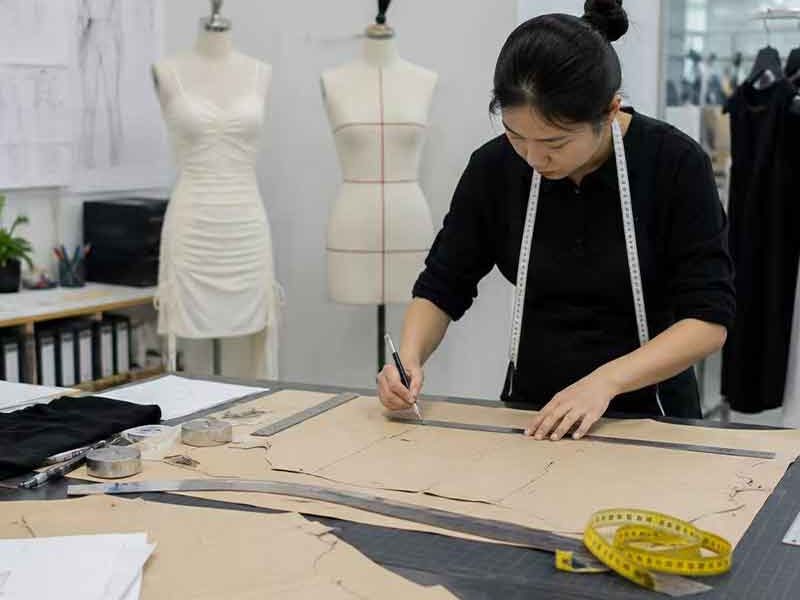
For mini dresses, sampling carries higher importance than many other garment categories because tight silhouettes, short lengths, and stretch fabrics leave almost no tolerance for error. A 1 cm deviation in waist position or hem alignment can significantly change proportion balance and wearing effect.
Factories treat sampling as a risk-control checkpoint before committing fabric, labor, and production capacity to bulk orders.
A mini dress sample is developed through structured stages including pattern making, fabric cutting, initial sewing, fitting evaluation, and revision adjustments. Each step verifies fit accuracy, fabric behavior, and construction stability. The approved sample becomes the reference standard for bulk production, ensuring consistent sizing, stitching quality, and garment performance across all units.
How Is Pattern Making Translated from Design to Sample?
Pattern making is the first physical step in sampling. It converts flat sketches or reference images into structured garment pieces that can be cut and assembled.
Key pattern development inputs:
- Base size selection (usually S or M as production reference)
- Body measurement chart (bust, waist, hip, length)
- Silhouette direction (bodycon, A-line, ruched, corset)
- Fabric stretch allowance calculation
- Seam allowance definition (typically 0.7–1.2 cm)
| Pattern Element | Purpose | Risk if Incorrect |
|---|---|---|
| Base size | Production reference point | Size distortion across grading |
| Seam allowance | Assembly tolerance | Fit tightness or looseness |
| Dart/curve design | Body shaping | Uneven silhouette balance |
| Length positioning | Proportion control | Incorrect hem placement |
In mini dress production, pattern accuracy directly affects whether the sample can pass first-round fitting. Small errors are amplified due to limited garment length and tight fit zones.
How Is the First Sample Constructed in Factory Workflow?
The first sample is built to test structural feasibility, not visual perfection. It is assembled using actual fabric or closest available substitute to simulate real production conditions.
Sampling workflow typically includes:
- Fabric preparation (pre-shrink and inspection)
- Cutting based on finalized pattern
- Initial sewing assembly
- Basic finishing (hemming, trimming, pressing)
- Internal QC check before fitting
Factories focus on three key validation points:
- Fit on standard mannequin or live model
- Seam alignment and tension behavior
- Fabric response under movement
| Sample Stage | Key Focus | Output Result |
|---|---|---|
| Cutting | Accuracy of pattern transfer | Garment panels |
| Sewing | Construction stability | Assembled sample |
| Finishing | Edge and shape refinement | Wearable sample |
| Fitting | Body performance test | Revision notes |
In most cases, the first sample is expected to have minor issues. Its purpose is to identify structural weaknesses early before bulk commitment.
How Are Fit Adjustments Managed After First Sample?
Fit adjustment is a controlled correction process based on sample evaluation feedback. In mini dresses, adjustments often focus on proportion balance rather than large structural changes.
Common adjustment areas:
- Waistline positioning correction (±0.5–1 cm)
- Hip curve reshaping for smoother body flow
- Hem leveling to maintain symmetry
- Strap length or neckline adjustment (for sleeveless styles)
- Fabric tension redistribution in stretch zones
Factories document all changes into a revised pattern version to avoid inconsistency in future samples.
| Adjustment Type | Typical Range | Impact Area |
|---|---|---|
| Waist shift | ±1 cm | Body proportion |
| Hem correction | ±0.5–1 cm | Visual balance |
| Side seam adjustment | ±0.5 cm | Fit tightness |
| Bust shaping | Minor curve change | Upper fit accuracy |
Multiple adjustment cycles may occur depending on design complexity. Bodycon and corset mini dresses usually require more revisions than A-line styles due to tighter structural requirements.
What Criteria Decide Sample Approval?
Sample approval is based on measurable production readiness rather than subjective appearance. Factories evaluate whether the sample can be replicated consistently in bulk production.
Key approval criteria include:
- Fit stability across standard size range
- Fabric behavior under stretch and movement
- Seam durability and alignment consistency
- Measurement accuracy within tolerance range
- Visual symmetry between left and right panels
A sample is approved only when:
- No critical fit distortion exists
- Fabric performance matches expectations
- Construction method is scalable for production lines
| Evaluation Area | Acceptance Standard | Risk Level if Failed |
|---|---|---|
| Fit accuracy | Within ±1 cm tolerance | High rejection rate |
| Fabric behavior | Stable recovery | Deformation risk |
| Stitch quality | Even tension | Seam failure |
| Symmetry | Balanced structure | Visual inconsistency |
Approval does not mean perfection—it means the design is ready for repeatable manufacturing under controlled conditions.
Why Sampling Determines Bulk Production Stability?
Sampling acts as the foundation for all downstream production decisions. In mini dress manufacturing, even small sample deviations can scale into large production inconsistencies.
A well-developed sample ensures:
- Accurate grading from S to XL
- Stable cutting ratios across fabric layers
- Predictable sewing line output
- Reduced QC rejection rate in bulk
Poor sampling leads to:
- Repeated revision cycles
- Fabric waste due to re-cutting
- Inconsistent sizing across production batches
- Higher defect rate in final inspection
Factories often treat approved samples as “golden reference units” used throughout bulk production for comparison and QC verification.
How Does Bulk Production Ensure Consistency?
Bulk production consistency in mini dress manufacturing depends on how well factories control fabric batches, sewing execution, size grading accuracy, and multi-stage quality inspection. Once a sample is approved, the challenge shifts from “creating one good piece” to “replicating the same result hundreds or thousands of times without deviation.”

In mini dresses, even small inconsistencies become highly visible due to tight silhouettes and short garment length. A 1 cm shift in waist position or uneven stretch across fabric rolls can immediately affect fit balance. Consistency is achieved through strict process control systems, standardized operation steps, and continuous in-line monitoring during production.
Bulk production ensures consistency by standardizing fabric batches, controlling sewing parameters, applying strict size grading rules, and performing multi-stage quality inspection. Each mini dress is produced under the same technical conditions as the approved sample, ensuring stable fit, consistent measurements, and uniform stitching quality across all units.
How Is Fabric Controlled Across Bulk Production?
Fabric control is the first layer of consistency management. In mini dress production, fabric variation is one of the biggest causes of inconsistency, especially in stretch-based materials like jersey, rib knit, and satin blends.
Factories implement fabric control through batch locking, meaning all garments in one production order are cut from the same dye lot. This reduces color variation and ensures consistent elasticity behavior across all units.
Key fabric control practices:
- Same dye lot usage across entire order
- Fabric inspection before cutting (surface defects, width consistency)
- Pre-shrink testing for dimensional stability
- Roll-to-roll elasticity comparison testing
| Control Item | Standard Practice | Risk if Ignored |
|---|---|---|
| Dye lot consistency | Single batch cutting | Color mismatch |
| Fabric width check | ±2 cm tolerance | Pattern misalignment |
| Elasticity test | Batch comparison | Fit inconsistency |
| Shrinkage test | ≤3% deviation | Size distortion |
In mini dresses, especially bodycon styles, even slight elasticity variation between fabric rolls can cause uneven tension across seams. This results in visible distortion when worn, particularly around waist and hip areas. Proper fabric control ensures that every garment behaves like the approved sample.
How Are Sewing Standards Maintained in Production Lines?
Sewing consistency is achieved through standardized machine settings, operator training, and fixed construction guidelines. In mini dress manufacturing, stitching precision directly affects both visual appearance and structural durability.
Factories define sewing parameters before production begins:
- Stitch density (e.g., 3.0–3.5 stitches/cm for stretch seams)
- Seam type consistency (overlock, coverstitch, flatlock)
- Thread tension calibration for elastic fabrics
- Reinforcement points at stress zones (waist, side seams)
Operator teams follow a “single-operation standard,” meaning each worker performs only defined stitching tasks to reduce variation.
| Sewing Parameter | Standard Range | Purpose |
|---|---|---|
| Stitch density | 3.0–3.5 / cm | Seam strength |
| Seam allowance | 0.7–1.2 cm | Fit stability |
| Thread tension | Calibrated daily | Prevent puckering |
| Reinforcement points | Waist/hip seams | Durability |
Mini dresses are particularly sensitive to seam tension. Over-tight stitching can cause fabric puckering, while loose stitching leads to seam slippage during wear. Consistent machine calibration ensures every unit replicates the approved sample structure.
How Is Quality Inspection Structured During Production?
Quality inspection in bulk production is not a single step—it is a layered system designed to detect issues early before they scale across large quantities.
Inspection stages typically include:
- Inline inspection (during sewing)
- Mid-line checks (after partial assembly)
- Final inspection (after finishing and pressing)
Each stage focuses on different defect categories.
| Inspection Stage | Focus Area | Defect Type Detected |
|---|---|---|
| Inline QC | Stitching & assembly | Seam errors |
| Mid QC | Fit & structure | Measurement deviation |
| Final QC | Appearance & finish | Visual defects |
Common inspection checkpoints in mini dress production:
- Measurement accuracy vs approved sample
- Symmetry between left and right panels
- Seam alignment consistency
- Fabric defects (holes, stains, shading differences)
- Elastic recovery after finishing
Factories often apply AQL standards (Acceptable Quality Level) for bulk inspection, typically ranging from 2.5% to 4.0% depending on order level and garment complexity. Mini dresses with tight fit requirements usually follow stricter thresholds due to higher visual sensitivity.
How Does Size Grading Affect Production Consistency?
Size grading is the process of scaling the base pattern across multiple sizes while maintaining proportional balance. In mini dress production, grading is one of the most critical factors influencing consistency across the entire order.
Unlike simple linear scaling, proper grading requires proportional adjustment across:
- Bust expansion
- Waist curve shift
- Hip widening
- Hem alignment stability
If grading is not controlled correctly, size inconsistency appears even if each unit is individually well-made.
| Size Range | Key Adjustment Focus | Risk Without Control |
|---|---|---|
| XS–S | Waist curve precision | Tight fit imbalance |
| S–M | Hip expansion control | Proportion distortion |
| M–L | Length stability | Hem unevenness |
| L–XL | Structural reinforcement | Shape collapse |
Factories use graded pattern systems rather than manual scaling to ensure each size maintains the same visual ratio as the original sample. This is especially important in mini dresses, where even small proportional errors are immediately noticeable due to limited garment coverage.
Why Process Control Systems Define Production Stability?
Beyond individual steps, overall consistency depends on system-level control. Process control ensures that every stage of production follows the same technical standard defined by the approved sample.
Core process control elements:
- Standard operating procedures (SOPs) for each garment type
- Machine calibration schedules
- Real-time production monitoring
- Sample-based reference checks during production
- Defect tracking and correction loops
Factories often use the approved sample as a “golden reference unit” placed on the production floor. Every line operator compares output against this reference during work.
A simplified process control structure:
| Control Layer | Function | Impact |
|---|---|---|
| SOP system | Defines production rules | Reduces variation |
| Machine control | Ensures technical stability | Prevents stitching errors |
| Inline monitoring | Early defect detection | Reduces waste |
| Reference sample | Visual benchmark | Maintains consistency |
In mini dress manufacturing, process control is essential because the margin for error is extremely small. Without structured control systems, even experienced production lines can produce inconsistent results across batches.
What Are the Key Risks in Mini Dress Manufacturing?
Mini dress manufacturing carries higher production sensitivity compared to many other garment categories because the design relies on tight silhouettes, short lengths, and fabric-dependent fit behavior. Small deviations in pattern accuracy, fabric performance, or sewing execution can quickly scale into visible defects in bulk production.

In factory practice, risks are not isolated issues—they are interconnected. A fabric inconsistency can trigger fit imbalance, which then affects grading accuracy and final inspection results. Managing mini dress production therefore requires early identification of structural risks before sampling and bulk commitment.
Key risks in mini dress manufacturing include fit distortion, fabric instability, measurement inconsistency, and production scaling errors. These risks often emerge during sampling or bulk production due to tight silhouette requirements and high sensitivity to fabric stretch, seam accuracy, and grading precision.
Why Do Fit Issues Happen in Tight Silhouette Dresses?
Fit issues are one of the most frequent risks in mini dress production because the garment closely follows body contours. Even minor pattern deviations become highly visible.
Common causes include:
- Incorrect waist positioning (±1–2 cm shift)
- Improper stretch allocation in pattern making
- Uneven seam tension during sewing
- Fabric recovery mismatch after wear
| Fit Problem | Root Cause | Visible Effect |
|---|---|---|
| Waist misalignment | Pattern error | Proportion imbalance |
| Tight hip area | Under-graded pattern | Restricted movement |
| Loose bust zone | Over-grading | Wrinkled appearance |
| Asymmetric hem | Cutting deviation | Visual imbalance |
Mini dresses have minimal structural tolerance. Unlike longer garments, there is no visual compensation zone, so even small fit errors appear amplified during wear.
How Does Fabric Instability Affect Production Outcome?
Fabric instability refers to unpredictable behavior in stretch, recovery, shrinkage, or surface structure. In mini dresses, unstable fabric is one of the highest production risks.
Key instability factors:
- Elastic recovery below 80%
- Uneven stretch distribution across rolls
- Shrinkage above 3% after wash
- Fabric curling or twisting after cutting
| Fabric Issue | Production Impact | Risk Level |
|---|---|---|
| Low recovery | Shape deformation after wear | High |
| Uneven stretch | Fit inconsistency across sizes | High |
| Shrinkage | Length variation after wash | Medium–High |
| Curling edges | Hem distortion | Medium |
Fabric instability often appears only after sampling or washing tests, making early testing essential before bulk production approval.
Why Do Measurement Deviations Scale into Bulk Errors?
Measurement inconsistency is a silent but critical risk in mini dress manufacturing. Because garments are small in structure, even 0.5–1 cm deviation can significantly affect proportion.
Main causes:
- Inaccurate pattern grading logic
- Cutting deviation during fabric lay
- Relaxation of fabric during production
- Lack of tolerance control standards
| Stage | Common Error | Result |
|---|---|---|
| Pattern making | Incorrect base scaling | Size imbalance |
| Cutting | Fabric shift | Panel mismatch |
| Sewing | Seam drift | Asymmetry |
| Finishing | Steam distortion | Length change |
A key issue in mini dresses is cumulative error. Small deviations at each stage combine into visible defects in final garments, especially in bodycon and fitted styles.
What Production Errors Commonly Occur in Mini Dresses?
Mini dress production involves multiple precision steps. Errors often occur when production speed overrides control systems.
Common production errors include:
- Uneven seam stitching on stretch fabrics
- Misaligned side seams under tension
- Inconsistent elastic band application
- Incorrect zipper placement affecting fit balance
- Hem distortion due to fabric tension during sewing
| Error Type | Cause | Result in Final Garment |
|---|---|---|
| Seam inconsistency | Machine tension variation | Wrinkling or pulling |
| Zipper misplacement | Incorrect marking | Fit imbalance |
| Elastic error | Manual inconsistency | Waist instability |
| Hem distortion | Fabric stretch during sewing | Uneven length |
Mini dresses require tighter machine calibration because fabric behavior changes significantly under stitching pressure.
How Do Sampling Risks Affect Bulk Production?
Sampling risks often become the root cause of bulk production failures. If the sample does not accurately reflect production conditions, scaling becomes unstable.
Key sampling risks include:
- Use of incorrect fabric substitutes during sampling
- Lack of final grading confirmation before approval
- Incomplete tech pack interpretation
- Fit adjustments not fully reflected in production pattern
| Sampling Issue | Bulk Impact | Severity |
|---|---|---|
| Wrong fabric used | Unexpected fit change | High |
| Incomplete approval | Rework in bulk | High |
| Missing measurement update | Size inconsistency | Medium–High |
| Unverified construction | Production errors | High |
In mini dress manufacturing, the sample must act as a production blueprint. Any mismatch between sample and bulk conditions increases cost and delay risk.
Why Does Size Grading Create Hidden Production Risks?
Size grading risk appears when scaling from base size to full size range. Mini dresses are especially sensitive because proportion changes are immediately visible.
Common grading risks:
- Waist and hip scaling not aligned proportionally
- Length adjustment not synchronized with body ratios
- Excessive grading in stretch fabrics causing distortion
- Lack of curve adjustment in fitted styles
| Size Range | Grading Risk | Visual Effect |
|---|---|---|
| XS–S | Tight fit distortion | Compression imbalance |
| S–M | Waist shift | Proportion mismatch |
| M–L | Hip expansion error | Shape distortion |
| L–XL | Structural instability | Loose fit collapse |
Proper grading requires proportional adjustment, not linear scaling. Without this, larger sizes often lose the intended silhouette design.
Custom Mini Dress Manufacturing
If a brand is planning to develop a mini dress collection—whether bodycon, ruched, corset-style, or satin slip—Jinfeng Apparel provides full OEM & ODM support from fabric sourcing to bulk production.
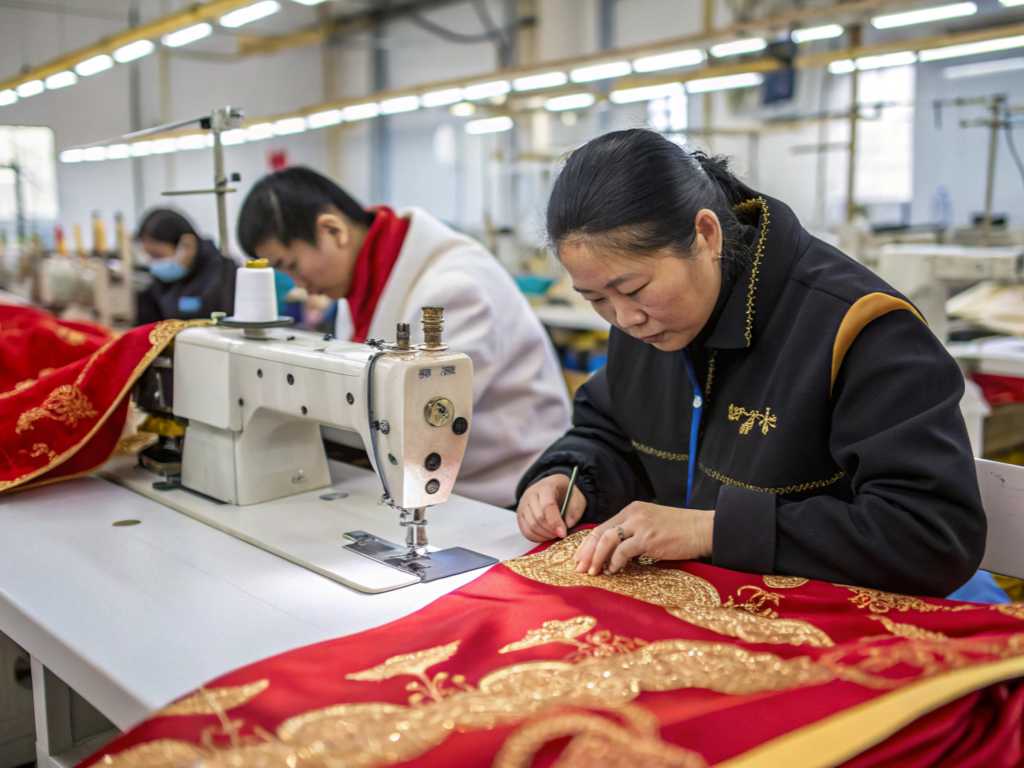
Every stage is controlled: fabric testing, pattern development, sampling, and production scaling, ensuring each mini dress maintains stable fit and commercial consistency.
For brands preparing seasonal drops or private label collections, we can support:
- Low MOQ sampling development
- Rapid sample turnaround
- Bulk production scaling
- Fabric and fit optimization
Send your reference design or tech pack to Jinfeng Apparel, and our development team will evaluate production feasibility, cost structure, and sampling timeline within 24 hours.