Skip to content

Large fashion brands rarely choose dress manufacturers based on price alone. The decision is shaped by a layered evaluation system that blends technical capability, production stability, sampling precision, communication discipline, and long-term scalability. In modern fashion sourcing, especially for dresses such as satin eveningwear, bodycon silhouettes, mesh party styles, and structured corset designs, a manufacturer is not simply a production unit but a strategic extension of the brand’s identity.
What often surprises many new entrants into fashion sourcing is how structured this evaluation process actually is. Large brands typically operate with internal scoring systems that measure factories across more than 30 performance indicators—from fabric consistency and stitching tolerance to response time during development cycles. A factory that cannot maintain consistent quality across 1,000 units will rarely be considered, regardless of how perfect a sample appears.
Large fashion brands select dress manufacturers based on a structured evaluation system that includes production capacity, sampling accuracy, quality control consistency, communication efficiency, compliance certifications, and scalability. Factories are assessed not only on sample quality but on their ability to replicate identical results in bulk production while maintaining timeline reliability and long-term partnership stability.
Behind this structured system lies a more human reality: a single missed stitch line or delayed sample can derail an entire seasonal launch. One European brand once delayed a summer collection by six weeks simply because a manufacturer misinterpreted lace placement across size grading. That moment alone reshaped how the brand built its supplier qualification process. This is where Jinfeng Apparel operates differently—by treating every sample as a production blueprint rather than a design experiment, ensuring alignment from first stitch to final shipment.
What Criteria Do Fashion Brands Use to Evaluate Manufacturers?
Fashion brands evaluate dress manufacturers through a structured set of operational, technical, and production-based criteria designed to reduce risk across sampling, bulk production, and delivery cycles. The selection process focuses on measurable performance rather than presentation quality. A factory is only considered suitable when it can consistently convert design inputs into repeatable garments with controlled tolerance levels across large volumes.
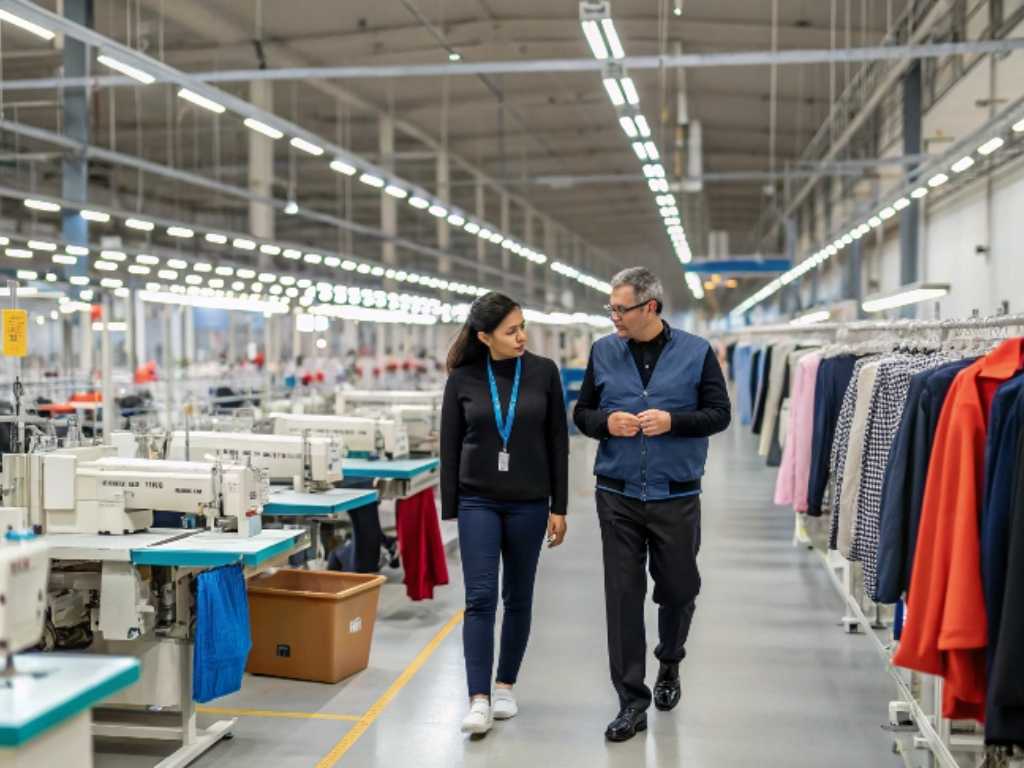
Core evaluation focus areas include production stability, fabric and trim capability, sampling accuracy, quality control systems, and delivery reliability. Most brands apply scoring systems where factories must reach 80–90% threshold performance before approval for long-term cooperation.
Production capacity and scalability
Production capacity is assessed based on how many units a factory can produce per month without quality degradation. Mid-to-large fashion brands typically require:
- 20,000–50,000 pcs/month for emerging labels
- 50,000–150,000 pcs/month for established collections
- Multi-line scalability for peak seasonal demand
Scalability is not only about machinery quantity. It includes line balancing efficiency, worker skill distribution, and whether production can expand without increasing defect rate. Factories with rigid single-line systems often fail during seasonal spikes due to bottlenecks in cutting, sewing, or finishing.
Fabric and material handling capability
Fabric capability is evaluated based on range, stability, and behavior under production conditions. Key assessment points include:
- Fabric categories handled (satin, chiffon, knit, mesh, velvet, stretch blends)
- Shrinkage control tolerance (usually within 3–5%)
- Color fastness consistency across dye lots
- Compatibility between fabric and construction type
For dresses, fabric behavior is critical. Satin shifting, mesh tension imbalance, or lace distortion can change final fit even if cutting accuracy is correct. Strong manufacturers maintain fabric testing logs before production approval.
Sampling accuracy and development precision
Sampling is used as a validation stage to test whether design intent can be reproduced into a production-ready garment. Evaluation metrics include:
- Measurement deviation between sample and tech pack (target <2–3%)
- Stitch density consistency
- Symmetry accuracy (especially for bodycon and structured dresses)
- Revision efficiency per sample round
Sampling speed benchmarks:
| Stage | Standard Time | High Efficiency Factory |
|---|---|---|
| Basic sample | 7–10 days | 5–7 days |
| Complex dress | 10–15 days | 7–12 days |
| Revision cycle | 3–5 days | 1–3 days |
Factories that require repeated corrections often indicate weak pattern interpretation systems or poor communication between design and production teams.
Quality control and defect management systems
Quality control systems determine whether production results remain stable across large volumes. Brands typically evaluate:
- AQL inspection level (2.5 standard for fashion garments)
- Inline inspection coverage (cutting, sewing, finishing stages)
- Final inspection sampling rate (100% or random batch testing)
- Defect classification system (critical, major, minor)
A strong manufacturer maintains defect rates below 2.5–3%. Anything above 5% is considered high risk for repeat orders.
Production consistency across bulk orders
Consistency is tested through pilot runs and mass production audits. Key evaluation indicators:
- Color deviation between batches (ΔE value control under 2–3)
- Size grading accuracy across full range (XS–XL or extended sizing)
- Stitch uniformity across production lines
- Fabric lot consistency in repeated orders
Brands often conduct 50–200 pcs trial production before approving full-scale orders. This stage reveals real factory behavior under production pressure.
Compliance, certifications, and audit readiness
Compliance is no longer optional for established fashion brands. Common requirements include:
- ISO 9001 quality management certification
- OEKO-TEX fabric safety standards
- Social compliance audit (SEDEX / BSCI)
- Chemical safety testing (REACH compliance for EU markets)
Factories without documented compliance systems are often excluded regardless of production quality, especially in European and US supply chains.
Pricing structure and cost transparency
Pricing evaluation focuses on stability and clarity rather than lowest cost. Key factors:
- Material cost breakdown transparency
- Labor cost consistency across orders
- No hidden charges during revision or sampling stages
- Stable pricing across repeat orders
Brands prefer predictable pricing models even if unit cost is slightly higher, because volatility creates long-term budgeting risks.
Communication efficiency and project control
Communication performance is treated as part of production capability. Evaluation includes:

- Response time (expected within 12–24 hours)
- Update frequency during production (weekly or milestone-based)
- Documentation clarity (measurement sheets, fabric approvals, QC reports)
- Issue resolution speed (within 24–48 hours for urgent corrections)
Factories with structured communication systems reduce production errors by up to 30–40% compared to informal communication workflows.
How Do Brands Assess Sampling and Development Capability?
Sampling and development capability is one of the most decisive filters in manufacturer selection. It determines whether a dress concept can be transformed into a production-ready garment with controlled fit, stable construction, and repeatable quality. Large fashion brands treat sampling as a risk-testing phase rather than a design stage. A factory is only considered reliable when sampling results are consistent, measurable, and repeatable across multiple revisions without structural deviation.
In real sourcing practice, more than 60% of supplier rejection decisions happen during sampling evaluation, not during bulk production. The reason is simple: if a factory cannot interpret design intent correctly at sample stage, scaling production will only amplify errors.
Ability to develop from sketch, image, or tech pack
Sampling capability starts with input interpretation. Strong manufacturers can work from three levels of development input:
- Technical pack with full measurements and construction details
- Flat sketch with measurement references
- Reference image without technical breakdown
Factories are evaluated based on how accurately they convert incomplete inputs into structured garments. When working from images alone, deviation risk increases by 25–40%, so stronger factories compensate through internal pattern expertise rather than external clarification loops.
A high-performing development team typically maintains:
- Internal pattern library for repeated silhouettes
- Standard measurement baseline for dress categories
- Fabric behavior reference database
Factories unable to interpret ambiguous design inputs often require excessive clarification, which increases sampling cycles and delays product development timelines.
Sampling speed and development turnaround time
Speed is not only a time metric—it reflects internal organization efficiency. Sampling lead time is used to evaluate how well pattern makers, fabric sourcing teams, and sewing units are synchronized.
Typical benchmarks:
| Complexity Level | Standard Timeline | High-Performance Factory |
|---|---|---|
| Basic dress | 7–10 days | 5–7 days |
| Structured dress (corset/bodycon) | 10–15 days | 7–10 days |
| Complex design (lace, mesh, multi-layer) | 12–18 days | 8–12 days |
Fast turnaround without accuracy is not valued. Brands often prioritize factories that maintain stable timing across multiple sampling rounds rather than one-time speed performance.
Revision efficiency and pattern adjustment capability
Revision capability reveals the technical depth of a factory. It is evaluated based on how quickly corrections are implemented after sample feedback.
Key evaluation points include:
- Time required to update patterns after feedback (24–72 hours ideal)
- Accuracy of first revision correction rate (target >70%)
- Number of revisions required before approval (usually 1–3 rounds)
Factories with strong CAD systems and experienced pattern makers can adjust bust shaping, waist grading, and hem balance without affecting overall garment structure. Weak factories often treat revisions as rework instead of precision adjustment, which increases development cycles significantly.
Fit validation and measurement accuracy
Fit is one of the most sensitive evaluation areas in dress manufacturing. Even a 1–1.5 cm deviation in waist or bust measurement can change garment classification in categories like bodycon or corset dresses.
Evaluation methods include:
- Mannequin fitting tests (standard US size 4/6 reference models)
- Measurement comparison against tech pack (target deviation <2%)
- Movement stress testing for stretch fabrics
- Length and proportion consistency checks across sizes (XS–XL)
Brands also evaluate how factories handle grading logic. Poor grading systems often cause disproportionate scaling between sizes, especially in waist-to-hip ratio adjustments.
Fabric behavior testing during sampling
Fabric response is tested during sampling because materials behave differently once cut and sewn. Evaluation includes:
- Shrinkage after steaming or washing (target <3–5%)
- Elastic recovery for stretch fabrics (minimum 90% recovery rate)
- Seam stability under tension
- Fabric drape consistency for flowing dresses
A common failure point occurs when factories ignore fabric-specific construction adjustments. For example, satin requires different seam tension compared to knit or chiffon. Strong manufacturers adjust stitch density and seam allowance based on fabric type rather than applying a uniform method.
Communication clarity during sampling development
Sampling evaluation is not limited to technical output—it also includes communication behavior during development. Brands measure:
- Response speed to revision feedback (within 12–24 hours)
- Clarity of technical questions raised by factory
- Documentation quality (measurement sheets, correction notes)
- Visual proof submission (sample photos, inline progress updates)
Factories that proactively identify construction risks during sampling are rated significantly higher than those that only follow instructions. This reduces downstream production risk by up to 30–35%.
Sampling success rate and approval consistency
Final evaluation metric is approval efficiency across multiple styles. A reliable manufacturer typically achieves:
- First-sample approval rate: 40–60% (industry average)
- Second-round approval rate: 70–85%
- Final approval rate after revisions: 90%+
Factories with inconsistent sampling results across different styles are considered unstable, even if individual samples are high quality. Consistency across categories (mini dresses, satin dresses, structured dresses) is a key approval factor.
What Role Does Production Consistency Play in Supplier Selection?
Production consistency is one of the strongest decision filters when fashion brands evaluate dress manufacturers. It determines whether a factory can replicate the approved sample across thousands of units without variation in fit, stitching, fabric behavior, or finishing quality. In real sourcing practice, consistency is more important than single-sample excellence because commercial orders depend on repeatability under scale, not isolated performance.
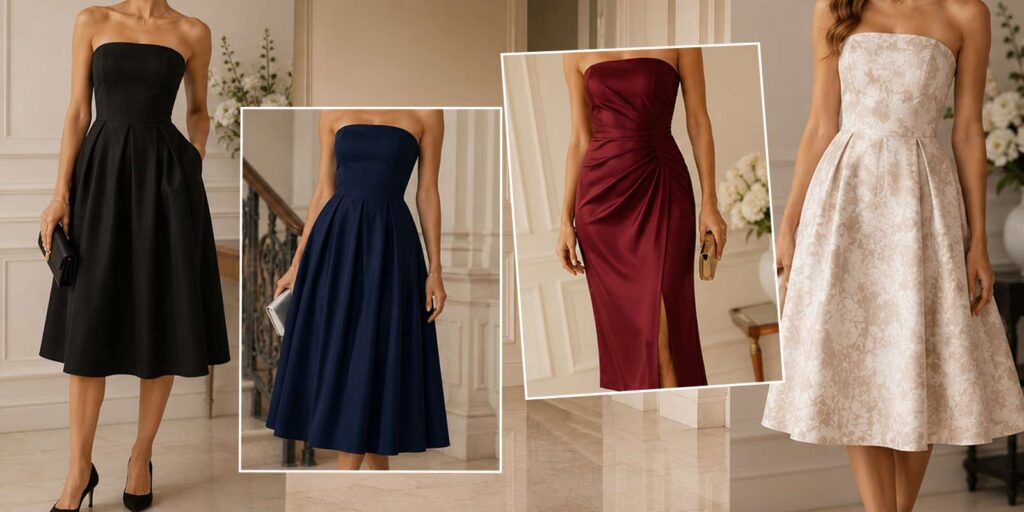
A manufacturer may produce a perfect sample, but if bulk output shows variation across sizes, colors, or production batches, the partnership is usually rejected or downgraded. Large brands typically set strict tolerance thresholds, often requiring less than 2–3% deviation across full production runs.
Bulk production repeatability across large orders
Repeatability measures whether every production batch matches the approved sample. It is tested through multi-batch inspections and pilot production runs before full order release.
Key evaluation indicators include:
- Stitching consistency across different production lines
- Fabric behavior stability under repeated cutting and sewing cycles
- Uniform finishing quality across 500–10,000+ units
- Defect distribution rate across batches
Factories with unstable systems often show “batch variation,” where early production units differ from later ones due to machine calibration drift or workforce inconsistency. Strong manufacturers implement standardized SOPs and inline QC checkpoints to maintain uniform output.
Defect rate control and tolerance management
Defect rate is one of the most measurable indicators of production reliability. It is calculated through random inspections and full-line quality checks.
Industry benchmarks:
- High-end fashion: <2.5% defect rate
- Mid-market fashion: <3–5% defect rate
- High-risk factories: >5% defect rate
Defects are typically categorized into:
- Critical defects (wrong size, broken structure)
- Major defects (stitching issues, misalignment)
- Minor defects (thread ends, small finishing issues)
Factories with structured QC systems reduce defect accumulation by implementing:
- Inline inspection every 20–30 pieces
- Mid-production audits
- Final AQL inspection before packing
Without layered QC control, defect rates tend to increase exponentially in bulk production.
Size grading accuracy and fit stability
Size consistency ensures that a dress fits proportionally across all sizes (XS–XL or extended ranges). Poor grading systems often create distorted proportions, especially in fitted dresses such as bodycon or corset styles.
Key evaluation metrics include:
- Waist-to-hip ratio consistency across sizes
- Length scaling accuracy (hem, sleeve, torso)
- Bust shaping alignment in structured garments
- Stretch behavior consistency across sizes
Typical tolerance levels:
| Measurement Area | Acceptable Deviation |
|---|---|
| Bust/Waist/Hip | ±1–1.5 cm |
| Length (dress/hem) | ±1–2 cm |
| Symmetry alignment | <1 cm deviation |
Factories with strong CAD grading systems maintain proportional scaling across all sizes, reducing fitting risks in retail environments.
Fabric and color batch uniformity
Fabric consistency ensures that materials behave identically across different production batches. This includes texture, weight, elasticity, and color accuracy.
Evaluation includes:
- Fabric shrinkage consistency (<3–5%)
- Color difference control (ΔE <2–3 for dyed fabrics)
- Stretch recovery stability (≥90% for elastic fabrics)
- Batch-to-batch texture uniformity
A common failure point occurs when factories switch fabric suppliers between batches without strict approval control. Even small variations in yarn composition or dye concentration can result in visible differences under retail lighting conditions.
Production system stability and workflow control
Consistency is not only a product outcome—it reflects internal factory structure. Brands evaluate whether production systems are stable under real workload conditions.
Key indicators:
- Line balancing efficiency across sewing teams
- Standard operating procedures (SOP) enforcement rate
- Machine calibration consistency
- Worker rotation and skill standardization
Factories relying heavily on individual skilled workers rather than standardized systems often show performance fluctuation during peak production seasons.
Pilot run validation before mass production
Pilot production is used to test real manufacturing behavior before full-scale orders. Typically 50–200 units are produced to simulate actual production conditions.
Evaluation focus:
- Error rate during first production run
- Consistency between pilot and final production output
- Fabric behavior under real sewing conditions
- Packaging and finishing consistency
Brands often use pilot runs as a final approval gate. If variation appears at this stage, full production is usually paused or re-engineered.
How Do Fashion Brands Evaluate Communication and Project Management?
Communication and project management capability is often the hidden decision factor in dress manufacturer selection. Even when sampling and production quality are strong, weak coordination systems can lead to missed deadlines, incorrect approvals, and uncontrolled production risks. For fashion brands operating seasonal calendars, communication speed and project structure directly influence launch success and revenue timing.
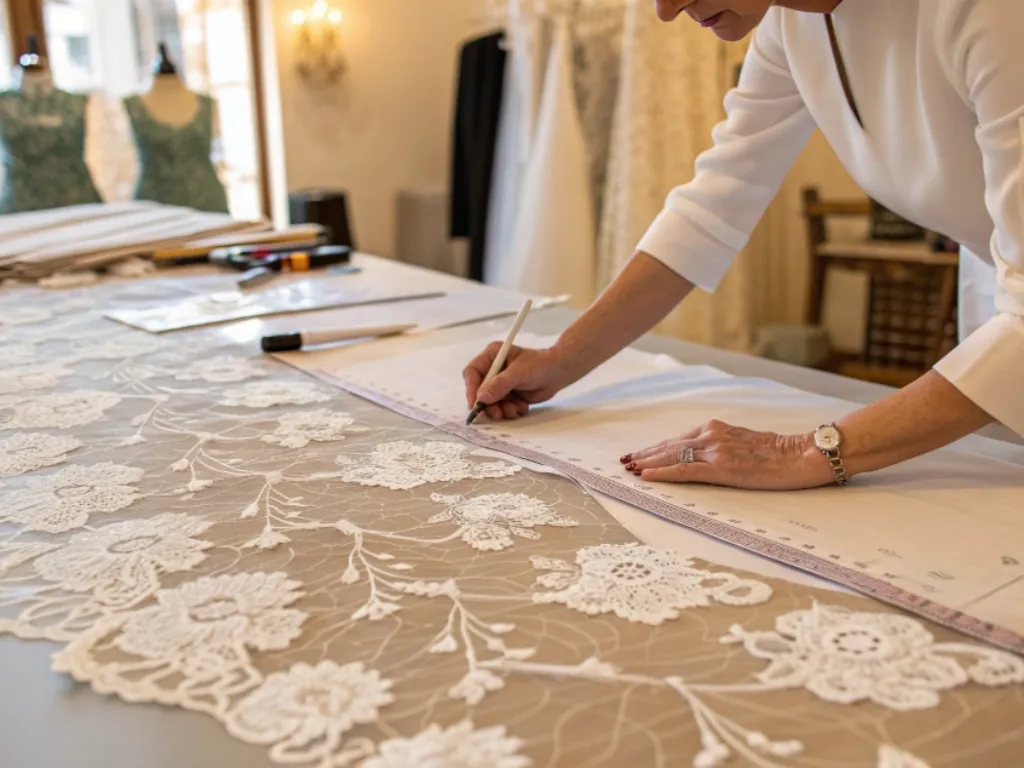
In real sourcing decisions, factories are evaluated not only on what they produce, but on how clearly and consistently they manage information flow across sampling, bulk production, and shipping stages. A well-organized communication system reduces production errors by up to 30–40% and significantly shortens decision cycles.
Communication speed and response discipline
Response speed is the first measurable indicator of communication strength. It reflects how quickly a factory can react to sampling feedback, production questions, and urgent adjustments.
Industry expectations:
- Standard response time: 12–24 hours
- Urgent production issues: within 2–6 hours
- Sampling revision feedback: within 24–48 hours
Factories are evaluated based on consistency, not occasional fast replies. Slow response cycles often lead to delayed approvals, missed fabric reservations, and production bottlenecks during peak season.
Strong communication teams typically assign dedicated account coordinators rather than relying on production staff to handle external communication.
Production transparency and progress visibility
Transparency refers to how clearly production status is shared across all stages. Brands expect structured visibility rather than informal updates.
Key evaluation points include:
- Weekly production progress reports
- Inline production photos during sewing stages
- Fabric cutting confirmation records
- Pre-shipment inspection documentation
Factories with weak transparency systems often create uncertainty during bulk production, especially when multiple styles are running simultaneously.
A structured reporting system typically reduces order follow-up frequency by 25–35% and improves decision accuracy during production adjustments.
Project coordination and multi-style management
Most fashion brands run multiple styles within a single season. Communication systems are evaluated based on how well a factory manages parallel development and production workflows.
Key assessment areas:
- Ability to track multiple SKUs simultaneously
- Clear separation of sampling vs bulk production timelines
- Dedicated production planning for each style
- Coordination between pattern, cutting, sewing, and QC teams
Factories with weak coordination often mix priorities between styles, leading to delayed deliveries or inconsistent execution across collections.
Strong project management systems use structured production calendars, ensuring each style follows a controlled timeline from sample approval to final shipment.
Documentation accuracy and technical clarity
Accurate documentation reduces misinterpretation during production. Brands evaluate whether factories maintain clear, structured records for every stage of development.
Core documentation includes:
- Approved measurement sheets (final locked specs)
- Fabric and trim confirmation records
- Revision history logs
- QC inspection reports
Measurement discrepancies are one of the most common causes of production disputes. Factories with strong documentation systems reduce such risks significantly by locking specifications before bulk production begins.
Risk communication and issue escalation control
Risk communication refers to how quickly and clearly a factory identifies and reports potential production problems.
Key indicators include:
- Early warning of fabric delays or shortages
- Immediate reporting of production defects
- Clear escalation structure for urgent issues
- Solution proposals instead of problem-only reporting
Factories that only report issues without offering solutions are often rated lower in project management capability.
Strong systems include multi-level escalation channels where production risks are communicated before they impact delivery timelines.
Digital tools and tracking systems
Modern sourcing relies heavily on digital coordination systems. Brands evaluate whether factories use structured tools instead of manual communication.
Common systems include:
- ERP-based production tracking
- Shared cloud folders for tech packs and approvals
- Real-time production dashboards
- Digital QC reporting systems
Factories using structured tools typically improve on-time delivery rates by 20–30% compared to those relying on informal messaging systems.
What Makes a Manufacturer Qualified for Long-Term Partnership?
Long-term partnership decisions in dress manufacturing are based on stability, repeat performance, and the ability to support brand growth across multiple seasons. Fashion brands rarely switch suppliers frequently because production systems, fabric sourcing, and fit standards require continuity. A qualified manufacturer is expected to deliver not only acceptable quality, but predictable outcomes across time, styles, and order volumes.
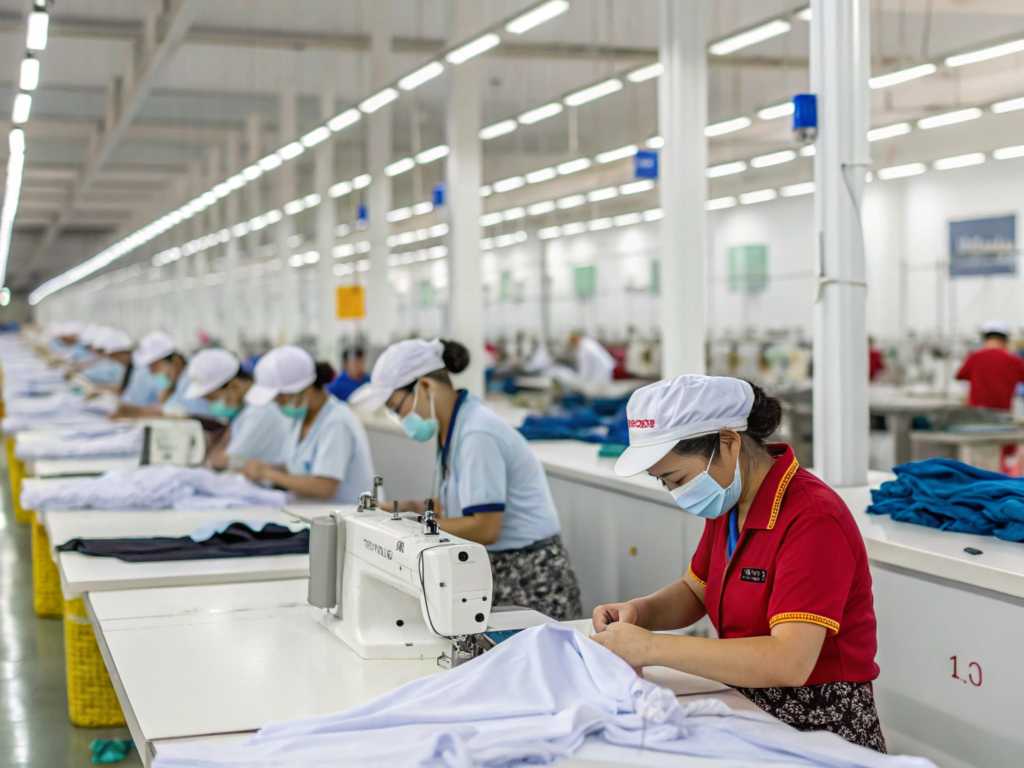
In real sourcing environments, long-term qualification is usually determined after 2–4 production cycles, where consistency, responsiveness, and scalability are tested under different order conditions. Factories that perform well only in sample stages but fail in repeat production are typically excluded from long-term collaboration.
Ability to support scaling from small to large orders
Scalability is one of the strongest indicators of long-term partnership readiness. A factory must demonstrate the ability to grow alongside order expansion without quality loss or timeline instability.
Key evaluation indicators include:
- Ability to scale from 200 pcs/style to 10,000+ pcs/style
- Stable output increase without defect rate rise
- Flexible line allocation for peak season orders
- Capacity to handle multi-style collections simultaneously
Factories that rely on fixed production capacity often struggle during seasonal expansion, leading to delayed shipments or inconsistent quality across batches.
Repeat order consistency and production memory
Long-term cooperation depends on whether a factory can reproduce identical garments across multiple production cycles. This includes maintaining the same:
- Fabric sourcing standards
- Pattern templates and grading rules
- Stitching density and finishing details
- Measurement accuracy across repeated orders
Brands often evaluate repeat orders after 3–6 months to check whether production results remain identical. Even small deviations in fabric batch or construction methods can affect brand consistency in retail environments.
Factories with strong “production memory systems” maintain archived tech packs, approved samples, and standardized SOPs for each style.
Supply chain stability and material control
A stable supply chain ensures uninterrupted production even during high-demand seasons or raw material fluctuations.
Key evaluation areas:
- Multi-supplier fabric sourcing network
- Stable dye house partnerships for color consistency
- Backup material options for critical fabrics
- Lead time control for trims, zippers, lace, and accessories
A weak supply chain often results in delayed sampling or unexpected fabric substitutions, which directly affects product consistency. Strong manufacturers maintain pre-approved alternative materials to avoid production disruption.
Production flexibility and multi-style handling
Long-term partners are expected to handle evolving collections, not just single-style production. Flexibility is evaluated based on:
- Ability to switch between different dress categories (mini, midi, evening, bodycon)
- Handling multiple fabric types within one production cycle
- Adjusting production schedules for urgent replenishment orders
- Managing overlapping seasonal collections
Factories with rigid production systems often struggle when brands introduce new silhouettes or faster fashion cycles.
Quality stability across seasons and batches
Consistency across time is more important than single-order performance. Brands evaluate whether factories maintain stable output across:
- Spring/Summer vs Autumn/Winter collections
- High-volume vs low-volume production runs
- First production vs repeat production cycles
Key stability metrics:
- Defect rate maintained below 2.5–3%
- Measurement deviation under ±1–1.5 cm
- Color consistency across dye lots (ΔE <2–3)
Factories that show performance fluctuation between seasons are often considered unsuitable for long-term scaling.
Communication reliability and operational predictability
Long-term partnerships require predictable communication behavior across all production stages. Evaluation includes:
- Consistent response timing (within 12–24 hours)
- Structured reporting across sampling and bulk stages
- Clear escalation channels for production risks
- Transparent explanation of delays or material issues
Unstable communication patterns often create uncertainty in production planning, especially when multiple styles are running simultaneously.
Cost stability and pricing transparency
Pricing consistency is critical for long-term planning. Brands evaluate whether factories maintain stable cost structures across:
- Repeat orders of the same style
- Fabric price fluctuations
- Seasonal production changes
- Order volume adjustments
Factories with unpredictable pricing or hidden cost changes are rarely retained for long-term cooperation, even if initial pricing is competitive.
Conclusion
Selecting a dress manufacturer is not a procurement decision—it is a strategic partnership decision that defines how fast a fashion brand can grow, adapt, and scale in global markets. Large fashion brands prioritize factories that demonstrate consistency, technical depth, sampling precision, and long-term production reliability.
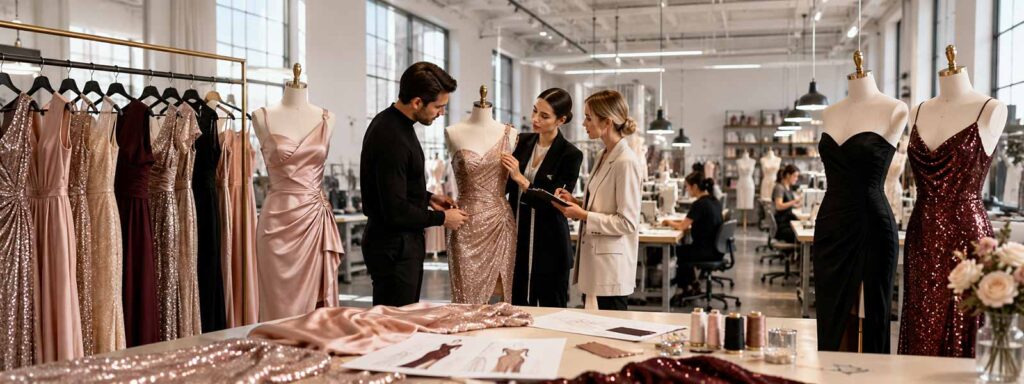
Jinfeng Apparel specializes in custom women’s dress manufacturing with structured OEM & ODM systems, stable bulk production capability, and fast sampling development designed for modern fashion cycles. From satin evening dresses to structured bodycon and mesh fashion styles, every development stage is engineered for accuracy and scalability.
If you are planning your next collection and need a manufacturing partner that can translate design concepts into production-ready garments with controlled quality and reliable delivery, Jinfeng Apparel is ready to support your development.
You can contact Jinfeng Apparel today to start sampling, request fabric suggestions, or begin a full OEM/ODM production plan for your upcoming dress collection.