Skip to content

A dress collection can look beautiful on a moodboard and still fail once it reaches buyers, ecommerce customers, and production planning. That is the uncomfortable truth many fashion brands discover after spending money on sketches, samples, photoshoots, influencer seeding, fabric commitments, and launch calendars. The problem is rarely that every style is bad. More often, the collection has no clear hero. Too many dresses compete for the same customer, the same occasion, the same price point, and the same campaign image. Buyers cannot see the main story. Merchandisers cannot decide where to place depth. Marketing teams do not know which dress should lead the launch. Production teams receive too many complicated styles without a clear priority order.
Fashion brands select hero styles by scoring each dress against customer demand, brand identity, visual impact, commercial potential, production feasibility, fit risk, fabric availability, SKU depth, and repeat-order potential. The strongest hero styles are not always the most dramatic designs; they are the dresses most capable of selling, photographing, scaling, and representing the collection clearly.
Think of a buyer reviewing a 40-style dress range before a seasonal launch. She does not ask, “Which dresses are pretty?” She asks, “Which five styles can carry the sales target, campaign story, and production plan?” That is where hero-style selection becomes a serious business decision, not just a design-room opinion.
What Are Hero Styles?
Hero styles are the key dresses in a collection that carry the strongest commercial, visual, and brand value. They are usually the first styles sampled, photographed, presented to buyers, promoted in campaigns, and considered for deeper production. A true hero style is not just attractive; it is clear, wearable, scalable, and strong enough to define the collection.
What Makes a Dress a Hero Style?
A hero dress should answer one question quickly: why should this style lead the collection? In real product development, the answer rarely comes from design taste alone. A strong hero style usually sits at the intersection of customer demand, brand identity, occasion relevance, visual strength, and production reliability.
For example, a satin corset midi dress can become a hero style if it fits the brand’s occasionwear customer, photographs well, supports a clear retail price, and can be produced consistently across sizes. A printed resort maxi dress can become a hero style if it communicates vacation dressing, moves beautifully on the body, and has enough commercial appeal for multiple colors or prints.
The strongest hero dresses normally have a clear reason to buy. They are not vague. A customer can immediately understand where to wear them: wedding guest, birthday dinner, vacation, club night, graduation, summer event, or evening occasion. In B2B collection planning, this clarity matters because buyers and merchandisers need to explain the product internally before they commit to quantity.
| Hero Style Factor | What to Check | Practical Indicator |
| Customer demand | Does the style match a known occasion or customer need? | Clear use case such as party, resort, wedding guest, clubwear, or work event |
| Visual impact | Does it look strong in campaign and product images? | Recognizable silhouette, neckline, fabric, color, or detail |
| Fit confidence | Can the style work across the planned size range? | Stable bust, waist, hip, length, strap, and lining control |
| Production feasibility | Can it be repeated in bulk without major risk? | Available fabric, workable trims, manageable construction |
| Commercial value | Can the brand sell it at the right price and margin? | Realistic cost, retail price, SKU depth, and reorder potential |
Are Hero Styles the Same as Bestsellers?
Hero styles and bestsellers are related, but they are not identical. A bestseller is proven after sales data comes in. A hero style is selected before launch because the brand believes it has the strongest chance to lead the collection. This difference matters because hero selection is part prediction, part evidence, and part disciplined product judgment.
Many teams make the mistake of calling a style a hero simply because it feels exciting in the design meeting. But excitement is not the same as commercial strength. A dramatic sequin mini dress may look amazing on a moodboard, yet become difficult to fit, expensive to produce, or too narrow for the target customer. At the same time, a cleaner jersey bodycon dress may have stronger hero potential because it suits the brand’s customer, supports multiple colors, and can be repeated season after season.
In mature fashion teams, hero selection often starts with a mix of past sales data and forward-looking judgment. If previous ruched mesh dresses sold well, a new version with improved lining, updated sleeve shape, or better color direction may deserve hero consideration. If customers responded strongly to satin midi dresses for wedding guest occasions, the next collection may build a hero around that proven behavior. A hero style is a planned bet. A bestseller is the market’s confirmation.
Which Role Should Hero Styles Play in a Collection?
Hero styles should create hierarchy. Without hierarchy, a dress collection can feel like a pile of nice products rather than a clear commercial story. When every dress has equal importance, the collection becomes difficult to buy, difficult to photograph, and difficult to produce efficiently.
A hero style usually plays several roles at the same time. It leads the visual story, supports the buyer presentation, receives earlier sample attention, attracts deeper quantity planning, and often becomes the style around which supporting products are arranged. For ecommerce brands, hero styles often appear in homepage banners, launch emails, paid ads, product videos, lookbooks, and social content. For wholesale-driven brands, they are often the first styles shown in buyer meetings or line sheets.
The role is not always about volume alone. Some hero styles are sales heroes. Some are image heroes. Some are range-building heroes. A premium evening gown may not sell the highest number of units, but it may elevate the entire collection and help buyers understand the brand’s direction. A bodycon mini may become the sales driver because it is easy to style, easy to price, and easy to repeat. For a collection of 20 to 30 dresses, many brands work best with three to six hero styles. That number gives enough focus without making the range too narrow.
Common Hero Style Examples
In dress development, hero styles often come from product types that customers already understand. These may include corset dresses, satin midi dresses, ruched mesh minis, printed maxi dresses, bodycon dresses, lace occasion dresses, sequin party dresses, slip dresses, and structured A-line dresses.
The best choice depends on the customer segment. A premium ecommerce brand may choose a satin or lace midi because the style supports higher perceived value. A clubwear brand may choose mesh, cut-out, or bodycon dresses because the customer wants confidence, body shape, and strong imagery. A resort brand may choose maxi dresses, halter necklines, soft woven fabrics, and prints because the buying occasion is travel and summer dressing.
The important point is that hero-style selection should not be copied blindly from competitors. A competitor’s hero may not be your hero. Your own customer, price position, fit expectation, fabric capability, size curve, and sales channel should decide the final selection. A hero dress should feel like it belongs to the brand. If a buyer saw it without the logo, they should still feel that the style fits the brand’s world.
Why Do Hero Styles Matter?
Hero styles matter because they focus the collection. They help fashion teams decide which dresses deserve priority in sampling, photography, marketing, buying depth, and production planning. When hero styles are clear, the collection becomes easier to understand, easier to sell, and easier to manufacture with fewer wasted samples, weaker SKUs, and unclear launch messages.
How Hero Styles Guide Sampling Decisions
Sampling is expensive, especially when a collection includes many fabrics, silhouettes, linings, trims, colors, and size concerns. Hero-style selection helps teams avoid sampling too many weak ideas at the same time. Instead of spreading development effort across every design equally, the team can focus first on styles with the strongest commercial and visual potential.
In practice, this means hero candidates should move into sample development before supporting styles. They should receive closer review on fabric hand feel, fit, construction, lining, measurements, and finishing. If a hero dress fails at sample stage, the team still has time to revise the style or replace it before production planning becomes too advanced.
A common mistake is approving too many samples because every design looks interesting on paper. But a sketch does not reveal enough. Once fabric, body fit, seam position, lining, zipper, elasticity, and garment balance appear in sample form, the real strengths and weaknesses become clearer. Hero sampling should be used to test the biggest commercial bets first. For mid-to-large brands, early sampling priority also helps suppliers allocate technical resources. Pattern makers, sample rooms, fabric teams, and merchandisers can spend more time on styles that carry higher business value.
How Hero Styles Shape Campaign Visuals
A dress collection needs visual anchors. Campaign teams cannot give every style the same amount of attention. Hero styles help decide which dresses appear in the first banner image, the launch video, the lookbook cover, the paid ads, the model reels, and the buyer presentation.
A good campaign hero should communicate quickly. A customer scrolling through Instagram, TikTok, Google Images, or a brand website will not spend ten seconds decoding the product. The dress must show its value almost immediately. That value might come from a neckline, fit, fabric shine, print scale, color, silhouette, sleeve, slit, back detail, or styling mood.
This is why some technically beautiful dresses are weak campaign heroes. They may look good in person but fail in photography. A subtle seam detail, a delicate internal structure, or a small trim may not be visible online. On the other hand, a strong satin surface, clean corset line, bold floral print, or flattering ruching can instantly create a visual hook. Campaign clarity also helps buyers. Wholesale buyers and ecommerce customers both respond to clear product stories. A hero dress should make the collection feel easier to buy.
How Hero Styles Reduce Collection Risk
Hero styles reduce risk by forcing early decisions. Fashion collections often become risky when teams keep too many average styles alive for too long. The brand spends on samples, fabric sourcing, fit work, photoshoots, and sales presentations before deciding which styles actually matter.
A disciplined hero selection process reduces this waste. It asks hard questions early: Which styles deserve deeper quantity? Which styles support the campaign? Which styles are too similar? Which styles are too risky for bulk? Which styles only look good in one color? Which styles may create high returns because of fit or comfort?
Risk also comes from duplication. If a collection includes five satin minis with similar necklines, the styles may compete with each other instead of strengthening the range. The customer sees repetition. The buyer sees SKU confusion. The production team sees unnecessary complexity. A clear hero framework helps remove or downgrade styles that do not serve a distinct role. From a manufacturing perspective, hero styles also help manage technical risk because the supplier can focus earlier on fabric testing, pattern accuracy, fit correction, PP sample standards, and QC checkpoints.
How Hero Styles Improve Team Alignment
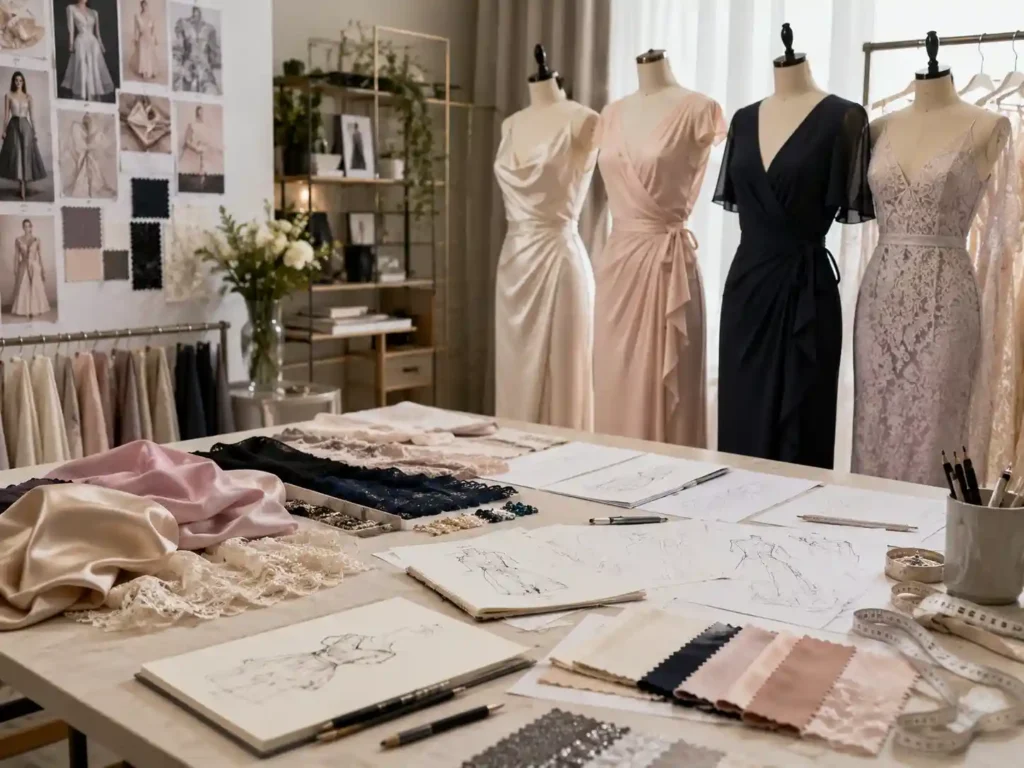
Hero-style selection is not only a design decision. It is a communication tool between design, buying, merchandising, marketing, sourcing, production, and management. Design teams may care about freshness. Buyers may care about sell-through. Marketing teams may care about visual impact. Production teams may care about construction risk. Finance teams may care about margin and inventory exposure.
Without a hero framework, these teams often pull the collection in different directions. A clear hero list gives everyone a shared priority map. The design team knows which styles need the most refinement. The buying team knows which styles may need deeper units. The marketing team knows which dresses should lead the campaign. The factory knows which samples need faster technical feedback. Management can see where the collection is placing its biggest bets.
In fast fashion and premium womenswear, speed matters. But speed without clarity creates waste. Hero styles give speed a direction. They help teams move faster because they know which decisions are urgent and which styles can remain secondary until the main collection story is locked.
Which Data Should Guide Selection?
Hero-style selection should be guided by sales history, customer occasions, return reasons, search demand, social response, price performance, fabric cost, size performance, and reorder potential. Data should not replace creative judgment, but it should challenge personal opinion. The best hero styles are chosen where customer evidence, brand direction, and production reality overlap.
Sales and Sell-Through Signals
The first data source should be the brand’s own sales history. Even if the new collection has a fresh direction, past sales reveal what customers have already proven they will buy. Look at the last six to twelve months of dress performance and focus on patterns, not isolated wins.
Important data points include sell-through speed, total units sold, return rate, review comments, top colors, size curve, cart abandonment, markdown timing, and reorder requests. A dress that sells out quickly with low returns deserves attention. A style that sells quickly but comes back heavily due to fit issues needs caution. A dress that needs deep discounting to move may not be a true hero, even if the original campaign looked strong.
For ecommerce teams, 30-day and 60-day sell-through can be useful. A strong launch style often shows early traction within the first month, while occasionwear may need a longer window depending on event season. For wholesale teams, buyer feedback, preorder depth, and regional demand are also important. Do not only ask, “Which style sold?” Ask, “Why did it sell?” Was it the color, silhouette, price, occasion, fabric, model image, styling, length, neckline, or timing? Once the reason is understood, the team can build a smarter hero style instead of repeating old products blindly.
| Selection Data | Useful Range or Review Window | What It Helps Decide |
| 30-day sell-through | Early launch period | Whether the style has fast demand |
| 60-90 day sell-through | Seasonal selling period | Whether demand continues beyond launch |
| Return rate | By style and size | Fit, fabric, comfort, or expectation risk |
| Top color share | By SKU | Which colors deserve deeper production |
| Size curve | XS-XL or brand range | Whether grading and quantity split are realistic |
| Markdown timing | First markdown date | Whether original price was too high |
| Reorder requests | Buyer or customer feedback | Repeat-order and core hero potential |
Occasion and Customer Behavior
Dresses are occasion-driven products. A customer usually buys a dress because she has somewhere to wear it. This makes occasion mapping one of the most useful tools in hero selection. A good dress collection should clearly cover the customer’s real life: wedding guest events, birthdays, vacations, dinners, parties, graduations, office functions, date nights, holiday events, and resort travel.
If a style does not connect to an occasion, it may still be beautiful, but it becomes harder to sell. Hero styles often work best when they connect to one primary occasion and one secondary occasion. For example, a satin midi may work primarily for wedding guest dressing and secondarily for formal dinners. A ruched mesh mini may work primarily for clubwear and secondarily for birthday events. A printed maxi may work primarily for vacation and secondarily for summer brunch or resort evenings.
This does not mean every dress must be practical in a boring way. It means the customer should understand the product’s use. The clearer the use, the easier it is to write product copy, build campaign images, plan launch timing, and guide production quantity. Occasion data can come from sales reports, customer reviews, search queries, social comments, influencer content, wholesale buyer notes, and customer service questions.
Price and Margin Review
A dress cannot become a strong hero if the price structure does not work. Some styles look exciting during design review but become weak after costing. Fabric consumption, lining, boning, cups, lace, sequins, handwork, trims, custom dyeing, printing, packaging, and quality requirements can all change the final cost.
The team should check target retail price, expected wholesale price, landed cost, gross margin, and likely markdown exposure. A hero style does not need to be the lowest-cost style in the collection, but it should have a realistic path to profit. For example, a heavily embellished dress may create strong campaign impact, but if the brand cannot price it high enough, the margin may be too thin. A clean jersey bodycon dress may have less drama, but if it supports multiple colors, stable production, and strong repeat orders, it may be a better commercial hero.
Price architecture also matters across the full collection. If all hero styles sit at the highest price point, the range may feel narrow. If all hero styles sit at the lowest price point, the brand may struggle to lift perceived value. A strong lineup often includes one visual hero, one volume hero, and one margin hero. For custom manufacturing, MOQ, fabric sourcing, trim selection, and construction complexity should be checked before a style receives hero status.
Search and Social Signals
Search and social data can reveal what customers are already looking for, but it should be used carefully. A trending keyword or viral style does not automatically become a good hero. Trends move quickly, and not every trend fits the brand’s customer, quality level, or production model.
Useful search signals may include rising interest in specific dress types such as corset dress, mesh dress, satin midi dress, sequin mini dress, wedding guest dress, vacation maxi dress, or bodycon dress. Social signals may include saves, shares, comments, try-on video response, influencer performance, and repeated customer requests.
The key is to connect search and social signals back to product reality. If customers are searching for a backless satin dress, the team still needs to ask: Can the back structure stay secure? Does the fabric support the shape? Will customers accept the bra limitations? Can the style pass fit review across sizes? Can the brand produce it at the right price? Search data shows interest. Sales data shows willingness to buy. Production data shows whether the idea can scale. Hero styles should be selected only when these signals support each other.
How Do You Judge Design Strength?
Design strength should be judged by silhouette clarity, fit value, fabric suitability, color impact, styling flexibility, occasion relevance, and production repeatability. A hero dress should be visually strong, easy to understand, and realistic to manufacture. The best designs do not only look good in one sample; they stay strong through grading, bulk production, photography, and customer wear.
Silhouette and Fit Value
Silhouette is the first thing most customers notice. Before fabric details or trims are understood, the eye reads shape: fitted, flowing, structured, bodycon, A-line, corset, slip, maxi, mini, midi, strapless, halter, one-shoulder, off-shoulder, or long-sleeve.
A strong hero silhouette should match the brand’s customer and the body confidence level of the target market. A fitted bodycon dress may work well for a partywear or clubwear customer, but it may not suit a modest occasionwear customer. A relaxed printed maxi may work beautifully for resortwear but may not have enough impact for a nightlife brand.
Fit value is equally important. Some dresses sell because they make the customer feel secure. Ruching can smooth the body. Corset construction can define the waist. Stretch jersey can improve comfort. A-line shapes can feel easier across body types. Adjustable straps can reduce fit risk. These details turn design into customer value. The strongest silhouettes often have a proven base with one new update. A brand does not always need to reinvent the body. Updating neckline, sleeve, length, fabric, print, or trim can create freshness while keeping fit risk under control.
Fabric and Surface Impact
Fabric is not decoration. It controls weight, movement, comfort, price, fit, sewing difficulty, and perceived value. A dress design cannot be judged properly until the fabric is considered.
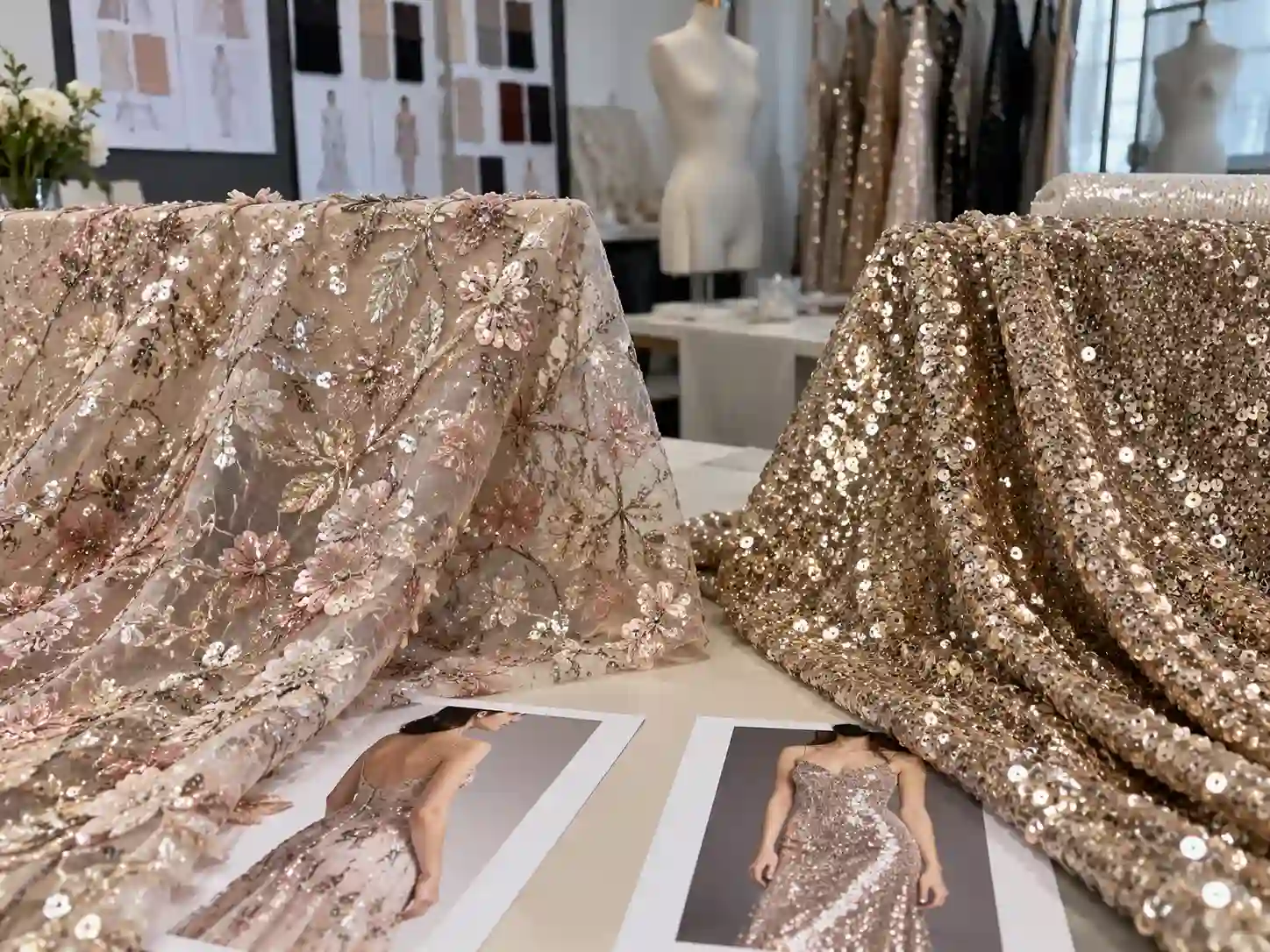
Satin gives shine and occasion value but can show seam tension and pressing marks. Mesh creates modern party appeal but needs lining control and transparency testing. Lace adds femininity and premium texture but needs placement planning. Jersey improves comfort and stretch but may need recovery testing. Chiffon gives movement but can raise concerns around transparency and hem balance. Sequin fabric creates strong visual impact but increases sewing, comfort, and packing risk.
For hero styles, fabric should support the design message. A resort maxi needs movement and breathability. A cocktail dress needs polish and structure. A club dress may need stretch and recovery. A wedding guest dress may need drape, lining, and comfort for several hours of wear. Surface impact also affects photography. Satin shine, sequin reflection, lace texture, mesh layering, and bold prints can create immediate visual appeal. But the team must balance this with wearability and bulk consistency.
Color and Print Strength
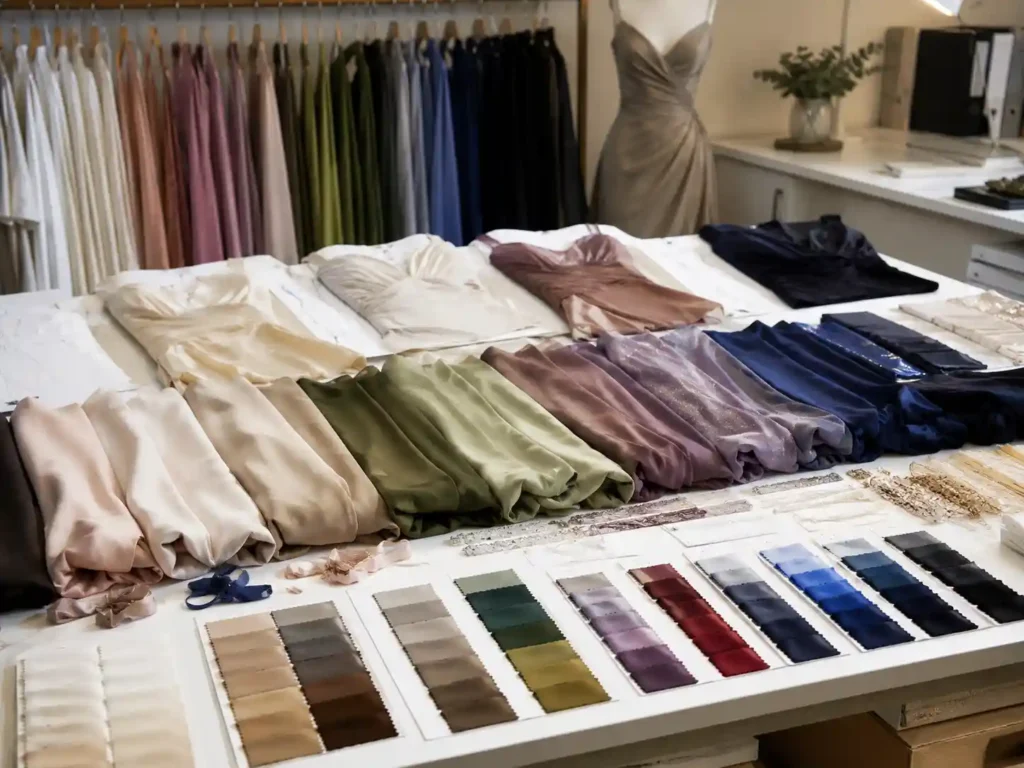
Color can turn an average dress into a strong seller or make a good style harder to buy. Hero styles need colors that support both brand identity and customer demand. Black remains important for partywear and fitted dresses because it feels safe and flattering. Red can work strongly for confidence-led styles. Ivory, champagne, blush, navy, chocolate, emerald, and seasonal tones can support occasionwear. Prints often work well for resort, summer, and vacation collections.
The mistake is choosing too many colors too early. More colorways do not always mean more sales. Each color adds MOQ, fabric sourcing, photography, inventory, and production complexity. A new hero style may perform better with two or three carefully chosen colors first, then expand after sales feedback.
Prints need special caution. Scale, placement, color repeat, cutting direction, and fabric base all affect the final garment. A print that looks good on a swatch may look too busy on a mini dress or too empty on a maxi dress. For hero styles, print testing should be done on garment shape, not just flat fabric.
| Design Element | Strong Hero Signal | Risk Signal |
| Silhouette | Clear shape and clear customer occasion | Hard to understand or too similar to other styles |
| Fabric | Supports fit, movement, and perceived value | Looks good but creates sewing or comfort issues |
| Color | Matches customer demand and brand image | Too many untested colorways |
| Works at garment scale | Looks good only on swatch | |
| Trim | Improves function or finish | Adds cost without customer value |
| Detail | Visible in photos and useful in wear | Too subtle, fragile, or hard to repeat |
Marketing Power
A hero dress should be easy to market. The product story should be clear enough for a campaign headline, product page, buyer pitch, and social video. If the only description is “nice dress,” the design is not strong enough.
A marketable hero style usually has at least three clear selling angles. For example, a satin corset midi could be sold through occasion, fit, and fabric: wedding guest ready, waist-defining corset shape, smooth satin finish. A mesh ruched mini could be sold through body confidence, party occasion, and stretch comfort. A printed maxi could be sold through vacation mood, movement, and easy styling.
Marketing power also comes from recognizability. When customers see the dress quickly, they should remember something about it. That may be the neckline, print, color, slit, back, sleeve, drape, or fit. In crowded fashion markets, forgettable products are expensive to promote. Before approving a hero style, ask whether it can support product photos, a campaign image, a short video, a buyer line sheet, and a clear product name. If the style needs heavy explanation, it may be better as a supporting style.
How Do You Check Production Risk?
Production risk should be checked before a dress becomes a hero style. Review fabric availability, fit tolerance, construction difficulty, trims, lining, size grading, color consistency, sewing process, finishing, packing, and QC checkpoints. A hero dress must not only look strong in sample form; it must be repeatable in bulk without damaging launch timing or product quality.
Construction and Pattern Risk
The most attractive part of a dress is often where the risk hides. A strapless corset dress needs support and balance. A deep V neckline needs stability. A high slit needs movement control. A ruched mesh dress needs consistent gathering. A backless dress needs body security. A lace dress needs placement accuracy. A satin dress needs smooth seams and careful pressing.
Pattern risk should be reviewed early because small errors become larger in bulk. Bust shaping, waist position, hip ease, strap length, sleeve opening, lining length, zipper placement, and hem balance all affect wearability. A hero style should not move into bulk production until these details are clear. Size grading is another key issue. A sample may look good in one size but fail when graded up or down. Fitted dresses, corset structures, stretch fabrics, and cut-out designs need special review because body proportions change across sizes.
Pattern and construction comments should be written clearly after each sample round. Vague comments like “make it better” waste time. Practical comments such as “raise waist seam 1.5 cm,” “reduce bust ease by 1 cm,” “increase strap length by 2 cm,” or “adjust lining to cover mesh transparency” help the factory make controlled improvements.
Fabric and Trim Risk
Fabric risk is one of the most common reasons hero styles become difficult. The fabric may be beautiful but unavailable in bulk. The color may not be stable. The stretch may recover poorly. The satin may pucker. The mesh may tear. The lace may have high wastage. The sequin surface may scratch skin or damage needles. The print may not align with the cutting plan.
Before confirming a hero style, the team should check fabric availability, minimum quantity, lead time, color consistency, width, shrinkage, stretch, transparency, hand feel, and repeat-order possibility. If the fabric supplier cannot support reorder demand, the style may be risky as a long-term hero.
Trims also matter. Zippers, cups, boning, straps, elastic, buttons, hooks, lace edges, lining, labels, hangtags, and packaging materials all affect the finished product. A small trim issue can delay bulk production if it is not confirmed early. For custom dress collections, the safest process is to confirm fabric and trims before PP sample approval. If materials change after PP approval, the fit, appearance, and sewing behavior may also change.
| Risk Area | Common Issue | Early Control Method |
| Satin | Seam puckering, shade difference, pressing marks | Sewing test, shade check, pressing review |
| Mesh | Transparency, stretch recovery, edge distortion | Lining test, stretch test, fit sample |
| Lace | Placement, wastage, inconsistent pattern | Marker planning, placement standard |
| Sequins | Needle damage, discomfort, packing pressure | Sewing test, seam comfort check |
| Corset trims | Boning, cups, zipper tension | Structure sample, fit review |
| Prints | Scale, direction, color repeat | Strike-off, garment mock-up, cutting plan |
Sample and PP Control
Samples are not just visual references. They are decision tools. A first sample shows whether the design direction works. A revised sample corrects fit, fabric, and construction. A size set checks grading. A PP sample locks the final production standard.
For hero styles, sample comments should be detailed and measurable. Teams should compare the garment against the size chart, not only against a model photo. Measurements should include bust, waist, hip, length, strap, sleeve, slit, hem, lining, and key construction points depending on the style.
The PP sample is especially important. It should confirm approved fabric, color, trims, measurements, stitching, finishing, labels, packaging, and overall appearance. Once bulk production starts, the PP sample becomes the reference for QC and production teams. If the PP sample is unclear, the whole order becomes open to interpretation. A rushed PP approval can create serious problems. For hero styles, slowing down at PP stage often saves time later.
Quality Control Points
Hero styles need targeted QC. Standard garment inspection is necessary, but hero dresses often require extra attention on the details that define the style. For fitted styles, QC should focus on measurements, seam tension, side seam balance, zipper smoothness, and fabric recovery. For satin styles, check puckering, shade, pressing, stains, and seam smoothness. For lace and sequin dresses, check placement, loose threads, broken sequins, comfort, and packing. For long dresses, check hem balance, length consistency, lining length, and hanging appearance.
QC should happen at several stages: fabric inspection, cutting check, inline sewing check, measurement check, final garment inspection, pressing review, packing check, and pre-shipment review. The more important the style is to the collection, the earlier problems should be caught.
A hero dress should not rely on final inspection alone. By the time final inspection happens, most cost has already been spent. Strong production control means finding risk while it can still be corrected. This is one reason mid-to-large fashion brands often prefer a manufacturing partner that can manage development, sampling, bulk production, QC, private-label packaging, and export coordination under one organized workflow.
How Do You Build the Final Lineup?
Build the final lineup by selecting a focused group of hero styles, then surrounding them with core commercial dresses, occasion-specific styles, trend accents, and supporting products. A strong lineup has hierarchy. Each dress should serve a clear role in sales, campaign storytelling, price structure, customer occasion, or production efficiency.
Hero Count and Range Balance
Most dress collections do not need too many hero styles. A practical range is often 10 to 20 percent of the total style count. A 20-style drop may need two to four hero dresses. A 30-style collection may need three to six. A 50-style seasonal range may need six to ten, usually divided by occasion, channel, and price point.
The exact number depends on sales channel. A focused DTC launch may work better with fewer hero styles and stronger storytelling. A wholesale collection may need several hero styles across different wearing occasions so buyers can build their own assortments. A multi-market brand may need different heroes for the US, UK, Europe, Australia, and Canada because climate, event culture, and customer taste can vary.
Balance matters. If every hero style is a tight mini dress, the collection may feel too narrow. If every hero style is a premium occasion dress, the price architecture may become too high. If every hero style uses a difficult fabric, production risk becomes concentrated. A strong lineup usually includes different types of heroes: one visual hero, one sales-volume hero, one occasion hero, and one repeatable commercial hero. This gives the collection both energy and stability.
Supporting Style Structure
Supporting styles should make hero styles easier to sell. They should not compete directly with them. A supporting style may offer a lower price point, a safer fit, a different body coverage level, a simpler fabric, or an easier wearing occasion.
For example, if the hero is a satin corset midi dress, supporting styles might include a simpler satin slip dress, a lace-trim mini, a soft jersey bodycon, and a matching top-and-skirt set. These styles help complete the customer’s choice without copying the hero too closely.
Supporting styles also help with merchandising. They create good-better-best price structure, offer styling variety, and give buyers more flexibility. A collection with only statement pieces may look exciting but become hard to buy. A collection with only basics may feel safe but lack attention. Supporting styles create the middle ground. Each supporting style should still have a role. If a dress does not support the hero story, fill a price gap, serve an occasion, improve size coverage, or add useful newness, it may not need to stay in the collection.
SKU and Color Planning
A hero style needs careful SKU planning. More SKUs can increase sales opportunity, but they also increase inventory risk, fabric commitment, production complexity, and photography cost. The right SKU depth depends on confidence level.
A new hero style may start with fewer colors and a controlled size curve. A proven returning hero may justify deeper quantity, more colorways, and stronger reorder planning. For example, a new mesh party dress may launch in black, red, and chocolate. If it performs well, the next season may add ivory, navy, or seasonal print. A proven bodycon silhouette may support more colors because fit and production are already known.
Size planning should reflect actual customer demand. Do not split quantity evenly across sizes unless the brand’s sales history supports it. Many dress brands see concentration around core sizes, but this varies by market and category. Fitted styles, stretch dresses, and occasionwear may each behave differently. Color planning should also respect fabric reality. Custom colors, printed fabrics, lace, sequins, and special trims can create higher minimums or longer lead times. A color may be attractive, but if it forces excessive fabric commitment, it may not be suitable for first launch.
Moving From Lineup to Production
Once the final lineup is selected, the next step is turning the range into a production-ready plan. This is where many collections lose control. The design team may have approved styles, but the production team still needs tech packs, measurements, fabric standards, trims, labels, packaging details, colorways, size ratios, sample comments, PP samples, and delivery timing.
A practical production handoff should include style code, product name, sketch or reference image, target fabric, colorway list, size range, measurement chart, construction notes, trim details, label and packaging needs, target quantity, target price, and launch date. The clearer the handoff, the fewer delays during sampling and bulk production.
For brands working with an OEM or ODM dress manufacturer, the supplier should help review whether the lineup is realistic. Some styles may need fabric changes. Some may need construction adjustment. Some may need to move later in the launch calendar because materials or trims require more time. Strong production partners do not only make samples; they help identify risk before the risk becomes expensive. A good final lineup should feel creative to the customer and practical to the production team. That balance is where strong dress collections are built.
Final Thoughts
Selecting hero styles is one of the most important decisions in a dress collection. It affects sampling cost, campaign clarity, buyer confidence, production planning, inventory depth, and repeat-order potential. A strong hero dress is not chosen by taste alone. It is chosen because it has a clear customer, a clear occasion, a clear visual message, a workable production path, and enough commercial strength to lead the collection.
For fashion brands, the best approach is to score every candidate style across customer demand, design strength, marketing power, production risk, fabric availability, fit stability, and margin potential. Then choose a small group of heroes and build the rest of the collection around them. This creates a sharper range, stronger buying logic, and a smoother path from sample to bulk.
Jinfeng Apparel supports custom dress development for brands that need more than basic garment production. Based in Guangdong, China, the company has focused on women’s apparel development and production since 2008, serving global fashion brands and mid-to-large custom apparel clients with OEM, ODM, private-label, and custom womenswear manufacturing solutions. Its capabilities cover tech pack review, reference sample analysis, fabric and trim sourcing, pattern development, sample making, bulk production, QC, private-label packaging, and export delivery. The company works with a production system that includes six owned women’s fashion factories and more than ten long-term satellite production partners, supporting multi-style, multi-fabric, multi-color, multi-size, and multi-batch custom apparel orders.
If you are planning a new dress collection, prepare your tech packs, reference images, target quantity, size range, fabric direction, and launch calendar. Then contact Jinfeng Apparel to discuss which styles should become your hero dresses and how to move them from concept to sample and bulk production.