Skip to content


A dress can look flawless in a showroom and still disappoint when it arrives in stores. Perhaps the waist measures differently from the approved sample, a floral print slips across the side seam, or the lining hangs below the hem. None of these faults needs to be dramatic to become expensive. Once they appear across multiple sizes, colors, and delivery batches, a seemingly small variation can turn into returns, rework, delayed launches, or a difficult conversation between a brand and its manufacturer.
A dress quality control plan should check six essential areas: size and fit, color consistency, print placement, embellishment security, garment symmetry, and hem quality. Each area needs an approved reference, a measurable or clearly illustrated acceptance standard, inspection checkpoints, and recorded corrective actions. Effective control starts with fabric and pattern approval, continues through cutting and sewing, and ends with documented garment and shipment inspection.
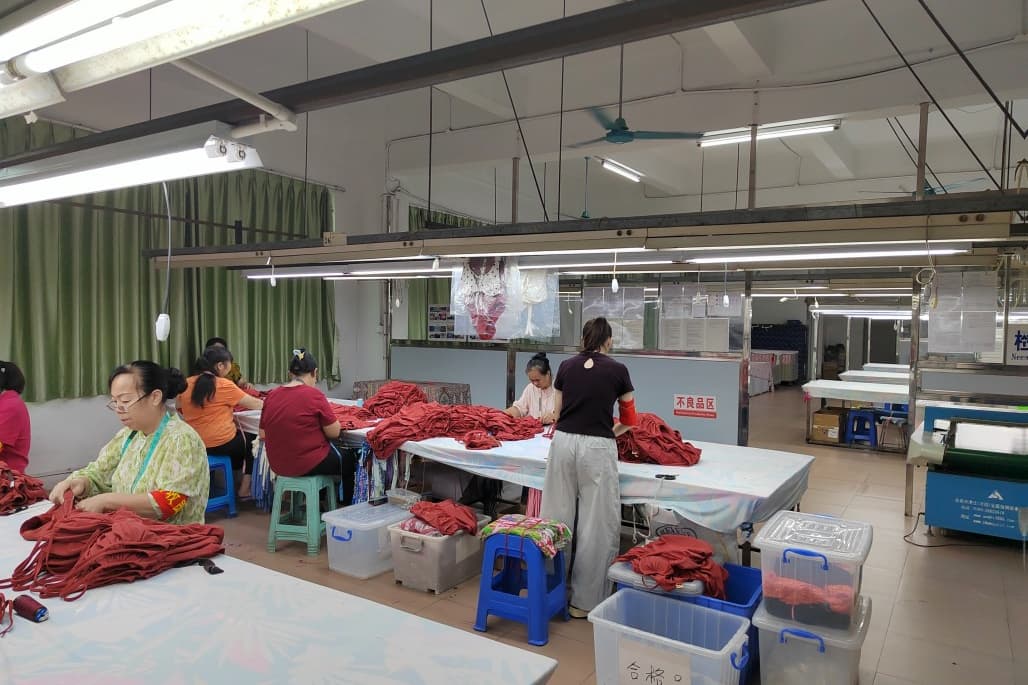
The difference between a good sample and reliable bulk production is repeatability. Jinfeng Apparel, a custom womenswear manufacturer based in Guangdong, China, approaches dress quality through material checks, pattern and cutting verification, in-line sewing inspection, finished-garment review, and packing controls. Consider a satin maxi dress that fits perfectly at sample approval: if the production fabric relaxes differently or the hem is sewn under tension, the bulk order may no longer hang the same way. The following checks show where such differences begin, how to spot them, and what a practical decision looks like before the dresses leave the factory.
What Should a Dress Quality Control Plan Include?
A complete dress quality control plan defines the approved sample, technical specifications, material standards, inspection stages, measurement tolerances, defect categories, and actions required when results fall outside the agreement. It should cover fabric arrival, cutting, sewing, decoration, finished-garment appearance, pressing, and packing. The plan works only when inspectors can compare actual garments with the same approved references throughout production and record the results consistently.
Which Standards Are Approved?
Before bulk cutting begins, the brand and manufacturer need one consistent description of the dress being made. That description usually includes the final tech pack, approved pre-production sample, sealed golden sample, size chart, grading rules, fabric and lining specifications, trims, artwork references, construction details, and packing instructions. These references serve different purposes: a physical sample communicates drape and visual balance, while written specifications make measurements and workmanship requirements explicit. If a pattern has been revised but the sewing team receives an older instruction sheet, a technically careful operator can still produce the wrong garment.
The approval standard should also reflect the dress itself. A corset dress may need precise cup positioning, boning placement, and upper-bust measurements; a printed resort dress places greater emphasis on motif direction and skirt balance. At Jinfeng Apparel, sample approval is connected to pattern versions, fabric and trim confirmation, measurement charts, and construction instructions before bulk production. When a design change is accepted, the corresponding records must change together. That discipline is more useful than an impressive-looking inspection report that refers to the wrong version of the product.
When Are Dresses Inspected?
Inspection timing is as important as the checklist. Incoming material checks can identify color differences, flaws, or unsuitable trims before these materials become hundreds of cut panels. Cutting inspection checks the right pattern version, fabric grain, print direction, panel quantity, and size bundling. During sewing, in-line checks focus on seam allowances, straps, zippers, lining attachment, gathering, and other details that may drift as operators repeat a process. Finished-garment inspection then evaluates measurements, appearance, functionality, pressing, and the overall match with the approved dress.
A useful sequence makes the first occurrence of a problem easier to isolate. If ten early garments show a twisted side seam, the team can review fabric direction and sewing tension before the entire production run is completed. Jinfeng Apparel’s documented process also includes packing checks and pre-shipment inspection, because an accurately sewn dress can still be delivered with the wrong size label or barcode. Inspection frequency should reflect the order’s complexity and the agreed risk controls, rather than a universal promise that every defect can be found in one final check.
| Inspection point | Main evidence to compare | Typical problem caught early |
| Incoming fabric | Approved swatch, lab dip, trim card | Shade or material mismatch |
| Cutting | Final pattern, marker, print layout | Wrong size or motif position |
| Sewing and in-line QC | Sewing instructions, golden sample | Uneven seams or straps |
| Finished garment | Size chart and approved sample | Fit, symmetry, and hem defects |
| Packing | Label artwork and packing list | Incorrect SKU or carton mix |
| Pre-shipment | Agreed defect rules and lot records | Outstanding quality or quantity issues |
What Does the Checklist Record?
A practical checklist is more than a row of boxes marked pass or fail. It identifies the style, color, size, material or production lot, inspection point, actual finding, applicable tolerance, and disposition. When measurements are involved, the inspector should record the target and actual values instead of writing only “slightly small.” For visual problems, photographs next to the approved reference often explain the issue more clearly than a long description. These details make it possible to distinguish an isolated repair from a pattern affecting an entire sewing line or fabric batch.
The checklist should be tailored to the garment. A fitted jersey dress needs checks for stretch recovery and side-seam twisting, while a lace dress needs motif alignment and lining compatibility. For a heavily embellished evening dress, missing sequins and rough decorative edges may deserve their own entries. The goal is not to make every checklist equally long; it is to make each checklist useful to the people producing and approving that specific style. Records from prior orders can then inform subsequent production without replacing new approvals.
How Are Defects Classified?
Dress defects are usually grouped as critical, major, or minor, but the category must match the customer-approved defect definitions and destination-market requirements. A sharp exposed component or serious contamination can present a critical concern. A broken zipper, substantial size deviation, obvious fabric hole, or severe color mismatch may be major because it affects wearability or saleability. A removable loose thread or small correctable pressing mark may be minor. The same visual imperfection can have different consequences on a plain premium satin dress and a heavily textured casual style.
When defects repeat, repairing each garment is not enough. The quality team should record how many units are affected, identify the operation or material lot involved, investigate the cause, and reinspect the corrected output. Jinfeng Apparel keeps incoming, cutting, in-line, measurement, finished-garment, packing, and repeat-order quality records to support this process. A record trail helps brands compare production batches and review recurring issues. It also prevents the common mistake of accepting a corrected sample while leaving an unchanged production method in place.
How Are Dress Size and Fit Checked?
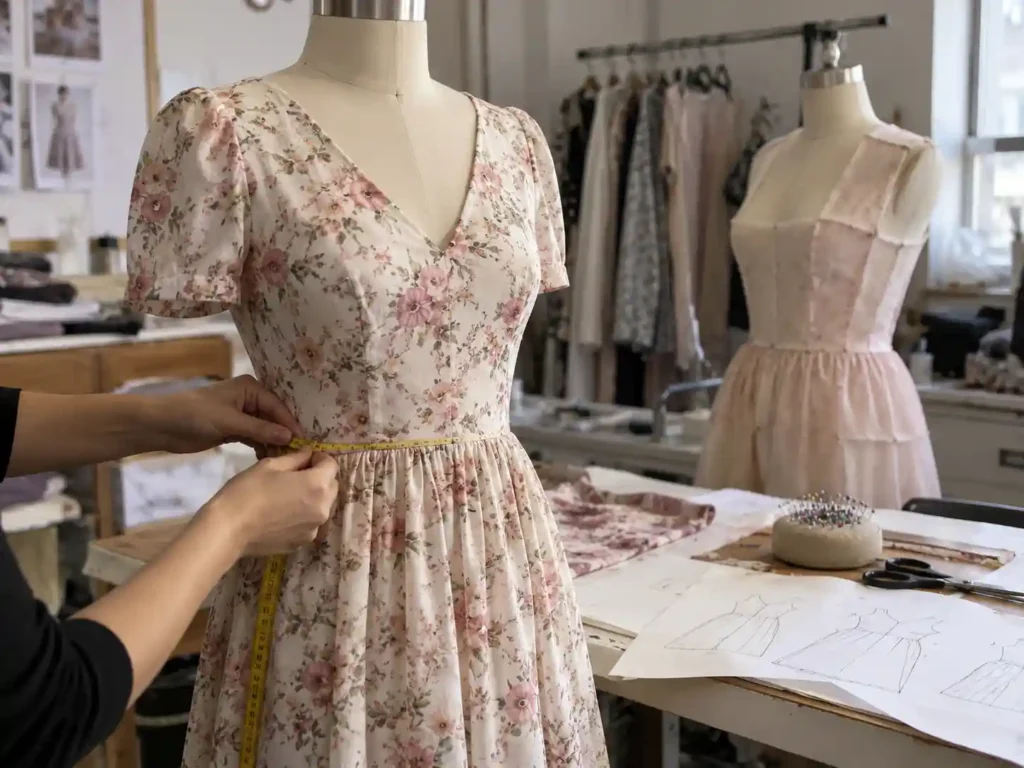
Dress size and fit are checked by measuring defined points against the approved garment specification and assessing whether the finished dress preserves the intended silhouette. Bust, waist, hip, shoulder, strap, dress length, and slit measurements may all matter, depending on the design. Inspectors also check size grading, fabric behavior, and garment balance, because a dress can meet several flat measurements yet fit or hang incorrectly.
Which Measurements Matter?
The most important measurement points follow the garment’s structure rather than a generic list. For a bodycon dress, bust, waist, hip, and overall length are central; a strapless corset dress also demands attention to upper-bust circumference, cup position, and bodice stability. A flowing maxi dress may need particularly careful front and back length checks, hem circumference, and lining length. Whatever the style, the tech pack should define each point of measurement and how the dress is positioned during inspection. Measuring two centimeters below a designated waistline instead of at the agreed line can create a false failure or hide a real one.
Consistency in handling matters, especially when fabrics contain stretch or gathers. The inspector should know whether the garment is measured flat, closed, relaxed, or arranged according to an approved method. Bust, waist, and hip measurements should be recorded alongside shoulder and neckline information where those features affect fit. Selected units from each produced size help expose grading errors that a medium-size golden sample cannot reveal. The purpose is not merely to hit a number on paper; it is to protect the shape and comfort customers expect from the approved design.
What Tolerances Are Acceptable?
Measurement tolerance is the allowed difference between a specified dimension and the actual garment measurement. It must be agreed for the particular style and point of measurement, because a close-fitting bodice is not affected in the same way as a loose skirt. Jinfeng Apparel’s internal reference values include ±1 cm for bust, waist, and ordinary dress length; ±1.5 cm for hip and maxi-dress length; and ±0.5 cm for strap length. They are reference points for discussion, not universal industry limits, and a customer’s approved tech pack takes precedence.
The table below uses illustrative target dimensions to show how a tolerance is applied. For example, an agreed 70 cm waist with a ±1 cm allowance gives a range of 69–71 cm. A reading outside that range requires the approved nonconformance process, not automatic improvisation by the inspector. Mesh, lace, chiffon, sequined materials, stretch constructions, and complex eveningwear may require separately approved measurement methods and limits. In all cases, repeatable measuring technique is just as important as the numeric tolerance: pulling a garment taut can change the reading and make a reliable dress appear inconsistent.
| Measurement point | Jinfeng reference tolerance | Illustrative target | Illustrative range |
| Bust | ±1.0 cm | 88 cm | 87–89 cm |
| Waist | ±1.0 cm | 70 cm | 69–71 cm |
| Hip | ±1.5 cm | 96 cm | 94.5–97.5 cm |
| Shoulder width | ±0.8 cm | 38 cm | 37.2–38.8 cm |
| Strap length | ±0.5 cm | 32 cm | 31.5–32.5 cm |
| Dress length | ±1.0 cm | 90 cm | 89–91 cm |
| Maxi-dress length | ±1.5 cm | 135 cm | 133.5–136.5 cm |
| Slit height | ±1.0 cm | 35 cm | 34–36 cm |
How Are Grading and Fit Checked?
A base-size sample can look excellent while the same design becomes unbalanced in larger or smaller sizes. Grading checks ask whether the changes between sizes follow the approved rules and preserve the proportions that make the style recognizable. Increasing bust and waist widths without reconsidering armholes, hip shaping, neckline position, or cup placement can produce a garment that measures acceptably at some points but feels wrong when worn. The review should compare pattern versions, the graded size chart, and measured production garments across the manufactured size range.
Fit evaluation complements measurement rather than replacing it. A dress may be within tolerance yet show pulling at the hips, a neckline that gapes, or a skirt that twists because of construction or fabric direction. Selected designs, particularly corset, strapless, backless, bodycon, and structured occasionwear, benefit from assessment on an appropriate form or fit model when the project requires it. Any correction must be reflected in the pattern and technical records before it is treated as a new standard. This helps prevent one-off fitting changes from creating inconsistent results in subsequent batches.
What Changes With Stretch Fabrics?
Stretch materials introduce another dimension to quality control: the dress may change shape under tension and then recover, or fail to recover, after movement. Jersey, power mesh, and stretch satin should be checked for direction of stretch, recovery, relaxation before cutting where necessary, and compatibility between the shell and lining. Pulling panels during sewing can alter seam length and create rippling around necklines, waist joins, or hems. These defects may be difficult to judge from a single flat measurement because they become obvious only when the dress is worn or allowed to hang naturally.
Some fitted dresses are designed with negative ease, meaning the garment is intentionally smaller than the corresponding body dimension. Inspectors must compare these garments with the approved garment chart rather than assuming that body measurements are the correct target. At Jinfeng Apparel, checks for bodycon styles include stretch and recovery, side-seam twisting, neckline stability, skirt ride-up, and finished measurements. The important question is whether the product behaves like the approved design during normal wear, not whether every fabric can be tested with the same method or forced into the same tolerance.
How Are Dress Color and Prints Checked?
Dress color and print quality are checked against approved fabric standards, lab dips, strike-offs, artwork files, and placement references. Inspectors look for shade variation, incorrect print direction, blurred or missing details, and mismatched motifs at specified seams. Checks should begin before cutting and continue on assembled garments, using agreed viewing conditions and acceptance criteria that reflect the actual fabric and design.
How Is Color Matched?
Color approval needs a dependable reference, not simply a color name on a purchase order. A brand may specify a shade through a lab dip, approved swatch, or carefully defined color reference, but the production decision should be made against a standard suited to the actual textile. A photograph on a phone can help communicate an idea; it cannot reliably replace a physical reference when lighting, screen calibration, and material sheen affect perception. Printed textiles may also require an approved strike-off showing both the artwork and the intended color relationships before bulk printing.
Visual inspection should use consistent lighting and viewing conditions so different inspectors are not comparing shade under different lamps. The textile industry’s AATCC EP9-2025 evaluation procedure describes principles for comparing color differences visually against a standard. Instrumental measurement can add useful evidence if the customer and supplier have agreed on the metric, procedure, and acceptance limit; there is no responsible single color-difference number for every fabric. Jinfeng Apparel’s incoming checks include shade, lot consistency, surface appearance, and trim matching, especially where shell, lining, lace, and zippers must appear coordinated on the completed dress.
What Causes Shade Variation?
A dress can show apparent color differences even when every panel was ordered under the same shade name. Dye-lot variation, fabric preparation, finishing, and differences between suppliers all influence the result. Satin and velvet add another complication: their surfaces reflect light directionally, so two panels cut in different orientations may appear lighter and darker beside each other. Sequined fabrics can produce similar directional effects, while a pale lining may change the perceived shade of a translucent shell. Inspectors need to determine whether the difference is an actual color mismatch or a change in appearance caused by construction.
Material lots should be identifiable before cutting. If rolls from separate dye batches are combined without control, a finished dress may contain visible shade differences between the bodice and skirt. For a repeated colorway, the next production lot should be checked against a retained approved reference rather than the assumption that a previous supplier formula will yield an identical appearance. When differences appear, practical responses can include separating lots, reviewing the cutting plan, replacing incompatible components, or obtaining customer approval for a specific deviation. Rubbing, washing, or perspiration colorfastness tests may also be needed, but those are performance checks; a visually matched fabric has not automatically passed them.
How Is Print Placement Controlled?
Print placement becomes critical when artwork is meant to frame the neckline, sit at the center front, follow a waist seam, or run along the skirt hem. A large floral motif that shifts several centimeters may change the look of the dress even though the garment was sewn neatly. The approved artwork should therefore identify orientation, placement references, important motif centers, and any accepted movement at specific positions. Cutting markers and panel orientation need to follow those instructions, especially for engineered prints and border designs.
Matching is not an all-or-nothing requirement. Small all-over prints may not need a continuous pattern at every seam, while horizontal stripes, checks, and large geometric motifs can make discontinuities highly visible. The brand should identify critical seams and acceptable variation before cutting. Exact matching can also increase fabric consumption because the cutting team must place pieces around the artwork repeat; this is best considered during sampling and costing. Jinfeng Apparel’s cutting checks address print direction, motif location, and panel identification so problems are found before inaccurate panels enter the sewing line. After assembly, inspectors should still confirm that the intended visual relationships survived stitching and pressing.
What Happens When Prints Fail?
A blurred image, shifted motif, reversed panel, and mismatch at a side seam can all look like “bad printing,” but they have different causes. Ink coverage or registration problems originate in printing, while a correct fabric print can become a defective garment through cutting placement or incorrect panel assembly. The first step is to compare the affected dress with the approved artwork and then identify whether the problem follows a fabric lot, a cutting bundle, a particular size, or one sewing operation. This prevents the team from replacing perfectly acceptable printed fabric when the actual issue is assembly.
Repair depends on scope and feasibility. An isolated panel may sometimes be replaced, but the replacement must match the surrounding fabric shade and artwork repeat. A systematic print-position error may require stopping cutting or segregating affected work rather than attempting dozens of inconsistent repairs. For complex printed collections, inspection records should include style, color, lot identification, photographs, and the corrective decision. Strong color and print control is less about rejecting every natural variation than establishing which features are essential to the approved design and protecting those features through production.

How Are Dress Embellishments Checked?
Dress embellishments are inspected for correct placement, completeness, secure attachment, consistent appearance, and wearer safety. Beads, sequins, rhinestones, embroidery, lace, and decorative trims can create different risks depending on their weight, attachment method, and supporting fabric. Inspection should compare each detail with the approved sample, assess high-friction areas carefully, and document loose pieces, damage, or unsafe edges before the garment is released.
How Are Beads and Sequins Tested?
A sequin dress can photograph beautifully yet lose its finish during repeated handling if the decorations are poorly secured. Inspection should start with the material before cutting, looking for missing sequins, broken backing, irregular sequin direction, and obvious attachment damage. Once the dress is sewn, the focus shifts to areas exposed to movement and friction: underarms, side seams, fitted waists, shoulder sections, and the edges around zippers. These are places where decorative components may catch, loosen, or scratch the wearer. The weight of beadwork also matters because a delicate base fabric can distort when decorations are too heavy for its construction.
There is no single pull-force value suitable for every sequin, bead, or decorative trim. When attachment testing is necessary, the test method and required outcome should be selected for the product and agreed by the customer, with relevant market requirements considered. A gentle handling check can reveal obvious looseness, but it is not a substitute for a specified strength test. Jinfeng Apparel’s sequin-dress checks include missing or loose pieces, seam thickness, decorative direction, lining protection, and damage from cutting or sewing. The intended result is a dress that retains its approved appearance without creating discomfort or risking fabric damage during ordinary use.
What Makes Lace and Embroidery Acceptable?
Lace and embroidery need different inspection approaches because they behave differently on a garment. Embroidery should be assessed for artwork accuracy, stitch coverage, thread tension, skipped areas, placement, and distortion of the fabric beneath it. Dense stitching can pucker a lightweight panel even when the design itself is correctly reproduced. Inspectors should therefore look at the embroidery both close up and as part of the worn silhouette. A tidy stitch surface is not enough if the decoration pulls the bodice out of shape or produces an unwanted bulge near a seam.
Lace requires attention to motif direction, matching at visible joins, holes, fraying edges, and the relationship between shell and lining. Transparent lace can appear quite different over a warm-colored lining than over a cool or neutral one, so the approved lining color is part of the visual standard. For fitted occasionwear, motif symmetry across the center front or neckline may be especially important. Jinfeng Apparel’s lace inspection focuses on alignment, damage prevention, lining compatibility, and edge construction. Not every uneven-looking motif is a manufacturing error, but deliberate design irregularity must be supported by an approved reference rather than assumed after defects are found.
Is Decoration Placement Accurate?
Decorative placement is checked against reference lines, approved artwork, and the physical sample. A rhinestone design surrounding a V-neck may look unbalanced if one side begins lower than the other, even if every stone remains attached. Placement instructions can use center-front markings, seams, neckline edges, or agreed distances from fixed garment features. They should distinguish the features that need to match precisely from those where natural variation is acceptable. That distinction is particularly useful when handwork is involved, because visual consistency matters more than pretending every decorative stitch can be mechanically identical.
Sizing creates an additional challenge. A decoration arrangement developed on one sample size may need approved adjustments across a graded size range; transferring the identical layout to every size can change its apparent proportions. Inspectors should also check whether decorative weight pulls the fabric, changes the drape, or makes an edge roll outward. Production templates and clearly marked placement lines can reduce variation, but finished-garment examination remains necessary. The best-looking placement on a flat table is not always the best-looking placement on the body, especially for stretch bodices, gathered panels, and intentionally asymmetric designs.
How Are Safety and Rework Handled?
Decorations should never be assessed only for beauty. Sharp metal settings, broken beads, exposed wires, rough sequin edges, and detached components can make a dress uncomfortable or unsafe. Necklines, underarms, waists, and areas that rub against the skin deserve special attention. Linings may protect the wearer, but they must be appropriately secured and must not pull the outer fabric into an unwanted shape. The product’s intended age group and destination market also matter, because safety obligations can differ substantially between adult fashion and children’s clothing.
If an embellishment defect is repairable, the repair needs its own inspection. Replacing a missing bead must not disturb neighboring stitches or leave a visible color difference. Reinforcing a loose decoration should not create an exposed knot, a stiff patch, or a new sharp point. Where repeated failures appear, the team should investigate attachment thread, sewing technique, backing, and material suitability instead of treating each garment as an unrelated incident. A damaged mesh base or widespread decorative failure may justify replacement rather than cosmetic repair. Jinfeng Apparel’s approach links decorative inspections with construction, wearer comfort, and documented correction so an attractive finish does not conceal a weak garment.
How Is Dress Symmetry Checked?
Dress symmetry is checked by comparing the neckline, straps, waistline, seams, pleats, ruffles, and overall balance with the approved pattern and sample. Matching features should look and measure consistent where the design calls for symmetry. Intentionally asymmetric dresses need different reference points, because a one-shoulder neckline or diagonal hem can be correct without being identical on the left and right sides.
How Are Necklines and Straps Checked?
The top of a dress attracts attention immediately, which is why a slightly uneven neckline can make an otherwise well-made garment appear careless. For symmetrical styles, inspectors compare neckline curves, shoulder positions, armholes, and strap attachment points with the approved sample. A flat measurement is useful, but it needs to be taken from the correct landmarks. Two straps can measure the same length yet sit differently if their angles or attachment positions are inconsistent. Similarly, a neckline that appears level on a table may shift when the dress is fitted over the body.
Slip dresses, thin-strap evening dresses, and fitted satin styles can be especially sensitive to small construction differences. Jinfeng Apparel’s internal reference tolerance for strap length is ±0.5 cm, subject to the approved customer specification; that is a dimensional reference, not permission to ignore visual balance. Strapless and halter dresses require a broader review of upper-body stability, coverage, and tension. When the garment needs a fit check, a suitable form or model can reveal slipping, gaping, or pulling that flat measurements overlook. Any adjustment should preserve the intended neckline rather than simply making the two sides appear identical while lying flat.
Are Waist Seams and Panels Aligned?
A dress can have an acceptable bust and waist circumference while still looking crooked. A tilted waist seam changes the perceived body proportions, and twisted side seams may interfere with movement or cause the skirt to pull toward one side. Inspectors should check center-front and center-back lines, side seams, waist seam height, panel joins, and the relationship between bodice and skirt. Princess seams and curved panels deserve particular care because their alignment helps create the garment’s shape, especially in structured dresses and fitted occasionwear.
The visible symptom may not reveal the cause. If side seams twist, the underlying problem could be fabric grain, pattern geometry, cutting direction, or sewing tension. Repressing the dress may briefly improve its appearance without fixing any of those issues. For gathered dresses, the distribution of fullness at the waist also affects whether the seam looks level after the garment is worn. Jinfeng Apparel checks pattern versions, panel orientation, seam allowances, and in-line construction so an alignment problem can be caught before finishing. When several garments fail in the same way, reviewing the shared operation is more productive than repairing them one by one.
How Do Pleats and Drape Affect Balance?
Pleats and ruffles influence symmetry because they redistribute volume around the body. A pleated skirt may have correct overall dimensions but appear heavier on one side if pleat depth or spacing changes during sewing. A ruffle cut to the correct shape may still hang unevenly if the gathering is concentrated in one area. Inspectors should compare pleat direction, spacing, fullness, layer position, and edge finish with the approved sample. These details need visual assessment as well as measurement, especially when the design relies on soft or flowing fabric.
Drape adds another complication. Chiffon, satin, jersey, and structured woven fabrics react differently to gravity, handling, and pressing. Bias-cut panels may relax and extend more than panels cut on the straight grain, affecting visual balance and sometimes the eventual hem level. A dress should be assessed in a consistent hanging or fitting condition so the result is not distorted by how it was placed on the table. The objective is not to make soft fabric behave like rigid fabric; it is to preserve the particular movement and silhouette approved during development. If the drape changes dramatically in bulk production, both fabric properties and construction deserve investigation.
What About Intentional Asymmetry?
An asymmetric dress should not be judged against rules designed for a symmetrical garment. A one-shoulder neckline, offset ruffle, diagonal waist seam, or high-low hem is meant to produce different shapes on each side. The inspection standard should therefore identify the intended reference points and relationships between panels. For example, a one-shoulder dress may need checks for shoulder tension, neckline angle, coverage on the unsupported side, lining balance, and side-seam stability, rather than a meaningless comparison of two nonexistent shoulder straps.
Asymmetry still requires repeatability. If the approved design places a diagonal detail at a specific point, every production size should follow the relevant approved pattern and grading rules. A dress can be intentionally uneven while also being incorrectly constructed. This distinction is why physical samples, marked patterns, and clear technical drawings matter. Inspectors should not reject an intended feature simply because it is nonstandard, nor accept a twisted or unstable garment because the design is asymmetric. The correct question is whether the garment consistently reproduces the approved silhouette and remains comfortable in normal wear.

How Are Dress Hems and Final QC Checked?
Dress hems are checked for approved length, balance, edge finish, stitch quality, lining position, and natural drape. The inspector should use consistent measuring or hanging methods suited to the fabric and design. Final quality control then reviews the complete dress, defect findings, labels, packing, and shipment records. Any AQL-based acceptance decision must use the agreed sampling plan rather than an assumed universal pass rate.
How Is Hem Level Checked?
The hem is one of the first places people notice poor finishing, particularly on midi, maxi, and floor-length dresses. For a conventional level hem, inspectors should compare center-front, center-back, and relevant side positions with the approved length and shape. The garment needs to hang naturally during a visual check, because twisting it on a table can disguise or exaggerate an uneven edge. A dress form or appropriate fitting arrangement may be useful when fabric weight or construction changes how the skirt falls.
A hem should not be judged by length alone. Stitching may ripple, the edge may roll, or the lining may pull the skirt upward even when the measured length is within tolerance. Bias-cut and lightweight fabrics may settle after being hung, so the production procedure may call for relaxation before the final hem is set. Jinfeng Apparel’s internal reference is ±1 cm for ordinary dress length and ±1.5 cm for maxi-dress length, subject to the customer’s approved limits. High-low and asymmetric designs require measurements at their specified positions rather than an artificial requirement for the entire edge to sit at one height.
What Changes With Fabric and Linings?
A hem that looks clean on a medium-weight woven fabric may behave poorly on chiffon, satin, jersey, or sequin material. Chiffon can shift during feeding and develop waves along a narrow rolled hem if the fabric is stretched unevenly. Satin highlights puckering, needle damage, and pressing marks because of its reflective surface. Jersey needs an appropriate flexible stitch or construction method so the edge moves with the garment. Heavy decoration can increase bulk and create roughness where sequins or beads approach the finished edge.
Linings are part of the same inspection rather than an afterthought. A lining that extends below the shell unintentionally is an obvious finishing issue, while a lining that is too short or too tight can restrict movement and pull the hem out of balance. For dresses with slits, the inspector should check opening height, reinforcement, edge finishing, lining clearance, and the appearance during basic movement. Jinfeng Apparel’s QC references include lining length and slit height alongside overall garment length and hem balance. These connected details matter most on evening dresses and lightweight layered styles, where a small construction problem can change the entire silhouette.
How Are Hem Defects Corrected?
Before correcting a hem, the production team should identify whether the cause is inaccurate cutting, fabric relaxation, sewing tension, lining attachment, or pressing. Trimming a hem that hangs unevenly may be appropriate in some cases, but it can permanently shorten the dress without addressing an underlying pull from the lining. Reseaming a wavy rolled hem may work if the fabric remains sound, but it should not introduce needle marks, inconsistent stitch width, or visible damage. Every repair must be checked against the approved length and appearance rather than judged only by whether the original defect is less noticeable.
The number and distribution of affected garments also guide the response. One isolated hem problem may need local rework, while repeated differences in the same size or material lot suggest a pattern or process issue. Inspectors should document the affected quantity, corrective action, and reinspection result. Severe fabric damage or an uncorrectable length shortage may require rejecting the piece instead of making a compromised repair. That decision protects the approved quality level and prevents a last-minute fix from creating a worse problem when the dress is worn or displayed.
How Are AQL and Shipments Approved?
Final inspection checks the finished product and its commercial presentation against approved requirements. Depending on the customer’s agreement, the factory may use an attribute-sampling plan such as ISO 2859-1:2026, which defines acceptance-sampling schemes indexed by an acceptance quality limit for lot-by-lot inspection. The selected plan must specify the lot, inspection level, AQL values, sampling arrangements, and relevant acceptance and rejection rules. It is not correct to claim that passing an AQL inspection proves every garment in the shipment is free of defects; sampling assesses a lot under defined statistical rules and does not replace ongoing production inspection.
Jinfeng Apparel can support customer-appointed or third-party inspection alongside its internal quality controls. Final checks can include size and fit, shade, prints, embellishments, symmetry, hems, functional closures, labeling, quantities, barcodes, and carton details. Issues are recorded and handled according to severity, the agreed customer standards, and whether correction is feasible. The following examples illustrate typical distinctions; final classifications are project-specific and should not be treated as universal pass/fail rules for all brands and markets.
| Example finding | Typical classification | Practical next action |
| Exposed sharp decoration | Critical | Isolate product and investigate |
| Significant size deviation | Major | Sort, rework, or reject affected units |
| Broken zipper or serious visible shade mismatch | Major | Correct or segregate the affected lot |
| Incorrect size label or barcode | Often major | Replace, verify, and reinspect |
| Loose removable thread | Often minor | Trim and verify finish |
| Slight correctable pressing mark | Often minor | Repress and recheck appearance |
Shipment approval also requires accurate packing records. A technically excellent dress can still create costly retail problems if the size sticker is wrong, the SKU barcode fails to match the garment, or the cartons contain the wrong size assortment. The final record should connect inspection findings, any rework, packing checks, and the release decision to the correct style and lot. For repeat collections, retained golden samples and quality records provide a valuable reference for the next production batch. That continuity is one of the practical reasons brands invest in organized manufacturing relationships rather than treating every order as a completely new project.
A dependable dress quality control plan is not a final glance at a finished garment. It connects the approved design with fabric selection, accurate cutting, careful sewing, decoration, fit, finishing, and shipment records. Size, color, print, embellishment, symmetry, and hem defects can begin at different points in production, which is why no single inspection moment can control all six risks. The strongest process uses clear standards, targeted checks, traceable findings, and corrective decisions before problems spread across an order.
For brands developing seasonal collections or repeat styles, that approach also makes future work more predictable. Jinfeng Apparel supports custom dress development, sample approval, bulk production, and inspection coordination for styles including satin, lace, mesh, sequin, bodycon, corset, and occasionwear dresses. A useful development conversation begins with the design, tech pack or reference sample, fabric requirements, size range, decoration details, and intended production plan. The goal is straightforward: the dress delivered to the customer should remain recognizably faithful to the dress the brand approved, not just in its first sample but across the production run.
Frequently Asked Questions
What measurements should be included in a dress quality inspection?
The correct measurement list depends on the silhouette, but bust, waist, hip, shoulder width, strap length, total dress length, and relevant slit or hem measurements are common starting points. A corset dress may also require upper-bust and under-bust measurements, while a maxi dress may need separate front, back, and lining length checks. The tech pack must define where each point is measured, how the garment is positioned, and the approved tolerance. Checking a representative range of produced sizes helps reveal grading problems that would be missed by inspecting only the base size.
What is an acceptable measurement tolerance for a dress?
There is no single universally acceptable tolerance for every dress. The permitted variation depends on the garment type, fabric, point of measurement, target market, and customer-approved specification. Jinfeng Apparel’s internal references include ±1 cm for bust, waist, and ordinary dress length, ±1.5 cm for hip and maxi-dress length, and ±0.5 cm for strap length. These are working references, not mandatory industry rules. For a fitted bodice, even a modest variation may change comfort or appearance, so the approved tech pack and consistent measuring method should govern acceptance.
How do inspectors check color differences in dresses?
Inspectors compare the production fabric and finished garments with approved lab dips, swatches, or other defined color references under consistent viewing conditions. They check variations within a single dress, between fabric rolls, and across separate dye lots, including the relationship between shell, lining, zipper, and decorative trims. Satin and velvet can appear different because of surface direction even when the dye shade is similar. Where the project requires it, instrumental measurement or colorfastness testing may provide additional evidence, but those methods need agreed procedures and limits rather than invented universal thresholds.
What are the most common quality problems in sequin dresses?
Common problems include missing sequins, loose attachment, damaged backing fabric, inconsistent decorative direction, thick or uncomfortable seam allowances, snagging, and rough edges that contact the skin. Zipper areas, underarms, side seams, and fitted waist sections deserve particular attention because they experience friction or movement during wear. Inspectors should also check whether sequins have been damaged during cutting, sewing, pressing, or packing. A good repair must restore the appearance without weakening neighboring decoration or introducing visible stitching and fabric damage.
How can an uneven dress hem be inspected and corrected?
An uneven hem should be checked against the approved garment shape using consistent reference positions such as center front, center back, and side points. The garment may need to hang naturally before inspection, particularly when bias-cut or lightweight fabric can settle after construction. The appropriate repair depends on the cause: inaccurate cutting, sewing tension, lining pull, fabric relaxation, or pressing may produce similar-looking symptoms. Corrective work should preserve the approved length and finishing quality, followed by remeasurement and visual reinspection rather than assuming every uneven hem can simply be trimmed.
Does passing an AQL inspection mean every dress is defect-free?
No. AQL-based acceptance sampling is a method for making a lot-acceptance decision using the sampling plan and quality limits agreed for the order; it is not a guarantee that every item has been individually examined or contains no defects. ISO 2859-1:2026 provides acceptance-sampling schemes by attributes, but the correct sample size and acceptance criteria depend on the selected plan and lot details. Effective dress quality management still relies on material checks, cutting controls, in-line sewing inspection, defect correction, and accurate shipment documentation before the final sampling decision.