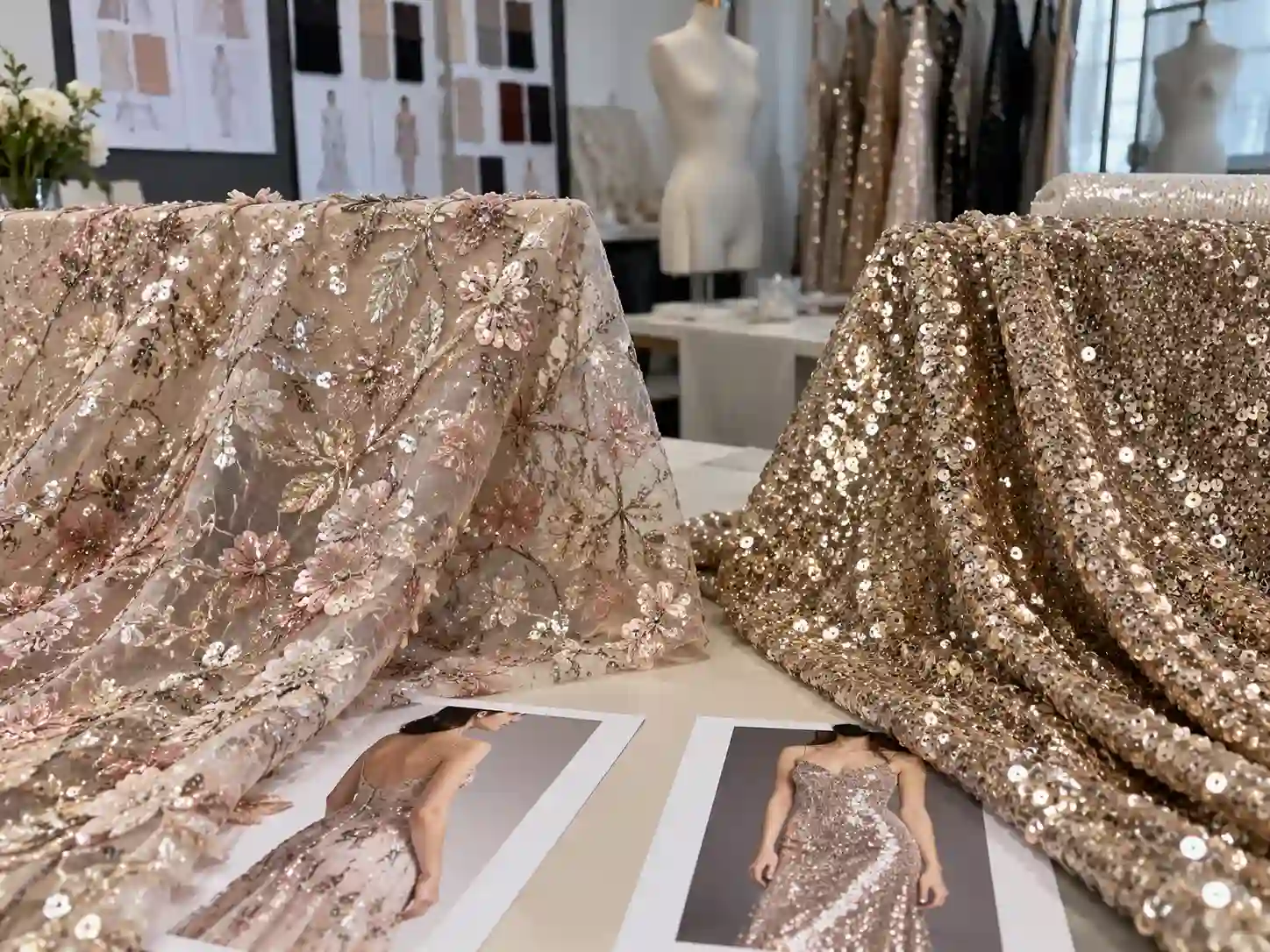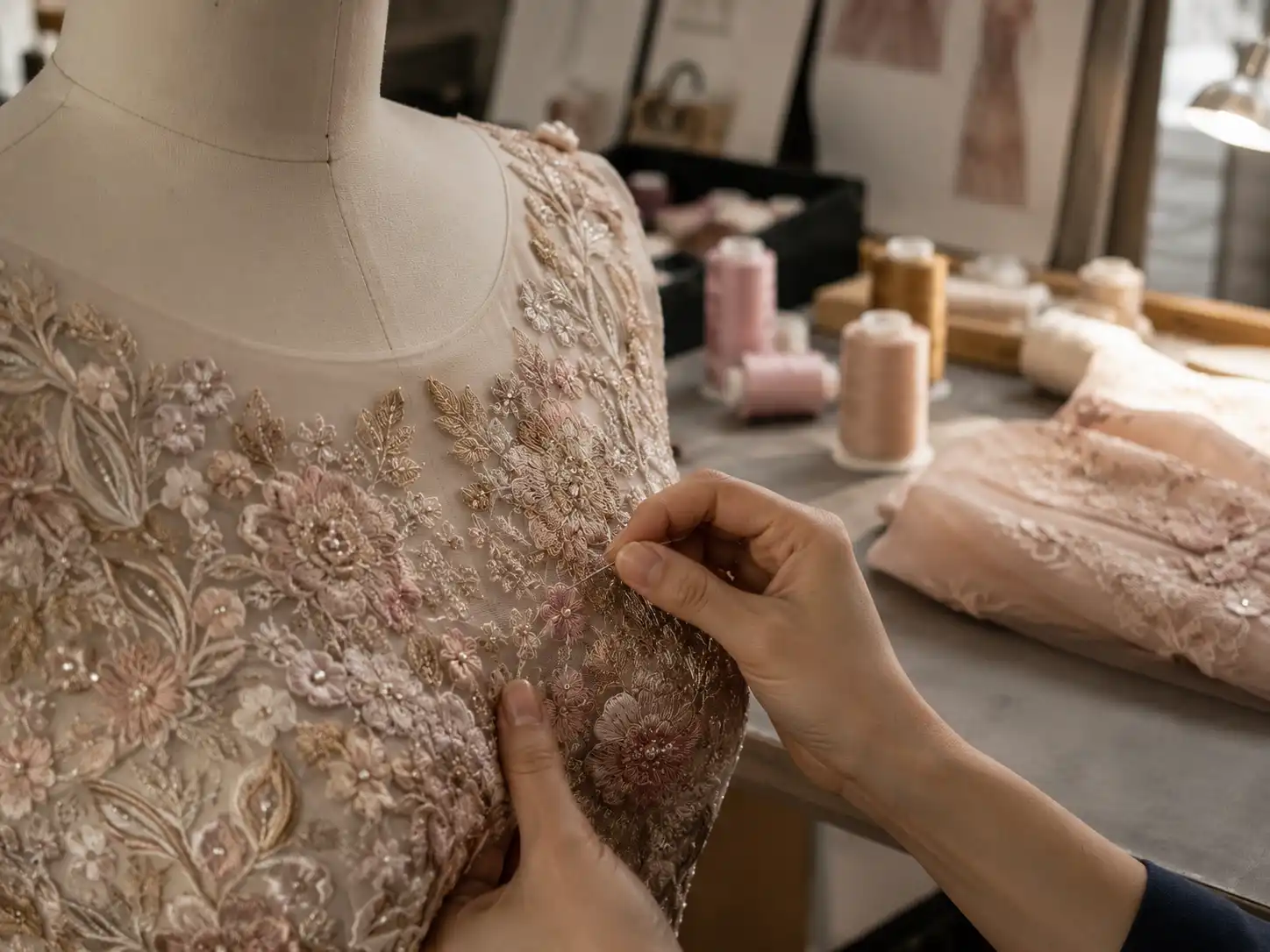
Choosing between OEM and ODM dress manufacturing sounds like a technical sourcing decision, but for a fashion brand, it can shape almost everything that happens next: how original your collection feels, how much control your team keeps, how fast you can launch, how many sample rounds you need, and how stable your bulk production becomes. Many brands do not fail because they picked a bad factory. They fail because they picked the wrong cooperation model for their current product stage.
OEM dress manufacturing is best when your brand already has clear designs, tech packs, fit requirements, fabric direction, and private-label standards. ODM dress manufacturing is better when you need factory-supported style development, fabric advice, pattern input, and faster product direction. The right choice depends on design ownership, launch speed, budget, MOQ, quality expectations, and long-term collection plans.
In real dress production, the difference is not just who designs. A satin corset mini dress, a mesh bodycon dress, and a chiffon resort maxi all carry different risks in pattern, stretch, transparency, lining, zipper balance, shrinkage, and size grading. That is why growing fashion brands should not only ask, Do you offer OEM or ODM? They should ask, Can this manufacturer help my dress collection move from idea to sample, from sample to bulk, and from bulk to repeat orders without losing the brand look?
What Is OEM Dress Manufacturing?
OEM dress manufacturing means the brand provides the design, tech pack, measurements, fabric direction, trims, labels, and packaging requirements, while the factory develops samples and produces bulk dresses according to those specifications. It is the best model when a brand wants stronger control over originality, fit, construction details, private-label identity, and repeat-order consistency.
What the Buyer Provides
In OEM dress manufacturing, the buyer brings the product idea in a structured form. That may be a full tech pack, original sample, reference photo, sketch, line sheet, size chart, fabric swatch, trim standard, or packaging requirement. The more complete the input, the more accurate the sample, quotation, production plan, and final bulk result will be.
For dress production, clear input means more than showing a nice photo. A bodycon dress needs stretch direction, recovery expectations, bust-waist-hip measurements, seam placement, and tolerance rules. A corset dress needs cup shape, boning position, lining structure, zipper type, and support level. A chiffon maxi dress needs lining length, hem finish, fabric weight, transparency control, and slit height.
The buyer does not need to know every factory term, but the buyer must know the product goal. A professional manufacturer can help correct pattern issues, suggest fabric alternatives, and improve construction, but it should not be forced to guess the brand’s fit, price range, customer profile, or launch standard.
| OEM Input Item | Practical Detail to Provide | Why It Matters in Dress Production |
| Tech pack | Front/back view, measurements, construction notes | Reduces sample misunderstanding |
| Size chart | XS-XL or brand-specific range, tolerance rules | Controls fit consistency across sizes |
| Fabric direction | Composition, weight, stretch, hand feel, color | Affects drape, comfort, opacity, and cost |
| Trim details | Zipper, lining, elastic, buttons, boning, cups | Impacts structure, function, and lead time |
| Reference sample | Original garment or approved prototype | Helps confirm fit, proportion, and finishing |
| Label files | Main label, care label, size label, barcode | Supports private-label and retail readiness |
| Packaging | Polybag, hangtag, carton mark, SKU label | Reduces warehouse and shipment confusion |
What the Factory Controls
A capable OEM factory does far more than cut and sew. Its real job is to turn the buyer’s specifications into a production-ready dress that can be sampled, corrected, graded, produced, inspected, packed, and shipped in bulk.
This is where manufacturing experience matters. A sketch may show a clean satin mini dress, but the factory must decide whether the satin will slip during sewing, whether the zipper may ripple, whether lining is needed, whether the bust seam will pull, and whether the hem will stay balanced after pressing. A mesh dress may look simple, but transparency, stretch direction, neckline deformation, and seam strength must be controlled before bulk.
A good OEM partner also protects the buyer from weak decisions. If the selected fabric is too light for the shape, if the size grading will distort the waistline, or if a trim choice may delay production, the factory should raise the issue early. The best OEM cooperation is not blind execution. It is disciplined execution with technical correction.
When OEM Works Best
OEM works best when the brand already has a clear product identity. If your collection depends on original silhouettes, custom fit, specific fabric behavior, special construction, or recognizable design details, OEM gives you the highest level of control.
This is especially important for premium ecommerce brands, occasionwear labels, party dress brands, resortwear collections, and fashion businesses that rely on repeat customers. In these categories, a small change can affect the whole product. A waistline moved by 1 cm, a lining that is too short, a zipper that waves, or a hem that twists can change how the dress looks on body and how customers review it.
OEM is also strong for repeat-order planning. Once the approved pattern, measurement chart, fabric standard, trim list, and packaging rules are recorded, the brand can reproduce the same style in new colors, new fabrics, or future seasons with less risk. For mature brands, OEM is not just a production method. It is a way to protect product memory.
OEM Risks to Watch
OEM can fail when the buyer assumes the factory understands details that were never provided. A reference image without measurements is not a production document. A fabric description like nice satin is not enough. A note like make it fitted but comfortable must be translated into real measurements, stretch percentage, ease allowance, and size grading.
The most common OEM risk is not that the factory cannot sew the dress. The bigger risk is that the buyer and factory are imagining two different products. This often appears after the first sample: neckline too deep, waist too low, hip too tight, fabric too thin, lining too visible, zipper too stiff, or hem not sitting correctly.
The solution is to control the development path. Confirm the fabric before sampling. Review the first sample on body or mannequin. Comment with exact measurement changes. Approve the pre-production sample before bulk. Keep all corrected files for future production. A disciplined OEM project usually feels slower at the beginning, but it saves time later.
What Is ODM Dress Manufacturing?
ODM dress manufacturing means the factory supports product development based on the brand’s direction, reference images, target market, price range, or sales scenario. The manufacturer may help with style development, fabric selection, pattern direction, sample making, and production planning. ODM is useful when a brand wants faster development support without building every technical detail from scratch.
Factory-Led Development
ODM begins with a different starting point from OEM. Instead of receiving a complete technical package, the factory receives a direction: a market trend, moodboard, reference photo, target customer, price level, season, or product category. The manufacturer then helps turn that direction into a workable dress.
For example, a buyer may want a summer resort maxi dress group but has not decided fabric weight, lining, slit height, waist structure, or print method. Another buyer may want a mesh party dress capsule but needs help deciding whether to use single-layer mesh, stretch lining, double-layer ruching, or contrast binding. In these cases, ODM gives the buyer access to the factory’s product development experience.
ODM should not mean random factory styles with a logo added. Good ODM still needs brand direction, sample review, fit correction, private-label standards, and approval checkpoints. The factory can support product thinking, but the brand must still decide whether the dress matches its customer, price point, visual identity, and sales channel.
Customization Boundaries
ODM customization can be shallow or deep. Shallow customization may involve changing color, length, label, or packaging. Deeper customization may involve changing neckline, sleeve, waistline, fabric, lining, fit, trims, construction, and pattern proportion. For a serious dress brand, deeper customization is usually necessary.
A ruched mesh dress, for instance, can be customized in many practical ways: mesh weight, lining color, ruching placement, side seam position, dress length, neckline depth, sleeve length, hem finish, and label packaging. These changes can make the final product feel brand-specific rather than generic.
However, the buyer should understand where ODM has limits. If a factory starts from an existing development base, similar shapes may exist in the market. If the buyer wants exclusivity, this needs to be discussed before sampling. If the buyer wants a fully original style, the process may become closer to OEM after the first development stage.
Faster Launches
ODM can shorten the early development stage because the factory helps fill in technical gaps. This is useful for seasonal fashion, ecommerce launches, capsule collections, and brands that need to test a product direction without spending months building every detail internally.
But faster does not mean careless. Dresses are sensitive products. A poor sample can look fine on a hanger and fail on body. A quick launch still needs fabric confirmation, fit review, measurement adjustment, trim approval, and pre-production approval.
| ODM Stage | Common Buyer Input | Factory Output | Practical Checkpoint |
| Product brief | Moodboard, target market, reference images | Style direction and development questions | Confirm product goal and price level |
| Fabric direction | Hand feel, season, color family | Fabric options or alternatives | Check weight, opacity, stretch, shrinkage risk |
| First sample | Approved direction | Prototype sample | Review fit, length, construction, lining |
| Sample revision | Specific comments | Corrected sample | Confirm measurements and visual balance |
| Pre-production | Bulk fabric and trims | PP sample | Approve before cutting bulk |
| Bulk order | Quantity, sizes, colors, packing | Production and QC | Inspect before shipment |
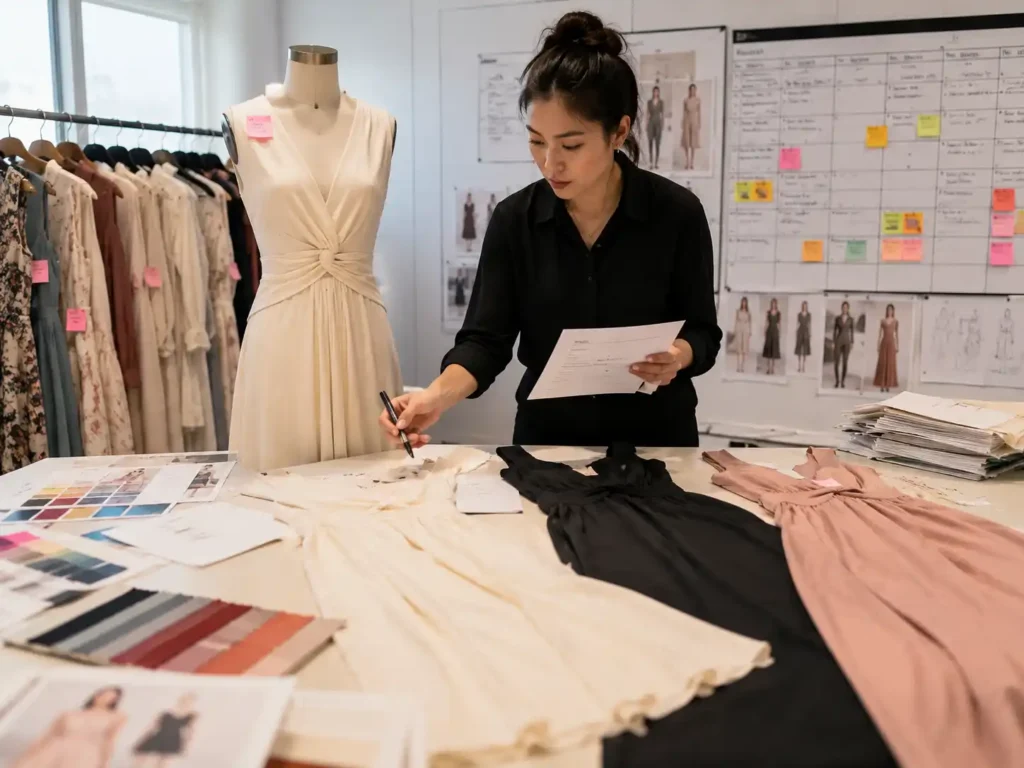
ODM saves time when the buyer makes decisions quickly. It becomes slow when the brief is vague, the target customer keeps changing, or the buyer wants a premium result at an unrealistic cost. A strong factory can guide the process, but the brand still has to make clear commercial decisions.
ODM Risks to Watch
The biggest ODM risk is product sameness. If too many brands start from similar references and only change surface details, the final dresses can look interchangeable. That may be acceptable for some mass-market channels, but it is dangerous for brands built on visual identity, influencer content, customer loyalty, and repeat purchases.
Another risk is unclear ownership. Before investing in photoshoots, campaign content, packaging, and launch inventory, the buyer should know whether the final design is exclusive, semi-custom, or based on a broader factory development style. NDA protection and unpublished style protection matter here.
ODM also fails when buyers use it as a replacement for brand strategy. A factory can suggest fabric, pattern, and construction, but it cannot define your customer’s lifestyle, price sensitivity, fit expectation, or brand story. The best ODM cooperation starts with a clear brand direction and uses the factory’s experience to make that direction production-ready.
What Are the Key Differences?
The main differences between OEM and ODM dress manufacturing are design ownership, development responsibility, technical input, speed, cost structure, originality, and control level. OEM gives brands more control when designs are already clear. ODM gives more development support when the brand needs help turning market direction into workable dress products.
Design Ownership
OEM usually starts with the buyer’s own design. The brand provides the idea, technical details, or approved sample, and the factory manufactures according to that direction. This makes OEM stronger for original collections, signature silhouettes, and products that need strict brand control.
ODM usually starts with shared development. The buyer may bring a reference image, trend direction, customer profile, or moodboard, while the factory contributes structure, fabric, pattern, and sample suggestions. Ownership can still be protected, but it must be discussed clearly.
A practical way to understand the difference is simple. OEM says, This is our dress. Help us develop and produce it correctly. ODM says, This is our market direction. Help us build a dress that fits it. Hybrid development says, This is our concept and customer. Help us improve the structure, fabric, and production method, then lock the final version for bulk.
Cost and MOQ
Neither OEM nor ODM is automatically cheaper. Dress cost depends on fabric, construction, trims, lining, sample rounds, quantity, color split, size range, packaging, and quality standard. A simple ODM dress can be cheaper than a complex OEM corset dress, but a heavily customized ODM style can become more expensive than a well-prepared OEM style.
MOQ also depends on practical production factors. Available fabric, regular color, standard trims, and simple construction usually make MOQ easier to manage. Custom dyeing, custom print, special lace, sequin fabric, custom hardware, or complex packaging may increase MOQ because fabric mills and trim suppliers often have their own minimums.
For Jinfeng Apparel, MOQ starts from 200 pcs per style/color, depending on fabric availability, color development, trims, construction complexity, and production schedule. Special fabrics, custom dyeing, printing, certified materials, special trims, and custom packaging may carry separate MOQ requirements.
Timeline and Workflow
OEM can be faster when the buyer provides complete documents. ODM can be faster when the buyer lacks technical files but has a clear market direction. In both cases, unclear decisions create delays.
The timeline problem usually starts before production. If fabric is not confirmed, the quote may change. If measurements are incomplete, the sample may need several corrections. If trims are changed after sample approval, production planning may shift. If packaging is not confirmed before shipment, delivery can be delayed.
A realistic dress manufacturing workflow includes product review, fabric sourcing, trim sourcing, pattern development, sample making, fit review, sample revision, PP sample approval, bulk cutting, sewing, inline QC, final inspection, packing, and shipment coordination. For fitted dresses, corset dresses, lace dresses, mesh styles, satin dresses, evening dresses, and long dresses, skipping sample correction is risky.
Control Level
OEM gives more direct control because the buyer defines the design, measurements, materials, trims, construction, labels, and packaging. ODM gives more development support but requires careful decision-making to keep the product aligned with the brand.
| Factor | OEM Dress Manufacturing | ODM Dress Manufacturing |
| Design source | Buyer-led design or tech pack | Factory-supported development |
| Best for | Original styles, signature fit, strict control | Faster development, trend-led collections |
| Buyer input | High: measurements, fabric, trims, packaging | Medium: direction, references, target market |
| Factory input | Technical execution and correction | Style, fabric, pattern, and production advice |
| Cost control | Strong when tech pack is complete | Strong when direction is clear and decisions are fast |
| MOQ driver | Fabric, trims, complexity, color split | Fabric choice, customization level, exclusivity |
| Brand uniqueness | Higher when design is original | Depends on customization and protection |
Control in dress manufacturing is not only about who designed the style. It is about who approves each production checkpoint. A buyer can lose control in OEM if documents are incomplete. A buyer can keep strong control in ODM if samples, measurements, fabrics, trims, and packaging are carefully approved.
Which Model Fits Your Brand?
OEM fits brands with clear designs, tech packs, original samples, size charts, and private-label standards. ODM fits brands that need development support, fabric suggestions, pattern guidance, and faster product direction. Many growing dress brands use both models: OEM for signature styles and ODM for seasonal capsules, trend-led pieces, or category expansion.
If You Have a Tech Pack
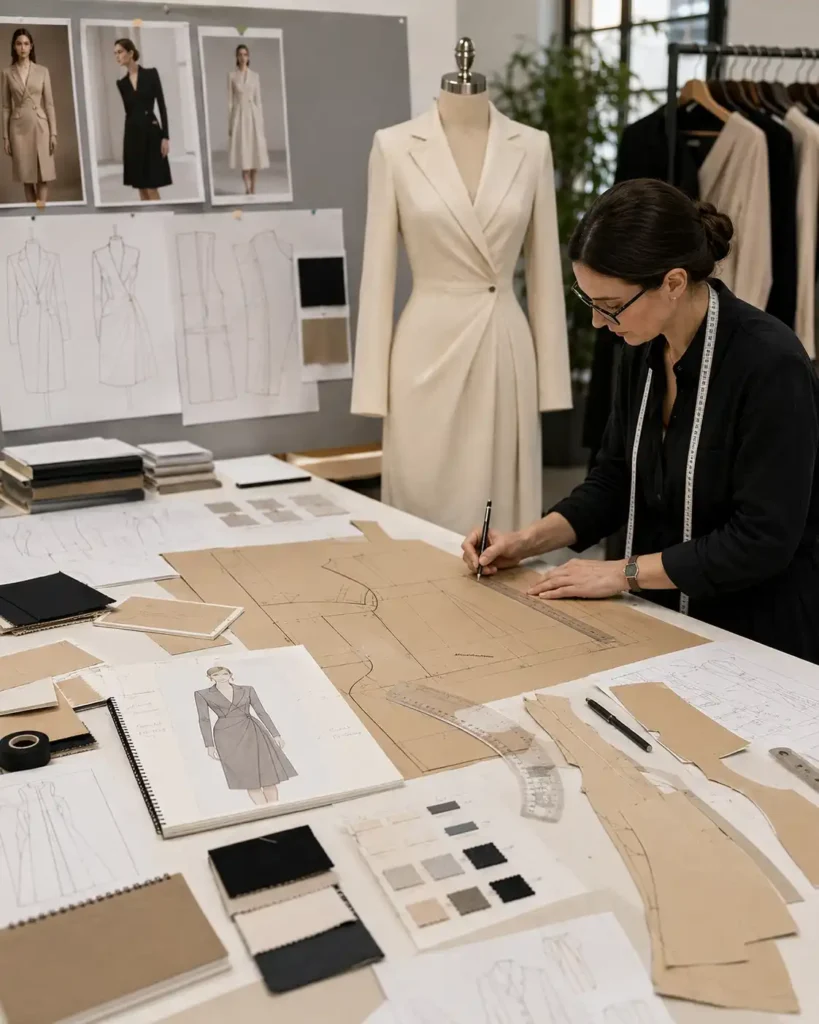
If you already have a complete tech pack, OEM is usually the stronger choice. A tech pack gives the factory measurable instructions and reduces guesswork. It also helps the buyer compare quotations more fairly because each supplier is looking at the same product information.
A good dress tech pack should include design views, garment measurements, size grading, fabric specifications, lining details, trim standards, stitching notes, label placement, colorways, packaging rules, and tolerance requirements. For fitted products, include key body-sensitive points such as bust, waist, hip, strap length, side seam, front length, back length, hem sweep, sleeve opening, and slit height.
OEM is especially useful when your brand has a consistent fit block. If your customers already trust your size S, M, L, or curve range, you should not let each new factory interpret sizing from scratch. Keep your measurement logic stable and ask the factory to work inside it. A tech pack does not remove the need for sampling. It simply makes sampling more precise.
If You Have Reference Images
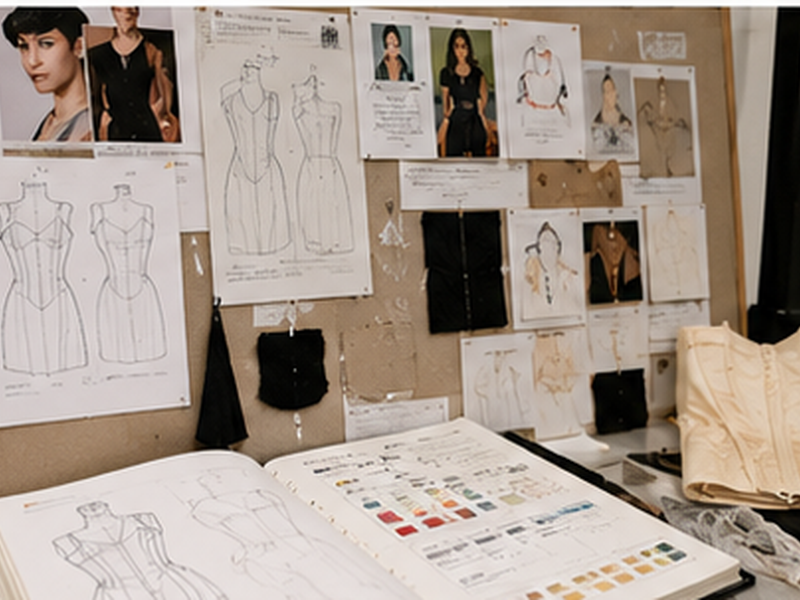
If you have reference images but no full tech pack, ODM or hybrid development may fit better. A photo shows style direction, but it does not explain fabric weight, stretch level, seam allowance, lining method, pattern shape, trim sourcing, or size grading.
For example, a satin slip dress photo may not show whether it is bias cut, straight grain, lined, unlined, stretch satin, woven satin, adjustable strap, fixed strap, zipper back, or pull-on style. A mesh dress photo may not show whether it uses power mesh, printed mesh, double-layer mesh, nude lining, or stretch jersey lining.
In this situation, the factory’s job is to ask the right questions. What is the target price? Is the style for clubwear, resortwear, wedding guest, or casual ecommerce? Does the buyer want bodycon fit or easy fit? Is the fabric meant to look premium, lightweight, shiny, matte, stretchy, or structured? A reference image is a starting point, not a production instruction.
If You Build Seasonal Collections
Seasonal collections often need both OEM and ODM. Core styles should be controlled through OEM because they represent the brand’s identity and may be repeated. Trend-led styles may benefit from ODM because they require speed, fabric suggestions, and flexible development.
A party dress brand may use OEM for its best-selling corset mini dress, then use ODM support for new mesh tops, ruched dresses, and satin occasion pieces. A resortwear label may use OEM for its signature maxi dress, then use ODM for printed sets, vacation minis, and lightweight cover-up styles.
Seasonal work becomes easier when the factory keeps records. Pattern files, fabric references, trim details, measurement sheets, and packaging standards allow each new season to build from past learning instead of starting from zero.
If You Need Long-Term Growth
A brand’s first order is important, but long-term growth depends on repeatable systems. A manufacturer should help you move from sample to bulk, from bulk to repeat, and from repeat to seasonal collection.
This matters when a style sells well. If your satin midi dress performs, you may want it in four new colors. If your mesh bodycon dress becomes a bestseller, you may want a long-sleeve version, a mini version, and a printed version. If your resort maxi works, you may want the same body shape in a new fabric next season.
Without production records, every repeat order becomes uncertain. With records, the factory can protect fit, reduce communication cost, and improve consistency. That is why growing brands should choose a model and a manufacturer that can support future product memory, not just the first sample.
How Do OEM and ODM Affect Dress Quality?
OEM and ODM affect dress quality through different control points. OEM quality depends on accurate buyer specifications and factory execution. ODM quality depends on the factory’s product development judgment and sample correction. In both models, quality is built through fabric checks, pattern control, trim approval, sampling, PP sample confirmation, inline inspection, final QC, and packaging review.
Fabric and Fit
Fabric is one of the biggest quality variables in dress manufacturing. The same pattern can look completely different in chiffon, satin, mesh, lace, jersey, ponte, sequin fabric, velvet, rayon, or linen blend. Fabric decides drape, opacity, stretch, recovery, wrinkle level, seam behavior, and customer comfort.
In OEM, the buyer may specify the fabric. This gives more control but also requires careful testing. If the fabric does not match the style, the sample may fail even when the factory follows the tech pack correctly. A non-stretch satin may not work for a very tight dress without enough ease. A lightweight chiffon may need lining. A sequin fabric may need special seam handling and comfort checks.
In ODM, the factory may suggest fabric alternatives. This can be valuable when the buyer wants a look but has not decided the exact material. A manufacturer with dress experience can recommend fabric based on silhouette, target price, season, and production risk.
Pattern and Size
Pattern work is where a dress becomes wearable. A beautiful design can fail if the bust pulls, the waistline sits wrong, the hip is too tight, the armhole cuts into the body, or the hem tilts after sewing.
OEM pattern work starts from the buyer’s size chart, original sample, or fit block. The factory checks whether the requested measurements are realistic for the chosen fabric and construction. ODM pattern work starts from development judgment, which means the factory must understand body proportion, fabric behavior, and market fit expectations.
Dress patterns should be checked differently from basic tops. A 1 cm change can matter more in a fitted dress than in a loose garment. Strap length, bust width, waist height, hip ease, back neckline, zipper position, and hem sweep all affect how the garment feels on body. For multi-size orders, grading matters because a dress that works in size S may not automatically work in XL.
Trims and Construction
Trims are not minor details in dress manufacturing. Zippers, lining, cups, boning, elastic, lace, buttons, hooks, eyelets, shoulder straps, and labels can all affect the final quality.
A zipper can make or break a fitted satin dress. If the zipper is too stiff or poorly inserted, the back seam may wave. Boning can improve support in a corset dress, but poor placement can cause discomfort. Lining can improve opacity and structure, but the wrong lining may twist, cling, or show at the hem. Lace can elevate a dress, but mismatched lace direction can make the garment look uneven.
In OEM, the buyer may specify trims. In ODM, the factory may suggest trims based on cost, availability, and performance. Either way, trim approval should happen before bulk production.
Sampling and QC
Sampling is not a formality. It is the first real test of the product. A sample reveals whether the fabric works, whether the pattern fits, whether the trims function, whether the construction is stable, and whether the dress can move into bulk.
A useful sample review is specific. Instead of saying make the fit better, the buyer should say raise waist seam by 1 cm, reduce hip by 1.5 cm, increase lining length by 3 cm, change zipper to smoother quality, or adjust strap length by 2 cm. Specific comments create measurable corrections.
| QC Point | What to Check | Common Risk If Ignored |
| Fabric | Color, defects, opacity, stretch, hand feel | Shade difference, transparency, poor drape |
| Pattern | Bust, waist, hip, strap, length, hem balance | Poor fit and higher return risk |
| Trims | Zipper, lining, elastic, lace, labels | Function failure or delayed production |
| Sewing | Seam strength, stitch balance, edge finish | Weak seams or twisted garment |
| Measurements | Key points against tolerance | Inconsistent sizing across bulk |
| Packing | Label, polybag, barcode, carton mark | Warehouse and shipment errors |
Reliable QC does not only happen at the end. Fabric inspection, trim inspection, cutting checks, inline sewing checks, measurement checks, appearance review, pressing review, packaging checks, and pre-shipment inspection all reduce different kinds of risk.
How Should You Choose a Dress Manufacturer?
Choose a dress manufacturer by checking whether the factory understands dress structures, fabric behavior, pattern correction, sampling, QC, MOQ, private-label needs, NDA protection, repeat orders, and multi-style production. A reliable partner should help reduce product risk before bulk production, not only offer a price after seeing a photo.
Dress Category Experience
A dress manufacturer should understand the specific risks behind different dress types. Making a bodycon dress is not the same as making a chiffon maxi dress. A corset dress is not the same as a slip dress. A sequin party dress is not the same as a linen resort dress.
Ask practical questions. How do they control zipper waviness in satin? How do they prevent neckline deformation in stretch mesh? How do they handle lining length in chiffon? How do they grade fitted dresses across sizes? How do they manage boning and bust support in corset structures? How do they inspect hem balance in long dresses?
A weak supplier may answer, We can make all clothing. A stronger supplier will talk about fabric behavior, body proportion, pattern balance, trim selection, sample correction, and bulk inspection. Category experience is visible in the questions the factory asks before it quotes, not only in the photos it shows.
Process Transparency
A good manufacturer should explain the process clearly before the buyer places an order. The process should include requirement review, fabric and trim sourcing, quotation, pattern development, sampling, sample comments, revision, PP sample approval, bulk production, QC, packing, and shipment coordination.
The buyer should also understand what is needed before quotation. A factory can give a rough estimate from a photo, but an accurate quote usually needs fabric details, construction information, quantity, size range, color split, trims, packaging, and delivery requirements. If the buyer expects exact pricing without these details, the quote may change later.
Transparency reduces conflict. When both sides understand what is confirmed and what is still open, the project becomes easier to manage. For larger buyers, this is especially important because multiple people may be involved: designer, buyer, sourcing manager, production manager, QC team, logistics team, and finance team.
Protection and Confidentiality
NDA protection is important when the buyer shares original designs, tech packs, unreleased samples, private-label artwork, packaging files, price information, or launch plans. For OEM, this is critical because the buyer often owns the design. For ODM, it still matters because a factory-supported style may become part of the brand’s private collection after customization.
A serious manufacturer should protect client names, logos, original tech packs, sample photos, patterns, trims, label files, packaging files, unpublished designs, order quantities, and price information. Client case studies should be anonymous unless the brand gives permission.
This kind of protection is not just legal. It is commercial trust. A brand that invests in design should not feel that its ideas become public assets. Before sharing sensitive files, ask how samples, patterns, labels, and unpublished designs are protected during development and production.
Capacity for Repeat Growth
The right dress manufacturer should be able to support more than one style and more than one order. Fashion brands often grow from a few samples into multi-style collections, repeat orders, color extensions, new fabric versions, and seasonal drops. The factory should have the production structure and record-keeping discipline to grow with that.
For buyers, capacity should not be judged only by factory size. It should be judged by whether the manufacturer can match the right production unit to the right product. A stretch bodycon style, a satin party dress, a chiffon resort maxi, and a matching set may not belong on the same production line. The factory needs product matching, technical coordination, QC consistency, and delivery control.
A good long-term partner helps the brand build product memory. Patterns, size charts, fabric references, trim standards, packing details, and past order notes should be retained. When the next order comes, the buyer should not need to explain everything again from zero. Jinfeng Apparel supports OEM, ODM, private-label production, sampling, bulk production, quality control, packaging, and export delivery from Guangdong, China, with a manufacturing system built for global fashion brands and mid-to-large apparel clients.
Final Thoughts
If your brand already has complete tech packs, original dress designs, size charts, and private-label details, start with OEM. You will keep more control, protect your design identity, and build a production record for repeat orders.
If your brand has a clear market direction but needs help with fabric, structure, pattern, and sample development, start with ODM or a hybrid OEM/ODM process. You can use the factory’s development experience while still customizing the final dress for your brand.
The smartest brands do not treat OEM and ODM as competing labels. They treat them as tools. OEM protects signature products. ODM supports faster development. Hybrid cooperation helps convert market ideas into production-ready styles.
For dress manufacturing, the most important question is not only OEM or ODM. The better question is whether the manufacturer can protect your brand direction, make the dress fit properly, control fabric and trims, manage sampling, produce stable bulk quality, support private-label packaging, and help you repeat successful styles.
To start a custom dress project, prepare your tech pack, reference photo, original sample, line sheet, sketch, moodboard, size chart, fabric preference, target quantity, and packaging requirements. Send your project details to info@jinfengapparel.com or contact Kelly via Phone / WhatsApp: +86 18929465598 for OEM or ODM dress manufacturing support.