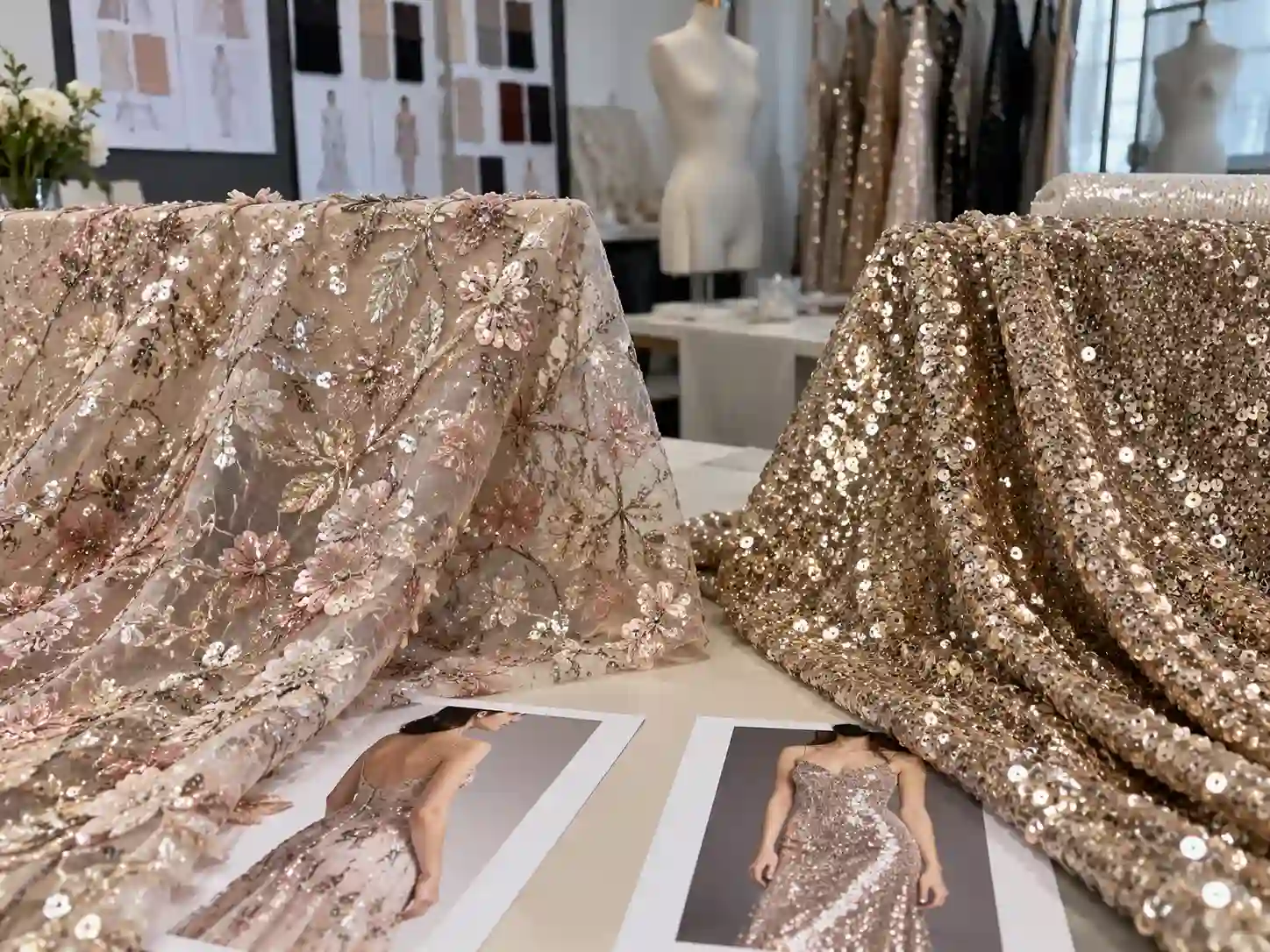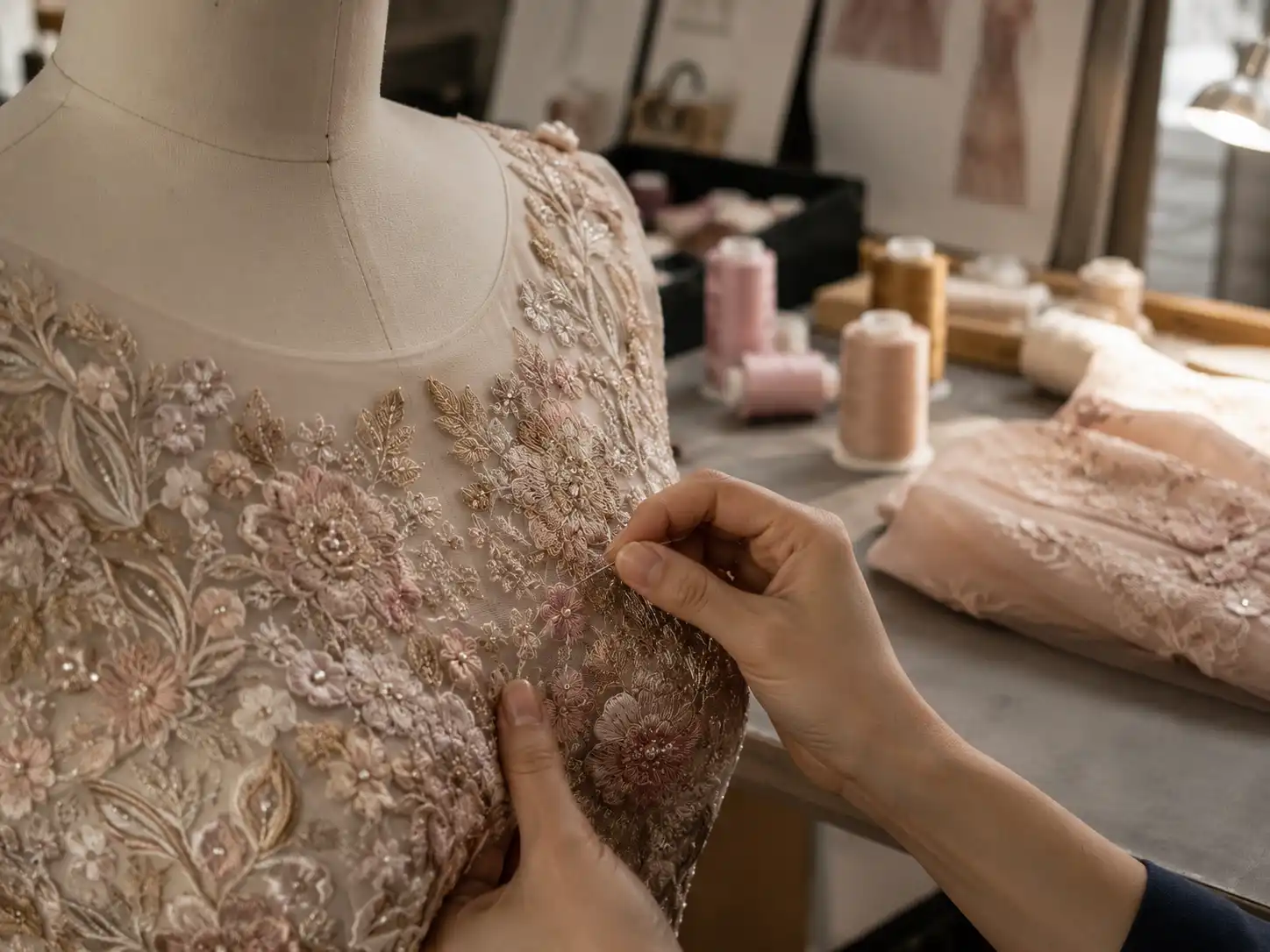
Lining is one of those dress details that rarely receives attention in a product photo, yet it can change the way a garment looks, feels, moves, fits, and survives repeated wear. Two dresses can use nearly identical shell fabrics and silhouettes but perform very differently because one has a well-matched lining system and the other does not. The difference becomes especially visible in chiffon, satin, lace, mesh, sequin, stretch, corset, light-colored, and occasion dresses, where transparency, friction, structure, and movement are difficult to control with the outer fabric alone.
Full lining is not automatically better than partial lining. Full lining usually gives more continuous opacity, seam coverage, skin protection, and internal finishing, while partial lining can reduce weight, heat, bulk, and unnecessary layering. The better option depends on the shell fabric, silhouette, transparency, stretch, wearing occasion, coverage requirement, construction details, target cost, and expected movement of the finished dress.
A useful way to think about lining is not “more versus less,” but “where does this dress actually need another layer?” Picture three samples arriving on the same table: a bias-cut satin slip dress, a fitted mesh mini, and a boned corset gown. Giving all three the same lining construction would be easy, but it would also be a shortcut. The best result comes from matching the lining to the dress, then proving that decision through fitting, movement testing, and production control.
What Are Full and Partial Linings?
Full lining covers most of the main garment body with a separate inner layer, while partial lining is used only in selected areas such as the bodice, bust, waist, hip, or skirt. The practical difference is not simply fabric quantity. It is how coverage, comfort, structure, opacity, stretch, and weight are distributed throughout the finished dress.
Full Lining
In dress construction, “fully lined” normally means that the major shell sections have corresponding lining sections. A sleeveless satin midi may be lined through the front bodice, back bodice, and complete skirt, while a formal gown may have a lined body but deliberately transparent lace sleeves. That is why fully lined should be read in the context of the design rather than as a promise that every decorative panel or sleeve contains a second layer. The main goal is usually continuous coverage and a cleaner internal surface where those functions matter.
A full lining can hide seam allowances, improve opacity, reduce direct contact with rough internal construction, and help some shell fabrics move more smoothly over the body. It can also make the inside of a dress look more finished. The lining still has to match the shell, however. A rigid inner fabric can flatten chiffon, a heavy lining can interfere with satin drape, and a low-stretch woven lining can make a flexible bodycon dress feel smaller than its outer measurements suggest. Lining is therefore better treated as a functional construction material than as a hidden afterthought.
Partial Lining
Partial lining places an inner layer only where it performs a necessary job. It is especially common in mesh, lace, sheer-panel, summer, resort, and fashion-led dresses where the contrast between covered and uncovered areas is part of the design. A mesh mini, for example, may have an opaque inner dress covering the bust and hip while leaving the sleeves, neckline, waist panels, or lower skirt sheer. A lace style may line the torso but leave lace sleeves open so the pattern remains visible against the skin.
The difficult part is usually not deciding to use partial lining but deciding exactly where it should stop. A lining edge across the wrong point of the thigh can become visible through the shell, and a bodice lining that is too low may not provide stable coverage during movement. If the lining is too tight at the hip, it can ride upward even though the shell stays in place. Good partial lining is therefore pattern-driven: the edge position, attachment points, stretch behavior, and visual transition need to be checked on a real body rather than judged only from a flat pattern.
Lining Areas
Different parts of a dress need lining for different reasons. The bust and bodice usually require the closest review because coverage, bra visibility, neckline stability, internal seams, support, and skin comfort all meet within a small area. The waist and hip need enough mobility for sitting and walking, particularly in fitted styles. The skirt brings additional questions around transparency, slit position, hem visibility, and movement, while sleeves can become noticeably warmer or less flexible when they are lined unnecessarily.
Necklines, low backs, side cut-outs, transparent inserts, corset zones, and embellished surfaces need their own decisions. A structured bodice may need lining to protect the wearer from boning or reinforcement, while a transparent waist panel may need no lining at all because the visual effect depends on exposed skin. Reviewing the dress panel by panel is more reliable than choosing “full” or “partial” as a blanket instruction before the sample is developed.

How Do Full and Partial Lining Compare?
Full lining generally provides more continuous opacity, seam coverage, and internal finishing, while partial lining can preserve lightness, airflow, stretch, and intentional transparency. Neither construction is automatically superior. The better choice depends on how the lining changes the dress in six practical areas: opacity, comfort, breathability, drape, weight, and production complexity.
Opacity and Comfort
Opacity is often the first reason a lining is added, but transparency is rarely a simple yes-or-no property. A fabric may look opaque while hanging loosely and become much more transparent when stretched across the bust or hip. White, cream, pale pink, beige, and pastel fabrics can reveal underwear, darts, seam allowances, or internal support more easily under strong daylight or photography lighting. Chiffon, organza, mesh, lace, and lightweight woven materials create even more obvious coverage questions because the transparency is built into the fabric structure.
Full lining works best when consistent coverage is expected throughout the main body. Partial lining is stronger when the design intentionally mixes opaque and sheer zones. Comfort follows a similar pattern. A full lining can separate the skin from rough lace, sequin backing, bulky seams, or corset components, but extra fabric can also trap heat or restrict movement. In stretch dresses, the lining often becomes the real fit limit: if the shell stretches easily but the lining does not, the wearer experiences the resistance of the inner layer rather than the flexibility of the outer fabric.
Breathability and Weight
Every additional fabric layer changes the thermal feel of a dress, although the effect depends on fiber content, fabric density, garment fit, air permeability, and the number of structural layers already present. A loose rayon dress with a soft lightweight lining may still feel comfortable in warm weather, while a fitted synthetic dress with a dense shell and dense lining can feel noticeably hotter. For resortwear, summer dresses, brunch styles, and day dresses, the lining strategy needs to support the expectation of lightness rather than simply maximize coverage.
Weight becomes more significant as garment length and decoration increase. A full-length lining under a maxi skirt adds much more total material than a small bodice lining, and the extra load affects thin straps, waist seams, and the way the hem swings. On the other hand, heavily embellished garments such as sequin dresses may benefit from broader lining coverage because protecting the skin matters more than removing a small amount of weight. The correct balance is functional: add lining where it solves a real problem and remove it where it only duplicates an already adequate shell.
Drape and Production
Drape is one of the easiest qualities to damage with an unsuitable lining. Satin, chiffon, crepe, rayon, and viscose are often selected specifically because of their movement, so a stiff lining can make the shell look flatter, heavier, or more controlled than intended. A lining with too much friction can cling to the outer fabric, while a lining that moves very differently can create twisting at side seams or unevenness at the hem. Bias-influenced styles are especially sensitive because the shell and lining may lengthen or rotate at different rates after hanging.
Production is also affected. Full lining usually increases fabric consumption, pattern pieces, spreading, cutting, sewing, pressing, and inspection. Partial lining uses less fabric but can require more precise pattern work because visible termination lines and attachment points must remain consistent across sizes. A simple full lining may actually be easier to manufacture than a complex bodysuit-style partial lining with elastic edges and several shaped panels. Cost should therefore be evaluated through construction time and risk, not simply by comparing the square meters of lining fabric used.
| Performance Factor | Full Lining | Partial Lining | Practical Check |
| Opacity | More continuous coverage | Selective coverage by zone | Check bust, hip, back and skirt under strong light |
| Skin comfort | Strong barrier from seams or rough surfaces | Protection only where needed | Check armhole, side seam, zipper and embellishment contact |
| Breathability | Usually warmer due to more layering | Usually lighter where areas remain single-layer | Review wearing season, fit and total layer count |
| Drape | Can stabilize but may weigh down fluid shells | Preserves more original shell movement | Walk, turn and inspect hem behavior on sample |
| Weight | Higher total garment weight | Lower total garment weight | Review straps, waist support and long-skirt balance |
| Production | More fabric and sewing operations | Less fabric but potentially more complex edges | Cost labor, pattern complexity and QC separately |
Is Full Lining Always Better?
No. Full lining is better only when the dress benefits from continuous coverage, support, internal finishing, or skin protection. In lightweight, stretch, mesh, lace, or intentionally sheer designs, partial lining can produce a better result. Quality depends on whether the lining supports the intended fit, appearance, movement, and comfort – not on how much lining fabric is used.
Quality and Coverage
“Fully lined” is often used in retail descriptions as a shorthand for quality because customers associate it with a smoother interior and more complete finish. That perception is understandable. A well-made full lining can hide seam allowances, reduce transparency, improve skin comfort, and help the garment slide over underwear. The mistake comes when coverage itself is treated as the quality standard. A mesh party dress that is fully covered beneath the shell may contain more fabric, yet it can be a worse product if the original design depended on transparent sleeves and waist panels.
A better quality test asks whether the lining performs the intended job without creating new problems. Does it stay hidden at the neckline and hem? Does it provide enough coverage when the wearer sits? Does it distort the shell? Does it restrict stretch? Does the dress remain balanced after walking? Can the same result be reproduced across sizes? These questions reveal more about construction quality than the simple phrase “fully lined.” A precisely engineered partial lining can therefore represent more careful development than a generic full lining applied to every style in a collection.
Fabric Requirements
Different shell fabrics create different lining problems. Chiffon needs opacity without losing its floating movement. Satin needs a smooth internal structure because ridges and seam allowances can telegraph through the reflective surface. Lace often needs an underlayer that supports coverage while preserving the visible pattern. Mesh requires controlled transparency and compatible stretch. Sequins bring skin abrasion, seam thickness, and decoration loss into the discussion, while corset styles need stable finishing around cups, boning, underwire, and reinforcement.
For this reason, one standard lining fabric rarely works across an entire fashion collection. Lightweight woven linings are useful where low bulk and smooth movement matter, while stretch knit linings are often better in bodycon or mesh styles that need extension. More stable linings may suit structured dresses, provided the extra firmness does not distort the silhouette. Fabric weight can be used as an initial comparison tool, but stiffness, surface friction, stretch direction, recovery, color, shrinkage behavior, and drape should all be reviewed before the final material is approved.
Design Intent
Transparency is sometimes a problem to solve, but in many fashion dresses it is the feature that creates the look. Sheer sleeves, illusion necklines, transparent waist panels, lace backs, visible legs beneath a sheer maxi skirt, and mesh side inserts all depend on deliberately exposing some areas while covering others. If every section is fully lined, the dress may become more conservative, heavier, and visually flatter even though the internal finish looks technically complete.
Lining color can also change the identity of the design. Black lace over black lining feels different from black lace over a skin-tone lining. A champagne satin shell over a matching lining creates a different color depth from the same shell over pale nude. A mini-length inner dress under chiffon can visually lengthen the legs, while full-length lining creates a more traditional formal effect. These are design decisions, not just production details. The visual goal should therefore be defined before the lining pattern is finalized, particularly when the dress relies on transparency or layered color.
Bulk and Heat
Unnecessary bulk usually appears where the garment is already structurally complicated: waist seams, gathered sections, zippers, armholes, corset seams, and hems. A ruched dress can contain much more shell fabric than its finished body circumference because extra material is required for the gathers. Adding a dense full lining under the same area can create thick side seams and a heavy waist. A corset bodice may already contain cups, boning channels, reinforcement, seam allowances, zipper tape, and support materials, so an overly heavy lining can turn intended support into uncomfortable rigidity.
Heat should be reviewed in the same practical way. A lightweight resort dress can lose much of its appeal if it is completely backed with a dense synthetic lining, while an evening sequin dress may justify more coverage because skin protection is more important than airflow. The useful question is not “How much lining can we remove?” but “Which layers are performing a necessary function?” Removing essential lining can create exposure or abrasion; removing unnecessary layers can improve comfort, movement, and production efficiency without lowering perceived quality.

Which Dresses Need Full Lining?
Full or near-full lining is most useful when a dress requires consistent opacity, smoother internal finishing, protection from abrasive surfaces, or stable support across most of the garment. Sheer fabrics, pale colors, lace, sequins, and structured occasionwear frequently benefit from extensive lining, although sleeves, backs, cut-outs, or decorative panels may remain unlined when transparency is part of the design.
Sheer and Pale Dresses
Chiffon, organza, tulle, lightweight crepe, and thin woven fabrics should be tested carefully before the lining plan is confirmed because opacity often changes once the fabric is worn. White and pale colors deserve particular attention. A white dress may look adequately opaque on the cutting table but reveal underwear, darts, seam allowances, or internal support when stretched over the body in sunlight. Ivory, cream, blush, beige, and pastel colors can behave similarly, especially in fitted areas where the shell fabric is under tension.
Full body lining is often the cleanest solution when the design promises consistent coverage. The lining color still needs careful approval because it influences the apparent shade of the shell. Bright white can cool an ivory outer fabric, while a beige lining may make pale colors warmer or slightly deeper. The finished sample should be checked from the front, side, and back under strong light, with the bust and hip reviewed separately. Those are the areas where fabric tension is greatest and where a shell that looked acceptable while relaxed is most likely to become unexpectedly transparent.
Lace and Sequin Dresses
Lace and sequin dresses often benefit from extensive lining for different reasons. Lace has an open structure, so the lining becomes part of the visible color story. A tonal inner layer can create a refined, continuous surface, while a nude or contrasting lining can make floral motifs stand out more strongly. Full body lining is common where consistent modesty is expected, although sleeves, neckline sections, or back panels may remain unlined so the lace keeps its airy character.
Sequin dresses usually have a stronger comfort argument for lining. Sequins, backing fabrics, cut edges, and bulky seam allowances can scratch the wearer, particularly around the armhole, neckline, zipper, side seam, and slit. A smooth lining creates a protective barrier and also hides much of the internal construction. The lining should not be so tight that it pulls the heavier shell upward, nor so loose that it becomes visible during movement. Slit height, hem position, and zipper attachment need special attention because they are common points where shell and lining can move independently.
Structured Dresses
Corset dresses, strapless gowns, fitted occasionwear, and structured evening dresses often require substantial lining because the interior contains functional components that should not sit directly against the skin. Cups, boning, underwire, reinforcement, tapes, and dense seam structures need to be covered and stabilized. In these garments, lining is not simply an opacity layer; it is part of the internal engineering that helps the dress feel finished and wearable.
The lining must follow the three-dimensional shape of the bodice rather than simply hanging behind it. Excess fabric can wrinkle inside cups or bunch around the waist, while a lining that is too tight can alter bust shape or reduce the effect of the outer pattern. Structured dresses should also be reviewed across sizes because bust projection, under-bust shape, waist proportion, and cup volume do not increase at exactly the same rate. Fit testing should include standing, sitting, breathing, raising the arms, and walking, because a corset that looks impressive for a static photograph may still create pressure points after several minutes of wear.
Full-Lining Decision Points
Full lining is usually justified when several needs occur at once: the shell is consistently transparent, internal construction needs broad coverage, surface abrasion is widespread, or a polished formal interior is part of the product expectation. It becomes less convincing when only one small zone needs support or when the dress is designed around visible skin, very low weight, or maximum airflow. The decision should therefore be based on the finished wearing experience rather than on retail positioning alone.
In one documented large occasionwear program, multiple satin mini and midi dresses required close attention to lining comfort alongside satin color consistency, zipper flatness, and multi-color bulk stability. That kind of production shows how lining decisions move beyond the sample room once several styles and colorways are involved. What looks like a small internal detail becomes a repeatability issue that affects pattern records, material approvals, sewing standards, and final inspection.
| Dress Type | Full Lining Is Often Suitable When | Partial Lining May Be Better When |
| Chiffon / organza | Consistent body opacity is required | A sheer lower skirt or sleeve is intentional |
| Light-colored dress | Underwear and seam show-through must be minimized | Only bodice or upper skirt needs extra coverage |
| Lace dress | Main body requires modesty and smooth interior | Sleeves, neckline or back should remain transparent |
| Sequin dress | Most shell areas contact the body or rough seams | Decoration is limited to selected panels |
| Corset / strapless | Internal support structure needs broad coverage | Sheer panels are part of the bodice design |
| Formal gown | Clean interior and continuous coverage are priorities | Design uses illusion panels or transparent overlays |
Which Dresses Work with Partial Lining?
Partial lining works especially well when selected areas need coverage, support, or comfort while other sections should remain lightweight, stretchy, breathable, or intentionally transparent. Mesh, sheer-panel, summer, resort, stretch, and fashion-led dresses are common candidates. The critical issue is the transition between lined and unlined zones: it must stay stable, discreet, and comfortable during real movement.
Mesh and Sheer Panels
Mesh dresses are one of the clearest examples of partial lining because their commercial appeal often depends on the contrast between transparent and opaque areas. Common constructions include an opaque inner mini beneath a sheer maxi, a bodysuit-style base beneath mesh, a lined bust with transparent waist sections, or a lined torso with sheer sleeves. If the entire garment were covered with an opaque inner layer, the mesh would behave more like a textured shell and much of the intended visual effect would disappear.
The challenge is controlling the border between coverage and exposure. A lining edge that sits a few centimeters too high or low can noticeably change how much waist, leg, or neckline is visible. Stretch makes this even more sensitive because the edge position can move on the body. Mesh and lining should therefore be tested together at the neckline, armhole, side seam, hip, and hem. If the mesh stretches substantially but the lining does not, the inner layer can restrict the garment or pull the outer shell out of shape even when both pattern pieces look correct on the table.
Lightweight Dresses
Partial lining is often effective in lightweight resort, brunch, summer, and vacation dresses because comfort is part of the value of the product. A rayon or viscose style may require extra coverage only through the bodice, while the skirt is already opaque enough on its own. A printed woven mini might use bodice lining to hide internal seams but keep the lower body single-layer. Chiffon styles may use a shorter inner slip so the lower skirt remains transparent and mobile rather than becoming a fully opaque two-layer garment.
The main risk is that the lining edge becomes visible through the shell. Pale colors, lightweight fabrics, and smooth surfaces make this more obvious. The edge finish, lining color, and termination point should therefore be reviewed under strong light and while the wearer moves. Another common problem is riding up. If the inner skirt is too narrow at the hip or hem, it may move upward during walking or sitting while the outer skirt stays in place. The correct inner pattern needs enough mobility to follow the body without becoming longer, tighter, or more noticeable than the shell.
Stretch Dresses
Stretch dresses require the lining to work as part of the fit system. If the shell has good extension but the lining does not, the finished garment can feel tighter than expected across the bust, waist, or hip. The opposite problem also occurs: a highly elastic lining with weak recovery can become baggy after sitting and eventually appear below the shell. Stretch direction matters as well. A fabric can be perfectly suitable in principle and still perform badly if the strongest stretch is oriented incorrectly during cutting.
A practical wear test should include sitting, walking, a longer stride, bending, raising the arms, and then returning to a neutral standing position. The lining should recover with the shell rather than migrating upward or dropping below the hem. If repeated movement causes the lining to shift, the issue may come from insufficient hip ease, friction between layers, mismatched recovery, or attachment points that prevent natural movement. These problems are much easier to solve during sampling than after the style has been graded and cut in bulk.
Design-Led Styles
Partial lining gives designers much more control over visual proportion. A mini lining under a sheer maxi creates a long transparent leg line. A brief-style base under mesh produces a different silhouette from a conventional slip. A lined corset with transparent side panels can visually narrow the waist, while lace over a skin-tone base can create the impression that the pattern sits directly on the body. These effects depend on accurate lining boundaries, so the lining pattern becomes part of the design rather than merely an internal finish.
Production specifications need to be equally precise. A vague note such as “partially lined” does not tell a sample room where the lining should begin, how long it should be, which edges should be attached, or whether it should be straight, curved, or integrated into an inner bodysuit. Useful technical information includes the exact lined panels, finished lining length, coverage height, shell-to-lining attachment points, and approved front, side, and back sample photos. Clear documentation is especially important for low necklines, high slits, transparent waists, and short inner skirts because small grading differences can quickly become visible from one size to the next.
How Do You Choose the Right Lining?
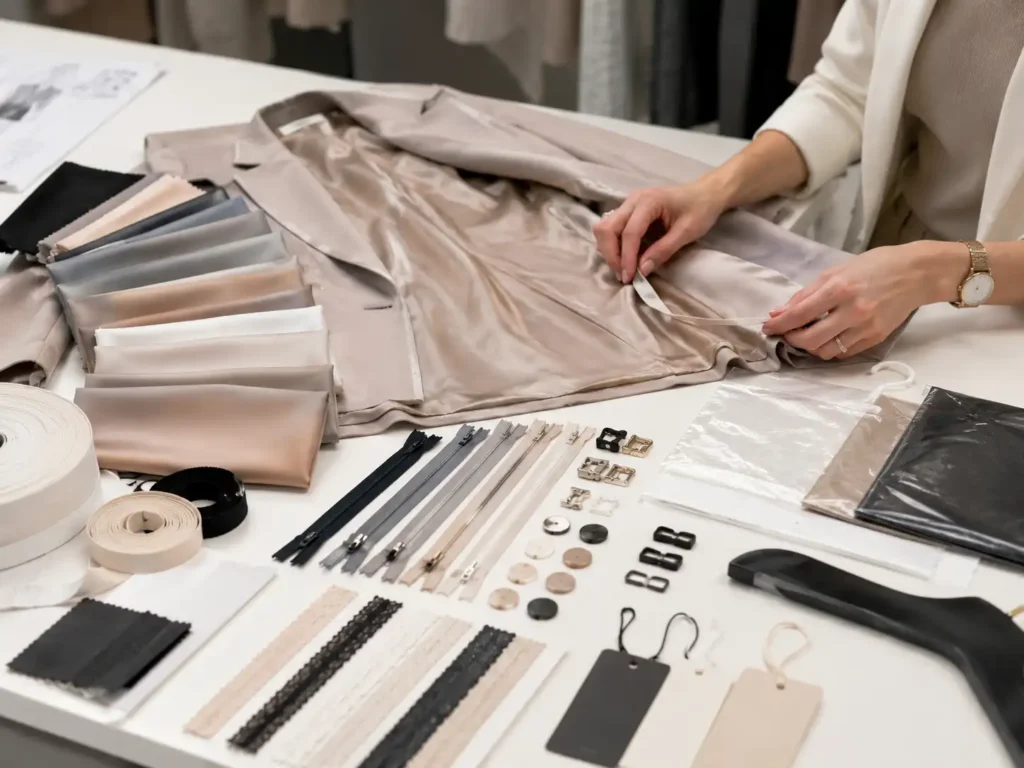
Choose the lining by testing the dress as a complete system. Review shell transparency, lining color, fabric weight, stretch, drape, coverage, movement, and production repeatability. The final decision should be confirmed on a physical sample because swatches cannot show how two layers will behave around a bust, hip, zipper, slit, neckline, or hem during real wear.
Transparency and Coverage
Start by defining exactly which parts of the body must be covered. “Make it less sheer” is too vague for production because it does not establish where the lining starts, where it ends, or how it should interact with a slit, neckline, low back, or transparent panel. A more useful specification identifies coverage zones such as the bust, side bust, waist, hip, upper thigh, and back. It should also make clear whether the lower skirt, sleeve, shoulder, or waist panel is intentionally transparent.
Transparency should then be tested in conditions that resemble real use. Bright daylight and strong photography lighting are especially revealing for white, cream, pastel, chiffon, mesh, and lace garments. Stretch fabrics should be checked while worn because extension can reduce effective opacity. The lining color must also be approved together with the shell rather than as an isolated material. For dresses with short inner skirts, the sample should be reviewed both standing and sitting because an inner hem that looks safe while standing may rise noticeably when the wearer bends at the hip.
Weight and Drape
The lining and shell do not need to have the same weight, but they should feel as though they belong in the same garment. A fluid satin skirt needs an inner layer that can move freely beneath it, while a structured cocktail dress can usually accept a firmer lining. Chiffon should still look light after lining, and a gathered summer dress should not become bulky at the waist because the lining fabric is unnecessarily dense. Comparing GSM can be useful as a starting point, but stiffness, surface friction, stretch, and drape are equally important.
Many lightweight woven dress linings used in fashion development fall roughly within a 45-80 g/m² working range, while stretch knit linings are often heavier because their construction needs enough body for recovery and coverage. These are practical starting points rather than universal standards, and the sample result should always override a number on a specification sheet. Holding the shell and lining together, allowing them to hang, and then sewing the real sample gives far more useful information than choosing materials from weight alone.
Stretch and Movement
Stretch compatibility should be measured through behavior, not only fiber composition. Two fabrics labeled polyester-spandex can respond very differently because knit structure, yarn density, spandex content, finishing, and recovery vary. During development, the team should record the direction of greatest stretch and compare how the shell and lining extend under the same controlled handling. The goal is not necessarily identical stretch percentages; it is a finished garment that provides the intended mobility without one layer becoming the hidden restriction.
Wear testing is the fastest way to expose problems. Ask the fit model to sit, walk, bend, take a longer stride, and raise the arms, then inspect the lining immediately. If it rides upward, the inner pattern may lack hip ease or the two fabrics may have too much friction. If it drops below the shell, the lining may be growing more than expected or recovering too slowly. If the neckline pulls downward after movement, attachment points or stretch balance may be wrong. These are structural issues, not finishing defects, and should be corrected before the style is graded for bulk production.
Sample and Bulk Control
A lining decision is only complete when the approved result can be repeated. The sample should establish the lining fabric, color, pattern version, stretch direction, relevant panel dimensions, attachment method, and finished length. For mesh, lace, sequin, deep-V, high-slit, or corset styles, the quality checklist should also identify the specific areas where lining position affects fit or exposure. Internal construction deserves the same version control as visible shell details because a substitution that seems minor can alter comfort, drape, or fit.
During bulk production, lining attachment should be checked during sewing rather than left until final inspection. Incoming material review should confirm color, hand feel, width, shrinkage risk, and visible defects where relevant. Cutting should confirm pattern version and stretch direction. Sewing checks should include lining attachment, zipper flatness, symmetry, slit height, and seam quality. Finished garments should then be reviewed for measurements, fit, appearance, pressing, and whether the lining remains hidden during normal movement. For repeat orders, the approved lining should stay in the material record alongside the shell so changes in color, weight, stretch, or hand feel are not introduced casually.
| Development Check | Practical Measurement or Record | What It Helps Prevent |
| Lining identity | Supplier/reference, composition, color, width, approved swatch | Uncontrolled substitutions |
| Fabric weight | Record GSM for shell and lining as a comparison point | Unexpected bulk or drape change |
| Stretch direction | Mark main stretch direction on pattern and cutting instructions | Restricted fit or twisted construction |
| Transparency | Review front, side and back under strong light while worn | Unexpected see-through areas |
| Lining length | Record finished measurement from defined seam/waist point | Visible lining below hem or unsafe short coverage |
| Attachment points | Define neckline, armhole, zipper, waist and slit connections | Riding up, twisting or shell distortion |
| Movement test | Sit, walk, bend, raise arms and recheck position | Migration, pulling and recovery problems |
| Bulk QC | Incoming, cutting, sewing and finished-garment checkpoints | Sample-to-production inconsistency |
The practical takeaway is that lining should be selected from the outside in. Start with the intended look and wearing experience, then study the shell fabric, decide where additional coverage or support is truly necessary, and finally choose an inner material that moves with the garment rather than fighting it. Full lining is an excellent solution when a dress needs broad opacity, protection, or structure; partial lining is often the stronger choice when transparency, lightness, stretch, or visual contrast matters more.
For brands developing satin, mesh, chiffon, lace, sequin, corset, or other lining-sensitive dresses, the most valuable decision often happens before bulk fabric is ordered. A thoughtful sample review can reveal whether the lining is too heavy, too tight, too visible, too warm, or simply unnecessary in certain areas. Once the right construction is approved and documented, the lining becomes what it should be: an almost invisible part of the garment that quietly improves comfort, appearance, fit, and production consistency.