Skip to content


A beautifully finished dress can still become a difficult product to sell. The fit may be approved, the photographs may look excellent, and the shipment may be packed on schedule. Yet a fiber label copied from an early sample, an unsupported cleaning instruction, or a poorly documented material change can create problems that nobody noticed during the usual workmanship inspection. For US apparel brands developing collections overseas, these mistakes often begin with ordinary decisions made by people working from different versions of the same specification.
US apparel brands should avoid inaccurate fiber and care labels, unverified flammability assumptions, misleading origin or environmental claims, incomplete import records, weak material traceability, and undocumented changes after sample approval. The strongest prevention method connects applicable legal requirements with verified materials, product-specific testing decisions, approved labels, traceable production records, and a final review of unresolved issues before goods enter the US market.
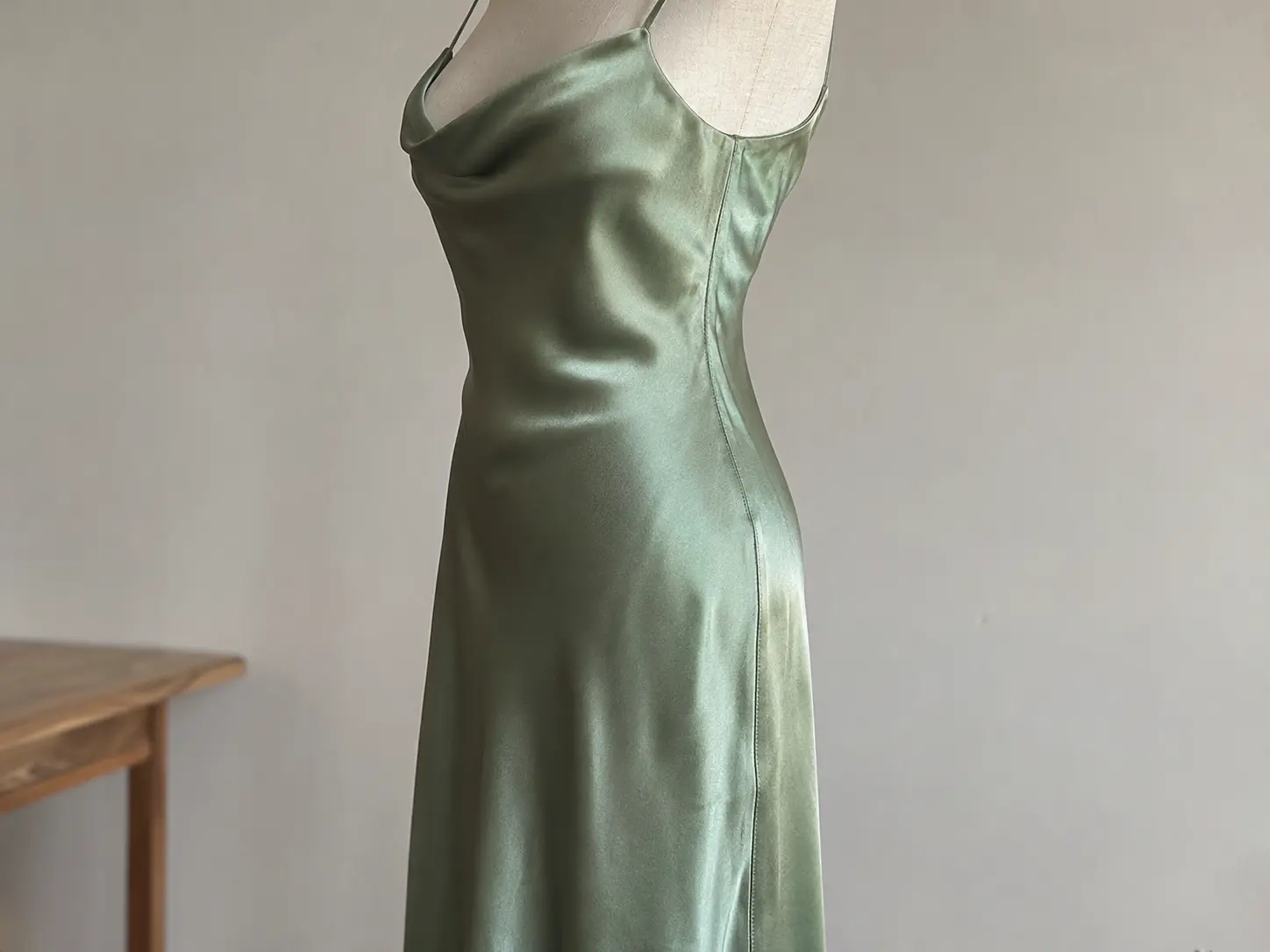
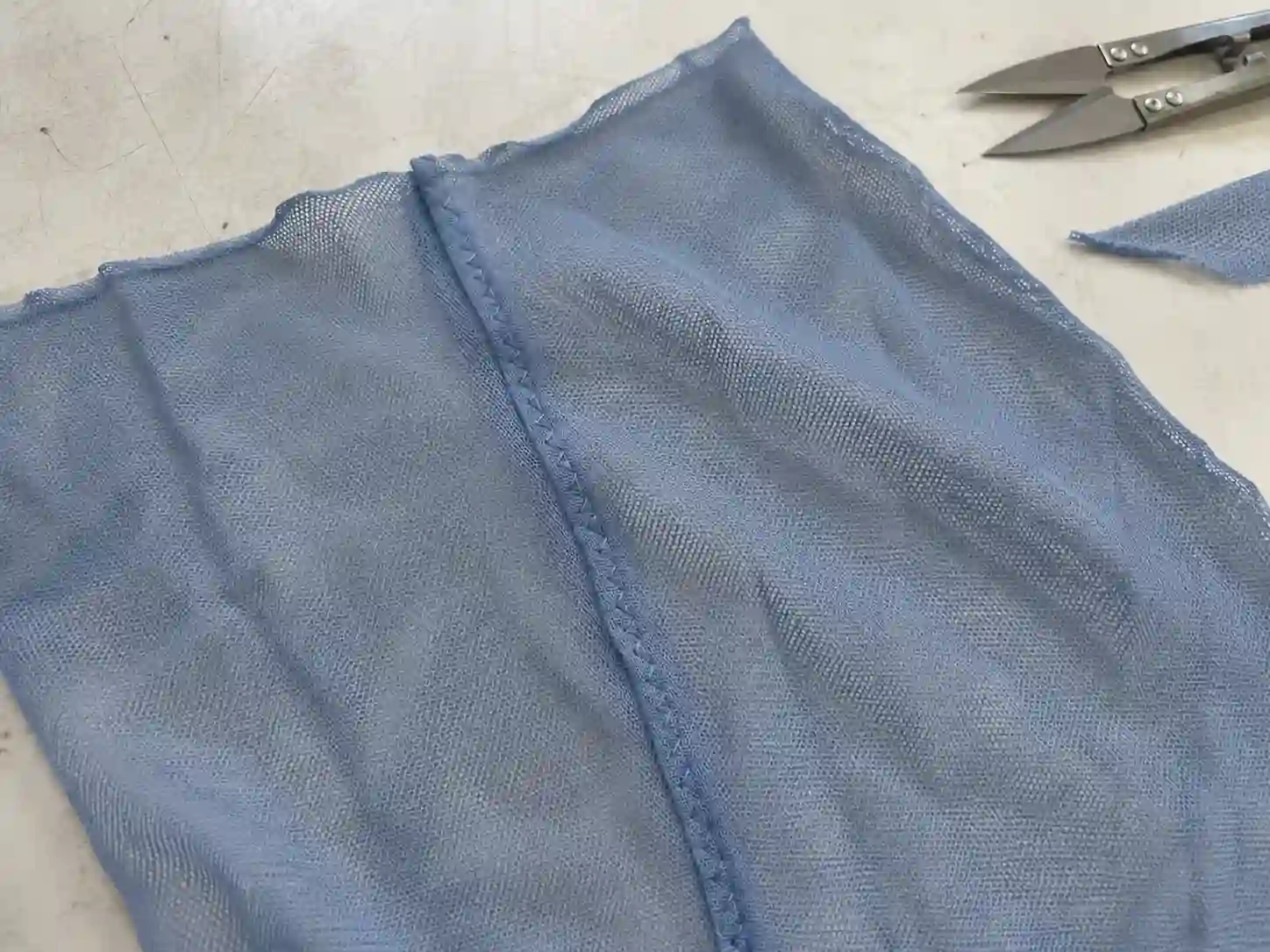
Imagine approving a satin occasion dress with a mesh panel and a fitted lining. The production sample looks exactly right, but the fabric supplier later changes the blend. The sewn-in label still reflects the original fabric, and the care instruction has never been checked against the finished construction. It is a small development change with consequences that may reach thousands of garments. At Jinfeng Apparel, we approach this kind of risk by keeping product specifications, material decisions, and production approvals connected rather than assuming an attractive sample proves everything else is ready.
What Compliance Mistakes Do US Apparel Brands Make?
Common apparel compliance mistakes include incorrect textile disclosures, unsupported care instructions, overlooked safety requirements, misleading product claims, inconsistent origin records, and undocumented material substitutions. They often occur when design, sourcing, quality, and import teams make decisions separately. A practical review compares the finished garment with its applicable rules, approved specifications, supplier evidence, labels, and shipping documents before production or release.
Which Mistakes Create the Biggest Risks?
A quality defect and a legal compliance issue are not always the same thing. Uneven stitching or a slightly inaccurate measurement can lead to a customer complaint without necessarily violating a regulation. A dangerously flammable fabric, inaccurate required fiber statement, or misleading origin claim raises a different question: whether the product can lawfully be marketed or distributed in its intended market. Brands should distinguish those categories before deciding who must investigate and what evidence is needed.
For women’s fashion, the distinction becomes especially important when garments contain several materials. Satin dresses, lace panels, mesh inserts, decorative surfaces, and stretch linings can introduce different labeling, care, or performance considerations. A routine final inspection may verify stitching and appearance but cannot establish chemical exposure, fiber composition, or fabric flammability by sight. The immediate priority should be the seriousness of the possible harm, the requirement involved, and the number of product versions that could be affected.
Do Labels, Tests, and Documents Match?
One of the most expensive mistakes starts with an innocent-looking substitution. Suppose a brand approves a 92% polyester, 8% spandex fabric, but the bulk order uses a different blend after the supplier reports a shortage. If the team updates its purchase order but leaves the technical specification, label artwork, and supporting records unchanged, the approved documentation no longer describes the garment. That mismatch may remain invisible until a retailer or customer asks about the fiber content.
A reliable product record connects the style and revision number with the actual fabric reference, supplier information, applicable laboratory evidence, approved labeling, and final production version. The same logic applies to online descriptions and marketing claims. A dress cannot accurately be advertised as containing one material if its sewn-in label and sourcing records identify another. At Jinfeng Apparel, we support material and label coordination during development, while final market wording is confirmed by the client or its appropriate compliance adviser.
What Are the Consequences of Noncompliance?
Consequences depend on the rule and the facts, not simply on the word “noncompliance.” A label discrepancy may require investigation and correction; a customs documentation issue can interrupt an import; a potential product hazard may create reporting obligations or require more extensive corrective action. Under US consumer product safety law, certain information about defects, failures to comply, or unreasonable risks can trigger prompt reporting duties. Brands should seek qualified advice when a suspected safety issue emerges rather than treating it as routine garment rework.
Consider a hypothetical shipment of 2,400 dresses divided among eight styles. If 300 units of one style carry a wrong care label and the cartons can be isolated, a focused review may be possible. If that label artwork was used across every style, the investigation could reach the whole shipment. These figures are illustrative, not industry failure statistics. Their value is showing how style-level records, carton identification, and approvals can narrow or widen the practical impact of a mistake.
When Do Compliance Mistakes Occur?
Problems can begin before a garment reaches the cutting table. A designer may select a fabric without checking applicable safety considerations, a developer may copy care wording from another style, or a purchasing team may accept a supplier declaration that lacks a clear material reference. Later, an unapproved change to the lining or trim can undermine earlier decisions. By the time garments are pressed and packed, correcting the records or labels may involve substantially more work than resolving the question during sampling.
We treat production approvals as opportunities to prevent those situations rather than merely collect signatures. Jinfeng Apparel’s documented workflow includes fabric and trim confirmation, pre-production sample approval, label confirmation, in-line checks, and final inspection. Each checkpoint is useful only when its purpose is defined: the material team confirms what was purchased, the brand approves market-facing claims, the laboratory addresses specified technical questions, and manufacturing follows the current approved version. That division of responsibility makes mistakes easier to detect and explain.
Which US Apparel Regulations Apply?
US clothing brands must identify the rules that apply to each product, including FTC textile and care-labeling requirements, CPSC flammability provisions, CBP origin and import regulations, and potentially state chemical-warning obligations. Requirements vary with garment type, intended use, age group, construction, and materials. No general factory certificate or passing workmanship inspection proves compliance with every applicable law, particularly for collections spanning multiple product categories.
What Does the FTC Require?
The Federal Trade Commission regulates important disclosures for covered textiles. Most covered apparel must identify its fiber composition, country of origin, and a qualifying business name or Registered Identification Number. Covered garments also require care instructions that have a reasonable supporting basis. These are distinct obligations, so a garment carrying a correct fiber statement can still have an unsupported care instruction or an unsuitable identification disclosure. Brands should check the FTC’s official textile and care-labeling guidance when approving artwork.
Two frequently misunderstood numbers are 5% and 3 percentage points. Under the FTC Textile Fiber Rule, fibers below 5% by weight are generally described as “other fiber” unless an exception applies, such as wool or a fiber with a definite functional significance at that amount. The FTC also recognizes a limited 3-percentage-point tolerance for unintended fiber variation, not deliberate mislabeling. An RN is optional if an acceptable company name is used, and the FTC issues RNs only to eligible US firms.
How Does CPSC Flammability Testing Apply?
The Consumer Product Safety Commission’s general wearing-apparel standard, 16 CFR Part 1610, classifies textile flammability. Class 1 fabrics show normal flammability, Class 2 concerns certain raised-surface fabrics with intermediate flammability, and Class 3 describes dangerously flammable textiles prohibited for clothing use. The fact that a fabric looks familiar or performs well in washing does not establish its flammability classification. A suitable evaluation begins with the actual material, construction, intended use, and relevant exemptions.
Some fabrics qualify for exemptions from testing under the standard. One example is qualifying plain-surface fabric weighing at least 2.6 ounces per square yard, or 88.2 grams per square meter. Fabrics made entirely of certain specified fibers, including polyester, nylon, acrylic, modacrylic, olefin, or wool, may also qualify regardless of weight. These are testing exemptions, not permission to use dangerously flammable clothing. Certification obligations must be considered separately; CPSC has an enforcement-discretion policy concerning certificates for adult wearing apparel qualifying for specified testing exemptions.
| Topic | Rule or figure | What a brand must establish |
| Fiber disclosure | FTC Textile Fiber Rule, 16 CFR Part 303 | Accurate generic fiber names and applicable proportions |
| Minor fibers | Generally below 5% by weight | Whether “other fiber” or an exception applies |
| Fiber tolerance | Limited 3-percentage-point tolerance | Variation was unintended, not knowingly mislabeled |
| Care instructions | FTC Care Labeling Rule, 16 CFR Part 423 | Reasonable evidence for cleaning and warnings |
| General flammability | 16 CFR Part 1610 | No prohibited Class 3 textile in wearing apparel |
| Fabric testing exemption | Qualifying plain surfaces at 88.2 g/m² or above | Exemption conditions are actually met |
| Textile origin | 19 CFR 102.21 | Correct product-specific origin determination |
These selected thresholds are useful checkpoints, not a complete legal checklist. They should be applied with the actual rule text, relevant exceptions, and current official guidance rather than copied automatically from one garment to another. For example, an exemption tied to a fabric’s construction cannot be relied on merely because another fabric has the same generic fiber name. The product and evidence must match the specific condition being considered.
Are State Chemical Rules Relevant?
Yes. Federal requirements do not automatically cover every state obligation, and California Proposition 65 is a familiar example for brands selling across the United States. It addresses certain exposures to listed chemicals and can require a clear and reasonable warning when its conditions are met. A garment does not automatically need a warning because it contains synthetic fibers, dye, or metal trim. The relevant exposure, applicable safe-harbor level, and other circumstances must be evaluated.
A laboratory result is only one part of that evaluation. For instance, a test may identify a listed substance in a coating without answering how much exposure a consumer receives during reasonably foreseeable use. Different substances and exposure routes can require different analysis. Brands should consult appropriate laboratory, toxicology, or legal specialists rather than applying a generic warning to every garment or assuming that an unrelated restricted-substance test resolves Proposition 65. This is particularly important when materials or finishing processes change between collection seasons.
Do Different Apparel Categories Have Different Rules?
A general adult dress and a child’s sleepwear product should not be assessed under the same assumptions. Children’s sleepwear can fall under 16 CFR Parts 1615 or 1616, depending on size and other qualifying conditions, and certain infant or tight-fitting products are subject to defined exceptions and alternative requirements. Additional obligations may apply to other children’s products, including testing, certificates, and tracking labels. Product classification therefore comes before choosing a laboratory package or approving packaging claims.
Jinfeng Apparel primarily works with adult women’s fashion, such as party dresses, occasionwear, skirts, jumpsuits, and matching sets. That focus does not mean every adult garment is identical from a regulatory standpoint. A fashion sleepwear item, a garment with unusual finishes, or a product marketed for a different age group may need further assessment. When a brand extends its collection into unfamiliar categories, it should confirm the intended wearer, actual use, materials, and target market before recycling labels or test evidence from earlier styles.
How Do Fabric and Labeling Mistakes Happen?
Fabric and labeling errors often begin with assumptions that nobody checks against the finished product. A supplier description may be copied into a label, a care instruction may come from a different garment, or a lining may be overlooked. Brands should verify actual fiber content, assess complete-garment care performance, review sectional disclosures, and substantiate any environmental claims before bulk labels are released.
Is Fiber Content Accurately Labeled?
The first question is whether the label describes the material actually used, not merely the fabric named in the first quotation. A brand may specify a polyester-spandex blend during development, then approve a replacement because a supplier cannot meet the color or delivery schedule. That change may affect care performance, marketing descriptions, and disclosure requirements even when the replacement looks similar. Calling both fabrics “stretch satin” does not make their compositions interchangeable.
A good verification record links the material supplier’s specification, purchase reference, approved swatch, and any composition test relevant to the finished style. For an illustrative 92% polyester and 8% spandex fabric, the declared percentages should be supported by reliable information about that actual fabric. If different panels or linings are used, their functions and composition should be identified separately for proper labeling analysis. At Jinfeng Apparel, supplier information and project-specific laboratory coordination help clients resolve material questions before printing private-label components.
Are Care Instructions Supported by Testing?
A care label is a performance claim about the garment customers will own. The FTC requires a reasonable basis for instructions and warnings; a blanket “Dryclean Only” statement needs evidence that washing would harm the garment. That can be particularly relevant for satin dresses with delicate trim, bonded details, lining, or contrasting panels. The main shell may tolerate cleaning while another component shrinks, bleeds, distorts, or loses its finish.
Suitable evidence may come from testing, documented experience, or other reliable information appropriate to the garment. Where testing is needed, the method should cover the proposed washing or dry-cleaning conditions and the product features likely to be affected. A single swatch test may be insufficient if the complete construction behaves differently. Our development process can coordinate relevant colorfastness, dimensional-stability, and washing-performance testing, but the brand or its designated compliance professional approves the final market wording using the available evidence.
How Are Linings and Blended Fabrics Labeled?
A fashionable garment may include a main shell, mesh insert, structural lining, and textile decoration. It is tempting to combine those materials into one broad description or disclose every component in the same way. Neither shortcut is always appropriate. FTC rules contain specific provisions for distinct fabric sections, linings serving different functions, trimmings, and ornamentation. Certain structural linings may be exempt from fiber disclosure, while other sections require separate attention under the applicable conditions.
The practical method is to record each component, its fiber makeup, location, and function before deciding what the label must say. For a fitted dress, a mesh side panel may require different treatment from concealed support material or a small decorative ribbon. The FTC also establishes conditions around decorative areas and weight, so teams should not apply a simple “all trims are exempt” rule. A component map helps product developers and reviewers agree on which information is relevant before artwork moves into bulk printing.
Are Sustainability Claims Substantiated?
A fabric described as recycled or organic can sound reassuring, but the exact claim must match the available evidence. The FTC’s Green Guides caution against unqualified claims such as “eco-friendly” because they can imply broad benefits that are hard to substantiate. A specific, supported statement about material content is more informative than a sweeping environmental promise. For instance, a stated recycled-fiber percentage needs evidence concerning the relevant material and should not be inflated into an unqualified claim about the complete product.
There is also an important difference between a supplier having access to certified materials and a particular garment being certified. Scope can depend on the supplier, processing stage, material, transaction records, and certification program. Jinfeng Apparel can coordinate sourcing for GOTS-related organic cotton, GRS-related recycled fabrics, and OEKO-TEX-related material options through suitable supply-chain resources, subject to actual availability and verification. We do not assume a fabric supplier’s certificate automatically covers the finished dress or every subsequent order. Brands should check documentation before approving hangtags, listings, and campaign claims.

Are Origin and Import Records Accurate?
Accurate apparel import records connect the real product, manufacturing history, origin determination, customs classification, and shipment documents. Common problems include treating the shipping country as origin, using one tariff description for different garment constructions, and failing to trace relevant materials. US brands should reconcile production information with customs documentation and involve qualified trade specialists when classifications or origin rules are uncertain.
Is the Country of Origin Correct?
A garment is not automatically made in the United States because its designer, brand owner, warehouse, or photography studio is located there. Apparel origin can depend on specific customs rules for the product and the countries involved in manufacturing. Under 19 CFR 102.21, textile and apparel origin is determined by applying the relevant rules in sequence; the answer cannot always be guessed from the last shipping point or the place where a fabric was purchased.
A hypothetical dress designed in California, cut and sewn in Guangdong, and shipped through another country still needs an accurate origin determination based on the applicable legal facts. The FTC’s separate standard for an unqualified “Made in USA” marketing claim is particularly stringent: the product must be all or virtually all made in the United States. Brand identity and production origin are different concepts. Jinfeng Apparel can provide manufacturing-location and production-process information for its projects, while the US importer and qualified trade adviser should establish the legally correct marking and declarations.
What Import Documents Are Required?
A customs entry requires accurate information describing the goods, their value, classification, and origin, supported by the documents appropriate to the transaction. Common records include a commercial invoice, transport document, customs entry information, and often a packing list and related manufacturing or purchase evidence. The invoice should accurately identify the merchandise and relevant transaction details rather than use generic wording that hides material or construction differences. The importer of record remains responsible for exercising reasonable care.
Fashion collections are a good example of classification complexity. Women’s knitted dresses may fall under heading 6104, while woven women’s dresses may fall under heading 6204, with more specific classification determined by the actual product and current tariff schedule. Fiber composition and construction can affect the appropriate subheading and duty analysis. A shipping team should not assign the same classification merely because several products are called dresses. At Jinfeng Apparel, carton preparation, style references, packing details, and export coordination support accurate shipment documentation; US customs classification should be confirmed by the importer or its customs broker.
How Can Brands Verify Material Traceability?
Material traceability means connecting the garment to relevant upstream sourcing and production records. For cotton garments, that may involve raw material origin, spinning, fabric formation, dyeing, finishing, garment assembly, and shipment. A label stating where the garment was made does not necessarily identify the origin of every raw material. The level of evidence needed depends on the sourcing risk, regulatory question, and product, which is especially important when an importer must answer a customs inquiry.
The Uyghur Forced Labor Prevention Act creates import restrictions involving goods made wholly or partly in the Xinjiang Uyghur Autonomous Region or by listed entities, subject to the law’s procedures. Importers should use the official CBP guidance to understand due diligence and documentation expectations, rather than assuming that a factory audit or a direct supplier invoice proves the entire upstream chain. A stronger record links material and purchase references with identified suppliers and production stages.
Which Supply Chain Risks Affect Imports?
Supply-chain risk does not end when the garment factory finishes sewing. Unapproved subcontracting, unexplained supplier changes, conflicting shipment quantities, or incomplete production-location records may undermine the information used for supplier approval and import review. None of these facts automatically proves a legal violation, but each deserves investigation. Brands should know which facility produced the order, what material sources were approved, and whether relevant records still match the actual goods.
Jinfeng Apparel operates six owned women’s fashion factories and works with more than ten long-term satellite production partners. That manufacturing network supports different constructions and order needs, but accurate facility matching and production allocation remain important. For clients with formal supplier-review requirements, the actual production location and relevant documentation should be confirmed within the project’s agreed scope. A factory audit, a flammability report, and material traceability records answer different questions; no single one should be treated as a substitute for the others.
How Can Brands Prevent Production Compliance Errors?
Brands prevent many compliance-related production errors by placing clear checks before material purchase, cutting, label printing, bulk assembly, and shipment. Effective controls include a complete technical package, product-specific test decisions, approved pre-production samples, documented changes, and an evidence-based final release. Each review should identify the correct product version, responsible approver, outstanding issue, and action required before work proceeds so that unresolved questions do not disappear between teams.
What Should a Tech Pack Specify?
A useful tech pack explains the garment that must actually be manufactured, not only how it should look in a sketch. It should identify the style and version, intended wearer and market, shell and lining materials, trims, construction, measurement specifications, labeling details, and any customer or regulatory tests that have been defined. For a corset-style dress with mesh panels and internal support, each material and component should be distinguishable so that sourcing and labeling decisions are not based on a vague description.
We recommend a controlled revision record with at least a style identifier, revision date, material reference, and approver. Those are practical documentation fields rather than a legally mandated universal tech-pack format. Jinfeng Apparel can develop women’s fashion from tech packs, reference images, sketches, or original samples, but missing material and market information still needs to be resolved before manufacturing. Clear specifications are especially valuable when a brand runs multiple colors, sizes, or repeat orders and wants to avoid an outdated instruction reappearing months later.
Which Tests Are Needed Before Production?
There is no single laboratory package that makes every fashion garment compliant with US law. A test plan should start with the product, its materials, the applicable rules, and the claims that must be supported. Fiber composition testing may resolve a label question; dimensional-stability or colorfastness testing may support care instructions; applicable flammability work addresses a different safety requirement. An attractive sample and a passed seam-strength test cannot answer every one of those questions.
For each proposed test, the project record should identify the sample, method, acceptance criteria, laboratory, and product variations covered. A fabric report should not automatically be extended to a different coating, construction, or substitute material. Jinfeng Apparel can coordinate specified fabric and finished-garment testing through SGS, Intertek, Bureau Veritas, or a customer-appointed laboratory, subject to project arrangements. Testing coordination is a capability, not a blanket claim that every style has already passed every US requirement or that all facilities hold every possible certificate.
How Are PP Samples and Changes Approved?
A pre-production, or PP, sample provides the physical reference for the garment about to enter bulk manufacturing. It should match the agreed fabric, trims, construction, fit, and label information, while any separate safety or compliance evidence should also be reviewed as required. A PP sample is valuable, but it cannot substitute for a legal assessment or a laboratory result. The real risk appears when an apparently minor change is introduced after approval and nobody revisits the related documents.
Suppose a brand replaces a lining because the original supplier cannot meet its deadline. The change may improve delivery but affect fiber information, transparency, cleaning behavior, or a previously approved construction. A documented review should record what changed, which styles and batches are affected, whether testing or artwork needs revision, and who approves the updated version. Our workflow includes PP sample, fabric, trim, size, label, and production-instruction confirmation before cutting and sewing, helping keep the physical garment aligned with the current approved specification.
What Should Final Inspections Verify?
Final inspection should compare the finished order with the approved product and identify any unresolved release issue. Inspectors can check size, workmanship, label placement, visible material differences, style references, SKU data, packing, and carton information. However, a visual check cannot reliably establish fiber percentages, chemical exposure, or fabric flammability. Those questions need the appropriate records and technical evidence, so a passing general quality inspection should never be presented as proof of complete legal compliance.
An agreed AQL inspection can help evaluate sampled workmanship defects, but it does not guarantee that every unit is defect-free. Jinfeng Apparel can arrange internal checks, AQL sampling, and third-party pre-shipment inspection according to the order. The following five-stage release framework connects the physical garments with the evidence and approvals behind them. It is an operational control method, not a five-stage government certification process, and projects may need additional checks depending on their risks.
| Checkpoint | Useful record | Release question |
| 1. Specification review | Controlled tech pack and intended-use details | Are requirements and responsibilities clear? |
| 2. Material verification | Approved swatches, supplier details, relevant reports | Do actual materials match the approved style? |
| 3. PP sample approval | Signed sample reference, label artwork, revision record | Are construction and documented approvals aligned? |
| 4. In-line production review | Inspection findings and approved change records | Did production introduce an unauthorized deviation? |
| 5. Pre-shipment release | Final inspection, required compliance evidence, packing details | Are release-critical issues resolved? |
What Should Brands Verify With Apparel Manufacturers?
US fashion brands should verify a manufacturer’s actual facilities, material records, labeling workflow, testing arrangements, change controls, and inspection capability. Ask for evidence tied to the relevant product and factory rather than relying on broad certification slogans. A dependable partner distinguishes manufacturing support from legal approval, explains what documents are available, and flags questions requiring independent testing or the brand’s own compliance decision.

Which Compliance Documents Should Suppliers Provide?
Useful supplier records may include approved material specifications, composition declarations, relevant laboratory reports, PP sample approval, label artwork, quality inspection findings, and appropriate production or shipment records. The exact documents depend on the garment and the requirement being checked. A certificate for one fabric supplier, factory, or production scope does not automatically cover a different site or finished garment, and a quality inspection report cannot replace a legally required certificate of conformity.
Documents should be reviewed for the entity named, facility or material scope, date, and connection to the order. A responsible supplier should also be able to show which specification was current when the garments were produced. At Jinfeng Apparel, we can support relevant labeling, testing coordination, inspection, and audit-document requests within the confirmed project scope. We avoid treating logos or general quality-system references as proof that every individual product has been certified. This approach makes procurement review more useful for established brands handling multiple seasonal collections.
How Are Third-Party Tests and Audits Coordinated?
Laboratory testing and factory audits serve different purposes. A laboratory evaluates defined product characteristics using specific methods, while an audit may examine aspects of factory management, quality systems, or social responsibility. Passing one assessment does not establish the result of another. Brands should confirm whether a report belongs to the intended facility or product, whether it remains relevant, and which requirements it actually addresses before relying on it in a supplier decision.
Jinfeng Apparel can coordinate fabric and garment testing with recognized laboratories and cooperate with client or third-party factory reviews. Support related to SMETA, Sedex, or BSCI should be understood according to the specific factory and available documentation, not as a claim that every site possesses every audit approval. The same caution applies to OEKO-TEX-, GOTS-, and GRS-related material resources. We can help clients gather and evaluate evidence, but a final claim about a particular certificate or test result should only be made after verification of its actual scope.
Who Approves Labels and Compliance Claims?
Label preparation is often shared work, but the final responsibilities must be explicit. The manufacturer can assemble material specifications, prepare label artwork, and attach the approved labels, while the brand and other legally responsible parties must ensure that market-facing wording and claims satisfy applicable requirements. A factory may know the actual fabric but not control every claim used later on product listings, packaging, or campaign pages. That is a reason to assign sign-off, not to rely on informal assumptions.
For private-label collections, Jinfeng Apparel can support care, fiber-content, size, brand, origin, barcode, and SKU labeling in accordance with approved project information. The client or its local compliance adviser should approve final market-compliance language. If a material or component changes, its effect on the label and the supporting evidence should be reviewed before the new version is printed. This is a practical way to prevent a correct early sample from being paired with incorrect final artwork during a larger production run.
What Compliance Support Can Jinfeng Apparel Provide?
Jinfeng Apparel is a Guangdong-based custom women’s fashion manufacturer serving established brands and clients planning serious product development and bulk production. Since 2008, our work has centered on dresses, skirts, jumpsuits, matching sets, and private-label womenswear. The manufacturing network includes six owned fashion factories and more than ten long-term satellite partners, with production matching based on fabric, construction, complexity, and order needs. Our documented services span development, sampling, material coordination, quality checks, packaging, and export support.
For US-focused projects, we can help clients connect technical specifications with fabric sourcing, label preparation, pre-production approvals, third-party testing arrangements, and manufacturing records. Standard MOQ starts from 200 pieces per style and color, depending on material availability, trims, construction, packaging, and scheduling. We do not position ourselves as a no-MOQ stock supplier or claim that every product is automatically certified. Brands discussing a new dress collection can provide their tech packs, intended market, styles, materials, and expected quantities so technical and documentation needs can be assessed before production decisions are locked in.
Conclusion
Apparel compliance becomes much easier to manage when it is treated as part of product development rather than a last-minute shipping document. Accurate materials, supported claims, appropriate test decisions, clear factory records, and controlled revisions all help a brand understand what it is selling and what evidence stands behind it. The aim is not to collect the largest number of certificates or test every material unnecessarily; it is to ask the right questions while there is still time to act on the answers.
For Jinfeng Apparel, dependable manufacturing means more than reproducing a sample’s appearance. We want the approved construction, relevant material information, quality expectations, and production paperwork to tell a consistent story throughout development and bulk manufacturing. US brands that insist on this consistency are better prepared to handle retailer questions, customs reviews, repeat orders, and unexpected sourcing changes. A garment should look right on the customer, but the information behind it should hold up just as well when someone asks for proof.
Frequently Asked Questions
1. What are the most common apparel compliance mistakes in the US?
The most common risk categories include inaccurate fiber-content labels, unsupported care instructions, overlooked flammability requirements, incorrect origin information, misleading sustainability claims, incomplete import records, and unapproved changes after sample sign-off. The precise frequency of each error is not established by a universal public ranking, so brands should avoid treating any numbered list as an industry-wide statistical finding. A more useful approach is to check which problems could affect the specific materials, garment categories, claims, and sales markets in a collection.
2. Does every clothing product sold in the US need flammability testing?
No. General wearing apparel is subject to applicable flammability requirements, but 16 CFR Part 1610 provides testing exemptions for qualifying fabrics, including certain plain-surface fabrics at or above 88.2 grams per square meter and certain fabrics made entirely from listed fibers. An exemption from testing is not an exemption from the underlying prohibition on dangerously flammable clothing. Brands should confirm the fabric’s actual composition and construction, evaluate certification obligations separately, and document the reason for relying on any exemption.
3. Is a Registered Identification Number required on US clothing labels?
An FTC Registered Identification Number is not universally required. For a covered textile product, an acceptable company name may be used instead of an RN to satisfy the business-identification requirement. Only eligible US firms can obtain an RN from the FTC, so overseas manufacturers should not invent or independently assign one. Brands should also verify that the label includes the other required disclosures, such as applicable fiber content and country of origin, rather than assuming an RN alone makes a label compliant.
4. Can a garment be labeled “Dryclean Only” without testing?
The FTC requires a reasonable basis for care instructions and warnings, and “Dryclean Only” needs evidence that washing would harm the garment. Testing may be necessary depending on the fabric, dye, lining, and decorative components, although reliable experience or other suitable evidence can sometimes support a care instruction. What matters is whether the instruction is justified for the complete garment that customers will purchase, not whether a similar fabric was given the same label in an earlier season.
5. Do fabric certificates prove that finished garments are compliant?
Not automatically. A material certificate may establish a defined property or certification status for a particular supplier, textile, or scope, but the finished garment can contain additional components and manufacturing processes that are not covered. The same caution applies to factory audits, which address different questions from product-safety tests. Brands should confirm the exact certificate holder, scope, validity, relevant transaction evidence, and relationship to the garment before making marketing claims or treating the document as proof of broader compliance.
6. How can a US brand verify an overseas clothing manufacturer?
Start by confirming the actual production location, the manufacturer’s product-development capability, and the documents available for the relevant collection. Ask how material specifications are controlled, who approves labels, how changes after PP sample sign-off are recorded, and whether appropriate third-party tests or inspections can be arranged. Verify any claimed audits or certifications by facility and scope. A manufacturer that clearly explains its limits and approval process is often more useful than one promising that every product automatically meets every standard.