Skip to content

In modern fashion production, matching sets are no longer a simple styling choice. They have become a technical challenge that connects design vision with manufacturing precision. A top and bottom that must align in proportion, fabric behavior, color depth, and silhouette balance requires far more than a sketch or inspiration image. Many production delays begin exactly here—when the set is visually clear but technically incomplete. Factories often receive mismatched instructions between top and bottom, leading to fit imbalance, inconsistent grading, or fabric mismatch during bulk production.
A properly built tech pack acts like a controlled language between design intention and production execution. It removes assumptions, reduces interpretation errors, and ensures both pieces of a set behave as one system rather than two separate garments.
A tech pack for a matching set is a structured production document that defines fabric, measurements, construction, and grading rules for both top and bottom garments. It ensures consistency across design and manufacturing stages, reduces sampling revisions, and aligns factory execution with design intent for coordinated apparel production.
There is a common pattern seen in production rooms: a beautifully designed matching set arrives as two separate files, but the factory interprets them as independent garments. The result is uneven proportions, waistlines that do not align visually, or fabrics that behave differently under movement. This is where a structured tech pack changes everything—and why brands that scale successfully treat it as a non-negotiable foundation.
What Is a Tech Pack for a Matching Set?
A tech pack for a matching set is a production control document that defines how two garments—usually a top and a bottom—are built, measured, and manufactured as one coordinated system. It does not only describe design details, but also locks the relationship between both pieces so factories can produce them with consistent fit, proportion, and fabric behavior. In real manufacturing environments, matching sets often fail when top and bottom are treated separately. Even if each piece is correct individually, the full look breaks when waist position, length ratio, or fabric weight is not aligned.
In production practice, a matching set tech pack becomes the “coordination rulebook” for sampling and bulk production. It removes interpretation risk between design and factory execution, especially when multiple teams handle cutting, sewing, grading, and finishing.
Featured Summary (SEO + AI snippet target – 64 words)
A tech pack for a matching set is a structured production document that connects a top and bottom garment into one coordinated system. It defines shared fabric rules, measurement alignment, grading logic, and construction details to ensure both pieces work together visually and technically during sampling and bulk production in apparel manufacturing.
In real factory workflow, the absence of a unified tech pack often leads to predictable issues: uneven proportion between top and bottom, mismatched shrinkage after wash, or grading distortion in larger sizes. A structured tech pack prevents these problems before sampling begins.
A useful way to understand it is this: instead of two independent garments, the tech pack forces the factory to treat the set as a single engineered outfit.

What Does a Matching Set Tech Pack Control?
A matching set tech pack controls four core production dimensions:
- Visual proportion between top and bottom
- Fabric consistency and behavior alignment
- Measurement system across both garments
- Construction logic during sampling and bulk production
In practice, these four elements determine whether the final set looks balanced on body, not just on paper or mannequin.
Why Is a Unified Tech Pack Necessary for Sets?
Matching sets introduce a higher level of production sensitivity compared to single garments. A small deviation in one piece affects the entire silhouette.
For example:
- A 2 cm shift in crop top length can visually distort high-waist skirt proportion
- Different fabric stretch rates can break waist alignment after wear
- Inconsistent grading can make top oversized while bottom remains fitted
Factories often report that over 30–40% of set sampling revisions come from missing coordination rules rather than individual garment errors. A unified tech pack reduces this risk by aligning both garments under one controlled specification system.
What Information Is Included in a Matching Set Tech Pack?
A production-ready matching set tech pack typically includes the following structured data:
| Category | Content | Purpose |
|---|---|---|
| Technical Flats | Front & back drawings of both pieces | Visual construction reference |
| Measurement Chart | Top + bottom sizing system | Fit accuracy across sizes |
| Fabric Specification | Main fabric, lining, stretch rate | Material consistency |
| BOM (Bill of Materials) | Fabric, trims, labels, thread | Cost & sourcing control |
| Construction Details | Stitch type, seam allowance | Sewing accuracy |
| Grading Rules | Size scaling logic | Multi-size consistency |
| Color Standard | Pantone or lab dip reference | Color alignment |
Each section is not isolated; it interacts with others. For example, fabric stretch influences grading, and grading influences measurement tolerance.
How Is a Matching Set Different From a Single Garment Tech Pack?
A single garment tech pack focuses on one independent system. A matching set tech pack introduces dependency between two systems.
Key differences:
- Single garment: one measurement logic
- Matching set: dual measurement logic with shared proportional rules
- Single garment: fabric behavior evaluated individually
- Matching set: fabric behavior evaluated as a combined outfit
- Single garment: grading is isolated
- Matching set: grading must maintain visual balance across both pieces
In manufacturing terms, a matching set tech pack increases technical complexity by approximately 1.5–2x compared to a single garment specification due to interdependency requirements.
What Problems Occur Without a Proper Set Tech Pack?
When a structured tech pack is missing, factories rely on interpretation. This creates predictable production risks:
- Waistline mismatch between top and bottom
- Hem length imbalance across sizes
- Fabric shrinkage difference after washing or pressing
- Repeated sampling rounds (often 2–4 cycles instead of 1–2)
- Increased cost due to re-cutting or re-sampling
In production data across mid-scale fashion manufacturing, unclear set coordination is one of the top three causes of sampling delay.
How Does a Factory Interpret a Matching Set Tech Pack?
Factories use the tech pack as a production blueprint across multiple departments:
- Pattern makers convert flats into digital patterns
- Sampling teams cut and sew based on measurement tables
- Quality control checks alignment between top and bottom
- Production planners allocate fabric based on BOM
Without a unified structure, each department may interpret the set differently. A clear tech pack ensures every stage follows the same logic chain.
Key Insight From Production Practice
A well-built matching set tech pack does not only improve sample accuracy—it directly impacts commercial efficiency. Brands using structured set tech packs typically reduce:
- Sampling revisions by 25–40%
- Production miscommunication by 30%+
- Time-to-sample approval by 15–25%
The strongest advantage is not design clarity—it is production predictability.
What Information Is Needed Before Creating a Tech Pack?
Before a tech pack is created for a matching set, a series of production-critical inputs must be finalized. These inputs define how the garment will behave in sampling and bulk production. In real manufacturing practice, missing or unclear pre-tech pack information is one of the main reasons for repeated sampling, inconsistent fit, and delayed production approval. A tech pack is not the starting point—it is the translation layer between design intent and factory execution. Without stable input data, even a well-structured tech pack will fail to deliver accurate results.
Featured Summary (SEO + AI snippet target – 66 words)
Before creating a tech pack for a matching set, essential inputs include design structure, fabric selection, measurement targets, size range, construction direction, and production goals. These elements define how top and bottom garments interact during sampling and bulk production. Clear pre-tech pack data reduces revision cycles, improves fit accuracy, and ensures stable manufacturing execution across all sizes.
What Product Definition Must Be Confirmed First?
A clear product definition establishes the foundation of the tech pack. For matching sets, this includes silhouette direction and how both garments interact visually.
Key decisions include:
- Set type (casual set, knit set, lounge set, structured set, etc.)
- Fit category (tight fit, relaxed fit, oversized top + fitted bottom, etc.)
- Wearing purpose (daily wear, occasion wear, resort wear)
- Styling logic (balanced proportions vs contrast proportions)
Without this stage, factories cannot correctly interpret grading direction or fabric selection logic.
What Fabric and Material Decisions Are Required?
Fabric selection is one of the most sensitive inputs before tech pack creation. In matching sets, both garments must maintain visual and physical consistency under movement, washing, and wear.
Typical required decisions:
| Item | Key Data Needed | Production Impact |
|---|---|---|
| Main Fabric | Composition, GSM, stretch % | Fit stability, drape |
| Secondary Fabric | Contrast or matching fabric type | Visual balance |
| Lining | Type and weight | Comfort + structure |
| Elastic | Width, recovery rate | Waist stability |
| Trims | Zipper, buttons, labels | Cost + durability |
Critical technical parameters often missed:
- Fabric shrinkage rate (2%–8% depending on material)
- Stretch recovery (minimum 85% recommended for knit sets)
- Color fastness level (Grade 3–4+ for export production)
If fabric behavior is not defined early, sampling results often shift after washing or steaming tests.

What Measurement Strategy Must Be Defined?
Measurement strategy determines how top and bottom align across sizes. This is especially important in matching sets because proportional balance must remain stable from XS to XL or beyond.
Key measurement decisions:
- Base size selection (usually S or M for grading reference)
- Unit system (CM standard in factory production)
- Key reference points (waist, hip, bust, shoulder, inseam)
- Tolerance range (±0.5 cm to ±1.5 cm depending on category)
Example alignment logic:
| Size Range | Top Length Change | Bottom Waist Change | Visual Impact |
|---|---|---|---|
| XS–S | +1.0 cm | +2.0 cm | Tight proportion balance |
| S–M | +1.5 cm | +2.5 cm | Standard scaling |
| M–L | +2.0 cm | +3.0 cm | Relaxed proportion shift |
Without this planning, tops and bottoms often scale independently, breaking the outfit balance.
How Should Top and Bottom Coordination Be Planned?
Coordination defines how both garments interact as a single visual system. This is one of the most overlooked steps before tech pack creation.
Key coordination rules include:
- Waistline alignment position (high waist, mid waist, low waist)
- Length ratio between top and bottom (e.g., 40:60 or 45:55 visual split)
- Volume balance (oversized top vs fitted bottom or reverse)
- Movement compatibility (flow vs structure interaction)
In production terms, coordination prevents:
- Waist mismatch during wear
- Visual imbalance in photography or runway display
- Fit distortion after grading across sizes
Factories rely on these rules to maintain proportional consistency during sampling.
What Technical References Must Be Prepared?
Technical references help convert design intent into factory-readable instructions.
Essential references include:
- Flat sketches (front and back views of both pieces)
- Inspiration image (clear silhouette direction)
- Construction reference (similar garment benchmark if available)
- Stitch detail examples (especially for stretch or structured seams)
Without these references, factories must interpret design intent independently, increasing revision risk.
What Production Goals Must Be Defined Early?
Production goals influence how tech packs are structured and how factories allocate resources.
Key production decisions:
- Target MOQ per color (commonly 100–300 pcs per style)
- Target price range per set
- Delivery timeline (sample + bulk schedule)
- Quality level (fast fashion, mid-market, premium export standard)
These inputs directly affect:
- Fabric sourcing strategy
- Sewing method selection
- Production line allocation
- QC standard setting
In real production planning, unclear goals often lead to cost deviation of 10–25% during bulk quotation stage.
Key Pre-Tech Pack Insight From Factory Practice
In structured apparel manufacturing systems, over 60% of sampling delays originate before the tech pack is even created. The main reason is not technical drawing quality, but unstable pre-production input.
When fabric behavior, measurement logic, and coordination rules are clearly defined in advance:
- First sample approval rate increases significantly
- Sampling cycles reduce from 3–4 rounds to 1–2 rounds
- Bulk production consistency improves across all sizes
A tech pack is only as strong as the information behind it. Stable inputs create stable production outcomes.
How Do You Structure a Matching Set Tech Pack?
A matching set tech pack must be structured like a controlled production system rather than a simple design document. It needs to separate each garment clearly while keeping both pieces synchronized through shared rules such as fabric behavior, grading logic, and proportional balance. In real factory workflow, unclear structure is one of the main reasons for sampling confusion—top and bottom get interpreted differently, leading to fit mismatch, inconsistent sizing, or production delay. A well-structured tech pack eliminates these risks by creating a predictable instruction flow for every department involved in production.
Featured Summary (SEO + AI snippet target – 62 words)
A matching set tech pack is structured by separating top and bottom specifications while connecting them through shared rules such as fabric, grading system, and proportional balance. It ensures consistent interpretation across sampling and production stages, reducing errors and improving coordination between garment components during manufacturing.
Core Structure Logic of a Matching Set Tech Pack
The structure follows a dual-layer system:
- Layer 1: Individual garment data (top + bottom separated)
- Layer 2: Shared system rules (fabric, grading, color, coordination logic)
This dual structure prevents overlap confusion while keeping both garments technically aligned. Factories read each section differently: pattern makers focus on measurements, while production teams focus on shared material and construction logic.
Without this structure, tech packs often fail during scaling because top and bottom evolve independently during sampling.
Recommended Tech Pack Structure Overview
| Section | Content Focus | Purpose in Production |
|---|---|---|
| Cover Page | Style name, set type, season | Identification and tracking |
| Technical Flats | Front/back of both garments | Visual construction reference |
| Fabric & Trim Sheet | Material details for full set | Sourcing consistency |
| Measurement Charts | Top + bottom sizing tables | Fit accuracy control |
| Construction Sheet | Stitching and assembly rules | Manufacturing execution |
| Grading Rules | Size scaling system | Multi-size stability |
| Color Standards | Pantone / lab dip references | Color matching control |
Each section is read by a different production department, so clarity and separation are critical.
How Should Top and Bottom Be Separated in Structure?
Top and bottom must be structured as two independent technical units inside one system.
Recommended layout:
Top Section
- Front & back flat sketch
- Measurement chart (bust, waist, length, sleeve)
- Fabric usage (main + lining)
- Construction details (neckline, hem, stitching type)
Bottom Section
- Front & back flat sketch
- Measurement chart (waist, hip, inseam, length)
- Fabric usage (main + lining if applicable)
- Construction details (zipper, waistband, hem finish)
Separation ensures pattern makers do not mix measurement systems during cutting or grading.

Shared rules define how both garments behave as a single outfit.
Key shared elements:
- Fabric specification (same batch, same GSM range)
- Color standard (single Pantone code or lab dip approval)
- Shrinkage tolerance (e.g., 2%–5% unified allowance)
- Grading logic alignment (top and bottom scale relationship)
- Fit philosophy (balanced, contrast, or proportional mismatch design intent)
Example of grading alignment rule:
| Size | Top Length Change | Bottom Waist Change | Resulting Balance |
|---|---|---|---|
| XS–S | +1.0 cm | +2.0 cm | Tight visual balance |
| S–M | +1.5 cm | +2.5 cm | Standard proportion |
| M–L | +2.0 cm | +3.0 cm | Relaxed proportion |
Without shared rules, garments may technically pass inspection but visually fail as a set.
How Should Measurement System Be Organized?
Measurement organization must follow a consistent reference logic for both garments.
Key rules:
- Same unit system (CM recommended for export production)
- Base size defined before grading begins (S or M typical)
- Clear reference points for alignment (waist, hip, shoulder line)
- Tolerance defined per category (±0.5 cm for critical points, ±1.5 cm for general points)
Measurement structure should always allow comparison between top and bottom proportions, especially waist-to-hem relationships.
How Is Construction Logic Documented in Structure?
Construction logic defines how garments are physically assembled.
For matching sets, documentation must include:
- Seam type (overlock, flatlock, single needle, etc.)
- Stitch density (stitches per inch or cm)
- Reinforcement points (waistbands, shoulder seams, side seams)
- Closure system (zipper, elastic, buttons, hooks)
- Finishing method (washing, pressing, bonding)
Factories rely on this section to assign correct machinery and production lines. Missing construction detail often leads to sampling inconsistency between batches.
Key Structural Risk in Matching Set Tech Packs
Common structural issues seen in production environments:
- Measurement overlap between top and bottom sections
- Missing shared fabric logic causing material mismatch
- Grading rules applied separately instead of jointly
- Inconsistent labeling of reference points across garments
Impact of these issues:
- 2–4 sampling revisions instead of 1–2
- 10–20% increase in production correction cost
- Delayed bulk approval due to fit inconsistency
A structured tech pack reduces these risks by enforcing clarity at document level before sampling begins.
Factory Insight: Why Structure Controls Production Accuracy
In real production systems, structure determines speed. A well-organized matching set tech pack allows:
- Faster pattern development (reduced interpretation time)
- Fewer sampling corrections (clear measurement logic)
- Stable grading across sizes (consistent proportional scaling)
- Predictable bulk output (reduced variation between batches)
Factories often evaluate tech pack quality within the first 10 minutes of review. If structure is clear, sampling begins immediately. If not, clarification cycles start before production even begins.
What Are the Key Sections Inside a Factory-Ready Tech Pack?
A factory-ready tech pack is not a design presentation document. It is a production instruction system that allows multiple departments—pattern making, sampling, cutting, sewing, and QC—to execute the same garment without interpretation gaps. In real manufacturing, missing or unclear sections in a tech pack are the main reason for repeated sampling cycles, inconsistent sizing, and production delays. A properly built tech pack removes ambiguity by clearly separating visual design, technical specification, and production rules.
Featured Summary (SEO + AI snippet target – 64 words)
A factory-ready tech pack includes technical flats, measurement charts, fabric and trim specifications, BOM, construction details, grading rules, and color standards. Each section ensures clear communication between design and production teams, reduces sampling errors, and improves consistency in bulk manufacturing across all sizes and garment types.
Core Sections of a Factory-Ready Tech Pack
A complete tech pack is structured into seven essential sections:
- Technical flats (visual construction reference)
- Measurement specifications (fit control system)
- Fabric and trim details (material sourcing control)
- BOM sheet (production cost structure)
- Construction details (assembly instructions)
- Grading rules (size scaling system)
- Color standards (color consistency control)
Each section plays a direct role in production execution rather than design interpretation.
What Information Is Included in Technical Flats?
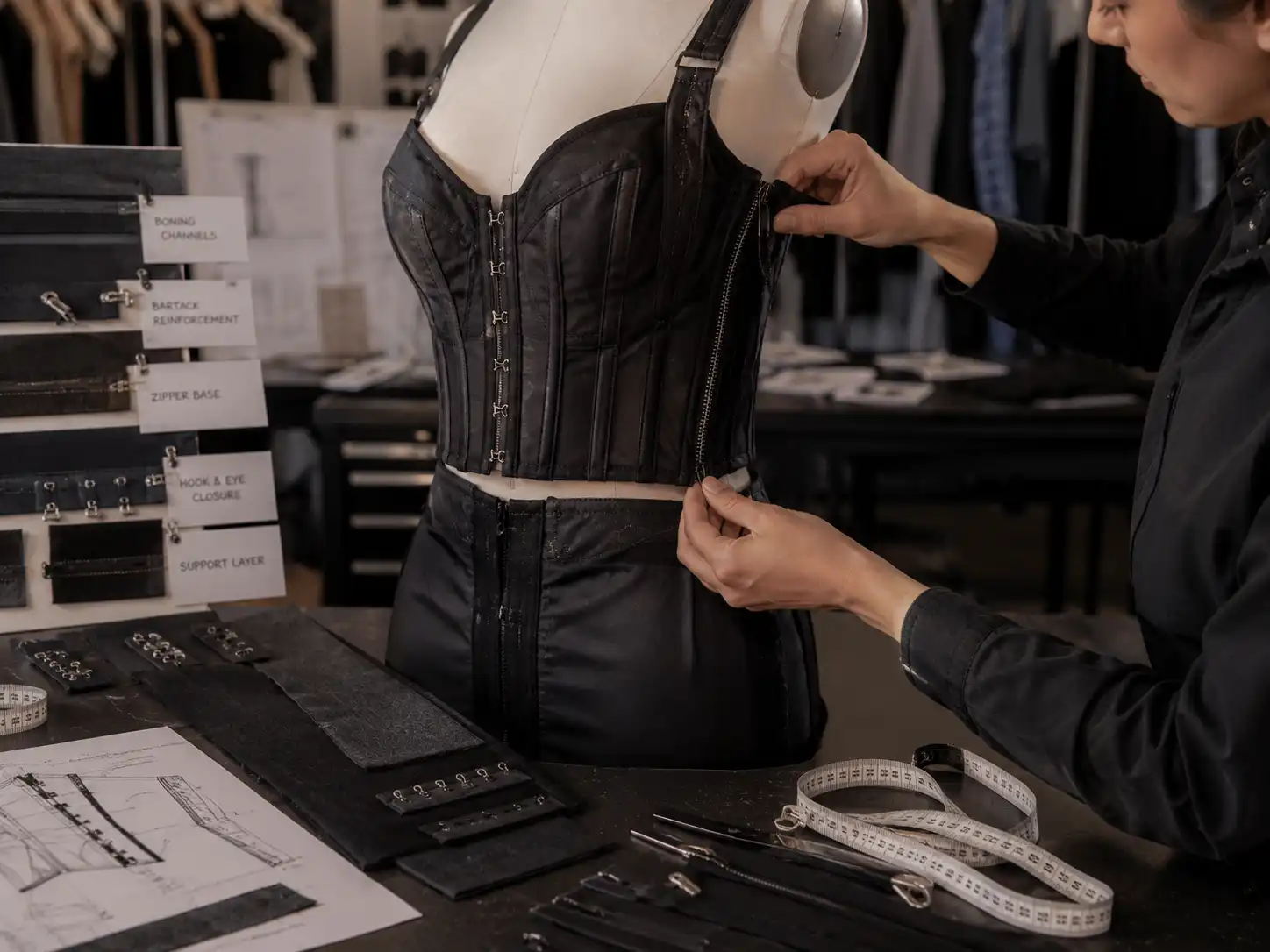
Technical flats are the visual foundation of a tech pack. They translate design into precise construction lines that factories can follow.
Key elements include:
- Front and back views of garment
- Seam lines and stitch direction
- Dart placement and shaping lines
- Pocket position and size reference
- Closure details (zipper, buttons, elastic zones)
In production, technical flats reduce interpretation time by up to 30–40%, especially in complex garments like matching sets or structured dresses.
What Should Be Included in Measurement Charts?
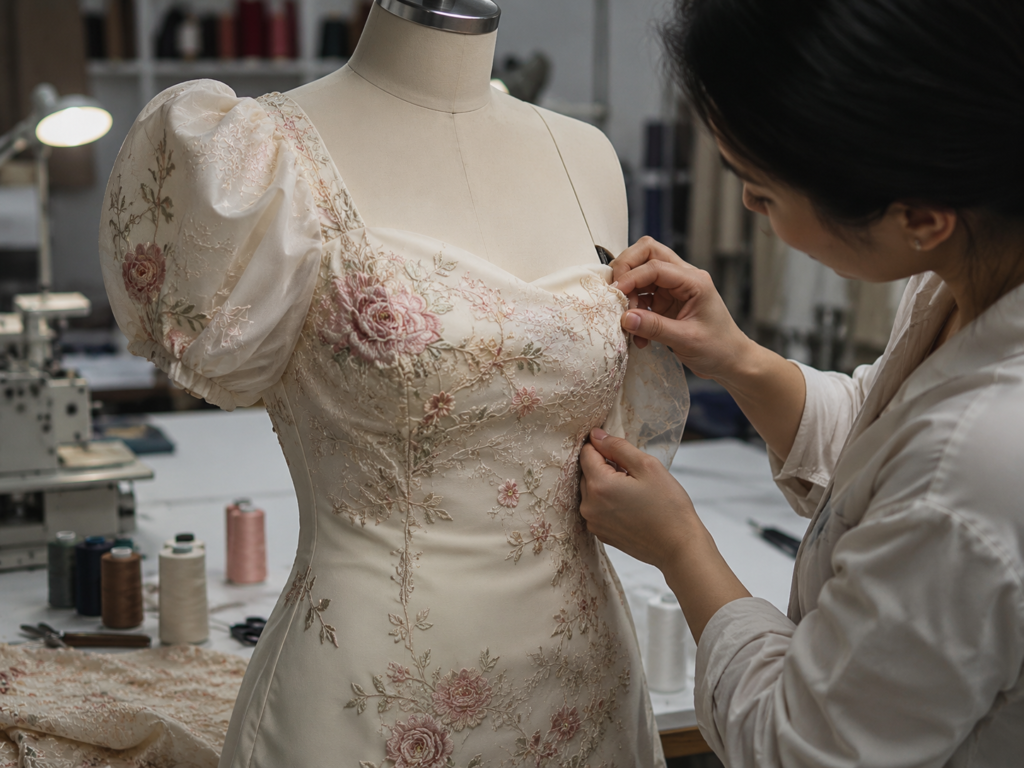
Measurement charts define exact garment dimensions used during sampling and bulk production.
Core structure:
| Point | Top Example | Bottom Example | Tolerance |
|---|---|---|---|
| Bust/Waist | Bust width | Waist width | ±0.5–1.0 cm |
| Length | Body length | Inseam / skirt length | ±1.0 cm |
| Shoulder/Hip | Shoulder width | Hip width | ±0.5–1.0 cm |
| Sleeve | Sleeve length | — | ±0.5 cm |
Critical requirements:
- Base size must be clearly defined (S or M)
- All measurements must follow same unit system (CM preferred)
- Reference points must be consistent across all sizes
Measurement clarity directly affects first-sample accuracy rate.
What Must Be Included in Fabric and Trim Specification?
This section defines all material-related requirements used in production.
Fabric specification includes:
- Fabric composition (e.g., 95% polyester / 5% spandex)
- GSM weight (e.g., 180–320 GSM depending on category)
- Stretch percentage (important for fitted garments)
- Shrinkage rate (typically 2%–8%)
- Finish type (brushed, washed, satin finish, etc.)
Trim specification includes:
- Zippers (metal / nylon / invisible)
- Buttons (size, material, placement)
- Elastic bands (width, recovery rate)
- Labels and tags (woven, printed, heat transfer)
Fabric mismatch is one of the top 3 causes of production inconsistency in fashion manufacturing.
What Is Included in BOM (Bill of Materials)?
BOM defines cost structure and material usage for production planning.
| Item | Specification | Function |
|---|---|---|
| Main Fabric | Type + GSM | Body structure |
| Lining | Type + weight | Comfort & support |
| Trim | Zipper/buttons | Closure system |
| Thread | Color + strength | Seam durability |
| Label | Brand + size info | Identification |
BOM accuracy affects:
- Fabric purchasing cost
- Production cost calculation
- Waste control during cutting
Even small BOM errors can cause 5–12% cost deviation in bulk production.
How Are Construction Details Documented?
Construction details define how garments are physically assembled on production lines.
Key elements:
- Stitch type (overlock, flatlock, single needle)
- Stitch density (stitches per inch/cm)
- Seam allowance (typically 0.6–1.2 cm depending on fabric)
- Reinforcement points (stress areas such as waist, shoulder, zipper)
- Finishing method (pressing, washing, bonding, hemming)
Factories rely on this section to assign correct machines and production methods. Missing construction details often lead to inconsistent sample quality.
What Are Grading Rules in a Tech Pack?
Grading rules define how garment sizes scale from XS to XL or beyond.
Key principles:
- Consistent scaling ratio across all sizes
- Separate logic for top and bottom in matching sets
- Controlled increase in key measurements (not linear for all points)
Example grading logic:
| Size | Top Length Change | Bottom Waist Change | Result |
|---|---|---|---|
| XS–S | +1.0 cm | +2.0 cm | Balanced fit |
| S–M | +1.5 cm | +2.5 cm | Standard scaling |
| M–L | +2.0 cm | +3.0 cm | Relaxed proportion |
Incorrect grading is one of the main causes of fit failure in bulk production.
Why Are Color Standards Important?
Color standards ensure visual consistency across production batches.
Key elements:
- Pantone reference code
- Lab dip approval requirement
- Color tolerance range (ΔE control in dyeing)
- Fabric batch consistency control
Without strict color standards, bulk production often shows shade variation between batches, especially in satin, knit, and dyed fabrics.
Factory Insight: Why These Sections Matter
In real production environments, factories evaluate tech packs within minutes based on completeness of these seven sections.
When fully structured:
- Sampling accuracy improves significantly
- Revision cycles reduce by 25–40%
- Production planning becomes predictable
- Cost estimation becomes stable
When incomplete:
- Multiple clarification rounds occur before sampling
- Fabric sourcing delays increase
- Fit inconsistencies appear in bulk production
A factory-ready tech pack is not about design presentation—it is a production stability system.
What Are the Common Mistakes in Matching Set Tech Packs?
In real garment production, matching sets are one of the most error-sensitive product categories. Even when design looks simple, the coordination between top and bottom introduces multiple points where small documentation gaps turn into costly sampling revisions. Most production issues do not come from factories misinterpreting intent, but from incomplete or inconsistent tech pack structure. A weak tech pack creates uncertainty in grading, fabric behavior, and construction alignment, which directly affects fit consistency and bulk production stability.
Featured Summary (SEO + AI snippet target – 64 words)
Common mistakes in matching set tech packs include inconsistent grading between top and bottom, missing fabric coordination rules, unclear measurement references, incomplete construction details, and poor color specification. These issues lead to sampling delays, repeated revisions, and production instability. A structured tech pack reduces errors by aligning both garments under one controlled production system.
Inconsistent Grading Between Top and Bottom
One of the most frequent issues in matching set production is unaligned grading logic. Top and bottom often follow different scaling rules, which breaks proportional balance across sizes.
Typical problems:
- Top length increases independently from bottom rise or skirt length
- Waist position shifts across sizes without coordination
- Oversized top paired with incorrectly scaled bottom
Impact in production:
- Fit distortion becomes visible from M size upward
- Sampling requires 2–3 additional revisions on average
- Bulk production shows uneven silhouette balance
Example grading mismatch:
| Size | Top Length Change | Bottom Waist Change | Result |
|---|---|---|---|
| XS–S | +1.0 cm | +3.0 cm | Visual imbalance |
| S–M | +2.0 cm | +2.0 cm | Slight mismatch |
| M–L | +1.5 cm | +4.0 cm | Proportion break |
Missing Fabric Coordination Rules
Matching sets depend heavily on fabric harmony. A common mistake is listing fabrics separately without defining how they behave together.
Frequent issues:
- Different stretch rates between top and bottom
- Uneven shrinkage after washing or steaming
- Color variation due to separate dye lots
- Fabric weight mismatch affecting drape balance
Production impact:
- First sample often fails wash test
- Re-sourcing required in 15–25% of cases
- Visual mismatch under movement or photography
Fabric mismatch is one of the top three causes of re-sampling in set-based production.
Incomplete Measurement Alignment
Measurement charts are often created separately for top and bottom without shared reference points. This leads to misalignment in proportional structure.
Common errors:
- Waist position not aligned between garments
- Inconsistent reference points (natural waist vs high waist)
- Missing total outfit length logic
- No relationship between top hem and bottom rise
Example impact:
A 2 cm shift in waist placement can visually shorten or lengthen the entire outfit proportion, especially in fitted or high-waist silhouettes.

Missing or Weak Construction Details
Construction details define how garments are physically assembled. When incomplete, factories must make assumptions during sampling.
Typical missing information:
- Stitch type not specified (overlock vs flatlock)
- Seam allowance not defined clearly
- No reinforcement instruction for stress areas
- Unclear zipper or elastic placement
- Missing finishing method after sewing
Production consequences:
- Inconsistent sample quality between iterations
- Higher rejection rate during QC inspection
- Delays in line setup and machine allocation
Construction ambiguity often leads to 10–18% increase in sampling time.
Poor Color and Shade Control
Color is often underestimated in matching set development. Without strict specification, top and bottom may appear slightly different under lighting or after washing.
Common issues:
- No Pantone reference defined
- Separate dye batches for top and bottom
- No lab dip approval process
- Fabric shrinkage changes color perception
Production impact:
- Shade variation visible in daylight or studio lighting
- Increased rejection during bulk QC
- Re-dyeing or re-ordering fabric required
In structured production systems, color inconsistency can increase total production cost by 5–12%.
Lack of Unified Set Structure
Another critical mistake is treating matching sets as two independent tech packs instead of one coordinated system.
Typical signs:
- Separate grading logic files
- No shared fabric or trim page
- No proportional relationship defined
- Missing outfit-level measurement overview
Production consequences:
- Top and bottom produced on different logic systems
- Fit imbalance only discovered after first sample assembly
- Increased revision cycles across departments
Factories typically spend extra 20–30% time reconciling mismatched documentation in such cases.
Key Production Insight From Factory Practice
In real sampling environments, most matching set errors are not caused by advanced technical complexity, but by missing coordination rules between simple elements. When grading, fabric, and measurement systems are not unified:
- Sampling cycles increase from 1–2 to 3–4 rounds
- Production cost rises due to re-cutting and re-sampling
- Delivery timelines extend by 10–20 days on average
A structured tech pack reduces these risks by enforcing consistency before sampling begins, rather than correcting issues during production.
How Do Factories Use Tech Packs in Production?
Factories use tech packs as the main production instruction file from pattern making to final inspection. For a matching set, the tech pack tells each team how the top and bottom should be developed, measured, sewn, checked, packed, and repeated in bulk. It is not only a design file; it becomes the working standard for sample approval, PP sample control, size grading, material purchasing, sewing line setup, and quality inspection.
Featured Summary — SEO + AI Snippet Target
Factories use tech packs to convert design ideas into production instructions. For matching sets, the tech pack guides pattern making, fabric sourcing, sampling, grading, sewing, QC, packaging, and bulk production control. It helps factories keep the top and bottom consistent in fit, proportion, color, fabric behavior, and construction across all sizes and production batches.
In real factory work, a matching set may pass through pattern makers, sample machinists, fabric teams, sewing lines, QC inspectors, packing teams, and merchandisers before shipment. If each team reads different or incomplete information, small errors appear quickly. A strong tech pack keeps everyone working from the same source.
From Tech Pack to Pattern Making
Pattern makers use the tech pack to turn flat sketches and measurements into paper or digital patterns. For matching sets, they do not only draft the top and bottom separately. They also check how both garments meet visually when worn together.
Key pattern checks include waistline height, crop length, rise position, skirt length, shoulder balance, hip space, and hem opening. For example, if the top is cropped and the skirt is high-waisted, the pattern team must confirm whether the gap between both garments is 0 cm, 2 cm, or 5 cm in the base size. Without that number, the sample may look different from the reference image.
A factory-ready tech pack should tell pattern makers:
| Pattern Input | Why It Matters |
|---|---|
| Base size | Builds the first pattern accurately |
| POM list | Defines exact measuring points |
| Fit target | Tight, regular, relaxed, oversized |
| Top-bottom gap | Controls visual proportion |
| Waistline position | Keeps the set balanced |
| Fabric stretch | Affects pattern reduction or ease |
| Seam allowance | Prevents sewing and size deviation |
For stretch sets, pattern makers often reduce part of the pattern width based on fabric stretch and recovery. For woven sets, they usually keep more wearing ease. A tech pack must make this clear before cutting the first sample.
From Tech Pack to Fabric and Trim Sourcing
Fabric teams use the tech pack to source materials that match the required composition, weight, color, stretch, shrinkage, hand feel, and finishing. For matching sets, fabric control is more sensitive because top and bottom must look like one outfit.
If the top uses one fabric batch and the bottom uses another, shade difference can appear under daylight, studio lighting, or after steaming. Satin, rib knit, mesh, lace, and sequin fabrics are especially sensitive. A 3% shrinkage difference between top and bottom may also affect the final proportion after wash or pressing.
A production team usually checks:
| Material Point | Factory Check |
|---|---|
| Fabric composition | Polyester, cotton, viscose, nylon, spandex |
| GSM | Controls thickness and drape |
| Stretch rate | Critical for fitted sets |
| Recovery | Prevents bagging after wear |
| Shrinkage | Keeps post-wash size stable |
| Color standard | Pantone or approved lab dip |
| Trim compatibility | Zipper, elastic, lining, label, thread |
For bulk production, fabric approval is usually locked before cutting. If the tech pack changes fabric after pattern approval, the sample may need to be remade because fit, drape, and sewing behavior may change.
From Tech Pack to Sample Making
Sample machinists use the tech pack to make the first physical garment. In this stage, the tech pack becomes a sewing roadmap. The sample room checks whether the design can be built with the selected fabric, trims, seam type, and measurements.
For a matching set, sample making usually follows this flow:
| Step | Factory Action |
|---|---|
| Review tech pack | Check flats, measurements, fabric, trims |
| Make pattern | Draft top and bottom separately |
| Cut sample fabric | Follow grainline, stretch direction, print direction |
| Sew first sample | Test construction and proportion |
| Measure sample | Compare with spec sheet |
| Fit review | Check body balance and movement |
| Record changes | Update pattern, measurements, construction notes |
A good sample is not only about appearance. The factory also checks whether the garment can be repeated in bulk. If a waistband twists easily, if a zipper waves, if a hem is hard to control, or if the top and bottom do not align visually, the tech pack must be updated before moving forward.
At Jinfeng Apparel, the uploaded company fact file states that the factory system includes sample rooms, pattern makers, sample machinists, QC inspectors, merchandisers, and packing workers, which supports the movement from design files or tech packs into sampling, bulk production, packaging, delivery, and repeat orders.
From Tech Pack to Fit Approval
After the first sample is made, the factory uses the tech pack to check whether the garment matches the approved measurements and fit target. For matching sets, fit approval should not only check each piece alone. The full set should be reviewed together.
Fit approval normally covers:
| Fit Area | Matching Set Check |
|---|---|
| Bust | Top fit, neckline stability |
| Waist | Top hem and bottom waistband relationship |
| Hip | Bottom fit and movement space |
| Length | Crop length, skirt length, pant length |
| Rise | Important for pants, shorts, skirts |
| Gap | Space between top and bottom |
| Movement | Sitting, walking, lifting arms |
A common mistake is approving the top and bottom separately. A crop top may look correct on its own, and a skirt may also pass measurement, but together the set may show too much waist gap or sit too low on body. The tech pack should record the approved fit photos, corrected measurements, and pattern changes after every sample round.
From Tech Pack to Grading and Size Scaling
Once the fit sample is approved, the grading team uses the tech pack to create full size ranges. For matching sets, grading must protect the visual relationship between both pieces.
For example, if the base sample is size S and the final size range is XS–XL, the top and bottom should not grow randomly. Bust, waist, hip, length, sleeve, rise, and hem opening must scale in a controlled way.
Example grading control:
| Size Step | Top Length | Bottom Waist | Bottom Length | Risk if Uncontrolled |
|---|---|---|---|---|
| XS to S | +1.0 cm | +2.0 cm | +1.0 cm | Short top may look too cropped |
| S to M | +1.5 cm | +2.5 cm | +1.5 cm | Waist gap may change |
| M to L | +1.5 cm | +3.0 cm | +2.0 cm | Set proportion may widen |
| L to XL | +2.0 cm | +3.5 cm | +2.0 cm | Bottom may overpower top |
A strong tech pack gives grading rules instead of leaving full-size scaling to guesswork. This is especially important for bodycon sets, knit sets, corset top sets, skirt sets, and lounge sets where fit changes are easy to see.
From Tech Pack to Bulk Production
Before bulk production starts, the factory uses the approved tech pack, revised pattern, approved fabric, and PP sample as the final production standard. The production team then arranges cutting, sewing, inline inspection, finishing, and packing according to the locked information.
Bulk production depends on consistency. The tech pack helps control:
| Production Stage | Tech Pack Function |
|---|---|
| Fabric ordering | Confirms material and consumption |
| Cutting | Controls size ratio and pattern layout |
| Sewing | Defines seam type and stitch method |
| Inline QC | Checks measurements and workmanship |
| Final QC | Compares bulk pieces with approved sample |
| Packing | Confirms labels, hangtags, folding, cartons |
| Repeat order | Reuses approved pattern and records |
For matching sets, bulk production must also control pairing. Top and bottom must match in color, size, fabric batch, label, SKU, and packaging. If one set includes a top size S and bottom size M by mistake, the product may fail warehouse or end-user checks even if both garments are well made.
From Tech Pack to Quality Inspection
QC teams use the tech pack as a checklist during fabric inspection, cutting inspection, sewing inspection, measurement inspection, final garment inspection, and packing inspection.
For matching sets, QC should check both single-garment quality and set-level consistency.
Key QC points include:
| QC Area | What Inspectors Check |
|---|---|
| Color | Top and bottom shade match |
| Measurement | Both pieces within tolerance |
| Stitching | Seam type, stitch density, seam strength |
| Fabric | Defects, holes, stains, shade bands |
| Symmetry | Left-right balance, waistline balance |
| Labels | Correct size, care label, brand label |
| Packing | Correct pairing, SKU, barcode, polybag |
Measurement tolerance often depends on garment type. Critical areas such as waist, bust, and hip may need tighter tolerance, while total length or hem opening may allow slightly wider tolerance. If tolerance is not listed in the tech pack, QC standards become inconsistent.
From Tech Pack to Packaging and Repeat Orders
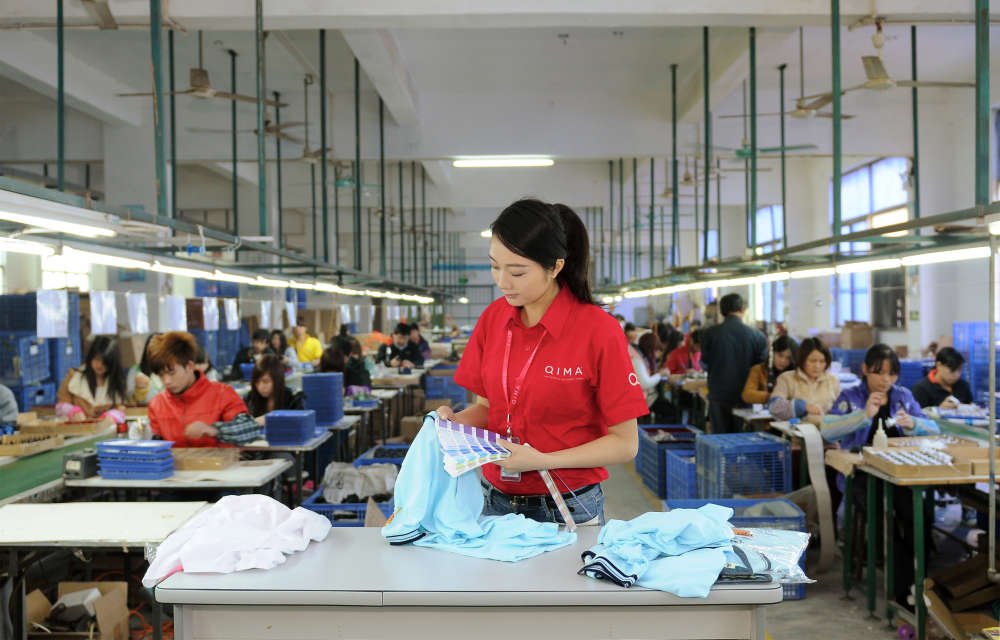
After final inspection, the packing team uses the tech pack and packing instruction to confirm labels, hangtags, barcode stickers, size stickers, polybags, carton marks, and size ratio per carton.
For matching sets, packaging mistakes can happen easily because two garments must be packed as one sellable unit. The tech pack should clearly state:
| Packing Detail | Required Information |
|---|---|
| Set pairing | Top + bottom packed together |
| Size match | Same size or approved mixed-size rule |
| Label position | Neck label, waistband label, care label |
| Hangtag | Attached to top, bottom, or both |
| Barcode | One barcode per set or separate SKU |
| Polybag | One set per bag or individual bags |
| Carton ratio | Style, color, size breakdown |
For repeat orders, the tech pack becomes even more valuable. The factory can reuse approved patterns, measurement records, fabric references, trim details, production notes, QC standards, and packing rules. This reduces repeated communication and helps keep future batches closer to the approved sample.
Can a Tech Pack Reduce Sampling Costs and Production Risk?
A well-built tech pack directly influences sampling cost, production stability, and speed to bulk approval. In real garment manufacturing, sampling delays and repeated revisions are not caused by sewing difficulty alone, but by unclear specifications, missing coordination rules, and incomplete technical structure. A matching set increases this risk because two garments must stay aligned in fit, fabric behavior, grading, and proportion. When the tech pack is structured correctly, factories can move from first sample to approval with fewer iterations, lower material waste, and more predictable production planning.
Featured Summary (SEO + AI snippet target – 62 words)
A structured tech pack reduces sampling costs and production risk by improving first-sample accuracy, reducing revision cycles, and preventing miscommunication between design and factory teams. For matching sets, it ensures alignment in fabric, grading, and proportion, helping stabilize bulk production and reduce unnecessary sampling rounds and material waste.
How Does a Tech Pack Reduce Sampling Costs?
Sampling cost is mainly driven by repetition. Each revision requires new cutting, sewing, fabric consumption, and labor time. A strong tech pack reduces these cycles by giving factories complete instructions before the first sample is made.
Key cost-saving mechanisms:
- Clear measurement charts reduce fitting mistakes
- Defined fabric specifications prevent wrong material sourcing
- Accurate construction notes reduce sewing rework
- Unified set structure avoids top-bottom mismatch
- Grading rules reduce size correction samples
Cost impact in real production:
| Sampling Stage | Without Strong Tech Pack | With Strong Tech Pack |
|---|---|---|
| First Sample | Low accuracy, multiple corrections | High accuracy, near-final result |
| Revision Cycles | 3–5 rounds common | 1–2 rounds typical |
| Fabric Waste | 8–15% extra usage | 3–6% controlled usage |
| Labor Cost | High due to rework | Stable and predictable |
| Time to Approval | 20–35 days | 10–20 days |
For matching sets, cost savings are higher because each revision affects two garments instead of one.
Why Does First-Sample Accuracy Improve?
First-sample accuracy improves when factories receive complete, structured information before cutting begins. A tech pack removes interpretation steps in pattern making, sewing, and finishing.
Key accuracy drivers:
- Measurement points clearly defined for both garments
- Fabric behavior (stretch, shrinkage) documented in advance
- Construction sequence fully specified
- Proportion rules between top and bottom included
- Grading logic aligned from base size
In production practice, incomplete tech packs often lead to “assumption-based sampling,” where factories interpret missing details. This is the main reason first samples fail even when design is simple.
For matching sets, accuracy improvement is especially visible in:
- Waist alignment between top and bottom
- Crop length vs high-waist positioning
- Sleeve-to-skirt proportion balance
- Fabric drape consistency under movement
How Does a Tech Pack Reduce Production Risk?
Production risk comes from inconsistency. When different teams interpret design differently, errors appear during cutting, sewing, QC, or bulk finishing. A tech pack reduces risk by standardizing instructions across all departments.
Main risk reduction areas:
- Fabric mismatch risk reduced through clear specifications
- Size inconsistency reduced through grading rules
- Construction errors reduced through stitch definitions
- Color deviation controlled through Pantone standards
- Packing errors reduced through set-level instructions
Risk comparison in real production:
| Risk Area | Without Tech Pack | With Tech Pack |
|---|---|---|
| Fabric inconsistency | High (batch mismatch common) | Low (controlled sourcing) |
| Fit instability | Frequent revisions | Stable from first sample |
| Production delay | 10–25 days extension risk | Controlled timeline |
| QC rejection rate | 8–20% | 3–8% |
| Communication errors | Frequent clarification loops | Minimal interpretation needed |
Matching sets benefit more because production errors multiply across two garments.
Why Is Risk Higher in Matching Set Production?
Matching sets naturally increase complexity because two garments must behave as one visual system.
Common risk points:
- Top and bottom use different grading logic
- Fabric stretch affects proportions differently
- Waist alignment shifts across sizes
- Separate production teams create inconsistency
- Packing errors occur during set pairing
Without a unified tech pack, even small deviations become visible:
- 1–2 cm shift in waist position breaks proportion
- Slight fabric shade difference appears in set photos
- Uneven shrinkage distorts silhouette after wash
This is why matching sets require stricter documentation than single garments.
How Does Tech Pack Improve Factory Communication?
Factories rely on tech packs as a shared language between departments. When communication is unclear, each team fills gaps based on experience, which leads to inconsistency.
Tech pack improves communication by:
- Standardizing measurement reference points
- Removing verbal interpretation between departments
- Aligning sampling, pattern, and QC teams
- Creating single source of truth for all production stages
- Reducing back-and-forth clarification cycles
Communication efficiency improvement:
| Process Stage | Without Tech Pack | With Tech Pack |
|---|---|---|
| Pattern briefing | Repeated explanation needed | Single instruction flow |
| Sampling feedback | Multiple revision notes | Structured correction list |
| QC inspection | Subjective judgment | Standard checklist |
| Production update | Frequent clarification | Stable reference document |
Key Production Insight From Factory Practice
In real manufacturing environments, sampling cost and production risk are not determined by garment complexity alone. They are determined by how clearly the tech pack defines execution rules before production starts.
A structured tech pack typically achieves:
- 25–40% reduction in sampling revisions
- 15–30% faster sample approval cycles
- Lower material waste across prototyping stages
- More stable bulk production consistency
For matching sets, the impact is even stronger because every improvement multiplies across two connected garments.
A tech pack does not remove production risk completely, but it shifts risk from “during production” to “before production”—where changes are cheaper, faster, and more controlled.
Work With Jinfeng Apparel
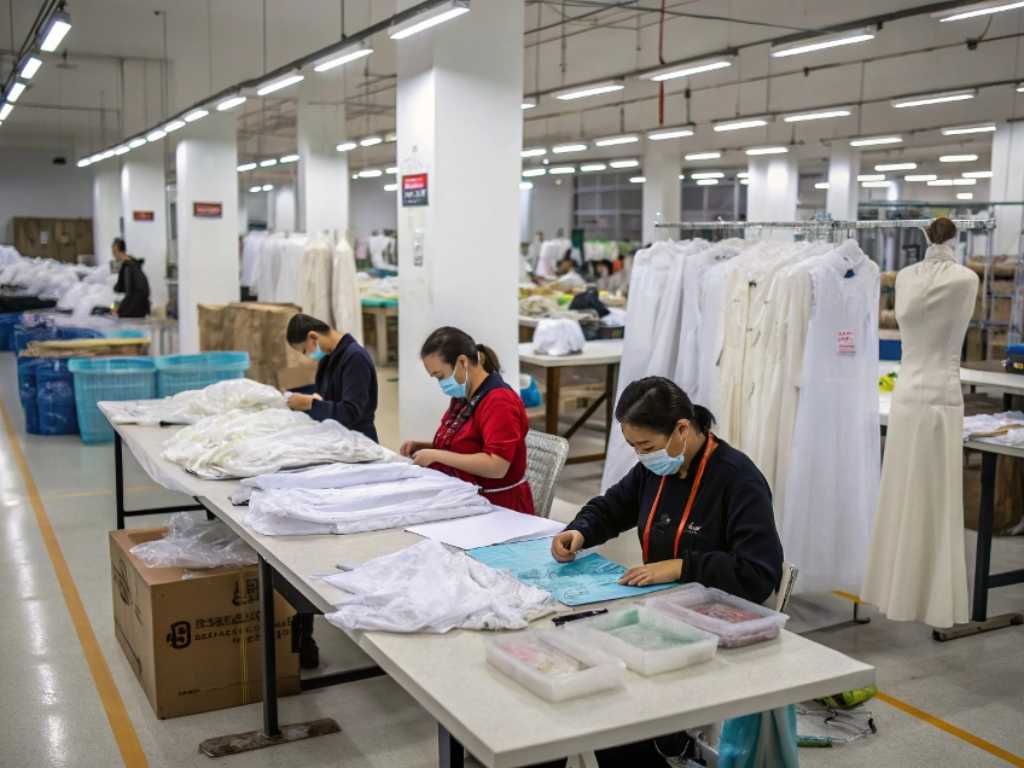
A matching set only performs well in the market when its technical foundation is stable from the beginning. Jinfeng Apparel specializes in turning design references, sketches, and brand concepts into production-ready tech packs that align with real manufacturing systems in China’s apparel supply chain.
From fabric sourcing to grading logic and bulk production execution, each stage is handled with structured technical discipline to ensure consistency from first sample to final shipment.
For custom matching set development, OEM/ODM production, or tech pack optimization support, Jinfeng Apparel is available to review your design and provide a production-ready solution tailored for scalable manufacturing.
👉 Send your matching set concept or reference design to Jinfeng Apparel and start your custom development process today.