Skip to content

The moment a dress concept enters a manufacturing system, it is no longer just a design idea—it becomes a structured production decision. Many brands assume that a strong sketch or reference image is enough to move directly into sampling, but in real production environments, the first evaluation is far more strategic. Quantity, fabric selection, and size range define whether a project is stable, risky, or completely unfeasible before any pattern is cut.
At the early review stage, production teams are not judging aesthetics alone. They are calculating whether the project can survive real-world constraints: cutting efficiency, fabric availability, grading logic, and machine allocation. A design that looks commercially strong may still be rejected if the quantity is too low to support production cost, or if the fabric creates high wastage during spreading and cutting.
A dress project review evaluates three core production variables: order quantity, fabric behavior, and size range complexity. These factors determine cost efficiency, production stability, and risk level. Low MOQ, difficult fabrics, and wide size grading increase rejection probability because they disrupt cutting efficiency, increase labor time, and reduce factory profitability margins.
In one real production case, a brand submitted a satin slip dress with 80 pieces per color, six sizes including plus sizing, and a delicate bias-cut satin fabric. On paper, it was a simple elegant style. In reality, the factory flagged it as high risk due to fabric slippage during cutting and low efficiency in spreading layers. The project was paused—not because of design weakness, but because production logic did not support it.
This is where most misunderstandings happen between design intention and manufacturing reality. Let’s break down how each factor reshapes project approval decisions.
What Is a Dress Project Review?
A dress project review is the first production feasibility checkpoint where a garment idea is evaluated before sampling begins. It is not a design judgment, but a structured assessment of whether the style can be manufactured under real factory conditions. The review focuses on three production realities: material behavior, order scale, and size complexity. These elements determine whether a project can move forward smoothly or will require adjustment before sampling investment.
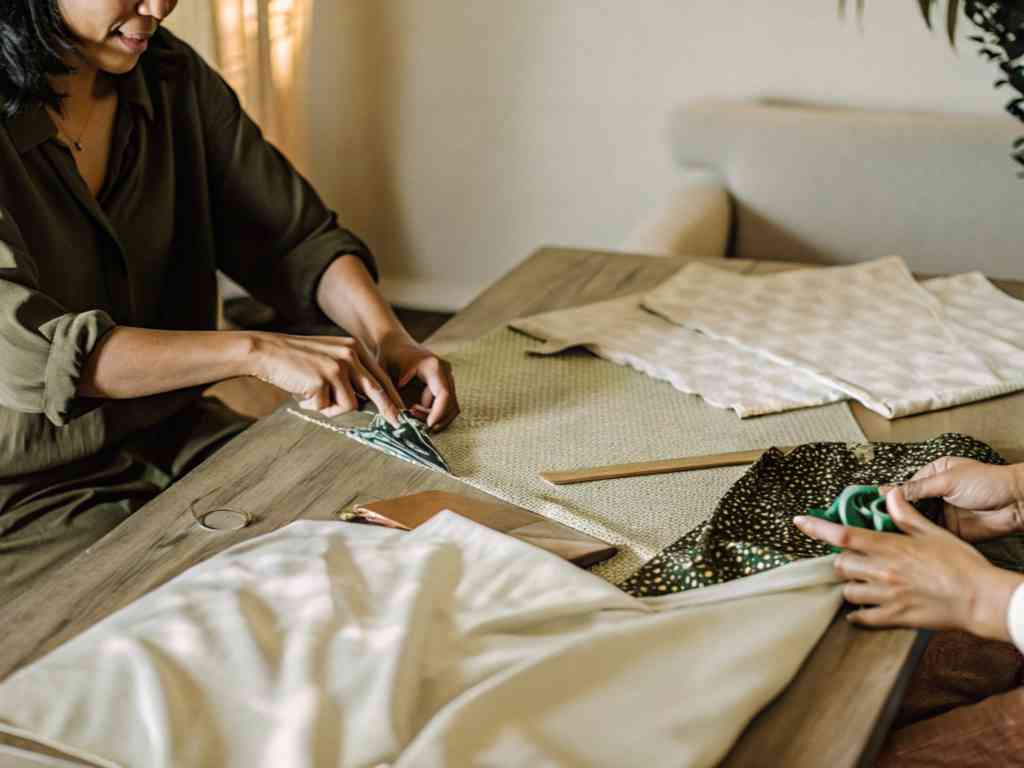
At this stage, production teams convert visual design inputs into measurable manufacturing logic. A reference image or sketch is analyzed against fabric availability, cutting efficiency, sewing difficulty, and grading workload. Even a visually simple dress can be paused if one of these variables creates instability in production flow.
The goal is to prevent wasted sampling cycles, reduce cost distortion, and ensure the style can achieve stable bulk production performance.
What Is Project Review in Garment Production?
Project review is a structured pre-sampling evaluation used to determine whether a dress can be produced efficiently at scale. It focuses on three measurable inputs: quantity, fabric type, and size range. These inputs are compared against factory capacity, material sourcing feasibility, and production efficiency benchmarks.
Unlike design evaluation, which focuses on aesthetics, project review is operational. It answers whether production lines can handle the style without increasing defect rates or disrupting workflow stability. For example, a satin slip dress with bias-cut construction requires different handling compared to a structured cotton mini dress, even if both have similar silhouettes.
Why Do Factories Review Before Sampling?
Sampling requires time, fabric allocation, and skilled labor. If a project enters sampling without feasibility validation, it can lead to repeated revisions, fabric waste, and production delays.
Project review acts as a filter to reduce these risks. It helps identify issues such as low MOQ inefficiency, unstable fabric behavior, or excessive grading complexity. In many factories, 20–35% of sampling requests are adjusted or paused after review due to cost or production limitations.
What Inputs Are Required for Evaluation?
A complete project review requires structured technical input, not just visual references. The most important data includes:
| Input Category | Required Details | Impact on Review |
|---|---|---|
| Quantity | Per color/style volume | Cost efficiency & MOQ fit |
| Fabric | Composition, weight, stretch | Cutting & sewing stability |
| Size Range | XS–XL / plus sizing plan | Grading workload |
| Construction | Lining, structure, trims | Labor complexity |
| Target price | Retail or FOB expectation | Margin feasibility |
Missing or unclear input in any category increases the likelihood of review delays or rejection.
What Decisions Are Made at This Stage?
At the project review stage, factories typically make one of four decisions:
- Approved for Sampling – All parameters are stable and production-ready
- Approved with Adjustments – Minor changes required (fabric, MOQ, or size range)
- On Hold for Revision – Key inputs incomplete or inconsistent
- Not Feasible – Production cost or risk exceeds acceptable thresholds
Approval is not only based on design appeal but on whether the project can maintain efficiency across cutting, sewing, and finishing stages without excessive loss or rework.
How Does Quantity Affect Approval?
Quantity is one of the strongest decision drivers in a dress project review because it directly controls cost distribution, production efficiency, and factory capacity planning. Even when design and fabric are acceptable, order volume can determine whether a style is approved, adjusted, or paused. In real production systems, quantity is not treated as a sales target but as a manufacturing efficiency variable.
At the review stage, factories evaluate whether the planned volume can absorb fixed production costs such as pattern development, cutting setup, fabric spreading, and machine allocation. When quantity is too low, unit cost rises sharply and production flow becomes inefficient. When quantity is balanced, the style can move smoothly through sampling into bulk production with stable margins and predictable output.
What Is the MOQ Impact?
MOQ (Minimum Order Quantity) defines the lowest viable production threshold for a style. Below this level, production efficiency drops because fixed costs are spread over too few units.
Typical MOQ impact ranges:
| Order Size | Factory Behavior | Cost Effect |
|---|---|---|
| 50–100 pcs | High caution / often rejected | +30–60% unit cost |
| 100–300 pcs | Conditional approval | +10–25% unit cost |
| 300–800 pcs | Standard acceptance | Optimized cost |
| 800+ pcs | Preferred production scale | Lowest unit cost |
When MOQ is too low, factories often request consolidation of colors or styles to maintain efficiency.
How Does Volume Affect Costing?
Volume directly influences how efficiently fabric, labor, and machine time are utilized. Higher quantity allows better fabric lay planning and reduces waste during cutting.

For example:
- 100 pcs dress order → fabric utilization around 75–80%
- 500 pcs dress order → fabric utilization improves to 85–92%
Even if material cost remains stable, inefficiency in low-volume orders increases per-unit production cost due to setup repetition and lower cutting optimization.
Volume also affects labor distribution. Sewing lines operate more efficiently when tasks are repetitive and stable. Small batches introduce frequent style switching, increasing downtime and adjustment loss.
Why Does Small Quantity Increase Risk?
Small quantity increases production risk because it limits the ability to absorb errors and stabilize workflow.
Key risk factors include:
- Higher cutting waste per meter of fabric
- Increased time spent on machine setup and adjustments
- Lower efficiency in sewing line balancing
- Higher probability of inconsistent finishing results
In practical production environments, styles below 100–150 pcs per color often require additional cost buffers or revised construction methods to maintain acceptable margins.
What Quantity Triggers Production Efficiency?
Production efficiency reaches an optimal level when quantity aligns with batch-based manufacturing logic. Most dress factories operate best within mid-volume ranges where production steps can be standardized.
Efficiency thresholds:
| Quantity Range | Production Behavior | Efficiency Level |
|---|---|---|
| <100 pcs | Trial-based production | Low efficiency |
| 100–300 pcs | Semi-stable batch | Medium efficiency |
| 300–800 pcs | Full batch flow | High efficiency |
| 800–2000+ pcs | Mass production mode | Maximum efficiency |
At around 300+ pieces per style or per color, factories can stabilize cutting layouts, reduce fabric loss, and maintain continuous sewing line output without frequent interruptions.
Why Does Fabric Choice Change Risk Level?
Fabric is one of the strongest variables affecting production stability in a dress project review because it directly influences cutting behavior, sewing performance, defect rate, and delivery consistency. Even when design, quantity, and size range are acceptable, fabric alone can shift a project from “easy approval” to “high-risk adjustment.”
In real production environments, fabric is not evaluated only by appearance or cost. It is tested against how it behaves under industrial conditions: spreading tension, cutting precision, seam stability, shrinkage control, and finishing response. A visually simple fabric can create complex production challenges, while a visually complex fabric can sometimes perform more stably than expected.
What Fabrics Are Easy to Produce?
Stable fabrics reduce production risk because they behave predictably during cutting and sewing. These materials allow faster line speed, lower defect probability, and more consistent bulk output.
Common low-risk fabrics:
| Fabric Type | Production Stability | Key Advantage |
|---|---|---|
| Cotton poplin | Very stable | Easy cutting & sewing |
| Polyester crepe | Stable | Low shrinkage |
| Ponte knit | Medium-stable | Balanced stretch recovery |
| Twill woven | Stable | Strong structure retention |
These fabrics maintain shape during spreading and do not shift easily during cutting. They also tolerate higher sewing speed, which improves overall production efficiency and reduces labor time per piece.
Which Fabrics Increase Production Difficulty?
High-risk fabrics introduce instability during cutting, sewing, or finishing stages. These materials require slower production speed, additional handling steps, and stricter quality control.
Common high-risk fabrics:
| Fabric Type | Risk Level | Main Production Issue |
|---|---|---|
| Satin (bias cut) | High | Slippage during cutting |
| Chiffon | High | Edge fraying, misalignment |
| Silk blends | Very high | Tension sensitivity |
| Velvet | Medium-high | Direction control issues |
| Lightweight mesh | Medium-high | Distortion under pressure |
For example, satin requires controlled laying during cutting to prevent shifting between layers. Even a 2–3 mm deviation in grain alignment can lead to visible distortion after sewing. Chiffon requires edge stabilization to prevent fraying before stitching begins.
How Does Fabric Affect Lead Time?
Fabric selection directly impacts production speed because each material requires different handling procedures. Stable fabrics move through cutting and sewing lines quickly, while delicate fabrics require slower, more controlled workflows.
Typical lead time impact:
| Fabric Type | Additional Processing Time |
|---|---|
| Cotton / polyester blends | Baseline |
| Light knit fabrics | +5–10% |
| Satin / silk-like fabrics | +10–20% |
| Chiffon / lace | +15–25% |
| Velvet / specialty fabrics | +10–18% |
Delicate fabrics often require:
- Pre-stabilization before cutting
- Lower sewing machine speed
- Additional ironing cycles
- Higher inspection frequency
These steps extend production cycles even when order quantity remains unchanged.
What Fabric Issues Cause Rejection?
Fabric-related rejection usually happens when production risk exceeds acceptable thresholds or when material inconsistency cannot guarantee stable bulk output.
Common rejection triggers:
- Unstable dye lots: color variation between rolls affects bulk consistency
- High shrinkage rate: fabric changes dimension after washing or steam
- Grain instability: fabric shifts during cutting causing pattern distortion
- Excess defect rate: holes, yarn pulls, or weaving inconsistencies above tolerance
- Uncontrollable stretch behavior: inconsistent recovery in knit fabrics
In production reality, even a 3–5% inconsistency in fabric stability can multiply into significantly higher defect rates at bulk scale, especially for fitted dresses or bias-cut silhouettes.
How Do Size Ranges Impact Production Feasibility?
Size range is a key production feasibility factor because it determines how complex the pattern grading system becomes, how many adjustments are required during sampling, and how stable the garment will perform across different body measurements. In dress manufacturing, expanding size coverage is not a simple scaling task—it directly affects cutting logic, sewing precision, and bulk consistency.

At the project review stage, factories evaluate whether the proposed size range can be supported by existing grading rules and production capacity. A narrow range such as XS–L usually follows standard grading curves, while extended ranges like XXS–3XL require multiple pattern adjustments, fit validation rounds, and sometimes separate grading strategies. The broader the size range, the higher the risk of fit inconsistency and production delay.
What Is Standard vs Extended Size Range?
Standard size ranges are designed around predictable grading increments. These ranges usually follow established pattern rules, making them easier to produce with minimal adjustments.
Typical classification:
| Size Range Type | Coverage | Production Stability | Risk Level |
|---|---|---|---|
| Standard range | XS–L / XS–XL | High consistency | Low |
| Extended range | XS–XXL | Moderate adjustments | Medium |
| Plus extended | XXS–3XL | Multiple grading systems | High |
Standard ranges allow factories to reuse existing block patterns, reducing sampling time and minimizing fitting corrections. Extended ranges often require additional grading logic to maintain proportional balance across different body types.
How Does Grading Affect Pattern Work?
Grading is the process of scaling a base pattern into multiple sizes while maintaining design proportions. It is not a uniform scaling process; each area of a dress—bust, waist, hip, shoulder, and length—requires different adjustment ratios.
Key grading challenges include:
- Maintaining dart position consistency across sizes
- Keeping seam alignment balanced in fitted silhouettes
- Adjusting waist-to-hip ratio without distorting shape
- Ensuring sleeve and armhole balance in larger sizes
For fitted dresses such as bodycon or corset styles, even a 0.5–1 cm grading deviation can affect overall silhouette stability. Complex designs often require separate grading validation for small and large sizes instead of a single linear scale.
Why Does Plus Size Increase Complexity?
Plus size production introduces structural changes beyond simple scaling. Body proportion differences require pattern redesign in key stress areas such as bust support, waist shaping, and hip balance.
Common adjustments in plus size grading:
- Increased dart intake for bust support stability
- Wider armhole shaping for comfort and mobility
- Reinforced seam allowance in high-tension areas
- Adjusted length proportions to maintain visual balance
In real production, plus size styles may require separate fitting rounds compared to standard sizes. This increases sampling cycles and can extend development time by 15–30% depending on design complexity. Without proper adjustment, garments may lose intended silhouette or create fit imbalance across sizes.
What Size Issues Affect Bulk Stability?
Size-related production instability often appears during bulk manufacturing when grading inconsistencies are not fully resolved in sampling stage. Small errors in early patterns become amplified during mass production.
Key stability risks include:
- Inconsistent grading rules between sizes
- Unbalanced proportion shift (top-heavy or bottom-heavy appearance)
- Fit variation between sample and bulk production
- Increased alteration rate during finishing inspection
For example, a dress that fits correctly in size S but appears too tight in size L often indicates incorrect grading scaling rather than fabric issues. These inconsistencies lead to rework, delayed shipment, and higher defect rates.
Size Range Impact Overview Table
| Factor | Narrow Range (XS–L) | Extended Range (XS–XXL) | Plus Range (XXS–3XL) |
|---|---|---|---|
| Pattern workload | Low | Medium | High |
| Sampling rounds | 1–2 | 2–3 | 3–5 |
| Fit risk | Low | Medium | High |
| Production delay risk | Low | Moderate | High |
| Bulk consistency | High | Medium | Variable |
What Do Factories Evaluate Before Approval?
Before a dress project moves into sampling or bulk production, factories run a structured approval evaluation to determine whether the style can be produced efficiently, profitably, and with stable quality. This evaluation is not based on design preference, but on measurable production variables: cost structure, capacity alignment, material behavior, and operational risk.
At this stage, every incoming project is tested against real production constraints such as fabric sourcing stability, sewing line availability, defect probability, and workload balance. Even a well-designed dress can be paused if it disrupts factory flow, exceeds cost thresholds, or introduces unstable production requirements.
How Is Cost Feasibility Calculated?
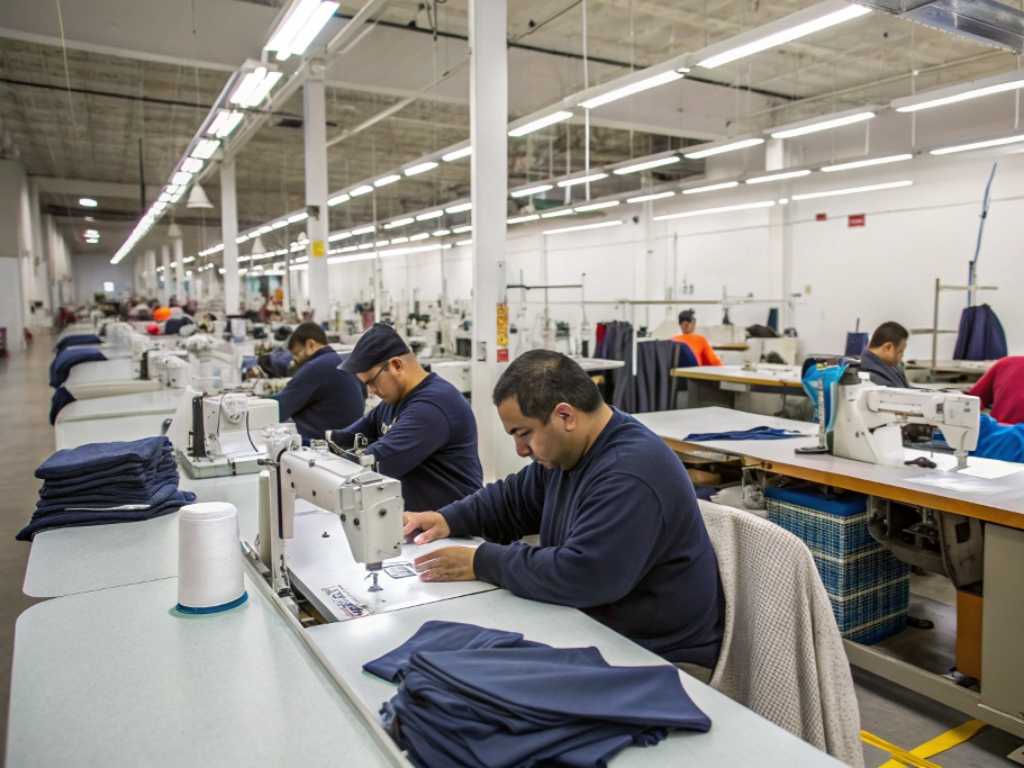
Cost feasibility is calculated by breaking the dress into production components and evaluating whether the final cost aligns with acceptable manufacturing margins.
Main cost components include:
- Fabric consumption per garment
- Cutting and labor time per unit
- Trims and accessory cost (zipper, lining, buttons, labels)
- Wastage rate during cutting (typically 3–15% depending on fabric)
- Sampling amortization cost (pattern + prototype development)
Typical cost evaluation range:
| Cost Element | Low Complexity Dress | High Complexity Dress |
|---|---|---|
| Fabric share | 40–55% | 55–70% |
| Labor share | 20–30% | 30–45% |
| Waste rate | 3–5% | 8–15% |
| Sampling cost impact | Low | High |
If projected margins fall below factory thresholds, adjustments are required in fabric choice, construction method, or order volume before approval.
How Is Production Capacity Checked?
Production capacity evaluation ensures that existing factory resources can support the new style without disrupting ongoing orders.
Factories typically review:
- Sewing line availability and workload distribution
- Fabric procurement timelines and supplier lead time
- Cutting room scheduling and material preparation
- Finishing and ironing capacity during peak periods
Capacity impact example:
| Style Type | Sewing Time per Piece | Line Efficiency Impact |
|---|---|---|
| Basic woven dress | 12–18 min | Low disruption |
| Structured dress with lining | 18–28 min | Medium impact |
| Complex dress (pleats/boning) | 30–45 min | High impact |
If a style requires extended sewing time per unit, it may be scheduled for off-peak production or require delay in approval until capacity opens.
What Risk Factors Are Identified?
Risk evaluation focuses on identifying production instability before any material is cut. The goal is to avoid unpredictable outcomes during bulk manufacturing.
Key risk categories include:
- Fabric instability (shrinkage, slippage, inconsistent dye lots)
- High defect probability during sewing or finishing
- Complex construction requiring multiple rework cycles
- Tight delivery deadlines with unstable material sourcing
- Excessive size grading variation increasing sampling iterations
Risk scoring reference:
| Risk Level | Production Behavior | Approval Outcome |
|---|---|---|
| Low | Stable flow, predictable output | Approved |
| Medium | Requires adjustments | Conditional approval |
| High | High defect or delay probability | On hold or rejected |
Even a single high-risk factor (such as unstable satin or extreme size grading) can shift a project into revision stage.
What Determines Final Go or No-Go Decision?
Final approval is based on a combined evaluation of cost, capacity, and risk. These three elements are weighted together to determine whether the project can proceed into sampling without operational disruption.
Decision framework:
| Factor | Weight in Decision | Key Question |
|---|---|---|
| Cost feasibility | 35–40% | Can production meet target margin? |
| Capacity alignment | 25–30% | Can current lines support workload? |
| Risk level | 30–40% | Will production remain stable? |
Final outcomes:
- Go (Approved): Balanced cost, stable fabric, manageable workload
- Conditional Go: Minor adjustments required before sampling
- No-Go / Revision Required: High risk or unbalanced production logic
In practice, approval is not a yes/no design decision. It is a production engineering decision that ensures the style can move from sampling into bulk production without instability, delays, or excessive cost deviation.