Skip to content

A maxi skirt can look uncomplicated on a retail rail: one waistband, a long body, and a finished hem. Inside a factory, that clean appearance is created through pattern balance, grain control, fabric testing, layer planning, sewing sequence, pressing, and repeated measurement checks. The longer the garment becomes, the more clearly small errors appear. A slightly twisted side seam can travel visibly across the full length, while a small cutting imbalance can leave one part of the hem lower than the rest.
Maxi skirts are manufactured by translating an approved design into graded patterns, testing and allocating fabric, cutting production panels, assembling waistbands and skirt sections, leveling the hem, checking measurements and workmanship, then pressing, labeling, packing, and releasing the finished garments against an approved bulk-production standard for consistent retail delivery across the complete size range.
The process is not simply the production of a shorter skirt with extra length added. Rayon can relax after cutting, satin can expose every tension problem, and a tiered print can look wrong when one panel faces the opposite direction. One poorly planned detail can delay an entire launch, while one carefully engineered sample can become a dependable shape that returns across several seasons, fabrics, and colors.
What Defines a Maxi Skirt?
A maxi skirt is defined by its near-ankle or floor-length proportion, but production depends equally on waist position, hip ease, hem sweep, silhouette, fabric behavior, and intended movement. In commercial manufacturing, the style must be specified through measurable dimensions and construction details rather than length alone.
Length and Proportion
A maxi skirt is generally designed to finish around the ankle, instep, or close to the floor. The exact measurement changes with the target customer, size range, rise position, and styling concept. A high-waisted skirt measured from the top of the waistband may need a different finished length from a low-rise style, even when both are intended to end at the same visual point.
For many commercial women’s ranges, finished skirt lengths may fall between approximately 85 and 110 cm when measured from the upper waist edge, but that range is only a planning reference. Petite, standard, and tall ranges often need separate length rules. A floor-length occasion skirt also needs enough clearance to prevent the wearer from stepping on the hem, while a casual resort skirt may be intentionally shorter for sandals or flat footwear.
Proportion matters as much as the number on the measurement chart. The relationship between waistband height, hip position, slit height, and hem sweep determines whether the skirt looks balanced on the body. A narrow skirt that is too long may restrict walking, while a very full skirt that is too short can lose the intended dramatic effect and appear visually heavy around the lower leg.
The pattern should record center-front, center-back, and side lengths separately whenever the style or body shape requires it. This is especially important for curved hems, bias-cut panels, high-low designs, and skirts fitted closely over the seat. A single overall length measurement is rarely enough to explain how a full-length garment should hang when it is worn rather than laid flat.
Silhouette and Sweep
Maxi skirts can be straight, A-line, flared, gathered, tiered, pleated, wrap, paneled, bias-cut, or circular. Each silhouette changes the pattern shape, fabric consumption, sewing sequence, and production risk. A straight style may use only a few major panels, while a tiered or circular style can require substantially more material, joining operations, gathering control, and time for the hem to settle before final leveling.
A straight maxi skirt may have a relatively small hem sweep and usually needs a slit, stretch fabric, or additional walking ease. An A-line skirt gradually widens below the hip and is easier to move in without becoming excessively full. Tiered and gathered designs create volume through added fabric, while circular skirts achieve movement through large curved pattern sections that include several grain directions.
Hem sweep is one of the most useful measurements for understanding the finished silhouette. A fitted straight skirt may have a finished circumference close to 100-130 cm, while a relaxed A-line version may reach 150-220 cm. Full resort, tiered, or circular styles can exceed 250-300 cm depending on size and design. These figures vary, but they show why skirts of equal length can have very different fabric and labor requirements.
| Maxi Skirt Type | Common Hem Sweep | Main Construction Need | Main Production Risk |
| Straight | 100-130 cm | Slit, stretch, or walking ease | Restricted movement |
| A-line | 140-220 cm | Balanced flare below the hip | Uneven side fall |
| Paneled | 160-260 cm | Accurate vertical seam matching | Twisted panel seams |
| Tiered | 200-320+ cm | Controlled gathering | Uneven fullness |
| Pleated | Varies by pleat depth | Precise fold placement | Inconsistent pleats |
| Bias-cut | Usually moderate | Correct diagonal grain | Length growth |
| Full-circle | 250-350+ cm | Large curved panels | High use and uneven hem |
Waist and Hip Structure
The waistband determines where the skirt sits and how the entire garment hangs. Fixed waistbands, elastic casings, contoured waistbands, drawstring waists, and wrap closures all require different pattern and sewing methods. A fixed waistband needs accurate shaping and reinforcement, while an elastic style must balance a secure relaxed measurement with enough extension to pass comfortably over the wearer’s hip.
A contoured waistband follows the changing circumference between the upper and lower edges, making it useful for fitted or high-waisted silhouettes. If the curve is too shallow, the top edge may stand away from the body. If it is too strong, the waistband can roll, collapse, or pull the skirt upward. Interfacing must support the structure without creating an unnecessarily rigid feel.
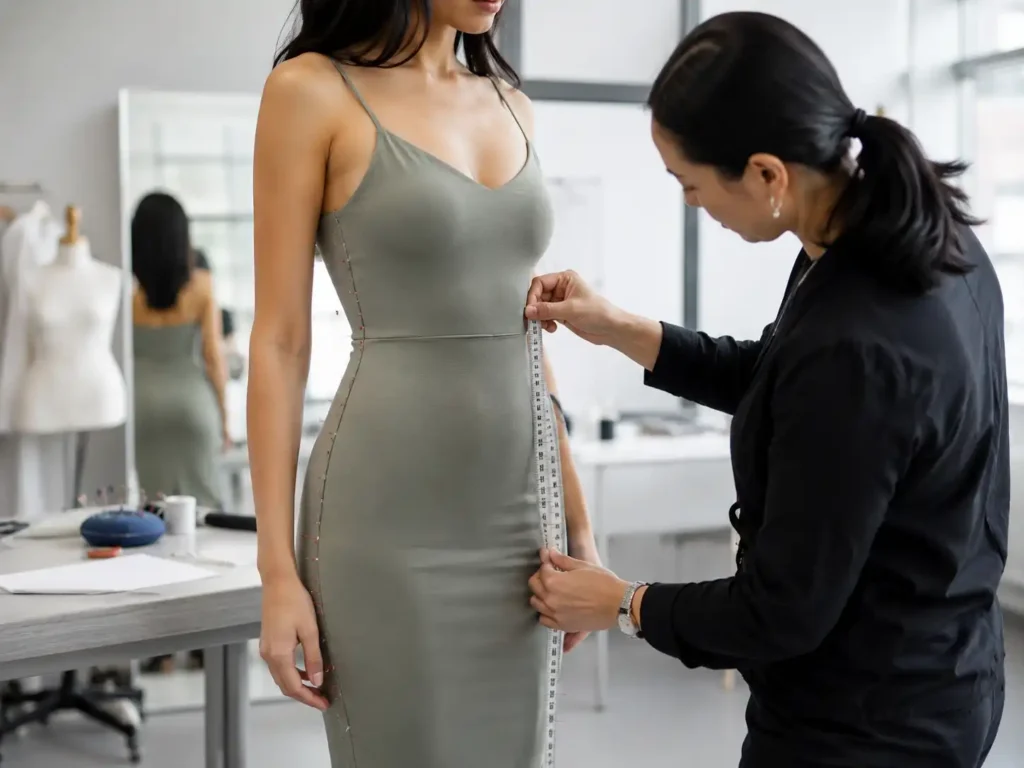
Hip ease should reflect both the silhouette and the fabric. A woven straight skirt needs enough room for sitting and walking, while a stretch jersey skirt can use closer measurements. Too much ease makes the garment appear shapeless; too little can produce horizontal stress lines, pocket pulling, zipper strain, or slit distortion. Fit decisions must therefore be reviewed through movement, not only on a stationary fitting form.
Details That Change the Product
Small visual details often create large manufacturing differences. A basic two-panel elastic-waist skirt can move through production quickly. Add a lining, shaped waistband, invisible zipper, pockets, four tiers, and a border print, and the garment becomes a much more technical product with additional pattern pieces, fabric restrictions, sewing operations, pressing points, and quality checks.
Slits need a defined position, finished height, overlap, and reinforcement method. Pleats require exact fold depth and direction. Pockets must sit at a usable height without adding bulk at the hip. Linings need sufficient ease and should normally finish above the shell hem. Each feature affects not only appearance but also the way the garment behaves during walking, sitting, laundering, packing, and repeated wear.
Print direction can have an equally large effect. One-way florals, stripes, border prints, and large motifs may prevent pattern pieces from being rotated in the marker. That restriction can increase consumption, but it protects the visual consistency of the finished skirt. A reference image should therefore be converted into a complete product brief covering waist position, length, sweep, slit, lining, pockets, closure, and intended floor clearance.
Which Fabrics Work Best?
The best fabric is the one that supports the intended silhouette, movement, opacity, durability, care method, and price level. Chiffon and viscose suit flowing styles, satin works well for occasionwear, jersey supports stretch silhouettes, while denim, twill, and suiting fabrics create more structured maxi skirts with firmer shape and seam definition.
Drape, Weight and Movement
Drape describes how fabric falls and moves; it is not the same as weight. A lightweight cotton can still appear crisp, while a slightly heavier viscose may fall softly and follow the body. The correct choice depends on whether the skirt should float, swing, hold shape, create controlled volume, or follow a close-fitting line without clinging uncomfortably to the wearer.
Light fabrics around 50-100 gsm are often used for chiffon, mesh, and very soft summer styles. Midweight fabrics around 100-200 gsm cover many rayons, crepes, satins, jerseys, and cotton blends. Structured denim, twill, or heavier suiting may exceed 200 gsm. These ranges are broad because fiber, weave, finish, and surface treatment can change behavior even when two fabrics have similar measured weight.
Long garments magnify fabric behavior. A material that feels stable in a small swatch may stretch under the weight of a full-length skirt. Bias panels can become longer after hanging, heavy tiers can pull on the upper seams, and jersey can grow at the side seams when it is handled under tension. The development sample should therefore use the intended length and fullness rather than a shortened substitute that hides these problems.
Movement should be reviewed while the wearer walks, turns, sits, and climbs steps. A fabric may look attractive on a still dress form yet cling around the legs, create static, or fail to recover after sitting. The most useful material decision combines visual appearance with handling, comfort, recovery, care performance, and consistency across the bulk fabric lot.
Fabric Options by Style
Chiffon is widely used for tiered, gathered, and occasion skirts because it creates light movement. It usually needs lining and careful edge finishing, and its low friction makes spreading and cutting more demanding than stable cotton. Satin works well for slip, bias, and evening styles, although its shine reveals seam puckering, needle damage, pressing marks, and inconsistent panel direction.
Rayon and viscose are common in resort and printed collections because they feel soft and fluid. Their main production concern is dimensional stability, so shrinkage and relaxation should be reviewed before the final pattern and marker are released. Linen blends create a natural, breathable appearance but may crease, fray, and show shade variation more clearly than smooth synthetic fabrics.
Jersey suits fitted or comfortable pull-on skirts, while ponte and heavier knits provide more support and concealment. Stretch percentage alone is not enough; recovery determines whether the waist, hip, and length return to the intended measurement after wear. Denim, twill, and suiting fabrics are better for structured, utility, paneled, or tailored maxi skirts and may require stronger needles, thicker seams, reinforcement, and more controlled pressing.
| Fabric | Common Weight Range | Best-Suited Styles | Key Production Check |
| Chiffon | 50-90 gsm | Tiered, resort, occasion | Transparency and slipping |
| Satin | 80-180 gsm | Bias, slip, evening | Puckering and snagging |
| Crepe | 100-220 gsm | A-line, office, occasion | Drape and pressing |
| Rayon / Viscose | 90-180 gsm | Casual, printed, resort | Shrinkage and relaxation |
| Linen Blend | 130-220 gsm | Summer, button-front | Creasing and fraying |
| Jersey | 140-240 gsm | Fitted, elastic waist | Stretch recovery |
| Ponte | 220-350 gsm | Structured knit | Bulk and seam recovery |
| Denim | 180-350 gsm | Paneled, utility | Seam thickness |
| Mesh / Tulle | 30-100 gsm | Layered, party | Damage and edge finish |
Lining and Opacity
A maxi skirt may need lining for coverage, comfort, shape, static control, or seam concealment. Light colors, chiffon, lace, mesh, and open structures frequently require it. Satin may also benefit from lining when the shell clings or reveals internal seams. The lining should support the outer fabric without replacing its natural movement or creating unnecessary heat and bulk.
A lining that is too narrow can restrict walking and pull the shell upward, while one that is too full may twist or bunch. Common lining lengths include above-knee, knee, mid-calf, and near-full length. The choice depends on the intended appearance: a sheer fashion skirt may deliberately expose the lower shell, while an occasion style often needs more complete coverage and smoother internal finishing.
Lining color changes the final result. A white shell over a bright white lining can appear cooler than the same fabric over ivory, while nude shades vary greatly between markets and collections. The combination should be approved as a garment rather than as separate swatches. Static behavior, breathability, seam visibility, skin comfort, and compatibility with the care method should be included in the review.
Shrinkage and Fabric Approval
Fabric approval should happen before the production marker is finalized. Shrinkage, colorfastness, shade variation, width, weight, print repeat, and surface appearance all affect the finished garment. Many commercial programs aim to keep dimensional change within approximately 3% after the specified care process, although the actual tolerance depends on the fabric, brand standard, and intended use.
A result outside the agreed tolerance does not automatically make the material unusable, but it may require pre-treatment, pattern compensation, a revised care instruction, or a different fabric choice. The approval record should identify the supplier article, fiber content, usable width, confirmed color, weight, shrinkage, stretch and recovery, print direction, lining combination, care method, and accepted shade range.
Bulk rolls should be compared with the approved sample yardage. A change in finish, width, weight, or shrinkage can affect consumption, fit, drape, and pressing. If the bulk fabric is narrower than expected, the marker may no longer fit; if it relaxes more than the development lot, the skirt may finish shorter or wider. Inspecting these differences before cutting is far less costly than correcting them after sewing.
How Is the Pattern Developed?
A maxi-skirt pattern is created from the approved design, measurement chart, fabric characteristics, and construction method. The pattern maker controls waist and hip shape, length, sweep, panel lines, slit, waistband, and lining, then refines the pattern through fitting, measured revisions, sample approval, and size grading for repeatable bulk production.
Tech Pack and Measurements
A complete tech pack turns a visual idea into measurable production instructions. It should show front and back technical drawings, construction details, measurements, fabric, trims, labels, and packing information. For a maxi skirt, the most important points normally include the waist, high hip, full hip, waistband height, center-front length, center-back length, side length, hem sweep, slit, pocket position, lining, and closure.
The measuring method must be unambiguous. Skirt length can be taken from the top waistband edge, the waistband seam, or a defined waist position, and those methods do not produce the same number. A small difference at the starting point can become a visible disagreement across bulk production. Diagrams are especially useful for shaped waistbands, curved hems, high-low designs, and asymmetric panels.
Tolerance should also be agreed by point of measurement. Waist and hip measurements often need tighter control than a wide hem sweep. Commercial tolerances may range from approximately +/-0.5 cm to +/-1.5 cm depending on the location, garment size, material, and brand standard. The tech pack should also record seam type, hem depth, stitch appearance, grain direction, closure specification, lining attachment, and visible topstitching.
When development begins from a reference photograph rather than a full technical file, the factory still needs a confirmed base size, wearing position, intended fabric, size range, target market, and expected fit. Images can communicate mood and proportion, but they cannot reliably show internal construction, seam allowance, lining behavior, or the measurement method required for repeatable production.
Shape, Ease and Balance
Pattern development begins with the relationship between the waist, hip, and silhouette. A fitted woven skirt needs controlled ease for movement, while a stretch skirt may use negative ease. The amount of reduction must match the actual stretch and recovery of the approved fabric. Using a generic stretch allowance can make one material feel loose and another feel uncomfortably tight.
The front and back patterns are rarely identical. The back normally needs additional shaping over the seat, while the front may require a flatter waist-to-hip transition. If this difference is ignored, the back hem can rise and the side seams can shift toward the rear. Long skirts make these errors obvious because the seam line continues uninterrupted from the waist to the lower hem.
Balance describes how the garment hangs around the body. Center front, side, and center back should reach their intended positions without twisting, lifting, or collapsing. Problems can come from incorrect shaping, off-grain cutting, uneven panel lengths, fabric growth, or unsuitable seam tension. The sample should be reviewed while standing, walking, sitting, and turning rather than judged only on a motionless mannequin.
Walking ease is essential for straight and fitted silhouettes. It may be created through a slit, back vent, stretch material, additional sweep, or panel shaping. A dramatic campaign image may suggest a very high slit, but commercial development still needs to protect coverage and movement across the complete size range. Sometimes the correct solution is a wider overlap or more hip ease rather than simply lowering the opening.
Slits, Pleats and Tiers
Slits need more engineering than opening a seam. The pattern must define the finished height, underlay or overlap, reinforcement, seam allowance, lining treatment, and size-grade rule. A side slit behaves differently from a center-back opening because it moves across the leg and hip. The sample should be checked while walking and sitting so the intended appearance does not create avoidable exposure.
Pleats require exact fold lines, placement lines, direction, and finished depth. A pleat that is one centimeter too deep can remove several centimeters from the total waist or hip measurement when repeated across the garment. The production file should state whether each fold is stitched down, pressed, released below a certain point, or permanently set through a specialized finishing process.
Tiered skirts depend on controlled fullness ratios. A lower tier may be approximately 1.5 to 2.5 times wider than the section above it, although the useful ratio changes with fabric weight and the desired volume. Lightweight chiffon can carry more gathering than bulky cotton or denim. Applying one standard ratio to every material can produce either a flat-looking tier or a heavy, uneven seam.
Panel intersections, tier seams, and pleat positions should include reliable match points. These marks distribute fullness, protect symmetry, and help the sewing team identify small errors before they reach the hem. Without them, an operator may make the waist measurement correct while allowing the visible volume to concentrate unevenly around the skirt.
| Pattern Area | Common Control | Practical Risk |
| Waist | Finished circumference and contour | Gaping or tightness |
| Hip | Ease and curve | Drag lines and poor movement |
| Length | Front, side, and back balance | Uneven hem |
| Slit | Height, overlap, and reinforcement | Poor coverage |
| Pleat | Depth and direction | Lost waist measurement |
| Tier | Fullness ratio and match points | Uneven volume |
| Lining | Ease and finished length | Restricted movement |
| Hem Sweep | Finished circumference | Wrong silhouette |
Sampling and Grading
The first sample tests the interpretation of the design, the fit, fabric behavior, internal construction, and suitability for repeat production. Comments should be measurable and specific. Instructions such as reducing the waist by one centimeter, lowering the slit by three centimeters, adding ten centimeters to the sweep, or shortening the lining by four centimeters are more actionable than general requests to make the garment look better.
A revised sample may correct the waistband curve, hip ease, skirt balance, tier proportions, gathering, pocket placement, zipper support, or hem method. Once the fit, materials, trims, measurements, and workmanship are accepted, a pre-production sample becomes the practical reference for bulk manufacturing. Significant changes after approval can affect the pattern, marker, material order, cost, and production schedule.
Size grading expands the approved base pattern into the required range. Many straight-size systems use roughly four centimeters of circumference growth between neighboring sizes at the waist or hip, but the brand’s own chart remains the controlling standard. Length may increase by a smaller amount, stay constant, or use separate petite and tall blocks. Slit height, pocket location, waistband shape, and sweep also need individual grading rules.
Extended sizes may need more than proportional enlargement. Waist shaping, back balance, lining ease, walking room, and the relationship between slit height and body coverage should be reviewed again. A grading rule that looks acceptable from XS to XL may not preserve the same appearance across a broader range. The approved base pattern, graded nest, measurement chart, and sealed sample should agree before bulk cutting begins.
How Are Skirt Panels Cut?
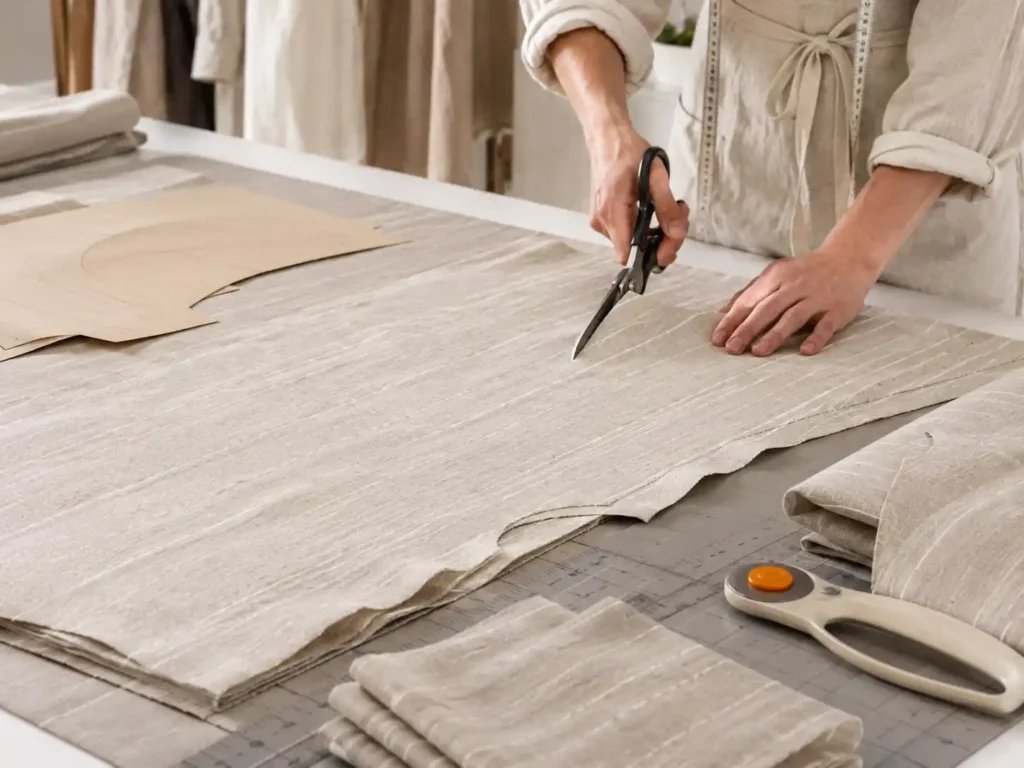
Skirt panels are cut after fabric inspection, relaxation, and marker approval. Pattern pieces are arranged according to grain, print direction, size ratio, and usable width, then spread and cut in controlled layers. Cut components are checked, numbered, and bundled by size, color, and shade lot.
Fabric Inspection
Bulk fabric should be inspected before spreading so the cutting team can confirm that the rolls match the approved standard and are suitable for use. The review normally covers usable width, roll length, shade variation, holes, stains, weaving or knitting faults, print defects, bowing, skewing, nap direction, stretch direction, surface damage, and the results of agreed shrinkage or relaxation tests.
Shade control is especially important for maxi skirts because the garment contains large, uninterrupted panels. A small color difference that is difficult to notice in a swatch can become obvious across the full length under daylight or retail lighting. Rolls should be grouped where necessary, and the front, back, waistband, and related components of one garment should come from compatible shade lots.
Print direction must also be confirmed before marker planning. Florals, border prints, animal patterns, stripes, checks, and abstract motifs may have a clear top and bottom. Reversing one panel to improve fabric efficiency can make the completed garment look visibly inconsistent. The accepted matching rule should be decided before cutting because perfect matching, directional consistency, and random placement require different consumption levels.
Inspection findings should be communicated before the marker is released. If part of a roll contains defects, the cutting plan may avoid those areas or separate them for smaller components. Discovering an unusable section after cutting creates far more waste and disruption than identifying it while the fabric is still in roll form.
Relaxation and Spreading
Relaxation allows tension introduced during knitting, finishing, rolling, or transport to reduce before cutting. Knits, stretch wovens, rayon, and viscose are particularly sensitive because they can change dimension after being unrolled. The purpose is to cut the fabric in a stable condition, not to apply one fixed waiting time to every material regardless of its construction and test results.
During spreading, operators control fabric tension, ply alignment, edge alignment, face direction, nap, shade separation, defect avoidance, and the number of layers. Stretch fabric should not be pulled across the table because cut panels may contract after release. Slippery satin and lightweight chiffon require lower tension and careful handling because the layers can move against one another and create inaccurate edges or misplaced notches.
The useful lay height depends on fabric stability, cutting equipment, order quantity, and the accuracy required. A higher lay can improve productivity, but soft, thick, slippery, or unstable materials may need fewer plies. Placement prints, border patterns, and garments requiring exact motif positioning may need single-layer cutting, which uses more time but gives the operator full control over each visible panel.
Shrinkage results should already be reflected in the cutting plan. When a material changes dimension after the approved care process, the factory may need pattern compensation or controlled pre-treatment. Ignoring the result because the unwashed sample looks correct can produce bulk skirts that finish shorter, narrower, or less balanced after pressing or laundering.
Marker Efficiency
A marker arranges pattern pieces across the available fabric width. Effective planning reduces waste while respecting grain, nap, print direction, matching, and the planned size ratio. The lowest numerical consumption is not automatically the best marker. A layout that rotates satin panels, reverses a one-way print, or moves a border motif away from the intended hem position can save fabric but create an unacceptable garment.
Material efficiency depends on usable width, panel shape, hem sweep, size mix, grain direction, print repeat, symmetry, and matching requirements. Straight styles are usually easier to nest than circular or heavily flared skirts. Large curved sections leave more unused areas between pieces, while border prints can force all lower edges into the same part of the cloth and make normal size nesting impossible.
The marker must use the final approved pattern version. A change to skirt length, slit height, waistband shape, pocket position, or panel seam can alter consumption and the number of pieces that fit across the width. Releasing an outdated marker is one of the most expensive document-control errors because the cut work may be technically neat but no longer match the approved sample.
For multi-size orders, the marker should reflect the actual purchase ratio rather than an assumed assortment. A size curve heavily weighted toward middle sizes may nest differently from an even ratio. Marker planning therefore connects product engineering with purchasing, fabric ordering, and production control rather than operating as a separate cutting-room calculation.
Cutting and Bundling
After spreading, the lay is cut according to the approved marker. Operators maintain accurate edges, notches, drill points, and internal reference marks for panels, tiers, waistbands, pocket bags, facings, belt loops, slit components, linings, and interfacing. A notch that is missing or misplaced can affect pleat position, gathering balance, pocket height, or panel alignment several operations later.
Cut components are checked for shape, count, visible defects, and compatibility before they move to sewing. Bundles are then prepared by purchase order, style, color, size, and shade lot. Numbering helps keep panels cut from the same layer together, which is valuable when slight shade differences or print variation exist within the approved fabric.
A bundle ticket commonly records the order, style, size, color, quantity, cutting lot, fabric roll, and destination sewing line. This traceability becomes practical when a repeated problem appears. The factory can identify the affected group rather than stopping every garment or searching through unrelated sizes and colors without direction.
Trims should also be prepared before line loading. Elastic, zippers, buttons, labels, and interfacing must match the approved specifications and quantities. Missing trims interrupt production flow, while temporary substitutions can create inconsistent bulk garments when they are used without formal approval. Accurate cutting and organized bundling create the foundation that later sewing and inspection cannot replace.
How Are Maxi Skirts Sewn?
Maxi skirts are sewn in a controlled sequence that normally begins with pockets, pleats, darts, or panel preparation. Main seams, waistband, closure, lining, slit, and hem are then completed according to the approved sample, with close attention to fabric handling, symmetry, movement, and finished length.
Waistbands and Closures
Waistband construction determines the upper fit and much of the skirt’s stability. Elastic, fixed, contoured, drawstring, and wrap waistbands each require a different operation sequence. An elastic casing should have even width and balanced gathering, while the joined elastic must remain flat and untwisted inside the channel. Quarter marks are often used so fullness is distributed consistently around the body.
Fixed waistbands may include outer fabric, interfacing, and an inner facing or lining. Interfacing should support the structure without making it unnecessarily rigid. Bonding temperature, time, and pressure need testing because visible bubbling or delamination can appear after pressing or care. The upper edge should remain smooth, and the waistband seam should not stretch while it is being attached to the skirt body.
Contoured waistbands follow the body through different curves at the upper and lower edges. Match points help the operator join them without forcing one section into another. Closures may include invisible zippers, standard zippers, buttons, hooks, snaps, ties, or wrap systems. Invisible zippers are particularly sensitive on satin and lightweight fabric because uneven feeding creates waves and poor top alignment is immediately visible.
The closure should be tested through normal use. A zipper must move smoothly through the waist and hip area without catching the lining. Hooks should remain secure under reasonable tension, and an elastic waist should extend enough to pass the hip and then recover. These practical checks have a direct effect on comfort, durability, and return risk.
Panels and Fullness
Long panel seams require controlled feeding because a small amount of stretching over a long distance can create a visible difference at the hem. Side seams should remain vertical when the skirt is worn. Twisting may come from off-grain cutting, mismatched panel lengths, incorrect machine feeding, or uneven pressing. Operators should align notches and balance marks rather than matching only the upper and lower edges.
Gathered skirts need even distribution between planned match points. Fullness concentrated randomly around one seam can make one area look heavy, pull the waistband, and lift part of the hem. Tiered styles add the weight of wider lower sections, so each horizontal seam must remain level and secure without becoming unnecessarily thick or stiff.
Pleated skirts require precise folding, direction, and control before the waistband is attached. If the total pleat take-up is wrong, the finished waist measurement will not match the specification even when every fold appears neat. Paneled designs require equally accurate joining so the vertical seam lines create a balanced silhouette instead of drifting toward the front or back.
Printed and striped fabrics add a visual requirement to the sewing process. The agreed matching standard should remain consistent across bulk production. Some patterns need accurate alignment at the side seams, while random all-over prints may only require correct direction and avoidance of obvious motif clustering. The production team should know the approved rule before operators begin joining panels.
Linings and Pockets
Linings are usually assembled as a separate internal skirt and attached at the waistband, facing, or zipper area. They need enough ease to move independently from the shell. A lining that is too tight can pull the outer fabric upward, while one that is too full may twist, bunch, or become visible through lightweight material. Its finished length should follow the approved appearance and movement requirements.
At slits, the lining can remain free, be shaped around the opening, or be attached with controlled tacks. The chosen method should allow walking and sitting without exposing the lining unexpectedly. In transparent styles, the lining is part of the visible design, so its color, length, shape, and seam position should be reviewed in product photography as well as during fitting.
Pocket construction affects both function and silhouette. Side-seam pockets need sufficient depth and reinforcement at the opening, but they should not add excessive bulk at the hip. If positioned too high or too far forward, they can distort the side seam. Patch pockets require symmetrical placement and reinforcement, while fine chiffon, satin, and crepe may need lighter pocketing materials that do not show through the shell.
Brand, size, and care labels are often attached during these operations. Their placement should remain consistent and should not interfere with waistband comfort, zipper movement, or lining attachment. A technically accurate skirt can still fail a retail program when the wrong label, size identification, fiber content, or care instruction is sewn into the garment.
Hem Finishing
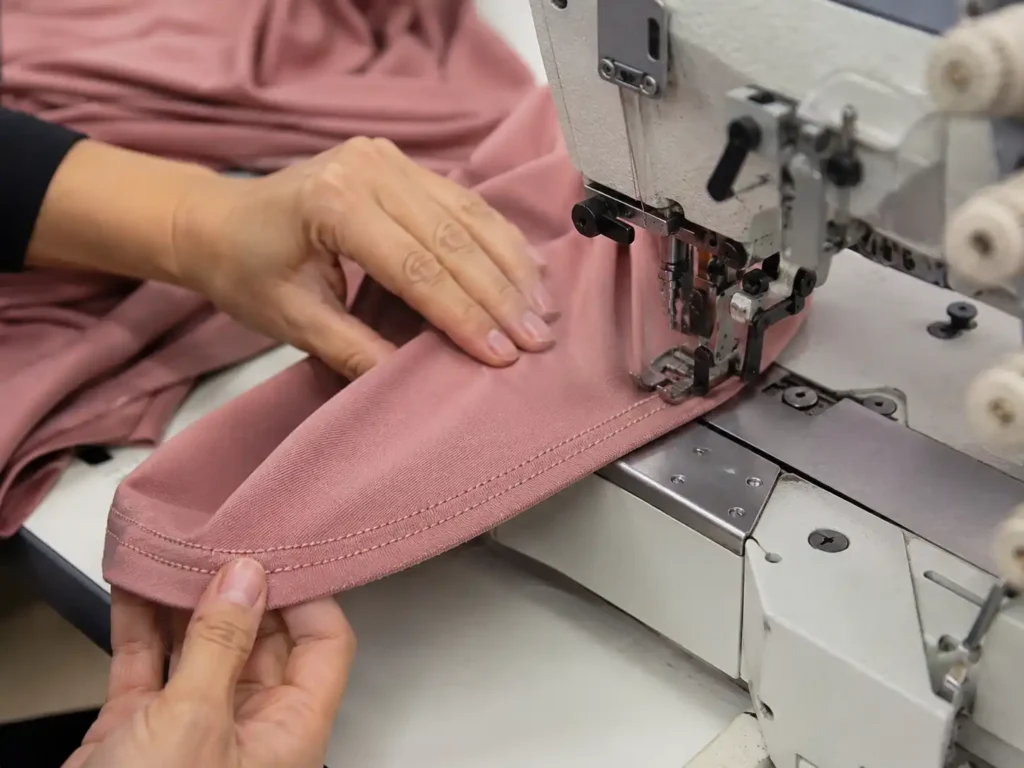
The hem is one of the final operations and one of the most visible quality points. The suitable method depends on fabric, shape, and product position. Chiffon often uses a 3-6 mm rolled or baby hem, satin may use a narrow fold, blind hem, or facing, and jersey usually needs a stretch-compatible coverstitch or similar finish. Structured skirts can use a deeper hem to add stability and weight.
Circular and bias-cut skirts should often be allowed to hang before final leveling. Different parts of the hem sit on different grain directions and may grow by different amounts. Hemming immediately after assembly can leave a wavy or uneven line once the fabric relaxes. After hanging, the garment can be measured or leveled against the approved length before the final edge is completed.
Pressing conditions must suit the material. Excessive heat can shine, flatten, scorch, or mark satin and synthetic fabrics. Velvet, sequins, pleats, and textured materials need additional protection to avoid crushing or imprinting. Pressing should shape seams and remove production creases without changing the intended surface or stretching the long skirt panels.
The finished hem should be checked while the garment is hanging, not only on a table. A skirt can measure correctly when laid flat and still appear uneven on the body because of seat shape, fabric growth, side-seam movement, or panel imbalance. This final visual review is particularly important for floor-length occasionwear and fluid resort styles.
How Is Bulk Quality Controlled?
Bulk quality is controlled through fabric inspection, cutting checks, inline sewing inspection, measurement review, final inspection, and packing verification. Maxi skirts require particular attention to waist and hip measurements, seam balance, slit height, lining coverage, print direction, closure quality, labeling accuracy, and an even finished hem across the full size range.
Inline Inspection
Inline inspection identifies problems while garments are still moving through production, when process changes remain practical. The first completed pieces from the sewing line should be compared with the approved sample, pattern, and measurement chart. Inspectors normally review waistband width, waist and hip measurements, closure alignment, side-seam position, stitch condition, pleat depth, gathering, tier level, pockets, slit reinforcement, lining, and visible puckering.
Critical operations may be checked more frequently than routine seams. Invisible zippers, curved waistbands, pleats, slits, and satin sewing often need closer monitoring because one incorrect machine setting can repeat the same defect quickly. The purpose is not only to separate an imperfect piece; the team should identify whether the cause is tension, handling, unstable fabric, inaccurate components, or an unclear construction instruction.
Measurement checks must follow the approved method. The garment should be placed without stretching or compressing the fabric. Elastic-waist designs may need both relaxed and extended readings. When the bulk material behaves differently from the sample yardage, the factory may need to adjust handling, stabilization, or pressing without changing the accepted fit and appearance.
Inline records show whether defects are isolated, linked to one operation, or spreading across the line. They also give the production team evidence for corrective action. Repairing individual skirts without correcting the source allows the same zipper wave, uneven gather, or twisted seam to continue until the cost and delay become much greater.
Measurement and Appearance
Final measurements confirm that the bulk garment matches the approved size chart within the agreed tolerances. Key points usually include waist, hip, waistband height, center-front length, center-back length, side length, slit height, lining length, and hem sweep. The garment should be allowed to cool after pressing before measurement because warmth and steam can temporarily change the dimensions of some fabrics.
Appearance checks cover straight side seams, an even hem, a smooth waistband, balanced gathering, symmetrical pleats, correct slit position, clean closure installation, lining coverage, print direction, shade consistency, and pressing quality. Long garments should be viewed while hanging because balance and twisting are difficult to judge accurately when the fabric is folded or lying flat.
For printed skirts, motif direction and panel matching should follow the approved standard. Perfect alignment may not be required for every all-over print, but the acceptance rule should be clear. One-way designs must remain upright, border motifs should sit at the intended level, and obvious motif concentration near the center front or seat should be avoided when the approved sample establishes a more balanced appearance.
The inspection team should also review function. The wearer must be able to walk, sit, use the zipper, place items in the pockets, and move without the lining pulling or the slit opening beyond the intended coverage. A skirt can meet the flat measurements yet still create a practical fit problem if these movement checks are ignored.
Final Inspection
Many commercial apparel programs use sample-based final inspection rather than checking every finished garment through the same complete procedure. General Inspection Level II with AQL 2.5 for major defects and AQL 4.0 for minor defects is a common apparel reference, although each client can set a different plan based on product risk, order size, destination market, and internal quality policy.
Defects are generally classified as critical, major, or minor. A critical defect creates a safety, regulatory, or serious legal risk. A major defect affects function, appearance, saleability, labeling accuracy, or normal use. A minor defect is less serious but remains outside the approved workmanship standard. The agreed classification should be available before inspection so decisions are consistent rather than subjective.
For maxi skirts, major defects may include a broken closure, incorrect waist measurement, severe hem imbalance, twisted seams, open stitching, a wrong size label, visible shade mismatch, poor slit reinforcement, or a lining that restricts movement. Minor defects may include small thread ends or light pressing marks, depending on their location and severity. The final decision should reflect the approved sample and written standard.
Final inspection also checks order accuracy. A well-sewn skirt placed in the wrong size polybag, carrying an incorrect barcode, or packed in the wrong color assortment creates a warehouse and retail problem. Workmanship, labeling, assortment, and documentation must therefore be reviewed as one complete delivery system rather than as separate departments.
| Inspection Stage | Main Checks | Typical Evidence |
| Fabric | Shade, defects, width, shrinkage | Roll report and test record |
| Cutting | Pattern version, notches, quantity, shade | Cutting and bundle report |
| Inline Sewing | Measurements and workmanship | Line inspection record |
| Finishing | Threads, stains, pressing, hem balance | Finishing checklist |
| Final | Appearance, function, measurements | Final inspection report |
| Packing | Labels, barcode, assortment, cartons | Packing audit |
From Approval to Repeat Orders
Packing protects the finished skirt and preserves the approved presentation during transport. Maxi skirts contain more material than shorter garments, so careless folding can create deep creases, distort waistbands, or crush pleats. Satin, velvet, sequined, and permanently pleated styles may need tissue, protective layers, controlled folding, or hanging shipment depending on the retail program and freight plan.
Packing checks should confirm the brand label, size label, care label, hangtag, barcode, polybag sticker, color and size assortment, carton quantity, carton marks, and folding method. Cartons should be filled firmly enough to remain stable without compressing the garments. Overfilled cartons increase wrinkles and pressure marks, while underfilled cartons can collapse or allow products to shift during handling.
A reliable production partner should retain the approved pattern, measurement chart, fabric reference, trim details, workmanship instructions, label files, and packing standard for future orders. These records reduce repeated development work and improve consistency when a successful skirt returns in a new color, print, fabric, or seasonal collection. Repeat production becomes faster only when the original technical information remains controlled and accessible.
Jinfeng Apparel supports custom maxi skirt development from technical review and fabric sourcing through sampling, bulk production, quality control, private-label packing, and export coordination. The manufacturing network includes six owned women’s fashion factories, more than ten long-term satellite partners, over eighteen sewing lines, dedicated sample rooms, senior pattern makers, and a regular monthly capacity exceeding 100,000 garments across supported product categories.
The standard MOQ starts from 200 pieces per style and color, subject to fabric availability, custom dyeing or printing, trims, construction complexity, packaging, and production scheduling. Brands preparing a maxi skirt program can send a tech pack, reference sample, sketch, target fabric, size range, estimated quantity, and launch schedule for a practical review of pattern structure, material suitability, sampling requirements, quality controls, and bulk manufacturing options.