Skip to content

A fashion sketch can be persuasive in seconds, yet the same design may become surprisingly difficult once fabric, pattern, sewing, fit, cost, and delivery are placed on the table. A low back may stretch out of shape, a satin zipper may ripple, or an elegant corset detail may require so many operations that the planned retail margin disappears. These failures usually begin long before the production line starts. They begin when attractive design decisions are approved without enough attention to how the garment will actually be made, graded, inspected, packed, and repeated.
Design for manufacturing in fashion is the process of refining a garment so it can be produced consistently at the intended fit, appearance, quality, cost, quantity, and lead time. It connects creative design with fabric behavior, pattern engineering, construction methods, trims, equipment, tolerances, sampling, quality control, and bulk-production realities.
Good DFM does not flatten creative ideas into basic products. It protects the idea by solving hidden technical problems before they become expensive. Picture a fitted mesh dress that looks flawless in the first sample, then imagine the lining shrinking differently, the neckline growing during sewing, and the graded sizes exposing more skin than intended. The difference between an attractive sample and a reliable commercial style lies in the decisions explored below.
What Is DFM in Fashion?
Design for manufacturing in fashion means reviewing and refining a garment during development so its design, materials, patterns, construction, cost, and quality standards can be reproduced reliably in bulk. It turns creative direction into clear production decisions without unnecessarily weakening the garment’s visual identity, comfort, or commercial value.
Definition in Practice

A garment is not truly manufacturable simply because one highly skilled sample machinist can make an attractive prototype. Commercial manufacturability means the same style can be repeated across production lines, fabric rolls, colors, sizes, and shipment batches without losing its approved appearance, fit, comfort, or workmanship. That standard is harder to achieve than making one visually successful sample under close supervision.
Consider a satin mini dress with a fitted waist, gathered bust, invisible zipper, adjustable straps, and full lining. Each feature appears straightforward in a sketch, but together they create a chain of technical questions. The satin may pucker around the zipper, the gathered bust may vary between operators, the lining may pull against the shell, and the straps may stretch after hanging. DFM examines these interactions before bulk production magnifies them.
A practical review looks at fabric stability, pattern balance, seam construction, sewing sequence, reinforcement points, tolerance limits, pressing, and inspection criteria. The goal is not merely to make the garment sewable. It is to make the intended result repeatable through cutting, assembly, finishing, packing, transportation, wear, and reasonable care.
DFM and Fashion Design
Fashion design establishes the visual and emotional identity of a garment. It determines silhouette, proportion, color, texture, surface detail, occasion, and customer appeal. DFM asks how those decisions behave when translated into pattern pieces, fabric consumption, construction operations, grading rules, tolerances, labor time, and inspection points. The disciplines overlap, but their questions are different.
A designer may choose an asymmetric one-shoulder neckline because it creates a memorable shape. The technical review then asks whether the neckline will stay flat, whether the unsupported side needs internal reinforcement, how the armhole will move, and whether grading will shift the visual balance. The visible feature remains, while the internal structure becomes more reliable.
Weak DFM often appears at two extremes. One follows the sketch literally even when the product becomes unstable or too expensive. The other removes so many details that the garment loses its identity. Strong DFM finds a more useful middle path: preserve the customer-facing design while improving hidden structures, material choices, seam methods, pattern balance, or tolerances.
DFM and the Tech Pack
A tech pack records how a garment should be made, while DFM is the analysis that determines whether those instructions are practical, complete, and suitable for production. A detailed file may contain technical drawings, measurements, tolerances, fabrics, trims, seam types, labels, and packaging requirements, yet still include choices that conflict with one another.
A tolerance may be too narrow for a fluid stretch fabric. A seam finish may create excessive thickness. A custom trim may require a supplier minimum far above the planned order. A construction note may not match the technical drawing. DFM tests these relationships and asks whether the fabric supports the silhouette, the pattern supports the sewing sequence, and the final cost remains commercially realistic.
After every approved sample correction, the tech pack should be updated. Relying on decisions scattered across email threads, chat messages, photographs, and handwritten notes increases the risk that production follows an obsolete instruction. The approved physical sample and the latest technical document should describe the same garment, using one controlled version.
Best Time to Start
DFM should begin when the design direction is clear but before fabrics, trims, patterns, and production methods are fully committed. At that stage, a change can still be made without wasting booked material, reworking approved patterns, delaying labels, or disrupting a launch calendar. The later a major conflict is discovered, the more departments and costs it touches.
A useful review normally appears at several checkpoints: initial sketch review, fabric and trim selection, pattern development, first sample evaluation, fit correction, revised sample approval, PP preparation, and the final production handover. Each checkpoint should close a different group of risks rather than repeat the same general comments.
Early DFM also improves quotation accuracy. A front-view image rarely reveals lining, internal support, seam finishing, fabric direction, handwork, pressing, testing, quality requirements, or packaging. When those details remain undefined, the first price is usually provisional. Manufacturability is therefore part of product development, not a last-minute factory check after the important decisions have already been made.
Which Design Choices Affect Manufacturing?
Silhouette, fit, seam placement, pattern-piece count, closures, linings, trims, embellishments, tolerances, and finishing methods all affect garment manufacturing. Each choice changes material use, sewing time, equipment needs, defect risk, inspection difficulty, and the consistency that can be achieved across sizes and bulk quantities.
Silhouette and Fit
A silhouette determines where a garment needs ease, where it must hold its shape, and how sensitive it will be to measurement variation. Loose resort dresses often tolerate small differences more easily than fitted garments, although they still require correct balance and proportion. Bodycon dresses, corset styles, strapless designs, and fitted jumpsuits leave much less room for error.
Structured silhouettes may require boning, cups, fusible materials, underlining, stay tape, elastic support, or multiple lining layers. Draped garments depend on fabric weight, bias direction, and controlled tension. Asymmetric garments need careful balancing because one side may carry more load than the other. The outer shape and the hidden support system must be developed together.
A practical review asks how the wearer puts on the garment, where movement is required, which points carry tension, whether the fabric supports the intended form, and whether the silhouette remains wearable across the size range. A design may look excellent while a model stands still, yet fail during sitting, walking, or normal arm movement.
Construction Complexity
Every visible detail creates one or more production operations. A ruched panel may require marking, gathering, stabilizing, attaching, balancing, pressing, and visual inspection. A corset bodice may involve multiple shaped panels, boning channels, cups, lining, reinforcement, and controlled topstitching. Operation count matters, but repeatability matters even more.
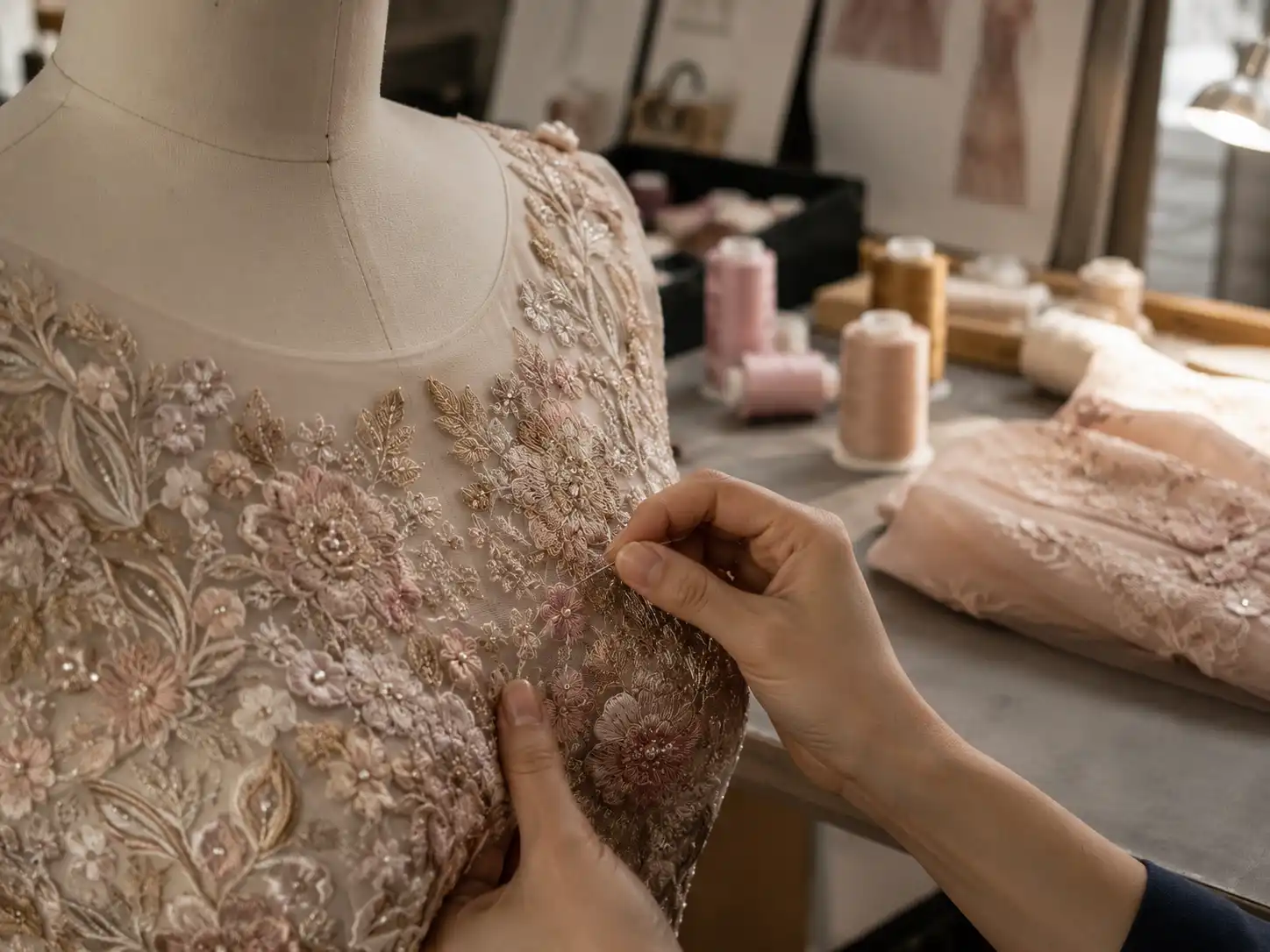
A difficult feature can be commercially reasonable when it has a clear method and measurable standard. A visually simple feature can become risky when its placement depends entirely on operator judgment. The purpose of DFM is not to eliminate labor-intensive details automatically, but to identify which ones create genuine product value and how they can be controlled.
The table below uses practical inspection references rather than universal tolerances. Final limits should always reflect the material, garment category, approved sample, and brand standard. A five-millimeter strap difference may be noticeable on a delicate fitted dress but irrelevant to a wide decorative tie, so technical judgment remains essential.
| Design Feature | Typical Production Effect | Main Control Point | Indicative Inspection Focus |
| Adjustable straps | Extra components and attachment steps | Finished strap length | Pair difference often controlled within about 5 mm |
| Ruching | Marking and controlled gathering | Gather ratio and endpoints | Density, direction, and symmetry |
| Corset boning | Channels, lining, and support work | Position and comfort | Boning ends, symmetry, and breakage |
| High slit | Reinforcement and alignment | Slit height | Left-right balance and seam strength |
| Cut-out panel | Edge stabilization and shaped sewing | Opening shape | Stretching, exposure, and seam flatness |
| Lace placement | Motif matching and careful cutting | Motif position | Alignment, pairing, and damaged edges |
| Sequin fabric | Special handling and seam preparation | Seam treatment | Missing sequins, sharp edges, and bulk |
| Pleats | Accurate marking and pressing | Pleat width and direction | Consistency across the garment |
Closures and Trims
Closures affect fit, dressing ease, weight, sewing sequence, and durability. Invisible zippers create a clean appearance but may ripple in lightweight satin or become difficult to operate through thick seam intersections. Exposed zippers add visual weight and require accurate alignment. Buttons require spacing, buttonholes, reinforcement, and spare-component planning.
Hooks, snaps, lacing, elastic, buckles, sliders, and decorative hardware create different risks. A metal component may be too heavy for a delicate fabric, a buckle may have sharp edges, or an attractive trim may fail after repeated movement. Visual approval is only the first step; attachment strength, skin contact, finish durability, and replacement availability also matter.
Supply continuity deserves equal attention. Standard components are often easier to reorder than custom-molded, plated, or logo-bearing pieces. Special colors and finishes may require higher minimum quantities and longer lead times. A design becomes more secure when the team knows how a trim will be attached, inspected, tested when needed, and sourced again for repeat orders.
Tolerances and Repeatability
Tolerances define the acceptable difference between the approved specification and the finished garment. They are necessary because fabric cutting, sewing, pressing, and measurement naturally create variation. Their purpose is not to excuse weak workmanship, but to distinguish critical fit requirements from unrealistic precision that the chosen material and process cannot maintain.
Critical points generally need tighter control than noncritical areas. Strap length, bust width, neckline depth, rise, slit height, and bodice length can alter fit or coverage quickly. A wide skirt hem or oversized sleeve may allow more variation without affecting wearability. Applying one tolerance to every measurement is administratively easy but technically poor.
Measurement instructions should explain whether the garment is relaxed, stretched, or laid flat; where the tape starts and ends; whether curves are followed; and whether gathers or elastic are extended. Numerical limits also need visual standards. A seam can fall within measurement tolerance and still look crooked, which is why repeatability depends on both numbers and approved appearance.
How Do Fabrics and Patterns Shape DFM?
Fabric determines how a garment drapes, stretches, recovers, shrinks, sews, presses, and wears. Patterns determine how that material is shaped and assembled. DFM aligns fabric behavior with grain direction, seam placement, ease, grading, marker efficiency, construction, and inspection so the approved result can be repeated in production.
Fabric Behavior

Fabric choice should be evaluated through more than color, composition, and hand feel. Two fabrics with similar descriptions can behave differently during cutting and sewing because of differences in weight, yarn structure, finish, stretch, recovery, slippage, and surface stability. These differences directly influence pattern measurements, seam methods, pressing, and inspection.
A bodycon dress needs more than stretch; the fabric must recover after movement. A satin slip dress needs more than shine; the material must remain stable at seams and resist excessive puckering. A chiffon maxi dress needs controlled transparency, lining compatibility, and balanced hanging. A mesh dress may require different measurements from a woven version because shell and lining stretch differently.
Common commercial references such as fabric width, GSM, shrinkage, stretch percentage, recovery, bow, skew, and shade variation help turn subjective material approval into usable production information. They are not universal pass-fail rules. The correct target depends on silhouette, care method, size range, end use, and the approved sample.
| Fabric Factor | Common Commercial Reference | DFM Effect |
| Usable width | Often around 140-150 cm for many apparel fabrics | Changes marker layout and garment consumption |
| Shrinkage | Many programs target about 3% or less after the specified care test | Affects pattern allowance and finished measurements |
| Stretch direction | Two-way or four-way, recorded as percentage extension | Influences ease, openings, and size specifications |
| Recovery | Checked after controlled stretching and relaxation | Poor recovery can cause growth and bagging |
| Fabric weight | Recorded in grams per square meter (GSM) | Affects drape, opacity, seam load, and support |
| Bow and skew | Measured across usable fabric width | Can create twisting or off-grain panels |
| Shade variation | Checked roll to roll and within each roll | Requires shade grouping during cutting |
| Surface direction | Relevant to velvet, sequins, brushed fabrics, and prints | May require one-way cutting and higher consumption |
Pattern Efficiency
Patterns affect fit, construction, and material consumption at the same time. A pattern may fit well but use fabric inefficiently. Another may nest efficiently in the marker but create awkward seam positions or difficult sewing access. A commercially sound pattern balances body shape, design lines, assembly sequence, fabric behavior, and cutting efficiency.
Pattern-piece count is one of the first factors to examine. Additional panels can improve shaping or create a distinctive design, yet they also increase cutting time, bundle handling, seam length, matching points, and inspection work. Each piece should have a clear visual, structural, or fit-related purpose rather than existing simply because it appeared in an early sketch.
Marker utilization varies widely. Simple balanced styles in non-directional fabric can achieve high efficiency, while asymmetric, bias-cut, printed, lace-matched, velvet, or large-panel garments may use considerably more material. In many commercial programs, marker efficiency may range roughly from the mid-70% area to above 90%, but fabric width, size ratio, and matching requirements determine the actual result.
Grading Across Sizes
A garment is not production-ready because the development size fits correctly. The graded pattern must preserve balance, coverage, proportion, and comfort across the entire size range. Simple grade rules may work for relaxed products, while fitted or structured garments often require more considered changes to maintain the intended shape.
Increasing bust width may also require changes to cup position, dart intake, neckline shape, armhole depth, strap placement, or bodice length. Increasing the hip on a fitted dress can alter side-seam shape, back balance, and slit position. Not every detail should grow at the same rate, and some hardware or decorative elements may remain one fixed size.
For technically sensitive products, reviewing at least one smaller and one larger size in addition to the development size can expose grading problems before bulk cutting. This is especially useful for corset dresses, fitted jumpsuits, bodycon styles, low necklines, and garments with limited coverage, where a small proportional error becomes highly visible.
Sensitive Materials
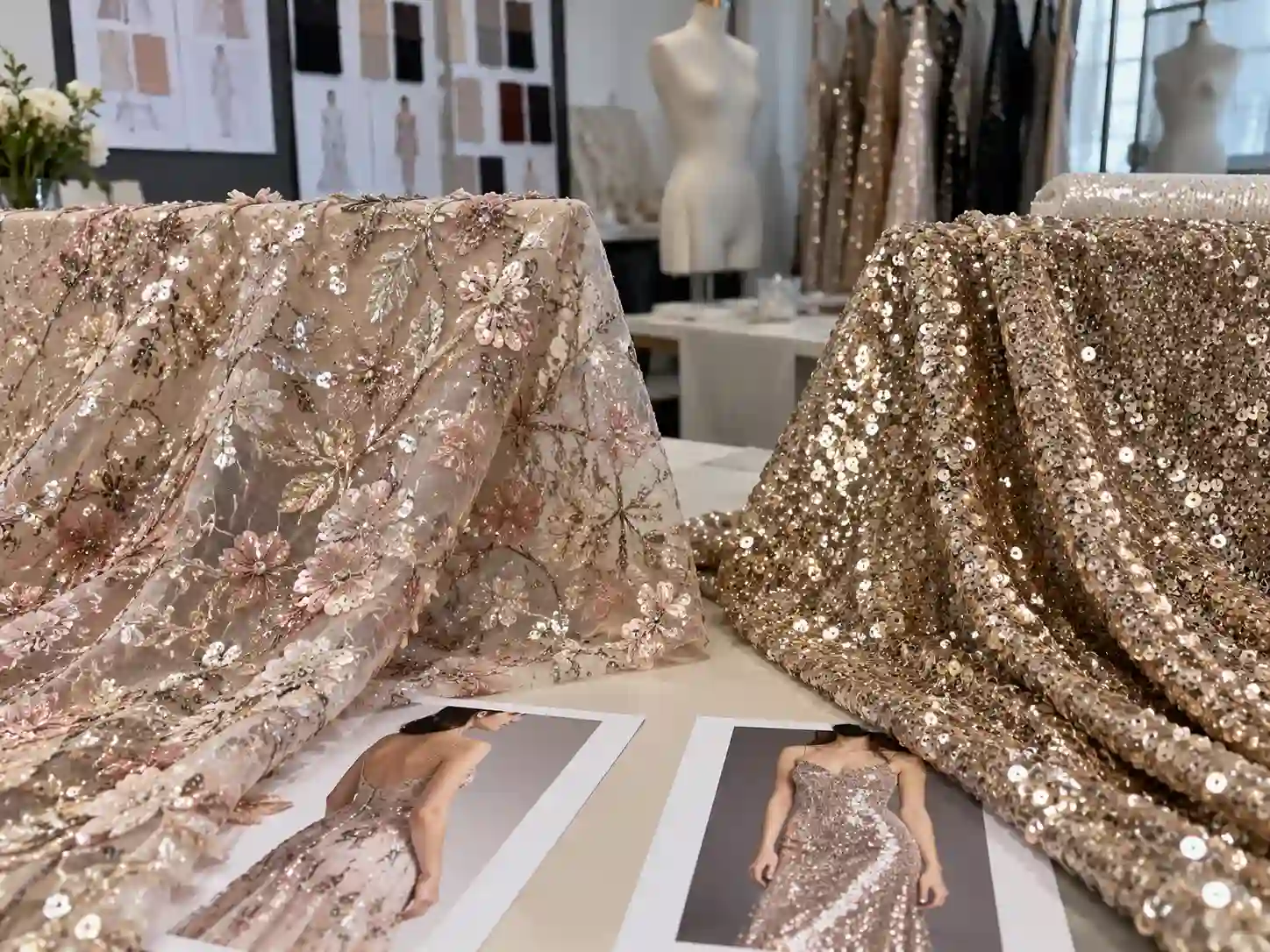
Some materials need additional controls because small production mistakes remain highly visible. Satin can show seam puckering, needle marks, pressing shine, and changes in gloss direction. Lace may need motif placement, matched seams, hand trimming, and careful lining. Sequins can increase seam thickness, break needles, irritate skin, and damage neighboring garments during packing.
Mesh behaves differently depending on whether it is stable, mechanically stretchy, or highly elastic. Stretch mesh may distort at necklines and armholes unless stabilized. Chiffon can shift during cutting and create uneven hems after hanging. Velvet requires consistent nap direction and protection from crushing, while bias-cut fabric may grow after assembly and need a controlled hang period.
Cutting trials, needle and thread tests, seam-slippage checks, pressing tests, lining compatibility checks, hang tests, and packing trials can prevent costly assumptions. The most attractive textile is not automatically the most suitable one. A strong material decision balances appearance, touch, sewing performance, availability, minimum quantity, repeatability, and expected use.
How Does DFM Work in Product Development?
DFM works through a sequence of technical review, material confirmation, pattern development, sampling, fitting, costing, and production approval. Each stage should close specific risks and update the technical record, preventing unresolved decisions from moving silently from the design stage into bulk manufacturing.
Initial Inputs

A DFM review can begin from a complete tech pack, but it can also start with a sketch, reference sample, line sheet, moodboard, product photograph, measurement chart, or fabric swatch. The starting information does not need to be perfect. It does need to communicate enough detail for the development team to understand the product and identify missing decisions.
Useful inputs include the product category, intended occasion, front and back views, non-negotiable design features, target fabric, expected quantity, size range, target market, preferred trims, label requirements, delivery window, and intended price position. Quantity should be discussed early because it influences material sourcing, trim minimums, production method, and costing.
The team should distinguish between essential brand features and flexible technical details. A cut-out shape, corset line, drape direction, or special texture may carry the product’s identity, while an internal seam finish or support method may be open to adjustment. That distinction allows technical solutions without weakening the reason customers would choose the garment.
Sample Sequence
Each sample stage should answer a different question. Problems arise when teams approve a sample for appearance without confirming whether it represents production fabric, or when a fit sample is treated as a final bulk reference. Clear sample naming and purpose prevent approval decisions from being made on the wrong basis.
A simple style with a complete brief may need fewer development rounds, while a structured, fitted, embellished, or unfamiliar design may need more. The objective is not to minimize sample count at any cost. It is to ensure every round closes specific issues and produces updated, measurable instructions for the next stage.
Sample comments should be specific enough for a pattern maker or machinist to execute. ‘Improve the waist’ offers little direction. ‘Reduce the half-waist by 10 millimeters, raise the waist seam by 8 millimeters, and keep the side seam vertical’ creates a testable correction and makes the next review more objective.
| Sample Stage | Main Question | Typical Output |
| Prototype or first sample | Has the design been interpreted correctly? | Initial structure, proportions, fabric response, and construction |
| Fit sample | Does the garment fit and move correctly? | Measurement, balance, comfort, and pattern corrections |
| Revised sample | Were requested changes executed correctly? | Confirmed corrections and updated specifications |
| Size-set sample | Does grading work across selected sizes? | Grade-rule and proportion adjustments |
| Photo or sales sample | Is the visual presentation suitable? | Appearance and finish for marketing or selling |
| PP sample | Is the production standard fully approved? | Final fabric, trims, workmanship, labels, and measurements |
| Golden sample | What physical reference will bulk follow? | Retained approval standard for quality comparison |
PP and Golden Samples
The pre-production sample should represent the approved product closely enough for production teams to follow it without guessing. It normally confirms final fabric, lining, trims, color, measurements, construction, label position, finishing, and important visual details. A PP sample is not simply another attractive showroom sample; it is a manufacturing reference.
Major questions should not remain open at PP approval. If fit is disputed, fabric is temporary, or the zipper and lining have not been confirmed, the style is not ready merely because it photographs well. Approving an incomplete reference pushes uncertainty into the production line, where changes become slower, more expensive, and harder to control.
A golden sample is the retained physical standard used to compare bulk production. Physical references are especially useful for ruching density, drape direction, lace placement, pleat shape, pressing, padding shape, and overall balance. The sample does not replace written specifications; the strongest control combines a signed sample with a complete, current technical file.
Documentation and Handover
Every approved change should appear in the production documents. Informal comments are useful during discussion but unreliable as the final source of truth. A controlled handover normally includes technical drawings, measurements, tolerances, grading rules, approved patterns, the fabric and trim BOM, construction details, labels, packaging, sample approval records, and inspection criteria.
Version control is essential. File names such as ‘final-new-revised-2’ do not provide enough clarity when design, merchandising, pattern, sewing, quality, and packaging teams work together. Documents should carry a visible version number, date, and approval status, and obsolete files should be removed from active use.
Before production begins, every department should receive the same approved information. A technically correct garment can still be delivered incorrectly if the care label, barcode, folding method, color assortment, or carton breakdown is wrong. The handover is complete only when design, manufacturing, quality, packing, and delivery requirements agree with one another.
How Does DFM Improve Fashion Production?
DFM improves production by identifying unclear, expensive, or unstable design decisions before bulk cutting. It supports more accurate costing, fewer avoidable sample revisions, clearer quality standards, lower rework, better material use, and more predictable lead times without unnecessarily weakening the garment’s appearance or customer value.
Cost Control
Most garment cost is determined before production begins. Main fabric, lining, consumption, pattern-piece count, seam length, trims, handwork, finishing, inspection, labels, and packaging are design-related decisions. Asking for a lower price after those elements have been approved rarely produces a good outcome unless the product is technically reviewed again.
Good cost control separates features that create customer value from hidden complexity that can be simplified. A panel that shapes the bust may be essential, while an unnecessary internal seam may not be. A stable standard trim may provide the same appearance as a custom component with less supply risk. Cost optimization should protect fit, durability, and the visible promise of the product.
The lowest quotation is not always the lowest final cost. An unstable fabric may create more defects, a simplified lining may increase returns because of transparency, and a weak zipper may create complaints. A better question is not merely how to make the style cheaper, but which changes preserve the intended result while reducing unnecessary material, labor, and risk.
| Cost Driver | Possible Cost Effect | Practical DFM Response |
| Main fabric consumption | Often the largest material cost | Improve marker layout or review panel shape and direction |
| Custom-dyed fabric | Higher minimums and added lead time | Use an approved stock color when commercially suitable |
| Complex lining | More material and sewing operations | Line the areas that need opacity, support, or comfort |
| Multiple panels | More cutting, sewing, and inspection | Retain panels that improve fit or visible design value |
| Hand-applied details | High labor time and variation | Use guides, templates, or controlled machine methods |
| Special trims | Tooling, minimums, and supply risk | Approve standard alternatives where appearance is preserved |
| Tight tolerances | More inspection and rejection risk | Apply tight limits only to critical measurement points |
| Difficult pressing | Slower finishing and visible defects | Test pressing method, temperature, and protection during sampling |
Fewer Revisions
Repeated sampling is often blamed on poor execution, yet many revision cycles begin with incomplete information or unresolved design decisions. A sample may be made before fabric is confirmed, the fit standard is clear, the lining is compatible, or the closure method has been considered. The result is a physical sample that reveals problems the brief should have addressed earlier.
DFM reduces avoidable rounds by identifying conflicts before sampling. Common examples include a low neckline that cannot maintain coverage, a stretch shell combined with a rigid lining, a heavy zipper in delicate fabric, a fitted bodice without enough opening, or a trim position that shifts badly during grading. Each early decision removes one source of later correction.
Clear comments also improve revision efficiency. Instructions should identify the measurement, amount, direction, and intended result. This allows pattern makers and sample machinists to understand not only what to change but why. The next sample can then be evaluated against a defined objective rather than a vague visual impression.
Quality and Lead Time

Quality is easier to control when the design uses realistic specifications and repeatable methods. Many defects begin before sewing starts: unstable material, contradictory measurements, unclear seam instructions, unapproved trims, or a sample that does not match the latest file. Inspection cannot fully repair a product whose technical foundation remains uncertain.
DFM builds quality into the style by defining critical measurements, fabric direction, stitch and seam requirements, reinforcement points, placement standards, pressing limitations, workmanship references, and inspection methods. Different materials require different priorities. Satin needs pucker and snag control, mesh needs edge stability, and bodycon products need consistent stretch recovery and body measurements.
Lead time improves for the same reason. Production moves more smoothly when fabric, trims, patterns, samples, labels, and packing are confirmed before the line starts. The fastest development is not always the one with the fewest sample days. A short technical review can prevent a much longer delay after hundreds or thousands of pieces are in process.
Waste and Rework
Waste in fashion manufacturing includes more than fabric offcuts. It includes rejected samples, damaged panels, unused trims, repeated pressing, reopened seams, incorrect labels, defective garments, excess packaging, and urgent freight caused by preventable delays. These losses often sit across different departments, so their combined cost is easy to underestimate.
DFM reduces waste by improving the decision before resources are committed. Better marker planning can lower fabric consumption. A more stable seam method can reduce puckering and repairs. Correct grading can reduce size-related defects. Early trim confirmation can prevent components from being purchased and later abandoned because they do not fit the construction or launch schedule.
Rework deserves particular attention because it can disappear inside an acceptable final shipment. A garment may pass inspection only after a zipper is replaced, a seam reopened, or a hem corrected. The quantity looks complete, while labor, risk, and lead time have increased. The most valuable savings are often the problems that never reach the production report.
How Do Brands Run a DFM Review?
Brands run an effective DFM review by bringing design, technical, sourcing, costing, pattern, production, and quality perspectives together before bulk approval. The review should identify risks, assign decisions, update documents, and confirm that materials, patterns, samples, prices, workmanship, packaging, and inspection requirements are ready for production.
Review Team
DFM works best when decisions are reviewed by people with different responsibilities. A fashion designer understands the intended look. A pattern maker understands fit and balance. A sample machinist sees construction difficulty. A merchandiser understands timing and cost, while a quality specialist considers repeatability and inspection. No single role sees every consequence of a design decision.
A practical review may include a designer, technical designer, product developer, pattern maker, sample machinist, fabric specialist, merchandiser, costing representative, production manager, quality representative, and packaging or compliance specialist. Not everyone needs to attend every meeting, but each material risk should reach someone qualified to judge it.
Manufacturers should be expected to question impractical details. A warning that a neckline needs support, a fabric has poor recovery, or a custom trim threatens delivery is not resistance. It is evidence that the design is being evaluated as a real product. The review should also separate non-negotiable brand features from technical details that may be adjusted safely.
Review Checklist
An effective review covers the garment from design intent through final packing, with each item marked as approved, rejected, under review, or awaiting information. The design review confirms silhouette and visible details. The fit review confirms measurements, ease, coverage, and movement. The material review confirms fabric performance, width, color, availability, and supplier requirements.
Pattern and construction review should confirm grain direction, seam allowances, notches, lining, support, closures, stitch types, and sewing access. Costing should be updated after major design or material changes. Quality teams should identify critical measurements, visual standards, inspection methods, and packing protection. The checklist is useful only when it leads to clear decisions.
Useful questions include which feature carries the greatest production risk, which measurement most strongly affects fit, whether bulk fabric and trims are confirmed, whether the approved sample matches the latest file, and whether the factory can inspect every important requirement. Open items need an owner and deadline, or they tend to survive until production.
Approval Discipline
Approval should be specific and traceable. Statements such as ‘looks fine’ or ‘please proceed’ leave too much room for interpretation. A proper approval identifies the sample type, review date, file version, measurement changes, construction decisions, material status, label status, photographs of critical details, and the person responsible for the decision.
When a design change affects several documents, all related records should be updated. Moving a zipper may affect the pattern, sewing sequence, measurement chart, drawing, cost, and inspection method. Updating only one page of a tech pack creates contradictions that different departments may interpret in different ways.
Approved samples also need control. A reference should be labeled clearly and protected from alteration. If a later sample replaces it, the previous version should be marked obsolete. This discipline does not slow the project; it prevents the same question from being reopened by different people and creates a reliable foundation for production and quality control.
Production-Ready Criteria
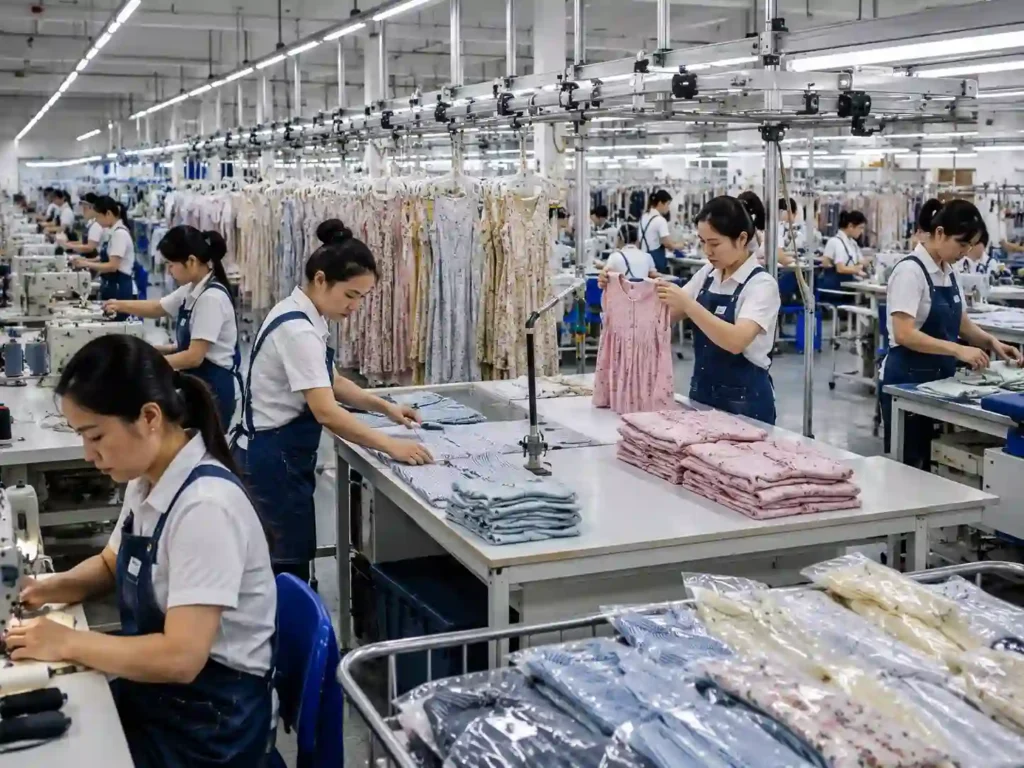
A style is production-ready when the factory can reproduce the approved product without relying on guesswork, memory, or undocumented conversations. Before bulk cutting, the project should normally have approved shell and lining fabrics, confirmed trims, final patterns, grading rules, measurements, tolerances, construction instructions, a PP sample, BOM, labels, packaging, quantities, schedule, and inspection criteria.
Production-ready does not mean that variation can never occur. It means expected variation has been considered and controlled through specifications, approved references, realistic limits, and process checkpoints. A final review should focus on consistency between the physical sample and written documents, because contradictions at this stage are a direct source of bulk errors.
For established custom womenswear programs, the production system must also match the design. Jinfeng Apparel’s verified structure includes six owned women’s fashion factories, more than ten long-term satellite partners, eighteen-plus sewing lines, six-plus flexible lines, two sample rooms, seven-plus senior pattern makers, twenty-plus sample machinists, and fifteen-plus QC inspectors. These resources support development, bulk production, quality control, private-label packing, and repeat-order management.
From Design Intent to Production-Ready Womenswear
Design for manufacturing is not a final check performed after creative work is complete. It is the practical conversation that keeps design, fit, fabric, pattern, cost, quality, and production working toward the same result. The strongest styles are created when problems are made visible early, decisions are documented clearly, and the approved sample can be repeated without depending on individual memory or last-minute improvisation.
Jinfeng Apparel supports custom women’s fashion development from design references, sketches, original samples, line sheets, and tech packs through pattern development, fabric and trim sourcing, sample making, revisions, PP approval, bulk production, quality control, private-label packaging, and export coordination. The standard MOQ starts from 200 pieces per style and color, subject to material availability, construction complexity, packaging, and production planning, and NDA-based cooperation is available for unpublished designs and technical files.