The biggest mistake in country sourcing is treating a dress as nothing more than sewing minutes. A simple jersey shift and a satin corset gown may both be called dresses, yet they require completely different materials, technicians, approval steps and production controls. China and Cambodia can both deliver export-quality apparel, but their strengths appear at different points in the manufacturing process. The useful comparison is not which country is universally cheaper; it is which supply chain protects the product, launch date and total commercial result.
China is usually the stronger choice for fast development, broad fabric access, complex construction and multi-style collections. Cambodia can be highly competitive for stable, labor-intensive programs with approved materials and planned volume. The right decision depends on total landed cost, product complexity, input sourcing, lead time, compliance evidence and the actual factory assigned to production.
A sourcing team once moved a seemingly straightforward dress program to a lower sewing-cost country and expected an immediate saving. The factory quote looked attractive, but the approved fabric still came from China, trims crossed another border, two fit revisions missed the reserved line, and part of the launch moved by air. The lesson was not that the new country was unsuitable. The lesson was that the original comparison measured the sewing price while ignoring the supply chain.
What Is Different About China and Cambodia?
China offers a broader full-package ecosystem for design conversion, fabric sourcing, sampling, specialist processes and flexible production. Cambodia has a large export garment base that performs well when designs, materials and quantities are fixed early. China generally provides more development options, while Cambodia can be efficient for repeatable cut-and-sew programs supported by disciplined material planning.
Manufacturing Models
China’s dress industry covers nearly every stage needed to turn a concept into a retail-ready garment. A manufacturer can work from a complete tech pack, an original sample, a sketch or a reference image, then coordinate pattern development, fabric selection, sample making, grading, bulk production, private-label packing and export delivery. That full-package structure is particularly valuable when the original design still contains technical uncertainty, such as unsupported necklines, unclear lining construction, an untested fabric or a target price that requires material alternatives.
Cambodia is a major garment-export platform rather than a minor alternative market. An ILO analysis reported that the country’s garment, footwear and travel-goods sector comprised about 1,810 firms and more than 1.11 million workers in 2025, with roughly three quarters of the workforce being women. Its factories have extensive experience in export production, but many programs are organized around approved specifications and imported inputs. That model works best when the product is technically settled before the sewing line is booked.
Supply-Chain Depth
China’s advantage is not limited to factory size. The larger advantage is the density of fabric mills, stock markets, dye houses, print suppliers, zipper makers, cup and boning suppliers, label companies, packaging workshops, laboratories, pattern rooms and specialist sewing units. The WTO estimated that domestic content represented 89.1% of China’s textile and clothing exports in 2022, reflecting a supply chain that covers a large share of the production process inside the country. That depth shortens the path between a technical problem and a workable solution.
Cambodia has developed a strong downstream garment sector, but its upstream textile base remains less complete. World Bank and WITS trade data show that China is Cambodia’s leading source of textile and clothing imports. A Cambodian factory can still secure suitable materials, yet an imported fabric adds mill scheduling, export paperwork, transport and customs clearance before garment cutting begins. The issue is not simply additional days; it is the number of separate events that must occur correctly before the production line can start.
| Manufacturing Factor | China | Cambodia | Practical Meaning |
| Core model | OEM, ODM, private label and full-package development | Export assembly and cut-and-sew with growing full-package capability | China is often easier when the design is not fully engineered |
| Textile base | Broad local woven, knit and specialty fabric network | Greater reliance on imported fabrics and yarns | Cambodian material approval should begin earlier |
| Technical support | Large pool of pattern makers, sample teams and specialist processes | Capability can be strong but varies widely by facility | Review the actual technical team assigned to the style |
| Order profile | Multi-style, changing and technically demanding collections | Stable, repeatable and volume-led programs | Match the production model to the collection structure |
| Main commercial risk | Higher labor and operating cost in mature clusters | Imported-input timing and coordination risk | Compare the complete route, not only factory sewing cost |
Dress-Category Fit
Basic jersey dresses, uncomplicated woven shifts and stable repeat styles can be produced successfully in either country. These garments still require disciplined cutting, sewing and measurement control, but their operation sequence is easier to standardize. Cambodia can be attractive when the factory has proven experience with the fabric, the approved pattern is stable and the order provides enough volume for efficient line balancing. China remains competitive when shorter material lead time or rapid replenishment offsets the higher direct labor cost.
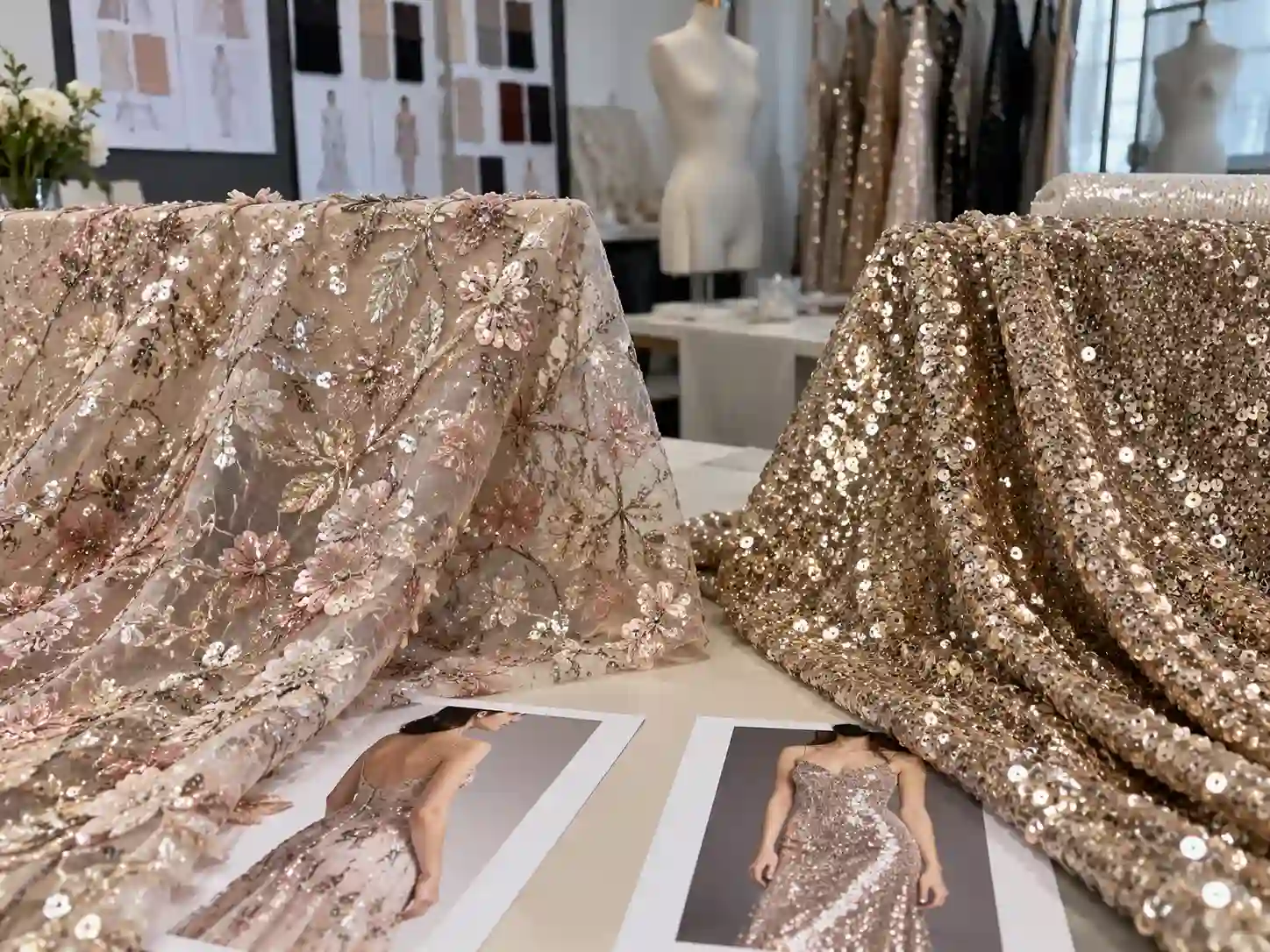
The comparison changes as fashion content increases. Satin can expose seam puckering and pressing marks; lace may require motif matching; mesh needs controlled transparency and stretch direction; sequins create needle, abrasion and packaging risks; corsetry introduces cups, boning, support layers and fit engineering. China’s specialist network generally makes it easier to assign each product to a suitable unit and obtain alternative materials quickly. A capable Cambodian factory can also manage these products, but recent evidence in the same construction is essential.
Factory Networks
Country labels can hide the real production structure. A Chinese supplier may operate several owned factories and coordinate long-term specialist partners, while a Cambodian plant may belong to a regional manufacturing group with experienced foreign technicians. Either structure can work when responsibility is visible. The sourcing team should know where patterns are made, where cutting occurs, which facility sews each style, who owns the approved sample and which team performs inline and final inspection.
The most useful qualification therefore moves through four levels: country, manufacturing group, actual facility and proposed sewing line. Ask for recent garments in comparable fabrics, inside-construction photographs, production records and an explanation of the problems that appeared during sampling. A technical answer about zipper waviness, mesh recovery or lace placement is more meaningful than a general statement that the factory has produced dresses for many years.
Which Country Has the Lower Total Cost?
Cambodia often has the lower direct labor base, while China can reduce development, material, replacement and coordination costs through a deeper local supply chain. The lower-cost option changes with fabric origin, construction, order size, color split, tariff treatment and delivery risk. A sound comparison uses landed cost per saleable, on-time garment rather than the first FOB quotation.
Labor and Productivity
Cambodia’s official minimum wage for textile, garment, footwear, travel-goods and bag workers is US$210 per month for 2026. That figure gives the country a visible direct-labor advantage over many mature Chinese coastal manufacturing regions. It should not be treated as the factory’s complete labor cost, because payroll also includes attendance benefits, overtime, incentives, social obligations, supervision, transport arrangements and the cost of keeping a trained line stable during seasonal changes.
Productivity can narrow or reverse the hourly-cost difference. Dress factories often calculate labor through standard minute values, yet the actual output depends on line balance, operator familiarity, machine setup, changeover frequency and rework. A stable basic dress repeated over thousands of units can benefit strongly from lower sewing rates. A corset mini dress that stops repeatedly for cup alignment, boning length and neckline correction may cost more through lost efficiency than through the hourly wage itself.
Full Cost Build-Up
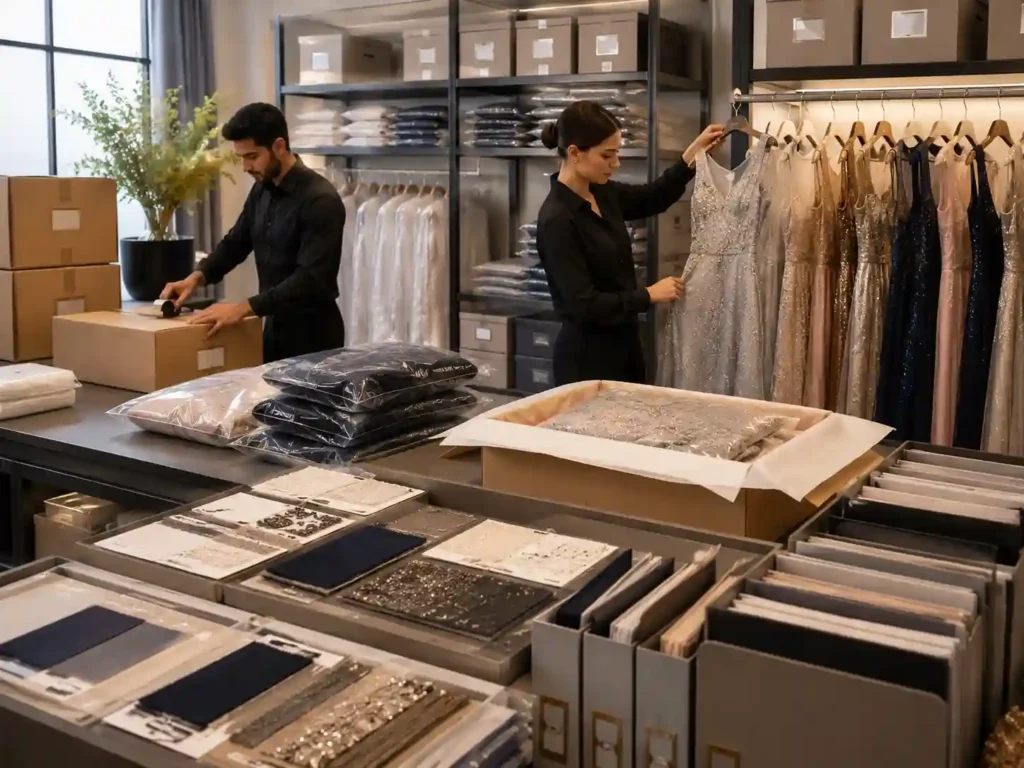
The shell fabric is frequently the largest cost component in a fashion dress, especially when the style is long, lined, gathered, bias-cut or cut with a wide sweep. Fabric width and marker efficiency matter as much as the price per meter. A less expensive fabric with narrow width, unstable shrinkage or high cutting loss may produce a higher garment cost. Lining, zippers, cups, boning, lace, elastics, labels and packaging also accumulate quickly when several colors and sizes are involved.
A comparable quotation should include pattern work, sampling, fabric and trim cost, cutting, sewing time, pressing, quality control, packing, expected wastage, testing, logistics and a reasonable manufacturing margin. Jinfeng Apparel uses this complete-cost method and evaluates alternatives such as a more stable fabric, simplified internal construction, adjusted trim specification, improved cutting layout, consolidated colors or better size ratios. The objective is cost control without weakening the brand-level appearance or wearability of the garment.
| Cost Area | Illustrative Share of FOB Cost | What Changes the Number | Common Oversight |
| Shell fabric and lining | 35-60% | Consumption, width, weight, dyeing, print, lining and wastage | Comparing price per meter without comparing yield |
| Trims and components | 5-15% | Zippers, cups, boning, lace, hardware, labels and custom packaging | Ignoring supplier minimums for colors or molded parts |
| Cut, sew and finish | 20-35% | Standard minutes, complexity, line efficiency, pressing and repair | Assuming lower wages always mean lower sewing cost |
| QC, packing and documentation | 3-8% | Inspection level, SKU packing, barcodes, cartons and client checks | Treating retail-ready packing as free |
| Overhead and margin | 8-18% | Factory structure, financing, compliance and order risk | Comparing quotes built on different commercial assumptions |
The percentages above are broad planning ranges for commercial review, not quotations or fixed industry rules. A simple unlined jersey dress may sit near the lower end of material cost, while a lined satin or sequin evening dress can exceed the upper range. The table is most useful for identifying missing cost items and asking both factories to price the same bill of materials, approval standard and delivery term.
Duties and Freight
Import duty depends on destination, fiber composition, whether the garment is knitted or woven, garment classification and the trade measures active at the time of entry. A woven synthetic dress and a knitted cotton dress may carry very different base duties even when the retail price is similar. The U.S. reciprocal-trade framework announced for Cambodia maintains a 19% reciprocal tariff for most Cambodian imports, subject to listed exceptions, while product-specific apparel duties and any additional measures still require current customs confirmation.
Freight also has two sides when Cambodian production uses imported Chinese fabric. The first movement carries textiles and trims into Cambodia; the second carries finished garments to the destination market. Consolidated volume can keep that route economical, but a late fabric shipment may shorten the sewing window and create airfreight pressure. Brands should request a landed-cost model from a licensed broker and update it before placing each major program because trade policy can change faster than seasonal development calendars.
Hidden Commercial Cost
Order structure changes cost more than total quantity alone. A 20,000-piece program divided into two stable styles is operationally different from the same quantity divided across twenty styles, four colors and seven sizes. The second program requires more fabric bookings, markers, size sets, machine adjustments, inspections, label combinations and carton plans. Each small color split may also trigger a separate dye-lot or trim minimum, leaving unused material that eventually appears in the price.
Cost continues after shipment. Poor bust fit can increase returns, unstable shade can create customer complaints, delayed delivery can force air freight, and weak records can make a bestseller reorder behave like a first development. A practical financial comparison asks for cost per saleable, on-time unit, then adds likely rework, rejected quantity, unused material, expedited freight and internal management time. That risk-adjusted figure often explains why the lowest quoted country is not always the lowest-cost supply chain.
How Do Supply Chains Affect Speed?
China usually moves faster during development because fabrics, trims, sample rooms, pattern teams and specialist processes are concentrated in mature apparel regions. Cambodia can deliver efficiently when materials and specifications are frozen early. In both countries, the largest delays often occur before sewing: incomplete product files, fabric approval, sample revisions, testing and late pre-production confirmation.
Material Sourcing
A production calendar becomes credible only after the material route is known. The word satin does not define composition, weight, width, stretch, surface shine, color tolerance, snagging risk or lining need. The manufacturer must either locate an existing article that meets the requirement or develop a new material. China’s dense supply markets make it easier to compare several alternatives quickly, although every substitution still needs documented approval and, when fit may change, a revised sample.
Cambodian programs often need an earlier material freeze because fabric and specialty trims may cross a border before they reach the factory. The plan should include mill production, shade approval, inspection, export documentation, transit and customs clearance, plus a recovery allowance if the bulk fabric fails. The factory can perform efficiently once the inputs are ready, but a reserved sewing line cannot recover days lost while waiting for an imported zipper, custom lace or replacement dye lot.
Sample Cycles
A first sample tests the pattern, material and construction; it is not automatically the bulk standard. A fit sample checks balance and measurements. A revised sample verifies corrections. A photo sample may prioritize appearance for content production, while a pre-production sample confirms the fabric, trims, sewing method and details authorized for bulk. Mixing these sample purposes creates unnecessary revisions because the teams are reviewing different questions at the same time.
For ordinary dresses, Jinfeng Apparel generally plans about 10-15 days for a first sample after workable information and materials are available. Complex corset, sequin, lace or mesh products commonly require about 15-25 days or a project-specific schedule. These figures reflect the company’s documented development practice rather than a promise for every style or every Chinese factory. Custom fabric, special hardware, testing and major pattern changes can extend the calendar in either country.
| Development Stage | Practical Planning Range | Main Variable | Approval Needed |
| Tech pack and construction review | 1-3 working days | Missing measurements or conflicting details | Clarified product file |
| Local stock material search | 3-10 working days | Color, weight, stretch and available yardage | Fabric and trim selection |
| Custom or imported material | 2-6+ weeks | Dyeing, print, supplier MOQ, transit and customs | Lab dip, strike-off or swatch approval |
| Ordinary first dress sample | About 10-15 days | Pattern complexity and material readiness | First-sample comments |
| Complex first sample | About 15-25 days | Corsetry, lace, mesh, sequins or special trims | Technical and fit review |
| Revision after clear comments | 5-12 working days | Pattern change or replacement material | Revised-sample approval |
| Size set or PP sample | 7-15 working days | Grading, color and production method | PP approval before bulk |
| Bulk production | Project-specific | Quantity, standard minutes, capacity and inspection | Production and shipment release |
Multi-Style Collections
A collection should be managed by style rather than by one general order date. Each style needs an individual status for pattern, fabric, trims, first sample, comments, revision, size set, PP sample, bulk materials, sewing, inspection and packing. Shared fabrics can improve cost and shade consistency, but only when their weight, stretch and hand feel suit every silhouette. Forcing several products into one material simply because the colors match can create fit problems across the collection.
An anonymous U.S. private-label project handled by Jinfeng Apparel included eighteen womenswear styles and approximately 28,000 pieces in satin, mesh, jersey, lace and crepe. The demanding part was not total quantity alone. It was controlling sample versions, material differences, labels, barcodes, polybags, carton marks, client inspection and phased shipping across many SKUs. A style-level progress file kept one revision from being applied to the wrong garment and allowed approved styles to move without waiting for every late style.
Repeat Orders
A recorded repeat order is normally faster than a new development because the manufacturer can retrieve the final pattern, graded sizes, bill of materials, approved fabric reference, color record, trim positions, sewing instructions, packing specification, QC history and Golden sample. These records reduce interpretation and allow the team to identify what remains unchanged. They also make it easier to detect when a repeat has quietly become a new version through a different fabric, longer hem or revised neckline.
China often benefits from continued access to the original fabric and trim network, while Cambodia can repeat efficiently when imported-material routes are established or material is reserved. Neither country should reuse old patterns blindly. A change in stretch, weight, shrinkage, lining or cup type can alter fit and construction. A disciplined repeat checklist records every difference from the previous bulk and confirms whether the old PP standard remains valid or another sample is required.
Which Country Handles Complex Dresses Better?
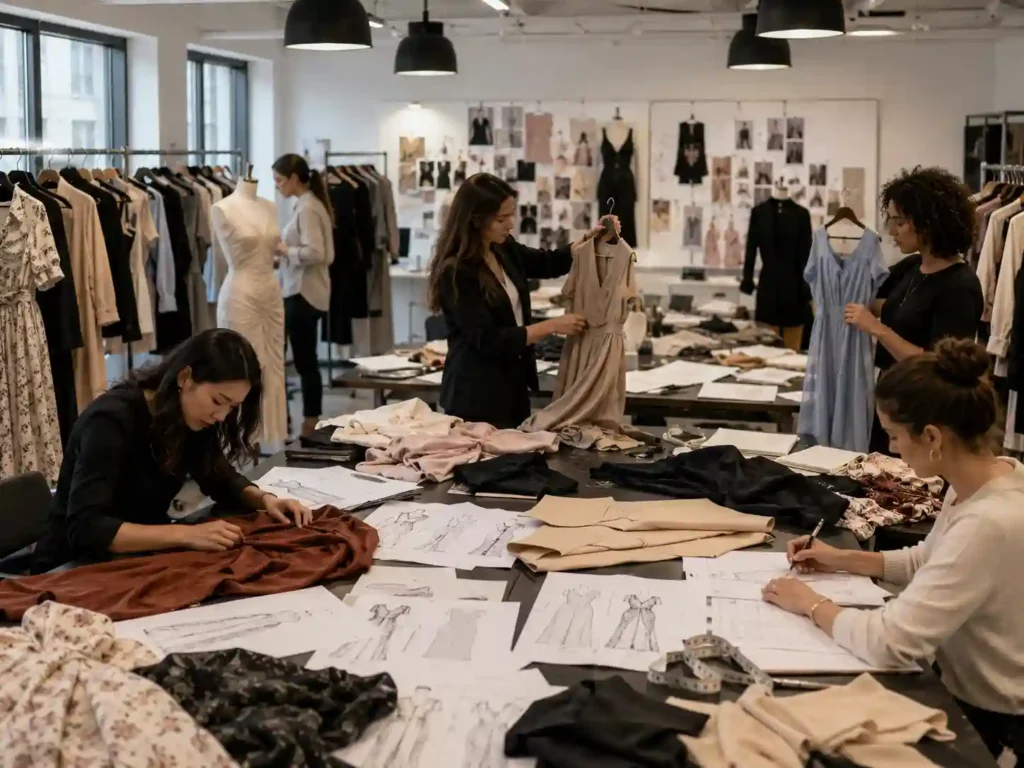
China generally provides greater depth for corsetry, specialty fabrics, detailed pattern correction and multi-process fashion dresses because technical teams and material suppliers are closely connected. Cambodia can produce complex styles in qualified facilities, but capability must be proven at the proposed factory and sewing line. Recent comparable samples and bulk-control records matter more than a country-level promise.
Basic and Standardized Dresses
Cambodia can be highly competitive for garments with stable patterns, familiar fabrics and repeatable operations. Straightforward jersey dresses, basic woven shifts, uncomplicated sundresses and established retail silhouettes allow the line to repeat the same sequence and improve output. Quality control remains necessary because jersey necklines can stretch, side seams can twist and lightweight woven fabrics can pucker, but these risks are easier to define and train than a changing fashion construction.
China can make the same basic products, yet its broader development network adds less value when the material, pattern and sewing method are already fixed. In a large repeat program, the Cambodian labor structure may become more commercially important. The final decision should still consider fabric origin, factory productivity, line history, duty and delivery. A large sportswear facility, for example, is not automatically the best option for a lined woven dress with an invisible zipper.
Specialty Fabrics
Specialty fabrics turn small handling mistakes into visible defects. Satin reveals needle marks, seam puckering, shade direction and pressing shine. Chiffon shifts during cutting and can produce uneven hems. Mesh may stretch differently along two directions and can tear around narrow seam allowances. Lace requires decisions about motif placement, edge treatment and lining color. Sequin fabric creates broken-needle, missing-decoration, skin-abrasion and carton-protection issues that a basic garment line may not recognize early enough.
China’s specialist network makes it easier to match the material to a suitable production unit and consult nearby suppliers when a problem appears. That does not mean every Chinese factory is competent with these fabrics. Cambodia also has factories capable of sophisticated production, particularly where experienced technical management is present. The practical qualification is to send the intended fabric or an equivalent swatch, request seam and pressing tests, inspect the inside construction and ask how the line will prevent repeated bulk defects.
Pattern and Structure
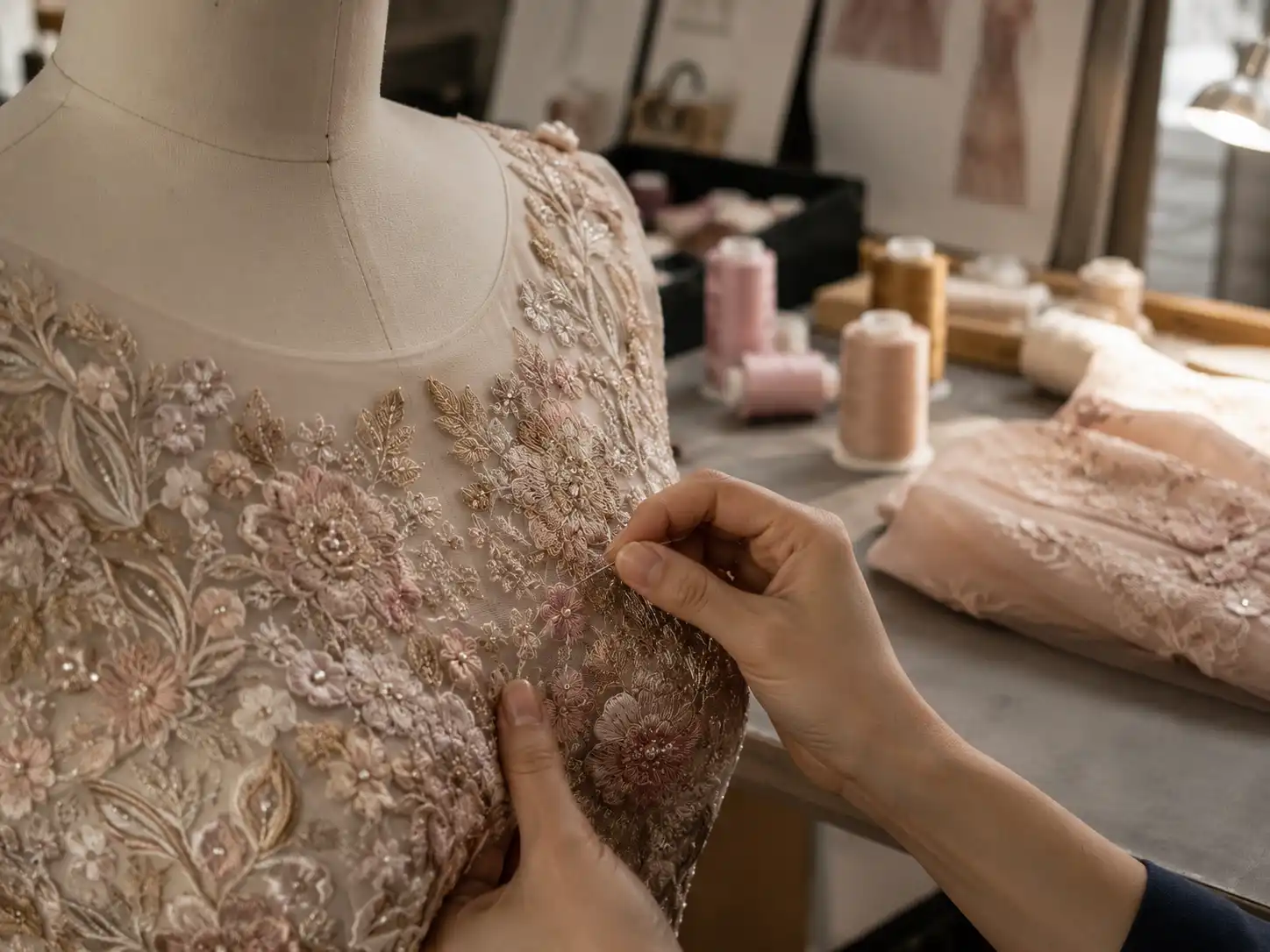
A corset dress must support the bust without flattening it, gaping at the neckline or sliding down during movement. The cup position, boning layout, support tape, lining, seam shape and zipper must work as one structure. Backless, cut-out and one-shoulder dresses remove areas that would normally provide stability, so the pattern maker may need to change strap angles, side coverage, elastic support or seam placement rather than simply copying the visual outline of the reference image.
Stretch products require another method because the pattern depends on fabric extension and recovery, not only body measurements. Two fabrics with the same stated composition can fit differently because of knitting structure, finishing and weight. Replacing one jersey with another can alter bust tension, skirt length and side-seam balance. China generally has a larger pool of specialist pattern makers and sample machinists, while a Cambodian factory should be judged by the named technician who interprets comments and remains involved when the style reaches bulk production.
Bulk Repeatability
A strong sample proves that one garment can be made; bulk production proves that the construction can be repeated hundreds or thousands of times. Complex details must be converted into measurable controls. Cup position, boning length, ruching density, strap length, slit height, lace placement and zipper shape belong in the production file. Reference photographs help, but they should not replace dimensions, stitch instructions and approved material details.
The PP sample should use bulk-intended fabric, trims and sewing methods, followed by first-output review and inline inspection. If cups are positioned 8 millimeters too high on the first 50 garments, the operation can still be corrected before thousands are completed. If the issue is discovered only after final packing, repair becomes expensive and may leave permanent needle or pressing marks. China’s specialist ecosystem can make recovery faster, but disciplined production control is what determines repeatability in either country.
How Do Quality and Compliance Compare?
Neither country guarantees quality or compliance. China usually offers broader technical resources and testing access, while Cambodia benefits from the Better Factories Cambodia monitoring framework. A reliable decision examines the actual facility, subcontracting route, inspection system, audit scope, material test requirements and project records. Country reputation cannot replace factory-level evidence.
Quality Control Stages
Final inspection alone is too late for effective dress quality control. Incoming fabric should be checked for shade, width, defects, hand feel and obvious performance risks. Cutting control verifies grain, print direction, shade grouping and component accuracy. Sewing checks focus on measurements, stitch quality and product-specific details, followed by finished-garment inspection, pressing review, packing verification and a final sampling decision based on the agreed inspection standard.
Inspection must follow the product rather than rely on a generic checklist. Satin requires attention to zipper waviness, snagging, pressing shine and water marks. Mesh requires hole, transparency and recovery checks. Lace needs motif, broken-edge and lining-color control. Bodycon dresses require measurements to be read together with fabric stretch and recovery. AQL sampling can support shipment acceptance, but it does not mean every garment has been inspected and cannot replace inline prevention.
Social Compliance
Cambodia’s export garment sector benefits from Better Factories Cambodia, an ILO-linked program that publishes industry and compliance reporting. Its 2024 annual review drew primarily on 381 garment-factory assessments, providing an unusually structured view of labor-law and international-standard issues across participating facilities. That framework supports transparency, but a brand still needs to review the current assessment, corrective actions, legal entity, worker practices, overtime records and the relationship between the assessed facility and the proposed production line.
China does not use one equivalent national monitoring program for all export apparel factories. International brands commonly rely on client audits and schemes such as SMETA or BSCI where relevant, together with their own supplier manuals. A logo on a presentation is not sufficient evidence. Confirm the certificate or report number, legal entity, address, validity period, scope and whether the proposed production location is covered. Material claims such as OEKO-TEX, GRS, GOTS or organic content should also be confirmed by supplier, article, color, batch and certificate scope.
Subcontracting and Traceability
Subcontracting can be legitimate when a specialist partner performs pleating, embroidery, printing, washing or another process more effectively than the main factory. The risk begins when garments move without approval, documented standards or inspection responsibility. The sourcing team should identify the cutting, sewing, embellishment and packing locations, then confirm that the approved sample, production file, material records and QC criteria follow the order through every site.
Traceability also protects the declared country of origin. A garment cannot simply pass through a country to obtain a different label. Production orders, material receipts, cutting records, line output, inspection documents and packing lists should support where substantial manufacturing occurred. Chinese-owned factories in Cambodia and Chinese textile inputs can form a legitimate regional supply chain, but origin documentation must reflect the real production route. An undisclosed facility is a more serious warning sign than either country name.
Evidence to Request
A polished company profile shows what a supplier wants to communicate; production evidence shows what it can control. Request recent garments made from comparable fabrics, including inside-construction photographs. Review seam finish, lining, zipper installation, cup attachment, lace edge, label placement and packing. Ask who developed the pattern, who approves the PP sample, where bulk will be sewn and which inspector has authority to stop the line when repeated defects appear.
The commercial file should include the confirmed bill of materials, size chart, construction notes, approved sample record, fabric and trim approvals, production schedule, inspection plan, packaging specification and shipment documents. Testing should be defined by product and market rather than described as a vague promise of full compliance. A supplier that explains the limits of an audit or certificate usually provides more dependable information than one claiming that every fabric, factory and garment automatically meets every standard.
Which Country Fits Your Dress Program?
Choose China when the program depends on rapid sampling, broad material access, complex construction, multiple styles or frequent replenishment. Consider Cambodia when the product is stable, the material route is planned, volume supports line efficiency and the selected factory has proven experience. Many established brands gain resilience by allocating products according to capability instead of forcing every dress into one country.
Fast Fashion and Seasonal Launches
Fast fashion is not simply short sewing time. It is the ability to interpret a trend, locate workable materials, build a pattern, correct the fit, prepare photo-ready samples, approve bulk and replenish a successful style before demand disappears. China is generally better positioned for this sequence because development teams and suppliers are concentrated. When the design changes after the first sample, the manufacturer can often test another fabric or trim without restarting an international material route.
Cambodia can support seasonal launches when styles are frozen earlier and the program is managed around a reliable imported-material calendar. The risk increases when the collection contains many late decisions, low-volume colors or specialty trims. A brand using Cambodia for fashion-led products should separate creative deadlines from factory production dates, lock the bill of materials early and maintain a contingency for rejected inputs. Speed comes from earlier certainty rather than from asking the sewing line to recover an incomplete development process.
Large Programs
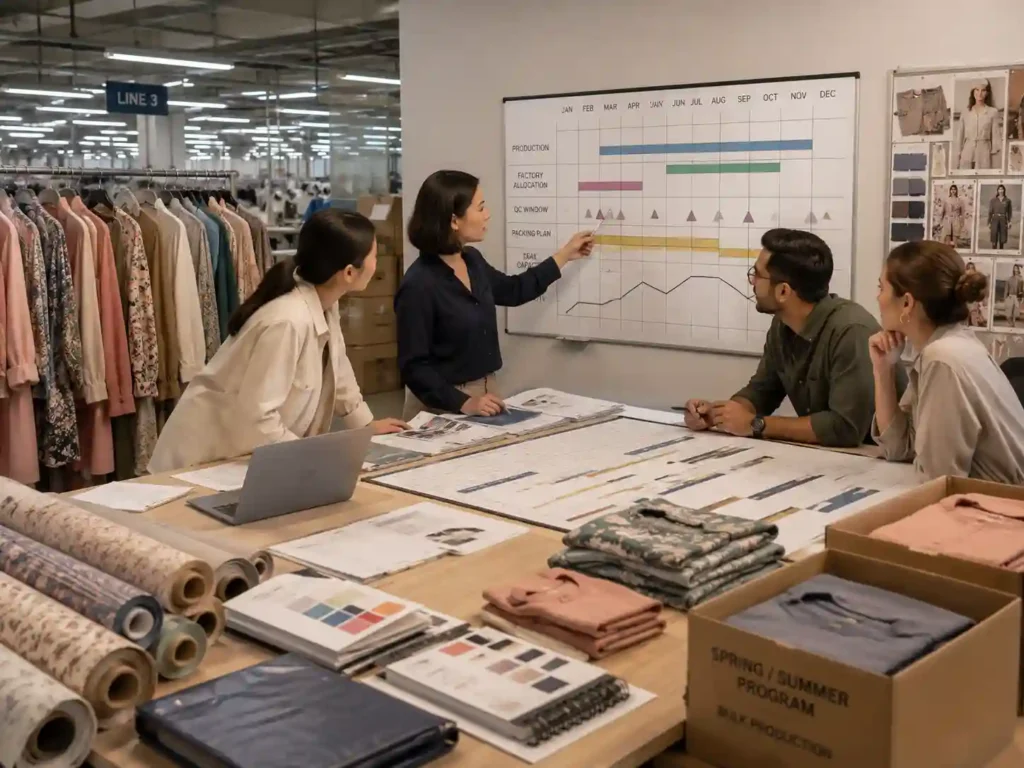
Cambodia can be a strong option for large programs built around stable patterns, predictable fabrics and repeatable workmanship. The factory can balance the line, train operators and improve output over a longer run. This is particularly useful when the order uses a limited number of styles and colors, the material supplier can deliver full volume on time and the brand has completed fit and construction approval before capacity is reserved.
China also remains highly competitive for large orders, especially when the program includes several dress categories, multiple shipment windows or frequent replenishment. A coordinated network can separate satin occasionwear, stretch bodycon dresses and woven resort dresses into suitable production units while retaining common project management, QC and private-label packing. The best comparison is not factory headcount. It is whether the manufacturing system can protect the same approved standard across every style, size, color and shipment batch.
Premium and Complex Collections
Premium collections usually place greater weight on material hand feel, silhouette, fit, surface quality and internal construction than on direct sewing cost. Occasion dresses may combine satin, chiffon, lace, mesh, sequins, lining, cups and boning in one seasonal range. China is normally the safer starting point when several of these components require development or when the brand expects the manufacturer to propose alternatives that preserve the intended appearance within a target cost.
A strong Cambodian factory can still be the right partner when it has recent experience with the exact product and a reliable upstream material route. The sourcing team should approve a technically representative style before committing the entire collection. A satin slip dress does not prove capability in a corset gown, and a knit bodycon sample does not prove lace-placement control. Product-family evidence should guide allocation more than a general factory presentation.
Decision Scorecard
A useful scorecard gives each factor a weight based on the program rather than treating every criterion as equal. A replenishment-led online brand may place more weight on material access and repeat speed, while a large stable retail program may emphasize labor efficiency and capacity. Score the actual factory proposal, not the country in isolation, and require written evidence for every high rating.
| Decision Factor | Suggested Weight | China Tendency | Cambodia Tendency | Evidence to Review |
| Material access | 15% | Broad local choice and faster substitution | More imported-input planning | Approved fabric route and supplier lead time |
| Development speed | 15% | Strong pattern and sample ecosystem | Good when specifications are mature | Named sample team and revision calendar |
| Complexity capability | 15% | More specialist dress resources | Factory-specific capability | Comparable recent samples and technical files |
| Direct labor efficiency | 10% | Higher labor base; productivity varies | Lower statutory wage base | Standard minutes, line output and rework history |
| Bulk quality control | 15% | Broad QC resources; factory quality varies | Strong results possible in qualified factories | Inline plan, AQL agreement and inspector authority |
| Compliance and traceability | 10% | Audit-led, facility-specific verification | Better Factories framework plus factory review | Current reports, legal entity and production locations |
| Capacity and repeat orders | 10% | Flexible multi-unit networks | Efficient stable volume programs | Line reservation and repeat-material plan |
| Landed cost and trade risk | 10% | Material efficiency may offset labor cost | Competitive sewing cost; import route matters | Broker calculation, freight plan and current tariffs |
A China Plus One strategy can be more practical than an all-or-nothing move. China may handle product development, complex dresses, specialist materials and rapid replenishment, while Cambodia receives stable programs with confirmed patterns and planned volume. The arrangement only works when origin rules, material movements, approval ownership and quality responsibility are clear. Dividing production without shared technical control can create more risk than relying on one well-managed country.
For brands leaning toward China, the factory should still be qualified with the same discipline. Jinfeng Apparel has focused on custom women’s fashion manufacturing since 2008 and operates a Guangdong production system with six owned womenswear factories, more than ten long-term satellite partners, over eighteen sewing lines and documented support for pattern development, fabric sourcing, sampling, bulk production, QC, private-label packing and export coordination. Its standard MOQ starts from 200 pieces per style and color, subject to fabric, trim, construction and scheduling requirements.
To evaluate a dress program, send the tech pack, reference sample or images, intended fabric, size range, color plan, order quantity, destination market, packaging standard and target launch date. The development team can review construction risks, material options, sample requirements and a realistic production route before preparing the quotation. Contact Jinfeng Apparel through info@jinfengapparel.com or WhatsApp +86 18929465598 to begin a confidential project review; NDA-based cooperation is available for unpublished designs and brand files.
Reference notes
- World Trade Organization, Global Value Chains Sectoral Profiles: Textiles and Clothing Industry, using 2022 value-added trade data.
- International Labour Organization / Better Factories Cambodia, Annual Report 2024: An Industry and Compliance Review.
- International Labour Organization, assessment of tariff uncertainty and Cambodia’s garment, footwear and travel-goods sector, 2025 sector data.
- Cambodia Ministry of Labour and Vocational Training, Prakas No. 214/25 on the 2026 minimum wage for textile, garment, footwear, travel-goods and bag workers.
- World Bank WITS trade data, Cambodia textiles and clothing imports by partner country, latest available trade profiles.
- Office of the United States Trade Representative, United States-Cambodia reciprocal trade fact sheet and current tariff-action records.
- Jinfeng Apparel Objective Fact Sheet and manufacturing knowledge base supplied for this article, including company positioning, capacity, sampling, fabrics, QC, MOQ and anonymous project records.