Skip to content

Finding a dress manufacturer looks simple until a brand needs more than one attractive sample. Search engines can return hundreds of factories within minutes, sourcing platforms can fill a spreadsheet with supplier names, and trade shows can produce a stack of business cards before lunch. The harder task is identifying a manufacturer that can preserve fit, manage sensitive fabrics, coordinate several styles, protect unreleased designs, meet a launch calendar, and reproduce the same standard when the collection is reordered months later.
Established fashion brands find dress manufacturers through trusted industry referrals, specialist directories, sourcing exhibitions, direct factory research, textile networks, and experienced regional partners. They then narrow the list by checking dress specialization, pattern and sample capability, material knowledge, production capacity, quality controls, confidentiality, commercial transparency, and the ability to support bulk orders, repeat production, and seasonal collections.
The strongest sourcing teams therefore treat factory discovery as the start of a qualification process rather than the final decision. One polished website may lead to a highly capable sample room with disciplined production records. Another may lead to a company that outsources every important stage and cannot explain who controls bulk quality. The difference usually becomes visible only when the brand asks precise questions, tests the development process, and follows the evidence from the first inquiry to the production floor.
Where Do Fashion Brands Find Dress Manufacturers?
Established brands usually combine referrals, direct factory research, specialist directories, trade shows, sourcing agents, and regional supply-chain contacts. No discovery channel is reliable by itself. The most dependable method is to build a broad list through several sources, apply the same screening criteria to every candidate, and move only the strongest manufacturers into technical review, sampling, and factory verification.
Industry Referrals
Referrals remain valuable because they can reveal how a manufacturer behaves after the sales presentation ends. A designer, fabric mill, production consultant, quality inspector, or non-competing fashion label may already know whether the factory communicates problems early, follows approved specifications, handles corrections responsibly, and maintains delivery discipline. This practical history is often more useful than a supplier profile written for marketing purposes.
A referral is only relevant when the previous project resembles the new collection. A factory recommended for loose cotton resort dresses may not be equipped for fitted satin corset styles, stretch-mesh clubwear, or embellished occasion dresses. Product category, fabric behavior, construction difficulty, quantity per style, and delivery schedule all affect whether another brand’s experience can be transferred to a new program.
The most useful follow-up is not simply asking whether the factory was good. Sourcing teams should ask what products were made, how many sample rounds were needed, whether production stayed in the disclosed facility, how defects were handled, and whether repeat orders matched the original approval. A balanced recommendation that includes limitations is more credible than praise without context.
- What dress categories did the factory produce?
- What was the approximate quantity per style and color?
- How many fitting or construction revisions were required?
- Did the factory meet the agreed shipment window?
- How were shortages, defects, or measurement problems resolved?
- Did the supplier protect unreleased designs and commercial information?
Direct Factory Research
Google, LinkedIn, industry publications, textile-market contacts, and manufacturer websites now allow established brands to identify specialist factories directly. This route is especially useful when the collection requires a narrow capability, such as satin slip dresses, structured occasionwear, stretch bodycon styles, lace placement, sequin construction, or private-label womenswear with retail-ready packaging.
Search terms become more effective when they combine the product, service model, and manufacturing region. Queries such as “private label occasionwear manufacturer China,” “custom satin dress factory,” or “women’s dress manufacturer with pattern development” usually produce more relevant candidates than broad searches for clothing suppliers. Brands should review product pages, sampling information, quality procedures, factory descriptions, and technical articles rather than judging the supplier from the homepage alone.
A credible manufacturing website should explain realistic boundaries. It should show which dress categories the factory handles, how sampling progresses, what affects MOQ and lead time, how fabrics are controlled, and how bulk quality is checked. Claims that every fabric, order size, price level, and delivery schedule can be accepted without qualification may indicate that the company is prioritizing inquiries over accurate production planning.
- custom party dress manufacturer
- OEM women’s dress factory
- private label satin dress manufacturer
- occasionwear manufacturer with pattern development
- bulk resort dress manufacturer
- women’s fashion factory for seasonal collections
Directories and Trade Shows
Manufacturing directories are useful for mapping suppliers by country, product category, order size, and service capability. Trade shows add a physical dimension because sourcing teams can handle fabrics, examine garment interiors, compare finishing quality, and speak directly with commercial or technical representatives. Both channels can shorten the discovery stage when they are used with a prepared screening framework.
Neither a directory profile nor a booth display proves factory ownership, capacity, or production consistency. Directory information may be self-reported, while exhibition samples may have been specially prepared. Brands should confirm whether the company owns the factory, manages long-term partner facilities, or operates mainly as a trading organization. Each model can work, but responsibility for patterns, materials, quality, and delivery must be clear.
| Sourcing Stage | Practical Working Range | Main Objective | Evidence to Collect |
| Initial discovery | 15-30 suppliers | Build broad market coverage | Product focus, location, service model |
| Basic screening | 8-12 suppliers | Remove obvious mismatches | MOQ, fabrics, category experience, lead time |
| Technical review | 4-6 suppliers | Test development understanding | Tech-pack comments, costing detail, sample plan |
| Sampling | 2-4 suppliers | Compare fit, workmanship, and communication | Physical samples, revision records, material data |
| Final approval | 1-2 suppliers | Select a production partner and backup | Audit, production plan, QC system, commercial terms |
These ranges are planning tools rather than fixed rules. A complex collection may require a wider search, while an experienced team with trusted regional contacts may begin with fewer candidates. The important point is to separate discovery from approval so that a quick reply or attractive showroom sample does not become the only reason a supplier receives a production order.
Sourcing Agents and Local Networks
Sourcing agents can be useful when a brand lacks local language skills, regional supplier knowledge, factory access, or enough internal time to manage production communication. A capable agent may identify factories, arrange visits, collect quotations, coordinate samples, monitor materials, organize inspections, and support export documentation. The value comes from local control and clearer execution, not simply from introducing another contact.
The commercial structure must be transparent. Some agents charge a stated service fee and disclose the factory, while others purchase from the manufacturer and resell to the brand with an undisclosed margin. Neither model is automatically unsuitable, but the brand should understand who signs the agreement, who owns patterns and samples, who approves subcontracting, and who is responsible when quality or delivery problems occur.
A regional network can also include fabric suppliers, trim vendors, inspection companies, pattern technicians, and logistics partners. These contacts often know which factories genuinely specialize in dresses and which companies only present broad capabilities. The best local partner improves visibility across the supply chain. If the brand cannot identify where the garments are cut and sewn, how changes are recorded, or who controls final inspection, the intermediary has created another layer of uncertainty.
- How is the agent paid, and is the fee disclosed?
- Will the production factory and subcontractors be identified?
- Who owns the patterns, samples, and development files?
- Can the brand visit the production site directly?
- Who manages inspections and corrective actions?
- How are supplier changes communicated and approved?

Which Manufacturing Regions Suit Dress Brands?
The right manufacturing region depends on dress category, fabric access, order structure, quality level, delivery schedule, target market, and replenishment needs. China often suits multi-style and fabric-intensive collections, while Portugal and Turkey may support European nearshoring. India offers decorative strengths, and Vietnam can suit planned volume programs. The individual factory still matters more than a country’s general reputation.
China for Multi-Style Collections
China remains a practical option for established dress brands because major apparel regions combine fabric markets, trim suppliers, pattern development, sample rooms, sewing capacity, finishing, packaging, and export logistics. This concentration becomes especially valuable when a collection contains different silhouettes and materials rather than one repetitive basic garment produced in a single fabric.
A seasonal range may include stretch jersey, satin, mesh, lace, chiffon, sequins, and printed woven fabrics. Each material creates different sourcing, cutting, sewing, pressing, and quality risks. A mature regional network makes it easier to test alternatives, replace an unsuitable component, or adjust a construction method without moving the entire project to another country.
Guangdong is particularly relevant for fashion-led womenswear, party dresses, occasion styles, bodycon silhouettes, jumpsuits, and coordinated sets. A manufacturer operating several specialized production units can allocate woven dresses, stretch styles, complex fabrics, and repeat orders to teams that already understand those products. This is more reliable than asking one line to switch constantly between unrelated garment categories.
Jinfeng Apparel provides one example of this production model. Based in Guangdong and focused on custom womenswear since 2008, the company operates six owned women’s fashion factories and works with more than ten long-term satellite production partners. The network supports multi-style, multi-fabric, multi-color, multi-size, and multi-batch programs, while central teams manage development, quality standards, private-label requirements, and export coordination.
Europe and Nearshoring
Portugal and Turkey are frequently considered by European fashion labels that value shorter transport routes, closer time zones, easier factory visits, and regional manufacturing narratives. These advantages can improve communication and reduce freight time when the supplier already has access to the required fabrics, trims, machinery, and skilled operators.
Nearshoring does not automatically create a shorter total calendar. Development time still includes technical review, pattern work, first samples, fit corrections, material approval, trim procurement, pre-production confirmation, line booking, sewing, inspection, and packing. A nearby factory waiting several weeks for imported fabric may deliver later than an offshore supplier located close to the textile source.
Portugal is often selected for premium European positioning and closer brand collaboration, while Turkey benefits from a strong textile base and access to European markets. These advantages must still be tested against the actual dress category. A supplier experienced in knit basics may not be suitable for structured satin occasionwear, and a factory known for shirts may not have the pattern knowledge required for fitted dresses.
The most practical comparison considers the total operating model rather than distance alone. Development travel, sample freight, fabric minimums, duty, transit time, financing period, replenishment speed, inspection access, and the cost of missed launch dates all influence whether nearshoring creates a real commercial advantage for the collection.
Regional Strengths
Countries develop manufacturing reputations through textile history, labor skills, export infrastructure, and local supply-chain density. Those reputations are useful for market mapping, but they should never replace factory-level evidence. Two suppliers in the same city can have completely different machinery, technical teams, quality systems, product focus, and order structures.
| Manufacturing Region | Common Strengths | Main Points to Verify | Often Suitable For |
| China | Broad fabric and trim access, flexible development, scalable capacity | Factory ownership, subcontracting, quality management | Multi-style fashion and occasionwear collections |
| Portugal | European proximity, premium positioning, easier regional visits | Capacity, material origin, price structure | European premium labels and selected programs |
| Turkey | Strong textile base, access to Europe, woven and knit capability | Scheduling, currency terms, supplier consistency | Fashion collections serving European markets |
| Vietnam | Export experience, organized larger factories, volume production | Development flexibility, fabric sourcing, order minimums | Stable programs with planned volume |
| India | Embroidery, embellishment, prints, cotton, artisan techniques | Measurement consistency, finishing, lead-time control | Decorative, resort, and craft-led collections |
| Local production | Easier visits, shorter domestic transport, close communication | Labor cost, scale, material availability | Fast development and selected premium launches |
Some established brands divide production across more than one region. Core volume styles may be produced where material depth and scale are strongest, while selected premium pieces stay closer to the selling market. This can reduce dependency on one location, although it also increases the need for shared measurement standards, consistent color references, approved construction methods, and comparable inspection procedures.
Lead Time and Total Cost
Location affects freight time, but factory planning and material readiness usually influence the calendar much earlier. A realistic production schedule separates technical development, sample approval, material procurement, bulk manufacturing, final inspection, packing, and transportation. Combining everything into one promised delivery date hides the actual sources of delay and makes corrective action more difficult.
| Project Stage | Common Planning Range | Main Variables |
| Technical review | 2-5 working days | Tech-pack quality, construction complexity, open questions |
| First sample | 7-15 working days | Pattern work, fabric availability, trims, structure |
| Sample revision | 5-10 working days per round | Number of changes, replacement materials, fit corrections |
| Stock material procurement | 10-30 days | Supplier inventory, color, quantity, inspection |
| Custom dyeing or printing | 20-45 days | Lab dips, strike-offs, minimums, approval speed |
| Bulk production | 25-45 days after approval | Style complexity, line availability, quantity, season |
| Final inspection and packing | 3-7 days | Inspection result, repairs, packing complexity |
These figures are typical planning ranges rather than promises. Structured dresses, extensive handwork, custom materials, peak-season bookings, and repeated fit changes can extend the timeline. A professional supplier should identify the longest lead item early, show which milestones depend on brand approval, and update the calendar when a specification change affects cost or delivery.
The lowest quoted unit price is not always the lowest total cost. Fabric failure, excessive sample rounds, late airfreight, inconsistent sizing, rework, and customer returns can outweigh a small saving at the factory. Brands should compare material specifications, construction, inspection standards, packing, payment terms, freight responsibility, and claim handling before treating two quotations as commercially equivalent.

What Do Brands Look for in a Manufacturer?
Established brands look for proven dress specialization, reliable pattern and fit development, practical fabric knowledge, controlled sampling, scalable capacity, documented quality procedures, private-label support, and clear communication. A capable manufacturer should explain how an approved sample becomes repeatable bulk production while preserving construction, measurements, materials, labels, packaging, and delivery requirements across every size, color, and production batch.
Dress Specialization
A large apparel factory may have impressive equipment and substantial output but still be unsuitable for a technically demanding dress collection. Dresses often require closer control of fit, balance, fabric direction, lining, closures, bust support, draping, and visual symmetry than basic tops or sweatshirts. The sourcing team should therefore evaluate experience with the intended product rather than relying on total factory size.
A manufacturer that performs well with loose cotton dresses has not automatically demonstrated the ability to produce fitted satin corset styles. Both products are dresses, but their technical risks are very different. Structured styles may involve cups, boning, underbust seams, grip tape, lining support, and precise zipper placement. Stretch styles require control of recovery, negative ease, seam elasticity, and size grading.
Brands should ask to inspect garments that resemble the planned collection in fabric, silhouette, and construction. The inside of the sample is often more informative than the outside because it reveals seam width, lining attachment, reinforcement, zipper insertion, boning channels, cup placement, overlocking, and finishing discipline. A specialist should be able to explain these details before production begins, not after defects appear.
A useful capability review separates products into meaningful groups such as woven fashion dresses, stretch bodycon styles, occasionwear, resort dresses, sequined garments, lace products, and structured corset designs. This makes it easier to identify whether the supplier has dedicated teams, appropriate machinery, and realistic line capacity for each type.
Pattern and Fit Development
Pattern capability is one of the clearest differences between a basic sewing supplier and a genuine development partner. Small changes in shoulder angle, neckline depth, bust position, waist placement, hip ease, or skirt balance can significantly change how a dress looks and feels. The factory should have a clear process for translating a tech pack, sketch, reference garment, or image into a controlled pattern.
Fit comments should be recorded by sample version and converted into precise instructions. A comment such as “make the waist tighter” is too vague for reliable production. The brand should state the required measurement change, where it should be distributed, and whether it applies to the base size only or affects grading. The manufacturer should then update the pattern, measurement chart, construction notes, and sample record together.
A controlled development sequence may include a first sample, fit sample, revised sample, photo-ready sample, pre-production sample, and sealed golden sample. Not every style needs every stage, but each sample must have a defined purpose. The pre-production sample is particularly important because it should reflect approved bulk materials, trims, labels, construction, and measurements before cutting begins.
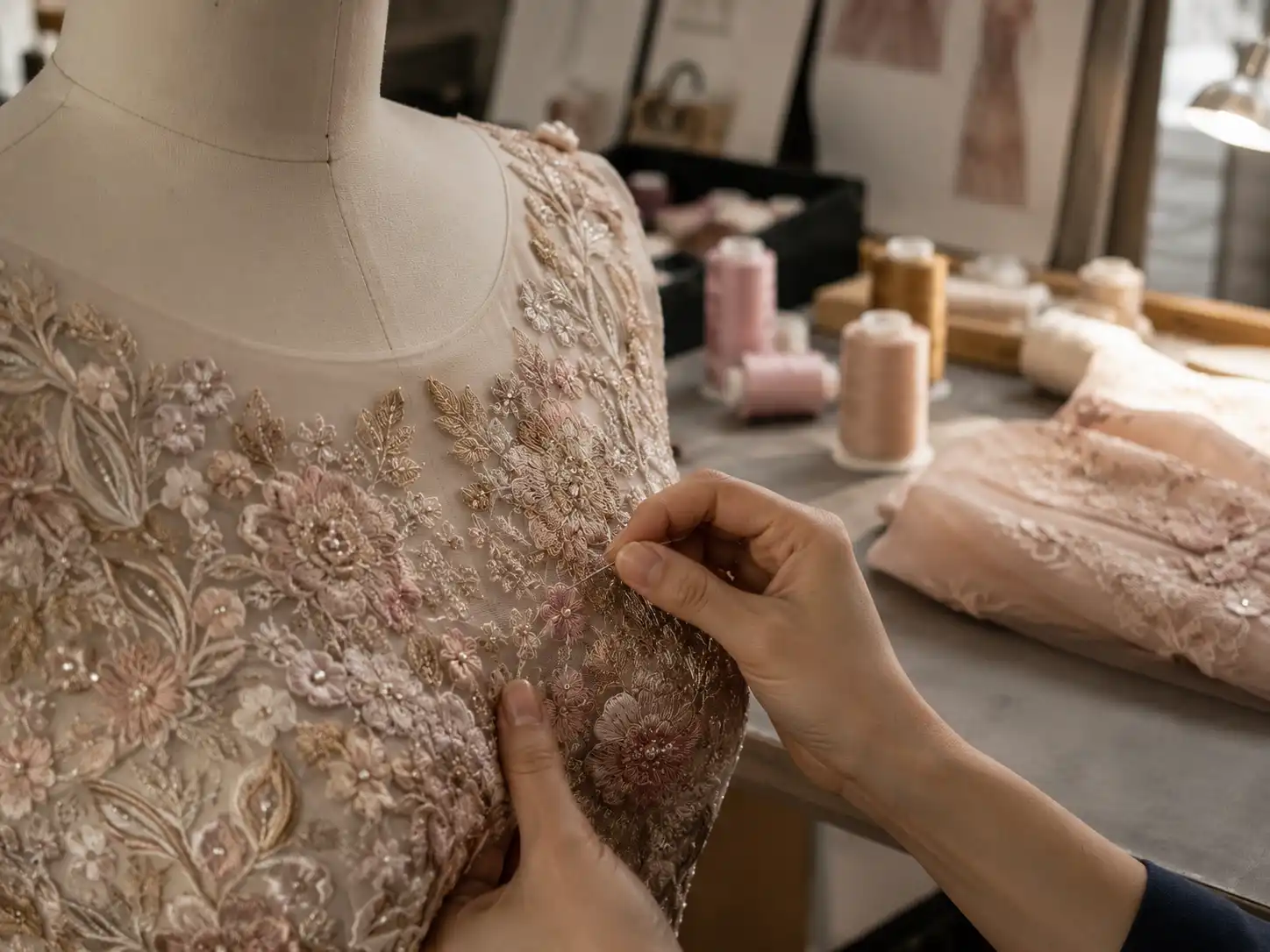
At Jinfeng Apparel, the verified development structure includes two sample rooms, seven or more senior pattern makers, and more than twenty sample machinists. These teams support pattern development, fit corrections, sample revisions, pre-production confirmation, and production references for dresses, jumpsuits, sets, and other fashion-led womenswear.
Fabric and Construction Knowledge
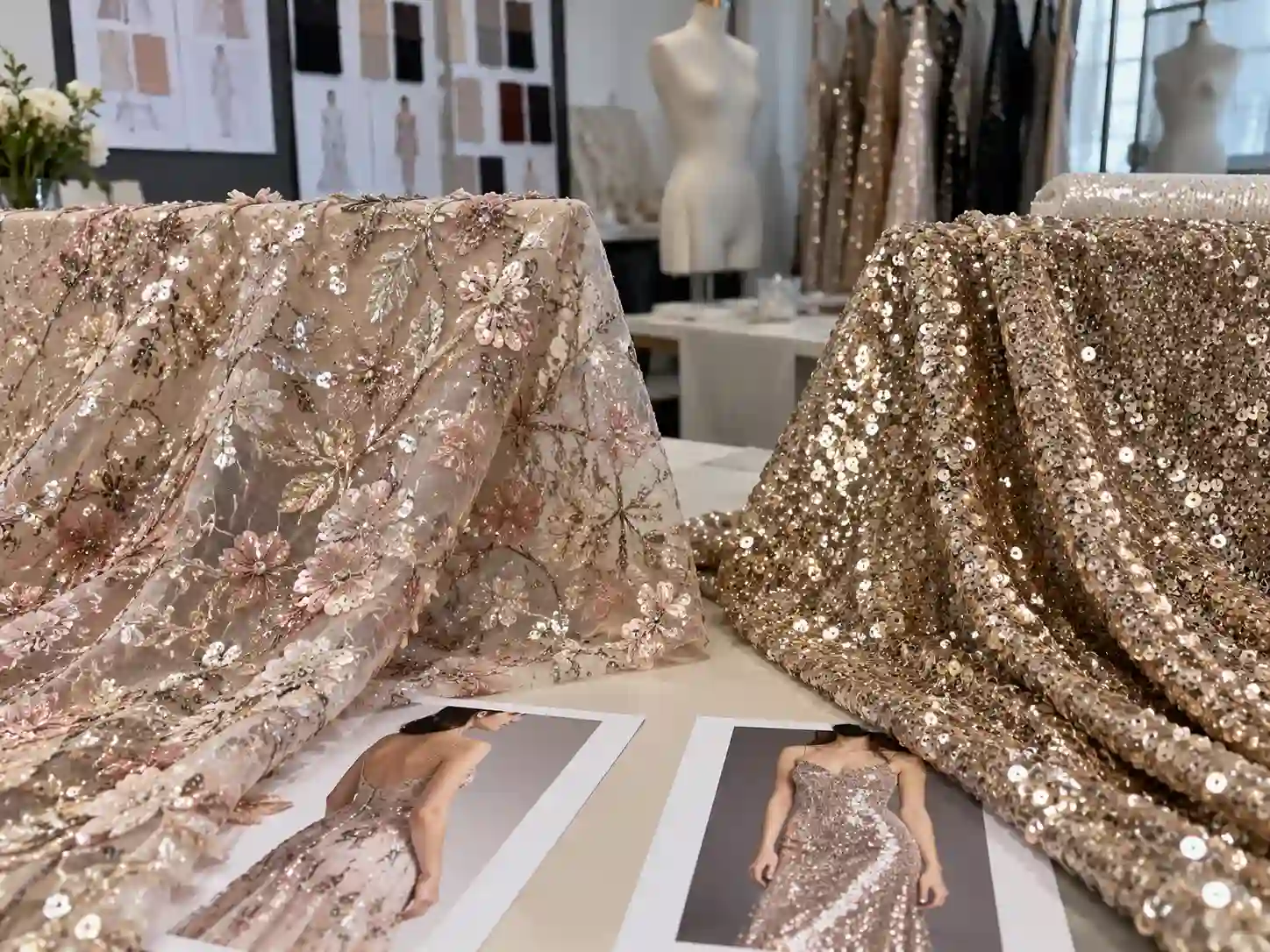
Fabric capability should be judged by behavior rather than by a long list of textile names. Many factories say they can handle satin, lace, mesh, chiffon, jersey, and sequins. Practical expertise becomes visible when the team explains how each material reacts during spreading, cutting, sewing, pressing, wearing, and packing, and how those reactions affect the chosen silhouette.
| Fabric or Construction | Common Production Risk | Practical Factory Control |
| Satin | Snagging, seam puckering, shine marks, directional shade | Needle testing, controlled cutting direction, low-pressure pressing |
| Stretch mesh | Distortion, weak recovery, transparency, edge curling | Relaxation test, stretch-direction marking, suitable lining |
| Lace | Motif mismatch, holes, bulky joins, visible seam lines | Placement planning, panel matching, edge reinforcement |
| Chiffon | Slippage, uneven hem, transparency, seam damage | Stable cutting layers, fine needles, hanging before hemming |
| Sequin fabric | Broken needles, dropped sequins, skin abrasion | Seam-path clearing, operator protection, guarded packing |
| Jersey | Twisting, growth, shrinkage, inconsistent fit | Relaxation, shrinkage testing, recovery checks |
| Corset structure | Uneven support, visible boning, poor bust shape | Pattern testing, channel control, fit-sample review |
| Ruched construction | Asymmetry, uneven tension, changing garment length | Marked reference points, tension control, in-line comparison |
Fabric approval should normally record composition, width, weight or GSM where relevant, color reference, surface finish, stretch direction, recovery, and shrinkage performance. Sensitive colors or glossy materials may need shade-band approval before cutting. Printed fabrics may require placement rules, panel direction, and acceptable variation across sizes.
A technically responsible manufacturer will sometimes challenge the requested material. This is not automatically resistance. A lightweight satin may fail to support a structured bodice, while a soft mesh may not recover after wear. Early discussion can lead to a better fabric weight, revised lining, stabilized seam, or small construction change that preserves the intended appearance while making bulk production more reliable.
Capacity and Quality Control
Capacity should be evaluated in relation to the specific collection, not as a single monthly number. A factory may have high total output but limited space on the lines that handle fitted dresses, sensitive fabrics, or complex occasionwear. Brands should ask which production unit will make the order, how many styles will run at the same time, what daily output is realistic, and how peak-season overflow is controlled.
Flexible production is important because fashion orders often contain several styles, colors, and sizes rather than one repetitive garment. Twelve styles in three colors and six sizes create many material lots, cutting markers, labels, measurement charts, and packing combinations. The production system must keep versions separate while maintaining one approved standard across the collection.
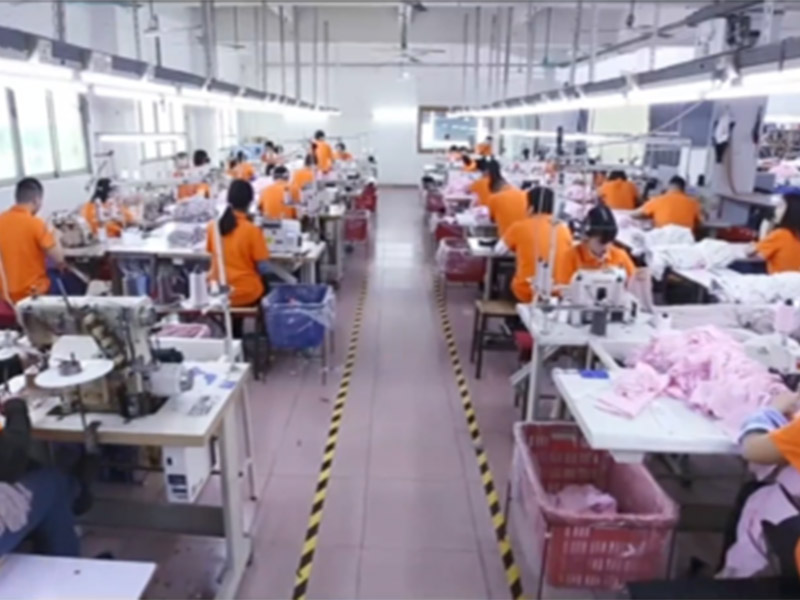
Jinfeng Apparel’s confirmed production network includes six owned factories, more than ten long-term satellite partners, over eighteen sewing lines, and six or more flexible lines. Regular monthly capacity exceeds 100,000 pieces across the coordinated womenswear system, depending on style complexity, fabric type, order structure, and production schedule. Fifteen or more QC inspectors cover incoming materials, cutting, sewing, finished garments, pressing, packing, AQL inspection, and client inspection support.
Final inspection alone cannot repair every mistake created earlier. Effective control begins with fabric and trim checks, followed by pattern-version confirmation, cutting inspection, first-piece approval, in-line sewing checks, measurement review, finishing inspection, and packing verification. Many apparel programs use AQL 2.5 for major defects and 4.0 for minor defects as a common starting point, although each brand should define its own inspection level, defect categories, and acceptance rules.
How Do Brands Verify Dress Manufacturers?
Brands verify dress manufacturers by checking legal identity, factory location, product specialization, technical staff, sample performance, production capacity, quality systems, and commercial terms. Marketing claims are useful only as starting points. Approval should rely on consistent documents, live factory evidence, controlled sample development, audit findings, material records, and a production plan that clearly identifies where and how the order will be made.
Company and Factory Evidence
The first verification step is confirming who the brand is actually dealing with. The commercial company, export entity, and factory operator may be the same organization or separate companies. This is not necessarily a problem, but the relationship should be understood before payments, samples, or confidential design files are exchanged.
Brands should request the registered company name, business address, production-site address, contact details, bank beneficiary information, main product categories, sample-room structure, production-line information, and quality-team responsibilities. Names and addresses should be consistent across contracts, invoices, bank details, audit reports, and factory documents. Any difference should be explained in writing.
A live video walkthrough can provide useful early evidence when an immediate visit is not practical. The supplier should be able to show the sample room, pattern area, fabric storage, cutting section, sewing lines, inspection points, finishing space, packing area, and warehouse. A pre-recorded promotional video is less useful because it may not show current workload, actual staff, or the facility proposed for the order.
Confidentiality should also be verified. Mature brands routinely share tech packs, line sheets, patterns, samples, labels, packaging files, and unreleased launch information. A manufacturer should be prepared to sign an NDA, control internal access, identify how samples are stored, and avoid publishing client designs without written permission.
Sample Evaluation
Sampling tests far more than sewing quality. It reveals how the manufacturer reads technical information, asks questions, sources materials, records changes, manages deadlines, and communicates uncertainty. A beautiful first sample can still be a warning sign if the supplier cannot explain the pattern, fabric source, construction decisions, or how the result will be reproduced in bulk.
Every candidate should be evaluated with the same scorecard. The review should cover overall silhouette, key measurements, fit and comfort, fabric appearance, construction accuracy, stitch quality, symmetry, lining, closures, pressing, label placement, and delivery timing. Where possible, the garment should be tried on a fit model rather than judged only on a mannequin or photograph.
Revised samples need a change record that identifies which comments were completed, which remain open, and whether any request affects cost, construction, or lead time. Without version control, old comments can return in later samples or disappear during bulk production. The brand should assign a sample number and date to each approval so that both sides are discussing the same reference.
The pre-production sample should use approved bulk materials, trims, labels, measurements, and construction. Once signed and sealed, it becomes the visual and technical reference for cutting, sewing, in-line control, final inspection, and repeat orders. Changes made after this stage should be documented because they can affect material use, cost, and delivery.
Audit and Production Readiness
A factory audit evaluates whether the supplier has the systems and resources required to manufacture the order under the agreed conditions. Depending on the brand, the review may cover quality management, production capacity, traceability, workplace practices, safety, environmental procedures, subcontracting, and document control. The scope should reflect the risk of the project rather than becoming a generic checklist.
Production readiness is a separate but closely related step. Before cutting begins, the brand and factory should confirm the final pattern version, measurement chart, fabric and trim approvals, color references, labels, packaging files, cutting plan, production line, quality checkpoints, inspection schedule, delivery milestones, and shipment terms. Any unresolved item should have an owner and a decision date.
Current workload matters as much as headline capacity. A factory may have adequate total production volume but no suitable line available during the required window. Brands should ask which line is reserved, what other orders will run at the same time, and whether any operation will move to another facility. Unapproved subcontracting can create quality and traceability problems even when the main factory appears capable.
Warning signs include frequent changes to the proposed production site, reluctance to show work areas, pressure to skip the pre-production sample, unusually low quotations without material detail, conflicting company information, and promises that ignore fabric lead times or line availability. A reasonable limitation stated early is safer than an unrealistic promise that collapses after the deposit is paid.
Commercial Risk Checks
Commercial verification should be completed before the purchase order, not after the first problem. Brands need to understand what the quotation includes, how long the price remains valid, which Incoterm applies, who purchases materials, how sample charges are handled, what quantity tolerance is accepted, and how shortages, delays, or quality claims will be resolved.
A comparable quotation should state fabric composition and weight where relevant, lining, trims, labels, packing, pattern or development charges, testing responsibility, delivery term, payment schedule, and production quantity. Two prices cannot be compared fairly when one includes retail packaging and final inspection while the other assumes a basic polybag and minimal finishing.
MOQ should also be interpreted correctly. For custom womenswear, minimums are commonly calculated by style and color because fabric and production setup must be planned for each variation. Jinfeng Apparel’s standard MOQ starts from 200 pieces per style and color, depending on fabric availability, color development, trims, construction complexity, packaging, and production schedule. Special dyeing, printing, lace, sequins, hardware, or packaging may create additional supplier minimums.
The agreement should identify who pays for sorting, repair, reinspection, replacement, or expedited freight when the factory fails to meet the approved standard. A trustworthy manufacturer may not accept every requested clause, but it should explain responsibilities clearly and avoid changing commercial assumptions after production has started.
How Do Brands Build Long-Term Partnerships?
Brands build long-term manufacturing partnerships by maintaining accurate technical records, sharing realistic forecasts, approving materials on time, reviewing measurable performance, and preserving one agreed production standard. The manufacturer should retain patterns, measurements, fabric references, trims, packaging details, and quality findings so that repeat orders and seasonal collections can move faster without repeating the entire development process.
Clear Development Records
Long-term cooperation begins with disciplined records. Patterns, tech packs, measurement charts, fit comments, fabric references, trims, labels, and packaging instructions should be version-controlled and stored for future orders. The sealed sample and the final production file must match so that a reorder does not depend on memory, chat history, or an old photograph.
When a neckline, zipper, lining, measurement, or construction method changes, the update should appear across every relevant document. A revised pattern without an updated measurement chart can create confusion during inspection. A packaging change left only in an email may be missed by the packing team. Centralized records reduce these gaps and make responsibility easier to trace.
For repeat production, the manufacturer should retrieve the final pattern, approved grading, fabric supplier and quality reference, color record, trim specification, stitch and construction notes, quality findings, packing method, carton information, and previous shipment feedback. The brand should confirm whether the new order is identical or whether fabric, sizing, color, labels, or regulations have changed.
Jinfeng Apparel supports NDA-based cooperation and retains approved development and production information for long-term projects, including patterns, measurement files, fabric and trim records, private-label details, packing requirements, and previous order references. This allows repeat orders, multi-batch production, and seasonal collection development to begin from a controlled base rather than starting again from the first sample.
Forecasting and Capacity Planning
Factories can support established brands more effectively when they understand the expected order calendar. A forecast does not need to be a binding purchase order, but it should show likely style counts, approximate quantities, delivery windows, important fabrics, and potential replenishment needs. This helps the manufacturer identify material risks, reserve development resources, and discuss realistic line availability.
A practical planning rhythm may include a six-month directional forecast, a three-month style and quantity update, a one-month confirmed production plan, and weekly milestone reviews during active production. The exact timing depends on the brand’s launch cycle, but the principle is consistent: information should become more precise as the production date approaches.
Forecasting is especially important for custom dyeing, printing, specialty lace, sequins, branded hardware, and peak-season bookings. A factory cannot hold unlimited capacity without commitment, yet early visibility allows it to propose fabric reservations, phased deliveries, alternative trims, or line options before the schedule becomes urgent and expensive to recover.
Brands should also identify products likely to reorder quickly. Preserving cutting markers, fabric references, approved trims, and packing details can shorten replenishment preparation. However, repeat orders still need material and shade confirmation because a new fabric lot may behave differently from the original, even when the supplier uses the same article number.
Performance Review
Strong partnerships do not depend on avoiding difficult conversations. They improve when both sides review measurable results and agree on corrective actions. A post-order review should examine sample timing, number of revisions, material approval, production start, on-time shipment, inspection results, measurement failures, shortages, packing accuracy, and claim resolution.
The figures should be interpreted in context. A structured satin dress may require more development than a basic jersey style, and a first order often needs more communication than a repeat program. The purpose is not to punish every deviation. It is to identify repeated problems, clarify root causes, and prevent the same issue from returning in the next collection.
A useful corrective action describes the problem, cause, containment step, permanent solution, responsible person, and completion date. Repeated zipper waves may come from unsuitable zipper tape, seam tension, or operator technique. Repeated shade differences may come from mixed dye lots or weak fabric approval. Repairing finished garments without changing the underlying process only postpones the next failure.
Performance reviews should also recognize what worked well. Accurate samples, early risk warnings, stable measurements, clear packing records, and fast claim resolution deserve to be documented. This creates a more balanced relationship and helps both teams decide which styles, fabrics, and production units are suitable for future growth.
Seasonal Growth
A good manufacturing partnership becomes more valuable as the supplier understands the brand’s fit, construction standards, target customer, price position, and launch calendar. This knowledge can support new silhouettes, coordinated sets, alternative fabrics, and faster repeat orders. The factory begins to recognize recurring fit preferences and can raise practical questions before they become sample problems.
Operational memory has commercial value. A long-term supplier may know which neckline previously required stabilization, which satin weight created better drape, which size range needed extra grading attention, and which packing method reduced creasing. These lessons can improve future development when they are recorded and shared rather than kept informally by one employee.
Trust should still be supported by process. A good past order does not remove the need to inspect a new fabric, approve a changed construction, or verify production during peak season. Long-term cooperation works best when both sides can move faster because the standards are clear, not because important controls have been abandoned.
Established brands often benefit from maintaining a primary manufacturer and a qualified backup. The primary supplier carries product knowledge and repeat-order efficiency, while the backup reduces dependency and can support capacity expansion. Both should work from controlled technical files so that the brand does not create two different versions of the same dress.
For fashion teams seeking a long-term custom dress manufacturing partner, Jinfeng Apparel supports OEM, ODM, and private-label womenswear from development through export delivery. The Guangdong-based team works with established brands on dresses, skirts, jumpsuits, matching sets, and seasonal collections, with pattern development, fabric sourcing, sampling, bulk production, quality control, packaging, NDA protection, and repeat-order support managed within one coordinated system.
Projects normally begin with a tech pack, reference sample, sketch, line sheet, or clear product direction, together with fabric preferences, size range, estimated quantity, target market, and delivery expectations. The standard MOQ starts from 200 pieces per style and color, subject to material, trim, construction, packaging, and production requirements. Sharing these details allows the development team to review feasibility, identify risks, and prepare a more accurate quotation and sampling plan.