Skip to content

A dress may look effortless when it appears in a campaign, showroom, or online product launch, yet the production calendar behind it is rarely simple. Before bulk sewing begins, the manufacturer may need to review the structure, source the correct fabric, develop the pattern, make and revise samples, approve trims, reserve skilled operators, prepare labels, and translate every final decision into production instructions that can be repeated across hundreds or thousands of garments.
Dress production lead time is affected by fabric availability, design complexity, sample revisions, order quantity, color and size combinations, trim development, factory capacity, quality requirements, packaging, and shipping. Clear specifications, approved materials, realistic milestones, and fast consolidated feedback can shorten the schedule, while custom fabrics, complex construction, and late changes can add several weeks.
This explains why a 3,000-piece jersey bodycon program may move faster than a 1,200-piece corset dress order. The smaller order can require more pattern correction, cup shaping, boning, lining, hand finishing, and fit approval. In many delayed projects, the sewing line was never the real problem; the shipment slipped because one fabric color, zipper, barcode file, or PP sample remained unresolved until the calendar had no room left.

What Is Dress Production Lead Time?
Dress production lead time is the period required to move an approved dress specification through material preparation, sampling, bulk manufacturing, inspection, packing, and shipment readiness. The quoted number is useful only when its start point, finish point, included stages, approval responsibilities, and logistics assumptions are clearly defined.
The Real Start and Finish
Many schedule disputes begin because the brand and the factory start counting on different dates. A brand may count from the day it sends the purchase order, while the manufacturer may count from the day the deposit arrives, the PP sample is approved, the size chart is locked, and all bulk materials are confirmed. An inquiry date, quotation date, or verbal order is not automatically a production start date because unresolved details can still prevent purchasing, cutting, or line allocation.
For custom dresses, the safest starting point is the date when production-critical conditions are complete. These usually include the approved PP sample, final bill of materials, confirmed quantities by style and color, approved labels and packaging, agreed payment terms, and a reserved production slot. The finish point must be equally precise. “Sewing completed” is not the same as packed goods passing final inspection and being ready for handover to the nominated forwarder.
- Approved PP sample and final size chart
- Confirmed bulk fabric, lining, trims, and color standards
- Final quantities by style, color, size, and destination
- Approved labels, barcodes, packaging, and carton marks
- Agreed payment terms, inspection plan, and reserved production slot
Sample, Bulk, and Delivery Time
Sample lead time, bulk production lead time, and total delivery time describe different parts of the project. Sampling is still a development stage in which the team tests pattern balance, measurements, fabric behavior, construction, fit, and visual details. A first sample may reveal that a satin seam puckers, a mesh panel stretches, a neckline opens during movement, or a corset cup needs reshaping. Those findings are normal, but they must be resolved before the style is safe to reproduce at scale.
Bulk production is the controlled repetition of an approved standard. It covers bulk materials, cutting, sewing, inline inspection, finishing, pressing, final checks, private-label packing, and carton preparation. Delivery time begins after the goods are ready, but it may still include booking space, export documentation, customs procedures, international transport, import clearance, and warehouse receiving. A factory can finish on time while the launch still slips because logistics were planned too late.
A Practical Planning Model
Early planning works best when the schedule is divided into visible stages rather than summarized as one unexplained number. The ranges below are practical allowances for discussion, not universal promises. Simple stock-fabric programs can move faster, while custom-dyed materials, repeated fit rounds, complex corsetry, placement prints, or retail-specific packaging may require more time. Several activities can overlap, but only after the relevant decision is stable enough to avoid costly rework.
| Project Stage | Indicative Planning Range | Main Variables |
| Requirement review | 2-5 working days | Tech pack quality, missing details, quotation changes |
| Fabric and trim approval | 5-20 working days | Stock status, lab dips, custom color, print, supplier MOQ |
| Sample development | 7-25 working days per round | Pattern difficulty, fabric, fit, corset or embellishment work |
| Bulk material preparation | 7-25 working days | Dyeing, printing, knitting, weaving, trim production |
| Cutting and line preparation | 3-8 working days | Fabric inspection, relaxing, markers, size ratios |
| Sewing and finishing | 15-35 working days | Quantity, complexity, line efficiency, manual operations |
| QC and packing | 3-8 working days | Inspection level, rework, labels, SKU packing |
| International transport | Route-dependent | Express, air, LCL, FCL, customs, destination delivery |
Critical Path and Waiting Time
The critical path is the sequence of tasks that directly controls the shipment date. Sewing may require twenty working days, yet a custom fabric may require twenty-five. When cutting cannot begin until the fabric arrives and passes inspection, fabric preparation controls the calendar. Adding more sewing operators will not recover that time. The same principle applies to a PP sample, custom lace, size grading, barcode approval, or a final inspection booking that must be completed before the next stage can start.
Hidden waiting time often matters more than the factory’s actual working time. A sample may take ten days to make, three days to ship, five days to move through internal fittings, and another four days before consolidated comments return. The factory used ten days, but the approval cycle consumed twenty-two. A useful calendar therefore records when the factory submits, when the client must respond, and when the next stage can begin, making ownership of every milestone visible.
Which Materials Affect Lead Time Most?
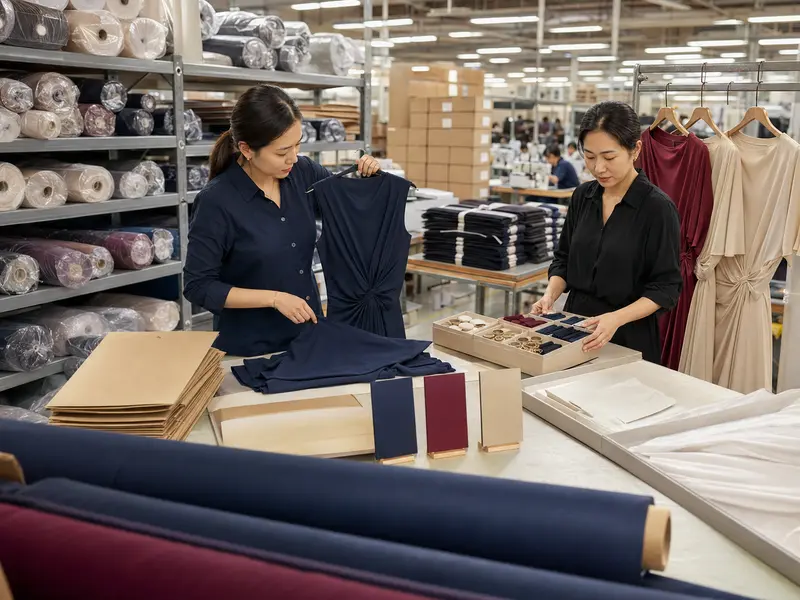
Custom-dyed fabrics, specially printed textiles, lace, sequins, branded hardware, and color-matched trims usually create more lead-time risk than available stock materials. Material availability should be verified before the launch calendar is fixed because cutting cannot proceed safely until the correct bulk fabric and essential trims are approved and available.
Stock and Custom Fabric
Stock fabric can shorten preparation, but “in stock” does not mean “approved and reserved.” The supplier still needs to confirm usable quantity, width, weight, composition, stretch direction, shrinkage, shade consistency, defect allowance, and whether the material comes from one bulk lot. A showroom swatch may be available for sampling while the required production quantity is already committed to another order, so reservation status matters as much as the initial stock claim.
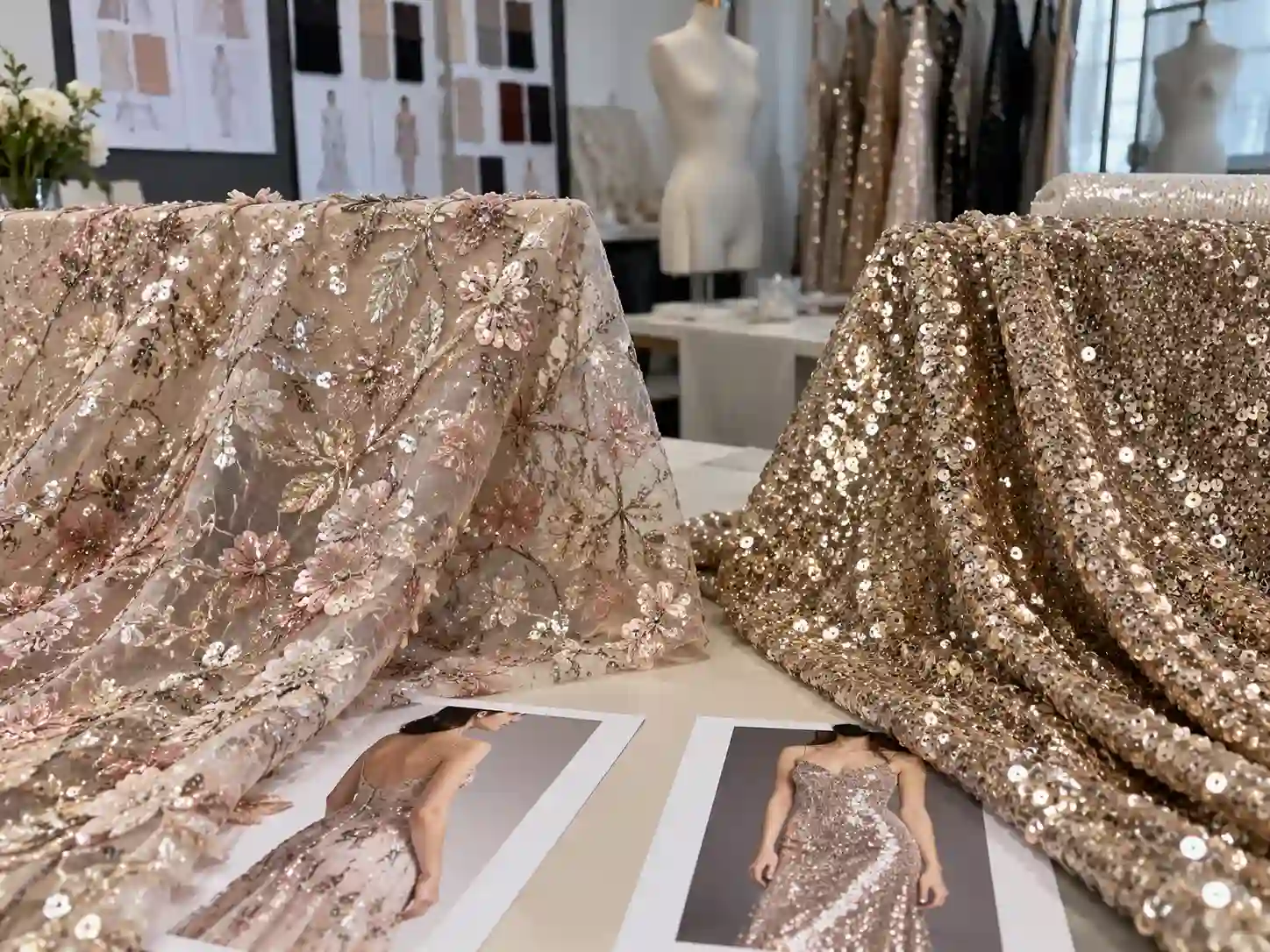
Custom fabric adds supplier development and production stages. A new shade may need lab dips, while a print may require artwork preparation, strike-off approval, bulk printing, curing, and inspection. Custom lace or sequin textiles may require motif, color, width, backing, density, and edge confirmation. The material decision should consider drape, recovery, opacity, seam behavior, pressing, and care performance, not only whether the surface looks similar in a photograph.
- Bulk quantity and reservation period
- Usable width, weight, composition, and stretch direction
- Dye-lot consistency, shrinkage, and defect allowance
- Reorder availability and acceptable substitute options
Color and Print Approval
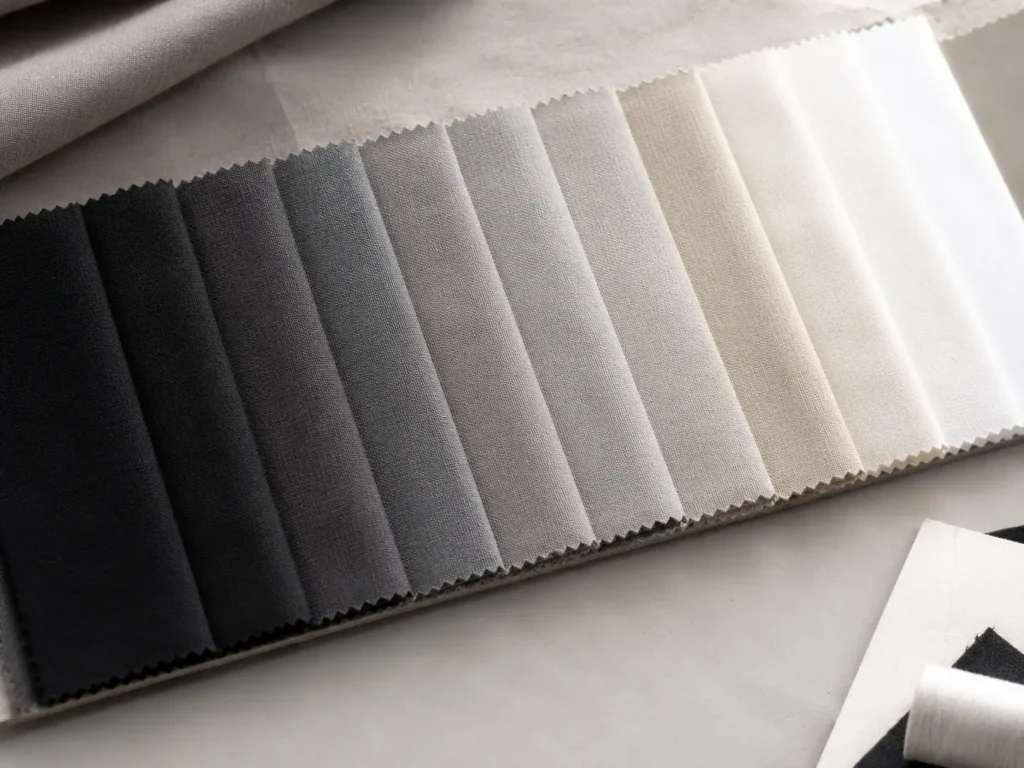
A color name such as wine, ivory, sage, or chocolate is too broad for production control. A physical standard, approved lab dip, swatch, or Pantone reference is needed, yet the same target can look different on matte chiffon, glossy satin, rib knit, mesh, and velvet. Approval should therefore be made on the actual fabric under suitable lighting, with an agreed tolerance for bulk production rather than relying only on phone images or screen colors.
Printed dresses introduce more decisions: artwork scale, repeat size, color separation, print direction, placement, and the relationship between the motif and each pattern piece. Placement prints usually need more development than continuous all-over prints because the artwork may need to align with the bust, waist, center front, or hem. Larger sizes can also shift placement unless the pattern and print plan are coordinated before cutting markers are finalized.
| Material Process | Typical Planning Allowance | Common Delay Trigger |
| Stock-color verification | 2-5 working days | Quantity not reserved or mixed dye lots |
| Lab dip | 3-7 working days per round | Shade too warm, cool, dark, or light |
| Bulk custom dyeing | 10-25 working days | Mill schedule or failed bulk shade |
| Print strike-off | 5-10 working days per round | Artwork scale, repeat, or color error |
| Bulk printing | 15-30 working days | Method, quantity, curing, or finishing |
| Custom lace or sequins | 20-45 working days | New motif, special color, or supplier MOQ |
| Custom trims or hardware | 10-30 working days | Tooling, plating, color matching, or approval |
Trims and Internal Support
A dress can depend on many secondary components even when the outer fabric is simple. Invisible zippers, hooks, bra cups, underwires, plastic or metal boning, anti-slip tape, elastic, shoulder adjusters, decorative buttons, lace edging, rhinestones, interlining, labels, and hangtags may come from different suppliers. One missing component can stop sewing or final packing, so trims should be approved and purchased as part of the production plan rather than treated as last-minute workshop details.
Corset and strapless styles are especially sensitive because changing cup shape, boning stiffness, closure strength, or anti-slip support can alter fit and comfort. Linings must also match the outer fabric in color, stretch, opacity, weight, shrinkage, and care requirements. A rigid lining under a stretch dress may restrict movement, while a lining that shrinks more than the satin shell can pull the garment out of balance after cleaning.
Testing Before Cutting
Material testing takes time, but it usually protects more time than it consumes. The purpose is to discover shrinkage, color transfer, poor recovery, seam slippage, pilling, surface damage, print weakness, transparency, or embellishment failure before the entire order depends on the material. A two-day check before cutting is easier to absorb than reopening packed cartons because finished dresses have grown in length, twisted at the side seam, or transferred color onto the lining.
Testing priorities should reflect the product. Bodycon dresses need stretch and recovery checks, while satin requires attention to snagging, shading, pressing marks, and seam appearance. Mesh and lace should be checked for holes, edge stability, transparency, and lining compatibility. Sequin fabrics may need abrasion, attachment, seam-thickness, and skin-contact checks. The material approval record should capture the result so repeat orders do not restart the same investigation from memory.

How Does Dress Design Affect Production Time?
Dress design affects lead time through pattern complexity, sewing operations, fabric handling, fitting difficulty, and inspection requirements. Simple silhouettes made from stable materials are easier to industrialize, while corsetry, draping, ruching, lace placement, sequins, asymmetry, and layered construction require more development, slower sewing, and tighter control during bulk production.
Styles That Take Longer
A basic jersey tank dress and a structured strapless evening dress should not be planned with the same assumptions. Corset dresses, multi-layer chiffon gowns, fitted satin styles, lace placement dresses, sequin garments, asymmetric cut-outs, deep draping, and designs with built-in cups or underwires generally require more pattern work and production preparation. The number of pieces matters, but the interaction between those pieces and the body is often the more important source of complexity.
Corset construction is a clear example. The pattern maker must manage bust coverage, cup shape, waist reduction, boning position, lining, seam thickness, closure strength, and neckline security. A change to one area can affect several others. These styles also take longer to inspect because symmetry, cup placement, waist balance, internal support, and comfort must remain consistent across sizes, colors, and production batches rather than looking correct only on the approved sample.
Fabric Behavior and Sewing
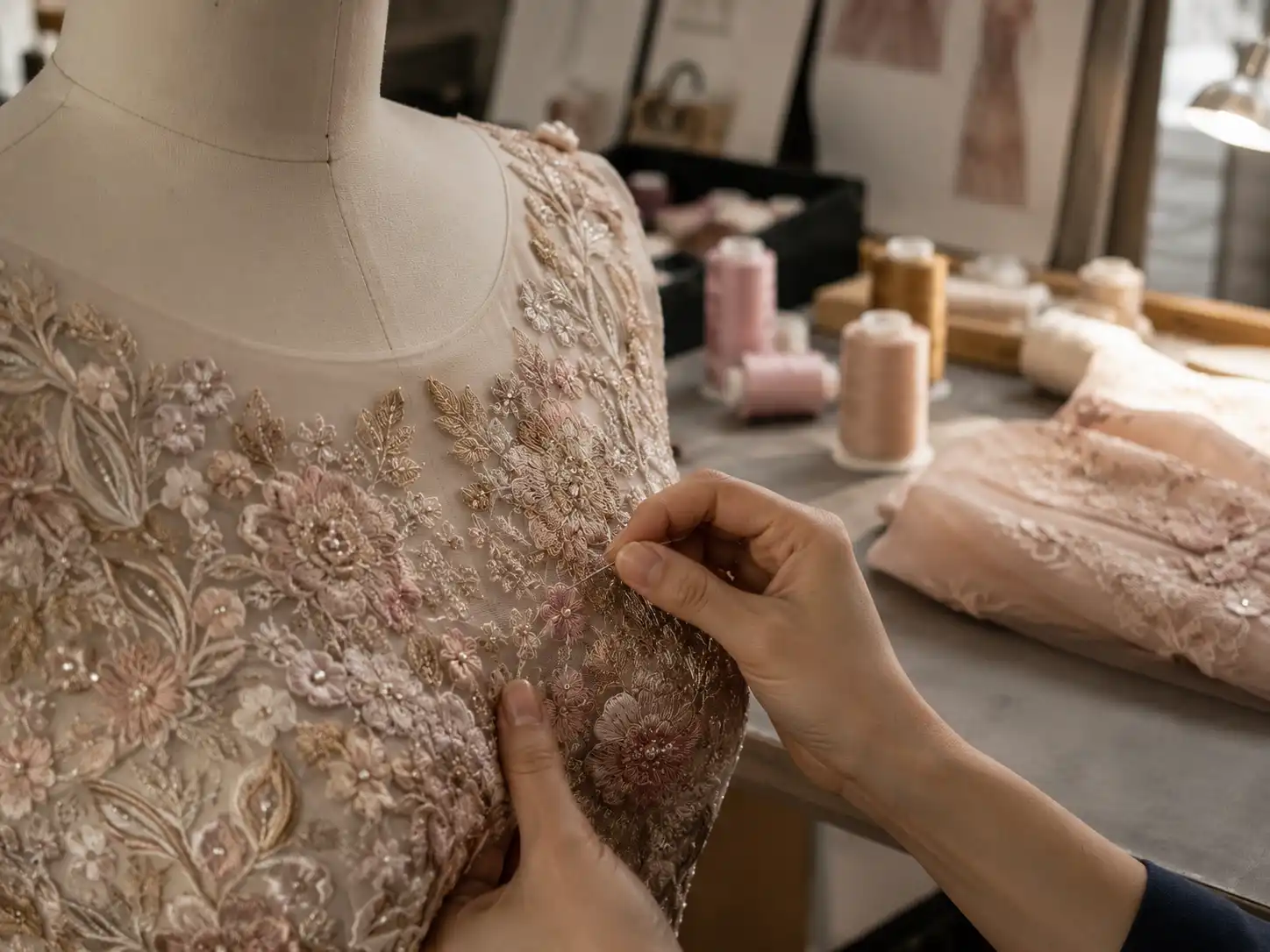
Fabric behavior can turn a visually simple dress into a technically demanding product. Satin may use only a few panels, yet the surface can show needle marks, puckering, pulling, pressing damage, and inconsistent shine direction. Mesh can curl, stretch, or become wavy at seams. Lace may require motif matching and careful edge handling, while sequin fabric can require removal around seam allowances, slower stitching, needle changes, lining protection, and local hand repair.
The manufacturer should assess cutting stability, grain direction, needle and thread choice, seam type, feeding control, pressing temperature, lining construction, operator skill, and packing protection before committing to output. A line that is efficient with basic knit dresses may not be suitable for satin occasionwear, and a high-speed woven line may struggle with embellished panels. The most reliable schedule comes from matching each design to a team that already understands the fabric and construction.
| Dress Type | Main Time Drivers | Typical Production Risk |
| Simple knit or jersey dress | Stretch control, seam recovery, measurements | Growth, twisting, uneven side seams |
| Satin slip or bias dress | Grain, seam handling, pressing, hem balance | Puckering, snagging, shading, uneven hem |
| Corset or strapless dress | Cups, boning, lining, fit, support | Neckline movement, discomfort, size inconsistency |
| Lace or mesh dress | Motif placement, transparency, lining, edge control | Holes, mismatch, exposed seams, distortion |
| Sequin or embellished dress | Slow cutting, seam clearance, hand repair, protection | Sequin loss, scratching, needle breakage |
| Layered evening dress | Multiple fabrics, long hems, drape, pressing | Uneven layers, shade differences, packing creases |
Colors, Sizes, and SKUs
Order quantity alone does not describe the workload. A 5,000-piece program in one color and five standard sizes may be easier to manage than a 3,000-piece order divided across six colors, eight sizes, several lining combinations, and multiple warehouse destinations. Every SKU affects fabric allocation, cutting markers, bundle identification, label control, measurement checks, packing assortment, barcode accuracy, carton marks, and warehouse documentation.
Additional colors can require separate dye lots, zippers, threads, linings, and sewing preparation. Extended size ranges may need more than proportional grading when necklines, cups, straps, or internal support must change between size groups. Multi-style collections create shared dependencies when several products use the same material. Shared sourcing can reduce cost and simplify color consistency, but it can also spread one fabric delay across several launch-critical styles.
Design for Production
Production-friendly design does not mean removing every distinctive detail. It means identifying which details create customer value and which create risk without improving the final garment. A ruched panel may be central to the silhouette, while a hidden internal seam treatment might be simplified without changing appearance. Early discussion between design, pattern, sourcing, costing, and production teams can protect the intended look while reducing unnecessary operations, fragile joins, difficult pressing, or excessive handwork.
A practical review should ask whether the fabric supports the shape, whether the neckline remains secure during movement, whether the dress can be graded consistently, whether the construction can be inspected, and whether a trained operator can repeat the detail at bulk scale. A beautiful sample made through exceptional one-off effort is not yet a production-ready design. The real test is whether the method remains stable across the agreed quantity, size range, and delivery schedule.
- Does the fabric support the intended silhouette and movement?
- Can the construction be graded consistently across the full size range?
- Can operators repeat the detail without excessive hand correction?
- Can QC inspect the feature using a clear measurable standard?
How Do Sampling and Approvals Affect Lead Time?
Sampling affects lead time because it converts a design concept into a repeatable production standard. Complete technical information, suitable materials, controlled revision rounds, and consolidated feedback keep development moving. Missing measurements, changing fabrics, fragmented comments, or late structural decisions can add several sample cycles before bulk production is safe to release.
Information Before Sampling
A manufacturer can begin from a tech pack, reference photo, original sample, sketch, line sheet, or fabric swatch, but the quality of the first sample depends on how much useful information is available. A fashion image may communicate the mood and silhouette, yet it rarely shows internal construction, exact measurements, lining, seam finish, closure type, or intended fit. When those decisions remain unclear, the sample room must either stop and ask questions or proceed through assumptions.
Efficient development normally requires front and back views, a base-size chart, intended size range, fabric direction, lining, color references, trim details, construction notes, label positions, target quantity, target market, and launch timing. The factory should review the structure before cutting the first sample. Questions about bust support, stretch, transparency, neckline stability, hem finish, or intended ease should be resolved early because correcting an assumption later usually affects pattern, material, labor, and cost together.
- Front and back drawings or clear reference images
- Base-size measurements and intended size range
- Fabric, lining, color, trim, and closure direction
- Construction notes, label positions, quantity, market, and launch date
Sample Timing and Revisions
Sample duration varies with material availability and construction. A straightforward knit or woven style may be completed within roughly seven to ten working days after complete information and materials are available. A regular custom dress often needs around ten to fifteen working days, while corset, strapless, lace, mesh, sequin, or evening styles may require fifteen to twenty-five working days. These are practical planning ranges, not a promise that every project will be approved in one round.
Each revision creates a complete loop: feedback is interpreted, patterns or specifications are updated, materials are prepared, the sample is sewn and checked, the parcel is dispatched, and the client reviews the result. Physical transit and internal fitting time can be as significant as sample-room time. The calendar should therefore include the full approval cycle rather than counting only the days spent at the sewing machine.
PP and Golden Samples
A first sample is not automatically the bulk production standard. Its purpose may be to test silhouette, fit, construction, or material direction. A fit sample focuses on measurements and balance, while a revised sample implements documented corrections. A photo-ready sample may prioritize campaign appearance, but temporary materials or non-final labels can still make it unsuitable as the production reference. Treating these sample types as interchangeable creates confusion when the production team needs one final answer.
The PP sample should confirm the final fabric, color, lining, trims, measurements, construction, labels, and packing method before bulk cutting. A sealed Golden sample can then support line setup, workmanship checks, measurement control, and final inspection. The approved reference should be linked with the final bill of materials, size chart, sewing instructions, QC checkpoints, and packaging files so that comments do not remain scattered across email, chat, and marked photographs.
Feedback and Decision Speed
Fast feedback is useful only when it is complete and consistent. Fragmented comments can make the next sample obsolete before it is finished. One team may approve the neckline, another may change the fabric, and a third may later request a different lining or label position. The manufacturer cannot responsibly finalize the next version while major decisions are still moving, even when each separate request appears small.
A stronger process uses one consolidated comment sheet that records measurements, fit corrections, fabric decisions, trim changes, construction updates, branding, packaging, and final responsibility for approval. Comments should explain the problem and the desired result rather than using vague statements such as “make it better” or “fit feels wrong.” Clear feedback allows the pattern maker and sample machinist to identify the cause, update the correct file, and prevent the same issue from returning in bulk production.
- Measurements and fit corrections
- Fabric, color, and trim decisions
- Construction and workmanship changes
- Label, barcode, and packaging updates
- One named person responsible for final sign-off

How Do Order Size and Factory Capacity Affect Lead Time?
Order size affects lead time, but total pieces are only one part of capacity planning. Style complexity, fabric readiness, color and size splits, production-line specialization, seasonal demand, inspection requirements, and packaging structure determine how quickly an order can move. A larger repeat order may run more predictably than a smaller first order with several complex new styles.
Quantity Versus Complexity
A larger order usually requires more cutting, sewing, inspection, and packing hours, but the relationship is not perfectly linear. Once a stable style is running efficiently, operator familiarity and balanced operations can improve daily output. A 10,000-piece repeat program using approved materials may therefore be easier to forecast than a 1,500-piece first order divided across corset dresses, lace styles, and sequin garments with several unresolved details.
Quantity must be evaluated together with styles, colors, size ratios, fabrics, manual operations, packing methods, and delivery destinations. The standard MOQ for Jinfeng Apparel starts from 200 pieces per style and color, depending on fabric availability, custom color development, trims, construction, packaging, and the production schedule. This structure matters because a total of 200 pieces split among unrelated styles or colors does not create the same production efficiency as one confirmed style and color.
Peak Season and Line Matching
Capacity is not simply the number of machines in a building. The correct production line must be available at the correct time and experienced with the specific garment. Peak periods create pressure across fabric mills, dye houses, trim suppliers, sample rooms, sewing lines, inspection teams, and freight services at the same time. Reserving a line without confirming materials and approvals does not fully protect the launch because the factory cannot hold skilled capacity indefinitely while critical information remains open.
Line matching is equally important. Knit bodycon dresses need teams familiar with stretch and measurement stability. Satin and chiffon require careful handling and pressing. Corset styles need cup, boning, and internal-support experience. Lace and sequin garments need slower, detail-focused work. Assigning a complex order to the first available line may appear to save time, but the learning curve, defects, and rework can consume more time than waiting for the right specialized team.
Multi-Factory Production
A coordinated production network can support multi-style programs and seasonal volume, but only when technical control remains centralized. Jinfeng Apparel’s documented system includes six owned women’s fashion factories, more than ten long-term satellite production partners, over eighteen sewing lines, at least six flexible production lines, two sample rooms, more than twenty sample machinists, seven senior pattern makers, and more than fifteen QC inspectors. Monthly capacity is stated at more than 100,000 pieces, depending on complexity and order structure.
These numbers are useful only when paired with product allocation and project management. Different units can focus on woven dresses, occasionwear, knit and stretch styles, resort dresses, matching sets, or repeat production. Technical packs, approved samples, QC checkpoints, and packing instructions need to remain consistent across every unit. Without centralized follow-up, adding factories can multiply communication gaps rather than shorten the schedule.
Repeat and Phased Orders
Repeat orders can move faster because approved patterns, size charts, fabric references, trim records, sewing instructions, labels, packing methods, and inspection history already exist. The team should still confirm that the fabric quality is available, trims come from the same source, colors match the approved reference, and no branding or measurement changes have been introduced. Reusing an old specification without checking current supply conditions can create false confidence.
Phased production can support a fixed launch when priority colors, high-volume sizes, or key styles ship first and the balance follows later. Some programs use air freight for a launch quantity and sea freight for the remaining volume. This can protect product availability, but it requires separate packing lists, carton marks, booking instructions, and inventory coordination. Split delivery works best when it is planned before cutting and packing, not requested after the complete order is already finished.
How Do QC, Packaging, and Shipping Affect Delivery?
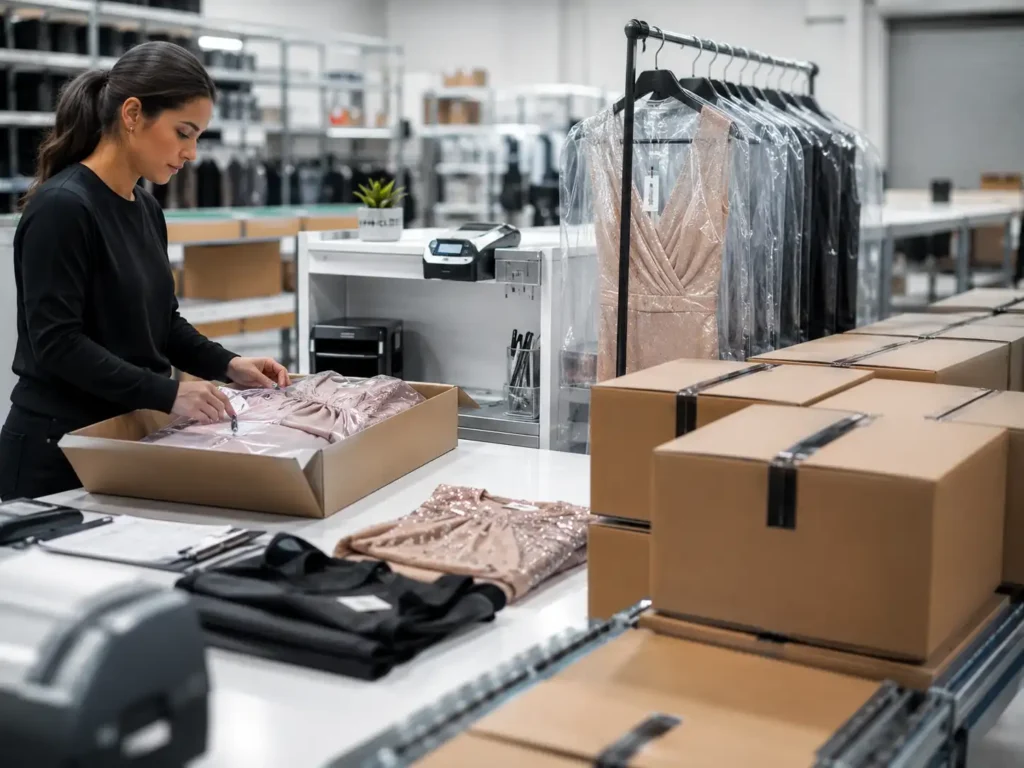
Quality control, packaging, and logistics are part of lead time rather than activities added after production is finished. Material inspection, inline checks, measurement control, final garment review, labels, barcodes, carton preparation, shipment booking, and customs documents all require time. Removing these stages may shorten the calendar on paper while increasing defects, rework, claims, and missed delivery appointments.
Quality Checks Need Time
Quality control should begin before sewing and continue throughout the order. Waiting until final inspection to discover a repeated construction error can create a major delay because hundreds or thousands of garments may need reopening and repair. A controlled process usually covers incoming fabric and trims, cutting direction, first production pieces, inline sewing, measurements, finishing, pressing, labels, packing, and pre-shipment inspection.
The checkpoints must reflect the product. Bodycon dresses need stretch, recovery, and measurement stability. Satin dresses need checks for puckering, snagging, color shading, and pressing damage. Lace and mesh require inspection for holes, motif alignment, transparency, and lining coverage. Sequin dresses need attachment, scratch-risk, seam, and packaging checks. Corset styles require cup position, boning, closure strength, neckline security, and size consistency. Inspection time is most efficient when the risk is addressed during production rather than after packing.
- Incoming fabric and trim inspection
- Cutting direction and first-piece review
- Inline sewing and measurement checks
- Finished garment, pressing, label, and packing inspection
- Pre-shipment inspection and corrective-action verification
Rework and Packaging
Rework is one of the least predictable lead-time factors because the effect depends on how early the problem is found. Correcting ten garments during an inline check may take hours, while correcting the same issue after 3,000 pieces are sewn and packed can take days. Measurement failures, zipper bulging, uneven hems, loose embellishments, incorrect lining, poor pressing, or wrong labels may require repair, reinspection, and repacking before the order can be released.
Private-label packaging has its own critical path. Main labels, care labels, hangtags, size stickers, barcode labels, polybags, tissue, cartons, assortments, and carton marks must match the client’s warehouse instructions. Retail and ecommerce programs may require SKU-level barcode accuracy, pack ratios, destination labels, or separate cartons for different channels. One incorrect barcode can stop otherwise acceptable goods from entering a warehouse, so packaging approval should run alongside product development rather than begin after sewing is complete.
Shipping and Customs
Factory completion is not the same as final delivery. The shipping method changes both transit time and the amount of preparation required. Express and air freight can move urgent quantities quickly but may be expensive for bulky dresses and retail packaging. Sea freight is usually more economical for larger programs, yet booking, consolidation, port schedules, customs clearance, and destination delivery add time that must be considered when the launch date is fixed.
Commercial invoices, packing lists, carton dimensions, weights, shipping marks, certificates when required, and consignee instructions need to be accurate before handover. LCL cargo may wait for consolidation, while FCL cargo depends on container availability and vessel cut-off times. Destination warehouses may also require appointments. A realistic plan works backward from the required warehouse date, allowing time for final inspection, corrections, document preparation, freight booking, transport, customs, and receiving.
| Final Stage | Indicative Allowance | Common Risk |
| Inline and final QC | 3-8 working days within/after production | Late discovery of repeated defects |
| Private-label packing | 3-10 working days | Late labels, barcodes, pack ratios, or carton marks |
| Rework and reinspection | 1-10+ working days | Extent of defect and stage of discovery |
| Express courier | 3-7 calendar days | Remote areas, customs, dimensional weight |
| Air freight | 5-12 calendar days | Flight space, customs, destination handling |
| Sea freight | 20-45+ calendar days | Route, consolidation, port schedule, clearance |
| Warehouse delivery | 1-7+ calendar days | Appointments, receiving windows, local transport |
Reducing Lead Time Safely
Lead time should be reduced by removing uncertainty and idle time, not by skipping approvals or inspections. The strongest actions are usually simple: provide a complete tech pack, choose available fabrics where appropriate, approve lab dips and prints quickly, consolidate comments, name one final decision maker, reserve capacity early, confirm packaging before bulk sewing ends, and avoid structural changes after PP approval. Approved backup materials can also protect the calendar when the original source becomes unavailable.
A responsible manufacturer should show milestones rather than repeat a single delivery promise. The schedule should identify material approval, sample versions, PP approval, bulk material arrival, cutting, sewing, inline inspection, finishing, packing, final inspection, and shipment. Regular progress updates are valuable when they report completed quantities, open risks, required decisions, and recovery actions. A shorter timeline is useful only when the dress still reaches the warehouse with the intended fit, appearance, labeling, and quality.
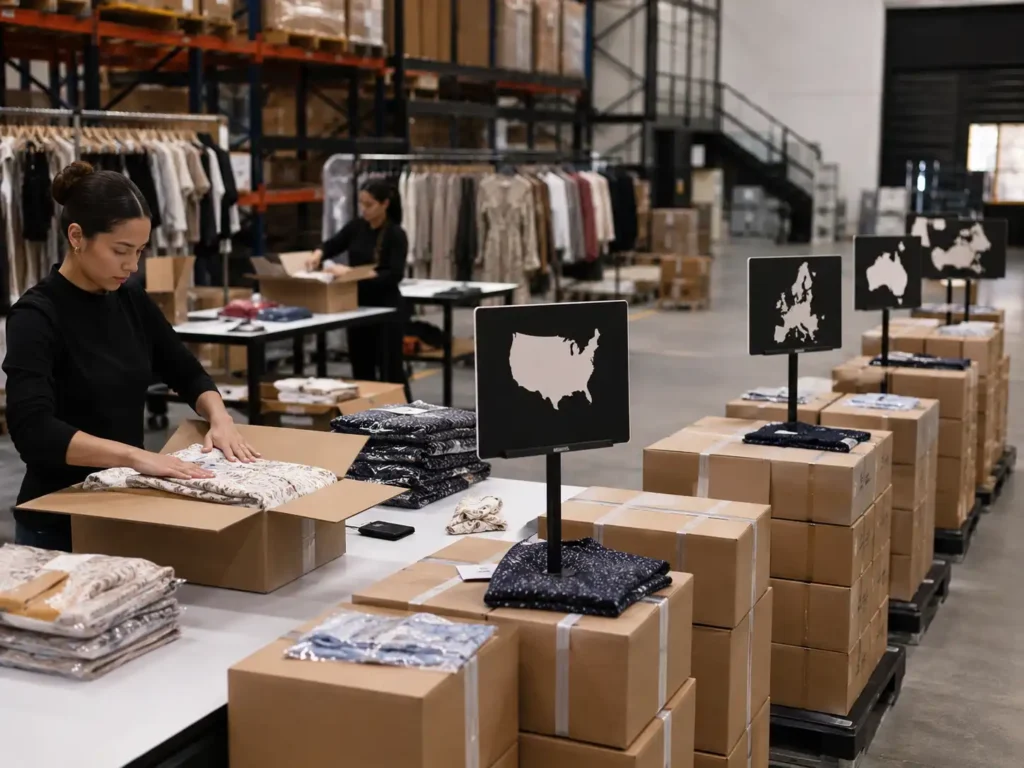
Production lead time becomes predictable when every department works from the same approved information and the calendar reflects real dependencies. Fabric sourcing, pattern development, sample approval, production-line matching, inspection, packing, and logistics should be treated as one connected system. The goal is not to promise the smallest possible number of days; it is to create a schedule that protects the launch while preserving fit, workmanship, labeling accuracy, and repeat-order consistency.