 Skip to content
How to Support Backless Dresses: Fit, Cups, Boning, and Fabric Structure for Fashion Brands

Your trusted Women’s Apparel Manufacturer from China
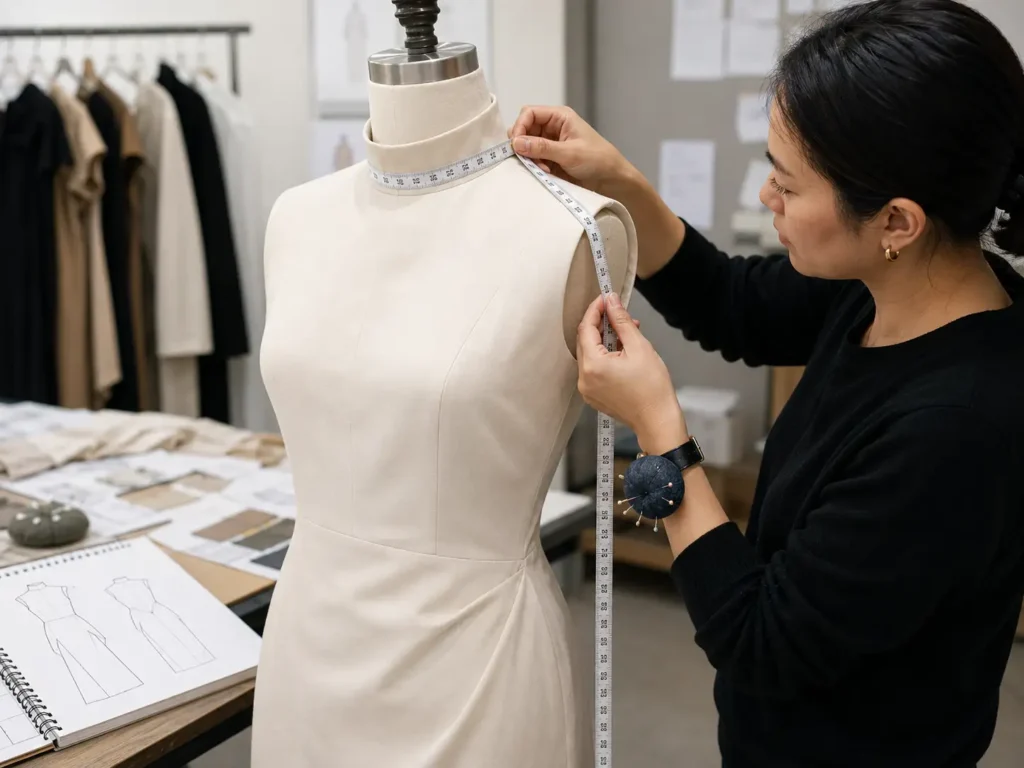
A backless dress looks simple from the outside: a clean open back, a flattering front, and a confident silhouette. But anyone who has worn, sold, sampled, or manufactured one knows the truth. A backless dress is one of the easiest styles to love in photos and one of the hardest styles to make stable in real life. The customer wants freedom, sexiness, and a bare-back effect. At the same time, she still wants lift, coverage, comfort, and confidence when walking, dancing, sitting, taking photos, or moving through a long event.
Backless dresses can be supported through a combination of external styling solutions and internal garment engineering. Common consumer options include low-back bras, adhesive bras, boob tape, and nipple covers. Stronger product development adds built-in cups, lining, side panels, elastic edges, boning, correct fabric recovery, and precise bust-to-waist pattern control.
For fashion brands, this is not just a styling question. It is a return-rate question, a review-score question, and a product development question. Consumers often search for bra alternatives only after they realize a regular bra will not work. The smarter brand asks one step earlier: how should the dress itself be developed so the wearer does not feel abandoned by the garment?
What Makes Backless Dresses Hard to Support?
A professional fashion development studio scene showing a backless dress sample on a mannequin, with visible pattern notes around bust, side seam, under-bust, strap length, and back opening depth; clean modern apparel manufacturing style, realistic lighting.
Backless dresses are hard to support because the open back removes one of the garment’s strongest anchor points. Without a full back panel or standard bra band, the front bust area, side seams, straps, lining, and fabric must do more work. If these areas are not balanced, the dress may slip, gape, twist, or feel insecure during movement.
The Back Is a Support Frame
In most dresses, the back is not just a visual area. It helps stabilize the whole upper body. A regular dress can use the back panel, zipper, shoulder seams, waist seam, and side seams together to hold the garment in place. Once the back is cut away, that support system becomes much weaker.
This is why a backless dress can look perfect on a model but feel unstable on a real customer. The model may stand still for a photo, but the customer needs to sit, walk, dance, raise her arms, turn, and lean forward. Each movement tests whether the dress has enough internal support.
For a manufacturer, the key question is not only how low the back can go. The better question is where the support moves after the back is removed. In most backless styles, support must shift to the front bodice, under-bust area, side panels, shoulder straps, halter neck, waist seam, or fabric recovery.
If no part of the dress replaces the missing back structure, the customer is forced to rely fully on tape, sticky bras, or constant adjustment. That may be acceptable for some dramatic fashion styles, but it is risky for commercial party dresses, occasionwear, wedding guest dresses, and premium ecommerce collections.
Small Fit Errors Create Big Wear Problems
Backless dress problems often begin with small pattern issues. A strap that is 1.5 cm too long can reduce bust lift. A side panel that is 1 cm too low can expose more side breast than expected. A back opening that is 2 cm wider than the approved sample can make the dress feel loose. These small changes may not look serious on a hanger, but they can change the wearing experience completely.
The most common fit risks include front neckline gaping, weak bust lift, side exposure, back edge lifting, waist slipping, zipper twisting, and fabric pulling around the side seams. In customer reviews, these issues are often described as too loose, not supportive, hard to wear, or different from the product photo.
For B2B buyers, this matters because many return reasons are not labeled as construction problems. They appear as sizing complaints or quality complaints. But the deeper cause may be that the dress was not engineered to support the body after the back was removed.
Support Depends on the Full Cut
The depth of the back is only one part of the support problem. Front neckline shape, bust coverage, side panel width, strap direction, fabric stretch, and lining all work together. A halter backless dress usually has more support potential than a deep-plunge, open-side backless dress. A corset-inspired backless dress can hide cups and boning more easily than a soft cowl-back slip dress.
The more skin a design reveals, the fewer places there are to hide support. That does not mean revealing designs are bad. It means the expected support level must match the design. A dramatic open-side backless dress may need boob tape. A structured satin backless mini dress may need built-in cups and side boning. A relaxed resort backless maxi may only need lining and balanced straps.
Real Movement Is the Test
A backless dress should never be judged only by flat measurements. Flat measurements are important, but they do not show how the dress behaves when the body moves. A proper fit check should include standing, sitting, walking, turning, lifting arms, and leaning slightly forward. These simple movements reveal many issues before bulk production.
In fast fashion development, speed matters, but backless styles need extra discipline. They are visually powerful, but they carry a higher fit-risk profile than many basic dresses. A brand can move quickly and still protect quality by identifying the support-critical areas early: bust, under-bust, side coverage, back depth, strap tension, fabric recovery, and lining stability.
The strongest backless dresses are not always the most complicated ones. They are the ones where the design, fabric, pattern, and support expectation are aligned. When this alignment is missing, even a beautiful style can become difficult to wear.
| Design Area | Common Risk | Practical Control Point |
| Back opening depth | Bra visibility, weak hold | Check back depth from neck point or waist reference |
| Strap length | Low bust position, neck pressure | Keep tolerance tight, often within +/-0.5-1 cm |
| Side coverage | Side breast exposure | Review side seam height on body, not flat only |
| Under-bust width | Slipping or tight pressure | Test standing, sitting, and arm movement |
| Fabric recovery | Dress loosens during wear | Check stretch and recovery before bulk cutting |
| Lining behavior | Twisting, pulling, discomfort | Match lining stretch to shell fabric |
Which Support Options Work for Backless Dresses?
A clean comparison-style editorial image showing a backless dress with nearby support solutions: low-back bra, adhesive bra, boob tape, nipple covers, and built-in cups; elegant neutral background, fashion styling guide aesthetic.
The main support options for backless dresses include low-back bras, adhesive bras, boob tape, nipple covers, and built-in garment support. Each works for a different dress shape and support level. Low-back bras give familiar structure, boob tape offers flexible lift, adhesive bras provide moderate shaping, nipple covers provide coverage, and built-in support improves wearability from the garment itself.
Low-Back Bras
Low-back bras work best when the dress has a low back but not a fully open back. They provide more familiar support than sticky solutions because they still use cups and a band, even if the band sits lower than usual. For customers who are not comfortable with tape or adhesive cups, this can feel more secure.
The limitation is that low-back bras still need space. If the back opening is too deep, the band may show. If the side panel is too narrow, the bra wings may appear from the side. If the front neckline is low, the cup edge may become visible. This means low-back bras are not a universal answer.
For brands, it is useful to test a backless sample with real bra options. A dress may be described as low back, but the customer may expect it to work with a low-back bra. If it does not, product copy and fit guidance should be clear. A customer can accept a dress that requires tape if she knows that before buying. She is less forgiving when she discovers it five minutes before an event.
Adhesive Bras
Adhesive bras are popular because they cover and shape the bust without a visible back band. They usually work better for small to medium busts, moderate lift, and dresses with enough front coverage. They can be a good match for satin dresses, halter styles, plunge dresses with enough cup coverage, and party dresses where the customer wants a clean back view.
The weakness is that adhesive bras rely on skin contact. Sweat, body oil, lotion, humidity, and long wear can reduce performance. They also do not provide the same upward lift as a traditional bra with straps and a full band. For fuller bust customers, adhesive bras may feel more like coverage than true support.
From a manufacturing point of view, adhesive bras should be seen as a styling aid, not a replacement for all dress support. If the garment has no lining, no bust control, weak straps, and unstable fabric, the adhesive bra has to do too much. A better dress reduces the pressure on the styling product.
Boob Tape
Boob tape is often the most flexible option for difficult backless styles. It can be placed according to the neckline, bust shape, and dress opening. It can work for deep V necklines, halter dresses, asymmetric dresses, cut-out styles, and open-back silhouettes where fixed cups may not fit.
The advantage of tape is customization. A customer can lift, separate, shape, or secure the bust in a way that matches the dress. The drawback is that tape requires skill. It must be applied to clean, dry skin. It must be placed correctly. It must be removed carefully. Some customers may not want that level of effort, especially for a dress they expect to wear easily.

For brands, boob tape is most acceptable when the dress is clearly a high-fashion or event style. But if the target customer expects comfort and easy dressing, relying fully on tape may create friction. In development, the question should be: can the dress still feel wearable if the customer uses only light tape or no tape? If the answer is no, the support structure may need improvement.
Nipple Covers and Built-In Support
Nipple covers are not support products in the true structural sense. They provide coverage and smoothness, but they do not lift or hold the bust. They work best for relaxed backless dresses, soft slip styles, vacation dresses, cowl-back dresses, and looks where the intended fit is natural rather than sculpted.
This distinction is important. If a product image shows a lifted bust, but the dress has no cups, no boning, and no internal support, recommending nipple covers may not match the customer’s expectation. Nipple covers can solve visibility concerns, but they cannot solve garment instability.
Built-in support is different because it becomes part of the dress. Cups, lining, boning, under-bust seams, and elastic edges reduce the amount of external styling the customer needs. A good commercial backless dress does not always need heavy support, but it should not leave the wearer guessing.
| Support Option | Best For | Support Level | Main Limitation |
| Low-back bra | Low-back, not fully open styles | Medium to high | Band may still show |
| Adhesive bra | Small to medium bust, covered front | Light to medium | Adhesion varies with sweat and skin |
| Boob tape | Deep V, halter, cut-out, open-back styles | Medium to high | Requires correct application |
| Nipple covers | Soft draped, relaxed, vacation styles | Coverage only | No real lift |
| Built-in cups | Party, occasion, satin, structured styles | Light to medium | Must be placed correctly |
| Cups + boning | Corset, formal, high-support backless styles | Medium to high | Higher cost and stricter QC |
How Can Dress Structure Add Support?
A close-up garment construction image of a backless dress turned inside out, showing built-in cups, lining, side boning, under-bust seam, and elastic edge; professional apparel factory sample room, high-detail realistic style.
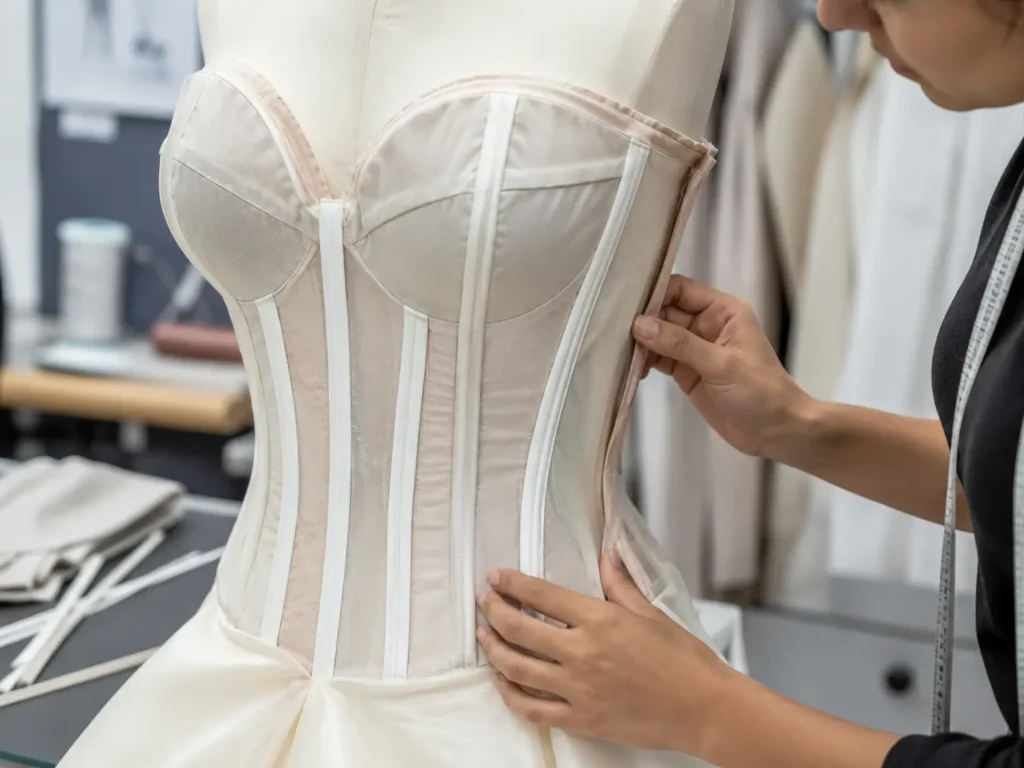
Dress structure supports backless styles by building stability into the garment itself. Built-in cups, lining, side panels, boning, elastic edges, under-bust seams, and balanced straps help the dress stay close to the body. The best structure does not make the dress feel heavy; it quietly supports the bust, controls movement, and keeps the silhouette clean.
Built-In Cups
Built-in cups are one of the most practical ways to improve backless dress support. They provide coverage, shape, and light lift without requiring a visible bra. They are especially useful for party dresses, halter dresses, satin minis, wedding guest dresses, corset-inspired styles, and occasionwear.
But built-in cups must be developed carefully. A cup is not just something sewn into the lining. Its size, shape, thickness, angle, and position all affect how the dress fits. If the cup sits too high, it may flatten the bust. If it sits too low, the upper bust may look empty. If the cup is too thick, it may look bulky. If the cup is too soft, it may not support the dress at all.
Cup placement also needs to be checked across sizes. A placement that works in size S may not work in size L. For larger sizes, the cup may need more coverage, better under-bust control, or a different angle. In backless dress development, cup grading should never be treated as an afterthought.
Inner Lining
Lining is often hidden, but it has a visible effect on how the dress wears. A good lining improves comfort, opacity, stability, and shape. In backless dresses, lining can also help connect the bust area to the side seams and waist, giving the garment more internal control.
The lining should match the outer fabric’s behavior. If the shell fabric stretches but the lining does not, the dress may pull or twist. If the lining stretches too much, the support may weaken. If the lining is too thick, the dress may lose softness. If it is too thin, it may not control transparency or bust shape.
For satin backless dresses, lining should be smooth and stable enough to avoid cling and visible pulling. For mesh styles, lining may need stretch recovery and careful placement to control transparency. For lace dresses, lining should protect the skin without hiding the lace effect. The best lining is not the cheapest hidden layer; it is the layer that helps the dress perform.
Side Panels and Under-Bust Seams
Side panels carry a lot of responsibility in backless dresses. When the back is open, the side panel becomes the bridge between the front bodice and the waist or lower body. If this area is too narrow, the customer may feel exposed. If it is too loose, the front of the dress may shift. If it is too tight, it can cut into the body and create discomfort.
A commercial backless dress usually needs more side control than a runway sample. On a model, a very narrow side panel may look dramatic. On real customers across multiple sizes, the same cut may create fit complaints. For online brands, side exposure is one of the quickest ways to turn a beautiful dress into a high-risk product.
The under-bust seam is another important anchor. It helps the front bodice stay in the correct position and prevents the bust area from dropping. A poorly placed under-bust seam can make the dress feel unstable even when the bust measurement is technically correct.
Boning and Elastic Edges
Boning and elastic are two different tools. Boning adds vertical structure. Elastic adds grip and flexibility. Both can help backless dresses, but both must be used with care.
Boning is useful in corset dresses, structured satin dresses, formal backless styles, and occasionwear. It helps the bodice hold shape, supports the bust area, and prevents collapse. However, too much boning can make a fashion dress feel stiff or uncomfortable. Partial boning is often more suitable for commercial styles because it gives stability without making the garment feel like a heavy corset.
Elastic can help low-back edges, under-bust areas, and side openings stay close to the body. It is especially helpful in stretch dresses and styles that need body-hugging edges. But elastic that is too tight can dig into the skin, while elastic that is too loose does nothing. The elastic length, seam method, and fabric compatibility should be confirmed before bulk production.
Which Fabrics Support Backless Dresses Best?
A fabric sourcing table with swatches of stretch satin, ponte, mesh, lace, crepe, chiffon, and lining fabrics beside a backless dress sketch; premium womenswear development moodboard, realistic studio lighting.
The best fabric depends on the dress shape and expected support level. Firm stretch fabrics work well for bodycon styles, while satin, crepe, lace, and mesh need the right lining and construction. Lightweight fabrics can create beautiful drape, but they usually need extra support if the customer expects lift, coverage, or event-level security.
Stretch Recovery
Stretch recovery is one of the most important fabric qualities in fitted backless dresses. A fabric may stretch comfortably when first tried on, but if it does not recover, the dress can loosen during wear. The bust may drop, the waist may relax, and the back edge may gape.
This is especially important for bodycon dresses, jersey dresses, rib dresses, mesh dresses, ponte dresses, and stretch satin styles. These garments depend on the fabric’s ability to hold the body without a full back structure. If recovery is weak, the dress may look good during fitting but fail after one or two hours of movement.
A practical fabric check should include stretch direction, recovery, opacity under tension, seam strength, and wash behavior. The sample fabric and bulk fabric should also be compared. If the bulk fabric has a different stretch or recovery rate from the sample fabric, the approved fit may not repeat correctly in production.
Satin and Crepe
Satin and crepe are popular for backless dresses because they look polished and photograph well. Satin gives shine and evening appeal. Crepe offers a slightly more controlled drape and a cleaner matte surface. Both can work beautifully, but neither should be treated casually.
Satin can reveal tension problems quickly. If the pattern is too tight, seams may pull. If the zipper is not inserted cleanly, it can ripple. If the lining is wrong, the surface may show drag marks. For backless satin dresses, support often comes from a combination of lining, cup placement, under-bust control, and strap balance.
Crepe is usually more forgiving than high-shine satin, but it still needs correct structure. A crepe backless dress may need facing, lining, or internal tape to keep the neckline and back edge clean. If the style is fitted, fabric recovery and seam stability still matter.
Mesh and Lace
Mesh and lace are common in party dresses, clubwear, occasionwear, and evening styles. They create a strong fashion effect, but they bring support challenges. Mesh can stretch, become transparent under tension, or lose shape if the recovery is weak. Lace can distort depending on motif direction, stretch content, and seam placement.
For mesh backless dresses, lining placement is critical. Too much lining can ruin the sheer effect. Too little lining can create exposure or support issues. Stretch mesh also needs careful control around the neckline, armhole, and side openings because these areas can grow during wear.
Lace needs a different approach. The design team should consider motif placement, seam allowance, edge finishing, and whether the lace is stable or stretch-based. In a backless lace dress, support often depends on hidden lining, side seam control, and careful cup placement. Lace may look structured, but not all lace can carry body tension well.
Lightweight Fabrics
Lightweight fabrics such as chiffon, soft rayon, thin satin, and delicate woven fabrics are suitable for relaxed backless dresses, resort styles, vacation dresses, and draped silhouettes. They create movement and softness, but they do not naturally provide much support.
If a lightweight backless dress is intended to feel easy and relaxed, light support may be fine. The garment may only need a smooth lining, correct strap length, and clean back edge finishing. But if the same fabric is used for a party dress or fitted occasion style, extra structure is usually needed.
The key is to match fabric and promise. A chiffon backless maxi should not be marketed like a sculpted corset dress. A soft cowl-back slip should not be expected to hold the bust like a structured satin mini. Customers are more satisfied when the fabric behavior, support level, and product image all tell the same story.
| Fabric Type | Support Potential | Best Backless Styles | Main Control Point |
| Ponte / scuba | High | Bodycon, structured mini, fitted party dress | Recovery and seam thickness |
| Stretch satin | Medium to high | Halter, party, occasion dress | Seam tension and lining |
| Crepe | Medium | Formal, cocktail, midi dress | Neckline and back edge stability |
| Mesh | Light to medium | Clubwear, ruched dress, cut-out style | Transparency and recovery |
| Lace | Medium | Occasion, wedding guest, evening dress | Motif placement and hidden support |
| Chiffon | Light | Resort, maxi, soft occasion dress | Lining and strap balance |
| Rayon / viscose | Light | Vacation, draped, relaxed styles | Shrinkage, drape, and seam stability |
How Should Brands Develop Backless Dress Samples?
A womenswear sample review meeting showing a backless dress on a fit model, with a designer checking strap length, cup position, side coverage, and measurement notes; professional fashion factory development scene, realistic style.
Brands should develop backless dress samples by testing the support system before bulk production. Bust position, under-bust control, side coverage, strap length, back depth, lining, fabric recovery, and movement fit should all be checked. A backless sample is not approved just because it looks good on a hanger; it must work on a moving body.

Key Measurements
Backless dresses need more detailed measurement control than many basic styles. The most important points include bust width, under-bust width, front neckline depth, side seam height, side coverage, back opening depth, strap length, waist, hip, and dress length. For fitted styles, across-front, across-back, and armhole shape also matter.
Some measurements are more support-critical than others. For example, strap length affects bust lift. Side seam height affects coverage. Under-bust width affects security. Back depth affects bra compatibility and garment balance. If these points vary too much between sample and bulk, the customer experience can change even when the general size chart looks correct.
A useful approach is to mark support-critical measurements in the tech pack. These points should have tighter tolerances and should be reviewed during production. For many fashion dresses, a +/-1 cm tolerance may be acceptable in some areas, but strap length, cup placement, and side coverage often need closer control.
Fit Model Testing
A backless dress should be tested on a fit model because body movement reveals problems that flat measurements cannot show. The reviewer should check the dress while the model stands, sits, walks, turns, raises her arms, and leans slightly forward. These simple tests show whether the bust stays in place, the neckline gapes, the side panel exposes too much, or the back edge lifts away from the body.
Fit models are especially important when the dress has built-in cups, boning, halter straps, deep necklines, open sides, or stretch fabrics. A mannequin can show shape, but it cannot show comfort, pressure, or insecurity. A real body can.
For larger size ranges, one fit model may not be enough. A style that supports size S may not behave the same in L or XL. If the order quantity and launch plan justify it, brands should review at least a base size and one larger size before bulk production. This is particularly important for occasionwear and premium ecommerce collections where customers expect a more reliable fit.
Sample Revisions
Backless dresses often need more than one sample round. The first sample checks the design direction, fabric choice, and basic fit. The second sample usually corrects bust position, strap length, back depth, side coverage, lining, cups, or seam placement. The PP sample confirms the final construction method before bulk production.
A simple backless knit dress may need only one revision. A satin halter dress with cups may need two. A corset-style backless dress with boning, lining, cups, and structured seams may require more detailed development. The more open the dress is, the more carefully the support balance should be checked.
Sample comments should be specific. Instead of saying make the chest fit better, it is more useful to say raise side seam 1 cm, shorten halter strap 1.5 cm, move cup position down 0.8 cm, or increase under-bust tension slightly. Clear comments help the pattern maker solve the real problem.
Pre-Production Approval
Before bulk production, the brand and manufacturer should confirm fabric, lining, cup type, cup placement, strap length, back opening, side coverage, elastic length, boning position, size grading, seam finishing, packaging, and PP sample standard. Backless dresses leave less room for production guessing.
One of the most important checks is whether the bulk fabric behaves like the sample fabric. If the approved sample used one fabric lot and bulk production uses another with different stretch, weight, or recovery, the fit may change. This is a common risk in fast fashion development when timelines are tight.
The PP sample should represent the final production method. Temporary sample-room shortcuts can create problems later. If the PP sample uses hand-adjusted cups, different lining, or non-bulk trims, the production result may not match approval. For backless dresses, small hidden details often decide whether the final garment feels secure.
| Sample Stage | Main Goal | Backless Dress Checkpoints |
| First sample | Confirm design and basic fit | Back depth, bust coverage, fabric behavior |
| Fit revision | Improve wearability | Strap length, side coverage, cup position, neckline |
| Size review | Check grading risk | Bust, under-bust, side seam, back opening by size |
| PP sample | Approve production standard | Final fabric, lining, cups, seams, trims, packaging |
| Bulk inspection | Protect consistency | Measurements, support details, seam strength, appearance |
How Can Manufacturers Reduce Backless Dress Returns?
A garment QC inspection scene for backless dresses, showing a quality inspector checking built-in cup placement, strap length, lining, side seam, and back opening on a finished dress; modern apparel factory, realistic professional image.
Manufacturers can reduce backless dress returns by controlling fit, support, fabric, lining, sample approval, and production consistency. Many returns described as bad fit are actually caused by weak bust support, poor side coverage, fabric stretching out, visible undergarment issues, or unclear wearing expectations. Better development reduces these risks before launch.
Pattern Control
Pattern control is the first line of defense against backless dress returns. When the back is open, the pattern must guide the dress to stay in position through other areas: under-bust seam, side seam, waistline, strap, halter neck, or elastic edge. If these points are not balanced, the dress may slip or twist.
A common mistake is copying the visual outline of a backless dress without rebuilding the support logic. Two dresses can look similar in photos but feel completely different on the body. The better one has controlled side coverage, stable strap length, correct bust position, and enough fabric recovery or internal structure.
For brands, pattern comments should focus on the wearing problem. If the dress slips, find the anchor point. If the neckline gapes, check front tension and strap length. If the side breast is exposed, review side seam height and cup coverage. If the waist moves, check under-bust and waist balance. Pattern control turns vague complaints into practical corrections.
Support-Level Matching
Not every backless dress needs strong support, but every backless dress needs the right support level for its customer. A resortwear dress may only need light support. A party dress may need medium support. A formal occasion dress may need cups, boning, lining, and more careful size grading.
Return problems often happen when the support level does not match the product image, price, or occasion. If a satin evening dress looks structured but has no internal support, customers may feel disappointed. If a soft cowl-back slip is clearly sold as relaxed and light-support, customers are more likely to accept the natural fit.
Support-level matching should happen during costing. Removing cups, lining, or boning may lower cost, but it can also increase return risk. Adding structure increases cost, but it can improve confidence, product reviews, and repeat purchases. The right decision depends on the target customer and sales channel.
Hidden Detail QC
Backless dress QC must include hidden support details, not only surface appearance. Cups, lining, elastic, boning, straps, back edge, and side seams should be checked carefully. A dress can look clean from the outside but still fail because a cup is uneven, elastic is too loose, or the lining twists during wear.
QC should happen before final inspection as well. Once the garment is fully finished, some support problems are expensive to repair. Cup placement, boning channels, lining attachment, and elastic length should be checked during sewing. Final inspection should confirm measurements, symmetry, appearance, and packaging condition.
Packaging also matters. Built-in cups can deform if packed too tightly. Satin can crease if folded poorly. Boning can bend if cartons are compressed. A backless dress that leaves the factory in good condition should arrive in good condition too.
Clear Buyer Briefs
A clear buyer brief reduces misunderstandings between brand and manufacturer. The brief should include reference images, tech pack, target customer, fabric direction, support expectation, size range, order quantity, intended selling price level, and launch timing. For backless dresses, the brief should also state whether the customer expects light, medium, or high support.
A weak brief says, make this backless dress. A strong brief says, develop a satin halter backless mini dress with medium bust support, built-in cups, clean side coverage, sizes XS-XL, suitable for partywear customers, with private-label packing. The second brief gives the development team enough information to make better construction choices.

For custom dress manufacturing, this level of clarity saves time. It helps the pattern maker understand support needs. It helps the sourcing team choose suitable fabric and lining. It helps the sample room decide cup and seam construction. It helps QC know which areas are most important. Better briefs lead to better samples, and better samples lead to fewer returns.
Build Backless Dresses That Customers Can Actually Wear
Backless dresses are not only about exposing the back. They are about controlling everything that remains: the bust, side body, waist, strap tension, fabric recovery, lining, and customer confidence. A beautiful open back may win the first click, but support wins the review, the repeat order, and the long-term brand reputation.
For brands, the best approach is to decide the support level before sampling. Light support can work for relaxed resort styles. Medium support fits many party and satin dresses. High support is better for corset, occasionwear, and formal backless styles. The right solution may include external styling advice, but the dress itself should still be engineered with realistic movement, body shape, fabric behavior, and production consistency in mind.
Jinfeng Apparel supports custom women’s dress development for global fashion brands and mid-to-large apparel clients, covering design direction, fabric sourcing, pattern development, sample making, sample revision, bulk production, QC, private-label packaging, and export delivery. For backless dresses, the team can help review support risk, cup placement, lining choice, side coverage, fabric recovery, and production feasibility before a brand commits to bulk.
To start a custom backless dress development discussion, prepare your tech pack, reference photos, fabric direction, target quantity, size range, and launch timeline. A clearer starting brief gives the factory more room to protect fit, reduce sampling waste, and build a dress that customers can wear with confidence.
Share This Article :

Jerry Lee
Categories

Latest blogs

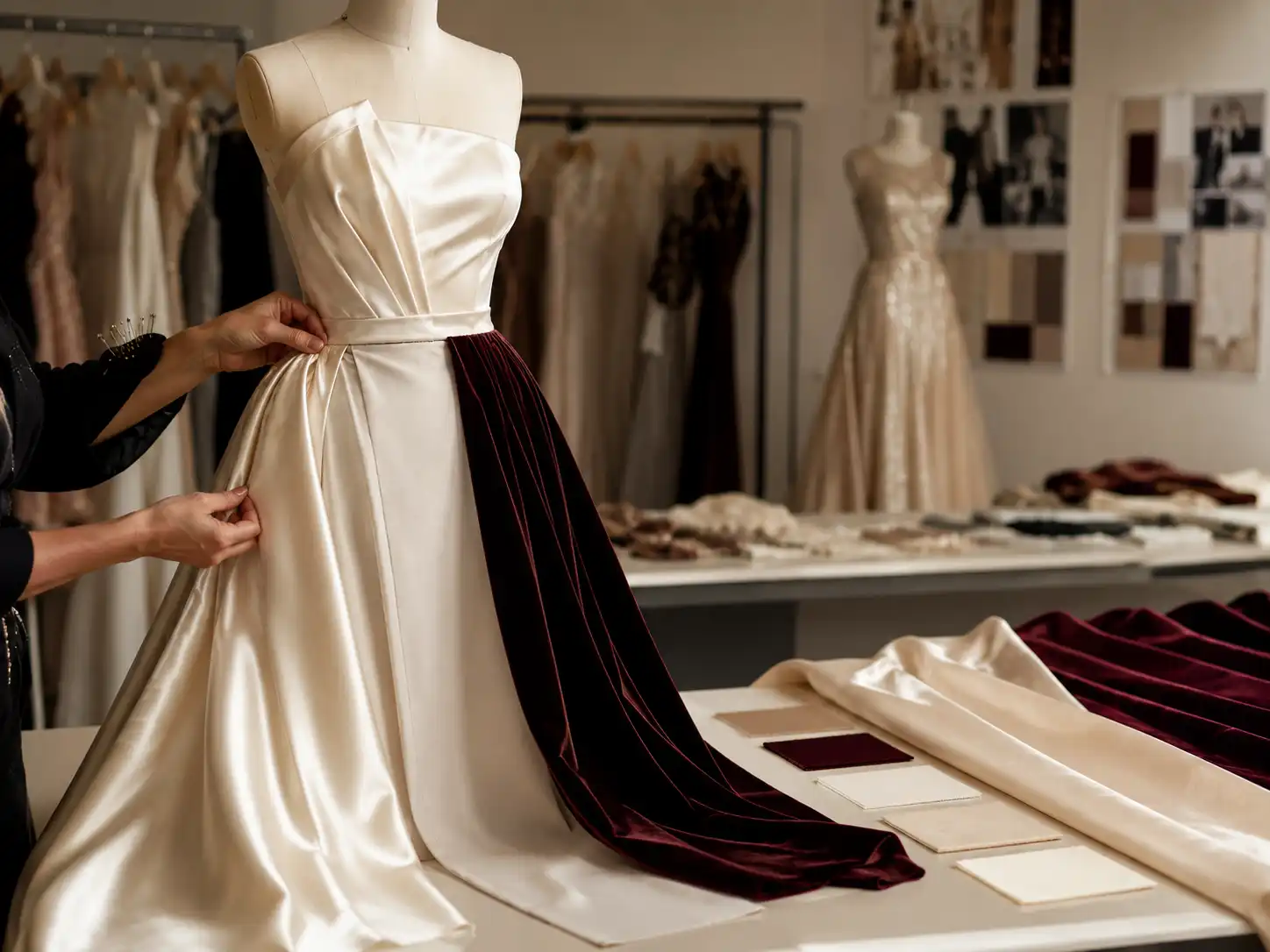

Table of Contents
Here, developing your OEM/ODM private label clothing collection is no longer a challenge—it’s an excellent opportunity to bring your creative vision to life.

