Skip to content

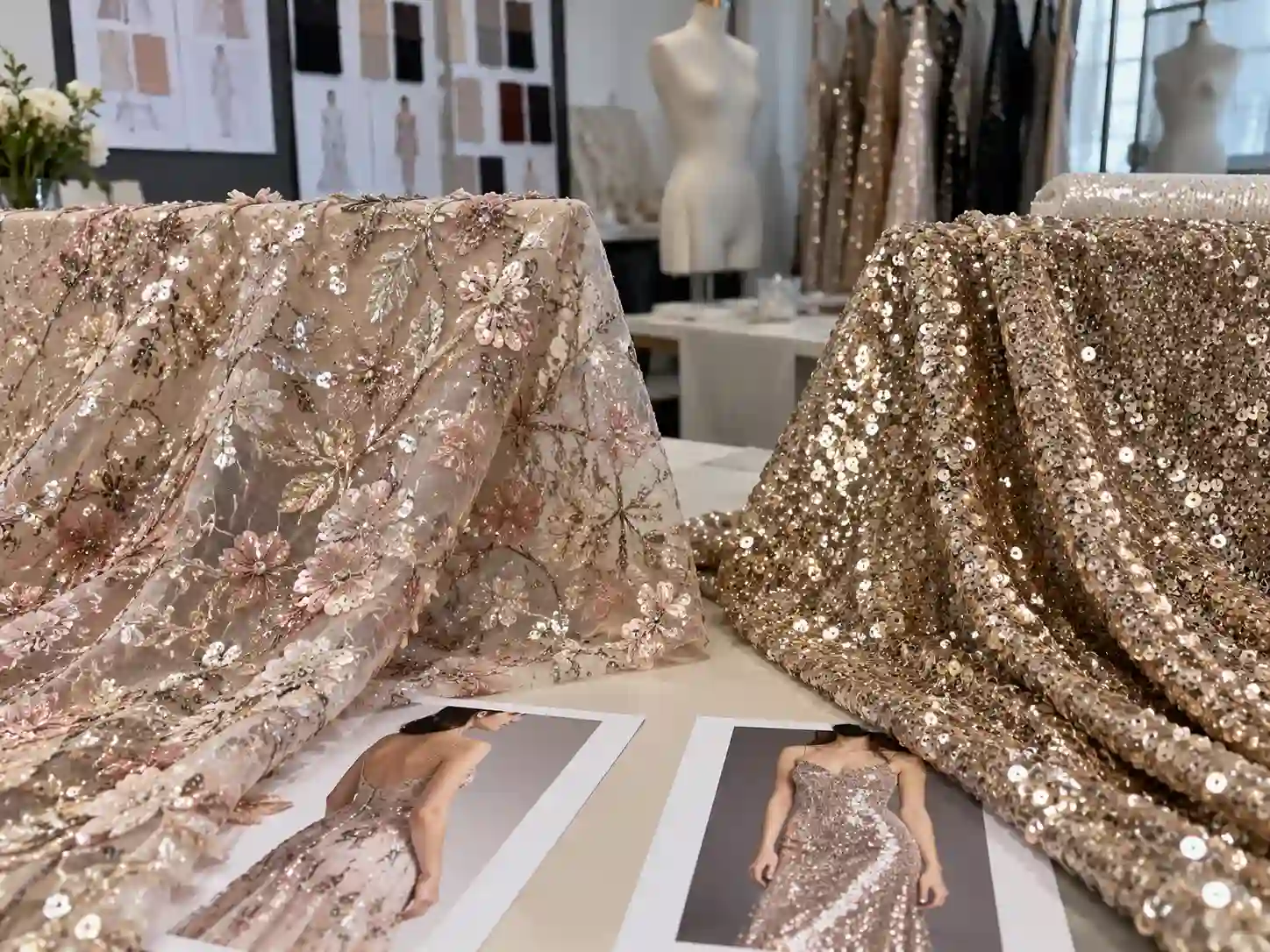
Choosing between crepe and georgette sounds simple until two swatches are placed beside the same dress sketch. One may fall into a clean column, while the other creates noticeably more movement through the skirt. One may provide enough coverage in a medium shade, while the other needs a lining that changes weight, cost, and silhouette. Experienced dress developers therefore rarely select fabric from the trade name alone. They look at construction, fiber content, weight, opacity, hand feel, stretch, drape, finishing, and the way the material behaves after cutting and sewing.
Crepe is usually the stronger direction when a dress needs controlled drape, cleaner coverage, a matte appearance, or more body, while georgette is often better when the design depends on lightweight movement, soft layering, gathers, or a semi-sheer effect. Neither is universally better; the right choice depends on the exact fabric, fiber content, weight, lining, silhouette, season, and construction.
There is another detail that changes the comparison: georgette is best understood as a crepe-type fabric rather than a completely unrelated material. In commercial fashion sourcing, however, teams still compare a dress-weight crepe against a georgette swatch because the two can create very different finished garments. Imagine approving a flowing maxi from a tabletop swatch, only to discover after sampling that the lining removes the movement that made the fabric attractive. That is the kind of real production decision this comparison is meant to prevent.
What Is the Difference Between Crepe and Georgette?
Crepe is a broad fabric family defined by a textured or crinkled surface, while georgette is a lightweight crepe-type woven fabric known for a fine pebbled texture, fluid movement, and frequent semi-sheer appearance. In dresses, crepe often offers more body and coverage, while georgette is commonly selected for softness, layering, gathers, ruffles, and visible movement.
Crepe Covers a Wider Fabric Family
One of the most common mistakes in a crepe-versus-georgette comparison is treating crepe as a single specification. In commercial textile sourcing, crepe can describe several constructions with very different weights, stretch levels, fiber contents, surface textures, and drape. A lightweight polyester crepe for a summer dress may feel soft and mobile, while a dense stretch crepe for a fitted midi can feel springy, compact, and considerably more supportive. Both may legitimately be sold under the crepe name.
That variation matters when a design moves from moodboard to production. Two suppliers can both offer ‘polyester crepe’ while delivering fabrics with different usable widths, opacity, shrinkage, stretch, surface appearance, and recovery. One quality may hold a column silhouette cleanly; another may collapse too much at the waist or show the lining underneath. For production, the useful specification is not just the fabric name but the combination of composition, weight, width, color standard, stretch direction, shrinkage, hand feel, drape, and lining requirement.
Georgette Has a More Recognizable Behavior
Georgette is usually easier to recognize as a garment behavior. It is commonly lightweight, finely textured, relatively fluid, and often semi-sheer, with a dry or slightly grainy hand rather than the smooth shine associated with satin. In a dress, that light structure gives the fabric room to respond to walking and body movement. Long gathered skirts, flutter sleeves, asymmetric overlays, soft ruffles, and layered panels can look noticeably more animated in georgette than in a denser dress crepe.
The same lightness that makes georgette attractive also creates practical questions. Pale colors may need lining. Several gathered layers can increase fabric consumption quickly. Long bias areas may relax or distort while hanging, and narrow seam allowances can become visible through the shell. Modern georgette may be made from polyester, silk, viscose, or other fibers, so the word georgette still does not tell a production team everything about comfort, care, shrinkage, price, or final hand feel.
The Finished Dress Shows the Real Difference
The clearest comparison is to imagine the same dress developed twice. In a medium-weight crepe, a long-sleeve midi may look cleaner through the waist and hip, show less transparency, and hold a more controlled vertical line. In georgette, the same design may feel lighter and more romantic, but the bodice or skirt may need lining, and the hem can respond differently once the garment hangs. Those changes affect more than aesthetics because they can alter pattern pieces, sewing operations, consumption, and finished cost.
A practical fabric review therefore asks four questions before anything else: how much body does the cloth have, how much light passes through it, how freely does it move, and how much construction support will the dress require? These questions are more useful than asking which fabric is simply softer or more expensive. In custom womenswear development, a material is valuable only when it supports the intended silhouette and remains controllable through sampling, bulk fabric approval, cutting, sewing, finishing, and final inspection.

How Do Crepe and Georgette Compare?
Crepe generally offers a wider range of weight, body, opacity, and structure, while georgette is usually lighter, more fluid, and more transparent. Both can have a matte, grainy surface and elegant drape, but georgette usually creates more visible movement. Dress-weight crepe is often easier to use when the design needs cleaner lines, controlled fall, and stronger natural coverage.
Weight, Opacity, and Surface
Weight is one of the first differences people notice, but it should never be inferred from the name alone. Georgette is commonly supplied in lightweight dress constructions, while crepe can range from relatively light qualities to much denser fabrics with enough body for tailored or fitted silhouettes. Opacity follows the same pattern. A medium dress crepe in black or navy may provide substantial coverage, while a pale georgette can reveal skin, underwear, seam allowances, or lining edges under strong daylight.
Color can change an approval decision even when the fabric construction remains identical. The same cloth that looks sufficiently opaque in black may be unsuitable without lining in ivory, blush, pale yellow, or white. Surface appearance also varies. Both families can look matte and softly textured, but georgette often shows a finer pebbled effect, while crepe ranges from subtle grain to a stronger crinkled surface. For accurate development, opacity should be checked in the actual production color and under backlighting rather than judged only from a dark showroom swatch.
| Property | Typical Dress Crepe | Typical Georgette | Dress Impact |
| Fabric character | Broad range of constructions | Lightweight crepe-type woven | Crepe needs closer specification review |
| Transparency | Low to moderate in many dress weights | Often semi-sheer | Georgette more often needs lining |
| Body | Low to relatively high | Usually low | Crepe can support cleaner silhouettes |
| Movement | Controlled to fluid | Fluid and lively | Georgette suits layers and gathers |
| Surface | Matte to textured | Fine pebbled texture | Both suit low-shine looks |
| Stretch | Depends on construction | Usually limited unless engineered | Test actual swatch; never assume |
| Lining need | Style and weight dependent | Common in light colors | Changes cost and garment weight |
| Hem behavior | Depends on weight and cut | Sensitive in flowing or bias styles | Sample hanging test is useful |
Drape Is Not the Same as Softness
People often describe both materials as drapey, but drape has more than one dimension. A fabric can feel soft without producing much visual movement, and it can move freely while still having a dry surface. Georgette typically creates what could be called active drape: skirt panels respond quickly when the wearer walks, ruffles lift, and layered sections separate visually. That behavior is useful when movement itself is part of the design language rather than merely a comfort feature.
Crepe can create a more controlled fall. A suitable dress-weight quality may follow the body without becoming stiff, while still preserving cleaner vertical lines than a very light georgette. This can work well for column dresses, cocktail dresses, office-to-evening styles, and fitted or semi-fitted silhouettes. The better question is therefore not ‘Which fabric drapes more?’ but ‘What kind of drape should the customer see?’ A romantic maxi and a minimalist midi can both need excellent drape, yet require opposite fabric behavior.
Stretch and Recovery Need Separate Testing
Neither crepe nor georgette should automatically be classified as stretchy. Some crepes include elastane and are deliberately engineered for stretch, while others have very little usable give. Georgette may feel slightly springy because of its twisted-yarn structure, but that sensation should not be confused with the controlled stretch and recovery needed in a close-fitting dress. For fitted products, the difference becomes critical around the bust, waist, hip, armhole, sleeve, and seat.
A useful development check records both stretch direction and approximate extension, then observes how well the fabric returns to its original dimension. A cloth may extend across the width but hardly at all along the length. Another may stretch comfortably during fitting but recover poorly and begin to bag after wear. These differences influence pattern ease, size grading, seam construction, and cutting direction. The safe approach is to test the actual production-quality fabric rather than relying on a supplier’s general description such as ‘soft stretch’ or ‘slightly stretchy.’
Which Fabric Is Better for Different Dresses?
Crepe is often the stronger choice when a dress needs cleaner lines, more coverage, or controlled drape, while georgette is usually better when the silhouette depends on movement, gathers, ruffles, overlays, or soft layers. Maxi, midi, cocktail, evening, and wedding-guest dresses can use either fabric successfully when weight, lining, fit, hem design, and construction match the intended result.
Maxi and Midi Dresses
Georgette becomes especially attractive in a maxi when the skirt needs visible movement. Long panels create more distance for the cloth to travel during walking, which makes gathers, tiers, godets, flounces, and overlays more expressive. This works well for resort, destination, and occasion dresses where the skirt should feel light rather than architectural. The tradeoff is consumption. A full gathered skirt, several tiers, or a double-layer construction can require considerably more material than a straighter single-layer design.
Crepe is often easier to control when a long dress needs a cleaner vertical line. Column maxis, wrap midis, tailored waist shapes, and understated formal dresses can benefit from fabric that falls without excessive flutter. Midi lengths introduce another issue because the hem sits in a highly visible area around the calf. A material that is too stiff can make a wide midi look bulky, while one that is too light can collapse when the design needs shape. Waist position, hem balance, lining length, zipper flatness, and side-seam stability become as important as the initial swatch choice.
Cocktail and Evening Dresses
Cocktail dresses often sit between everyday polish and formal occasionwear, so crepe can be particularly useful. A matte dress-weight crepe can create a refined midi, one-shoulder column, clean long-sleeve dress, or minimalist fitted silhouette without relying on shine. Georgette changes the mood. It works naturally for draped necklines, sheer sleeves, soft capes, floating overlays, gathered bodices, and skirts that gain visual interest through motion rather than through satin gloss or heavy embellishment.
Evening wear also exposes production weaknesses quickly. A long skirt needs consistent hem balance, pale shades may reveal internal construction, bias panels can relax after sewing, and a heavy lining can remove the movement that originally made a georgette attractive. A zipper can also ripple when a light outer shell is combined with a stiff internal layer. The category label ‘evening dress’ is therefore not enough to select fabric. A minimalist black column gown and a romantic layered bridesmaid dress may share the same occasion but require almost opposite material behavior.
Ruffles, Pleats, and Wedding-Guest Styles
Georgette has a clear advantage when the design relies on lightweight ruffles and soft layers. A wide circular ruffle can move freely without becoming visually heavy, making it suitable for sleeves, necklines, skirt tiers, and asymmetric details. Crepe can also produce attractive ruffles, but a denser quality usually creates a more controlled or sculptural result. Neither effect is automatically better; the choice depends on whether the design brief calls for flutter, volume, definition, or a quieter drape.
Pleats and wedding-guest dresses need more testing than they sometimes receive. Pleat retention depends on fiber, finishing, heat response, and process, so one polyester georgette cannot be used as proof that every georgette will hold the same shape. Wedding-guest styles add the need for coverage under daylight and photography. Pale colors that look acceptable indoors may become noticeably transparent outdoors. Lining, bust coverage, hem balance, zipper flatness, and color consistency should therefore be reviewed before the fabric is approved for a full occasionwear run.
| Dress Type | Crepe Strength | Georgette Strength | Key Approval Check |
| Column / minimalist midi | Clean line, coverage, controlled fall | Can be too soft unless supported | Hip fit, zipper flatness, hem |
| Tiered maxi | Works when more body is wanted | Excellent movement and soft volume | Consumption, lining, hanging |
| Cocktail dress | Polished matte finish | Soft drape and sleeve movement | Waistline, opacity, pressing |
| Evening gown | Strong for clean formal silhouettes | Strong for overlays and floating skirts | Lining weight, long hem balance |
| Wedding-guest dress | Good coverage and modern polish | Light romantic movement | Daylight opacity, bust coverage |
| Ruffle / flounce style | More sculptural definition | Lighter flutter and separation | Edge finish and shape retention |

Which Is Better for Comfort and Wear?
Georgette often feels lighter and airier, making it attractive for flowing warm-weather dresses, while crepe can provide more coverage and a more substantial hand. Comfort cannot be predicted from the fabric name alone because fiber content, garment looseness, lining, total fabric volume, stretch, surface feel, and airflow can change how the finished dress feels during actual wear.
Summer Wear and Airflow
A lightweight georgette can work very well for warm-weather dresses, particularly when the garment is loose, sleeveless, or designed with a flowing skirt. The lower physical weight allows the cloth to move away from the body, which can feel more comfortable than a dense material in the same silhouette. That does not make georgette an automatic summer winner. A fully lined polyester georgette maxi with several gathered tiers can contain much more total material around the body than a simple single-layer lightweight crepe dress.
The lining can change the comfort result as much as the shell. A light outer fabric paired with a dense or poorly breathable lining may feel warmer than expected, while a more opaque crepe may achieve the desired coverage with fewer layers. Sleeve length, skirt fullness, body fit, fiber content, and the number of fabric layers should therefore be assessed together. Warm-weather fabric choice works best when the development team evaluates the complete garment system rather than selecting a material because it carries a ‘lightweight’ trade description.
Coverage and Skin Contact
Coverage is one of the most practical differences between the two directions. Georgette frequently needs more attention because semi-sheer areas can become obvious around the bust, hip, or skirt when the garment is placed under strong lighting. Lining decisions should not be based on color alone. Fabric weight, weave openness, body fit, seam-allowance visibility, and the intended market all matter. A loose dark georgette may work with partial lining, while a pale fitted style may need a full lining.
Hand feel deserves the same attention. Georgette often has a dry, fine-grain surface. Some wearers appreciate that crisp-light feel, while others prefer something smoother against bare skin. Crepe also varies widely, from soft and powdery to noticeably grainy or firm. The best comfort test is not rubbing a folded swatch between two fingers; it is placing the material against areas where the garment will actually contact the body, such as the underarm, neckline, shoulder strap, waist seam, inner elbow, or thigh.
Stretch, Ease, and Everyday Movement
Comfort comes from fabric stretch, pattern ease, or a combination of both. If a georgette has little usable stretch, the pattern must provide enough room for sitting, walking, raising the arms, and normal body movement. For a fitted crepe dress, stretch can reduce the amount of structural ease required, but only when recovery is reliable. A fabric that stretches during fitting but does not return cleanly can begin to bag at the hip, elbow, seat, or waist after wear.
This becomes more important once a style is graded across sizes. A sample that feels comfortable in one size does not prove that the same fabric-pattern relationship will work across the full range, especially around bust and hip measurements. Commercial fit should be reviewed through the intended size structure and actual wear movements rather than judged only on a mannequin. For brands working with a custom manufacturer, discussing fabric stretch, ease, lining, and target fit at the sample stage prevents many comfort problems from becoming expensive bulk-production corrections.
How Do Crepe and Georgette Behave in Production?
Georgette usually needs careful cutting, handling, and seam control because lightweight panels can shift, distort, or pucker, while crepe behavior depends strongly on its weight and construction. Common controls for both include grain alignment, needle and thread trials, hem balance, pressing, shade consistency, shrinkage, lining compatibility, fabric relaxation where needed, and bulk-fabric approval before large-scale cutting begins.
Cutting and Grain Control
Lightweight georgette can move noticeably during spreading and cutting. If layers are not aligned consistently, narrow panels, ruffles, bias sections, and long skirt pieces can shift by small amounts that later appear as uneven side seams or hems. Long dresses make these errors more visible because a minor imbalance near the waist can become a larger visual difference at the hem. Bias-cut areas need additional attention because the fabric can relax and lengthen under its own weight after cutting and sewing.
Crepe can be easier to stabilize when it has more body, but lightweight crepes can still shift, while stretch crepes introduce another risk: the fabric may be unintentionally stretched during spreading. Useful pre-cut checks include confirming grain direction, usable width, shade lot, visible defects, face side, pattern direction, and any required relaxation procedure. These controls sound basic, yet they are exactly the points that determine whether a promising sample can be repeated consistently when hundreds or thousands of panels are cut from multiple rolls.
Needles, Seams, and Puckering
Fine woven crepe and georgette often benefit from relatively small needles, but there is no universal machine setting that should be copied from one style to another. A common trial range for fine woven fabrics is around size 60/8 to 80/12, with the final choice based on fabric density, thread, stitch type, seam construction, and whether needle marks appear. The correct needle is the smallest practical size that forms a stable stitch without damaging the fabric or creating repeated thread breaks.
Seam puckering is equally important because lightweight fabrics make small defects highly visible. Excessive thread tension, feeding imbalance, stitch density, thread behavior, and material response can all contribute. The practical solution is to sew the actual production seam on approved fabric, press it using the planned finishing method, allow it to relax, and then inspect the result. Fine fabrics also reveal bulky seam allowances and uneven trimming through the outer shell, particularly in pale colors, so internal construction deserves almost as much attention as the visible seam line.
Hem Balance and Bulk Consistency
Hem control deserves special attention in both materials. A long skirt can appear level immediately after sewing and then change after the garment hangs. Georgette styles with circular skirts, bias panels, flounces, or asymmetric pieces are sensitive because different sections can relax at different rates. Crepe can also produce visibly uneven hems, particularly when the pattern, grain, pressing, or hanging behavior is not controlled. Hem inspection should therefore be done with the garment hanging naturally and viewed from the front, side, and back.
The approved sample is only a useful production standard when the bulk fabric is close enough to reproduce it. Roll-to-roll differences in shade, hand feel, usable width, drape, transparency, stretch, or shrinkage can affect the finished garment even when the style and pattern remain unchanged. A disciplined production flow separates design approval from bulk-material approval: first confirm the sample, then confirm the bulk fabric against the approved standard, inspect incoming material, and only then release it for cutting.
| Control Point | Useful Production Check | Risk if Missed |
| Shade lot | Compare roll-to-roll and within-roll color | Visible panel mismatch |
| Usable width | Measure actual cutting width | Unexpected consumption or marker loss |
| Grain / direction | Confirm face, grain and pattern direction | Twisted seams or inconsistent appearance |
| Needle trial | Test fine needle/thread combination on bulk quality | Needle holes, runs or skipped stitches |
| Seam trial | Review puckering before and after pressing | Wavy or visibly distorted seams |
| Transparency | Backlight actual production color | Late lining changes |
| Shrinkage / dimensional change | Test where fiber and finish require it | Measurement drift after finishing or care |
| Hem hanging | Allow representative sample to relax | Uneven long or bias hems |
| Stretch / recovery | Measure direction and return where applicable | Bagging and fit inconsistency |
| Incoming inspection | Compare bulk against approved swatch/sample | Sample-to-bulk appearance mismatch |
How Do You Choose Crepe or Georgette?
Choose crepe when the design needs controlled drape, stronger natural coverage, or a cleaner silhouette; choose georgette when lightweight movement, soft layering, gathers, or floating details are central to the design. The final decision should come from the actual swatch and garment sample, with composition, weight, opacity, lining, stretch, fit, cost, and production behavior checked before bulk fabric is committed.
Start With the Silhouette
Fabric selection becomes easier when the silhouette is defined before the swatch is approved. Instead of asking whether crepe or georgette is more fashionable, ask what the garment must do on the body. A clean column dress needs a different material response from a tiered maxi. A fitted cocktail midi may require stable drape and coverage, while a romantic occasion dress may depend on movement and soft layering. The fabric should support the design brief rather than forcing the pattern team to compensate for the wrong material later.
A few practical questions usually narrow the decision quickly: should the skirt float or fall in a clean vertical line; is the garment fitted through the bust or hip; are ruffles, tiers, flounces, or overlays important; does the design need full coverage without a heavy lining; is stretch required for fit or only for comfort; and will the dress be worn or photographed under strong daylight? If controlled shape and coverage dominate, crepe is usually worth testing first. If movement and softness dominate, georgette becomes a logical starting point.
Compare Finished Cost, Not Fabric Price
A lower price per meter does not automatically produce a lower-cost dress. Fabric consumption, usable width, lining, cutting time, sewing difficulty, finishing, and defect risk all influence the finished garment cost. A georgette may look inexpensive on the supplier card but require a full lining and two gathered skirt layers. Another crepe may cost more per meter yet achieve the required opacity in a single shell layer. The second route can sometimes be simpler, faster, and more predictable in production.
Fabric width also matters because a slightly more expensive but wider cloth may give better marker efficiency, especially for maxi skirts, sleeves, or extended size ranges. The best commercial comparison is therefore finished garment cost against finished garment result, not crepe price against georgette price. When cost needs to be adjusted, material substitution, construction simplification, trim changes, cutting-layout improvement, and color or size-ratio planning are usually more intelligent levers than downgrading fabric until the dress no longer matches the intended brand position.
Approve the Sample Before Bulk
A swatch cannot show whether a side seam twists, whether the lining rides up, whether the zipper ripples, whether the skirt becomes transparent in daylight, or whether the hem remains level after hanging. The first complete sample should therefore be reviewed in conditions close to actual wear. Check the dress standing, sitting, and walking. Photograph pale colors under strong light. Look at the front, side, and back, then allow long or bias-heavy garments to hang before making the final hem decision.
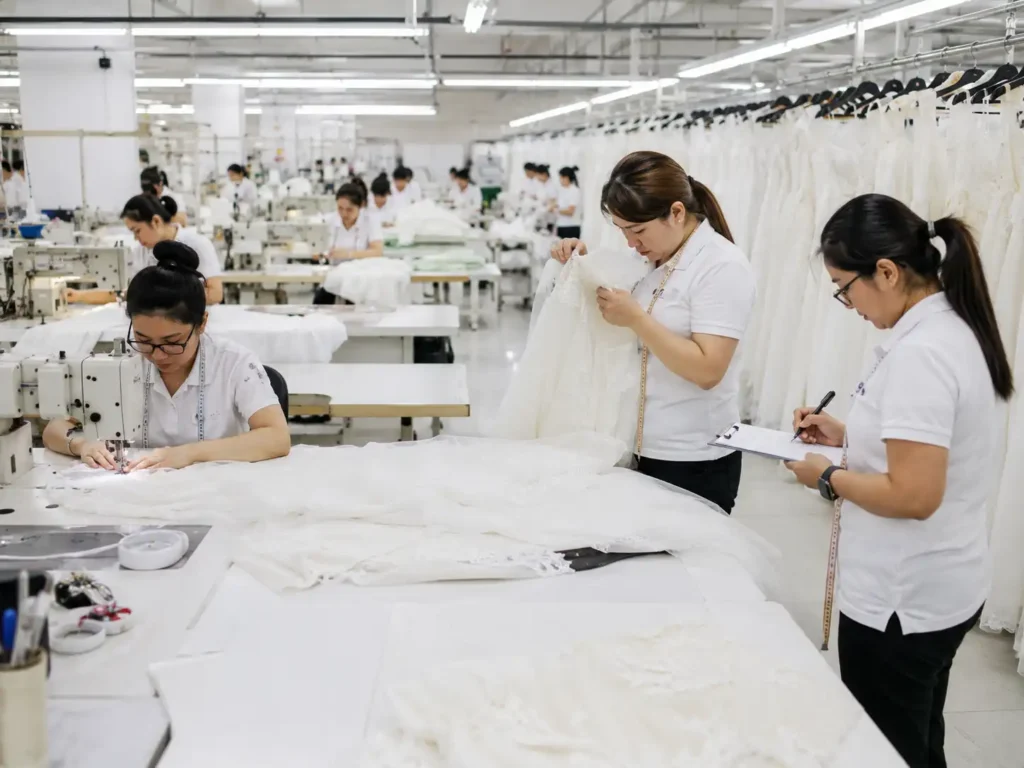
Once the sample works, the next step is to lock the bulk standard before cutting. Confirm that bulk fabric is sufficiently close to the approved sample material in color, hand feel, weight, drape, width, transparency, stretch where applicable, and any relevant shrinkage requirement. Jinfeng Apparel’s documented development system covers fabric sourcing, pattern development, sampling, sample revision, bulk production, quality control, grading, private-label support, and export coordination. For a collection still deciding between fabric directions, that integrated sample-to-bulk process is more useful than choosing from swatch photos alone.
Conclusion
Crepe and georgette are both valuable dress fabrics, but they solve different design problems. Crepe generally gives a development team more options for controlled drape, coverage, and cleaner structure, while georgette is especially effective when movement, softness, layers, and semi-sheer effects are central to the garment. The most reliable choice is made on the real swatch, then proven in a complete sample. When silhouette, lining, comfort, cost, and production stability all agree, the fabric stops being a stylistic guess and becomes a repeatable commercial decision.