 Skip to content
How to Grade Asymmetric Necklines for Better Fit Across Sizes

Your trusted Women’s Apparel Manufacturer from China
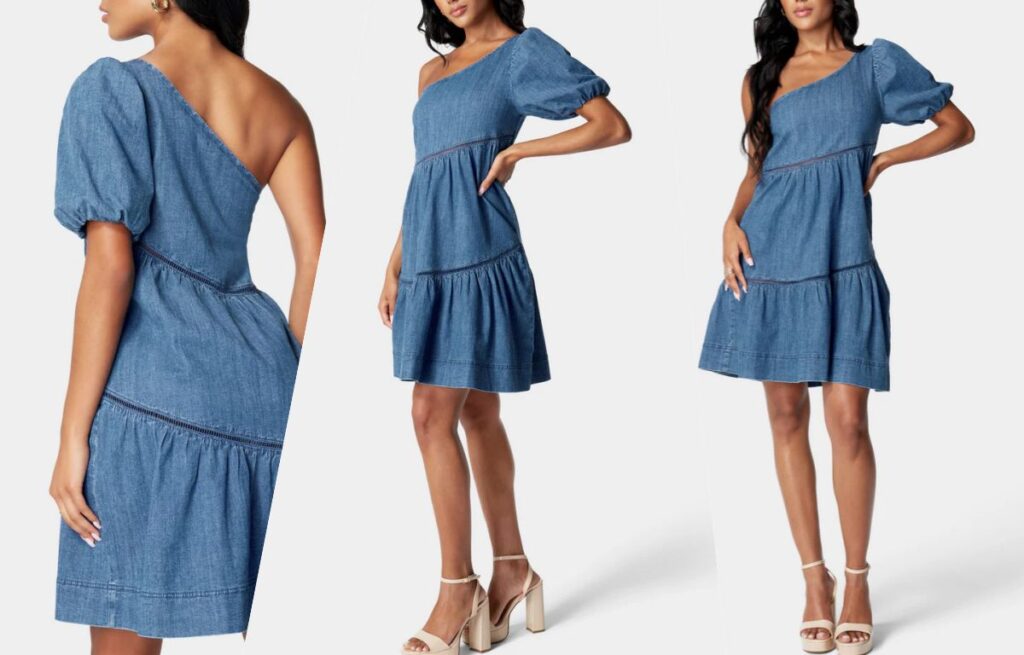
An asymmetric neckline looks simple when it is photographed on a model. A one-shoulder mini dress, a diagonal satin bodice, a mesh party top, or an angled evening gown can look sharp, modern, and easy to sell. But once that same sample moves from one approved size into a full size range, the problems usually start to appear. The neckline may gape in larger sizes, pull toward the support shoulder, lose bust coverage, twist at the armhole, or change from a clean diagonal line into a shape that no longer feels designed.
To grade asymmetric necklines correctly, separate the left and right pattern logic, protect the key design points, control shoulder and bust growth, adjust the neckline edge according to fabric behavior, and verify the graded sizes through fit samples, facings, linings, measurement checks, and PP sample approval.
This is why asymmetric neckline grading should never be treated as a last-minute technical task. For fashion brands, the neckline is often the first thing customers notice and the first thing they complain about if the garment feels unstable. A beautiful sample can still become a risky bulk order if the neckline cannot hold its shape across sizes. In the factory, the best styles are not only attractive on the hanger. They are scalable, repeatable, measurable, and comfortable enough for real customers to wear without constant adjustment.
What Is Asymmetric Neckline Grading?
Asymmetric neckline grading is the process of resizing a garment pattern with an uneven neckline while keeping the original design line, body balance, shoulder position, bust coverage, and wearing stability consistent across the full size range. It is not simple scaling. The left and right sides often need different handling because one side may support the garment while the other creates the visual opening.
A clean technical studio image showing a full-front dress pattern with an asymmetric neckline, left and right bodice pieces marked separately, grading lines in different sizes, shoulder points, bust points, armhole points, and a diagonal neckline highlighted; professional fashion pattern-making table, neutral background, realistic garment development atmosphere.
Grade vs Redraft
In garment production, grading starts after a base size has already been approved. The pattern is enlarged or reduced into other sizes according to a size rule. Redrafting is different. Redrafting means rebuilding part of the pattern because the original shape cannot be carried into other sizes cleanly.
With asymmetric necklines, this distinction matters more than it does with a simple crew neck or V-neck. A basic neckline can often follow standard neck width and neck drop increments. An asymmetric neckline may cross the body at an angle, sit on one shoulder, expose one collarbone, or connect to a cut-out, strap, sleeve, facing, lining, or internal support. If the whole shape is only enlarged evenly, the neckline can become too open in larger sizes and too compressed in smaller sizes.
A good grading result should make every size feel like the same design, not like a stretched or reduced copy. The goal is not to make the pattern lines mathematically identical. The goal is to protect the look, fit, and function of the approved sample size.
Asymmetric Shape
An asymmetric neckline is any neckline where the left and right sides are intentionally different. This includes one-shoulder necklines, diagonal necklines, slash necks, uneven off-shoulder lines, single-strap styles, angled mesh panels, and neckline shapes connected to cut-outs or ruching.
The difficulty comes from unequal support. On a symmetrical neckline, both shoulders and both sides of the front body usually share tension. On an asymmetric neckline, one side may carry most of the garment weight while the other side is more exposed. This is why a one-shoulder bodycon dress, a satin asymmetric evening dress, and a mesh clubwear top cannot be graded with exactly the same logic.
For example, a fitted stretch dress may rely on fabric recovery to hold the neckline close to the body. A satin dress cannot rely on stretch, so the pattern, facing, and internal support must do more work. A lace or sequin dress may need extra control because edge finishing, motif placement, and seam bulk all affect the neckline.
Design Points
Before grading begins, the important design points should be marked clearly. These usually include the high shoulder point, neckline start point, deepest neckline point, diagonal crossing point, armhole connection, side seam point, bust point, and any strap or cut-out position.
These points are not all treated the same. Some follow body growth. Some protect the visual line. Some need small corrections after the first graded fit review. If all points are moved equally, the neckline can lose its original character.
A practical approach is to divide the pattern points into three groups: fixed design points, body-growth points, and flexible correction points. Fixed design points protect the style. Body-growth points follow the size range. Flexible points allow the pattern maker to keep the neckline wearable after the size rule has been applied.
| Pattern Point | Usual Role | Common Handling in Grading |
| High shoulder point | Main anchor | Move carefully with shoulder rule |
| Bust point | Body-growth reference | Adjust by size and cup/bust needs |
| Deepest neckline point | Visual control | Protect angle and exposure |
| Armhole point | Comfort control | Grade with armhole depth and width |
| Diagonal edge length | Fit and stability | Check finished edge length by size |
| Facing edge | Construction support | Grade with shell, then verify sewing |
Production Meaning
In real production, a graded pattern is not finished just because the file contains XS, S, M, L, and XL. It is finished when the factory can cut, sew, measure, press, pack, and repeat those sizes consistently.
This is where many asymmetric neckline styles fail. The first sample may look strong in the base size, especially when pinned, styled, or photographed carefully. But bulk production is less forgiving. If the neckline edge is unstable, if the facing does not match, if the shoulder anchor shifts, or if the larger size loses bust coverage, the style becomes risky.
A production-ready grade should answer practical questions. Does the neckline still look intentional in every size? Does the wearer feel secure? Does the edge sit flat? Does the facing or lining support the shape? Can sewing operators repeat the neckline without hand-adjusting every piece?
For fast fashion and private-label womenswear, this is especially important because styles often move quickly from sample to order. A clean grading process reduces repeated sample corrections, prevents bulk fit surprises, and helps the brand launch with fewer avoidable quality issues.
Why Do Asymmetric Necklines Distort?
Asymmetric necklines distort because body measurements grow in a balanced way, while the design line is intentionally unbalanced. When bust, shoulder, armhole, and body width increase across sizes, the neckline angle may drift, gape, pull, twist, or lose coverage if the grade is applied too mechanically.
A side-by-side fashion technical image showing the same asymmetric one-shoulder dress in sample size and larger graded size, with visual callouts for shoulder slide, neckline gaping, bust coverage shift, armhole pull, and diagonal line distortion; realistic fit mannequin, clean studio lighting, professional garment QA scene.
Shoulder Balance
The shoulder area is usually the first place to check when an asymmetric neckline looks wrong. In one-shoulder and diagonal-neck styles, the shoulder is not just a fit point. It is often the main support point of the garment.
If the support shoulder grows too much, the neckline may slide outward. If it grows too little, the armhole may feel tight and pull the neckline upward. If the shoulder slope is not checked, the garment may twist slightly when worn. These problems may look small on a flat pattern, but they become obvious on the body.
A common issue appears when a brand approves a size S sample, then grades up to larger sizes without checking how the shoulder and bust interact. As the body grows, the bust needs more coverage and the armhole needs more room. If the shoulder anchor does not support those changes, the neckline can fall open or shift toward one side.
The shoulder should always be reviewed together with the neckline, armhole, and bust point. These areas work as one system, not as separate pattern lines.
Bust Growth
Bust growth changes the way an asymmetric neckline sits across the front body. In larger sizes, the bust is not only wider. It also has more depth and often needs more vertical and diagonal coverage. If the neckline crosses too close to the bust point, the wearer may feel exposed. If the line is raised too much to solve coverage, the style may lose its original sharpness.
This is why bust point placement is critical. The pattern maker should check where the diagonal neckline sits in relation to the bust point in every major size. Even a small movement can affect both appearance and comfort.
For fitted dresses, bust growth also affects tension. A bodycon dress may pull the neckline downward or outward if the front body is too tight. A woven satin dress may show drag lines if the front body has insufficient shaping. A mesh dress may stretch unevenly if the lining and shell do not grow together.
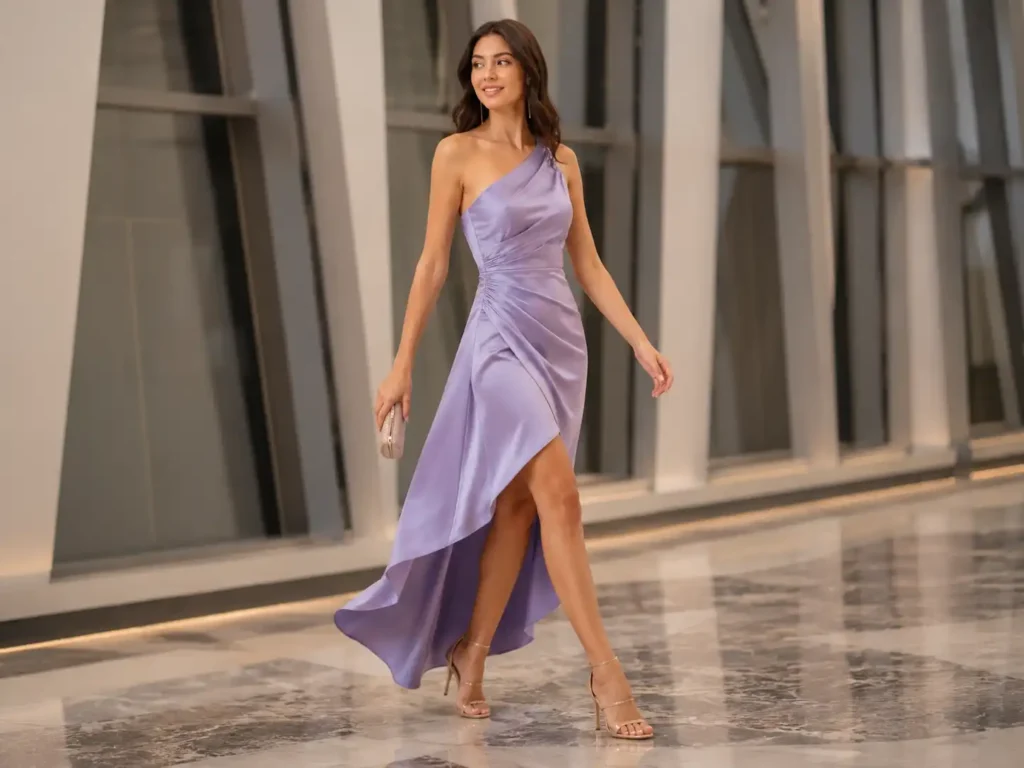
In many commercial size ranges, the bust circumference may increase by about 4 cm between standard alpha sizes such as S to M or M to L, although each brand’s size chart can differ. That growth must be distributed without destroying the neckline angle.
Edge Gaping
Neckline gaping is one of the most common problems in asymmetric styles. It usually happens when the neckline edge is too long, too unstable, or unsupported for the fabric being used.
A diagonal neckline edge is often more sensitive than a straight neckline because part of the edge may sit across areas with movement and body curve. When the wearer raises her arm, turns, sits, or changes posture, the edge is pulled in different directions. If the edge has stretched during cutting or sewing, the problem becomes worse.
For woven garments, stay tape, facing, lining, or careful seam control may be needed. For stretch garments, binding tension, elastic recovery, and negative ease may be more important. For lightweight fabrics, the edge can stretch simply from handling before it is sewn.
Gaping is not always solved by making the garment smaller. That can create tightness elsewhere. A better solution is to identify whether the problem comes from pattern shape, edge length, fabric behavior, construction method, or size grading.
| Distortion Issue | Likely Cause | Practical Check |
| Neckline opens away from body | Edge too long or weak support | Compare finished edge length by size |
| Shoulder slips outward | Anchor point too wide | Check high shoulder and shoulder slope |
| Diagonal line looks flatter | Grade spread too evenly | Overlay graded sizes against base size |
| Bust feels exposed | Bust growth not considered | Check neckline against bust point |
| Armhole pulls neckline | Armhole depth or width imbalance | Fit test with arm movement |
| Facing flips out | Facing shape or understitching issue | Check facing length, width, and rolling |
One-Shoulder Risk
One-shoulder necklines deserve special attention because they carry unequal garment weight. The supported side carries the shoulder load, while the open side depends on pattern balance, body fit, and edge control.
This becomes more difficult in dresses than tops because dress length adds weight. A one-shoulder maxi dress in satin or sequin fabric will behave differently from a cropped stretch top. The heavier garment may pull down on the support side, especially if the neckline and armhole are not balanced.
The risk is not only technical. It affects customer experience. A style that looks dramatic in photos can become uncomfortable if the wearer feels she must keep adjusting it. For occasionwear, party dresses, and evening styles, this can lead to complaints or returns.
The best prevention is to test the style as a worn garment, not only as a flat pattern. The neckline should be checked while standing, sitting, turning, and lifting the arm slightly. If the garment cannot stay balanced during normal movement, the grade or construction needs correction before bulk production.
Which Measurements Matter Most?
The most important measurements for asymmetric neckline grading are high shoulder point, shoulder length, neckline drop, neckline width, diagonal edge length, bust point position, bust circumference, armhole depth, cross-front, side seam length, strap length, and facing width. These measurements control both the look and stability of the garment.
A detailed measurement diagram of an asymmetric neckline dress on a technical flat sketch, with arrows for high shoulder point, neckline drop, diagonal edge length, bust point, armhole depth, cross-front, side seam length, strap length, and facing width; precise fashion technical drawing style, white background.
Fixed Points
Fixed points are the landmarks that protect the design. In an asymmetric neckline, these may include the highest shoulder point, the point where the neckline starts, the deepest point of the neckline, the crossing point over the chest, and the point where the neckline meets the armhole or side body.
These points should be marked before grading because they give the pattern maker a map of the design. Without them, the neckline may be graded like a normal opening, which can change the whole character of the style.
A fixed point does not always mean the point never moves. It means the point must move with intention. For example, the shoulder point may need to move slightly with shoulder width growth, but the visual position of the neckline should still feel close to the approved sample. The deepest neckline point may need small adjustment in larger sizes to protect coverage, but it should not drift so far that the design becomes a different neckline.
Good grading keeps the design recognizable while making the garment wearable.
Control Specs
Control specs turn visual design into measurable production information. This is especially important for asymmetric necklines because many of the important details are not covered by a basic size chart.
A standard chart may include bust, waist, hip, and garment length. That is not enough for a one-shoulder dress or diagonal neckline top. The technical file should also include measurements that describe the neckline shape and support.
Useful control specs include diagonal neckline edge length, high shoulder to neckline point, neckline drop from high shoulder, shoulder seam length on the support side, armhole depth, underarm to neckline point, strap length if applicable, facing width, and lining coverage.
These measurements help reduce subjective sample comments. Instead of saying “the neckline looks different,” the team can identify whether the edge is too long, the neckline drop is too low, or the support shoulder is too wide.
Left and Right
The left and right sides should be measured separately when the design is not symmetrical. This may sound obvious, but in production it is often missed when teams rely too heavily on standard measurement forms.
For example, a one-shoulder dress may have a full shoulder on the right side and no shoulder seam on the left side. A diagonal neckline may have different armhole exposure on each side. A cut-out neckline may have separate upper and lower control points. These differences should be reflected in the spec sheet.
If left and right sides are forced into the same grading logic, the garment may become visually dull or physically unstable. The supported side may need more secure grading. The open side may need more edge control. The back may need adjustment to stop the front neckline from twisting.
A strong spec sheet should show which measurements are symmetrical and which are side-specific. This saves time during sampling and makes bulk QC more reliable.
| Measurement Area | Common Reference Range or Rule | Why It Matters |
| Bust circumference grade | Often around 4 cm per alpha size | Controls front body tension |
| Waist circumference grade | Often around 3-4 cm per alpha size | Affects bodice balance and fit |
| Shoulder width grade | Often around 0.6-1.2 cm per size total | Controls anchor position |
| Armhole depth grade | Often around 0.5-1 cm per size | Affects comfort and neckline pull |
| Neckline edge tolerance | Often tighter than body width tolerance | Small errors can cause visible gaping |
| Facing width | Commonly 3-5 cm depending on fabric | Helps neckline stay flat |
Fit Range
A size range should be reviewed as a connected system. The goal is not just to make XS, S, M, L, and XL patterns. The goal is to make every size look like it belongs to the same product.
In asymmetric neckline grading, the middle and larger sizes often reveal problems that the base sample hides. Size S may look balanced because the body is smaller and fabric tension is lower. But in size L or XL, bust coverage, shoulder support, armhole comfort, and neckline edge length become more demanding.
A practical method is to check the base size first, then check at least one upper size before bulk if the neckline is open, fitted, or made from unstable fabric. For high-risk styles such as one-shoulder satin dresses, mesh party dresses, fitted bodycon dresses, and lace occasionwear, reviewing only one size can be risky.
The fit range should also match the brand’s customer profile. A brand selling mostly XS to M may grade differently from a brand with strong L to XXL demand. The same neckline may need different coverage and support decisions depending on the target customer.
How Do You Grade Each Side?
To grade each side of an asymmetric neckline, work from a full front pattern, mark the design and body reference points, apply size growth to bust, waist, shoulder, and armhole areas, then redraw the neckline to preserve its original angle and coverage. The shell, facing, lining, binding, and support pieces must be checked together.
A professional pattern-making workstation showing full-front asymmetric bodice pattern pieces, separate left and right grading layers, tracing paper overlays, ruler, French curve, neckline support pieces, facing and lining pieces beside the shell pattern; realistic apparel development scene, clean technical lighting.
Pattern Split
An asymmetric front should be handled as a full pattern, not as half a pattern placed on fold. This gives the pattern maker full visibility of both sides, including shoulder difference, diagonal neckline direction, bust coverage, armhole shape, and side seam balance.
The first step is to mark the center front, bust points, high shoulder points, armhole notches, waistline, side seams, and all neckline design points. Then the support side and open side should be identified. In many one-shoulder styles, one side carries the garment while the other side creates the visual impact.
The back pattern should also be reviewed. A common mistake is focusing only on the front neckline. If the back neckline, shoulder blade area, or side seam tension is wrong, the front neckline may twist even if the front pattern looks correct.
A full pattern view helps the team see whether the garment is balanced around the body, not just whether the neckline shape looks attractive on paper.
Design Line
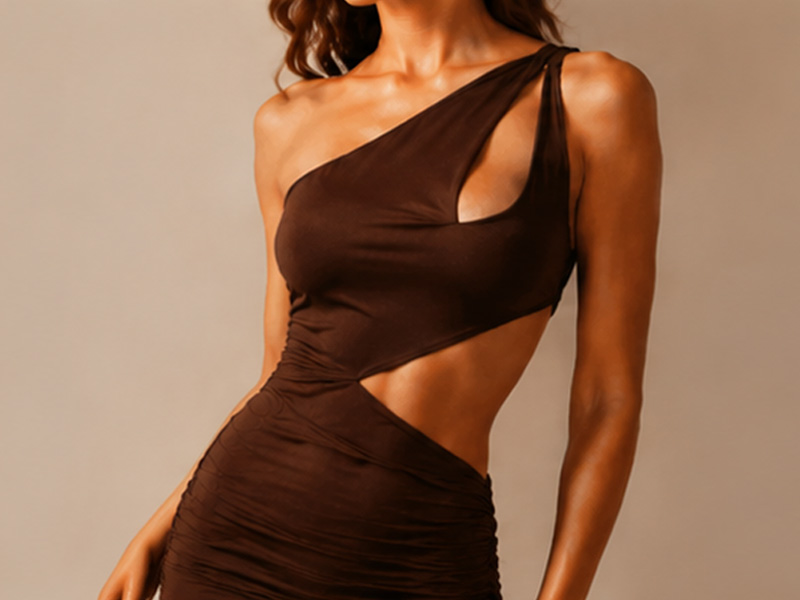
The design line is the reason the garment exists. It may create a sharp diagonal, a soft curve, a dramatic one-shoulder look, or a clean modern neckline. Grading should protect that design feeling across sizes.
After applying the basic size rule, the graded neckline should be compared against the approved sample size. Overlaying sizes can show whether the line spreads too quickly, becomes too flat, or shifts away from the bust and shoulder in an awkward way.
The line may need controlled redrawing. This is not a mistake. It is part of professional grading. A diagonal line that looks elegant in size S may need slight adjustment in size XL to maintain coverage and proportion. The key is to adjust without losing the original identity.
When the design line is important, the tech pack should include visual references and measurement points. Relying only on “same as sample” is not enough for bulk production because each size needs a measurable way to confirm the shape.
Shoulder and Armhole
The shoulder and armhole must be graded together because they control how the neckline sits during movement. If the armhole is too tight, it can pull the neckline. If the shoulder is too wide, the garment may slide. If the armhole is too low, the open side may feel insecure.
For one-shoulder styles, the supported shoulder should be checked for both width and slope. The garment should sit close enough to feel secure but not so tight that it digs into the body. On the open side, the armhole and upper chest area should be checked for exposure and comfort.
For woven garments, the pattern must provide enough room because the fabric will not stretch much during wear. For stretch garments, the fabric can help the fit, but too much reliance on stretch may cause the neckline to grow after wearing.
A proper fit review should include light movement. The model or fit form should not only stand still. Arm movement, turning, and posture changes often reveal neckline problems that flat measurements miss.
Facing and Lining
The outer shell is only one part of the neckline. Facings, linings, bindings, elastic, stay tape, and inner support pieces must also be graded and tested. If the shell is corrected but the facing is not, the neckline may ripple, pull, or roll outward.
For satin and crepe styles, a facing may help keep the neckline flat and clean. For mesh styles, lining may be needed for coverage and stability. For stretch jersey, binding or elastic may control the edge. For sequin styles, comfort backing may be needed to protect the skin around the neckline and armhole.
The facing or lining should not be treated as an afterthought. It should be part of the grading review from the beginning. Its width, shape, seam allowance, and connection points can change the final neckline.
A production-ready neckline usually has a clear construction method. The sewing team should know whether the neckline is faced, bound, lined, taped, elasticated, understitched, or topstitched. Without this clarity, the bulk garment may not match the approved sample.
How Do Fabrics Affect the Grade?
Fabric affects asymmetric neckline grading because stretch, recovery, weight, drape, transparency, surface texture, and edge stability all change how the neckline behaves after cutting, sewing, pressing, wearing, and packing. The same neckline may need different grading and support methods in jersey, satin, mesh, lace, sequin, chiffon, or ponte.
A garment development table with fabric swatches labeled jersey, ponte, satin, chiffon, mesh, lace, and sequin, each shown beside a small asymmetric neckline sample edge with different support methods such as facing, binding, lining, and stay tape; premium women’s fashion manufacturing mood, realistic close-up.
Knit Fabrics
Knit fabrics can make asymmetric necklines more comfortable, but they can also make them unstable. Jersey, rib knit, ponte, scuba, and stretch mesh can follow the body closely, which is useful for bodycon dresses, crop tops, bodysuits, and fitted clubwear. But stretch also means the neckline edge can grow if it is not controlled.
The most important fabric properties are stretch direction and recovery. A fabric may stretch well but recover poorly. In that case, the neckline can look fine in the first fitting but loosen after movement or steaming. If the neckline is cut across a high-stretch direction, edge growth becomes more likely.
Knit styles often need controlled negative ease, binding tension, elastic support, or stabilized edges. The amount depends on fabric weight, stretch percentage, and garment design. A heavy ponte one-shoulder dress may need different control from a lightweight rib top.
For production, the sample should be checked after wearing movement, not only after sewing. Stretch behavior often appears only after the fabric has been pulled, pressed, or left hanging.
Satin and Woven
Satin and woven fabrics give asymmetric necklines a clean, polished look, but they are less forgiving than stretch fabrics. They do not easily recover if the neckline is too long or stretched during handling. Any gaping, pulling, or uneven pressing can be visible on the finished garment.
Satin is especially sensitive because its surface reflects light. A small drag line near the neckline can look more obvious in photos and on the body. Lightweight woven fabrics such as chiffon, rayon, or viscose may shift during cutting, while structured woven fabrics may need more precise shaping for comfort.
For woven asymmetric dresses, grainline should be checked carefully. A diagonal neckline may include areas close to bias, which can stretch during sewing. Stay tape, facing, or controlled handling may be needed to prevent the edge from growing.
Woven grading usually requires a careful balance between coverage and ease. Making the neckline tighter may reduce gaping but can restrict movement. Adding too much room may improve comfort but weaken the neckline shape.
Mesh, Lace, Sequin
Mesh, lace, and sequin fabrics are common in partywear and occasionwear, but they create extra grading challenges. Mesh may stretch, distort, or reveal more than expected. Lace may have motif placement issues. Sequin fabric adds weight, thickness, and possible irritation around edges.
For mesh asymmetric necklines, the shell and lining must work together. If the mesh stretches more than the lining, the neckline can ripple. If the lining is too small, it can pull. If the lining is too large, it can show or create bulk.
For lace, the neckline may need to consider motif direction, scallop edges, transparency, and seam placement. A neckline that cuts awkwardly through the lace motif can look cheap even if the fit is acceptable. For sequin, the edge finish must be clean and comfortable. The inside should not scratch the wearer.
These fabrics often need more sample testing because their behavior changes during cutting, sewing, pressing, and wearing. The pattern grade should never be separated from the construction method.
| Fabric Type | Key Risk | Common Control Method |
| Jersey or rib | Neckline stretching out | Binding, elastic, recovery test |
| Ponte or scuba | Bulk and tension | Clean seam allowance, pressing control |
| Satin | Gaping and visible drag lines | Facing, stay tape, fit sample |
| Chiffon or rayon | Edge stretching and shifting | Stabilized edge, careful cutting |
| Mesh | Transparency and uneven stretch | Lining, binding, tension check |
| Lace | Motif and edge mismatch | Placement planning, lining review |
| Sequin | Bulk and skin irritation | Comfort backing, clean edge finish |
Support Choice
Support should be chosen according to fabric behavior, not just appearance. A neckline that looks the same in a sketch may need different support in each fabric.
A satin asymmetric neckline may need a facing and stay tape. A jersey version may need binding with controlled tension. A mesh version may need lining and edge stabilization. A sequin version may need soft backing and careful seam finishing. The support method changes the cost, sewing time, bulk consistency, and final wearing comfort.
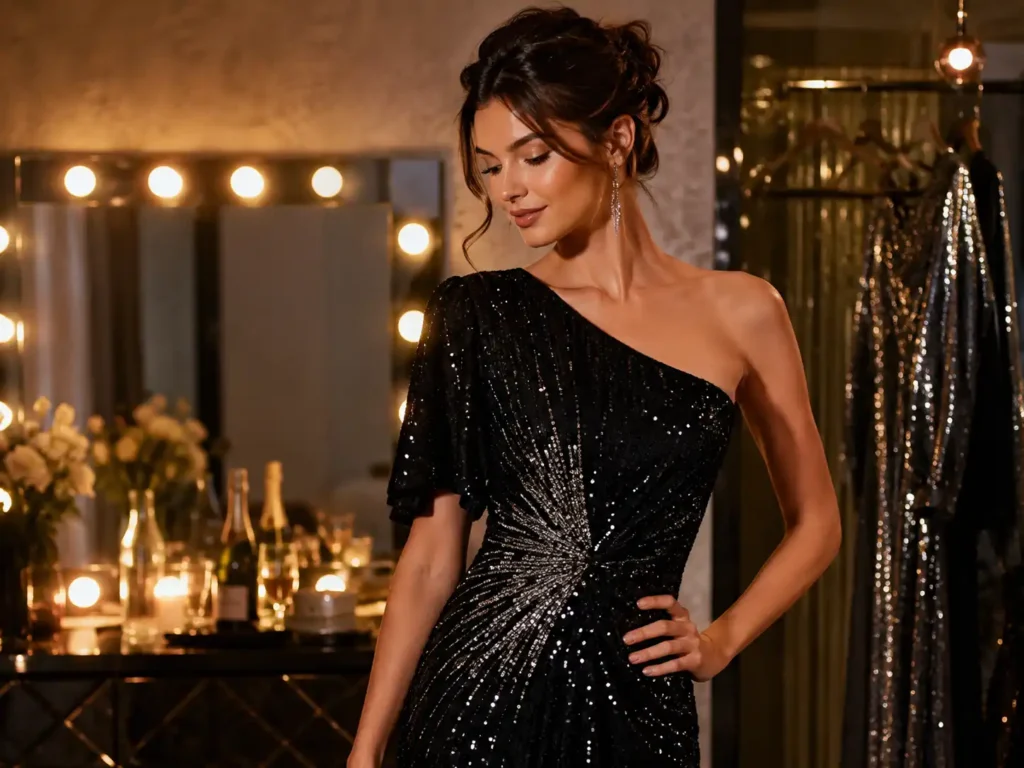
This is also why brands should be cautious when changing fabric after sample approval. If the first sample was made in stretch satin and bulk is changed to non-stretch satin, the neckline may no longer fit the same way. If a mesh sample is changed to lace, the edge and transparency may need fresh review.
The fabric and pattern should be developed together. The neckline grade is not just a size rule. It is a technical decision shaped by material, construction, and the customer’s expected wearing experience.
How Do Factories Check Bulk Fit?
Factories check bulk fit by reviewing graded patterns, making fit or PP samples, measuring critical specs, testing neckline construction, and confirming the finished garment against approved sample standards. For asymmetric necklines, both measurement accuracy and visual balance must be inspected because a neckline can measure correctly but still look unstable on the body.
A professional garment factory QC scene showing asymmetric neckline dresses on mannequins and hangers, a technician measuring diagonal neckline edge length with a tape measure, PP sample and graded pattern sheets on the table, QC checklist visible, clean modern womenswear production environment.
Fit Samples
Fit samples are essential for asymmetric neckline styles because the neckline depends on body balance, fabric behavior, and construction support. A flat pattern cannot fully show whether the garment will slide, gape, twist, or feel secure during wear.
For lower-risk styles, the approved base size may be enough if the neckline is modest and the fabric is stable. For higher-risk styles, at least one larger graded size should be checked before bulk. This is especially important for one-shoulder dresses, fitted bodycon styles, satin occasionwear, mesh party dresses, and garments with cut-outs or heavy embellishment.
Fit comments should be specific and measurable. “Neckline feels loose” is less useful than “front diagonal edge gapes near bust by about 0.8 cm” or “right shoulder point sits 1 cm too far outward.” Clear comments make pattern correction faster and reduce repeated sampling.
The best fit review checks normal movement. The wearer should stand, turn, sit, and move the arm lightly. A neckline that only works when the model stands perfectly still may not work for real customers.
Production Readiness
A style is production-ready when the approved neckline can be repeated consistently in bulk. This means the pattern, graded size set, fabric, facing, lining, seam allowance, sewing method, pressing method, tolerance, and QC points are all clear.
One of the biggest risks is approving a beautiful sample that was carefully adjusted by a sample machinist but cannot be repeated easily by bulk sewing operators. If the neckline depends on hand-feeling alone, bulk consistency will be difficult.
Production readiness should include practical checks. Can the neckline be sewn without stretching? Does the facing roll out? Does the lining match the shell? Does pressing change the edge? Does the neckline stay flat after packing? Are the left and right sides clearly marked for sewing?
For asymmetric garments, clear notches and construction notes are especially important. The two sides may look similar at a quick glance but function differently. Incorrect joining or reversed pieces can cause serious fit and appearance problems.
Measurement Checks
Bulk QC should include neckline-specific measurements, not only standard body specs. Bust, waist, hip, and garment length are important, but they do not fully control an asymmetric neckline.
The measurement sheet should include the points that define the neckline shape. These may include support shoulder length, neckline drop, diagonal edge length, armhole depth, underarm to neckline distance, strap length, facing width, and lining coverage. These measurements should be checked against the approved size chart and sample.
Tolerance should be realistic but controlled. Body circumference may allow a wider tolerance than neckline edge length because small changes at the neckline are more visible. A 1 cm body-width difference may be acceptable in some garments, but a 1 cm difference at a diagonal neckline point can change the whole look.
Visual inspection should sit beside measurement inspection. A garment can pass the tape measure but fail visually if the fabric has twisted, the facing has rolled, or the neckline edge has stretched during sewing.
| QC Checkpoint | What to Check | Why It Matters |
| Support shoulder | Length, slope, stability | Prevents sliding and twisting |
| Diagonal neckline edge | Finished length and smoothness | Controls gaping and design line |
| Bust coverage | Neckline position to bust point | Protects comfort and wearability |
| Armhole | Depth, curve, movement comfort | Prevents pulling on neckline |
| Facing or lining | Width, match, rolling | Keeps neckline clean |
| Pressing result | Edge shape after ironing | Prevents distortion before packing |
| Size consistency | Main neckline specs by size | Protects bulk repeatability |
Bulk Control
Bulk control starts before cutting. The factory should confirm fabric shrinkage, stretch, color direction, grainline, pattern placement, and support materials before production begins. For asymmetric necklines, even small cutting and sewing variations can create visible differences.
During production, inline checks are useful because neckline problems are easier to correct early. If a batch shows stretched neckline edges after sewing, waiting until final inspection is too late. The factory may need to adjust handling, machine tension, pressing method, or edge support.
A good bulk process normally follows this order: approved sample, corrected pattern, graded pattern, PP sample, sealed reference sample, bulk cutting, sewing-line instruction, inline inspection, final measurement check, pressing review, and packing inspection.
For brands, this process protects both product quality and launch timing. When the neckline is controlled from pattern to packing, the garment is less likely to create returns, photo inconsistency, or customer complaints. That is especially valuable for fashion dresses and private-label womenswear, where fit, appearance, and repeat orders are closely connected.
Custom Development Support
If your collection includes one-shoulder dresses, diagonal neckline tops, asymmetric mesh styles, satin occasionwear, fitted bodycon dresses, lace party dresses, or sequin evening pieces, the grading stage should be treated as a product risk-control step, not a small technical detail.
Before sending a style into sampling or bulk production, prepare the information that helps the development team judge the neckline accurately: tech pack, reference image, original sample if available, target fabric, lining plan, size chart, desired size range, order quantity, brand fit standard, packaging requirement, and launch calendar.
Jinfeng Apparel is a Guangdong-based custom women’s fashion manufacturer serving global fashion brands and mid-to-large custom apparel clients with OEM, ODM, private label, dress development, sampling, bulk production, quality control, packaging, and export delivery support. The company’s model is built for clients with clear product direction, sampling needs, and bulk production plans, with MOQ starting from 200 pcs per style/color depending on fabric, color, trims, construction complexity, and production schedule.
For custom asymmetric neckline dresses, tops, jumpsuits, or private-label womenswear collections, send your design direction and production requirements to Jinfeng Apparel. The team can review your pattern risk, fabric choice, sample route, grading method, and bulk production feasibility before your collection moves into production.
Share This Article :

Jerry Lee
Categories

Latest blogs

Table of Contents
Here, developing your OEM/ODM private label clothing collection is no longer a challenge—it’s an excellent opportunity to bring your creative vision to life.

