Skip to content

A mini skirt can look simple when it is hanging on a retail rack. It may contain only a waistband, several body panels, a zipper, a lining, and a hem. Yet those few components leave almost no room for manufacturing error. A waistband that twists by a few millimeters, a back length that rises when worn, or a zipper that waves against the body can turn a visually strong design into a product with poor fit, high returns, and inconsistent customer reviews. For fashion brands, the real question is not whether a factory can make one attractive sample. The harder question is whether that factory can reproduce the approved fit, length, surface finish, seam strength, label accuracy, and packing presentation across every size, color, and production batch.
Mini skirts are manufactured by converting a design into a controlled production system. The process normally includes technical review, fabric and trim selection, pattern development, sample fitting, size grading, bulk fabric inspection, marker planning, cutting, sewing, pressing, measurement checks, final inspection, private-label packing, and shipment preparation.
The difference between a good mini skirt and a risky one is often invisible at first glance. Two black skirts may look identical in an ecommerce photo. One keeps its shape after walking and sitting; the other rides up, twists at the side seam, and shows the lining. The difference usually comes from decisions made long before the garment reaches the model – in the tech pack, fabric selection, pattern work, sewing sequence, and quality-control plan.
What Makes a Mini Skirt Production-Ready?
A mini skirt is production-ready when its design, measurements, fabric, trims, construction, labels, tolerances, and packing requirements are clear enough to be repeated in bulk. A beautiful sample is only the starting point. Real production readiness means the factory can make the same skirt across sizes, colors, and batches without guessing.
Tech Pack Essentials
A mini skirt needs a precise tech pack because the product has little room to hide mistakes. With a short garment, a small change in length, waist position, hip curve, or hem angle can affect comfort, coverage, and the way the skirt looks on the body. A usable tech pack should include front and back technical drawings, measurement points, grading rules, fabric details, trim specifications, stitching instructions, label placement, colorways, size range, packing method, and approved tolerance.
If the style includes pleats, slits, pockets, lining, built-in shorts, embroidery, rhinestones, or special hardware, these details should be drawn and measured rather than described loosely. For factory production, “like the photo” is not enough. A reference image helps explain the mood, but production teams need numbers, construction notes, and approved samples. “Short skirt” can mean 32 cm, 36 cm, or 40 cm depending on the market, size, and waist height. A difference of 2 cm may seem small on paper, but it can change how the skirt feels when sitting or walking.
| Production item | Practical detail to confirm | Why it matters |
| Waist measurement | Common working tolerance: about +/- 1 cm | Controls fit and return risk |
| Hip measurement | Common working tolerance: about +/- 1 to 1.5 cm | Affects movement and ride-up |
| Skirt length | Common working tolerance: about +/- 1 cm | Critical for coverage |
| Slit height | Fixed measurement from hem or waist | Prevents exposure problems |
| Zipper length | Matched to waist and hip access | Controls dressing comfort |
| Lining length | Often 1.5 to 3 cm shorter than shell | Prevents lining from showing |
| Pleat depth | Measured before sewing and pressing | Keeps volume consistent |
| Label position | Measured from seam or waistband | Prevents retail inconsistency |
Production Feasibility
Before sampling, the design should be reviewed from a production point of view. The key question is not only “Can this skirt be made?” but “Can this skirt be made repeatedly, at the required quality level, within the target cost and delivery window?” A fitted satin mini skirt, for example, may look clean in a sketch but can create zipper waves if the fabric is too light or the seam is stretched during sewing. A low-rise wrap skirt may look trend-led, yet it may open too much during movement if the overlap is too narrow.
Good factories review fabric behavior, seam placement, closure method, size grading, production sequence, and likely quality risks before cutting the first sample. This early review often saves time because problems can be corrected before bulk fabric and trims are ordered. Production feasibility also includes cost logic. If a style requires special lace, custom-dyed lining, logo hardware, multiple hand-sewn details, and private-label packaging, the final cost will not behave like a basic woven skirt. Professional development protects the design’s main selling point while finding a realistic way to manufacture it.
Fit and Wearing Risk
Mini skirts are body-sensitive products. They sit around the waist, hip, and upper thigh, which means fit problems appear quickly when the wearer moves. A skirt may look correct on a mannequin but ride up, twist, pull, or expose the lining on a real body. The most common fit risks include back length being too short, side seams moving forward, waistband gaping, hip area pulling, hem flipping, zipper distortion, and lining showing below the outer fabric.
These issues are not always caused by poor sewing. Many begin in pattern development, fabric choice, or incorrect size grading. A good production review should test the sample while standing, walking, sitting, and bending slightly. This does not need to be complicated, but it must be practical. If the wearer cannot sit comfortably, if the slit opens too far, or if the skirt climbs after a few steps, the design is not ready for bulk. For brands selling online, fit risk directly affects returns, reviews, and customer-service cost.
Bulk Repeatability
One sample can be adjusted by an experienced sample maker, but bulk production needs repeatable instructions. The approved sample must be translated into patterns, cutting files, sewing steps, measurement charts, quality checkpoints, and packing standards. Repeatability depends on controlled details: the same waistband shape across sizes, the same pocket position for every sewing operator, the same zipper type across all colors unless a substitution is approved, and the same folding method during packing.
For mini skirts, repeatability becomes especially important when a brand launches multiple colors. Black, white, denim blue, pink, and printed versions of the same style may behave differently if the fabrics come from different lots or suppliers. Even when the pattern is identical, fabric weight, stretch, shrinkage, and surface finish can change the final fit. A mini skirt is truly production-ready only when every department is working from the same approved version: design, pattern, fabric, trims, sewing, QC, packing, and merchandising.
Which Fabrics and Trims Work Best?
The best fabric and trim choices depend on the mini skirt’s silhouette, target price, wearing occasion, stretch requirement, and desired brand image. Structured skirts need stable fabrics, fitted skirts need recovery, pleated skirts need fold memory, and embellished skirts need careful handling. Trims should support both appearance and durability.
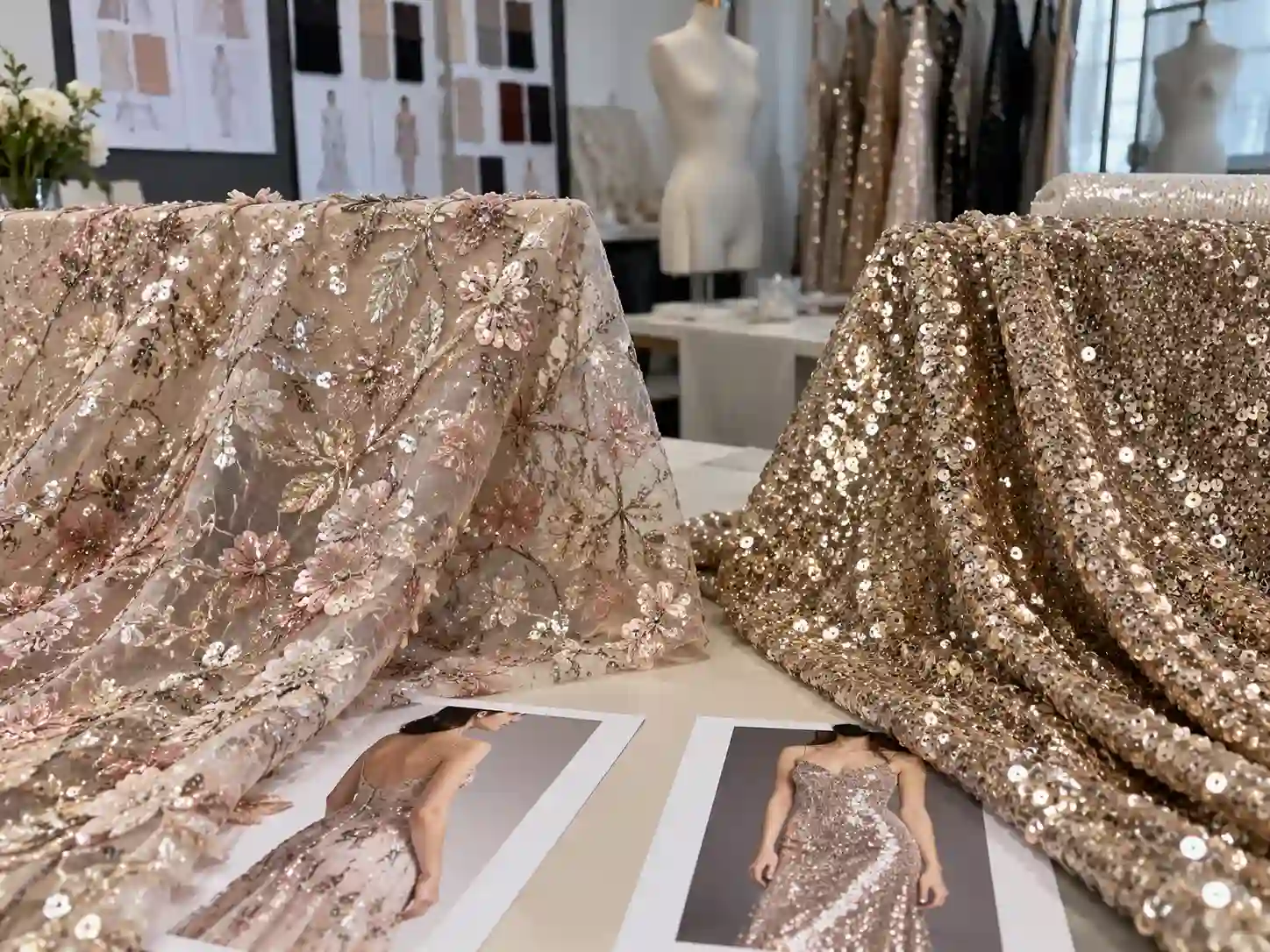
Image Prompt: A professional flat-lay image of mini skirt fabrics and trims including denim, satin, ponte knit, lace, mesh, sequin fabric, zippers, hooks, snaps, elastic, lining swatches, and woven labels arranged on a clean design table in a womenswear sample room.

Fabric by Silhouette
Different mini skirt silhouettes need different material behavior. A-line skirts usually need enough body to hold shape, so cotton twill, denim, suiting fabric, crepe, and medium-weight woven fabrics often work well. Bodycon mini skirts require stretch and recovery, so jersey, rib knit, ponte, scuba, or nylon-spandex blends are more suitable. Pleated mini skirts need fabric that can hold folds. Polyester blends are commonly used because they can maintain pleats better than many soft natural fibers.
Satin mini skirts need careful selection because lightweight satin can show seam puckering and zipper waves. Faux leather and PU styles need stable cutting and careful needle selection because needle holes may remain visible. For resort or summer mini skirts, rayon, viscose, linen blends, cotton blends, and lightweight printed woven fabrics can create a softer, more relaxed look. For partywear, mesh, lace, velvet, sequin fabric, stretch satin, and metallic materials are common, but they usually require more production control.
| Mini skirt type | Common fabric options | Typical fabric weight range | Main production concern |
| A-line mini skirt | Twill, suiting, crepe, denim | 180-320 gsm | Shape and hem balance |
| Bodycon mini skirt | Jersey, rib, ponte, scuba | 220-350 gsm | Stretch and recovery |
| Pleated mini skirt | Polyester woven, TR, uniform fabric | 150-260 gsm | Pleat stability |
| Satin mini skirt | Satin, stretch satin, charmeuse | 90-180 gsm | Seam puckering |
| Denim mini skirt | Cotton denim, stretch denim | 8-12 oz | Shrinkage and washing |
| Mesh or lace mini skirt | Mesh, lace, power mesh | 60-180 gsm | Transparency and lining |
| Sequin mini skirt | Sequin mesh, embellished fabric | 180-350 gsm | Seam bulk and skin comfort |
| Utility mini skirt | Twill, canvas, nylon blend | 200-350 gsm | Pocket strength |
Lining and Coverage
Mini skirts often need more coverage planning than longer skirts. Because the hem is short, the lining can easily show when the wearer walks, sits, or moves. The lining should be shorter than the outer shell but long enough to provide comfort and opacity. Light-colored skirts, sheer fabrics, lace, mesh, and sequin fabrics usually need lining. A white or cream mini skirt without proper lining can become transparent under strong light.
Built-in shorts are useful for pleated, tennis-inspired, wrap, skater, and active-fashion mini skirts. However, they must be designed carefully. If the shorts are too tight, they create visible lines under the skirt. If they are too loose, they twist or bunch up. The inner shorts should match the stretch and movement needs of the garment. Coverage should also be checked across sizes. A length that feels acceptable in the base size may not work for a larger hip measurement if the skirt rides up.
Zippers and Fastenings
Closures are small parts, but they strongly affect the final quality of a mini skirt. Invisible zippers are common for clean dressy styles, but they require stable seam handling. On satin, mesh, or stretch fabrics, an invisible zipper can wave if the seam is stretched during sewing. Metal zippers are often used on denim, utility, cargo, and streetwear-inspired skirts. They add durability and visual weight, but they also increase bulk.
Elastic waistbands are comfortable and easier to fit, but elastic quality matters. Poor elastic may twist, lose recovery, or shrink after washing. For premium-looking skirts, elastic should be properly enclosed, evenly distributed, and tested after stretching. Buttons, hooks, snaps, drawcords, and logo hardware should be checked for pull strength and consistency. If a mini skirt depends on a snap at the waist or wrap opening, that snap is not decorative; it is a functional safety point.
Material Testing
Material approval should include both lab-style testing and factory practicality checks. A fabric can look beautiful and still fail in production if it shrinks too much, stretches unevenly, shows needle marks, or changes shade across rolls. Common checks include fabric weight, width, color consistency, shrinkage, stretch and recovery, pilling, colorfastness, transparency, surface defects, and hand feel.
A practical pre-production test may include steam pressing, sample washing, seam testing, zipper application, and hanging the garment overnight. These simple checks can reveal issues before bulk cutting. Material selection should never be separated from the target customer. A partywear brand may accept more delicate fabric if the visual impact is strong. A high-volume ecommerce brand usually needs better durability and easier care because returns and reviews are heavily influenced by wear experience.
How Is the Pattern Developed?
A mini skirt pattern is developed by turning the design into accurate fabric panels that control waist fit, hip shape, length, movement, lining, closures, and special design details. Because the garment is short and body-sensitive, pattern accuracy directly affects comfort, coverage, size consistency, and bulk quality.
Waist and Hip Shape
The waist and hip relationship is the foundation of a mini skirt. If the waist is correct but the hip is too tight, the skirt will climb upward. If the hip is correct but the waist is too loose, the skirt may rotate or gap. If the waistband curve is wrong, the skirt may look flat on a table but sit poorly on the body. High-rise skirts usually need a stronger waist shape and may use darts, side shaping, or a curved waistband.
Low-rise skirts sit closer to the upper hip, so the waistband is wider in circumference and usually needs a different curve. A bodycon skirt often uses negative ease, but the amount depends on fabric stretch and recovery. Pattern makers must also consider movement. A mini skirt is not only judged while standing. It must remain wearable when sitting, walking, getting into a car, or climbing stairs. This is why hip ease, back length, and fabric stretch cannot be guessed.
Length and Balance
Skirt length is one of the most sensitive measurements in mini skirt production. A few centimeters can change the product from wearable to risky. The challenge is that skirt length is not just one number. Front length, back length, side length, waistband height, hem curve, and body shape all affect the final appearance. The back length often needs special attention because the hip curve can lift the back hem when worn.
Hem balance should be checked on a fit model, not only on a table. A skirt may have equal flat measurements but appear uneven because of fabric drape, bias cutting, or hip shaping. Side seams should hang straight and not twist forward or backward. A practical fitting test should include standing, walking, sitting, and light movement. If the skirt rides up, exposes lining, or pulls at the hip, the length issue may actually come from pattern shape or fabric recovery.
Special Structures
Many mini skirts include details that make production more complex: pleats, wrap fronts, cargo pockets, slits, ruffles, cut-outs, asymmetric hems, or built-in shorts. These details must be engineered clearly before bulk production. Pleats need accurate fold depth, direction, spacing, and pressing method. A pleated skirt can look messy if pleats are uneven or if the waistband pulls them out of shape.
Wrap skirts need enough overlap to prevent opening during movement. A decorative tie alone may not be secure enough, so an inner button, snap, or hook may be needed. Cargo pockets require placement control and reinforcement. If the pocket is too low, it can distort the skirt visually. If it is too close to the side seam, it may add width at the hip. Skort constructions require particular care because the outer skirt and inner shorts must share the waist cleanly while moving differently below the hip.
Size Grading
Size grading expands the approved base pattern into a full size range. It is not simply making every part larger by the same amount. Waist, hip, length, pocket placement, pleat depth, slit height, and waistband curve each need their own grading logic. For mini skirts, grading must protect both fit and visual proportion. A pocket that looks balanced in size S may appear too close to the hem in size XS or too high in size XL if grading is not controlled.
Common grade increments depend on the brand’s size standard, but many women’s fashion programs use waist and hip differences of roughly 4 to 5 cm between alpha sizes. Length may increase only slightly or remain controlled depending on the style and market. Size-set samples are useful for low-rise skirts, fitted silhouettes, skorts, pleated styles, and designs with strong pocket or slit placement. They help confirm whether the approved fit works beyond the base size.
How Are Mini Skirts Cut and Sewn?
Mini skirts are cut and sewn by preparing the fabric, planning the marker, cutting panels accurately, controlling bundles, and assembling the garment in a fixed sewing sequence. The process changes by fabric and style, but the goal is always the same: consistent fit, clean construction, stable seams, and approved appearance.
Fabric Preparation
Fabric preparation begins before cutting. Rolls should be inspected for shade variation, stains, holes, weaving defects, width, stretch direction, nap direction, and print alignment. If defects are missed at this stage, they may appear in finished garments and become costly to repair. Stretch fabrics should relax before cutting. Knits, rib, ponte, scuba, and stretch mesh may be under tension from rolling and transport.
If stretch materials are cut too soon, panels may shrink or change shape after cutting. A common practical relaxation time is several hours, though the exact time depends on fabric type, roll tension, and factory conditions. For satin, velvet, corduroy, and brushed fabrics, direction matters. Panels should follow the same nap or shine direction to avoid visible shade differences. For stripes, checks, placement prints, lace motifs, and engineered prints, marker planning must allow matching where the design requires it.
Cutting and Bundling
Once the marker is approved, fabric is spread and cut according to size and color ratio. Cutting accuracy is essential because sewing cannot fully correct a distorted panel. Curved waistbands, pocket flaps, pleat marks, and asymmetric panels require particular attention. After cutting, garment parts are bundled by style, size, color, and shade group. Bundling prevents panel mixing, especially when fabrics have slight color differences between rolls.
For mini skirts, front and back panels from different shade groups can create a visible mismatch under store lighting or camera flash. Each bundle should be clearly identified with style number, color, size, quantity, bundle number, and sometimes roll or shade group. Replacement panels should also be tracked to avoid uneven color matching. Before sewing starts, cut panels should be checked for notches, drill marks, pleat lines, pocket positions, and seam allowance. A missing notch may seem small, but it can cause inconsistent waistband attachment or uneven pleat placement across the order.
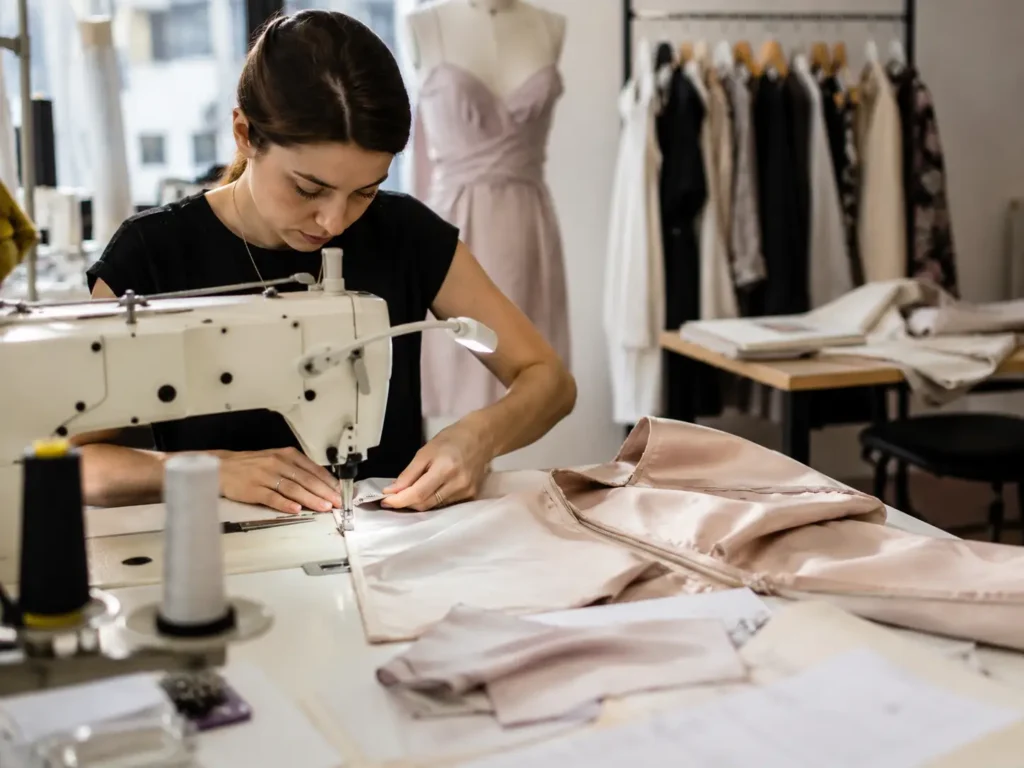
Sewing Sequence
The sewing sequence depends on the style. A simple woven mini skirt may start with darts or panel seams, then pockets, zipper, side seams, waistband, lining, hem, and final pressing. A denim skirt may include pocket bags, fly-front construction, yoke seams, topstitching, belt loops, rivets, washing, and pressing. A pleated skirt may require pleat pressing before waistband attachment.
The order matters. If the waistband is attached before the zipper area is stable, the top edge may become uneven. If the hem is finished before the garment relaxes, the bottom edge may look unbalanced. If lining is attached without checking shell length, the lining may show after pressing. Machine settings should be adjusted by fabric. Satin needs careful tension. Stretch fabric needs suitable seam elasticity. Denim needs stronger needles and thread. Sequin fabric may need seam-area preparation before sewing.
Style Differences
Different mini skirt styles require different production methods. A-line woven skirts focus on clean waist shaping and hem balance. Bodycon skirts focus on stretch recovery and seam strength. Pleated skirts focus on accurate folding and pressing. Denim skirts focus on seam strength, topstitching, washing shrinkage, and hardware placement.
| Style type | Key sewing focus | Common quality risk |
| A-line mini skirt | Darts, side seams, hem balance | Uneven flare or twisted side seam |
| Bodycon mini skirt | Stretch seams and elastic recovery | Ride-up or broken stitches |
| Pleated mini skirt | Pleat marking and pressing | Uneven pleat depth |
| Denim mini skirt | Topstitching, fly, waistband | Shrinkage after washing |
| Wrap mini skirt | Overlap and fastening | Opening during movement |
| Cargo mini skirt | Pocket placement and reinforcement | Bulky or uneven pockets |
| Satin mini skirt | Seam tension and zipper control | Puckering or zipper waves |
| Skort | Inner short and outer skirt balance | Shorts pulling skirt upward |
These differences affect line planning. A factory line that is efficient with basic woven skirts may not be suitable for sequin, lace, or structured skort styles. Matching product type to the right production team reduces defects and improves delivery stability. For brands with mixed collections, this is especially important because one launch may include denim, satin, stretch, pleated, and skort styles at the same time.
How Is Bulk Quality Controlled?
Bulk quality is controlled through approved samples, material checks, cutting inspections, first-piece approval, in-line inspection, measurement control, finishing review, packing checks, and final inspection. Good QC is not only about finding defects at the end. It is about preventing repeated problems before they spread through the order.
Before Sewing
Before sewing begins, the production team should confirm that the approved sample, final pattern, measurement chart, bill of materials, fabric approvals, trim approvals, label files, and packing instructions are all aligned. Many bulk problems start when one department follows an older version of the style. Fabric inspection should identify shade differences, holes, stains, print defects, stretch variation, and surface damage.
Trim checks should confirm zipper color, zipper length, elastic width, button style, hook quality, snap strength, thread color, label content, and hangtag information. A first-piece approval is valuable before full-line sewing. The first completed garment from production fabric should be checked against the approved sample. This can reveal zipper waves, waistband twisting, incorrect seam allowance, lining length problems, or measurement deviations before hundreds of pieces are sewn.
In-Line Inspection
In-line inspection happens while garments are being sewn. The purpose is to catch repeated problems early. Inspectors should not only remove defective pieces; they should identify why the defect is happening. Common in-line issues include skipped stitches, seam puckering, uneven waistband height, twisted side seams, loose pleats, zipper waves, mismatched pocket placement, exposed lining, uneven hem, and damaged fabric surface.
Some defects come from machine settings. Others come from handling, cutting, pattern errors, or unclear sewing instructions. If satin seams pucker, the issue may be needle size, thread tension, stitch density, or fabric handling. If bodycon skirts keep measuring short after sewing, the cause may be fabric stretch during cutting or over-stretched seams during assembly. In-line inspection protects delivery time because repairs are easier before the garment is fully completed.
Measurement Control
Measurement control should happen during and after production. The most important points for mini skirts are waist, hip, skirt length, waistband height, hem width, slit height, zipper position, pocket placement, lining length, and built-in-short length if included. Measurements should be taken using the same method every time. The garment should be laid flat, closed properly, smoothed without excessive stretching, and measured from clearly defined points.
A tolerance chart should be approved before production. The tolerance should match the product type. A stable woven waistband can often use tighter control than a soft stretch body. Delicate fabrics and complex constructions may need realistic tolerance ranges. Measurement data should be reviewed as a pattern, not only as single pieces. If several garments are trending short, the line should stop and investigate. If the waist measurement increases after pressing, the waistband construction or heat setting may need adjustment.
Final Inspection
Final inspection checks the garment after sewing, pressing, trimming, and packing preparation. The inspector compares finished goods with the approved sample and specification. Final QC should also include function. Zippers should open smoothly. Buttons and snaps should hold. Waistbands should not twist. Pleats should sit in the correct direction. Skirts should be clean, pressed, and free from loose threads.
| Inspection area | What to check | Practical risk |
| Appearance | Shape, symmetry, color, surface | Poor retail presentation |
| Measurements | Waist, hip, length, hem, slit | Fit complaints and returns |
| Sewing | Seams, stitches, topstitching | Weak or uneven construction |
| Closures | Zipper, hooks, buttons, snaps | Dressing difficulty |
| Lining | Length, twisting, exposure | Lining visible when worn |
| Pressing | Creases, shine marks, pleats | Poor ecommerce photos |
| Labels | Size, care, brand, origin | Compliance or warehouse issue |
| Packing | Polybag, barcode, carton mark | Shipping and SKU errors |
For ecommerce brands, packing accuracy is part of quality. A wrong barcode, wrong size sticker, or mixed color carton can create warehouse delays and customer-service problems even if the garment itself is well made. For retail brands, appearance after unpacking matters as much as appearance at the sewing line. Pressing, folding, carton loading, and humidity control can all affect how the skirt looks when the buyer opens the goods.
How Do Brands Move From Sample to Delivery?
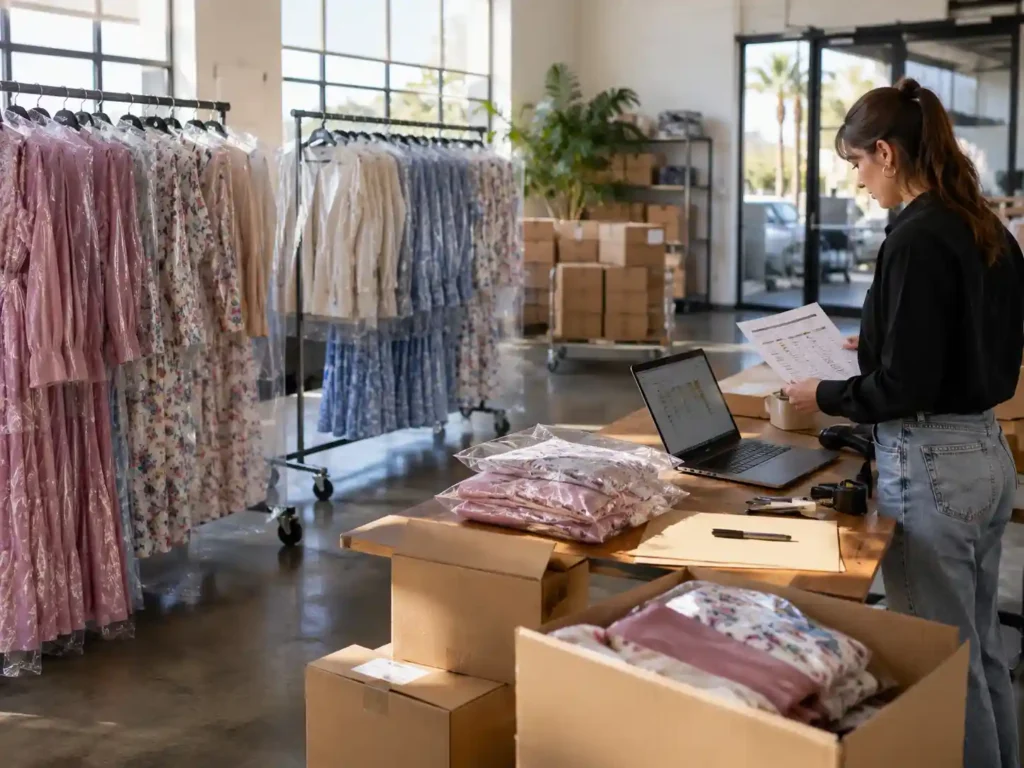
Brands move from sample to delivery by approving each development stage, confirming bulk materials, locking the production standard, monitoring critical quality points, approving private-label packing, inspecting finished goods, and coordinating shipment. The smoother the approval process, the lower the risk of delays, wrong details, and inconsistent bulk quality.
Sample Approval
Sample approval is a step-by-step process. The first sample checks whether the style can be made. The fit sample checks measurements, body balance, comfort, and movement. A revised sample confirms corrections. A size-set sample checks grading across sizes. A PP sample confirms the final materials, trims, construction, and workmanship for bulk production.
Brands should give specific sample comments. “Make it better” does not help a factory improve the pattern. Clear comments such as “increase back length by 1.5 cm,” “reduce waist by 1 cm,” “move pocket down by 2 cm,” or “change zipper to matte black” can be translated into pattern and production updates. The approved PP sample should become the production reference. If the sample changes after approval, the pattern, measurement chart, fabric record, trim record, sewing instructions, and packing file should also be updated.
Bulk Planning
Bulk planning begins after sample approval and material confirmation. The factory needs the final purchase quantity, colors, size ratio, delivery date, fabric status, trims, labels, packaging files, and inspection standard. A mini skirt order may look simple, but planning becomes more complex when there are multiple fabrics, several colors, different size ratios, private-label packaging, and split shipments.
One black satin mini skirt, one denim mini skirt, and one pleated skort may require different production lines, different machine settings, and different inspection priorities. Bulk planning should also consider lead time. Fabric sourcing, custom dyeing, trim development, label printing, sample approval, cutting, sewing, finishing, inspection, and packing all take time. Rush production may be possible in some cases, but it increases risk if fabric, trims, or sample approvals are not ready. A clear production schedule helps brands plan photoshoots, product launches, warehouse receiving, and marketing campaigns with fewer surprises.
Private Label Packing
Private-label packing turns finished garments into retail-ready or ecommerce-ready products. This includes main labels, size labels, care labels, hangtags, barcode stickers, polybags, size stickers, carton marks, and warehouse labels. The packing method should match the product. Satin skirts need careful folding to reduce visible creases. Pleated skirts should be folded in a way that protects the pleat direction. Sequin skirts may need tissue paper or protective packing to prevent surface damage.
Barcode and SKU control are especially important. A skirt packed with the wrong barcode may be received as the wrong product by a warehouse. A wrong size sticker can lead to customer complaints and unnecessary returns. Packing instructions should be treated as part of the production file, not as a final afterthought. The best time to confirm packing is before bulk production finishes, so labels, hangtags, stickers, and cartons are ready when garments leave the finishing line.
Repeat Orders
Repeat orders are easier when the factory keeps accurate records. The approved pattern, grading, measurement chart, fabric details, trim information, sewing instructions, QC comments, and packing method should all be stored for future production. However, repeat does not mean automatic. Fabric lots can change. A zipper supplier may update a product. A color may shift slightly between dye lots. A stretch fabric may have a different recovery from the previous batch.
Before repeating production, the factory and brand should confirm whether all materials are still the same. Repeat orders may involve the same style in the same color, new colors on the same pattern, additional sizes, revised labels, updated packaging, or split delivery to different warehouses. Each change should be recorded clearly. For brands building long-term skirt collections, good repeat-order management reduces development time and improves consistency. It also helps maintain brand fit, because the customer expects the second batch to feel like the first one they purchased.
A successful mini-skirt collection is built through hundreds of controlled decisions: where the waist sits, how the hip is shaped, whether the hem rises in movement, how the zipper lies, how the lining behaves, and whether every unit reaches the customer with the correct label and barcode. For brands that need custom mini skirt development, private-label production, multi-style skirt collections, or repeatable bulk manufacturing, Jinfeng Apparel can review your tech pack, reference images, sample, preferred fabric, size range, estimated quantity, target market, packaging requirements, and launch schedule to prepare a practical production quotation.