Skip to content

Ask three dress factories how long production takes, and you may receive three different answers: 30 days, 60 days, or four months. The difference is not always factory speed. Often, each supplier is measuring a different part of the project. One may count only cutting and sewing after all materials are ready. Another may include pattern development, fabric sourcing, sampling, approvals, quality control, and packing.
For most new custom dress projects, brands should plan about 8-16 weeks from complete technical information to finished bulk goods, before international freight. Repeat styles with approved materials may move faster. Corset construction, custom colors, lace, sequins, multiple revisions, testing, and retail packaging can extend the timeline beyond 16 weeks.
The useful question is not simply, “How many days does production take?” It is, “Which stages are included, what must be approved before each stage begins, and which decisions are on the critical path?”
A launch can be missed even when sewing finishes on time. A late lab dip, an unapproved zipper, a changed size chart, or a missing barcode file can quietly consume the schedule. The timeline below shows where those days actually go, which risks deserve attention, and how experienced brands protect a launch date before the first piece of bulk fabric reaches the cutting table.
How Long Does Dress Manufacturing Take?
A new custom dress usually takes about 8-16 weeks from technical review to finished bulk goods, excluding international freight. Simple styles using available fabric may move faster, while corset construction, custom colors, lace, sequins, repeated sample revisions, testing, and retail packaging can push the schedule beyond 16 weeks. The exact timeline depends on what has already been approved when the project begins.
What the Timeline Includes
The phrase “dress manufacturing time” is often misunderstood because different suppliers count different stages.
One factory may quote only the time required for cutting, sewing, finishing, and packing after all materials are ready. Another may include pattern development, fabric sourcing, sampling, sample revisions, and pre-production approval. Both quotations may be technically correct, but they describe very different schedules.
A complete dress manufacturing timeline normally includes:
- Technical review and requirement clarification
- Fabric and trim sourcing
- Pattern development
- First sample production
- Fitting and sample revisions
- Pre-production sample approval
- Bulk material purchasing
- Cutting and sewing
- Finishing and quality inspection
- Labeling and packing
- Shipment preparation
International freight should usually be shown separately. A factory may complete production on time while the final warehouse delivery is delayed by vessel schedules, customs clearance, destination handling, or warehouse appointments.
The buyer should always ask for three clear dates: the estimated production start date, the ex-factory date, and the expected warehouse arrival date.
| Project Type | Common Planning Range | Main Conditions |
| Approved repeat style | 4-8 weeks | Existing pattern, confirmed fabric, unchanged trims and packaging |
| New standard dress | 8-12 weeks | Available fabric, one or two sample rounds, normal construction |
| Complex fashion dress | 12-20 weeks | Corsetry, lace, sequins, custom trims, multiple fittings |
| Seasonal multi-style collection | 14-24+ weeks | Parallel sampling, several fabrics, many SKUs, phased production |
These ranges are planning references rather than guaranteed promises. The actual schedule should be based on product complexity, material readiness, style count, order quantity, factory capacity, and buyer approval speed.
When the Clock Really Starts
A production timeline does not truly begin when a buyer sends a reference image or asks for a quotation.
At that stage, important questions may still be unanswered:
- Which fabric should be used?
- Is the garment lined?
- What is the target size range?
- What are the quantities by color?
- Does the dress require cups, boning, or underwire?
- Are labels and packaging already designed?
- What market and fit standard will be used?
- When must the finished goods reach the warehouse?
For new development, the project clock normally starts once the manufacturer has enough information to begin technical review. For bulk production, the clock starts later, after the order details and production standard have been approved.
A reliable bulk start normally requires:
- Approved pre-production sample
- Confirmed measurement chart
- Final fabric and trim specifications
- Confirmed colors
- Quantity and size breakdown
- Label and packaging files
- Agreed quality requirements
- Payment and commercial approval
- Reserved production capacity
This is why a quoted “30-day production time” rarely means 30 days from the first inquiry. It usually means 30 days from the point at which the product is technically and commercially ready for production.
Is a 30-Day Schedule Realistic?
A 30-day bulk schedule can be realistic, but only under controlled conditions.
It is more achievable when the pattern is approved, the fabric is already available, trims are standard, packaging is ready, and the factory has reserved a suitable production line. It may also work well for repeat orders in which the previous specifications remain unchanged.
It becomes risky when the same 30 days are expected to cover:
- Pattern creation
- First sample development
- Sample shipment
- Fitting and revisions
- Custom fabric dyeing
- Special trim development
- Bulk production
- Final inspection
- International delivery
A short schedule is not automatically a sign of efficiency. It may simply exclude important stages.
Experienced buyers do not ask only, “Can you finish in 30 days?” They ask, “What must be approved before those 30 days begin, and what is excluded from that promise?”
That distinction is especially important for fast fashion. Speed matters, but an unrealistic schedule can create emergency material substitutions, missed quality checks, rushed approvals, and expensive air freight.
Development Time and Production Time
Development lead time and bulk production lead time should be tracked separately.
Development lead time covers the process of turning an idea into a production-ready product. It may include design review, pattern making, fabric selection, sample sewing, fitting, revision, grading, and PP sample approval.
Production lead time begins after the product standard is approved. It includes bulk material ordering, cutting, sewing, finishing, quality control, labeling, packing, and shipment preparation.
This distinction makes project reviews more accurate. For example, a style may spend 18 days waiting for customer feedback and 35 days in factory production. If the two phases are combined, both parties may incorrectly conclude that the factory required 53 days to produce the order.
A professional calendar should identify:
- Factory working time
- Buyer approval time
- Supplier material time
- Courier time
- Production time
- Logistics time
Once these categories are visible, delays become easier to diagnose and prevent.
What Happens Before Sampling?
Before sampling, the factory reviews the design, clarifies the construction, confirms the intended fit, evaluates fabric and trim options, estimates cost, and prepares a workable pattern direction. This stage is critical because unclear inputs usually create inaccurate samples, repeated corrections, and unstable quotations. Better preparation before sewing often saves more time than trying to accelerate the sample room later.
Technical Information
A factory can begin from a tech pack, original sample, sketch, reference image, or line sheet. However, these inputs do not provide the same level of certainty.
A clear tech pack should include:
- Front and back drawings
- Construction details
- Base-size measurements
- Measurement tolerances
- Fabric specifications
- Trim requirements
- Color references
- Label positions
- Artwork placement
- Packaging instructions
- Revision history
A reference image can explain the visual direction, but it cannot reliably show internal construction. The factory may not know whether the dress uses a full lining, partial lining, fusible support, elastic, cups, boning, or a specific seam finish.
An original sample provides more physical information, but the factory still needs to confirm whether it should reproduce the same fabric, fit, measurements, and finishing standard.
The most productive approach is to combine visual references with measurable requirements. Even a simple document containing the target fabric, size chart, quantity, market, and construction expectations can reduce avoidable questions.
For fitted dresses, buyers should also identify the intended body profile. The same size label can fit very differently across US, UK, European, and Australian markets. A base size should not be selected without considering the customer group.
Fabric and Trim Review
Fabric selection affects almost every later stage: pattern shape, fit, sewing method, appearance, cost, and lead time.
A satin dress developed in a stable woven fabric cannot simply be transferred into a high-stretch fabric without reviewing the pattern. Likewise, a bodycon style designed around stretch recovery may not function in a rigid woven material.
The factory should evaluate:
- Composition
- Weight
- Width
- Stretch direction
- Recovery
- Shrinkage
- Opacity
- Drape
- Surface sensitivity
- Color consistency
- Supplier MOQ
- Supplier lead time
Trims deserve the same attention. A missing zipper, cup, underwire, buckle, rhinestone chain, or branded label can stop an otherwise completed production run.
| Component | Typical Approval Point | Main Risk if Delayed |
| Main fabric | Before first or revised sample | Pattern and cost may change |
| Lining | Before PP sample | Opacity, comfort, and garment balance may change |
| Zipper or closure | Before PP sample | Opening length and seam construction may be affected |
| Cups and boning | During early sampling | Bust shape and support cannot be approved |
| Labels and hangtags | Before bulk packing | Finished goods may wait unpacked |
| Branded hardware | Early development | Tooling, plating, or MOQ may extend the schedule |
Stock materials usually support faster development. Custom dyeing, printing, embroidery, pleating, or branded hardware adds supplier lead time and additional approval steps.
Pattern Development
Pattern making converts the visual design into repeatable production pieces.
For a simple loose dress, the first pattern may be relatively straightforward. For a fitted or structured style, pattern development requires more analysis.
The pattern maker must control:
- Bust coverage
- Waist position
- Hip ease
- Neckline shape
- Armhole balance
- Strap placement
- Side-seam position
- Opening length
- Lining structure
- Hem balance
- Movement and comfort
Corset, strapless, backless, cut-out, asymmetrical, and low-waist styles require especially careful work. A difference of one or two centimeters can noticeably affect fit and support.
Pattern development should also consider bulk production. A sample can sometimes be adjusted manually by a skilled sample machinist, but that method may not be suitable for hundreds or thousands of garments. The approved construction must be repeatable by the production line.
The pattern is therefore not only a shape-making tool. It is part of the production control system.
Cost and Feasibility
The best time to identify cost and production risks is before the first sample, not after several development rounds.
A technical review may reveal that:
- The chosen fabric is too expensive
- The requested detail is not stable in bulk
- The trim supplier requires a high MOQ
- The dress consumes more fabric than expected
- The target price does not support the construction
- The requested delivery date is unrealistic
- The sample cannot be graded without fit changes
A manufacturer should not simply reject these problems. The team should offer practical alternatives, such as:
- Replacing the fabric with a similar option
- Simplifying an internal construction
- Changing a decorative component
- Adjusting panel placement
- Reducing unnecessary seam operations
- Grouping colors to meet material minimums
- Separating urgent and non-urgent styles
Cost optimization is most effective when it protects the visible result and fit. Removing necessary lining, weakening bust support, or lowering inspection standards may reduce the quotation, but it can damage the product and create higher return rates later.
How Long Does Sampling Take?
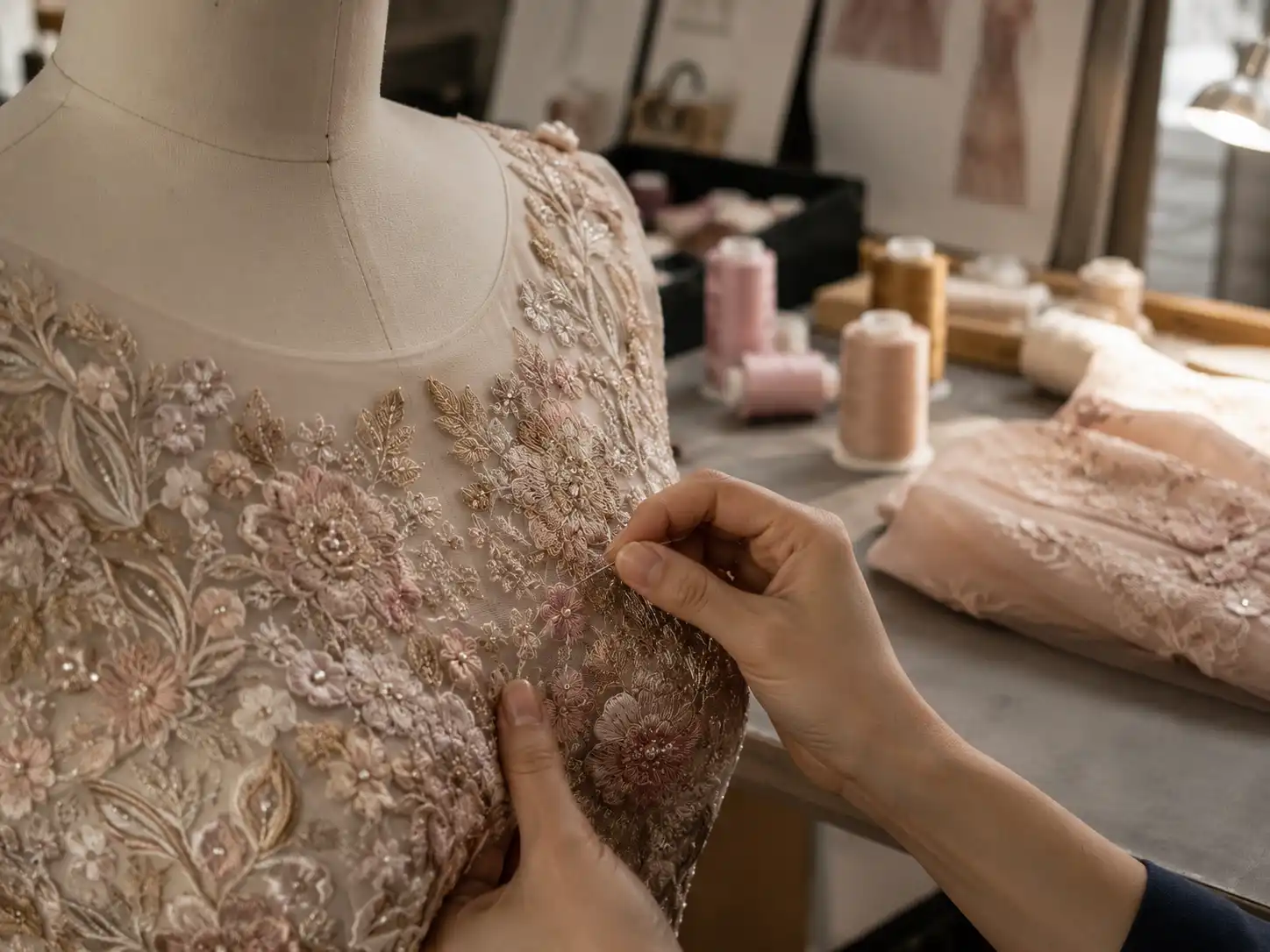
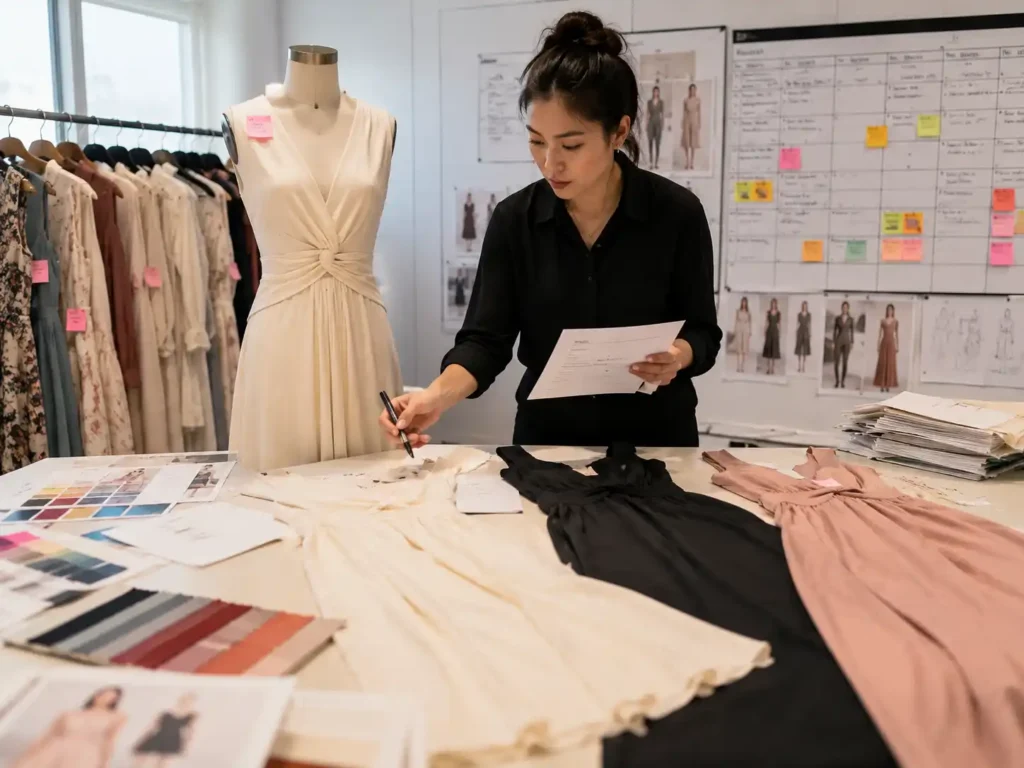
Dress sampling usually takes about 7-25 days per round, depending on material readiness and construction complexity. A standard woven or knit dress may be completed within 10-15 days, while corset, lace, mesh, sequin, or highly structured styles often need more time. Custom fabric or trim development can extend the sample cycle beyond 25 days.
First Sample
The first sample is a physical test of the design, pattern, fabric direction, fit, and construction.
It should not be treated as the final production standard. Its purpose is to reveal what drawings and measurements cannot fully predict.
A useful first-sample review asks:
- Does the silhouette match the design?
- Is the bust supported and covered correctly?
- Is the waistline in the intended position?
- Does the fabric drape as expected?
- Is the neckline stable?
- Are the straps properly positioned?
- Is the zipper flat and functional?
- Is the lining comfortable?
- Can the garment be produced consistently?
The first sample may also expose a mismatch between design intent and target cost. A style may look simple in a photograph but require additional lining, support, or handwork to achieve the same result.
A good factory performs an internal review before sending the sample. Measurements, workmanship, visible defects, and major construction issues should be checked first. This does not eliminate the buyer’s fitting process, but it prevents obvious errors from consuming an entire revision round.
Sample Revisions
One revision may be enough for a clear, familiar style. Two or more rounds are common for fitted, structured, or material-sensitive dresses.
Typical corrections include:
- Bust, waist, and hip measurements
- Neckline depth
- Shoulder slope
- Strap length
- Armhole shape
- Dress length
- Slit height
- Cup position
- Boning strength
- Lining length
- Zipper type
- Fabric or color
- Decorative placement
Feedback should be measurable whenever possible.
“Make the waist tighter” is difficult to execute consistently. “Reduce the half-waist measurement by 1.5 cm” gives the pattern maker a usable instruction.
Buyers should also separate fit comments from design changes. Correcting a loose waist is a fit adjustment. Replacing the neckline, adding sleeves, or changing the fabric is a design revision and may affect price, consumption, and development time.
Every approved revision should be reflected in the updated pattern, size chart, BOM, and sewing instructions. Relying on chat messages creates a serious risk that the sample and production documents will no longer match.
Fit and PP Approval
A fit sample is especially important for products where small measurement differences affect comfort or appearance.
These include:
- Bodycon dresses
- Corset dresses
- Strapless styles
- Deep-V dresses
- Backless dresses
- Cut-out dresses
- Jumpsuits
- Low-waist designs
- Plus-size collections
A garment can match the measurement chart and still perform poorly on the body. The neckline may gape, the side seam may twist, the skirt may ride up, or the bust may feel compressed.
After fit and construction are stable, the factory prepares the pre-production sample. The PP sample should use the final fabric, color, trims, pattern, labels, and approved sewing method wherever possible.
| Sample Stage | Common Time Range | Main Purpose |
| Simple first sample | 7-10 days | Confirm basic shape and construction |
| Standard dress sample | 10-15 days | Review fit, fabric, and workmanship |
| Structured or multi-part style | 12-18 days | Validate internal support and complex assembly |
| Lace, mesh, sequin, or corset style | 15-25 days | Check placement, support, handling, and finishing |
| Revised sample | 7-15 days | Confirm documented changes |
| PP sample | 7-15 days | Establish final bulk-production standard |
The PP sample should not be approved casually. Once bulk fabric is cut, late design or measurement changes can create material loss and schedule disruption.
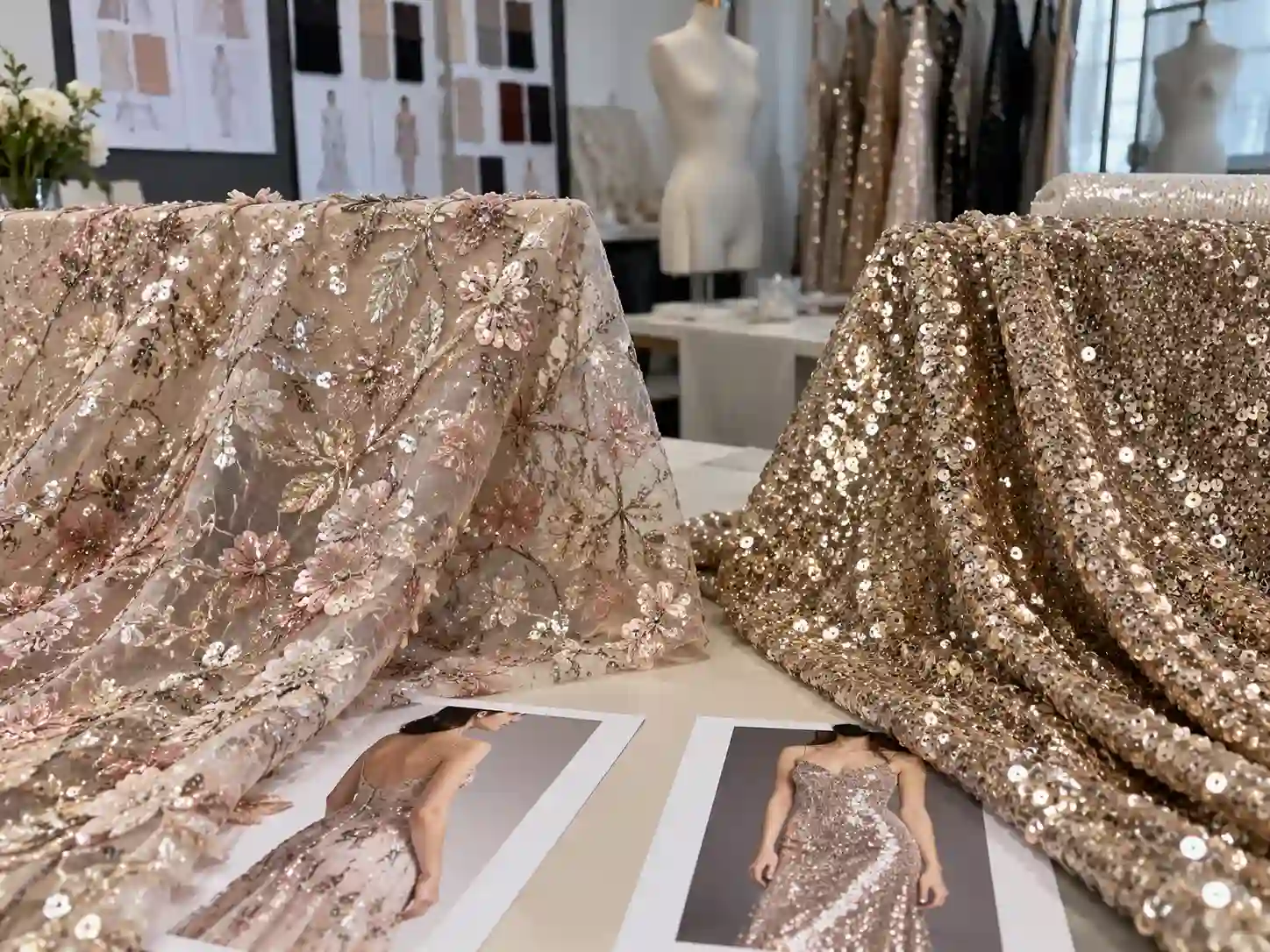
Golden Sample
The Golden sample is the sealed physical reference used during bulk production and quality inspection.
It helps align:
- Pattern and sewing teams
- Production-line supervisors
- QC inspectors
- Merchandisers
- Third-party inspectors
- The buyer’s product team
The Golden sample should be supported by the approved measurement chart, BOM, construction file, tolerances, and packing instructions. A physical sample alone cannot show every production requirement.
During repeat orders, the Golden sample also helps prevent gradual product drift. Without a preserved standard, a neckline may become slightly lower, an elastic slightly tighter, or a hem slightly shorter over several runs.
A new Golden sample may be required if the buyer changes:
- Fabric
- Color
- Lining
- Closure
- Fit
- Trims
- Internal support
- Packaging presentation
Keeping an obsolete sample as the production standard can be as risky as having no standard at all.
How Long Does Bulk Production Take?
Bulk dress production often requires 4-8 weeks after all approvals and materials are ready. The actual duration depends on style complexity, quantity, style count, material availability, line capacity, inspection requirements, and packaging. A repeat order may move faster, while multi-style collections or structured dresses need more setup, monitoring, and finishing time.
Pre-Production Control
Bulk manufacturing begins before the first fabric panel is cut.
The factory must first convert the approved product into controlled production information. This normally includes:
- Final production order
- Approved PP and Golden sample
- Final size chart
- Graded pattern
- Confirmed BOM
- Bulk fabric inspection
- Trim inspection
- Marker and cutting plan
- Sewing instructions
- QC checklist
- Packing specification
- Pre-production meeting
This preparation protects the order from expensive mistakes.
If the size chart changes after cutting, the panels may no longer be usable. If dye lots are mixed, different shades may appear within one garment. If the sewing team follows an old sample, the bulk goods may not match the buyer’s final approval.
The pre-production meeting should identify the most important control points. For a satin slip dress, the focus may be seam puckering, neckline shape, and surface marks. For a corset dress, the focus may be cup position, boning placement, neckline stability, and zipper strength.
The meeting should be specific to the product rather than a generic factory procedure.
Cutting and Sewing
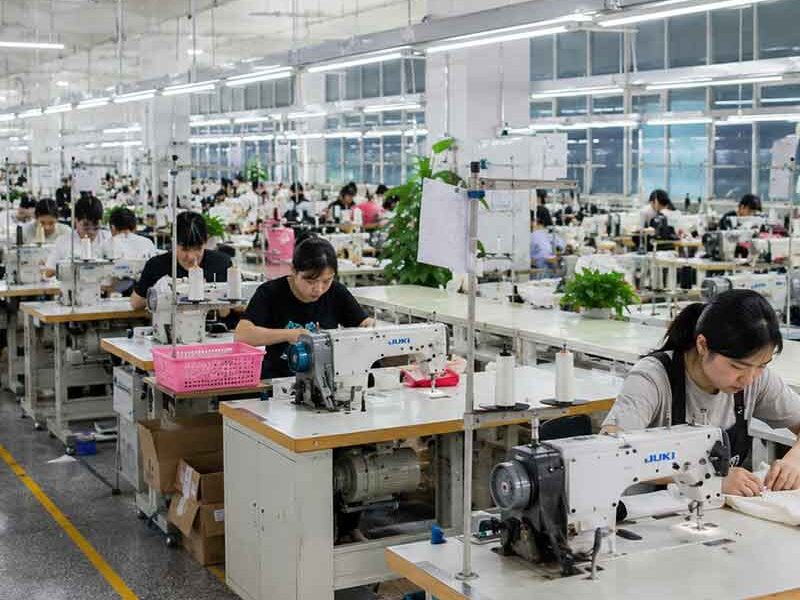
Cutting and sewing time depends on more than the total number of garments.
A 1,000-piece single-style order can often move more efficiently than a 1,000-piece collection divided across 15 styles. Each style requires its own setup, pattern, operation sequence, first-piece approval, measurement control, and packing information.
Sewing time increases with:
- More pattern pieces
- More layers
- Lining
- Cups and boning
- Ruching
- Pleats and ruffles
- Lace matching
- Print placement
- Sequins or beads
- Narrow tolerances
- Multiple closures
- Frequent color changes
Fabric behavior also matters. Stable cotton may be easier to control than slippery satin, lightweight chiffon, stretch mesh, or sequin fabric.
An experienced production team should inspect the first finished pieces before the full line continues. Early correction is faster than repairing hundreds of garments after completion.
For complex dresses, line efficiency should not be measured only by daily output. A slower but controlled line may produce a better commercial result than a fast line that creates excessive repair work.
Finishing and Quality Control
Sewing completion is not the same as production completion.
Finished dresses still require:
- Thread trimming
- Spot cleaning
- Measurement checks
- Zipper and closure testing
- Pressing or steaming
- Shape correction
- Appearance inspection
- Defect repair
- Final inspection
- Packing verification
Finishing is particularly important for occasionwear and visually sensitive fabrics.
Satin can show pressure marks and seam impressions. Velvet can be damaged by incorrect pressing. Lace and sequins require careful handling. Long dresses need hem-balance checks to avoid uneven appearance.
Quality control should begin during production rather than on the final day. A practical system includes:
1. Incoming material inspection
2. Cutting inspection
3. First-piece approval
4. Inline sewing inspection
5. Measurement checks
6. Finished-garment inspection
7. Final random inspection
8. Packing and barcode verification
If repeated defects appear during inline inspection, the line can be corrected before the full order is completed. Final inspection then becomes verification rather than emergency defect discovery.
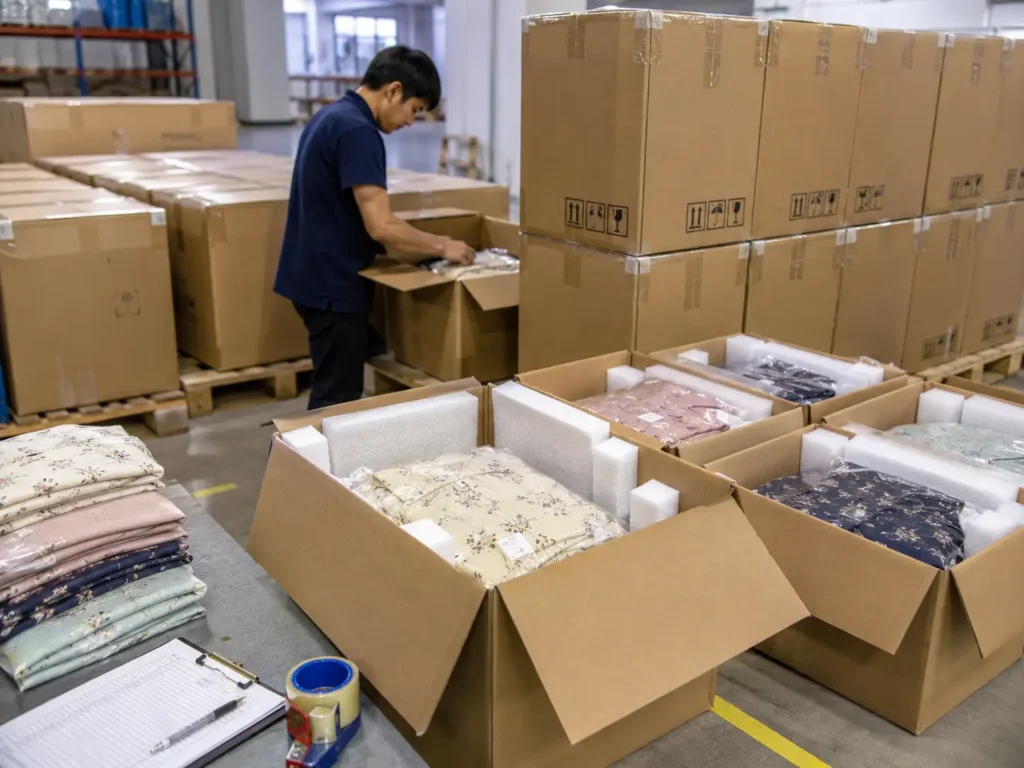
Packing and Delivery Readiness
Packing can become the final bottleneck when labels, barcodes, or retail instructions are incomplete.
A finished garment may still be unable to ship if the factory is waiting for:
- Care-label approval
- Main-label delivery
- Hangtag artwork
- Barcode files
- Polybag printing
- Size stickers
- Carton marks
- Retail assortment instructions
- Warehouse compliance requirements
Packing work may include:
- Label verification
- Hangtag attachment
- Folding or hanging
- Tissue and protective inserts
- Polybagging
- Barcode application
- SKU sorting
- Carton assortment
- Carton marking
- Weight and dimension checks
- Final carton reconciliation
For ecommerce orders, each SKU must match the correct barcode, size, and color. For retail programs, the packing ratio and carton labels may need to follow strict destination requirements.
Packaging development should begin during sampling. Waiting until bulk sewing is complete creates unnecessary risk.
The final schedule should also include inspection booking, shipping document preparation, freight coordination, and warehouse receiving requirements.
What Can Delay Dress Production?
The most common causes of dress production delays are incomplete technical information, unavailable materials, slow sample approvals, repeated design changes, special trims, complex construction, factory peak seasons, quality repairs, testing, and packaging problems. Many of these delays can be reduced when responsibilities, approval deadlines, and backup options are agreed before development begins.
Material Delays
Fabric is one of the largest schedule risks in dress manufacturing.
Stock fabric may be available immediately, but custom or specialized materials can require several additional steps:
- Lab dip development
- Color approval
- Print strike-off
- Bulk dyeing
- Embroidery
- Pleating
- Washing
- Coating
- Certification
- Importation
The original sample fabric may also become unavailable before the order is placed. This is common in trend-driven fashion, where mills and fabric markets change stock quickly.
A substitute must be evaluated carefully. Similar-looking fabrics may differ in:
- Weight
- Stretch
- Recovery
- Opacity
- Shrinkage
- Drape
- Surface texture
- Sewing stability
Changing fabric can require a revised sample because the existing pattern may no longer produce the same fit.
Custom colors add another layer of risk. A lab dip must be physically reviewed, and bulk dyeing may still show shade variation. Main fabric, lining, thread, zipper tape, and trims should be checked together.
A backup fabric is especially valuable for launch-sensitive programs. It should be approved before the primary material fails, not after the project is already late.
Design and Approval Changes
Late changes are one of the most preventable sources of delay.
Small corrections do not always require a complete restart. Major changes can invalidate earlier approvals and force the team to revise patterns, samples, material consumption, pricing, and production plans.
High-impact changes include:
- Switching from stretch to non-stretch fabric
- Adding lining
- Adding cups or boning
- Changing the neckline
- Altering bust or waist measurements
- Replacing the closure
- Adding sleeves
- Changing the print
- Revising packaging
- Changing quantities or size ratios
The buyer should understand that approving a PP sample and then changing the structure is not a minor administrative action. The factory must confirm whether the old material, pattern, and production plan are still valid.
Approval delays can be equally damaging. A sample may be completed on time but remain unapproved for ten days while several internal departments review it.
The most efficient brands appoint one person to consolidate comments and set a fixed review deadline. Conflicting instructions from designers, buyers, founders, and merchandising teams should be resolved internally before the factory receives them.
Complex Construction
Some dress types naturally require more development and production time.
Corset dresses need careful control of:
- Cup shape
- Boning placement
- Underwire
- Lining
- Waist support
- Neckline balance
- Closure strength
Lace dresses may require motif matching, scalloped-edge placement, transparency control, and special seam finishing.
Sequin dresses may require sequins to be removed from seam allowances before sewing and restored afterward. Broken or missing sequins must also be checked during finishing.
Printed dresses can require exact placement at the neckline, center front, waist, or side seams. This reduces marker efficiency and increases fabric consumption.
Long evening dresses need hem balancing, careful pressing, and additional packaging protection.
The factory should evaluate complexity during quotation rather than applying one standard lead time to every dress. A style that requires twice as many operations cannot reasonably follow the same production plan as a simple jersey dress.
Capacity, Testing, and Logistics
Factory capacity is not simply the number of machines available.
The relevant capacity is whether the factory has:
- The correct technical team
- A suitable sample room
- Skilled operators
- An appropriate sewing line
- Available finishing resources
- Sufficient QC capacity
- Space in the required time window
A factory may have open capacity for simple knit dresses but no immediate line suitable for structured satin occasionwear.
Testing can also extend the schedule. Depending on the market and product, buyers may require:
- Fiber-content testing
- Colorfastness testing
- Shrinkage testing
- Seam-strength testing
- Flammability testing
- Restricted-substance testing
- Trim-security testing
- Third-party inspection
Testing time should be included before production begins. If a fabric or trim fails, the replacement and retesting process may significantly affect the schedule.
Logistics can delay the final delivery even when production is complete. Vessel cutoffs, flight capacity, customs documents, destination clearance, and warehouse appointments should be considered separately from factory production.
| Delay Risk | Early Warning Sign | Practical Control |
| Fabric delay | No confirmed bulk availability | Approve a backup and reserve fabric early |
| Approval delay | Several people send separate comments | Use one decision owner and one comment file |
| Design drift | New changes appear in every round | Freeze structure before PP approval |
| Capacity delay | No confirmed production slot | Reserve the line after order approval |
| Quality repair | Problems found only at final inspection | Use first-piece and inline inspection |
| Packing or freight delay | Artwork or shipping plan is unfinished late in production | Finalize labels, barcodes, route, and booking requirements early |
How Can Brands Reduce Lead Time?
Brands reduce lead time by preparing complete product information, selecting realistic materials, booking critical components early, consolidating sample feedback, approving quickly, freezing the PP standard, and tracking milestones. Faster production comes from removing waiting time and uncertainty – not from skipping fit checks, material approvals, or quality control.
Prepare a Complete Brief
A factory can give a more accurate schedule when the buyer provides a usable project brief.
The initial package should include:
- Product images or drawings
- Style count
- Planned quantities
- Size range
- Fabric preference
- Color requirements
- Important construction details
- Target market
- Packaging expectations
- Testing requirements
- Required delivery date
- Existing tech packs or samples
For a collection, priority should be clear. Hero styles, complex styles, and products required early for photography may need to enter development first.
The buyer should also distinguish fixed requirements from flexible preferences.
- The neckline shape may be fixed.
- The internal zipper brand may be flexible.
- The external fabric color may be fixed.
- The lining supplier may be flexible.
- The target fit may be fixed.
- A hidden construction detail may be open to factory recommendation.
This distinction allows the manufacturer to solve technical problems without requesting approval for every minor decision.
A complete brief does not need to be perfect. It needs to be clear enough for the factory to identify missing information and move the project forward in a controlled way.
Use Faster Approval Systems
Approval speed often has a greater impact on total lead time than sample-room speed.
Brands can reduce approval delays by:
- Scheduling fittings before samples arrive
- Assigning one decision owner
- Using one consolidated comment sheet
- Marking exact measurements
- Annotating photos
- Separating mandatory changes from preferences
- Setting a review deadline
- Confirming unchanged details
- Keeping version numbers on all files
Comments should be specific and traceable.
Instead of writing “the top feels too loose,” the buyer should identify where the looseness appears and provide a measurement adjustment if possible.
Sample records should show:
- Sample version
- Date received
- Comments issued
- Pattern changes
- Measurement changes
- Fabric changes
- Approval status
- Next action
This system is especially important for multi-style collections. Without disciplined records, the approved fabric, trim, or fit from one style can easily be confused with another.
Fast approval does not mean approving a poor sample. It means the brand is ready to make informed decisions as soon as the sample is available.
Book Materials and Capacity Early
Materials and production capacity should be investigated while the product is still being developed.
A practical process is:
1. Identify the likely fabric during technical review.
2. Confirm stock, MOQ, price, and lead time.
3. Use the intended or technically similar fabric for sampling.
4. Reserve critical materials when the design becomes stable.
5. Confirm the production slot before the PP approval deadline.
6. Inspect bulk materials before cutting.
Booking too early creates risk if the design changes. Booking too late creates risk if the fabric sells out or the production line is no longer available.
The decision should be based on:
- Design stability
- Supplier conditions
- Delivery importance
- Material uniqueness
- Order quantity
- Seasonal capacity
For urgent launches, buyers should also decide in advance whether they are willing to use stock colors, substitute trims, split shipments, or air-freight a limited quantity.
These recovery options are far more useful when discussed before the schedule becomes critical.
Build a Realistic Calendar
The production calendar should be built backward from the required warehouse date.
It should include:
1. Warehouse receiving
2. Customs and destination handling
3. International freight
4. Final inspection and packing
5. Bulk sewing and finishing
6. Fabric and trim arrival
7. PP approval
8. Sample revisions
9. First sample
10. Pattern and technical review
The calendar should also include contingency near the highest-risk milestones.
A simple repeat order may need only a modest buffer. A new occasionwear collection with custom colors, several fabrics, and retail packaging needs more protection.
Useful contingency points include:
- One additional sample round
- Lab-dip correction
- Material delay
- Quality repair
- Reinspection
- Peak-season factory pressure
- Freight disruption
The preferred completion date should be earlier than the final acceptable date. When both dates are the same, every minor problem becomes an emergency.
For many new custom dress projects, beginning three to four months before the required warehouse date provides a safer working window. More complex seasonal collections may need four to six months or longer.
Starting early does not mean working slowly. It gives the buyer and manufacturer enough room to make good decisions without sacrificing fit, quality, or delivery reliability.
Request a Project-Specific Dress Timeline
A dependable schedule is built from the actual dress structure, materials, sample status, order quantity, packaging requirements, and required delivery date. Generic promises are less useful than a milestone plan showing what must happen, who must approve it, and when the next stage can begin.
Jinfeng Apparel is a Guangdong-based custom women’s fashion manufacturer focused on OEM, ODM, private-label, and custom dress production for global fashion brands and mid-to-large apparel clients. Since 2008, the company has developed a production network that includes 6 owned women’s fashion factories and 10+ long-term satellite production partners. Standard MOQ starts from 200 pieces per style/color, subject to fabric, trims, construction, packaging, and production conditions.
For a project-specific assessment, share your tech pack, reference images, original sample, style count, quantity by color, size range, target market, fabric direction, packaging requirements, and required warehouse date. The development team can review the critical path, identify lead-time risks, and prepare a practical sample-to-bulk schedule before production begins.