 Skip to content
What Is the Custom Clothing Development Process and How Does It Work from Idea to Production?

Your trusted Women’s Apparel Manufacturer from China

A reference image can look simple: one screenshot from Instagram, one photo from a retail website, one Pinterest pin, or one quick sketch marked with arrows. But for a women’s fashion manufacturer, that image may hide 20 or more cost-related decisions: fabric weight, stretch direction, lining, zipper type, seam position, bust support, hem finish, size range, color split, trim quality, packaging method, and launch timing. That is why two factories can look at the same photo and return very different quotations.
To submit reference images for a clothing quotation, send clear front, back, side, close-up, and inside-detail images together with product type, fabric direction, target quantity, size range, color plan, construction notes, branding needs, packaging requirements, target price, and delivery schedule. The more clearly you separate inspiration details from must-have details, the more accurate the quote will be.
Think of reference images as the start of a production conversation, not the final production document. A good manufacturer does not simply copy a photo. It reads the image, identifies what is visible, questions what is missing, and turns a visual idea into a manufacturable garment. One buyer once sent only one front-view image of a satin mini dress and asked for a price. The real questions were far more practical: is it stretch satin or woven satin, is there lining, where is the zipper, and how many colors will be produced? That is where accurate quotation really begins.
What Are Reference Images?
Image Prompt: A clean desk scene showing women’s dress reference images, fabric swatches, a sketch, measuring tape, and a laptop with a quotation form, shot in a professional fashion development office.
Reference images are visual files that show the garment you want to develop or quote. They can include product photos, screenshots, sketches, flat lays, sample photos, fabric close-ups, fitting pictures, or moodboard images. For a clothing manufacturer, they explain the design direction, but they do not replace measurements, fabric specs, quantity, sizing, trims, or production notes.
What Counts
A reference image does not have to be a perfect factory drawing. It can be a screenshot from an ecommerce page, a photo from a previous sample, a sketch from your designer, a campaign image, a fabric close-up, or even a collage of different details from several garments. In fast fashion womenswear, many projects begin this way because brands often move from trend research to sample development before a full technical package is ready.
The most useful reference images are the ones that show real garment information, not just styling mood. A model photo may show the fit and body proportion, but it may hide the back closure or inside construction. A flat-lay image may show the overall shape, but not the stretch, drape, or how the garment behaves on body. A close-up may reveal the fabric texture, stitching, lace edge, sequin density, or zipper type.
For quotation, one beautiful image is usually less valuable than five practical images. A factory needs to understand what the garment is, how it is built, and what details are important to your brand. A clear front view, back view, fabric photo, closure detail, and fit reference often give more production value than a single high-end campaign shot.
Reference Type | What It Shows Best | Common Limitation | Quotation Usefulness |
Front model photo | Fit, silhouette, neckline, length | May hide closure and inside structure | Medium |
Back view | Zipper, straps, back shape, slit, smocking | Often missing in early inquiries | High |
Flat-lay image | Shape, panel lines, garment layout | Does not show real body fit | Medium |
Fabric close-up | Texture, shine, transparency, surface effect | Cannot confirm composition alone | High |
Original sample photo | Real construction and finishing | Needs clear detail photos | Very high |
Sketch | Design intention and proportions | Needs measurement and fabric notes | Medium to high |
Tech pack image | Technical structure and construction | Requires accurate data | Very high |
Image vs Tech Pack
Reference images and tech packs are not the same thing. A reference image shows visual direction. A tech pack gives production instructions. Many buyers send images first because they want to know whether the style is feasible, what the approximate cost may be, and whether the manufacturer can handle the product category. That is normal, especially for fast-moving dress collections, clubwear drops, resort pieces, and seasonal occasionwear.
However, image-only quotation has limits. A picture may show a satin mini dress, but it does not confirm whether the fabric is stretch satin, woven satin, charmeuse, or heavier satin-back crepe. It may not show whether the dress is lined, whether there is bust padding, whether the zipper is invisible, or whether the hem uses narrow rolled finishing.
A tech pack becomes important when the project moves closer to sampling or bulk production. It usually includes measurements, grading, fabric details, trims, construction notes, colorways, label placement, packaging, and artwork files. If you already have a tech pack, send it with your images. If you do not have one, send clear images and let the factory identify missing questions before quoting too precisely.
Design Direction
Good reference images should explain design direction without forcing a factory to guess everything. If you send three images for one dress, make it clear which part of each image matters. One image may show the neckline, another may show the skirt length, and another may show the fabric feeling. Without notes, the manufacturer may assume you want all details combined exactly, which may not be your intention.
This matters because fashion buyers often use references from different sources: one for silhouette, one for fabric, one for fit, and one for mood. That is useful, but only when the instructions are clear. A simple label such as “use this for neckline only” or “similar fit, but longer hem” can prevent many quoting errors.
A responsible manufacturer also needs to avoid unauthorized copying of protected designs. Reference images should guide custom development, not create direct replicas of another brand’s work. The best approach is to explain what you like about the image and what will be adjusted for your own brand identity, target market, and production needs.
Buyer Expectations
Buyers often expect a quick answer from one or two pictures, but a useful quotation is based on more than visual similarity. The factory has to decide whether the reference is for price checking, sample development, collection planning, or production confirmation. Each stage requires a different level of detail.
If you only want a rough price range, a clean image set plus estimated quantity may be enough. If you want to start sampling, the factory should also confirm fabric direction, measurements, trims, label requirements, and fit target. If you are preparing for bulk production, the project should move toward a tech pack, approved sample, confirmed size chart, and clear packaging standard. The earlier you define the purpose of the reference images, the smoother the quotation process becomes.
Why Do Images Affect Quotes?
Image Prompt: A fashion production table showing the same dress photo next to fabric rolls, linings, zippers, labels, and trim options, visually explaining how one image can lead to different quotation assumptions.
Images affect quotes because garment cost depends on both visible and hidden details. A photo may show the style, but the final price depends on fabric, lining, trims, pattern difficulty, sewing operations, size range, color split, quantity, packaging, quality standard, and delivery schedule. Clear images reduce assumptions and make quotations more realistic.
Visible Details
The visible parts of a garment already tell a manufacturer a lot. Neckline shape, sleeve style, skirt length, waist position, fit level, hem shape, slit height, cut-out placement, and seam lines can all influence pattern development and sewing time. A straight mini dress, a ruched bodycon dress, and a corset dress may all look simple to a shopper, but they require very different production work.
For example, a corset-style dress usually needs more pattern control than a basic slip dress. The factory may need to consider bust shaping, boning channels, lining, zipper strength, waist tension, and sample fitting. A ruched mesh dress may require elastic control, gathering balance, stretch recovery, and careful side-seam sewing. A sequin dress may need special cutting, needle selection, lining, seam cleaning, and packaging protection.
Images affect quotes because they help the factory estimate these visible operations. The clearer the photo, the fewer assumptions are needed. A blurry image, cropped screenshot, or heavily edited campaign photo may look attractive, but it can hide the exact details that decide cost.
Hidden Cost Factors
The most expensive quotation mistakes usually come from details that are not visible in the first image. A buyer may ask for the price of a satin dress, but the manufacturer cannot know the real cost until it confirms the fabric quality, lining coverage, zipper type, inner support, label package, and order structure.
Common hidden cost factors include fabric width, GSM, stretch percentage, fabric waste during cutting, lining type, seam finish, special machine work, handwork, pressing time, inspection standard, and packaging method. These are not minor details. In women’s fashion, they can change the garment’s feel, fit, quality level, and return risk.
Hidden Detail | Why It Changes the Quote | Practical Buyer Note |
Fabric weight | Heavier fabrics usually cost more and affect drape, cutting, and pressing | Share GSM if known |
Stretch direction | Impacts fit, pattern, size tolerance, and wearer comfort | Note 2-way or 4-way stretch |
Lining coverage | Adds fabric, labor, inspection, and finishing time | Specify full, half, or body lining |
Zipper type | Invisible, nylon, metal, and custom zippers vary in cost and sewing time | Mark zipper position and type |
Bust support | Padding, underwire, boning, and inner mesh add development work | Important for corset and evening styles |
Lace placement | Pattern matching and scallop edge usage can increase fabric waste | Send close-up photos |
Sequin density | Higher density increases material cost and sewing difficulty | Confirm visual quality target |
Private label packing | Labels, barcodes, polybags, and cartons add cost and planning work | Share packing standard early |
Quote Gaps
Two factories can quote different prices for the same image because they may be quoting different assumptions. One may assume standard fabric, no lining, simple finishing, and basic packing. Another may assume better fabric, full lining, stronger trims, private-label packaging, and stricter quality control. The cheaper quote may not always be the better quote; it may simply be based on less detail.
This is common when buyers send one front-view screenshot and ask, “How much?” A factory can provide a rough reference range, but a serious quotation requires clarification. Is the garment for boutique retail, marketplace selling, wholesale distribution, or premium ecommerce? Is the goal to hit the lowest possible cost, or to maintain a certain fabric handfeel and fit quality?
A reliable quotation should clearly state what is included. If lining, labels, packaging, sample fee, fabric development, or special trims are not included, the buyer should know before comparing suppliers. The most useful quote is not just a number; it is a price linked to specific production assumptions.
Risk Control
Images affect quotes because they also affect risk. If a factory misunderstands the fabric, construction, or fit, the sample may come back far from expectation. That leads to extra sample rounds, longer development time, and sometimes a higher final bulk price. In fast fashion, where launch windows are tight, a poor first quotation can delay the entire collection.
Clear images reduce this risk by helping the factory identify technical questions earlier. A backless dress may look easy, but the factory should ask how the bust will be supported. A sheer mesh style may look attractive, but the buyer must decide which parts should be lined. A high-slit evening dress may need a clear slit height and walking comfort check.
Good quotation is not only about cost. It is also about preventing development surprises. When reference images are complete, marked, and supported by basic product data, the factory can give a quote that is closer to the real production route.
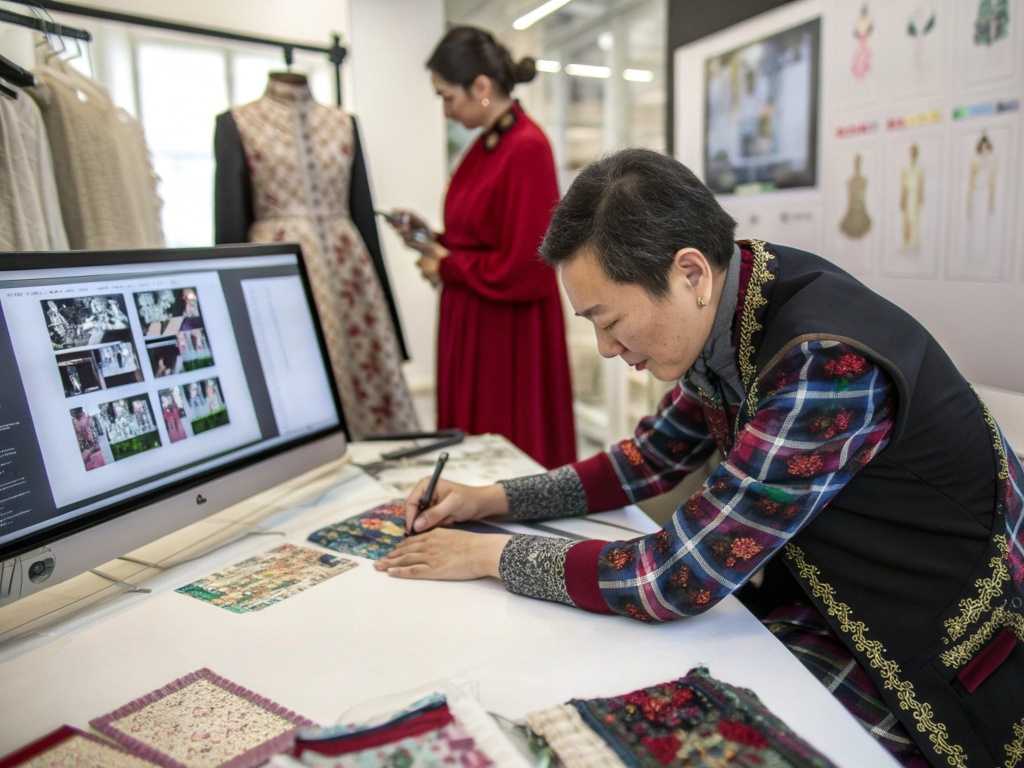
Which Images Should You Send?
Image Prompt: A neatly arranged visual checklist of a women’s dress with front view, back view, side view, fabric close-up, zipper detail, neckline detail, hem detail, and inside lining photo.
Send front, back, side, model-worn, flat-lay, fabric close-up, closure detail, neckline detail, hem detail, and inside construction images when available. For simple styles, 4–6 clear images may be enough for initial review. For complex dresses, 8–12 images are better because more details affect cost, fit, and production risk.
Core Views
The front view and back view are the two most important images. A front view shows neckline, bust shape, waistline, sleeve design, skirt shape, and overall length. A back view shows zipper, straps, smocking, open-back shape, back slit, waistband, and shoulder construction. Many quotation problems happen because the buyer sends only the front image, leaving the factory to guess the back.
A side view is also helpful, especially for fitted dresses, jumpsuits, bodycon styles, corset dresses, and gowns with slits or trains. It shows body contour, seam position, bust projection, hip fit, and hem balance. If the style is intended to be close-fitting, the side view helps the factory understand how much ease may be needed.
For long dresses, full-length images are essential. Cropped images that cut off the hem are risky because hem shape, train length, and slit height can affect fabric consumption. For mini dresses, the full body proportion still matters because a difference of 3-5 cm in length can change the product’s look and market positioning.
Detail Shots
Detail images should focus on the areas that influence cost and quality. For most women’s fashion styles, useful close-ups include neckline, bust, zipper, sleeve opening, strap, waist seam, side seam, slit, hem, lining, lace edge, print placement, and fabric surface. These photos do not need to be artistic. They need to be clear.
Complex fabrics need extra close-ups. Satin should be shown under normal light so the factory can judge shine and drape. Mesh should be shown close enough to judge transparency and stretch. Lace needs pattern-scale images and edge-detail images. Sequin fabric needs close-ups to show sequin size, density, direction, and base fabric. Pleats and ruching need photos that show how the fabric is controlled.
If you have a physical sample, take inside photos as well. Inside construction often tells the factory more than the outside. Lining, seam allowance, binding, cup structure, boning, overlock, clean finish, and zipper tape all help the factory understand the quality level you expect.
Garment Type | Minimum Useful Images | Extra Images for Better Quote |
Simple knit dress | 4-5 images | Fabric stretch, neckline, hem |
Satin slip dress | 6-8 images | Strap, lining, zipper, side seam |
Corset dress | 8-12 images | Bust cup, boning, lining, back closure |
Lace dress | 8-10 images | Lace close-up, edge, lining, transparency |
Sequin dress | 8-12 images | Sequin density, inside seam, zipper, lining |
Jumpsuit | 6-10 images | Crotch depth, closure, waistband, leg opening |
Matching set | 8-12 images | Top and bottom front/back, waistband, trims |
Fit Images
Fit images are highly valuable because women’s fashion is not only about shape on the hanger. It is about how the garment sits on the body. A model-worn image helps the factory understand intended tightness, waist position, bust coverage, skirt length, shoulder balance, and movement. This is especially important for bodycon dresses, corset styles, backless dresses, cut-out dresses, and eveningwear.
If you are sending a physical sample, a fitting photo can help explain what you want to keep or change. For example, “Keep the waist fit but increase bust coverage,” or “Same body fit, but reduce skirt length by 4 cm.” These short notes make the factory’s pattern review more accurate.
Fit images also help avoid unrealistic expectations. A garment photographed on a tall model may need adjustment for a broader commercial size range. A deep neckline may look good in campaign images but may need more support for real customers. A professional factory should notice these risks early and ask questions before sampling.
Image Quality
Image quality matters more than many buyers realize. A low-resolution screenshot may hide stitch lines, fabric texture, and seam placement. Heavy filters can distort color and shine. Angled photos can make a dress look shorter, tighter, or more structured than it really is. If the reference is unclear, the quote becomes more assumption-based.
Try to send images with enough clarity to zoom into the main details. Use natural light when photographing samples or fabric swatches. Avoid shadows over black garments because black fabric can hide seams, darts, and texture. For white or light-colored garments, avoid overexposure because lace, lining, and transparency can disappear.
File naming also helps. Instead of sending “IMG_2381,” name files clearly: “Style 01 Front,” “Style 01 Back,” “Style 01 Fabric,” “Style 01 Zipper,” and “Style 01 Fit.” This small habit makes communication smoother when you are submitting several styles at once.
How Should You Mark Details?
Image Prompt: A women’s dress reference photo with clean annotation arrows pointing to neckline, zipper, lining, fabric, hem, slit, and fit changes, styled like a professional product development markup.
Mark reference images with circles, arrows, and short notes showing must-have details, adjustable areas, fabric direction, fit changes, trims, and construction requirements. The goal is not to cover the image with long comments. The goal is to remove guessing so the manufacturer can quote the version you actually want.
Must-Have Notes
The most important marking rule is to separate “must-have” from “reference only.” A must-have detail is something your brand wants to keep close to the reference: neckline, fit, length, waist shape, sleeve type, fabric surface, lace edge, or closure position. A reference-only detail is used for mood, style direction, or general inspiration.
Use short, practical notes. For example: “Keep square neckline,” “Change to midi length,” “Add body lining,” “Use invisible zipper,” “Similar fit but less tight,” “Use this image for sleeve only,” or “Fabric can be adjusted for cost.” These notes are easy for a development team to understand and quote against.
This is especially important when the image is inspired by an existing market style. The factory should not assume you want an exact copy. Clear notes help turn the reference into a custom design direction that belongs to your own brand.
Fabric Notes
Fabric notes should be specific enough to guide sourcing. If you only write “same fabric,” the factory may not know whether you mean the shine, texture, stretch, weight, transparency, or color. A better note would be “medium-weight matte satin,” “soft stretch mesh with lining,” “lace with scallop edge,” “poly-spandex jersey with strong recovery,” or “light woven chiffon, semi-sheer.”
When possible, add measurable or practical fabric information. GSM, composition, stretch percentage, and swatch photos can all improve quotation accuracy. If you do not know the technical specs, describe the fabric by handfeel and use: soft, structured, drapey, smooth, crisp, stretchy, sheer, lined, warm-weather, occasionwear, or everyday wear.
Color also needs attention. Screen color is not reliable. If exact color matters, use Pantone, lab dip, or a physical swatch. If the color is flexible, say so. Fabric development and dyeing can affect MOQ and lead time, so color requirements should be discussed before final quote.
Fit and Measurement
Fit notes are often more important than design notes. Two dresses can look similar but fit very differently. A buyer should mark whether the garment should be body-hugging, relaxed, semi-fitted, structured, high-waisted, low-waisted, short, midi, floor-length, or easy to move in. These details affect pattern making and size grading.
If you have target measurements, send them early. Even a basic measurement direction is helpful: bust, waist, hip, garment length, sleeve length, shoulder width, inseam, outseam, and slit height. For stretch garments, the factory also needs to consider negative ease and fabric recovery. For woven garments, wearing ease and comfort are more important.
A common mistake is asking the factory to quote from a photo and then later changing the size range, length, or fit. That can change fabric consumption and labor time. If your target market uses US, UK, EU, or AU sizing, mention it clearly. This helps the factory understand body proportions and grading expectations.
Change Requests
If you want to change the reference design, mark the changes directly. For example, you may want a similar dress but with longer sleeves, a higher neckline, a lower slit, thicker straps, less transparency, a different fabric, or a more modest back. These changes should be included before quotation, not after the quote is accepted.
Small changes can still affect cost. Adding lining, changing from pull-on to zipper construction, adding cups, increasing skirt length, or switching to a heavier fabric can change material usage and sewing time. On the other hand, simplifying details can reduce cost. Removing unnecessary panels, reducing handwork, changing lace placement, or using a more available fabric may help keep the design within the target price range.
A good marked image gives the factory a clear job: keep these details, adjust these parts, check these risks, and quote based on this direction. That is much better than asking for a price from a vague inspiration photo.
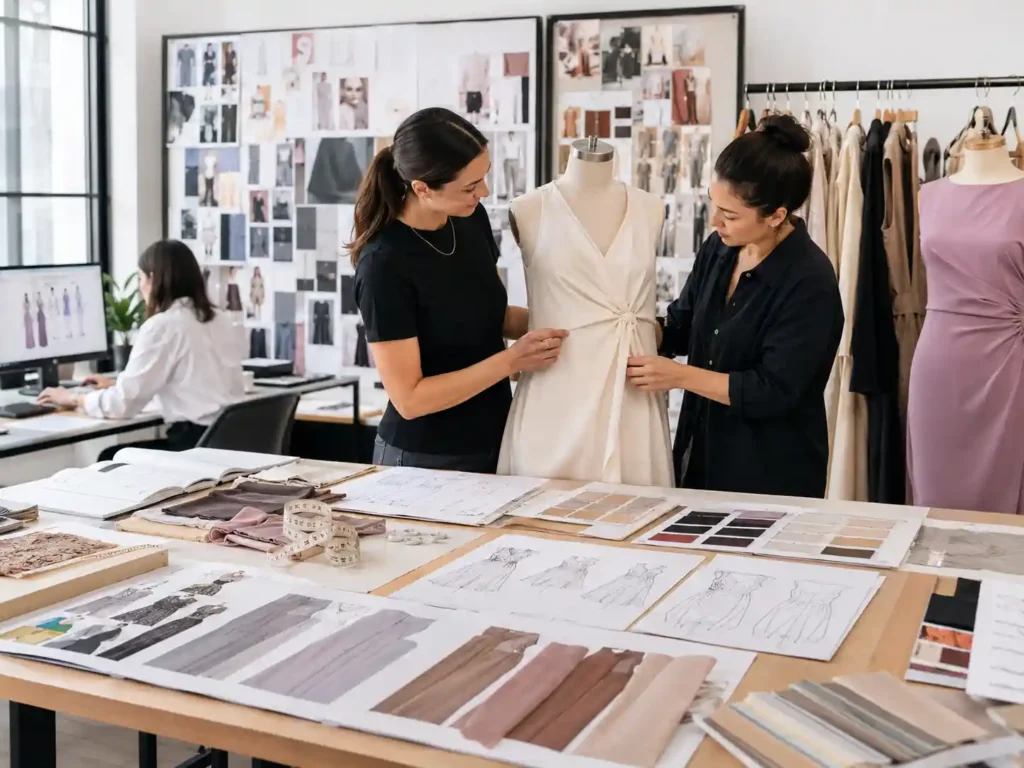
What Should Go With Images?
Image Prompt: A buyer’s quotation submission checklist beside women’s fashion reference photos, showing fields for quantity, size range, colors, fabric, trims, packaging, target price, and delivery date.
Reference images should be sent with product type, quantity, size range, color plan, fabric direction, trim details, measurement notes, branding needs, packaging requirements, target price, delivery country, and launch date. Images show what the style looks like; these extra details explain how it should be made, priced, packed, and delivered.
Product Data
The first data point is product category. Tell the factory whether the item is a mini dress, party dress, evening dress, jumpsuit, matching set, skirt, top, or private-label collection piece. Category affects which production unit, pattern maker, fabric supplier, and sewing process may be needed.
Quantity is equally important. A quote for 200 pcs per style/color is not the same as a quote for 1,000 pcs across several colors. Fabric purchasing, cutting efficiency, trims, labels, and production planning can all change with quantity. If your quantity is not final, provide a realistic range, such as 200-300 pcs per color or 800-1,200 pcs total.
Size range should also be included early. XS-XL, US 2-12, UK 6-16, or AU 6-14 all give useful direction. If your brand has a custom size chart, send it. If not, tell the factory your target market so they can discuss a suitable starting point.
Fabric and Trim
Fabric direction is one of the biggest quotation drivers. If you have a swatch, send photos and specs. If you do not, describe the fabric in practical language. For example, “stretch satin for fitted party dress,” “non-stretch chiffon for resort maxi dress,” “soft jersey for bodycon dress,” or “lace with lining for occasionwear.”
Trim details include zippers, buttons, elastic, hooks, eyelets, buckles, straps, padding, boning, labels, hangtags, wash labels, and packaging accessories. These details may seem small, but they affect both cost and production quality. A corset dress with boning and bust cups is not quoted like a simple lined bodice. A dress with custom metal hardware is not quoted like a dress with standard plastic trims.
If you have brand artwork, send AI, PDF, EPS, SVG, or high-resolution files when available. Label and packaging development can run parallel with sampling, but it should not be ignored until the end because it affects delivery planning.
Quantity and Timing
A quotation is only useful when it matches your real production plan. If the factory quotes based on 1,000 pcs but the buyer later confirms 200 pcs, the price may change. If the quote assumes one color but the order becomes five colors, fabric and cutting costs may change. If the launch date is urgent, the production schedule may need adjustment.
Share your expected launch date or delivery window. For fashion brands, this could be tied to a seasonal drop, photoshoot, retail delivery, influencer campaign, holiday sale, or ecommerce launch. The more the factory understands the deadline, the better it can judge whether the style, fabric, sample approval, and bulk production timeline are realistic.
Timing should be treated carefully. Sampling, fabric sourcing, lab dips, trims, labels, bulk cutting, sewing, QC, packing, and shipping all take time. A professional quote should not promise unrealistic speed just to win the inquiry.
Information to Send | Best Format | Why It Matters |
Product category | Short text | Helps assign the right development path |
Reference images | 6-10 clear images | Reduces visual assumptions |
Quantity | Per style/color | Affects unit cost and material planning |
Size range | XS-XL, US, UK, EU, AU | Affects grading and fabric usage |
Fabric direction | Swatch, photo, GSM, description | Major cost and fit driver |
Trim details | Notes or close-up images | Affects BOM and sewing process |
Branding | Label, hangtag, packaging files | Affects private-label cost |
Delivery country | Country or port | Helps estimate logistics route |
Launch date | Calendar date or window | Checks schedule feasibility |
Target price | FOB range if available | Helps guide material options |
Target Price
Many buyers hesitate to share a target price, but it can be useful when handled properly. A target price is not a demand for the factory to cut corners. It is a signal that helps the development team recommend suitable fabric, trims, construction, and packaging. If a buyer wants a premium satin evening dress, the factory may suggest several fabric options at different cost levels.
Without a target price, the factory may quote a version that is either too basic or too expensive for your market. With a target range, the supplier can explain trade-offs more clearly. For example: “This lace option gives a better edge but increases cost,” or “This stretch fabric is more stable for bodycon fit and reduces fit risk.”
The most useful target price is realistic and flexible. Instead of saying “lowest price,” say “target FOB range,” “premium ecommerce quality,” “boutique retail level,” or “cost-sensitive but lined body required.” These phrases help the factory balance cost, quality, and production feasibility.
How Does Jinfeng Apparel Review Images?
Image Prompt: A professional women’s fashion development team reviewing annotated dress images, fabric swatches, trims, and a quotation worksheet in a Guangdong apparel manufacturing office.
Jinfeng Apparel reviews reference images by checking style feasibility, fabric direction, pattern risk, construction difficulty, trim requirements, quantity structure, private-label needs, and delivery timing. The goal is to turn visual references into a manufacturable plan for quotation, sampling, bulk production, quality control, packaging, and export coordination.
Style Review
The first review is style feasibility. The team checks what the garment is, how it is likely constructed, what fabric type it may need, and where the production risks are. A simple dress may only need basic fabric and measurement confirmation. A corset, lace, sequin, mesh, backless, or high-slit dress needs a more careful technical review.
This review looks at silhouette, body fit, bust support, waist shaping, closure position, lining, seam placement, fabric behavior, and finish quality. The goal is not to change the design unnecessarily. The goal is to identify what must be confirmed before quoting too firmly.
A fitted satin mini dress may need questions about stretch, lining, zipper, bust darts, and hem finish. A mesh dress may need transparency control and lining decisions. A jumpsuit may need crotch depth, waist fit, closure, and movement comfort review. These questions protect both buyer and factory from wrong assumptions.
Fabric Review
After style review, fabric direction is checked. The same visual style can require different fabric choices depending on the buyer’s target quality, fit, and price. A bodycon dress usually needs fabric with stretch and recovery. A resort maxi dress may need lightweight woven fabric with drape. A formal satin dress may need a fabric that looks smooth but does not wrinkle too easily. A lace dress may need matching lining and careful edge planning.
Fabric review also considers availability. If the buyer wants a custom color, special lace, unique print, or unusual sequin fabric, MOQ and lead time may be different from standard available fabrics. If speed matters, the team may suggest available fabric alternatives that can keep the design direction while reducing development risk.
This is where experienced manufacturing judgment matters. The best fabric is not always the most expensive one. It is the fabric that fits the design, target market, production quantity, and wearing experience.
Quote Check
A quotation is prepared only after key assumptions are clear enough. The team checks the product type, reference images, fabric direction, size range, quantity, color plan, trims, labels, packaging, and timing. If information is missing, the buyer may receive a question list before a final price is confirmed.
For custom womenswear, a practical quote may include sample cost, estimated bulk price, MOQ, sample lead time, production lead time, fabric notes, trim notes, and assumptions. If the quotation is only a rough range, it should be described as a rough range. If it is based on confirmed specs, it can be more precise.
Jinfeng Apparel’s standard production positioning is not no-MOQ dropshipping or ready-stock wholesale. The MOQ starts from 200 pcs per style/color, depending on fabric availability, color development, trims, construction complexity, packaging requirements, and production schedule. This matters because a quotation should match real custom production conditions, not stock selling logic.
Before Sampling
Before sampling begins, the buyer and factory should confirm the development direction. This includes sample size, fabric option, color, trims, lining, closure, measurements, branding details, and any changes from the reference image. If the buyer has a tech pack, it should be reviewed against the images. If the buyer only has images, the factory may create internal notes to guide pattern and sample development.
The pre-sampling stage is where many future problems can be avoided. If the image shows a fitted dress but the buyer wants a more commercial fit, this should be stated before pattern making. If the photo shows a sheer fabric but the buyer wants it lined, that should be confirmed before cutting. If the reference uses expensive trims but the target price is lower, alternatives should be discussed before sample approval.
A good sample is not made from guessing. It is made from clear reference images, confirmed fabric direction, practical construction decisions, and realistic production planning. That is why submitting images properly is one of the most important steps before asking for a serious quotation.

Send Better Reference Images, Get Better Quotations
A strong quotation does not start with a perfect tech pack. It starts with clear communication. If you only have reference images, you can still move forward, but the quality of your image package will decide how useful the first quotation is. Send front and back views. Add close-ups. Mark the must-have details. Explain the fabric direction. Tell the factory your quantity, size range, color plan, target price, private-label needs, and launch date.
For fashion brands, the goal is not simply to get the lowest number. The goal is to receive a quotation that reflects the real garment you want to sell: the right fit, right fabric, right workmanship, right packaging, and right production path. A low quote based on missing details can become expensive later through sample revisions, fabric changes, production delays, or quality disputes. A well-prepared quotation request saves time before sampling and reduces risk before bulk production.
Jinfeng Apparel helps global fashion brands and mid-to-large custom apparel clients turn reference images, sketches, line sheets, samples, and tech packs into custom women’s fashion products. The company focuses on dresses, skirts, jumpsuits, matching sets, tops, and private-label womenswear, with support for fabric sourcing, trim sourcing, pattern development, sampling, bulk production, quality control, private-label packaging, and export delivery.
Share This Article :

Jerry Lee
Categories

Latest blogs

Table of Contents
Here, developing your OEM/ODM private label clothing collection is no longer a challenge—it’s an excellent opportunity to bring your creative vision to life.

