Skip to content

A midi skirt can look almost effortless on a hanger: a clean waist, a controlled line through the hip, and a hem that lands somewhere between the knee and ankle. In a factory, that apparent simplicity creates very little room for error. A waistband positioned one centimeter too low can change the proportion, while a poorly handled bias panel may twist only after the finished garment has been steamed, packed, and worn.
Midi skirts are manufactured through design review, pattern development, sample fitting, fabric inspection, marker planning, cutting, component preparation, sewing, pressing, measurement control, final inspection, and private-label packing. The sequence changes according to silhouette, fabric behavior, waistband construction, lining, closure, pleats, slit position, and hem method, while an approved sample and production file guide bulk consistency.
The strongest skirt programs are therefore built around connected decisions rather than a single sewing operation. A satin sample may hang beautifully during approval, yet hundreds of bulk pieces can still develop uneven hems if the fabric was not relaxed or the panels were handled differently. Following the full manufacturing chain reveals where quality is actually created, protected, and sometimes lost.
What Defines a Midi Skirt in Production?
A midi skirt is defined by more than a hem below the knee and above the ankle. Production teams also need the exact waist position, finished length, silhouette, hip ease, sweep, lining, closure, slit, and intended movement. These details turn a visual category into measurable instructions that can be repeated across sizes, colors, and production batches.
Length and Proportion
The word midi describes a visual range rather than one fixed number. In many adult womenswear ranges, finished skirt lengths commonly fall somewhere around 65 to 90 centimeters when measured from the top edge of the waist, but that reference changes with the base size, customer height profile, waistband position, and intended styling. A 75-centimeter skirt can read as lower-calf on one wearer and just below the knee on another.
Factories therefore need the measuring method as clearly as the number itself. Center-front length, center-back length, side-seam length, and waistband height should be listed separately when the design is shaped, asymmetric, wrapped, or cut on the bias. For online retail, the product team should also align the garment specification with model height and styling photography, because customers often compare the stated length with the image before making a purchase decision.
Silhouette and Structure
Midi skirts are manufactured as different construction families rather than one product type. An A-line skirt relies on controlled flare, a pencil skirt depends on hip shaping and walking room, and a pleated skirt is governed by repeated fold depth and setting. Bias-cut slip skirts use diagonal grain stretch, while tiered skirts create volume through calculated gathering. These differences affect pattern geometry, fabric consumption, sewing sequence, pressing, and inspection.
Internal structure matters just as much as the visible outline. A fluid satin style may use a lightweight facing and narrow hem, while a tailored office skirt can require interfacing, lining, darts, and a reinforced vent. A heavy embellished body needs a waistband capable of supporting the skirt without rolling. Before quotation, the factory should know whether the garment is expected to skim, cling, stand away from the body, or move with a wide sweep.
| Specification Area | Production Detail | Risk When Undefined |
| Finished length | Measure from a named waist point for each size | Inconsistent hem position |
| Waist and hip | Finished garment values with tolerances | Fit and grading errors |
| Waistband | Height, shape, support, closure method | Rolling, gaping, poor stability |
| Fabric | Composition, weight, width, stretch, direction | Wrong drape or consumption |
| Lining | Material, length, ease, attachment | Transparency or restricted movement |
| Slit or vent | Position, finished height, reinforcement | Limited stride or seam tearing |
| Hem | Finished depth and sewing method | Wrong appearance or uneven level |
| Labels and packing | Exact placement, folding, SKU identification | Retail and warehouse errors |
Tech Pack Essentials
A reference photograph can communicate mood, but it cannot reliably define seam allowance, waistband construction, lining attachment, pleat intake, zipper length, slit reinforcement, or finished measurements. A useful tech pack combines front and back technical drawings with a measurement chart, bill of materials, construction notes, colorways, stitch details, label positions, and packing requirements. Every critical detail should be measurable or supported by an approved physical reference.
Tolerance is especially important because inspection teams need to know what variation remains acceptable. A waistband height may need tighter control than a wide hem opening, while stretch materials may require a defined resting method before measurement. Clear documents reduce interpretation between pattern makers, sample machinists, line supervisors, and inspectors, which is often the difference between one attractive sample and a repeatable bulk product.
Wear and Movement
A skirt can pass a standing fitting and still fail in ordinary use. Pencil styles may restrict the stride when the hem opening or slit is too narrow, wrap fronts can separate while sitting, and short linings can ride upward under a fluid shell. Bias-cut satin may also shift after body heat and movement, while pleats can spread too early across the hip if their stitched-down section is not properly planned.
Wear testing should include walking, sitting, climbing stairs, bending, and checking the garment under daylight. The test should confirm waist stability, slit opening, wrap overlap, lining freedom, opacity, static, and hem movement. End use changes the answer: office skirts need controlled coverage and durability, resort styles emphasize airflow and sweep, and occasion skirts may use more delicate materials but still require secure closures and comfortable internal finishing.
How Is a Midi Skirt Developed?

Midi skirt development moves from design review to pattern creation, sample sewing, fitting, correction, grading, and pre-production approval. Each stage converts the original concept into a controlled manufacturing standard, so the intended shape, measurements, materials, construction, labels, and packing can be reproduced reliably in bulk.
Design Review
Development begins by separating the visual design into practical decisions. The team identifies the panel structure, waist position, grain direction, closure, pockets, pleats, gathers, slit, lining, and hem. Each feature is reviewed for appearance, comfort, cost, sewing difficulty, and repeatability. This is also the moment to check whether a selected fabric can hold the intended shape or whether the design needs extra support.
Small technical changes can prevent large production problems without altering the customer-facing design. Stay tape may stop a waist edge from stretching, a deeper facing can keep a clean top edge from rolling, and a revised panel angle can improve side-seam balance. Solving these points before the first sample is cut is usually inexpensive; discovering them after bulk fabric has entered cutting can affect hundreds or thousands of units.
Pattern Development
The pattern translates body measurements and design intent into shaped components. For a midi skirt, the pattern maker controls the waist, high hip, full hip, waist-to-hip depth, finished length, hem sweep, slit height, and waistband position. Development may start from a brand block, an approved previous style, an original sample, or a complete specification supplied in a tech pack.
Front and back sections rarely need identical shaping. The back commonly requires greater contour over the seat, while the front may need flatter darts or adjusted abdomen allowance. Fabric also changes the required ease: a rigid woven pencil skirt needs positive room, while a stable stretch knit may use little or negative ease. Grain lines, seam allowances, notches, drill points, zipper positions, and pocket marks are added so later departments can work from the same technical reference.
Sample Fitting
The first sample reveals how the pattern, chosen fabric, and construction method behave together. Fit review should examine the waist, high hip, full hip, front and back balance, side-seam position, hem level, closure, slit, lining, pleat release, and walking ease. Horizontal drag lines usually indicate insufficient width, while diagonal lines can point to balance problems or uneven shaping rather than a simple measurement shortage.
Corrections need version control. Pattern changes, measurement revisions, construction comments, and fabric observations should be recorded against a named sample version so the next sample incorporates every decision. The base-size fitting should also be considered in relation to the full size range. Pocket position, slit height, pleat depth, and wrap overlap do not always scale well with automatic grading and may require product-specific rules.
Bulk Approval
Bulk production should begin only when the pattern, measurements, materials, workmanship, labels, and packing have a clear approved standard. The final package commonly includes the graded size chart, agreed tolerances, shell and lining references, zipper and trim approvals, stitch details, label artwork, folding instructions, and an approved fit or pre-production sample. Conflicting or obsolete documents should be removed from circulation before the production file is released.
A pre-production sample is valuable because it combines the actual bulk fabric, trims, labels, and intended construction. Early development samples may use substitute materials that respond differently during sewing or pressing. The approved sample provides the visual standard, while the specification and measurement chart provide objective inspection criteria. Neither can fully replace the other when several factories, lines, sizes, or production batches are involved.
Which Fabrics and Trims Are Used?
Midi skirts are made from woven, knitted, stretch, sheer, and embellished fabrics selected for silhouette, drape, opacity, recovery, care, and retail positioning. Linings, interfacings, zippers, elastic, hooks, buttons, tapes, and labels must be chosen as one construction system because each component affects fit, sewing, comfort, and long-term appearance.
Fabric by Silhouette
Fabric should be selected by the behavior required from the finished skirt, not by fiber name alone. Fluid A-line and slip styles often use viscose, rayon, satin, or lightweight crepe. Structured A-line and cargo designs may use twill, denim, or suiting, while fitted pencil and bodycon skirts commonly use ponte, stretch woven fabric, jersey, or rib. Pleated and tiered designs need materials that can hold folds or gather without becoming excessively bulky.
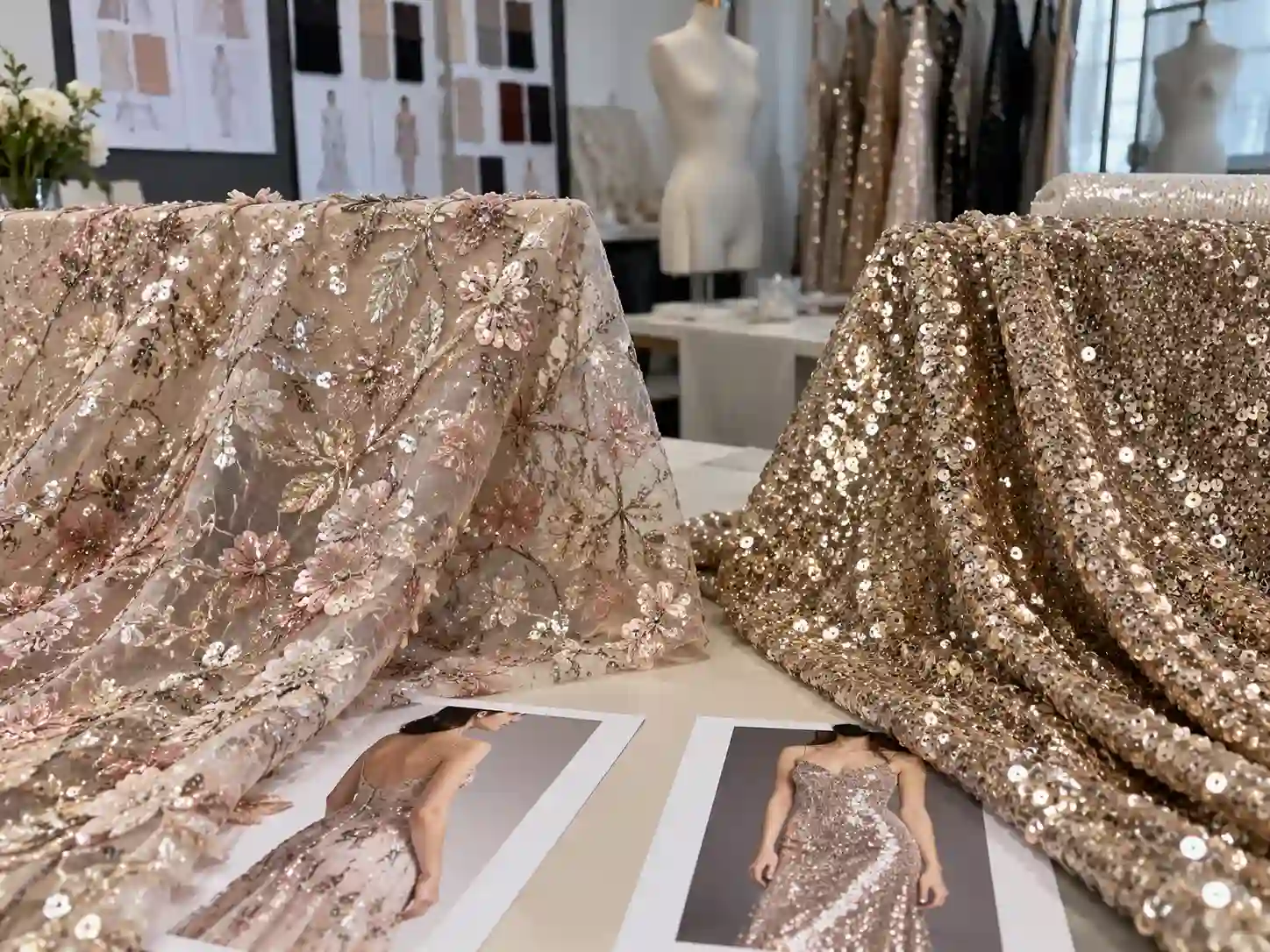
Weight is only one part of the decision. Two fabrics at 150 grams per square meter can differ greatly in stiffness, surface friction, recovery, seam slippage, and transparency. Usable width also affects consumption, particularly for circle skirts, wide panels, and larger sizes. Directional shine, nap, checks, and one-way prints reduce marker flexibility, so the sourcing team should assess the actual roll specification rather than relying on a small hand swatch.
Lining and Support
Lining improves opacity, comfort, internal appearance, and the way the shell moves over the body. It is especially useful under chiffon, lace, mesh, light satin, sequins, or fabrics that cling to hosiery. The lining can be full length, partial, attached as a modesty layer, or constructed as a separate underskirt, but its stretch and drape must remain compatible with the outer fabric.
Support materials include woven or nonwoven interfacing, stay tape, and reinforcement patches around waistbands, facings, zipper openings, hooks, buttons, pockets, and slit tops. Interfacing should be tested before approval because excessive firmness can create a visible hard edge or bubbling, while inadequate support allows the waist to stretch or roll. For sheer garments, opacity should be checked in daylight and under camera flash, not only under soft sample-room lighting.
| Skirt Style | Common Fabric Direction | Typical Weight Range | Main Production Control |
| Fluid A-line | Viscose, rayon, crepe, satin | 90-180 gsm | Drape and seam stability |
| Structured A-line | Twill, suiting, denim | 180-350 gsm | Shape and waistband support |
| Pencil | Ponte, stretch woven, suiting | 220-380 gsm | Recovery and hip fit |
| Bias slip | Satin, viscose, light crepe | 80-160 gsm | Growth, twisting, puckering |
| Pleated | Polyester woven, chiffon, satin | 70-180 gsm | Pleat setting and spacing |
| Tiered | Cotton voile, rayon, chiffon | 70-150 gsm | Gathering and transparency |
| Knit bodycon | Jersey, rib, ponte | 180-350 gsm | Stretch and recovery |
| Cargo | Twill, denim, nylon woven | 180-320 gsm | Pocket bulk and structure |
Waistbands and Closures
Common waist constructions include straight waistbands, contoured waistbands, faced edges, full elastic, partial elastic, shirring, and drawstring channels. A straight band is efficient but may gap on bodies with a pronounced waist-to-hip difference. A shaped waistband follows the body more closely, while a clean faced edge gives a minimal appearance but needs stabilization to stop the facing from rolling outward.
Closures include invisible zippers, standard coil zippers, metal zippers, hooks and bars, buttons, snaps, ties, and pull-on elastic systems. The closure should be chosen before final pattern approval because it affects seam position, opening length, reinforcement, and sewing sequence. Wrap skirts often require a hidden internal button or snap even when the visible design uses a tie, since the secondary fastening protects coverage during sitting and movement.
Fabric Testing

Incoming fabric should be checked for usable width, shade, holes, stains, print defects, bowing, skew, surface damage, and inconsistent stretch before cutting. Depending on the material and care label, testing may include washing or steam shrinkage, colorfastness, crocking, seam slippage, pilling, abrasion, stretch recovery, fusing response, needle damage, and print repeat accuracy. These tests establish whether the original pattern and sewing method remain suitable for the bulk material.
Dimensional change deserves particular attention on midi lengths. A fabric that shrinks three percent in the length direction can change an 80-centimeter skirt by more than two centimeters after cleaning. Shade lots should be separated so front and back panels are not mixed across visibly different rolls. Sewing trials should also confirm needle size, thread, stitch density, presser-foot pressure, and pressing temperature before the line begins.
How Are Midi Skirts Cut and Sewn?
Bulk midi skirt production follows fabric inspection and relaxation, marker planning, spreading, cutting, numbering, bundling, component preparation, sewing, pressing, measurement control, and finishing. The production sequence must preserve grain direction, panel matching, shade consistency, seam balance, and the approved silhouette while preventing delicate or stretch materials from distorting during handling.
Fabric Preparation
Preparation starts with roll identification, shade grouping, incoming inspection, and relaxation. Knits, stretch wovens, and tightly rolled materials can change dimensions after being opened, so allowing the fabric to rest helps reduce size variation after cutting. The marker is then planned around fabric width, size ratio, grain, one-way prints, nap, surface shine, check matching, defect zones, and any panels that must be cut on the bias.
Marker efficiency is important because fabric is usually the largest material cost, but the lowest consumption is not always the safest result. Rotating satin or velvet pieces can create visible light-direction differences, while changing the direction of a bias panel can alter drape. After spreading and cutting, components are notched, numbered, inspected, and bundled by size and shade so matching panels remain together through sewing.
Sewing Sequence
Factories normally prepare smaller components before closing the main garment. Pockets, tabs, belt loops, darts, pleats, gathers, and decorative details are completed first, followed by panel seams, slits, closures, waistbands, facings, linings, and hems. The sequence is planned to reduce repeated handling and avoid reopening finished seams. A pocket, for example, may need to be completed before the side seam is joined.
Seam type depends on material and quality level. Lightweight woven skirts may use overlocked seams, premium unlined designs can use binding or clean internal finishes, and stretch garments need seams that extend without breaking. Operator handling remains critical because uneven feeding can twist a side seam, inconsistent pleat formation can change the waist measurement, and excessive tension can leave puckering on satin or light crepe.
Critical Operations
Waistbands, zippers, pleats, slits, and hems usually receive first-piece approval because small errors are highly visible. Waistband interfacing must fuse evenly and cool before sewing, while the top edges at a zipper should meet at the same height. Invisible zipper tape needs to lie close to the seam without catching the coil or creating a ripple down the finished opening.
Pleats require reliable notches, templates, or folding guides so depth, direction, and spacing remain consistent. Slits and vents need reinforcement at the top because that point absorbs stress during walking and sitting. Hem construction must suit both fabric thickness and curvature. Tailored fabrics may accept a deeper blind hem, while chiffon, circle skirts, and bias styles often need a narrow finish and extra time for the garment to settle before leveling.
Pressing and Finishing
Pressing happens throughout construction rather than only after sewing is complete. Darts, seams, pleats, waistbands, and hems are shaped at the appropriate stage using settings suitable for the material. Satin can develop shine or water marks, velvet can crush, and synthetic fabrics can glaze or shrink when heat and pressure are too high. Delicate textiles may need a press cloth, lower pressure, or shaped equipment.
Final finishing includes thread trimming, stain removal, shape pressing, hem leveling, measurement checks, closure testing, label verification, lint removal, and cooling before packing. Garments should not be measured immediately after heavy steam because heat can temporarily change dimensions. They should also cool and dry before folding, since packing a warm or damp skirt can create new creases and weaken the appearance achieved during final pressing.
How Do Skirt Styles Change Manufacturing?
Skirt styles change manufacturing through pattern geometry, fabric consumption, grain direction, stabilization, sewing operations, and inspection points. A pleated midi, bias-cut slip skirt, pencil skirt, and wrap skirt may share the same length, yet they require different line speeds, operator skills, pressing methods, fit tests, and cost assumptions.

A-Line and Circle Skirts
An A-line skirt expands gradually from the waist or hip and may use two body panels, multiple gores, or shaped vertical seams. Two-panel construction is efficient, while multi-panel construction adds operations but offers better contour control and a more deliberate vertical line. Front and back flare should be balanced so side seams hang vertically rather than swinging forward or collapsing toward the back.
Circle and half-circle skirts use curved pattern geometry and place sections of the hem on straight, cross, and bias grain. That produces fluid movement but increases fabric consumption and uneven growth. Wide pattern pieces may not fit efficiently on narrow fabric, particularly in larger sizes, and extra seams may be required. The garment often needs to hang before the curved hem is leveled, and a narrow finish is usually easier to control than a deep turned hem.
Pleated and Tiered Skirts
Pleated skirts use hidden fabric within every fold, so the cutting width can be far greater than the finished waist. A simple knife pleat with two centimeters visible and four centimeters folded underneath uses roughly six centimeters of fabric for each two centimeters seen from the outside. The actual ratio changes by pleat design, but it shows why a visually narrow skirt can carry high material consumption.
Pleat depth, spacing, direction, stitch-down length, waist thickness, and heat setting need consistent control. Polyester-rich fabrics usually retain permanent pressed shapes more reliably than many natural fibers. Tiered skirts create volume through gathered horizontal sections, with working gathering ratios often around 1.5:1 to 2.5:1 depending on fabric weight and desired fullness. Every tier must remain level, and heavy materials require restrained gathering to avoid bulky seam joins.
| Style | Primary Manufacturing Control | Frequent Bulk Risk | Useful Production Check |
| A-line | Balanced flare and grain | Side seams swing | Check garment while worn and moving |
| Circle | Curved hem and bias growth | Uneven finished length | Hang before leveling the hem |
| Pleated | Pleat depth, direction, heat setting | Inconsistent volume or waist | Use templates and check packing recovery |
| Tiered | Gather ratio and tier level | Bulky or twisted joins | Measure each tier before assembly |
| Bias slip | Handling and seam tension | Twisting and puckering | Rest garment before final hem |
| Pencil | Hip ease and hem opening | Restricted stride or drag lines | Conduct sitting and walking tests |
| Wrap | Overlap and fastening position | Opening during movement | Test seated coverage and tie security |
Bias and Slip Skirts
Bias-cut skirts place woven fabric diagonally to the grain so it can stretch and drape around the body. This produces a fluid silhouette but makes dimensions less stable. Panels may grow after cutting, sewing, steaming, or hanging, and side seams can twist when paired pieces are cut or handled differently. Satin also exposes small tension differences because puckering catches light along the seam.
A controlled process relaxes the fabric, maintains consistent bias direction, limits handling, supports panels during transport, uses fine needles and suitable thread, and allows the assembled garment to hang before final hemming. The lining must have compatible movement; a stable straight-grain lining can restrain the outer shell. Production planning should allow a slower line speed than a stable straight-grain A-line skirt, since forcing output usually creates more rework.
Pencil and Wrap Skirts
Pencil skirts depend on precise waist, high-hip, full-hip, thigh, hem-opening, and slit measurements. Because the shape follows the body and may narrow toward the hem, walking room must come from stretch, a slit, or a vent. Fit testing should include sitting, walking, and stair movement. Horizontal pulling suggests insufficient ease, while a vent that opens or tears may need revised height, reinforcement, or seam construction.
Wrap skirts create fit through overlapping fronts secured by ties, buttons, buckles, or concealed fasteners. The overlap should protect coverage during movement, not only while standing. A hidden inner button or snap often improves security. Asymmetric wrap edges may include partial bias grain, so the hem needs checking on the body after hanging. Both pencil and wrap styles benefit from clearly stated movement and coverage standards rather than purely visual approval.
How Are Quality and Delivery Controlled?
Quality and delivery are controlled through material inspection, cut-panel checks, first-piece approval, in-line measurement, workmanship review, final inspection, packing verification, and production scheduling. The approved sample, construction file, measurement chart, and tolerance standard allow different teams to judge each size, color, and shipment against the same requirements.
Measurements and Tolerances
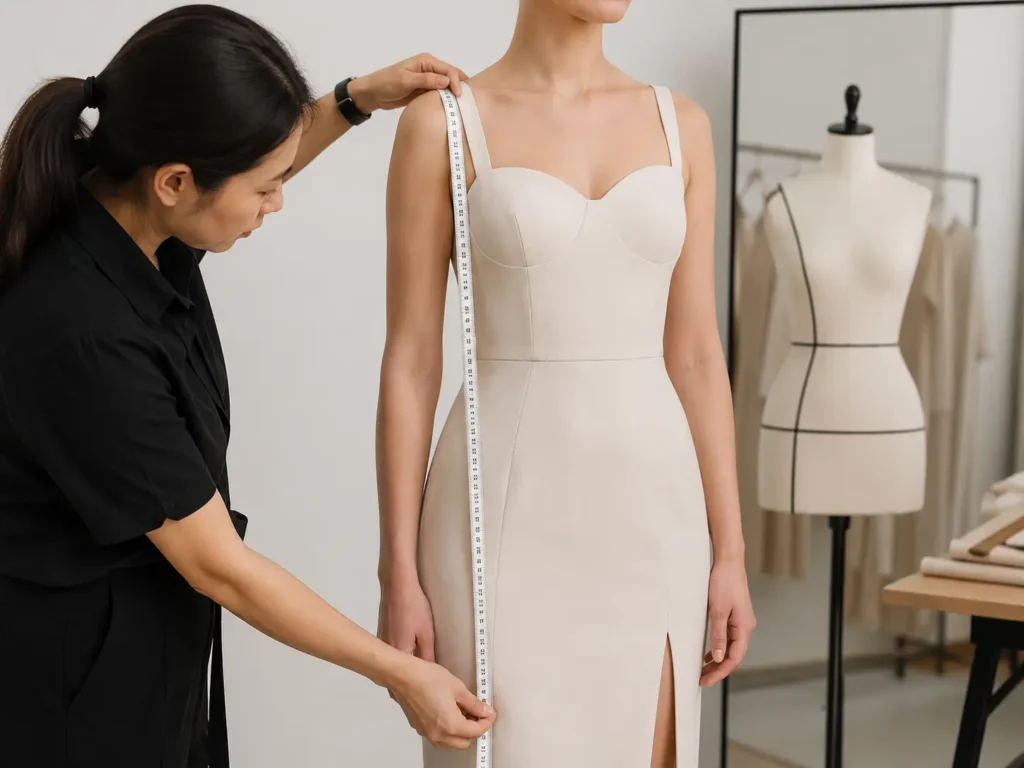
Inspection focuses on points that affect fit, balance, and movement: waist, high hip, full hip, waist-to-hip depth, center-front length, center-back length, side length, hem opening, waistband height, pocket position, and slit height. Tolerances should be agreed before production and matched to the material. Stretch jersey and rigid suiting should not automatically share the same measuring method or acceptance range.
Measurements are most useful when checked at several stages, including the graded pattern, pre-production sample, early line output, in-line inspection, and finished garment. Repeated deviation in one size may indicate a grading or pattern problem rather than operator error. Repeated length variation can come from unstable fabric, cutting, pressing, or measurement before the garment has cooled and recovered.
In-Line Inspection
In-line inspection identifies problems before they are repeated across the entire order. First pieces from critical operations such as pleat formation, pocket placement, side-seam joining, zipper installation, waistband attachment, slit construction, lining attachment, and hem preparation are reviewed against the approved standard. Random measurement and workmanship checks continue as production progresses, with feedback sent directly to line supervision.
The objective is to remove the cause rather than repair the same symptom repeatedly. Several rippled zippers may point to machine tension, handling, or missing stabilization. Repeated waist failure in one size can reveal an incorrect graded pattern. Shade control also continues during sewing, because bundles from different fabric lots should not be mixed. The most effective quality process connects inspection findings with immediate technical correction.
| Measurement Point | Common Working Tolerance | Main Reason for Control |
| Waist | +/- 0.5-1.0 cm | Fit and closure alignment |
| High hip | +/- 1.0 cm | Upper-body shaping |
| Full hip | +/- 1.0 cm | Comfort and silhouette |
| Finished length | +/- 1.0 cm | Consistent retail appearance |
| Waistband height | +/- 0.3-0.5 cm | Visual proportion and stability |
| Slit length | +/- 0.5-1.0 cm | Coverage and walking movement |
| Hem opening | +/- 1.0-1.5 cm | Shape and stride allowance |
| Pocket position | +/- 0.5 cm | Symmetry and appearance |
Final Inspection
Final inspection reviews measurement, workmanship, appearance, function, labels, folding, and packaging. Inspectors check side-seam balance, hem level, zipper operation, hook security, pleat consistency, slit reinforcement, lining length, seam quality, press marks, stains, size labels, color identification, barcodes, and carton assortment. The approved sample remains a visual reference, while the specification provides the objective basis for acceptance.
Defects are judged by their effect on function, appearance, safety, and saleability. A broken seam, failed zipper, severe measurement deviation, or exposed lining is more serious than a removable thread end. Functional checks should include opening and closing zippers, lightly loading hooks and buttons, examining the slit under tension, and testing elastic recovery. Final inspection is strongest when it confirms both retail appearance and ordinary wear performance.
Cost, Lead Time, and Delivery
Cost is shaped by fabric price and consumption, lining, interfacing, number of panels, pleats, gathers, pockets, closures, embellishment, pattern matching, pressing, inspection, packing, and order structure. Quantity alone does not determine efficiency. A three-thousand-piece order split across many colors and small size ratios can require more material control, cutting separation, tracking, and line changes than a larger order concentrated in two colors.
Lead time begins before sewing with fabric booking, lab dips, print approvals, trim development, sampling, revision, and pre-production confirmation. Delayed comments or incomplete label files can affect a reserved production window even when the sewing line is ready. Before packing, skirts should be clean, pressed, cooled, correctly labeled, and folded to avoid permanent creases. Clear launch dates, approval deadlines, and realistic shipping plans protect both quality and delivery.
Reliable midi skirt manufacturing comes from controlling the connections between design, fabric, pattern, sample, cutting, sewing, pressing, inspection, and packing. The most expensive problems are rarely caused by one dramatic mistake; they usually begin with a small undefined detail that moves quietly through every later stage. A clear production file and an experienced technical team make those details visible before they become bulk defects.