 Skip to content
Feather Trim Dress Manufacturing Explained: How Brands Develop, Sample, and Produce Feather Detail Dresses

Your trusted Women’s Apparel Manufacturer from China
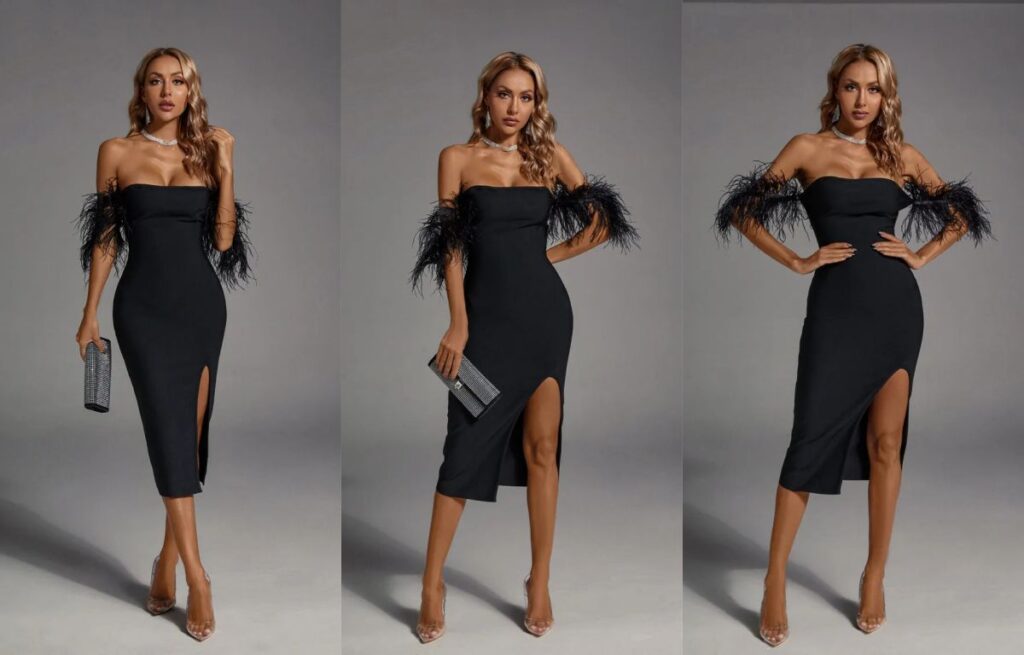
A feather trim dress can make a collection look expensive in seconds, but it can also expose weak manufacturing faster than almost any ordinary dress detail. A basic satin mini dress may still look acceptable if the stitching is not perfect. A feather hem dress will not. If the feather direction is uneven, if the trim density changes from one side to another, if the sleeve cuff twists after sewing, or if the dress arrives crushed inside the carton, the customer notices immediately. That is why feather trim dresses are not just normal dresses with decoration added. They require planning from design, pattern, fabric matching, trim sourcing, sample testing, bulk inspection, and packing.
Feather trim dress manufacturing is the process of developing and producing dresses with feather decoration on areas such as hems, cuffs, necklines, straps, bustlines, or slits. The key steps include selecting suitable feathers and base fabrics, testing trim placement, sewing or securing the trim, checking sample balance, controlling bulk consistency, and packing the dress to protect feather volume.
For fashion brands, this topic matters because feather dresses often sit in high-visibility categories: partywear, holiday drops, birthday dresses, bridal events, occasionwear, clubwear, and premium ecommerce collections. They are photographed, shared, returned, reviewed, and compared. A good feather dress can become a hero SKU. A poorly made one can become a return-rate problem. The real question is not simply, “Can a factory make it?” The better question is: can the factory keep it beautiful after sampling, scaling, ironing, folding, packing, and shipping?
Jinfeng Apparel is a Guangdong-based premium custom women’s fashion manufacturer serving global fashion brands and mid-to-large custom apparel clients with OEM, ODM, private-label, dress development, sampling, bulk production, quality control, packaging, and export delivery support. This article explains feather trim dress manufacturing from a practical production point of view so buyers, designers, and sourcing teams can make better decisions before sending a tech pack or placing a bulk order.
What Is a Feather Trim Dress?
A feather trim dress is a women’s dress finished with feather decoration on visible areas such as the hem, cuffs, neckline, bustline, straps, or slit. It is commonly used in partywear, occasionwear, birthday dresses, holiday collections, clubwear, and premium ecommerce styles because feather trim adds movement, texture, volume, and a stronger photo-ready effect than ordinary fabric details.
Create a realistic editorial photo of a premium women’s fashion sampling room showing satin, mesh, and party dresses with feather trim on hems, cuffs, and necklines. Include fabric swatches, feather trim rolls, pattern paper, measuring tape, and a clean worktable. Professional lighting, modern apparel factory atmosphere, no model face close-up.
What Makes Feather Trim Different?
Feather trim is not a flat decoration. It has direction, volume, softness, and movement. That makes it beautiful, but also more difficult to control than lace, ruffles, or simple binding. When a lace trim is sewn onto a hem, the line can be measured and checked easily. Feather trim hides the base seam and extends beyond the fabric edge, so the final look depends on both the dress pattern and the feather length.
A feather trim dress needs planning before the first sample is cut. The factory must consider whether the feather sits outside the garment edge, inside a seam, under a facing, or on top of the fabric. If the trim is added too late without technical planning, the dress may look bulky, uneven, or fragile. In bulk production, this problem becomes more serious because every piece must look close to the approved sample.
For brands, the key question is not only whether the reference photo looks good. The real question is whether this detail can stay consistent across 200, 500, or 2,000 pieces. A good sample is only the beginning. A sellable feather trim dress must also survive size grading, production handling, finishing, packing, shipping, and customer unboxing.
Which Dress Styles Use Feather Trim?
Feather trim works best on styles where the decoration has space to move and be seen. Mini dresses are popular because feather hems create instant visual impact in product photos. Long-sleeve party dresses often use feather cuffs because the detail is eye-catching without changing the whole body structure. Strapless, bustier, and corset dresses may use feather trim around the neckline or bustline to create a glamorous occasionwear look.
Feather trim is also common on satin slip dresses, mesh club dresses, velvet party dresses, sequin evening dresses, and bridal-related pieces. The more formal the dress, the cleaner the feather placement needs to be. A playful birthday mini dress can tolerate a fuller, fluffier trim. A wedding guest dress or cocktail dress usually needs more controlled density, softer color matching, and better finishing.
In commercial production, the safest feather dress designs usually have one strong feather detail rather than too many competing features. A dress with feather hem, rhinestone straps, corset boning, cut-outs, and heavy ruching can be attractive on a moodboard, but it may become expensive, slow, and inconsistent in production. For most brands, one clear hero detail performs better than five risky details competing against each other.
Is Feather Trim Practical?
Feather trim can be practical for fashion production when the design is simplified, the placement is controlled, and the packing method is tested. Problems usually happen when brands treat feather trim as a simple add-on. It is not. The trim affects garment weight, hem balance, comfort, folding, shipping volume, care instructions, and return risk.
A feather cuff may look small, but it can affect sleeve opening and wrist comfort. A feather hem can make a mini dress look more expensive, but if the trim is too long, the dress may look uneven after packing. A feather neckline can create a luxury effect, but it may irritate the skin if the backing is rough or if the trim tape is not properly hidden.
A good product development team will test feather trim in real garment conditions: worn on body, moved, folded, packed, reopened, and inspected again. That is how a beautiful idea becomes a sellable style. The goal is not to avoid feather trim. The goal is to use it in a way that fits the customer, price point, production volume, and delivery channel.
| Feather Detail | Common Dress Type | Typical Visual Effect | Main Production Risk |
| Feather hem | Mini dress, slip dress, party dress | Adds movement and length illusion | Uneven hem, crushed feathers |
| Feather cuffs | Long sleeve dress, robe dress, party dress | Strong photo detail | Twisting, tight sleeve opening |
| Feather neckline | Strapless, bustier, off-shoulder dress | Premium occasionwear look | Skin discomfort, poor symmetry |
| Feather bustline | Corset dress, bandeau dress | Glamorous upper-body focus | Bulk, uneven curve |
| Feather slit | Maxi dress, evening dress | Movement while walking | Trim catching, weak attachment |
| Feather straps | Cami dress, club dress | Playful detail | Pulling, discomfort |
Which Materials Are Used?
Feather trim dresses usually combine a base dress fabric with natural feather trim or faux feather trim. Common base fabrics include satin, stretch satin, mesh, jersey, ponte, crepe, chiffon, lace, velvet, and sequin fabric. The right material depends on the target style, price level, customer market, trim placement, color requirement, and how much structure the dress needs.
Close-up product development scene showing feather trim tapes, faux feather samples, satin swatches, mesh fabric, velvet, lace, and sequin fabric laid on a fashion factory table. Add small handwritten labels such as satin, mesh, faux feather, ostrich-style trim, and trim tape. Clean professional B2B product photography style.
Which Feathers Are Common?
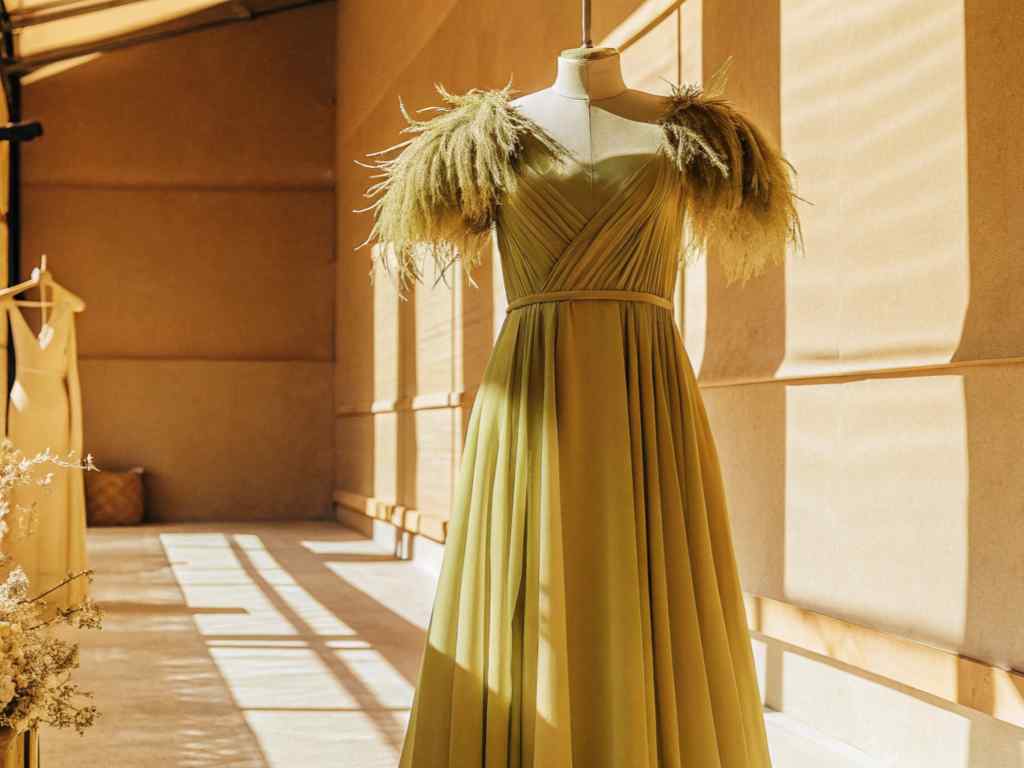
Most feather trim used in dress production comes as a ready-made feather tape or fringe, not as loose feathers attached one by one. This makes production more stable and easier to control. The tape base allows the factory to sew the trim into the garment edge or attach it onto the surface with a cleaner line.
Ostrich-style feathers are often used for premium eveningwear and occasionwear because they have long, elegant movement. Marabou-style feather trim is softer and fluffier, making it common on cuffs, hems, and playful party dresses. Turkey or rooster-style trims may be used when the design needs more texture or a firmer decorative effect. Faux feather trims are also used for brands that prefer animal-free materials or need more consistent color and lower variation between lots.
Before sampling, brands should review feather length, density, tape width, shedding level, color tone, and recovery after compression. A trim that looks full in a supplier photo may appear thin when sewn onto a dress. For bulk orders, it is safer to approve physical trim swatches rather than make a decision only from online images.
Which Fabrics Work Best?
The base fabric should support the feather detail, not fight against it. Satin and stretch satin are popular because the smooth surface contrasts well with soft feathers. Mesh works for clubwear and partywear, especially when combined with bodycon shapes. Velvet gives a richer look but can become heavy if the feather trim is dense. Crepe and stable woven fabrics work well when the dress needs cleaner structure.
For feather hem mini dresses, the base fabric should not be too weak. Very thin chiffon or lightweight mesh may collapse under the trim unless the hem is reinforced. For feather cuff dresses, the sleeve fabric should hold its shape so the cuff does not twist. For strapless or corset feather dresses, inner structure matters more than the outer fabric because the neckline must stay stable.
A useful rule is simple: the more volume the feather has, the more control the base garment needs. If both the fabric and the trim are unstable, the dress becomes harder to sew, harder to inspect, and harder to pack. Stable fabric does not mean stiff fabric. It means the garment body can carry the trim without losing shape.
Are Faux Feathers an Option?
Faux feathers can be a smart option, but they must be evaluated carefully. Some faux trims offer better color consistency and lower natural variation. They may also suit brands that want animal-free product positioning. However, not all faux feather trims look premium. Some appear too shiny, flat, stiff, or synthetic under studio lighting.
The decision should be based on the final customer, not only on material cost. A premium occasionwear customer may expect soft movement and natural texture. A clubwear or holiday-party customer may accept a more playful faux texture if the color and volume look good in photos. Online brands should also test faux feathers under flash, natural light, and studio light because product photography can reveal texture problems quickly.
Faux feather trim should still be tested for shedding, heat sensitivity, tape strength, recovery after packing, and skin comfort. It is not automatically easier just because it is synthetic. Good faux trim can reduce some variation, but poor faux trim can make the entire dress look cheap.
| Base Fabric | Best Feather Use | Typical Dress Style | Practical Notes |
| Satin | Hem, neckline, straps | Slip dress, party mini, cocktail dress | Smooth surface shows feather contrast clearly |
| Stretch satin | Hem, bustline, cuffs | Bodycon party dress | Needs stretch control to avoid wavy seams |
| Mesh | Cuffs, bustline, neckline | Club dress, sheer party dress | Requires lining or reinforcement at trim areas |
| Velvet | Cuffs, hem | Holiday dress, evening mini | Rich look, but weight must be controlled |
| Crepe | Hem, neckline | Occasion dress, midi dress | Stable body helps trim sit evenly |
| Jersey / Ponte | Hem, cuffs | Bodycon dress, fitted dress | Good comfort, but trim may pull if too heavy |
| Sequin fabric | Hem, neckline | Party dress, evening dress | Needs careful seam finishing to avoid irritation |
| Lace | Neckline, sleeves | Cocktail dress, wedding guest dress | Trim placement must avoid messy edge layering |
How Is Feather Trim Attached?
Feather trim is usually attached by sewing a pre-made feather tape into the garment edge, under a facing, onto the surface, or between garment layers. The best method depends on the dress style, trim weight, fabric type, and placement. Good attachment should secure the trim, hide the tape base, reduce bulk, and keep the feather direction consistent.
Detailed factory close-up of a sewing operator attaching feather trim tape to the hem of a satin mini dress. Show the trim base being guided carefully near the machine, with pattern markings, seam allowance, and fabric layers visible. Professional garment production documentary style, sharp focus on hands and trim.
How Do Factories Sew Feather Trim?
A reliable factory normally starts by checking the feather trim base. The base tape must be wide and strong enough to sew, but not so bulky that it creates a thick seam. For hems and necklines, the trim may be inserted between the outer fabric and lining or facing. This creates a cleaner look because the tape is hidden. For cuffs or decorative surface areas, the trim may be topstitched or covered with binding.
The sewing process must keep feathers away from the needle area as much as possible. If feathers are caught in the seam, the finished edge can look messy or thin. Workers often need to control the feather direction by hand while sewing, especially on curves, cuffs, and bustline areas. This is one reason feather styles can require slower handling than ordinary hems.
The thread, stitch length, seam allowance, and pressing method also matter. Too much heat can damage some trims. Too much tension can pull the trim unevenly. A clean feather dress often depends on small production habits that are hard to see in a photo but obvious in the finished garment.
How Is Trim Placement Controlled?
Trim placement should be marked clearly before bulk sewing. A sample may look acceptable when one skilled sample maker handles it, but bulk production needs repeatable standards. The pattern should indicate the trim line, start point, end point, overlap area, seam allowance, and direction.
For a feather hem, the factory must decide whether garment length is measured to the fabric edge or to the end of the feather. For a feather cuff, the trim should start and end at the same seam position on both sleeves. For a feather neckline, left and right sides must match visually because even a small difference can make the upper body look unbalanced.
In bulk production, trim placement should be checked at three points: before sewing, during inline inspection, and after finishing. Waiting until final inspection is risky because reworking feather trim can damage both the trim and the dress fabric. Clear placement standards reduce arguments and protect delivery time.
How Do Designers Avoid Bulk?
Bulk is one of the most common hidden problems in feather trim dresses. The trim tape, fabric seam allowance, lining, zipper, facing, and overlock finishing can all stack together. If the trim crosses a zipper area, the zipper may become stiff or difficult to close. If feather trim is attached to a tight cuff without enough opening, the sleeve may look good on hanger but uncomfortable on body.
Designers can avoid bulk by choosing fewer high-risk details in one style. A satin mini dress with a feather hem may already be strong enough. Adding corset boning, rhinestones, draping, and feather straps at the same time can make production harder and increase cost. The best commercial feather dresses usually look dramatic to the customer but remain logical to the production line.
Factories can reduce bulk by trimming seam allowances, adjusting overlap points, using clean facing construction, and testing the thickest part of the garment before approving the sample. The side seam, zipper area, underarm, cuff opening, and neckline edge should all be checked, not just the front view.
| Attachment Method | Best Use | Strength Level | Finish Quality | Notes |
| Inserted into seam | Hem, neckline, cuff edge | High | Clean | Good for premium styles when lining or facing is used |
| Topstitched on surface | Decorative bands, sleeve details | Medium | Medium to clean | Faster, but stitch line may be visible |
| Covered by binding | Cuffs, neckline, straps | High | Clean | Useful when tape base needs to be hidden |
| Hand-tacked sections | Delicate trims, high-end details | Medium | High | Adds labor time, not ideal for every bulk order |
| Layered under facing | Bustline, neckline, upper body | High | High | Good for structured dresses and clean inner finish |
How Does Sampling Work?
Sampling a feather trim dress means testing the design, fabric, trim, fit, attachment method, and packing before bulk production. A first sample checks the idea and construction. A revised sample corrects fit or trim issues. A PP sample confirms final fabric, trim, measurements, sewing method, labels, and packing standard before production starts.
Professional sample review scene in a womenswear factory: feather trim dress on mannequin, measuring tape, tech pack sheets, fabric swatches, trim cards, and comments marked on a sample tag. Show a technical designer checking hem length and feather placement. Clean natural light, realistic apparel development setting.
What Should Brands Provide?
A factory can develop a better feather trim dress when the brand provides clear information at the start. The most helpful documents are a tech pack, reference photos, size chart, fabric direction, trim expectation, target quantity, target market, and private label requirements. If an original sample is available, it can reduce misunderstanding.
For feather trim styles, ordinary reference photos are often not enough. The brand should explain where the feather should sit, how full it should look, and whether the trim should be soft, long, dense, fluffy, clean, dramatic, or subtle. A feather mini dress can mean many different things. One brand may want a thin feather edge at the hem. Another may want a full, dramatic ostrich-style trim that extends several centimeters below the fabric.

The clearer the input, the faster the factory can judge cost, sourcing, sewing risk, and production feasibility. Without clear direction, the first sample becomes guesswork. Good development materials do not need to be fancy, but they must answer the practical questions that affect pattern, fabric, trim, size, and production method.
How Is the First Sample Checked?
The first sample should be checked on body, on hanger, and after light movement. Feather trim dresses can look attractive when flat, but problems often appear when the wearer sits, walks, raises arms, or turns. The trim may twist, shed, catch on the fabric, or distort the hem.
Brands should check the main body fit first: bust, waist, hip, body length, sleeve opening, and neckline position. Then check the trim: feather density, placement, direction, color match, tape visibility, seam cleanliness, and comfort. A good review should also include inside finishing because rough backing near skin can lead to complaints.
Photos are useful, but measurements and written comments are more important. Instead of saying “make the feathers nicer,” it is better to say “increase feather density at the front hem,” “shorten feather extension by 2 cm,” or “hide the trim tape inside facing.” Specific feedback saves time and reduces sample revisions.
Do Feather Dresses Need PP Samples?
Feather trim dresses should have a PP sample before bulk production. The PP sample confirms the final bulk fabric, final feather trim, final pattern, final measurement, final sewing construction, label placement, care label, and packing method. It is the bridge between a good development sample and stable bulk production.
This step is especially important when the first sample uses available substitute trim. If the bulk feather trim has a different tape width, density, color tone, or feather length, the final dress may not match the approved sample. The PP sample prevents this gap and gives the production line a real standard to follow.
A PP sample should also be packed in the intended way and reopened for review. If the feathers look crushed after packing, the packing method should be adjusted before production. For ecommerce brands, this is not a small detail. The customer’s first impression happens when the package is opened.
| Review Item | Common Working Standard | Why It Matters |
| Body measurements | Follow approved size spec and agreed tolerance | Controls fit and return risk |
| Feather extension | Clearly define whether length includes feather | Avoids length disputes |
| Trim placement | Mark start/end points and seam position | Keeps bulk production consistent |
| Trim density | Compare against approved swatch/sample | Protects visual value |
| Attachment strength | Check pulling, loose tape, weak sections | Reduces trim failure |
| Comfort | Check neckline, cuff, underarm, inner tape | Prevents wearer irritation |
| Packing recovery | Fold, pack, reopen, inspect volume | Protects delivery appearance |
| Label and care info | Confirm before bulk | Reduces compliance and customer service issues |
How Is Bulk Production Controlled?
Bulk production is controlled by confirming approved materials, inspecting feather trim before sewing, marking placement clearly, checking inline construction, measuring finished garments, reviewing appearance, and testing packing recovery. Feather trim dresses need stricter control than basic dresses because small differences in trim density, direction, or placement can change the entire look of the garment.
Realistic garment production line for feather trim party dresses: operators checking trim placement, QC inspector measuring a dress, approved PP sample hanging beside production sheets, cartons and packing table in background. Modern Guangdong womenswear factory, clean and professional, no brand logos.
How Are Feathers Inspected?
Feather trim should be inspected before it enters production. The inspection should check color, length, density, tape width, shedding, broken sections, odor, moisture damage, and crushed areas. If trims come in different batches, the factory should avoid mixing them randomly in the same order unless the color and density are close enough.
Light colors need extra attention. White, ivory, champagne, blush, and pastel trims show stains and color differences easily. Black trims may hide some variation, but they can still shed or transfer dye if the material is poor. For dresses with pale satin or light lining, dye transfer must be checked before bulk sewing.
A practical factory will also check how the trim behaves during handling. Some feather trims look good in a roll but lose fullness after sewing. Others recover well after light steaming or hanging. This matters because dresses do not go directly from sewing table to customer closet. They are finished, inspected, folded, packed, shipped, opened, and worn.
How Is Size Consistency Managed?
Size consistency must include both the fabric body and the feather extension. This is where many misunderstandings happen. If a mini dress is measured only to the fabric hem, the finished look may appear longer because the feather extends below it. If a product page lists the total garment length including feather, the factory must measure it the same way.
For bulk orders, the measurement standard should clearly define key points: bust, waist, hip, body length, sleeve length, sleeve opening, neckline width, fabric hem length, and feather extension. The trim should not be allowed to hide poor measurement control. It should be treated as part of the finished garment specification.
Inline measurement is important because feather trim is harder to rework after finishing. If the dress body is too long before trim attachment, the final style may lose its intended mini length. If the cuff opening is too narrow, adding feather trim may make it feel even tighter. The earlier these issues are found, the easier they are to correct.
How Do Factories Reduce Defects?
Factories reduce feather trim defects by turning the approved sample into clear production instructions. Workers need to know not only what the dress looks like, but also how the trim is positioned, how much overlap is allowed, which side faces outward, how the seam should be finished, and how the garment should be handled after sewing.
Common defects include uneven feather direction, visible tape, missing trim, loose threads, crushed feathers, weak attachment, twisting cuffs, uneven hemline, trim caught in zipper, color mismatch, and dirty feathers. Many of these defects can be reduced through inline inspection rather than final inspection only.
A strong production process usually includes a pre-production meeting, approved PP sample on the line, trim placement markings, first-piece approval, inline checks, end-line inspection, measurement review, and packing inspection. Feather trim dresses should not be rushed through the same workflow as a basic jersey dress.
How Is Packing Checked?
Packing is part of quality control for feather trim dresses. If the dress is folded too tightly, the trim may arrive flattened or bent. If the carton is overloaded, feather volume can be crushed. If light feathers touch dark fabric or printed packaging, color transfer or dust marks may appear.
The packing method should be tested before shipment. A sample can be folded, placed in the intended polybag, kept compressed, then reopened to check recovery. If the feathers do not recover well, the team may need a larger polybag, softer folding method, tissue protection, garment bag, or reduced carton compression.
For premium ecommerce styles, packing is not only about protection. It affects unboxing, product reviews, and customer confidence. A feather dress must arrive looking like a special piece, not like a damaged accessory attached to a normal dress.
What Should Brands Check Before Ordering?
Before ordering feather trim dresses, brands should check design feasibility, trim quality, fabric compatibility, sample accuracy, cost drivers, MOQ, production timeline, care requirements, packing method, and manufacturer experience. A reliable supplier should explain technical risks before bulk production, especially around feather shedding, placement control, measurement consistency, and shipping protection.
B2B buyer checklist scene for custom feather trim dresses: laptop showing tech pack, fabric and feather trim swatches, size chart, private label samples, cartons, and a finished feather mini dress on a hanger. Clean sourcing office and factory meeting room atmosphere, professional ecommerce fashion brand planning.
What Affects Cost?
The cost of a feather trim dress depends on more than the base dress. Feather type, trim density, placement length, sewing method, lining, structure, color matching, sample revisions, quality standard, and packing all affect price. A simple satin mini dress with feather cuffs costs differently from a corset evening dress with a full feather hem.
Trim quantity is one of the biggest variables. A small cuff detail may use much less trim than a full hem. A dress with feather neckline, cuffs, and slit edge can quickly become more expensive because it requires more material and more sewing control. Dense natural feather trim usually costs more than short faux trim, and custom color development may increase both cost and lead time.
Brands should decide which detail creates the strongest selling point. If the feather hem is the hero feature, the body can stay cleaner. If the dress structure is already complex, feather trim should be used more selectively. Cost control works best when it protects the design rather than stripping away the detail that makes the customer want the dress.

How Should Dresses Be Packed?
Feather trim dresses need packing methods that protect volume and shape. A basic polybag may be enough for some small cuff details, but full feather hems or neckline trims often need more space. Tight folding can flatten the feathers, especially when cartons are stacked during international shipping.
The best packing method depends on the trim placement. For feather hems, the hem should not be sharply folded. For feather cuffs, sleeves should be placed so the cuffs are not crushed under the body. For neckline feathers, tissue support may help maintain shape. For premium dresses, garment bags or larger individual bags may be worth considering.
Brands should also think about warehouse handling. A dress may survive factory packing but get compressed during fulfillment. If the product will be sold online, packing should be tested with the full delivery journey in mind, not only factory exit. This is especially important for launches where first reviews can influence sales momentum.
How Do You Choose a Manufacturer?
A good feather trim dress manufacturer should understand dress construction, not only decoration. The factory should be able to discuss fabric choice, trim sourcing, pattern balance, sample correction, attachment method, measurement control, QC checkpoints, and packing. If the only answer is “we can do it,” that is not enough.
Brands should ask to review the development process before placing an order. Can the factory source feather trim swatches? Can it explain which placement is risky? Can it make a sample before bulk? Can it define measurement standards? Can it protect private-label details? Can it manage repeat orders if the style sells well?
Feather trim dresses often become seasonal hero pieces. A manufacturer should be able to support the first sample, revised sample, PP sample, bulk production, inspection, and future reorder. The goal is not just to make one nice sample. The goal is to produce a consistent style that customers want to keep.
Checkpoint | What Brands Should Confirm | Practical Reason |
Design feasibility | Trim placement, body structure, wearability | Avoids beautiful but unwearable styles |
Trim quality | Feather length, density, color, shedding | Controls final visual value |
Fabric match | Weight, stretch, lining, color tone | Prevents distortion and poor drape |
Sample approval | Fit, trim position, comfort, construction | Reduces bulk production changes |
PP sample | Final fabric, final trim, final measurements | Locks production standard |
Cost structure | Fabric, trim, labor, packing, revisions | Avoids surprise price changes |
Packing test | Fold, compress, reopen, inspect | Protects delivery appearance |
Supplier fit | Dress experience, QC, private label, export | Supports stable long-term production |
Conclusion: Turn Feather Trim Dress Ideas Into Production-Ready Styles
Feather trim dresses are powerful because they create instant emotion. They feel festive, confident, playful, glamorous, and photo-ready. But from a manufacturing perspective, they also demand more discipline than ordinary dresses. The feather trim must match the design, the fabric must support the structure, the pattern must control balance, the sewing method must hide bulk, the sample must prove the concept, bulk production must protect consistency, and packing must preserve the final look.
For fashion brands, the smartest path is not to rush from reference image to bulk order. Start with a clear product direction. Decide whether the hero detail is the hem, cuff, neckline, bustline, or slit. Confirm the base fabric and trim quality. Review the first sample carefully. Approve a PP sample before bulk. Treat packing as part of product development, not as a final warehouse step.
Jinfeng Apparel works with global fashion brands and mid-to-large custom apparel clients on custom dresses, party dresses, occasionwear, bodycon styles, mesh dresses, satin dresses, lace dresses, sequin dresses, jumpsuits, matching sets, and private-label women’s collections. The team supports product development from tech pack, reference photo, original sample, line sheet, or sketch, and coordinates fabric sourcing, trim sourcing, pattern making, sampling, bulk production, QC, private-label packing, and export delivery.
If you are developing feather hem mini dresses, feather cuff party dresses, satin feather dresses, mesh feather clubwear, or private-label occasionwear, send your tech pack, reference images, size chart, target quantity, fabric direction, and trim expectations to Jinfeng Apparel. The team can review the construction, suggest practical material options, prepare sampling, and support bulk production from 200 pcs per style/color based on fabric, trim, and production requirements.
Share This Article :

Jerry Lee
Categories

Latest blogs
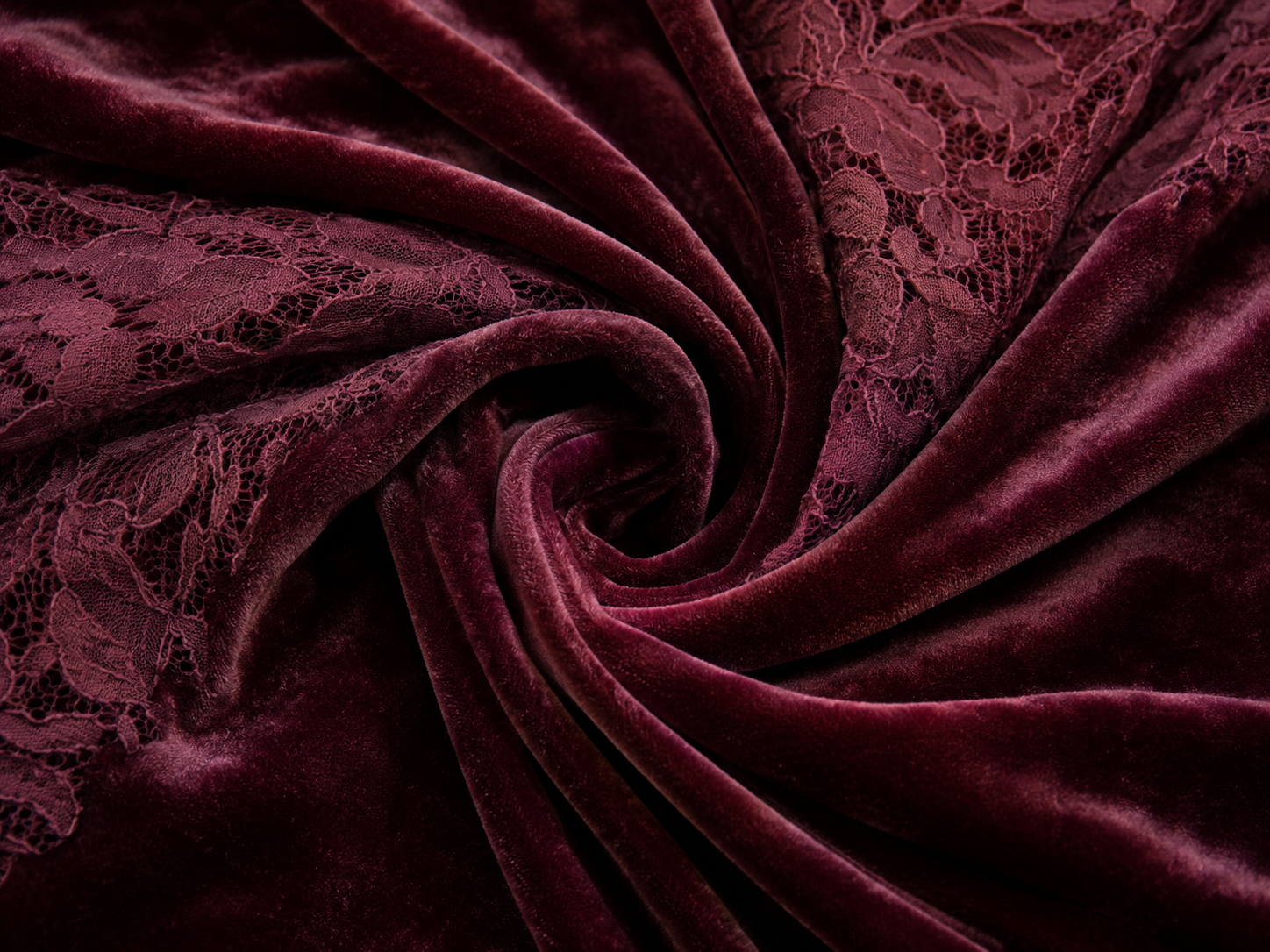

Table of Contents
Here, developing your OEM/ODM private label clothing collection is no longer a challenge—it’s an excellent opportunity to bring your creative vision to life.

