 Skip to content
How Do You Select the Right Elastic for Fashion Dresses?

Your trusted Women’s Apparel Manufacturer from China
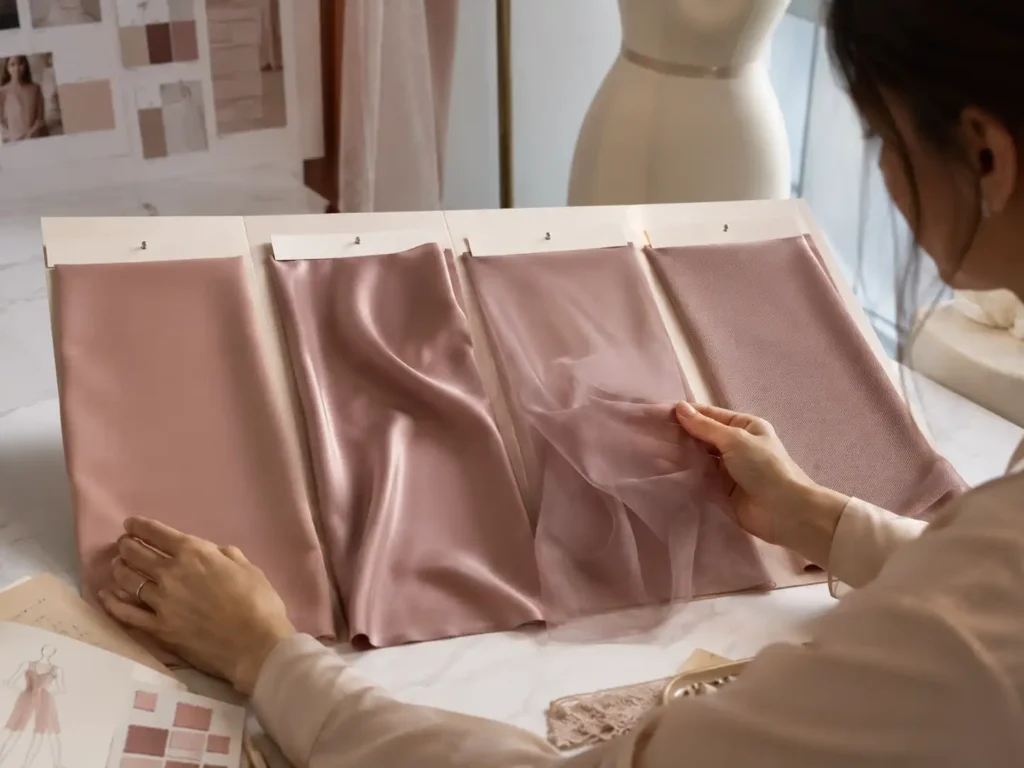
Elastic is easy to overlook because it is usually hidden inside a waistband, neckline, cuff, shoulder seam, or ruched panel. Yet this narrow component can decide whether a dress feels secure or uncomfortable, holds its shape or stretches out, and looks smooth or develops twisting, rolling, puckering, and uneven gathers. The correct decision cannot be made from width or color alone. Elastic construction, working extension, recovery, fabric weight, seam method, body pressure, care conditions, and production consistency must be considered together. A good choice supports the dress quietly, while a poor choice becomes obvious only after the wearer sits, moves, washes the garment, or puts it on several times.
Select dress elastic by matching its construction, width, firmness, usable stretch, and recovery to the fabric, application area, fit, sewing method, and care requirements. Test it in the actual fabric and sample garment, then document the approved supplier, cut length, attachment method, tolerances, and inspection points before bulk production begins.
Consider a soft satin dress with a beautifully gathered waist. The sample may photograph well on a mannequin, yet the waistband can fold when the wearer sits, pull the side seams forward, or leave a hard line around the body after twenty minutes. The fabric and pattern may be acceptable; the problem may have started when a firm elastic was chosen for a lightweight construction that needed softer tension. Small trim decisions often create the largest differences between a dress that merely looks correct and one that remains comfortable, stable, and repeatable in production.
What Types of Elastic Are Used in Dresses?
Fashion dresses commonly use knitted, woven, braided, clear, and specialty elastic. Each behaves differently when stretched, stitched, pressed, washed, or placed against the skin. The best option is not simply the strongest one; it is the elastic whose structure delivers the required support, recovery, comfort, and visual effect in the finished dress.
Knitted Elastic
Knitted elastic is one of the most versatile options for dresses because it is usually soft, flexible, and relatively stable in width when stretched. Many grades tolerate direct stitching better than braided elastic, so they are often used for gathered waists, sleeve openings, soft cuffs, lightweight woven dresses, jersey styles, and constructions where the elastic must move comfortably with the body.
Its main advantage is a softer pressure profile. In resort dresses, casual dresses, lightweight occasionwear, and styles worn directly against the skin, knitted elastic can support the garment without creating a rigid band. However, softness does not guarantee sufficient holding power. A light 10 mm elastic may work at a sleeve opening but may gradually extend when asked to carry a layered maxi skirt, several lining layers, pockets, or embellishment.
During sampling, compare at least two grades with similar width but different firmness. Check the finished waist after sitting, walking, repeated dressing, and a short recovery period. A softer grade may feel better immediately, while a denser grade may maintain the approved measurement more reliably. The correct choice balances comfort, garment weight, visual smoothness, and long-term recovery rather than optimizing only one of those factors.
Woven Elastic
Woven elastic has a dense structure that normally keeps its width when stretched. It is commonly selected for wide waistbands, structured dresses, exposed elastic panels, fitted silhouettes, and garments where rolling or folding would be unacceptable. Its stability makes it useful when the waistband must carry more garment weight or maintain a clean, controlled line throughout wear.
The same firmness that provides support can also create discomfort. A woven band stretched too aggressively may hold the dress securely while making sitting, breathing, or extended wear unpleasant. It can also create a visible ridge beneath thin satin, fine jersey, or lightweight woven fabric. Wider elastic distributes pressure over a larger area, but it requires more vertical space and may alter the intended waistline position.
Evaluate woven elastic at the proposed finished loop length rather than pulling samples to their maximum by hand. Test the complete casing or direct-stitched waistband, including seam allowances and lining. Approve the band only after reviewing body pressure, movement, seam bulk, and recovery. In many structured dresses, the best solution is not the firmest available elastic, but the least firm grade that still maintains the required shape and support.
Braided Elastic
Braided elastic is usually recognizable by its lengthwise ribs and its tendency to become narrower when stretched. It performs best inside a casing where it can extend freely without being stitched through its full length. Narrow braided grades are often used in simple gathered waists, sleeve channels, lightweight casual dresses, and areas where the elastic remains completely hidden.
Its main limitation is sensitivity to needle penetration. Several rows of direct stitching can interrupt the braided structure, reduce effective stretch, or produce uneven recovery. The casing therefore needs careful control. A channel that is too wide allows twisting, while a channel that is too narrow increases friction and restricts movement. Seam bulk must also be considered when setting the internal casing height.
The elastic joint should remain flat and secure because a bulky overlap can create a visible lump at the waist. Depending on strength requirements, factories may use a controlled overlap or a reinforced flat joint. Braided elastic can be economical and effective, but it should be chosen because the garment construction suits its narrowing and casing behavior, not simply because it is available in the required width.
Clear and Specialty Elastic
Clear elastic is a narrow transparent strip, commonly polyurethane-based, used to stabilize stretch garments with very little visible bulk. It is frequently applied at shoulder seams, necklines, gathered side seams, ruched panels, and selected waist constructions. In jersey or mesh dresses, it can limit growth while remaining less noticeable than conventional textile-covered elastic.
Clear elastic is not automatically soft or durable. Some grades feel rubbery, feed unevenly under the presser foot, become stiff after heat exposure, or lose recovery after unsuitable care. It should be tested after sewing, pressing, washing, and resting. The exact thickness, surface feel, and heat response matter more than the generic product name.
Specialty options include fold-over elastic, non-roll elastic, decorative elastic, plush-backed elastic, silicone-grip elastic, elastic cord, buttonhole elastic, and elastic thread. Each solves a narrower problem. Fold-over elastic can finish and stretch an edge at the same time, while elastic thread creates shirring but does not replace a supportive waistband. Selection should begin with the construction requirement, not with novelty or appearance alone.
Elastic Type | Typical Width | Common Dress Uses | Main Strength | Main Caution |
Knitted | 6-50 mm | Soft waists, cuffs, direct application | Flexible and comfortable | May be too soft for heavy skirts |
Woven | 20-75 mm | Structured waists, exposed bands | Strong support and shape retention | Can feel rigid or show through |
Braided | 3-25 mm | Casings and simple gathered areas | Economical and easy to insert | Narrows when stretched |
Clear | 3-12 mm | Shoulders, necklines, ruching | Low bulk and discreet support | Sensitive to heat and handling |
Fold-over | 12-25 mm flat | Bound stretch edges | Finishes and stretches an edge | Requires accurate folding and tension |
Elastic thread | Fine thread | Shirring and decorative gathering | Creates lightweight stretch texture | Not primary garment support |
Which Elastic Fits Each Dress Area?
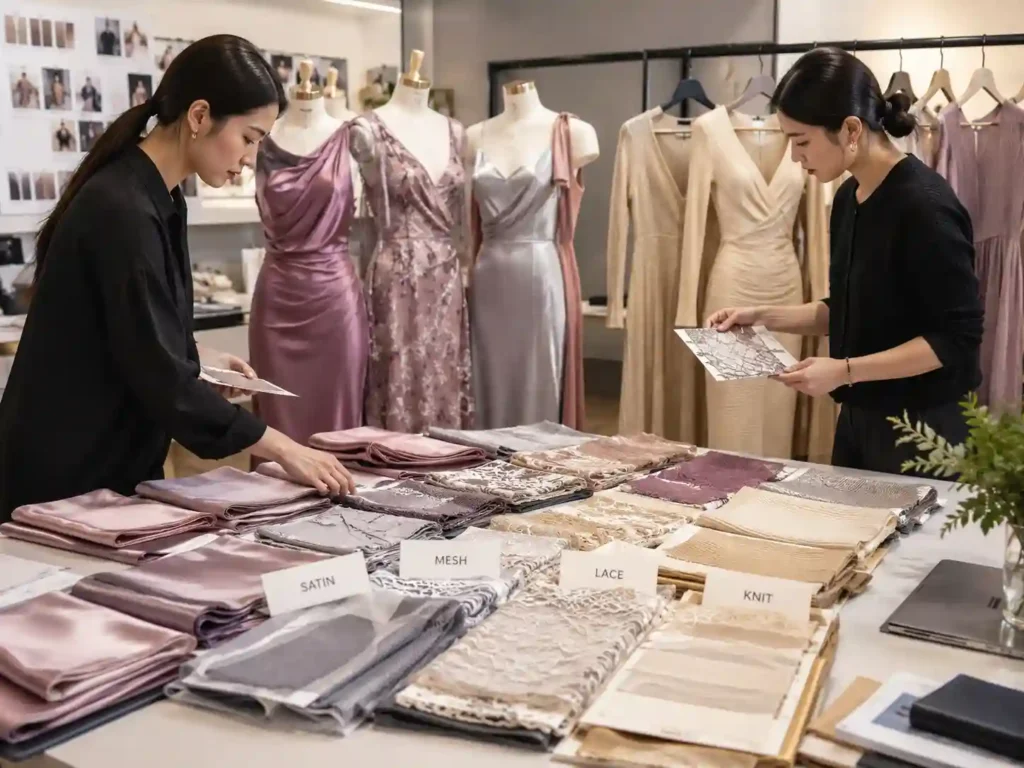
Elastic should be selected according to its position and function in the dress. A waistband needs controlled support, a neckline needs gentle recovery, a shoulder seam usually needs stabilization without gathering, and a ruched panel requires predictable tension distribution. Using one elastic specification throughout a garment often creates inconsistent fit, comfort, and appearance.
Waistbands
Waist elastic must support the dress while allowing breathing, sitting, dressing, and normal movement. Knitted elastic often suits soft gathered waists, woven elastic can stabilize heavier or more structured designs, and braided elastic can perform well in a simple casing. The decision should reflect garment weight, lining layers, desired compression, and whether the band is enclosed or visible.
Do not determine waist elastic length by applying a fixed percentage to every dress. Two bands with the same width and cut length can create very different pressure because their force-extension behavior differs. A practical trial begins with the target finished waist, then compares several loop lengths in the actual elastic grade. The wearer should stand, sit, walk, bend, and put the dress on repeatedly before approval.
Casing design also influences performance. A loose casing may allow twisting, while a narrow casing can restrict extension. For free-moving elastic, selected seam anchoring may reduce rotation without locking the entire band. If the elastic is stitched directly, quarter marks or additional control points should distribute tension consistently. Operator feel alone is not reliable enough for a waist that must remain consistent across sizes and production lines.
Necklines and Shoulders
A neckline elastic should return the edge toward the body without creating visible gathers. Clear elastic, narrow knitted elastic, fold-over elastic, or stretch binding may be suitable depending on whether the neckline is turned, lined, bound, or exposed. The required tension is normally light, and even a small length change can alter the neckline depth, bodice balance, and comfort.
Shoulder seams have a different purpose. In jersey, mesh, and other stretch dresses, the shoulder may lengthen under the garment’s weight. Clear elastic or narrow stabilization tape is often applied close to the original seam length to limit growth rather than create gathering. Pulling it too tightly can raise the armhole, shorten the bodice, and move the neckline backward.
A realistic mock-up should reproduce the full neckline curve or shoulder seam using the production fabric, needle, thread, seam allowance, and pressing method. For heavier knit dresses, hang the sample for several hours and remeasure the shoulder. This reveals gradual growth that may not appear during a short fitting and helps distinguish a true stabilization problem from an incorrect pattern or sewing tension.
Sleeves and Cuffs
Sleeve elastic must gather fabric while remaining comfortable on a body area that changes shape during movement. Soft narrow elastic often works well in lightweight puff sleeves and cuffs, while wider or firmer grades may be needed for off-shoulder bands or dramatic sleeve structures. The finished circumference should reflect the exact position on the upper arm, forearm, or wrist.
A band that feels acceptable with the arm relaxed can become restrictive when the wearer bends the elbow, reaches forward, or lifts the arms. Fit tests should reproduce those movements. Seam bulk also matters: an overlocked seam, elastic overlap, and several fabric layers can create a hard point inside a narrow casing even when the overall circumference is correct.
Off-shoulder designs require a careful compromise. Too much tension makes the dress ride upward and restricts the arms, while too little allows the edge to slip. The sample should be reviewed on more than one body when possible because shoulder slope and upper-body proportion change the result. A slightly wider, softer band can sometimes hold more comfortably than a narrow, highly tensioned elastic.
Ruched Areas
Ruching depends on a controlled relationship between fabric length and elastic length. The elastic determines how much fabric is condensed, where the folds sit, and whether the panel keeps its intended length during wear. Narrow knitted elastic, clear elastic, enclosed elastic tape, or elastic thread may be used according to whether the gathering is structural, decorative, or adjustable.
Development teams often compare several fabric-to-elastic ratios, such as 1.5:1, 2:1, and 2.5:1, to judge gather density. These values are trial points rather than fixed rules. Heavy gathering can shorten a skirt, pull side seams forward, or change hem balance. Bodycon and stretch-mesh styles also require the fabric’s own recovery to work with the elastic rather than fight it.
Production should not rely on operators stretching by feel. Divide both the elastic and fabric into matching quarters, eighths, or measured notches. These control points distribute tension and make the visual result repeatable. After sewing, rest the panel before measuring because freshly stretched elastic can temporarily distort the seam and hide permanent growth or uneven gathering.
Dress Area | Common Width | Development Starting Point | Primary Check |
Shoulder seam | 3-8 mm | Apply near original seam length | Prevent growth without gathering |
Stretch neckline | 4-10 mm | Trial around 90-98% of seam length | No gaping or visible puckering |
Sleeve opening | 6-20 mm | Base on body measurement and movement | Comfort without cutting into skin |
Enclosed waist | 20-50 mm | Trial around 80-95% of target opening | Support, comfort, and recovery |
Ruched panel | 3-12 mm | Compare several fabric-to-elastic ratios | Even gathers and stable panel length |
Off-shoulder edge | 8-25 mm | Adjust through complete fitting | Hold position without limiting arms |
These figures are useful development ranges rather than universal production standards. Elastic firmness, fabric stretch, garment weight, body measurement, seam construction, and intended fit can move the correct value outside the range. Every final specification should come from a sewn sample and fitting, not from a table copied across unrelated styles.
How Do Fabric and Fit Affect Elastic Choice?
Fabric weight, stretch direction, recovery, surface sensitivity, garment silhouette, and body pressure all influence elastic selection. The fabric and elastic function as one system. A technically strong elastic can still be unsuitable if it overwhelms a lightweight material, restricts a stretch textile, changes the drape, or creates more compression than the design requires.
Fabric Weight and Structure
Lightweight fabrics such as chiffon, georgette, fine satin, lace, and soft mesh usually need elastic that does not create unnecessary thickness or a hard ridge. These materials reveal pressure lines and puckering easily, especially in close-fitting dresses. The test should include all shell, lining, and seam layers because the finished construction can be much heavier than the outer fabric alone suggests.
Heavier fabrics and constructions require more support. Velvet, ponte, layered tulle, sequin fabric, and full maxi skirts can gradually pull a soft waistband downward. A firmer knitted or woven elastic may perform better, although the strongest option can still be uncomfortable. Garment weight should be evaluated while the dress is hanging and during movement, not only while it is laid flat on a cutting table.
Surface and sewing behavior also affect the choice. Satin can show needle marks and puckering, mesh can stretch under the presser foot, lace has uneven thickness, and sequin fabric may require the seam area to be cleared before elastic is applied. A useful sample reproduces the complete seam, including lining, thread, stitch density, seam allowance, and pressing, because those details alter both extension and appearance.
Stretch Direction
Fabric stretch should be measured in the same direction in which the garment will be worn. A fabric with strong crosswise stretch and limited lengthwise movement behaves differently from a four-way stretch textile. If the pattern is cut off-grain or with reduced stretch across the body, the elastic may be blamed for tightness even though the main problem is fabric orientation.
A practical calculation is: stretch percentage equals the extended length minus the original length, divided by the original length, multiplied by 100. If a 100 mm sample extends comfortably to 140 mm, its usable stretch is 40%. The word comfortably matters because the absolute maximum can damage the fabric and does not represent normal dressing or movement.
Measure bulk fabric again even when the base quality has already been approved. Different dye lots, prints, coatings, and finishing treatments can change extension and hand feel. The elastic should support the fabric rather than compensate for an incorrect pattern. When a dress depends on extreme elastic tension to create fit, the development team should review pattern reduction, seam placement, and fabric recovery before tightening the band further.

Recovery and Permanent Growth
Stretch describes how far a material can extend; recovery describes whether it returns. A jersey may stretch to 40% yet remain enlarged after wear. Elastic can pull the area back temporarily, but the dress may still bag at the waist, neckline, seat, or elbows. This problem appears frequently in lower-recovery jersey, loose rib knits, and some lightweight stretch meshes.
Permanent growth can be calculated by subtracting the original length from the recovered length, dividing the result by the original length, and multiplying by 100. If a 100 mm specimen measures 106 mm after stretching and resting, it has 6% permanent growth. Whether that result is acceptable depends on the garment, test method, and brand standard.
Elastic recovery should be reviewed after repeated cycles and after sewing. Five to ten controlled cycles can reveal early weakness during development, while more demanding programs may use higher cycle counts or care testing. The procedure must record extension level, cycle count, rest time, and temperature. Without consistent conditions, recovery figures from different suppliers cannot be compared meaningfully.
Width, Pressure, and Fit
Elastic width changes how pressure is distributed. A wider band can spread force across a larger body area and feel more comfortable than a narrow elastic with similar holding power. However, it also changes casing depth, waistline height, seam bulk, and visual proportion. A narrow band can disappear more easily under the fabric but may twist or concentrate pressure.
Firmness should be judged at the actual finished length. Pulling several elastics by hand does not show how they will feel inside a dress. Cut each candidate to the proposed loop length, install it in the real waistband or test band, and compare pressure during sitting, bending, walking, and extended wear. A secure first impression can become uncomfortable after twenty minutes.
Size grading also influences pressure. Larger sizes do not always need the exact same percentage reduction as smaller sizes because body shape, fabric stretch, and pressure distribution change across the range. The base size may be correct while the largest size feels restrictive or the smallest size lacks support. At least one smaller and one larger size should be reviewed when the range is broad.
Fabric Category | Typical Usable Stretch | Elastic Priority | Common Risk |
Chiffon / georgette | Usually minimal | Low bulk and soft gathering | Ridges and seam puckering |
Satin / crepe | Minimal to moderate | Smooth support and controlled tension | Pressure marks and distortion |
Jersey | Often 20-60% crosswise | Recovery compatible with fabric | Neckline or waist growth |
Rib knit | Often 40-100% or more | Strong recovery without excess pressure | Overextension and bagging |
Ponte / Roma | Often 20-40% | Firm, stable support | Bulk in thick seams |
Stretch mesh | Often 30-80% | Lightweight stabilization | Uneven feeding and edge growth |
Sequin fabric | Varies by base cloth | Support for garment weight | Seam bulk and broken embellishment |
These ranges are broad development references rather than guarantees. Fiber content, knitting or weaving structure, finishing, coating, and supplier variation can produce very different results. The actual shell and lining should be tested in the production direction, and the fabric report should travel with the elastic and sample records when the style moves into bulk production.
How Should Elastic Be Tested Before Production?
Elastic should be tested as raw material, as a sewn component, and inside the complete sample dress. A reliable evaluation checks extension, recovery, width stability, stitch response, heat and washing resistance, comfort, and appearance. Testing only an unstiched strip cannot predict how the elastic will behave after production, care, and repeated wear.
Raw Elastic Tests
Begin with elastic from the intended supplier, construction, width, color, and production lot. Prepare at least three specimens because one strip cannot represent an entire roll. Mark a controlled gauge length, often 100 mm for convenient calculations, without cutting or damaging the elastic structure. Condition the samples in a stable room before comparing results.
Extend each specimen to the planned working level rather than automatically pulling it to the maximum. If the proposed application operates near 25% extension, test at that point and at a higher safety point. Repeat the movement five to ten times, allow the elastic to rest for a defined period such as thirty minutes, and record both immediate and rested recovery.
Useful records include relaxed width, thickness, original gauge length, extension level, cycle count, recovered length, edge curling, narrowing, cracking, and surface damage. Color should also be checked when the elastic may show through a light fabric. ‘Feels strong’ is not a specification; a repeatable method allows teams to compare suppliers, lots, colors, and future reorder materials.
Sewn Mock-Ups
Sewing can change elastic performance because needles penetrate the structure, stitches lock parts of the band, and thread tension can restrict movement. A meaningful mock-up must use the actual shell and lining, seam allowance, thread, needle, stitch type, casing size, elastic joint, and pressing method. A substitute fabric may hide the production problem.
For direct application, mark equal control points on the elastic and fabric. Sew with the intended production settings, then measure the assembly before sewing, immediately after sewing, and after resting. Compare its usable extension with the raw elastic. Braided elastic may lose performance after repeated penetration, while clear elastic may drag or curl when machine feeding is not controlled.
Inspect restricted stretch, skipped stitches, broken elastic filaments, seam tunneling, puckering, edge curling, uneven gathers, and joint bulk. The joint must be included because a flat test strip can look clean while the finished loop creates a lump. If the sewn assembly performs differently from the raw strip, the construction must be adjusted before approving the elastic specification.
Care and Heat Tests
Elastic is exposed to washing, drying, steam, pressing, storage, and repeated wear. Clear polyurethane elastic can be sensitive to high heat, while textile-covered elastic may shrink differently from the dress fabric. A waistband can pucker even when the elastic remains strong because the shell, lining, thread, and band change dimension at different rates.
The care test should follow the proposed garment care label. A hand-wash dress should be tested under hand-wash conditions, while a machine-wash style should complete the planned washing and drying cycle. Record measurements before care and after each cycle, along with hardening, discoloration, cracking, delamination, twisting, or reduced recovery.
Pressing trials are equally important. The production team may need low-temperature instructions, a press cloth, limited steam, or a rule that direct pressure must be avoided over the elastic. One successful wash provides useful information, but repeated cycles are more revealing for dresses expected to receive regular care. Testing should reproduce real use rather than the easiest available factory method.
Sample Dress Fitting
The complete sample is the final test because pattern, fabric, lining, elastic, seam, zipper, and body movement interact. Fit the dress on the intended base size and, where practical, review another body within the size specification. The wearer should stand, sit, walk, bend, raise the arms, and put the dress on and off several times.
Inspect waist rolling, neckline gaping, sleeve pressure, shoulder growth, ruched-panel balance, side-seam movement, hem changes, visible ridges, and recovery after wear. After the fitting, lay the dress flat for a defined period and remeasure the critical areas. Front, side, back, and close-up photographs help separate elastic problems from pattern or sewing issues.
Comments should lead to measurable actions. A tight waist may require a longer loop, softer grade, wider band, or pattern correction. Uneven ruching may require more control marks or a different ratio. Approval means the elastic produces the intended appearance, movement, comfort, care performance, and repeatable sewing method, not merely that the sample resembles the original sketch.
Test Stage | Practical Method | What to Record | Decision Use |
Raw elastic | Test at least 3 specimens from intended lot | Width, thickness, extension, recovery | Compare grades and lots |
Cycle test | Stretch 5-10 times to working extension | Permanent set, curling, damage | Screen early recovery risk |
Sewn mock-up | Use actual fabric, needle, thread, seam | Puckering, restricted stretch, joint bulk | Confirm construction method |
Care test | Wash, dry, steam, or press as labeled | Shrinkage, hardening, color, recovery | Set care and pressing limits |
Wear test | Move in complete dress and rest afterward | Pressure, rolling, gaping, measurements | Approve fit and comfort |
How Do You Control Elastic in Bulk Production?
Bulk consistency depends on complete specifications, approved physical references, controlled sourcing, graded cut lengths, incoming inspection, clear sewing instructions, inline checks, and finished-garment measurement. Once the elastic is approved, its supplier, construction, width, color, length, attachment method, and tolerance should not change without documented technical review.
Tech Pack Details
A note such as ‘add elastic at waist’ is not enough for production. The tech pack should identify the band as a controlled component, including construction, material composition, supplier reference, color, relaxed width, thickness, cut length by size, joining allowance, required extension, placement, casing dimensions, stitch type, tension marks, tolerance, and care restrictions.
When one dress uses several elastics, each location needs its own component code. Shoulder stabilization, neckline elastic, sleeve elastic, and waist elastic should not share a generic reference unless they are genuinely identical. The technical drawing should show which side of the fabric receives the elastic, whether it is stretched during sewing, and how far it sits from seam lines.
A retained physical swatch should be attached to the approved material card because written descriptions cannot fully communicate surface texture, firmness, or hand feel. The bill of materials, technical drawing, operation sheet, and measurement chart must agree. Conflicting documents encourage operators and sourcing teams to make informal decisions that later appear as inconsistent pressure or gathering in finished garments.
Sample Approval
Elastic approval should progress through development rather than being confirmed only at the first sample. The team reviews the dress area and required function, sources suitable candidates, tests raw performance, sews mock-ups, fits the first sample, adjusts length or construction, and confirms the pre-production sample using the exact materials intended for bulk.
The approved sample must identify the supplier and grade. A visually similar replacement can produce different pressure even when width and color match. If the production fabric changes, the elastic should be reviewed again because a style developed in lightweight jersey may behave differently in heavier ponte or a printed quality with reduced stretch.
Retain the approved elastic swatch, sample comments, measurement records, photographs, and reference garment. This creates a stable basis for bulk inspection and repeat orders. A dated approval trail also clarifies whether a later change was authorized. Without that record, production teams may unknowingly compare a bulk garment with an early sample that used a different band or sewing method.
Size Grading
Elastic length must be graded intentionally. Increasing the band by the same amount as the garment circumference can produce inconsistent pressure across sizes. Begin with the approved base size, then compare body measurements, finished garment measurements, fabric stretch, intended ease, garment weight, and desired compression before creating the size-by-size cut-length table.
Larger sizes may require more than a simple proportional increase, while smaller sizes may need careful control to avoid excessive tightness. At least one smaller and one larger size should be checked before bulk cutting when the range is broad. The fitting should confirm that the waist, neckline, or cuff maintains the intended appearance, movement, and support rather than merely matching a numerical grade rule.
The production chart should show the garment opening, elastic cut length, joint allowance, finished loop, and tolerance for every size. Common working tolerances may be around +/-5 mm for many narrow or medium applications, but the approved project specification must govern. A broad or highly tensioned waistband may require a different tolerance because a small length change can noticeably alter body pressure.
Quality Control
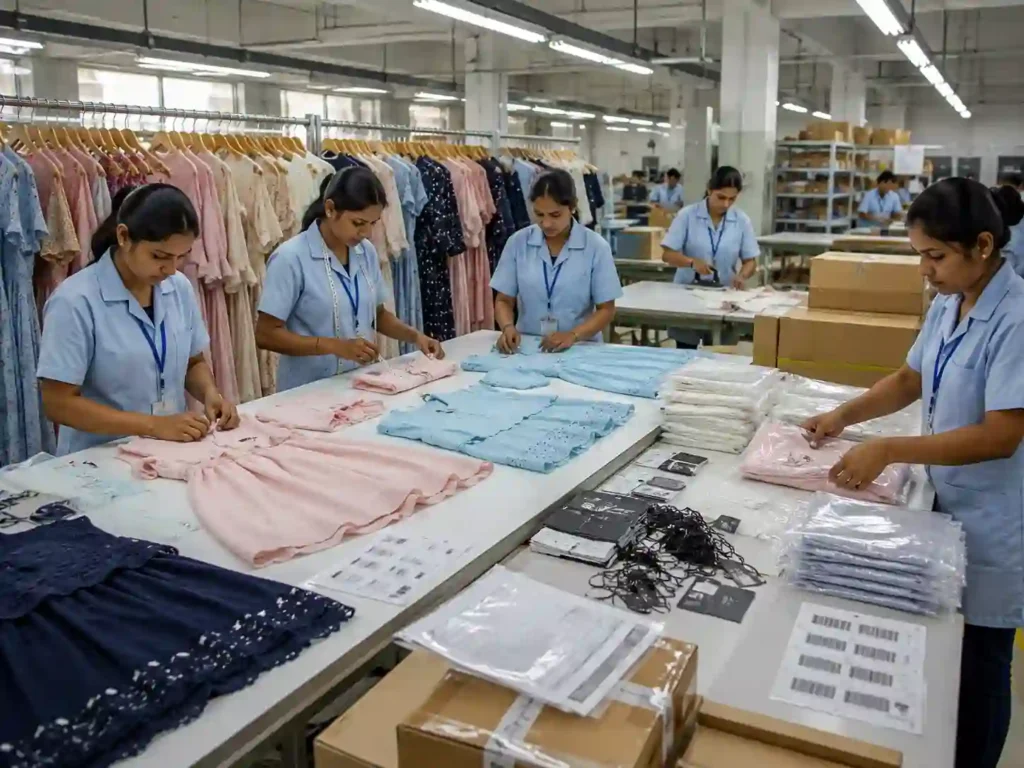
Incoming inspection should compare bulk elastic with the approved reference for construction, width, thickness, color, surface, extension, and recovery. Similar-looking bands from different suppliers or lots can create different pressure within the same order. Materials should remain separated until the inspection confirms that they meet the approved specification and test method.
Before sewing, cut lengths should be checked against the size chart and bundled clearly. Inline inspection should verify the component reference, joining security, placement, orientation, casing width, control-point matching, stitch quality, twisting, and gather balance. Operators should never compensate for an incorrect cut length by stretching harder or easing more fabric during sewing.
Finished inspection should cover garment measurements, symmetry, gentle extension and recovery, rolling, visible ridges, seam security, pressure points, and comparison with the approved sample. For repeat orders, retain supplier references, trim cards, cut-length charts, approved samples, and inspection records. These materials reduce development time and preserve the original fit when the style returns in new colors or later seasons.
Develop a More Reliable Dress with Jinfeng Apparel
The right elastic is rarely selected from a catalog page alone. It must be evaluated with the actual fabric, pattern, lining, construction, size range, target fit, care method, and production plan. When those decisions are measured and documented during sampling, the finished dress becomes more comfortable for the wearer and more consistent across hundreds or thousands of garments.
Jinfeng Apparel has focused on custom women’s fashion manufacturing since 2008 and supports dress development through fabric and trim sourcing, pattern making, sample construction, fitting revisions, pre-production confirmation, bulk production, quality control, private-label packaging, and export coordination. Its production network includes six owned women’s fashion factories and more than ten long-term satellite production partners, allowing different dress structures and materials to be matched with suitable development and production resources.
For an elastic-dependent style, send the tech pack, reference images, original sample, size chart, fabric direction, intended elastic position, and planned order quantity. The development team can review the dress structure, identify the most practical elastic construction, build a test sample, and document the approved solution for bulk production. This approach is especially useful for bodycon, ruched, jersey, mesh, satin, party, occasion, mini, midi, and maxi dresses where small tension differences can noticeably change fit and appearance.
Share This Article :

Jerry Lee
Categories

Latest blogs

Table of Contents
Here, developing your OEM/ODM private label clothing collection is no longer a challenge—it’s an excellent opportunity to bring your creative vision to life.

