
How to Protect Private Label Packaging Artwork: A Fashion Brand Guide

Your trusted Women’s Apparel Manufacturer from China
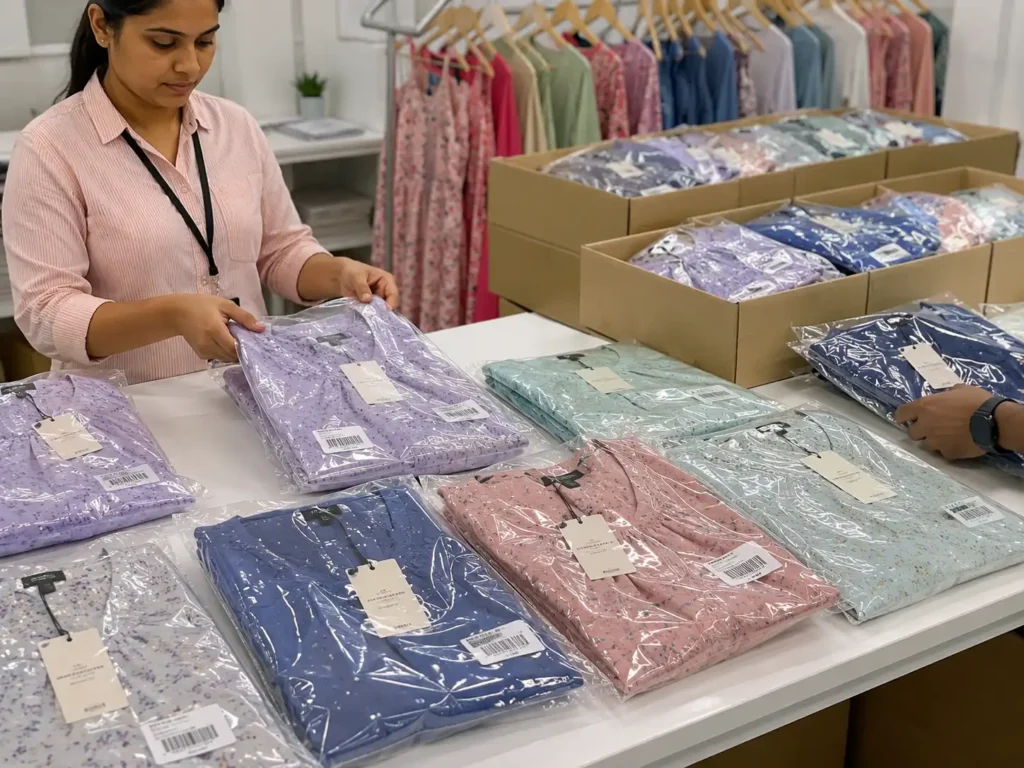
A fashion brand can spend months refining a logo, hangtag, care label, polybag, color system, and unboxing experience, then lose control of those assets in a single email. The problem is not always deliberate copying. More often, artwork is forwarded to an unapproved printer, an editable file remains on a former supplier’s computer, or an outdated barcode version quietly returns during a repeat order. By the time anyone notices, thousands of garments may already be labeled, packed, or moving toward a warehouse.
To protect private label packaging artwork, establish written ownership, match each asset with the appropriate intellectual-property protection, limit file access, use confidentiality and manufacturing agreements, control every revision, approve physical proofs before bulk production, and preserve dated records. Legal rights matter, but disciplined document control prevents many of the most expensive packaging failures.
Consider a seasonal dress collection with eight styles, four colors, and six sizes. That already creates 192 style-color-size combinations before regional care labels, language changes, marketplace stickers, or warehouse routing labels are added. One shifted row in a barcode sheet can affect an entire launch rather than one garment. The following system treats artwork as part of product development, manufacturing, quality control, and brand protection from the first design handoff to the final sealed carton.
What Counts as Packaging Artwork?
Packaging artwork includes every visual, written, and technical file used to identify, present, label, pack, or ship a private-label product. It covers more than logos and retail boxes. Brand labels, care labels, hangtags, barcode stickers, polybags, inserts, carton marks, dielines, and print-ready files all require controlled ownership, access, approval, and revision management.
Map the Asset System
In womenswear production, packaging begins inside the garment. A woven neck label, printed care label, or size tab may be physically small, but each component carries information that affects brand recognition, legal labeling, warehouse handling, or customer experience. The artwork system then extends outward to hangtags, barcode labels, tissue paper, protective bags, product inserts, shipping cartons, and retailer-specific routing labels. Treating only the front-facing logo as valuable leaves most of the production system unmanaged.
Brands often lose control because these components are developed by different departments. Design approves the hangtag, product development handles the care label, operations creates the barcode, and the supplier prepares the carton mark. When no one maintains a complete register, inconsistent logos, old addresses, and incorrect SKU data can enter the same order without any single person seeing the full picture. A practical register assigns an owner, revision, market, language, approved supplier, and production status to every asset.
The multiplication effect is easy to underestimate. Eight styles, four colors, and six sizes create 192 sellable combinations. A universal hangtag may cover all of them, but size labels, barcodes, and color identifiers still need precise mapping. When the same collection is sold in two regions, care-label or language requirements can create additional versions. The purpose of an asset register is not paperwork for its own sake; it is to make the relationship between product, packaging, and destination visible before purchase orders are released.
Packaging asset | Typical information | Main production risk | Recommended control |
Brand label | Logo, dimensions, colors, fold type | Distorted identity or wrong color | Approve artwork and physical sample |
Care label | Fiber content, care, origin, size | Incorrect market information | Separate compliance and visual approval |
Hangtag | Branding, QR code, product copy | Outdated copy or unapproved finish | Lock the print file and approve a sample |
Barcode sticker | SKU, color, size, GTIN/barcode | Scan failure or SKU mismatch | Verify data and scan the printed symbol |
Polybag | Logo, warning text, size, material | Wrong fit or market statement | Approve artwork, dimensions, and substrate |
Carton mark | PO, style, quantity, destination | Warehouse delay or routing error | Match to packing list and shipping order |
Separate Source and Production Files
Editable source files and approved production files serve different purposes. Source files may contain unused concepts, hidden layers, linked photographs, licensed fonts, brand guidelines, and comments that a printer does not need. A production file should contain only the information required to manufacture the approved component. Sending the full creative archive to every supplier increases both confidentiality risk and the chance that someone selects an unapproved layer or outdated logo.
A useful hierarchy has four levels: a low-resolution preview for early discussion, a review PDF for comments, a supplier proof for technical confirmation, and a locked production file for bulk manufacturing. Editable AI, PSD, or INDD files should be shared only when the recipient genuinely needs to generate production output or make an authorized adjustment. For many tasks, outlined vector artwork or a flattened print-ready PDF is enough.
Production specifications must follow the nominated printer rather than a generic rule copied from another project. Many paper-printing workflows request approximately 3 mm of bleed, but the required amount, safe area, color profile, trapping, finishing marks, and dieline conventions can vary. Before release, remove unused layers and unrelated assets, confirm final dimensions, identify spot colors or finishing instructions, and place the revision code where it will remain visible throughout proofing. The safest production file is complete enough to manufacture accurately and limited enough to avoid unnecessary disclosure.
Control Labels and Barcodes
Labels and barcodes are easy to treat as routine components, yet they are among the most frequently reproduced assets and among the most expensive to correct after mass production. A brand label needs approval of logo proportions, dimensions, material, thread or ink color, fold type, edge finish, and sewing position. A care label needs separate verification of the product information, because a visually perfect layout can still be unusable when fiber content, care wording, or market details are wrong.
Barcode artwork must be handled as data and print quality at the same time. GS1 guidance emphasizes correct symbol construction, quiet zones, contrast, color selection, sizing, positioning, and high-resolution printing. A barcode should be tested with an actual scanner after it is printed on the intended material, not merely viewed on a screen. A correct number can still fail at retail if the bars are distorted, the quiet zone is crowded by graphics, or the substrate reduces contrast.
Hangtags, QR codes, size stickers, and carton marks require the same discipline. A QR code should open the correct live destination, not a staging page that disappears after launch. A carton mark may include purchase-order data, style, quantity, weight, destination, and handling instructions. These elements may not feel like creative artwork, but one incorrect field can cause receiving delays, relabeling costs, or inventory mismatches. Every file should state clearly which product, market, and approved revision it belongs to.

Classify Confidential Information
Not every packaging element remains secret after launch. Customers will see the logo, hangtag, and polybag, but the production information behind those elements may retain commercial value. Before launch, sensitive information can include unreleased graphics, product names, collection dates, campaign language, and regional packaging plans. During production, editable files, dielines, barcode allocations, SKU tables, quantities, supplier names, and warehouse routing instructions may deserve tighter control.
A practical classification system separates pre-launch confidential material, restricted production files, commercial order data, and public artwork. The label should reflect real risk rather than becoming a decorative stamp placed on every document. WIPO explains that trade-secret protection generally depends on confidential information having commercial value because it is secret and on the owner taking reasonable steps to preserve that secrecy, such as agreements, access limits, markings, monitoring, and staff awareness.
The commercial value of secrecy also changes over time. An unreleased seasonal insert may be highly sensitive for three months, while a signature dieline, custom closure, or supplier specification may remain restricted for years. Retention and deletion rules should be based on the asset and future production need. A controlled read-only archive may be justified for repeat orders, while editable working files, rejected concepts, and temporary download folders should not remain indefinitely across multiple suppliers and employee devices.
Which Rights Protect Packaging Artwork?
Packaging artwork can be protected through overlapping rights, including copyright, trademarks, trade dress, design rights, contracts, and confidential-information controls. No single method covers every element. The appropriate approach depends on the artwork’s originality, function, ownership, publication status, sales territories, and the way customers recognize the packaging in the market.
Clarify Copyright Ownership
Copyright can protect original illustrations, photographs, written copy, decorative graphics, and sufficiently creative visual arrangements. It generally protects the specific expression of an idea rather than a broad style. A company cannot normally own the idea of minimalist beige packaging, but it may own an original illustration and the particular composition used on its hangtag or insert. The U.S. Copyright Office describes copyright as protection for original works fixed in a tangible medium, while ownership questions depend on authorship and applicable agreements.[1]
The first issue is not enforcement; it is ownership. Artwork may be created by an employee, freelance designer, agency, packaging studio, printer, or apparel manufacturer. Paying an invoice does not automatically resolve every right in every country. In the United States, commissioned work qualifies as work made for hire only under specific statutory conditions, and a written transfer may still be needed. The Copyright Office’s Circular 30 explains these distinctions and is a useful reminder that a purchase order alone may not be enough.
A commissioning agreement should identify the deliverables, ownership of drafts and final files, treatment of rejected concepts, access to editable sources, rights to adapt or translate the work, portfolio-display limits, and confidentiality before launch. It should also list third-party fonts, photographs, and stock assets. A brand may own the layout while still depending on separate licenses for an image or typeface. Those licenses should cover the intended territories, channels, product categories, duration, and production volume.
Packaging element | Possible protection | What it may cover | Main limitation |
Original illustration | Copyright | Specific creative expression | Does not protect a general style or idea |
Brand name or logo | Trademark | Source-identifying sign | Territorial and use requirements apply |
Recognizable presentation | Trade dress / trademark | Overall packaging appearance | Distinctiveness and consistency are important |
Ornamental package form | Design right / design patent | Visual form of the article | Novelty, filing, and territory rules vary |
Unreleased artwork | Confidentiality / trade secret | Controlled pre-launch information | Requires reasonable secrecy measures |
Supplier-created adaptation | Contract / assignment | Rights in modified production files | Ownership must be addressed in writing |
Use Trademarks and Trade Dress
Trademarks protect signs that identify commercial source, most commonly a brand name, logo, or slogan. Protection is territorial, so a registration or established right in one market does not automatically create the same position everywhere else. Before investing in packaging production, brands should conduct appropriate clearance work in their important sales markets and keep records showing how the chosen mark is actually used on garments, labels, hangtags, and packaging.
Trade dress addresses the recognizable overall presentation of a product or its packaging. Depending on the jurisdiction and facts, a combination of shape, color arrangement, graphics, and presentation may function as a source identifier. The USPTO describes trade dress as a type of trademark involving the three-dimensional configuration of a product or its packaging, including design, shape, or color, and provides specific application guidance for product packaging marks.
Distinctiveness and consistency matter. A common kraft box with a small black logo is unlikely to give one brand broad ownership of kraft packaging. A presentation used consistently over time may create a stronger association, particularly when the brand can produce dated photographs, product listings, invoices, launch campaigns, and physical samples. Clearance matters in the opposite direction as well. A designer may create an attractive package independently, yet the overall impression can still be too close to an established competitor’s identity.

Protect Structure and Know-How
Design rights or design patents may be relevant when a package has a distinctive ornamental form, such as a custom presentation box, closure, insert, or reusable container. They are less likely to be the main tool for an ordinary polybag carrying printed graphics. Novelty, filing deadlines, territorial scope, commercial lifespan, and enforcement cost should be considered before deciding whether formal design protection is proportionate to the asset.
Confidential know-how protects a different kind of value. A dieline, assembly sequence, folding method, supplier combination, finishing specification, or cost-engineered structure may not fit neatly within copyright or trademark protection, yet it can still provide commercial advantage. Its protection becomes more credible when the brand limits access, marks files appropriately, uses contracts, records recipients, and avoids placing technical files in public download folders.
Secrecy cannot be claimed after information has been distributed without control. If every freelancer, printer, sourcing agent, and supplier receives the entire editable archive through public links, it becomes harder to show that reasonable protective measures were taken. The solution is not to hide information from people who genuinely need it. The solution is to share only the production information required for each task, under terms that explain permitted use, further disclosure, storage, and post-project handling.
Build a Layered Rights File
The strongest strategy is layered because each tool solves a different problem. Copyright may support action against copied illustrations. Trademark rights may protect a logo or source-identifying presentation. Confidentiality terms can restrict pre-launch disclosure. A manufacturing agreement can prohibit reuse for another customer. File permissions can prevent unauthorized access, while version control can stop an obsolete but legally owned design from entering production.
For each important packaging system, maintain a compact rights file containing the commissioning agreement, source files, third-party licenses, registrations, first-use evidence, approved production files, supplier authorizations, and a record of significant revisions. This file is valuable during expansion into a new market, onboarding of a new manufacturer, an online takedown request, due diligence, or a dispute about who created a component.
Legal language should match operational reality. A clause that forbids all disclosure is impractical when a garment manufacturer must send approved label artwork to a specialist weaving mill. Better drafting permits limited disclosure to authorized production partners while imposing equivalent confidentiality and use restrictions. Laws and remedies differ across countries, so the rights file supports informed advice rather than replacing it. The objective is a clear chain from creation and ownership to authorized production and evidence of use.
How Should Artwork Be Shared?
Packaging artwork should be shared through a controlled, need-to-know process. Each recipient should receive only the approved files required for a defined task. Written terms should cover ownership, confidentiality, permitted use, subcontractors, storage, and deletion, while transfer records should identify exactly who received each file and revision.
Apply Need-to-Know Access
The safest sharing process starts with purpose. A garment manufacturer may need the complete packing guide because it coordinates labels, hangtags, folding, polybags, and cartons. A woven-label supplier needs the logo, dimensions, colors, fold type, and material specification. A carton printer needs the approved mark, dimensions, and purchase-order fields. None of these recipients automatically needs rejected concepts, campaign photography, or the complete brand library.
Brands can prepare separate production packs for labels, hangtags, polybags, barcode data, and carton marks. This reduces unnecessary exposure and makes each handoff easier to review. When a supplier asks for an editable file, the project owner should ask what manufacturing action requires editability. Sometimes the request is technically justified; in other cases, an outlined vector file, locked spreadsheet, or print-ready PDF can complete the task with less risk.
Role-based access also applies inside the brand and factory. A packing supervisor may need the approved packing specification and a visual reference. A sewing operator may need only the label placement instruction. A merchandiser may need the SKU table but not the editable logo library. Good access control is not a signal of distrust. It is a way to reduce accidental edits, incorrect attachments, and uncontrolled copies while keeping production teams focused on the information they actually use.
Recipient | Information normally required | Information usually unnecessary | Suitable format |
Garment manufacturer | Packing guide, label placement, SKU table, approved proofs | Rejected concepts and full brand archive | Controlled PDF and locked spreadsheet |
Woven-label supplier | Vector logo, size, colors, fold, material | Campaign files and carton artwork | Outlined vector and reference PDF |
Hangtag printer | Print artwork, stock, finish, hole position | Garment patterns and order cost | Print-ready PDF and specification |
Polybag supplier | Print area, dimensions, warning text, material | Hangtag sources and collection imagery | Production PDF and size schedule |
Barcode printer | Barcode data, SKU, size, color, label size | Editable brand library | Locked data file and approved proof |
Inspection team | Approved visual standard and checklist | Editable source files | Read-only PDF and sample reference |
Write Contracts for Production
Confidentiality clauses should explain what the supplier may do with the artwork, not merely state that the information is secret. A limited-use clause can authorize the recipient to quote, sample, and manufacture for a specified project while prohibiting reuse for another customer, a showroom sample, a supplier catalogue, social media, or staff training materials. Ownership clauses should confirm the status of brand-supplied files and any technical adaptations created during production.
Subcontracting deserves explicit treatment because packaging components are often made by specialist facilities. The agreement can state whether subcontracting is allowed, whether prior approval is required, which information may be shared, and whether equivalent confidentiality and limited-use obligations must flow down to the printer, label mill, or carton producer. Incident reporting should require prompt notice when a file is misdirected, a public link is exposed, or unauthorized production is suspected.
Deletion language should remain workable. A brand may reasonably require editable masters and temporary working files to be removed after the project, while allowing the manufacturer to retain a controlled read-only record for repeat orders, quality evidence, or legal retention. An unrealistic demand to erase every trace immediately can undermine traceability. The contract should distinguish between an approved archive, unauthorized working copies, obsolete proofs, and physical tools such as printing plates, screens, or dies.
Transfer Files Securely
Secure transfer is less about expensive software than about consistent behavior. Use a controlled project folder or document platform rather than distributing production files across long email threads, public download links, and personal messaging accounts. Access should be restricted to named recipients where practical, and temporary links should expire. Password protection can add value for sensitive packages, especially when the password is sent through a separate channel.
Every formal release should have a transmittal record stating the filename, revision, purpose, recipient, and date. The supplier should acknowledge receipt and confirm which revision will be used. Avoid attaching several active-looking versions in the same message. When comparison is necessary, place old files in a clearly marked historical folder and state that they are not approved for production. The active production folder should contain one current file for each component.
Spreadsheets require the same discipline as graphic files. Barcode tables, quantities, destinations, color codes, and size mappings can reveal commercial information and can create serious errors when rows shift or formulas are overwritten. Use locked formulas, controlled editing rights, drop-down validation, and a unique key linking each row to the style-color-size combination. A barcode sheet should be checked against the product database and then tested against printed output, not treated as a casual attachment.

Govern Supplier Handoffs
Artwork rarely travels directly from the brand to one machine. It may pass through the brand team, garment manufacturer, material supplier, printing department, packing team, and inspection company. The primary manufacturing partner should coordinate those handoffs, confirm the approved supplier, record the revision, arrange proofs, and stop bulk component production until written authorization is received.
Technical questions should return through the controlled project channel. Informal changes agreed between a printer and a factory employee can alter font size, color, layout, material, or dimensions without the brand realizing that the approved design has changed. The primary manufacturer should consolidate questions and issue one documented answer so that the brand, component supplier, and packing team are working from the same instruction.
Quantity control also reduces misuse. The supplier should know the authorized quantity and the expected allowance for setup and normal waste. After production, ordered quantities, usable balance, rejected components, and excess branded materials should be reconciled. Depending on the brand’s instructions, excess materials may be held for confirmed repeat orders, returned, de-branded, or destroyed. Mature cooperation does not eliminate controls; it makes the controls easier to follow because every party understands that accurate handling protects the launch and the long-term relationship.
How Should Artwork Versions Be Approved?
Packaging artwork should be approved through one controlled master register, consistent file names, assigned decision-makers, and documented proof stages. Only one production-approved revision should remain active for each asset. Digital artwork, technical specifications, barcode data, and physical samples should be reviewed together before bulk component production or garment packing begins.
Maintain One Master Register
File names should reveal production status without requiring someone to open the document or remember a conversation. Names such as final-new-v3, latest, or use-this-one create risk because they describe personal intention rather than controlled approval. A practical name can include the brand or project code, asset type, style or collection, market, language, revision, status, and date, such as BRAND_HANGTAG_CORE_US_EN_R04_PRODUCTION-APPROVED_20260717.pdf.
Use a small number of defined statuses, for example DRAFT, FOR REVIEW, SAMPLE APPROVED, PRODUCTION APPROVED, and OBSOLETE. The master register should list the current file, owner, approval date, relevant product range, market, language, nominated supplier, and physical-sample status. Only one file for each asset should hold active production approval. When a revision is released, the previous file should be removed from the live folder and marked obsolete in the archive.
Shared and variable assets need different treatment. A woven brand label may be used across an entire collection, while care labels, barcode stickers, and carton marks vary by composition, size, region, or destination. The register should show those relationships so that a universal asset is not mistakenly assumed to cover product-specific data. A useful control rule is simple: one asset, one current production revision, one accountable owner, and one visible approval trail.
Approval gate | Main review points | Suggested owner | Required evidence |
Creative review | Logo, typography, layout, color direction | Brand / design team | Marked PDF approval |
Product-data review | Style, color, size, SKU, product name | Merchandising team | Approved product-data sheet |
Compliance review | Fiber, care, origin, market wording | Product / compliance team | Verified content record |
Technical review | Size, bleed, material, construction, finish | Product development / supplier | Technical proof |
Functional review | Barcode, QR, readability, attachment | Operations / quality team | Test result and sample record |
Production release | All required approvals complete | Authorized project owner | Written bulk authorization |
Assign Approval Authority
Packaging approval is a team process, but production release cannot be ownerless. Creative staff can approve logo, layout, and visual balance. Merchandising can verify style, color, size, and SKU information. Product or compliance teams can review fiber content, care wording, and market information. Operations can test barcode and warehouse data. Product development and the supplier can confirm dimensions, materials, construction, and finishing.
Each specialist should approve the area within their competence, while one authorized project owner confirms that all required checks are complete and releases the component for production. This prevents a partial approval from being misunderstood as permission to print. A designer saying that the color looks good does not approve a barcode. A merchandiser confirming the SKU does not approve a foil finish or label fold.
Suppliers should also know who is authorized to request changes. A message from an unfamiliar colleague or a forwarded screenshot should not automatically replace a production-approved file. Changes should enter through the documented project channel and result in a new revision. For high-risk information, including barcodes, fiber composition, and destination labels, a second-person check is sensible because the cost of catching an error on screen is negligible compared with relabeling finished goods.
Approve Physical Proofs
Digital proofs are necessary, but they cannot show every production result. A monitor cannot accurately reproduce woven thread, paper stiffness, metallic foil, embossing depth, ink absorption, polybag transparency, or the way a small logo reads after a label is folded. Proof stages should be selected according to the component’s risk, novelty, finish, and effect on the customer or retail operation.
A simple one-color carton mark may need a technical PDF and a first-production check. A premium hangtag with foil, embossing, edge color, a custom string, and a QR code should normally be reviewed as a physical sample. The review must test function as well as appearance. Scan the barcode, open the QR code, pull the tag attachment, fold the care label, check legibility, and confirm that inks or coatings do not transfer to the garment.
The packed-garment sample is particularly valuable because it shows whether all components work together. A structured corset dress, sequined evening dress, long satin gown, and lightweight jersey mini dress may need different folding, tissue, supports, and polybag dimensions. Photograph the approved sample beside a reference card showing the project, component revision, and approval date. Keep a controlled sample where texture, finish, or color cannot be judged reliably from photographs alone.
Reconfirm Every Repeat Order
Repeat orders create a false sense of safety. Teams assume that last season’s packaging can be reordered without review, yet brand addresses, website domains, fiber composition, care wording, recycling statements, barcodes, warehouse instructions, or regional requirements may have changed. Before every repeat order, confirm whether each artwork asset remains valid for the actual product, market, and destination.
The supplier should quote the stored revisions back to the brand before component production begins. A repeat-order confirmation might state that hangtag R04, care label R06, barcode table R03, and polybag artwork R02 will be used. The brand can then approve the unchanged assets and replace only what has changed. This is faster and safer than searching old emails or asking the printer to use the same file as last time.
Old printing plates, screens, dies, digital folders, and unused components should be reviewed as well. A printer may receive the newest PDF while an older plate remains available on the production floor. Historical records improve speed and consistency only when they are separated from active instructions. A repeat-order archive should contain an approved reference package and a clear index, not a crowded folder of drafts, rejected proofs, and unlabeled attachments.

How Can Brands Prevent Artwork Misuse?
Brands prevent packaging artwork misuse by combining ownership records with daily operating controls: restricted access, authorized suppliers, one active production revision, physical proofing, quantity reconciliation, packing inspection, and preserved evidence. The strongest system prevents unauthorized use before printing, detects errors during production, and provides a clear response when files, components, or data are mishandled.
Inspect Components and Packing
Artwork protection continues after approval because an authorized supplier can still print the wrong revision, use the wrong material, or attach the correct component to the wrong garment. Incoming packaging inspection should compare bulk labels, tags, stickers, bags, and cartons with the approved reference. Inspect dimensions, material, color, print clarity, finishing, construction, and quantity before components are released to the packing floor.
Packing inspection must connect the physical garment to its data. Style, color, and size should match the brand label, care label, hangtag, barcode sticker, and carton assortment. Barcodes should be scanned after printing on the actual stock. QR codes should open the intended live page. A visually perfect sticker is still a failure when it identifies the wrong color or when the product database maps it to another size.
A practical control plan includes first-piece approval when packing starts, periodic checks during the run, and final carton verification. Newly developed or high-risk packaging may justify more frequent checks than an unchanged repeat-order component. Carton control should verify purchase order, style, color-size ratio, quantity, destination, and warehouse label. Tolerances for color, dimensions, and placement should be agreed before inspection; otherwise, the brand and supplier may interpret close enough very differently.
Control Files on the Factory Floor
The manufacturer should appoint one accountable project owner for packaging data. That person does not need to design the artwork, but must know which revision is approved, where it is stored, which facilities received it, and whether the physical components match it. The packing floor should work from controlled visual standards and specifications, not from screenshots saved on personal phones or printouts without revision numbers.
A reliable workflow uses clear gates: receive files from an authorized contact, record assets, review technical completeness, release only required information to approved component suppliers, obtain proofs, receive production approval, inspect bulk components, check packed garments, and archive the approved record. Obsolete files should be removed from active workstations and shared folders. Staff should understand that an old file is not a backup option when the current file is temporarily unavailable.
Jinfeng Apparel’s verified operating facts include NDA-based cooperation, protection of client tech packs and private-label details, label and packaging support, barcode and SKU coordination, packing inspection, and retention of approved packing requirements for repeat orders. The company has operated since 2008, with six owned women’s fashion factories and more than ten long-term satellite production partners coordinated through a unified production and quality system.[8] These facts matter because artwork protection depends on responsibility continuing across development, component sourcing, packing, and delivery.
Preserve Evidence and Respond
Evidence should be created during normal work rather than reconstructed after a problem. Keep original source files, dated drafts, designer agreements, third-party licenses, trademark or design records, approvals, supplier proofs, physical samples, purchase orders, production photographs, barcode tables, transfer logs, and records of excess materials. For each production-approved asset, preserve a read-only copy with the approval record and identify any retained physical sample.
When suspected misuse appears, preserve evidence before starting a broad confrontation. Save screenshots, web addresses, dates, product photographs, physical samples, invoices, and communications. Do not overwrite the original source files or rely only on social-media posts that may disappear. Identify every legitimate recipient and determine whether the incident is an accidental version error, unauthorized subcontracting, careless public disclosure, excess-material misuse, or deliberate copying.
The first response should protect options. Pause affected printing, packing, or shipment when commercially possible; ask the relevant supplier for an incident report; secure remaining files and materials; and obtain advice appropriate to the relevant jurisdictions before making legal accusations. WIPO notes that trade-secret enforcement and remedies vary significantly across countries.[5] A 2,000-piece run of outdated care labels requires containment, rework, and process correction, while deliberate imitation in another market may require platform action or formal enforcement.
Choose a Protective Manufacturer
A private-label manufacturer should treat packaging as part of the product, not as a last-minute accessory. During supplier evaluation, ask who receives artwork, how component suppliers are approved, where active files are stored, how obsolete revisions are removed, who authorizes printing, how barcodes are checked, and what happens to excess branded materials. Clear answers are more useful than a general promise that all information is confidential.
For a custom womenswear project, the packaging discussion should begin during development rather than after the garments are finished. Share the intended brand labels, care-label requirements, hangtag concept, barcode structure, SKU logic, polybag dimensions, folding method, carton marks, and destination requirements early enough for the manufacturer to identify conflicts. Packaging cost and lead time can change when the project needs custom woven labels, special paper finishes, multiple language versions, retailer tickets, or custom-printed bags.
Jinfeng Apparel supports OEM, ODM, and private-label womenswear manufacturing for brands with structured sampling and bulk-production plans. Its documented MOQ starts from 200 pieces per style and color, subject to fabric, trims, construction, packaging, and scheduling. Brands can send a tech pack, sample, reference image, label artwork, packaging guide, barcode file, and quantity plan for review. A useful quotation should connect garment construction and packaging requirements in one scope, because protecting artwork is easier when design, production, quality, and delivery are managed as one project.[8]
Protecting private label packaging artwork is not a single legal filing or a watermark placed on a PDF. It is a connected discipline that begins with clear ownership, continues through limited sharing and controlled approval, and ends with inspection, evidence retention, and responsible handling of excess materials. The process may feel detailed, but each control is cheaper than reprinting labels, repacking garments, delaying a warehouse appointment, or arguing about who was authorized to use a file.
For a custom collection, send Jinfeng Apparel your tech pack or reference sample together with the intended label, hangtag, barcode, polybag, and carton requirements. The team can review how the packaging system connects with fabric, garment construction, size range, order quantity, target market, and shipping plan, then prepare a project quotation for sampling and bulk production. Early review gives both the brand and manufacturer time to resolve artwork, data, material, and packing questions before they become production problems.
Share This Article :

Jerry Lee
Categories

Latest blogs



Table of Contents
Here, developing your OEM/ODM private label clothing collection is no longer a challenge—it’s an excellent opportunity to bring your creative vision to life.

