
Chiffon Fabric Guide for Dress Manufacturing: What Should Fashion Brands Know?

Your trusted Women’s Apparel Manufacturer from China
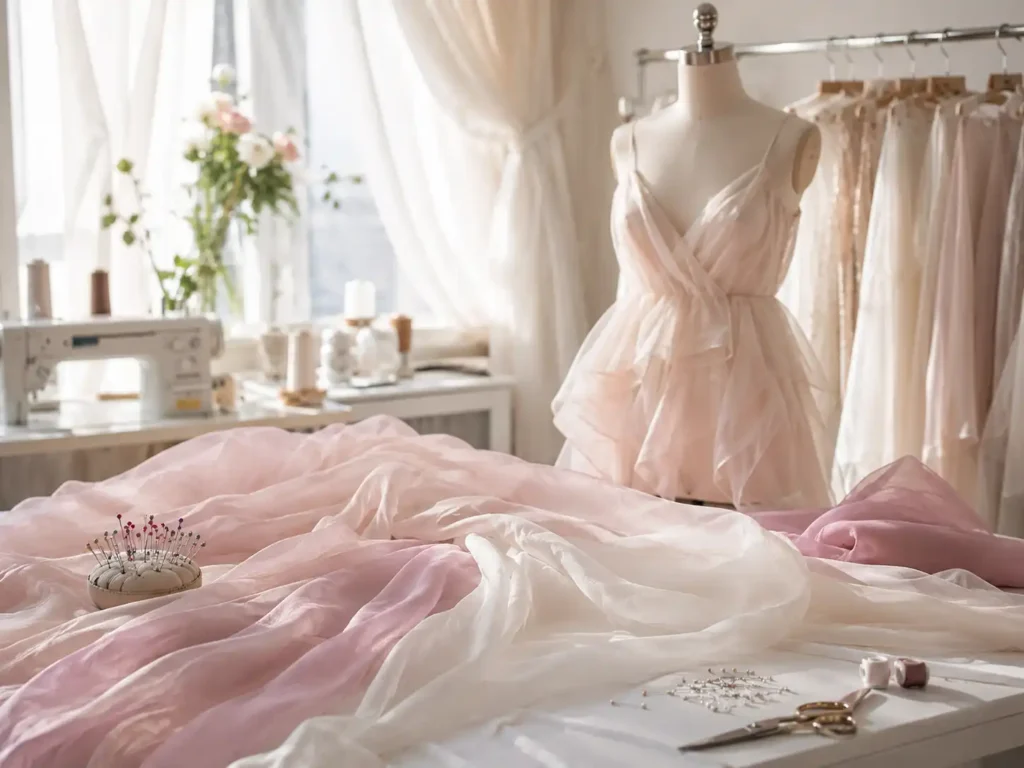
Chiffon sells movement before it sells fabric. A dress can look light, soft, and effortless in a campaign image, yet the material may be sliding across the cutting table, growing along the bias, exposing the lining under flash photography, or forming an uneven hem after hanging overnight. None of those problems makes chiffon unsuitable for a commercial collection. They simply show that chiffon must be selected and engineered as part of the garment, not treated as a decorative layer added after the pattern is finished.
Chiffon is a lightweight, often sheer woven fabric used for flowing, layered, and softly draped dresses. Reliable manufacturing depends on matching fiber, weight, opacity, finish, and lining to the silhouette, then controlling fabric relaxation, cutting movement, seam slippage, puckering, shade variation, pleating, and hem balance before bulk production begins.
A typical failure rarely starts at final inspection. One pale maxi dress may look correct on a mannequin, but the lining edge becomes visible outdoors. Another sample may pass a flat measurement check, then drop several centimeters at the side because the skirt combines straight-grain and bias panels. The most expensive surprise is not a difficult fabric; it is a difficult fabric whose behavior was never tested. The following guide connects material choice, dress design, manufacturing, and quality control so every approval answers a commercial question: can the result be repeated across colors, sizes, delivery batches, and future orders?
What Is Chiffon Fabric?
Chiffon is a lightweight plain-weave fabric made with highly twisted yarns that produce a fine grainy texture, fluid drape, and varying transparency. It can be woven from polyester, silk, nylon, viscose, rayon, or recycled fibers. For dress manufacturing, finished weight, density, width, surface finish, grain stability, and sewing behavior matter as much as fiber content.
How Chiffon Is Constructed
Most chiffon uses a plain weave, but the yarns are twisted far more tightly than those in many ordinary lightweight fabrics. The alternating twist creates the slightly pebbled, dry surface that people recognize when they rub chiffon between their fingers. Small changes in yarn size, twist level, weave density, and finishing can make one quality crisp enough for a ruffle and another soft enough to collapse into a bias skirt, even when both are labeled 100% polyester chiffon.
Weave balance matters because a dress exposes problems that a small swatch can hide. When warp and weft tension are not balanced, long panels may bow, skew, or twist after relaxation. The effect becomes obvious in center-front seams, long hemlines, narrow scarves, asymmetric layers, and prints with a straight visual direction. A full-width hanging review is more revealing than a hand sample because gravity has enough fabric length to show whether the grain remains stable.
Tighter constructions normally provide better coverage and seam stability, while more open constructions feel lighter and may move more freely. The trade-off is greater transparency, fraying, and seam slippage. A design team should not ask only whether the hand feel is attractive. It should also ask how much stress the weave can carry at the hip, armhole, waist seam, zipper, and gathered join without the yarns opening beside the stitch line.
Properties That Affect a Dress
Chiffon is valued for low visual weight. It can soften a structured bodice, make sleeves float away from the arm, add volume without heaviness, and create movement across maxi or midi lengths. The same properties create production risk. The cloth can shift during spreading, stretch around curves, fray after cutting, pucker under excessive thread tension, and display needle marks that would disappear in a denser fabric.
Transparency deserves an early decision because it affects almost every later choice. Sheerness determines whether the design needs full lining, partial lining, double layers, cups, modesty panels, cleaner seam finishes, or carefully selected underwear coverage. It also changes the apparent color. A shell may look warmer, cooler, darker, or brighter depending on the lining placed beneath it, especially when the dress is photographed under strong studio lighting.
Surface behavior should be tested with the complete garment system. Chiffon can react differently after joining to satin lining, stretch lining, invisible zipper tape, elastic, binding, lace, beads, or heat-set pleats. A swatch that hangs beautifully may become unstable once gathered into a waist seam. A soft neckline may grow after being attached to a heavier facing. Material approval becomes more reliable when the shell, lining, trims, thread, needle, and pressing method are tested together.
Is Chiffon Always Sheer?
Chiffon is usually translucent, but not every quality gives the same amount of coverage. Fiber, yarn density, weight, color, finish, and number of layers all influence opacity. Pale colors expose more of the body and internal construction than dark colors at the same weight. White, ivory, blush, lemon, and light blue often require stricter lining and seam decisions because cups, pocket bags, zipper tape, and seam allowances can show through.
Opacity should be reviewed in conditions that resemble real selling and wearing environments. A dress may appear acceptable on a white cutting table but reveal the lining edge in daylight, under camera flash, or against a darker skin tone. The most useful approval combines the actual shell color, chosen lining, finished seams, and intended number of layers. Looking at the shell alone gives only part of the answer.
Different garment areas can use transparency in different ways. Sleeves, yokes, shoulder panels, capes, and neckline inserts may stay intentionally sheer, while the bust, waist, and upper skirt need coverage. A shorter lining can preserve movement through the lower skirt, but its ending point must look deliberate. A lining hem that stops across the widest area of the thigh can create a visible horizontal shadow, even when the physical length meets the specification.
How Fiber Choice Changes Performance
Polyester chiffon is common in scalable dress collections because it supports repeatable dyeing, strong print options, broad availability, and relatively simple care. Quality still varies widely. A lower-grade article may feel harsh, generate static, shine under photography, or snag during sewing and packing. A slightly higher material cost can be justified when improved density and finishing reduce rework and produce a cleaner retail appearance.
Silk chiffon offers a refined surface and natural movement, but it usually requires closer control over shade, handling, pressing, storage, and care labeling. Viscose or rayon chiffon can provide a soft hand and attractive drape, although dimensional stability deserves careful testing. Nylon chiffon is light and strong but may have a different surface character and heat response. Recycled polyester can support a preferred material program when documentation and future supply continuity are confirmed for the selected article.
Fiber Type | Typical Strengths | Main Production Risks | Common Dress Use |
Polyester chiffon | Scalable supply, stable printing, broad color range, easier care | Static, snagging, heat sensitivity, quality variation between articles | Resort, occasion, floral, tiered, bridesmaid, and repeat programs |
Silk chiffon | Natural softness, refined movement, premium surface | Higher cost, shade variation, needle marks, delicate pressing and care | Luxury eveningwear, premium occasion dresses, elevated overlays |
Viscose or rayon chiffon | Soft hand, fluid drape, less synthetic touch | Shrinkage, distortion, wet stability, colorfastness variability | Soft day dresses, fashion-led midi styles, selected resort pieces |
Nylon chiffon | Lightweight strength and useful durability | Heat response, shine, surface character may not suit every collection | Sleeves, overlays, selected technical or performance-led styles |
Recycled polyester chiffon | Commercial advantages similar to polyester with documented recycled content | Certification scope, supplier continuity, lot-to-lot matching | Private-label collections with verified material requirements |
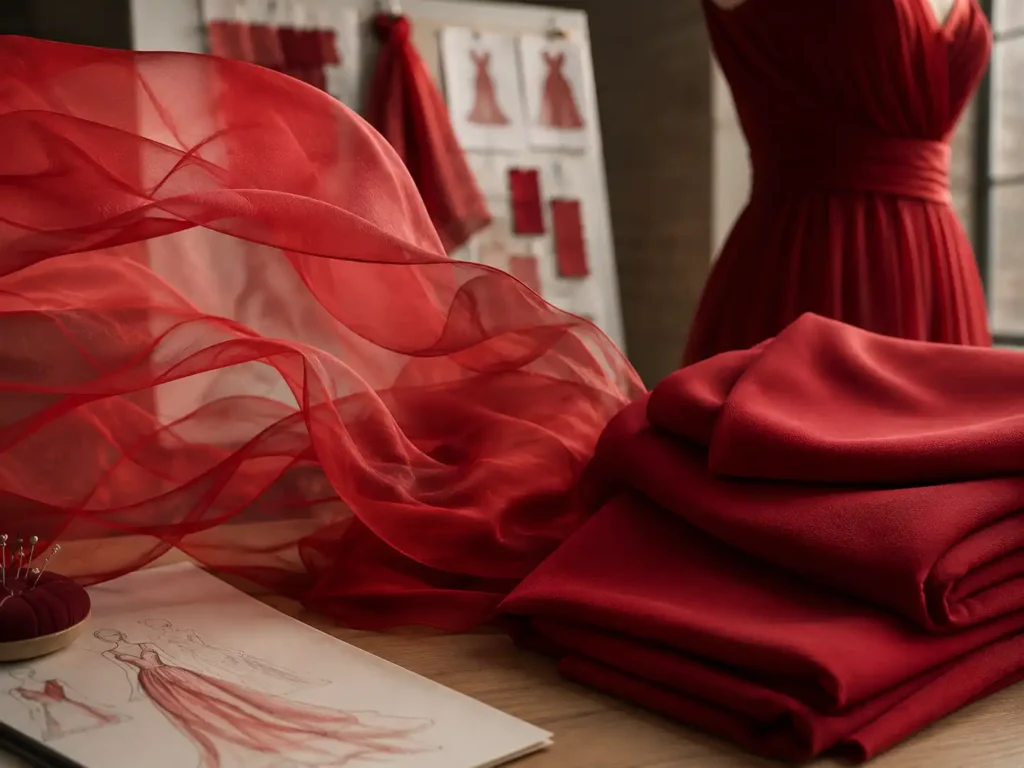
Which Chiffon Is Best for Dresses?
The best chiffon creates the intended silhouette while remaining controllable through cutting, sewing, pressing, wear, and repeat production. Polyester often suits scalable printed and solid-color collections, while silk and specialty qualities fit premium programs. Selection should combine fiber, GSM, opacity, drape, texture, finish, lining, care method, print or pleat process, availability, and target cost.
Start with the Silhouette
Fabric choice should begin with the garment shape rather than the supplier description. A bias skirt needs fluidity and stable recovery after hanging. A gathered tier needs enough body to create volume without building a heavy waist seam. A flutter sleeve needs a light edge that moves cleanly. A pleated panel needs a fiber and finish capable of retaining the set. The fabric is suitable only when its behavior supports the pattern and the intended wearing experience.
Retail position also changes the answer. A premium evening dress may justify silk when the hand and movement help support the selling price. A multi-color resort collection with planned replenishment normally benefits from a consistent polyester quality. A soft viscose option may suit an elevated day dress, but the development calendar must allow dimensional testing and a care method that protects the final length and shape.
Design teams sometimes select the softest swatch because it feels luxurious in the hand. Excessive softness can become a weakness when ruffles collapse, necklines grow, hems cling to the legs, or the shell fails to cover the lining cleanly. A slightly firmer chiffon may look less dramatic as a loose swatch yet produce a more balanced dress, cleaner gathers, and better recovery after packing and wear.
Choose Weight and Hand Together
GSM is a useful reference because it describes grams per square meter, but it does not predict the entire result. Yarn size, weave density, finishing, fiber type, and color can make two fabrics at the same weight feel different. A dense 35 GSM quality may provide better coverage and seam stability than an open 42 GSM fabric. Weight should therefore be recorded alongside drape, opacity, width, texture, and sewing performance.
Very light chiffon is usually more appropriate for sleeves, capes, overlays, scarves, and decorative layers than for a single-layer main skirt. Standard dress weights are widely used for maxi dresses, gathered skirts, bridesmaid styles, and printed resort pieces. Heavier or textured qualities provide more body for pleats, structured ruffles, and dresses where the shell should not collapse completely against the lining.
The approved GSM should refer to the finished fabric and selected color. Dyeing, printing, washing, coating, and crinkle finishing can alter weight and hand. Dark colors can feel slightly denser than pale colors, while a printed base may respond differently from a solid-dyed version. Production teams should compare bulk fabric with the approved swatch rather than assuming the supplier article code alone guarantees an identical result.
Approx. Weight | Typical Character | Suitable Applications | Points to Verify |
20-30 GSM | Very light, airy, highly transparent | Sleeves, capes, overlays, decorative layers, double-layer effects | Seam slippage, handling, opacity, edge control, snagging |
30-45 GSM | Light and fluid; common dress-chiffon range | Maxi dresses, resort styles, bridesmaid skirts, gathers, ruffles | Lining balance, puckering, static, hem leveling, bulk shade |
45-60 GSM | Fuller hand with more body and coverage | Pleated dresses, layered skirts, defined flounces, occasionwear | Gather bulk, pleat response, drape after pressing, seam thickness |
60-75 GSM | Dense or strongly textured chiffon-like quality | Crinkle day dresses, structured overlays, selected midi styles | Loss of float, stiffness, heat response, finished garment weight |
Match the Finish to the Design
Matte chiffon creates a quiet surface that works well in resortwear, bridesmaid dresses, softly tailored occasion styles, and printed day dresses. Pearl or lightly lustrous finishes look more formal but can reveal pressure marks, creases, and uneven pressing. Crinkle chiffon adds texture and can reduce the visual impact of everyday wrinkling, yet the crinkle recovery should be checked after washing, steaming, and several hours of hanging.
Stretch chiffon can help with sleeves, draped necklines, and designs requiring limited flexibility, but stretch percentage alone is not enough. Recovery must be measured after extension, and the stretch direction must be recorded. A fabric that stretches across the body but recovers poorly can leave a wavy neckline or enlarged armhole. A stable lining may still be needed to keep the main measurements and zipper area under control.
Pleated and printed chiffon introduce separate approval steps. Polyester normally holds permanent heat-set pleats more reliably than silk or viscose, but pleat width, depth, direction, and finished panel size should be checked after setting. Printed chiffon requires review of repeat accuracy, color penetration, motif direction, and the appearance of the reverse side. Because the fabric is transparent, a pale reverse can remain visible while the dress moves.
Plan for Repeat Supply
A beautiful fabric can still be a poor commercial choice when the supply is seasonal, the dyeing minimum is unrealistic, or future colors cannot be repeated. Before approving a core chiffon, confirm whether it is a continuing article, a custom development, a limited stock quality, or a print base shared across seasons. Record the supplier code, usable width, approved color, finish, test results, and the exact swatch used for the approved sample.
Repeat production needs fresh confirmation even when the original records are complete. Dye lots change, finishing conditions move, and suppliers may adjust yarn sources or processing. Retained swatches and garment standards make comparison easier, but they do not remove the need to approve new bulk material. The strongest continuity comes from clear records, an ongoing supplier relationship, and enough lead time to correct a mismatch before cutting begins.
Cost should be considered as a full garment calculation. A cheaper chiffon may require more lining, slower sewing, extra inspection, or greater cutting loss. A premium article may reduce seam defects and improve drape but exceed the intended retail structure. The right option balances material cost, fabric consumption, construction time, expected rework, care performance, and the visual standard the brand needs to protect.
Which Dresses Work with Chiffon?
Chiffon works best in dresses that benefit from fluid movement, soft volume, transparency, and layered construction. Maxi, midi, resort, bridesmaid, occasion, wrap, tiered, ruffled, pleated, and flowing A-line styles are natural applications. Fitted or structured dresses can also use chiffon as an overlay, sleeve, drape, or skirt layer when a stable inner construction carries the stress.

Flowing Maxi and Midi Styles
Longer skirts display chiffon at its best because the fabric has enough length to move, fold, and recover while walking. Maxi and midi dresses can use straight panels, gathered panels, godets, circular sections, bias cuts, or layered overlays to create different kinds of movement. The extra length also magnifies grain imbalance and hem growth, so a stable cutting plan and sufficient hanging time are more important than they would be on a short skirt.
A-line and softly flared silhouettes are forgiving because they do not place heavy tension on the weave. Wrap shapes also work well, although the overlap must remain secure during sitting and movement. Lightweight chiffon can open more easily than crepe or georgette, so internal ties, concealed snaps, or a deeper front overlap may be needed. The lining must follow the shell without pulling it upward or restricting the swing of the skirt.
Resort and vacation dresses often combine chiffon with floral prints, gathered waists, flutter sleeves, and tiered skirts. Print direction needs attention before marker making. Directional flowers, stripes, borders, and large motifs prevent free rotation of pattern pieces and can raise consumption. The print should also be checked through gathers because dense fullness can darken the color and change the way a motif reads around the waist or tier join.
Occasion and Bridesmaid Dresses
Chiffon is a natural choice for bridesmaid, cocktail, wedding-guest, graduation, and evening collections because it creates softness without the heavy visual weight of satin or velvet. Draped bodices, flutter sleeves, pleated skirts, cape details, and layered hems can look formal while remaining comfortable. The inner bodice usually provides structure through lining, cups, interfacing, boning, stay tape, or controlled seam placement.
Color consistency becomes more demanding when several dresses are worn together. Small shade differences that seem acceptable on separate garments become obvious in a group photograph. Shell, lining, zipper, thread, and trims should be reviewed as one color system. Transparent layers can shift the visible shade, so approving the shell against a white card is less useful than approving the completed fabric-and-lining combination under several light sources.
Pale occasion colors require special attention to coverage. Ivory, blush, champagne, powder blue, and pale yellow may show cups, seam allowances, or lining transitions under flash. A cleaner internal finish can be more important than adding another shell layer, because excess layers may change drape and color. Fit samples should be photographed from the front, side, and back under strong light before the lining and construction are locked for production.
Tiered, Ruffled, and Pleated Dresses
Tiered dresses make efficient use of chiffon’s lightness because several gathered sections can create volume without making the garment feel heavy. The gather ratio should be tested rather than copied from another fabric. A ratio near 1.5:1 may give gentle fullness, while 2:1 or more creates a stronger effect, but dense gathers can produce a bulky waist or tier seam even when the shell itself is thin.
Ruffles and circular flounces need accurate cutting direction and consistent finished width. Narrow ruffles can twist when the edge stretches during handling, and circular sections may grow before hemming. A straight-grain gathered ruffle behaves differently from a circular flounce cut across several grain directions. The development sample should confirm movement, edge finish, seam thickness, and whether the detail stays balanced after pressing and hanging.
Pleated skirts require a finished-dimension mindset. The raw panel width is not the garment width after pleating, and the pleating process can change both length and waist measurement. Pattern, marker, and specification should therefore refer to approved dimensions after the pleats are set. The sample should be steamed and allowed to settle before measurement, particularly when the style combines pleated shell fabric with a separate lining or fixed waistband.
|
Dress Style |
Best Chiffon Role |
Recommended Support |
Main Risk to Control |
|
Maxi or midi dress |
Main shell, gathered panels, overlay, sleeves |
Full or partial lining; stable waist construction |
Bias growth, uneven hem, side-seam twisting |
|
Resort or printed dress |
Printed shell, wrap front, tiers, ruffles |
Light lining or slip; controlled print direction |
Transparency, motif placement, opening during movement |
|
Bridesmaid or occasion dress |
Draped shell, pleated skirt, cape or flutter sleeve |
Structured lining, cups, stay tape, zipper support |
Shade consistency, lining visibility, group-photo color |
|
Tiered or ruffled dress |
Gathered tiers, flounces, decorative volume |
Stable joins and controlled gather ratios |
Bulky seams, twisting ruffles, inconsistent layer length |
|
Fitted dress |
Overlay, sleeve, draped panel, soft skirt layer |
Stable base fabric or lining carries body tension |
Seam slippage, restricted movement, neckline growth |
Can Chiffon Be Fitted?
Non-stretch chiffon should not be asked to carry heavy tension at the bust, waist, hip, underarm, or zipper. A fitted dress can still feature chiffon, but the main stress should be transferred to a stable lining, base fabric, shaped inner bodice, or controlled seam structure. The chiffon then provides visible softness and movement without being forced to behave like a compact stretch woven or knit.
Stretch chiffon can support closer-fitting sleeves and selected draped areas, although stretch direction and recovery must be measured. A fabric may extend easily across the width but fail to return completely, leaving ripples at a neckline or armhole. Seam type, stitch density, ease, and lining all influence performance. Increasing seam allowance alone cannot solve seam slippage when the weave is too open for the stress created by the pattern.
Fitted bodices often use the shell as an outer layer over cups, interfacing, boning, elastic, or stay tape. Every hidden component can affect the visible chiffon. A cup edge may show through a pale shell, boning may create a vertical shadow, and a rigid zipper can distort a soft center back. Fit approval should evaluate the outside appearance and the internal tension together rather than treating them as separate checks.
How Are Chiffon Dresses Manufactured?
Chiffon dresses are manufactured through low-tension fabric relaxation, controlled spreading, accurate cutting, tested seams, fine stitch formation, stable lining assembly, careful pressing, and final hem leveling after the garment has settled. Bulk production should follow an approved fabric, pattern, construction file, pre-production sample, and sealed standard covering thread, needle, zipper, lining, print direction, pleats, and packaging.
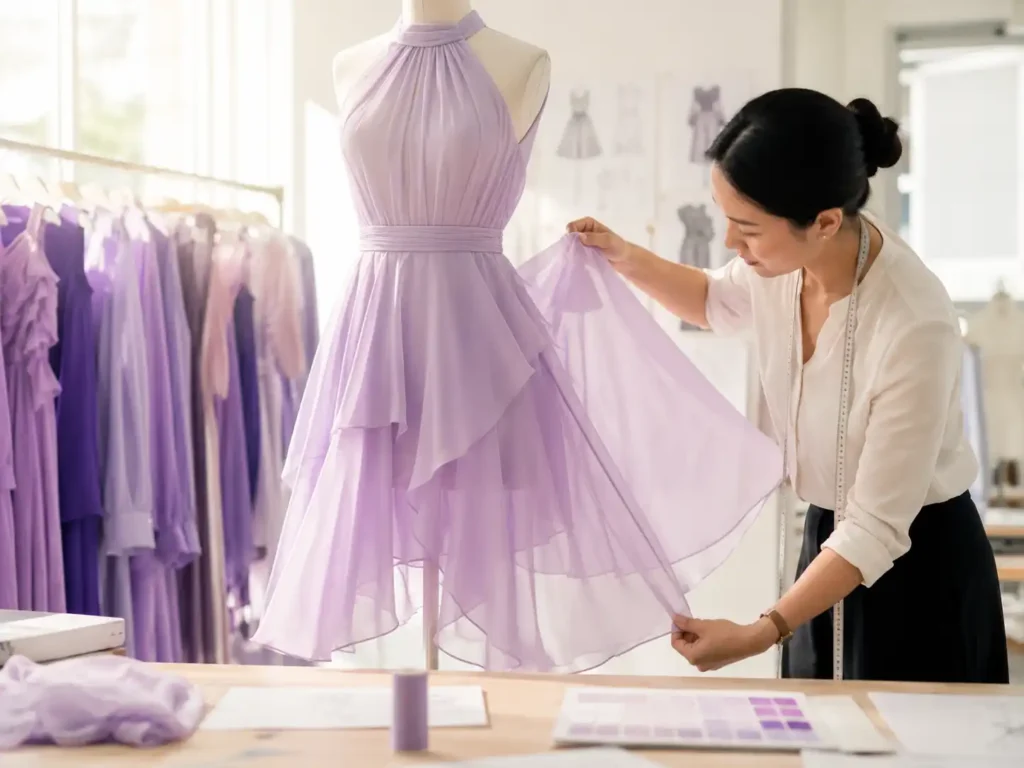
Fabric Preparation and Cutting
Chiffon should be allowed to relax before cutting, especially after tight rolling, long-distance transport, or storage under changing humidity. Relaxation reveals bowing, skew, tension, and width variation that may not be visible while the roll is compressed. Pulling the fabric tight during spreading can make the lay appear flat, but the cut panels may contract later, creating mismatched seam lengths and an uneven finished garment.
Spreading requires low tension and controlled ply height. Very high lays improve cutting speed but increase the chance that lower layers will shift. Suitable lay height depends on fabric stability, cutting method, print, panel size, and quality requirement. Slippery chiffon with large directional motifs or long skirt panels often needs fewer plies than a stable opaque woven fabric, even when the order quantity is large.
Pattern pieces must be secured without damaging the surface. Fine pins should stay inside seam allowances, notches should remain shallow, and blades must be sharp enough to avoid dragging the fabric. Paper underlays, controlled vacuum tables, or other stabilization methods may be used depending on the factory process. Bundles should be clearly identified so panels from different rolls, color groups, or print directions are not mixed during sewing.
Seams, Needles, and Hems
Seam construction should be chosen according to transparency, stress, fabric weight, and garment positioning. French seams give a clean enclosed finish on many sheer dresses, but they add sewing time and can become bulky at heavily gathered joins. Narrow overlocked seams are lighter and faster, although thread color and seam allowance may remain visible through the garment. Bound or carefully enclosed finishes can be useful in premium areas where the inside is likely to be seen.
Fine sharp needles are generally preferred because a blunt or oversized point can pull yarns and leave visible holes. Stitch length and thread tension need testing on the actual bulk fabric. Very short stitches may perforate a delicate weave, while long stitches may not provide enough security. Excessive presser-foot pressure or operator pulling can stretch the seam and create puckering that remains visible after pressing.
Narrow rolled hems and baby hems preserve the light character of chiffon, but the width must remain consistent around curves and layers. Circular flounces naturally stretch along parts of the edge, so they may require relaxation before hemming. Long dresses should hang before final leveling, particularly when the skirt contains bias panels. A small difference on the cutting table can become several centimeters after gravity acts on a full-length garment.
Prints, Pleats, and Layer Control
Printed chiffon needs a one-way cutting decision whenever the motif has a clear top, border, stripe, or directional flow. Front and back panels should be reviewed as a complete garment, not merely as individual pieces. Large repeats may require additional fabric to center a motif or match key seams. Gathered areas also darken the print visually, so color and scale should be assessed on a sewn sample rather than a flat strike-off alone.
Pleating changes the material before the garment is assembled. Finished pleat width, depth, direction, panel length, and waist measurement should be approved after heat setting. If raw cut measurements are used without accounting for pleat take-up and process change, the final skirt may be too narrow, too long, or irregular at the waist. Pleated panels should be protected from crushing during later sewing, pressing, inspection, and packing.
Layered dresses need controlled relationships between the shell, lining, and visible tiers. If the lining is too short through the bodice, it can pull the chiffon upward. If it is too long, it may drop below the shell or fold inside the skirt. Layer spacing should be measured while the dress is hanging, because equal flat measurements do not always create an equal visual result after gathers, bias growth, and body shape influence the fabric.
Fit, Samples, and Bulk Standards
A first sample proves the development direction, not the final bulk standard. It should reveal whether the chosen chiffon works with the pattern, lining, closure, and details. Fit comments need to distinguish pattern issues from fabric behavior. A neckline may be too open because the pattern is wrong, because the edge stretched during sewing, or because the selected fabric lacks recovery. Each cause requires a different correction.
Revised samples should record pattern, measurement, material, construction, appearance, color, trim, and packing changes by version. Once fit and appearance are stable, the pre-production sample confirms the intended bulk fabric, trims, workmanship, labels, and packaging. A sealed garment standard, approved pattern version, size chart, bill of materials, sewing instructions, and inspection checklist give production teams a common reference rather than relying on memory or photographs.
Size grading must respect the fabric and silhouette. A gathered maxi skirt can often grade differently from a fitted bodice. Armhole depth, neckline coverage, waist position, lining ease, and skirt length should be reviewed across key sizes rather than assumed from a single base size. Chiffon makes small proportion problems visible because the fabric moves continuously and exposes the relationship between shell, lining, body, and gravity.
Production Stage | Control Point | Common Working Reference | Approval Evidence |
Relaxation and spreading | Low tension, grain alignment, bow and skew review | Several hours up to about 24 hours, depending on roll condition and fabric response | Relaxation record, roll grouping, approved spreading method |
Cutting | Ply movement, sharp tools, shallow notches, print direction | Lay height set by actual stability rather than one fixed number | First-cut review, panel measurement, bundle identification |
Sewing | Needle point, stitch length, tension, seam type, feeding | Stitch length often tested around 2.0-3.0 mm; final setting depends on fabric | Seam trial, construction sample, approved operator method |
Hemming | Rolled or baby hem width, edge stretch, layer balance | Narrow hems commonly around 2-5 mm after trial | Approved hem sample, hanging-level check |
Final leveling | Bias growth, lining relationship, visible layer spacing | Long or bias styles often hang 12-24 hours before final leveling | Hanging measurement, final garment standard |
How Is Chiffon Quality Controlled?
Chiffon quality is controlled by defining measurable fabric and garment standards before production, testing the selected material, inspecting rolls, approving construction, and checking cutting, sewing, measurements, shade, lining, hems, pressing, and packing throughout bulk production. Final inspection alone cannot correct wrong grain direction, unstable seams, mixed dye lots, poor pleating, or uneven layers created earlier in the process.
Incoming Fabric and Test Planning
A useful fabric specification goes beyond the phrase polyester chiffon. It should record fiber content, finished weight, usable width, supplier article, color reference, surface finish, transparency expectation, stretch direction, print repeat, pleat process, lining, care method, and relevant performance checks. Descriptive words such as soft, flowy, or premium help communicate the look, but they cannot replace an approved physical swatch and measurable limits.
Incoming rolls should be checked before cutting for color, width, weight, surface defects, bowing, skew, stains, yarn pulls, print registration, and visible variation from the approved standard. Testing should reflect the actual garment and destination. Common reviews include dimensional stability, colorfastness, seam slippage, snag resistance, heat response, and print performance. Not every program needs the same test package, so requirements should be confirmed by product, market, fiber, care label, and risk level.
Construction trials are as important as fabric tests. Seam slippage may appear only after stress is applied to a sewn seam, especially at the hip, underarm, center back, or fitted waist. Pressing trials can reveal shine, flattening, pleat loss, or heat damage. The test should use the actual thread, needle, lining, zipper, trims, and machine settings planned for production; substitute materials can give a false sense of security.

Shade, Print, and Appearance Control
Chiffon can make shade variation more visible because the shell is transparent and often layered or gathered. Two rolls that appear close as single layers may look different where the fabric doubles at a seam or becomes dense at a waist. Rolls should be compared with the approved color standard, then grouped into shade bands when necessary. Panels from clearly different groups should not be combined in the same garment.
Color should be reviewed under controlled lighting and, when relevant, under more than one light source. A bridesmaid dress may match under daylight and shift under indoor or photography lighting. Shell and lining must be assessed together because the lining changes the visible shade. Zipper, thread, cups, lace, and trims should also be included when they remain visible through the fabric or sit beside a transparent edge.
Printed fabric needs registration and color control from the beginning to the end of each roll. The motif direction, repeat, border position, and front-panel balance should match the approved standard. A large floral may need centered placement, while a small all-over print may allow more efficient markers. Even with an apparently random print, panels should not create an obvious dark patch or repeated motif at the bust, waist, or center front.
Inline Inspection and Measurement
Quality control should begin before sewing and continue at the operations most likely to create irreversible defects. Cutting inspection checks grain, print direction, panel symmetry, notches, size identification, and shade grouping. Inline sewing inspection focuses on seam puckering, skipped stitches, needle damage, gathering consistency, zipper flatness, lining tension, neckline stability, armhole shape, and measurement control while corrections are still manageable.
Measurements should be taken in a consistent condition. A dress measured immediately after steaming may change after cooling, while a bias skirt measured flat may not match its hanging length. Critical points include bust, waist, hip where fitted, armhole, neckline drop, shoulder or strap length, bodice length, skirt length, slit height, lining length, and the visible distance between layers. Tolerances should reflect construction and function rather than use one number for every point.
Operators and inspectors need a shared visual standard. A written instruction such as keep the hem even is too vague for a layered maxi dress. The team needs an approved garment, reference measurement points, clear layer spacing, acceptable seam appearance, and a defined method for hanging and leveling. The goal is not to remove every natural movement from chiffon, but to keep variation within a range that looks intentional and consistent.
Final Review, Packing, and Repeat Orders
Final inspection should review the garment both flat and hanging. A chiffon dress may pass a flat appearance check yet twist, expose the lining, or show uneven layers once suspended. Inspectors should examine overall silhouette, shade, transparency, seams, zipper, neckline, armholes, gathers, pleats, hem balance, pressing, measurements, labels, and cleanliness. Pale colors deserve extra attention because marks and internal shadows are easier to see.
Packing protects the work already completed. Rough carton edges, exposed staples, sharp tag fasteners, metal trims, and excessive compression can snag or crease the fabric. Garments should cool after pressing before packing, especially when steam remains. Tissue, protective layers, individual polybags, flat folding, or hanger packing should be selected according to style, embellishment, transport method, and warehouse requirements rather than applied as a generic routine.
Repeat orders benefit from retained patterns, size charts, fabric references, color records, trim details, bills of materials, construction files, packaging instructions, inspection notes, and sealed garment standards. New bulk fabric still needs confirmation because dye lots and supplier conditions can change. Record keeping does not eliminate natural variation, but it reduces guesswork and shortens the time needed to identify whether a new lot is acceptable.
Jinfeng Apparel supports chiffon dress development from material review and pattern work through sampling, bulk production, quality control, private-label packing, and export coordination. The company has focused on women’s fashion manufacturing since 2008, with six owned factories, more than ten long-term satellite production partners, two sample rooms, 7+ senior pattern makers, 20+ sample machinists, and 15+ quality inspectors supporting multi-style dress programs.
Send a tech pack, line sheet, reference sample, sketch, or product image together with planned styles, colors, sizes, quantities, material direction, lining, labels, packing requirements, destination, and launch window. The development team can review fabric suitability, construction risk, sample priorities, bulk control points, and the information needed for a production quotation.
Share This Article :

Jerry Lee
Categories

Latest blogs

Table of Contents
Here, developing your OEM/ODM private label clothing collection is no longer a challenge—it’s an excellent opportunity to bring your creative vision to life.

