 Skip to content
How Bust Measurements Affect Dress Fit

Your trusted Women’s Apparel Manufacturer from China
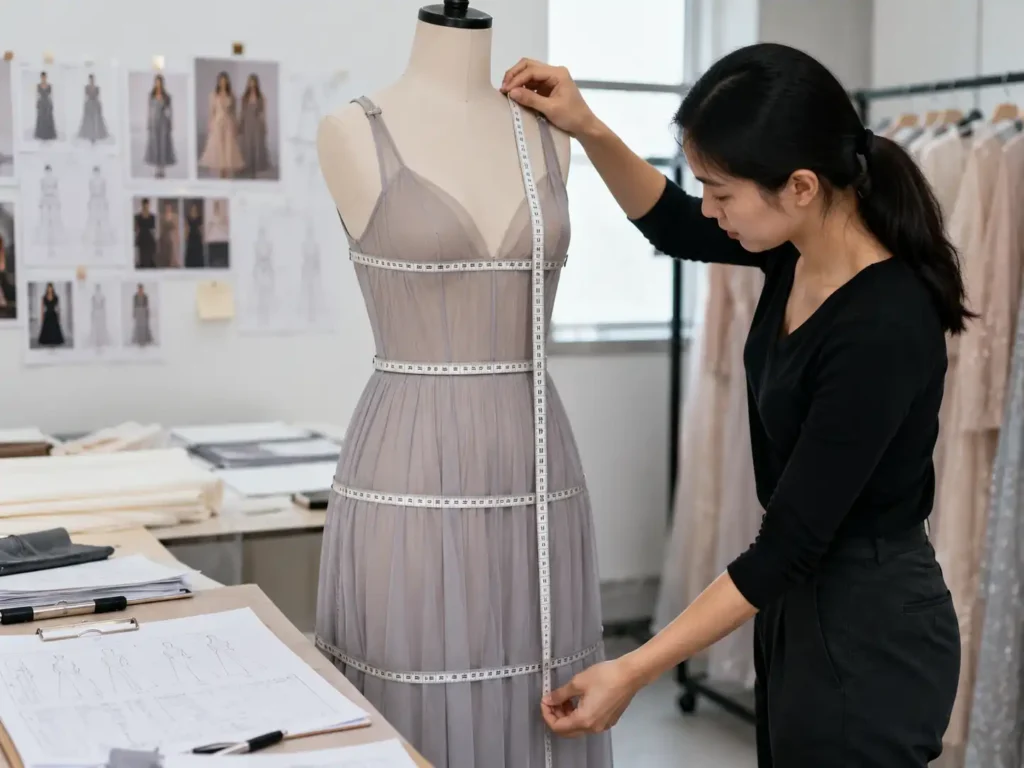
Bust measurement looks simple on a size chart, but in dress development it can decide whether a style feels elegant, awkward, supportive, restrictive, commercial, or difficult to scale. For shoppers, the bust is often the reason a dress that “should fit” still pulls at the chest, gaps at the neckline, lifts at the waist, bites under the arm, or refuses to close at the zipper. For fashion brands, the problem is bigger. One wrong bust assumption in the first sample can travel into grading, bulk production, customer returns, poor reviews, and weak repeat orders.
Bust measurements affect dress fit by controlling chest room, neckline position, armhole comfort, waist balance, bust point placement, zipper closure, and overall body proportion. A dress must match not only the full bust circumference, but also the high bust, under bust, cup volume, fabric stretch, pattern ease, and style structure. When these elements work together, the dress looks balanced and feels wearable.
The common mistake is treating bust fit as one number. Two women can have the same full bust measurement and still need different pattern solutions because their high bust, shoulder width, bust height, under bust, posture, and torso length are different. That is why experienced dress teams do not only ask, “What is the bust measurement?” They ask, “Where is the volume, how much ease does the style allow, and how will this change across sizes?” That question is where better samples, cleaner size charts, and more reliable bulk production begin.
What Is Bust Measurement in Dress Fit?
Bust measurement in dress fit is the chest circumference used to judge how much room, shaping, and support a dress needs across the front bodice. It affects the neckline, armholes, darts, princess seams, zipper closure, waist balance, and size choice. A reliable fit decision should compare full bust, high bust, under bust, fabric stretch, and finished garment measurements together.
A professional technical fashion fitting scene showing a dress form with measurement tape around full bust, high bust, and under bust, with pattern paper, pins, and a clean studio background.
Full Bust
Full bust is measured around the fullest part of the chest, with the tape kept level around the body. In dress development, it is usually the first bust-related number used for size charts, fit samples, and finished garment specifications. But it should never be treated as the only number that matters.
A full bust measurement helps decide whether the front bodice has enough width and shaping. In a fitted woven dress, too little full-bust room can create horizontal drag lines from the side seam toward the center front. In a stretch bodycon dress, the same issue may show as fabric shine, chest compression, or a neckline that pulls wider than intended. In a looser dress, full bust still matters because excess volume can collapse into the armhole or make the upper body look oversized.
For commercial dress development, full bust is usually checked in two ways: body measurement and garment measurement. Body measurement tells the brand who the target customer is. Garment measurement tells the factory how much finished room the dress must have. The gap between the two is called ease, and that ease changes by style, fabric, and fit intention.
| Bust Fit Term | Typical Use in Dress Fit | Practical Fit Impact |
| Full bust | Main chest circumference | Controls chest room and front bodice width |
| High bust | Upper chest/frame measurement | Helps balance shoulder, armhole, and upper bodice fit |
| Under bust | Ribcage below bust | Controls support in corset, bustier, and empire styles |
| Bust point | Apex position | Guides darts, princess seams, cup panels, and neckline shape |
| Garment bust | Finished dress measurement | Shows actual wearing room after fabric and construction |
High Bust
High bust is measured around the upper chest, above the fullest part of the bust and under the arms. It is especially useful because it separates the wearer’s frame size from bust volume. Two people can share the same full bust measurement but have very different high bust measurements, which means they may need different pattern solutions.
This difference is common in dress fit problems. A customer may size up to fit the full bust, but then the shoulder, neckline, and armhole become too large. Another customer may choose the correct shoulder size, but the chest feels tight because the bust volume needs extra shaping. This is why high bust is valuable for fitted dresses, structured bodices, sleeveless dresses, and styles with narrow straps.
In pattern work, high bust helps decide whether a fit problem should be solved by increasing the whole size or by adding bust shaping. For example, a fuller-bust customer with a smaller frame may need more front bodice volume, not a wider back or broader shoulder. That distinction can reduce gaping, oversized armholes, and poor size grading across a collection.
Under Bust
Under bust is measured around the ribcage below the bust. It becomes important when the dress needs support, anchoring, or a clear seam under the chest. Corset dresses, bustier dresses, strapless dresses, empire waist dresses, cut-out dresses, and some wrap dresses all depend on accurate under-bust control.
A dress can have enough full bust room but still fail if the under bust is wrong. When the under bust is too loose, structured styles may slide down, cup panels may float away from the body, and the upper bodice may feel unstable. When it is too tight, the wearer may feel pressure when breathing, sitting, or moving. The dress may also create horizontal pulling under the chest.
Under bust is also tied to visual proportion. If the under-bust seam sits too high, the bust can look compressed. If it sits too low, the upper body may look heavy or unsupported. For commercial production, this measurement often needs a tighter tolerance than loose areas such as skirt sweep because small changes can affect comfort and security.
Bra Size vs Bust Measurement
Bra size and bust measurement are connected, but they are not the same thing. Bra size combines band size and cup volume, while dress bust measurement usually refers to a body circumference or finished garment circumference. A dress also has to fit the shoulders, neckline, waist, back, armholes, torso length, and fabric behavior.
This is why using bra size alone can mislead dress development. A 34D and a 38B may have similar cup volume but different ribcage size and body frame. A customer with a fuller bust and narrow shoulders may need more cup depth but not a larger shoulder. A customer with a wide frame and smaller bust may need more upper chest width but less front bust shaping.
For brands, the best approach is to use bra size only as background information. The technical decision should come from full bust, high bust, under bust, bust point, finished garment measurement, fabric stretch, and fit-model feedback. This gives the pattern team a clearer view of how the dress will actually sit on the body.

How Does Bust Size Change Dress Fit?
Bust size changes dress fit by influencing how fabric travels over the chest, how the neckline holds its shape, how the armhole sits, how the waistline balances, and whether closures can fasten smoothly. A fuller bust often needs more shaping, not only more width. A smaller bust may need reduced volume, tighter neckline control, or adjusted dart placement.
Side-by-side comparison of dress fit on two mannequins with different bust proportions, showing neckline gaping, chest pull lines, armhole balance, and zipper tension annotations.
Chest Coverage
Chest coverage is one of the first fit details customers notice. When bust size and dress structure do not match, the dress may reveal more than intended, flatten the chest, pull at the neckline, or lose the shape shown in product photos. This is especially important for deep V, strapless, corset, wrap, halter, and cut-out dresses.
For fuller bust bodies, coverage problems often happen when the pattern does not allow enough front length, cup depth, or neckline control. The bust pushes the fabric outward and downward, which can make a neckline spread wider than expected. A dress that looked balanced on a hanger may feel too exposed once worn.
For smaller bust bodies, the opposite problem is common. The neckline may float, the cup area may feel empty, or the front bodice may collapse. This does not always mean the dress is too large overall. It may mean the bust shaping is too deep for the target customer. Good coverage comes from matching body volume, neckline shape, strap placement, and fabric behavior.
Neckline Gaping
Neckline gaping is often blamed on “wrong size,” but the real cause is usually more specific. It can come from too much upper-bodice length, a high-bust mismatch, weak neckline stabilization, poor dart direction, or fabric that stretches during sewing. Bust size matters because the bust changes the tension around the neckline edge.
In fuller-bust fits, the chest can push fabric outward, causing V-necks, square necks, wrap fronts, or sweetheart necklines to open away from the body. In smaller-bust fits, excess pattern volume can sit above the bust and create a hollow area. Both problems may show as gaping, but they need different corrections.
A professional correction may involve shortening the neckline edge, adjusting the bust dart, moving the bust point, adding stay tape, changing lining tension, or slightly changing the neckline depth. Simply making the whole dress smaller is risky because it may solve the gap but create tightness at the bust, waist, or back.
Armhole Fit
The armhole sits next to the bust curve, so bust size has a direct effect on armhole comfort. When the bust has too little room, the fabric may pull toward the front armhole and create tightness under the arm. When the bust area has too much room, the armhole may gape and expose the side body or bra.
Sleeveless dresses, halter dresses, one-shoulder dresses, racer styles, and fitted woven bodices are especially sensitive. A flat measurement may show that the armhole is correct, but once the dress is worn, bust volume can change how the armhole opens. This is why on-body fitting is so important for these styles.
A common mistake is fixing every armhole issue by raising or lowering the armhole. Sometimes the real correction is in the bust dart, front width, side seam curve, or shoulder strap length. The armhole should be reviewed together with the bust point, across-front width, high bust, side seam, and neckline.
Zipper and Closure
Zipper closure is a practical test of bust fit. If the dress closes easily at the waist but strains across the bust, the customer will feel the problem immediately. If the zipper closes only when pulled hard, the dress may technically fit, but it will not feel comfortable or look clean.
Back zippers and side zippers behave differently. A back zipper distributes pressure through the back, waist, and upper bodice. A side zipper passes closer to the bust and waist relationship, so it can show tension quickly. In satin, crepe, lace, and non-stretch woven fabrics, zipper strain is easy to see because the surface shows pulling and seam distortion.
During sample approval, the zipper should close without twisting, bending, or creating horizontal drag lines. The wearer should be able to breathe, sit, and move without feeling that the closure is carrying too much pressure. For fitted party dresses and occasionwear, this check is not optional. It is part of the selling quality.
| Visible Fit Issue | Likely Bust-Related Cause | Practical Correction |
| Chest pull lines | Bust room too small or shaping too flat | Add front bust ease or adjust darts |
| Neckline gap | Too much upper-bodice room or weak edge control | Check high bust, neckline length, and lining |
| Armhole bite | Bust pushing fabric toward underarm | Adjust front width, bust dart, or armhole curve |
| Hollow side bust | Bust volume too large for target fit | Reduce cup depth or front shaping |
| Zipper strain | Upper bodice too tight | Review garment bust, back width, and closure tolerance |
| Waistline lifting | Bust needs more front length | Add front bodice length or adjust bust shaping |
Which Dress Styles Need Bust Control?
Dress styles that need strong bust control include bodycon dresses, corset dresses, strapless dresses, wrap dresses, deep V dresses, halter dresses, cut-out dresses, and fitted woven dresses. These styles leave little room for error because the bust area affects comfort, coverage, support, movement, photo appearance, and customer confidence at the same time.
A curated studio layout of bodycon, corset, strapless, wrap, deep V, and satin slip dresses on mannequins, with subtle technical labels pointing to bust support, neckline, armhole, and under-bust areas.
Bodycon Dresses
Bodycon dresses are close-fitting, so bust issues are easy to see. A bodycon style may use jersey, rib knit, ponte, scuba, stretch mesh, stretch satin, or spandex blends. Because these fabrics stretch, some brands assume the bust area will “adjust by itself.” In practice, stretch can help comfort, but it cannot replace correct pattern balance.
A bodycon dress usually uses negative ease, meaning the finished garment may be smaller than the body measurement. The exact amount depends on stretch and recovery. If the negative ease is too aggressive across the bust, the wearer may feel compressed, and the fabric may show pulling or shine. If the fabric recovery is weak, the bust area may bag out after wearing.
For commercial bodycon styles, bust fit should be tested after movement, not only in a still fitting. The wearer should raise arms, sit, turn, and walk. The neckline should not spread too much, the bust should not feel crushed, and the side seams should remain balanced. A good bodycon dress feels secure without looking forced.
Corset Dresses
Corset dresses require more bust control than most other dress categories. The bust area must support, shape, and frame the body. It may include cup panels, princess seams, boning, lining, interfacing, under-bust seams, and a structured zipper or lace-up back. When one of these details is wrong, the whole bodice can feel uncomfortable.
Common corset bust problems include shallow cups, misplaced bust points, tight under-bust seams, unstable top edges, boning that presses into the chest, and front panels that flatten instead of shaping. These issues are not always visible on a hanger, but they become obvious on body.
For production, corset dresses need clear sample approval. The fit should be checked from front, side, and back. Sitting comfort matters because a corset bodice can feel fine while standing but dig into the ribs when seated. The upper edge should sit close to the body without cutting into it. Support should come from structure, not from making the whole bodice uncomfortably tight.
Strapless Dresses
Strapless dresses depend on bust, under bust, upper back, and internal support. Since there are no shoulder straps, the bodice must stay in position through pattern shape and construction. A strapless dress that is too loose may slide down. A strapless dress that is too tight may flatten the bust or create pressure at the top edge.
A common misunderstanding is that tighter means safer. In reality, strapless security comes from balanced tension. The upper edge, side seam, back panel, under-bust area, lining, and support structure should work together. If pressure is concentrated in one area, the wearer will keep adjusting the dress.
Different bust sizes may need different solutions. Fuller bust sizes may require stronger lining, better under-bust anchoring, or more supportive paneling. Smaller bust sizes may need refined cup shape and upper-edge control to avoid gaping. The target support level should be decided early: light fashion support, moderate eventwear support, or structured occasionwear support.

Wrap Dresses
Wrap dresses appear flexible, but the bust area still needs careful control. The front overlap must cover the bust, stay close to the body, and allow movement. If the overlap is too narrow, fuller-bust customers may feel exposed. If the front bodice has too much fabric, smaller-bust customers may see collapsing or gaping.
Fabric changes the result. A soft jersey wrap can stretch and recover around the bust, while a woven satin or crepe wrap needs more accurate shaping. Tie placement also matters. If the tie sits too high, it can pull the bust area open. If it sits too low, the waist may lose definition.
Good wrap development includes checking the dress while standing, sitting, reaching, and walking. Hidden snaps, inner ties, wider overlap, or neckline stabilization may be needed depending on the target market. A wrap dress should look effortless, but the pattern behind it must be deliberate.
| Dress Style | Bust Fit Sensitivity | Common Risk | Key Development Check |
| Bodycon dress | High | Compression, fabric strain, neckline spread | Stretch, recovery, negative ease |
| Corset dress | Very high | Cup mismatch, under-bust pressure, unstable top edge | Cup depth, boning, lining, sitting comfort |
| Strapless dress | Very high | Sliding, flattening, top-edge pressure | Under-bust anchoring and support |
| Wrap dress | Medium to high | Neckline opening or front collapse | Overlap width, tie position, neckline control |
| Deep V dress | High | Exposure or gaping | Neckline stabilization and bust point |
| Satin slip dress | Medium to high | Pull lines, hollow chest, poor drape | Bias, darts, front length, fabric behavior |
| Halter dress | High | Neck pressure, armhole exposure | Strap angle, high bust, side coverage |
How Do Fabrics Affect Bust Fit?
Fabrics affect bust fit by changing stretch, support, drape, recovery, transparency, and tension visibility. Stretch fabrics may improve comfort but can lose shape if recovery is weak. Woven fabrics can look premium but need more accurate ease and shaping. Lining, interfacing, seam tape, and cutting direction can all change how the bust area fits on body.
Close-up fabric swatches of jersey, ponte, stretch mesh, stretch satin, non-stretch satin, chiffon, lace, and lining beside a fitted dress pattern, with technical notes on stretch and recovery.
Stretch Fabrics
Stretch fabrics can make bust fit more forgiving, but only when the pattern respects the fabric’s limits. Jersey, rib knit, ponte, stretch mesh, scuba, and spandex blends can expand over the bust, which helps comfort and movement. But if the pattern relies too much on stretch, the dress may feel tight, look strained, or lose shape after wearing.
A practical way to evaluate stretch fabric is to check both stretch percentage and recovery. Stretch percentage shows how far the fabric can extend. Recovery shows how well it returns. For bust fit, recovery is often more important than maximum stretch. A fabric that stretches a lot but does not recover well can create loose bust areas, unstable necklines, and tired-looking garments.
Cutting direction also matters. If the greatest stretch is not placed around the body, the bust may feel tighter than expected. If the fabric is stretched during sewing, the neckline or armhole can grow. Stretch styles need technical control, even when the design looks simple.
Woven Fabrics
Woven fabrics usually have limited stretch, so bust fit must come from pattern shaping and wearing ease. Satin, chiffon, crepe, organza, lace, linen blends, suiting fabrics, and printed woven fabrics do not forgive measurement mistakes in the same way as jersey. When the bust is too small, pulling lines appear quickly. When it is too large, the upper body can look loose or poorly shaped.
Different woven fabrics behave differently. Satin shows tension clearly because of its smooth reflective surface. Chiffon drapes softly but does not provide support by itself. Crepe can offer a cleaner shape but still needs correct ease. Lace may look textured, but it can distort if the underlying structure is wrong.
For fitted woven dresses, bust shaping may come from darts, princess seams, panel lines, gathers, pleats, or bias cutting. The best solution depends on the style. A satin slip dress may need subtle bust shaping and enough front length. A structured occasion dress may need lining, interfacing, and seam control. Woven bust fit must be built into the pattern from the beginning.
Lining and Support
Lining can improve bust support, coverage, and comfort, but it can also create fit problems if it is not balanced with the outer fabric. A lining that is too tight can restrict the bust and create pulling on the outer shell. A lining that is too loose can bunch, twist, or fail to support the garment.
In corset dresses, bustier dresses, satin party dresses, lace dresses, mesh dresses, and light-colored occasionwear, lining is part of the structure. It can help stabilize seams, control transparency, reduce friction, and hold the neckline closer to the body. For sheer or semi-sheer fabrics, lining also affects customer confidence because it decides how much coverage the dress provides.
The lining must match the design purpose. A stretch shell with non-stretch lining may feel restrictive. A non-stretch shell with stretch lining may not provide enough structure. A fully lined bodice behaves differently from a half-lined bodice. Lining decisions should be made during development, not added at the last minute to hide fit problems.
Fabric Recovery
Fabric recovery affects whether bust fit stays stable after movement. This is especially important for fitted knit dresses, bodycon dresses, stretch satin, stretch mesh, rib dresses, and jumpsuits. A sample may look good during the first try-on, but if the fabric does not recover, the bust area may loosen after sitting, dancing, walking, or repeated wear.
Poor recovery can cause neckline gaping, armhole looseness, bust bagging, and side seam distortion. These issues are frustrating because the dress may pass a flat measurement check before shipment. The problem only appears when the garment is used in real life.
Brands should test recovery during sample review. The sample should be worn, moved in, and allowed to relax. If the bust area grows visibly and does not return, the issue may be fabric quality, pattern stress, or both. In bulk production, fabric lots should also be monitored because different lots can have slightly different stretch, hand feel, and recovery.
| Fabric Type | Common Stretch Range | Bust Fit Advantage | Main Risk |
| Jersey knit | About 20%-60% depending on blend | Comfortable, easy movement | Weak recovery can cause bust bagging |
| Ponte/Roma | About 15%-40% | Stable fitted look | Can feel firm if ease is too tight |
| Stretch mesh | About 20%-80% | Good for fitted fashion styles | Transparency and distortion risk |
| Stretch satin | About 10%-30% | Sleek fitted surface | Shows tension lines clearly |
| Non-stretch satin | 0%-5% | Premium smooth look | Needs accurate bust ease |
| Chiffon/Crepe | Usually low stretch | Soft drape or clean shape | Limited support without lining |
| Lace | Varies by base | Decorative and structured options | Can distort if pulled over bust |
Do Bust Measurements Affect Size Grading?
Bust measurements strongly affect size grading because the bust does not scale evenly across every size, body type, market, or dress style. Increasing circumference alone may not solve bust point placement, cup depth, armhole shape, neckline balance, or shoulder proportion. Better grading adjusts measurement, shape, and fit intention across the full size range.
A clean technical size grading diagram showing one dress bodice pattern graded from XS to XL, with bust point movement, armhole changes, and neckline balance marked in soft lines.
Grade Rules
Grade rules decide how measurements change from one size to the next. For dress fit, the bust grade must work with the waist, hip, shoulder, armhole, length, and neckline. If the bust grade is too small, larger sizes may feel tight across the chest. If it is too large, the upper bodice may look loose and shapeless.
In many commercial women’s dresses, bust circumference may increase by roughly 2-5 cm between sizes depending on the sizing system, market, and brand fit standard. But the number alone is not the full story. The pattern also needs to move the bust point, adjust dart intake, refine armhole shape, and keep the neckline balanced.
A bodycon knit dress, woven midi dress, corset mini dress, and satin slip dress should not always share the same grading logic. The closer the dress fits to the body, the more carefully the bust area must be graded. A loose resort dress may tolerate more variation, while a corset dress may need separate review across size breaks.

Plus-Size Scaling
Plus-size development cannot be handled by simply enlarging a smaller-size pattern. As sizes increase, body proportions change in more complex ways. Bust, high bust, waist, abdomen, hip, back width, upper arm, and torso balance may not grow at the same rate. If a brand scales evenly, the larger sizes may become tight in one area and oversized in another.
For bust fit, plus sizes often need more considered shaping. The bust point may need to move differently. The armhole may need more comfort. The neckline may need better control. The under-bust area may need more support in structured styles. The goal is not to make the dress look less fashionable. The goal is to keep the same design intention on a different body proportion.
Brands expanding into larger sizes should consider a separate fit review, especially for fitted dresses, corset dresses, party dresses, and occasionwear. A sample size can look excellent, but the larger graded size may fail if the bust shaping is not reviewed on body. Plus-size fit quality is often where customer trust is either gained or lost.
Market Sizing
US, UK, EU, and AU sizing can differ in labels, body expectations, and customer habits. A size 10 in one market does not always equal a size 10 in another. Even within the same country, different brands may use different fit models and different levels of ease. This creates confusion when shoppers choose by size label instead of measurement.
Bust measurement is one of the areas where international sizing confusion becomes obvious. A customer may usually buy a medium, but the bust measurement of that medium may vary across brands. If the dress is fitted or non-stretch, a small difference can decide whether the garment feels comfortable.
For brands selling online, a clear size chart is essential. It should explain whether the chart shows body measurements or finished garment measurements. For production, the manufacturer needs exact measurement specs, not just market labels. “UK 10,” “US M,” or “EU 38” is not enough to develop a reliable dress fit.
Fit Models
Fit models help confirm whether bust measurements work on a real body. Flat measurements are useful, but they cannot show how the neckline behaves, where the bust point sits, whether the armhole bites, or whether the zipper closes comfortably. A fit model reveals the relationship between measurement and wearing experience.
The right fit model depends on the target customer. A brand selling fuller-bust styles should not rely only on a small-bust fit model. A brand selling fitted party dresses should check movement, sitting, and photo appearance. A brand selling international sizes may need to review more than one body type or at least test key size breaks.
Fit feedback should be translated into measurable pattern corrections. “Bust is tight” is only the start. The useful correction may be “add 1 cm to front bust,” “lower bust point by 1.2 cm,” “reduce neckline length,” or “increase under-bust ease.” When feedback becomes measurable, grading and bulk production become more reliable.
How Can Brands Reduce Bust Fit Problems?
Brands can reduce bust fit problems by preparing clear tech packs, defining body and garment measurements, testing samples on the right fit model, recording pattern changes, reviewing fabric stretch and recovery, approving PP samples, and controlling measurement tolerance during production. Bust fit improves when decisions are made before bulk production, not after customers complain.
A fashion production workflow board showing tech pack, fit sample, marked pattern corrections, PP sample approval, QC measurement sheet, and final bulk dress inspection focused on bust fit.
Tech Packs
A tech pack should show the bust area clearly. For simple loose dresses, a basic finished measurement chart may be enough. For fitted dresses, the tech pack should include full bust, under bust if relevant, bust point, across-front width, armhole, neckline depth, strap length, waist, and intended fit comments.
If the style includes cups, corset panels, princess seams, darts, gathers, cut-outs, or an empire seam, the tech pack should mark where the shaping is placed. Reference photos show the visual direction, but they do not tell the pattern team the exact bust point, coverage level, or finished measurement. Without these details, the first sample may look similar but fit differently.
A strong tech pack reduces guesswork. It also helps the brand and manufacturer discuss changes professionally. Instead of saying “make it fit better,” the team can discuss specific points: add front bust room, adjust dart intake, raise the neckline, reduce armhole gap, or change under-bust tension. Clear information saves sample rounds and protects bulk consistency.
| Tech Pack Item | Why It Matters for Bust Fit | Helpful Detail |
| Full bust measurement | Sets main chest room | Body and finished garment spec |
| Bust point | Controls dart, cup, and seam position | Distance from shoulder or HPS |
| Under bust | Supports corset and empire styles | Finished measurement and tolerance |
| Neckline depth | Controls coverage and gaping | Center front drop and edge length |
| Armhole | Affects side coverage and comfort | Front armhole and total armhole |
| Strap length | Changes bust lift and neckline position | Adjustable or fixed length |
| Fabric stretch | Affects ease and comfort | Stretch percentage and direction |
| Lining spec | Affects support and restriction | Stretch or non-stretch lining |
Sample Fitting
Sample fitting should happen on body, not only on a flat table. A sample can pass measurement checks but fail when worn because the bust changes how the neckline, armhole, zipper, waistline, and fabric tension behave together. On-body review is where many real fit problems become visible.
During fitting, the reviewer should check front, side, and back views. The wearer should stand naturally, sit, raise arms, walk, and close the zipper without assistance beyond normal use. For strapless or corset styles, the dress should stay secure without constant adjustment. For wrap or deep V styles, the neckline should remain controlled during movement.
Fit comments should be clear and measurable. “Too open at neckline” is useful, but “reduce neckline edge by 0.8 cm and add stay tape” is better. “Bust tight” should become a specific correction: add width, increase cup depth, move bust point, or change fabric. Good fitting is not only observation. It is observation turned into technical action.
Pattern Records
Pattern changes should be recorded carefully because a good sample is only valuable if it can be repeated. Every bust correction should be connected to a sample version, measurement change, fit comment, and approval status. Without records, teams may repeat old problems in new samples or bulk production.
For example, if sample one has neckline gaping, the correction may involve shortening the neckline edge, adjusting the bust dart, and adding stabilization. If this is not recorded, the approved result may depend on one pattern maker’s memory. That is risky when orders involve multiple colors, sizes, repeat batches, or seasonal updates.
Pattern records are especially important for brands that develop collections regularly. Once a strong bust fit is created for a bodycon block, corset block, slip dress block, or woven mini block, it can become a useful base for future styles. This reduces development time and improves consistency. Good fit is not only created once; it is managed over time.

Bulk Control
Bulk production can change bust fit if the process is not controlled. Fabric lot differences, cutting direction, sewing tension, lining attachment, zipper setting, pressing, and measurement tolerance can all affect the final garment. The approved PP sample should be treated as the production standard.
For fitted dresses, bust-related measurements should be checked during key production stages, not only at final inspection. Cutting should follow the correct grain or stretch direction. Necklines and armholes should not be stretched during sewing. Linings should match the approved tension. Zippers should be set smoothly without pulling the side seam or back seam out of shape.
Measurement tolerance should be tighter in critical upper-body areas than in loose skirt areas. Bust, under bust, waist, strap length, neckline, and armhole can directly affect comfort and customer satisfaction. A small difference may not matter much in a loose hem sweep, but it can matter a lot in a corset bodice or fitted satin dress. Bulk consistency comes from controlling every step, not from hoping the final measurement will be close enough.
Start a Fit-Ready Dress Project
Bust fit is one of the clearest signs of whether a dress brand has strong product development behind it. Customers may not know the words “bust point,” “high bust,” “negative ease,” or “size grading,” but they immediately know when a dress pulls, gaps, slides, squeezes, or photographs badly.
For brands developing bodycon dresses, corset dresses, satin party dresses, mesh clubwear, lace occasionwear, resort dresses, private-label dress collections, or multi-size ecommerce styles, bust measurement should be discussed early. The best time to solve fit problems is before the first sample. The second-best time is during sample revision. The most expensive time is after bulk goods arrive.
Jinfeng Apparel supports custom women’s fashion manufacturing for brands that need professional dress development, fabric sourcing, pattern making, sampling, bulk production, quality control, private-label packaging, and export coordination. When you contact the team, prepare your reference photos, tech pack, sample, size chart, fabric direction, target market, quantity plan, and private-label needs. The more clearly your brand communicates the intended fit, the more efficiently the development team can review structure, suggest fabric options, build the sample, correct the pattern, and prepare the style for production.
A dress does not become successful because the bust measurement is written on a chart. It becomes successful when that measurement is translated into the right pattern, fabric, structure, grading, and production control. That is the difference between a dress that only looks good online and a dress customers want to keep, wear, review, and reorder.
Share This Article :

Jerry Lee
Categories

Latest blogs


Table of Contents
Here, developing your OEM/ODM private label clothing collection is no longer a challenge—it’s an excellent opportunity to bring your creative vision to life.

