Skip to content

In modern fashion manufacturing, one silent document often decides whether a dress collection becomes profitable or problematic: the Bill of Materials (BOM). Many design teams focus heavily on sketches, silhouettes, and trend direction, yet production success is frequently determined long before cutting fabric begins. A BOM defines every measurable element inside a garment—fabric type, consumption, trims, stitching details, labels, packaging components, and even hidden allowances for wastage. When these elements are unclear or inconsistent, cost estimation becomes unstable, sampling turns unpredictable, and production risk increases significantly.
In practical dress manufacturing environments, even a small variation in BOM data can shift final cost by 8–25%. Fabric substitution alone can alter pricing structure, while incorrect trim specifications can create repeated sample revisions. A well-prepared BOM acts like a technical contract between design intent and factory execution, ensuring every department works from the same measurable foundation.
BOM details directly influence dress cost and sampling accuracy by defining exact fabric consumption, trims, stitching requirements, and production standards. Accurate BOM reduces material waste, stabilizes costing, and ensures sample consistency with bulk production. Inaccurate BOM leads to pricing deviations, repeated sampling, and inconsistent garment quality across production runs.
A young designer once submitted a visually strong concept for a satin slip dress, but omitted lining weight and zipper specification. The first sample appeared perfect, yet production cost doubled due to hidden fabric consumption and incorrect trim selection. That single missing detail reshaped the entire launch timeline.
hat Is a BOM in Dress Manufacturing?
A Bill of Materials (BOM) in dress manufacturing is a structured production document that defines every material, component, and consumption detail required to build one garment style from sample to bulk production. It is not only a list of materials but a quantified production framework used to calculate cost, control sourcing, and stabilize sampling accuracy.
In real dress development, a BOM connects design intention with factory execution. It translates visual design into measurable production inputs such as fabric type, GSM, width, trim specification, stitching method, and packaging requirements. Without BOM clarity, factories rely on estimation, which increases cost deviation and sampling errors.
A standard BOM for a custom dress typically covers 5 core cost-driving categories:
| BOM Category | Typical Items Included | Impact on Production |
|---|---|---|
| Fabric | Main fabric, lining, interlining | Controls 50–70% of garment cost |
| Trims | Zippers, buttons, hooks, elastic | Affects durability and finishing |
| Sewing Specs | Stitch type, seam allowance, SPI | Influences labor time & quality |
| Labels | Main label, care label, size tag | Impacts branding & compliance |
| Packaging | Polybag, hangtag, carton | Affects logistics cost per unit |
Even a 5–10% change in any one category can shift final FOB price significantly in bulk production.
What is included inside a professional BOM sheet?
A production-grade BOM for dresses goes beyond basic material listing. It includes measurable technical data that allows factories to execute without interpretation gaps.
Typical BOM elements include:
- Fabric specification (composition, GSM, width, stretch ratio)
- Fabric consumption per size (XS–XL grading impact)
- Trim specification (grade, supplier standard, color code)
- Stitching details (SPI, seam type, reinforcement points)
- Lining structure (full lining, partial lining, unlined zones)
- Embellishment usage (sequins, beads, lace coverage percentage)
- Packing materials (bag thickness, folding method, carton size)
For example, in a satin midi dress, BOM accuracy directly affects material usage efficiency. A miscalculated fabric width difference of 3–5 cm can increase consumption by 6–9%, especially in bias-cut designs.
How BOM connects design to cost control in dress manufacturing?
BOM functions as the cost translation layer between creative design and production reality. Every design decision eventually becomes a measurable cost factor inside the BOM structure.
For example:
- A heavier fabric (180 GSM vs 140 GSM) increases material cost and affects drape behavior
- A hidden zipper adds both hardware cost and additional sewing labor time
- Complex seam structures increase machine time per garment, reducing production efficiency
Factories calculate FOB pricing directly from BOM data. In structured production environments, BOM accuracy can reduce cost deviation from ±15% down to ±3–5%.

Why BOM accuracy determines sampling stability?
Sampling stability depends on whether BOM data is complete, measurable, and consistent with bulk sourcing reality. When BOM lacks detail, factories often substitute materials during sampling, which leads to inconsistent results in bulk production.
Common sampling issues caused by weak BOM structure include:
- Fabric mismatch between sample and bulk production
- Incorrect trim grade causing visual or functional differences
- Unstable garment shape due to missing shrinkage allowance
- Repeated sample revisions due to unclear construction details
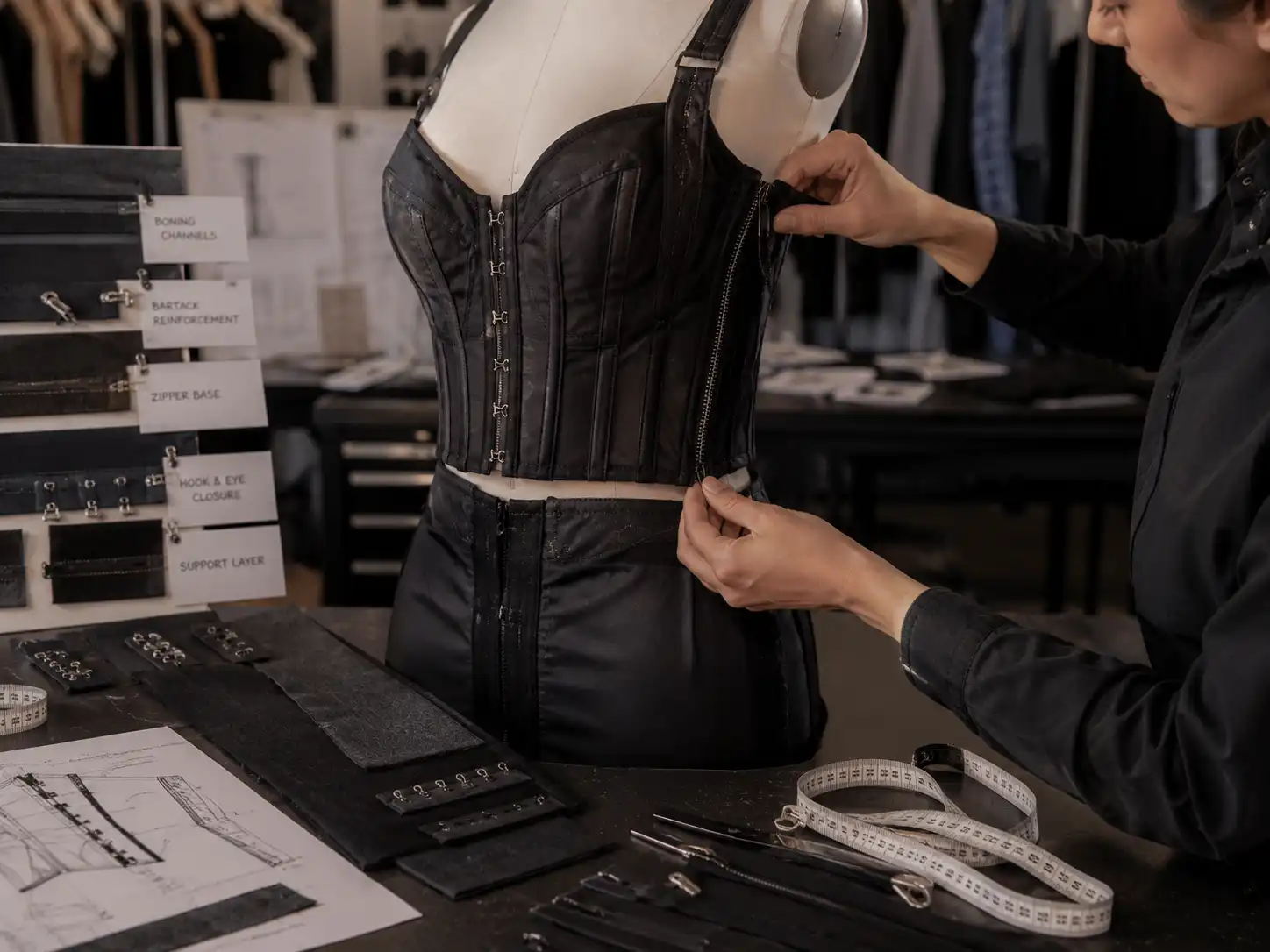
In dress manufacturing, especially for structured garments like corset dresses or pleated designs, BOM precision directly determines whether the first sample can be approved or requires multiple revisions.
What makes BOM a risk-control document in production?
Beyond costing, BOM acts as a risk-control system in garment production. It reduces uncertainty in procurement, prevents material substitution errors, and ensures alignment between sampling and bulk execution.
Factories rely on BOM to:
- Lock fabric sourcing before bulk order placement
- Calculate accurate consumption for each size range
- Standardize trims across multiple production batches
- Prevent hidden cost increases during production scaling
In large-scale dress production, BOM consistency can reduce material waste by 5–12% and sampling revision cycles by up to 40%, especially in multi-style seasonal collections.
How BOM standards differ across simple and complex dresses?
Not all BOM structures are equal. Complexity increases significantly depending on garment design.
| Dress Type | BOM Complexity Level | Key BOM Risk Factors |
|---|---|---|
| Basic T-shirt dress | Low | Fabric shrinkage, size grading |
| Midi satin dress | Medium | Fabric width, drape behavior |
| Corset structured dress | High | Boning, lining structure, stitching accuracy |
| Embellished evening dress | Very High | Trim density, labor time, material wastage |
The more complex the dress, the more precise BOM data must be to avoid production deviation.
Why BOM is the first control point before sampling starts?
In professional dress manufacturing workflow, BOM approval typically happens before sample cutting. This step ensures that every material is confirmed, cost is validated, and production feasibility is checked.
A controlled BOM allows factories to:
- Select correct fabric suppliers early
- Prevent sampling delays caused by missing materials
- Align costing before prototype development
- Reduce communication loops between design and production teams
When BOM is locked correctly at the beginning, sampling efficiency improves significantly and production becomes predictable rather than experimental.
How Do BOM Details Impact Dress Cost?
In dress manufacturing, cost is not calculated randomly at the final stage. It is directly derived from BOM structure, where every material and construction decision becomes a measurable cost unit. A single BOM line item can influence fabric usage, labor time, procurement strategy, and even production efficiency.
For example, a shift from lightweight chiffon to heavy satin does not only increase fabric price. It also changes cutting efficiency, sewing speed, and defect rate. BOM is the system that converts these design-level decisions into FOB pricing logic.
In structured production, BOM accuracy typically controls:
- 50–70% fabric cost allocation
- 10–25% labor cost variation
- 5–15% trim and accessory cost fluctuation
- 3–8% logistics and packaging adjustments
Which BOM components have the highest cost sensitivity?
Not all BOM items affect cost equally. Some components act as “cost multipliers” because they influence multiple production stages at once.
| BOM Component | Cost Driver Type | Example Impact | Cost Sensitivity |
|---|---|---|---|
| Fabric GSM & width | Material consumption | 150 GSM → 200 GSM increases usage | High |
| Fabric width efficiency | Cutting waste rate | Narrow fabric increases yardage | High |
| Trim grade | Hardware pricing | Standard → branded zipper | Medium |
| Embellishment density | Labor time | Light beading → full handwork | Very High |
| Stitch complexity | Sewing efficiency | Simple seam → corset structure | Very High |
| Lining structure | Extra material layer | No lining → full lining | Medium–High |
Even a small adjustment in embellishment coverage can increase labor cost by 20–40 minutes per piece, which scales significantly in bulk orders.

How fabric selection in BOM changes total dress cost
Fabric is usually the largest cost driver in BOM structure, often accounting for 50–70% of total garment cost depending on design complexity.
Key cost variables include:
- Fabric composition (polyester vs silk blend vs cotton)
- GSM level (lightweight vs medium vs heavy fabric)
- Fabric width efficiency (114 cm vs 150 cm vs 160 cm)
- Surface treatment (washed, coated, pleated, printed)
For example:
- Satin 120 GSM: lower material cost, higher cutting precision requirement
- Satin 180 GSM: higher cost per meter, better structure stability
A 10% increase in fabric consumption due to inefficient pattern layout can directly raise FOB cost by 6–12% in bulk production.
Why trims and accessories quietly increase cost pressure
Trims often appear minor in BOM, but they strongly affect final pricing due to sourcing, MOQ constraints, and installation time.
Typical cost-sensitive trim elements:
- Zippers (invisible, metal, branded)
- Hooks and eye closures
- Elastic bands
- Buttons and decorative hardware
- Labels and heat transfer elements
Example cost impact:
- Standard nylon zipper: $0.08–0.12 per unit
- Invisible branded zipper: $0.25–0.40 per unit
When multiplied across 5,000–10,000 units, trim upgrades alone can add thousands of dollars to total production cost.
How stitching and construction complexity affect labor cost
Labor cost is often underestimated in BOM planning, but it is highly sensitive to construction structure.
Key labor cost drivers:
- Number of seams per garment
- Stitch density (SPI)
- Structural elements (boning, pleats, draping)
- Multi-layer assembly (lining + shell + reinforcement)
Example:
| Dress Structure | Avg Sewing Time | Labor Cost Impact |
|---|---|---|
| Basic slip dress | 18–25 minutes | Low |
| Ruched bodycon dress | 30–40 minutes | Medium |
| Corset structured dress | 60–90 minutes | High |
| Embellished evening dress | 90–150 minutes | Very High |
A 20-minute increase per garment may not seem large, but across 5,000 units, it adds over 1,600 production hours.
Why small BOM changes create large cost fluctuations
BOM works as a chain reaction system. One change often triggers multiple cost adjustments across production stages.
Typical cascade effects include:
- Fabric upgrade → higher cutting waste + slower sewing speed
- Trim change → new supplier sourcing + longer lead time
- Design adjustment → new pattern making + additional sampling rounds
- Lining modification → increased fabric consumption + added labor steps
In real production environments, BOM instability is one of the main reasons why initial quotations differ from final bulk cost by 10–25%.
How BOM controls final FOB pricing structure
FOB pricing in dress manufacturing is directly calculated from BOM inputs, not estimated manually.
A structured FOB calculation includes:
- Fabric cost per meter × consumption per garment
- Trim cost per unit × quantity per style
- Labor cost per minute × total sewing time
- Packaging and labeling fixed cost
- Wastage allowance (typically 3–8%)
When BOM is precise, FOB variance stays within a controlled range of ±3–5%. When BOM is unclear, deviation can exceed 15–20%, especially in complex dress styles.
Why BOM accuracy directly affects profit stability
For fashion brands, BOM accuracy is not only a production issue—it directly determines margin stability.
If BOM underestimates:
- Fabric consumption → hidden cost loss
- Labor time → production overrun
- Trim selection → unexpected procurement upgrades
If BOM overestimates:
- Pricing becomes uncompetitive
- Factory efficiency is underutilized
- Inventory cost pressure increases
Stable BOM management allows consistent pricing strategy across multiple seasons and reduces financial volatility in scaling production.
Why Do BOM Errors Cause Sampling Inaccuracy
In dress manufacturing, sampling accuracy depends on whether BOM data can be executed without interpretation. When BOM contains missing, incorrect, or inconsistent information, factories are forced to make assumptions during sampling. These assumptions directly change fabric behavior, structure, and finishing outcome.
Even a small deviation in BOM—such as incorrect GSM, wrong fabric width, or missing trim specification—can shift sample results significantly. In structured dress production, sampling is not creative interpretation; it is technical reproduction of defined parameters. Once BOM accuracy breaks, sample consistency becomes unstable.
Typical sampling deviation caused by BOM errors:
- Fabric mismatch: 5–15% visual and drape difference
- Fit deviation: 1–3 cm variation in structured dresses
- Trim inconsistency: 0.1–0.5 USD per unit cost distortion
- Sample revision cycles: increase from 1 to 3–5 rounds
What types of BOM errors cause sampling failure most often?
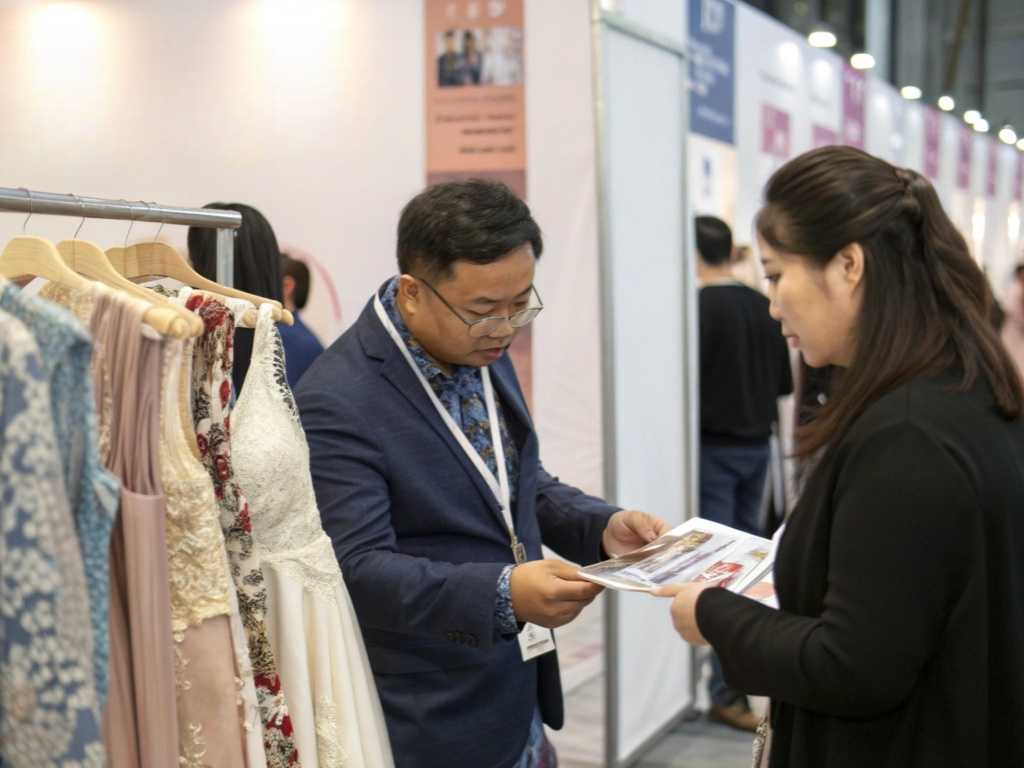
BOM errors usually come from missing technical detail rather than obvious mistakes. These gaps force factories to interpret design intent differently, which leads to inconsistent sample results.
| BOM Error Type | Real Sampling Impact | Typical Result |
|---|---|---|
| Missing fabric GSM | Wrong drape behavior | Dress too stiff or too soft |
| Undefined fabric width | Incorrect yardage use | Pattern imbalance |
| Wrong trim specification | Visual inconsistency | Zipper/closure mismatch |
| No shrinkage allowance | Post-wash distortion | Fit instability |
| Unclear stitching detail | Construction variation | Seam mismatch |
For example, in a satin slip dress, ignoring fabric bias direction can completely change how the garment falls on the body, even if the visual design looks identical on paper.
Fabric is the most sensitive component in BOM because it determines silhouette, movement, and fit behavior. When fabric data is incomplete or incorrect, sampling becomes unpredictable.
Key fabric-related BOM issues:
- Wrong GSM specification leads to incorrect weight perception
- Missing stretch ratio causes tight or loose fit
- Incorrect fabric width changes cutting layout efficiency
- Substituted fabric during sampling alters final appearance
In real production cases, replacing 180 GSM satin with 140 GSM satin can reduce structure stability by 20–30%, especially in bias-cut or bodycon dresses. This difference is often only visible after first sample is produced.
How trim and construction errors affect sample accuracy
Trims and construction details are often underestimated in BOM planning, yet they strongly influence sample precision.
Common issues include:
- Zipper type mismatch (invisible vs standard coil zipper)
- Missing reinforcement points in corset or structured dresses
- Incorrect elastic tension specification
- Undefined seam allowance or stitch density
| Construction Element | BOM Error Effect | Sample Outcome |
|---|---|---|
| Zipper type unclear | Wrong closure structure | Back gap or tension issue |
| Missing boning detail | Loss of shape support | Corset collapse |
| Elastic specification missing | Incorrect stretch fit | Waist inconsistency |
| SPI not defined | Uneven stitching quality | Visible seam variation |
Even when visual design is correct, construction errors in BOM can make a sample technically unacceptable for bulk approval.
Why BOM inconsistency leads to repeated sampling cycles
Sampling becomes inefficient when BOM is not fully locked before production begins. Each correction in BOM leads to a new sample iteration, increasing time and cost.
Typical cycle impact:
- First sample: based on partial BOM
- Second sample: correction of fabric or trim
- Third sample: adjustment of construction detail
- Final sample: approval stage
Each additional round increases development cost by 8–15% and delays production timeline by 1–2 weeks.
Main reasons for repeated sampling:
- Fabric not confirmed before cutting
- Trim availability not checked in advance
- Construction details open to interpretation
- No standardized BOM template used
How BOM errors affect sample-to-bulk consistency
One of the biggest risks in dress manufacturing is when sample results do not match bulk production. BOM errors are the root cause of this gap.
Key inconsistency triggers:
- Sample uses substitute fabric due to sourcing gaps
- Bulk production follows correct BOM but differs from sample material
- Trim batch differences between sampling and production
- Construction interpretation changes across teams
| Stage | Material Source | Result |
|---|---|---|
| Sampling | Available stock fabric | Fast execution, inconsistent spec |
| Bulk production | Ordered BOM fabric | Accurate spec, but different from sample |
This mismatch often leads to rejection of bulk goods even when production is technically correct, simply because sample and BOM were not aligned from the beginning.
Why BOM precision determines sampling efficiency
Accurate BOM reduces uncertainty in sampling execution. When every material and specification is clearly defined, factories can execute sample production without guessing or substitution.
Key improvements from precise BOM:
- 30–50% reduction in sample revision cycles
- Faster first-sample approval rate
- Lower material waste during sampling
- Improved alignment between design intent and physical output
In structured dress development, BOM accuracy directly defines whether sampling becomes a controlled process or a trial-and-error loop.

How Does BOM Improve Sampling Accuracy
A well-structured BOM turns sampling from an experimental process into a controlled production simulation. Instead of relying on interpretation, factories follow exact material, trim, and construction data. This removes uncertainty at the earliest stage of dress development.
In real production environments, sampling accuracy depends on how clearly BOM defines execution parameters. When BOM is complete, first samples are no longer “trial versions” but near-production replicas. This reduces correction loops and stabilizes approval decisions.
Key improvements from BOM control:
- 25–45% reduction in sampling revisions
- 30% faster first-sample approval rate
- 10–20% improvement in fabric consistency between sample and bulk
- Lower material waste during prototype stage
Why detailed BOM reduces interpretation errors in sampling
Sampling errors often come from interpretation gaps between design intention and factory execution. BOM removes these gaps by converting subjective design elements into measurable production data.
Without clear BOM:
- Fabric selection becomes assumption-based
- Trim substitution happens during sourcing
- Stitching details vary by technician interpretation
With structured BOM:
- Fabric GSM, width, and composition are fixed before cutting
- Trim grade and supplier standard are locked
- Stitch type and seam structure are pre-defined
| Area of Sampling | Without BOM Control | With Structured BOM |
|---|---|---|
| Fabric selection | Substituted materials | Exact specification used |
| Trim sourcing | Random equivalent parts | Locked supplier standard |
| Construction | Technician interpretation | Defined technical instruction |
| Final output | Inconsistent samples | Production-aligned sample |
How BOM improves fabric consistency in samples
Fabric inconsistency is one of the main reasons sampling fails. BOM solves this by clearly defining fabric properties before production starts.
Important fabric parameters controlled by BOM:
- GSM (weight per square meter)
- Fabric width (affects cutting efficiency)
- Composition ratio (polyester, nylon, cotton, etc.)
- Stretch rate (critical for bodycon and knit dresses)
- Finish type (washed, coated, softened, pleated)
For example, in chiffon maxi dresses:
- Incorrect GSM difference of 10–15% can change drape behavior significantly
- Wrong width specification can increase fabric consumption by 6–9%
- Missing stretch ratio leads to fit instability in waist or bust areas
When BOM locks these parameters early, sample output becomes stable and predictable.
How BOM reduces sampling revision cycles
Sampling revisions increase time and cost pressure in dress development. BOM reduces these cycles by eliminating unclear instructions before production begins.
Typical revision drivers without BOM clarity:
- Fabric mismatch after first sample
- Incorrect trim appearance or functionality
- Construction changes after fit review
- Size grading inconsistencies
With complete BOM structure:
- First sample accuracy improves significantly
- Communication loops between design and factory decrease
- Material reordering delays are minimized
| Sampling Stage | Without BOM | With Detailed BOM |
|---|---|---|
| First sample approval | 1–3 attempts | Often 1 attempt |
| Correction cycles | 3–5 rounds | 1–2 rounds |
| Development time | 15–25 days | 7–15 days |
| Material waste | High | Controlled |
Why BOM ensures sample matches bulk production
One major challenge in dress manufacturing is sample-to-bulk inconsistency. BOM ensures both stages follow the same technical foundation.
Main causes of mismatch without BOM control:
- Sampling uses available stock fabric
- Bulk production uses ordered fabric with different behavior
- Trim suppliers change between stages
- Construction interpretation shifts during scaling
When BOM is locked:
- Fabric sourced for sampling and bulk is identical
- Trim specification remains unchanged
- Sewing instructions are standardized across production lines
This alignment reduces rejection risk in bulk production and improves consistency across size ranges.
How BOM improves efficiency in factory sampling workflow
Factories operate faster and more accurately when BOM is complete. It allows technical teams to prepare materials, calculate consumption, and plan production sequence before sampling starts.
Operational improvements include:
- Faster fabric procurement due to clear specification
- Reduced waiting time for trim sourcing
- Better allocation of sewing lines based on complexity
- Lower probability of re-cutting fabric during sampling
In structured dress production systems, BOM clarity can improve sampling workflow efficiency by 20–35%, especially in multi-style seasonal collections where speed and consistency are critical.
Why BOM acts as a quality control reference during sampling
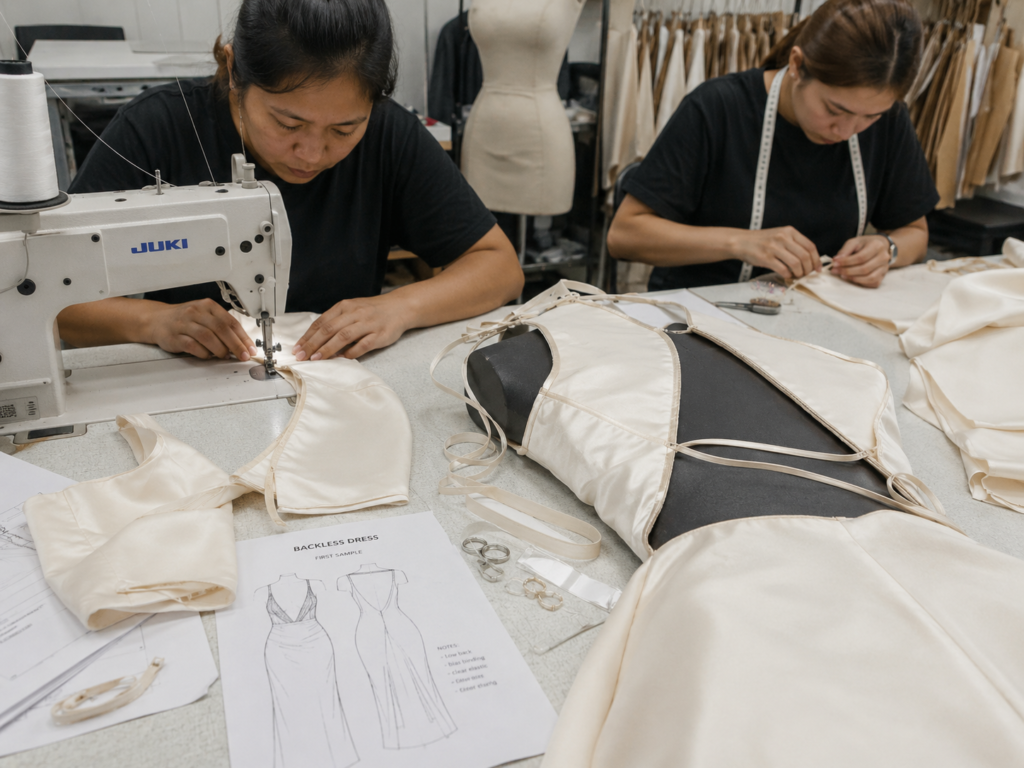
Beyond cost and execution, BOM also serves as a quality benchmark during sampling evaluation. It defines what “correct” means in measurable terms.
Quality control teams use BOM to verify:
- Fabric matches approved GSM and composition
- Stitch density meets technical requirement
- Trim placement follows design specification
- Construction aligns with approved structure
Without BOM reference, sample evaluation becomes subjective. With BOM, approval decisions are based on measurable standards rather than visual judgment alone.
What Makes a Factory-Ready BOM for Dress Production?
A factory-ready BOM is not a simple material list. It is a fully structured production document that removes ambiguity across fabric sourcing, costing, sampling, and bulk manufacturing. In dress production, it acts as the technical reference that ensures every department works with identical specifications.
When BOM is factory-ready, production becomes predictable. Fabric procurement aligns with real consumption, trims are sourced without substitution, and sampling results match bulk output with minimal deviation.
In practical manufacturing environments, a factory-ready BOM typically improves:
- Quotation accuracy by 8–15%
- Sampling approval rate by 30–50%
- Bulk production consistency by 10–20%
- Material waste reduction by 5–12%
What technical data must be included in a factory-ready BOM
A complete BOM must include measurable, production-executable details. Missing data forces factories to estimate, which increases cost deviation and sampling errors.
Core BOM data requirements:
- Fabric composition, GSM, width, shrinkage rate
- Fabric consumption per size (graded sizing included)
- Trim specification with supplier standard or grade
- Stitch type, SPI (stitch per inch), seam allowance
- Lining structure and reinforcement points
- Embellishment density or placement ratio
- Packaging details (bag thickness, folding standard, carton size)
| BOM Section | Required Data | Production Impact |
|---|---|---|
| Fabric | GSM, width, composition | Controls 50–70% cost |
| Trims | Type, grade, color code | Affects finishing quality |
| Stitching | SPI, seam type | Impacts durability & labor time |
| Lining | Type, coverage | Influences structure & comfort |
| Packaging | Size, material | Affects logistics cost |
Even missing one parameter, such as fabric width, can lead to 5–8% material waste during cutting.
How factory-ready BOM improves quotation accuracy
Quotation errors often come from incomplete BOM data. When factories lack full specification, they rely on assumptions that distort final pricing.
Key pricing risks without proper BOM:
- Fabric consumption under-calculated
- Trim grade not clearly defined
- Labor time not estimated correctly
- Embellishment complexity ignored
With a complete BOM:
- Fabric usage is calculated per size ratio
- Trim sourcing matches exact specification
- Labor time is derived from stitch complexity
- Wastage rate is controlled within 3–8%
| Scenario | Price Accuracy | Risk Level |
|---|---|---|
| Incomplete BOM | ±15–25% deviation | High |
| Partial BOM | ±8–12% deviation | Medium |
| Factory-ready BOM | ±3–5% deviation | Low |
Why standardization is critical in a factory-ready BOM
Standardization ensures that all departments interpret BOM data in the same way. Without standardized units and formats, even complete BOMs can lead to production inconsistency.
Key standardization elements:
- Unified measurement units (cm, inch, meter consistency)
- Fabric naming aligned with supplier codes
- Trim identification using SKU or reference numbers
- Clear size grading logic (XS–XL or numeric grading system)
- Defined tolerance ranges for measurements
Without standardization, factories may interpret the same BOM differently across sampling and bulk production, leading to inconsistent output across batches.
How factory-ready BOM reduces production risk
Production risk increases when BOM leaves room for interpretation. A factory-ready BOM eliminates uncertainty by locking key variables before sampling and bulk production.
Main risk reductions include:
- Fabric substitution risk eliminated through exact specification
- Trim inconsistency avoided via supplier-defined references
- Sampling revision cycles reduced by pre-validated structure
- Bulk production mismatch minimized through locked parameters
In structured dress manufacturing, risk reduction from BOM standardization can reach 20–40%, especially in complex garments like corset dresses, layered chiffon styles, or embellished evening wear.
What mistakes prevent a BOM from becoming factory-ready
Many BOMs fail to support production not because they are missing information, but because they are not structured for manufacturing execution.
Common issues:
- Fabric listed without GSM or width
- Trims described without grade or supplier reference
- Missing stitch density or seam specification
- No size grading consumption calculation
- No allowance for shrinkage or wastage
| BOM Issue | Production Effect |
|---|---|
| Missing fabric width | Cutting inefficiency |
| Undefined trim grade | Quality inconsistency |
| No SPI definition | Stitch variation |
| No grading data | Size imbalance |
These gaps often result in delayed sampling, repeated revisions, and unstable bulk production performance.
Why factory-ready BOM is essential for scaling dress production
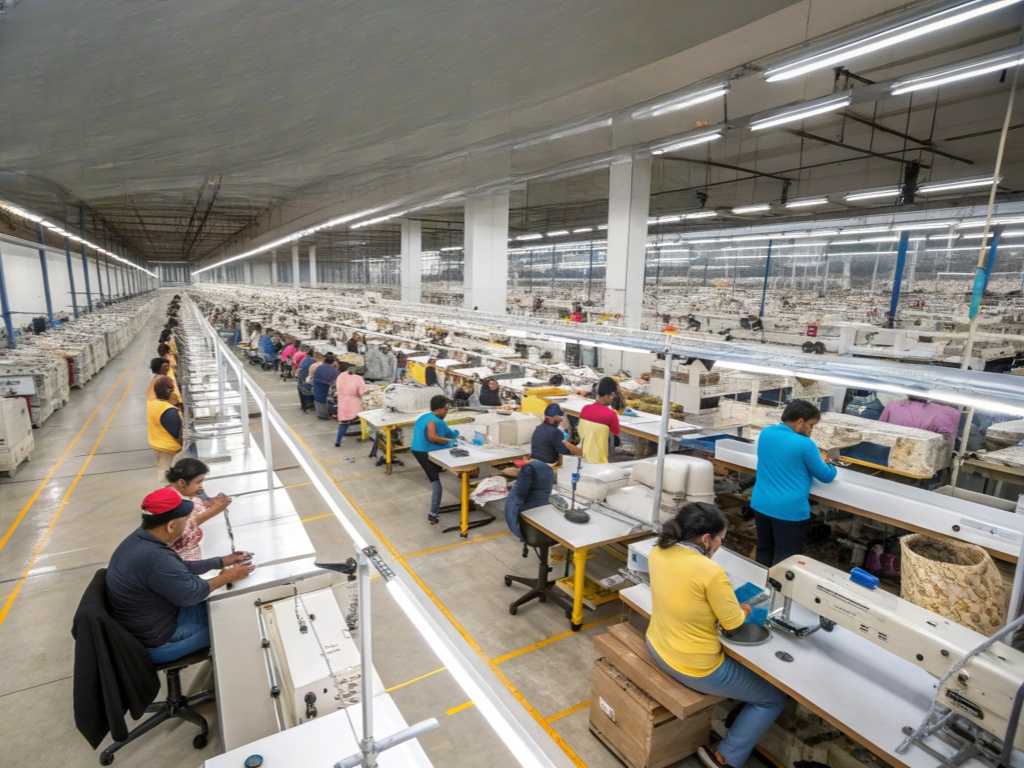
As production volume increases, small BOM errors multiply into large cost and quality issues. A factory-ready BOM ensures scalability without losing consistency.
Benefits during scaling:
- Stable cost structure across large quantities
- Consistent fabric and trim sourcing across batches
- Predictable labor allocation across production lines
- Reduced defect rate in mass production
In real production environments, a structured BOM can improve large-scale order stability by 15–25%, making it essential for seasonal collections and repeatproduction cycles.
Custom Dress Manufacturing Inquiry
A precise BOM transforms dress development from guesswork into controlled production engineering. When BOM structure is clear, cost becomes predictable, sampling becomes stable, and production risk drops significantly.
For brands planning custom dress collections, Jinfeng Apparel provides structured BOM development support, fabric sourcing validation, and factory-level sampling execution for OEM & ODM production.
Inquiry Invitation:
Share design concepts, sketches, or reference images with Jinfeng Apparel to receive professional BOM structuring, cost breakdown, and sampling feasibility analysis for custom women’s dresses tailored for your brand direction.