Skip to content

In today’s fashion supply chain, selecting a manufacturing partner is no longer a simple sourcing task—it has become a strategic decision that directly shapes brand identity, delivery stability, and market competitiveness. Many fashion collections fail not because of weak design ideas, but because the production partner cannot translate design intent into consistent, scalable garments. A dress that looks perfect in a sample stage can quickly lose structure, fit accuracy, or fabric behavior once it enters bulk production. This gap between expectation and execution is where most production risks originate.
A reliable dress manufacturer is not defined by price alone or even by sample quality alone. It is defined by repeatability, technical control, and the ability to maintain consistency across thousands of units while adapting to complex design details such as draping, stretch balance, and fabric behavior. In real production environments, reliability is proven through systems—fabric testing, pattern engineering, sampling accuracy, production scheduling discipline, and strict quality checkpoints.
A reliable dress manufacturer is a production partner capable of delivering consistent quality from sampling to bulk production with stable fabric sourcing, precise pattern execution, and controlled quality systems. The key evaluation points include technical capability, production consistency, communication structure, and risk management across scaling orders.
Many brands only realize the importance of manufacturing reliability after experiencing issues such as delayed shipments, inconsistent sizing, or fabric mismatch between sample and bulk. One common scenario involves a perfect showroom sample that cannot be replicated at scale due to weak production engineering. In another case, a visually appealing design fails during washing or wear tests because fabric behavior was not properly evaluated before bulk cutting. These situations highlight why manufacturer selection is one of the most critical decisions in fashion development.
This guide breaks down how to identify a reliable dress manufacturer, how to evaluate production capability, and how to avoid common sourcing risks that often appear only after orders are placed.
What Is a Reliable Dress Manufacturer?
A reliable dress manufacturer is a production partner capable of consistently turning design concepts into stable, repeatable garments across sampling and bulk production without deviation in fit, fabric behavior, or workmanship quality. In real production environments, reliability is not defined by a single good sample or fast quotation response, but by measurable execution stability across multiple orders, fabric batches, and seasonal production cycles. A stable manufacturer must control fabric sourcing, pattern accuracy, sampling iteration, and bulk production discipline under one coordinated system.
What defines reliability in real dress production?
A reliable dress manufacturer must deliver repeatable results across at least three dimensions: sample accuracy, bulk consistency, and production predictability. Sample accuracy is measured by how closely the first approved sample matches final bulk output, typically within a 2–3% tolerance in measurements. Bulk consistency refers to maintaining the same stitching density, seam alignment, and fabric tension across all production units, even when orders exceed 1,000–10,000 pieces. Production predictability ensures delivery schedules remain stable, with variation controlled within 3–5 days for standard styles.
Reliability also depends on how effectively a factory manages design interpretation. Misreading tech packs, unclear grading rules, or inconsistent fabric substitution often lead to production errors. A reliable factory reduces these risks through structured pattern approval, fabric testing before cutting, and pre-production sample confirmation.
Core capability structure of a reliable manufacturer
A strong dress manufacturer operates through interconnected production capabilities rather than isolated skills. The following table summarizes the key capability pillars:
| Capability Area | Practical Function | Risk Without It |
|---|---|---|
| Fabric Control | Testing shrinkage, stretch, color fastness | Size deviation, fabric mismatch |
| Pattern Engineering | Accurate grading and construction logic | Fit inconsistency across sizes |
| Sampling System | Controlled revision and approval process | Endless revisions, production delay |
| Production Planning | Line balancing and scheduling | Delayed shipment, overload errors |
| Quality Control System | Inline + final inspection structure | Defect leakage to shipment |
Each of these areas directly impacts whether a dress can move from sample stage to bulk production without structural deviation. When even one pillar is weak, production risk increases significantly.
What production standards matter most in evaluation?
In real manufacturing evaluation, standards are measured through repeatability rather than presentation. Key indicators include:
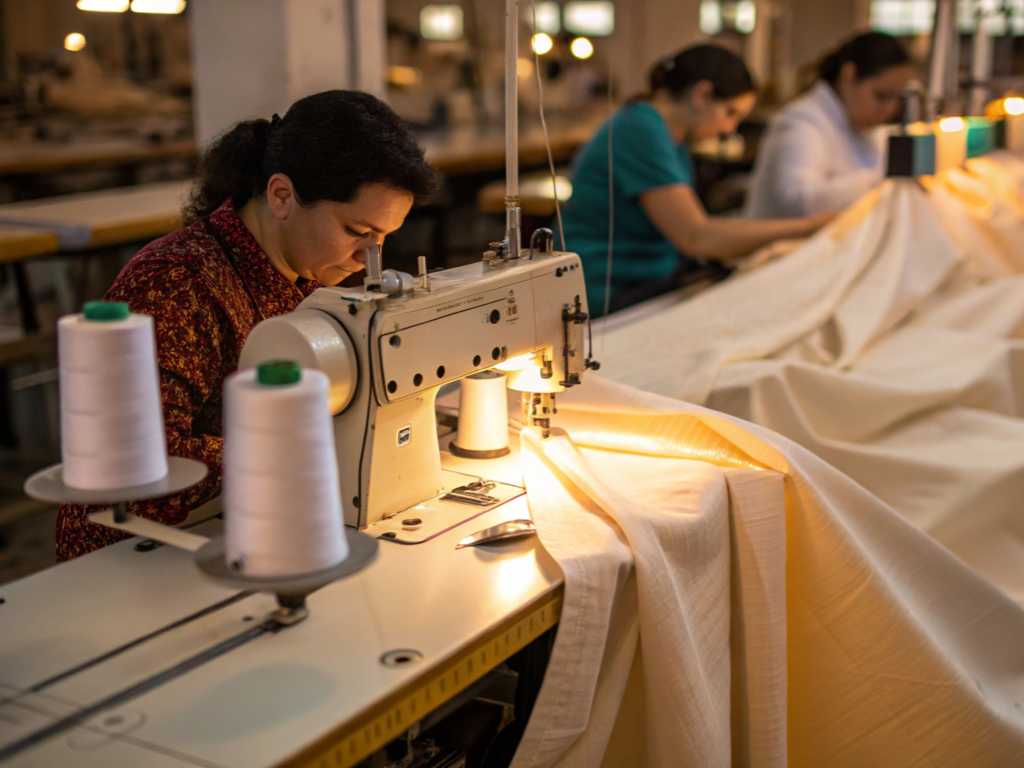
- Stitch consistency maintained across full production line
- Fabric shrinkage controlled within 2–4% after wash testing
- Color variation controlled under ΔE ≤ 1.5 for dyed fabrics
- Size grading accuracy within ±1 cm tolerance for critical points
- Defect rate maintained under AQL 2.5 for mid-range fashion production
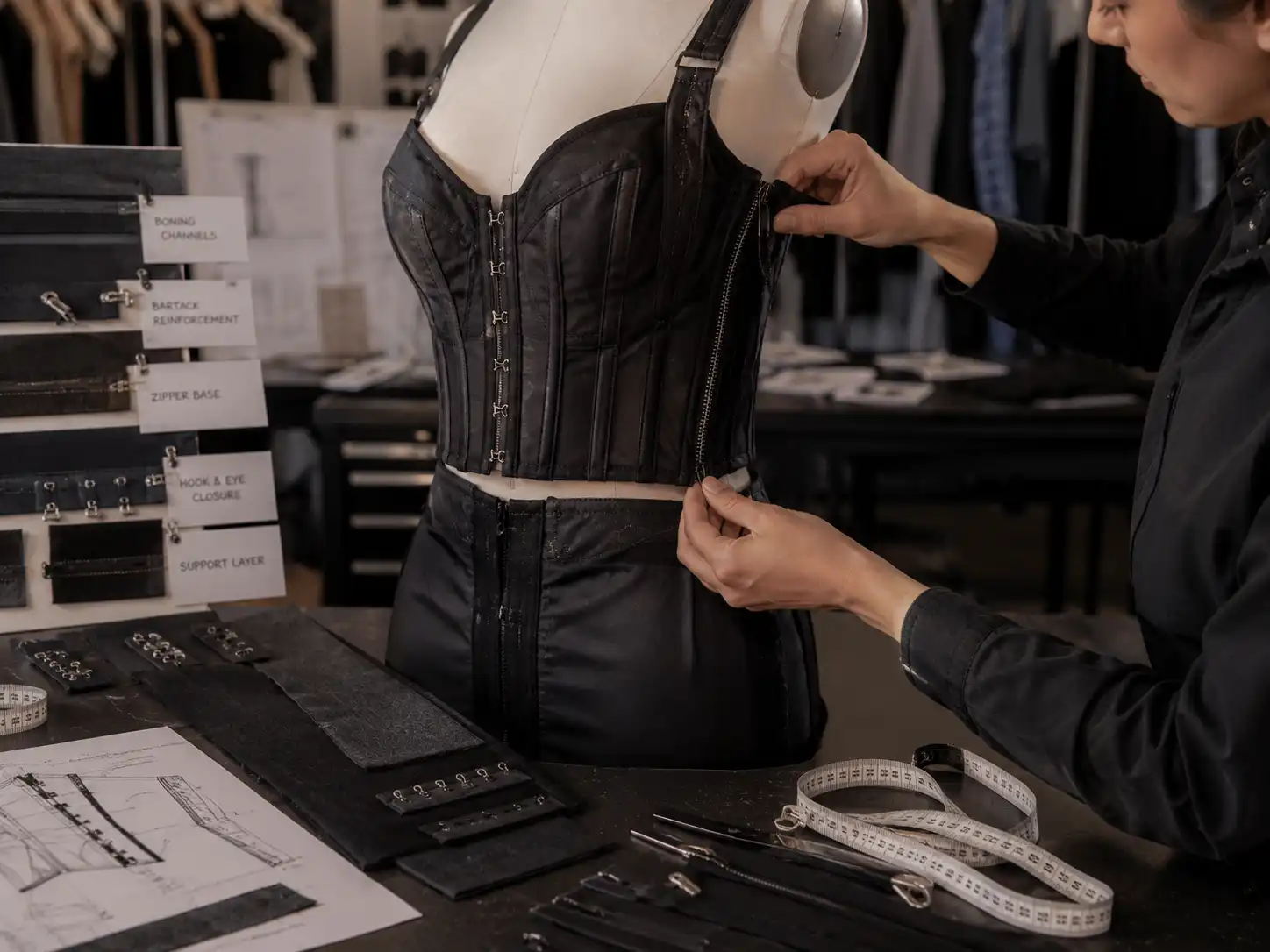
These indicators are not theoretical benchmarks; they directly influence how garments perform in retail environments. For example, even a 1.5 cm deviation in waist measurement can change fit perception significantly in fitted dress categories such as bodycon or corset styles.
Why reliability is a system rather than a claim
In garment manufacturing, reliability is often misunderstood as experience or reputation. In practice, it is a structured system built on controlled processes. Factories without standardized systems depend heavily on individual skill, which creates instability during scaling. A skilled sample maker may produce excellent prototypes, but without system control, bulk production often drifts from the original design intent.
A reliable system includes documented production workflows, fabric testing before cutting, and standardized communication between pattern, sampling, and production departments. It also includes feedback loops where every sample revision is recorded and locked before bulk production begins. Without these systems, production becomes reactive rather than controlled.
Typical performance difference between stable and unstable factories
| Factor | Stable Manufacturer | Unstable Manufacturer |
|---|---|---|
| Sample Revision Cycles | 1–2 rounds | 3–6+ rounds |
| Bulk Defect Rate | 1–3% | 5–15% |
| Delivery Variation | ±3–5 days | ±10–20 days |
| Fabric Consistency | Batch controlled | Frequent substitution |
| Fit Accuracy | Stable across sizes | Size drift common |
This comparison highlights a key reality: reliability directly reduces production uncertainty, which is critical for seasonal fashion collections where timing and consistency determine market success.
How production consistency affects real business outcomes
Production consistency influences more than manufacturing efficiency. It directly affects retail pricing stability, return rates, and brand positioning. Inconsistent sizing or fabric behavior leads to higher return ratios, especially in fitted dresses where customer expectation is highly sensitive to fit precision. Even a small inconsistency across batches can impact repeat order performance and long-term retail partnerships.
Consistent manufacturers help maintain predictable unit economics. When production output is stable, pricing does not fluctuate across reorder cycles, allowing better margin planning. For fashion collections with tight seasonal windows, this stability becomes a critical competitive advantage.
How Do You Evaluate a Dress Manufacturer’s Capability?
Evaluating a dress manufacturer’s capability requires checking how well the factory performs across fabric handling, sampling precision, and bulk production stability under real order conditions. A capable manufacturer is not identified by presentation materials or sample photos, but by measurable execution: how accurately a design is interpreted, how consistently samples are reproduced, and how stable production remains when order volume increases. The evaluation process should combine technical review, production observation, and data-based validation such as sampling cycles, defect rates, and lead time stability.
How to evaluate fabric and material capability?
Fabric capability is the foundation of dress manufacturing because every design outcome depends on how fabric behaves under cutting, sewing, and washing conditions. A qualified manufacturer should be able to identify fabric shrinkage rate (ideally controlled within 2–4%), stretch recovery performance (85–95% for elastic materials), and color fastness (grade 4 or above under standard wash tests). Fabric evaluation should also include whether the factory performs pre-cutting testing for every batch or relies only on supplier claims.
A strong factory maintains a controlled fabric sourcing system with approved mills, fabric swatch libraries, and test reports for each batch. Without these controls, even identical fabric types may behave differently across production runs, leading to inconsistent sizing or surface quality issues in dresses.
How to evaluate sampling accuracy and engineering strength?
Sampling performance reflects how well a factory translates design intent into physical garments. A reliable manufacturer typically completes initial samples within 5–10 working days depending on complexity, with no more than 1–2 revision rounds before approval. Excessive revisions often indicate weak pattern interpretation or unclear technical communication between design and production teams.
Key evaluation points include:
- Measurement deviation within ±1 cm for key fit points
- Pattern symmetry accuracy across left/right garment panels
- Stitch density consistency (typically 10–12 stitches per inch for woven dresses)
- Clean finishing in hidden construction areas such as lining and seams
Factories with strong engineering capability also use standardized pattern blocks and digital grading systems to reduce human error during size scaling.
How to evaluate bulk production consistency?
Bulk production consistency is tested by comparing early-stage, mid-stage, and final-stage production outputs. A capable manufacturer maintains defect rates under 3–5% for mid-range fashion production and ensures size deviation does not increase as production volume grows.
Consistency indicators include:
- Color uniformity across different dye lots (ΔE ≤ 1.5 acceptable range)
- Seam alignment consistency across full production line
- Stable fabric tension control during stitching
- No structural drift between first 100 pcs and final batch
Factories without structured inline inspection often show quality drift after the first production wave, especially in high-volume dress categories such as bodycon, satin slip dresses, or multi-layer designs.
Key evaluation checklist for production capability
| Evaluation Area | What to Check | Stable Performance Range | Risk Signal |
|---|---|---|---|
| Fabric Testing | Shrinkage, stretch, color fastness | Shrinkage 2–4%, Color grade 4+ | No test reports provided |
| Sampling Process | Revision cycles, accuracy | 1–2 revisions | 3+ revisions required |
| Pattern System | Grading and symmetry control | ±1 cm tolerance | Size inconsistency |
| Bulk Quality | Defect rate, consistency | ≤3–5% defect rate | High variation across batches |
| Delivery Control | Lead time stability | ±3–5 days variance | Frequent delays |
This table allows quick comparison between manufacturers and highlights whether production systems are controlled or reactive.
How to evaluate production planning and capacity control?
Production capability is not only about machinery or workforce size but about how efficiently orders are scheduled and executed. A capable manufacturer should demonstrate stable lead time control, typically between 15–35 days depending on style complexity, with minimal fluctuation across seasons.
Important evaluation points include:
- Whether production lines are dedicated or shared across multiple product types
- How fabric procurement is synchronized with production scheduling
- Whether capacity is calculated based on real line output or theoretical estimates
- How rush orders are handled without affecting ongoing production
Factories with weak planning systems often overcommit capacity, resulting in delayed shipments and inconsistent quality due to rushed production cycles.
Which Factors Decide Manufacturing Stability?
Manufacturing stability in dress production refers to the ability of a factory to maintain consistent quality, predictable lead time, and controlled defect rates across different seasons, order sizes, and fabric types. Stability is not achieved by production volume or equipment level alone, but by how well materials, workforce, planning, and quality systems are synchronized. In real production environments, instability often appears when orders scale up, fabric batches change, or multiple styles run simultaneously. Understanding the core drivers of stability helps identify whether a manufacturer can support long-term, repeat collections without quality drift or delivery disruption.
How do material control systems affect stability?
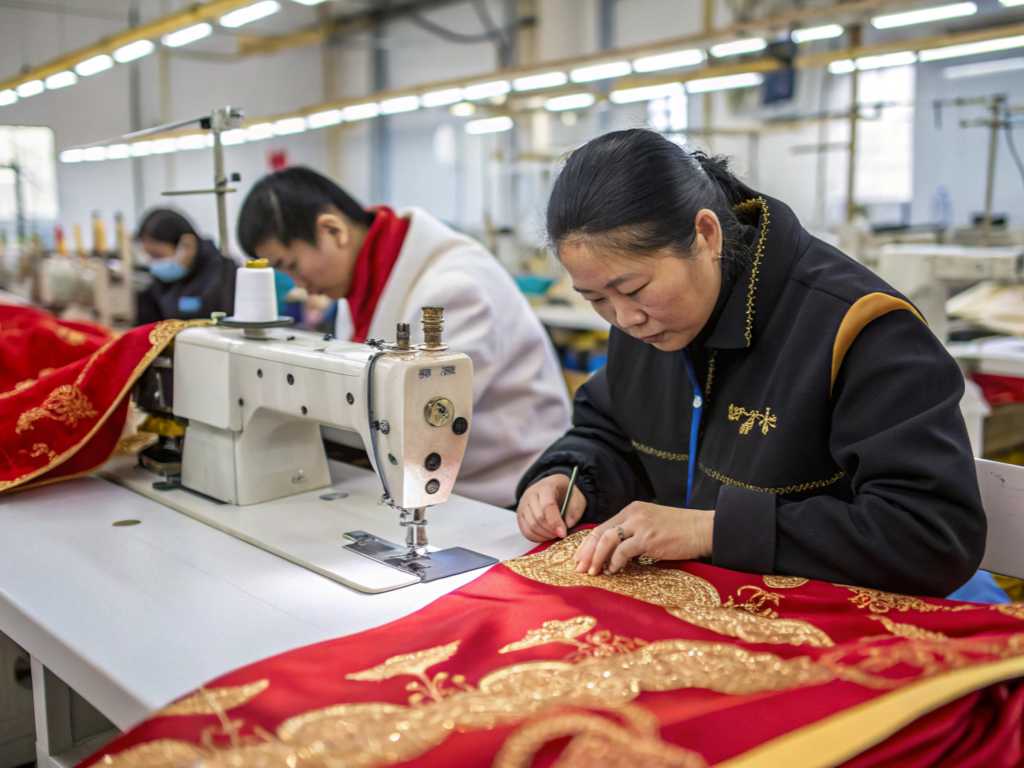
Material control is one of the strongest determinants of production stability. Even small variations in fabric shrinkage (1–3%), dye lot differences, or elasticity changes can lead to visible inconsistencies in final garments. Stable manufacturers maintain structured fabric control systems, including pre-production testing, approved supplier lists, and batch-based fabric tracking.
In practical production, fabric instability is often responsible for more than 40% of bulk quality issues in dress manufacturing. Without controlled fabric intake, size deviation, seam twisting, or surface inconsistency becomes unavoidable. Reliable factories test each fabric batch before cutting, ensuring shrinkage, color fastness, and stretch recovery remain within controlled ranges.
How does production planning impact stability?
Production planning determines whether workflow remains smooth or becomes overloaded during peak cycles. Stable factories calculate capacity based on real output per line per day, typically 80–150 pieces per line depending on garment complexity, rather than theoretical maximum capacity.
Key planning indicators include:
- Balanced workload distribution across multiple sewing lines
- Pre-scheduled material arrival aligned with production start dates
- Separate planning for sampling, bulk, and rework processes
- Buffer time allocation of 10–15% for unexpected adjustments
Factories without structured planning often experience bottlenecks when multiple styles enter production simultaneously, leading to rushed sewing, inconsistent finishing, and delayed shipment windows.
How does workforce structure affect production consistency?
Workforce stability directly influences garment consistency. High turnover in sewing lines can result in uneven stitching quality, especially in complex dress categories such as corset, satin, or multi-layer designs. Stable manufacturers maintain trained teams assigned to specific garment categories rather than rotating workers across all styles.
A well-structured workforce system includes:
- Dedicated teams for woven dresses, knit dresses, and evening wear
- Standard operating procedures for stitching density and seam finishing
- Internal training cycles for new operators (typically 2–4 weeks before line entry)
- Quality supervision at line level rather than only final inspection
Factories lacking workforce structure often show variation between early and late production batches due to inconsistent operator skill levels.
How does quality control structure influence stability?
Quality control is a core stabilizing mechanism rather than a final checkpoint. Stable manufacturers implement multi-stage inspection systems that include incoming fabric inspection, inline production checks, mid-line sampling, and final AQL inspection.
Typical QC checkpoints:
- Fabric inspection before cutting (defect rate control under 3–5%)
- Inline stitching checks every 20–30 pieces
- Mid-production measurement verification on sample units
- Final inspection using AQL 2.5 standard for fashion garments
Without layered QC systems, defects accumulate until the final stage, increasing rejection rates and rework costs.
Key stability factors and risk comparison
| Stability Factor | Stable Manufacturing System | Unstable Manufacturing System |
|---|---|---|
| Fabric Control | Batch testing + approved mills | Direct supplier usage without testing |
| Production Planning | Line-based scheduling + buffers | Overlapping orders, no buffer time |
| Workforce System | Dedicated category teams | Mixed skill random allocation |
| Quality Control | Multi-stage inspection system | End-point inspection only |
| Output Consistency | ≤3% variation across batches | 5–15% variation common |
This comparison highlights how structured systems directly reduce production deviation across large-scale dress manufacturing.
Why stability is built before production starts
Production stability is not achieved during sewing; it is defined before cutting begins. Fabric confirmation, pattern finalization, and production scheduling collectively determine whether output remains consistent. Once fabric enters cutting stage without full validation, any instability becomes amplified across the entire production line.
Stable manufacturers invest time in pre-production alignment meetings where fabric behavior, stitching requirements, and size grading rules are confirmed and locked. This reduces mid-production changes, which are one of the main causes of inconsistency in large dress orders.
Another often overlooked factor is communication structure. When technical decisions pass through multiple non-technical intermediaries, interpretation errors increase. Factories with direct communication between pattern makers, production supervisors, and quality teams achieve significantly higher stability because fewer details are lost during translation.
Practical insight on real-world stability
In actual dress manufacturing, stability becomes visible only when production exceeds 500–1,000 pieces per style. Small orders may hide system weaknesses because manual control is still possible. Once volume increases, differences in fabric handling, stitching discipline, and workflow coordination become more obvious.
Stable manufacturers perform consistently even under seasonal pressure, such as peak fashion cycles or multi-style simultaneous production. Their advantage lies not in faster output, but in controlled variation. The difference between a stable and unstable factory often appears in repeat orders, where the same style must be reproduced months later with identical fit and fabric behavior.
How to Compare Different Dress Manufacturers?
Comparing dress manufacturers is a structured decision process that goes beyond price checking or sample evaluation. In real sourcing scenarios, differences between factories often appear in production consistency, fabric control capability, sampling precision, and order execution stability rather than in surface-level communication. A meaningful comparison must focus on measurable production indicators, not promotional claims or isolated sample quality. The goal is to identify which factory can maintain stable output across multiple styles, seasons, and order volumes without deviation in fit, fabric behavior, or delivery schedule.
How do production capability differences affect comparison?
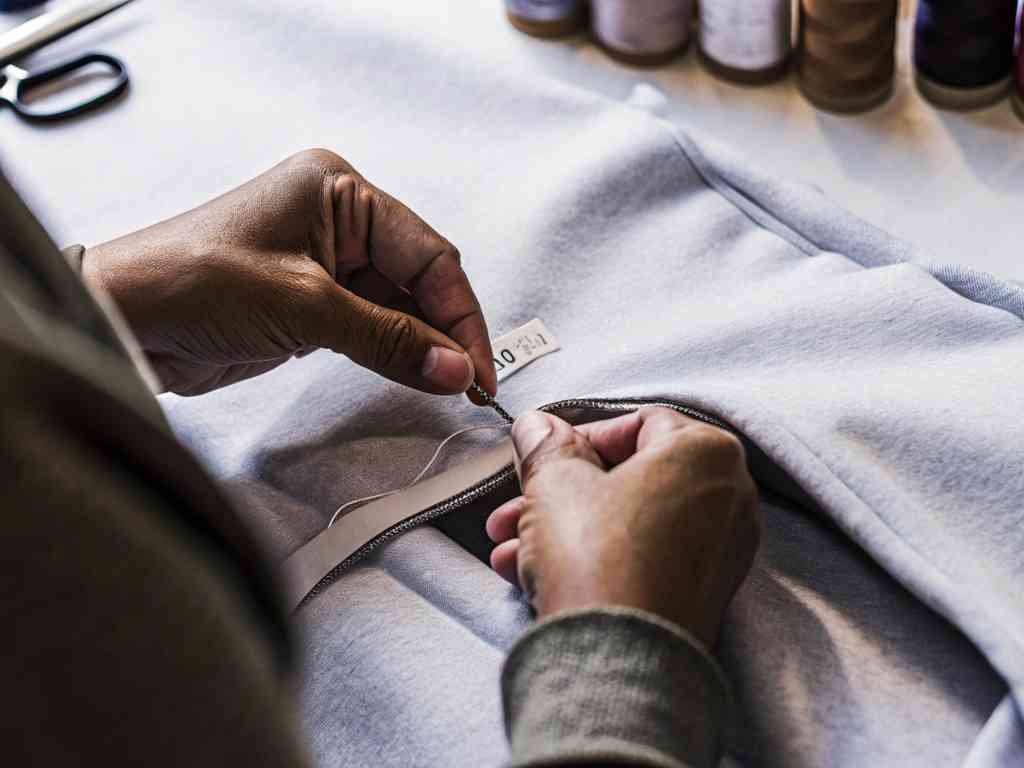
Production capability varies significantly depending on factory structure, machinery setup, and internal workflow organization. Some factories specialize in simple cut-and-sew garments, while others handle complex structured dresses such as corset, satin evening wear, or multi-layer designs. Capability should be measured by how many styles can run simultaneously without quality degradation and how consistently complex garments are reproduced across batches.
Key measurable indicators include:
- Daily output per line (typically 80–150 pcs depending on complexity)
- Maximum concurrent styles handled without quality loss (3–8 styles for stable factories)
- Sampling-to-bulk reproduction accuracy (target deviation ≤3%)
- Fabric handling range (woven, knit, stretch, delicate fabrics)
Factories with limited capability often show strong performance in one category but fail when product diversity increases.
How does pricing structure reflect real manufacturing strength?
Pricing comparison should not focus only on unit cost but on what is included in the production system. A lower price may exclude fabric testing, inline QC, or pattern refinement, leading to hidden risks during bulk production. Strong manufacturers usually have transparent cost structures covering fabric sourcing, sampling, production labor, finishing, and inspection.
Typical pricing difference indicators:
| Factor | High-Control Factory | Low-Control Factory |
|---|---|---|
| Sample Cost | Higher, includes full engineering | Lower, limited technical input |
| Bulk Pricing Stability | Consistent across repeats | Frequent fluctuations |
| Fabric Sourcing | Approved suppliers only | Open sourcing, variable quality |
| QC Cost Inclusion | Inline + final inspection | Final inspection only |
Real cost efficiency should be evaluated across the full production lifecycle, not per-piece price alone.
How does regional production difference affect outcomes?
Manufacturing regions influence production behavior due to differences in labor skill level, supply chain maturity, and fabric accessibility. China-based factories typically offer stronger fabric sourcing networks and more advanced production systems for complex dress categories. Vietnam provides competitive labor cost advantages but may have limitations in fabric variety and technical garment construction. Local Western production centers often provide faster logistics but higher cost structures and limited scalability.
Key comparison dimensions:
- Fabric availability and diversity
- Technical capability for structured garments
- Production scalability for seasonal orders
- Communication efficiency and iteration speed
Regional differences become more visible when production complexity increases, especially in fitted dresses or multi-material designs.
How do sampling systems differ between manufacturers?
Sampling systems reveal how a factory interprets design intent. Strong manufacturers maintain structured sampling workflows with controlled revision cycles, usually 1–2 rounds before final approval. Weak systems often require multiple revisions due to unclear pattern interpretation or inconsistent fabric substitution.
Sampling performance indicators:
- Sample turnaround time: 5–10 working days
- Revision cycle limit: 1–2 rounds for stable factories
- Measurement accuracy: ±1 cm for key points
- Fabric consistency between sample and bulk: controlled match rate ≥95%
Factories without structured sampling systems tend to show drift between sample approval and final bulk output.
How to evaluate long-term production reliability?
Long-term reliability is assessed by repeat order performance rather than first-order success. A factory that performs well initially may still fail in consistency when fabric batches change or production scales up. Reliable manufacturers maintain stable output across multiple production cycles using standardized processes and controlled material systems.
Evaluation indicators:
- Repeat order consistency (same style over 2–6 production cycles)
- Defect rate stability (target ≤3–5%)
- Lead time variation control (±3–5 days)
- Fabric replacement transparency and approval process
Factories with strong long-term reliability often maintain style archives and production records to ensure repeat accuracy across seasons.
Key comparison framework for decision-making
| Evaluation Area | What to Check | Stable Manufacturer Benchmark | Risk Signal |
|---|---|---|---|
| Production Capability | Style complexity handling | Multi-style + structured dresses | Limited category focus |
| Pricing Structure | Cost transparency | Full breakdown provided | Hidden or unclear costing |
| Regional Advantage | Supply chain access | Strong fabric ecosystem | Limited material options |
| Sampling System | Revision control | 1–2 cycles max | Multiple uncontrolled revisions |
| Long-Term Stability | Repeat order consistency | ≤5% variation across cycles | Output drift over time |
Practical insight on comparison logic
In real sourcing practice, the most common mistake is comparing manufacturers based on initial samples or quoted price alone. These two indicators often hide structural weaknesses in production systems. A more accurate comparison comes from observing how each factory handles complexity, repetition, and scaling pressure.
Factories with strong systems perform consistently even when order volume increases or fabric types change. Weak factories may perform well in simple orders but lose stability when multiple styles run in parallel or when seasonal deadlines tighten. The most reliable comparison method is to test across three dimensions: sample accuracy, small pilot production, and repeat order consistency.
How to Avoid Risks When Choosing a Manufacturer?
Risk control in dress manufacturing is not about eliminating uncertainty completely, but about identifying weak signals before production begins. In real sourcing practice, most production failures do not happen during sampling—they appear when bulk orders start, fabric batches change, or production pressure increases. A structured risk evaluation helps reduce issues such as inconsistent sizing, delayed shipments, fabric substitution, and uncontrolled defect rates. Effective risk control is based on verifying systems, not relying on sample appearance or verbal commitments.
How do communication issues signal production risk?
Communication patterns often reveal the real operational structure of a factory. Delayed responses, unclear technical explanations, or inconsistent answers between sales and production teams are early warning indicators. In stable manufacturers, technical details such as fabric composition, stitch density, or grading rules are consistent across all communication points.
Key risk signals include:
- No direct access to technical team (only sales communication)
- Different answers on fabric or measurement details across messages
- Missing confirmation records for sampling changes
- Vague responses on production scheduling or capacity
Factories with weak communication discipline often create interpretation gaps, which later result in sampling errors or bulk inconsistencies.
Sampling is one of the most reliable stages to detect production risk before bulk orders begin. However, risk appears not only in the final sample but in the revision process. Excessive sample revisions often indicate unclear pattern understanding or unstable fabric substitution practices.
Common risk indicators in sampling:
- More than 2–3 revision cycles required for basic styles
- Fabric changes without clear technical justification
- Measurement shifts between sample versions exceeding ±2 cm
- Differences in finishing quality between sample iterations
In structured factories, sampling is controlled through documented revision cycles, fabric approval before cutting, and locked measurement sheets after approval.
How do production delays reveal system instability?

Delivery timing consistency is a strong indicator of internal production control. Stable manufacturers maintain lead time variation within ±3–5 days. When delays fluctuate widely, it usually indicates poor production planning or overbooked capacity.
Typical delay-related risk patterns:
- Frequent changes in promised delivery dates
- Overlapping production schedules without buffer time
- No clear distinction between sampling and bulk timelines
- Rush orders disrupting ongoing production lines
Factories without structured scheduling systems often prioritize short-term orders, which creates instability across all ongoing production.
Key risk comparison framework
| Risk Area | Stable Factory Behavior | High-Risk Factory Behavior |
|---|---|---|
| Communication | Direct technical clarity | Inconsistent or delayed answers |
| Sampling Process | 1–2 controlled revisions | Multiple uncontrolled revisions |
| Fabric Control | Approved and tested batches | Unverified substitutions |
| Production Timing | ±3–5 days variation | Frequent unpredictable delays |
| Quality Control | Multi-stage inspection | Final-stage only inspection |
Fabric instability is one of the least visible but most impactful risks in dress manufacturing. Even when samples look correct, bulk production can shift if fabric batches are not controlled. Differences in shrinkage, elasticity, or dye lots can create visible variation across finished garments.
Critical fabric risk points include:
- Shrinkage variation beyond 3–4% across batches
- Color deviation between dye lots (ΔE > 1.5 noticeable in retail lighting)
- Stretch recovery inconsistency in fitted dresses
- Fabric substitution without formal approval
Factories with strong systems always conduct fabric testing before cutting and maintain batch traceability for every production run.
Why small pilot production reduces major risk
Pilot production is one of the most effective risk control methods before full-scale manufacturing. A small production run (50–100 pieces per style) allows verification of real production conditions, not just sample accuracy.
Pilot production helps identify:
- Stitch consistency across multiple units
- Real fabric behavior during mass cutting
- Operator variation in sewing lines
- Actual defect rate under production pressure
Factories that perform well in pilot runs usually maintain stable output in larger orders. Those that fail often show hidden system weaknesses that are not visible in sampling stages.
How Does the Right Manufacturer Support Long-Term Growth?
A strong dress manufacturer is not only responsible for producing garments, but also for supporting long-term brand expansion through stable output, repeatable quality, and predictable development systems. In real production environments, long-term growth depends on whether styles can be reproduced consistently across seasons, whether new collections can be developed based on previous patterns, and whether production capacity can scale without quality loss. A reliable manufacturing partner becomes part of the operational backbone, especially when product lines expand from small seasonal drops into continuous collections.
How does production stability support brand scaling?
Production stability directly influences how fast and how safely a fashion line can grow. When manufacturing output remains consistent across different seasons, planning new collections becomes more predictable. Stable factories maintain consistent fabric sourcing, pattern control, and production timing, which reduces variation between first and repeat orders.
Key growth-related indicators include:
- Repeat order consistency within ±3–5% measurement variation
- Stable lead time across multiple production cycles (15–35 days typical range)
- Consistent defect rate below 3–5% in bulk production
- Ability to scale from 200 pcs to 5,000+ pcs without quality drift
When these conditions are stable, planning seasonal expansion becomes significantly less risky.
How does development support improve long-term collections?
Long-term growth relies heavily on development continuity. A capable manufacturer does not treat every order as an isolated project, but builds on previous styles to improve efficiency and reduce development time.
Development support typically includes:
- Pattern reuse and modification based on previous successful styles
- Fabric substitution options tested for similar drape and stretch behavior
- Size grading optimization using historical production data
- Reduction of sampling cycles through stored technical specifications
Factories with structured development systems can reduce sample lead time by 20–40% on repeat styles, improving speed-to-market for seasonal launches.
How does consistency influence retail performance?
Consistency in manufacturing directly affects return rates, reorder behavior, and long-term product positioning. In dress categories such as bodycon, satin slip dresses, and structured evening wear, even small variations in fit or fabric behavior can lead to noticeable differences in customer experience.
Key performance impact areas:
- Size consistency reduces return rates by 10–25% in fitted categories
- Stable fabric quality improves repeat purchase behavior across seasons
- Consistent finishing strengthens product positioning in higher price segments
- Reduced production variance improves inventory planning accuracy
When output is stable, retail pricing strategies and stock planning become more predictable, reducing overstock or shortage risks.
Key growth support framework
| Growth Factor | Manufacturer Contribution | Measurable Outcome |
|---|---|---|
| Production Stability | Controlled repeat output | ≤5% variation across orders |
| Development Continuity | Pattern reuse + optimization | 20–40% faster sampling |
| Quality Consistency | Multi-stage QC system | ≤3–5% defect rate |
| Scaling Capacity | Multi-line production setup | 200 → 5,000+ pcs scalability |
| Lead Time Control | Structured scheduling system | ±3–5 days variation |
Why long-term manufacturing partnership reduces development cost
Over time, working with a stable manufacturer reduces overall development cost. Once patterns, fabric preferences, and production standards are established, each new collection requires fewer revisions and shorter sampling cycles. This reduces not only direct sampling expenses but also indirect costs caused by delays and rework.
Long-term cooperation also allows factories to better understand construction preferences, such as preferred waist shaping, lining structure, or stretch balance for fitted dresses. This reduces communication errors and speeds up approval cycles for new styles.
How manufacturing partnership supports seasonal expansion
Seasonal fashion collections rely on timing precision. A stable manufacturer enables predictable production cycles across multiple drops per year. When capacity, fabric sourcing, and sampling systems are aligned, it becomes possible to plan overlapping collections without production bottlenecks.
Common expansion benefits include:
- Ability to run multiple seasonal collections in parallel
- Faster adaptation of existing styles into new colorways or fabrics
- Reduced dependency on re-sampling for minor design changes
- Improved inventory turnover through predictable delivery cycles
Factories with structured systems help transform production from a reactive process into a planned growth engine.
Start Your Custom Dress Development with Jinfeng Apparel
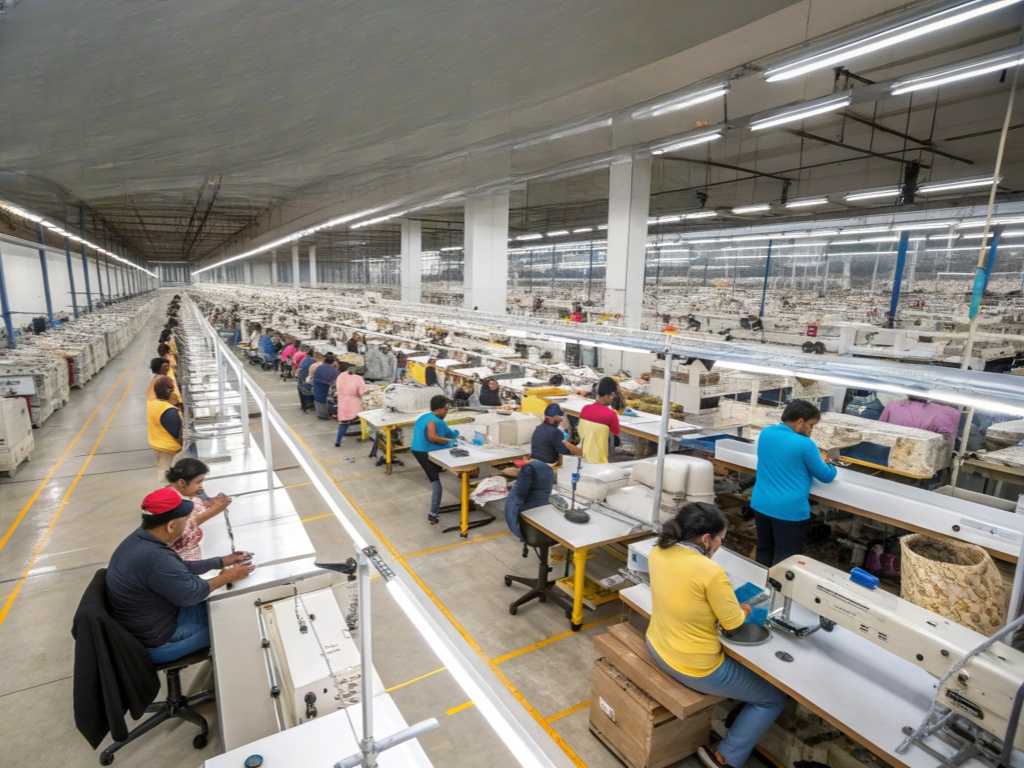
Building a reliable supply chain starts with selecting a manufacturer that understands both technical execution and brand positioning. Jinfeng Apparel supports custom dress development with structured sampling systems, stable bulk production capacity, and full OEM/ODM capabilities for global fashion collections.
For brands developing mini dresses, evening wear, bodycon styles, or seasonal capsule collections, Jinfeng Apparel provides scalable production solutions from sampling to bulk manufacturing with consistent quality control.
Send your design reference, tech pack, or inspiration images to start a tailored production plan and receive a detailed quotation based on fabric, design complexity, and order volume.