Skip to content

In womenswear manufacturing, most production failures do not come from sewing skill or machine capability—they come from unclear input at the very beginning. A style brief is the bridge between creative design and industrial execution. When it is vague, factories interpret differently. When it is precise, production becomes predictable, repeatable, and scalable.
Across thousands of sampling cycles in custom dress production, one pattern remains consistent: brands that document design intent clearly reduce revision rounds by up to 40–60%, shorten sampling time by 30%, and significantly improve first-sample accuracy. The difference is not creativity—it is structure.
A clear style brief defines how a womenswear design should be interpreted for production, including sketches, fabric specifications, measurements, construction details, trims, and fit expectations. It removes ambiguity between design intent and factory execution, ensuring samples and bulk production match the original vision with minimal revision cycles and lower cost risk.
The challenge is that many designs begin as inspiration images or sketches without technical depth. Factories are then forced to “guess” construction logic, which leads to inconsistent samples, cost changes, and delayed launches.
One brand once submitted a simple evening dress image with no construction breakdown. The first sample arrived with incorrect draping direction, wrong fabric weight, and mismatched neckline structure. After three revisions and six weeks lost, the final product still did not fully match the original vision. That single gap in communication became a full production delay.
What Is a Style Brief in Womenswear Production?
A style brief in womenswear production is a structured communication document that translates a design idea into factory-executable instructions. It defines how a garment should look, fit, and be constructed before any pattern making or sampling begins. In practical production environments, it works as the first technical alignment tool between design intent and manufacturing execution.
In real factory workflows, more than 60% of sampling issues originate from incomplete or unclear style briefs. Typical problems include wrong fabric interpretation, incorrect silhouette execution, and repeated fitting corrections. A complete style brief reduces these risks by standardizing key information such as silhouette structure, fabric behavior, measurement logic, and construction requirements.
Unlike inspiration images or sketches alone, a style brief removes subjective interpretation. It provides measurable and verifiable data so production teams can follow consistent instructions across sampling and bulk manufacturing stages.
Core Definition and Role
A style brief acts as the first production-level instruction sheet for womenswear development. It defines the transformation from concept into buildable garment logic.
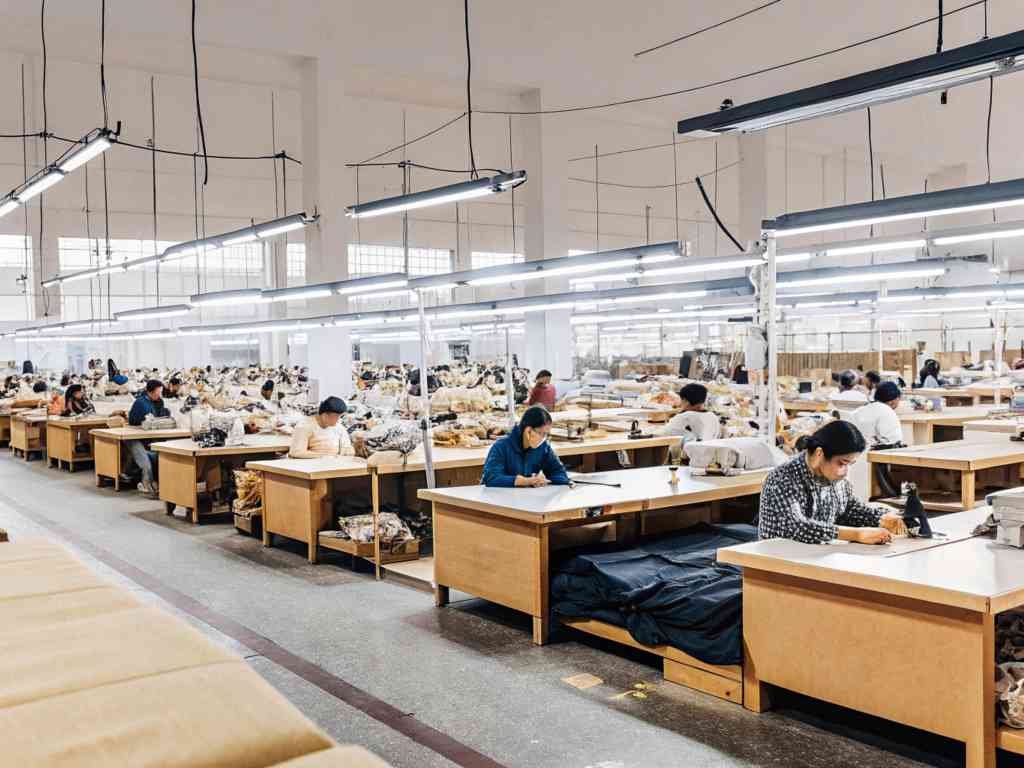
In most production systems, the brief is used before tech pack creation and serves as a decision filter for feasibility, cost estimation, and sampling readiness. Factories rely on it to evaluate whether a design can be developed within target cost and timeline.
Key role functions include:
- Converting visual design into technical language
- Aligning design intent with production capability
- Providing baseline for pattern development
- Reducing interpretation gaps between teams
A well-structured brief can reduce first-sample revision cycles by 30–50%.
Key Components in Practical Production
A production-ready style brief usually contains measurable and structured information rather than general descriptions.
| Component | Required Detail Level | Example |
|---|---|---|
| Sketch | Front & back + detail zoom | Sleeve shape, neckline |
| Fabric | Composition + GSM + stretch | 95% polyester / 5% spandex, 220 GSM |
| Fit | Target silhouette | Bodycon / relaxed / oversized |
| Measurements | Key points in cm | Bust 88cm, Waist 70cm |
| Construction | Stitching method | Overlock + coverstitch |
| Trims | Functional + decorative | Invisible zipper, metal hook |
Missing even one of these elements increases sampling uncertainty and may lead to structural redesign during first sample development.
Difference from Inspiration Images and Tech Packs
In womenswear production, confusion often occurs between inspiration references, style briefs, and tech packs. Each plays a different role in the development pipeline.
| Item | Purpose | Usage Stage | Risk Level |
|---|---|---|---|
| Inspiration Image | Visual direction | Idea stage | High ambiguity |
| Style Brief | Structured intent | Pre-sampling stage | Medium clarity |
| Tech Pack | Full execution file | Production stage | Low ambiguity |
A style brief sits between creativity and engineering. It is the translation layer that prevents design loss during communication.
Why Factories Depend on Style Brief Accuracy
Factories do not interpret fashion ideas emotionally—they interpret measurable production inputs. When a brief lacks structure, several risks appear:
- Pattern makers rely on assumptions instead of specifications
- Fabric substitution increases due to unclear GSM or texture
- Fit inconsistencies appear across sample rounds
- Production cost fluctuates during sampling revisions
For example, a dress marked as “soft satin flow” without GSM or composition can lead to 3–4 fabric variations during sampling. Each variation changes drape behavior, seam tension, and final silhouette.
Clear briefs allow factories to stabilize:
- Fabric selection (reducing substitution risk by up to 40%)
- Sampling timeline (cutting revision cycles by 1–2 rounds)
- Cost estimation accuracy (within ±10–15% range)
Production Readiness Benchmark
A style brief becomes production-ready when it meets minimum clarity thresholds. In professional womenswear manufacturing, these benchmarks are commonly used:
| Requirement Area | Minimum Standard |
|---|---|
| Sketch clarity | Front + back + detail focus |
| Fabric data | Composition + weight included |
| Measurement set | At least 5 core points |
| Construction notes | Stitch + lining + closure defined |
| Fit instruction | Clear silhouette category |
If any category is missing, factories typically classify the style as “development risk,” which may delay sampling approval or increase revision rounds.
Impact on Sampling Efficiency
A structured style brief directly influences sample efficiency. Based on production data patterns across womenswear factories:
- Complete briefs: 1–2 sample rounds
- Partial briefs: 3–5 sample rounds
- Unstructured input: 5+ revisions possible
The difference is not only time-related. Each additional round increases:
- Fabric consumption cost
- Pattern adjustment workload
- Production queue delay
In seasonal collections, these delays can directly impact launch timing and sell-through performance.
What Information Should a Style Brief Include?
A style brief in womenswear production must contain structured, measurable, and production-relevant information that allows factories to convert design intent into a manufacturable garment without interpretation gaps. In real sampling environments, missing or vague information is one of the main reasons for repeated proto samples, cost changes, and delayed approvals.
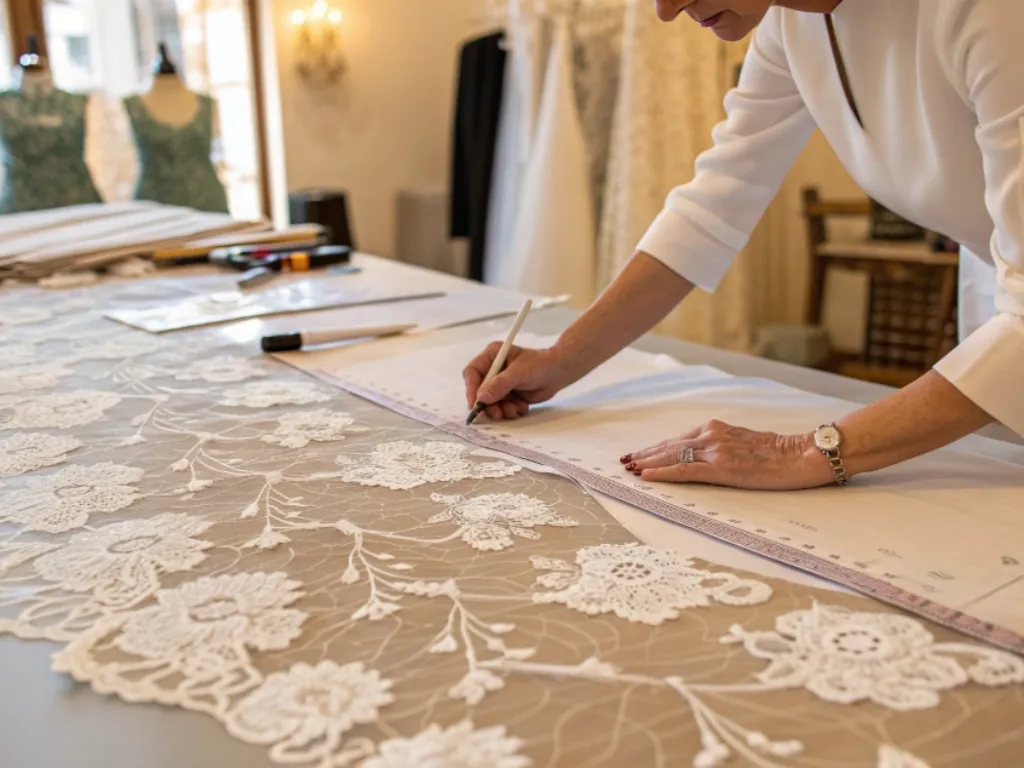
Across production data patterns, a complete style brief can reduce sampling revisions by 30–50% and shorten development cycles by 1–2 weeks per style. The key is not volume of information, but clarity of execution-critical details.
Design Sketch and Visual Breakdown
A sketch is not only visual communication—it is a construction map. It must clearly show garment structure, proportion, and design focus areas.
Minimum requirements:
- Front and back view (mandatory)
- Side view if silhouette is complex
- Zoom-in details for neckline, waist, sleeve, hem
- Clear proportion indication (length vs body ratio)
| Visual Element | Requirement Level | Common Issue if Missing |
|---|---|---|
| Front/Back view | Mandatory | Incorrect silhouette |
| Detail close-up | High | Wrong construction focus |
| Proportion markers | Recommended | Length imbalance |
Without structured visuals, factories often interpret styling differently, especially for draped or asymmetric designs.
Fabric Specification and Performance Data
Fabric information defines garment behavior more than design itself. In womenswear production, fabric miscommunication is one of the top 3 causes of sample rejection.
A complete fabric specification should include:
- Composition (e.g., 92% polyester / 8% elastane)
- Fabric weight (GSM)
- Stretch level (none / slight / medium / high)
- Surface texture (matte, satin, ribbed, crinkle, etc.)
- Drape behavior (structured / fluid / heavy fall)
- Color reference (Pantone or physical swatch)
| Fabric Type | GSM Range | Typical Use |
|---|---|---|
| Satin | 120–180 | Evening dresses |
| Jersey Knit | 180–260 | Bodycon styles |
| Chiffon | 60–100 | Layered dresses |
| Crepe | 150–220 | Workwear dresses |
Even a 20–30 GSM difference can change garment drape, seam tension, and final silhouette outcome.
Measurement Points and Size Logic
Measurements define production accuracy and consistency across sizes. Without structured measurement data, factories default to internal grading rules, which may not match brand expectations.
Essential measurement points:
- Bust / Waist / Hip
- Shoulder width
- Total length (front and back)
- Sleeve length (if applicable)
- Armhole circumference
| Measurement Area | Example Value | Risk if Missing |
|---|---|---|
| Bust | 88 cm | Fit mismatch |
| Waist | 70 cm | Silhouette distortion |
| Length | 85 cm | Proportion error |
For multi-size production, grading rules (S/M/L differences) should also be defined to avoid inconsistent scaling.
Construction and Sewing Requirements
Construction defines how a garment is physically assembled. In production environments, default stitching methods are often applied if not specified, which may not match design intent.
Key construction details include:
- Seam type (overlock, flatlock, French seam)
- Lining requirement (full / partial / none)
- Dart positioning
- Panel structure (number of panels per section)
- Closure type (invisible zipper, exposed zipper, buttons)
| Construction Element | Default Risk | Production Impact |
|---|---|---|
| Seam type undefined | Factory default | Design mismatch |
| No lining instruction | Skipped lining | Transparency issues |
| Closure unclear | Random choice | Fit instability |
Clear construction notes directly improve first-sample accuracy.
Trims, Labels, and Functional Components
Trims influence both cost and visual identity. Even small differences in trim selection can change production lead time and pricing structure.
Required trim details:
- Zippers (type, length, placement)
- Buttons (size, material, quantity)
- Labels (woven, printed, heat transfer)
- Embellishments (beads, sequins, embroidery)
| Trim Type | Specification Needed | Cost Impact Level |
|---|---|---|
| Zipper | Invisible / metal / plastic | Medium |
| Embroidery | Placement + density | High |
| Labels | Material + size | Low–Medium |
Incomplete trim details often result in mid-production changes, increasing both cost and delay.
Fit Direction and Wearing Effect
Fit direction defines how the garment behaves on the body, beyond measurements. It determines silhouette perception and comfort level.
Common fit categories:
- Bodycon (tight, contour fit)
- Slim fit (close but comfortable)
- Regular fit (standard ease)
- Oversized (relaxed volume)
Additional instructions should include:
- Stretch allowance expectation
- Compression level (if applicable)
- Waist control strength (for dresses)
| Fit Type | Key Characteristic | Risk if Undefined |
|---|---|---|
| Bodycon | High stretch, tight fit | Over-loose sample |
| Slim | Moderate shaping | Inconsistent waist fit |
| Oversized | Loose structure | Excess volume variation |
Fit clarity is critical in womenswear, especially for dresses where silhouette defines commercial value.
Color, Finish, and Surface Treatment
Color and finishing define final visual impact. Without standardized references, factories may interpret tones differently.
Required elements:
- Pantone code or lab dip reference
- Fabric finish (matte, glossy, washed, coated)
- Print technique (digital, screen, sublimation)
Even small tone variation (ΔE > 2) can cause rejection in bulk production for fashion-sensitive categories.
How Do Factories Interpret a Style Brief?
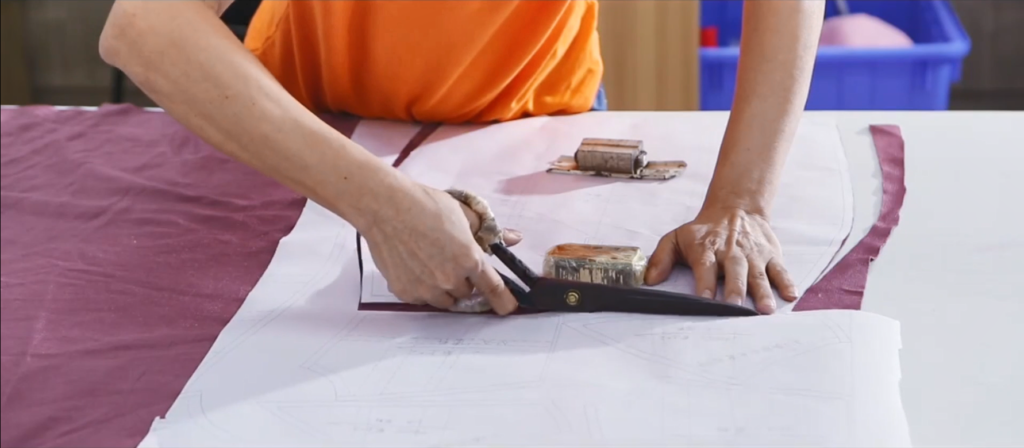
Factories interpret a style brief through a structured technical workflow rather than subjective reading. Every section of the brief is converted into production logic: pattern making, fabric evaluation, construction planning, and cost estimation. The accuracy of interpretation directly determines whether the first sample is close to expectation or requires multiple revisions.
In real womenswear production environments, interpretation gaps are responsible for 40–70% of first-sample adjustments. These gaps usually come from unclear visual hierarchy, missing measurement logic, or incomplete construction instructions. Factories rely on internal technical standards to “fill in the blanks,” which can create variation if the brief lacks precision.
Pattern Making Interpretation Logic
Pattern makers are the first technical team to interpret a style brief. They convert sketches and measurements into flat garment templates.
Interpretation process includes:
- Breaking down silhouette into structural panels
- Translating visual proportions into measurement ratios
- Adjusting ease allowance based on fit category
- Converting design lines into seam construction paths
| Input Element | Pattern Interpretation Action | Common Risk |
|---|---|---|
| Sketch | Convert into panel structure | Misread silhouette |
| Measurements | Build base size block | Incorrect proportion scaling |
| Fit notes | Add ease allowance | Over-tight or oversized fit |
When sketches lack detail, pattern makers rely on standard blocks, which may not match brand-specific design intent.
Fabric Behavior Analysis
After pattern logic is established, factories evaluate fabric behavior to ensure design feasibility.
Key interpretation steps:
- Weight assessment (GSM impact on drape)
- Stretch direction analysis (warp/weft elasticity)
- Shrinkage prediction during washing or steaming
- Seam stability under tension
| Fabric Factor | Factory Decision Impact | Production Outcome |
|---|---|---|
| High stretch | Reduce seam allowance | Bodycon adjustment |
| Heavy GSM | Increase structure support | Stiffer silhouette |
| Lightweight | Add lining requirement | Transparency control |
If fabric data is incomplete, factories may substitute materials, which changes final garment appearance and fit behavior.
Construction Decision Mapping
Factories interpret construction details based on production efficiency and standard sewing systems.
Interpretation actions include:
- Selecting seam type based on fabric and cost
- Determining lining structure for stability
- Choosing closure method (zipper, button, hook)
- Assigning assembly sequence for efficiency
| Construction Area | Factory Default Decision | Risk if Not Specified |
|---|---|---|
| Seam type | Overlock standard | Design mismatch |
| Lining | Optional omission | Transparency issue |
| Closure | Cheapest option | Fit instability |
Without clear instructions, factories optimize for speed and cost, not design precision.
Cost and Production Feasibility Check
Before sampling begins, factories evaluate whether the design can meet cost and production targets.
Cost interpretation includes:
- Fabric consumption per size
- Labor time per construction complexity
- Trim and accessory costs
- Special process requirements (embroidery, pleating, printing)
| Factor | Cost Influence Level | Example Impact |
|---|---|---|
| Fabric usage | High | Longer dress = higher cost |
| Stitch complexity | Medium | Multi-panel design increases labor |
| Special finishes | High | Sequins or embroidery add time |
If cost exceeds target range, factories may propose simplification or material adjustment.
Risk Identification During Interpretation
Factories actively scan style briefs for production risks before committing to sampling.
Common risk triggers:
- Asymmetric or complex draping structures
- Missing measurement points
- Undefined fabric composition
- Multi-layer constructions without guidance
| Risk Type | Factory Response | Outcome |
|---|---|---|
| Structural complexity | Request clarification | Sampling delay |
| Fabric ambiguity | Suggest alternatives | Design variation |
| Measurement gaps | Apply standard grading | Fit inconsistency |
Risk identification helps prevent costly re-sampling cycles later in production.
Sample Development Translation Flow
Once interpretation is complete, factories convert the brief into physical sampling steps.
Standard workflow:
- Pattern drafting based on interpreted structure
- Fabric cutting according to material analysis
- Sample sewing using selected construction methods
- Initial fitting and adjustment recording
- Revision cycle if deviation appears
| Stage | Output | Common Issue |
|---|---|---|
| Pattern | Flat template | Misaligned proportions |
| Cutting | Fabric pieces | Wrong grain direction |
| Sewing | First sample | Construction mismatch |
Each stage depends on the accuracy of the previous interpretation step.
Communication Adjustment Loop
After the first sample is produced, factories compare physical output with the original brief.
Adjustment process includes:
- Fit correction feedback
- Fabric replacement suggestions
- Construction refinement notes
- Measurement recalibration
If the initial brief is clear, adjustment loops are minimal. If unclear, multiple revision cycles occur, increasing both time and cost.
What Mistakes Cause Production Errors?
Production errors in womenswear manufacturing rarely come from machine capability or factory skill. Most issues originate much earlier—at the stage where design information is incomplete, inconsistent, or open to interpretation. In real sampling and bulk production, even small gaps in a style brief can multiply into fabric waste, repeated sampling, and unstable sizing outcomes.
Industry production data shows that more than 50% of first-sample rework cases are linked to missing specifications rather than technical sewing problems. The most common issues include unclear fabric definition, incomplete measurements, and missing construction logic. These mistakes force factories to make assumptions, which increases variation risk across samples and bulk production.

Missing or Incomplete Measurement Data
One of the most frequent causes of production errors is missing measurement structure. Without a full set of key points, factories default to internal sizing blocks, which often do not match design intent.
Typical issues include:
- Missing waist or hip measurement for fitted dresses
- No shoulder width specification for structured garments
- Lack of length differentiation (front vs back)
- No tolerance range for stretch fabrics
| Missing Data Point | Factory Default Action | Resulting Risk |
|---|---|---|
| Bust/Waist/Hip | Use standard size chart | Poor fit alignment |
| Garment length | Apply average length | Wrong proportion |
| Sleeve length | Use base block | Inconsistent silhouette |
Even a 2–3 cm deviation in womenswear can significantly change visual balance, especially in bodycon or fitted styles.
Unclear Fabric Specification and Behavior
Fabric ambiguity is one of the highest-risk factors in production errors. Terms like “soft,” “flowy,” or “luxury feel” are not measurable and lead to inconsistent fabric selection.
Common problems include:
- No GSM range defined
- Missing composition ratio
- No stretch direction specified
- No drape behavior indication
| Fabric Issue | Factory Interpretation | Production Outcome |
|---|---|---|
| “Soft satin” | Any satin variant | Different drape results |
| No GSM data | Random weight selection | Fit inconsistency |
| No stretch info | Standard assumption | Tight or loose fit |
A 20–40 GSM mismatch can completely change garment flow and seam tension, especially in dresses with bias cuts or draped structures.
Missing Construction Instructions
Construction defines how a garment is assembled. When not clearly specified, factories apply default sewing standards, which may not align with design intent.
Typical missing elements:
- Seam type definition
- Lining requirement
- Panel structure breakdown
- Closure placement logic
| Construction Area | Default Factory Choice | Risk Impact |
|---|---|---|
| Seam type | Overlock standard | Design deviation |
| Lining | Optional skip | Transparency issue |
| Closure type | Basic zipper | Fit instability |
For example, a design intended with invisible zipper + full lining may be produced with exposed zipper and partial lining if not clearly stated.
Mixed or Conflicting Reference Images
Using multiple reference images without clear hierarchy often leads to hybrid samples that do not match any single design direction.
Common issues include:
- Combining different silhouettes in one brief
- Mixing sleeve styles from unrelated garments
- No priority marking for design references
- Conflicting neckline or hemline styles
| Input Type | Factory Interpretation | Outcome |
|---|---|---|
| Multiple dresses | Merge features | Hybrid design |
| No priority image | Random selection | Unstable sample direction |
| Conflicting details | Average interpretation | Diluted design identity |
Factories typically try to “combine” references, which often results in unintended hybrid garments.
No Defined Fit or Silhouette Direction
Fit direction is critical in womenswear because it determines garment identity. Without clear classification, factories apply standard fit assumptions.
Common missing instructions:
- Bodycon vs slim vs relaxed definition
- Stretch allowance percentage
- Waist compression level
- Oversized volume expectation
| Fit Type Missing | Factory Assumption | Risk Outcome |
|---|---|---|
| Bodycon not defined | Regular fit | Loose silhouette |
| Oversized unclear | Slim block | Tight garment |
| Stretch not specified | Medium assumption | Fit distortion |
In womenswear, a 5–10% difference in stretch allowance can completely change fit perception.
Inconsistent Revisions During Sampling
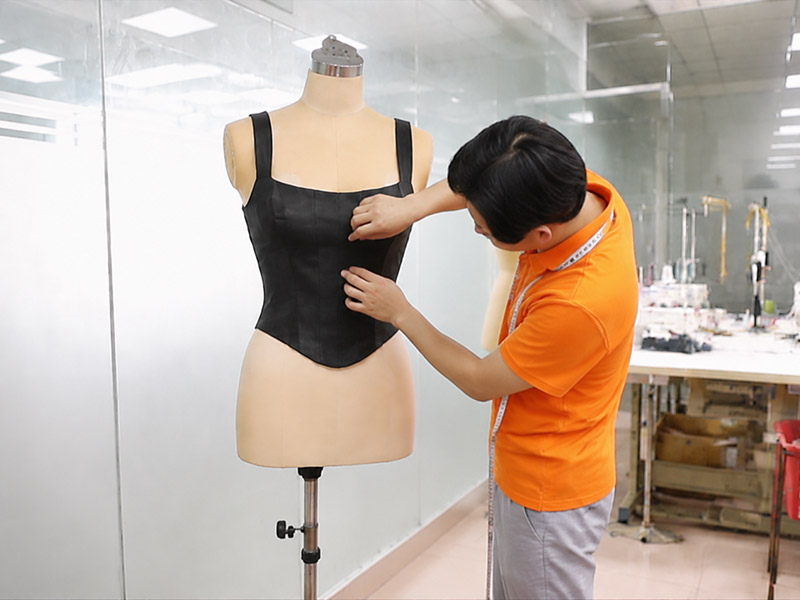
Frequent changes during sampling are a hidden but major cause of production instability. Each revision affects pattern integrity and production timing.
Common issues:
- Changing fabric after first sample
- Adjusting measurements mid-process
- Redefining construction after approval
- Introducing new design elements late
| Revision Type | Factory Impact | Production Risk |
|---|---|---|
| Fabric change | Recut samples | Delay 5–10 days |
| Measurement change | Pattern redo | Cost increase |
| Design update | Full rebuild | Sampling restart |
Multiple revision cycles weaken pattern stability and extend lead time significantly.
How to Make a Production-Ready Style Brief?
A production-ready style brief is not just a document with design information—it is a fully structured instruction system that allows factories to move directly into pattern making and sampling without clarification loops. In real womenswear production, a complete brief can reduce sampling time by 20–40% and lower revision cycles from 3–5 rounds to 1–2 rounds.
The goal is simple: remove interpretation gaps before production starts. Every missing detail at this stage becomes a cost increase, time delay, or sample mismatch later.
Standardized Brief Structure Setup
A production-ready style brief must follow a fixed structure so factories can process information quickly and consistently. Free-format documents often lead to missed details and inconsistent interpretation.
Recommended structure:
- Style overview (silhouette + garment type)
- Visual references (front/back + details)
- Fabric specification sheet
- Measurement chart with grading logic
- Construction breakdown
- Trim and accessory list
- Fit and wearing effect instruction
| Section | Required Level | Factory Use |
|---|---|---|
| Visual references | High clarity | Pattern direction |
| Fabric sheet | Technical data | Material selection |
| Measurements | Full set + grading | Size development |
| Construction | Step-by-step logic | Sewing process |
| Fit direction | Defined category | Silhouette control |
A structured format reduces communication back-and-forth during sampling preparation.
Visual and Technical Alignment Control
One of the biggest causes of sampling errors is mismatch between visual expectation and technical instruction. A production-ready brief ensures both layers are aligned.
Key requirements:
- Sketch must match measurement proportions
- Detail images must match construction notes
- Fabric texture must match visual drape expectation
| Alignment Area | Common Issue | Correction Method |
|---|---|---|
| Sketch vs measurement | Proportion mismatch | Re-scale drawing |
| Fabric vs visual | Wrong drape behavior | Fabric confirmation |
| Detail vs construction | Missing seam logic | Add technical notes |
Factories rely heavily on visual cues. When visuals and technical data conflict, interpretation defaults to cost-efficient solutions, not design accuracy.
Fabric Confirmation and Validation Step
Before sampling begins, fabric must be fully confirmed with measurable specifications. Ambiguous fabric input is one of the top reasons for sample rejection.
Required validation points:
- Composition percentage
- GSM range (not single value only)
- Stretch direction (warp/weft/both)
- Drape behavior reference sample
- Color reference (Pantone or physical swatch)
| Fabric Data | Required Standard | Risk if Missing |
|---|---|---|
| Composition | Exact % breakdown | Wrong material selection |
| GSM | Range (±10 GSM) | Fit distortion |
| Stretch | Direction specified | Size instability |
Without confirmation, factories often substitute fabrics during sampling, changing final garment behavior.
Factory Pre-Check Validation Checklist
Before entering sampling, factories usually validate whether the brief is complete enough to proceed. A production-ready brief passes this stage without clarification requests.
Key checklist items:
- All measurement points present
- Fabric fully specified
- Construction method defined
- Fit category clearly stated
- Reference images consistent
| Check Area | Pass Condition | Failure Risk |
|---|---|---|
| Measurements | Complete set | Pattern rework |
| Fabric info | Fully defined | Substitution |
| Construction | Clear steps | Sewing mismatch |
| Fit logic | Defined category | Silhouette error |
If any section is missing, factories typically pause sampling until clarification is provided.
Sampling Approval Workflow Control
A production-ready brief defines how samples move through approval stages. Without structured workflow rules, revisions become uncontrolled.
Standard workflow:
- Brief confirmation
- Pattern creation
- First sample production
- Fit evaluation
- Revision adjustment
- Final approval lock
| Stage | Output | Common Issue |
|---|---|---|
| Pattern | Base structure | Misinterpretation |
| First sample | Physical garment | Fit deviation |
| Revision | Adjusted sample | Scope expansion |
Each stage should have clear approval before moving forward to avoid repeated revisions.
Final Lock Point for Production Release
The final step in making a style brief production-ready is locking all specifications before bulk production begins. After this point, changes significantly increase cost and delay risk.
Locked elements include:
- Fabric selection
- Measurement chart
- Construction method
- Trim specification
- Fit definition
| Locked Item | Impact of Late Change | Cost Effect |
|---|---|---|
| Fabric | Re-sourcing required | High |
| Measurements | Pattern rebuild | Medium–High |
| Construction | Sewing rework | High |
Once locked, the brief becomes the reference standard for all bulk production units.
Start Your Custom Womenswear Production with Confidence
A clear style brief is not just documentation—it is production control. It determines whether a design becomes a successful product or a cycle of revisions and delays. In womenswear manufacturing, clarity directly impacts speed, cost, and quality consistency.
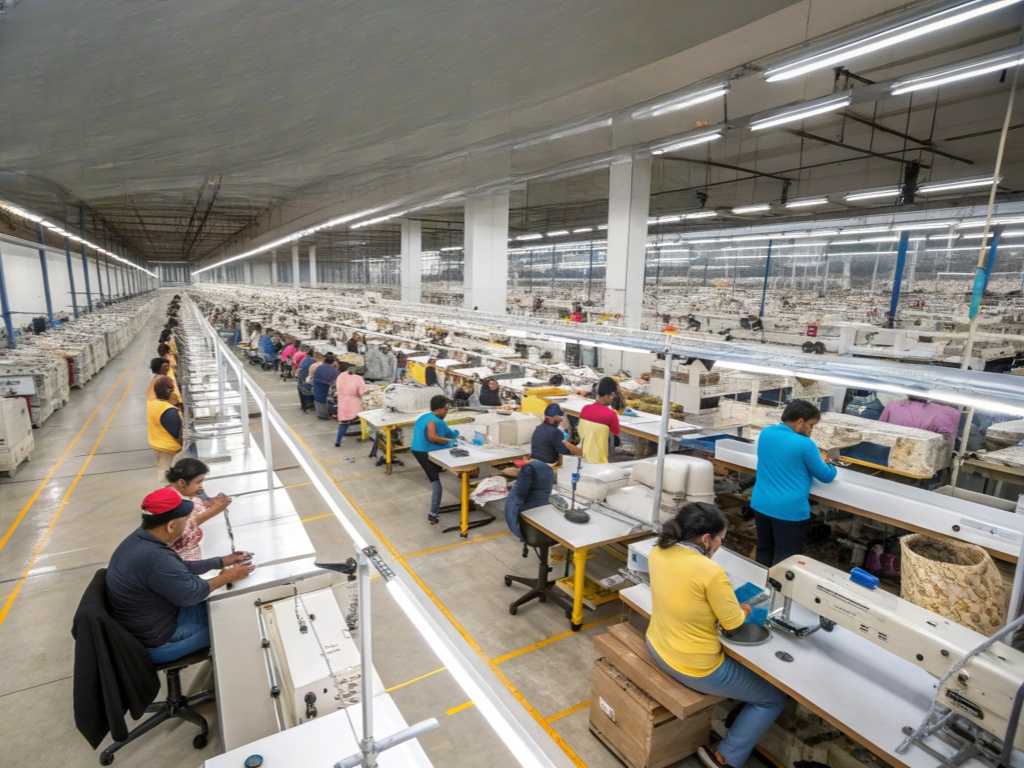
Jinfeng Apparel supports brands with structured sampling systems, fabric guidance, and production-ready development workflows for dresses and womenswear collections. From initial concept to bulk production, every step is aligned with technical accuracy and factory execution standards.
If there is a collection in development and a reliable manufacturing partner is needed for custom dresses, OEM/ODM production, or sampling support, Jinfeng Apparel is ready to assist with detailed evaluation and quotation.
Inquiries are welcome for custom womenswear production and sampling development.