Skip to content

A chiffon swatch can look almost perfect on a sourcing table and become disappointing once it is cut into a full skirt, layered over lining, gathered into a waist seam, pressed, packed, or photographed under strong studio lighting. That is why choosing between polyester chiffon and silk chiffon is less about deciding which fiber sounds more luxurious and more about understanding how each material behaves inside the finished dress. For a fashion brand, designer, sourcing team, or product developer, the fabric decision affects not only touch and visual movement but also lining, seam appearance, care instructions, repeat production, color consistency, and the final cost of a style. A good comparison therefore needs to move beyond the familiar claim that silk is premium and polyester is practical. Both materials can produce beautiful dresses, and both can produce disappointing ones when the fabric specification does not match the silhouette or construction.
Silk chiffon is usually the better choice when softness, natural-fiber character, refined drape, and premium positioning are central to the design. Polyester chiffon is often more suitable when durability, easier care, controlled cost, color flexibility, and repeatable commercial production matter more. Neither is automatically superior; the better fabric depends on silhouette, intended use, lining, construction, retail position, and production requirements.
Imagine two visually similar maxi dresses hanging side by side. Under showroom lighting, both may look light and fluid. After the first fitting, one fabric may settle into elegant narrow folds while the other creates more volume around the waist. After packing, one may recover quickly while the other needs careful steaming. After photography, the lining under one may suddenly become more visible. The important differences often appear only after fabric becomes a garment, which is exactly where the comparison between polyester chiffon and silk chiffon becomes useful.
What Is the Difference Between Polyester Chiffon and Silk Chiffon?
Polyester chiffon and silk chiffon share the lightweight, sheer, slightly textured character associated with chiffon, but their fibers create different performance profiles. Silk chiffon generally offers a softer natural hand and more fluid movement, while polyester chiffon usually provides greater durability, easier care, broader commercial availability, and more predictable cost. Yarn quality, fabric weight, weave density, and finishing can significantly change either material.
| Specification | Silk Chiffon | Polyester Chiffon | What It Means for a Dress |
| Fiber origin | Natural silk filament | Synthetic polyester filament | Changes hand, moisture response, care, and product positioning |
| Typical hand | Soft, dry, refined | Soft to crisp depending on yarn and finish | Affects comfort, ruffles, drape, and perceived quality |
| Drape tendency | Usually highly fluid | Ranges from fluid to relatively crisp | Must be matched to silhouette rather than fiber name alone |
| Transparency | Usually high | Low to very high depending on construction | Influences lining, seam visibility, and photography |
| Care demand | Usually more delicate | Usually easier to maintain | Affects care label and expected consumer use |
| Production repeatability | More sourcing-sensitive | Often easier to standardize | Important for multi-color programs and repeat orders |
Fiber and Fabric Structure
Chiffon describes a fabric construction and visual character rather than one single fiber. The familiar sheer surface, low weight, slight graininess, and floating movement come from fine yarns and a relatively open woven structure. Silk chiffon uses natural silk filament, while polyester chiffon uses manufactured synthetic filament. That difference affects moisture handling, static, heat response, dyeing, care, and the way the fabric feels in the hand. In sourcing, however, composition is only the starting point. Two fabrics can both be labeled 100% polyester chiffon and still feel completely different because yarn fineness, fabric density, twist, finishing, and weight vary. The same applies to silk chiffon. A useful specification should therefore include composition, usable width, weight, color reference, hand feel, transparency, and intended finish. For dress development, the fabric should then be tested in enough yardage to show how it gathers, hangs, and behaves over lining. A small swatch can confirm color and surface, but it rarely predicts how a full skirt or layered sleeve will perform.
Hand Feel and Surface
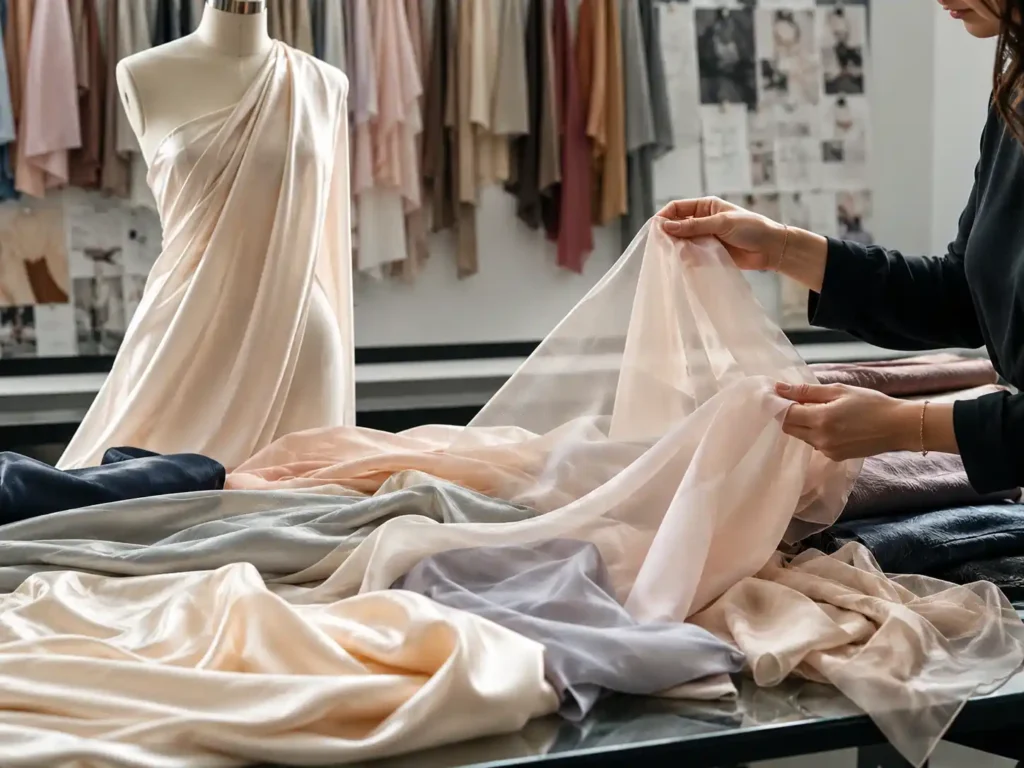
Silk chiffon is usually associated with a softer, more nuanced hand and a subtle dry surface that feels refined without being overly slippery. That difference can be noticeable in unlined sleeves, neck ties, shoulder panels, cape details, and dresses where the outer fabric touches the skin. Polyester chiffon has a much wider tactile range. Inexpensive versions may feel slick, rigid, or obviously synthetic, while better qualities can be soft, fine, and convincing enough for premium commercial occasionwear. The important point is that softness is not the only target. A highly fluid chiffon may collapse too much for a tiered ruffle, while a slightly firmer polyester quality can hold volume and create a stronger silhouette. Surface reflection also matters, especially in pale colors. Some polyester finishes look shinier under strong photography lighting than they do in a fabric room. When comparing options, fold a larger piece, gather it, place it over the proposed lining, and examine it in daylight, indoor lighting, and camera lighting rather than making the decision from a small fabric card.
Drape and Movement
Drape is one of the clearest differences people notice after chiffon becomes a dress. Silk chiffon usually falls into fine folds and responds quickly to movement, which is valuable in floor-length skirts, draped sleeves, scarves, cape panels, and soft gathered details. Polyester chiffon can also drape beautifully, but its behavior varies more widely because manufacturers can engineer different yarns and finishes. A long evening skirt often benefits from controlled vertical flow so the fabric settles rather than building excessive volume at the waist, while a short party dress may need more spring so ruffles remain visible and energetic. Instead of asking which fiber has the better drape in general, ask what type of drape the pattern requires. A practical test is to cut or pin a panel close to the actual skirt width, gather it to the planned ratio, and hang it over the intended lining. Differences that are nearly invisible in a folded swatch often become obvious once the fabric is working at garment scale.
Transparency and Layering
Transparency is part of chiffon’s design language rather than a flaw, but it has to be controlled carefully. Sleeves, overlays, cape sections, ruffles, and back panels may intentionally remain sheer, while bodices and skirts generally need more coverage. The lining choice can alter the outer fabric more than many teams expect. A warm beige lining under ivory chiffon creates a different result from a cool nude lining, and a shiny lining may become visible through a lightweight shell in strong light. Seam allowances, pocket bags, facings, and internal tapes can also show through pale colors. For that reason, transparency should be reviewed under normal indoor lighting, daylight, and direct photography lighting. Chiffon development should consider the outer layer and lining as one visual system. If the lining is selected late, the dress may need another color or fit review because the inner layer can change apparent shade, opacity, movement, and even how much fabric volume is visible around the body.
Which Chiffon Looks and Feels Better in a Dress?
Silk chiffon often gives a more refined hand and naturally fluid movement, especially in premium dresses with large visible fabric areas. Polyester chiffon can look equally appropriate when its weight, finish, lining, and construction match the design. The better-looking dress is the one in which fabric, pattern, seams, lining, color, and movement work together rather than the one with the more prestigious fiber name.
Drape on the Body
A chiffon that looks beautiful hanging vertically can behave very differently after it is gathered into a waist, cut across a curved seam, or placed over the hips. Silk chiffon often forms finer folds and follows body movement with less visible stiffness, which is useful in long evening dresses and minimalist silhouettes where movement is a major part of the design. In short dresses, however, a slightly firmer polyester chiffon may produce a stronger fashion result because ruffles stay open, tiers look fuller, and asymmetric overlays hold their intended shape. Fit reviews should therefore include walking, turning, sitting, and arm movement rather than a static front view only. Stand several meters away and watch the silhouette in motion. If a skirt bunches at the waist, collapses too heavily, or swings more rigidly than the design requires, the issue may be fabric behavior rather than pattern alone. The goal is not maximum softness; it is the right relationship between movement, volume, and the garment’s visual proportion.
Comfort Against the Skin
Silk chiffon generally has an advantage where the outer fabric directly touches the skin because its natural fiber character can feel lighter and more breathable. That difference is most noticeable in unlined sleeves, shoulder areas, scarves, ties, and loose summer silhouettes. Polyester chiffon can still be comfortable, particularly when the construction limits direct contact and the lining is carefully chosen. In a fully lined dress, the lining often has more influence on comfort than the chiffon shell. A soft chiffon over a dense, heat-trapping lining may feel less pleasant in warm weather than a polyester shell over a smoother and more breathable inner layer. Static is another practical issue with lightweight synthetics, especially in dry conditions or when polyester chiffon is paired with a synthetic lining. Static can make a skirt cling instead of falling freely. A 30-60 minute wear test during sample approval can reveal heat build-up, cling, seam irritation, and movement problems that are easy to miss during a short fitting.
Luxury and Perceived Quality
Silk has a stronger luxury association, but consumers judge the complete garment before they judge the fiber label. A silk chiffon dress with puckered seams, an uneven hem, obvious lining, or poorly balanced gathering will not feel premium simply because the fabric is expensive. A carefully selected polyester chiffon can look polished when its surface is refined, the drape suits the silhouette, and the finishing is clean. Perceived quality is cumulative: the skirt should move smoothly, seams should remain visually quiet, lining should support rather than distract from the outer layer, and ruffles should hold their intended form. The simpler the dress, the more visible the fabric difference becomes. A minimalist long gown with uninterrupted chiffon panels places the material itself at the center of the product experience, while a ruched, printed, or embellished party dress may derive more of its value from construction and styling. Premium fabric is most valuable when the design gives people a chance to see and feel what they paid for.
Color and Photography
Color can change how both chiffon types are perceived. Dark shades generally hide internal construction better, while pale shades reveal lining, seam allowances, pocket bags, and small transparency differences. Polyester is often attractive for larger color programs because commercial supply can be more flexible and repeatable, which is one reason it is common in bridesmaid and occasion collections. Photography creates another challenge. Strong LED lighting, flash, or backlighting can intensify shine and make pale chiffon appear more transparent than it does in a fitting room. A dress that looks balanced in natural light may reveal lining contrast or surface reflection during an ecommerce shoot. Photo samples should therefore be reviewed under conditions close to the intended campaign. Front, side, back, and movement images are particularly useful. When a seam or lining problem suddenly becomes obvious in photographs, correcting the fabric or construction at sample stage is much cheaper than discovering the issue after the bulk order has already been cut and sewn.
How Do Cost, Durability, and Care Compare?
Polyester chiffon normally offers the stronger combination of cost control, everyday durability, and easier care, making it suitable for many commercial dress collections. Silk chiffon usually costs more and requires gentler handling, but its natural feel and premium positioning can justify the difference when material character is central to the product. The useful comparison is total finished-garment value, not fabric price per meter alone.
Total Garment Cost
Fabric price is important, but it is only one part of the cost of a chiffon dress. A realistic comparison includes outer fabric consumption, lining, cutting loss, sewing difficulty, trims, pressing, inspection, packing, and any extra handling the material requires. A simple slip-style dress may use relatively little chiffon, making the difference between polyester and silk manageable at garment level. A three-layer maxi skirt can multiply the outer-fabric requirement, so the same price difference per meter becomes much more significant. Circle skirts, asymmetric panels, flounces, long ties, and bias-cut components can also increase consumption and reduce marker efficiency. The commercial question is therefore not whether silk is expensive in isolation, but whether the extra cost creates enough visible or tactile value to support the intended retail price. When sourcing teams compare options, they should price the complete style in both fabrics, including lining and production effects. That approach prevents a misleading decision based only on the fabric quotation and gives designers a clearer picture of where material upgrades genuinely matter.
Durability in Real Wear
Polyester chiffon is generally more forgiving during repeated handling, transportation, dressing, and everyday wear. That makes it useful for ecommerce fulfillment, retail racks, travel, bridesmaid programs, and dresses that consumers may wear frequently. Silk chiffon can perform beautifully, but lightweight natural fabric usually deserves more attention around abrasion, snagging, zipper areas, waist seams, underarms, and other high-stress locations. Garment design changes durability just as much as fiber choice. A loose maxi dress places less tension on the chiffon than a fitted bodice, and a rough sequin trim can damage delicate chiffon regardless of the fabric’s general quality. Practical wear testing does not need to be complicated. Put the sample on and remove it several times, sit in it, walk stairs, carry a handbag against it, and inspect the areas where the fabric touches hardware or decorative trims. These simple actions can expose problems that are invisible when the fabric is inspected flat. Durable fabric and durable garment construction are related, but they are not the same thing.
Care Requirements
Polyester chiffon is usually easier to build into a garment intended for convenient consumer care, although the final care label must reflect the full construction rather than the outer fabric alone. Silk chiffon normally requires more cautious cleaning, pressing, and storage. Trims, fusings, color treatments, lining, beading, and decorative components can further restrict the care method for either fiber. Heat management is especially important during production and later maintenance. Polyester can develop shine, distortion, or surface change when exposed to excessive heat, while silk can also lose its refined appearance through improper pressing. Care should be validated on a complete sample whenever possible. A controlled wash, dry-cleaning trial, or professional cleaning test can reveal shrinkage, color change, puckering, hand-feel changes, or distortion before the style enters bulk production. For resort or travel-focused products, a simple packing test is also useful: fold the dress for several hours, rehang it, and observe how quickly the chiffon and lining recover. Care performance is part of product design, not an afterthought for the label.
Cost Versus Value
The lowest fabric price is not always the lowest commercial cost. A chiffon that creates persistent sewing problems, excessive rejects, difficult pressing, or an unstable fit can consume more time and money than a slightly higher-priced quality that runs smoothly through production. The reverse is also true: paying for silk may be difficult to justify if the design hides most of its advantages under prints, heavy gathering, dense embellishment, or multiple layers. A useful decision test is value visibility. Can the wearer see, feel, or experience what the extra material cost provides? If the answer is clearly yes, silk may strengthen the product’s positioning. If the answer is uncertain, a high-quality polyester option deserves serious comparison. This is also where sample development adds value. Equivalent samples made in both fabrics can be reviewed for movement, hand, photography, care, and finished cost. The decision becomes much clearer when design, merchandising, and sourcing teams evaluate the actual dresses instead of debating abstract material labels.
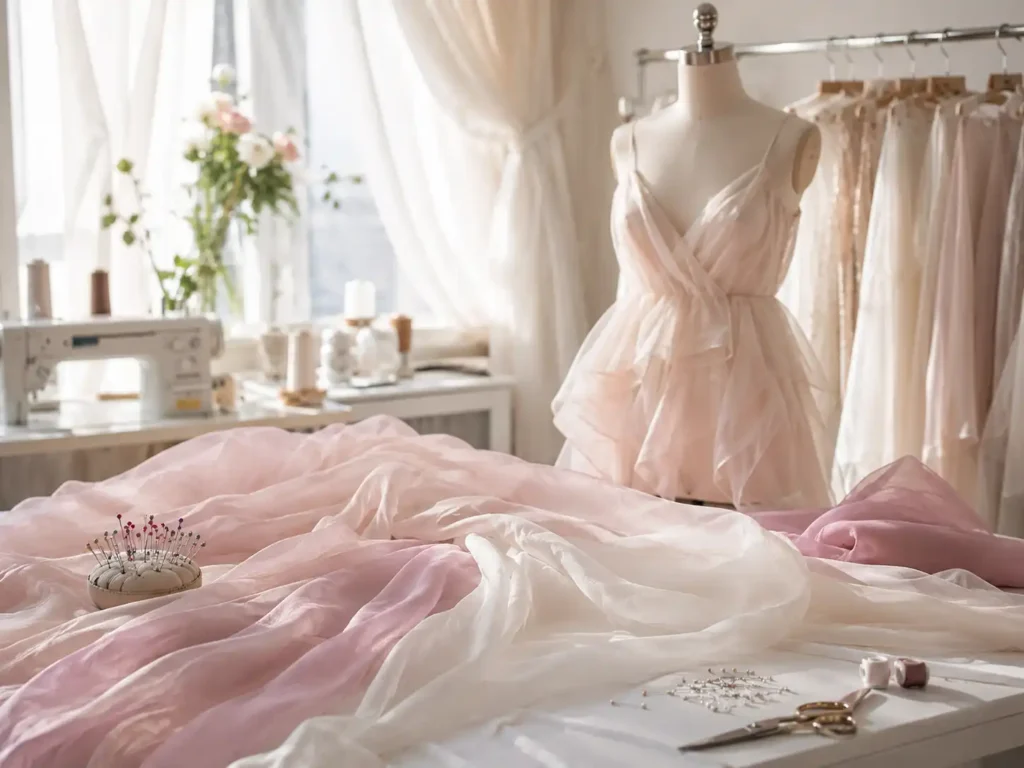
Which Chiffon Is Best for Different Types of Dresses?
Silk chiffon is particularly effective in premium dresses where fluidity, softness, and fabric character are major selling points. Polyester chiffon is often more suitable for multi-color, printed, frequently worn, repeatable, and commercially scaled styles. Dress category alone does not decide the answer; silhouette, lining, color, expected care, target retail price, and the amount of visible chiffon should be evaluated together.
| Dress Application | Main Fabric Priority | Common Starting Choice | Key Production Check |
| Premium evening gown | Fluidity, refined hand, visual movement | Silk chiffon or premium soft polyester | Hem balance, lining, delicate seam handling |
| Commercial occasion dress | Repeatability, color flexibility, controlled drape | Polyester chiffon | Puckering, shade consistency, pressing |
| Resort or summer maxi | Movement, comfort, packability | Polyester or silk depending on price level | Heat, lining weight, wrinkle recovery |
| Bridesmaid program | Shade consistency, size/color repeatability | Often polyester chiffon | Lot control and lining color coordination |
| Tiered party dress | Controlled volume and stable gathers | Often polyester chiffon | Gathering ratio and seam bulk |
| Minimal designer gown | Fabric character and tactile value | Often silk chiffon | Surface damage, hem finish, handling |
Evening and Occasion Dresses
Evening and occasion dresses often reveal chiffon quality more clearly than simpler casual styles because they rely on movement, layering, controlled transparency, and clean finishing. Silk chiffon can be especially effective when the design includes draped sleeves, floating cape panels, softly gathered skirts, or uninterrupted fabric areas where the material itself becomes part of the luxury experience. Premium polyester chiffon is also a strong choice when the collection requires multiple colors, repeat production, or a retail price that cannot absorb silk across every style. The amount of visible chiffon should influence the decision. If a gown uses large plain panels with minimal embellishment, fabric hand and movement are exposed and silk may create a noticeable advantage. If chiffon appears mainly as sleeves, ruffles, or overlays above a structured base, the difference may be less commercially significant. Occasionwear should also be tested under evening lighting and photography conditions because surface shine, transparency, and lining contrast can look very different from what the team sees under factory fluorescent lighting.
Maxi and Resort Dresses
Maxi and resort dresses need a careful balance between visual movement and everyday usability. Silk chiffon can create a beautifully light result for premium destination collections, particularly when the silhouette is loose and the fabric is meant to feel special. Polyester chiffon is often a stronger commercial choice for products that will be packed into luggage, worn frequently, or developed in prints and multiple seasonal colors. Long dresses also reveal an important construction issue: several layers of lightweight chiffon can still create noticeable bulk at the waist once they are gathered together. A single layer may feel almost weightless, yet three gathered layers plus lining can change the balance of the dress and the way it sits on the body. For summer products, the lining deserves equal attention. A light outer chiffon paired with a dense synthetic lining can undermine the airy feeling of the design. During sample review, wear the dress for 30-60 minutes, walk outdoors if possible, sit, and pack it briefly. The real use case is more informative than a static fitting.
Party and Fashion Dresses
Partywear often places greater emphasis on silhouette, color, ruching, ruffles, asymmetric layers, and decorative construction than on natural-fiber identity. Polyester chiffon works well in this environment because different finishes can be selected to support different design effects. A firmer quality can hold dramatic flounces, while a softer quality can create long trailing panels or fluid sleeves. Printed polyester chiffon also gives brands broad seasonal flexibility. Silk still has a place in premium partywear, especially when the design is relatively clean and the fabric itself must provide sophistication. Mixed-material styles require additional attention because chiffon may be attached to satin, mesh, lace, jersey, sequins, or structured corsetry, all of which react differently to tension and pressing. Waist seams, bust seams, ruffle joins, and zipper areas are common transition points where a lightweight chiffon meets a more stable component. If those joins look bulky, puckered, or strained, the dress can lose its polished appearance even when the fabric choice is otherwise strong.
Bridesmaid and Formal Programs
Bridesmaid and coordinated formal programs often favor polyester chiffon because shade consistency, production repeatability, and controlled cost become especially important when one style is ordered across several sizes or when multiple dresses must appear together in photographs. A slightly different dye lot can be more noticeable when six dresses stand side by side than when a single garment is sold independently. These programs also tend to have longer commercial lives, so fabric availability for later replenishment can matter as much as first-order quality. Silk chiffon can still be appropriate for premium formal collections, but sourcing teams should understand the implications of natural-fiber variation and future availability. When approving material, look beyond one sample cut. Confirm the intended bulk quality, color reference, lining shade, and the supplier’s ability to support repeat production. Keep a physical approved standard whenever possible. In long-running formal programs, repeatability is part of quality because the customer expects a later order to look consistent with the dress that originally established the style.
How Do Polyester and Silk Chiffon Behave in Dress Production?
Both polyester and silk chiffon require controlled handling because lightweight fabric can shift during spreading, distort during cutting, pucker during sewing, and become uneven at the hem. Silk chiffon generally needs gentler handling, while polyester is often easier to standardize. Reliable production depends on stable spreading, accurate cutting, suitable needles and thread, balanced seam tension, lining compatibility, careful pressing, and garment-level approval before bulk cutting.
| Production Check | Common Starting Point | What to Watch | Reason |
| Fabric weight | Many dress chiffons fall roughly in the 30-70 gsm lightweight range; supplier specs vary | Do not select by gsm alone | Finish and density can make equal-weight fabrics behave differently |
| Needle | Fine sharp needle, often around 60/8-70/10 as a starting trial | Snags, pulled yarns, skipped stitches | Needle must be matched to actual fabric and thread |
| Stitch length | About 2.0-2.5 mm is a common trial range for lightweight seams | Puckering and seam strength | Too short can perforate delicate fabric; too long can weaken control |
| Lay height | Keep layers conservative for unstable chiffon | Panel shift and cutting accuracy | High lays can amplify movement between layers |
| Hem | Narrow or rolled finish is common | Waving, twisting, uneven length | Lightweight fabric exposes inconsistent finishing |
| Transparency review | Check indoor light, daylight, and strong front light | Visible lining, seams, facings | Photography can reveal problems missed in fittings |
Cutting and Sewing Control
Chiffon moves easily because it is light and relatively unstable, so small production errors can grow quickly. During spreading, layers may shift a few millimeters without appearing dramatic, yet that difference can affect symmetrical panels, necklines, armholes, or matched skirt sections once the garment is assembled. Conservative lay height and careful alignment are usually safer than trying to maximize cutting efficiency with a tall stack. Sewing introduces another challenge: puckering. Excessive thread tension, unsuitable needle selection, uneven feeding, or physically pulling the fabric through the machine can create ripples that remain visible after pressing. Fine needles around size 60/8 to 70/10 and stitch lengths around 2.0-2.5 mm are common starting points for lightweight chiffon trials, but they are not universal settings and should always be confirmed on the exact fabric. Silk often deserves especially gentle handling because both the material value and damage sensitivity are higher. Polyester may be more forgiving, but a slippery synthetic chiffon can still shift, snag, or pucker if the sewing setup is poorly balanced.
Lining and Internal Construction
Lining does much more than solve transparency. It affects weight, movement, temperature, fit, and the visual color of the outer chiffon. A lining that is too heavy can pull a soft skirt downward and reduce its floating effect, while one that is too stiff can create an obvious separation between the inner and outer layers. In fitted dresses, stretch compatibility also matters because a non-stretch lining under a more forgiving outer construction may restrict movement and change fit around the bust, waist, or hips. Pale colors deserve particularly careful coordination because the lining changes the apparent shade seen through the chiffon. Internal construction should remain visually clean as well. Bulky overlocking, thick facings, wide seam allowances, or contrasting thread can become visible under strong light. For development, approve the lining together with the chiffon rather than as a separate late-stage sourcing item. Changing the lining after the photo sample has been approved can alter color, transparency, movement, and comfort enough to require another garment review.
Hem and Seam Quality
The hem is one of the easiest places to judge chiffon workmanship because any waving, twisting, or inconsistency is visible against the light movement of the skirt. Long chiffon dresses may settle after hanging, particularly when panels contain bias sections or circular shapes, so final hem balance should be reviewed only after the garment has had time to relax. Narrow hems and rolled finishes are common because bulky edges are visually incompatible with such a lightweight fabric, but the exact method should be tested on the actual construction. Seams need similar discipline. A technically secure seam can still look poor if puckering catches the light or if the seam allowance is visible through the outer layer. Pressing should flatten the construction without creating shine or distortion. An effective quality check is to inspect the dress from close range and then step several meters away. Good chiffon workmanship often becomes almost invisible at normal viewing distance, allowing the eye to focus on the silhouette and movement rather than the sewing.
Pre-Bulk Checks
Chiffon should be approved at garment level before bulk cutting because many important risks cannot be seen on a fabric swatch. The outer fabric, lining, pattern, seam construction, color, pressing method, and finished length need to work as one system. A practical pre-production review should confirm the fabric reference, hand feel, drape, shade, transparency, lining compatibility, seam flatness, hem balance, measurements, pressing response, and packing recovery. For custom development, an approved pre-production or sealed reference sample gives production and quality teams a visual benchmark for what terms such as soft drape, clean hem, or acceptable transparency actually mean. Jinfeng Apparel’s verified development scope includes fabric sourcing, pattern development, sample making, revisions, bulk production, and quality control, which allows chiffon decisions to be checked through the finished garment instead of being treated as an isolated fabric purchase. The same logic is valuable for any brand: once the approved sample is clear, bulk teams have a concrete standard against which incoming fabric, sewing, pressing, and final garments can be judged.
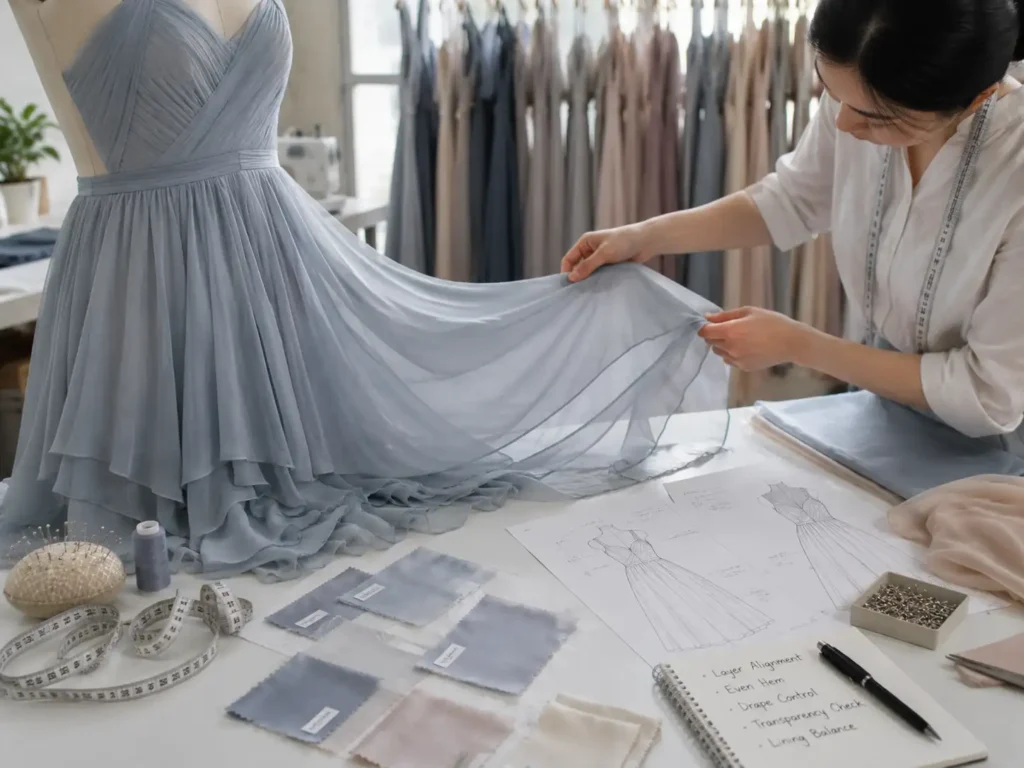
How Should Fashion Brands Choose Between Polyester and Silk Chiffon?
Start with the intended dress rather than choosing the fiber first. Define the silhouette, movement, hand feel, transparency, care expectations, target retail price, production quantity, color program, and repeat-order needs. Silk makes sense when its natural character materially improves the product. Polyester is often the stronger option when scalability, maintenance, color consistency, print flexibility, and controlled cost carry greater weight.
Match Fabric to Positioning
Product positioning should drive fabric selection. A minimalist premium gown and a multi-color commercial occasion collection may both use chiffon, but their commercial requirements are very different. In a premium design, consumers may notice the hand, subtle surface, and movement enough for silk to support a higher-value story. In a dress with multiple gathered tiers, prints, corsetry, or strong embellishment, those construction elements may dominate the experience and reduce the visible value of upgrading the outer chiffon. A useful internal exercise is to rate priorities from 1 to 5 before asking suppliers for options. Natural-fiber story, softness, fluid movement, easy care, durability, color range, target cost, repeatability, print capability, and long-term availability can all be scored. The total number is less important than the conversation it creates. If design ranks natural fiber at five while merchandising needs a price structure that cannot support silk, the conflict becomes visible early. Solving that tension during material development is much easier than discovering it after the final sales sample has already been approved.
Can Polyester Replace Silk?
Polyester chiffon can replace silk chiffon in many designs, but substitution should be proven through garments rather than assumed from loose swatches. The closer a design depends on the fabric itself, the harder replacement becomes. A simple floor-length gown with large uninterrupted chiffon panels exposes differences in movement, hand, and surface more clearly than a printed, tiered, or heavily embellished dress. If substitution is being considered, make equivalent trial garments using the same pattern and lining, then compare fold depth, sleeve movement, skirt recovery, static, transparency, surface reflection, skin feel, photography, and packing recovery. A replacement succeeds when it delivers the required product experience, not simply when it reduces the material quotation. Sometimes the best solution is not a direct one-for-one swap. The polyester option may need a different weight, finish, lining, gathering ratio, or hem treatment to recreate the visual effect developed in silk. Treat substitution as product engineering rather than a simple purchasing change, especially when the original design depends heavily on fluid drape.
Approve More Than a Swatch
A fabric card is useful during early sourcing, but it is not enough for final approval because chiffon changes once it is gathered, lined, sewn, pressed, and hung. Before production, review composition, usable width, weight, hand, drape, transparency, color, surface appearance, seam behavior, lining compatibility, pressing response, and finished movement. Commercial questions belong in the same approval process. Confirm whether the exact quality can support the required color quantity, order volume, and likely repeat orders. A beautiful sample made from a fabric that cannot be sourced again reliably can create serious replenishment problems. For seasonal collections, keep a physical approved fabric reference together with color information, lining specification, construction notes, and an approved garment sample. These records are especially useful when a successful style returns months later. They allow the team to compare the new fabric against something tangible instead of relying on memory or a supplier name. A repeat order should reproduce the original product experience, not merely use a fabric with the same generic description.
Make the Final Choice
Choose silk chiffon when soft natural hand, fluid movement, material storytelling, and premium positioning are central to the dress and the price architecture supports more delicate handling. Choose polyester chiffon when broader color availability, durability, easier care, repeatability, print development, and controlled cost matter more. Avoid making the final decision from fiber content alone when the design includes several layers, pale colors, long bias panels, dramatic draping, heavy gathering, or an unusual lining combination because these elements magnify small differences between materials. The safest sequence is straightforward: define the target look, compare real fabric options, produce a garment sample, test movement and transparency, review sewing and finishing, revise where necessary, and only then approve the bulk material. For brands developing custom chiffon dresses, a manufacturing partner with fabric sourcing, sampling, pattern development, and bulk-quality control can help connect the fabric decision to the complete garment rather than treating it as a separate procurement task.
Conclusion
Polyester chiffon and silk chiffon are not competing versions of one fabric where a single winner applies to every dress. Silk offers a distinctive natural hand and refined movement that can be valuable in premium, fabric-led designs. Polyester gives commercial collections a strong combination of versatility, durability, color flexibility, easier care, and production repeatability. The best choice appears only when the material is judged in the context of the actual silhouette, lining, target price, wearing occasion, and production plan. If there is one lesson worth carrying into every chiffon project, it is that the fabric should be approved as a finished dress rather than as a label on a swatch card. Once the material has been cut, sewn, lined, fitted, photographed, packed, and reviewed for repeat production, the right answer is usually much easier to see.