Skip to content

A fabric can look perfectly acceptable on a cutting table and become surprisingly transparent once it is made into a fitted dress. That gap between flat-fabric appearance and real wearing performance is where many sourcing mistakes begin. Teams often focus on GSM, assume a heavier option must be safer, approve a swatch under ordinary office lighting, and only discover during fitting that underwear lines, skin tone, seam allowances or the end of the lining remain visible. The problem is not that GSM is useless. It is that transparency is produced by several variables working at the same time.
Fabric density generally reduces transparency when higher yarn coverage leaves less open space for light to pass through. However, density alone cannot predict opacity. Yarn diameter, GSM, weave or knit structure, fiber type, color, stretch, finishing and lining all influence the result. For apparel development, the most reliable judgment comes from testing the actual fabric and garment under realistic light, tension and layering conditions.
This distinction matters most in womenswear, where chiffon, satin, mesh, jersey and other lightweight or body-hugging materials are often chosen precisely because of their drape, shine, softness or controlled sheerness. Increasing density until nothing shows through can technically solve one problem while ruining the design. A pale bodycon sample may need a denser knit, but a chiffon occasion dress may be better solved with a carefully chosen lining. The useful question is not simply, “How dense is this fabric?” It is, “Does this construction provide the right coverage where the garment is actually worn?”
What Is Fabric Density?
Fabric density describes how closely yarns, threads or stitches are arranged within a textile structure. In woven fabrics, it is commonly discussed through warp and weft thread density; in knits, courses, wales, gauge and stitch geometry matter. Density is not the same as GSM, thickness or opacity. Those properties influence one another, but none can reliably replace the others when evaluating see-through risk.
Is Fabric Density the Same as GSM?
No. GSM means grams per square meter and tells you how much one square meter of fabric weighs. Fabric density, depending on the technical context, refers more directly to how textile material is packed into the structure, such as ends and picks in a woven fabric or the distribution of knitted loops. Two fabrics can both measure 180 GSM while using very different yarn sizes, constructions and surface coverage, so the scale can show the same number even when one material is visibly more transparent.
This difference matters during fabric replacement. A supplier may offer another 95% polyester, 5% elastane jersey at the same GSM and still fail to reproduce the original opacity. One fabric may obtain its weight from thicker yarns in a relatively open construction, while another uses finer yarns in a more compact structure. Thickness adds another variable because a lofty fabric can feel substantial without covering the surface as efficiently as a thinner, tightly built fabric. GSM is useful, but it is one coordinate in a larger material map.
How Do Thread Count and Cover Factor Relate?

Thread density describes how frequently yarns appear across the fabric. In a woven construction, warp threads may be recorded as ends per inch or centimeter and weft threads as picks. If the yarn type and diameter stay similar, increasing those counts generally reduces the space between adjacent threads. The important qualification is yarn size: one hundred relatively coarse yarns can occupy much more surface area than one hundred very fine yarns, even though the thread count appears identical on paper.
Cover factor is useful because it moves closer to the visual question. It describes how much of the fabric surface is physically occupied by yarn rather than open space. A higher cover factor normally means fewer direct pathways for background light, so the fabric tends to appear more opaque when other variables remain comparable. Fashion teams do not need to calculate cover factor for every swatch, but understanding the idea explains why a high thread count does not automatically guarantee coverage if the yarns are extremely fine, translucent or easy to spread under tension.
How Should Density Be Read in Real Fabrics?
Density values are most meaningful inside the same fabric family. Comparing one satin with another satin can reveal useful differences because the materials share a similar construction logic. Comparing a woven chiffon directly with a rib knit using one density number is much less informative. For woven fabric, examine thread frequency, yarn size, weave, width stability and finishing. For knits, add gauge, loop size, stretch direction and recovery. The objective is to understand the architecture that creates coverage rather than treating a higher number as an automatic quality grade.
In commercial womenswear, this distinction prevents overcorrection. A denser chiffon may reduce sheerness but also lose the fluid movement needed for a layered maxi dress. A compact jersey may improve coverage but feel too heavy for a summer bodycon style. A tightly woven satin can appear more opaque yet become stiffer and less flattering in a bias-cut silhouette. Density should therefore be evaluated alongside the product purpose: where the fabric sits on the body, whether it stretches, how it drapes and whether another layer will be used.
Which Measurements Matter Most?
No single measurement predicts transparency in every textile, so development teams get a clearer picture by combining structural, weight and performance data. The most useful set depends on the fabric category, but the following comparison shows what each common specification can and cannot tell you. The final optical result still needs visual confirmation because measurements describe the material, while transparency is experienced through a specific color, light source, body background and garment fit.
| Measurement | What It Describes | Use for Transparency Decisions |
| GSM | Mass per square meter | Useful for comparing weight within a similar fabric family; not a direct opacity measure. |
| EPI / PPI | Warp and weft thread frequency | Shows how closely woven yarns are arranged, especially when yarn size is also known. |
| Courses / Wales | Knitted loop frequency | Helps describe knit structure but must be read with gauge, loop size and stretch. |
| Thickness | Fabric depth | Can support coverage but may be misleading in lofty or porous constructions. |
| Cover factor | Share of surface occupied by yarn | More directly related to visible open area than GSM alone. |
| Stretch % | Extension under a defined length change | Shows how much the construction may open during wear. |
| Visual / light test | Observed light or background visibility | Closest practical check of the opacity a customer will actually see. |
How Does Density Affect Transparency?
Higher effective fabric density usually reduces transparency because more yarn occupies the surface and less open area remains for direct light transmission. Lower-density or more open constructions generally allow more background light through. The relationship is strong, but it is conditional: changing yarn diameter, fiber characteristics, weave or knit geometry, color, finishing or stretch can alter the visible result even when a density value looks similar.
How Do Yarn Gaps Control Light Transmission?
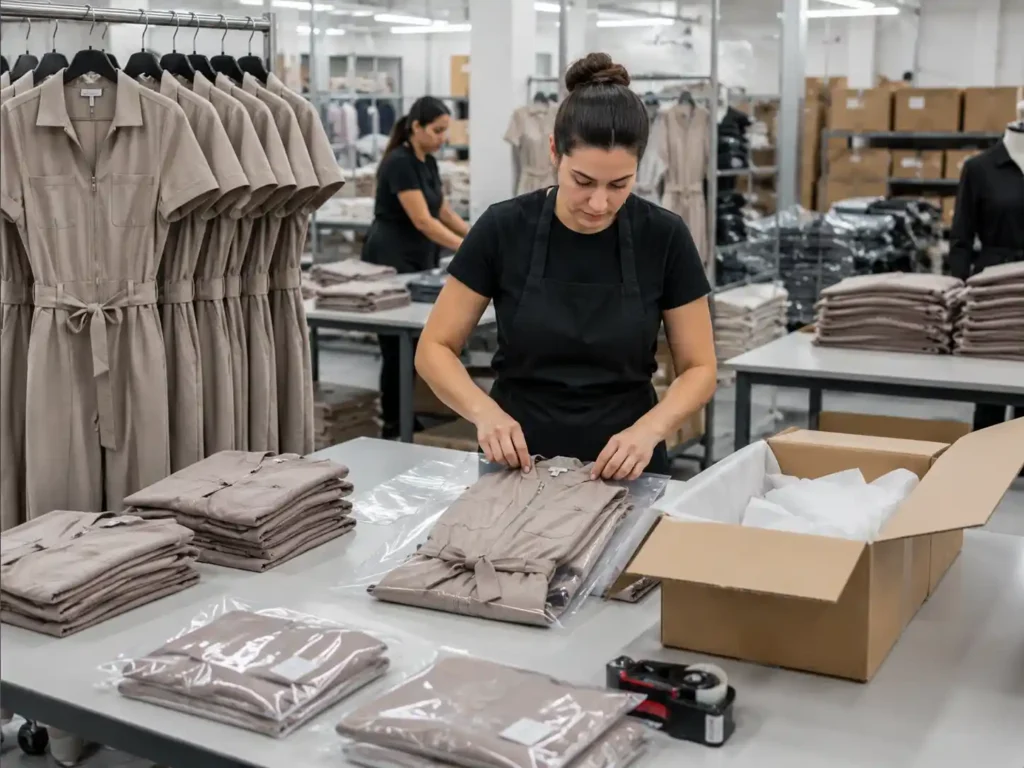
When light reaches fabric, part of it is reflected from the yarn surface, part is absorbed or scattered by the fibers, and part can travel through the spaces between yarns or loops. Those open pathways are a major reason one fabric appears more transparent than another. Mesh makes the principle obvious because the openings are intentionally large, but the same mechanism operates in chiffon and lightweight woven fabric through thousands of much smaller spaces distributed across the surface.
The background changes what the eye perceives. A pale fabric placed over a white cutting table may look acceptable because there is little contrast. The same material over darker underwear or a different skin tone can suddenly appear much more sheer. This is why simply holding a swatch in the air is not enough for apparel approval. The fabric should be checked against a realistic background, in the intended color, and in the tension state created by the garment. Light transmission is a fabric property, but perceived transparency is a fabric-plus-background situation.
Does Higher Density Always Mean More Opacity?
Usually, but only when the other variables stay reasonably similar. A fabric can become denser while using much finer yarns, or it can gain weight without closing the spaces that matter visually. A knitted material can look compact in the relaxed state yet open significantly when stretched. A pale glossy fabric can also reveal more visual information than a darker matte version with comparable structure. Density improves one part of the opacity equation, but it does not control all the optical and garment variables around it.
When a sample looks too sheer, asking only for a heavier or denser fabric can therefore create a new problem. The replacement may lose drape, become warmer, change stretch or increase cost without fully fixing the visual issue. Sometimes the better answer is a small increase in coverage combined with a matching lining; sometimes the pattern is too tight and is forcing the fabric open. Experienced product development treats transparency as a diagnosis problem: identify the mechanism first, then choose the smallest change that solves it without damaging the design.
Is There a Density That Guarantees Opacity?
There is no universal EPI, PPI, stitch-density or GSM value at which every textile becomes opaque. A threshold that works for a compact black jersey will not automatically work for ivory satin, nude mesh or a white summer woven. Yarn diameter, fiber, color, finishing and intended stretch all change the result. Even the acceptable amount of visibility depends on the garment zone: a sheer sleeve may be intentional while the bodice and skirt must provide much stronger coverage.
The more useful specification is functional rather than absolute. A development team can define that the bodice must not reveal underwear under normal indoor and daylight conditions, that the pale colorway must perform at realistic garment tension, and that the lining must not end in a visibly obvious line. Those requirements can then be verified on a sample and compared against bulk fabric. The goal is not to chase an arbitrary density number; it is to reach the intended coverage under the conditions customers will actually experience.
What Changes When Density Increases?
Increasing effective density can reduce transparency, but it may also alter air permeability, dimensional stability, hand feel, drape, stretch and weight. A more compact woven fabric often feels firmer and shows fewer open spaces, while a denser knit can become more stable but less airy. These secondary effects matter in fast-moving fashion development because the visual problem may be solved while the garment starts to feel wrong. A summer dress that becomes fully opaque but loses movement or comfort is not necessarily an improvement.
The right decision depends on the product’s hierarchy of needs. For a white graduation dress, coverage may outweigh a small increase in weight. For a sheer occasion sleeve, intentional transparency is part of the look and should be preserved. For a bodycon dress, opacity must be balanced with recovery and comfort. Density is therefore best treated as a control lever rather than a target in itself. Designers and manufacturers use it together with lining, pattern ease, color and construction to reach a garment-level result.
Which Factors Change Fabric Opacity?
Fabric opacity is shaped by yarn size, fiber type, weave or knit geometry, color, thickness, finishing, stretch and layering. Density is important because it changes surface coverage, but it works with all of these variables rather than replacing them. Two fabrics with similar GSM or thread frequency can therefore show very different background visibility, especially after the material is dyed into pale colors, stretched on the body or finished differently.
How Do Yarn Count and Fiber Type Matter?
Yarn size determines how much surface area each thread can cover. If two woven fabrics contain the same number of threads per inch, the one using thicker yarns will generally leave less open space between neighboring threads. That is one reason thread count without yarn count can be misleading. A specification such as 100 by 80 tells you the frequency of yarns, but it does not tell you whether those yarns are fine filaments, bulkier spun yarns or textured yarns with very different visual coverage.
Fiber and yarn construction also change how light behaves at the surface. Smooth filament yarns can produce a cleaner, shinier path for reflection, while spun or textured yarns may scatter light and soften contrast from what lies underneath. Polyester, nylon, viscose, cotton and blends differ in luster, moisture response and surface character, so identical structural numbers do not guarantee identical optical performance. When opacity is important, it is safer to compare complete fabric constructions rather than assume that composition, GSM or thread count alone will reproduce the same garment appearance.
How Do Weave and Knit Structure Matter?
Structure determines how yarns cross, float, loop and leave openings. Plain weaves contain frequent interlacing points and can create even coverage when the yarns are packed closely. Twill changes the distribution through diagonal interlacing, while satin uses longer floats to create its smooth face and characteristic shine. Knitted fabrics are built from loops, so their openings can change far more dynamically under tension. That mobility is especially relevant to fitted womenswear, where the fabric is rarely worn in the same relaxed condition seen on a roll.
Mesh is the clearest example because openness is part of the design. Regular mesh, stretch mesh and power mesh can all have different hole size, yarn thickness, compression and recovery. Jersey is less obviously open but can become more transparent when the loops spread across the bust, hips or seat. For that reason, opacity should be evaluated by construction and garment zone together. A loose jersey maxi dress and a tight mini dress can use the same fabric and still present very different see-through risk because the second style places much more tension on the loop structure.
Does Color Change Transparency?
Yes. Color can change perceived transparency even when the physical construction is identical. White, ivory, champagne, blush and other light shades often reveal skin, underwear or seam contrast more easily than black or navy because the eye is sensitive to differences in brightness and color beneath the fabric. This does not mean every white textile is structurally more porous. It means visual opacity depends partly on contrast, so a dark sample should never be the only color used to approve a multi-color collection.
Lining color can strengthen or weaken the effect. A closely matched lining can create a uniform field beneath satin or chiffon, while a lining that is noticeably lighter or darker can make seam lines, edges and coverage transitions more visible. Nude lining is sometimes chosen to preserve the appearance of a sheer overlay; matching-color lining may be more appropriate when the aim is complete visual coverage. The safest approach is to test the lightest planned shell color over the actual lining under both daylight and stronger backlighting before the production standard is fixed.
How Do Finishing and Thickness Matter?
Finishing can alter transparency even when the nominal GSM changes very little. Compacting can tighten a knitted structure, calendering can flatten and smooth a surface, brushing can increase visual bulk, and heat or wash processes can change dimensions enough to affect effective yarn spacing. Width is part of the same conversation: if a fabric finishes wider than the approved sample while its mass stays similar, the structure may effectively be more open. Repeat-order control therefore needs more than a fabric name and composition line on a purchase order.
Thickness should also be treated carefully. A thick, lofty fabric can remain relatively porous, while a thinner but tightly constructed material can provide stronger coverage. The useful question is how the textile material is distributed across the area that blocks or scatters light. When a mill substitutes finishing routes, compare the final swatch with the approved reference for width, surface compactness, hand feel, stretch, recovery and visual opacity. Small structural changes can become very visible in pale dresses even when the laboratory weight is technically within an acceptable range.
How Do GSM and Stretch Affect Transparency?
GSM describes fabric mass, while stretch changes how that mass is distributed during wear. Higher GSM often improves coverage when the construction remains similar, but it cannot guarantee opacity. Stretch can make an initially opaque-looking fabric appear sheer by enlarging yarn or loop openings. For fitted womenswear, the most useful transparency review combines GSM with construction, stretch percentage, recovery, color and realistic on-body tension.
Is Higher GSM Always Less Sheer?

Higher GSM often improves opacity when you compare fabrics from the same construction family. A compact jersey at 220 GSM will commonly provide more coverage than a similar version at 160 GSM because more material is present per unit area. The problem begins when unrelated constructions are compared as if GSM were a universal opacity scale. A lighter tightly woven fabric can cover better than a heavier open knit, and a high-GSM stretch fabric can still become transparent if it is pulled far enough over the body.
GSM is therefore strongest as a controlled comparison tool. If composition, yarn system, knit or weave and finishing are similar, a weight change can help predict how the fabric will feel and cover. If those variables change, the same number loses much of its predictive value. This is particularly important when sourcing alternatives under price or lead-time pressure. Matching “95% polyester, 5% elastane, 180 GSM” may sound precise, but the replacement still needs to match construction, stretch behavior, surface finish and opacity before it can be considered equivalent.
Why Can Equal-GSM Fabrics Look Different?
Equal GSM simply means equal mass per square meter. It does not tell you how many yarns are present, how thick they are, how tightly they are arranged or how the fabric behaves under tension. One 180 GSM knit may use thicker yarns in larger loops, while another uses finer yarns in a tighter gauge. Their scale weight can be identical, yet the second material may provide more uniform coverage because the yarn is distributed more continuously across the surface.
Finish and color can widen the difference further. One fabric may be compacted after knitting, another may remain relatively open. One may be black and matte, another ivory and glossy. One may stretch 15% in a direction, another 50% or more. This is why replacement fabrics should be compared as complete systems: composition, GSM, construction, thickness, stretch, recovery, width, color and surface appearance. The best substitute is not necessarily the one with the closest weight; it is the one that reproduces the intended garment behavior.
How Does Stretch Increase See-Through?
Stretch increases transparency because the same amount of textile material is forced to cover a larger area. In a knit, loops widen and rotate; in stretch woven fabric, spacing between yarns can increase as the structure deforms. The effect is often most visible at the bust, hips and seat, where fitted garments experience greater tension. A swatch that looks opaque while relaxed can therefore become noticeably sheer when stretched across a body curve, even though its composition and GSM have not changed at all.
A simple repeatable check is to mark a 10 cm length and extend it while observing the material over contrasting or skin-tone backing. Stretching 10 cm to 11 cm represents 10% extension, to 12 cm represents 20%, and to 13 cm represents 30%. These are not universal pass-or-fail standards; they are practical screening points. The correct test level should reflect the actual garment. A loose dress may experience little tension, while a bodycon style can place substantially more extension on selected zones.
Can Pattern Fit Affect Opacity?
Yes. A transparency problem is not always caused by the fabric itself. If a pattern is cut too tightly through the bust, hips or seat, the fabric may be stretched beyond its intended working range. The result can include increased see-through, stronger seam stress and visible distortion of prints or knit loops. Simply choosing a heavier textile may hide the symptom while leaving the underlying fit problem unresolved, and it can also change the garment’s drape, comfort and cost.
Fit and material should therefore be reviewed together. Depending on the style, useful corrections can include adding a small amount of ease, redistributing shaping, changing seam placement, adjusting the direction of greatest stretch or altering lining construction. In some fitted dresses, changing a critical body measurement by only a few centimeters can reduce local fabric strain enough to improve coverage without replacing the shell fabric. The objective is not to make every garment looser; it is to keep the fabric within the tension range for which its opacity was approved.
The following stretch-opacity screen is a practical development tool rather than a universal textile standard. It works best when the same swatch, backing, light source and observation distance are used throughout the review so that changes can be attributed to extension rather than to inconsistent testing conditions. Recording the result with a quick photo and the tested extension percentage also makes later sample and bulk comparisons easier for different team members.
| Extension Condition | Example from a 10 cm Mark | What to Watch |
| Relaxed | 10.0 cm | Baseline coverage, visible yarn gaps and color contrast. |
| 10% extension | 11.0 cm | Early opening of loops or yarn spacing; useful for lightly fitted areas. |
| 20% extension | 12.0 cm | Moderate garment tension; watch skin-tone and underwear contrast. |
| 30% extension | 13.0 cm | Higher tension screening for bodycon zones where the style realistically reaches this level. |
| After release | Return toward 10.0 cm | Recovery, permanent opening, distortion and whether opacity returns with the structure. |
Which Womenswear Fabrics Need More Attention?
Lightweight, open, pale and highly stretchable fabrics deserve the closest transparency review. Chiffon, organza, mesh, jersey and lightweight satin are common risk areas because the qualities that make them attractive – airiness, fluidity, shine or elasticity – can also reduce visual coverage. The right solution depends on where the fabric is used, how much it stretches, which colorway is chosen and whether lining is part of the intended design.
How Does Density Affect Chiffon and Organza?
Chiffon and organza are not always supposed to be opaque. Their value often comes from translucency, lightness and the way they build volume or movement when layered. The development question is therefore where transparency is intentional and where privacy is required. A chiffon sleeve can remain single-layer and sheer, while the bodice of the same dress may need a lining or second layer. A sheer maxi skirt can use a shorter lining to create a deliberate contrast rather than trying to force the outer fabric to become dense enough on its own.
Increasing density can improve coverage, but the material may become firmer, heavier or less fluid. That is particularly noticeable in chiffon, where small changes in yarn and construction can alter the floating quality of gathers and ruffles. Organza can tolerate more crispness, but too much material can still change the intended transparency and volume. Layering is often the cleaner engineering solution because it separates two functions: the shell provides visual lightness, while the underlying structure provides coverage where the garment needs it.
How Does Density Affect Mesh and Jersey?

Mesh and jersey require special attention because their apparent density changes under tension. Mesh contains open areas by design, so hole size, yarn thickness, stretch and recovery determine how transparent it becomes in a garment. Jersey may look much more covered on a hanger, but its knitted loops can spread significantly across the body. This is why fitted mesh and jersey styles should be checked in the same direction and approximate extension they will experience in wear, rather than approved only as flat swatches.
Different mesh types also serve different purposes. Regular mesh can be chosen for a light overlay, stretch mesh for flexible fashion panels, and power mesh for stronger support or compression. Printed mesh introduces another variable because pattern spacing changes when the fabric stretches. For each type, review transparency, stretch direction, recovery, hole consistency, edge stability and lining placement together. A sample that passes in black may still require additional coverage when produced in white, nude or a pale print because the contrast with the body becomes more visible.
How Does Density Affect Satin and Light Colors?
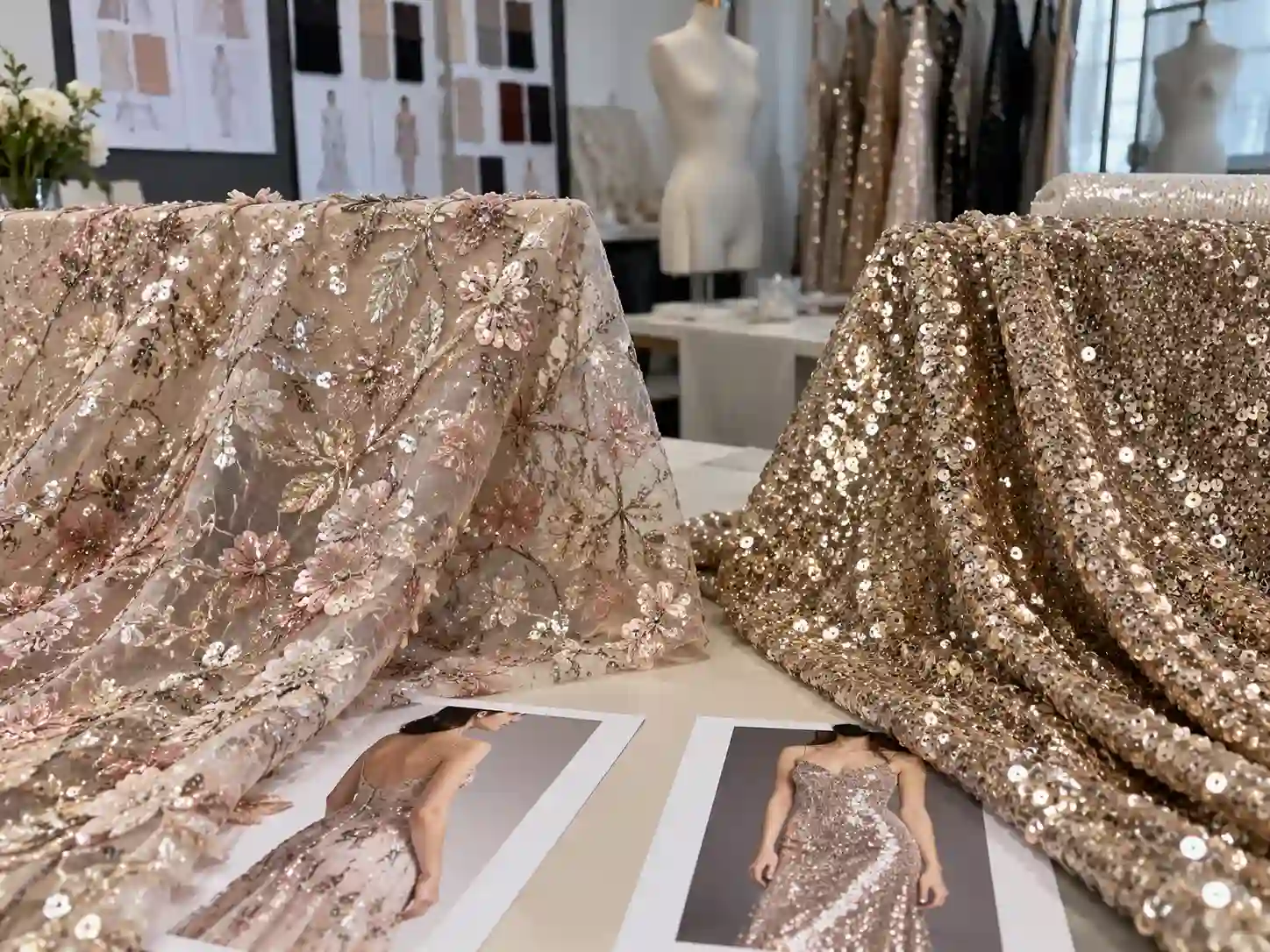
Satin can be deceptive because its smooth surface and shine make it look visually rich even when the construction is relatively light. A pale satin may appear acceptable when flat but reveal underwear outlines, seam allowances or the edge of a partial lining once the garment is worn. White, ivory, champagne, blush, nude and light pastel shades are particularly sensitive because small differences underneath the fabric can become visible through contrast and reflected light.
A heavier satin can improve coverage, but it may also change the way a slip dress falls or how a bias-cut panel moves. Lining is often a more controlled answer if the original shell has the right drape. The lining should be checked for color, weight, stretch compatibility and surface friction so that it does not make the outer satin drag or appear bulky. Transparency, zipper flatness, seam visibility and pressing should be reviewed together because the same smooth surface that creates satin’s appeal can also highlight small construction differences.
Which Garment Areas Need the Most Checking?
Transparency is rarely uniform across an entire garment because different zones carry different levels of tension, layering and contrast. Bust, hip, seat, upper thigh, underarm, deep-V areas, cut-outs and the point where a lining ends deserve specific attention. A skirt can look opaque while standing and reveal more when the wearer sits or walks. A bodycon dress can appear acceptable from the front while becoming noticeably more sheer over the seat because the fabric is stretched further in the back view.
A useful fitting review therefore includes front, side and back views while the garment is standing, sitting and moving. If the product is intended for event lighting or photography, it should also be checked under brighter direct light because cameras and strong illumination can reveal differences that normal fitting-room light hides. Looking at the problem by garment zone makes corrections more precise. The right solution might be a different fabric, a local lining panel, a small pattern adjustment or a change in seam placement rather than a wholesale replacement of the material.
How Should Transparency Be Controlled in Production?
Transparency should be controlled through a repeatable sequence of fabric, sample and bulk approvals rather than one informal swatch check. Reliable evaluation compares relaxed and stretched fabric, the lightest colorway, intended lining, garment fit and bulk material against an approved reference. This approach catches changes before cutting and treats opacity as a finished-garment performance requirement instead of assuming that one GSM or density figure guarantees the result.
How Should Fabric Swatches Be Tested?
A swatch should be tested in conditions that resemble the intended garment rather than simply held toward a window. Window light changes by time of day, background and angle, so it is useful for spotting severe sheerness but weak as a repeatable approval method. A better development routine uses the same backing, light source and observation distance each time. Review the fabric relaxed, then under realistic stretch if applicable, and repeat the test in the lightest planned color because that is often where transparency becomes most visible.
For dresses and tops, skin-tone and contrasting backing are more informative than a white table alone. Chiffon and mesh should also be viewed with strong backlighting to reveal open areas, while fitted jersey should be observed at realistic extension. The purpose is not to turn every sample room into an optical laboratory. The value comes from repeatability. If the approved sample is photographed or recorded under a defined condition, the production team has a much better reference when bulk fabric arrives several weeks later.
When Is Lining or Double Layer Needed?
Lining is appropriate when the shell fabric cannot provide the required coverage without sacrificing the design’s drape, softness or transparency in other areas. Common solutions include full lining, bodice-only lining, skirt lining, a short lining under a sheer maxi skirt, double-layer mesh, self-fabric layering and localized bust or seat panels. The best choice depends on the garment because lining changes more than opacity: it also affects weight, stretch, breathability, seam construction and the way the shell moves against the body.
Compatibility is especially important in stretch garments. A rigid lining beneath an elastic shell can restrict movement and create pulling, while an overly soft lining may fail to support the silhouette. Chiffon needs a lining light enough to preserve movement; satin needs a lining with low enough friction to avoid dragging the outer shell. For a collection with multiple colorways, the lightest shell color should be tested with its actual lining rather than assuming that the combination approved in black will work equally well in ivory or blush.
How Should Bulk Opacity Be Approved?
Bulk opacity should be checked before cutting because that is the last stage at which a fabric difference can be corrected without creating a large amount of work in progress. The production fabric should be compared with the approved sample or sealed reference for color, width, GSM when specified, stretch, recovery, surface appearance and visual transparency. If a difference is found early, the team can investigate dye lot, finishing, construction or material substitution before hundreds or thousands of garment panels depend on the result.
A practical approval chain is fabric direction, swatch approval, sample garment, lining confirmation, color approval, pre-production sample, bulk fabric approval, incoming material inspection and garment inspection. Each stage answers a different question. The swatch confirms potential; the sample confirms garment behavior; the pre-production sample fixes the intended construction; incoming inspection checks whether the actual production fabric still matches. Jinfeng Apparel’s documented fabric workflow follows this type of sequence by evaluating fabric suitability, transparency and lining needs through sampling, bulk confirmation and incoming material control for custom womenswear.
How Should Garment Opacity Be Checked?

The finished garment should be reviewed under realistic wearing conditions because sewing and fit can create local tension that a flat fabric test never shows. Check front, side and back views while standing, sitting and moving, and pay close attention to high-tension body zones and the point where any lining ends. Pale satin should be reviewed for underwear and seam visibility; bodycon jersey for tension-related opening; mesh for intentional versus accidental exposure; and chiffon for whether lined and unlined zones create the intended visual hierarchy.
This is also where product development and production control meet. If the issue appears only on the body, the correction may involve pattern ease, lining length, seam placement or a local double layer rather than another fabric change. For brands developing dresses, skirts, jumpsuits or matching sets, discussing these variables together before bulk approval can reduce expensive late-stage corrections. A manufacturer that can connect material behavior with fit and construction is more useful than one that simply confirms a GSM number and moves directly into cutting.
The checklist below is designed as a practical approval record. It does not replace a brand’s own quality standard, but it makes opacity decisions visible and repeatable across sampling and production, particularly when several colors, sizes or factories are involved. Keeping the same approved reference, lighting condition and review method also reduces subjective arguments when a fabric lot or finished garment looks slightly different from the sample.
| Approval Stage | Record or Check | Transparency Question |
| Fabric swatch | Color, construction, GSM if specified, stretch, backing test | Is the material direction capable of delivering the intended coverage? |
| Fit sample | Front/side/back photos, garment tension, movement | Does opacity change on the body or only in specific zones? |
| Lining approval | Lining shade, weight, stretch and length | Does the layer solve coverage without damaging drape or fit? |
| PP sample | Approved shell, lining, measurements and construction | Is there one sealed garment reference for production? |
| Bulk fabric incoming | Color lot, width, stretch, surface, visual opacity | Does production fabric still match the approved reference before cutting? |
| Final garment | Lighting, movement, high-tension zones, lining edges | Does the finished product deliver the intended coverage in realistic use? |
Fabric density is one of the strongest structural influences on transparency, but it should never be treated as a standalone answer. The same GSM can produce different opacity; the same fabric can change when stretched; the same construction can look acceptable in black and unexpectedly sheer in ivory. Once density is understood as part of a system that includes yarn size, structure, color, finishing, tension and lining, fabric decisions become more predictable and sample corrections become much more targeted.
For fashion teams, the practical goal is not maximum opacity in every fabric. It is controlled opacity that fits the design. Chiffon may remain intentionally sheer in a sleeve, while a pale satin bodice needs stable coverage; mesh may be transparent by design, while a fitted jersey must not open excessively over the hips. If a custom womenswear style is showing this kind of conflict during development, reviewing the shell fabric, lining and pattern together before bulk approval is usually far more effective than relying on GSM alone.