Skip to content

Two dresses can share the same silhouette, color, measurements, and price target yet feel completely different once the fabric changes. Lace brings pattern, texture, ornament, and a sense of surface craftsmanship. Mesh usually creates a cleaner sheer effect and gives designers more freedom with stretch, layering, ruching, cut-outs, and illusion panels. That difference sounds simple until a design reaches the fitting room, where transparency, recovery, lining, seam placement, and body tension begin to change the result.
Lace is generally the stronger choice when decorative pattern, texture, occasion styling, and visible detail are central to the dress. Mesh is usually more suitable when lightweight transparency, stretch, body contouring, layered sheerness, or modern illusion effects matter more. The final choice should consider silhouette, stretch, lining, coverage, construction, comfort, cost, and production stability rather than appearance alone.
A fabric swatch can make a decision look easy. Production rarely is. A beautiful floral lace may lose its effect when a motif is split across a princess seam, while a soft mesh that seems perfectly balanced on the cutting table may become much more transparent once it stretches over the bust or hips. The better question is not simply which fabric looks prettier, but which one will still deliver the intended dress after pattern cutting, fitting, sewing, lining, finishing, and repeated production.
What Is the Difference Between Lace and Mesh?
Lace and mesh are both open-structure fabrics, but they are designed to do different jobs. Lace is defined by decorative motifs, texture, and patterned coverage, while mesh usually has a more regular net-like structure built around transparency, stretch, layering, or support. For dresses, the real differences appear in surface design, elasticity, lining requirements, cutting methods, seam behavior, and how the fabric changes when worn on the body.
What Is Lace Fabric?
Lace is better understood as a family of decorative textiles than as a single fabric specification. Dress production may use polyester lace, nylon lace, cotton lace, spandex-blended stretch lace, dense floral patterns, fine geometric patterns, scalloped lace, and many other variations. The motif is part of the design itself, which means the textile is not merely covering the body; it is actively shaping how the garment is read from a distance and up close.
Typical fashion lace used in dresses often falls around 60-250 gsm, although weight alone does not tell you whether a lace will feel delicate, firm, soft, open, dense, or luxurious. Yarn thickness, motif density, ground construction, finishing, and fiber composition all influence the final hand feel and drape. Two laces with similar weights can behave very differently once they are cut into a fitted bodice or layered over lining.
Stretch also varies considerably. Traditional lace may have little usable stretch, while spandex-blended stretch lace can provide moderate elasticity for closer-fitting styles. A rigid lace over a bodycon pattern may restrict movement or require more shaping through seams and darts. Stretch lace can follow the body more naturally, but its motifs may widen or distort under tension, so the pattern still needs to be checked on the actual fit rather than only on a flat swatch.
What Is Mesh Fabric?
Mesh is equally broad as a category. Regular mesh, stretch mesh, power mesh, printed mesh, and double-layer mesh can behave very differently even when they look similar in a sourcing photo. Lightweight regular mesh is often selected for transparent layers and sleeves. Stretch mesh is useful for fitted silhouettes, ruching, and body-skimming overlays. Power mesh is heavier and more supportive, making it useful in shaping zones, corset-related structures, and bodycon garments that need stronger recovery.
Common fashion mesh for dresses often falls around 40-120 gsm, while stronger power-mesh constructions may reach roughly 100-250 gsm. Those ranges overlap with lace, but the performance goal is different. Mesh is generally chosen for transparency, softness, stretch, recovery, printability, layering, or support rather than for a decorative motif built into the fabric surface.
Mesh also changes noticeably under tension. When it stretches across the bust, waist, or hips, the openings can enlarge, the color can appear lighter, and transparency may increase. For fitted dresses, a swatch should therefore be assessed both relaxed and under approximate wearing stretch. A mesh that looks sufficiently covered on the table may become too sheer on the body, while a double layer can deepen color and reduce transparency without creating the solid appearance of an opaque lining.
How Do They Compare?
| Property | Lace | Mesh |
| Typical dress weight range | 60-250 gsm | 40-120 gsm |
| Common fibers | Polyester, nylon, cotton, spandex blends | Polyester, nylon, spandex blends |
| Surface character | Patterned, decorative, textured | Cleaner, net-like, visually lighter |
| Stretch | None to moderate, depending on construction | Low to high, depending on mesh type |
| Transparency | Usually high, influenced by motif density | Usually high, influenced by mesh density and layers |
| Lining | Usually required | Usually required unless intentionally sheer |
| Common uses | Occasion, cocktail, evening, wedding guest, lingerie-inspired | Party, club, cut-out, bodycon, layered, resort |
| Main production focus | Motif placement, joins, edges, lining | Stretch, transparency, distortion, hole control |
The table is useful as a starting point, but fabric names should never replace physical evaluation. A 90 gsm lace can be softer or stiffer than another lace at the same weight, and two meshes that look almost identical can have very different recovery, transparency, or surface softness. For commercial dress development, the relevant question is whether the exact fabric performs consistently in the intended silhouette, size range, color, and lining combination.
How Do They Look Different?
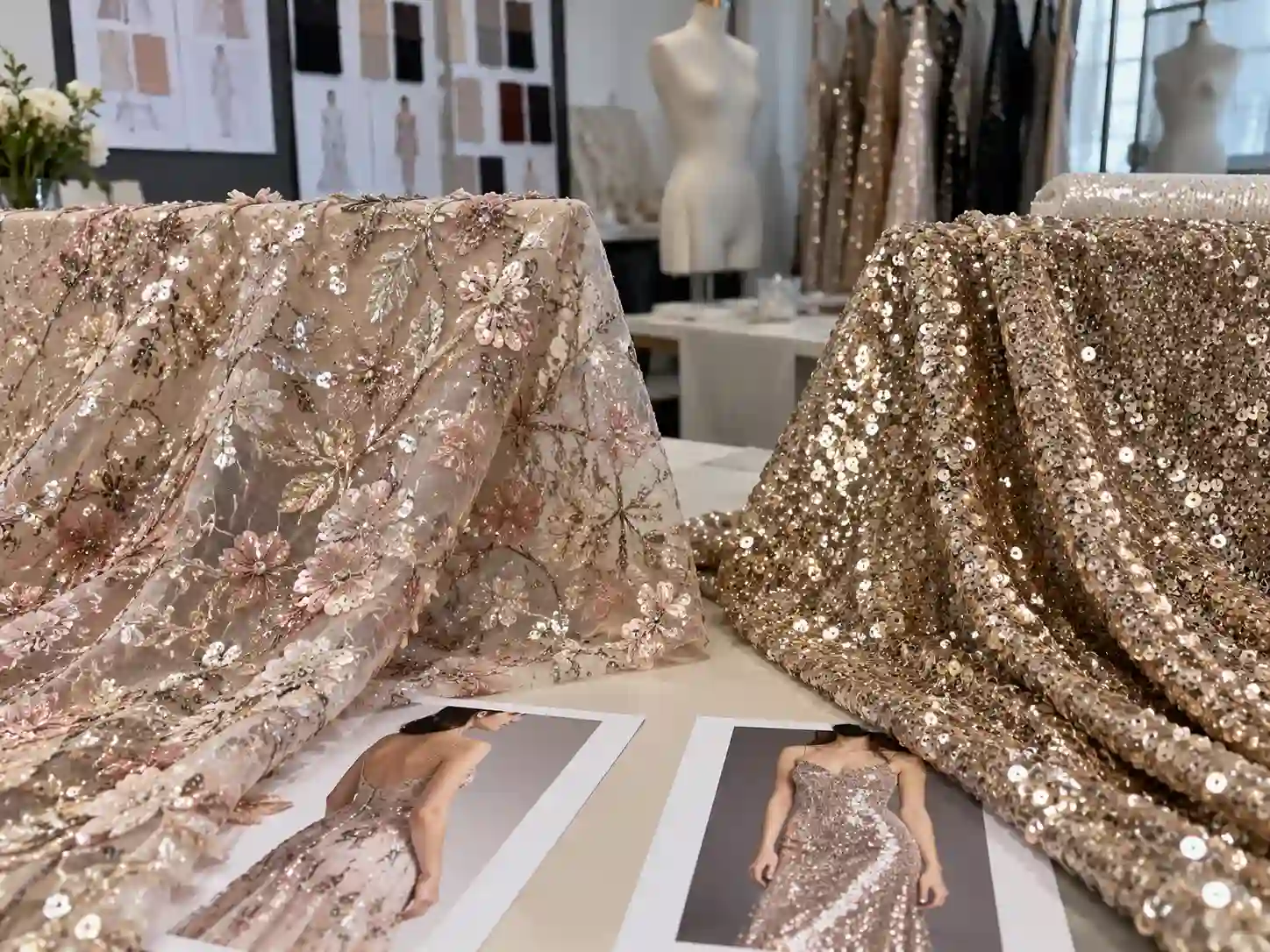
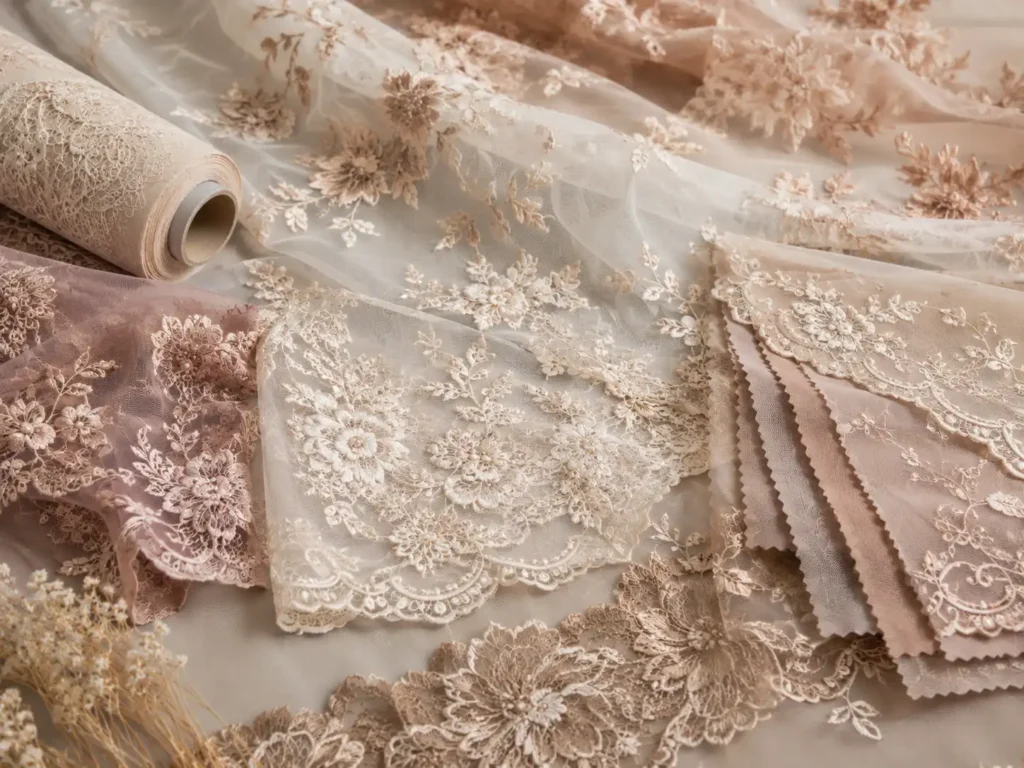
Lace adds visible information to the surface of a dress. Florals, geometric forms, scallops, and open areas all become design elements, so even a relatively simple mini-dress pattern can look highly detailed. Mesh has a quieter surface, and its strongest visual effect often comes from what can be seen through it. Designers use mesh to create floating panels, soften prints, build layered depth, expose selected areas, or create a nearly invisible support zone.
Lining can transform both materials. Nude lining can make lace motifs appear to float on the skin, while matching lining creates a denser, more tonal look. With mesh, a second layer can deepen color and reduce transparency without making the garment fully opaque. Light, seam overlap, body stretch, and skin tone all affect the finished appearance, so the most useful comparison happens on a dress form or fit model rather than on folded fabric cards.
Which Looks Better for Different Dress Styles?
Lace usually looks stronger in dresses built around texture, decorative detail, romance, or occasion dressing. Mesh is generally more effective in sheer, body-conscious, layered, ruched, cut-out, or contemporary styles. Neither fabric is visually superior in every situation. The better choice is the one that reinforces the silhouette and brand direction instead of forcing the garment to work around unsuitable material behavior.
Occasion Dresses
Lace is naturally suited to many occasion dresses because the textile introduces visual detail before extra embellishment is added. Cocktail dresses, wedding guest styles, fitted midi dresses, corset dresses, and selected evening silhouettes can gain depth from all-over lace, lace sleeves, decorative bodice panels, or scalloped finishing. The motif scale matters greatly because a large floral repeat can dominate a garment, while a finer pattern creates a more continuous texture that feels quieter and often easier to coordinate across a collection.
Mesh can also look refined in occasionwear when it is used with restraint. Fine mesh is especially effective for illusion necklines, transparent sleeves, corset inserts, and sheer areas where the material should disappear visually rather than become the dominant decorative feature. In these designs, seam allowances, lining edges, and finishing quality become more visible because the fabric does not hide construction. A premium material cannot compensate for poorly balanced seams or careless lining placement, so elegance depends on both fabric selection and workmanship.
Party Dresses
Mesh has a clear advantage in many modern party silhouettes because it combines well with stretch, ruching, body contouring, transparent panels, and layered effects. A lightweight stretch-mesh mini dress can gather closely over the body without building the bulk that some decorative laces create. Printed mesh adds another option for abstract graphics, florals, animal patterns, or blurred motifs while maintaining a light surface, but the print should be checked under stretch because scale and alignment can change across the bust and hips.
Lace creates a different partywear mood. Stretch lace works well for lingerie-inspired dresses, fitted minis, corset tops, and styles where the decorative surface is meant to remain visible. The main challenge is controlling motif position and distortion around curved areas. The most useful decision is therefore not whether partywear automatically means mesh; it is whether the collection wants a cleaner, body-focused sheer effect or a richer, more decorative surface with stronger visual identity.
Romantic or Modern Looks
Lace has a natural advantage in romantic styling because the fabric already carries decorative language. Floral motifs, scalloped edges, fine openwork, and soft tonal lining can make a simple silhouette feel more expressive without adding many separate trims. Mesh feels more contemporary because it allows negative space to become part of the garment. A nude mesh waist panel can create an illusion cut-out, while a black sheer sleeve can lighten a fitted mini dress without introducing extra surface pattern.
The two aesthetics are not opposites. Some of the strongest constructions combine them. Lace applique on fine mesh can create a floating motif effect, mesh can provide a flexible base beneath a lace corset, and lace can soften the visual sharpness of a cut-out without removing the transparent zone. The useful design question is how much decorative surface versus visual transparency the dress needs. Once that balance is clear, fabric selection becomes more purposeful and less dependent on trend imagery alone.
Style and Fabric Balance
Silhouette should guide the fabric rather than the other way around. A strapless lace dress may look highly decorative but still need cups, boning, stabilization, or a supportive lining. A ruched mesh dress may look simple from the outside yet depend heavily on stretch recovery, controlled pattern reduction, and a lining that moves at the same rate as the outer layer. These technical details influence whether the finished product feels considered or unstable once worn.
Halter, backless, corset, ruched, cut-out, and low-waist dresses can all work with mesh when the selected version has suitable elasticity and stability. Lace is particularly effective for strapless, corset, ruffle, cocktail, occasion, and decorative overlay styles. The best-looking fabric is therefore the one that helps the silhouette keep its intended proportion, coverage, and movement after fitting, not simply the one that photographs best as a swatch.
How Do Lace and Mesh Compare in Performance?
Mesh generally offers more options for stretch, body contouring, and lightweight transparency, while lace offers greater decorative texture but can be less elastic and more sensitive to motif placement. Both categories vary widely by construction. Performance should be judged through stretch, recovery, drape, transparency, comfort, and dimensional stability rather than by fabric name alone, especially when the dress is fitted or partially sheer.
Stretch and Recovery
Stretch mesh is usually the more flexible option for bodycon dresses, ruched styles, sheer sleeves, and close-fitting overlays. Power mesh can provide even stronger recovery and support where the design requires controlled compression or shaping. Lace requires more careful qualification because non-stretch lace may need shaping through darts, seams, or a stable underlayer, while stretch lace can fit closer to the body but may change visually as motifs widen under tension.
Recovery matters just as much as stretch. A fabric can extend easily and still fail to return cleanly, creating a neckline that grows, a sleeve opening that loosens, or a waist that becomes larger after wear. During development, it is useful to mark a measured length, stretch it to an approximate wearing condition, release it, and compare the recovered dimension. The purpose is not to chase the highest stretch percentage; it is to confirm that the fabric behaves consistently enough for the pattern and intended fit.
Sheerness and Coverage
Both lace and mesh can be highly transparent, but transparency is created differently. Lace combines denser motifs with open spaces, which produces patterned coverage. Mesh is usually more uniform, so the amount of skin visible depends heavily on mesh opening, fabric color, number of layers, and the degree of stretch across the body. Black mesh can look relatively dark when doubled yet surprisingly transparent in one stretched layer, while pale mesh can almost disappear against some skin tones.
Coverage should be assessed under realistic conditions rather than only under flat studio light. Garment color, lining color, printed coverage, seam overlap, bust and hip placement, and backlighting can all change the visual result. For dresses sold online, strong photography lighting is especially revealing because it can expose lining edges and transparency differences that are less obvious in a fitting room. If coverage is commercially important, the sample should be reviewed while standing, sitting, walking, and under more than one lighting condition.
Drape and Structure
Neither lace nor mesh has one fixed drape profile. Lace can range from fluid and soft to comparatively firm depending on motif density, yarn, finishing, and backing. Mesh can range from light, almost floating constructions to strong power mesh with noticeable support. A fabric that works beautifully on a 70 cm mini dress can behave differently in a floor-length design because the longer garment introduces more downward weight and changes how layers interact.
Layering alters drape as well. Two layers of soft mesh may create enough body for a skirt while remaining visually lightweight. Lace over lining can feel more structured than the lace alone, while lace over mesh can add depth without the firmness of an opaque woven base. The correct drape is not simply the softest option. It is the degree of movement that helps the silhouette keep its intended shape while still feeling natural during walking, sitting, and turning.
Comfort and Wear
Comfort problems often appear at edges and seams rather than across the center of the fabric. Lace may feel soft when touched flat but become irritating where a dense motif or cut edge sits under the arm. Mesh may feel nearly weightless yet become uncomfortable if a neckline is over-stretched, a seam is too bulky, or power mesh creates more compression than the design actually needs. The lining can also introduce friction or restrict stretch even when the outer fabric feels comfortable by itself.
For close-fitting dresses, underarm softness, neckline pressure, side-seam thickness, waist compression, bust movement, sleeve mobility, hem recovery, lining friction, and seam elasticity should all be considered together. The outer fabric and lining need compatible movement. A highly elastic mesh over a rigid lining can feel restrictive, while a relatively stable lace over an excessively stretchy lining may shift and distort. Comfort is a property of the whole garment system, not of one fabric tested in isolation.

Do Lace and Mesh Dresses Need Lining?
Most lace and mesh dresses need at least partial lining because both fabrics are usually transparent, but full lining is not always necessary. A design may use a lined body with sheer sleeves, nude lining under lace, double mesh instead of opaque lining, or localized coverage around the bust and hip. Good lining controls opacity without damaging the stretch, drape, color, comfort, or intended sheer effect.
Lace Lining
Lace lining provides coverage, protects the skin from rough seams, supports fragile areas, controls color appearance, and can help stabilize the garment. The lining color should be treated as part of the design rather than an afterthought. Nude lining increases contrast between the motif and the body, creating a stronger illusion effect. Matching lining makes the dress appear denser and more tonal. Contrast lining can make the pattern graphic, but it can also change the style direction much more dramatically than expected from the fabric card.
Bust coverage deserves particular attention because lace motifs do not always fall conveniently over the body. A floral repeat can provide strong coverage on one side and an open area on the other, so the pattern may need to be shifted or the lining shape adjusted. Edge treatment also interacts with lining. A scalloped lace hem can stay visually light when the lining ends slightly above it, while bringing opaque lining all the way to the scallop produces a much heavier appearance.
Mesh Lining
Mesh often needs a more selective lining strategy because transparency may be the reason the fabric was chosen. Fully lining every area can remove the visual effect that makes the design interesting. Common solutions include a fully lined body with sheer sleeves, a short lining under a long mesh skirt, nude lining under colored mesh, cups plus localized coverage, double-layer mesh without opaque lining, power mesh inside shaping zones, or intentionally unlined beach and resort overlays.
Stretch compatibility is critical. If the outer mesh stretches much more than the lining, the lining can restrict movement and make the outer layer wrinkle or pull. If the lining stretches far more, it may shift independently and become visible. Lining length also affects fit. In bodycon styles, a short lining can ride upward if the hem or fabric recovery is not balanced, making the problem especially visible through the transparent outer layer.
Color and Transparency
Lining can transform one outer fabric into several visually different dresses. Cream floral lace over nude lining may look delicate and dimensional, while the same lace over cream lining appears more covered and traditional. Black mesh over nude lining creates stronger contrast than black mesh over black lining. Double-layer mesh deepens color and reduces transparency even when neither layer is fully opaque on its own, so layer count should be approved together with the final color.
Pale colors deserve extra care. White, ivory, pastel, and skin-tone mesh can reveal slight shade differences more clearly when layered, especially where one area uses two layers and another uses one. For collections sold across different markets, nude lining should also be approached thoughtfully because one skin-tone color does not create the same illusion effect on every wearer. The outer fabric and lining should therefore be reviewed together under the intended lighting rather than approved separately.
Coverage by Design
Not every part of a dress needs the same opacity. Many successful lace and mesh styles deliberately zone coverage. A corset dress may provide full bust coverage while leaving side panels transparent. A mesh maxi can use mini-length lining so the lower skirt remains sheer. A lace dress can be lined through the torso while leaving sleeves and the upper neckline open. A cut-out dress can use mesh to preserve the visual impression of exposed skin while adding stability to the opening.
Coverage zones should be documented during sampling, especially around the bust apex, underbust, side bust, hip, seat, upper thigh, armhole, and neckline. A change of only a few centimeters can alter whether a dress looks intentionally sheer or accidentally exposed. Fit samples are the right stage to finalize these decisions because late lining changes become far more disruptive after patterns have been graded and bulk material has been allocated.
How Do Lace and Mesh Affect Dress Construction?
Lace makes motif placement, matching, cutting position, seam balance, and edge finishing more demanding. Mesh creates different challenges, including stretch distortion, transparent seams, holes, neckline growth, edge curling, and inconsistent recovery. Both need careful sampling before bulk production. Good construction starts by identifying which visual and dimensional details must remain stable after cutting, sewing, pressing, wearing, and repeated handling.
Cutting Lace
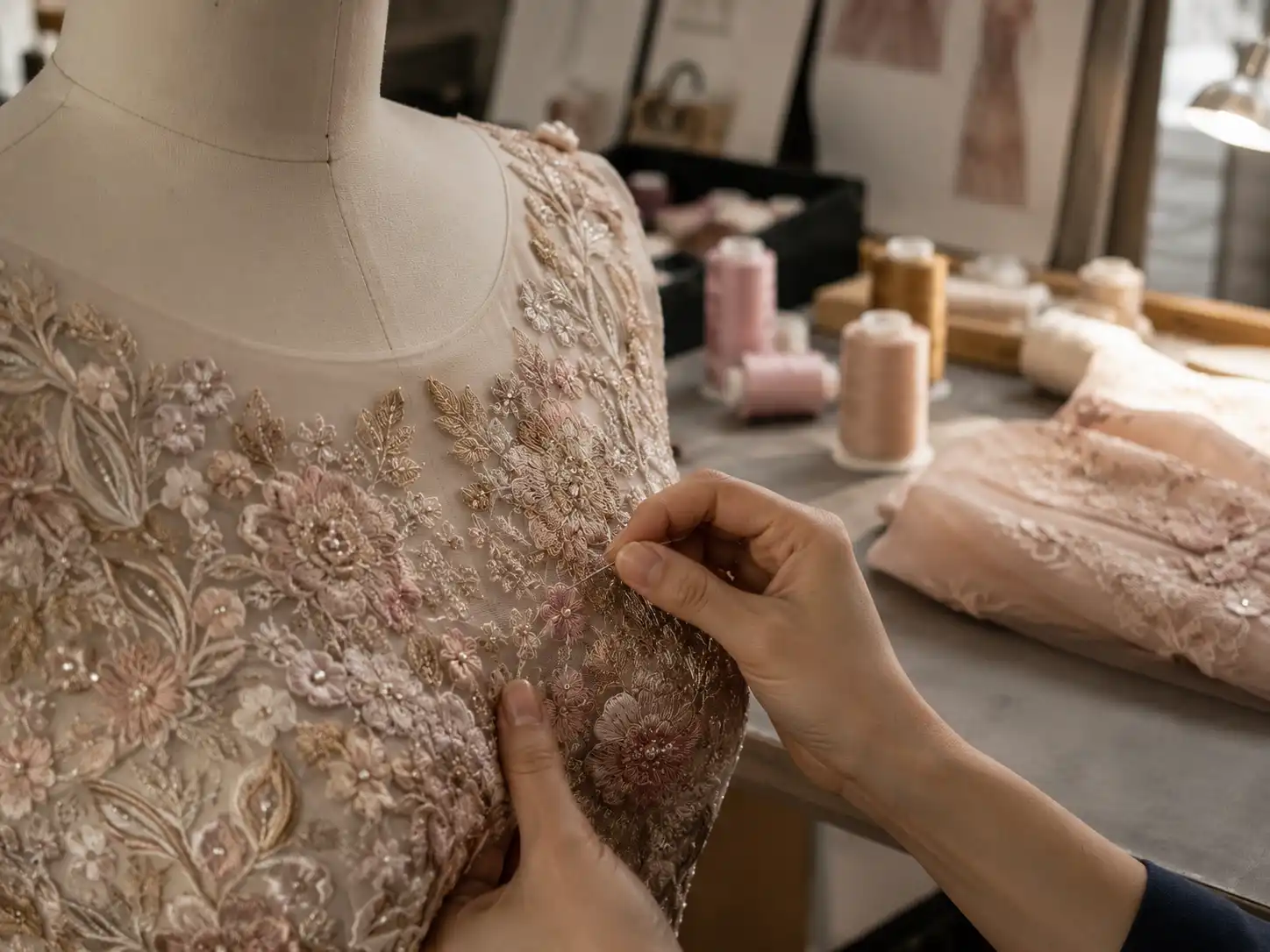
Lace cutting begins with visual planning because marker efficiency cannot always be the only priority. High-visibility areas such as center front, cups, princess seams, waist joins, center back, sleeve heads, front hems, and scalloped edges may need deliberate motif positioning. Large repeats can increase fabric consumption because pattern pieces sometimes need to move away from the most economical placement to create better symmetry or avoid cutting a major motif through an obvious focal point.
Exact matching on every seam is not always necessary or commercially sensible, but obvious left-right imbalance can make a dress look poorly cut. The required standard should therefore be agreed before bulk cutting begins. Scalloped lace adds another decision: the natural edge may be used at the neckline, sleeve, or hem, but doing so can increase cutting complexity and fabric consumption. Damage inspection is equally important because small holes can hide within the open structure and only become obvious once the lace is tensioned or placed over contrast lining.
Sewing Mesh
Mesh construction is less about motifs and more about controlling instability. Lightweight stretch mesh can shift during spreading, distort during cutting, or grow under sewing tension. Necklines and armholes are particularly sensitive because fabric that is stretched during sewing may become wavy and fail to recover. Depending on the design, binding, elastic, stay tape, or another stabilization method may be necessary to keep the edge flat without making the garment feel rigid.
Fine mesh also makes seam quality visible. Thick seam allowances, uneven overlocking, twisted seams, or bulky joins can show through the fabric, so a seam that would be acceptable inside an opaque woven dress may look distracting in a transparent one. Needle and handling damage must also be monitored because small punctures can enlarge. Printed mesh introduces the additional issue of print position and stretch distortion, especially across curved areas where the pattern may spread unevenly.
Production Risks
| Production Area | Lace Control | Mesh Control | Useful Check |
| Incoming material | Motif, shade, holes, edge condition | Shade, transparency, holes, stretch, recovery | Inspect before spreading |
| Cutting | Motif placement, symmetry, scallop use | Stretch direction, distortion, print position | Compare cut panels with approved pattern |
| Bust area | Coverage, motif balance, lining | Transparency, stretch, lining placement | Review on fit model |
| Neckline | Edge appearance, motif position | Growth, waving, stabilization | Measure before and after wear |
| Seams | Pattern interruption, bulk | Puckering, visibility, elasticity | Check flatness and stretch |
| Hem | Scallop or clean edge | Curling, stretching, uneven length | Hang and remeasure |
| Bulk consistency | Pattern and shade variation | Stretch, shade, transparency variation | Compare lots before cutting |
| Final inspection | Matching, holes, lining exposure | Holes, recovery, neckline, lining, seams | Inspect under consistent lighting |
These checkpoints should be distributed through production rather than postponed until final inspection. Incoming material review can catch shade, motif, stretch, or transparency differences before cutting. In-line inspection can identify neckline growth, seam puckering, or motif imbalance while correction is still manageable. By the time final inspection begins, most cutting and sewing decisions are already irreversible, so quality control is more effective when it prevents variation rather than merely records defects at the end.
Sample Approval
A useful lace or mesh sample review goes beyond asking whether the garment looks good. For lace, the team should examine motif position, left-right balance, lining exposure, edge treatment, seam transitions, holes, and how the pattern looks over curved areas. For mesh, the review should cover transparency in relaxed and stretched conditions, neckline stability, armholes, lining length, seam visibility, print placement, hole risk, and dimensional recovery after the garment has been worn for a period.
For ecommerce-focused collections, a photo-ready sample can reveal problems that are easy to miss under factory lighting. Strong studio light often exposes lining edges, transparency differences, seam bulk, and color mismatch more clearly. The strongest approved sample is not simply the most attractive one. It is the sample whose material combination, construction method, fit, and finish can be documented clearly enough to be reproduced through bulk production and future repeat orders.
Which Should You Choose for Your Dress Collection?
Choose lace when decorative pattern, texture, occasion character, or visible craftsmanship is central to the design. Choose mesh when the concept depends on stretch, sheerness, ruching, layering, cut-outs, or contemporary illusion effects. Many dresses benefit from using both. The final choice should be confirmed through sampling because fabric behavior, lining, fit, construction time, and bulk consistency can change the commercial result substantially.
Bodycon and Corset Dresses
Bodycon styles generally benefit from materials with reliable stretch and recovery, so stretch mesh and power mesh are strong starting points when the design includes ruching, sheer panels, or layered transparency. Power mesh commonly used in womenswear can fall around 100-250 gsm, making it noticeably heavier and more supportive than many standard fashion meshes. Its role is usually not to create floaty movement but to provide controlled elasticity, shaping, and recovery in selected garment zones.
Stretch lace can also work well in bodycon dresses, but the motif should be reviewed under actual wearing tension because large flowers and open sections can distort around the bust and hips. Corset dresses create more opportunities to combine materials. Lace can provide the decorative outer surface while mesh forms illusion panels or flexible side zones, and power mesh can support specific internal areas. The outer fabric should not be expected to replace proper corset engineering, including cups, boning, lining, closures, and controlled seam placement.
Cost and Production
Lace is often positioned in a medium-to-high material cost range, while standard fashion mesh commonly sits around a medium range, but the finished garment cost can reverse that relationship. Lace may increase cost through motif matching, cutting loss, scalloped-edge planning, applique, careful panel alignment, manual positioning, more complex lining, or additional inspection. Mesh may add cost through double layering, extensive ruching, printed placement, reinforced necklines, power-mesh inserts, specialized stretch seams, delicate handling, and higher sensitivity to holes.
A lower-priced mesh used in a highly ruched double-layer dress can require more sewing time than a relatively expensive lace used on a simple shift silhouette. Likewise, a premium lace with a large repeat may create significant material loss even when sewing is straightforward. Commercial costing should therefore be based on the approved garment construction, fabric width, consumption, labor minutes, lining, trim requirements, and expected quality controls rather than on fabric price per meter alone.
Combining Lace and Mesh
Lace and mesh work particularly well together when each material has a clear job. Fine mesh can form an almost invisible foundation for lace applique, allowing motifs to appear as if they float on the skin. Lace can cover the bust or corset area while mesh remains exposed at the waist or side panels. A stretch-mesh body can provide movement while selected lace panels introduce texture, and mesh sleeves can visually lighten a dress with a denser lace bodice.
The main technical issue is differential stretch. Stable lace attached to highly elastic mesh can restrict movement and create rippling, while highly elastic lace joined to a lower-stretch mesh can produce the opposite imbalance. Transition seams should therefore be sampled carefully, with attention to stabilization, seam allowance, stitch type, and construction sequence. Used well, the combination gives designers more control over coverage, decoration, transparency, and structure than forcing one fabric to perform every function in the garment.
Final Fabric Choice
| Design Priority | Usually the Better Starting Point |
| Floral or decorative surface | Lace |
| Clean sheer appearance | Mesh |
| Stretch bodycon dress | Stretch mesh or power mesh |
| Romantic cocktail dress | Lace |
| Modern party dress | Mesh |
| Illusion neckline | Fine mesh |
| Corset decoration | Lace |
| Corset support panel | Power mesh |
| Ruched sheer dress | Stretch mesh |
| Scalloped decorative hem | Lace |
| Printed transparent dress | Printed mesh |
| Floating lace applique effect | Mesh base plus lace |
This matrix is a starting point rather than a substitute for sampling. A useful collection brief should still define the silhouette, target transparency, stretch requirement, lining, desired hand feel, size range, target cost, and selling occasion before the fabric is finalized. Fabric sourcing, pattern development, fit review, sample revision, and pre-production confirmation work best as one connected process because changing one element often affects several others.
For brands developing custom lace or mesh dresses, a manufacturer with experience in both categories can help compare actual fabric options, lining combinations, pattern structure, sample behavior, and repeatability before bulk production. Jinfeng Apparel supports custom womenswear development across lace, mesh, party, occasion, bodycon, and corset-related styles, so an inquiry is most useful when it includes the reference image or tech pack, target quantity, color, size range, preferred fabric direction, and launch timing. The goal is not to push one fabric universally, but to identify the construction that best fits the intended collection.
Conclusion
Lace and mesh are not direct substitutes even though both can create sheer dresses. Lace contributes pattern, texture, decorative identity, and occasion character. Mesh contributes transparency, stretch, layering, body interaction, and the ability to create cleaner illusion effects. The strongest choice is usually the fabric that solves several design problems at once instead of forcing the dress to compensate for a material chosen only for appearance.
A successful decision also comes from looking beyond the swatch. The fabric needs to be judged together with the pattern, lining, seam construction, stretch direction, coverage, fit, color, size range, and intended selling occasion. When those elements are tested in a real sample, lace and mesh become much easier to compare. The result is not only a more attractive dress but a construction that can be reproduced more consistently when the style moves from development into bulk production.