Skip to content

A polished sample can make almost any supplier look capable. The harder test begins after the sample is approved, the deposit is paid, bulk fabric is booked, and a launch date starts moving closer. Dress production is unusually sensitive to small decisions: a slightly different stretch percentage can change bodycon fit, a heavier lining can alter drape, a zipper can distort satin, and one outdated size chart can spread the same mistake across hundreds of garments. The safest sourcing decision therefore comes from understanding the production system behind the sample, not simply liking the sample itself.
Before placing a dress order, ask about the manufacturer’s product specialization, similar-order experience, factory structure, development process, fabric sourcing, fit control, sample approvals, MOQ, quotation scope, quality checkpoints, production capacity, lead-time risks, compliance support, shipping, confidentiality, private-label packing, and repeat-order records. Strong answers are specific, documented, and tied to real production steps rather than broad promises about quality, speed, or price.
The most revealing questions are often the ones that make a supplier explain what can go wrong. An experienced team should be able to discuss seam puckering on satin, transparency in mesh, stretch recovery in bodycon styles, lace alignment, boning placement, barcode errors, fabric delays, and the difference between an approved sample and a repeatable bulk standard. If a supplier can explain those risks calmly before receiving your order, you are learning far more than any factory brochure can tell you.
Is This the Right Dress Manufacturer?
The right dress manufacturer should prove relevant product experience, controlled production resources, technical understanding of your fabrics and constructions, and the ability to manage your expected order scale. Look beyond attractive samples and factory photos. Ask what the supplier makes repeatedly, who controls development and production, how similar orders are handled, and whether its systems can support multi-style, multi-color, multi-size, and repeat programs.
Product Specialization

Start with a simple question: which dress categories do you manufacture most often? The answer should be narrower and more useful than “we make all kinds of clothing.” Dress production varies considerably between a jersey bodycon style, a bias-cut satin slip dress, a lined lace occasion dress, a structured corset dress, and a sequined evening piece. Each introduces different risks in cutting, sewing, fitting, pressing, and bulk replication, so category familiarity matters more than an oversized product catalog.
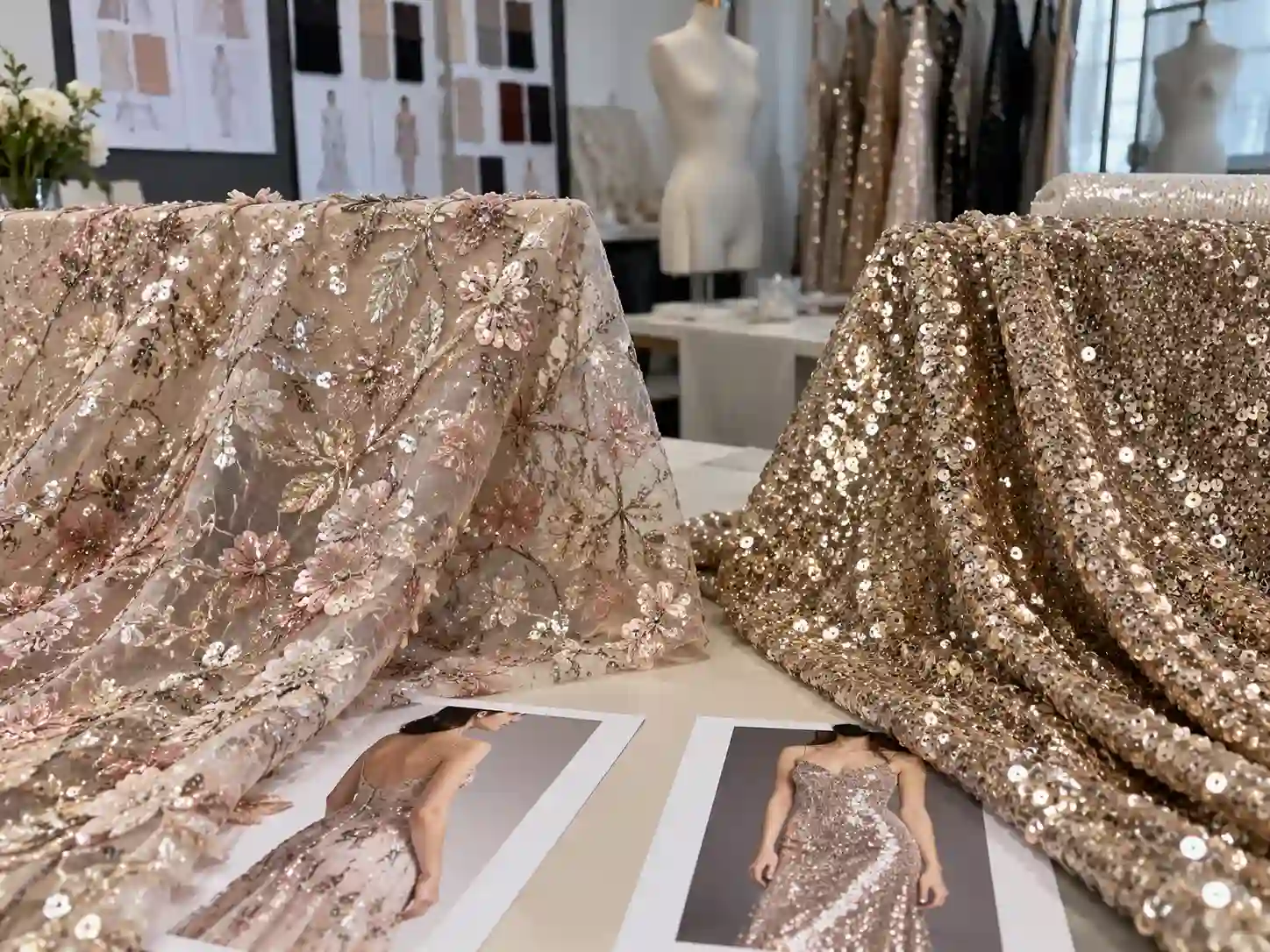
A supplier with genuine category experience should be comfortable discussing those risks before you raise them. With satin, the conversation may move toward shine direction, snagging, seam puckering, zipper waviness, and pressing marks. For mesh, it may focus on stretch recovery, transparency, lining placement, and neckline stability. Corset dresses introduce questions around cups, boning, support, waist shaping, and closure tension, while sequined garments require additional attention to needle breakage, skin contact, seam bulk, and packing protection.
Ask which factories or sewing lines normally handle your product type and how frequently they produce comparable constructions. Similarity matters more than a large catalog. A supplier that has produced thousands of simple knit dresses is not automatically qualified for technically demanding occasionwear. Jinfeng Apparel’s documented core range includes custom dresses, party and occasion dresses, bodycon, satin, mesh, lace, sequin, and corset styles, which makes those categories more relevant evidence than a generic claim that the factory can produce every type of apparel.
Comparable Order Experience
The next question is not simply, “How many years have you been in business?” Ask how much experience the manufacturer has with orders similar to yours in silhouette, fabric, construction difficulty, size range, color count, delivery structure, and inspection requirements. A supplier may have been operating for many years without having solved the specific issues your product creates, while another team may have deep experience in the exact constructions that matter to your collection.
For a meaningful comparison, describe your proposed program in operational terms. A 2,000-piece dress order across two colors is very different from 2,000 pieces spread across twelve styles, six fabrics, several size ranges, and multiple delivery dates. The total quantity may be identical, but material procurement, line allocation, approvals, inspection, packaging, and merchandising become much more complex in the second case, which is precisely where previous program experience becomes valuable.
Ask for anonymized examples rather than customer names. A credible manufacturer should be able to explain what went wrong or nearly went wrong on similar products and how it was controlled. Useful answers may involve correcting a neckline before grading, changing a lining to reduce transparency, stabilizing a zipper area, adjusting stretch recovery, or separating difficult styles onto more skilled production lines. Finished photos show appearance; explanations of production problems show whether the team understands how that appearance was achieved.
Factory and Team Control
Ask which production steps are controlled directly and which may be completed by long-term production partners. Outsourcing itself is not automatically a problem in fashion manufacturing. Specialized embroidery, printing, dyeing, pleating, washing, or certain sewing operations may reasonably involve outside facilities. What matters is whether the manufacturer retains control over specifications, approvals, production records, quality requirements, corrective actions, and final delivery rather than losing visibility once work leaves one building.
The manufacturer should be able to identify who manages pattern development, sample making, fabric and trim sourcing, cutting, sewing, in-line inspection, finishing, packing, and shipment coordination. For larger programs, the structure behind these activities matters more than a showroom tour. One supplier may have a single unit that performs well on a limited range but struggles when a collection contains knit, woven, embellished, and structured garments simultaneously; another may deliberately allocate different constructions to different skilled production units.
The figures below illustrate the level of evidence a supplier can provide when explaining capacity. They are verified operating facts for Jinfeng Apparel rather than universal industry benchmarks, and the useful question remains how those resources would be assigned to a specific program rather than whether the numbers look impressive on their own during an initial supplier presentation or factory review.
| Production Resource | Verified Scale | Practical Relevance |
| Owned women’s fashion factories | 6 | Direct production and category allocation |
| Long-term satellite partners | 10+ | Capacity support and multi-style coordination |
| Regular monthly capacity | 100,000+ pcs | Commercial-volume production planning |
| Sewing lines | 18+ | Parallel bulk-production capability |
| Flexible production lines | 6+ | Multi-style and changing order structures |
| Sample rooms | 2 | Dedicated development capacity |
| Senior pattern makers | 7+ | Fit and construction development |
| Sample machinists | 20+ | Parallel sampling and revisions |
| QC inspectors | 15+ | Staged inspection coverage |
| Merchandisers | 12+ | Project and order follow-up |
Multi-Style and Repeat Capacity
Established fashion companies should also ask how the manufacturer handles multi-style programs and repeat orders. This reveals whether the supplier thinks in individual garments or in complete collections. A seasonal range may contain a satin occasion dress, a lined mesh style, a lace mini, and a stretch jersey product. Each may require different operators, fabric controls, finishing techniques, and quality checkpoints, so forcing every style through one production routine can create avoidable rework.
Ask whether styles can run in parallel, how BOMs and packing information are separated, how priorities are managed when several orders overlap, and what happens when one material arrives later than the others. For larger collections, it is also useful to ask whether the supplier can split shipments by style or delivery window without losing carton, barcode, and SKU control. These operational details usually reveal more about readiness than a headline monthly-capacity figure.
Repeat orders deserve equal attention. A successful style should not have to be rebuilt from memory six months later. The manufacturer should retain approved patterns, measurement charts, fabric references, color information, trims, workmanship instructions, packing details, QC comments, and a Golden sample or equivalent reference. Jinfeng Apparel documents this type of record retention for repeat production, allowing replenishment and seasonal continuation to start from an approved baseline rather than from a fresh reconstruction of the original order.
How Will Dress Development and Sampling Work?
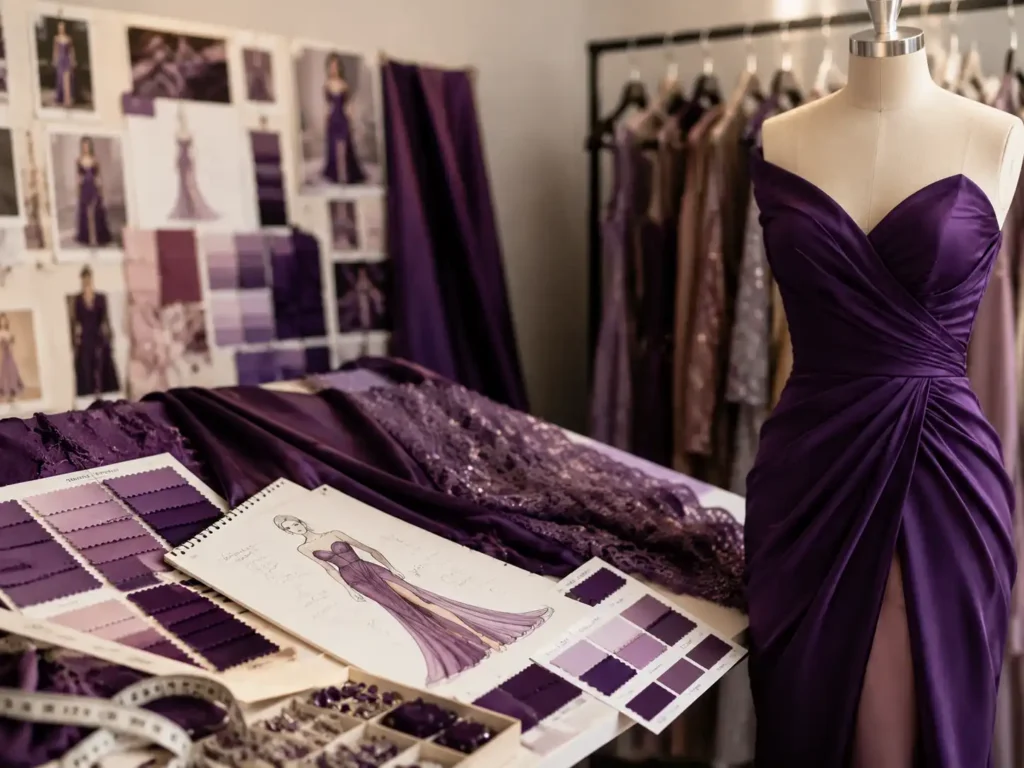
Dress development should turn visual intent into a measurable production standard. Before ordering, confirm what information the factory needs, how it reviews construction and materials, how fit comments become pattern changes, and which sample officially releases bulk production. The strongest sampling processes reduce uncertainty step by step and leave behind clear specifications that production workers, merchandisers, and inspectors can follow without relying on memory.
Development Inputs

Ask what information the manufacturer needs before it can quote and sample responsibly. An immediate price based on one photograph may seem convenient, but a precise commercial order requires more than visual similarity. A photograph rarely tells the factory the exact fabric weight, lining structure, internal support, measurement standard, stitch requirement, label system, size range, or packaging expectation, and each of those details can change the development method, cost, and production timeline.
Useful inputs may include a tech pack, reference image, original garment, sketch, size chart, fabric swatch, trim requirements, estimated quantity, color plan, target price, label artwork, packing instructions, destination market, and intended launch date. Not every project begins with all of these documents, but the manufacturer should identify which missing information creates uncertainty and which assumptions are being made until the next development step confirms them.
For example, two visually similar bodycon dresses can have significantly different costs if one uses ordinary jersey and the other uses a dense double-layer stretch fabric. A corset-style dress with decorative seam lines is very different from one containing functional cups, boning, lining, and internal support. Jinfeng Apparel’s documented development workflow can begin from tech packs, reference photos, original samples, sketches, size charts, fabric swatches, trim cards, label artwork, packaging requirements, target prices, and launch dates, but precise decisions still depend on the completeness of the actual project information.
Construction and Fabric Review
Before the first sample is cut, ask how the manufacturer evaluates construction feasibility. This is where an experienced dress team can prevent several rounds of avoidable revision. The review should consider how the garment will actually sit on the body, including bust shaping, waist position, hip ease, neckline depth, armholes, shoulder straps, lining, slit placement, zipper location, seam direction, and any internal support required by the silhouette.
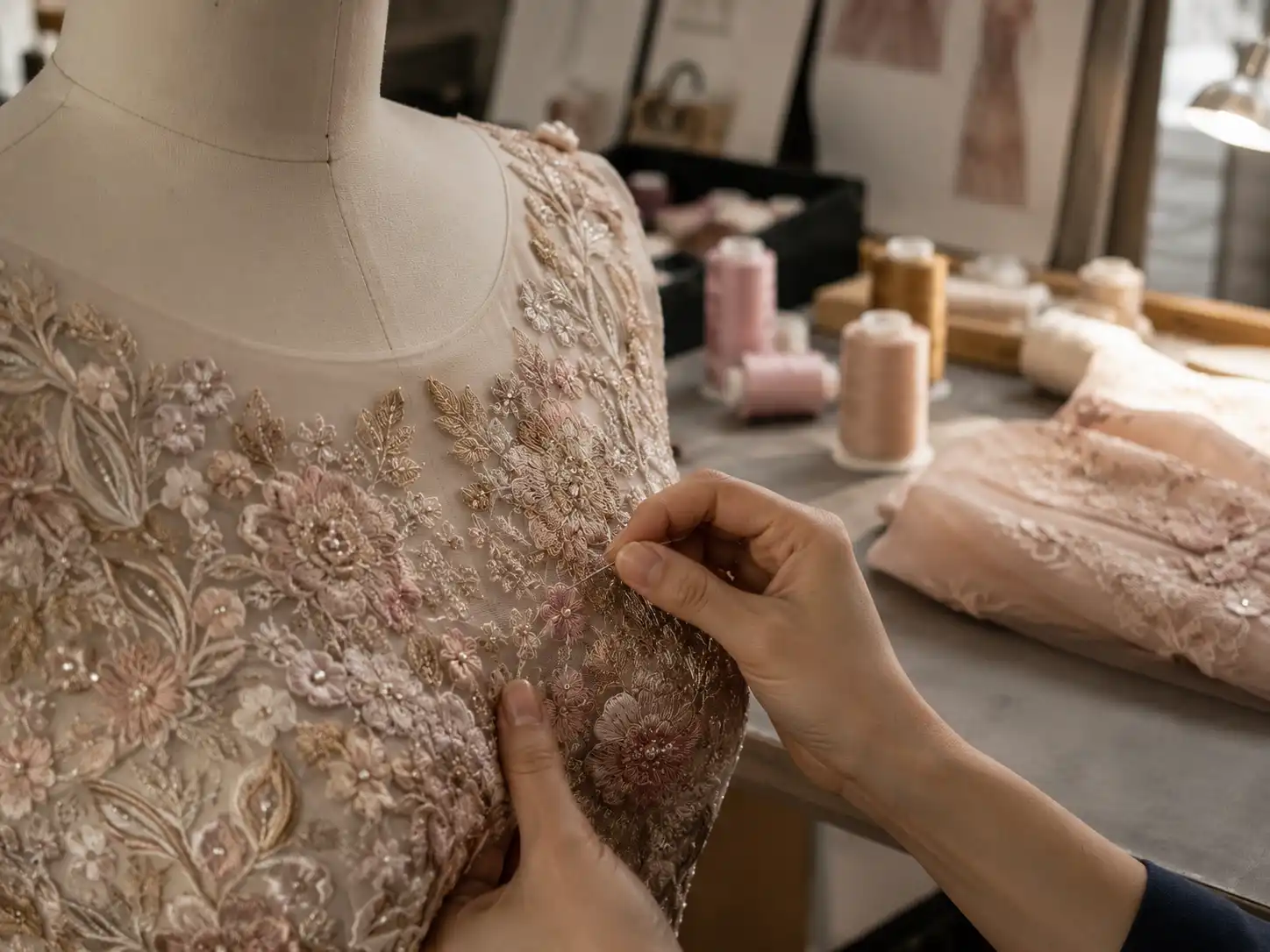
Complex products may add boning, cups, elastic, gathers, pleats, ruffles, cut-outs, multiple fabric layers, or asymmetrical construction. A design that looks elegant in a sketch can create a different result on the body: a deep neckline may expose undergarments in larger sizes, heavy embellishment may distort a soft base fabric, or a narrow fitted skirt may ride upward when walking. A useful manufacturer should identify those conflicts before production rather than treating every drawing line as mechanically executable.
Fabric must be reviewed at the same time because patterns and materials cannot be separated in dress development. Stretch percentage, stretch direction, recovery, drape, weight, transparency, shrinkage, and surface finish can change the behavior of the same pattern. A fabric that looks excellent in a swatch may show seam tension once sewn, while soft mesh can stretch around a neckline and lightweight satin can expose puckering or pressing marks that were invisible during initial sourcing.
Fit and Sample Approval
Fit approval should turn subjective comments into measurable changes. “The waist feels loose” is useful during a fitting, but it is not a production instruction until the pattern and measurement chart are updated. Ask how the manufacturer records changes to the bust, underbust, waist, high hip, full hip, armhole, neckline, strap length, center-front length, center-back length, hem, and slit position, particularly when a style is fitted or structured.
For fitted dresses, one adjustment can affect several areas at the same time. Shortening a shoulder strap may raise the neckline and armhole; reducing the waist can change side-seam balance or ruching tension; replacing a fabric with lower recovery can make the same body measurements feel tighter. This is why fit review should include both flat measurements and how the garment behaves when worn rather than treating the measurement chart as the only source of truth.
The exact tolerance should come from the brand’s approved specification rather than a generic factory rule. In practice, critical points such as a fitted bust, waist, strap, neckline, or waistband are often controlled more tightly than loose or non-critical dimensions, but the correct limit depends on construction, fabric, size range, and the customer’s standard. The goal is not theoretical perfection; it is a stable, repeatable shape that can be graded, sewn, and inspected consistently.
Sample-to-Bulk Handoff
Different manufacturers use different sample names, so ask what each stage means and which one officially authorizes bulk production. The useful distinction is not the terminology itself but the decision attached to it. A first sample tests interpretation, a fit sample corrects proportion, a revised sample verifies comments, a photo sample supports visual use, a PP sample confirms production readiness, and a Golden sample can become the physical benchmark for bulk and future repeats.
| Sample Stage | Main Purpose | Typical Approval Focus |
| First sample | Test design translation | Shape, construction, fabric direction |
| Fit sample | Correct proportions | Bust, waist, hip, neckline, length |
| Revised sample | Verify corrections | Previous comments and remaining issues |
| Photo sample | Support photography or sales | Camera-ready appearance and styling |
| PP sample | Authorize bulk production | Final fabric, trims, construction, measurements |
| Golden sample | Physical reference | Bulk comparison and repeat-order standard |
A strong sampling system does not end when the customer says “approved.” The final information should be converted into controlled patterns, measurement charts, BOMs, construction instructions, fabric and trim specifications, label placement, QC checkpoints, and packing requirements. Jinfeng Apparel’s documented workflow records sample comments into updated patterns, measurement charts, BOMs, sewing instructions, QC checklists, and packing requirements before bulk production, creating a clearer bridge from development to manufacturing.
Before paying for bulk production, ask a practical question: if the sample technician who made the garment is unavailable tomorrow, can the production line still reproduce exactly what you approved? If the result depends entirely on one person’s memory, the development process has not yet created a reliable production standard, regardless of how impressive the sample looks in the showroom.
What Do MOQ and Costs Include?
MOQ and price should be understood together because both are affected by fabric, color, trims, construction, packaging, and production efficiency. Ask whether MOQ applies per style, color, fabric, or material process; identify separate supplier minimums; confirm what the quotation actually includes; and establish when pricing becomes final. A professional quotation makes later cost changes explainable rather than turning them into unexpected additions after sampling.
MOQ Structure
Always ask how MOQ is calculated. “Our MOQ is 500 pieces” does not tell you enough unless you know whether that number applies to one style, each color, each fabric, or the total purchase order. A 1,200-piece program in two colors is commercially very different from the same 1,200 pieces split across twelve colors because sewing volume may be unchanged while fabric dyeing, cutting bundles, trims, line changes, and packing combinations become far more fragmented.
It is useful to clarify four separate minimums: garment MOQ, color MOQ, fabric or trim MOQ, and packaging MOQ. Material suppliers often create the real constraint. A garment factory may be willing to sew a relatively modest quantity while the selected fabric mill requires more yardage for a custom dye lot, exclusive print, special lace, unusual mesh, or sequin material. Branded packaging, molded hardware, and custom zippers can create separate minimums as well.
Jinfeng Apparel’s verified production starting point is 200 pieces per style/color, while fabric availability, color development, trims, construction complexity, packaging, and scheduling can change the final requirement. The important lesson is not the number itself but the conditions behind it. Ask the supplier to state exactly what must remain standard for its advertised MOQ to apply, and what choices would move the project into a higher minimum.
Material Minimums

When a material requirement pushes the quantity above your plan, ask what is creating the minimum before rejecting the quotation. The constraint may come from the garment factory, but it may also come from a dye house, print supplier, lace mill, trim maker, or packaging producer. These upstream minimums matter because the factory cannot always solve them simply by agreeing to sew fewer finished garments.
Suppose a range requires six colors of the same satin. If every shade must be custom dyed, each color may face a separate mill-level minimum. Switching two lower-volume shades to existing stock colors could make the program viable without changing the higher-volume colors. Similar decisions may apply to special lace, sequin fabrics, custom metal trims, printed linings, exclusive labels, or packaging components that need setup before the first production unit is made.
An experienced sourcing team should explain alternatives rather than responding with a flat “MOQ cannot change.” Possible adjustments may include using an available fabric, sharing one base material across several styles, consolidating colors, changing a trim, or modifying packaging. Those decisions still need commercial judgment: saving money by replacing the defining fabric of a premium occasion dress may reduce product value more than it reduces production cost, so MOQ optimization should support the product rather than quietly changing it.
Quotation Scope
Do not compare unit prices until you know what each quotation contains. Two factories may appear to differ by only a small amount per dress, while the lower quotation excludes lining, upgraded zippers, custom labels, special pressing, additional inspection, or retail-ready packing. The price that matters is the cost of producing and delivering the approved commercial product, not the lowest number presented before every specification has been confirmed.
A practical dress quotation can be influenced by main fabric, lining, actual fabric consumption, wastage, trims, pattern complexity, sewing operations, handwork, embellishment, pressing, quality control, labels, packaging, testing, inspection, and the chosen trade term. You do not need a supplier to reveal confidential margins, but you do need enough scope information to compare suppliers on the same basis and understand what will be quoted separately later.
The internal costing framework used by Jinfeng Apparel considers fabric, trims, workmanship, pattern work, sewing, quality control, packaging, wastage, and logistics rather than promoting a single “lowest price” message. That approach is useful for established fashion companies because the purchasing objective is rarely the cheapest sewing cost in isolation. It is the most reliable total cost for achieving the intended garment, passing inspection, meeting the packaging requirement, and delivering saleable stock on time.
Price Changes After Sampling
Ask when the price becomes fixed and what can cause it to change. Early quotations often contain assumptions that become clearer once a physical sample exists. The first sample may reveal that the style needs a heavier lining, stronger zipper, additional boning, more sewing time, extra handwork, greater fabric consumption, or a different finishing process than the initial reference suggested, and each decision can legitimately affect bulk cost.
Changes requested by the brand can have the same effect. Adding cups, increasing ruching, replacing standard fabric with a custom option, changing trim quality, tightening packing standards, reducing the order quantity, or splitting production across more colors all change the cost structure. A revised quotation is not automatically a warning sign; unexplained or inconsistent changes are. Ask the supplier to connect every revision to a material, construction, quantity, quality, or logistics decision.
Cost engineering can also work in your favor. If the first sample exceeds the target price, an experienced team may suggest a comparable fabric, different lining, more efficient internal construction, or alternative trim while preserving the visible brand effect. This works best when target pricing is discussed early. Trying to remove cost after all design and material decisions have already been approved usually creates a less controlled compromise and can trigger another sample round.
How Is Bulk Quality Controlled?
Reliable bulk quality comes from transferring approved specifications into production and checking them at several stages, not from opening cartons at the end. Ask how patterns, fabrics, trims, workmanship, measurements, labels, and packing are controlled; which inspections occur during production; how tolerances and defects are defined; and whether your own inspector or an independent third party can verify finished goods before shipment.
Sample-to-Bulk Consistency
The gap between sample quality and bulk quality is one of the most important sourcing risks in apparel. Samples are made in small quantities, often by highly skilled technicians who can spend more time solving individual details. Bulk production involves many operators, larger fabric lots, repeated operations, line targets, and tighter scheduling pressure. Without a controlled handoff, the sample can remain excellent while production gradually drifts away from what was actually approved.
Ask what documents travel with the order from the sample room to the production floor. Important styles may require an approved pattern, final measurement chart, BOM, approved fabric and trim references, color standard, construction notes, placement measurements, stitching instructions, private-label specification, packing instructions, PP sample, Golden sample, and a style-specific QC checklist. Those records should carry the final revision clearly enough that an outdated file cannot quietly re-enter production.
Complex details deserve special control. Ruching needs defined direction and quantity, lace placement may need visual alignment standards, corset construction needs clear cup and boning specifications, and satin styles may require cutting-direction and pressing instructions. Jinfeng Apparel’s documented process uses PP sample approval, Golden sample reference, production instructions, in-line quality checks, and revision records to transfer approved details into bulk. The principle is simple: what the customer approves must become measurable production information rather than workshop memory.
Inspection Checkpoints
Quality should be checked when defects can still be corrected efficiently. Incoming material inspection can identify damaged fabric, shade variation, incorrect composition references, or wrong trims before cutting. Cutting checks can catch grain direction, placement, notching, and bundle errors. Sewing and in-line inspection can identify seam, zipper, gathering, lining, or construction problems while the line is still running, which is far less expensive than discovering the same systematic issue after all garments are finished.
Finished-garment inspection then verifies appearance, construction, measurements, symmetry, cleanliness, and workmanship. Pressing review matters because heat and handling can create shine marks, distortion, or visible creasing, especially on satin and other sensitive surfaces. Packing inspection addresses size-label, barcode, SKU, polybag, folding, assortment, and carton errors that may have nothing to do with sewing quality but can still make saleable garments difficult or expensive to receive at the destination warehouse.
Jinfeng Apparel’s verified QC scope includes incoming material QC, cutting QC, sewing QC, in-line inspection, garment inspection, pressing review, packing QC, AQL inspection, and client inspection support. The value is not simply the number of checkpoints. Ask what each stage is expected to catch, who records findings, how repeated problems are escalated, and whether production is corrected before the same defect appears across the remaining quantity.
Tolerances and AQL
Quality expectations need to become measurable standards before bulk production. Measurement tolerance is a good example. It is unrealistic to expect every finished garment to match every dimension to the millimeter, but the acceptable deviation should reflect how that measurement affects fit and appearance. A fitted bust, waistband, strap, or neckline may justify tighter control than a loose hem circumference, while stretch fabrics require additional judgment because measurements can change with relaxation and handling.
Many fashion companies also use sampling-based final inspection rather than measuring every unit. AQL plans are common in consumer-goods production, but the correct level should be defined by the purchaser, retailer, inspector, and product risk rather than copied from a generic factory template. AQL 2.5 for major defects and 4.0 for minor defects are widely encountered commercial examples, not universal requirements, and stricter programs may use different limits or additional critical-defect rules.
| Control Area | Practical Working Approach | What Must Be Agreed |
| Critical fit points | Tighter style-specific tolerance | Exact measurement and allowed deviation |
| Non-critical dimensions | Wider tolerance may be reasonable | Customer-approved spec by style |
| Major defects | Issues affecting saleability or intended use | Defect definition and acceptance rule |
| Minor defects | Limited cosmetic impact | Agreed classification examples |
| AQL level | Sampling plan selected for the order | Major/minor/critical acceptance level |
| Reinspection | Used after sorting or correction if needed | Responsibility, timing, and cost treatment |
Independent Inspection
If independent inspection matters to your company, discuss it before placing the order rather than a few days before shipment. Ask whether your own QC team, sourcing office, retailer representative, or third-party inspection company can inspect the goods, when the factory considers the order ready, what percentage must be finished and packed, which specifications will be used, and what happens if the result does not meet the agreed acceptance criteria.
The corrective process matters as much as the inspection. A failed result may require sorting, repair, replacement of specific pieces, repacking, or reinspection. Those steps affect time and cost, so the responsibilities should be clear before the order enters production. Testing is also different from visual inspection: composition, colorfastness, restricted substances, or other laboratory requirements may need specialized testing, while workmanship, measurements, labels, and packing are generally handled through product inspection.
Jinfeng Apparel’s documented operating scope supports customer-appointed inspection and project-based testing through organizations such as SGS, Intertek, BV, or ITS where relevant. The same fact system deliberately avoids blanket claims that every fabric, factory, or garment automatically carries every certification. That cautious approach is worth looking for in any supplier because serious quality and compliance teams usually specify the product, supplier, batch, test method, and certificate scope rather than relying on broad assurances.
Can Production Meet Your Launch Date?
A believable delivery plan should work backward from the required warehouse or launch date and include materials, approvals, bulk production, inspection, packing, and transport. Ask exactly when the production clock starts, how capacity is allocated during busy periods, how delay risks are escalated, and which shipping responsibilities belong to each party. A short quoted lead time has little value if its assumptions are unclear.
Lead-Time Assumptions
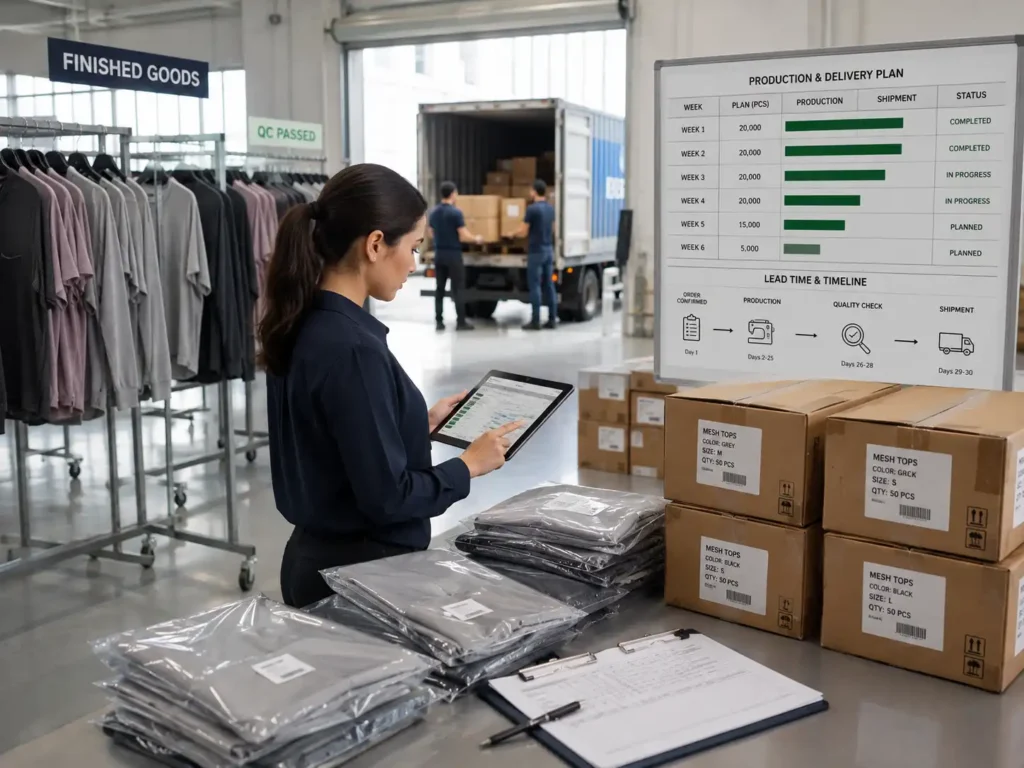
When a factory says “production takes 30 days,” ask what starts day one. Different suppliers may start counting after purchase-order confirmation, deposit receipt, PP sample approval, bulk fabric arrival, or completion of all material approvals. Those differences can add weeks to the actual calendar even when two manufacturers quote identical headline lead times, which is why a timeline should be built around dependencies rather than a single number.
Fabric booking may depend on color approval; cutting cannot start until material arrives and passes inspection; sewing should not begin with unresolved construction details; and packing cannot be finalized without approved labels, barcodes, and carton instructions. Custom-dyed satin, exclusive prints, special lace, embellished fabric, or custom hardware can become the critical path long before the sewing line is available, making material timing just as important as factory capacity.
The most useful manufacturer will show which steps are controlled by the factory and which require customer approval. Jinfeng Apparel’s internal rules deliberately treat sample time, bulk-production time, air freight, sea freight, and DDP timing as project-dependent rather than publishing universal promises. That is commercially realistic because material availability, construction difficulty, approval speed, inspection requirements, order size, and production scheduling differ from one collection to another.
Capacity Allocation
A factory’s monthly capacity does not tell you whether your order has actually been allocated capacity. Ask which lines are planned for your styles, whether several products can run simultaneously, how technically difficult garments are assigned, and what happens during seasonal peaks. A company may quote a large overall output while the particular sewing unit capable of handling corsetry, delicate satin, or detailed occasionwear is already committed during the month you need it.
Complex garments often need more skilled operators and slower production speeds than straightforward styles. Forcing them onto a high-output basic line can increase rework and eliminate any apparent time advantage. It is also useful to ask whether the supplier uses flexible lines or long-term partner facilities when volume rises, and whether technical specifications, QC checkpoints, and final responsibility remain centralized if production is shared across more than one location.
As a concrete example, Jinfeng Apparel’s verified production structure includes six owned women’s fashion factories, more than ten long-term satellite production partners, 18+ sewing lines, 6+ flexible production lines, and regular monthly capacity above 100,000 pieces. Those figures are meaningful only when combined with real allocation logic. A sourcing team should still ask what capacity is available in the required month, which unit suits the product, and whether materials can support the same schedule.
Delay Management
Manufacturing problems cannot always be eliminated, but their commercial impact can often be reduced when they are identified early. Common causes include late PP approval, fabric or trim shortages, customer design changes, rejected color, production rework, delayed packaging artwork, third-party inspection scheduling, and freight congestion. The difference between a manageable delay and a missed launch is often how quickly the issue is recognized and how clearly the revised plan is communicated.
Ask how the manufacturer reports these events. “The fabric is late” provides little decision-making value. A stronger update explains that fabric delivery has moved by several working days, cutting will therefore start later, part of the delay may be recovered during sewing, and the projected inspection or shipment date will change unless an approved alternative material is selected. That type of update connects the problem to an action rather than simply passing bad news downstream.
The documented Jinfeng Apparel project-management process includes PP approval control, material tracking, bulk-production updates, in-line QC, packing confirmation, shipment planning, and risk warnings. Whatever supplier you choose, ask who owns those updates and whether one merchandiser or project manager can provide a consistent timeline. A single informed contact is often more useful than several departments sending disconnected messages that leave the customer to reconstruct the real production status.
Shipping and Documents
The schedule continues after production finishes. Clarify whether you will use express, air freight, sea freight, or a nominated forwarder, and whether the commercial term is EXW, FOB, CIF, DAP, DDP, or another agreed arrangement. The appropriate option depends on the destination, customs structure, freight contracts, warehouse requirements, and your internal logistics capability, so the easiest-sounding term is not automatically the best choice for every order.
Also confirm which party prepares or supports the commercial invoice, packing list, carton measurements, carton marks, and shipment data required by the forwarder. For retail and ecommerce programs, logistics accuracy begins with packing. A shipment can contain perfectly sewn garments and still create expensive downstream work if cartons, SKU labels, barcode stickers, color assortments, or size ratios do not match warehouse receiving requirements.
Jinfeng Apparel’s verified logistics scope includes express, air, and sea transport, customer-nominated forwarders, and project-based evaluation of EXW, FOB, CIF, DAP, and DDP. For any supplier, the important point is responsibility clarity: know where the factory’s obligation ends, where the freight partner takes over, what documents must exist at that handoff, and when final packing data must be frozen so last-minute label changes do not disrupt shipment.
How Are Compliance and Repeat Orders Managed?
A long-term dress supplier should explain market-specific compliance support, confidentiality, private-label control, and repeat-order record keeping. Do not accept broad claims that every product is certified for every market. Confirm requirements by product and destination, protect unpublished designs contractually and operationally, and make sure approved patterns, materials, workmanship, QC standards, and packing information remain available when successful styles are reordered.
Market Compliance
Ask which requirements apply to the market where the garments will actually be sold. “Are you compliant?” is too broad because apparel requirements vary by destination, fiber composition, labeling method, product type, retailer, and sometimes the sourcing claims attached to a particular material. A useful supplier should ask where the product is going before giving a compliance answer rather than treating one certificate as permission to sell every garment in every country.
The discussion may involve fiber-content information, care instructions, country-of-origin marking, restricted substances, fabric testing, finished-garment testing, social-compliance documentation, factory audits, recycled or organic material documentation, and customer-specific protocols. Sustainable materials require equally careful language. A factory may have access to OEKO-TEX, GOTS, GRS, organic, or recycled resources without every fabric, every color, and every production batch automatically carrying the same certificate scope.
Jinfeng Apparel’s internal fact rules permit project-based support for ISO-related quality-management references, SMETA/SEDEX/BSCI-related customer audit requirements, OEKO-TEX fabric resources, GOTS/GRS-related material sourcing, and third-party testing. They also require certificate scope, supplier, material batch, color, MOQ, and current documents to be checked before any claim is made. That evidence-first approach is a good standard for supplier evaluation because compliance should be attached to the actual product and supply chain, not just to marketing language.
Design Protection
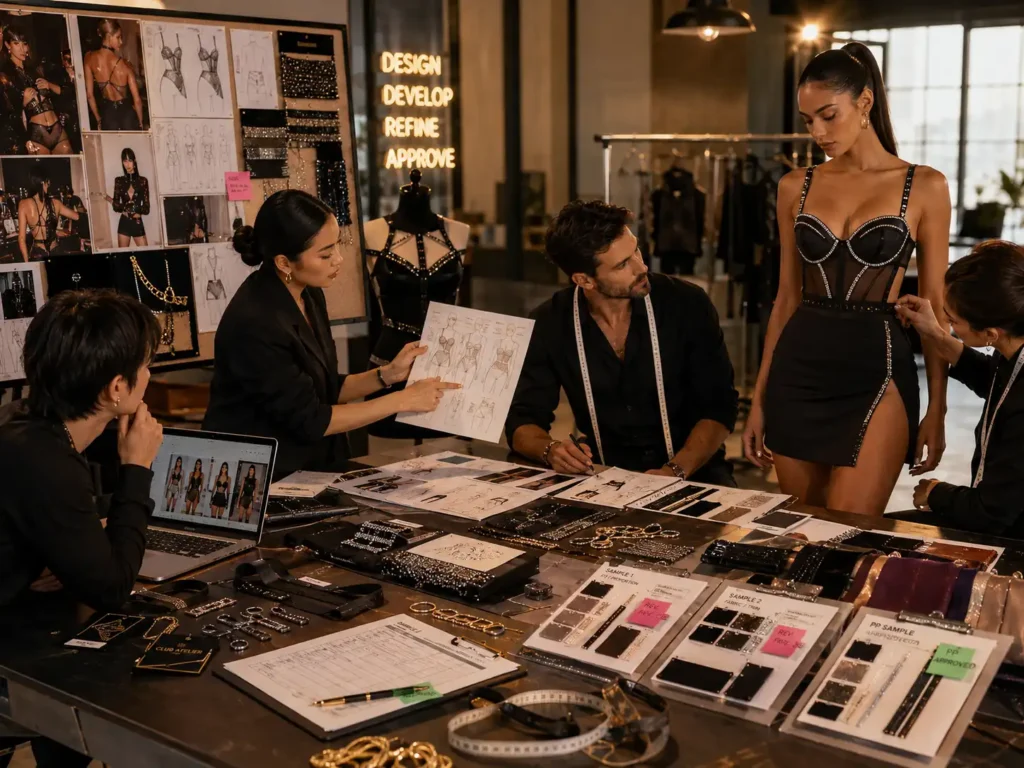
Before sending an unreleased collection, ask how confidential information is handled. A manufacturer may receive far more than garment sketches. Tech packs can contain proprietary measurements, construction ideas, target costs, material choices, size charts, patterns, label artwork, packaging, order quantities, launch dates, and information about a brand’s supply chain. Losing control of that information can create commercial problems even when no physical garment is copied.
Ask whether the supplier will sign an NDA when required and who can access your documents. If satellite factories, embroidery houses, print suppliers, or other specialist processors participate, ask how sensitive information is controlled across that network. You should also establish rules around photography: whether staff can photograph samples, whether unfinished or unreleased garments can appear on social media, and whether anonymous case material can be published if the design is still recognizable.
Jinfeng Apparel’s documented policy supports NDA-based cooperation and protects client tech packs, samples, patterns, labels, packaging files, unpublished designs, order information, and private-label details. Its internal content rules also restrict public use of identifiable customer materials without authorization. For mature fashion companies, this is not only an intellectual-property question. Confidentiality protects launch timing, wholesale presentations, campaign plans, competitive positioning, pricing information, and the relationship between the brand and its supply chain.
Private-Label Control
Private-label execution should be treated as a quality process rather than a branding accessory. A finished garment may involve a main label, size label, care label, hangtag, barcode, SKU sticker, polybag, folding method, carton assortment, external carton marks, and sometimes retailer-specific warehouse labels. Every component creates another opportunity for mismatch, and these errors can be expensive precisely because the garment itself may already be completely finished when they are discovered.
A common high-cost problem is incorrect identification rather than poor sewing. The physical garment may be size M and the sewn size label may also be M, while the barcode sticker belongs to size S. If hundreds of units reach a warehouse that way, the brand may have to open cartons, identify every piece, relabel product, and delay receiving. The prevention is simple in principle but requires disciplined packing data and independent checking.
Ask the manufacturer to work from one approved packing specification and verify label artwork, placement, barcode data, SKU mapping, color and size assortment, folding, polybag requirements, and carton marks before bulk packing. Jinfeng Apparel’s documented private-label scope covers main labels, size labels, care labels, hangtags, barcode stickers, SKU labels, polybags, and carton marks. Treat those details with the same seriousness as stitching because they determine whether finished product can move smoothly into the next commercial system.
Repeat-Order Consistency
The final question may become the most valuable after a style sells well: what information will still exist when you reorder it six months from now? Repeat production should begin from approved records rather than recollection. A useful record set may include the final pattern, measurement chart, BOM, fabric reference, approved color, trims, construction notes, sample comments, QC issues, label specification, packing method, and a Golden sample or equivalent physical benchmark.
This does not mean a repeat order can be launched without checking anything. Fabric suppliers change, trims become unavailable, colors vary between dye lots, and specifications evolve. The advantage of historical records is that every new decision can be compared with a known approved baseline. If the original fabric is no longer available, the replacement can be compared for weight, handfeel, stretch, recovery, drape, and shade rather than selected from memory.
Jinfeng Apparel’s repeat-order system retains patterns, measurements, fabric references, color information, trim details, production notes, packing requirements, QC information, and Golden-sample references while supporting replenishment, multi-batch production, and seasonal collections. For a mature fashion business, that reduces redevelopment, shortens communication, and helps prevent old problems from returning. The strongest manufacturing relationship is not defined only by a smooth first order; it is defined by whether the knowledge created during that order becomes a stable system for the next one.
Choosing a dress manufacturer is therefore less about finding the supplier with the most persuasive introduction and more about reducing unknowns before production begins. By the time a purchase order is released, you should understand what the factory is genuinely good at, which materials and constructions create risk, how samples become production standards, how MOQ and cost are calculated, what QC evidence will exist, how the timeline is managed, and who owns the product information after shipment.
A productive supplier conversation should leave fewer assumptions on both sides. For brands evaluating custom dress production, Jinfeng Apparel can review tech packs, reference samples, fabric directions, target quantities, packaging needs, destination markets, and launch requirements before development so that construction, sampling, MOQ, costing, production, QC, and delivery can be assessed as one connected project. That is a more useful basis for long-term manufacturing than comparing a sample photo and a unit price in isolation.
Frequently Asked Questions
What should I ask a dress manufacturer before placing a bulk order?
Ask about product specialization, similar-order experience, factory control, development inputs, fabrics and trims, fit review, sample approvals, MOQ, quotation scope, bulk consistency, QC checkpoints, measurement tolerances, third-party inspection, production capacity, lead time, shipping terms, compliance support, NDA protection, private-label packing, and repeat-order records. The goal is not to collect generic answers; it is to understand how the supplier will control your specific dress from development through delivery.
How can I tell if a dress manufacturer is reliable?
Reliability is easier to judge from process evidence than from claims. Look for clear technical questions during development, documented sample revisions, realistic MOQ and lead-time assumptions, named QC checkpoints, transparent responsibility for outsourced processes, willingness to support inspection, and organized production records. A reliable manufacturer should also explain limitations. Statements such as “every fabric is certified,” “zero defects,” or “any dress can be produced immediately” usually provide less confidence than specific, conditional answers tied to the actual product and order.
What documents should I prepare before asking for a dress quotation?
A complete tech pack is ideal, but a quotation can often begin with a clear reference image or original sample supported by a size chart, fabric direction, target quantity, color plan, trim requirements, label and packaging needs, destination market, target price, and desired launch date. The more complete the information, the fewer assumptions the factory must make. If details are still open, ask the supplier to identify which parts of the quotation are provisional until fabric, construction, and packing are confirmed.
What is a reasonable MOQ for custom dress manufacturing?
There is no universal MOQ because garment quantity is only one part of the calculation. The real minimum can be driven by fabric dyeing, custom printing, lace, sequins, trims, hardware, packaging, color splits, and production efficiency. Jinfeng Apparel’s verified starting MOQ is 200 pieces per style/color, subject to fabric availability, color development, trims, construction complexity, packaging, and scheduling. When comparing factories, always ask whether the quoted MOQ applies per style, per color, or across the complete order.
Should I approve a PP sample before bulk production?
For custom dress production, a PP sample is one of the most useful controls because it gives both sides a final reference before the bulk order proceeds. The exact process varies by supplier, but the PP stage should normally confirm the intended fabric, trims, construction, measurements, fit, labeling, and important finishing details. Approval is strongest when it is supported by updated patterns, measurement charts, BOMs, sewing instructions, QC checkpoints, and packing information rather than by a simple message saying the sample looks acceptable.
How should dress quality be inspected before shipment?
Inspection should combine earlier process controls with a final check rather than relying on the final stage alone. Useful checkpoints include incoming materials, cutting, sewing, in-line inspection, measurements, finished appearance, pressing, labels, barcodes, packing, and pre-shipment inspection. The customer and supplier should agree on measurement tolerances, defect classifications, and any AQL sampling plan before production. If third-party inspection is required, confirm the inspection timing, specification, corrective process, and reinspection responsibility before the order is placed.
How can a manufacturer keep repeat dress orders consistent?
Consistency improves when the supplier preserves approved production records instead of rebuilding the style from memory. The most useful records include the final pattern, measurement chart, BOM, fabric and color references, trim specifications, construction notes, quality comments, label artwork, packaging details, and Golden sample. On a repeat order, materials and dye lots should still be rechecked, but the historical baseline makes substitutions and new approvals easier to evaluate and helps prevent previously solved fit or workmanship problems from returning.