Skip to content

A low sewing price can be expensive once a collection reaches the market. Fabric delays, repeated samples, unstable sizing, poor pressing, incorrect labels, or emergency air freight can remove far more margin than a few cents saved during quotation. Established fashion companies therefore judge a manufacturing country by the strength of the complete production system, not by the labor rate shown on a cost sheet.
Fashion brands manufacture dresses in China because the country combines broad fabric and trim access, experienced pattern and sample teams, specialized sewing capacity, scalable production, and mature export coordination. The strongest advantage is the ability to turn design-sensitive dresses into repeatable products while balancing quality, development speed, total cost, launch timing, and future replenishment.
A dress may look simple on a hanger, yet its commercial result can depend on dozens of connected decisions. Satin weight affects seam appearance, elastic recovery affects neckline stability, and a two-centimeter waist shift can change the whole silhouette. The real story begins when an attractive sketch enters the sample room and the chosen fabric behaves nothing like the reference photograph.
What Makes China a Major Dress Manufacturing Hub?
China remains a major dress manufacturing hub because it combines concentrated material resources, skilled development teams, specialist production units, scalable capacity, and established export services. Its advantage is no longer based on low labor alone. Brands use China when they need complex designs developed, corrected, manufactured, packed, and repeated through one connected production system.
Apparel Clusters
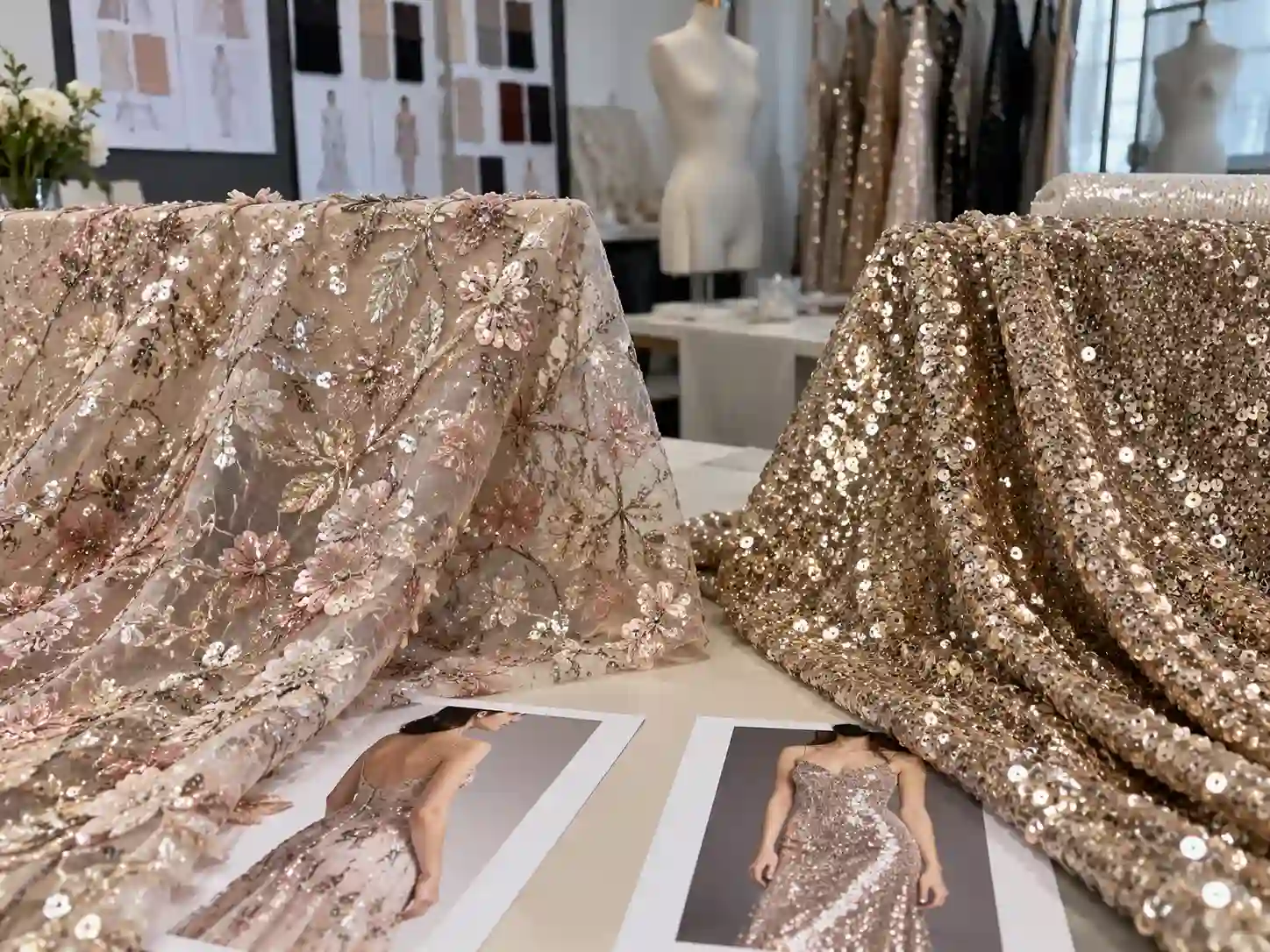
A dress factory rarely works alone. Modern womenswear production depends on fabric mills, stock-fabric dealers, lining suppliers, zipper vendors, elastic manufacturers, label producers, printers, embroidery units, pleating workshops, pressing teams, packaging suppliers, inspection services, and freight companies. When these resources operate within an established apparel cluster, product decisions can move faster and technical problems are easier to isolate.
Consider a satin corset dress with mesh panels, molded cups, boning, a concealed zipper, care labels, hangtags, and ecommerce packaging. The shell fabric may be available, but the project can still stall if the mesh stretches differently, the zipper waves, the cup shape is unsuitable, or the boning cannot be sourced consistently. A mature cluster gives the development team several material and processing options without relocating the whole order.
Geographic concentration also improves revision speed. A sourcing specialist can compare alternative fabrics while the pattern maker corrects the neckline and the sample machinist tests a different zipper application. This does not make every project fast by default, but it reduces the waiting time created by long supplier handovers. In practice, the fastest production system is often the one that solves problems locally rather than the one that promises the shortest sewing time.
| Production Resource | Typical Role | Practical Planning Range | Commercial Value |
| Stock fabric sourcing | Compare available qualities, colors, weights, and finishes | 1-3 working days for common stock options | Speeds early costing and gives alternatives when the first fabric is unsuitable |
| Custom color lab dip | Match a target color before bulk dyeing | 5-10 working days per approval round | Reduces color disputes and helps secure consistent seasonal shades |
| First pattern and sample | Test fit, structure, material behavior, and construction | 7-15 working days for standard development | Finds problems before bulk fabric is cut |
| Specialist process test | Validate pleating, embroidery, printing, beading, or bonding | 3-7 working days for a controlled test | Shows whether decorative details can be repeated at production scale |
| Revised sample | Apply measured fit and construction corrections | 5-10 working days when materials remain unchanged | Creates a traceable route from comments to an approvable product |
Skilled Product Teams
Dress development requires more than skilled sewing operators. Pattern makers translate a sketch, reference garment, or tech pack into a three-dimensional shape that must fit the intended body, fabric, and size range. They control bust shaping, waist position, neckline depth, armhole balance, skirt sweep, hem level, and the relationship between shell, lining, and internal support. A minor pattern error can become a major commercial problem when multiplied across several sizes.
Sample machinists expose risks that remain hidden in drawings. They can see whether satin is puckering, lace is tearing at a seam, mesh is stretching at the neckline, or a lining is pulling against the shell. Merchandisers then keep the changing product record aligned across measurements, material approvals, sample comments, labels, packaging, and production dates. Without this control, a factory can easily combine the newest pattern with an outdated trim or measurement sheet.
Technical headcount is therefore more meaningful than a vague claim of experience. Jinfeng Apparel’s documented system includes two sample rooms, more than seven senior pattern makers, over twenty sample machinists, twelve-plus merchandising and order-follow-up specialists, and fifteen-plus quality inspectors. Those resources do not guarantee a perfect garment on their own, but they show whether a manufacturer has enough specialized people to move a design through development, bulk production, and inspection.
Specialized Production
Not every sewing line is suitable for every dress. Stretch bodycon styles require control of recovery, seam stretch, feed balance, and measurement stability. Satin dresses need careful cutting, needle selection, handling, pressing, and protection from snagging. Lace may require motif matching and clean edge finishing, while sequin garments create risks involving missing decoration, broken needles, bulky seams, scratching, and protective packing.
A factory that mainly produces basic cotton garments may be able to assemble an occasion dress, but repeated experience changes the consistency of the result. Specialist teams know where puckering normally appears, which seams need reinforcement, how long fabrics should relax before cutting, and which operations require in-line inspection. That knowledge becomes especially important when the approved sample must be reproduced across hundreds or thousands of garments rather than displayed as a single showroom piece.
Collection-level production also benefits from specialization. A twelve-style range may include jersey, mesh, chiffon, lace, and satin. Putting every style on one general line creates frequent machine, needle, tension, and method changes. Assigning each fabric group to an experienced production unit allows several styles to move in parallel and reduces the risk that operators learn a complex method only after bulk sewing has begun.
Competitiveness Beyond Labor
China’s apparel wages are not the lowest globally, but sewing labor is only one part of the delivered cost. A lower assembly quotation may be offset by imported fabrics, separate trim shipments, high material minimums, repeated samples, weak communication, excess defects, delayed approvals, or emergency freight. The more design-sensitive a collection becomes, the more the complete production network matters.
China is particularly competitive for programs involving several styles, mixed woven and stretch fabrics, custom labels, multiple colors and sizes, structured or embellished dresses, phased delivery, and repeat orders. The manufacturer can often coordinate material sourcing, sampling, specialist processing, production, inspection, and packing through one lead team. This reduces the number of independent suppliers the brand must manage and creates a clearer line of responsibility when something changes.
The country is not automatically the right answer for every order. Nearshore manufacturing may be better when transit time is the dominant concern, and artisan workshops may suit handcrafted collections with limited volume. The practical comparison is not which country has the lowest hourly wage. It is which production system provides the best balance of material access, technical fit, launch timing, total cost, quality control, and repeatability for the specific dress program.
How Does China’s Supply Chain Support Dress Production?
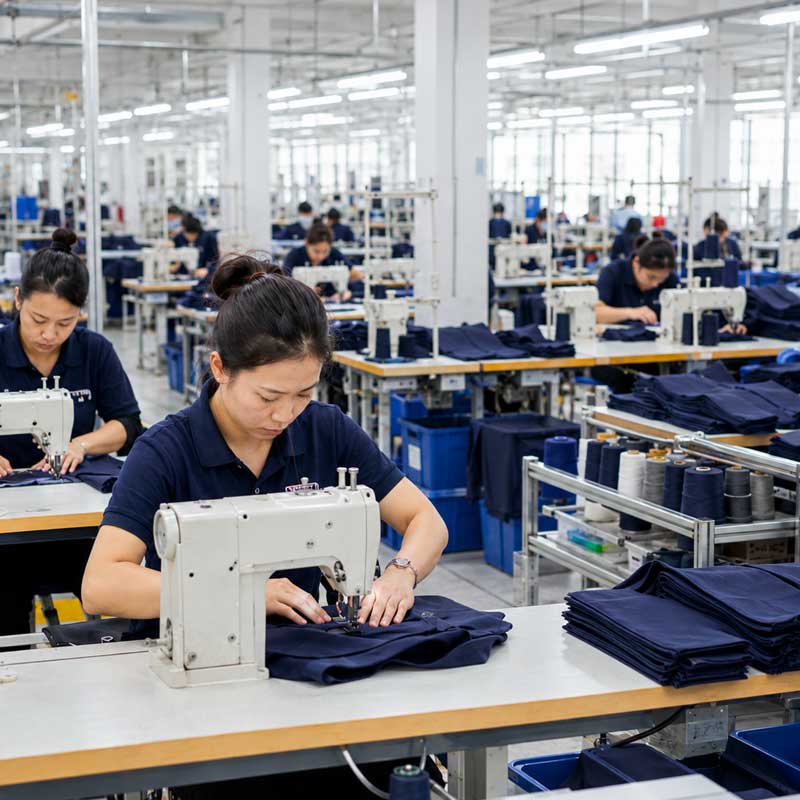
China’s dress supply chain connects fabric sourcing, trim development, pattern making, sampling, specialist processing, bulk sewing, inspection, packaging, and export delivery. This integration helps brands replace unsuitable materials, coordinate revisions, shorten supplier handovers, and preserve approved specifications for future production instead of rebuilding the product from the beginning every season.
Fabric Sourcing
Fabric selection determines much of a dress’s appearance, fit, cost, comfort, and return risk. Two materials described as stretch satin may have very different weight, shine, drape, opacity, recovery, snag resistance, and seam performance. A sourcing team must translate an emotional description such as soft, fluid, premium, or sculpting into measurable characteristics that can be tested in a garment.
The correct fabric depends on the silhouette. A slip dress needs enough weight to fall cleanly without looking stiff. A bodycon style needs controlled stretch and recovery rather than unlimited extension. Chiffon may require lining, narrow seams, or multiple layers. Light-colored mesh must be checked while stretched over the body, not only as a folded swatch. Sequin fabric requires a plan for seam bulk, skin contact, needle damage, and protection during packing.
China’s textile network gives developers access to many stock and mill-developed options, but availability should never replace testing. Useful checks include fabric weight, usable width, shrinkage, stretch direction, recovery, colorfastness, surface defects, shade variation, transparency, and response to pressing. The strongest sourcing decision is not the closest visual match to a photograph; it is the material that creates the intended look and remains stable through sewing, wear, care, and repeat production.
| Fabric Category | Common Weight Range | Typical Dress Uses | Key Production Checks |
| Chiffon | 50-90 gsm | Maxi, resort, bridesmaid, and layered dresses | Transparency, seam slippage, cutting movement, lining length, and hem balance |
| Satin | 80-180 gsm | Slip, cocktail, party, corset, and evening dresses | Snagging, shade, grain direction, seam puckering, pressing marks, and opacity |
| Stretch mesh | 70-160 gsm | Ruched, bodycon, club, cut-out, and panelled dresses | Recovery, transparency under stretch, holes, edge growth, and lining compatibility |
| Jersey | 160-260 gsm | Fitted, casual, draped, and bodycon dresses | Shrinkage, twisting, recovery, seam waviness, and finished length after relaxation |
| Ponte or Roma | 250-380 gsm | Structured knit, office, and fitted midi dresses | Weight, recovery, seam bulk, pressing response, and size stability |
| Lace | 70-220 gsm | Occasionwear, overlays, sleeves, panels, and formal dresses | Motif matching, tearing, edge finish, transparency, lining, and placement consistency |
| Sequin fabric | 180-450 gsm | Party, club, statement, and evening dresses | Missing sequins, scratching, needle damage, seam thickness, weight, and packing protection |
Trims and Processes
Trims occupy little space on a dress, yet they can decide whether the garment is secure, comfortable, washable, and commercially repeatable. A concealed zipper that is too rigid may distort thin satin. Boning that is too soft may fail to support a corset bodice, while a harsh cut edge can become uncomfortable. Elastic must be assessed for recovery and tension, not selected only by width and color.
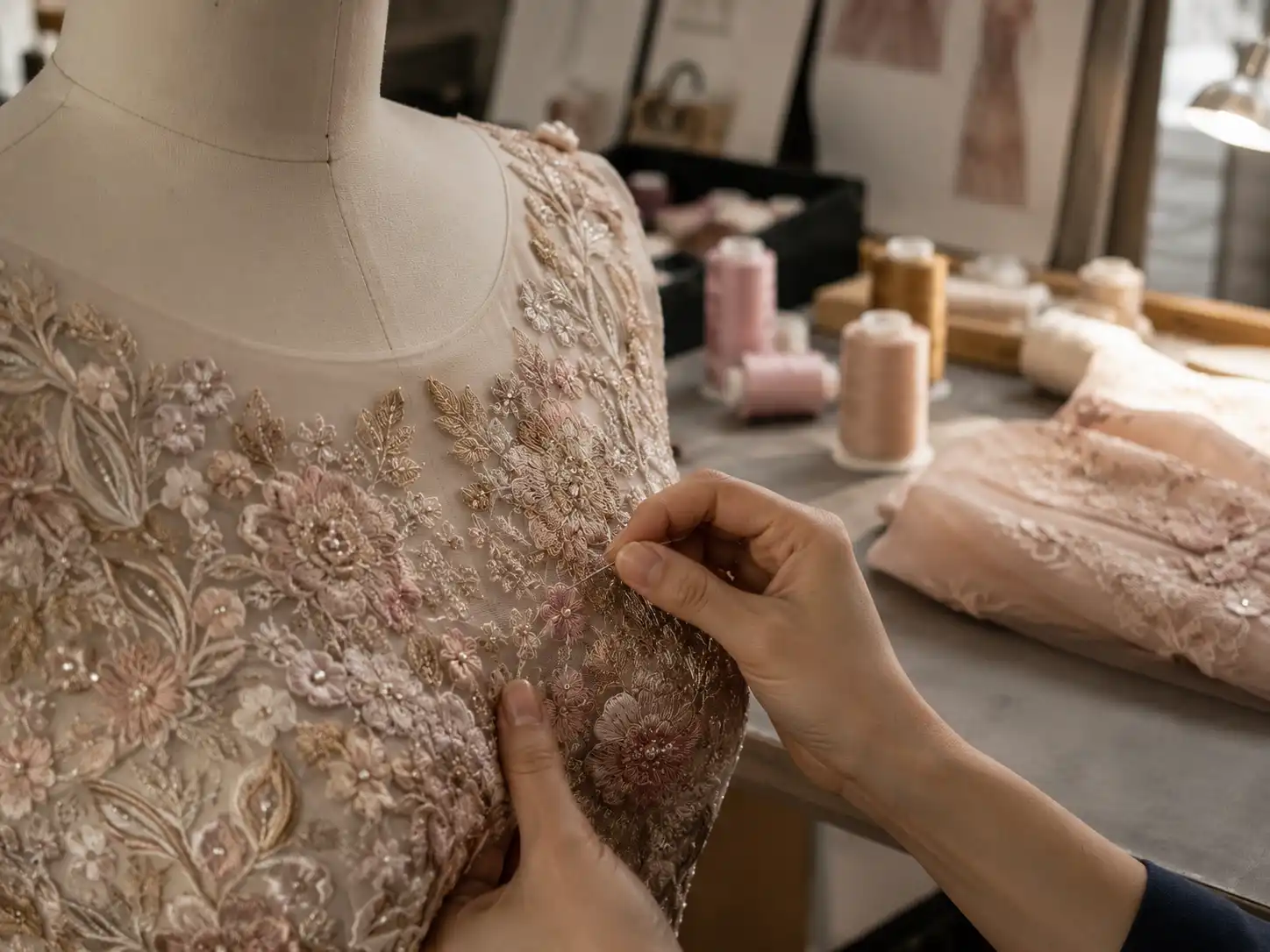
Decorative processes create their own engineering requirements. Pleating changes fabric width and consumption. Dense embroidery can stiffen lightweight cloth or pull the surrounding area. Heat-applied stones behave differently on mesh, jersey, and satin. Hand-applied beads or sequins can increase sewing time and require extra inspection. A detail that looks attractive on one sample must still be practical to reproduce across a full color and size range.
Each approved component should have a recorded item code, size, finish, color, placement, performance requirement, and sample reference. Private-label elements also need early coordination because woven labels, care labels, hangtags, barcode stickers, polybags, tissue, and cartons are usually produced by different suppliers. Custom logo hardware or printed packaging may carry separate minimum quantities, so these costs and lead times should be identified before the final order is confirmed.
Sampling Loops
A sample is a technical test, not a small bulk order. The first version should answer broad questions about silhouette, fit, fabric behavior, support, movement, construction, and finishing. A useful review checks the dress on the intended body type from the front, side, and back, then observes what happens when the wearer sits, walks, raises the arms, or bends. Flat measurements alone cannot reveal every fit problem.
Revision comments should describe the exact location, current result, requested change, and target measurement. A note such as the chest feels loose can mean several different things. A stronger instruction might reduce the upper-bust circumference by two centimeters, remove gaping at the armhole, preserve the waist measurement, and maintain the original neckline depth. Clear comments give the pattern team something measurable to correct and reduce disagreements during the next fitting.
Brands should separate a controlled correction from a redesign. Changing the fabric, neckline, sleeve, length, closure, and trim at the same time affects pattern pieces, construction, cost, and timing. Treating these changes as one simple revision leaves new risks untested. Depending on the product, a project may use a first sample, fit sample, revised sample, photo-ready sample, size set, and pre-production sample, with one approved version clearly identified as the bulk standard.
Repeat Production
Repeat orders become more reliable when approved information is stored as a production record rather than remembered by individual employees. The file should include the final pattern, graded sizes, measurement chart, bill of materials, fabric and lining references, trim codes, sewing notes, label positions, packaging files, carton requirements, and inspection history. A reorder can then be checked against a known standard instead of reconstructed from a product photograph.
Archived information does not remove the need for new verification. Fabric batches may vary, suppliers may change formulations, and the next order may be produced in a different season. Bulk material should still be compared with the approved reference for color, hand feel, weight, width, stretch, shrinkage, and surface quality. The difference is that the team knows precisely what must be matched and which past defects require closer attention.
This structure supports efficient product extension. A successful midi dress can become a mini or maxi while retaining the approved bodice fit. A new color can be developed from the established pattern and trim record. Shared labels and packing standards can move across a seasonal range. Jinfeng Apparel’s documented cooperation model includes seasonal collection development, repeat orders, multi-batch production, and retained pattern, measurement, fabric, trim, and packaging records for future manufacturing.
How Do Chinese Manufacturers Balance Cost, Speed, and Scale?
Chinese dress manufacturers balance cost, speed, and scale by combining local material access, specialized lines, technical planning, and coordinated capacity. Strong programs do not maximize one factor at the expense of the others. They control total development cost, protect the launch calendar, stabilize the approved sample, and expand production only when the product and materials are ready.
Total Cost
The lowest factory quotation is not always the lowest commercial cost. A dress price may include shell fabric, lining, trims, cutting, sewing, specialist processes, finishing, labels, packaging, overhead, and margin. Costs outside the quotation can include samples, courier charges, testing, inspection, freight, duty, warehousing, and financing. Less visible losses may come from missed launch dates, high return rates, markdowns, or emergency air shipment.
Cost control begins with the product design. A structured corset dress with twelve panels, custom-dyed lace, bra cups, boning, lining, hand-applied decoration, and premium packaging cannot be compared with a simple unlined slip dress. Experienced teams reduce cost by identifying which details create customer value and which details add complexity without improving the final appearance, fit, or durability.
Useful options include selecting a suitable stock fabric instead of custom weaving, sharing one lining across several styles, reducing unnecessary seam count, using an approved machine process instead of hand application, standardizing trims, improving marker efficiency, or concentrating the first order in the strongest colors. A cost review should explain the consequence of each change. Saving money by removing support from a strapless bodice is not an optimization if it increases returns and complaints.
Production Timing
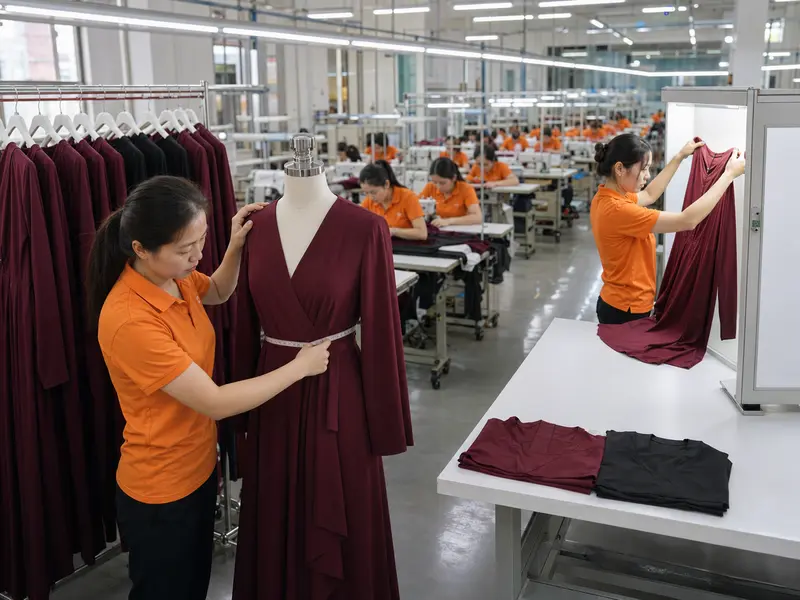
Dress manufacturing follows a critical path. Some tasks can run together, but certain approvals must be completed before the next stage begins. Bulk fabric cannot be cut safely before color, shrinkage, construction, and measurements are confirmed. Packaging artwork can be developed while a fit sample is being revised, but final barcode data may depend on the approved color and size assortment.
The biggest scheduling losses often come from incomplete decisions rather than slow sewing. A late fabric change may require another lab dip and a new sample. Unapproved care-label text can hold completed garments in the packing area. An unclear size chart delays grading even when the base-size fit is accepted. Brands protect the calendar by setting milestone dates for fabric approval, fit comments, pre-production approval, label files, inspection, and shipment release.
A realistic calendar includes review time because not every sample should pass immediately. It also shows the latest acceptable approval date for each decision. This creates a shared working schedule instead of one final delivery date that hides every dependency. When the brand and factory can see the same critical path, they can decide whether a change is still practical, whether it requires extra cost, or whether it must move to a later delivery.
| Production Stage | Common Planning Range | Decision or Approval | Main Delay Risk |
| Material search and costing | 3-10 working days | Fabric direction, construction, quantity, and target price | Unclear fabric request or unavailable color |
| First pattern and sample | 7-15 working days | Initial fit, silhouette, and construction review | Incomplete measurements or complex internal structure |
| Controlled revision | 5-10 working days | Written fit and workmanship comments | Major redesign presented as a minor correction |
| Pre-production preparation | 5-10 working days | Final sample, bulk materials, labels, size breakdown, and packing | Open comments or late artwork |
| Bulk manufacturing | 25-45 working days | Approved PP sample and released bulk materials | Peak-season capacity, complex embellishment, or material delay |
| Final inspection and packing | 2-5 working days | Quality release, assortment, labels, and carton standard | Unresolved defects or incorrect warehouse data |
| Export document preparation | 2-5 working days | Final quantities and shipping instructions | Late consignee, booking, or compliance information |
Collection Planning
Fashion programs rarely contain one style in one color. A seasonal order may combine several silhouettes, fabrics, constructions, colors, and size ranges. Managing that mix requires more than a large monthly capacity figure. The manufacturer must group styles by production logic, assign suitable lines, coordinate shared materials, and control hundreds of SKU combinations without mixing labels, colors, measurements, or cartons.
A 1,000-piece order divided across ten styles, three colors, and six sizes creates 180 style-color-size combinations. The total quantity may look manageable, but the cutting, bundle control, packing, barcode, and inventory complexity is significant. Efficiency improves when the first order concentrates on stronger colors, several designs share an approved fabric, or unnecessary trim variation is removed. Controlled variety usually produces a more stable launch than fragmentation for its own sake.
Multi-factory production can move styles in parallel, but it needs one technical authority. The lead manufacturer should control the approved sample, pattern version, material reference, measurement tolerances, workmanship standard, inspection method, and packing instructions. Capacity without centralized control can produce subtle differences between production units, especially in fit-sensitive dresses where neckline tension, waist placement, or garment length changes the customer’s impression immediately.
Scalable Capacity
Scale becomes valuable only after the product is stable. Producing an incorrect dress faster creates more unusable inventory. The proper sequence is development, measured correction, material approval, pre-production confirmation, controlled bulk launch, in-line inspection, final inspection, and repeat production. Each stage protects the next one from inheriting an unresolved problem.
Once the style is approved, coordinated capacity supports seasonal launches, retailer windows, bestseller replenishment, color extensions, phased shipments, and regional inventory allocation. Dedicated lines are efficient for stable higher-volume products, while flexible lines are useful for multi-style collections, varied fabrics, smaller batch splits, and repeat orders that do not fill a standard line. The relevant capacity is not the largest number advertised; it is the experienced capacity available for the required product and month.
Jinfeng Apparel’s documented system includes six owned womenswear factories, more than ten long-term satellite production partners, over eighteen sewing lines, six-plus flexible production lines, and regular monthly capacity above 100,000 garments, depending on product complexity and scheduling. Its standard starting MOQ is 200 pieces per style and color, while custom fabric, dyeing, printing, special trims, complex construction, or custom packaging may require higher quantities.
Which Dresses Benefit Most from China Manufacturing?
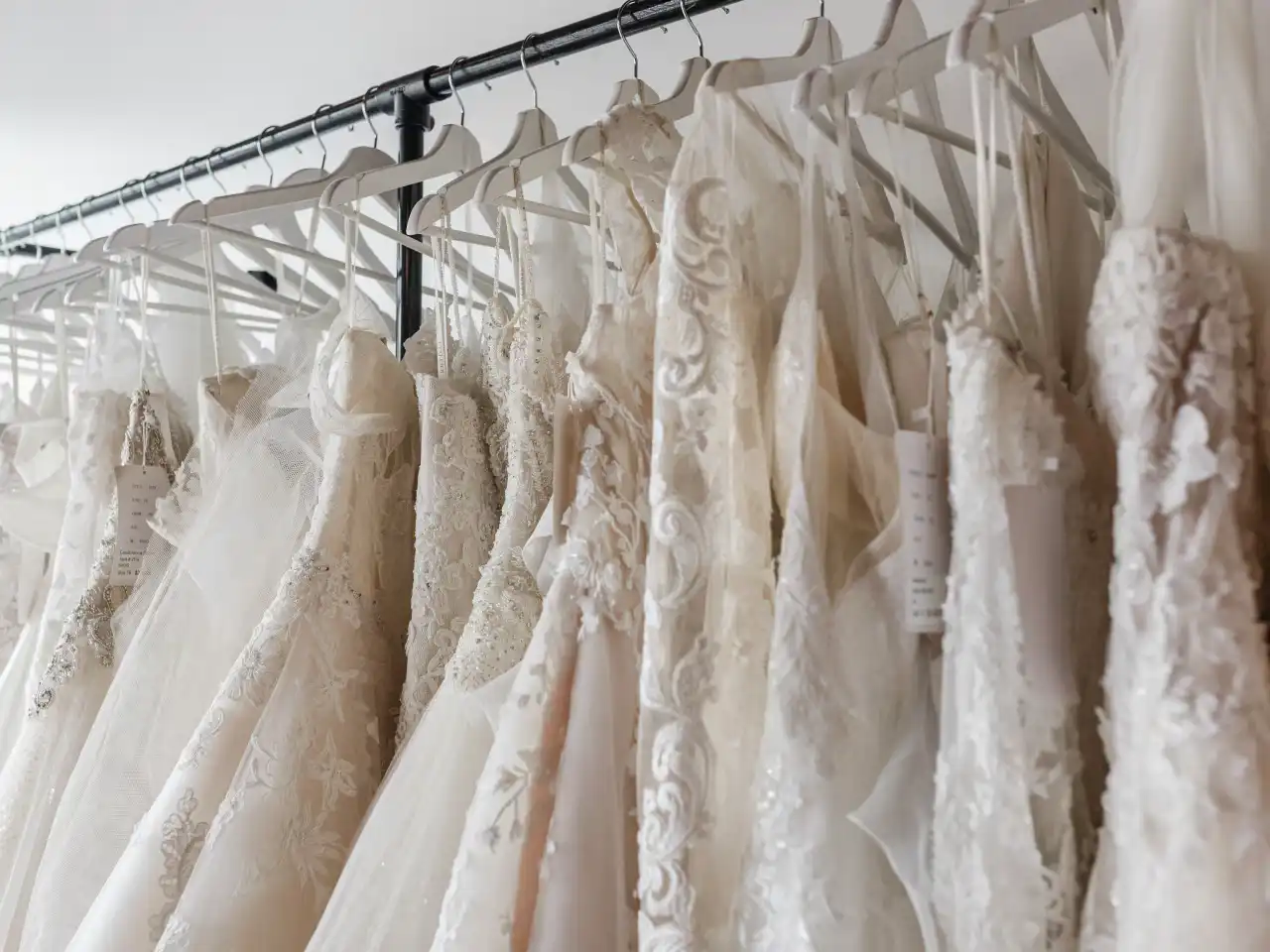
Dresses benefit most from China manufacturing when they depend on broad material choice, precise fit, internal structure, specialist sewing, decorative processes, or repeatable scale. Satin, mesh, lace, sequin, corset, bodycon, occasionwear, resort, and coordinated private-label collections often gain more from China’s integrated network than simple garments with limited technical requirements.
Fabric-Sensitive Dresses
Some dresses depend so heavily on material behavior that a small fabric change creates a different product. Satin is a clear example. Its weight, shine, drape, stretch, surface stability, and opacity affect whether a slip or evening dress looks refined or inexpensive. Lightweight satin may reveal seam puckering and body lines, while a heavier quality can create bulky seams or an overly rigid silhouette. Panel direction must also be controlled because light reflects differently across the grain.
Mesh dresses require close attention to transparency, stretch direction, recovery, and edge stability. A swatch may look opaque when relaxed but become revealing across the bust or hip. Necklines and armholes can grow during sewing or wear if reinforcement is weak. Printed mesh adds placement risk because the artwork may shift across sizes or cutting batches. The shell and lining must also stretch together or the garment will twist, pull, or lose the intended drape.
Chiffon and lightweight rayon create different problems. Their movement suits resort and maxi dresses, yet the cloth can shift during cutting, slip at seams, or form an uneven hem after hanging. Some rayon qualities show significant shrinkage or skew after wet processing. China’s material network is valuable for these products because developers can compare several constructions, weights, finishes, and linings rather than forcing the design into the first available fabric.
Structure-Heavy Dresses
Corset dresses, structured occasionwear, strapless gowns, and formal styles contain more engineering than the outer appearance suggests. Internal layers may include lining, interfacing, bra cups, underwire, boning, waist tape, elastic, padding, and reinforcement. The aim is to provide support without excessive stiffness, visible ridges, pressure points, or uncomfortable edges.
Boning must follow the body and remain stable inside its channel. Cup size and position must suit the neckline and grading plan. A strapless top edge needs enough tension to remain secure, but excessive tension can distort the neckline or compress the wearer. These components must be tested as a system because changing one layer affects the others. A softer shell fabric may require stronger internal support, while a firmer fabric may need less reinforcement to achieve the same silhouette.
Grading is another challenge. A corset bodice cannot be enlarged by adding the same amount to every seam. Bust projection, cup position, strap placement, waist shaping, and back closure need separate size logic. Evening and floor-length dresses also require balanced hems after the fabric settles, secure slit reinforcement, consistent lining length, and careful pressing. Specialist occasionwear teams are most valuable when they can document this internal construction and reproduce it beyond the sample size.
Fit-Sensitive Dresses
Bodycon, halter, backless, cut-out, deep-V, low-waist, one-shoulder, and fitted midi dresses allow little room for measurement error. A change of one or two centimeters can affect coverage, support, comfort, or the balance of the silhouette. This sensitivity increases when the garment relies on stretch rather than darts, seams, or internal structure to follow the body.
Patterns must be built around the selected fabric’s extension and recovery. A pattern developed in firm ponte cannot be transferred directly to soft jersey or high-stretch mesh. The same finished measurement produces a different fit because each material resists and recovers differently. Critical points include upper-bust balance, neckline opening, armhole shape, strap length, elastic tension, waist and hip position, side-seam alignment, and dress length after the fabric has relaxed.
Fit should be reviewed on a body or form that represents the target customer, not only while the garment lies flat. Front, side, and back photographs help the team see pulling and imbalance, while movement tests reveal gaping, riding, restriction, or inadequate coverage. Bulk consistency then depends on material relaxation, cutting direction, bundle control, sewing tension, elastic length, and a measurement method that clearly states whether the garment is checked relaxed, extended, or along a curve.
Collection-Based Orders
China often creates the greatest value when a brand develops a coordinated collection rather than one isolated product. Several silhouettes can share fabrics, colors, trims, labels, fit standards, and packaging. One satin quality might support a slip mini, draped midi, corset dress, and matching skirt. A stretch mesh could be used for a ruched bodycon style, a panelled maxi, and a coordinated top.
Shared materials reduce color inconsistency, simplify purchasing, improve fabric use, and strengthen the collection’s visual identity. Centralized pattern and fit standards also help the manufacturer apply the same waist position, neckline depth, grading approach, label placement, care-label format, and finishing expectations across the range. Over several seasons, these records reduce repeated explanation and allow new products to build on approved blocks rather than beginning from an unrelated fit each time.
The strongest use cases include seasonal dress ranges, partywear, occasionwear, ecommerce launch calendars, multi-color core products, retailer programs, private-label collections, and bestseller replenishment. Variety still needs discipline. Too many fabrics, trims, colors, and tiny SKU quantities can weaken efficiency. A well-planned range creates visible product choice while maintaining enough shared construction and sourcing logic for reliable manufacturing, inspection, packing, and future repeat orders.
How Can Brands Control Quality and Sourcing Risk?
Brands control quality and sourcing risk by qualifying the manufacturer, approving materials and samples before bulk cutting, setting measurable standards, inspecting production at several stages, and protecting confidential files. Manufacturing country alone does not guarantee results. Reliable dresses come from clear specifications, disciplined approvals, traceable records, realistic timing, and a supplier that accepts responsibility for corrective action.
Manufacturer Evaluation
A professional evaluation should go beyond website photographs, certificates listed without context, and the first quoted price. The brand needs evidence that the supplier can manage the specific dress category, fabric, structure, quantity, size range, and delivery schedule. A factory may have strong general apparel capacity while lacking regular experience with corsetry, stretch mesh, delicate satin, lace placement, long hems, or heavy sequin surfaces.
The development system reveals how the supplier works under pressure. Ask who reviews the tech pack, who makes the pattern, how sample comments are recorded, which sample controls bulk production, and how material changes are approved. A capable team should explain the main risks before sampling begins. It should also distinguish between information it can confirm and information that still requires testing, rather than answering every technical question with a convenient yes.
Production allocation must also be transparent. The order may remain in one owned factory or be divided among coordinated production units. External production is not automatically a weakness, but responsibility must remain clear. The lead supplier should issue the technical documents, control approved samples, inspect key stages, manage corrective action, and release the final shipment. Capacity claims should be tested against the required month, available line experience, and the number of styles running at the same time.
Quality Gates
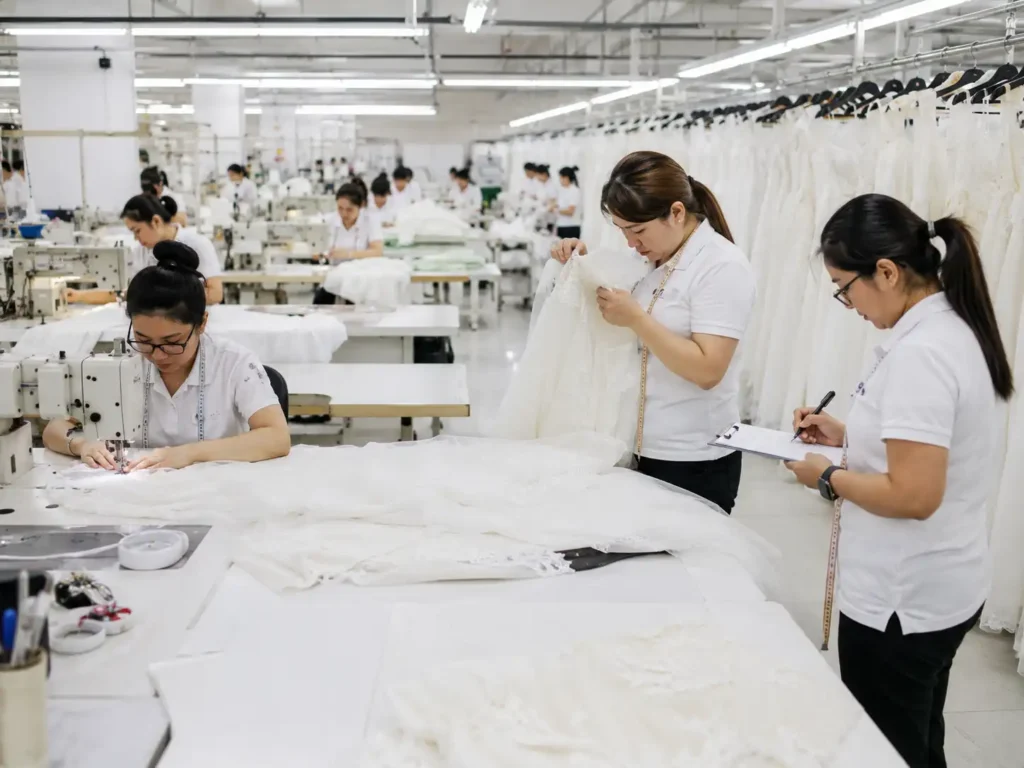
Final inspection cannot repair every earlier mistake. Once fabric has been cut, shade variation, shrinkage, print direction, or incorrect panel orientation may be impossible to correct. Once hundreds of garments are sewn, a fit problem becomes expensive and slow. Quality control is more effective when the order passes through several gates that prevent defects from moving quietly into the next production stage.
Material inspection should check shade, usable width, weight, surface defects, shrinkage, stretch, recovery, and compatibility with the approved sample. The pre-production sample should close the remaining fit, construction, trim, label, and packing decisions before bulk cutting. Early-line review then confirms that the first production units follow the approved method. This is the best moment to correct seam allowance, reinforcement, zipper application, lining position, elastic length, or pressing technique.
In-line inspection identifies repeated faults while operators can still adjust the process. Common dress checks include neckline symmetry, waist position, zipper flatness, seam puckering, gathering balance, cup and boning placement, lining length, slit reinforcement, hem level, and left-right consistency. Final inspection reviews finished measurements, appearance, closures, cleanliness, pressing, labels, assortment, packaging, and cartons. Larger orders may use an agreed AQL sampling plan, but the inspection level and defect definitions should be confirmed before production.
| Quality Gate | Key Checks | Typical Evidence | Risk Prevented |
| Incoming material | Shade, width, weight, defects, shrinkage, stretch, recovery, and surface quality | Inspection record, test result, approved swatch comparison | Cutting inconsistent or unsuitable fabric |
| Pre-production sample | Fit, measurements, construction, fabric, trims, labels, and finishing | Signed comments, approved sample, final specification | Bulk production against unresolved details |
| Cutting check | Grain, panel direction, print placement, shade grouping, and bundle identity | Cutting report and first-bundle review | Twisted garments, mixed shades, and placement errors |
| Early-line review | First completed units, operation method, reinforcement, and pressing | First-off inspection and corrective record | Repeating one technical error across the order |
| In-line inspection | Measurements, sewing, symmetry, closures, lining, embellishment, and cleanliness | Inspection report with defect trend and correction | Defects continuing until final inspection |
| Final inspection | Appearance, function, measurement, labels, packing, assortment, and cartons | Final report, photos, AQL result when agreed | Shipping nonconforming or incorrectly packed goods |
| Shipment release | Corrective evidence, quantities, documents, and booking details | Release approval and final packing list | Dispatch before quality and document approval |
Design Protection
Fashion companies share commercially sensitive information before a product reaches the market. Tech packs, sketches, original samples, patterns, measurement charts, target costs, fabric developments, labels, packaging, launch dates, order quantities, and supplier details can all have value. An NDA provides a formal basis for confidentiality, but daily handling rules determine whether that promise works in practice.
Files should be limited to the people involved in development and production. Unreleased samples should not be displayed publicly or used in marketing without permission. Patterns, custom fabrics, trims, and packaging artwork should be identified by project or style code to reduce accidental mixing. Original garments should be logged when received, stored securely, and returned according to an agreed process. The brand should also confirm that it has the right to use any submitted logos, prints, artwork, and protected design elements.
Long-term production creates an important balance. Retaining approved patterns and material records makes repeat orders faster, yet storage does not transfer ownership to the manufacturer. Confidential files remain connected to the client’s project and should not be offered to another company. Jinfeng Apparel supports NDA-based cooperation and states that client names, tech packs, samples, patterns, private-label files, unpublished designs, quantities, and pricing are protected throughout development and production.
Country and Project Fit
China should be compared with other sourcing locations through the requirements of the actual dress program. Vietnam can suit stable export orders, India offers strong embroidery and artisanal resources, Bangladesh is competitive for repeatable volume, Turkey provides shorter access to Europe, Portugal supports premium nearshore programs, and domestic production can reduce physical distance. Each option also has limitations involving materials, cost, scale, timing, or technical range.
Before sampling begins, the brand should provide enough information for a meaningful technical review. The minimum practical brief includes a style reference, quantity plan, size range, target market, fabric direction, color plan, construction requirements, packaging needs, target launch date, and approval process. A complete tech pack is preferable, but an original sample, sketch, reference image, line sheet, or mood board can also work when the commercial direction and open decisions are clearly identified.
Minimum quantities should be reviewed component by component. Standard fabrics and colors may support a lower entry point, while custom weaving, dyeing, printing, certified materials, logo hardware, special lace, unusual sequins, or custom packaging may have separate supplier minimums. The strongest sourcing decision matches the product’s technical needs, collection scale, timing, target cost, and quality expectations with a manufacturing system that can control all of them rather than promising one attractive number in isolation.
Request a Dress Manufacturing Review
China remains a strong manufacturing choice for dresses when the product needs more than basic sewing. The value is greatest when material selection, pattern development, fit correction, specialist construction, quality control, packaging, and repeat production must work as one system. The decision should still be made style by style, because a simple local replenishment program and a multi-fabric occasionwear collection do not need the same supply chain.
For fashion companies preparing a seasonal range, the most useful first step is a technical review of the styles rather than a price request with limited information. Jinfeng Apparel can assess tech packs, reference samples, sketches, fabrics, construction, quantities, size ranges, private-label requirements, and launch timing before sampling begins. The company is based in Guangdong and supports OEM, ODM, private-label development, bulk production, quality control, packaging, and export coordination for established womenswear programs.
To request a dress manufacturing review, send the available design files, reference images, expected quantity, target market, size range, preferred materials, and required delivery window to info@jinfengapparel.com or contact Kelly by Phone or WhatsApp at +86 18929465598. Clear project information allows the development team to identify material risks, suitable production units, likely minimum quantities, and the approval path before a quotation and sample schedule are prepared.