Skip to content

A price ladder can look perfectly logical in a spreadsheet and still feel completely wrong when the collection reaches the customer. An entry dress may look expensive for its fabric, the mid tier may offer no convincing reason to trade up, and the premium pieces may absorb development time without producing enough margin or brand value. The problem is rarely one isolated ticket price. It is usually the relationship between product, cost, customer expectation and the rest of the assortment.
To plan entry, mid and premium price points, define the commercial role of each tier, work backward from the expected selling price to a realistic landed-cost ceiling, assign visible product improvements to every step, balance style and inventory exposure, and validate the structure through samples, competitor comparisons, production-ready quotations and post-launch sales data.
The strongest collections make every price feel intentional. Customers can see what they gain as they move upward, while the brand still protects margin after freight, duty, promotions, returns and operating costs. One unnecessary lining operation can quietly remove several margin points, while one thoughtful fabric substitution can preserve the appearance of a dress and return it to its target cost. That is the point where price architecture stops being a finance exercise and becomes practical fashion engineering.
What Are Entry, Mid and Premium Price Points?
Entry, mid and premium price points are coordinated product tiers with different commercial roles. Entry styles make the collection accessible, mid-tier styles usually carry the main commercial offer, and premium styles provide stronger materials, construction, design distinction or occasion value. A useful ladder gives customers a clear reason to move upward while keeping every level commercially viable.
The Role of Each Tier
An entry price point should lower the barrier to purchase without lowering confidence in the collection. It is often the first product through which a new customer judges fit, fabric and finishing, so weak opacity, unstable seams or a poor neckline can damage the reputation of more expensive pieces as well. Entry products work best when they use clear silhouettes, dependable stock materials, controlled seam counts and details that can be reproduced consistently during bulk production.
The mid tier is normally the commercial center because it has to combine accessible pricing with enough product interest to support repeat purchase. These garments may use a better fabric weight, more considered lining, stronger fit development or one recognizable design detail. The step up should be easy to explain. A customer should understand what improves when moving from an opening-price mini dress to a mid-tier satin midi or structured matching set.
Premium products perform a more specific job. Some produce higher cash margin, while others create campaign imagery, strengthen occasion-led demand or establish the upper limit of the brand. A premium piece does not need to sell the greatest number of units to be useful, but it does need a credible reason to cost more. Better support, specialist materials, developed draping, difficult surface treatments or lower-volume exclusivity are more persuasive than decorative additions that do not improve the wearing experience.
| Tier | Main Commercial Role | Typical Product Direction | Main Risk |
| Entry | Access, customer acquisition and volume | Proven fabrics, clear silhouettes, controlled construction | Looking cheap or producing too little margin |
| Mid | Core sales, range depth and repeat purchase | Better fit, stronger material, lining or a signature detail | Feeling too similar to entry or premium |
| Premium | Margin, occasion value and brand elevation | Distinctive material, internal support or specialist finish | Adding cost customers cannot see |
| Hero | Campaign impact and collection identity | Statement shape, embellishment or unusual surface | Buying too much inventory behind limited demand |
The roles above are planning functions, not fixed definitions. A product can support more than one role, but it should still have a clear primary purpose.
Customer Needs by Tier
Customers do not remain permanently inside one price segment. The same person may choose an entry-level knit dress for everyday wear, a mid-tier satin dress for dinner and a premium embellished gown for a wedding. Price planning should therefore follow occasions, product expectations and emotional value rather than assuming three unrelated customer groups. The purchase context often explains willingness to pay more accurately than age, income or a broad lifestyle label.
At the opening price, customers usually want quick reassurance. The silhouette, color, fabric and ticket must make sense almost immediately. They may accept simpler construction, but they still expect accurate photographs, dependable fit and reasonable durability. Mid-tier customers compare more carefully and are more likely to notice lining, closures, hand feel, sizing information and whether the design feels sufficiently different from cheaper alternatives. Premium customers often pay to reduce compromise, so instability around the bust, uncomfortable trims or weak finishing can feel especially disappointing.
A useful way to define each tier is to ask three practical questions: what occasion or problem is the garment solving, which improvement can the customer see or feel, and what flaw would make the price appear unreasonable? The last question is frequently the most revealing. A premium dress with an unstable neckline can feel worse than a simpler entry style because the higher ticket raises expectations for comfort, finish and consistency between campaign imagery and the delivered product.
How Value Should Progress
Value must increase in ways that customers can see, feel or experience. Production cost alone does not create perceived value. A hidden operation may be technically expensive, but it cannot support a higher ticket unless it improves fit, comfort, durability, appearance or distinctiveness. This is why product teams should review every upgrade from both the sewing room and customer perspective instead of assuming that more operations automatically produce a more premium garment.
Consider a three-tier satin dress family. The entry style may use a clean slip silhouette, a reliable stock satin and limited internal construction. The mid version can add a more substantial satin, shaped bust seams, partial lining and adjustable straps. The premium version may use richer surface quality, developed draping, internal bust support, full lining and more demanding finishing around the neckline and zipper. The progression is visible, wearable and connected to real production cost.
Not every higher-priced product needs more decoration. A clean premium bodycon dress may justify its position through power mesh, engineered seaming, double-layer construction and careful tension control. A better waistband, stable neckline or correctly placed waist can create more value than an extra embellishment. One reliable test is to place one garment from each tier side by side without prices. An experienced team should be able to order them correctly and explain the progression in a few sentences.
Price Tiers and Categories
Price tiers and product categories are related, but they are not the same. A brand may offer entry, mid and premium dresses while using separate ladders for tops, skirts, jumpsuits and matching sets. Each category has a different customer ceiling, fabric requirement and construction baseline. A simple top can reach its credible upper limit quickly, while a structured evening dress can support a much wider range because lining, boning, cups, draping and surface work may change substantially.
Wearing occasion also changes price tolerance. Customers often accept a higher ticket for wedding guest dressing, eveningwear or a special event because the purchase solves a specific need and carries emotional importance. They may be more price-sensitive when considering a casual top or everyday skirt, even within the same brand. Matching sets require another calculation because the total price may be compared with the perceived value of two separate garments.
One universal set of three prices is therefore too broad for most womenswear ranges. A more practical method defines category-specific corridors and then checks whether those corridors still create one coherent brand position. This allows an accessible day dress, a commercial satin midi and a premium occasion gown to coexist without forcing every product into an artificial ladder that ignores differences in material use, labor and customer expectation.

How Do You Set the Price Bands?
Set price bands by working backward from the expected selling price, channel costs and target margin. Establish the maximum landed cost, then calculate the ex-factory target after freight, duty, packaging and handling. The gaps must be wide enough to represent a visible product upgrade, yet close enough for customers to consider moving to the next level.
Choosing the Retail Anchor
The retail anchor should reflect the price customers are likely to pay, not simply the highest ticket displayed on a product page. Start with the actual selling environment: direct ecommerce, wholesale, department stores, boutiques, marketplaces or a mixture of channels. A dress listed at $140 may appear to support a premium position, but if it spends most of the season at $95, the effective market reference is much closer to $95.
Competitor comparison needs more than a similar photograph. Review the wearing occasion, fabric surface and weight, lining, closure, construction, fit complexity, promotion frequency, customer comments and delivery experience. A lightly constructed unlined slip dress should not be treated as a direct comparison for a fully lined satin dress with shaped seams and internal support, even when both appear under the same search phrase.
The anchor should also be category-specific. A customer may accept $169 for a structured occasion dress while resisting $99 for a relatively simple top. For each major category, define the opening price, the core commercial corridor and the credible upper limit. The upper limit should be based on what the product and brand can genuinely deliver today, not only where management hopes to position the collection in the future.
Connecting Cost and Margin
Retail planning becomes useful only when it is translated into a production-cost ceiling. Without that step, a team can spend weeks developing an attractive sample that cannot survive the commercial model. A simplified direct-to-consumer calculation starts with the expected net selling price rather than the ticket price, then applies the target gross margin to establish the maximum landed cost. Freight, duty, inbound handling and garment packaging are deducted to find the ex-factory target.
For example, a dress ticketed at $99 may realize only $87.12 after routine promotions. At an illustrative 67 percent gross-margin target, the maximum landed cost would be $28.75. If freight, duty, handling and packaging total $5.75, the maximum ex-factory allowance becomes approximately $23.00. These figures are examples rather than universal targets, but they show why a retail ticket alone is not enough information for a useful quotation.
Wholesale requires another layer because the retailer needs its own margin while the brand still needs enough difference between wholesale revenue and landed cost. Before sampling, establish an ideal target cost, a maximum acceptable cost and a redesign threshold. This discipline prevents a common late-stage decision in which an over-cost style is approved simply because the team has become attached to the sample.
Setting Meaningful Gaps
There is no fixed percentage that works for every product or market. A $15 step can be meaningful for a fashion top but almost invisible within occasionwear. The gap must be judged against customer spending behavior, category norms and the strength of the upgrade. Price corridors are usually more practical than isolated numbers because they allow several silhouettes to sit within one tier without forcing every style into the same ticket.
| Category | Entry Corridor | Mid Corridor | Premium Corridor |
| Fashion tops | $35-$49 | $55-$79 | $85-$125 |
| Day dresses | $59-$79 | $85-$119 | $129-$179 |
| Occasion dresses | $89-$119 | $129-$189 | $199-$349 |
| Matching sets | $79-$109 | $119-$169 | $179-$269 |
| Jumpsuits | $79-$109 | $119-$169 | $179-$249 |
Illustrative retail corridors only. Actual ranges should be recalculated for the target market, channel, product specification and realized selling price.
A price gap should pass two tests. First, can the merchandising and product teams explain the additional value in a few clear points? Second, can the customer reasonably trade up without feeling that she has entered a completely different market? A mid-tier dress at $109 and a premium version at $119 may not create enough distinction. A jump from $109 to $299 can be equally difficult unless the material, construction, occasion and presentation are substantially different.
Psychological endings can support merchandising, but they should not replace product logic. Moving a ticket from $101 to $99 may improve visual simplicity, yet it cannot rescue a weak product or an unrealistic cost base. The strongest price points are memorable, easy to compare and supported by a product difference that customers can recognize without reading a long explanation.
Promotions and Realized Price
Price architecture should be built around expected realized revenue, not the full ticket alone. Brands that promote frequently need more room between production cost and retail price because discounts reduce the revenue available to cover returns, marketing, payment fees and operating expenses. A dress ticketed at $120 but commonly sold with a 20 percent promotion is effectively working from $96 before returns.
Review the full commercial environment before approving the ladder, including new-customer discounts, affiliate commissions, marketplace fees, wholesale allowances, return rates, seasonal markdowns and free-shipping thresholds. Entry products are particularly exposed because their absolute cash margin is smaller. A $6 unplanned increase can materially change the economics of an opening-price style, while the same increase may be manageable on a premium gown.
Premium products face a different risk. Frequent deep discounting can weaken the perception of exclusivity and teach customers to wait. A healthy structure therefore considers where a product launches, the price at which it is likely to sell for most of the season and the level it may reach during clearance. Those three numbers should all remain commercially acceptable before the style is approved for development.
Which Product Features Belong in Each Tier?
Assign product features according to customer-visible value and their effect on material cost, labor, fit and production risk. Entry styles need controlled complexity, mid-tier styles require a noticeable upgrade, and premium styles need a convincing reason for the higher price. Each added feature should improve appearance, comfort, fit, function, durability or exclusivity.
Fabric by Price Tier
Fabric is often the most noticeable difference between tiers, but fiber content alone is not enough. Two polyester satins can vary substantially in weight, luster, drape, snag resistance, wrinkle behavior and shade consistency. A heavier material is not automatically better, and a natural fiber is not automatically more suitable. The correct fabric is the one that supports the silhouette, customer expectation and bulk-production requirement at the intended cost.
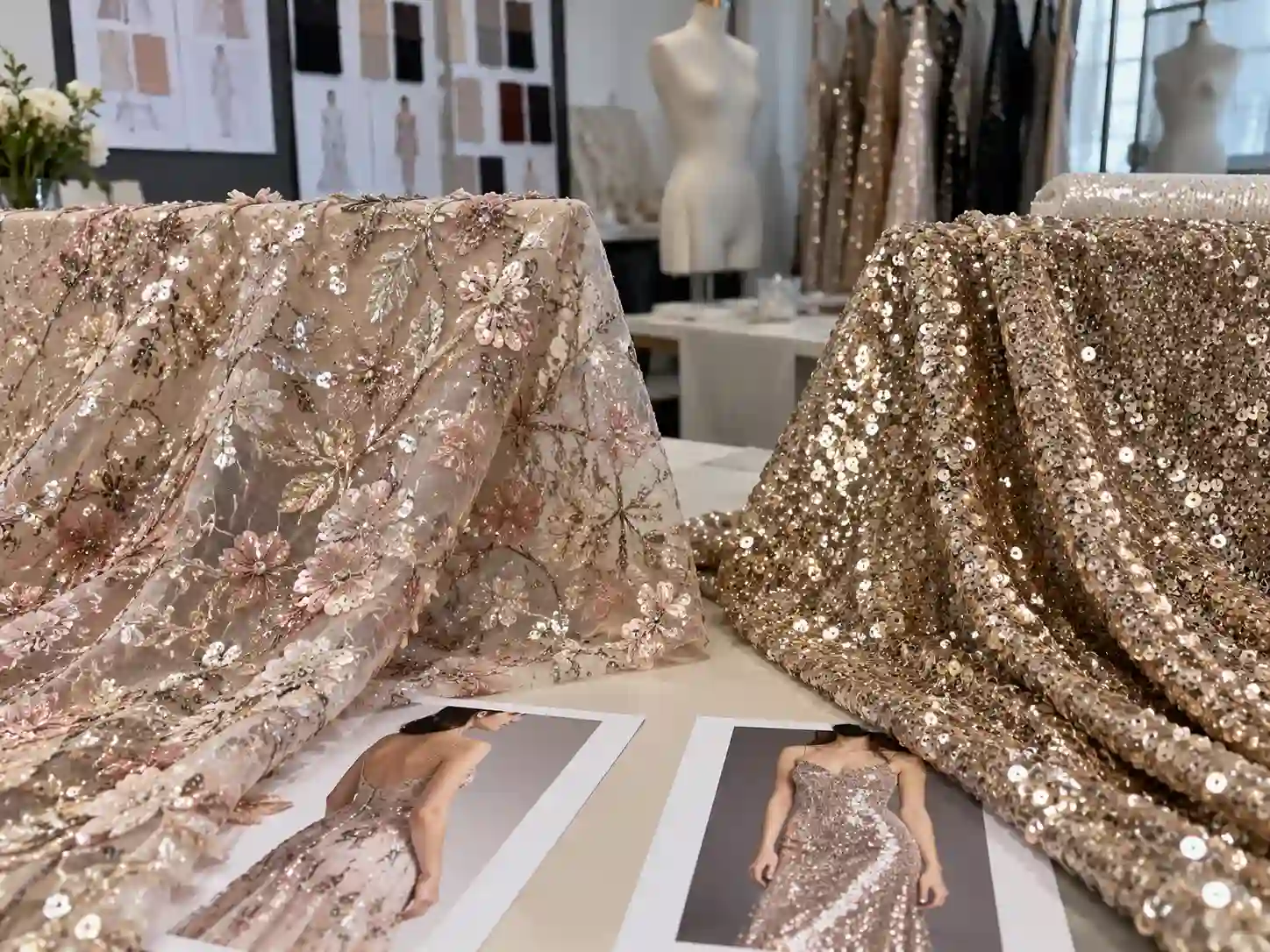
Entry fabrics should be reliable, commercially available and stable in production. Proven qualities, stock colors and manageable shrinkage reduce risk without forcing the garment to look inexpensive. Mid-tier materials can introduce a better hand feel, improved recovery, increased weight, upgraded prints or a more refined surface. Premium materials may justify custom colors, exclusive prints, engineered lace, velvet, sequins, specialty mesh or combinations of outer fabric, lining and support materials.
Every material should be reviewed for composition, usable width, weight, drape, stretch direction, recovery, opacity, shrinkage, pilling or snagging, shade consistency and pressing behavior. Fabric minimums and replenishment also matter. A custom color can fit the premium story but create excess inventory if the mill minimum is greater than the planned order. Material choice therefore needs to connect creative value with consumption, quantity and future repeat potential.

Construction and Labor
Construction can create the largest cost difference between garments that look similar online. Two dresses may share the same outer silhouette, yet one requires far more operations because of lining, internal support, pleating, draping or difficult fabric handling. Entry products benefit from clean, efficient structures, fewer panels, dependable closures and seam finishes that remain neat without adding invisible labor that does not improve customer value.
Mid-tier construction may add shaped seams, partial lining, better pocket work, more controlled gathering or an improved closure. Premium construction can include full lining, boning, molded cups, power-mesh support, internal waist stays, hand-positioned draping, lace placement, complex pleating or specialist edge finishing. These operations can support the price when they improve fit, visual control or comfort, but they also require realistic sample and line-production assessment.
Labor is influenced by fabric behavior as much as operation count. Satin can mark or pucker, mesh can stretch during sewing, sequins can break needles and require seam preparation, and lace may need careful placement to maintain symmetry. A sample created slowly by a highly skilled machinist may look excellent but still be unsuitable for bulk production if the method cannot be standardized across a sewing line.
| Product Element | Entry Tier | Mid Tier | Premium Tier |
| Main fabric | Proven stock quality | Better weight, recovery or finish | Custom color or specialist surface |
| Lining | Unlined or selective | Partial lining | Full or engineered lining |
| Fit development | Tested block adjustment | More detailed contouring | Multiple fit and support revisions |
| Construction | Controlled panel count | Shaped seams, ruching or refined closure | Boning, draping or internal structure |
| Trims | Reliable standard components | Upgraded closure or branded detail | Custom trims or decorative components |
| Finish | Consistent commercial finish | Cleaner internal presentation | High-control finishing, pressing and protection |
The progression should remain visible and wearable. More operations are useful only when they improve the product experience or strengthen the design.
Trims and Visible Detail
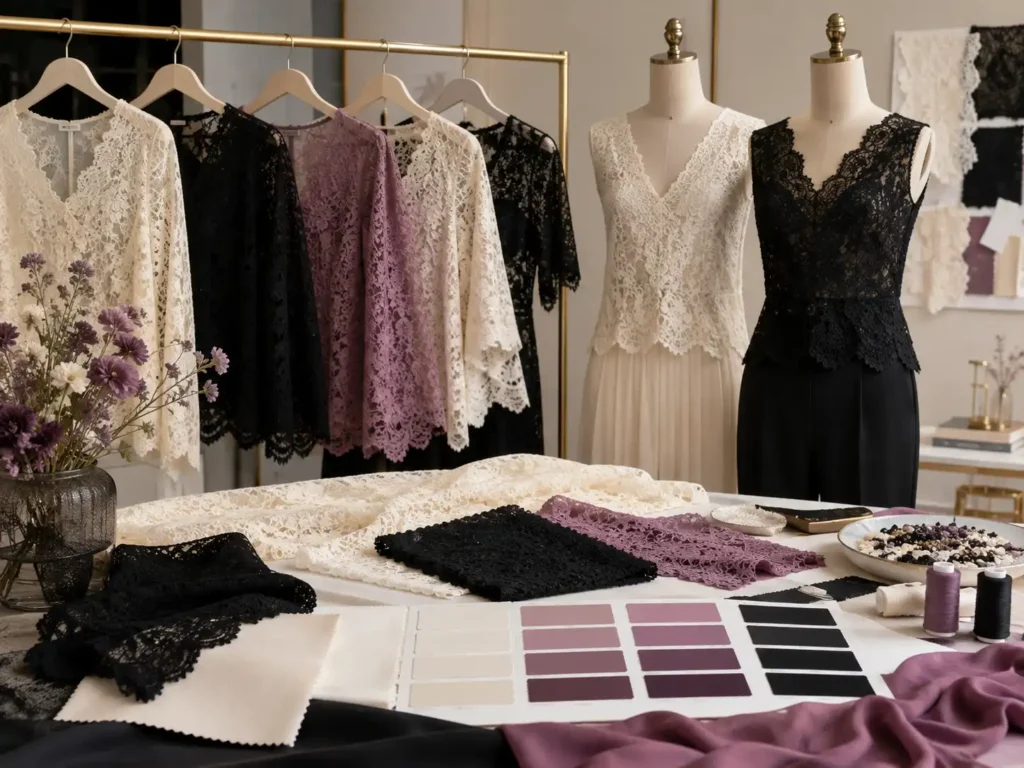
Trims can support a higher price when they improve both appearance and function. A better zipper, covered button, branded puller or carefully matched lace can make a garment feel more considered. Entry products normally use reliable standard components with accurate color matching. Mid-tier products may add upgraded sliders, custom-dyed elastics, decorative ties or branded metal details without requiring a completely different garment structure.
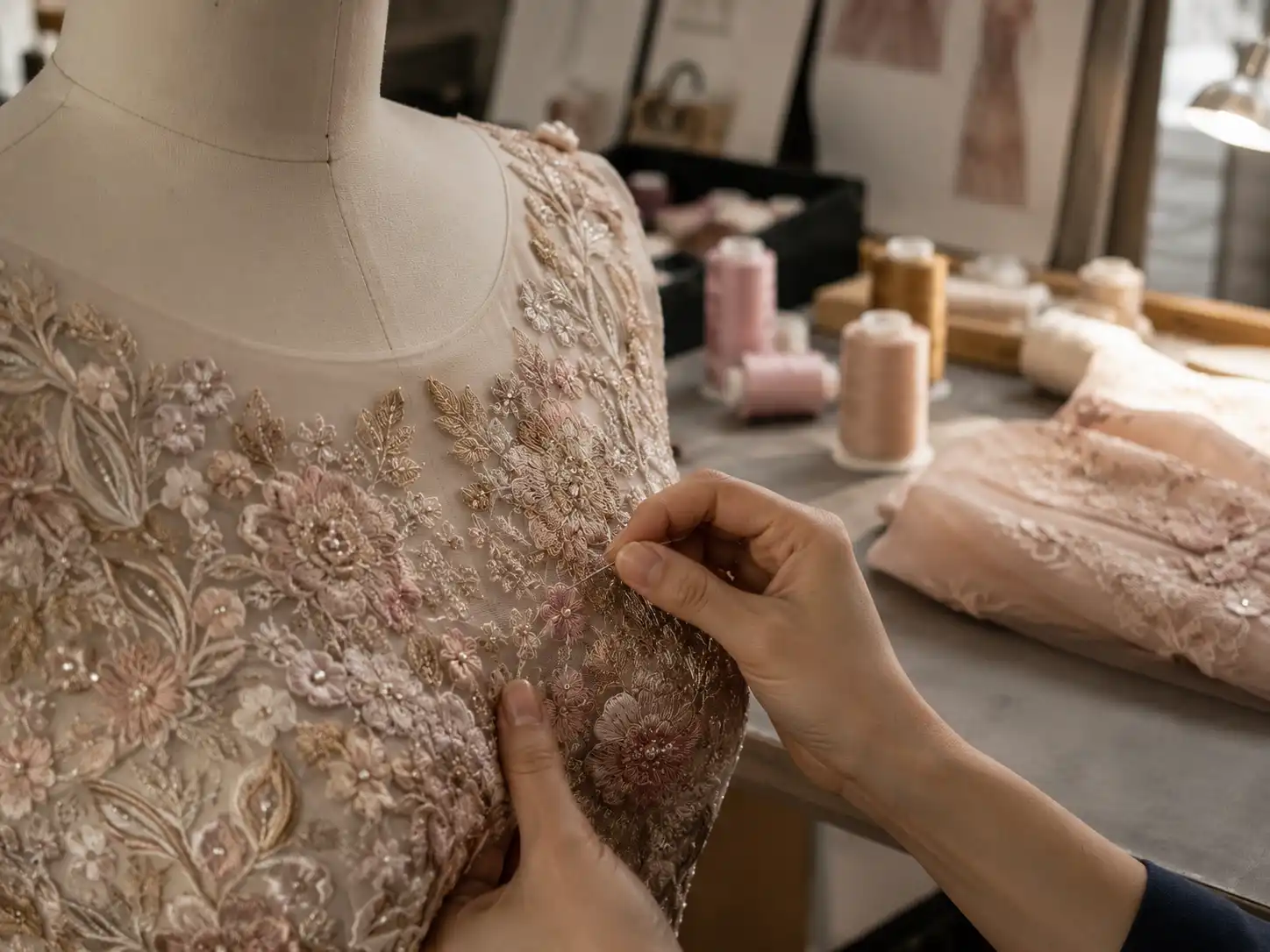
Premium trims should be selective because custom metalwork, embroidery, beading, crystal applications and specialist closures increase material cost, labor and quality risk quickly. They may also create minimum-order requirements, color inconsistency, skin irritation, breakage or damage during shipping. Before approval, the team should confirm that the detail is visible in photography, improves function or comfort, survives expected care and can be reproduced consistently if the style is reordered.
A component that looks impressive in a sample but delays production, pulls the fabric or causes returns does not create premium value. The best details are integrated into the design rather than attached as an afterthought. They work with the fabric, seam structure and wearing occasion, and they can be inspected using clear standards instead of relying on subjective judgment at the end of the production line.
Fit, Finish and Cost Control
Fit is one of the strongest reasons for a higher price, yet it is harder to display online than embellishment. Customers experience value through the position of the waist, stability of the neckline, comfort of the armhole, balance of the hem and the way a garment moves. Entry products still need dependable fit, consistent grading and a block that suits the fabric. Simpler construction does not justify twisting seams or a neckline that opens during wear.
Mid-tier fit may involve more shaping, adjustable elements, improved lining behavior or better control around the bust and waist. Premium fit can include internal support, additional fitting rounds or more carefully engineered balance. The finishing standard should progress as well, particularly around zippers, lining attachment, hems, pressing and garment protection. Premium fabrics such as satin, velvet and sequins often need packaging that prevents snagging, crushing or surface transfer.
Cost can often be reduced without weakening customer value by replacing a custom material with a visually comparable stock quality, simplifying hidden operations, reducing unnecessary panel count, consolidating trim colors, adjusting gathering volume or sharing one lining quality across several styles. Improving marker efficiency and using a tested block across related silhouettes can also protect margin. The best optimization removes invisible waste while preserving the shape, fit and details that customers actually notice.
How Should You Balance the Assortment?
Balance the assortment by giving each price tier a clear role in sales, margin and brand presentation. Entry products should not dominate only because they cost less, and premium products should not absorb excessive inventory because they look exciting. Style count, color count, size depth and order quantity should reflect expected demand, SKU economics and replenishment capability.
Style Count by Tier
There is no universal assortment ratio, but many commercial ranges benefit from placing the largest share of styles in the mid tier. That part of the range normally provides enough design interest to express the brand while remaining accessible to the main customer group. Entry styles create access and volume opportunities, while premium and hero pieces add occasion value, margin potential and a stronger visual identity.
For a 30-style dress collection, an illustrative planning model might contain seven entry styles, fifteen mid-tier styles, six premium styles and two hero styles. That represents roughly 23 percent entry, 50 percent mid, 20 percent premium and 7 percent hero. The figures are not a rule. A value-led retailer may require more opening-price depth, while a specialist occasionwear label may place more styles in premium corridors.
Style count should be separated from inventory commitment. Six premium styles may receive shallow opening quantities, while two proven entry products receive much deeper buys because they have broader repeat demand. The planning team should answer three different questions: how many styles belong in each tier, how many units should sit behind each style and how quickly a successful product can be replenished. Flexible repeat production allows more creative risk because the entire seasonal volume does not need to be placed at launch.
Volume and Margin Roles
Volume products usually have broad appeal, dependable fit, stable materials and manageable production risk. They are often recognizable rather than experimental. A well-cut mini dress, a versatile midi or a proven bodycon silhouette can carry deeper quantities because customers understand the product quickly and the production team can repeat it reliably across colors and sizes. These styles often become the base for replenishment and future seasonal updates.
Margin products are not always the most expensive. A mid-tier style with efficient construction and strong perceived value can produce a better commercial result than a complex premium dress. Percentage margin and cash margin should both be considered. A garment with a lower percentage on a higher realized price may contribute more cash per unit, but it may also sell more slowly and create greater inventory exposure.
A useful range includes traffic-driving styles, volume products, margin products, repeatable core garments and campaign pieces. One style may support more than one role, but its primary purpose should still be clear. Problems arise when every product is expected to deliver high volume, high margin, strong uniqueness and low risk at the same time. Those goals usually require different product structures and different order depths.
Colors, Sizes and SKU Depth
A style can look commercially attractive until color and size expansion turns it into an unmanageable number of SKUs. A dress offered in five colors and six sizes creates 30 combinations. If the total order is 600 units, the simple average is only 20 units per SKU before uneven size demand is considered. Fragmentation affects cutting efficiency, fabric minimums, trim matching, quality control and the amount of stock available in the combinations customers actually want.
Entry styles can often support more colors because the silhouette is familiar and the fabric is easier to source. Premium styles may work better in fewer, more deliberate colors that support the occasion and material. Size range also influences cost. Structured corset dresses, fitted jumpsuits and close-fitting occasionwear may require separate fit blocks, additional samples or different support methods across a broad size range.
Before approving the SKU plan, review units per style, color and size, fabric and trim minimums, historical size demand, replenishment lead time and expected sell-through by color. A narrower range with meaningful depth can outperform a broad assortment with shallow, fragmented inventory. The objective is not to offer the largest number of options; it is to keep the right options available long enough to capture demand without creating unnecessary markdown exposure.
Hero Products and Range Identity
Hero products give a collection its identity. They may use dramatic proportions, an unusual surface, stronger embellishment or more developed construction. Their purpose is often to attract attention rather than sell the greatest number of units. A memorable gown or highly visual mini dress can strengthen campaign photography, social engagement and editorial interest while making simpler commercial products feel part of a clear creative story.
These styles need disciplined buying because they may require longer sampling, specialist materials, lower sewing-line efficiency, additional inspection and more protective packaging. The opening quantity should reflect the risk. A hero style can be commercially useful with moderate sales when it improves the wider collection, but a deep inventory position can turn the same product into a serious markdown problem.
The most practical approach is to translate elements of a hero product into more accessible styles. A premium draped gown may inspire a mid-tier midi dress using the same color, neckline or gathering language. This creates cohesion without forcing every customer to purchase the most complex piece. It also allows the development work behind one statement item to influence a broader group of products, improving the return on creative and technical effort.
How Do You Test the Price Architecture?
Test the price architecture by comparing true product equivalents, validating cost and value through physical samples, confirming materials and construction for bulk production, and measuring customer response after launch. A ladder is reliable only when the garment delivers its promised fit, quality and appearance at repeatable production cost, not merely when the planning spreadsheet looks attractive.
Competitor Comparison
Competitor analysis should compare products that are genuinely equivalent. A $90 unlined slip dress is not a direct benchmark for a fully lined satin style with shaped seams and internal support simply because both appear under the same search term. Build a comparison sheet that records ticket price, common promotional price, fabric composition, lining, closure, construction, size range, customer comments, shipping terms and the overall brand position.
Customer reviews are particularly useful because they reveal where the price promise fails. Repeated comments about transparency, weak zippers, inaccurate color, poor bust fit or inconsistent sizing show which details matter in real use. A competitor may look strong in campaign photography but still leave an opportunity for a better-developed product at a similar ticket. Reviews should be read for patterns rather than isolated complaints.
Competitor pricing should inform the range rather than dictate it. A collection with stronger fit, better material and more reliable presentation may justify a higher position. A newer label with limited recognition may need to offer more value at the same price until customer trust grows. The most useful question is not who sells the cheapest similar-looking dress, but which product delivers the closest total experience to the one being planned.
Sample Validation
A target price remains theoretical until the garment has been sampled. The first physical sample shows whether the planned fabric, pattern and construction can achieve the intended value. Review the silhouette, bust-waist-hip balance, drape, opacity, lining behavior, neckline stability, closure performance, seam appearance, hem balance, movement, pressing and the way the garment photographs under strong lighting.
The team should examine both customer-facing quality and production repeatability. A sample may look excellent because a senior machinist spent extra time correcting it by hand. If that technique cannot be standardized across a bulk sewing line, the cost and quality assumptions are not secure. Fit samples, revised samples and pre-production samples have different jobs, and each should reduce uncertainty before the order moves forward.
Do not approve premium pricing based only on a substitute fabric. The final material can change stretch, drape, color, seam behavior and fit enough to alter the product completely. The pre-production sample should represent the approved fabric, trims, measurements, construction and packaging direction as closely as possible. A price tier is only credible when the sample that supports it is close to the garment the customer will actually receive.
Production-Ready Cost
A product is production-ready only when cost, materials, construction, quantity and timing have been confirmed together. A quotation based on a reference image is an estimate because fabric quality, consumption, lining, trim details, size ratio, color count, packaging and sewing operations are not yet fixed. Final costing should reflect the approved specification and the conditions under which the bulk order will actually be produced.
Fabric minimums can create hidden cost. A custom color may require more meters than one style consumes, leaving unused material or forcing the quantity upward. Specialist lace, custom hardware and printed fabric can create the same problem. Order quantity also affects sewing efficiency because setup, operator training and line balancing are spread across more units. Larger production can improve cost, but it should not be used to solve a weak demand forecast.
A realistic target is not the lowest quotation available. It is the cost at which the intended fabric, fit, workmanship and delivery standard can be reproduced consistently. Before approval, confirm final fabric width and consumption, lining use, trim prices, size and color ratios, sewing operations, testing needs, packaging, quality checkpoints, production calendar and freight assumptions. Missing one of these items can move a style into the wrong price tier after development has already consumed time and budget.
Post-Launch Measures
Sales should be reviewed by tier, category, color and style rather than only at total collection level. A range can achieve acceptable revenue while hiding serious weakness in one price band. Full-price sell-through, realized gross margin, cash margin per unit, markdown rate, return rate, conversion, weeks of stock, replenishment demand and review sentiment help show whether the customer accepted the relationship between price and product value.
| Measure | What It Reveals | Useful Review Level | Warning Sign |
| Full-price sell-through | Demand before discounting | Tier, style and color | Strong volume only after promotion |
| Cash margin per unit | Absolute contribution from each sale | Style and channel | High percentage margin but little cash |
| Return rate and reason | Fit, fabric and expectation gaps | Style, size and tier | Premium styles returning for quality issues |
| Weeks of stock | Inventory speed and exposure | SKU and tier | Deep stock in slow premium colors |
| Replenishment demand | Repeatability and missed demand | Core style and size | Frequent stock-outs in proven entry or mid styles |
| Review sentiment | Perceived value and product experience | Style and product family | Repeated complaints about opacity, fit or finish |
Metrics should be read together. A high sell-through rate may reflect underbuying, while a slower premium style may still contribute strong margin and campaign value.
Return reasons should be connected directly to the price ladder. If premium products receive repeated complaints about fabric, fit or finishing, the issue is not only quality control; it shows that the promised value is not credible. If entry products sell quickly but produce weak margin after returns and promotions, the opening price may be too low or the construction may be too costly.
Use the results to adjust the next collection. Some products should move to another tier, while others need a different fabric, simpler construction, fewer colors or stronger size allocation. Price architecture improves through repeated comparison between planned value and actual customer behavior. The objective is not to defend the original plan, but to understand where the range created trust, where it created friction and how the next development cycle can respond.
Plan the Product Before You Defend the Price
Entry, mid and premium price points work when commercial planning and product development are treated as one process. The ticket must connect to a realistic landed-cost ceiling, and every step upward must be supported by material, fit, construction, presentation or occasion value that customers can recognize. Assortment depth, color count, size ratios and promotional behavior then determine whether the ladder remains profitable after launch.
The most expensive mistake is not always an over-cost fabric or a difficult trim. It is developing a garment without agreeing on the role it should play, the price at which it is likely to sell and the product features that must survive cost optimization. When those decisions are made early, designers, merchandisers and manufacturers can solve the same problem instead of protecting separate assumptions.
For a new dress, occasionwear, jumpsuit, matching-set or seasonal womenswear program, Jinfeng Apparel can review the target retail corridor, required ex-factory cost, fabric direction, construction, quantity and sampling path before bulk production. Since 2008, the Guangdong-based manufacturing system has supported custom development, fabric and trim sourcing, sampling, quality control, private-label packaging and multi-batch production through six owned womenswear factories and more than ten long-term satellite production partners.
Send the design reference or tech pack, target market, expected retail price, planned quantity, size range, color direction and launch date to info@jinfengapparel.com, or contact Kelly by Phone or WhatsApp at +86 18929465598. The standard MOQ starts from 200 pieces per style and color, depending on fabric availability, color development, trims, construction complexity and the production schedule. A clear commercial brief allows the development team to provide more useful material options, cost feedback and a production-ready quotation.