Skip to content

Choosing between China and Turkey for dress manufacturing is not really about choosing “cheap” or “fast.” That is the beginner version of the question. The real question is sharper: which country can help your brand protect margin, launch on time, keep fit consistent, manage fabric risk, and scale a dress collection without turning every production season into a crisis? A sourcing manager who buys one simple knit dress may judge the two countries differently from a brand developing satin minis, mesh bodycon styles, chiffon maxis, corset dresses, and private-label packaging across several sales channels. That is why this comparison needs to look at the full production chain, not just a factory quotation.
Turkey is often stronger for Europe-focused brands that value near-market production, shorter regional logistics, and fast replenishment. China is often stronger for scalable custom dress manufacturing, broader fabric and trim access, multi-style development, complex construction, and long-term repeat production. The better choice depends on your market, dress category, order size, timeline, fabric risk, and quality expectations.
A UK brand selling weekly occasionwear drops may look at Turkey first because the region can support faster movement into European warehouses. A US or Australian brand building a 20-style seasonal collection may find China’s fabric ecosystem and production scale more practical. The costly mistake is not choosing China or Turkey. The costly mistake is choosing based on one price line without asking what happens after sampling, fitting, cutting, sewing, packing, inspection, shipping, and repeat orders.
What Is the Real Difference Between China and Turkey for Dress Manufacturing?
China and Turkey serve different sourcing needs. Turkey is close to Europe and can be attractive for speed-sensitive regional production. China offers deeper supply-chain scale, broader fabric and trim access, and stronger support for complex, multi-style dress collections. The real difference is not only country cost, but how each system handles development, risk, logistics, and repeat production.
Country strengths
Turkey’s strongest selling point is proximity to Europe. For brands selling mainly in the EU or UK, shorter regional transport can support quicker replenishment and lower exposure to long ocean freight cycles. This can be helpful for focused ranges, known silhouettes, and seasonal items where the fabric and fit have already been tested. Turkish suppliers are also familiar with European buyers, regional compliance expectations, and shorter communication loops for nearby markets.
China’s strength is the depth of the production ecosystem. Dress manufacturing is rarely just sewing. A satin slip dress may need shade control, lining selection, and needle-mark prevention. A mesh bodycon style needs stretch recovery, seam tension control, and accurate size grading. A corset dress needs inner structure, boning placement, and fit correction. China’s mature fabric, trim, sample, cutting, sewing, packing, and export network makes it easier to coordinate many product details at once, especially when a brand has more than one style in development.
Buyer mindset
Brands comparing China and Turkey are usually already past the basic research stage. They are not asking what dress manufacturing means. They are trying to decide where their next purchase order should go. The buyer may be a sourcing manager, product developer, DTC brand owner, boutique chain, buying office, or private-label fashion team. The hidden question is practical: which supplier ecosystem can turn my design direction into sellable garments with fewer surprises?
A serious buyer looks beyond country reputation. They compare whether the factory can understand the garment structure, source the right fabric, make a sample that fits, correct the sample without creating new problems, control bulk measurements, pack SKUs correctly, and repeat the same style in future seasons. This is why the choice between China and Turkey is less about nationalism and more about production fit.
Supplier system
A single small sewing workshop and a structured manufacturer are not comparable, even if they are in the same country. The supplier system matters more than the country label. A brand should ask whether the supplier has pattern capability, fabric sourcing depth, QC checkpoints, private-label packing support, repeat-order records, and the ability to manage several styles at the same time.
For example, a manufacturer with owned factories and long-term satellite production partners can allocate different dress types to suitable production units. Knit bodycon styles, chiffon maxis, satin party dresses, lace occasionwear, and matching sets do not all require the same production logic. The more varied the collection, the more important the supplier’s internal allocation and project management become.
| Comparison Point | China Often Fits | Turkey Often Fits | Buyer Check |
| Main advantage | Supply-chain depth, fabric choice, scale, multi-style development | Near-market access for Europe, shorter regional logistics | Does the supplier fit your product and sales market? |
| Best use case | Complex dress collections, private label, repeat production, larger SKU plans | Europe-focused replenishment, focused styles, shorter delivery window | Are you launching many styles or reacting to regional demand? |
| Risk area | Longer freight planning if using ocean shipping | Higher production cost may reduce margin | Does total landed cost still work? |
| Critical capability | Fabric sourcing, pattern correction, QC, packaging, scale | Fast communication, regional delivery, suitable textile access | Can the factory prove capability by dress type? |
| Decision logic | Best when product complexity and scale matter | Best when European speed matters most | Choose by collection map, not slogan |
Which Country Offers Better Cost for Dress Manufacturing?
China often offers stronger cost efficiency for larger or more complex dress programs because of supply-chain scale, fabric availability, and production specialization. Turkey can be cost-effective when European proximity, faster replenishment, and lower inventory exposure offset higher manufacturing cost. Buyers should compare total landed cost, not only FOB garment price, before choosing a country.
Factory price vs real cost
Many buyers start with one question: which country gives the lower unit price? That question is understandable, but it is too narrow. A dress price includes fabric, lining, trims, labor, construction difficulty, cutting waste, size range, color split, finishing, inspection, and packing. Two factories can quote the same sketch differently because one assumes a lighter fabric, one includes lining, one includes branded packing, and one ignores bulk fabric risk.
China may become more cost-efficient when the order has multiple styles using related fabrics, shared trims, or repeat production potential. Fabric sourcing can be consolidated, patterns can be standardized, and production can be allocated by construction type. Turkey may be cost-effective for Europe when faster delivery reduces missed sales, stockouts, or over-ordering. In other words, the cheaper option is not always the one with the lowest sewing price.
What changes the price
The biggest cost drivers in dress manufacturing are often inside the product itself. A basic unlined knit mini dress is a very different job from a lined satin corset dress or a sequin party dress. Chiffon can require careful cutting and narrow hems. Satin needs surface control. Mesh requires tension management. Lace may need placement planning. Sequins slow down cutting and sewing. Corset structures add inner components and more fitting work.
Order structure also changes cost. A 2,000-piece order in one color is not the same as 2,000 pieces split across 8 colors and 6 sizes. More colors create more fabric leftovers, more trim matching, more cutting batches, and more packing risk. A small color split can make a quote look expensive even when the factory is not overcharging. Professional buyers should calculate price by style, color, size ratio, fabric MOQ, and packing requirements, not by total quantity alone.
Total landed cost
Total landed cost is the number that matters to your margin. It includes product cost, sample cost, fabric booking, inspection, freight, duties, customs, inland delivery, warehouse delay, rework risk, and emergency air freight if the calendar fails. A factory can look cheap at quotation stage and become expensive after two failed samples, late fabric, or a shipment that misses the launch window.
A practical sourcing team should build a landed-cost sheet before confirming production. The sheet does not need to be complicated, but it must separate production price from risk cost. If Turkey costs more per garment but protects a European launch date, it may be reasonable. If China takes longer to ship but gives better fabric control, bulk consistency, and margin, it may be the stronger business choice.
| Cost Item | Typical Planning Question | How It Affects China | How It Affects Turkey |
| Garment unit cost | Does the quote include fabric, lining, trims, finishing, and packing? | Often competitive when scale and fabric sourcing are aligned | May be higher, but may support faster European replenishment |
| Sample and revision cost | How many fit rounds are needed before PP approval? | Efficient when multiple styles use one development system | Efficient for nearby buyers if communication and fitting are fast |
| Fabric MOQ | Is the fabric stock, custom dyed, printed, or special ordered? | Wide sourcing range, but special fabrics still have MOQ | Depends on local textile access and supplier network |
| Freight and duty | Where is the final warehouse? | Needs planned ocean or air freight strategy | Often stronger for EU/UK road or regional delivery |
| Risk cost | What happens if fabric, fit, or inspection fails? | Controlled by supplier system and QC discipline | Controlled by supplier capability and proximity |
Which Country Is Faster for Sampling and Bulk Production?
Turkey can be faster for European delivery because of shorter regional logistics. China may be faster in development execution when a dress collection needs multiple fabrics, trims, samples, and production units working together. Real speed is not only shipping time; it includes tech pack clarity, fabric confirmation, sample approval, production scheduling, QC, packing, and export coordination.
Sampling speed
Sampling speed starts with information quality. If a buyer sends a full tech pack, measurement chart, fabric direction, trim details, size range, color plan, and target quantity, a factory can move quickly. If the buyer sends only one front-view image and asks for an exact quote, the first week may be spent clarifying details rather than making a sample.
Turkey can be convenient for European brands when the buyer wants quicker regional sample exchange or easier physical review. China can be efficient when the supplier has an integrated development team and access to many fabric and trim options. The most common sampling delays are not country-specific. They come from unclear fabric, missing back view, changed measurements, late label files, unconfirmed color standards, and subjective fit comments that do not include actual numbers.
Bulk lead time
Bulk production speed depends on order readiness. A factory cannot produce quickly if fabric is not booked, colors are not approved, trims are missing, or the PP sample has not been signed off. For dresses, one small delay can affect the whole schedule because cutting cannot start safely until fabric, pattern, and size grading are stable.
China is often strong when a brand has many styles in one collection because different product types can be organized across suitable production units. Turkey can be strong when the product is focused, the fabric is ready, and the market is nearby. Buyers should not only ask, “How many days for production?” They should ask, “What must be approved before the clock starts?” This question prevents unrealistic calendars.
Shipping reality
Shipping time can make Turkey look faster for Europe, especially when road freight is available. China requires more calendar discipline when using ocean shipping to Europe or North America. Air freight can shorten delivery, but it may damage margin if it becomes the default solution for poor planning. For fashion brands, the best shipping strategy is decided before production, not after the goods are finished.
A useful production calendar separates five stages: development, sample revision, PP approval, bulk production, and freight. If one country saves 10 days in shipping but loses 20 days in fabric sourcing, it is not faster in real business terms. If another country ships farther but controls sample and production approval more smoothly, it may deliver more predictably. Speed should be measured from final design confirmation to warehouse-ready goods, not from factory door to destination only.
| Stage | Practical Planning Range | Common Delay Cause | Buyer Action |
| Tech pack review | 1-5 working days after complete files | Missing measurements, unclear fabric, no quantity plan | Send tech pack, reference photos, size chart, and target volume |
| Sample development | 7-20 working days depending on fabric and structure | Fabric not available, unclear lining or trim details | Confirm fabric direction and construction before sample |
| Fit revision | 3-10 working days per round | Subjective comments without measurements | Give measured comments by bust, waist, hip, length, strap, and neckline |
| Bulk production | Often 20-45 days depending on order and factory schedule | Late PP approval, color split changes, trim delay | Freeze details before cutting |
| Freight | Turkey to Europe is usually shorter; China needs planned ocean or air routing | Booking delay, customs documents, launch urgency | Choose route based on margin and launch calendar |
Which Country Is Better for Fabric and Dress Complexity?
China is often stronger for complex dress manufacturing because of broader fabric, trim, and production ecosystems. Turkey can be strong for selected woven, knit, denim, and Europe-focused fashion programs. For satin, chiffon, lace, mesh, sequins, corset structures, and multi-style dress collections, buyers should compare material sourcing, pattern capability, and factory specialization.
Fabric behavior
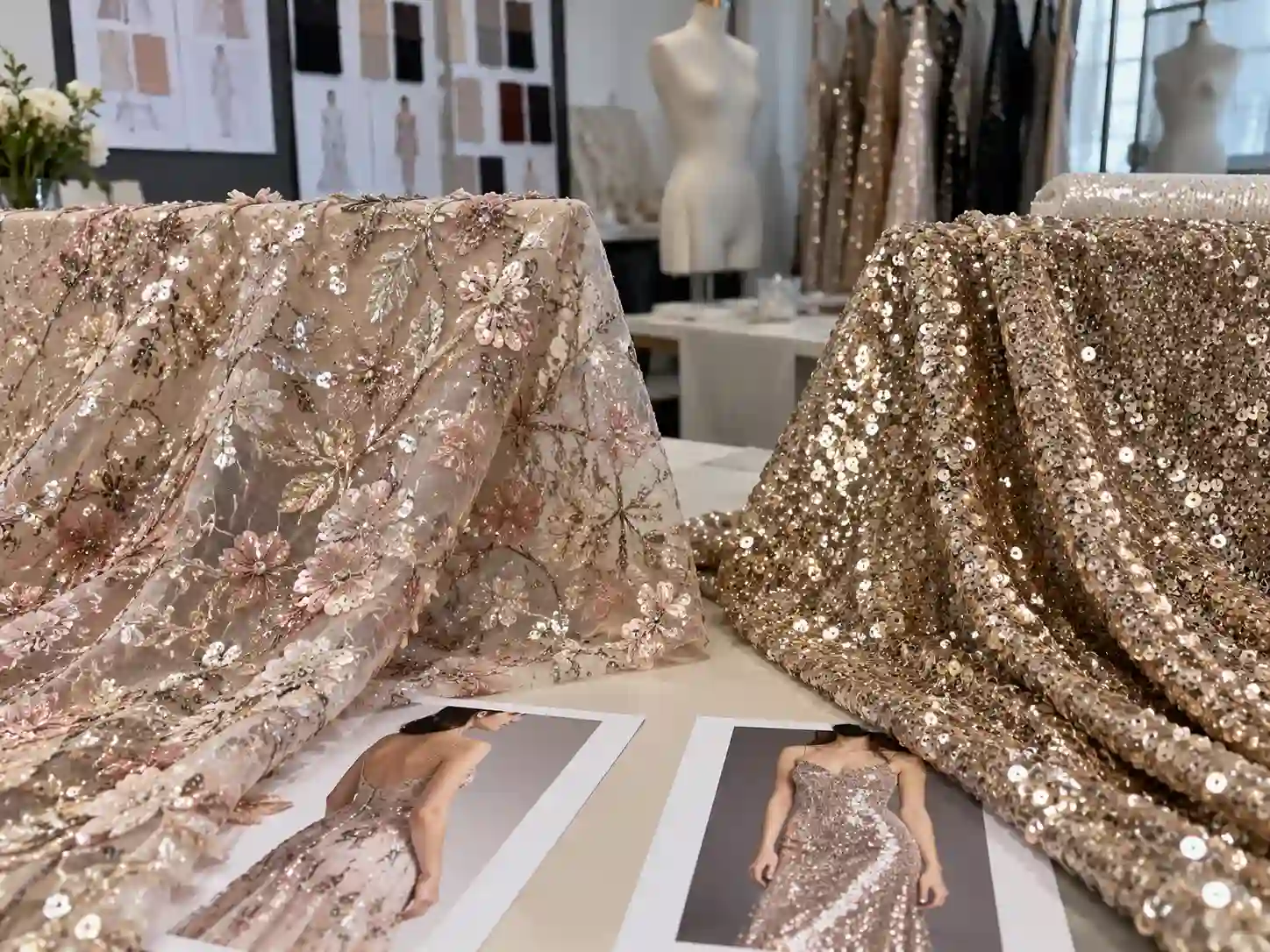
Fabric behavior decides whether a dress can move from sample to bulk smoothly. Satin can look luxurious but show needle marks, shade variation, and pressing marks. Chiffon is light and feminine but can twist, slip, and expose uneven hems. Mesh can stretch during sewing or become uncomfortable if lining is poorly matched. Lace can look premium when placement is controlled, but cheap when seams cut through important motifs. Sequins add shine but slow down cutting and sewing.
China’s broader fabric market can be helpful when a brand needs different options by weight, stretch, finish, and price point. Turkey can also offer strong textiles, but buyers should check whether the exact fabric category, color, width, and repeat availability fit the order. A sample made from a nice available fabric is not enough. The question is whether the same fabric can be repeated in bulk, across colors, and across future reorder cycles.
Complex structures
Complex dress structures require more than a sewing line. Bodycon dresses need stretch recovery, balanced side seams, and size grading that respects the body. Corset dresses need bust support, boning position, lining control, zipper strength, and comfort. Occasion dresses need clean finishing, stable hems, and a photo-ready shape. These garments fail quickly when a supplier treats them as simple dresses.
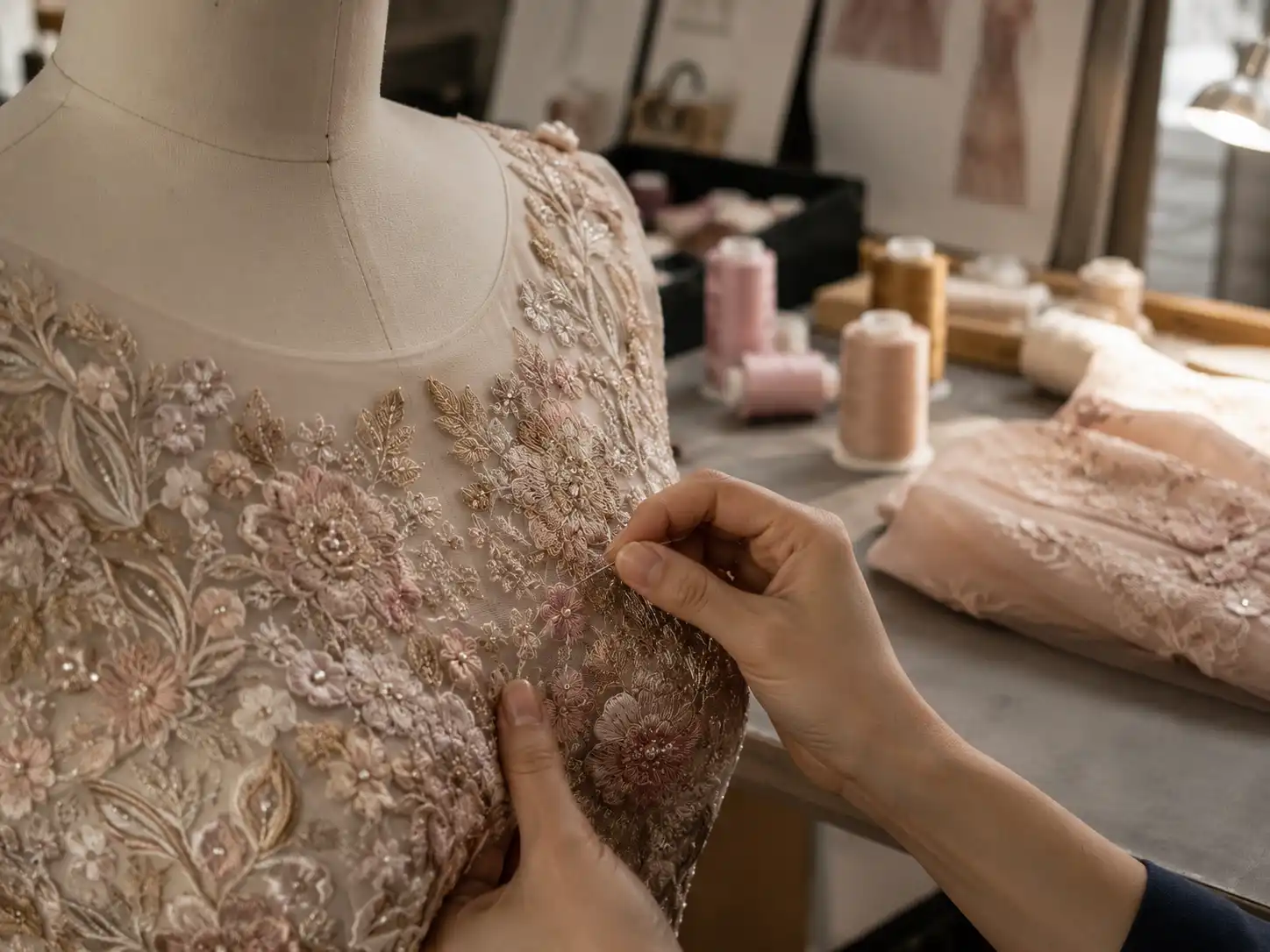
A professional factory should be able to explain construction risk before sampling. For example, it may recommend a heavier satin for a structured mini dress, a different mesh for a ruched bodycon style, or a lining change for a chiffon maxi. This is the kind of practical judgment buyers should value. The factory that asks the right questions at the beginning often saves the buyer from expensive revisions later.
Collection variety
A one-style order is easy to discuss. A real fashion collection is more complicated. A brand may develop satin minis, lace midis, mesh club dresses, chiffon vacation dresses, and matching sets in one launch. The supplier must coordinate materials, construction methods, size grading, sample comments, bulk scheduling, labeling, and packing across several product types.
China is often attractive for this type of multi-style development because the production ecosystem can support many related processes. Turkey may be suitable when the collection is more focused or when European proximity is the priority. The right approach is to map the collection by complexity. Simple styles, medium-complexity styles, and high-risk styles should not be judged with the same sourcing logic.
| Dress / Fabric Type | Main Production Risk | What Buyers Should Confirm | Supplier Capability Needed |
| Satin dress | Needle marks, shade variation, seam puckering | Fabric weight, lining, pressing method, bulk shade control | Clean sewing, surface handling, strong QC |
| Chiffon maxi | Twisted seams, uneven hem, transparency | Lining length, hem method, cutting direction | Careful cutting and lightweight fabric handling |
| Mesh bodycon | Stretch distortion, poor recovery, uncomfortable lining | Stretch direction, size grading, seam tension | Knit/stretch production experience |
| Lace occasion dress | Poor motif placement, bulky seams | Lace repeat, placement plan, seam finish | Pattern planning and delicate sewing |
| Sequin party dress | Broken needles, rough inside, sequin loss | Backing, seam allowance, lining comfort | Special fabric handling and inspection |
| Corset dress | Poor bust support, zipper stress, fit failure | Boning, cup position, lining, measurement tolerance | Pattern correction and structured garment experience |
How Do Quality Control and Production Scale Compare?
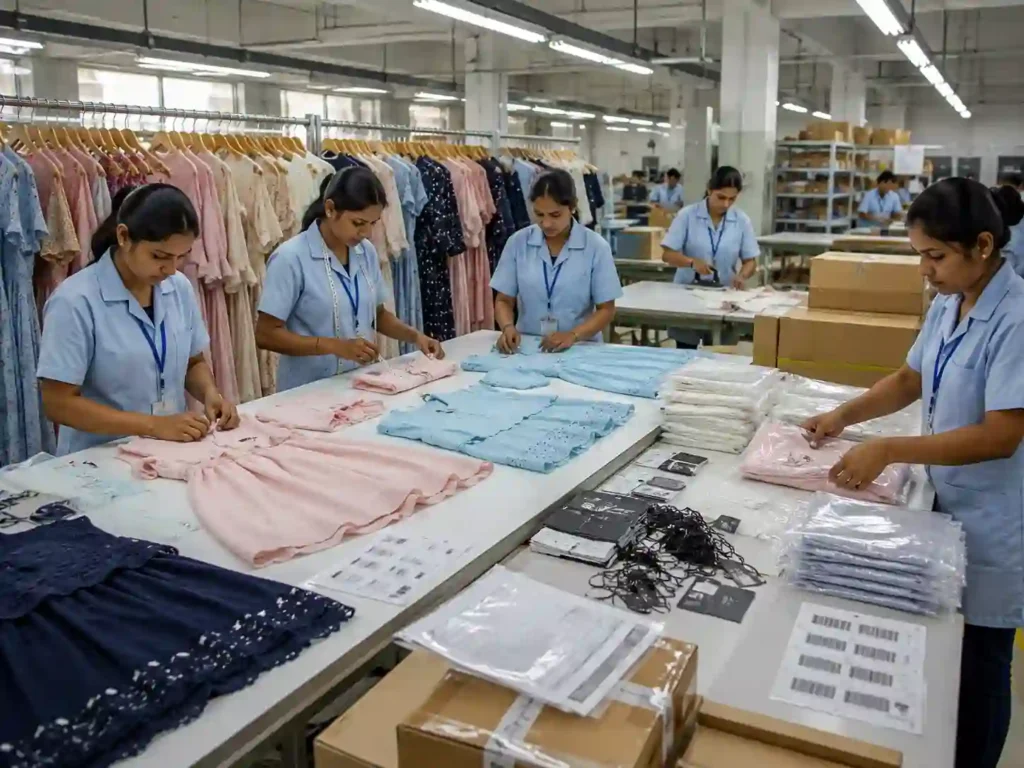
Quality control depends more on the supplier system than the country name. China has strong scalable production networks, while Turkey may offer closer regional oversight for European buyers. For dress brands, the key is whether the supplier controls fabric inspection, cutting, sewing, measurements, fit, finishing, packing, final inspection, and repeat-order records.
Dress QC risks
Dress quality is sensitive because small defects are visible on the body and in photos. A T-shirt can hide minor variation more easily than a satin evening dress, mesh bodycon dress, or corset mini. For dresses, the buyer must control fit, drape, symmetry, lining, zipper position, seam tension, hem balance, color consistency, embellishment security, and packing presentation.
The most common dress quality problems include measurement deviation, twisted side seams, uneven hems, zipper waves, lining longer than shell fabric, puckering on satin, mesh distortion, lace mismatch, sequin shedding, color difference between sample and bulk, and poor pressing. None of these problems are solved by choosing a country alone. They are solved by supplier discipline: clear tolerances, approved PP samples, in-line inspection, and final garment checks.
Measurement control
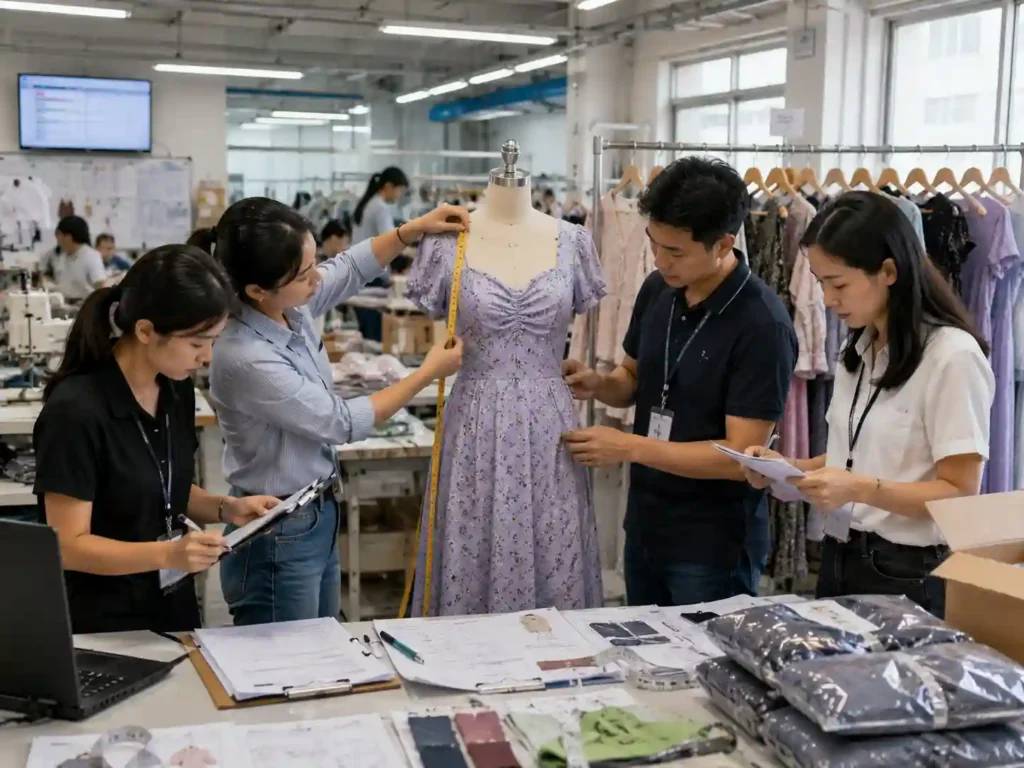
Fit should be checked by both appearance and numbers. A sample can look good on one model but fail in size grading. A garment can hit measurements but still look wrong if the fabric stretches differently in bulk. For fitted dresses, important points include bust, waist, hip, total length, strap length, neckline drop, armhole, sleeve opening, slit height, and back rise. For woven dresses, ease allowance and hem balance matter just as much as width measurements.
Measurement control should not happen only at final inspection. It should appear at pattern stage, sample stage, size grading, PP sample approval, cutting, in-line sewing, and final inspection. When a buyer complains about bulk fit after production, the root cause often happened much earlier: unstable fabric, poor grading rules, unclear tolerance, or a sample approved without measured comments.
Scale and SKU control
Scale creates a different type of risk. A small 300-piece order may be easy to track manually. A 20-style collection with 5 sizes, 4 colors, private labels, barcodes, and separate carton ratios needs a system. SKU mistakes can cause warehouse delays, wrong online listings, and customer complaints. For ecommerce brands, packing accuracy is part of product quality.
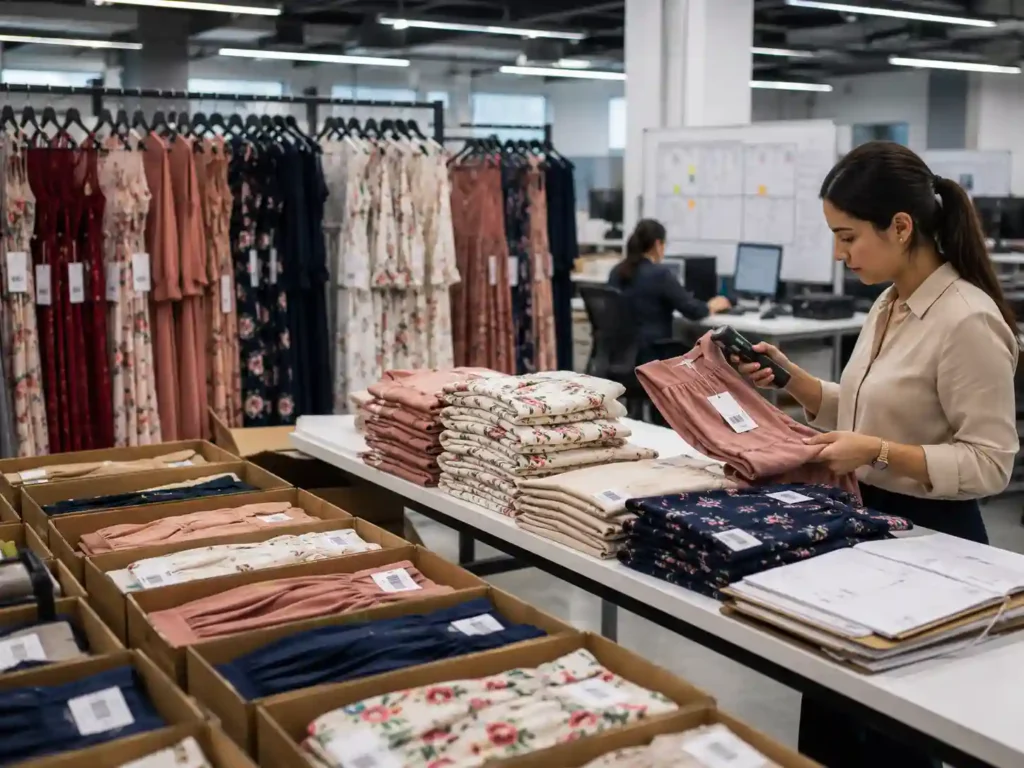
China can be strong for scale because larger production networks can support multi-style and multi-batch orders when properly managed. Turkey may be easier for smaller Europe-focused drops where regional oversight matters. In both cases, the supplier should be able to manage color lots, size ratios, barcode stickers, carton marks, polybag warnings, and inspection records. A brand should not treat packing as the last small step. It is the bridge between factory quality and retail readiness.
Repeat-order stability
Repeat orders are where a good supplier proves its value. The first order shows whether the factory can produce. The second and third orders show whether the factory can remember. Repeat production should use the previous pattern, measurement record, fabric reference, color record, trim details, sewing notes, packing method, and QC feedback. Without these records, every reorder becomes a new risk.
For dress brands, repeat-order consistency protects customer trust. If a bestseller comes back with a different fit, different hand feel, or different length, customers notice. A structured supplier helps reduce this problem by keeping development and production data. This is especially important for seasonal dress collections, bestsellers, and long-term private-label programs where the brand wants stable quality across multiple drops.
Which Country Should Your Dress Brand Choose?
Choose Turkey if your main market is Europe, speed is critical, styles are focused, and near-market replenishment protects margin. Choose China if your brand needs scalable custom dress manufacturing, broader fabric options, complex construction, multi-style development, private-label packaging, and repeat production. The best country is the one that fits your product, market, and operating model.
When Turkey fits
Turkey can be a strong choice for European brands with focused collections, known fabrics, and urgent replenishment needs. If the product is relatively stable and the brand wants shorter regional transport into Europe, Turkey may reduce calendar pressure. This is especially useful when the sales window is short and the brand wants to avoid holding too much stock too early.
Turkey is not automatically the best option for every European dress brand. If the collection depends on several fabric types, special trims, complex partywear construction, or large multi-color scale, the buyer should still test the supplier’s product depth. Near-market speed is valuable only when the factory can deliver the right fit, fabric, finishing, and packing standard. A fast delivery of the wrong product is not a sourcing advantage.
When China fits
China is often the stronger starting point when the brand needs a broader supply-chain system. This includes multi-style dress development, fabric sourcing, trim development, sample correction, structured production, private-label packing, and repeat-order management. China is especially practical for brands working with satin, mesh, lace, chiffon, sequins, corset structures, bodycon fits, resort dresses, occasionwear, jumpsuits, and matching sets.
For US, Australian, Canadian, and global ecommerce brands, China can offer strong long-term value when production is planned properly. The buyer can build a seasonal calendar, approve samples earlier, consolidate shipments, and use the supplier’s material network to keep product development moving. The trade-off is that shipping must be planned with discipline. China rewards organized buyers; it punishes last-minute decisions.
Market decision
A US brand should usually focus on development capability, margin, export handling, and scalable production. A UK or EU brand should compare China and Turkey more closely because regional speed may matter. An Australian brand should look at fabric, seasonal timing, and export reliability. A private-label brand should also check whether the supplier can manage labels, hangtags, barcodes, polybags, carton marks, and repeat-order records.
The best method is to split the collection into sourcing groups. Put simple, urgent European replenishment styles in one group. Put complex satin, mesh, lace, or corset styles in another. Put repeat bestsellers in a third. Then compare suppliers by group. A brand does not need to force one country to handle every product if the business model allows a mixed sourcing strategy. But for many mid-to-large dress brands, a strong China partner can become the main development and production base.
| Brand Situation | Better Starting Point | Why | Key Question |
| EU brand with urgent repeat styles | Turkey | Regional speed may protect the launch window | Is the style already proven and technically simple? |
| US brand with multi-style seasonal collection | China | Supply-chain depth and scale support development | Can the supplier manage fabric, fit, QC, and packing together? |
| UK occasionwear brand with complex dresses | Compare both | Turkey offers proximity; China may offer stronger construction depth | Which supplier has proven experience with the exact dress type? |
| Australian resort or partywear brand | China | Fabric range and custom development can support seasonal programs | Is the calendar planned early enough for freight? |
| Private-label ecommerce brand | China | Labels, barcodes, polybags, carton marks, and repeat records matter | Can the supplier support retail-ready packing? |
| Simple European replenishment order | Turkey | Shorter regional movement may reduce stockout risk | Does the higher unit cost still protect margin? |
Final sourcing note
China vs Turkey for dress manufacturing is not a contest with one permanent winner. It is a matching exercise. Turkey can be smart for Europe-focused speed and replenishment. China can be stronger for broad fabric sourcing, complex dress development, multi-style production, private-label packaging, and repeat-order stability. The right decision starts with your collection map, not with a country stereotype.
Before choosing a supplier, prepare your tech pack, reference photos, original sample if available, size range, fabric direction, target quantity, color plan, packaging needs, and launch date. A serious manufacturer will review these details and tell you where the risks are before production starts. That kind of early honesty is often more valuable than a low first quote.
For brands comparing China and Turkey for their next dress collection, Jinfeng Apparel can review custom dress projects from the perspective of fabric sourcing, pattern development, sampling, bulk production, quality control, private-label packing, and export coordination. Send your project details to Kelly and the team for a manufacturing review based on product category, order structure, quality target, and delivery plan.