Skip to content

A fashion collection rarely falls behind because one person works too slowly. Development time is usually lost between decisions: waiting for a pattern update, sewing another sample, arranging international delivery, collecting comments from several departments, and discovering that two reviewers approved different file versions. A minor neckline correction can become a ten-day delay when every change requires another physical garment.
3D sampling changes where those decisions happen. Instead of turning every design option into fabric immediately, the development team can examine silhouette, proportion, pattern balance, color, print placement, and selected fit issues in a digital garment first.
3D sampling reduces apparel development time by moving fit, proportion, color, print, and construction decisions into a shared digital environment before every option becomes a sewn sample. It shortens waiting between design, pattern, sourcing, and approval teams, cuts avoidable courier cycles, and allows more issues to be corrected before fabric is cut, while physical samples remain essential for final material, workmanship, comfort, and pre-production approval.
The real value is not simply creating a realistic-looking dress on a screen. The value comes from making earlier decisions with better information and sending fewer unresolved questions into the sample room.
Imagine a satin midi dress scheduled for a seasonal launch. The first physical sample arrives with the wrong waist position. The second corrects the waist but reveals excessive fabric at the back. The third fixes the fit, but the print placement has already been approved on an outdated pattern. What looked like three small corrections has now consumed several weeks. A disciplined 3D workflow aims to identify those linked problems before the first parcel is ever shipped.
What Is 3D Sampling?
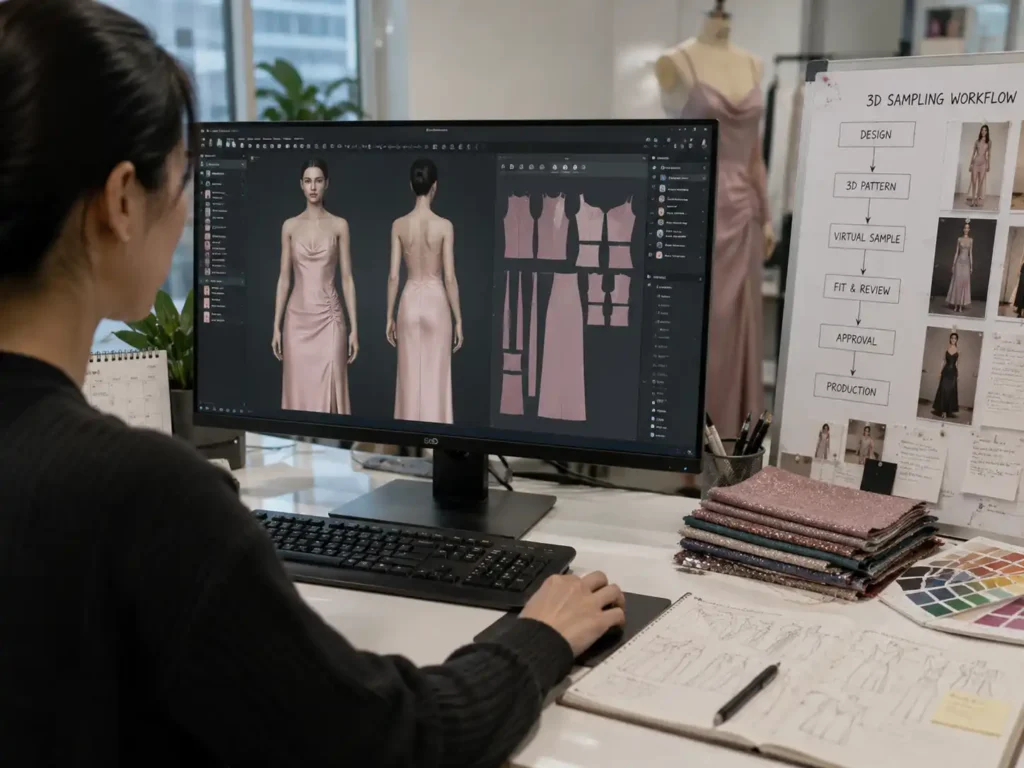
3D sampling is a digital garment-development process that combines two-dimensional patterns, body measurements, fabric behavior, construction details, colors, prints, and trims in a simulated garment. It allows design, technical, sourcing, and manufacturing teams to review selected issues before every version is cut and sewn, helping reduce avoidable physical samples without replacing the material and workmanship checks required before bulk production.
What a 3D Sample Contains
A useful 3D sample is more than a polished image of a dress on a digital model. It begins with actual or development-stage pattern pieces. Front panels, back panels, sleeves, collars, waistbands, facings, linings, pockets, and other components are digitally joined using virtual seams. The software then simulates how those pieces behave around an avatar.
The pattern is the technical foundation. When the waist is raised, the neckline is reshaped, or the skirt sweep is reduced, the corresponding pattern pieces should change. Moving the garment visually without updating the underlying pattern may create an attractive image, but it does not create reliable production information.
A production-oriented 3D garment may also include:
- Base-size measurements
- Avatar dimensions and posture
- Fabric weight and thickness
- Stretch direction and recovery
- Drape and bending behavior
- Seams, topstitching, pleats, and gathering
- Zippers, buttons, hooks, cups, or selected trims
- Colorways, prints, embroidery, and logo placement
- Lining, interfacing, or supporting layers
- Version and approval information
Not every detail must be completed in the first digital version. Early reviews may focus on silhouette and proportion, while later versions carry more accurate material and construction information. The team should always know which decisions are ready for approval and which remain provisional.
3D Sample or Render?
A render primarily communicates appearance. It can be highly realistic, but realism alone does not prove that the garment can be manufactured, fitted, costed, or repeated consistently in bulk.
A genuine 3D development sample should be connected to pattern geometry and garment construction. If the neckline becomes deeper, the facing, lining, strap location, and bust coverage may also need revision. If more fullness is added to a skirt, fabric consumption, gathering ratios, hem treatment, and seam handling may change.
This distinction matters in fast fashion because teams often work under strong launch pressure. A visually approved design can still fail later if:
- The seam lengths do not match
- The fabric setting is unrealistic
- The pattern lacks sufficient ease
- The trim cannot support the construction
- The style exceeds the target cost
- The design requires a sewing method unsuitable for bulk production
- The digital version and production pattern are not synchronized
The right review therefore asks two questions. Does the garment look like the intended design? Can the approved design be converted into a stable, repeatable product? A digital image answers the first question. A controlled 3D development process helps answer both.
Files and Inputs
The accuracy of the digital sample depends on the information used to build it. A clear tech pack remains one of the most valuable starting documents because it turns a visual concept into measurable requirements.
Useful inputs include:
- Technical flats
- Measurement specifications
- Existing pattern files
- Fabric composition and weight
- Stretch and recovery data
- Trims and hardware details
- Stitching and seam instructions
- Print, embroidery, or embellishment artwork
- Reference photographs
- Original garments
- Previous fit comments
- Brand size standards
- Target-market body data
A project can begin with less information. A reference image may be enough to discuss the general direction of a satin mini dress, but it is not enough to approve fit, sewing, or final cost. Missing details must eventually become specific decisions.
Experienced development teams separate visual exploration from technical approval. They may use provisional fabrics and generic avatars to compare early design options, but they do not treat those early simulations as final evidence. The greater the risk of the decision, the stronger the input must be. Print placement may be explored with basic information. Fit approval requires accurate pattern, measurement, avatar, and fabric data.
Patterns and Digital Development
Brands do not always need a completely finished pattern before starting 3D sampling. There are two common development routes.
The first route starts with an established pattern. This is common when a brand is updating a proven dress block, changing the neckline of a previous bestseller, introducing new sleeves, or creating additional colorways. Because the base pattern has already been physically validated, digital review can begin from a stronger technical position.
The second route develops the pattern and 3D garment together. A pattern maker creates the initial pattern from a tech pack, sketch, sample, size chart, or reference image. The garment is then simulated, reviewed, and corrected. The revised pattern produces a new digital result, and the process continues until the style is ready for physical sampling.
Neither route removes the need for pattern-making expertise. Software can show tension, drape, and balance, but it does not decide what the fit should feel like. A fitted party dress, relaxed resort dress, structured evening dress, and stretch bodycon dress require different ease, support, and construction decisions. The most reliable process keeps design, pattern, material, and production decisions connected from the beginning.
How Does 3D Sampling Save Time?
3D sampling saves time by moving selected design, pattern, fit, color, and print decisions ahead of physical sample making. It reduces waiting between departments, allows several reviewers to examine the same controlled version, and can remove complete sew-ship-review-revise cycles. The biggest gains come from preventing unresolved instructions and obvious pattern problems from entering the sample room.
Shorter Sample Loops
Traditional apparel development contains more waiting than many launch calendars show. A physical sample may require pattern preparation, fabric availability, cutting, sewing, finishing, measurement, photography, packing, delivery, internal fitting, comment consolidation, and another revision. The sewing itself may take only a few days, but the complete decision cycle can take much longer.
3D sampling helps by filtering questions before fabric is cut. Teams can evaluate neckline shape, sleeve volume, skirt length, waist position, print scale, color balance, and selected pattern issues digitally. This allows the sample room to focus on garments that have already passed an initial technical and visual review.
The time saving is usually not one dramatic shortcut. It comes from removing several smaller delays:
- Fewer exploratory physical samples
- Fewer international shipments
- Faster comparison of design options
- Earlier detection of conflicting instructions
- Less time spent recreating old revisions
- Better-prepared first physical samples
- Fewer late changes before PP approval
The following ranges are practical planning examples rather than guaranteed lead times. Actual schedules depend on complexity, fabric readiness, factory workload, courier service, and approval speed.
| Development Activity | Common Physical Workflow Range | 3D-Assisted Opportunity |
| Initial pattern preparation | 2-5 working days | Similar, but reviewed before sewing |
| First sample sewing and finishing | 3-10 working days | Begins after digital issues are reduced |
| International courier delivery | 2-7 calendar days | Removed for digital-only review rounds |
| Internal review and comment consolidation | 1-5 working days | Often completed through one shared review |
| Pattern correction | 1-4 working days | Similar, with faster visual verification |
| Revised sample sewing | 3-10 working days | May be avoided for selected changes |
| Second courier cycle | 2-7 calendar days | May be avoided completely |
Illustrative planning ranges; actual lead times vary by style, material readiness, workload, and approval speed.
Faster Design Changes
Digital review is particularly effective when one design change affects several technical areas. A request to lower the front neckline by two centimeters may also affect bust coverage, strap position, facing depth, lining shape, seam length, center-front balance, closure position, and underarm security.
In a traditional email process, each department may interpret the change differently. The designer comments on appearance, the pattern maker adjusts the outer fabric, the lining is overlooked, and the next physical sample reveals a new problem.
In a connected 3D workflow, the revised pattern can be simulated soon after the change. The team can compare the original and revised versions while the reason for the correction is still clear.
Similar benefits apply to raising or lowering a waist seam, changing skirt volume, adjusting ruching density, moving a slit, reducing sleeve fullness, reshaping an armhole, repositioning a print, changing a waistband, or modifying dress length across a size range. The speed does not come from unlimited revisions. It comes from making each revision visible, measurable, and connected to its technical consequences.
Remote Review
International development often loses several days between physical completion and meaningful feedback. A parcel must leave the factory, clear transit, reach the brand, be located internally, fitted at an available time, and discussed by several people.
A digital garment can be reviewed while the production team is still preparing the next stage. Designers, technical designers, merchandisers, sourcing managers, and manufacturers can examine the same version without waiting for a physical package.
Remote review works particularly well for overall silhouette, dress and sleeve length, waistline position, seam placement, print scale, artwork position, colorway selection, collection coordination, basic pattern balance, and construction-option comparison.
Remote access, however, does not guarantee fast decisions. A digital file shared with twelve people can produce twelve conflicting sets of comments. Efficient teams define who may comment, who combines comments, who makes the final decision, which areas are under review, when the file is locked, and what requires physical confirmation. The workflow must reduce communication noise rather than simply move it online.
Realistic Time Savings
There is no responsible universal claim for how much time 3D sampling saves. The result varies widely by product type and organizational discipline.
The strongest gains are usually found when a brand uses established fit blocks, pattern files are accurate, fabrics have reliable digital data, the product contains several colorways or prints, the approval team responds quickly, version control is strong, the manufacturer links 3D revisions to production patterns, and physical sampling is reserved for material and construction questions.
The benefit is smaller when every style starts from an untested fit, the fabric is highly unusual, internal approvals take several days, digital and physical patterns are maintained separately, comments are vague or contradictory, major design changes continue after each approval, or the product requires extensive handwork or structural support.
Development speed should therefore be measured by total calendar time, not by the speed of the software. A digital garment completed in one day provides little value if it waits six days for internal comments. The most useful performance measures are the number of complete development loops removed, the quality of the first physical sample, and the amount of correction still required at the PP stage.
Which Sample Rounds Can 3D Reduce?
3D sampling can reduce early visual prototypes, design-revision samples, colorway samples, print-placement samples, and some fit-correction rounds. It should not automatically replace samples used to confirm actual fabric behavior, internal support, comfort, workmanship, closures, embellishments, pressing, or bulk-production readiness. The goal is to remove low-value repetition while protecting the physical evidence needed for quality control.
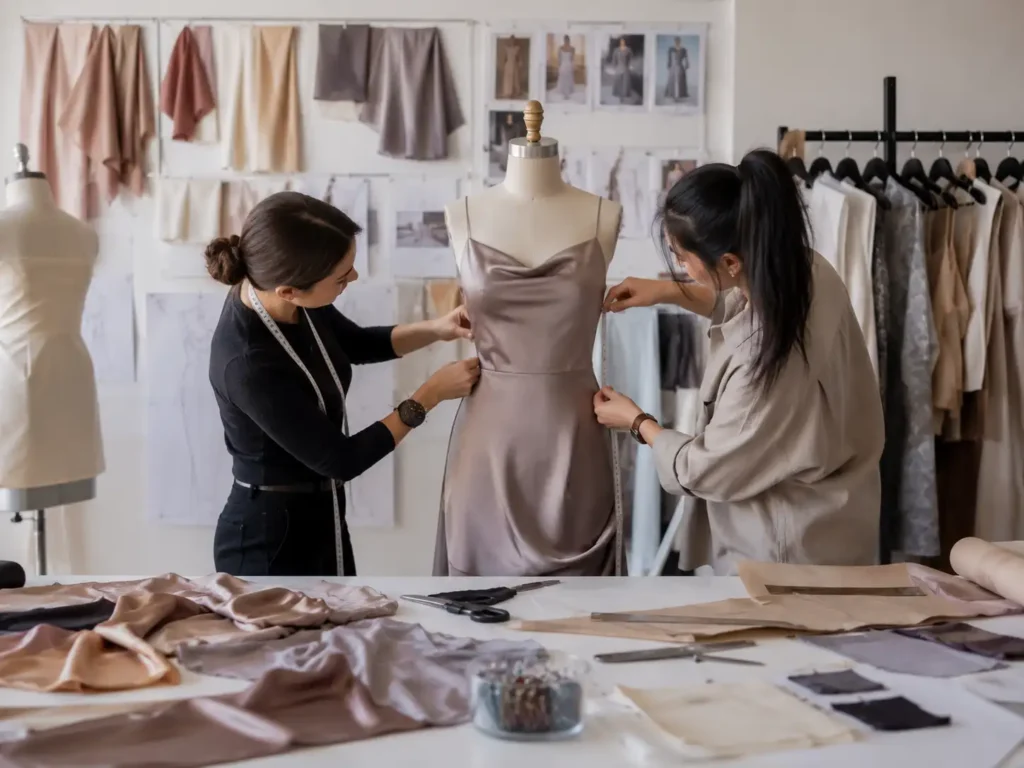
Early Prototypes
The first physical prototype is often used to answer several basic questions at once. Is the dress too long? Is the waistline in the correct place? Does the sleeve overwhelm the body? Is the skirt volume commercially wearable? Does the overall proportion match the original design?
Many of these questions can be reviewed before the first sewn garment. When the team uses an established pattern block and familiar material category, the digital version may allow the first physical sample to be more advanced. Instead of acting as a rough visual prototype, it can focus on real fit, material behavior, sewing, and comfort.
This is particularly useful for simple woven dresses, knit and jersey dresses, skirts and tops, matching sets, carryover silhouettes, repeat bodies with new details, seasonal length variations, and new color or print applications.
A completely new fit block may still deserve an early physical sample. The same is true for garments with complex bust shaping, unusual shoulder structures, or unfamiliar proportions. The practical objective is not to eliminate the first sample at any cost. It is to prevent the first sample from being used to discover issues that were already visible in the pattern or digital garment.
Fit Sample Rounds
3D review can identify some fit problems before a garment reaches a live fit model. It can help the technical team assess bust, waist, and hip ease; side-seam balance; shoulder alignment; front and back length; armhole shape; sleeve volume; waist seam position; hem balance; areas of visible tension; and potential drag lines.
These checks are valuable, but virtual fit is not the same as actual wear. A digital avatar does not walk, sit, breathe, bend, raise its arms, or explain discomfort. It cannot report that a strap slips, a neckline feels insecure, boning presses against the ribs, or a zipper catches during dressing.
For this reason, 3D sampling is best treated as a fit-screening method. It can remove obvious geometric errors before a physical fitting, making the live fitting more useful.
A strong workflow may reduce two exploratory fit rounds to one better-prepared fit sample and one PP confirmation. A weak workflow may create many digital revisions without improving the first physical garment. The result depends on whether pattern corrections, avatar data, fabric behavior, and brand fit standards are genuinely connected.
Color and Print Samples
Colorway and print review are among the most practical applications of digital sampling. One approved silhouette can be displayed in multiple colors, print scales, artwork positions, and trim combinations without sewing every visual option.
For a collection containing 20 styles with four proposed colorways each, physical development of every visual combination would create 80 garment variations. A digital range review can reduce those options before lab dips, strike-offs, or sewn samples are requested.
Digital review can help teams examine print scale against garment length, motif placement at the bust and hip, pattern interruption at seams, border-print positioning, logo size and visibility, color balance across a collection, contrasting trim combinations, and placement consistency across sizes.
Final material approval still requires physical evidence. Screen color varies, fabric texture affects appearance, and dye or printing processes can shift the result. Digital colorways should therefore narrow the decision. Lab dips, strike-offs, swatches, or production-material checks should confirm it.
PP and Golden Samples
A pre-production sample remains one of the most important controls in apparel manufacturing. It confirms the garment in actual or production-intended fabric, trims, construction, labels, measurements, finishing, and packaging.
The PP sample is expected to answer questions that digital review cannot fully resolve: Does the fabric feel and drape correctly? Does the zipper operate smoothly? Is the lining secure and comfortable? Are the seams stable? Is the garment within measurement tolerance? Are lace, sequins, or prints correctly placed? Does pressing damage or improve the appearance? Are labels and packaging applied correctly? Can the approved construction be repeated in bulk?
After PP approval, a sealed golden sample provides the physical standard for production and inspection.
The digital file, PP sample, production pattern, measurement chart, and construction sheet should all represent the same approved version. Any conflict between them should be resolved before cutting begins.
| Sample Stage | Strong Digital Use | Physical Confirmation Usually Needed |
| Visual prototype | Silhouette, length, proportion, seam position | New fit blocks or unusual structures |
| Design revision | Neckline, sleeve, waistline, skirt volume | Real material and comfort |
| Colorway sample | Color combinations and collection balance | Lab dip or fabric swatch |
| Print-placement sample | Scale, repeat, motif position | Strike-off and production-material check |
| Fit sample | Ease, balance, visible tension | Movement, comfort, support |
| PP sample | Digital reference and pattern alignment | Actual fabric, trims, sewing, measurements |
| Golden sample | Supporting digital record | Required as physical production reference |
Digital and physical samples serve different approval purposes; one should not be treated as a universal substitute for the other.
How Do Fit and Fabric Data Affect Accuracy?
Fit and fabric data determine whether a 3D garment is technically useful or merely visually convincing. Accurate patterns, avatar measurements, stretch direction, weight, thickness, drape, recovery, linings, and construction settings all affect the simulation. When generic or incorrect data is used, the garment may look realistic while giving the team false confidence about fit, material behavior, and production readiness.
Pattern Accuracy
The two-dimensional pattern is the geometry behind the garment. Each panel is positioned around the avatar, digitally sewn, and simulated. The software then shows how the pattern interacts with the body and material settings.
A useful simulation may reveal uneven hems, twisted side seams, excess front or back length, tightness at the bust or hip, unbalanced shoulders, excessive sleeve volume, poor neckline shape, incorrect waist position, or pattern pieces that do not join cleanly.
These visual signals are only useful when they lead back to actual pattern correction. The pattern maker must decide whether the issue comes from pattern shape, measurement specification, avatar dimensions, fabric behavior, an incorrect seam connection, intended design ease, or layering and supporting structure.
A bodycon dress may intentionally display close tension. A loose resort dress should not. The software can show the relationship between the garment and avatar, but a skilled person must interpret whether that relationship is correct for the product. The approved digital result should always remain synchronized with the latest pattern. Otherwise, the brand may approve one appearance while the factory cuts another version.
Fabric Properties
Fabric controls how the pattern becomes a garment. A correct pattern simulated in the wrong material can create a misleading result.
The most important fabric inputs vary by product, but they often include weight per square meter, thickness, stretch in both directions, recovery, bending resistance, shear behavior, compression, drape, surface friction, transparency, directional texture, and shrinkage expectations.
For stretch womenswear, recovery is as important as stretch percentage. A material may stretch enough to fit but fail to return after wear. That can lead to loose necklines, growing hems, distorted side seams, or poor shape retention.
For chiffon, satin, lace, mesh, velvet, and sequin fabrics, layering must also be considered. Lining, interfacing, cups, elastic, boning, seam allowance, and embellishment weight may substantially change the finished garment. When verified data is unavailable, a similar digital fabric can support early visual discussion. It should not be presented as final fit evidence.
| Fabric Property | Why It Matters | Common Risk When Incorrect |
| Weight | Affects hang, volume, and hem behavior | Garment looks too light or too heavy |
| Thickness | Changes seam bulk and structure | Edges and layered areas appear unrealistic |
| Stretch | Controls fit and ease in each direction | Fitted garments appear looser or tighter than reality |
| Recovery | Shows how fabric returns after stretch | Simulation may ignore bagging or growth |
| Bending | Influences stiffness and fold formation | Sleeves and skirts drape incorrectly |
| Shear | Affects how fabric distorts on the body | Bias or curved areas behave unrealistically |
| Drape | Controls vertical fall and softness | Silhouette appears too rigid or fluid |
| Friction | Influences movement between layers and body | Linings or layers shift incorrectly |
| Transparency | Affects coverage and lining decisions | Sheer areas appear safer than the real garment |
| Shrinkage | Changes measurements after treatment | Approved size may not remain stable |
Material data should match the production-intended fabric whenever a decision affects fit or construction.
Avatar and Fit
The avatar represents the body for which the garment is being evaluated. If the avatar does not reflect the target customer or approved fit model, the simulation may lead the team toward the wrong pattern decisions.
Important variables include bust, waist, and hip measurements; shoulder width and slope; back length; torso proportion; bust position; hip shape; posture; height; arm position; and leg proportion. Two people with the same bust, waist, and hip measurements can still require different fit adjustments because their posture, shoulder angle, bust shape, or body distribution differs.
Brands should define the source of the avatar. It may be based on a live fit model, an internal size standard, historical measurement data, a regional body standard, or a generic software avatar. Generic avatars are useful for early development, but they should not silently replace a brand’s established fit standard.
Size-range review also requires more than enlarging the body. Strap width, neckline depth, cup structure, rise, armhole shape, skirt proportion, and artwork placement may need size-specific control. Grading must be reviewed as a technical system rather than a simple scale operation.
Complex Womenswear
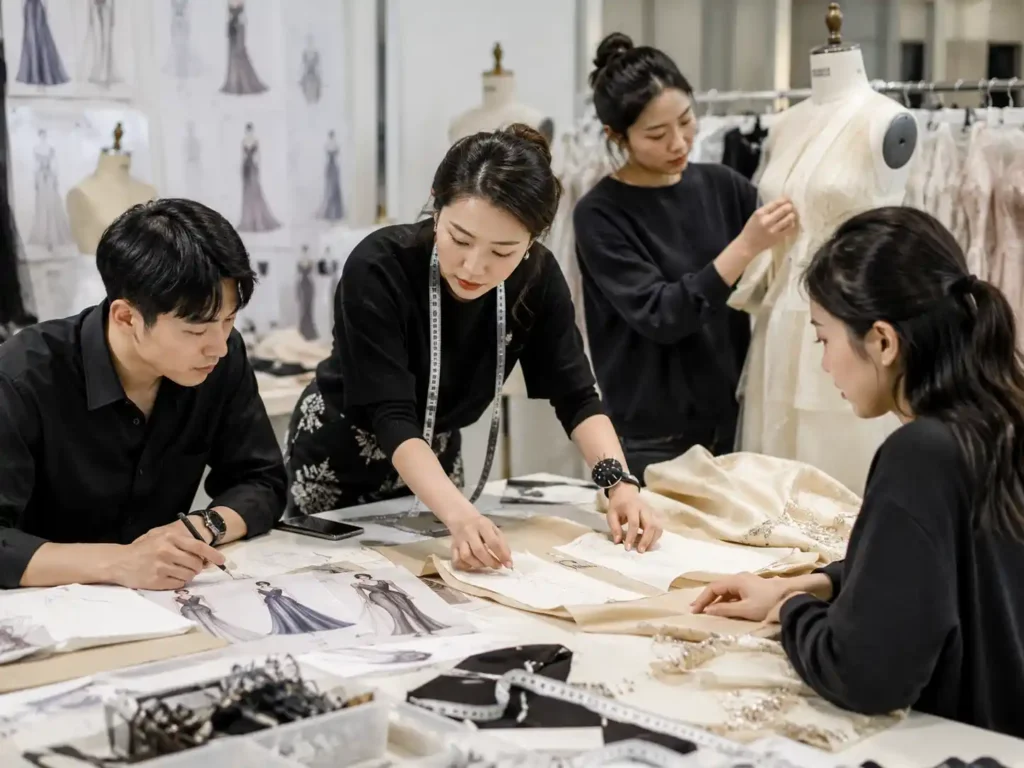
Complex womenswear is harder to simulate because its final shape depends on hidden construction, material interaction, and wearer movement. High-risk examples include corset dresses, built-in cups, underwired bodices, boned structures, asymmetric draping, layered stretch mesh, lace motif placement, heavy sequins, dense beadwork, fringe and feathers, multi-layer skirts, structured satin bodices, and cut-out garments with elastic support.
A corset-style dress, for example, depends on cup shape, foam density, underwire, boning type, lining, seam reinforcement, elastic, closure strength, and wearer movement. The outer silhouette may look correct digitally while the physical garment feels uncomfortable or lacks support.
Sequins introduce weight and may affect seam allowances, zippers, pressing, and adjacent panels. Lace may require manual motif matching. Satin can expose puckering, needle marks, and pressing shine that are difficult to judge in a digital model.
The correct response is not to reject 3D sampling for complex styles. It is to label the limits of the simulation and move critical questions into physical testing at the right time.
How Does a 3D Workflow Work?
A reliable 3D workflow moves through controlled stages: design brief, source-file review, pattern and material setup, digital construction, cross-functional review, correction, physical validation, PP approval, and bulk handoff. Each stage should record what was approved, what remains uncertain, and which file controls the next action. Speed comes from clear decision gates, not from unlimited digital revisions.
Development Brief
The process should begin with a product brief that defines the commercial and technical purpose of the garment.
A useful brief includes target customer, sales market, product category, wearing occasion, base size, size range, intended fit, fabric direction, lining requirements, colorways, construction priorities, target cost, estimated quantity, launch date, packaging requirements, and approval responsibilities.
Vague descriptions should be converted into measurable information. “Fitted but comfortable” does not define bust, waist, or hip ease. “Premium satin” does not define composition, weight, stretch, shine, or thickness. “Maxi length” does not define the finished measurement, footwear assumption, or distance from the floor.
The design team does not need to know every final answer before work begins, but it should identify which questions remain open. An unresolved fabric choice, for example, may allow silhouette development to continue while preventing final fit approval. Early clarity reduces the risk of different departments developing different products under the same style number.
Digital Review
After the pattern, avatar, fabric, and construction settings are prepared, the first digital garment is reviewed. The review should be divided by responsibility.
Design teams typically assess silhouette, proportion, styling details, color, print, and collection consistency. Technical teams assess measurements, ease, balance, pattern logic, fit risk, and grade implications. Sourcing and merchandising teams assess material availability, cost impact, product positioning, color assortment, launch timing, and SKU structure. Manufacturing teams assess sewing sequence, machine requirements, operator difficulty, seam stability, bulk consistency, and inspection points.
The review should end with one consolidated comment list. Comments should state the location, required action, measurement where possible, and reason.
“Improve the sleeve” creates another discussion. “Reduce bicep width by 1.5 cm and remove excess cap volume while maintaining armhole length” gives the pattern maker a clear action.
Version Control
Digital development creates multiple connected files: patterns, garment simulations, measurement sheets, material data, artwork, comments, and approval records. Without version control, the speed gained through 3D work can disappear during handoff.
Every file should identify the style number, product name, base size, revision number, revision date, responsible person, approval status, related pattern version, and related tech-pack version.
Teams should distinguish between a working file, review file, approved digital file, physical-sample pattern, PP pattern, and final bulk pattern. When a reviewer approves only the silhouette, the record should not imply that fabric, fit, or construction has also been approved.
Clear version control prevents a common and expensive error: one team working from the latest pattern while another team follows an older measurement chart, artwork placement, or approved sample.
| Stage | Core Output | Approval Question | Next-Step Gate |
| Brief review | Confirmed product brief | Is the design direction clear enough to begin? | Pattern development |
| First digital version | Initial pattern and 3D garment | Are silhouette and major proportions acceptable? | Technical correction |
| Revised digital version | Updated pattern and review file | Are approved comments correctly applied? | Physical sampling |
| First physical sample | Sewn garment and fit report | Do material, fit, and construction match expectations? | Revision or PP |
| PP sample | Production-intended garment | Is the style ready for controlled bulk production? | Golden sample |
| Bulk handoff | Final pattern, specs, BOM, and QC file | Do all production references match? | Cutting and production |
Each stage should have one controlling output and a clearly documented approval gate.
Physical and Bulk Handoff
Once the digital version reaches the required stage, the approved pattern and specifications move into physical sampling. The physical sample tests the assumptions that cannot be fully confirmed digitally. The garment is cut, sewn, finished, measured, fitted, photographed, and compared against the approved files.
Comments should separate three different problems. The first is a digital assumption that proved incorrect. The real fabric may drape differently or the physical fit may require more ease. The second is a sample-execution issue. The pattern and instructions may be correct, but sewing, pressing, measurement, or trim placement did not follow them. The third is a design decision that changed after review. This should be recorded as a new revision rather than treated as a correction.
After PP approval, the final handoff should align the production pattern, measurement chart, tolerance table, bill of materials, construction instructions, fabric and trim approvals, artwork and placement, label details, packaging requirements, PP sample, golden sample, QC checkpoints, and approved version history.
Digital efficiency has little value if the production floor receives incomplete or conflicting information. The handoff must convert the approved design into instructions that can be repeated by cutting, sewing, finishing, inspection, and packing teams.
Is 3D Sampling Right for Every Style?
3D sampling is highly effective for repeat blocks, multi-color collections, prints, seasonal variations, and garments with clear pattern architecture. It is less decisive for styles dominated by internal support, unfamiliar materials, handwork, heavy embellishment, or real-body comfort. The best strategy is selective digitalization: use 3D where it removes avoidable uncertainty and physical samples where material evidence is essential.
Best-Suited Styles
Styles based on established patterns and familiar material categories usually provide the fastest return from 3D sampling.
Strong candidates include jersey dresses, bodycon dresses, midi and maxi dresses, simple woven dresses, printed resortwear, slip dresses, skirts, tops, matching sets, carryover styles, multi-color seasonal programs, and repeat silhouettes with new details.
Printed garments benefit because print scale, repeat, motif placement, border position, and collection balance can be reviewed before physical development of every option.
Carryover styles are also well suited. Once a brand has approved the fit block, avatar, fabric behavior, and construction method, future versions can begin from verified data. A previous midi dress may become a maxi length, receive a different neckline, or use a new sleeve without rebuilding the entire development process. The benefit is lower when every garment starts from an unrelated pattern, untested fabric, and undefined fit standard.
Early Physical Testing
Some styles need physical investigation earlier because success depends on construction, support, material interaction, or wearer experience.
These include corset dresses, underwired garments, built-in cup styles, heavy boning, complex asymmetric drapes, hand-pleated garments, dense sequin designs, beaded occasionwear, fringe or feather decoration, special hardware, unusual closures, layered transparent garments, and styles combining several stretch directions.
An unfamiliar fabric can also justify earlier physical testing. A bonded mesh, coated textile, specialty stretch satin, unusual lace, or heavily embellished base fabric may behave differently from the available digital material profile.
Physical testing should not be viewed as a failure of digital sampling. It is part of a risk-based process. The digital garment can still confirm proportion, pattern logic, visual design, and artwork placement. The physical sample then tests the high-risk issues: support, comfort, movement, recovery, seam quality, trim performance, and finishing.
Digital and Physical Balance
Digital samples do not eliminate the need for physical garments. They reduce physical samples that answer questions better handled through digital review.
Physical evidence remains necessary for hand feel, true color, surface appearance, stretch recovery, comfort, movement, internal support, closure operation, sewing workmanship, pressing quality, lining performance, embellishment security, and packaging effects.
A practical development strategy gives each format a clear job. Digital review should handle rapid comparison, pattern relationships, visual decisions, and early communication. Physical review should handle material reality, wearer experience, workmanship, and production approval.
The aim is not to create a digital-only process. It is to prevent the physical sample room from repeatedly answering basic visual questions that could have been resolved earlier. When this balance is managed correctly, the remaining physical samples become more valuable. They arrive with clearer patterns, fewer unresolved design details, and stronger approval criteria.
Measuring Results
A 3D program should be evaluated through product-development performance rather than the number of digital garments produced.
Useful measurements include calendar days from brief to first review, calendar days from brief to first physical sample, physical samples per approved style, pattern revisions per style, courier cycles, comment-consolidation time, percentage of colorways approved digitally, first physical sample accuracy, issues remaining at PP stage, changes introduced after PP approval, on-time design-freeze rate, sample-room workload, development cost per approved style, and styles cancelled after physical sampling.
Results should be compared by product group. A jersey dress developed from an established block should not be measured against a structured evening gown with cups, boning, lace, and hand-applied embellishment.
Teams should also watch for hidden inefficiency. Physical sample numbers may fall while digital revision numbers rise without control. A project may look faster while reviewers spend more time making minor visual changes. A successful 3D workflow produces fewer repeated decisions, stronger first physical samples, cleaner PP approvals, and a more reliable handoff into bulk production.
Build a Faster, Better-Controlled Development Process
3D sampling is most valuable when it removes waiting, clarifies decisions, and improves the quality of the information sent into physical sampling. It cannot compensate for weak patterns, uncertain fabric data, unclear measurements, uncontrolled revisions, or skipped pre-production approval.
A practical development model connects digital and physical evidence in one controlled sequence: design brief, pattern development, digital review, physical validation, PP approval, golden sample, and bulk production. Brands do not need to digitize every garment at once. They need to identify which decisions can be made earlier and which still require real fabric, sewing, fit, and wearer feedback.
Jinfeng Apparel is a Guangdong-based custom women’s fashion manufacturer serving global fashion brands and mid-to-large apparel clients with OEM, ODM, private-label, sampling, bulk production, quality control, packaging, and export-delivery support. Since 2008, the company has developed dresses, skirts, jumpsuits, matching sets, tops, partywear, occasionwear, bodycon styles, corset dresses, satin garments, lace designs, mesh dresses, and sequin products.
Its production network includes 6 owned women’s fashion factories and more than 10 long-term satellite production partners. The standard MOQ starts from 200 pieces per style and color, subject to fabric availability, color development, trims, construction complexity, packaging requirements, and production scheduling. NDA-based cooperation and protection of client tech packs, patterns, samples, private-label details, unpublished designs, and order information are supported.
When a brand already uses 3D garment development, the approved digital files can be shared together with the tech pack, patterns, size chart, fabric direction, construction requirements, estimated quantity, target market, and launch date. The manufacturing team can then review how the approved concept should move into physical sampling, PP confirmation, and controlled bulk production.