Skip to content

A polished showroom, a competitive quotation, and a fast reply can make almost any clothing factory look capable during the first conversation. The real test begins later – when a fitted dress must keep the same waist position across six sizes, a satin shade must remain consistent through bulk production, or a seasonal collection must ship without hidden substitutions and last-minute quality surprises. Experienced sourcing managers know that factory selection is not a beauty contest. It is a structured commercial decision involving product fit, technical skill, material control, quality systems, capacity, delivery, documentation, and long-term reliability.
Sourcing managers select women’s clothing factories by defining product and market requirements, verifying category specialization, testing sampling and fit capability, auditing quality and compliance systems, comparing total cost and delivery risk, and approving the supplier through a weighted scorecard and controlled first order. The best factory is the one most likely to reproduce approved garments consistently at scale.
A weak factory can still produce one convincing sample. A strong factory can explain how that sample will be converted into hundreds or thousands of consistent garments, packed correctly by SKU, delivered against the launch calendar, and repeated six months later. That difference is where professional sourcing decisions are made – and where expensive mistakes are avoided.
What Should Sourcing Managers Define First?
Sourcing managers should define the product category, target customer, quality level, target cost, order structure, sales market, launch date, and supplier approval criteria before contacting factories. A clear sourcing brief gives every factory the same commercial and technical information, making quotations easier to compare and reducing assumptions that later affect samples, quality, cost, or delivery.
Product and Market Requirements
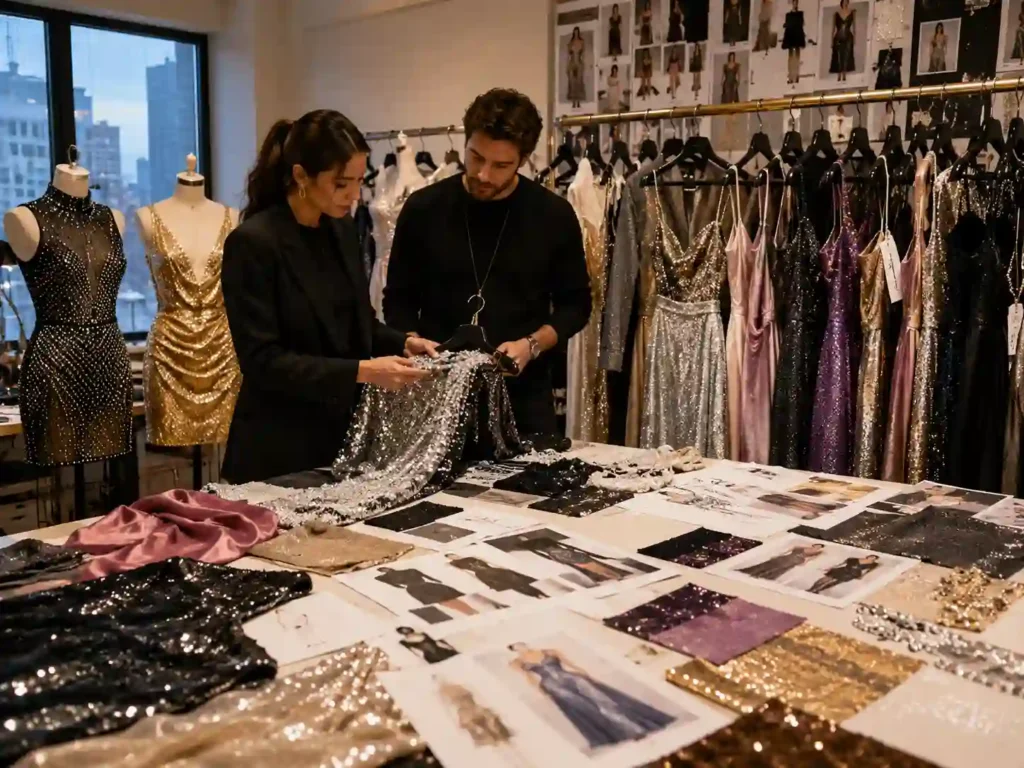
“Women’s clothing” is too broad to function as a useful sourcing specification. A supplier that performs well with basic jersey tops may not be suitable for structured corset dresses, lightweight chiffon styles, tailored matching sets, or embellished occasionwear. The first task is to divide the collection by product type, construction method, fit sensitivity, fabric behavior, and expected retail position.
- Woven mini, midi, and maxi dresses
- Stretch bodycon and knit styles
- Structured corset and bustier dresses
- Satin, lace, mesh, chiffon, and sequin products
- Jumpsuits, skirts, tops, and matching sets
- Resortwear, partywear, clubwear, and occasionwear
- Core replenishment products and seasonal fashion styles
The sales market must also be defined early. A garment intended for the United States may require different label wording, size presentation, packaging, testing, or importer information from one sold in the United Kingdom or European Union. Multi-market collections can require several label versions, language variations, size conversions, and documentation sets.
Target customer information matters just as much. A premium occasionwear label may accept higher fabric and construction costs in exchange for stronger fit, lining, support, and finishing. A high-volume online retailer may prioritize visual consistency, replenishment speed, packing accuracy, and delivery coordination. Without that context, a factory may recommend an option that is technically workable but commercially wrong.
Cost, Volume, and Timing
Factories need more than a reference image to calculate a responsible price. The sourcing manager should provide planned quantities, colors, size range, fabric direction, construction details, packaging requirements, and expected delivery timing. Total quantity can be misleading: 5,000 garments split across five styles and two colors are easier to organize than the same quantity divided among twenty styles, four colors, and eight sizes.
- Quantity per style and color
- Number of sizes and expected size ratio
- Target FOB or landed-cost range
- Fabric and trim expectations
- Required labels, barcodes, packaging, and carton marks
- Sample stages and approval deadlines
- Bulk delivery deadline and freight method
- Expected repeat-order or replenishment potential
The launch date should be worked backward. Product development, fabric sourcing, trim approval, sample revision, pre-production approval, bulk production, inspection, packing, booking, and freight all require time. A factory promising an extremely short lead time may be assuming that materials are available, approvals will be immediate, and no revisions will be needed. Experienced sourcing managers ask not only whether a delivery date is possible, but what must happen each week to keep it possible.
| Planning Item | Practical Input | Why It Matters |
| Style count | 8-20 styles per collection | More styles increase changeovers, material tracking, and approval workload. |
| Color count | 1-4 colors per style | Each color can create separate dye, fabric, or production minimums. |
| Size range | Commonly 5-8 sizes | Wider grading increases fit, cutting, packing, and inventory complexity. |
| Quantity basis | Units per style/color | Total volume alone hides fragmentation and line efficiency. |
| Sample stages | Usually 2-5 stages | Complex styles need more technical confirmation before bulk. |
| Bulk buffer | Often 1-3 weeks | Allows time for material delays, corrections, or inspection findings. |
| Freight method | Express, air, sea, or split shipment | Changes the true ex-factory deadline and landed cost. |
| Repeat potential | One-time, seasonal, or replenishment | Affects material planning and production-record retention. |
These are planning ranges rather than universal rules. The correct structure depends on the collection, technical difficulty, selling season, target price, material source, and internal approval speed.
Quality and Approval Standards
Quality must be translated from subjective language into measurable product requirements. “Good quality” and “premium workmanship” mean little unless both parties agree on fabric, construction, tolerances, appearance, testing, and packaging. For a fitted dress, the standard may include bust, waist, hip, total length, strap length, neckline position, slit height, seam alignment, zipper flatness, lining coverage, stitch security, pressing, and finished appearance.
Product risks change by fabric and silhouette. Stretch garments require recovery and measurement stability. Satin requires control of puckering, shine marks, seam impression, and color variation. Mesh and lace require transparency, tearing, pattern placement, and lining coverage to be reviewed. Embellished garments add attachment strength, placement consistency, comfort, and snagging risks.
Approval authority should also be clear. Buyers should define who approves fabric, color, fit, trims, pre-production samples, packaging, and final shipment. When several departments send comments without one final decision-maker, contradictory instructions reach the factory and the critical path begins to move.
Weighted Selection Criteria
A factory-selection process becomes more reliable when criteria are weighted before quotations arrive. Otherwise, buyers often give too much influence to the lowest price, fastest reply, or most attractive sample. A technically demanding collection should place greater weight on pattern, fit, fabric handling, and sample-to-bulk repeatability. A replenishment program may place more weight on capacity, delivery control, and repeat-order consistency.
- Product-category specialization
- Pattern and sampling capability
- Fabric and trim knowledge
- Quality-control system
- Production capacity and schedule control
- Compliance and documentation
- Commercial transparency
- Communication and escalation ownership
- Design confidentiality
- Repeat-order support
Mandatory requirements should be separated from scored preferences. A factory may earn a high total score but still fail because it cannot meet a required compliance condition, protect confidential designs, verify material identity, or manufacture the product safely. The best sourcing brief does not tell the factory only what the garment should look like. It explains what the business needs the supplier to control.
Which Factory Capabilities Matter Most?
The most important capabilities are proven womenswear specialization, strong pattern and fit development, experience with the required fabrics and construction, and capacity that matches the order structure. Buyers should verify what the factory repeatedly produces, who owns technical decisions, how products are assigned to suitable production units, and whether approved samples can be reproduced across sizes, colors, batches, and repeat orders.
Womenswear Specialization
A factory should not be selected because its website displays many women’s garments. Buyers need evidence that the supplier regularly manufactures products with comparable fit, fabric, workmanship, and production difficulty. Women’s fashion is highly sensitive to proportion: small errors in the bust, waist, hip, neckline, armhole, crotch, strap, or garment length can change the entire on-body result.
This is especially important for bodycon dresses, corset and bustier styles, strapless dresses, satin slip dresses, jumpsuits, cut-out garments, fitted matching sets, and long evening dresses. A supplier with real category experience should explain why a style is difficult. A strapless dress, for example, is not simply a sleeveless dress without straps. It may require internal support, boning, grip tape, cup placement, stable lining, zipper control, and careful balancing of the upper edge.
Ask which categories represent regular production rather than occasional orders. Request comparable construction examples, not only similar silhouettes. A supplier may have produced lace dresses before but have no experience with engineered motif placement, scalloped borders, transparent panels, or reinforced seam allowances. Specific answers are more useful than broad claims. “We make all kinds of dresses” proves little; a detailed explanation of repeated product structures, materials, and risk controls is far stronger evidence.
Fabric and Construction Control
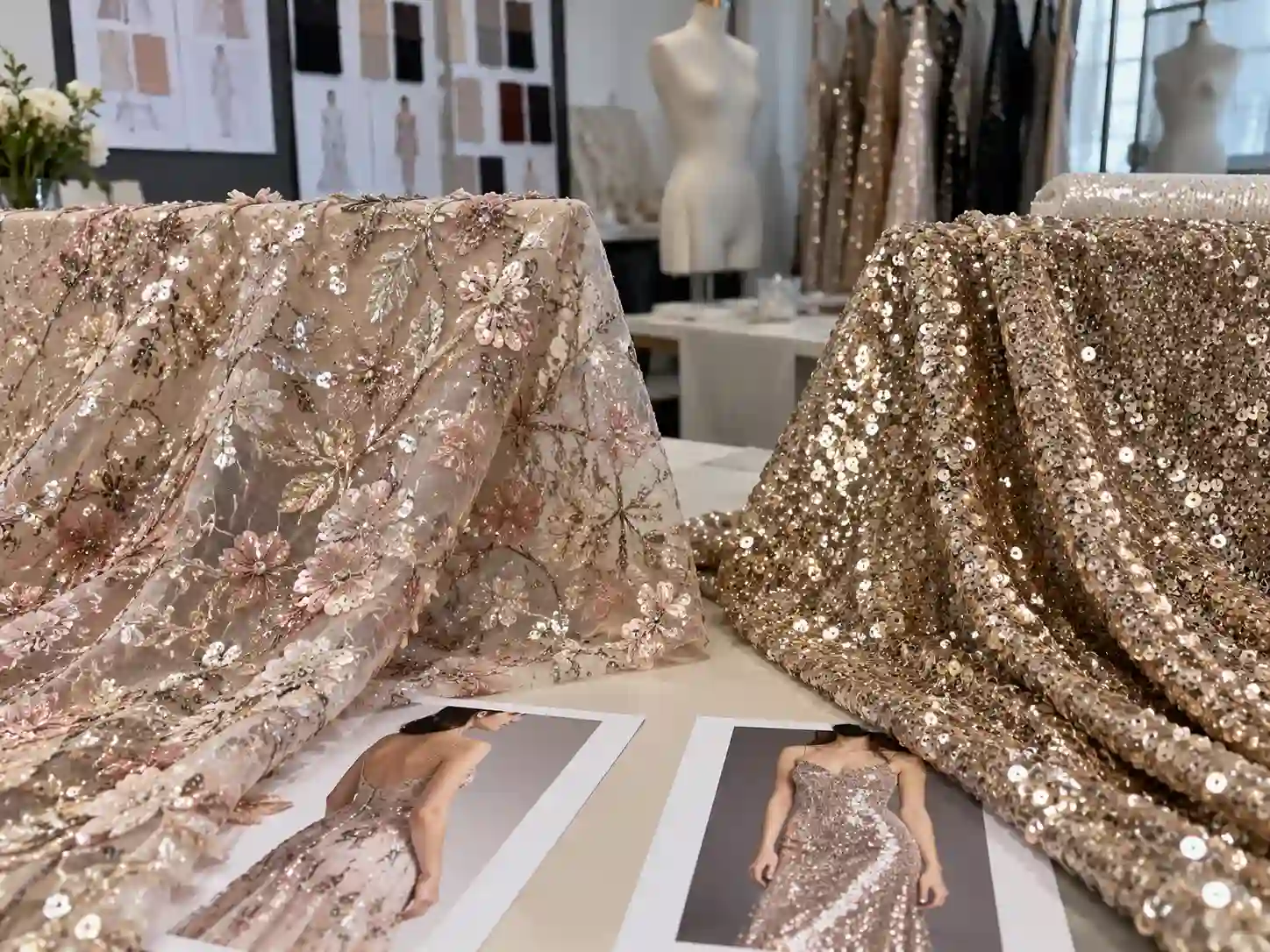
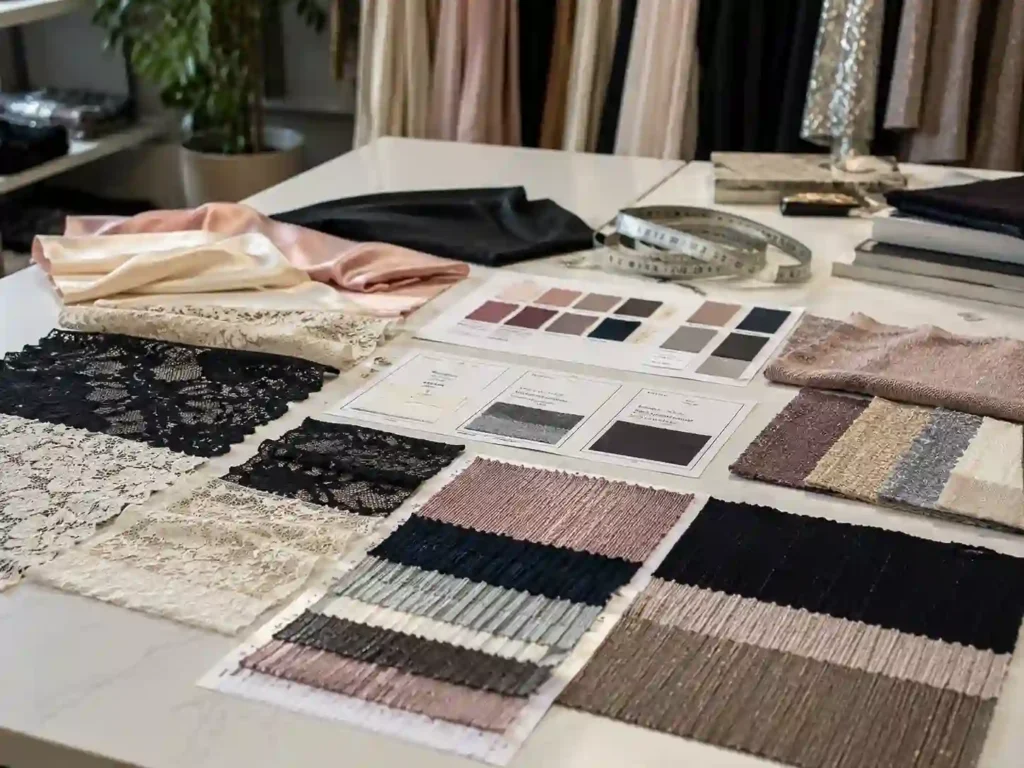
Fabric capability should be judged by behavior rather than name. Two satins with the same fiber content can behave differently because of weight, weave, finish, stretch, surface shine, and yarn quality. A capable factory should understand how material behavior affects pattern allowance, seam construction, stitch density, needle selection, lining, interfacing, pressing temperature, cutting direction, shrinkage, finished measurements, and production speed.
- Chiffon shifting during cutting and hanging unevenly at the hem
- Satin puckering around curved seams or showing press marks
- Mesh stretching at necklines, armholes, or cut-out edges
- Lace tearing at narrow seam allowances or losing motif alignment
- Jersey growing during sewing, steaming, or wear
- Sequin fabric damaging needles, thread, and seam comfort
- Velvet showing pile-direction differences and pressure marks
- Printed panels failing to align at center front or side seams
- Light fabrics becoming transparent under studio or daylight conditions
Sourcing managers should ask how the factory would modify the same design for two different fabrics. If the answer is that only the material changes, the technical review is probably too shallow. Moving from stable woven satin to stretch satin can affect the pattern, zipper, lining, support, tolerance, needle, and final fit.
Material sourcing is equally important. The factory should state whether a fabric is stock-supported, made to order, dyed to color, printed, or specially developed. Custom materials can affect minimums, shade consistency, testing, replacement availability, and repeat-order timing, not just price.
Pattern and Fit Capability
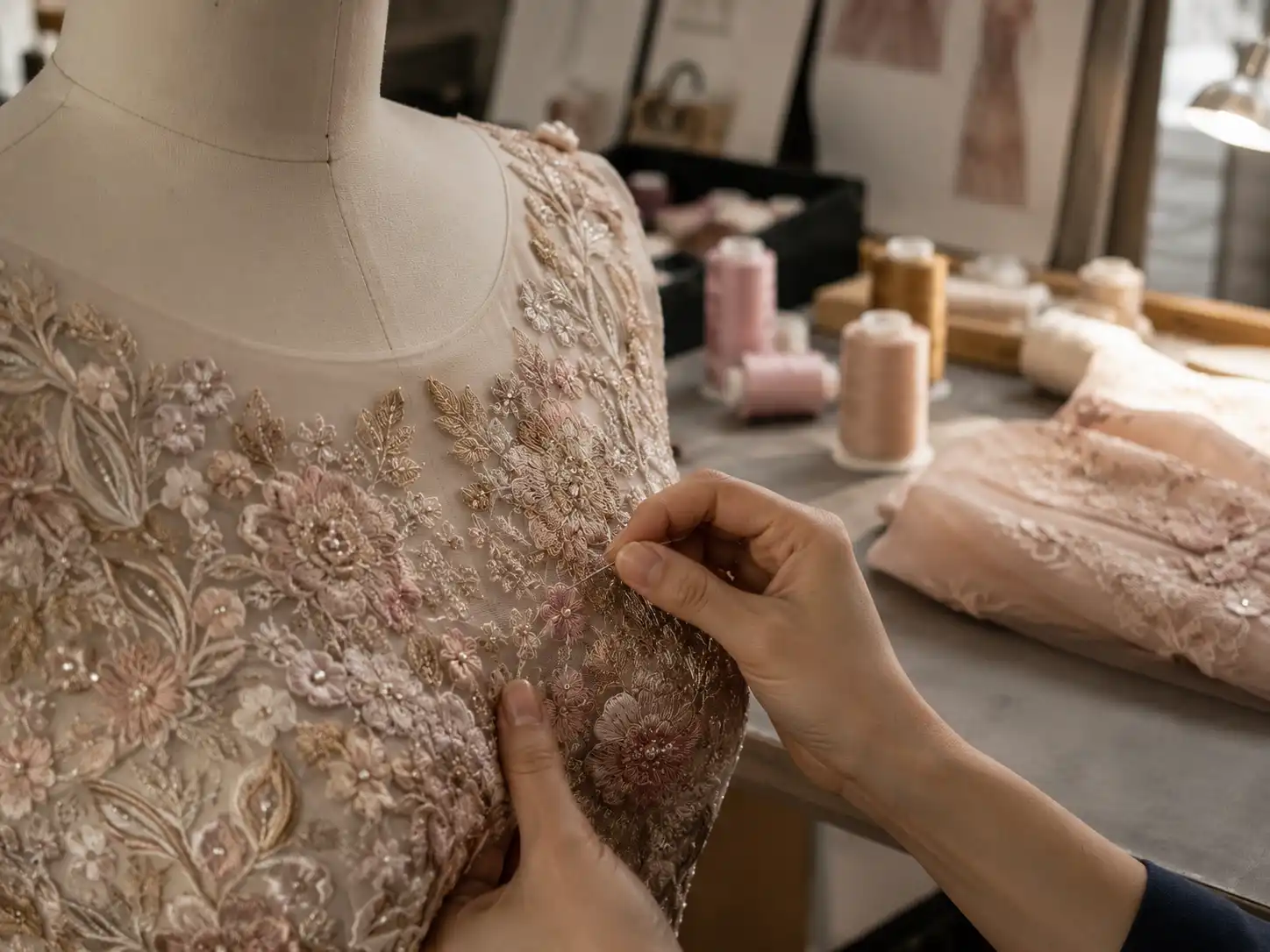
Pattern work is where a design becomes a wearable product. A strong pattern team identifies construction and fit risks before the first sample is completed. A weak supplier may sew accurately but still produce a garment that feels wrong because the underlying shape has not been properly developed.
- Base-size selection and intended body profile
- Clear points of measure and measurement diagrams
- Ease allowance and fabric stretch assumptions
- Bust shaping, waist position, and hip transition
- Armhole depth, neckline position, and sleeve balance
- Crotch length for jumpsuits and bodysuits
- Front-to-back garment balance and side-seam position
- Size grading rules that preserve the intended silhouette
Pattern comments must be precise and traceable. “Make it more fitted” can be interpreted several ways. “Reduce the waist by 2 cm, remove 0.5 cm from each side seam, retain the hip measurement, and smooth the waist-to-hip curve” can be transferred into a controlled revision. Fit should also reflect the intended consumer. A junior fashion market may use different proportions from a mature contemporary customer, and a generic mannequin rarely represents every brand’s target body profile.
| Capability Area | Weak Evidence | Strong Evidence |
| Product experience | Website photos only | Comparable constructions, materials, and repeat-order examples |
| Pattern control | Verbal fit comments | Updated pattern files, measurement charts, and revision history |
| Fabric knowledge | A list of fabric names | Explanation of behavior, methods, risks, and limits |
| Sample management | Attractive sample photographs | Version records, approvals, and controlled changes |
| Bulk repeatability | “We can do it” | PP sample, sealed standard, and identified QC points |
| Capacity | A monthly output claim | Style allocation, material status, and production calendar |
| Quality control | Final inspection only | Incoming, cutting, in-line, finishing, and final checks |
| Communication | Fast replies | Clear technical questions, decisions, and escalation ownership |
Capacity and Factory Allocation
Capacity is often misunderstood as a monthly output number. A factory may state that it produces hundreds of thousands of garments per month, but that figure says little about whether it has the correct team, machinery, materials, and available production window for a specific collection.
1. Technical capacity: Can the supplier make the style correctly?
2. Material capacity: Can fabrics and trims arrive in the required quantity and shade?
3. Line capacity: Is suitable production space genuinely reserved?
4. Management capacity: Can the supplier coordinate all styles, approvals, and packing files?
Multi-style orders create more risk than single-style orders. Every style can have different fabrics, trims, measurements, labels, packing methods, and inspection points. A supplier that handles one 5,000-piece style well may not perform equally well with twenty 250-piece styles. Buyers should therefore request a proposed production allocation: which styles will run in which unit, which products share materials, which operations require the most skilled workers, and which styles must start first because of handwork, printing, dyeing, or special trims.
When several production units are involved, central control becomes critical. Technical files, approved samples, quality standards, material approvals, and reporting methods should remain consistent. The supplier should not simply transfer the purchase order to another workshop and hope the result matches.
How Do Buyers Verify Sampling Skills?
Buyers verify sampling capability by reviewing how the factory interprets technical files, develops patterns, approves fabrics and trims, measures fit, records revisions, and converts the final sample into bulk-production instructions. A successful sample is not enough. The process must create controlled specifications that cutters, sewing operators, inspectors, packers, and repeat-order teams can follow consistently.
Technical Review
A professional factory should review the project before cutting fabric. The team should check whether the design, measurements, materials, construction, target cost, quantity, and timing are compatible. This review often reveals contradictions that are inexpensive to solve on paper and expensive to discover after sampling or bulk cutting.
- A drawing shows boning, but the bill of materials does not include it
- The size chart is too small for the proposed non-stretch fabric
- The zipper is too short for comfortable dressing
- The lining does not work with the slit structure
- The fabric width creates excessive consumption or seam changes
- A custom trim requires a minimum above the planned order quantity
- The target delivery date does not allow custom dyeing or printing
- The target cost does not match the intended construction level
Factories that ask detailed questions are often safer than factories that immediately agree to everything. Questions show that the team is thinking about manufacturability rather than simply securing the sample payment. The review should result in a written list of confirmed points, open questions, substitutions, cost assumptions, and timing risks. That document becomes the foundation for costing, pattern development, material sourcing, and the sample schedule.
Sample Stages
Not every product needs the same number of sample stages. A simple skirt made from a proven material may require fewer approvals than a corset dress with custom satin, cups, boning, lace placement, and special packaging. The sample plan should be based on product risk rather than habit.
| Sample Stage | Main Purpose | Typical Approval Points |
| Development sample | Test design and construction | Silhouette, feasibility, fabric direction, key details |
| Fit sample | Correct pattern and balance | Bust, waist, hip, length, coverage, mobility |
| Revised sample | Confirm requested changes | Updated fit, materials, workmanship, and dimensions |
| Size-set sample | Verify grading | Size progression, proportional balance, tolerance logic |
| Pre-production sample | Approve bulk standard | Final fabric, trims, labels, construction, packing |
| Sealed sample | Control production | Reference for line, QC, inspection, and repeat orders |
A substitute fabric may be acceptable during early development, but the difference must be understood. A fit sample in temporary material cannot confirm final drape, stretch recovery, shine, transparency, shrinkage, or pressing behavior. For complex garments, the pre-production sample should use final bulk materials wherever practical. Any temporary component should be listed clearly with the approved replacement standard.
Buyers should also define whether approval is based on physical sample review, photographs, video fitting, measurements, or a combination. Remote approval can work well, but only when documents, image angles, lighting, and measurement methods are consistent.
Fit and Measurement Review
Measurement is necessary, but measurement alone does not prove good fit. A garment may match the size chart and still pull, twist, gape, ride up, reveal too much, or restrict movement. Fit review should combine actual measurements, visual balance, body coverage, ease, mobility, fabric stretch, lining behavior, seam placement, support, comfort, and dressing function.
For dresses and fitted tops, special attention should be paid to neckline position, bust coverage, armhole shape, waist level, zipper movement, strap position, side-seam balance, and back fit. For jumpsuits and bodysuits, torso length is critical: a garment may look correct while standing but become uncomfortable when sitting, walking, or raising the arms. Maxi dresses should be reviewed after the fabric has had time to hang because some materials grow unevenly.
Measurement reports should state how the garment was measured. Stretch products may require relaxed measurements, stretched measurements, or both. The buyer should confirm the base size used for fitting and the body profile behind the size chart. Once that size is approved, grading must preserve the intended silhouette rather than adding equal amounts to every point.
Revision Records and Bulk Transfer
Many sample problems are caused not by poor sewing but by poor information control. Comments remain in email, messaging apps, marked photographs, and meeting notes without being transferred into one approved record. A strong revision log includes the sample version, date, issue, requested correction, pattern change, measurement change, material change, construction change, cost impact, lead-time impact, and approval status.
A comment such as “the neckline is too low” should become a measurable instruction: “Raise center front by 1.5 cm, blend to zero at the shoulder, retain strap position, and update the front pattern and measurement chart.” The team should then recheck related areas, including armhole shape, bust fit, facing, lining, and trim position.
The final approved sample must be translated into a controlled system: pattern set, size chart, bill of materials, construction instructions, trim standard, packing file, and QC checklist. Buyers should also ask whether the approved result depends on temporary materials, hidden handwork, or one highly skilled sample machinist. Bulk production is reliable only when the line can reproduce the same result through standard operations, guides, templates, tolerances, and inspection points.
How Are Quality and Compliance Assessed?
Quality and compliance are assessed by reviewing controls from material receipt through cutting, sewing, finishing, packing, and final inspection. Buyers should verify measurement methods, defect classification, testing responsibilities, audit scope, corrective-action records, confidentiality, and document validity. Claims such as “strict QC” or “fully compliant” are not evidence unless supported by current, relevant, order-specific records.
Quality Checkpoints
Final inspection is necessary, but it is too late to serve as the main quality-control method. Once hundreds or thousands of garments are complete, many defects are expensive or impossible to correct. A practical system places checks before mistakes become repeated.
- Incoming fabric inspection, shade grouping, and trim verification
- Fabric relaxation and shrinkage control where required
- Marker, panel direction, print placement, and cutting checks
- First-piece approval before full line production
- In-line sewing and measurement inspection
- End-line workmanship and construction review
- Pressing, appearance, and finished measurement checks
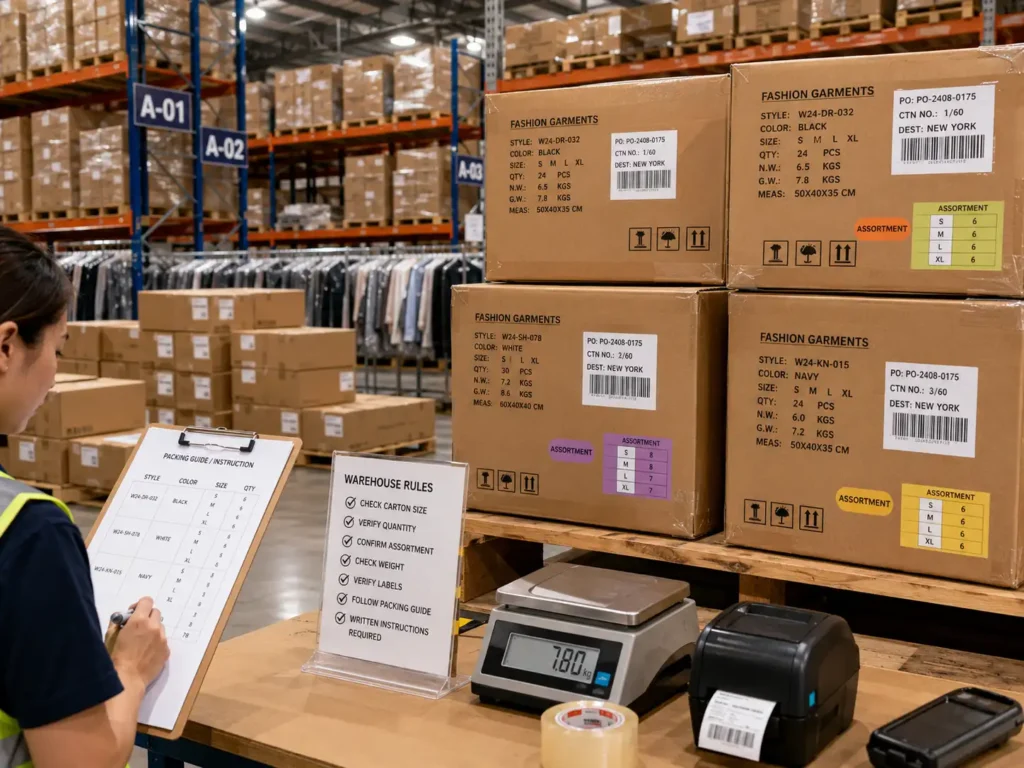
- Packing assortment, barcode, label, and carton verification
- Pre-shipment inspection and corrective-action records
The most effective checkpoint is placed before the defect becomes repeated. If the first ten garments show incorrect strap placement, the line can be corrected quickly. If the same problem is discovered after 2,000 units are packed, the commercial impact is far greater.
Different styles require different controls. Satin dresses need attention around seam puckering, shine marks, zipper distortion, and shade variation. Bodycon products require stretch recovery, side-seam twisting, and measurement growth checks. Lace garments need motif placement, seam-damage, and lining-coverage control. A generic checklist cannot identify every risk; the inspection plan should be built around the actual style.
Measurement Tolerances
Tolerance should reflect the importance of each measurement and the behavior of the material. Using the same tolerance for every point is simple, but it does not represent real fit risk. Measurements that influence coverage, support, symmetry, or dressing function often need tighter control than loose hems or wide silhouettes.
- Strap length and neckline depth
- Bust width and cup position
- Waist position and circumference
- Zipper length and opening function
- Crotch length for jumpsuits and bodysuits
- Slit height and overlap
- Shoulder width and armhole position
Fabric type changes measurement behavior. Stable woven fabric behaves differently from rib knit, stretch mesh, bias-cut satin, or a garment with heavy embellishment. Measurement conditions must therefore be consistent. A knit garment measured immediately after sewing may differ from the same garment after resting, steaming, or hanging.
The factory should provide actual measurement reports showing style, color, size, sample quantity, date, measured values, tolerance, and pass-or-fail status. Buyers should also avoid unrealistic limits. Extremely narrow tolerances can increase rejection and cost without improving consumer experience. The objective is dependable control of the measurements that materially affect fit and function.
Testing and Documentation
Testing requirements depend on the target market, product category, material, customer policy, and product claims. Not every order needs every available test, but relevant risks should be identified before production. Common areas include fiber composition, colorfastness, shrinkage, dimensional stability, seam strength, seam slippage, stretch and recovery, pilling, abrasion, restricted substances, care-label accuracy, and metal detection where required.
A supplier should not present one fabric certificate as proof that every garment, color, and production batch is covered. Buyers should check the material name, supplier, color, batch, test date, scope, and issuing laboratory. Factory audits and certifications require the same discipline: legal factory name, production address, audit date, validity period, scope, products covered, and open corrective actions should match the actual production location.
A document can be genuine but irrelevant to the order. An audit from one facility does not automatically cover another site, and a material certificate may not cover a new dye lot. Reliable suppliers are willing to explain these limits. Overstating compliance is a warning sign because it suggests the sales team may not understand the evidence it is presenting.
Defects, Rework, and Confidentiality
A mature supplier does not claim that defects never occur. It shows how defects are detected, contained, corrected, and prevented from repeating. A useful corrective-action record includes the style, order reference, defect description, photograph, quantity affected, classification, root cause, immediate containment, rework method, reinspection result, preventive action, responsible person, and completion date.
Repeated defects often point to a system problem. If zipper waves appear across several styles, the cause may involve fabric handling, seam tension, operator training, pressing, or zipper specification. Reworking finished garments without correcting the cause will not protect the next order.
Confidentiality belongs in the same risk review. Tech packs, original samples, patterns, target prices, sales calendars, labels, packaging files, and unpublished designs have commercial value. Buyers should confirm how files are stored, who can access them, whether client products are displayed to visitors, and how external production partners are controlled. An NDA is useful, but daily handling of confidential information matters more than the document alone.
How Do Buyers Compare Cost and Delivery?
Buyers should compare total commercial impact rather than unit price alone. The review should include fabric, trims, construction, sampling, testing, packaging, payment exposure, production timing, freight, defect risk, and delay risk. A quotation is meaningful only when assumptions, exclusions, quantities, materials, trade terms, packaging, and delivery conditions are clearly stated and compared on the same basis.
Quotation Structure
A low quotation may be accurate, incomplete, or based on a different product standard. Sourcing managers need to know exactly what has been priced. A responsible quotation should identify shell fabric, lining, trims, construction, special workmanship, labels, packaging, quantity basis, size and color assumptions, sample charges, testing costs, trade term, payment terms, and quotation validity.
Complex womenswear cost is often driven by details that are not obvious in a front-view image: double-layer construction, internal corset support, cups or boning, hand-applied embellishment, lace placement, ruched panels, binding, bias cutting, long hems, print placement, custom hardware, extra pressing, and shaping. Buyers should compare quotations line by line. When one price is significantly lower, the correct question is what material, construction, packaging, testing, or quality assumption is different.
Price negotiation is most productive when it focuses on product engineering. Changing fabric weight or source, removing unnecessary seams, simplifying internal construction, sharing materials across styles, concentrating colors, or using common trims can lower cost more safely than demanding a percentage reduction without changing the product specification.
MOQ and Order Architecture
MOQ should be considered at style, color, material, and trim level. A factory may accept 200 pieces per style and color while the fabric mill requires 1,000 meters per color. Custom zippers, branded hardware, printed fabric, or special packaging may each have separate minimums.
The total commitment can grow quickly. Ten styles in three colors at 200 pieces per style and color create an order of 6,000 garments. If the buyer planned only 3,000 units, the problem is not necessarily that the factory MOQ is unreasonable; the assortment may be too fragmented for the planned volume.
- Reduce the number of colors at first launch
- Concentrate volume in stronger commercial styles
- Use common fabrics across several products
- Launch secondary colors after initial sell-through data
- Reuse zippers, labels, or trims across the collection
- Separate core products from higher-risk experimental products
- Plan replenishment around proven sellers
MOQ discussions should happen before too many samples are developed. Otherwise, the buyer may invest in a collection that cannot be produced at a commercially practical volume. Size ratios also matter. A 200-piece order split across eight sizes can leave very small quantities in some sizes, affecting cutting efficiency, packing, inspection, and inventory productivity.
Lead-Time Reliability
Lead time should be built from real dependencies rather than treated as one number supplied by the sales team. A full critical path can include technical review, fabric sourcing, dyeing or printing, trim development, first sample, fit revision, size-set approval, pre-production sample, bulk material arrival, cutting, sewing, finishing, inspection, packing, and freight booking.
Each approval delay can move the shipment date. Buyers should define how quickly their own team can respond. A factory cannot maintain a four-week production plan if fabric approval takes ten days longer than expected. The delivery schedule should also distinguish sample completion, bulk start, ex-factory date, port departure, warehouse arrival, and retail launch. An ex-factory date is not a warehouse delivery date.
A credible supplier should provide a critical path and identify which dates are flexible and which are not. When the deadline is unusually tight, split shipment may be safer than forcing the entire order into an unrealistic schedule. Some styles can travel by air for launch while later replenishment moves by sea, but the additional freight cost should be compared against the commercial cost of a late launch.
Payment, Packaging, and Logistics
Payment terms should be assessed as part of total risk. Buyers should confirm the deposit percentage, balance-payment trigger, inspection rights, payment method, sample-fee treatment, bank charges, testing costs, material cancellation responsibility, and treatment of rejected goods.
Packaging errors can stop products from being received, listed, or sold even when garment quality is acceptable. The packing file should define main labels, size labels, care labels, hangtags, barcodes, SKU labels, folding method, polybag size, warning text, inner-pack quantity, carton assortment, carton dimensions, weight limits, shipping marks, and warehouse labels.
Logistics responsibilities must be written clearly. The factory may arrange export documents and shipment, deliver to a nominated forwarder, or work under an agreed trade term. Buyers should know who is responsible for booking, customs documents, cargo insurance, destination charges, and final delivery. The cheapest factory price does not always produce the lowest landed cost. Poor packing density, oversized cartons, late booking, incorrect documents, inspection failure, or urgent airfreight can remove the original saving quickly.
How Is the Final Factory Approved?
A factory should be approved through a weighted scorecard, verified documents, sample evidence, commercial review, and a controlled first order. Approval is not permanent. Supplier performance should continue to be measured through quality, delivery, communication, corrective action, document accuracy, confidentiality, and repeat-order consistency, with mandatory disqualifiers kept separate from the overall score.
Supplier Scorecard
A scorecard helps buyers compare factories on the same basis. It should use evidence rather than impressions and should separate mandatory conditions from weighted preferences. The exact weighting should change by project: a fit-sensitive occasionwear program may give more weight to pattern and sampling, while a replenishment program may place more weight on delivery and repeatability.
| Evaluation Area | Weight | Approval Evidence |
| Product-category capability | 15 | Comparable products, materials, and construction |
| Pattern and fit development | 15 | Fit records, revisions, grading, and measurement control |
| Sample-to-bulk repeatability | 15 | PP sample, sealed standard, and production files |
| Quality-control system | 15 | Checkpoints, reports, defect classification, corrective action |
| Capacity and delivery planning | 10 | Line allocation, material status, and critical path |
| Cost transparency | 10 | Detailed quotation, assumptions, exclusions, and validity |
| Compliance and testing | 10 | Relevant, current, and site-specific documents |
| Packaging and logistics | 5 | Approved packing file and shipping responsibilities |
| Communication and ownership | 5 | Clear technical responses and escalation control |
| Total | 100 | Weighted score plus mandatory-gate review |
Mandatory disqualifiers may include failure to meet a required compliance condition, hidden production locations, disrespect for design confidentiality, inability to verify material identity, refusal of agreed inspection, pressure to begin bulk before approval, or unresolved product-safety concerns. A high overall score should never override a critical failure.
Evidence and Red Flags
Every important claim should be converted into something that can be checked. Useful evidence includes factory identity and address, comparable product examples, pattern and sample records, material approvals, inspection reports, capacity plans, relevant audit documents, test reports, corrective-action records, packing files, shipping records, and repeat-order references.
A factory tour can be useful, but it should follow the real product flow rather than only the showroom. Buyers should ask to see fabric receiving, storage, cutting, sewing, in-line inspection, finishing, packing, and finished-goods control. Randomly selected current records often reveal more than a prepared presentation.
- The supplier agrees to every request without technical questions
- Quotations do not state fabric or construction assumptions
- Sample quality is strong, but bulk-production responsibility is unclear
- Documents show a different address or expired scope
- Measurements are checked without written reports
- Sample comments are not transferred into updated files
- Delivery promises change repeatedly without a critical-path explanation
- Material substitutions occur without approval
- The supplier refuses inspection or hides production locations
- Client designs are displayed without permission
- Packaging is discussed only after production
- Defects are always blamed on the buyer
One issue may have a reasonable explanation. A pattern of connected issues usually shows that the supplier’s operating system is weaker than its sales presentation. Buyers should also watch for price engineering by omission: removing lining, changing composition, simplifying construction, widening tolerance, or excluding testing without making the change visible.
Controlled First Order
The first order should test the complete supplier system. It must be large enough to reveal real production performance but focused enough that problems can be identified and corrected. It is often better to begin with a related group of styles sharing fabrics or construction than with many unrelated categories.
1. Final technical file and approved bill of materials
2. Approved fabric, color, and trims
3. Approved pre-production or sealed sample
4. Confirmed quantities, size ratio, and packing assortment
5. Line booking and production calendar
6. In-line and final inspection plan
7. Approved barcode, label, packing, and carton instructions
8. Shipping and documentation responsibilities
9. Escalation process for deviations
10. Post-order supplier performance review
The buyer should observe how the factory behaves when a problem appears. Does the team report it early? Does it explain the likely cause? Does it offer practical options, update the schedule, and document the final decision? A supplier that manages a problem openly may be safer than one that promises perfection and reports nothing until final inspection.
Ongoing Performance Review
Factory approval should continue after shipment. Every completed order provides data that should improve the next collection. Useful indicators include sample accuracy, number and cause of revisions, material approval accuracy, on-time pre-production approval, production start against plan, in-line defect trend, final inspection result, on-time ex-factory performance, packing accuracy, document accuracy, corrective-action speed, repeat-order consistency, and communication quality.
The review should distinguish supplier-caused delays from buyer-caused delays. Late technical comments, changing quantities, delayed payments, and slow approvals should be recorded alongside factory performance. This produces a fairer evaluation and improves future planning.
Long-term value appears when the supplier retains approved patterns, measurements, fabric references, color standards, trim specifications, workmanship files, packaging instructions, and previous quality findings. Repeat orders should not restart from zero. The strongest supplier relationship is not one in which problems never appear; it is one in which risks are identified early, decisions are documented, corrections are fast, and every completed order makes the next one more predictable.
Selecting a Factory That Can Support the Next Collection
A suitable women’s clothing factory is not simply the supplier that makes the best first sample or offers the lowest initial price. It is the supplier that can understand the product, document decisions, protect fit, control materials, manage bulk production, communicate risks, deliver accurately, and repeat the result across future collections.
For sourcing managers evaluating a custom production partner, a structured project review based on tech packs, target quantities, fabrics, target market, quality standards, packaging, and delivery timing is a far more reliable starting point than a general request for prices. It allows the factory to assess feasibility, identify cost drivers, propose the correct production route, and define the approval gates before development begins.
Jinfeng Apparel is a Guangdong-based custom women’s fashion manufacturer serving global fashion brands and mid-to-large apparel clients with OEM, ODM, private-label, sampling, bulk production, quality control, packaging, and export coordination. Its core product focus includes dresses, skirts, jumpsuits, matching sets, occasionwear, partywear, bodycon styles, and fabric-sensitive products using satin, mesh, lace, knit, and sequin materials. The company supports NDA-based cooperation, seasonal collection development, repeat orders, and multi-batch production.
To request a project review, share your tech packs, reference garments, sketches, size charts, target fabrics, planned quantities, destination market, quality requirements, packaging instructions, and delivery calendar. The team can review product feasibility, fabric and trim options, sample stages, MOQ structure, cost drivers, production routing, and the next steps toward bulk manufacturing.