Skip to content

The cheapest sewing quotation is rarely the cheapest manufacturing decision. A dress can leave the factory at an attractive price and still become expensive after fabric delays, repeated fit corrections, air freight, rejected measurements, missed launch dates, warehouse sorting, markdowns, and customer returns are added. Comparing China and Bangladesh only through labor cost therefore gives sourcing teams an incomplete answer. The decision becomes clearer when the product is treated as a complete commercial system: fabric, pattern, trims, sample accuracy, production quantity, quality controls, duty exposure, delivery speed, and the cost of failure all matter.
China is usually the stronger choice for fashion-led, multi-style, technically complex, specialty-fabric, or time-sensitive dress programs. Bangladesh is often more competitive for stable, high-volume products with repeatable materials and construction. Neither country is universally better. The right manufacturing base depends on the dress type, quantity per style and color, target market, development speed, compliance requirements, and total landed cost.
Imagine two products on the same sourcing plan. The first is a cotton jersey day dress ordered in 80,000 pieces with an unchanged pattern. The second is an 18-style occasionwear collection using satin, mesh, lace, cups, boning, sequins, linings, custom hardware, and separate launch dates. Both are called dresses, but they do not need the same manufacturing environment. One rewards repetition and line efficiency. The other rewards material access, technical development, and coordinated specialization. The rest of this guide shows how to tell the difference before a low quotation turns into a high-cost mistake.
What Does Each Country Do Best?
China is generally stronger for fashion-led, multi-style, technically complex, and material-intensive dress programs. Bangladesh is often more competitive for stable, high-volume products with repeatable fabrics and construction. The correct choice depends less on national reputation and more on whether the country’s normal production model matches the collection, order structure, required development speed, and target market.
China’s Main Advantage
China’s main advantage is not simply the number of factories. It is the density of the surrounding apparel supply chain. In established manufacturing regions, dress producers can often reach textile mills, dye houses, print suppliers, lace and mesh vendors, zipper companies, cup and boning suppliers, packaging factories, pattern teams, testing laboratories, and export services without rebuilding the supply route for every new style.
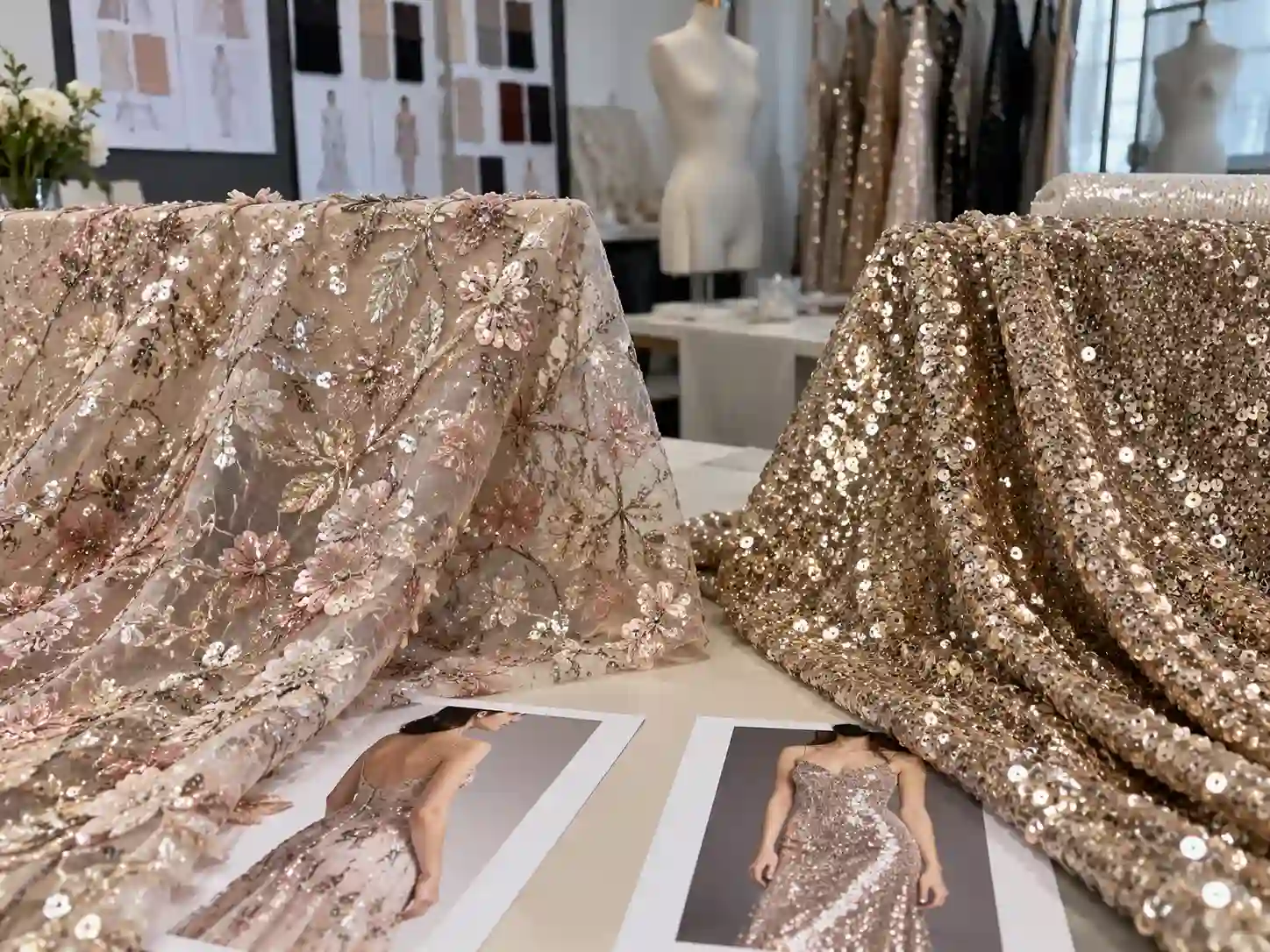
That density matters when a collection contains different product structures. A satin corset dress, jersey bodycon style, chiffon maxi dress, sequin mini dress, and tailored matching set cannot all be handled like one basic garment. Each product needs different fabrics, machines, operator skills, finishing methods, and inspection points. A supplier with access to several specialist units can place each style where it fits rather than forcing the whole collection through one production line.
Material correction is another practical advantage. During development, a satin may prove too thin, a mesh may lack recovery, a lining may show through, a zipper may wave, or a boning channel may feel bulky. When alternatives are available nearby, the team can compare weight, stretch, hand feel, surface, color, price, and lead time before the project loses several weeks. This does not guarantee good results, but it creates more options for solving problems.
Bangladesh’s Main Advantage
Bangladesh is widely associated with export-oriented garment production, competitive sewing costs, and large-scale line efficiency. Its strongest commercial model usually involves planned volume, stable specifications, repeatable operations, and materials that can be sourced through an established route. When the same construction is repeated across a large order, the factory can optimize line balance, operator allocation, cutting, finishing, and packing.
This structure works well for products such as jersey dresses, rib dresses, straightforward knit silhouettes, simple woven day dresses, and proven styles with limited design change. Bangladesh also has significant strength in cotton-related garments, knitwear, sweaters, denim, shirts, and other categories that reward repetition. For a brand with a mature bestseller and predictable replenishment, that efficiency can be commercially powerful.
The advantage becomes less clear when the order is fragmented. A collection may total 30,000 pieces but still be operationally small if it is divided among 25 styles, four colors, eight sizes, several fabrics, and different delivery dates. In that case, the factory spends more time changing lines, retraining operators, controlling trims, and managing approvals. The total order value may be large while each production unit remains inefficient.
Product-Country Match
The product should determine the sourcing route. A simple dress and a complex dress may share the same product name, but they create very different manufacturing problems. The table below is a practical starting point for supplier screening, not a universal quality ranking.
| Dress Program | China Fit | Bangladesh Fit | Main Reason |
| Cotton jersey repeat dress | Good | Very good | Stable knit construction and scalable volume |
| Basic woven day dress | Good | Good | Result depends on fabric source and quantity per style |
| Multi-style occasionwear | Very good | Selective | Requires varied materials, trims, pattern work, and revisions |
| Satin corset dress | Very good | Factory-specific | Internal structure and specialist sewing are critical |
| Sequin or embellished dress | Very good | Factory-specific | Material handling and finishing vary widely |
| Large repeat bestseller | Good | Very good | Repetition improves production-line efficiency |
| Fast seasonal collection | Very good | Moderate | Development speed and local material access matter |
| Multi-fabric private-label range | Very good | Selective | Supplier coordination is more demanding |
A specialized Bangladeshi occasionwear factory may outperform an average Chinese supplier. A technically weak Chinese factory may still fail on fit, finishing, or bulk consistency. Country selection narrows the search; factory specialization decides the order.
Not Direct Substitutes
China and Bangladesh overlap in garment manufacturing, but they are not always direct substitutes. Many buying teams use them for different parts of the assortment. Bangladesh may handle proven, high-volume products planned months in advance. China may handle development-heavy collections, difficult fabrics, trend-led silhouettes, shorter replenishment cycles, and products that require several rounds of technical correction.
The split can also happen inside one seasonal range. A brand may place stable jersey dresses in Bangladesh while producing satin, lace, mesh, corset, and sequin styles in China. Another may source certain fabrics or trims from China and assemble garments in Bangladesh. That model can work, but it introduces origin rules, import lead times, customs handling, and replacement risks that must be planned before the purchase order is issued.
The strongest sourcing strategy does not ask one country to win every category. It gives each product to the production system most likely to control cost, quality, speed, and repeatability.

Which Country Costs Less?
Bangladesh often has the lower direct sewing-cost base, especially for large standardized orders. China may still deliver a lower total commercial cost when material access, sample accuracy, style flexibility, quality risk, delays, freight, and returns are included. Brands should compare the landed cost of saleable garments, not only the quoted factory price.
Labor Cost vs Total Cost
Labor matters, but it is only one layer of a dress quotation. The final cost also includes fabric, lining, trims, cutting loss, sewing complexity, finishing, testing, quality control, packaging, overhead, freight, duty, financing, and the financial effect of delays. A country with lower sewing wages can still produce a more expensive result when the product depends on imported specialty materials or repeated corrective work.
Bangladesh’s direct-cost advantage is usually strongest when the factory can run the same operation for a long production cycle. China may quote more for sewing but save time when fabric, trims, pattern support, and alternative suppliers are close to the factory. The saving often appears outside the quoted line item: fewer sample rounds, less waiting for replacement materials, more practical style splits, or a lower chance of switching to air freight.
The commercial comparison should end at the warehouse and continue through the selling season. Poor fit, unstable sizing, twisted seams, lining exposure, zipper failure, or late arrival can turn a one-dollar factory saving into several dollars of return handling, discounting, rework, and lost margin. The cheapest factory price is therefore not automatically the lowest cost per garment sold at full price.
Dress Cost Structure
Fabric is often the largest component of a dress cost, particularly for products using satin, lace, sequins, lining, mesh, custom prints, or directional materials. Sewing becomes more important when the garment contains corsetry, ruching, pleating, draping, hand-applied decoration, multiple layers, or complicated closures.
The percentages below are planning ranges used to understand the cost structure. They are not universal formulas. Actual shares change with style, material, quantity, factory, country, payment term, and quality standard.
| Cost Element | Common Planning Range | What Changes the Cost |
| Main fabric and lining | 35%-60% | Width, weight, consumption, shrinkage, wastage, dye MOQ, print repeat |
| Trims and components | 5%-15% | Zippers, cups, boning, lace, hardware, labels, embellishment |
| Cutting and sewing | 10%-25% | Operation count, construction difficulty, operator efficiency |
| Finishing and QC | 4%-10% | Pressing, measurement checks, cleaning, repair rate, inspection level |
| Packaging | 2%-8% | Custom polybags, hangtags, inserts, barcodes, cartons, warehouse labels |
| Overhead and margin | 8%-20% | Order size, factory type, payment term, schedule risk |
A lower labor rate cannot fully compensate for inefficient fabric consumption. Lace with a large repeat, one-way sequin fabric, stripe matching, engineered print placement, or a bias-cut skirt can add more cost than the difference between two countries’ sewing rates. Both suppliers must cost the same construction, material grade, and packaging scope before the comparison is meaningful.
Landed Cost and Timing
Landed cost includes every expense required to move the dress from development to the destination warehouse. A practical calculation includes the factory price, allocated development cost, testing, inspection, freight, insurance, import duty, customs clearance, destination handling, financing, defect allowance, and delay allowance.
Import duty varies by destination, tariff code, fiber composition, knit or woven construction, country of origin, and any preferential program. For European sourcing teams, Bangladesh’s scheduled graduation from UN least-developed-country status on November 24, 2026 is relevant. Under the EU’s updated GSP framework, Bangladesh is expected to retain EBA preferences for a three-year transition, at least through the end of 2029. Eligibility still depends on the applicable rules, including origin requirements.
Transport planning can change the result as much as duty. Sea freight rewards planned volume and reliable production windows. Air freight protects launches but can remove the original unit-price advantage quickly. Brands should compare the planned freight route and a realistic backup route rather than assuming every order will ship by sea on schedule.
Hidden Cost Control
Hidden costs usually appear where the quotation is least detailed. Common examples include custom dyeing, print screens, pattern corrections, trim molds, repeated samples, replacement fabric, testing, storage, split shipments, repair work, relabeling, customs handling, and airfreight upgrades.
There are also internal costs that never appear on the supplier invoice. Merchandisers may spend weeks correcting unclear specifications. Warehouse teams may sort inconsistent garments. Ecommerce teams may reshoot products because the bulk fabric looks different from the approved sample. Customer-service teams may manage fit complaints caused by grading or stretch-recovery problems.
The best protection is a standardized costing request. Every supplier should quote the same fabric specification, construction, lining, trims, order quantity by style and color, size curve, packaging, testing, inspection level, Incoterm, and delivery window. A transparent quotation is more valuable than a low number built on unresolved assumptions.
How Do MOQ and Lead Times Compare?
Bangladesh generally performs best with larger, consolidated orders, while China often offers greater flexibility for multi-style and material-diverse collections. Lead times in both countries depend on fabric readiness, sample approval, trims, production planning, and order complexity. Country averages are useful for initial screening, but the factory’s dated critical path is more important.
MOQ Mechanics
MOQ is not one factory number. It is the result of several minimums working together. The sewing factory may accept a certain quantity, while the fabric mill requires a larger dye lot, the print supplier sets a meter minimum, the zipper vendor requires a color batch, and custom hardware requires tooling plus its own production quantity.
This is why a factory can accept a large total order but reject the way it is divided. A 20,000-piece order may become operationally small when split among 20 styles, four colors, eight sizes, and several delivery dates. Each style-color unit needs patterns, cutting markers, line setup, quality references, packing files, and material allocation.
Brands should request minimums in clear units: pieces per style, pieces per style and color, meters per fabric, meters per custom color, units per custom trim, and units per packaging item. China can often provide more flexibility when stock-supported materials, common colors, and standard trims are acceptable. Bangladesh becomes more efficient when fabrics, colors, and operations are repeated across larger quantities.
Sample Timing
Sample timing starts when the factory has enough information to work accurately. A reference image may be enough for a simple silhouette, but a structured dress normally needs measurements, target fit, fabric direction, lining requirements, construction details, intended quantity, target market, and any critical visual points.
The ranges below are practical planning figures used during supplier screening. They are not guaranteed production promises and should be adjusted for material availability, holidays, complexity, approvals, and factory workload.
| Development Stage | China Planning Range | Bangladesh Planning Range | Main Variables |
| Material sourcing | 3-10 days | 5-20 days | Local availability, custom color, imported inputs |
| First sample | 7-15 days | 10-25 days | Pattern complexity, trims, sample-room workload |
| Revised sample | 5-12 days | 7-18 days | Comment clarity, material changes, fit correction |
| Pre-production sample | 5-10 days | 7-15 days | Final fabric, labels, trims, packaging |
| Bulk production | 25-45 days | 45-75 days | Quantity, line booking, material readiness |
| Shipment preparation | 3-10 days | 5-12 days | Final inspection, documents, freight booking |
A fast first sample is not automatically a good sample. First-sample accuracy, technical feedback, measurement control, fabric suitability, and the quality of recorded corrections matter more than the courier date. A rushed prototype that ignores shrinkage, stretch direction, lining, or internal fitting only moves the problem into bulk production.
Bulk Lead Time
Bulk production should not begin until the required approvals are complete. These may include the production pattern, graded size nest, bulk fabric, color, trims, labels, packaging, and pre-production sample. Many disputes happen because the brand counts from purchase-order placement while the factory counts from final approval, confirmed materials, and received deposit.
A useful schedule shows the fabric-ready date, cutting start, sewing start, finishing start, inspection date, and cargo-ready date. It also identifies which milestones depend on customer comments or approvals. This makes responsibility visible and helps both sides protect the launch calendar.
Bangladesh can run planned high-volume orders efficiently once the materials and line are ready. China can move faster on diversified collections when fabrics and trims are locally available, but coordination across specialist units also requires strong merchandising. The best supplier does not simply promise 30 or 45 days. It provides the critical path and explains what could move it.
Repeat Orders
Repeat orders can move faster because the supplier already has the approved pattern, graded sizes, measurement chart, fabric reference, trim details, construction notes, labels, packaging, and inspection history. That record reduces interpretation work and allows the team to reopen a proven route.
A repeat order is not automatically identical. A new fabric lot may change in shade, weight, stretch, recovery, shrinkage, or surface finish. A bodycon dress made from a weaker jersey can fit differently even when the pattern remains unchanged. A satin dye lot may photograph differently from the original product page.
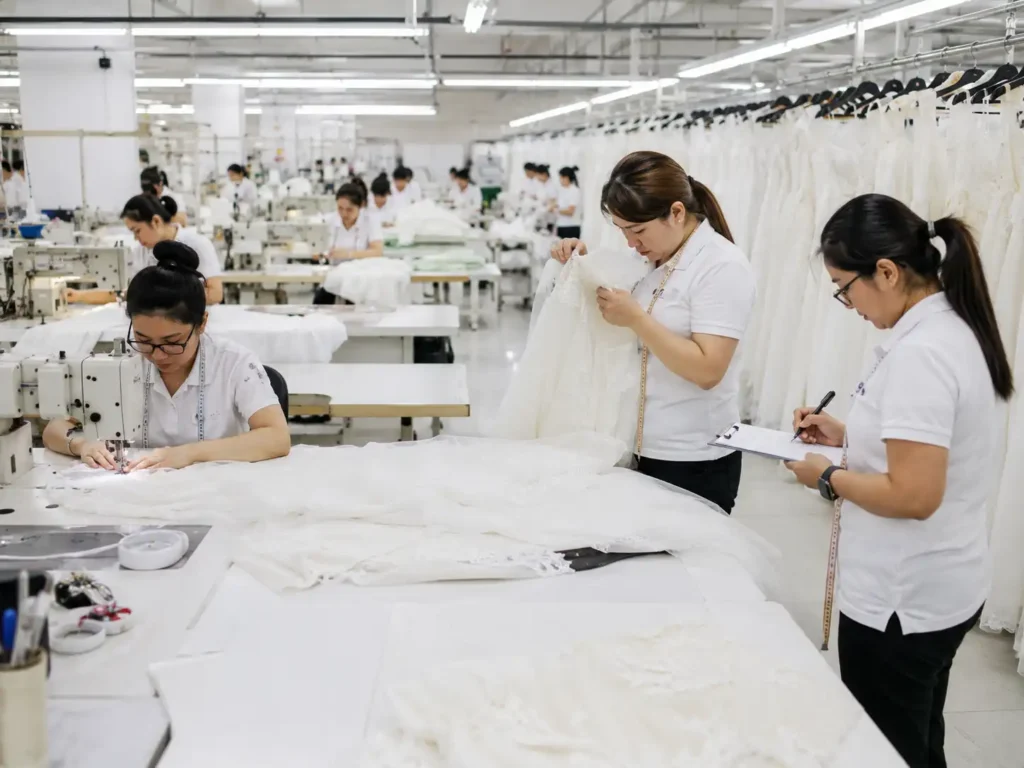
A controlled repeat package should include the sealed sample, approved production pattern, fabric and color standard, trim card, construction sheet, measurement method, tolerance chart, packaging files, and previous inspection findings. Fast replenishment is valuable only when the new delivery maintains the original customer experience.
Which Country Handles Complex Dresses Better?
China usually has the stronger structural advantage for complex dresses because it combines broad material access with specialized pattern, sample, sewing, embellishment, and finishing resources. Bangladesh can produce complex garments, but the chosen factory must already have relevant category experience, a reliable specialty-material route, and strong technical management.
Fabric and Trim Access
Complex dresses often use several materials that must work together. A corset style may combine satin, non-stretch lining, fusible reinforcement, cups, boning, mesh, binding, and a concealed zipper. A sequin dress may need soft lining, facing, specialist thread, edge protection, and packaging that prevents abrasion.
China’s apparel clusters make it easier to compare different versions of the same material. A development team can test satin weights, mesh recovery, lace repeats, zipper quality, cup shapes, boning types, and hardware finishes before committing to bulk. This can reduce the chance that one unsuitable component forces a major redesign after sampling.
Bangladesh has strong domestic capacity in important textile categories, especially knit and cotton-related products. Specialty woven fabrics, decorative meshes, engineered lace, sequins, and custom trims may require more import planning depending on the factory. Ask where the material is produced, whether it is stock-supported, how long custom color takes, what the dye minimum is, and how failed fabric will be replaced.
Pattern and Fit
Women’s dresses expose pattern problems quickly. Small errors in the upper bust, under-bust, waist position, strap length, neckline, armhole, hip, torso length, slit height, or skirt balance can change the appearance and comfort of the entire garment.
Complex fit becomes harder when the fabric stretches, drapes, slips, or grows on the bias. Satin may pull around the zipper. Mesh may recover differently in two directions. Jersey may stretch during sewing. A long bias-cut skirt may become uneven after hanging. Correcting one measurement without understanding the fabric can create a new problem elsewhere.
China has many production clusters with experienced fashion-dress pattern teams, particularly for partywear, bodycon products, structured dresses, corsetry, and multi-material styles. Bangladesh also has skilled technical teams, especially within established export groups. The evidence should come from relevant samples, fitting records, grading quality, and the supplier’s explanation of why a fit problem occurred.
Construction Complexity
Different dress structures require different production controls. These issues cannot be solved by final inspection because they begin during material approval, pattern development, cutting, and sewing.
| Construction | Main Production Risk | Critical Control |
| Corset dress | Twisted boning, weak bust support, zipper stress | Internal structure, cup position, fitting, seam reinforcement |
| Bias-cut satin dress | Growth, seam twisting, uneven hem | Grain direction, controlled cutting, hanging time |
| Mesh panel dress | Distortion, transparency, weak recovery | Stretch direction, lining placement, edge stabilization |
| Lace dress | Motif mismatch, visible joins, high waste | Placement planning, repeat control, seam design |
| Sequin dress | Broken sequins, skin irritation, seam bulk | Seam clearing, secure attachment, protective lining |
| Bodycon dress | Side-seam movement, size drift | Recovery testing, measurement method, balanced stretch |
| Chiffon maxi dress | Cutting shift, fraying, uneven hem | Controlled cutting, seam choice, final hanging |
| Ruched dress | Uneven gathering, length variation | Gathering ratio, notches, operator consistency |
China is often the more practical choice when one collection combines several of these constructions. Bangladesh can be highly competitive when a specialist factory repeatedly produces one structure at meaningful volume. A factory’s normal product category is more important than a claim that it can make every dress.
Collection Management
Complexity also comes from style count. A 30-style collection may involve several fabrics, multiple trim suppliers, separate factories, hundreds of comments, and different launch dates. The manufacturer needs one management system for tech-pack versions, fabric approvals, trim cards, measurements, sample status, production schedules, inspection results, barcodes, and packing files.
Without central control, one production unit may use an outdated size chart while another follows a revised pattern. Labels may be attached in different positions. Two factories may interpret the same seam finish differently. A packaging supplier may print an old SKU or barcode file. Dense supplier access only becomes an advantage when one merchandising team controls the information.
A capable multi-style supplier should identify which unit will handle each category, who owns the technical file, how revisions are released, how sample approvals are recorded, and how final quality remains consistent across the collection. Coordinated specialization is more valuable than simply having access to many factories.
How Do Quality and Compliance Compare?
Quality and compliance depend on the individual factory, material supplier, management system, and customer requirements. Neither China nor Bangladesh guarantees good performance. Brands should verify product-specific quality controls, current audit evidence, traceable material documents, subcontracting practices, and corrective-action systems before approving production.
Quality Starts Before Sewing
Final inspection cannot repair a poor pattern, unstable fabric, incorrect stretch direction, weak lining, or unsuitable trim. Quality begins when the design is translated into a production method. The supplier should review fabric behavior, seam type, internal support, shrinkage, color risk, pressing requirements, and construction before bulk cutting.
Each dress category has different failure modes. A stretch dress may require recovery and dimensional checks. A satin dress may need seam-puckering trials and press-temperature control. A sequin style needs attachment and abrasion review. A chiffon maxi dress may require hanging before hemming. A corset dress needs support, cup position, boning alignment, and zipper stress checks.
The pre-production sample is a critical control. It should use the approved bulk fabric, trims, labels, measurements, construction, and packaging details. Approving bulk from an early sample made in substitute fabric creates risk because the final material may behave differently in cutting, sewing, fitting, pressing, or wear.
Inspection and Measurement
Dress inspection should combine appearance, measurement, construction, function, and packaging checks. Many brands use AQL-based final inspection, often beginning around AQL 2.5 for major defects and 4.0 for minor defects. The final level should reflect product value, sales channel, customer expectations, and the cost of failure.
Measurement methods must be defined carefully. A stretch dress can produce different results when measured fully relaxed, lightly extended, or under tension. Ruched sections can change garment length. Bias-cut products may grow after hanging. Structured bust areas may not be represented accurately by flat measurements alone. Diagrams and photographs help standardize difficult points.
In-line inspection is as important as final inspection. It allows the team to correct seam tension, gathering ratio, zipper application, neckline shape, boning position, size drift, or label placement before the defect spreads across the full order. The purpose of inspection is not only to reject garments; it is to prevent repeated defects.
Compliance Evidence
Compliance documents must be checked for scope and validity. A certificate may apply to a textile mill but not the sewing factory. An audit may cover one site but not a subcontractor. A product test may apply to one fabric color or batch rather than the entire collection.
Useful evidence can include current social-compliance audits, quality-management records, material certificates, fiber-content verification, colorfastness tests, dimensional-stability reports, restricted-substance testing, seam or attachment testing, AQL inspection reports, and corrective-action records. The required documents depend on the target market and the brand’s own policy.
Sustainability claims need the same discipline. Terms such as recycled, organic, responsible, or lower-impact should be linked to the correct certificate holder, scope, supplier, batch, and chain-of-custody documents where applicable. A page of certification logos is not enough. The evidence must connect to the factory, material, and order being discussed.
Supplier-Level Due Diligence
Country-level comparisons help with sourcing strategy, but orders succeed or fail at supplier level. Confirm the legal supplier, production address, product specialization, pattern capability, sample-room capacity, quality team, subcontracting policy, normal order structure, and the location where each critical operation will be completed.
Factory visits should look beyond the showroom. Review fabric storage, cutting, bundle control, first-output approval, in-line inspection, measurement stations, needle control, repair areas, pressing, packing, and final-inspection preparation. Ask how defects are recorded and how corrective action is closed.
Professional suppliers usually know their limits. A factory that claims to make every garment, at every quantity, at the lowest price, with the shortest lead time should be treated carefully. A more reliable partner explains trade-offs, identifies risks early, and refuses combinations of cost, quality, quantity, and timing that cannot be controlled.
Which Country Fits Your Sourcing Strategy?
Bangladesh is usually a strong choice for planned, high-volume, standardized dress programs. China is often better for fast-moving, multi-style, specialty-fabric, technically complex, or premium collections. A dual-country strategy can work well when products are allocated by category and capability rather than divided randomly.
High-Volume Basics
Bangladesh should be considered when the program has stable fabric, limited color variation, repeatable construction, and enough quantity per style to support an efficient line. The strongest candidates are often products already tested in the market: the fit is approved, the material is known, the size curve is predictable, and demand can be planned well in advance.
A large total quantity is not sufficient by itself. Thirty thousand pieces divided across three styles is different from the same total divided across thirty styles. The factory should confirm the production line, output assumption, material source, dye-lot minimum, quality-check frequency, packing capacity, and replenishment plan.
Bangladesh can provide a strong cost position when the brand protects production efficiency. Late design changes, unclear specifications, frequent material substitutions, and fragmented colors reduce the advantage. Stable buying decisions are part of the sourcing model, not just a factory responsibility.
Fast Fashion and Occasionwear
China is often the more practical starting point when collections change quickly or several product types must be developed at the same time. Fast fashion is not simply fast sewing. It requires quick design interpretation, material sourcing, pattern work, sample correction, production allocation, quality control, packaging, and repeat-order coordination.
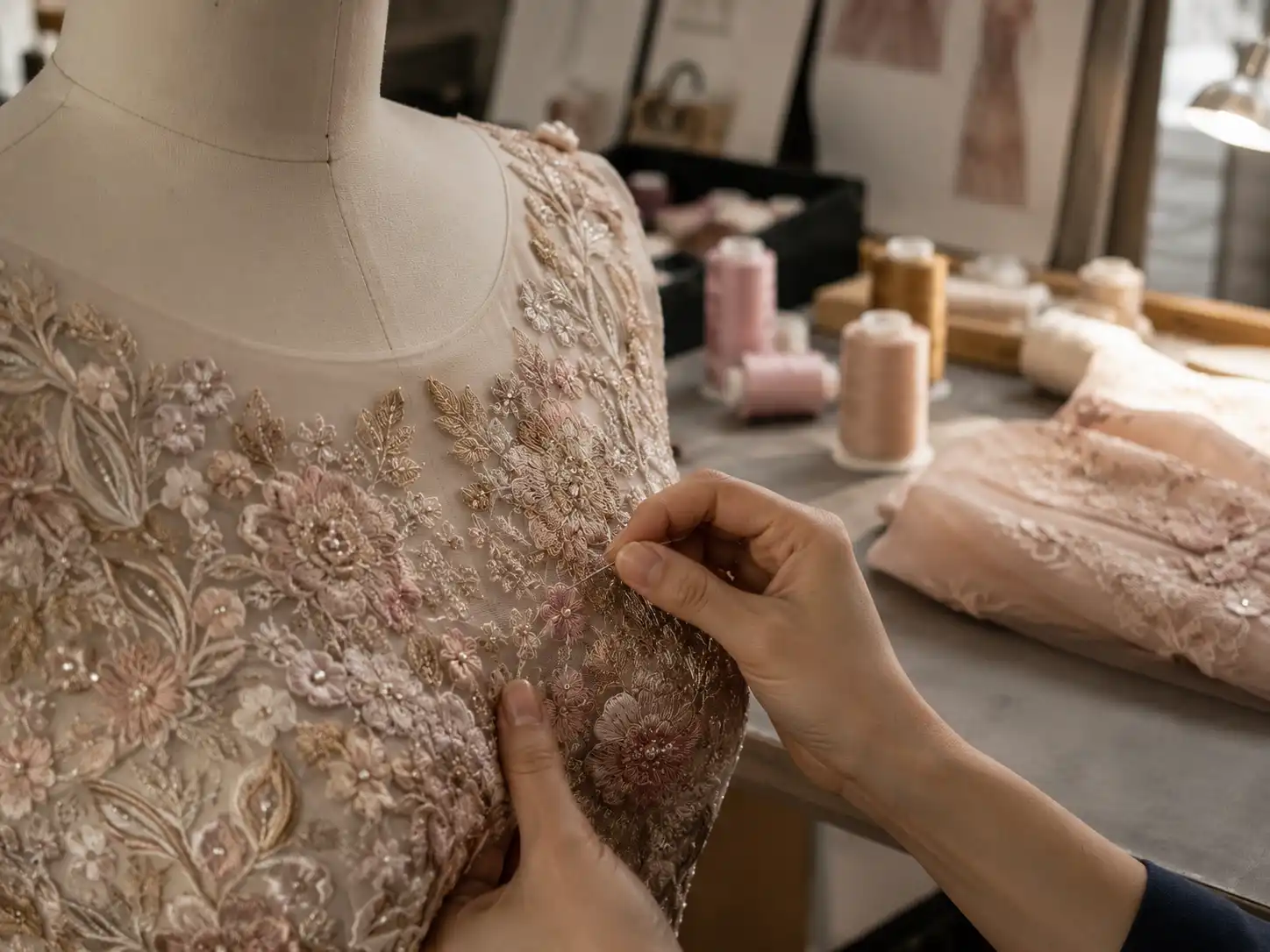
Occasionwear adds technical difficulty. Satin, lace, mesh, sequins, corsetry, draping, ruching, lining, and decorative trims all need specialist handling. China’s connected supply chain can shorten the distance between a problem and a solution, particularly when alternative materials or trims must be tested quickly.
The brand still controls part of the speed. Clear tech packs, timely approvals, consolidated comments, stable design decisions, and realistic quantity planning allow the supplier to move. A capable factory cannot maintain a launch calendar when materials, colors, fit direction, or packaging remain unresolved.
Dual-Country Sourcing
Using both countries can reduce concentration risk and improve category-level efficiency. A practical model may place stable, high-volume knit or simple woven products in Bangladesh and technically demanding, fashion-led, or material-intensive dresses in China.
The strategy creates additional management. Each country may require separate audits, technical standards, sample approvals, quality systems, logistics plans, and commercial terms. Dividing one style between two factories is particularly risky because the finished garments may differ in fit, shade, hand feel, seam finish, pressing, and packaging even when both follow the same file.
Dual sourcing works best when product categories are separated clearly and each supplier receives enough volume to operate efficiently. It is usually stronger to place one category with one qualified route than to divide every product randomly in the name of diversification.
A Practical Decision Framework
Before selecting a country, score the project against six factors: product complexity, material availability, quantity per style and color, required development speed, quality risk, and total landed cost.
- Start with Bangladesh when the product is stable, the quantity is concentrated, the material route is proven, and the order can be planned well in advance.
- Start with China when the range includes multiple styles, difficult fabrics, complex fit, customized trims, frequent revisions, shorter development cycles, or private-label coordination across several product types.
- Use both when the annual volume and internal sourcing team are large enough to manage separate technical standards, audits, schedules, quality controls, and logistics.
- Choose the factory only after reviewing relevant samples, material routes, lead-time assumptions, quality controls, and the exact style-color-size breakdown.
The final decision should be made at style level, not country level. A sourcing team can then build a portfolio in which each manufacturing base performs the work it is best equipped to control.
How Jinfeng Apparel Supports Dress Programs
For brands evaluating a China-based route, Jinfeng Apparel provides custom womenswear development and production from Guangdong, one of China’s established apparel and fabric supply regions. The company has focused on women’s apparel since 2008 and supports OEM, ODM, private-label, and custom dress programs for global fashion businesses and mid-to-large apparel clients.
The production system includes six owned women’s fashion factories and more than ten long-term satellite production partners. Orders can be allocated according to product category, fabric type, construction complexity, volume, and delivery schedule. The core range includes mini, midi, maxi, party, cocktail, evening, wedding-guest, resort, bodycon, corset, mesh, satin, lace, chiffon, jersey, velvet, and sequin dresses, together with skirts, jumpsuits, matching sets, and private-label womenswear.
The development structure includes 7+ senior pattern makers, two sample rooms, 20+ sample machinists, 12+ merchandisers, 15+ QC inspectors, and 30+ finishing and packing workers. The team can review tech packs, reference photographs, original samples, sketches, line sheets, fabric swatches, size charts, trims, packaging files, and target-market requirements. NDA-based cooperation is available for tech packs, samples, patterns, labels, packaging, unreleased designs, pricing, and order information.
The standard MOQ starts from 200 pieces per style and color, subject to fabric availability, custom dyeing or weaving, print minimums, special trims, construction complexity, certified materials, custom packaging, and production scheduling. The manufacturing model is designed for clients with clear product direction, professional sampling needs, and bulk-production plans rather than ready-stock purchasing, dropshipping, or micro orders.
REQUEST A DRESS PRODUCTION REVIEW
Send your tech packs, reference images, original samples, fabric requirements, quantity by style and color, target market, packaging needs, and preferred delivery window. The team can review product feasibility, material routes, structural risks, MOQ, sample requirements, production planning, and quotation assumptions before bulk development begins.