Skip to content

A maxi dress can look effortless on a model, yet producing the same silhouette across several sizes, colors, fabrics, and production batches is a demanding technical exercise. A small change near the shoulder, bust, waist, or grain line can travel through a long skirt and become highly visible at the hem. Fabric that falls beautifully in a showroom sample may stretch, shrink, twist, crease, or reveal transparency after cutting, sewing, pressing, packing, and international transportation.
Maxi dresses are manufactured through design review, fabric approval, pattern development, sample fitting, size grading, material inspection, controlled cutting, sewing, in-line quality checks, finishing, final inspection, private-label packing, and shipment. Reliable production depends on controlling garment length, drape, lining, side seams, slit position, shrinkage, print direction, and hem balance from sampling through bulk production.
The difficult part is not creating one attractive sample. It is turning that sample into a measurable production standard that ordinary factory processes can repeat without losing the original fit or visual effect. A tiered rayon resort dress, a satin bias-cut gown, and a jersey bodycon maxi may share the same retail category, but their patterns, machinery, stabilization methods, inspection priorities, and packing requirements are very different. Follow the garment from the first technical review to the packed carton, and the reason experienced brands treat maxi dresses as engineered fashion products quickly becomes clear.
What Makes Maxi Dress Manufacturing Different?
Maxi dress manufacturing requires tighter control of garment length, fabric drape, grain direction, lining, side-seam balance, slit placement, and hem level than many shorter garments. Because the silhouette reaches the ankle or floor, small pattern, cutting, or sewing deviations can create visible twisting, uneven hems, restricted movement, and inconsistent fit across sizes.
What Defines a Maxi Dress?
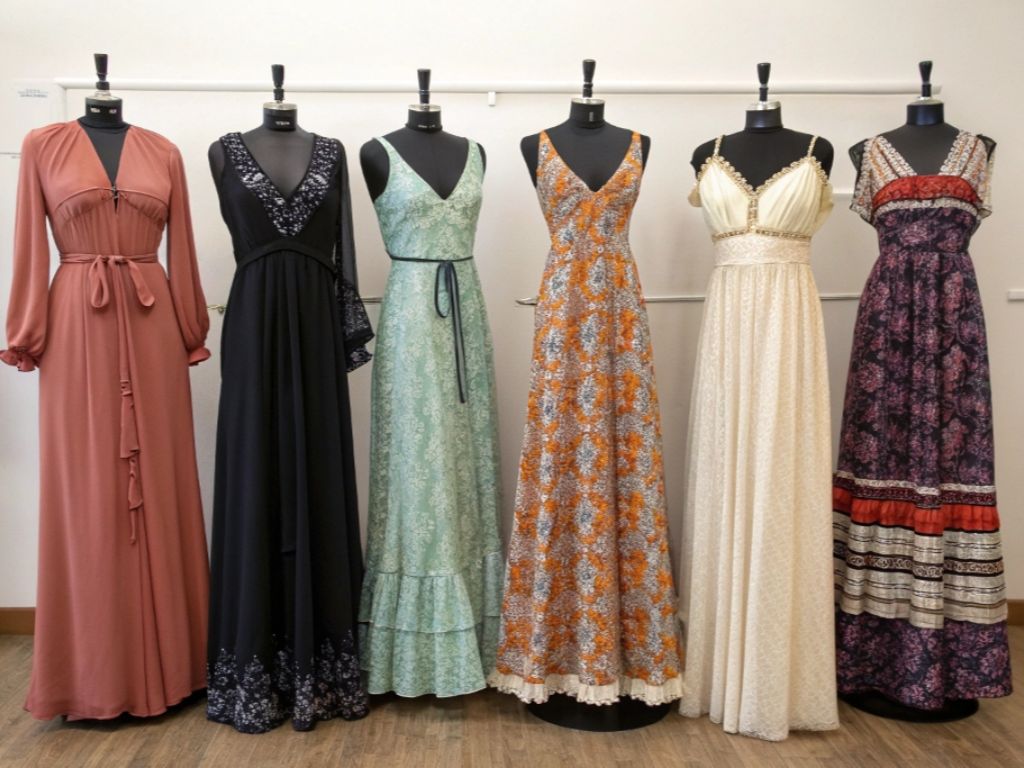
A maxi dress is usually described as an ankle-length or floor-length dress, but that retail definition is not precise enough for manufacturing. The factory needs an approved measurement method that defines where the garment begins, where it should finish, how it sits on the target body, and how the hem relates to footwear or floor clearance.
Overall length may be measured from the high point of the shoulder, center front, center back, waist seam, or another fixed point. The same method must be used in pattern making, sampling, grading, production, and inspection. Measuring from different reference points can create conflicting results even when everyone believes they are checking the same dimension.
Length also changes with body proportion. A fuller bust can lift the front hem. A different shoulder slope can alter both armhole position and overall length. A lower waist seam changes the visual proportion of the skirt. For this reason, a maxi dress should not be created by simply extending a midi pattern.
Production teams normally control high-point shoulder to hem, center-front and center-back length, waist position, side-seam length, slit height, lining length, strap length, skirt sweep, and front-to-back hem balance. The intended occasion matters too. A resort dress may need comfortable clearance for sandals, while a formal floor-length gown may sit much closer to the floor.
Which Maxi Dress Styles Need Different Construction?
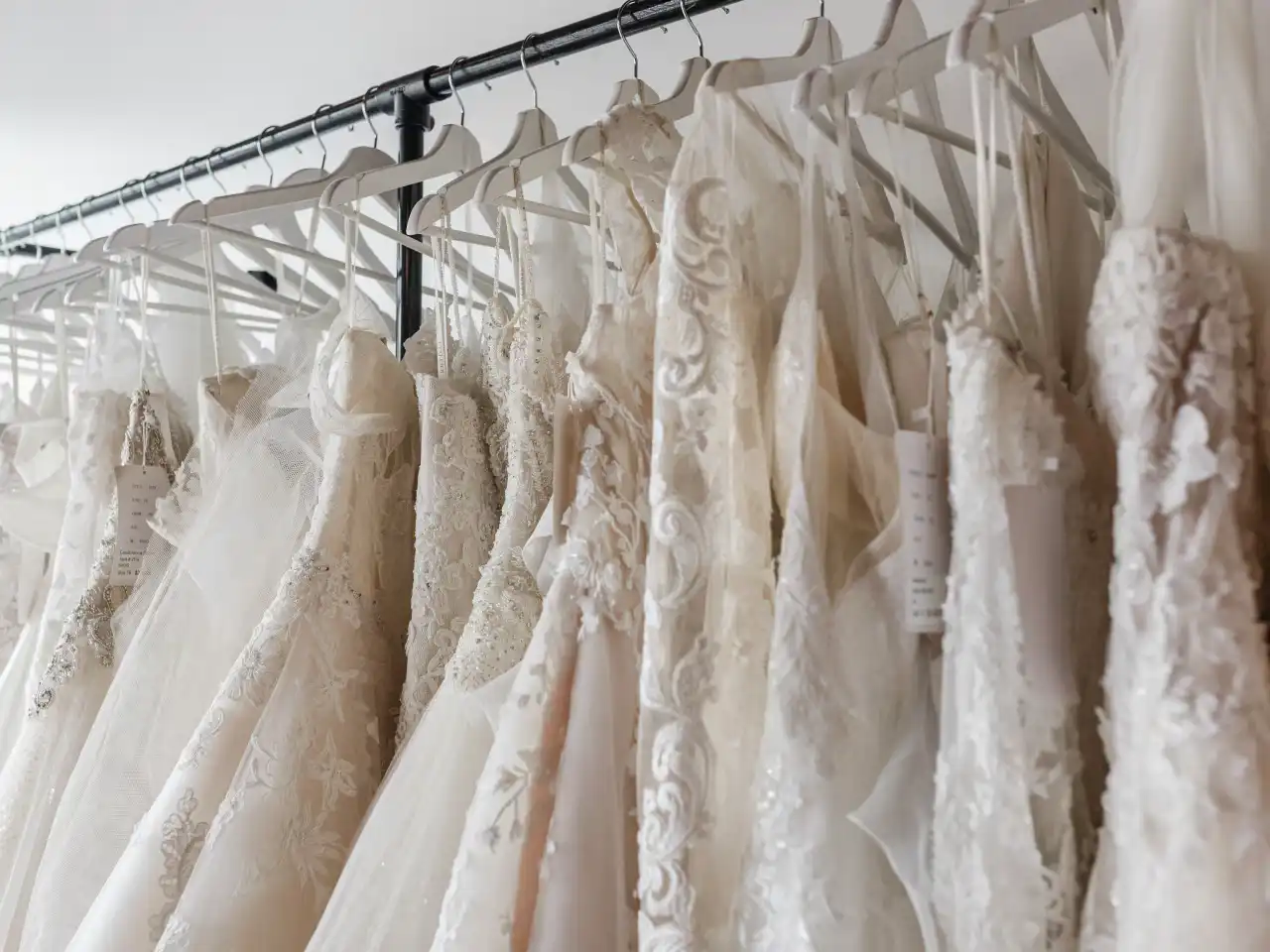
Different maxi silhouettes require different patterns, sewing sequences, machinery, operator skills, and quality checks. A jersey bodycon maxi cannot be planned like a tiered chiffon dress, and a bias-cut satin gown requires more stabilization than a conventional A-line style.
| Maxi Dress Style | Typical Construction | Main Production Risk | Key Control |
| A-line maxi | Flared woven panels | Uneven side lengths | Pattern balance and grain alignment |
| Tiered maxi | Gathered horizontal sections | Uneven gathering and twisting | Defined gathering ratios and notches |
| Bias-cut maxi | Panels cut near a 45-degree grain | Fabric growth and uneven hem | Controlled handling, stabilization, and hanging checks |
| Bodycon maxi | Stretch-knit construction | Size variation and seam waving | Stretch recovery and machine tension |
| Corset maxi | Structured bodice with long skirt | Poor bust support or waist distortion | Boning, lining, fit, and closure approval |
| Printed resort maxi | Long directional panels | Reversed or mismatched prints | Marker planning and bundle control |
| Chiffon maxi | Lightweight shell with lining | Transparency and seam puckering | Fine seams and balanced lining |
| Satin evening maxi | Smooth reflective fabric | Snags, rippling, and pressing marks | Surface protection and careful handling |
Complexity is not determined by the number of visible details. A simple satin slip dress may be difficult because the fabric exposes every grain error, seam ripple, needle mark, and pressing mistake. A fuller printed dress may be easier to sew but harder to cut because print direction and motif placement increase material use and handling risk.
A dependable manufacturer classifies the style before quoting. The classification affects fabric consumption, sample time, cutting layout, machine selection, standard minutes, inspection points, packing method, and production schedule. Treating every long dress as the same product usually produces an unrealistic quotation or a late technical correction.
Why Are Length and Drape Hard to Control?
Long garments magnify fabric behavior. A small shift near the waist may become a much larger visual difference by the time the panel reaches the floor. This is especially noticeable in full skirts, bias panels, lightweight materials, and asymmetric designs.
Drape depends on more than fabric weight. Fiber content, yarn construction, finishing, surface texture, stretch, moisture response, seam weight, lining, and pressing all influence how the dress hangs. Bias-cut sections are particularly sensitive because fabric cut across the grain can lengthen under gravity after cutting, sewing, steaming, or hanging.
Gathering also affects vertical balance. Heavy gathers can pull a waist seam downward, while an overly narrow or stiff lining can lift the outer shell and restrict movement. An invisible zipper sewn under too much tension can ripple down the back and change the apparent length on one side.
Drape should be reviewed during fabric approval, first sampling, fitting, pre-production approval, early bulk production, final pressing, and finished-garment inspection. Correcting only the visible hem at the end is risky because the real cause may be an unbalanced pattern, stretched seam, incorrect grain, uneven gathering, or lining interference.
Where Production Risk Builds Up
Maxi dress risk usually accumulates through several small decisions rather than one dramatic error. Slightly unstable fabric, an unclear measurement instruction, aggressive marker planning, a stretched side seam, and unsuitable pressing may each look manageable. Together, they can produce a dress that twists, changes length, or fails to match the approved sample.
The most vulnerable points are often the handovers between departments. The pattern may be correct, but a cutting operator may rotate a directional panel to save fabric. The sample may be approved, but the bulk lining may arrive in a different weight. The sewing construction may be correct, yet one side of the zipper may be stretched during attachment.
Risk control depends on visible evidence: approved fabric and color references, a final graded pattern, construction instructions, measurement methods, an approved physical sample, print and grain directions, a quality checklist, and confirmed packing requirements. Critical details should also be assigned the right inspection coverage rather than assuming one final random check will catch every problem.
Experienced production does not rely on workers simply understanding what the designer intended. It translates the design into measurable, repeatable instructions that pattern, cutting, sewing, quality, pressing, and packing teams can all follow.
How Does Maxi Dress Development Begin?
Maxi dress development begins by translating the brand’s creative idea into measurable production information. The factory reviews the design, target fit, fabric, construction, size range, quantities, labels, packaging, and delivery requirements before creating the pattern and first sample. Clear inputs reduce repeated sampling, inaccurate costing, and last-minute bulk changes.
What Design Files Does the Factory Need?
A complete tech pack is the clearest starting point, but development can also begin from a reference garment, sketch, line sheet, detailed photographs, moodboard, size chart, fabric swatch, or a combination of these materials. The quality of the outcome depends less on the file format than on the clarity of the decisions it communicates.
A practical development package includes front and back views, base-size measurements, point-of-measure instructions, construction details, target fabric, lining, trims, color references, label requirements, planned quantities, target market, and wearing occasion. Maxi-specific information should define the length method, waist position, skirt sweep, slit height, lining coverage, strap adjustment, print direction, hem finish, and closure.
Reference photographs can explain the visual direction, but they rarely reveal internal construction. A photograph cannot confirm whether a bodice contains cups, boning, elastic, fusible support, or a specific lining structure. It may also hide the back closure, seam positions, or true skirt volume.
When information is incomplete, assumptions should be recorded before quotation or sampling. Quantity details matter as well. Two hundred pieces in one color are not commercially identical to two hundred pieces divided across four colors and seven sizes. Color splits, fabric minimums, custom trims, and size ratios can change both feasibility and cost.
How Is the Pattern Developed?
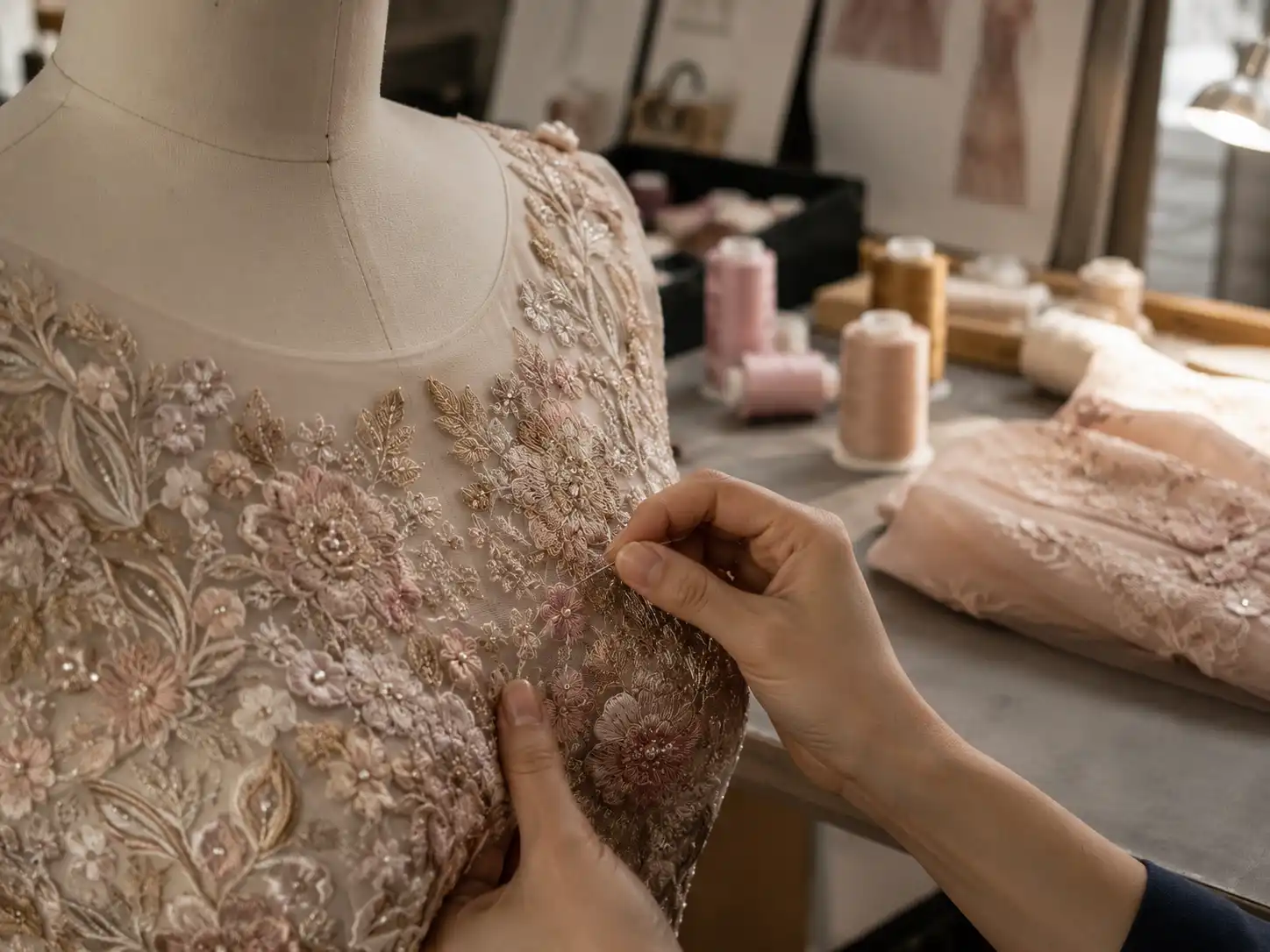
Pattern development turns a two-dimensional idea into a three-dimensional garment. The pattern maker must understand the design, body proportions, fabric behavior, seam construction, support, lining, and the way the style will be graded across sizes.
The process may begin with a proven base block or an existing approved pattern. The pattern maker then adjusts the neckline, shoulder, bust, underbust, waist, hip, skirt volume, seam placement, length, slit, and internal construction. Increasing bust volume can lift the front hem. Moving the waist seam can change the apparent leg proportion. Adding skirt fullness increases both movement and weight.
Key decisions include straight-grain or bias placement, the number of skirt panels, dart or princess shaping, ease, lining construction, seam allowances, hem allowance, zipper placement, slit reinforcement, and grade rules. Pattern efficiency matters, but it should not override grain direction, print orientation, or the intended silhouette.
A production-ready pattern supports cutting, sewing, measurement control, grading, and repeat orders. It should not depend on one sample machinist remembering an undocumented adjustment. Jinfeng Apparel’s development structure includes 7+ senior pattern makers, 2 sample rooms, and 20+ sample machinists, allowing technical changes to be recorded and tested before bulk production.
How Is the First Sample Made?
The first sample tests whether the design, pattern, fabric, and proposed construction work together. It is a development tool, not the final production standard. The sample room checks panel direction, notches, trims, lining, seam sequence, closure, and the practical way the garment will be assembled.
Typical first-sample findings include neckline gaping, insufficient bust support, an incorrect waist position, a skirt that feels heavier than expected, side seams that move forward, a slit that restricts walking, transparency, lining interference, zipper rippling, or an uneven hem.
The sample should answer four questions: Does the garment resemble the design? Does it fit the target customer? Can normal production operators sew it consistently? Can it be produced within the intended cost and delivery framework? A photo-ready sample can still be unsuitable for bulk if pins, temporary tape, hand manipulation, or undocumented alterations are hiding structural problems.
A substitute fabric may be used when the final material is unavailable, but fitting and construction should be reviewed again in the actual fabric. Changes in weight, stretch, shrinkage, surface friction, and drape can materially alter the result.
What Is Corrected During Fitting?
Fitting evaluates proportion, comfort, movement, construction, and visual balance. The goal is not simply to make a garment tighter or looser. The team must identify the cause of the problem and correct the appropriate pattern, material, or sewing method.
| Development Stage | Main Purpose | Typical Approval Evidence | Major Changes Allowed |
| First sample | Test design, pattern, and construction | Fit notes and marked sample | Yes |
| Fit sample | Confirm measurements and body proportion | Updated size chart and fit comments | Yes |
| Revised sample | Verify agreed corrections | Closed comment list | Limited |
| Photo-ready sample | Confirm visual presentation | Image or marketing approval | Usually limited |
| PP sample | Confirm bulk-production standard | Approved sample and final files | Minimal |
| Golden sample | Provide the physical factory reference | Sealed approved garment | No unapproved changes |
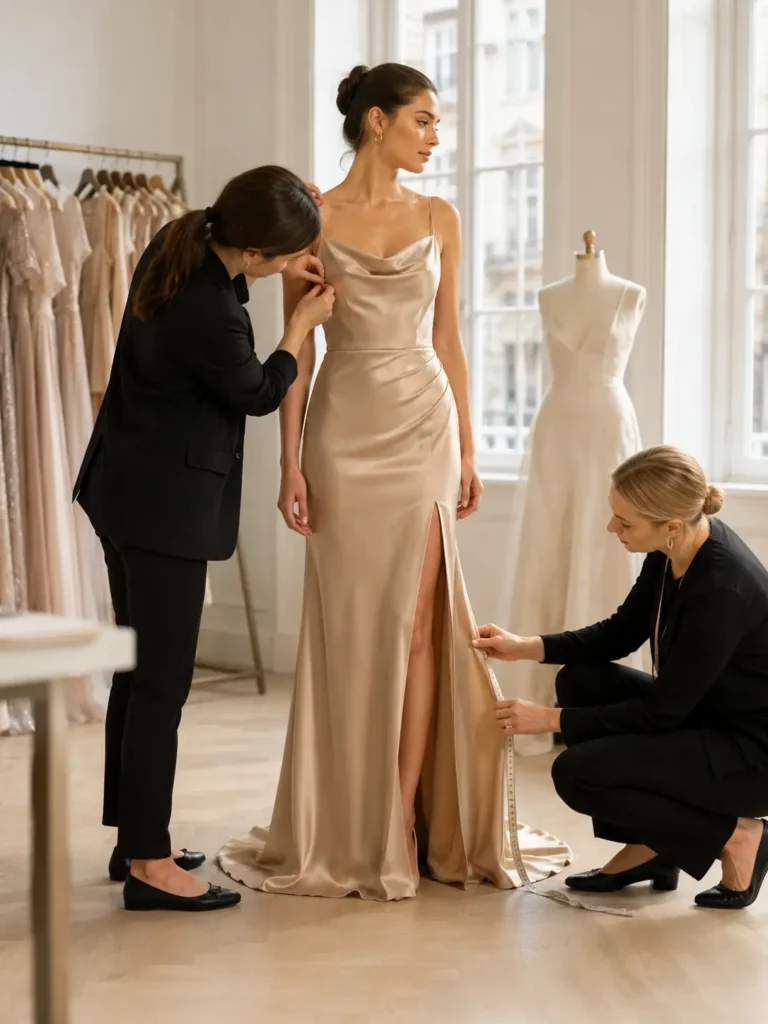
A maxi fitting normally checks bust shaping, shoulder position, armholes, waist level, hip ease, strap length, neckline security, side-seam direction, slit height, lining coverage, movement, and overall length. The garment should be viewed from every side and checked while walking and sitting, not only while standing on a mannequin.
Comments should use measurable language. ‘Improve the skirt’ is difficult to execute. ‘Add 4 cm total sweep at the hem while keeping the waist seam unchanged’ gives the pattern maker a clear action. Approved changes should be transferred into the pattern, size specification, bill of materials, sewing instructions, quality checklist, and packing file. Verbal decisions are not an adequate production record.
Which Fabrics Work for Maxi Dresses?
Suitable maxi dress fabrics depend on silhouette, season, opacity, movement, stretch, care requirements, and price positioning. Chiffon, satin, crepe, rayon, viscose, jersey, lace, mesh, and linen blends can all work, but each requires different pattern, cutting, sewing, lining, pressing, and stability controls.
How Do Chiffon, Satin, and Crepe Behave?
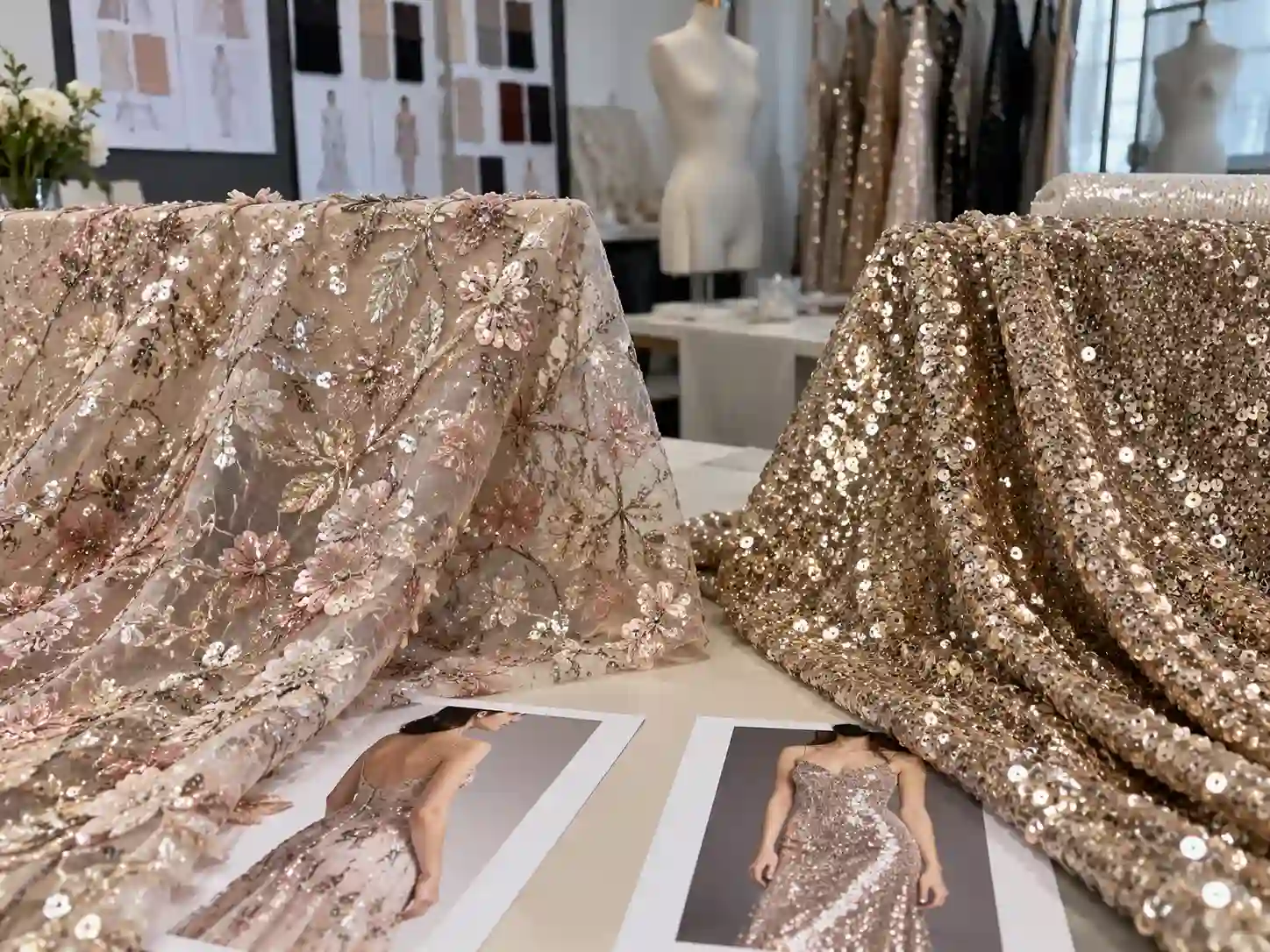
Chiffon, satin, and crepe are widely used because they create movement and elegance, but their production behavior is very different. Fabric names alone are not enough for approval. Two satin qualities with the same fiber composition and nominal weight can have different stretch, shine, drape, snag resistance, and seam response.
| Fabric | Common Commercial Weight* | Typical Maxi Uses | Main Risks | Practical Controls |
| Chiffon | 55-100 gsm | Tiered, layered, gathered, resort styles | Transparency, shifting, seam puckering | Fine needle, controlled spreading, lining, narrow seams |
| Satin | 80-180 gsm | Slip, evening, formal, bias-cut styles | Snags, pressing shine, seam rippling, shade direction | Surface protection, low tension, careful pressing |
| Crepe | 110-220 gsm | Wrap, A-line, fitted, occasion styles | Shrinkage, texture variation, seam appearance | Pre-testing, grain control, stable seam construction |
| Viscose woven | 90-180 gsm | Printed resort and summer dresses | Growth, shrinkage, skew, creasing | Relaxation, dimensional testing, shade grouping |
| Jersey | 160-300 gsm | Bodycon and casual maxi dresses | Stretching, seam waving, poor recovery | Recovery checks and suitable knit machinery |
| Linen blend | 130-240 gsm | Relaxed summer and resort styles | Creasing, shrinkage, seam slippage | Dimensional testing and pressing control |
*The weight ranges are common sourcing references rather than fixed specifications. Actual performance depends on fiber, yarn, construction, finishing, and mill quality.
Chiffon requires careful spreading because layers can move during cutting and often needs a lining or strategically placed double layers. Satin exposes handling marks, needle damage, zipper rippling, and pressing errors. Crepe usually gives more controlled drape, but different crepe constructions can react very differently to steam, washing, and sewing.
The actual approved fabric should be used for the pre-production sample whenever practical. Approving a silhouette in one fabric and moving directly into another bulk quality can change fit, movement, and construction in ways that are not visible from a swatch alone.
Are Rayon and Viscose Stable in Production?
Rayon and viscose are popular for resort and summer maxi dresses because they feel soft, cool, and fluid. Their appearance can be commercially attractive, but production stability depends on the exact weave, finish, print process, and care requirement.
Common risks include dimensional change after washing or steaming, growth while hanging, skewed grain, shade variation between rolls, distortion during spreading, and heavy creasing in transport. A long, full skirt places more weight on the waist seam than a short dress, so fabric behavior becomes part of the garment structure.
Before cutting, the factory should confirm composition, usable width, weight, shrinkage, skew, surface appearance, print direction, pressing response, and intended care. For washable products, testing should reflect the care instruction that will appear on the label. Pattern compensation should be based on repeatable results, not guesswork.
Roll-to-roll shade variation must also be controlled. Panels within one dress should come from compatible shade groups. A slightly darker front and lighter back may pass unnoticed under factory lighting but become obvious in daylight or product photography.
When Is a Lining Required?
A lining may be needed for opacity, comfort, support, seam coverage, shape, or a cleaner internal finish. It should be selected as part of the structure rather than added after the shell has already been approved.
Light-colored chiffon, mesh, lace, and thin woven fabrics often need lining because they can become transparent under sunlight, flash photography, or strong retail lighting. Structured occasion dresses may require a firmer lining to support the bodice, while relaxed resort dresses usually need something lighter that preserves movement.
The lining must be compatible with the shell in stretch direction, weight, color, surface friction, shrinkage, care method, slit position, hem length, and attachment. A non-stretch lining inside a stretch dress can restrict fit. A heavy lining under chiffon can remove the intended softness. A narrow lining can pull across the hips and drag the outer skirt upward.
For many conventional maxi dresses, the lining finishes a few centimeters above the shell hem, but the exact difference depends on fabric, transparency, slit construction, and customer specification. It should be written into the measurement chart rather than left to operator judgment.
How Are Prints and Colors Approved?
Color approval should use a physical reference whenever possible. Screens display color differently, and fabric texture, fiber content, shine, and finishing change how the same dye appears. Solid colors may be approved through lab dips, strike-offs, cuttings, or bulk yardage references under an agreed light source.
Printed maxi dresses require additional decisions because long panels make errors more visible. The team should confirm print direction, motif orientation, repeat size, border position, center-front placement, side-seam matching, size-to-size placement expectations, acceptable variation, and the resulting fabric consumption.
Large florals, engineered prints, border prints, stripes, and geometric designs require different marker strategies. Perfect matching can increase fabric use substantially, so the brand should decide whether matching is essential, preferred, or unnecessary before costing.
Cut bundles must remain organized so panels from different print sections or shade groups are not mixed. Directional arrows and panel identity should appear in the pattern or marker instructions. Bulk color should also be reviewed after finishing because heat, steam, washing, and pressing can slightly change appearance.
How Are Maxi Dresses Cut and Sewn?
Maxi dresses are cut and sewn through fabric inspection, relaxation where required, marker planning, controlled spreading, accurate cutting, bundle management, sequential assembly, in-line inspection, hemming, and finishing. Long panels require close control of grain, print direction, stretch, seam tension, matching, and panel length.
How Is Fabric Inspected Before Cutting?
Fabric inspection prevents material problems from entering every garment in the order. Once defective or unstable fabric has been cut, replacement becomes more expensive and the production schedule becomes harder to protect.
Incoming checks normally compare the fabric with the approved reference and review identity, quantity, usable width, color, shade, weight, hand feel, stretch, surface quality, print, and visible defects. Holes, stains, oil marks, snags, broken yarns, weaving faults, print lines, bowing, skew, and uneven finishing should be recorded before release.
Usable width matters because even a small reduction can change marker efficiency when an order contains long, wide skirt panels. Stretch and unstable fabrics may also require relaxation to release tension created during knitting, rolling, transport, or storage. The method and time should follow material tests rather than a universal rule.
Shade grouping is particularly important for satin, solid viscose, and other materials that show color variation easily. Panels within one dress should come from the same or compatible shade group. Cutting should proceed only after the material is released; a waiting sewing line is not a reason to bypass incoming control.
How Are Long Pattern Panels Cut Accurately?
Accurate cutting begins with stable spreading. The fabric should lie flat without excessive tension, wrinkles, trapped air, or edge distortion. Stretching material during spreading can cause panels to contract after cutting and create unexplained size or length differences.
Long pieces require careful grain alignment. A panel that is slightly off grain near the waist can twist visibly by the time it reaches the hem. The marker should clearly define grain, face direction, print direction, nap, size, panel identity, notches, drill marks, and required matching points.
Marker efficiency matters because maxi dresses can consume substantial fabric, especially when skirts are full, circular, tiered, printed, or bias cut. Material savings cannot override design requirements. Rotating a directional panel may save cloth but reverse a motif, nap, shine direction, or drape.
After cutting, selected panels should be checked against the approved pattern. Long side seams, waistlines, slit positions, and key notches deserve particular attention. Bundles must remain separated by style, color, size, shade group, and quantity so the sewing line does not mix incompatible panels.
How Are Seams, Slits, and Zippers Sewn?
The sewing method should match both fabric and structure. Needle size, thread, stitch density, machine tension, presser-foot pressure, seam type, and operator handling all influence the finished appearance.
Lightweight chiffon can pucker when thread tension is too high. Satin shows needle damage and rippling. Stretch mesh can wave if it is pulled during assembly. Jersey seams need enough elasticity to move without breaking, while long woven side seams must be joined without feeding one panel faster than the other.
Slits require a clear height measurement and approved reinforcement. The top is a stress point and may need backstitching, bar tacking, tape, or another construction. Both sides should finish evenly, and the lining should not pull across the opening or appear below it.
Invisible zippers should close smoothly and lie flat. Common problems include rippling, misaligned waist seams, fabric caught in the teeth, different back lengths, twisting, and excessive tension. The first completed garments should be reviewed before the line reaches full speed so machine settings and handling methods can be corrected early.
How Is an Even Hem Achieved?
An even hem begins with pattern balance, grain control, accurate cutting, and stable sewing. Final trimming cannot fully correct a garment that has already twisted or stretched.
Bias-cut, circular, and very fluid skirts may change length after assembly. Depending on the fabric and approved method, the garment may need time to hang or stabilize before final hemming. The team should check that side seams fall vertically, the waistline sits level, gathers are evenly distributed, the lining does not pull the shell, and the front and back remain balanced.
The hem construction must suit the fabric. Chiffon often uses a fine rolled or narrow hem. Satin may use a narrow machine hem, blind hem, faced hem, or another approved finish. Stretch styles need a method that recovers without becoming wavy.
Inspection should include a vertical view from the front, back, and sides. A dress may meet a flat-table length measurement but still look uneven when hung. Pressing must support the hem rather than stretch bias sections, flatten texture, or create shine.
How Is Maxi Dress Quality Controlled?
Maxi dress quality control begins before production and continues through material approval, cutting, sewing, measurements, finishing, labeling, packing, and shipment release. Critical controls include garment length, fit, drape, side-seam direction, slit position, lining, hem balance, workmanship, color, and SKU accuracy.
What Is Checked Before Bulk Production?
Bulk production should begin only after the major decisions affecting appearance, fit, cost, quality, and delivery have been approved. The pre-production package normally includes the PP or golden sample, final tech pack, graded pattern, size chart, approved fabric, lining, trims, bill of materials, sewing instructions, tolerances, labels, barcode files, packing instructions, carton requirements, and order breakdown.
A pre-production meeting helps cutting, sewing, quality, pressing, and packing teams work from the same standard. Special risks should be highlighted, including directional prints, shade-sensitive satin, transparent chiffon, unstable viscose, asymmetric hems, delicate straps, high slits, corset structures, or complicated label assortments.
The PP sample is not simply another sales sample. It should reflect the approved bulk material, construction, measurements, branding, and presentation as closely as practical. Any conflict between the sample and written file must be resolved before materials are issued.
Starting production without clear approval can appear to save time, but it often creates inconsistent decisions, slower sewing, rework, material loss, and delayed shipment. The production gate is valuable precisely because it prevents unresolved development questions from reaching the line.
How Are Measurements Controlled In-Line?
Measurements should be checked while production is running so problems can be corrected before they affect the entire order. The approved customer specification always controls the final standard; the following ranges are common working references for conventional fashion dresses, not universal rules.
| Control Point | Measurement Method | Common Working Tolerance* | Main Risk |
| Bust, waist, hip | Flat garment measurement | +/- 0.5 to 1.0 cm | Poor fit or size inconsistency |
| HPS to hem | Defined high-point-shoulder method | +/- 1.0 to 1.5 cm | Visible length variation |
| Strap length | End-to-end or seam-to-seam | +/- 0.5 cm | Uneven neckline or armhole |
| Slit height | Fixed hem or waist reference | +/- 0.5 to 1.0 cm | Coverage and movement issues |
| Lining length | Compare with shell | As approved; often 2-5 cm shorter | Lining visible below shell |
| Waist position | HPS to waist seam | +/- 0.5 to 1.0 cm | Distorted body proportion |
| Side-seam balance | Front and back comparison | No visible twist | Rotating silhouette |
*Actual tolerances vary by customer, fabric, construction, measurement point, and size. The approved specification must define the final requirement.
The measuring method should state whether the garment is relaxed, stretched, zipped, buttoned, flat, or hanging, and define exact start and end points. Inspectors should check the first completed pieces, selected garments during production, and finished goods according to the control plan.
When a measurement begins moving toward the tolerance limit, the team should investigate the source. The cause may be cutting, seam allowance, operator handling, fabric stretch, pressing, or an incorrect attachment point. Correcting the process is more valuable than repeatedly altering finished garments.
How Are Drape and Side Seams Inspected?
Drape should be checked with the garment hanging vertically. Flat-table inspection is useful for dimensions and workmanship but cannot reveal every balance problem. The dress should be viewed from the front, back, and both sides, and the side seams should remain in the intended position.
Side-seam twisting can result from an incorrect grain line, unbalanced pattern pieces, fabric skew, uneven cutting, stretching during sewing, different feed on front and back panels, unsuitable pressing, or lining tension. The waistline should appear level, and skirt fullness should be distributed according to the approved design.
The slit should hang cleanly without pulling open when the wearer stands normally. The lining should move independently enough to avoid dragging the shell. The dress should also be checked during walking because a style can look balanced when still but twist, climb, or restrict movement in use.
Quality decisions should combine measurement, appearance, and function. A garment can fall within numerical tolerance and still look unacceptable if the side seam rotates, the hem appears uneven, or the lining changes the intended movement.
How Are Finished Dresses Approved?
Finished-dress approval covers fabric appearance, workmanship, measurements, fit, pressing, labels, packaging, and shipment accuracy. Inspectors check for stains, holes, snags, broken stitches, open seams, loose threads, seam puckering, zipper problems, incorrect labels, and visible shade differences.
Maxi-specific checks include hem level, side-seam direction, slit height and reinforcement, lining length, front-to-back balance, print direction, skirt movement, zipper alignment, and the smoothness of long seams. Pressing should be clean without shine, water marks, crushed texture, or distorted seams.
Packing inspection confirms that the garment matches its main label, size label, care label, hangtag, barcode, polybag sticker, SKU, and carton record. Statistical sampling may be used for final lot evaluation, but critical identity and branding details may require wider checking.
Inspection results should be recorded so recurring defects can be traced to a material lot, operation, machine setting, operator group, or production stage. Jinfeng Apparel’s verified team structure includes 15+ QC inspectors and 30+ finishing and packing workers, supporting incoming, cutting, sewing, garment, pressing, and packing checks according to project requirements.
How Do Maxi Dresses Enter Bulk Production?
Maxi dresses enter bulk production after the PP sample, pattern, measurements, fabric, trims, construction, quality standard, labels, and packing details are approved. The factory then plans material release, cutting, sewing capacity, inspections, finishing, packing, and delivery according to style complexity, quantity, color breakdown, and launch schedule.
What Does the PP Sample Confirm?
The pre-production sample confirms what the bulk order should look like and how it should be made. It closes the gap between development and repeatable production by confirming fabric, color, lining, trims, construction, fit, measurements, length, slit, zipper, hem finish, labels, packaging, and overall workmanship.
After approval, a sealed golden sample may be retained as the physical reference. Sewing, inspection, pressing, and packing teams can compare bulk garments with that sample alongside the written specifications. The sample and files must agree; if the sample uses one zipper length and the bill of materials lists another, the discrepancy should be resolved before issue.
Major changes after PP approval can affect patterns, fabric consumption, labor time, price, quality, and delivery. They should be evaluated as formal changes rather than passed informally to the line. The PP stage also confirms whether the proposed garment remains commercially realistic at the intended quantity.
Sometimes a small internal construction adjustment can improve sewing stability without changing the visible design. Such changes should still be documented and approved so later repeat orders follow the same standard.
How Are Multi-Style Orders Scheduled?
A multi-style order should be planned by material readiness, technical complexity, production unit, inspection capacity, and shipment priority rather than treating every style as identical. One collection may contain a chiffon tiered dress, satin slip dress, jersey bodycon style, printed resort maxi, and corset evening dress, each requiring different teams and line conditions.
Planning reviews fabric and trim arrival, sample approval, pattern readiness, color and size breakdown, sewing complexity, operator skill, quality risk, pressing requirements, packaging materials, and shipment splits. Styles with similar fabrics and machinery may be grouped to reduce setup changes, but grouping should not delay a style whose materials and approvals are already ready.
Finishing and inspection capacity must be protected as carefully as sewing capacity. Producing garments faster than they can be inspected, pressed, cooled, folded, and packed creates congestion and increases the risk of damage to long dresses.
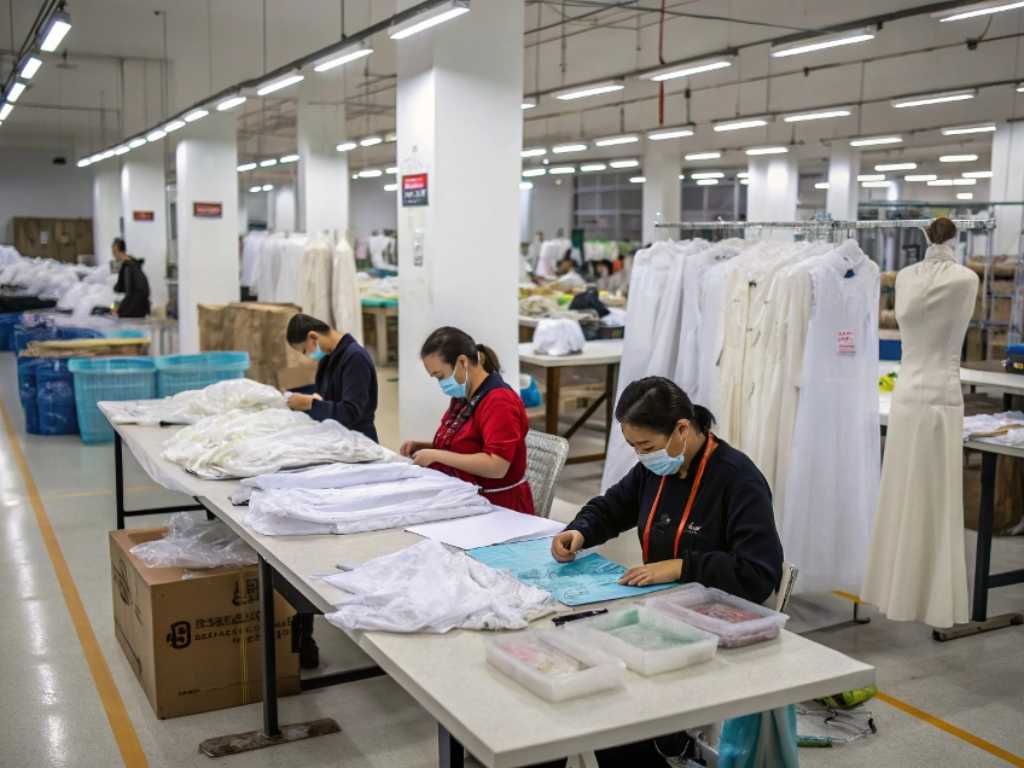
Jinfeng Apparel operates 6 owned women’s fashion factories and works with 10+ long-term satellite production partners. Its verified production structure includes 18+ sewing lines and 6+ flexible lines, allowing styles to be assigned according to fabric, construction, quantity, and delivery needs while technical files and quality standards remain centrally controlled.
How Are Dresses Pressed and Packed?
Pressing shapes the final appearance, but the method must suit the fabric. Excessive temperature, steam, pressure, or direct contact can create shine, flatten texture, stretch seams, or damage embellishment. Satin usually requires surface protection, while chiffon and mesh need controlled heat and gentle handling.
After pressing, garments should cool and stabilize before packing. Folding a warm or damp dress can create deep creases or trap moisture. Long dresses also need a defined folding method so structured bodices are not crushed, boning is not bent, sequins are protected, straps do not tangle, and one strong fold does not mark the skirt.
Private-label packing may include the main label, size label, care label, hangtag, barcode, SKU sticker, tissue, individual polybag, size or color sticker, carton mark, and warehouse label. The garment, label, barcode, polybag, and carton record must all identify the same style, size, and color.
Carton dimensions and quantities should balance garment protection, freight efficiency, weight limits, and customer receiving rules. A well-made dress can still be rejected or delayed at a warehouse if its barcode, assortment, carton mark, or packing list is incorrect.
How Do Brands Evaluate a Manufacturer?
Brands should evaluate a maxi dress manufacturer through evidence of product development, pattern making, fabric control, sampling, sewing, quality management, packing, and repeat-order capability. A low quotation or attractive sample photograph does not show how the supplier will protect consistency across an entire order.
- Who reviews the tech pack and identifies construction risks?
- Are experienced women’s pattern makers and sample machinists available?
- How are first, fit, revised, PP, and golden samples controlled?
- How are shrinkage, shade, print direction, and long hems checked?
- Are measurements monitored during sewing rather than only at final inspection?
- Can the production team handle chiffon, satin, mesh, lace, jersey, and viscose?
- How are labels, barcodes, SKUs, polybags, and cartons verified?
- Are patterns, fabric references, trims, and packing records retained for repeats?
- Can multiple styles and delivery batches be managed under one quality standard?
- How are unreleased designs and private-label details protected?
The lowest unit price is not always the lowest total cost. Rework, delayed launches, inconsistent sizing, incorrect barcodes, damaged fabric, and rejected warehouse deliveries can exceed the original price difference. The useful quotation is the one that clearly defines fabric, construction, sample approvals, quality controls, packaging, quantity assumptions, and delivery scope.
Jinfeng Apparel has focused on custom women’s fashion manufacturing since 2008. Based in Guangdong, China, the company supports OEM, ODM, and private-label womenswear through 6 owned factories, 10+ long-term satellite production partners, 7+ senior pattern makers, 2 sample rooms, 20+ sample machinists, 12+ merchandisers and order follow-up specialists, 15+ QC inspectors, and 30+ finishing and packing workers. The standard MOQ starts from 200 pieces per style and color, subject to fabric, color, trim, construction, packaging, and scheduling requirements.
For a custom maxi dress collection, share the tech pack, reference images or original sample, size chart, fabric direction, estimated quantities, target market, private-label requirements, and planned launch date. The team can review structure, fabric risks, sampling needs, production feasibility, packaging, and the path from PP approval to bulk delivery before preparing a project quotation.