
How to Verify a Dress Manufacturer's Business License Before You Place an Order

Your trusted Women’s Apparel Manufacturer from China
A dress manufacturer can show you beautiful samples, polished factory photos, quick replies, and a price that looks almost too good to ignore. But before a fashion brand sends a sample fee, signs a purchase order, or pays a bulk deposit, one question should come first: is this manufacturer legally real, commercially consistent, and actually capable of producing your dress order? In custom womenswear, a business license is not just a document. It is the first link in a trust chain that connects legal identity, payment safety, production capability, quality control, design protection, and long-term cooperation.
To verify a dress manufacturer’s business license, ask for the legal company name, business license copy, registration code or Unified Social Credit Code, official address, company seal, and company bank account. Then compare these details with official registry data, contracts, invoices, website information, factory proof, sample records, and payment instructions before placing an order.
The real risk is not always a completely fake company. Many sourcing problems begin with smaller inconsistencies: an English name that does not match the legal company, a bank account under another entity, a factory address that cannot be explained, or a supplier that owns a license but has no dress production system behind it. One fashion team once avoided a costly mistake simply because the bank account name did not match the license holder. The sample photos looked convincing. The price was attractive. But the paperwork told a different story.
What Is a Dress Manufacturer’s Business License?
A dress manufacturer’s business license is the legal registration document that proves a company exists as a registered business entity. It helps buyers confirm the supplier’s legal name, registration code, address, business scope, and company status. However, it does not prove that the supplier owns factories, controls quality, develops dress patterns, or can deliver bulk production reliably.
Legal Identity
A business license is the first document a buyer should request before sending sample fees, signing a purchase order, or paying a bulk deposit. In the dress manufacturing industry, it works like an identity card for the company. It tells you whether the supplier is registered, what legal name it operates under, which authority registered it, and what type of business it is allowed to conduct.
For a China-based supplier, the legal company name is usually shown in Chinese. This matters because many suppliers use English names for websites, trade shows, catalogs, email signatures, and social media. The English name may be useful for branding, but the Chinese legal name is usually the name you need for official verification. If a supplier can only give you an English display name but cannot provide its legal registration information, your verification is incomplete.
A proper license check helps buyers avoid one common sourcing mistake: confusing a marketing name with a legal entity. The company that talks to you, quotes you, invoices you, receives your money, and produces your order should be clearly connected through documents.
License Fields
A Chinese business license normally includes several fields that buyers should understand before making a judgment. Some fields confirm identity, some help you check risk, and some help you decide what follow-up questions to ask.
License Field | What It Usually Shows | Why It Matters to Dress Buyers |
Legal company name | Chinese registered name | Helps verify the exact company, not only its English trade name |
Unified Social Credit Code | 18-character company identifier | Useful for registry searches and reducing wrong-company risk |
Legal representative | Named responsible person | Helps compare contracts, company seals, and formal documents |
Registered address | Legal registration location | Should be explainable if different from the office or factory address |
Business scope | Approved activities | Should reasonably relate to apparel, garments, textiles, trade, or manufacturing |
Date of establishment | Registration date | Helps compare against years of experience claimed by the supplier |
Company status | Active, abnormal, revoked, cancelled, etc. | Shows whether the company is currently operating legally |
Operating period | Valid business duration | Helps confirm whether the company is still within its registered period |
None of these fields should be reviewed alone. A license with an apparel-related business scope still does not prove that the company can produce your satin dress, lace dress, corset dress, or bulk private-label collection. But if the legal name, registration code, address, scope, and status are consistent, you have a much stronger starting point.
License Limits
A license proves legal existence. It does not prove manufacturing depth. This is where many buyers make a costly mistake. A registered company can be a real factory, a trading company, a sourcing office, a small workshop, a newly created export company, or a company that outsources most production. All of these may be legal. The question is whether that business model fits your order.
Dress production needs more than registration. A manufacturer must understand fit, fabric behavior, shrinkage, seam control, lining, trims, grading, measurement tolerance, pressing, packing, and repeat-order consistency. A bodycon dress requires stretch and recovery control. A satin slip dress needs seam smoothness and drape control. A mesh dress needs transparency and lining decisions. A corset dress needs structure, support, and careful pattern balance.
That is why experienced fashion buyers treat the license as the first checkpoint, not the final decision. The stronger approach is to build a full evidence chain: legal registration, company identity, payment route, production proof, sampling process, QC system, packaging ability, export coordination, and design protection.
Buyer Mindset
A serious buyer should ask, ‘What does this license prove, and what does it not prove?’ That question keeps your sourcing process practical. The business license proves that the company exists under a legal name. It may also show whether the business scope is connected to apparel or textile activities. But it does not prove that the supplier can match your sample, control your size chart, protect your designs, manage your launch calendar, or recover quickly when production problems happen.
For dress brands, the real goal is not only to avoid scams. It is to select a manufacturer that can support sellable products. Your customers do not care whether your supplier’s license looked professional. They care whether the dress fits, photographs well, feels right, arrives on time, and matches your brand promise. That is why business license verification should always be paired with product-level verification.
How Do You Verify a License Online?
To verify a dress manufacturer’s license online, ask for the Chinese legal company name and Unified Social Credit Code, then search the official company registry or a trusted company database. Compare the online record with the license copy, invoice, contract, bank account, website, and supplier contact details before paying any sample fee or deposit.
Registry Search
Online verification begins with the information you request from the supplier. Do not start with a screenshot in a chat window. Ask for a clear copy of the business license and the company’s legal registration details in text format. The copy should be readable, not cropped, blurred, over-compressed, or edited.
For a China-based dress supplier, the two most useful search inputs are usually the Chinese legal company name and the Unified Social Credit Code. The code is especially useful because it reduces confusion between companies with similar names. If your team cannot read Chinese, ask the supplier to provide the original license plus an English explanation of each key field.
A professional supplier should not be offended by this request. Large and mid-sized buyers often run legal checks, factory checks, payment checks, and document checks before approving a vendor. If a supplier avoids basic registration questions or tells you that verification is unnecessary, slow down.
Search Inputs
English supplier names can be useful, but they are not always enough. In apparel sourcing, one supplier may use a website brand name, an export name, a factory name, and a Chinese legal company name. This is not automatically a problem, but each name should be explained.
For example, a supplier may present itself online as ‘ABC Fashion Apparel,’ while the legal company name is a longer Chinese name. The export documents may use an official English translation. The bank account may show the registered entity name. These differences can be normal when they are consistent and documented.
The problem begins when the supplier cannot connect the names. If the company name on the license is different from the invoice, and the bank account belongs to another company, and the website shows a third name, the buyer needs a written explanation before paying. A good verification process uses the Chinese legal name, Unified Social Credit Code, English trading name, website domain, business email domain, phone number, and address.
Verification Steps
Online verification should be simple enough for a purchasing assistant to repeat, but detailed enough to catch major risks. The goal is not to become a legal investigator. The goal is to know whether the supplier’s legal identity is consistent with the business relationship they are asking you to enter.
Step | What to Check | Practical Standard | Risk if Missing |
1 | Clear license copy | Full page, readable fields, no heavy blur | Medium |
2 | Chinese legal name | Provided in text, not only image | High |
3 | Unified Social Credit Code | 18-character code matches license | High |
4 | Registry result | Company appears in registry or trusted database | High |
5 | Company status | Active or normally operating | High |
6 | Business scope | Apparel, clothing, textiles, trade, or related manufacturing | Medium |
7 | Address explanation | Registered, office, and factory addresses can be explained | Medium |
8 | Invoice entity | Same as verified company or clearly related | High |
9 | Bank account name | Same as legal entity or officially explained payment entity | High |
10 | Contract entity | Same responsible company as invoice/payment route | High |
The most important habit is comparison. A license is useful only when compared against other documents. Do not verify the license in isolation, then forget about it. Compare it with the quotation, proforma invoice, bank details, contract, website footer, email signature, company seal, and export documents.
Common Mistakes
The first common mistake is accepting a license image without checking the current company record. A license copy may be old. The company status may have changed. The address may have changed. The business scope may not support what the supplier is claiming.
The second mistake is relying only on the English company name. Many Chinese suppliers use English names for export communication, but official searches often require the Chinese registered name or company code. The third mistake is ignoring the payment route. Even if the license is real, the risk increases when the supplier asks for payment to a personal account, unrelated company account, or account with no written connection to the verified company.
Which License Details Must Match?
The license details that must match include the legal company name, registration code, company status, business scope, invoice issuer, contract party, company seal, bank account name, website identity, and supplier contact details. When these records point to the same responsible entity, the buyer’s payment and production risk becomes easier to control.
Company Name
The company name is the first matching point. The legal name on the business license should match the name found in the company registry. If there is an English trading name, the supplier should explain how it connects to the legal Chinese entity.
In practice, buyers should create a supplier identity record before starting samples. This record should include the supplier’s legal name, English name, website, contact person, email domain, phone number, license code, registered address, factory address, invoice issuer, and bank account name. It sounds basic, but it prevents confusion later when finance, design, production, and logistics teams all deal with the same supplier.
If your finance team receives an invoice from a company name that your sourcing team has never verified, payment should pause. If your design team is sending tech packs to one email domain while the contract is signed by another company, clarify the relationship. Matching company names protects more than payment; it protects accountability.
Address Check
Address differences are common in apparel manufacturing, so buyers should not panic immediately when the registered address is different from the factory address. A company may register at an office, operate sales in one location, develop samples in another, and produce bulk through owned or long-term partner factories.
The important question is whether the supplier can explain the structure clearly. Which address is the registered company address? Where is the merchandising team? Where is the sample room? Where is bulk production done? Which production unit handles your dress category? Who controls quality if production is spread across more than one factory?
A manufacturer with a real system can explain this without difficulty. One unit may handle sample development and complex woven dresses, another may handle party dresses, and another may focus on knit or stretch bodycon styles. The explanation should sound operational, not vague.
Bank Account
Bank account matching is one of the strongest payment safety checks. The bank account name should normally match the verified legal company, or the supplier should provide a written explanation if an affiliated export company is used.
A request to pay a personal account is a serious warning sign for a B2B custom dress order. So is an account under an unrelated company that has not appeared in the license, invoice, contract, or supplier explanation. Even for sample fees, the payment route should be clean and traceable.
Fashion brands often focus heavily on product details and forget financial consistency. But if something goes wrong, the payment record is one of the first documents you need. It shows who received the money, under what company name, for which order, and under which agreed terms.
Document Chain
The safest supplier file is not one perfect document. It is a consistent chain of documents. Each document should support the same basic story: who the supplier is, who receives payment, who signs the agreement, who controls production, and who is responsible if something goes wrong.
Document or Record | Detail That Should Match | Why It Matters |
Business license | Legal company name and code | Confirms legal identity |
Registry record | Name, code, status, address | Confirms current company information |
Quotation | Supplier name and contact details | Connects sales communication to company identity |
Proforma invoice | Invoice issuer and bank account | Connects order and payment route |
Contract | Legal party and company seal | Defines responsibility |
Bank account | Account holder name | Confirms who receives payment |
Website footer | Company name, email, phone, address | Checks public identity consistency |
Factory proof | Address, signage, production process | Connects legal entity to production reality |
Packing/export files | Shipper or export entity | Supports logistics and customs coordination |
The stronger the document chain, the easier it is for a buyer to proceed. When the chain is weak, every later step becomes harder: sample approval, deposit payment, bulk inspection, shipment, quality claim, and repeat order.
Which Red Flags Should Buyers Avoid?
Buyers should avoid dress suppliers that provide blurry licenses, refuse legal company details, use unrelated bank accounts, show abnormal registry status, cannot explain address differences, pressure for fast payment, offer unrealistic pricing, or provide only generic factory photos. One red flag may be explainable, but several together usually indicate high sourcing risk.
Abnormal Status
A company’s current operating status matters more than an old license copy. A supplier may send a clean-looking license, but the latest registry record may show abnormal operation, cancellation, revocation, or other warning signs. Buyers should check the current record before any meaningful payment.
If the company status looks unusual, ask for an explanation. Sometimes there may be an administrative reason, address update, restructuring, or export entity change. But the explanation should be specific and supported by documents. A supplier that only says ‘don’t worry’ without proof is asking you to take risk blindly.
Company age is another useful signal, though it should not be judged alone. If a supplier claims 15 or 20 years of factory experience but the registered company is very new, ask how the older factory history connects to the current legal entity. It may be a new export company under an established manufacturing team. Or it may be exaggerated marketing. The difference matters.
Mismatched Names
Mismatched names create confusion over who is responsible for your order. In apparel sourcing, some name variation is normal. English trade names, factory names, export companies, and legal Chinese names may all appear. But the supplier must connect them clearly.
High-risk mismatches include an invoice issued by one company, a bank account under another company, a contract signed by a third company, and a business license belonging to a fourth company. If the supplier cannot explain the structure in writing, do not pay.
A simple question often reveals the truth: ‘Which legal entity will be responsible for this order, receive payment, sign the contract, and handle after-sales issues?’ If the answer is not clear, the risk is not clear either.
Payment Pressure
Payment pressure is a common red flag. A supplier may push you to pay quickly by saying the fabric is running out, production space is limited, the price will expire today, or the sample room can start only if you pay immediately. Some urgency can be real in fashion production, especially during peak seasons. But professional urgency still comes with proper documents.
Before payment, the supplier should provide a clear PI, legal company name, bank details, product description, quantity, unit price, sample terms, estimated timeline, and revision terms. If the supplier pushes payment while avoiding documentation, that is not normal.
For bulk orders, pressure becomes even more serious. A deposit should not be paid until the product scope, approved sample basis, fabric choice, size chart, delivery plan, packaging method, and inspection arrangement are written down. In dress manufacturing, unclear details become expensive problems later.
Risk Signals
A risk signal does not always mean fraud. It means you need more verification before moving forward. A strong supplier should become easier to verify the more questions you ask. A weak supplier usually becomes more confusing.
Red Flag | Why It Matters | What Buyers Should Do |
Blurry or cropped license | Important fields may be hidden | Request a clear full copy |
No Chinese legal name | Hard to verify official record | Ask for legal name in text format |
No registration code | Higher wrong-company risk | Request the company registration code |
Abnormal company status | May indicate legal or operating issue | Ask for explanation and documents |
Unrelated bank account | Payment accountability risk | Pause payment until clarified |
Personal payment account | High B2B payment risk | Avoid unless legally justified and documented |
Vague factory address | Production reality unclear | Request address explanation and production proof |
Unrealistically low quote | May hide fabric, QC, or delivery risk | Compare fabric, workmanship, and terms |
No sample process | Bulk risk becomes high | Require sample and PP approval |
No written agreement | Hard to resolve disputes | Use PI, PO, or contract |
Is a Valid License Enough?
A valid license is not enough to choose a dress manufacturer. It confirms legal registration, but buyers must also verify dress production experience, pattern capability, fabric sourcing, sampling process, QC checkpoints, private-label support, packaging ability, delivery discipline, and sample-to-bulk consistency before placing a serious order.
Factory Capability
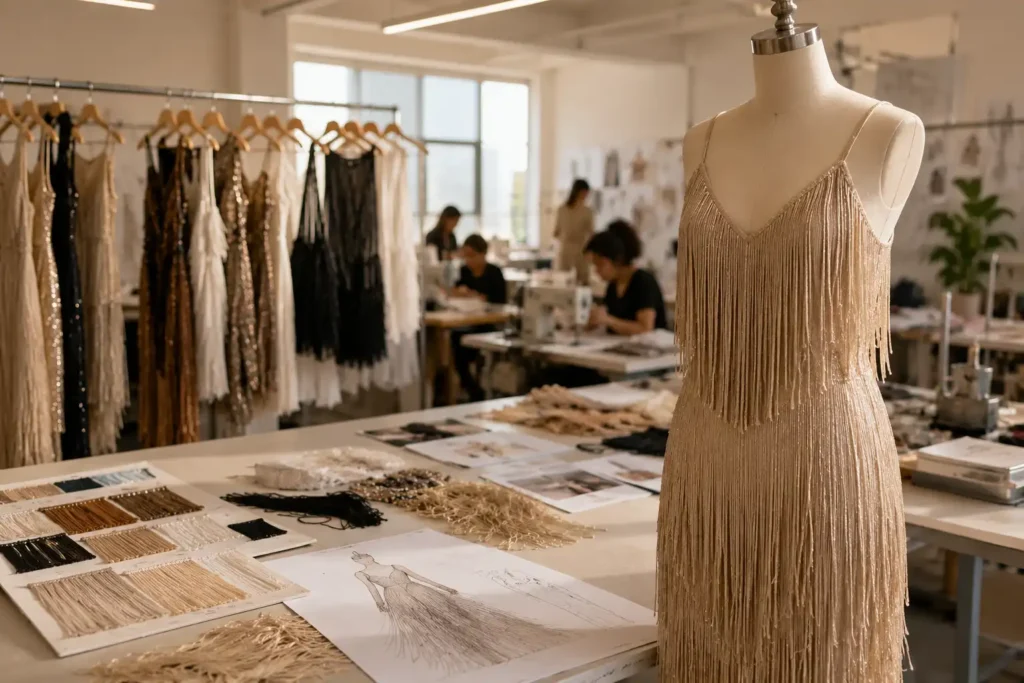
A business license tells you the supplier exists. Factory capability tells you whether they can make your product. For dresses, capability should be checked by product type and fabric type. A supplier that makes simple woven tops may not be suitable for structured corset dresses. A factory that handles basic jersey may not control satin bias-cut dresses well. A workshop that can sew a sample may not handle hundreds or thousands of pieces with consistent measurements.
Ask practical questions. Which unit will handle the order? What similar styles have they produced? What fabric risks do they see? What size tolerance do they usually control? How do they inspect fabric before cutting? How do they handle lining, zipper smoothness, seam puckering, shrinkage, color difference, and pressing?
A real manufacturer will answer with process details. A weak supplier will answer with slogans. The difference becomes obvious when you discuss actual production problems, not just company introductions.
Sampling Proof
Sampling is where a supplier’s real skill starts to show. A good dress sample proves more than sewing ability. It shows whether the team understands the style, reads the reference correctly, chooses suitable fabric, builds the pattern, controls fit points, and communicates revisions.
But one good sample is still not enough. Bulk production is a different test. The approved sample must be translated into a production standard. That means final fabric, final trims, final measurements, final sewing method, final label placement, final packaging, and final inspection criteria should be confirmed before mass production.
For fashion brands, the PP sample is one of the most important checkpoints. A development sample may show the idea. A PP sample should show what bulk production is expected to follow. If a supplier wants to skip PP confirmation for a custom dress order, the buyer should be cautious.
QC System
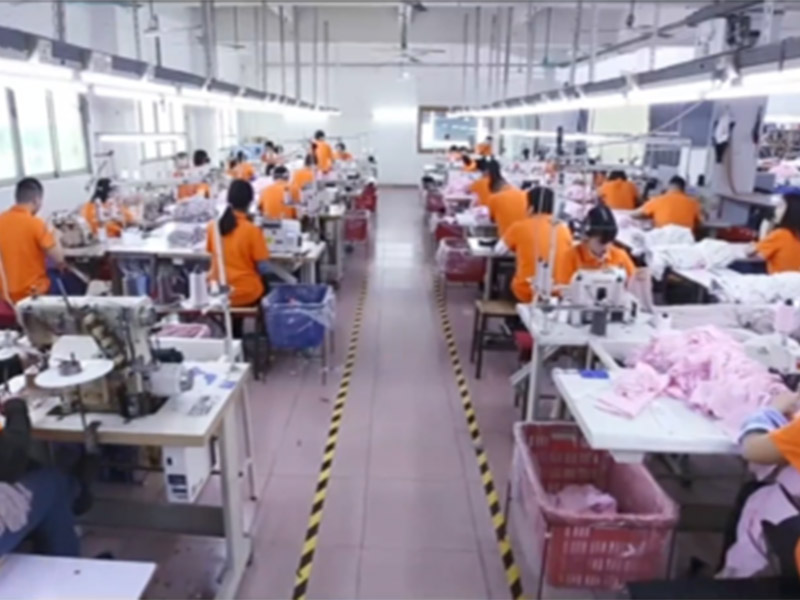
Quality control should not be a final inspection only. By the time finished garments are packed, many problems are already expensive to fix. Dress QC should start before cutting and continue through fabric inspection, trim checking, cutting, sewing, measurement review, garment appearance, pressing, packing, and pre-shipment inspection.
Common dress issues include uneven hems, twisted side seams, zipper waves, poor bust fit, unstable waistline, lining exposure, seam puckering, shade variation, loose threads, poor stretch recovery, wrong label placement, and packaging deformation. These problems are not always caused by careless workers. Many come from weak pre-production control.
A professional supplier should know where the risk sits. Satin needs seam and pressing control. Lace needs placement and edge control. Mesh needs transparency and tension control. Sequins need needle and seam allowance planning. Knit bodycon styles need recovery, measurement, and fit control.
Production Fit
The best supplier is not always the biggest one. It is the one whose production system fits your product, quantity, price level, quality expectation, and launch calendar. If your order is a seasonal collection with multiple dress styles, you need project coordination. If your order uses special fabrics, you need fabric sourcing and MOQ clarity. If your order is for ecommerce, you need size consistency and packaging discipline. If your order is for occasionwear, you need better fit, finishing, and pressing control.
This is why a valid license is only the door. The real decision happens after you check production fit. A suitable dress manufacturer should be able to help you move from idea to sample, from sample to PP approval, from PP approval to bulk production, and from first order to repeat orders.
How Should Buyers Verify a Dress Factory Before Payment?
Before payment, buyers should verify the supplier’s license, registry status, invoice entity, bank account, contract party, sample terms, production capability, factory evidence, QC process, packaging requirements, and confidentiality protection. Payment should only proceed when legal identity, commercial documents, and production proof are consistent and written down.
Document Pack
Before sending money, request a complete supplier verification pack. This is normal for serious B2B apparel sourcing. A reliable supplier should understand that brand buyers need documents for finance approval, internal vendor setup, legal review, production planning, and risk control.
At minimum, request the business license, legal company name, registration code, company profile, PI, official bank account, and product quotation. For custom dress projects, also request sample terms, estimated development timeline, fabric options, size chart requirements, label and packaging requirements, and QC process explanation.
If your project involves original designs, unreleased collections, custom prints, private labels, or exclusive packaging, ask for NDA support before sharing sensitive files. Design files, patterns, tech packs, line sheets, samples, fabric direction, target price, launch calendar, and packaging files should be handled carefully.
Contract Terms
A contract or formal PI reduces risk because it turns spoken agreement into written responsibility. It should name the buyer and supplier clearly, identify the legal entity responsible for the order, define the product, and state payment terms.
For a dress order, vague wording is dangerous. ‘500 dresses’ is not enough. The document should specify style number, fabric, color, size range, quantity, unit price, sample status, packing method, delivery term, production timeline, inspection method, and any agreed tolerance or approval standard.
If there are private-label requirements, add them to the document. Labels, care labels, hangtags, barcode stickers, polybags, carton marks, and warehouse labels can all affect production time and packaging accuracy. A good agreement does not slow cooperation down. It prevents avoidable arguments when the order becomes busy.
Sample Before Bulk
Payment verification and product verification should move together. Even if the company documents look correct, do not rush into bulk production without a sample process.
For custom dresses, the sample helps confirm pattern, fabric, measurement, sewing, fit, lining, color, trim, and finishing. After sample revision, the PP sample should become the production reference. Bulk cutting should not begin until the buyer and supplier agree on the final standard.
The sample process also tests communication. Does the supplier ask smart questions? Do they notice production risks? Do they explain cost differences? Do they give realistic timelines? Do they document revisions clearly? These behaviors tell you how the factory will behave during bulk production.
Final Check
Before payment, take one final pass through the evidence chain. The goal is not to create unnecessary pressure for the supplier. It is to protect both sides by making sure the order is clear.
Check the legal entity. Check the bank account. Check the product scope. Check the sample terms. Check the fabric plan. Check the estimated timeline. Check the packaging requirements. Check who approves the PP sample. Check how defects will be handled. Check whether your design files are protected.
For fashion brands building long-term supplier relationships, this habit pays off. The first order is not only about producing garments. It is about testing whether the manufacturer can become a stable partner for repeat orders, seasonal collections, multi-style launches, and future replenishment.
Build Trust Before You Build the Dress
Verifying a dress manufacturer’s business license is not about being suspicious. It is about being professional. The best apparel partnerships are built on clear identity, clear documents, clear production capability, clear payment routes, and clear quality expectations.
A business license helps you confirm that a supplier legally exists. But for custom dress manufacturing, you need more than legal existence. You need a manufacturer that can read your design direction, develop samples, recommend fabric solutions, control measurements, manage sewing details, protect your brand assets, scale from sample to bulk, and maintain consistency across repeat orders.
Before you place an order, check these ten points:
- Is the legal company name verified?
- Does the registration code match the license?
- Is the company status active and reasonable?
- Does the business scope relate to apparel or textiles?
- Do the contract, invoice, and bank account connect clearly?
- Can the supplier explain its office and production addresses?
- Does the manufacturer have real dress production evidence?
- Is there a sample and PP approval process?
- Does the QC system cover fabric, cutting, sewing, garment, packing, and pre-shipment checks?
- Does the supplier support NDA, private-label protection, and long-term cooperation?
Jinfeng Apparel is built for fashion brands and mid-to-large custom apparel clients that need more than a license copy. As a Guangdong-based custom women’s fashion manufacturer, Jinfeng Apparel supports OEM, ODM, private-label, dress development, sampling, bulk production, QC, packaging, and export delivery for dresses, skirts, jumpsuits, matching sets, tops, and private-label womenswear collections.
Share This Article :

Jerry Lee
Categories

Latest blogs

Table of Contents
Here, developing your OEM/ODM private label clothing collection is no longer a challenge—it’s an excellent opportunity to bring your creative vision to life.

