 Skip to content
What Are the Best Lining Fabrics for Women's Dresses?

Your trusted Women’s Apparel Manufacturer from China
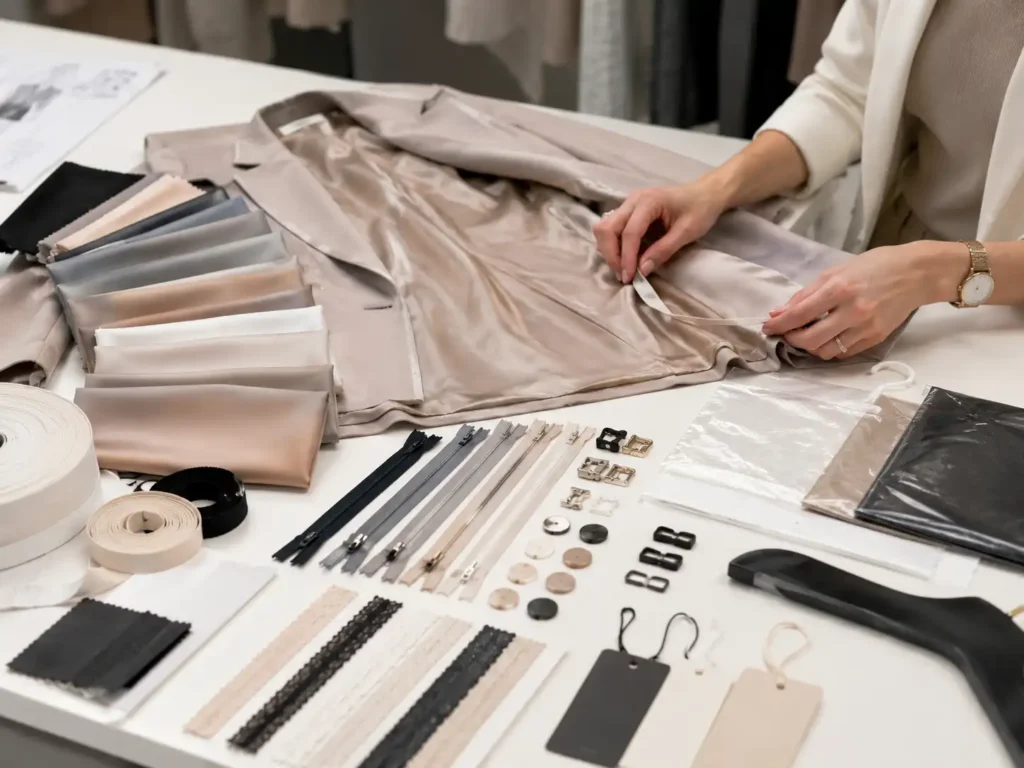
A lining is one of the least photographed parts of a dress, yet it can decide whether the garment feels polished or disappointing within minutes of wear. The shell fabric may attract the customer, but the lining determines whether satin glides over the body or sticks to it, whether a pale chiffon dress feels confidently covered, whether a mesh bodycon can stretch without resistance, and whether the reverse side of sequins or lace rubs against the skin. That is why experienced dress developers do not treat lining as a last-minute fabric added after the visible materials have already been approved. It belongs in the same conversation as silhouette, fit, transparency, drape, care, and target cost.
The best lining fabrics for women’s dresses include polyester, viscose or rayon, cupro, acetate, silk, lightweight cotton, and stretch knit linings. The right choice depends on the shell fabric, silhouette, stretch, opacity, climate, care method, and price position. Fluid woven dresses usually need light, smooth linings, while bodycon, jersey, and stretch-mesh dresses need linings that extend and recover with the outer fabric.
There is no useful universal ranking in which cupro is always better than polyester, silk is always more suitable than viscose, or cotton is automatically the most comfortable. A well-finished polyester lining can outperform an unsuitable premium fiber when its weight, stretch, and surface are better matched to the dress. The useful question is therefore not simply, “Which lining is best?” It is, “Which lining will let this particular dress look, move, fit, and wear the way the design intends?” That question becomes especially important when a style moves from a single attractive sample into hundreds or thousands of pieces, where small material mismatches become repeatable quality problems. The sections below approach lining from that practical development perspective, beginning with fabric behavior and ending with production specifications that can actually be controlled in bulk.
What Makes a Good Dress Lining Fabric?
A good dress lining should feel comfortable against the skin, preserve the shell fabric’s drape, provide the intended opacity, and move with the garment without restricting fit. Weight, stretch, recovery, friction, static behavior, color, shrinkage, and care compatibility all matter. The best lining is not simply the smoothest fabric; it is the fabric that behaves correctly inside the finished dress.
| Lining Weight | Typical Working Range | Common Dress Application | Main Risk to Check |
| Very light | 35-55 GSM | Sheer chiffon, delicate satin, lightweight overlays | Too transparent or fragile |
| Light | 55-75 GSM | Slip dresses, summer dresses, light occasionwear | May lack coverage in pale colors |
| Medium-light | 75-95 GSM | Satin, crepe, lace, general woven dresses | Can alter drape if shell is very light |
| Medium | 95-120 GSM | Structured dresses, heavier lace, selected formalwear | Added bulk and heat |
| Stretch lining | Construction dependent | Bodycon, jersey, stretch mesh | Stretch and recovery mismatch |
These ranges are practical screening bands, not universal standards. Construction, yarn, finish, and shell fabric can shift the appropriate weight.
Weight and Drape
The first check is how much the lining changes the behavior of the outer fabric after the two layers are combined. Lightweight satin, chiffon, or crepe can look fluid as a single layer and noticeably heavier once lined, particularly in maxi skirts, bias-cut slips, circular hems, and ruffled constructions where a large fabric area amplifies even a modest increase in weight. In day-to-day development, very light linings often sit around 35-55 GSM, common lightweight qualities around 55-75 GSM, and medium-light woven linings around 75-95 GSM. These are working bands rather than universal standards because yarn size, weave density, finish, and fiber all influence the result. The most reliable test is still physical: hang the shell and lining together, move the panel from side to side, fold it over a curved surface, and sew at least one representative seam. If the shell suddenly forms shorter, stiffer folds or the skirt loses swing, the lining is probably too heavy, too rigid, or too high-friction for the design.
Comfort and Breathability
Comfort becomes increasingly important as the amount of lining and the time spent wearing the dress increase. A fully lined maxi creates much more skin contact than a bodice-lined mini, while a fitted party dress holds the inner layer against the body more continuously than a loose A-line style. Lightweight viscose, cupro, cotton, and well-selected polyester can all work, but they do not create the same thermal and moisture experience. Regenerated cellulose linings are often chosen when a softer, less slick feel is desired, whereas polyester is valued for broad availability, color consistency, durability, and cost control. The mistake is judging comfort from fiber name alone. Polyester linings can range from soft and fluid to dense and clammy, and a cotton lining that feels pleasant in a loose summer dress may create too much friction under a fitted satin skirt. Full versus partial lining should also be considered because removing unnecessary coverage can improve airflow, reduce weight, and preserve the light character of a summer or resort dress.
Stretch and Recovery
Stretch lining is part of the fit system in bodycon dresses, fitted jersey styles, stretch satin, and mesh garments. If the shell can expand comfortably across the bust, waist, and hips but the lining reaches its limit much earlier, the wearer experiences the lining as the true size of the garment. A quick development check is to mark 10 cm on both fabrics, stretch them comfortably in the required direction, and calculate extension as (stretched length – original length) / original length x 100. A section that reaches 14 cm has 40% measured extension. The lining does not need to duplicate the shell exactly, but a large mismatch is a warning. Recovery then needs to be checked after repeated extension because a fabric that stretches easily but remains elongated can bag around the seat, waist, or bust. The complete lined sample should always be fit-tested, since seam construction, double-layer compression, and attachment points can reduce practical movement even when individual swatches look acceptable.
Opacity and Color
Opacity is not only a material property; it is the result of shell color, lining color, fabric density, stretch, layer count, and lighting. A white chiffon dress can look adequately covered under factory lighting and much more transparent in daylight. A stretch mesh panel may appear moderate when relaxed and become dramatically more open across the hip or bust. The lining should therefore be tested under at least daylight and strong indoor lighting, with stretch applied where the garment will actually stretch. Color also changes the finished appearance. Bright white under white chiffon can create a colder, more opaque look, ivory can soften the tone, and nude under black mesh can create an intentional illusion effect. In mesh development, practical controls include lining color, lining length, local coverage, mesh density, layer count, and the placement of intentionally sheer areas. Treating these decisions together produces a more deliberate result than simply asking whether the dress is lined or unlined.
Which Lining Fabrics Are Best for Dresses?
Polyester, viscose or rayon, cupro, acetate, silk, lightweight cotton, and stretch knit linings are all useful for women’s dresses. Polyester offers commercial flexibility, viscose gives a softer fluid hand, cupro suits premium garments, acetate works well in many woven styles, silk serves high-value lightweight dresses, cotton suits natural daywear, and stretch linings are essential when fit depends on fabric extension.
| Lining Type | Common Development Range* | Typical Strength | Main Check |
| Polyester woven | 50-95 GSM | Commercial flexibility and color range | Static, sheen, drape |
| Viscose/rayon | 60-100 GSM | Soft hand and fluid drape | Shrinkage and care |
| Cupro | 55-90 GSM | Premium glide and comfort | Cost and sourcing consistency |
| Acetate | 60-100 GSM | Smooth woven interior | Care compatibility |
| Silk habotai-type | 35-60 GSM | Very light premium hand | Cost and seam durability |
| Cotton voile/lawn-type | 55-90 GSM | Soft natural-feeling interior | Friction and added bulk |
| Stretch knit lining | Construction dependent | Fit support for elastic shells | Extension and recovery |
*Ranges vary by supplier, weave, yarn, finish, and intended garment construction.
Polyester and Acetate
Polyester is one of the most practical lining families in commercial womenswear because it can be sourced in a wide range of weights, colors, surface finishes, and stretch levels. That makes it useful for satin dresses, partywear, occasion styles, structured dresses, and high-volume color programs where repeatable sourcing matters. The weakness appears when all polyester is treated as interchangeable. Two qualities with the same composition can differ sharply in softness, noise, surface shine, static tendency, seam puckering, and drape. Acetate remains a traditional woven lining choice for garments that benefit from a smooth internal surface but do not require substantial stretch. Both materials should be approved by actual fabric reference rather than composition only. Before bulk commitment, check pressing behavior, dimensional stability, seam performance, colorfastness, and the intended care method. A smooth lining that looks acceptable as a swatch but reacts badly to pressing or becomes noticeably different after care is not a production-safe choice.
Viscose and Rayon
Viscose and rayon linings are often selected when a dress needs a softer, more fluid inner layer than a basic filament lining provides. They can work particularly well under crepe, satin, occasionwear, fluid midi dresses, and selected resort styles where the inside feel contributes to the overall product impression. Their drape is useful, but dimensional behavior requires attention because regenerated cellulose fabrics can respond differently to washing, steaming, and moisture depending on construction and finishing. The shell and lining should therefore be tested using the care method intended for the final garment. If the lining changes length more than the shell, hems can become uneven or the outer fabric can appear pulled after cleaning. For many brands, a stable viscose lining is a strong middle option: it can offer a softer hand and natural-feeling drape without moving the material cost as high as silk. The exact supplier quality, however, matters far more than the generic fiber label.
Cupro and Silk
Cupro is often considered a premium lining because it combines a smooth surface, fluid movement, and a soft inner hand. It can be especially valuable in satin dresses, occasionwear, evening dresses, tailored pieces, and other garments where the customer is likely to notice how the dress feels during extended wear. The commercial question is whether that improvement is meaningful enough to justify the sourcing cost compared with a strong viscose or polyester alternative. Silk is more specialized. Lightweight silk linings can be exceptionally soft and light, which suits premium dresses where material story, low bulk, and inside finish support the retail position. They also introduce higher fabric cost, more careful handling, and potentially stricter care requirements. Neither cupro nor silk should be chosen only because the fiber sounds luxurious. The best premium lining is the one whose advantage remains obvious after it is sewn into the actual shell and worn as a finished dress.
Cotton and Stretch Linings
Cotton lining is useful when softness, opacity, and a natural-feeling interior are more important than a highly slippery surface. Lightweight voile, lawn, and batiste-type constructions can pair well with cotton dresses, linen blends, babydoll shapes, summer styles, and some structured day dresses. Cotton usually creates more friction than cupro, viscose, or filament polyester, so it may be comfortable in a loose silhouette but less suitable beneath a fitted skirt that needs to glide over the body. Stretch knit linings solve a different problem. They are used when the shell relies on extension for fit, as in bodycon, jersey, stretch lace, and mesh styles. Here, fiber composition matters less than usable stretch, recovery, thickness, and seam compatibility. Many experienced development teams standardize a small number of reliable woven and stretch lining families across a collection, then create exceptions only for designs whose drape, transparency, or price position genuinely requires something different.
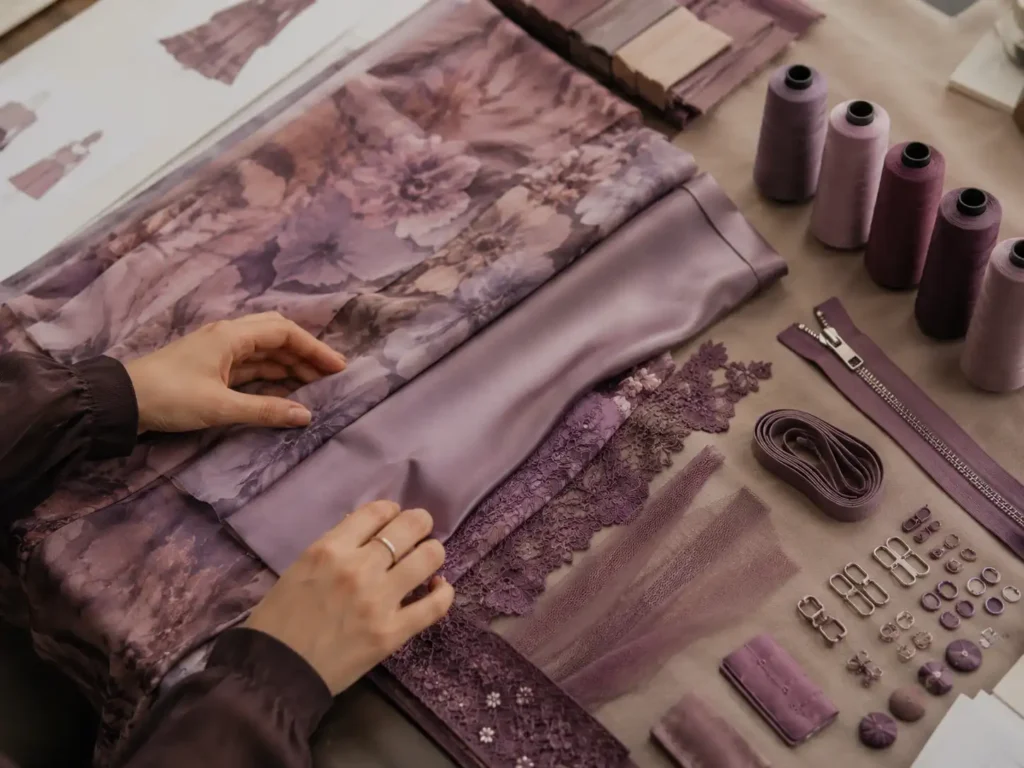
Which Lining Works With Each Dress Fabric?
The lining should complement the shell fabric’s weight, stretch, surface, and transparency. Satin needs smooth low-bulk support, chiffon needs lightweight coverage, lace and mesh need deliberate color and opacity control, sequins need a comfortable skin barrier, crepe needs compatible drape, and knits usually need stretch-compatible lining. The correct pairing is confirmed by testing the two layers together, not by choosing lining in isolation.
Satin and Chiffon
Satin exposes internal construction more readily than many matte fabrics because its smooth reflective surface can reveal bulky seam allowances, uneven tension, trapped wrinkles, and lining ridges. Fluid satin dresses therefore usually benefit from a light, smooth inner fabric such as cupro, viscose, or carefully selected polyester. Pale satin needs additional color checking because the lining can subtly shift the apparent shade of ivory, champagne, blush, or white. Chiffon creates a different problem: the lining becomes part of the visible design because the shell is translucent. A tonal full lining makes the garment more opaque and visually saturated, a shorter lining preserves a sheer lower skirt, and a nude lining creates an illusion effect. Long chiffon dresses also magnify small weight differences, so the inner layer should be light enough to preserve movement. Hem balance should be checked after the dress has hung for a realistic period, particularly when the shell and lining have different drape or bias behavior.
Lace and Mesh
Lace lining is both a technical and visual decision. Open lace allows the inner color to show through, so tonal lining creates a unified look, nude emphasizes the lace motif, and contrast lining makes the pattern more graphic. Stretch lace requires a lining that does not block the extension required for fit. Mesh needs even more deliberate control because transparency may be the design feature rather than a defect to eliminate. A fitted mesh mini may use stretch lining through the bust and skirt while leaving sleeves, waist panels, or the back sheer. An occasion dress may use mesh as an overlay over a smooth opaque base. Practical mesh development considers density, color, number of layers, stretch direction, lining length, lining shade, and local coverage together. The best result is usually achieved by fitting the complete layered garment under strong light rather than judging two flat swatches on a sourcing table.
Sequin and Crepe
Sequin fabrics require lining for more than opacity. The reverse side can be rough, seam allowances may contain trimmed embellishment edges, and the garment can become heavy, so the lining also acts as a skin barrier and an internal finishing layer. Stretch sequin dresses usually need a lining that can move with the substrate, while a structured sequin gown can often use a stable woven lining. Crepe varies too widely to receive one fixed recommendation. Lightweight crepe may pair well with viscose, cupro, or light polyester, while heavier tailored crepe can tolerate a more stable inner layer. Surface friction matters because some crepes have a dry, textured hand. A smoother lining can prevent the dress from catching against hosiery or undergarments and can make it easier to put on. The useful test is to drape the shell and lining together over a curved form and check whether they create the same general fall and movement.
Knit and Stretch Fabrics
Knit dresses need lining that respects the way the shell reaches the body. Jersey, rib knit, stretch mesh, power mesh, and stretch satin often rely on fabric extension to create the intended fit, so a rigid lining can make the finished dress feel smaller even when the pattern measurements are unchanged. Crosswise stretch is usually the first measurement to check because it governs expansion around the bust, waist, and hips, although some styles also need meaningful lengthwise movement. Recovery should be observed after repeated extension because an inner fabric that stays elongated can form wrinkles beneath a shell that snaps back quickly. A simple comparison makes risk visible: if a 10 cm shell section reaches 15 cm comfortably but the lining stops near 11.5 cm, the lined garment deserves immediate fit testing. Seam type and hem attachment must also be considered because a flexible fabric can still become restrictive when stitched with a low-stretch seam.
How Do You Choose Lining for Different Dress Styles?
Choose lining according to how the finished dress is expected to fit, move, cover the body, and be worn. Bodycon styles need elastic lining with reliable recovery, slip dresses need low-bulk fluid lining, party dresses often need opacity and skin protection, evening dresses benefit from a refined interior, summer dresses need minimal weight, and structured dresses require lining that works cleanly around internal support components.
Bodycon and Slip Dresses
Bodycon dresses reveal lining problems quickly because the inner layer remains under continuous tension across the body. If the shell offers 40% or more usable extension but the lining becomes resistant much earlier, the customer experiences the lining as the real size of the dress. Stretch and recovery should therefore be checked together, and the complete lined garment should be tried on after sitting and movement, not only standing. Slip dresses work almost in the opposite way. Their appeal comes from low bulk, long fluid folds, and easy movement, so the lining should follow the shell without creating a second silhouette underneath it. Cupro, viscose, lightweight silk, and smooth polyester are common directions. Bias-cut or bias-influenced slips need extra care because shell and lining may grow differently after hanging. The sample should be allowed to settle before final hem leveling, and the lining should never pull the outer satin upward or create a visible inner edge.
Party and Evening Dresses
Party dresses cover a wide range of construction problems: mesh bodycons, satin minis, sequin styles, cut-outs, corset silhouettes, and low-back designs all need different inner solutions. Coverage should be tested under movement and strong lighting because a fitted mesh panel that looks acceptable while standing can become much more transparent across the hip when sitting or walking. Sequin garments need protection from abrasive backing and seam areas, while cut-out styles need carefully shaped partial linings that do not hide intentional skin exposure. Evening dresses often justify a more refined inner finish because they are worn longer and inspected more closely. Floor-length garments also magnify small technical errors. A lining that hangs 10-15 mm too low in one area can become visible during movement, and differential shrinkage can make the problem larger after care. Structured evening bodices and fluid skirts may therefore use different internal fabrics rather than forcing one lining quality across the entire dress.
Summer and Resort Dresses
For summer and resort dresses, the best lining is often the minimum amount of material that delivers the required coverage and finish. Fully lining a light printed chiffon or rayon dress simply because the shell is slightly translucent can turn an airy product into a warm two-layer garment. Bodice-only lining, shorter skirt lining, or localized coverage around the bust and hip can preserve airflow while meeting modesty requirements. Color affects the decision as well. Busy prints often visually conceal more than plain white, ivory, or pastel fabrics, which deserve stronger lighting tests. The lining also needs to recover well from packing because resort garments are frequently folded for travel and e-commerce delivery. A fabric that develops sharper creases than the shell can make the dress look poor when unpacked even though it left the factory correctly pressed. Lightweight construction, opacity, shrinkage, hem balance, and packing recovery should therefore be evaluated as one product system.
Structured and Corset Dresses
Structured dresses may contain cups, boning, underwire, interfacing, reinforcement tape, seam channels, or internal support panels, so the lining is only one layer in a larger construction. Its job is to finish the inside cleanly, protect the wearer from hard components, and remain stable around stress points without creating unnecessary bulk. A lining that is too delicate can tear around zipper or boning attachment areas, while one that is too heavy can make necklines, armholes, and top edges look thick. Strapless and low-back styles also need lining that stays in position so it does not roll outward or become visible. The bodice and skirt do not always need the same inner fabric. A stable woven quality may suit the structured upper section, while a lighter fluid lining works better through the skirt. Fitting should include sitting, breathing, raising the arms, and checking whether the pressure comes from the intended structural layer rather than from an overly tight lining.

How Should You Match Lining to Dress Construction?
Match lining to construction by testing stretch direction, layer weight, surface friction, seam behavior, color, transparency, and attachment points in the actual garment. The lining should not shorten movement, distort the shell, show at openings, or add unnecessary heat. Full lining is useful for complete coverage and clean finishing, while partial lining is often better when lightness or deliberate transparency is part of the design.
Full or Partial Lining
Full lining makes sense when a dress needs consistent opacity, a completely finished interior, or protection from rough shell materials. Formal chiffon, lace occasionwear, sequin dresses, and structured styles often fall into this category. The trade-off is additional fabric consumption, weight, heat, cutting work, sewing time, and inspection. These costs become significant in a floor-length or full-skirted garment. Partial lining is often more efficient in mesh, lace, chiffon, and summer dresses because it provides coverage only where the design needs it. A bodice can be fully covered while sleeves remain sheer, or a chiffon maxi can use a shorter inner skirt to retain an airy lower section. The edge of partial lining must be placed carefully. If it finishes at the widest part of the hip, the line can become visible through a transparent shell. Moving that edge even a few centimeters can improve the appearance. Partial lining should therefore be treated as a designed pattern component, not simply as less fabric.
Stretch Compatibility
Terms such as “stretch lining” are too vague for production unless the team also records direction, extension, recovery, and the way the lining is attached. The shell and lining do not need perfectly identical numbers, but the inner layer must not prevent the finished dress from reaching the intended body dimensions. A practical specification can record crosswise and lengthwise stretch, recovery after repeated extension, fabric direction on the pattern, and whether the lining is attached at the hem or allowed to hang independently. Consider a fitted dress whose shell works comfortably around 35-45% crosswise extension. A lining that becomes highly resistant around 15% should be treated as a fit risk, even if both fabrics are marketed as stretch qualities. The seam system matters too. Overly rigid stitching, stabilizing tape, or a tightly attached hem can reduce usable movement even when the fabric itself stretches well. Fit testing should therefore include the complete seam and lining construction.
Seams, Zippers, and Hems
The relationship between shell and lining becomes easiest to see around zippers, necklines, side seams, slits, and hems. If the lining is cut too short, it pulls the garment upward; if it is too long, it can show beneath the shell. Bulky allowances can print through smooth satin, and a lining attached under excessive tension can make an invisible zipper area ripple or bow. Long dresses usually need enough difference between shell and lining hem levels to prevent the inner layer from becoming visible during walking, but the exact allowance depends on the fabric, silhouette, and hem construction rather than one fixed number. Slits deserve separate testing because movement can suddenly expose the lining. The cleanest results come from checking the garment while walking, sitting, and turning, then adjusting lining pattern length and attachment rather than trying to hide the problem at final pressing. For premium dresses, inside balance should look intentional even when the customer examines the garment off the body.
Static, Cling, and Movement
A dress can have correct measurements and still wear poorly if the lining clings to the shell or legs. Static is influenced by fiber type, finish, humidity, and the other garments worn underneath, so it is most noticeable in dry conditions and certain synthetic combinations. The first solution should not automatically be changing fiber family. Compare several actual lining qualities with the approved shell under the same conditions because weave, finish, and surface friction can matter as much as composition. A useful wear test lasts longer than a brief fitting: walk, sit, stand, cross the legs, and repeat the movement. Watch whether the skirt climbs, twists, or sticks. Surface friction can also be too high without static. A soft cotton lining may feel pleasant in a loose day dress but create drag under a fluid satin skirt. The goal is for the shell and lining to move independently enough that the wearer notices the dress silhouette rather than the interaction between two fabric layers.
How Do You Specify Dress Lining for Production?
A production lining specification should identify the approved fabric, composition, color, usable width, weight or construction reference, stretch where relevant, opacity, hand feel, shrinkage behavior, care method, and placement in the garment. These details should be connected to sample and PP references so that sourcing substitutions cannot quietly change fit, drape, transparency, or comfort when the style moves into bulk production.
| Specification Item | What to Record | Practical Acceptance Question |
| Fabric identity | Supplier code or internal reference | Is this the approved quality? |
| Composition | Fiber percentage | Does labeling match the approved fabric? |
| Weight | GSM or approved construction reference | Has bulk fabric changed noticeably? |
| Usable width | cm or inches | Does consumption remain valid? |
| Color | Lab dip, swatch, or approved standard | Does it alter shell appearance? |
| Stretch | Crosswise/lengthwise where relevant | Does fit remain unchanged? |
| Recovery | Repeated-extension result | Does the lining bag after wear? |
| Opacity | Approved shell/lining combination | Is coverage consistent under light and stretch? |
| Shrinkage | Result after intended care | Will shell and lining stay balanced? |
| Placement | Full, bodice, skirt, or local zones | Is the correct lining pattern used? |
| Hand feel | Approved swatch/sample comparison | Is bulk fabric rougher or stiffer? |
| PP reference | Approved garment/sample ID | Can QC compare to a fixed standard? |
Build a Measurable Specification
A note that says “100% polyester lining, matching color” is not strong enough for repeatable production because it allows multiple materials with different weight, shine, stiffness, stretch, or surface friction to satisfy the same wording. A useful specification identifies the supplier or internal fabric code, composition, color standard, usable width, weight or construction reference, stretch in relevant directions, recovery expectation, opacity requirement, hand feel, shrinkage behavior, care method, and exact placement in the garment. The approved sample reference should also be recorded because some properties, such as softness and drape, are easier to control by physical comparison than by a single number. This level of detail is particularly important when several styles share similar colors but need different lining structures. A black stretch mesh bodycon and a black woven satin dress may use visually similar inner fabrics while requiring very different extension and seam behavior. Clear style-level material identification prevents accidental substitution during purchasing and cutting.
Confirm During Sampling
Sampling should test the lining as part of the finished garment rather than simply confirm that a lining exists. Check whether the inner layer pulls at the neckline or zipper, twists around side seams, becomes visible below the hem, restricts sitting or walking, changes the intended drape, or creates uncomfortable pressure in fitted areas. Stretch dresses should be measured and fit-tested with the complete layered construction because double-layer compression can make a garment feel tighter than the paper pattern suggests. Sheer dresses should be examined in daylight and strong indoor lighting, and eventwear benefits from photography tests because flash can reveal coverage differences that are easy to miss in a sample room. After revisions, record the exact lining used in the approved sample. Verbal instructions such as “use the soft one from last time” are not reliable enough for a bulk program involving multiple colors, sizes, factories, or repeated orders. The physical sample and specification need to point to the same material decision.
Control Bulk Fabric Changes
Bulk lining should be compared with the approved quality before cutting because composition alone does not guarantee equivalence. A supplier can deliver the same fiber content with different weave density, width, weight, finish, stretch, sheen, or friction. For woven lining, compare hand feel, color, usable width, weight, and dimensional behavior. For stretch lining, add extension and recovery checks. When the shell is translucent, place the bulk lining directly behind the shell and compare the combination with the approved sample because a small shade change can alter the visible dress color. Substitution is sometimes unavoidable when a fabric becomes unavailable or commercially impractical, but the replacement should be treated as a new material decision and rechecked on the garment. Multi-style collections require especially clear controls because two nearly identical-looking linings can belong to different style groups. Fabric codes, bills of materials, sample references, and incoming material checks reduce the risk of one quality being used where another was intended.

Check Before Cutting and Shipment
Before bulk cutting, confirm the lining quality, color, width, shrinkage behavior, stretch where relevant, and pattern version. During sewing, inspect lining length, zipper attachment, seam balance, local opacity, and consistency across sizes. Grading can introduce problems that were not visible in the medium sample: a partial lining edge that sits cleanly on one size may cross an awkward part of the hip on another, while stretch mesh can become increasingly transparent as extension rises in larger sizes. Pre-shipment inspection should include visible lining at hems, slits, armholes, necklines, and back openings, and representative garments should also be turned inside out to check twisting, trapped seams, and attachment quality. In larger programs, documentation is what turns a good sample into repeatable bulk. Jinfeng Apparel’s documented production approach connects fabric tracking, sample versions, PP standards, quality-control checkpoints, and shipment management so that lining decisions made during development can be carried through to production rather than being rediscovered at the end.
Conclusion
The best lining decision is rarely the one with the most luxurious fiber name or the lowest cost per meter. It is the option that lets the shell fabric keep its intended drape, gives the wearer the right level of comfort and coverage, respects the stretch and recovery needed for fit, survives the planned care method, and can be repeated consistently in bulk. For brands developing satin, chiffon, lace, mesh, sequin, crepe, jersey, bodycon, occasion, or evening dresses, lining is most safely selected during fabric development and sampling rather than after the pattern and shell have already been approved. A few early checks – weight, stretch, opacity, color, shrinkage, seam behavior, and wear comfort – can prevent later problems such as restricted fit, exposed lining, uneven hems, visible ridges, cling, and sample-to-bulk inconsistency. Jinfeng Apparel’s dress development process follows this same practical logic, linking shell material, lining requirement, pattern behavior, sample verification, costing, and bulk quality control so that the inside construction supports the design instead of quietly undermining it.
Share This Article :

Jerry Lee
Categories

Latest blogs
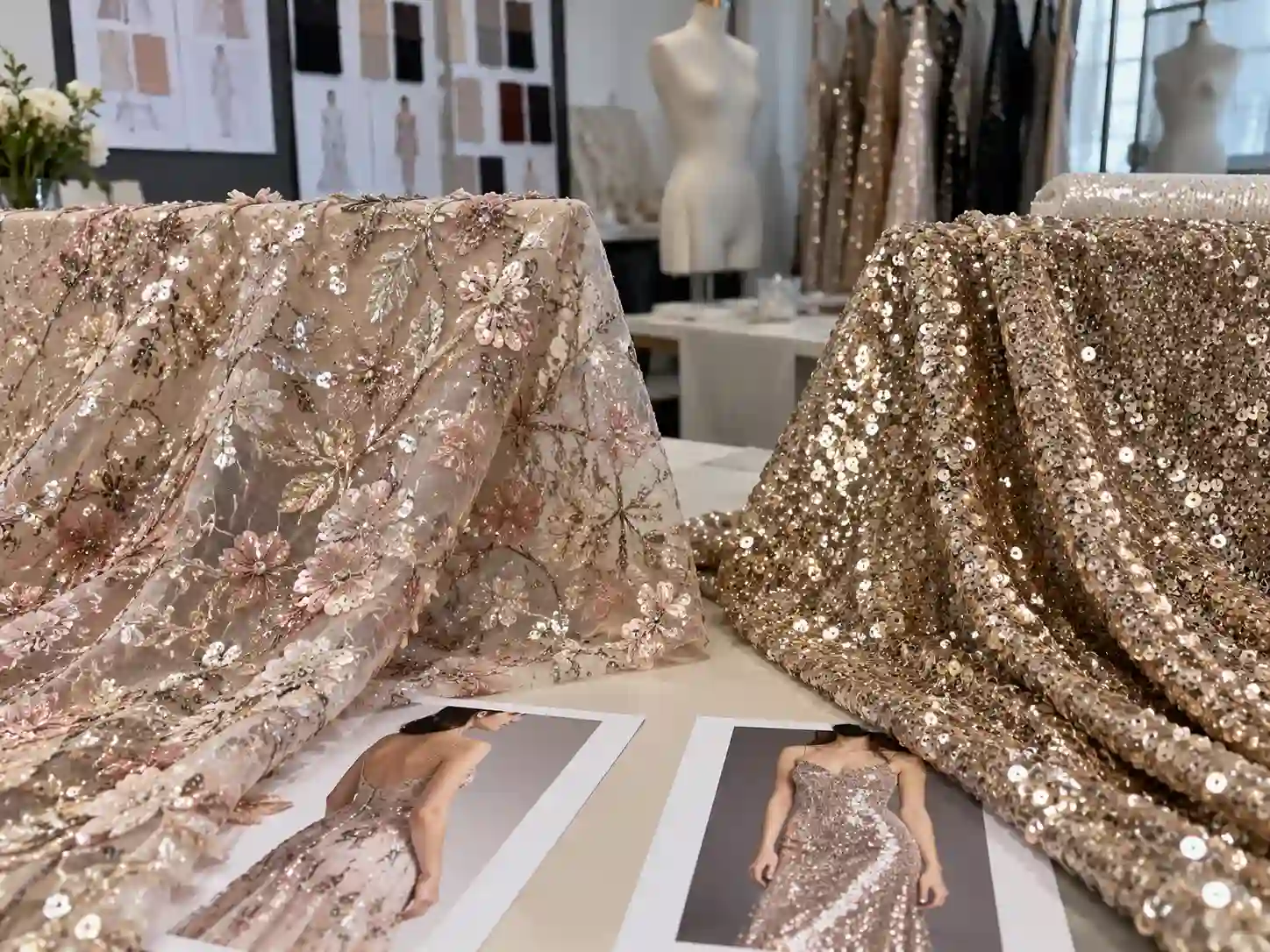
Table of Contents
Here, developing your OEM/ODM private label clothing collection is no longer a challenge—it’s an excellent opportunity to bring your creative vision to life.

