
What Types of Elastic Are Used in Women’s Dresses, and Which One Should You Choose?

Your trusted Women’s Apparel Manufacturer from China

Elastic is easy to overlook because it is usually hidden, inexpensive compared with the shell fabric, and visually unremarkable on a trim card. Yet a few centimeters of the wrong elastic can change the way an entire dress fits. A waistband may roll after an hour of wear, a mesh neckline may wave away from the body, a puff sleeve may leave a hard pressure mark, or a shirred back panel may recover unevenly. These problems often look like sewing defects, but the root cause may be the relationship between elastic construction, fabric behavior, pattern dimensions, tension, and the way the component was attached.
The main elastic types used in women’s dresses are knitted, woven, braided, clear, fold-over, shirring, and specialty elastics. Knitted elastic is soft and versatile, woven elastic provides firmer control, braided elastic suits many casings, clear elastic stabilizes stretch-sensitive seams with little bulk, fold-over elastic binds stretch edges, and shirring elastic creates flexible gathered panels. The best option depends on placement, fabric, support, comfort, recovery, and sewing method.
That is why experienced dress development teams rarely ask only, “Which elastic is strongest?” A better question is, “What job does this elastic need to perform in this exact construction?” The answer can change between two dresses made from the same fabric, or even between two areas of the same dress. A bodycon style may use clear elastic at the shoulder, knitted elastic in a waist detail, and a different narrow elastic at the neckline. Once the elastic is viewed as part of the garment system rather than a generic accessory, fit problems become easier to diagnose and production standards become much easier to repeat.
What Types of Elastic Are Used in Dresses?
Women’s dresses commonly use knitted, woven, braided, clear, fold-over, shirring, and specialty elastics. Their differences are not cosmetic. Internal construction affects firmness, width stability, stretch behavior, recovery, bulk, skin feel, and whether the elastic performs best inside a casing or when stitched directly to fabric. Choosing the correct type starts with the function the elastic must perform in the finished dress.
The useful way to classify elastic is not by color or width alone, but by how the material behaves once it is sewn into a garment. Two black bands that both measure 10 mm wide can create completely different results. One may stay flat while stretching, another may narrow, and a third may feel comfortable when handled but become too firm after being enclosed in a lined waistband. For commercial dress development, the elastic specification should therefore connect construction, width, firmness, working extension, attachment method, and garment position.
Elastic Type | Typical Behavior | Common Dress Applications | Practical Watchpoint |
Knitted | Soft, flexible, relatively width-stable | Waists, sleeves, necklines, gathered areas | May be too soft for heavy garment loads |
Woven / non-roll | Firm, stable, resistant to rolling | Defined waists, structured internal bands | Can feel bulky under lightweight fabric |
Braided | Narrows more during extension | Casings, light gathers, simple waist channels | Often less suitable for heavy sew-through use |
Clear | Thin, transparent, low bulk | Shoulders, necklines, stretch seams, ruching | Over-tension can create rippling |
Fold-over | Elastic plus finished binding edge | Necklines, armholes, exposed stretch edges | Uneven folding or feeding shows quickly |
Shirring | Fine elastic thread used in repeated rows | Smocked bodices, backs, waists, sleeves | Contraction varies with machine and fabric |
Specialty | Function-specific structure or finish | Lingerie-inspired, support, decorative details | Must be approved for the exact construction |
What Is Knitted Elastic?
Knitted elastic is one of the most versatile choices in women’s dresses because it generally offers a softer hand, good flexibility, and relatively stable width during extension. It is often used in waistlines, sleeve openings, gathered necklines, jersey dresses, soft bodices, and casual styles where comfort matters as much as holding power. Its structure also makes many knitted elastics more tolerant of direct stitching than traditional braided constructions, although the exact supplier article still needs testing before production approval.
The main mistake is assuming that soft automatically means suitable. A lightweight jersey mini may perform well with a supple knitted elastic, while a lined maxi dress with a full skirt can place much more continuous load on the waistband. The same elastic can then feel weak or gradually allow the waist to drop. A practical development check is to sew the elastic inside the real shell-and-lining construction and wear the sample long enough for garment weight, movement, and body heat to affect the result. That tells far more than stretching a loose strip by hand.
What Is Woven Elastic?
Woven elastic is normally selected when a dress needs firmer dimensional control. It tends to remain relatively stable in width during extension and is commonly used where rolling, twisting, or excessive softness would undermine the waist structure. Wider woven elastics can distribute pressure more evenly than narrow bands, which is useful in dresses with a defined waist or heavier lower section. The trade-off is that firmness and thickness can become visible under smooth or lightweight shell fabrics, particularly satin, fine jersey, chiffon, or thin lining combinations.
The correct woven elastic is therefore not simply the stiffest one available. A band can hold the dress securely and still be wrong if the wearer feels compressed after sitting, if the casing edge prints through the shell, or if the waist loses the fluid look intended by the designer. During sampling, it is often useful to compare two firmness levels at the same width. When both hold the garment adequately, the softer option may deliver the better wearing experience; when the skirt is heavy, the firmer option may remain more stable over several hours.
What Is Braided Elastic?
Braided elastic is lightweight and easy to recognize because many constructions become narrower when stretched. That behavior makes it useful in casings where the elastic is free to move inside a fabric tunnel and does not need to remain perfectly width-stable while extended. It is commonly considered for simple gathered waists, sleeve channels, and other enclosed areas in which the casing creates the finished appearance while the elastic provides contraction. The construction method matters more here than the nominal width printed on the trim card.
Problems appear when braided elastic is treated like a stable sew-through band. Multiple stitch lines can interfere with its structure, and narrowing under tension can concentrate pressure or pull surrounding fabric unevenly. For a factory, the tech pack should make clear whether the elastic floats inside a casing, is anchored only at selected points, or is stitched continuously. Writing only “10 mm elastic” leaves too much room for interpretation, especially when different sample rooms or production lines may choose different attachment methods for the same component.
What Are Clear, Fold-Over and Shirring Elastics?
Clear elastic is usually a narrow polyurethane or TPU tape used when stabilization is required without the visual bulk of a conventional textile-covered band. In women’s dresses it is often used at shoulder seams, necklines, selected armholes, ruched seams, and other stretch-sensitive areas. Fold-over elastic performs a different job: it wraps around a raw stretch edge and acts as both elastic and binding. Shirring elastic is finer again, usually used as elastic thread in repeated rows to create smocking or flexible gathered panels across bodices, backs, waists, or sleeves.
These materials are sometimes grouped together as specialty elastic, but their functions are very different. Clear elastic mainly stabilizes; fold-over elastic combines edge finishing with stretch; shirring elastic distributes contraction across a broader surface. Substituting one for another simply because all three are narrow can create immediate fit or appearance problems. A clear neckline stabilizer that is stretched too aggressively can cause rippling, while a shirred panel with inconsistent row spacing can contract differently across the left and right sides even when the same thread is used.
How Do Different Elastic Types Compare?
Elastic types should be compared by recovery, firmness, width stability, sew-through behavior, rolling resistance, surface feel, and bulk rather than by maximum stretch alone. Two bands may both extend to a similar length yet require very different force to get there. That difference changes waist pressure, gather density, seam appearance, and how reliably the dress returns to its approved shape after repeated movement and wear.
Maximum elongation attracts attention because it is easy to understand, but most dress applications operate far below the material’s extreme stretch limit. What matters in the garment is the force required at the working extension and how much the elastic returns after it has been stretched many times. A waistband that feels comfortable at first fitting can still become loose if recovery drops after repeated sitting, dressing, and movement. Conversely, an elastic with excellent recovery can still be unsuitable if the force required is too high for the wearer or the surrounding fabric.
Which Elastic Has Better Recovery?
Recovery describes how closely elastic returns toward its original dimension after extension. It is especially important in fitted waists, off-shoulder necklines, bodycon dresses, and stretch-sensitive edges because small changes can alter the silhouette. A practical development test starts with a known relaxed length, extends the elastic to the intended working range several times, allows it to rest, and measures it again. The exact number of cycles can vary by internal testing protocol, but repeated extension is more informative than one dramatic pull.
The sewn construction must also be tested because stitching changes elastic behavior. Thread, seam allowances, multiple stitch rows, and fabric layers restrict the band differently from a loose strip. A strong elastic cannot fully compensate for a shell fabric with poor recovery either. If a jersey dress bags around the seat, the root cause may be fabric structure, pattern negative ease, lining behavior, or seam stretch rather than the waist or neckline elastic. Good diagnosis separates material problems before the team starts making the band progressively shorter.
Which Elastic Stays Flat?
Woven and knitted elastics are generally more width-stable than braided elastic, making them useful where the band needs to remain flat across the body. This matters most in wider waist constructions. If a band folds, twists, or rolls inside the casing, the wearer experiences a narrow rope-like pressure point rather than a broad, evenly distributed support area. That discomfort can appear even when the elastic itself is high quality, because casing width and anchoring also influence whether the band stays in position.
A well-designed casing should provide enough room for the elastic to slide during insertion and extension without leaving so much excess space that the band rotates easily. The join also deserves attention because a thick overlap can create a hard lump under fitted fabrics. In wider waistbands, small vertical anchoring stitches at side seams or selected internal points can help maintain orientation. These construction choices often improve comfort more effectively than simply changing to an even heavier or stiffer elastic.

Which Elastic Feels Softer?
Knitted elastic is often associated with a softer hand, but wearer comfort depends on much more than what the material feels like between two fingers. Width, edge stiffness, working extension, seam placement, lining, and how long the dress is worn all influence pressure. A narrow band carrying significant load concentrates force into a small area, while a somewhat wider band can spread that force across more skin. The wider option is not automatically better, however, if it becomes bulky or overly rigid inside the garment.
Location also changes what feels acceptable. The natural waist can tolerate a different pressure level from the upper arm, underarm, or upper bust. A sleeve elastic that holds perfectly may still be too harsh if it leaves a deep mark after thirty minutes. Fit testing should therefore include sitting, walking, lifting the arms, bending, and putting the garment on and off several times. A two-minute standing fitting is useful for silhouette, but it does not tell the full story of comfort in an evening, party, resort, or occasion dress.
Which Elastic Can Be Sewn Through?
Many knitted and woven elastics tolerate direct stitching better than classic braided elastic, but the actual supplier article should still be tested because construction details vary. Once a needle repeatedly penetrates the band, the elastic is no longer behaving like the loose trim sample. Thread tension, stitch density, feed, seam allowance, and the number of parallel stitch rows all change how the material extends and recovers. If the production garment requires three rows of topstitching, approving a one-row prototype does not provide a reliable production reference.
Unequal feeding is another source of trouble. When the operator stretches elastic by hand while the shell fabric passes under the presser foot, small differences in technique can create different final opening measurements from one garment to another. Marking quarter points, using guides, standardizing stitch settings, or defining the required distribution method makes the process more repeatable. In bulk production, a good elastic specification therefore includes not only width and cut length but also how the band is supposed to be sewn into the dress.
Which Elastic Works Best for Each Dress Area?
Elastic choice changes by garment area because each location performs a different mechanical job. Waistlines usually manage fit and garment weight, necklines and shoulders often need stabilization, sleeves and armholes require comfortable movement, shirred panels need distributed contraction, and structured bodices may combine elastic with cups, boning, lining, or power mesh. One dress can therefore require several elastic types, widths, and tension settings.
A common sourcing shortcut is to use one elastic article throughout an entire dress because it simplifies the bill of materials. Sometimes that works, but it should be the result of testing rather than an assumption. The forces at a shoulder seam, waist, sleeve opening, and upper bust are very different. A shoulder seam may need almost no visible contraction, while a waistband may carry continuous load for several hours. Pattern accuracy also matters because elastic should not be used to disguise an opening that is fundamentally too large or incorrectly shaped.
Dress Area | Main Function | Typical Elastic Direction | Practical Fit Check |
Waist | Fit retention and support | Knitted, woven, or braided in a suitable casing | Sit, bend, walk; check rolling and pressure |
Neckline | Edge control and anti-gaping | Clear, narrow knitted, or fold-over | Dress repeatedly; check rippling and gaping |
Shoulder seam | Prevent lengthwise growth | Narrow clear elastic or stabilizing tape | Compare seam shape before and after wear |
Sleeve opening | Gathering with comfort | Soft knitted or narrow casing elastic | Raise arms; inspect pressure marks |
Armhole | Stabilization and shape | Clear, fold-over, or soft narrow elastic | Check side-bust distortion and mobility |
Shirred panel | Distributed stretch and gathering | Elastic thread | Compare row spacing and panel contraction |
Structured bodice | Security and support assistance | Application-specific elastic with internal structure | Check breathing, bust stability, and movement |
Which Elastic Works for Waistlines?
Waist elastic has to balance support, comfort, garment weight, and the intended visual effect. Soft knitted elastic works well in many flexible waists, while firmer woven or non-roll styles become more useful when the dress carries a heavier skirt or needs a more defined waist. Braided elastic can perform well inside an appropriate casing. Width matters because narrow bands concentrate pressure and create tighter gathers, while wider bands distribute force more broadly but occupy more internal space and may show through lightweight fabrics.
There is no universal shortening percentage that works for every waist. If a sewn waist opening measures 800 mm, a development team might compare trial elastic lengths of 680 mm, 720 mm, and 760 mm, equivalent to 85%, 90%, and 95% of the opening. Those are test ratios, not recommendations. A firm woven band at 90% can feel much tighter than a soft knitted band at the same ratio. The correct length is the one that holds the approved waist securely while remaining comfortable when the wearer sits, bends, eats, and moves.
Which Elastic Works for Necklines and Shoulders?
Necklines and shoulder seams often need stabilization rather than visible gathering. Clear elastic is useful in low-bulk applications because it can help control stretch-sensitive seams without introducing a thick textile band. At the shoulder, the goal is usually to preserve the intended seam length when the dress is worn, hung, or pulled during dressing. If the elastic creates obvious gathers along the shoulder, the application is probably too aggressive or the pattern length needs another review.
Necklines are more visually sensitive. Too much contraction can create scalloping or rippling, while too little control allows gaping. The first question should be whether the neckline pattern itself is correct. Shortening the elastic can pull an oversized neckline toward the body, but it may simply trade gaping for puckering. Off-shoulder and strapless edges require stronger holding power, yet even there, elastic should work with the bodice pattern and internal support rather than becoming the only thing keeping the dress in place.
Which Elastic Works for Sleeves and Armholes?
Sleeve openings need enough contraction to hold their position without creating harsh pressure around the upper arm. Soft knitted elastic is common in sleeve casings, while fold-over elastic can work when the design needs a stretch binding at the edge. Grading matters because upper-arm circumference does not increase at exactly the same rate as bust or waist measurements. Using one fixed elastic increment across the whole size range can make smaller sizes comfortable while larger sizes feel disproportionately tight, or the opposite.
Armholes in jersey, mesh, and fitted dresses often need even less visible contraction. Narrow clear elastic or another soft stabilizing option can help prevent the edge from growing, but too much tension can pull the armhole inward and alter the side-bust fit. A useful fitting includes raising the arms forward, sideways, and overhead. If the armhole digs into the body, the sleeve climbs and stays displaced, or the side seam shifts, the pattern shape, sewing feed, and elastic tension should be reviewed together rather than adjusting only one variable.
Which Elastic Works for Shirring and Internal Support?
Shirring uses fine elastic thread in repeated rows so contraction is distributed across a broad panel instead of concentrated in one band. It is common in smocked bodices, flexible backs, resort dresses, waist panels, and sleeves. The final amount of gathering depends on fabric weight, stitch length, bobbin setup, row spacing, steaming, and the number of rows. A sample produced on one machine may not automatically match a second machine unless these parameters are controlled, which is why bulk shirring needs a clear visual and measurement reference.
Internal support is a different problem. In corset-inspired, bodycon, mesh, and party dresses, elastic may work with power mesh, cups, boning, underwire, lining, stay tape, or other support components. If a bust edge feels loose, shortening the elastic is not always the right answer. Cup volume, neckline shape, back width, boning position, and fabric recovery may be responsible. The strongest result usually comes from letting the garment structure create the fit and using elastic as one controlled part of that structure rather than asking it to correct every problem.

Which Elastic Should You Choose for Different Dresses?
There is no single best elastic for all dresses. Bodycon and jersey styles usually prioritize balanced stretch recovery, satin needs low-bulk construction that does not mark the surface, mesh and lace require controlled stabilization, corset dresses combine elastic with structural components, and shirred or resort dresses generally prioritize flexible comfort. Selection should follow dress structure, fabric behavior, body area, support requirement, tension, and attachment method.
A useful development sequence is dress structure first, fabric behavior second, body area third, then elastic family, width, tension, and sewing method. Starting from the dress name alone is not enough. A dense ponte bodycon dress behaves differently from a lightweight viscose jersey dress even though both are fitted. A full satin occasion dress places a different load on its waist than a bias-cut satin slip. Two mesh dresses can require completely different stabilization depending on whether the mesh is soft, power mesh, doubled, lined, or combined with boning and cups.
Which Elastic Works for Bodycon and Jersey Dresses?
Bodycon and jersey dresses reveal weak recovery quickly because the shell fabric is expected to move with the body and then return toward the intended silhouette. Knitted elastic is useful for soft waist or edge applications, while clear elastic can stabilize shoulder seams, ruched areas, and necklines where a bulky band would be visible. The elastic should complement the fabric rather than overpower it. A strong band paired with a low-recovery jersey can create hard edges while the body of the garment continues to grow during wear.
The most revealing fit check happens after movement. Have the garment worn for several minutes, then inspect whether the waist returns, whether the neckline still lies flat, whether side seams remain balanced, and whether the skirt has migrated upward. If the dress bags around the seat or waist, the team should also review fabric recovery, negative ease, lining, and seam stretch. Tightening elastic is only one possible correction, and it is often the wrong one when the underlying fabric or pattern is responsible.
Which Elastic Works for Satin and Mesh Dresses?
Satin and mesh both punish bulky or poorly controlled elastic, but for different reasons. Satin has a smooth reflective surface that can reveal internal casing edges, overlap joins, seam allowances, and abrupt changes in thickness. A mechanically strong waistband may therefore fail visually if it prints through the shell. Mesh is more forgiving of surface ridges but much less forgiving of transparency and edge distortion. The elastic itself, its join, and the stitching can become visible, especially under bright photography or against skin.
Clear elastic is often useful in mesh because it provides low-bulk stabilization, but transparent does not mean invisible. It can still catch light or show through fine fabric, and excessive tension can create waves around necklines and armholes. Power mesh changes the calculation because the support layer already provides significant recovery. In satin, the better solution may be a concealed elastic inside a lined casing or another low-profile construction. Both materials should be reviewed on body and under strong lighting before the trim is considered approved.
Which Elastic Works for Lace and Corset Dresses?
Lace often performs best when structural tension is carried by an internal layer rather than by the decorative lace itself. Lining, tricot, or power mesh can hold the elastic while the lace remains visually clean. This is especially important when the lace has large motifs, scalloped edges, open areas, or directional placement, because aggressive elastic attachment can distort the pattern or concentrate stress around needle holes. The design may look correct on a table but lose its intended symmetry once stretched on the body.
Corset dresses require an even broader structural view. Cups, boning, lining, seam reinforcement, closure position, pattern shape, and sometimes underwire work together to create support. Elastic can help secure upper edges, backs, underbust areas, or internal panels, but it should not become the substitute for correct corset engineering. If shortening an edge elastic improves security but distorts the bust shape or creates underarm pressure, the next adjustment should probably involve the pattern or internal structure rather than another reduction in elastic length.
Which Elastic Works for Shirred and Resort Dresses?
Shirred dresses use many rows of elastic thread to create a broad flexible zone that can expand across the bust, back, or waist while maintaining visible gathering. The same elastic thread can produce very different contraction depending on fabric weight, stitch length, bobbin tension, row spacing, and steaming. Very light woven fabrics can gather densely, while heavier fabrics may resist contraction and make the shirring look flat. These variables should be approved in the bulk fabric rather than only in an early substitute swatch.
Resort dresses often use softer, simpler elastic applications at waists, sleeves, and necklines because the wearing experience usually emphasizes ease and movement rather than compression. A soft knitted elastic or braided elastic inside an appropriate casing can work well, depending on whether the band is sewn through or left free. The key design decision is whether elastic should disappear into the garment or become part of the visual language. Shirring is intentionally visible; a concealed resort waist often succeeds precisely because the elastic does its job without drawing attention to itself.
How Do Fabric and Elastic Work Together?
Fabric and elastic should be treated as one mechanical system. Stretch, recovery, weight, thickness, drape, transparency, and surface friction all change how an elastic performs. A trim that works in jersey may feel too firm in chiffon, print through satin, or over-contract mesh. The most reliable selection process therefore approves elastic in the actual shell, lining, seam construction, and pattern rather than as an isolated trim sample.
This relationship explains why simple formulas often disappoint. A rule such as “cut the elastic to 80% of the opening” can be a useful starting experiment, but it is not a reliable production standard by itself. A firm woven elastic at that ratio can create far more pressure than a soft knitted elastic. A power-mesh dress may need less extra elastic tension because the fabric already provides recovery, while a lightweight woven dress may depend almost entirely on the elastic for contraction. Pattern dimensions and grain direction add another layer to the calculation.
How Does Fabric Stretch Affect Elastic?
In stretch dresses, both fabric and elastic contribute to extension and recovery. Ideally, their behavior is compatible enough that the finished edge or waist moves naturally and returns without rippling. A high-recovery jersey may need only modest stabilization, while a soft knit that grows after wear may require carefully placed elastic at specific seams. Even then, elastic cannot fix poor recovery across the entire body of the garment. If the shell grows through the hips, adding a stronger waist elastic may keep the waist in place while leaving the rest of the silhouette unchanged.
A simple development comparison is to mark a 100 mm section of the fabric in the relevant stretch direction, extend it to a controlled length, release it, and observe how close it returns after a defined rest period. The same comparative approach can be used with candidate elastics. This is not a substitute for laboratory testing, but it quickly exposes obvious mismatches. Stretch direction should also be recorded because knit fabrics can behave differently across width and length, while bias-cut woven fabrics gain mechanical give from grain orientation rather than elastane.
How Does Fabric Weight Affect Elastic?
Fabric weight changes how much load an elasticized area must carry. A lightweight mini dress with a soft gathered waist places relatively little continuous force on the elastic. A lined maxi dress with tiers, embellishment, or a full skirt can pull downward for hours. Increasing firmness may help, but width, casing construction, and internal support can sometimes solve the problem more comfortably than simply making the elastic shorter or stronger. The complete garment should therefore be evaluated, not just the waistband in isolation.
Hanging the sample for a realistic period is useful when the garment is heavy or cut in a fabric that can grow. Shoulder seams, waistlines, and necklines may change after the dress has been suspended. Embellishments also matter. Sequins, rhinestones, beads, and multiple lining layers can add enough mass to change the behavior of an elastic copied from an earlier unembellished prototype. If a style is revised late in development, elastic performance should be reconsidered whenever garment weight or internal structure changes materially.
How Do Drape and Appearance Affect Elastic?
Elastic changes the silhouette wherever it creates contraction. Narrow bands tend to concentrate gathers, wider bands spread the transition, and shirring distributes contraction through many rows. In a fluid satin or rayon dress, a heavy waistband can interrupt drape and create a rigid horizontal line. In a structured design, that same effect may be exactly what the designer wants. The question is not whether the elastic is visible, but whether its visual influence matches the intended silhouette and product positioning.
Sample approval should therefore include front, side, and back views as well as close inspection of the elasticized area. A waistband can meet the measurement chart while looking uneven because gather density varies around the body. A neckline can measure correctly but appear wavy because sewing tension stretched the fabric before the elastic recovered. Photos taken under consistent lighting are useful for comparing revisions and production lots, especially in satin, mesh, and other materials where small surface changes are highly visible.
How Do Sheer Fabrics Affect Elastic?
Sheer materials expose construction details that would disappear inside an opaque dress. Elastic color, edge thickness, overlap joins, thread, seam allowances, and differences between shell and lining can all become visible through mesh, lace, chiffon, or very fine jersey. Clear elastic reduces visual bulk, but its surface can still reflect light. It should be checked against the wearer’s skin tone, under studio lighting, and from both close and normal viewing distances before the team assumes that “clear” means visually invisible.
In lace and mesh garments, the better solution is sometimes to move structural tension to an internal support layer. Power mesh, tricot, lining, or another backing can carry the elastic while the decorative outer fabric remains relatively undistorted. Color matching also deserves attention because black, white, and generic nude elastics can show unexpectedly through colored sheer fabrics. Internal components are part of the visible product whenever the shell is transparent, so trim approval becomes a design decision as well as a technical one.
How Do Manufacturers Select and Test Dress Elastic?
Manufacturers should define the elastic’s function first, shortlist suitable constructions, test width and working tension in the actual fabric, fit the sewn sample, confirm graded lengths, and freeze the approved trim and sewing method before bulk production. Reliable control records supplier reference, cut length, garment opening, attachment method, stitch specification, size grading, sample status, and bulk checkpoints so the approved fit can be reproduced consistently.
The most common production problem is often not an obviously wrong elastic but a suitable elastic applied inconsistently. If one operator stretches the band slightly more than another, finished waist or neckline measurements can differ even when both garments use the same pattern and trim lot. That is why production instructions need to describe the process, not merely list the component. For elastic-dependent styles, cut length, distribution points, stitch settings, and where the operator is expected to stretch or not stretch the band should be documented clearly.
Control Item | Practical Specification | What It Prevents |
Elastic reference | Supplier, article, width, color, lot where relevant | Untested substitutions |
Relaxed cut length | Recorded by size in mm | Operator judgment replacing specifications |
Garment opening | Pattern or sewn opening measurement | Hidden tension-ratio changes |
Distribution points | Quarter points or defined intervals | Uneven gathering |
Attachment method | Casing, direct stitch, enclosed seam, binding | Construction inconsistency |
Stitch specification | Stitch type, length, rows, seam allowance | Recovery and appearance variation |
Sample status | Fit sample, PP sample, sealed reference | Unclear approval standard |
Recovery check | Before and after repeated extension | Early growth or loss of shape |
Bulk measurement | Critical opening after sewing and rest | Line-to-line size variation |
Appearance review | Rolling, rippling, twisting, puckering | Visual defects that measurements miss |
How Are Elastic Width and Tension Selected?
Width begins with function. A narrow shoulder stabilizer does not need the same dimensions as a waistband expected to support a full skirt. The development team considers how much body area should carry the force, how much internal space is available, whether the band will be visible, and whether a wider construction will create unacceptable bulk. Tension is then established through real garment trials rather than by relying on one universal percentage. The useful ratio is relaxed elastic length divided by the garment opening, multiplied by 100.
For example, an 800 mm opening paired with 720 mm of elastic gives a 90% ratio. That number is meaningful only when connected to the exact elastic article. A different band at the same 90% can feel much tighter or looser. For fitted commercial dresses, the final specification should ideally record the approved cut length by size instead of instructing operators to “stretch slightly.” When fit requires adjustment, security and comfort should be evaluated separately because an elastic can hold the garment perfectly and still create excessive pressure.

How Is Elastic Tested in Samples?
Sampling should use the actual or technically equivalent elastic wherever possible because substitute trims can behave differently even when width and color match. The first sample checks basic feasibility: whether the band fits the casing, lies flat, can be sewn cleanly, and creates the intended amount of contraction. The fit sample then evaluates body interaction, including pressure, edge stability, ease of dressing, rolling, twisting, and recovery after movement. Repeated extension is particularly useful for necklines, waists, and shirred areas that will be stretched many times in normal use.
The sample should also experience the intended pressing and care conditions whenever those processes could affect the component. Clear polyurethane elastic can be sensitive to excessive heat, while sewn assemblies can distort when shell fabric, lining, thread, and elastic relax differently. Once the correct result is reached, a PP or sealed sample should preserve the combination of bulk fabric, trim, stitching, measurement, and workmanship that produced it. That physical reference gives production and QC teams something concrete to compare against when bulk sewing begins.
How Is Fit Checked Across Sizes?
Elastic length should have its own grading logic because body measurements do not increase at the same rate in every area. Waist, upper bust, neckline, and upper-arm circumferences each follow different grade patterns. Applying one fixed elastic increment across the entire size range can therefore create uneven pressure. A base-size fit may look excellent while the smallest size becomes over-compressed or the largest size loses the intended gathered effect. This risk increases in fitted bodycon, off-shoulder, sleeve, and shirred constructions.
When elastic is a major fit component, reviewing more than the base size is valuable. The development team should compare not only circumference but also gather density, ease of dressing, and the visual balance of the opening. If the shell opening grows faster than elastic length, larger sizes can become more heavily gathered; if the elastic grows too quickly, the design may look flatter. Recording elastic cut lengths by size produces a far more repeatable result than asking production teams to recreate tension by feel from the approved base-size sample.
How Is Bulk Consistency Controlled?
Bulk consistency begins by freezing the approved elastic reference, width, color, cut length, stitching method, and attachment sequence. Incoming trim should be compared with the approved reference for obvious differences in width, surface, firmness, and appearance. If a supplier replacement is required, the substitute should be re-tested rather than accepted solely because the color and dimensions look similar. Small changes in firmness can alter finished waist pressure even when every other production variable stays the same.
During sewing, elasticized areas should be checked early so an incorrect method does not spread through hundreds of garments. Quarter-point markings, templates, guides, or controlled feed methods reduce dependence on operator feel. Critical measurements should be taken after the garment has had time to relax when appropriate, and appearance should be checked alongside dimensions because rolling, twisting, and rippling can occur even when the opening measures within tolerance. At Jinfeng Apparel, elastic-dependent styles can be reviewed together with fabric, pattern, sample, PP approval, and bulk QC so the trim decision remains connected to the full dress construction rather than treated as an isolated accessory.
Conclusion
The best elastic for a women’s dress is not the band with the highest stretch, the strongest pull, or the lowest cost. It is the one that performs the required job with the approved fabric, pattern, seam construction, size range, and wearing experience, then reproduces that result consistently from sample to bulk production. Knitted, woven, braided, clear, fold-over, and shirring elastics each have useful roles, but those roles become clear only when the development team looks at garment position, fabric behavior, tension, comfort, appearance, and recovery together.
For fashion brands developing bodycon, satin, mesh, lace, corset, jersey, shirred, party, occasion, or resort dresses, elastic selection is worth resolving during sampling rather than leaving it to the sewing floor. Jinfeng Apparel can review elastic and other trim requirements alongside fabric choice, pattern structure, fit samples, and production details, helping turn an attractive design into a construction that is practical to manufacture and easier to control across sizes and bulk orders. A clear tech pack, reference sample, fabric direction, or line sheet is enough to begin a focused discussion around the dress structure and the components that support it.
Share This Article :

Jerry Lee
Categories

Latest blogs
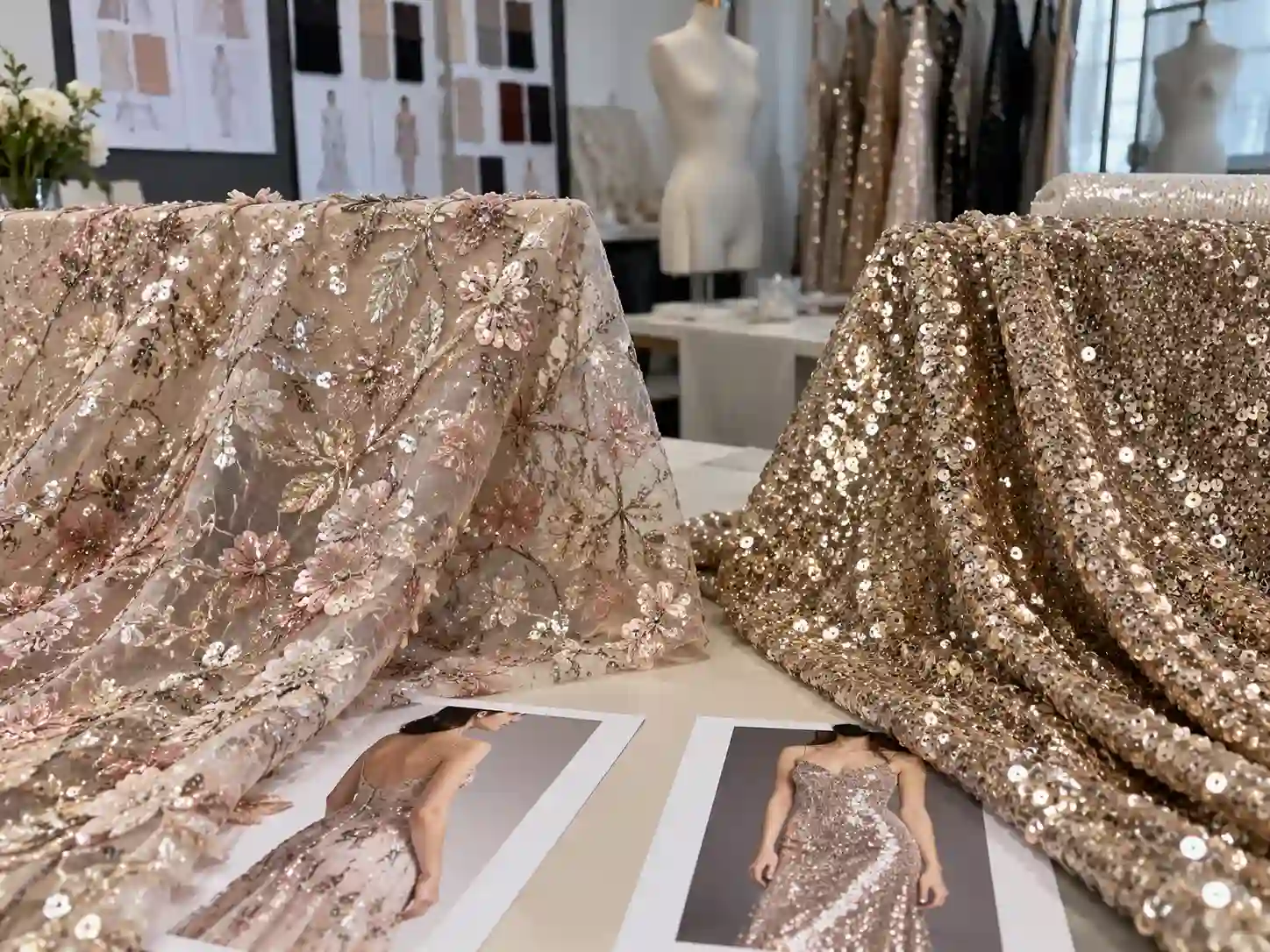
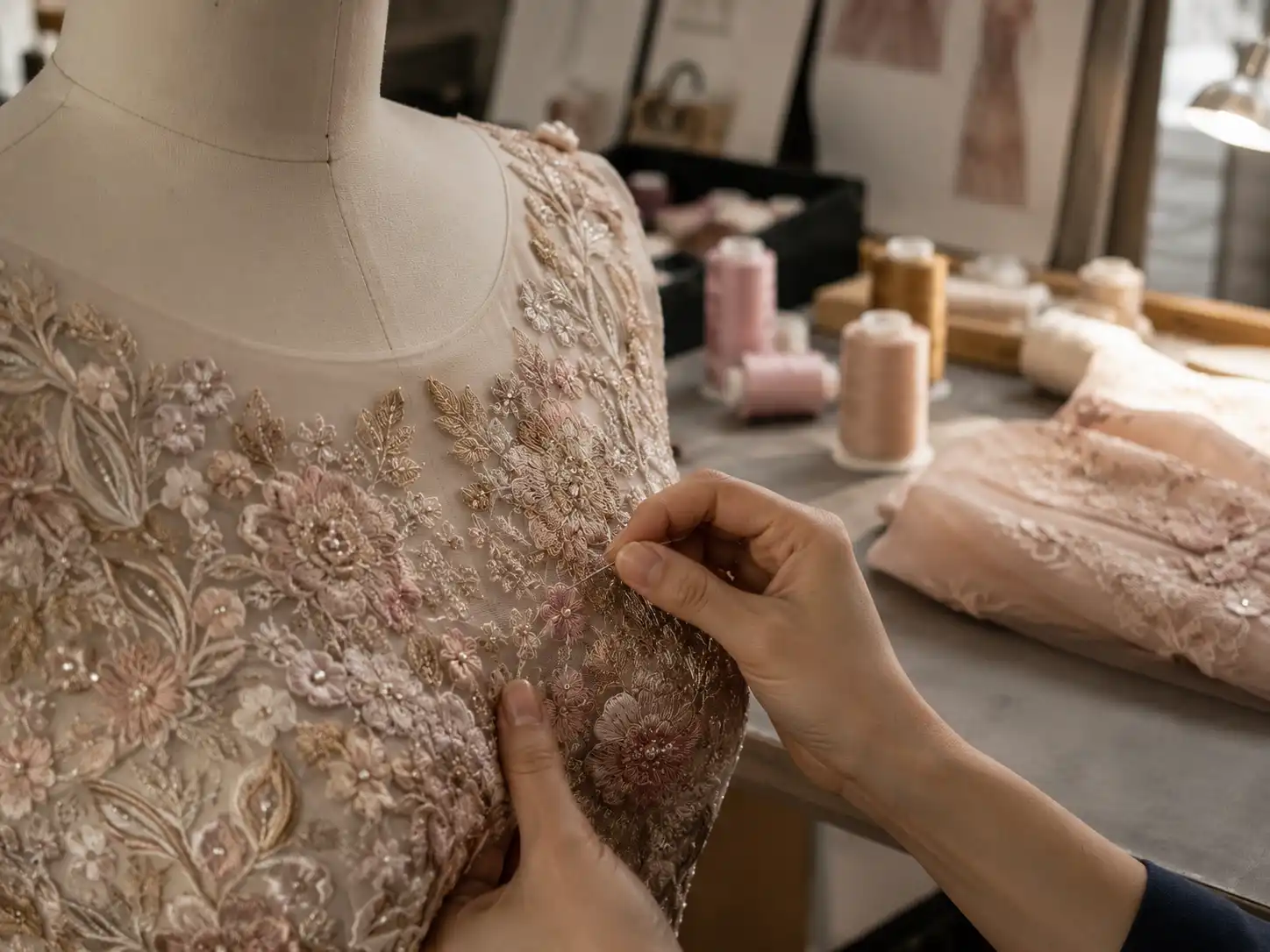
Table of Contents
Here, developing your OEM/ODM private label clothing collection is no longer a challenge—it’s an excellent opportunity to bring your creative vision to life.

