 Skip to content
What Is GRS-Certified Fabric? How Fashion Brands Verify Recycled Materials Before Production

Your trusted Women’s Apparel Manufacturer from China

A fabric can look sustainable on a swatch card, feel soft in a fitting room, and still fail the most important test: can the recycled-content claim be proven? That is why GRS-certified fabric has become a serious topic for fashion brands, sourcing offices, private-label teams, and ecommerce womenswear buyers. In fast fashion and modern womenswear development, the question is no longer simply, “Does this fabric sound eco-friendly?” A more useful question is, “Can this recycled fabric be traced, documented, sampled, produced, labeled, and repeated without creating claim risk for the brand?” When buyers develop dresses, matching sets, resortwear, occasionwear, mesh bodycon styles, satin slips, or private-label collections, GRS is not just a sustainability word. It becomes part of fabric approval, certificate review, claim wording, quality control, and launch planning.
GRS-certified fabric is fabric made with verified recycled material under the Global Recycled Standard. GRS tracks recycled inputs through a certified chain of custody and includes requirements related to chemical management, environmental practices, and social responsibility. For fashion brands, its value is not only the word “recycled,” but the documentation that supports the claim.
Imagine a brand preparing a recycled satin dress capsule for a summer launch. The moodboard is ready, the fit sample looks strong, and the marketing team has already written “responsibly made” into the campaign copy. Then someone from compliance asks, “Do we have the correct certificate for this exact fabric order?” That single question can decide whether the collection becomes a credible sourcing story or a last-minute rewrite. This article explains what GRS-certified fabric means, how buyers verify it, and how fashion brands can use certified recycled materials more intelligently in womenswear production.
What Is GRS-Certified Fabric?
GRS-certified fabric is textile material containing verified recycled content under the Global Recycled Standard. It is not simply a recycled-looking fabric or a supplier promise. It connects recycled input, chain-of-custody documentation, processing requirements, and supplier verification so buyers can check whether a recycled-material claim is credible before sampling, bulk production, labeling, or marketing.
A clean editorial flat lay of recycled polyester satin, mesh, jersey, and cotton fabric swatches on a sourcing table, with certificate documents, fabric codes, color cards, and a women’s dress sketch; professional fashion manufacturing style, neutral background, realistic lighting.
What GRS Means in Textiles
GRS means Global Recycled Standard. In textile sourcing, it is used to verify recycled material content and track certified material through the supply chain. Textile Exchange describes GRS as a full product standard that verifies and tracks recycled raw materials through the supply chain. It also includes processing criteria designed to prevent the use of potentially hazardous chemicals and to verify social or environmental practices at facilities.
For a fashion buyer, this matters because a garment fabric rarely moves in a straight line. Recycled input may pass through recyclers, yarn suppliers, fabric mills, dyeing houses, finishers, traders, garment manufacturers, and brand teams. If one part of the chain is not documented, the claim becomes weaker. This is why experienced sourcing teams do not ask only, “Is this fabric recycled?” They ask, “Can this fabric be supported by valid documents for this supplier, this material, this quantity, and this order?”
GRS should be understood as a document-backed sourcing standard, not as a fabric texture or hand feel. A recycled polyester satin, recycled nylon mesh, recycled cotton blend, or recycled lining can only be discussed seriously when the certificate trail matches the product and the planned claim.
Recycled Fabric vs GRS Fabric
Recycled fabric and GRS-certified fabric are related, but they are not the same. A recycled fabric may contain recycled polyester, nylon, cotton, or another recycled input, but it may not be certified. A GRS-certified fabric means the recycled content and related chain-of-custody controls are verified under the standard.
This difference becomes important when a brand wants to make a public-facing claim. Supplier phrases such as “eco fabric,” “recycled material,” “sustainable fabric,” or “GRS available” do not carry the same meaning. “GRS available” may simply mean the supplier can source certified material under certain conditions. It does not automatically prove that the exact swatch, color, fabric lot, and bulk order will be covered by valid documents.
Supplier Term | What It Usually Means | Buyer Action Needed | Claim Risk |
Recycled fabric | Fabric may contain recycled fiber | Ask for composition and proof | Medium to high if undocumented |
GRS available | Supplier may be able to source certified material | Confirm actual fabric and certificate coverage | Medium if order-specific proof is missing |
GRS-certified fabric | Fabric is connected to GRS documents | Match documents to supplier, material, quantity, and order | Lower when certificate chain is complete |
GRS garment claim | Final garment may carry a certified recycled claim | Check content %, chain of custody, and labeling rules | High if wording is too broad |
A common mistake is assuming that a supplier’s certificate covers every recycled fabric in its catalog. It does not always work that way. Certificate relevance must be checked against the material, company, transaction, and intended claim.
What GRS Actually Verifies
GRS verifies recycled material content through a controlled certification system. Certification bodies describe GRS as applying to the supply chain and addressing traceability, environmental principles, social requirements, chemical content, labeling, processing, manufacturing, packaging, trading, and distribution for products made with recycled material. Textile Exchange also explains that GRS uses chain-of-custody requirements to track materials through the supply chain.
That does not mean a GRS-certified fabric is automatically suitable for every garment. Certification verifies the recycled-material claim and certain production controls within the standard. It does not replace fabric testing, garment fitting, shrinkage review, colorfastness checks, seam slippage testing, bulk shade inspection, or final apparel QC.
For example, a certified recycled polyester satin can still pucker at side seams if it is too stiff for the construction. A recycled nylon mesh can still lose recovery after stretching. A recycled cotton blend can still shrink after washing. The sourcing team must separate two questions: is the recycled content verified, and can the fabric perform in the actual garment?
Why Buyers Should Care
Buyers should care because GRS changes the conversation from vague sustainability language to proof-based sourcing. It helps brands avoid weak claims such as “eco-friendly fabric” or “green material” when there is no evidence behind them.
In womenswear, this has direct commercial value. A dress collection may be ready for photography, but if the certificate file is incomplete, the brand may need to rewrite product copy, remove hangtag language, delay retailer approval, or explain the gap to a private-label client. The cost of late correction is usually higher than the cost of early verification.

A good buyer treats GRS as part of the development file. That file should include fabric composition, supplier name, certificate status, fabric code, color, batch, order quantity, test requirements, PP sample approval, and final claim wording. For fashion collections moving through fast launch calendars, this small amount of discipline can prevent major confusion.
Why Do Fashion Brands Use GRS Fabric?
Fashion brands use GRS fabric to support credible recycled-material claims, improve supply-chain transparency, and reduce the risk of unsupported sustainability language. GRS is especially useful when a collection needs documented recycled content for retailers, ecommerce product pages, hangtags, wholesale line sheets, brand reports, or responsible sourcing communication.
A fashion sourcing meeting with buyers reviewing certified recycled fabric swatches, a laptop showing a womenswear collection plan, certificate documents, color cards, and dress flats; modern B2B apparel development atmosphere, natural light, realistic office setting.
Trust in Recycled Claims
GRS supports trust because it gives recycled materials a traceable path. In apparel, a fabric may pass through multiple suppliers before it reaches the cutting table. Without chain-of-custody documents, the brand is relying on verbal claims. With better documentation, the sourcing team can check who handled the material, what standard applies, and whether the claim connects to the actual order.
For buyers, this is not only a sustainability issue. It is a brand protection issue. A weak recycled claim can create problems with retailers, marketplaces, wholesale clients, internal compliance teams, and informed consumers. A strong claim needs evidence.
GRS helps buyers ask better questions: Which company holds the Scope Certificate? Is the product category covered? Will a Transaction Certificate be issued for the actual shipment? Does the recycled content match the product claim? Are we making a material-level claim or a garment-level claim? These questions turn sustainability from a slogan into an operational process.
Traceability Across the Apparel Chain
Traceability matters because apparel products are not single-material objects. A dress may include shell fabric, lining, zipper tape, sewing thread, interlining, elastic, care labels, brand labels, hangtags, and packaging. Only some of these components may contain certified recycled content. If a brand says “GRS-certified dress” without checking what is actually certified, the claim may be too broad.
A more precise approach is to track certified material by component. For example, a garment may use GRS-certified recycled polyester shell fabric, while lining and trims are not part of the same claim. That does not make the product wrong, but it changes how the claim should be written.
Traceability also protects against substitution risk. A development swatch may be approved in one certified fabric base, but bulk production may shift to a similar-looking stock lot if the first material becomes unavailable. If the replacement fabric lacks the same documentation, the brand’s claim can break. This is why buyers should lock the fabric code, supplier, color, weight, width, composition, and certificate status before bulk cutting.
When GRS Adds Real Value
Not every collection needs GRS fabric. It is most valuable when recycled content is part of the product strategy, buyer requirement, retailer program, or brand promise. A non-claim trend style may not need certified recycled material. A recycled capsule collection, responsible resortwear line, private-label retailer program, or premium ecommerce launch may benefit from stronger documentation.
GRS is usually worth considering when the brand plans to use recycled-content language in product detail pages, hangtags, packaging, wholesale presentations, retailer compliance files, marketplace listings, or sustainability reports. The decision should be commercial as well as ethical. Certified materials may affect price, MOQ, color availability, sampling time, or lead time, so the sourcing team should decide early whether certification creates real value for the product.
A practical buyer question is: “Will this certification help the product sell more clearly, pass a retailer requirement, or reduce claim risk?” If the answer is yes, GRS should be built into the development plan from the first fabric conversation.
Problems GRS Helps Prevent
GRS can help prevent three common problems: unsupported claims, supplier confusion, and late-stage launch delays. Unsupported claims happen when a brand says “recycled” without enough proof. Supplier confusion happens when the fabric mill, trader, garment factory, and brand each assume someone else is handling documentation. Launch delays happen when the product is ready but the certificate file is not.
For fast-moving womenswear brands, the safest habit is simple: confirm certification needs before sampling. Once the design team approves the fabric, the photoshoot date is set, and the marketing copy is drafted, changing fabric becomes expensive. A certified alternative may have a different GSM, stretch, width, shade, hand feel, MOQ, or lead time.
Jinfeng Apparel is positioned as a premium custom womenswear manufacturer for global fashion brands and mid-to-large apparel clients, with support across product development, fabric and trim sourcing, pattern making, sampling, bulk production, QC, private-label packing, project management, export logistics, and brand protection. That type of end-to-end workflow is important for certified fabric projects because material claims, sample approval, and bulk production must stay aligned.
Which Fabrics Can Be GRS-Certified?
Many recycled-content fabrics can be GRS-certified when they meet the standard and the supply chain is certified. In womenswear, common options include recycled polyester satin, recycled polyester chiffon-like woven fabric, recycled nylon mesh, recycled poly-spandex jersey, recycled linings, recycled cotton blends, and selected woven or knit blends.
A professional fabric library wall showing labeled rolls of recycled polyester satin, recycled mesh, recycled jersey, recycled cotton blend, and linings, with womenswear sketches for dresses, resortwear, matching sets, and jumpsuits; clean showroom style, realistic textile detail.
Recycled Polyester
Recycled polyester is one of the most common GRS-related materials in fashion sourcing. It can be used for satin dresses, chiffon-style dresses, linings, printed woven fabrics, pleated skirts, mesh overlays, resort dresses, and some stretch styles. For brands producing party dresses, occasionwear, clubwear, vacation dresses, or private-label womenswear, recycled polyester is often the first certified option explored.
Polyester is popular because it can support many surface effects: shiny satin, sheer chiffon, smooth lining, lightweight mesh, printed fabric, pleated texture, and structured woven blends. It can also offer relatively stable color and broad availability compared with some recycled natural fibers.
Still, recycled polyester is not automatically the same as virgin polyester in hand feel or performance. A recycled satin for a slip dress must be checked for drape, seam smoothness, and bias behavior. A recycled polyester mesh for a fitted dress must be checked for transparency, recovery, and lining compatibility. Certification proves the recycled-content path; sampling proves whether the fabric works on the body.
Recycled Nylon and Cotton
Recycled nylon and recycled cotton can also be GRS-certified when the material and chain of custody meet the required conditions. Recycled nylon is often relevant for stretch mesh, lightweight woven fabrics, smooth linings, fitted silhouettes, and performance-inspired fashion pieces. Recycled cotton may be used in casual dresses, shirting-style pieces, denim-inspired products, textured tops, skirts, and cotton-blend sets.
Each fiber brings different development risks. Recycled nylon can feel smooth and strong, but stretch recovery, heat sensitivity, dye consistency, and color matching need attention. Recycled cotton can support a more natural material story, but fiber length, pilling, shrinkage, and batch consistency can be more challenging.
The stronger sourcing question is not “Which fiber sounds sustainable?” It is “Which certified fabric can meet the claim, fit, cost, hand feel, testing, and delivery needs of this collection?” A recycled cotton casual dress and a recycled nylon mesh bodycon dress should not be judged by the same development criteria.
Common Womenswear Applications
GRS fabric can work across many womenswear categories, but the fabric must match the garment structure. A certified recycled satin that works beautifully for a loose slip dress may fail in a tight corset bodice. A soft recycled jersey may feel comfortable but grow after wear if recovery is weak. A lightweight recycled woven may flow well in a resort maxi dress but become too transparent without the right lining.
| Womenswear Style | Common GRS Fabric Direction | Common Weight Range | Key Production Check |
| Satin slip dress | Recycled polyester satin | 90-180 gsm | Drape, seam puckering, bias stretch |
| Mesh bodycon dress | Recycled nylon or polyester mesh | 70-140 gsm | Recovery, transparency, lining match |
| Resort maxi dress | Recycled polyester woven or chiffon | 60-130 gsm | Print clarity, shrinkage, hem balance |
| Fitted jersey dress | Recycled poly-spandex jersey | 180-280 gsm | Stretch, recovery, body measurement |
| Dress lining | Recycled polyester lining | 50-90 gsm | Static, opacity, shade matching |
| Matching set | Recycled woven or knit blend | 120-280 gsm | Batch consistency between pieces |
These weight ranges are common industry references, not fixed rules. Final fabric choice depends on design, season, target price, lining, fit, print direction, market, and order quantity.
What Buyers Should Test
Buyers should test fabric performance before treating any certified fabric as production-ready. For womenswear, the most important checks usually include shrinkage, colorfastness, stretch and recovery, seam slippage, pilling, opacity, hand feel, drape, print stability, and bulk shade consistency.
Fitted styles need extra attention. Bodycon dresses, corset dresses, stretch jumpsuits, bustier tops, and mesh clubwear often fail when recovery is not stable. Long dresses need hem balance and drape control. Satin dresses need careful seam tension and ironing. Resort dresses need fabric flow and print alignment.
A swatch can look beautiful on the table and still behave differently after cutting, sewing, steaming, fitting, and hanging. The safest approach is to test the fabric inside the actual garment construction. For brands developing multiple styles, keep fabric test notes attached to each style number so bulk production does not rely on memory or informal comments.
How Do You Verify GRS Fabric?
To verify GRS fabric, buyers should check the supplier’s Scope Certificate, request the relevant Transaction Certificate, match documents to the actual fabric and order, and confirm validity through the issuing certification body or Textile Exchange tools. A Scope Certificate qualifies a company; a Transaction Certificate verifies specific certified products.

Close-up of a buyer’s desk with Scope Certificate, Transaction Certificate, fabric swatches, purchase order, laptop verification screen, and a color-coded sourcing checklist for recycled womenswear fabric; professional compliance review scene, realistic style.
Scope Certificate
A Scope Certificate, often called an SC, shows that a company is certified to handle products under a specific standard within a defined scope. It may list the certified company, site, standard, product categories, process scope, certification body, and validity period.
The key point is that a Scope Certificate does not automatically prove every fabric shipment is certified. It proves that the company is qualified within the certification system for certain products or processes. Before ordering, buyers should check whether the supplier name, legal entity, standard, product category, material type, processing scope, and validity date match the fabric being sourced.
If the certificate belongs to another company, an expired period, or a product category that does not include the fabric in question, it may not support the claim. This is why buyers should not accept a certificate file without reading the details.
Transaction Certificate
A Transaction Certificate, often called a TC, is shipment-specific. It verifies that specific certified products were transferred from one certified seller to one buyer under a relevant standard. In practical sourcing terms, the TC connects the certificate claim to a real order, product description, quantity, and transaction.
For fabric buyers, the TC is often the most important proof before making a product claim. A supplier may have a valid SC, but the brand may still need a TC for the actual fabric order. Without that link, the claim may be difficult to defend.
The TC should be reviewed against the purchase order, invoice, fabric description, fiber composition, quantity, seller, buyer, shipment date, and certificate number. If the fabric passes through a trader, converter, dyeing mill, or garment factory, the chain should be reviewed carefully so the claim does not break between stages.
Verification Checklist
A clean verification process is simple, but it must be done before bulk production. The buyer should match every certificate detail to the real order. Blurred screenshots, old certificates, cropped files, mismatched supplier names, and vague product descriptions should be treated as incomplete proof.
| Document or Data Point | What to Check | Practical Buyer Question | Timing |
| Scope Certificate | Supplier name, standard, validity, product category | Is this supplier qualified for this material? | Before fabric approval |
| Transaction Certificate | Fabric description, quantity, seller, buyer, shipment | Does this certificate cover our actual order? | Before claim approval |
| Fabric Code | Code, color, GSM, width, composition | Is this the same fabric used in sample and bulk? | Before PP sample |
| Purchase Order | Style, color, quantity, delivery batch | Does the PO match the certified material plan? | Before bulk purchase |
| Claim Wording | Material-level or garment-level claim | Are we overstating what is certified? | Before label printing |
| Certification Body | Issuer and authentication route | Can the document be confirmed as valid? | Before shipment or retailer submission |
For brands with strict retailer or marketplace requirements, the verification file should be stored with the style record. This makes repeat orders easier and reduces confusion when the same certified material is used across several styles or seasons.
Red Flags to Avoid
Several red flags should make buyers slow down. The supplier says “GRS available” but cannot show a valid Scope Certificate. The certificate belongs to a different company with no clear transaction link. The fabric description on the document does not match the swatch. The TC quantity does not cover the purchase. The certificate has expired. The supplier refuses to name the certification body. The document is only a cropped image.
Another red flag is claim language that sounds too broad. If only the shell fabric is certified, the supplier should not casually describe the whole garment as GRS-certified unless the chain, content percentage, and claims policy support that wording.
In certified sourcing, careful language is part of quality control. The stronger the brand’s public claim, the stronger the document trail should be.
Is GRS Different from RCS or OEKO-TEX?
Yes. GRS, RCS, and OEKO-TEX serve different purposes. GRS verifies recycled content with broader social, environmental, chemical, and chain-of-custody requirements. RCS focuses mainly on recycled input and chain of custody. OEKO-TEX is commonly associated with harmful-substance testing, not recycled-content verification.
A comparison-style visual of three textile certification folders labeled GRS, RCS, and OEKO-TEX beside recycled fabric swatches and womenswear sketches; clean educational layout, professional sourcing desk, neutral tones.
GRS vs RCS
GRS and RCS are both related to recycled materials, but they are not identical. RCS focuses on verifying recycled input and chain of custody. GRS goes further by adding requirements related to social responsibility, environmental management, and chemical use during processing.
Textile Exchange explains that GRS can be used as a business-to-business tool at a 20% recycled input threshold, while consumer-facing labeling generally requires a 50% recycled input threshold. Intertek also describes RCS as having a lower minimum recycled input requirement and no processing requirements compared with GRS.
For buyers, this difference affects both sourcing and marketing. If the brand only needs to verify recycled input, RCS may be enough. If the brand wants a stronger responsible sourcing story, especially for product pages or retailer programs, GRS is often more suitable. The mistake is treating RCS and GRS as interchangeable simply because both mention recycled content.
GRS vs OEKO-TEX
OEKO-TEX is commonly used in the textile industry to address harmful-substance concerns. GRS addresses recycled-content verification and broader processing requirements related to recycled materials. They answer different questions.
A fabric can be GRS-certified but not necessarily OEKO-TEX certified. A fabric can be OEKO-TEX certified but contain no recycled material. A buyer may need one, both, or neither, depending on the product claim, retailer requirement, fabric type, target market, and brand policy.
The simplest way to avoid confusion is to ask what the certificate is meant to prove. GRS helps answer: “Can this recycled-content claim be verified?” RCS helps answer: “Can this recycled input be traced?” OEKO-TEX-related testing helps answer: “Has this textile been tested against certain harmful-substance criteria?” A factory audit answers another question entirely. One certificate rarely solves every sourcing concern.
Is GRS a Safety Standard?
GRS is not a complete product safety standard. It includes chemical-related requirements, but buyers should not treat it as a replacement for all restricted substance testing, colorfastness testing, shrinkage testing, flammability requirements, retailer protocols, or country-specific product compliance.
This matters in womenswear because garments often include many components. A sequin dress may include base fabric, sequins, thread, lining, zipper, glue, label, and packaging. A corset dress may include boning, interlining, hook-and-eye tape, lining, shell fabric, and trims. A mesh dress may include stretch mesh, lining, elastic, and sewing thread.
GRS can support the recycled-content claim, but the finished garment still needs product-level checks. Buyers should keep certification questions and performance questions separate. Is the recycled content verified? Is the fabric safe for the market? Does the garment pass the brand’s quality standard? Does the claim match the certified component? These are connected but different questions.

Which Certification Matters Most?
The right certification depends on the claim and the risk. If the claim is about recycled content, GRS or RCS should be considered. If the concern is harmful substances, OEKO-TEX-related testing or restricted-substance testing may be more relevant. If the issue is factory social compliance, a factory audit framework may be required. If the product uses organic fibers, organic standards may apply.
For fashion sourcing, the smartest approach is to map the certification to the business question before fabric sourcing begins. Do we need to prove recycled content? Do we need consumer-facing labeling? Do we need retailer compliance? Do we need restricted-substance testing? Do we need a garment-level claim or only a material-level claim?
Once the fabric is chosen, certification flexibility becomes limited. The certified version may have a different price, MOQ, lead time, width, color availability, hand feel, or performance. Certification should be part of the fabric brief, not an afterthought.
How Should Brands Source GRS Fabric for Womenswear?
Brands should source GRS fabric by combining certificate verification with garment-development thinking. The fabric must support the recycled-content claim, but it must also work for the style, fit, price point, color, delivery schedule, and production method. A certified fabric that fails on the body is not a successful sourcing choice.
A womenswear development table showing a dress tech pack, recycled fabric swatches, measurement tape, fit notes, PP sample, trims, and a certificate checklist; realistic apparel factory development room, professional but approachable style.
Start With the Claim
Before sourcing, buyers should confirm the claim target. Is the brand trying to say “recycled polyester fabric,” “made with certified recycled material,” “GRS-certified fabric,” or something stronger? Each phrase may require different proof.
The next step is to confirm the product need. A bodycon dress needs stretch and recovery. A satin evening dress needs drape and seam control. A resort maxi dress needs flow and print stability. A matching set needs batch consistency between top and bottom. A jumpsuit needs movement comfort and crotch strength. A lining needs softness, opacity, and static control.
A clear fabric brief saves time. It should include fiber composition, target recycled content, required certification, fabric weight, hand feel, stretch direction, recovery, color, print, finish, estimated order quantity by style and color, target market, claim wording plan, and document requirements. Without this, suppliers may send random “eco fabric” options that do not fit the garment.
Match Fabric to Fit
Fabric affects fit more than many buyers expect. Two fabrics with the same composition can behave very differently. One recycled polyester satin may be fluid and soft; another may be stiff and show seam tension. One recycled mesh may recover well; another may grow after wearing. One recycled cotton blend may feel natural but shrink too much after washing.
For fitted styles, stretch and recovery affect bust, waist, hip, and length measurements. For woven dresses, drape affects side seams, hem balance, and body shape. For long dresses, fabric weight affects how the skirt hangs. For ruched dresses, recovery affects whether the garment stays flattering after movement.
A practical sample review should include fit on body or dress form, measurement before and after steaming, stretch and recovery check, seam tension, puckering, opacity, lining coverage, comfort while sitting and walking, and garment appearance after hanging. The best fabric is not the one with the most impressive certificate. It is the one that supports the design, claim, fit, and bulk production.
Sample With the Real Fabric
Sampling should use the intended certified fabric whenever possible. If the first sample uses a substitute fabric, the buyer should expect fit and drape to change when the final GRS fabric arrives. This is especially true for satin, mesh, jersey, ponte, chiffon-like woven fabrics, and recycled cotton blends.
A clean sampling path usually includes first sample, fit correction, fabric confirmation, lab dip or color approval, size adjustment, PP sample, and bulk production. For certified fabric orders, document review should run beside sampling, not after it.
Jinfeng Apparel supports custom womenswear development from tech packs, reference photos, original samples, line sheets, and sketches, with fabric sourcing, trim sourcing, pattern making, sampling, bulk production, QC, and private-label packing support. For GRS-related projects, buyers should share certification requirements before sampling begins. If the requirement appears only after sample approval, the team may need to re-source fabric, redo lab dips, adjust fit, and recalculate cost.
Keep Production Controlled
Production stays controlled when the approved fabric, certificate file, pattern, measurement spec, trim list, label artwork, packing method, and claim wording are all aligned before cutting.
For example, a recycled satin mini dress may require certificate review, GSM confirmation, shrinkage check, shade approval, seam pucker review, zipper test, lining match, and PP sample approval. A recycled mesh dress may require stretch recovery review, transparency check, lining coverage, elastic behavior, and size tolerance control.
For multi-style collections, buyers should keep a material matrix. This matrix can record style number, fabric code, supplier, certificate status, recycled content, color, width, weight, fabric MOQ, bulk lead time, and claim wording. It is not glamorous, but it prevents confusion when a collection has 10-30 styles, multiple colors, and different certified components.
Jinfeng Apparel has operated in women’s apparel development and production since 2008 and works with 6 owned women’s fashion factories and more than 10 long-term satellite production partners. This production setup is relevant when brands need multi-style, multi-fabric, multi-color, multi-size, and multi-batch order coordination rather than one isolated sample.
What Should Buyers Ask Before Production?
Before production, buyers should ask whether the certificate matches the actual fabric, whether the claim matches the final garment, whether the fabric performs in the approved style, and whether all documents will be available before labeling, shipment, or retail submission. These questions prevent late claim problems and bulk quality risks.
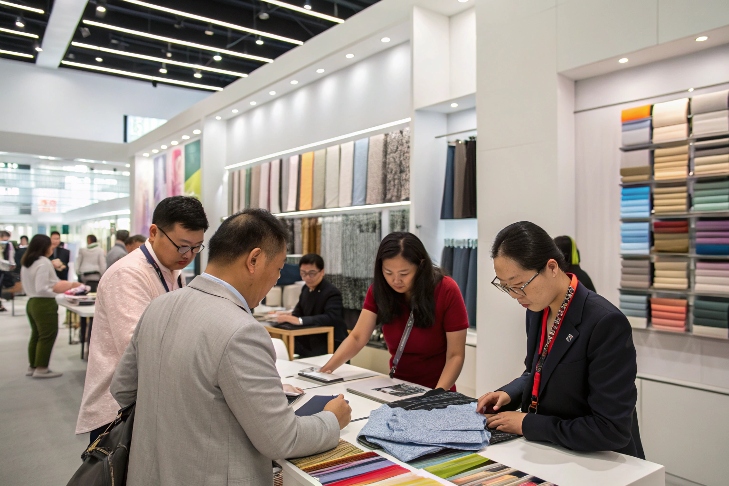
Image Prompt: A pre-production approval scene with a womenswear PP sample on a mannequin, recycled fabric roll, measurement chart, certificate documents, trim cards, labels, and a buyer checklist; high-end apparel factory QC room, realistic lighting.
Are Certificates Linked to the Fabric?
The first question is simple: are the certificates linked to the actual fabric order? A valid certificate from a supplier is useful only when it is relevant to the material being purchased. Buyers should check supplier name, legal entity, certificate number, standard, product category, validity date, fabric description, composition, quantity, and transaction details.
If the certificate belongs to a different company, different material, different period, or different product category, it may not support the claim. If a trader or converter is involved, the chain should be checked more carefully.
The best habit is to review the Scope Certificate first, then request the Transaction Certificate for the actual shipment. The Scope Certificate shows that the company is qualified. The Transaction Certificate links specific certified products to a real transaction. Both matter, but they serve different purposes.
Does the Claim Match the Garment?
The second question is whether the claim matches the final garment. A fabric-level claim is not always the same as a garment-level claim. If only the shell fabric is certified, the claim should not automatically describe the whole garment as certified. If the lining, trims, zipper tape, interlining, thread, or packaging are not part of the certified claim, the wording must be precise.
A safer approach may be to say “made with GRS-certified recycled polyester shell fabric” or “shell fabric contains certified recycled polyester,” depending on the actual documentation and applicable claims policy. Final wording should be reviewed by the brand’s compliance or legal team before consumer-facing use.
This is especially important for hangtags, ecommerce product pages, wholesale line sheets, and retailer submissions. Marketing should not move faster than documentation.
Is the Fabric Production-Ready?
The third question is whether the fabric is production-ready. Certification does not replace garment testing. Buyers should review shrinkage, colorfastness, stretch recovery, seam slippage, pilling, hand feel, drape, opacity, and bulk shade consistency based on the actual garment category.
| Buyer Question | What to Confirm Before Bulk | Common Risk If Ignored | Practical Action |
| Is the fabric certificate valid? | SC and TC match supplier and order | Unsupported recycled claim | Verify document details before PO approval |
| Does the fabric fit the style? | Fit sample and PP sample approved | Poor fit or high return risk | Test fabric in actual garment construction |
| Is the claim accurate? | Component-level or garment-level wording checked | Greenwashing or retailer rejection | Review claim before hangtag or PDP copy |
| Is bulk fabric stable? | GSM, width, shrinkage, shade, recovery confirmed | Inconsistent bulk production | Lock fabric code and bulk lot |
| Are trims and lining aligned? | Zipper, lining, thread, labels, packaging reviewed | Claim confusion or quality failure | Build a complete BOM and QC file |
| Can the order repeat? | Fabric, pattern, measurement, packing records saved | Inconsistent reorder quality | Keep files for repeat and seasonal production |
For womenswear, production readiness should be judged on the body, not only on paper. A fabric can be certified and still unsuitable for a specific silhouette.
What to Send the Manufacturer
Buyers should send a complete development pack before requesting a serious quotation. The more accurate the information, the better the fabric recommendation, cost calculation, sample result, and production schedule.
Useful materials include a tech pack or design sketch, reference photo or original sample, target fabric composition, GRS or recycled-content requirement, target fabric weight, color or print direction, size chart, grading rules, estimated order quantity by style and color, label and packaging requirements, target delivery date, claim wording plan, and certificate document expectations.
For custom womenswear projects using certified fabric, the strongest cooperation happens when the brand, manufacturer, and fabric supplier discuss certification before sampling begins. A manufacturer can help evaluate whether the fabric direction works for pattern development, sampling, bulk production, QC, private-label packaging, and export delivery, but the buyer should still confirm final claims with its own compliance or legal team before consumer-facing use.
Jinfeng Apparel’s production model is built for brands with clear product direction, sampling needs, and bulk production plans. Its MOQ starts from 200 pcs per style/color, depending on fabric availability, color development, trims, construction complexity, and production schedule. This makes early fabric and certificate planning especially important for brands building multi-style recycled womenswear collections.
If your brand is planning a recycled satin dress line, GRS-related mesh collection, recycled polyester resortwear capsule, or private-label womenswear program, prepare your tech pack, reference images, target fabric direction, order quantity, size range, and certificate requirements before sampling. Share the project details with Jinfeng Apparel to review custom development, fabric sourcing, sampling, bulk production, QC, private-label packaging, and export delivery options.
Share This Article :

Jerry Lee
Categories

Latest blogs


Table of Contents
Here, developing your OEM/ODM private label clothing collection is no longer a challenge—it’s an excellent opportunity to bring your creative vision to life.

