 Skip to content
Tencel Lyocell for Dress Manufacturing: Fabric Selection, Production Risks, and Sourcing Guide

Your trusted Women’s Apparel Manufacturer from China

A Tencel Lyocell dress can look effortless on a model and still become a demanding production project. The same qualities that make the material attractive – softness, fluid movement, moisture absorption and a refined surface – can also expose weak decisions in fabric weight, cutting direction, seam construction, pressing and wash control. For a fashion brand, choosing a swatch labeled “Tencel” is therefore only the beginning of the development process.
Tencel Lyocell is an excellent dress material when the chosen fabric supports the intended silhouette, opacity, care method and price level. Reliable production requires verified fiber identity, an appropriate weave or knit, tested shrinkage and color performance, a finished garment sample, and consistent controls from fabric inspection through cutting, sewing, pressing, packing and bulk approval.
The costliest problems rarely appear while a small swatch is lying flat on a desk. They show up after a maxi dress hangs overnight, a dark color is wet-rubbed, a zipper is pressed, or several dye lots reach the cutting room. One sample can look perfect while bulk garments twist, grow or feel different. The following sections explain how experienced product teams find those risks early, while they are still inexpensive to correct.
What Is Tencel Lyocell?
Tencel and Lyocell describe related but different things. Lyocell is the generic name for a regenerated cellulosic fiber, while TENCEL™ is a trademarked fiber brand associated with Lenzing. A fabric can contain Lyocell without qualifying for the branded name, so brands should verify fiber composition, origin, fabric construction and supporting documents before approving product claims.
Tencel vs Lyocell
Lyocell is the recognized fiber category used in technical specifications and garment composition records. TENCEL™ is a registered brand used for qualifying fibers produced within Lenzing’s system. The practical relationship is straightforward: TENCEL™ Lyocell is Lyocell, but generic Lyocell should not automatically be promoted as TENCEL™. That distinction matters whenever a brand prepares care labels, hangtags, product pages, wholesale line sheets or environmental claims for retail customers.
In everyday fabric markets, the word “Tencel” is sometimes used loosely to describe any smooth, drapey regenerated-cellulose fabric. A quotation may therefore say Tencel even when the material is generic Lyocell, a Lyocell-viscose blend, or another fabric with a similar hand. An experienced sourcing team does not rely on the hanger label alone. It checks the declared fiber percentages, mill article number, invoice wording and evidence connecting the fabric to the branded fiber supply chain.
Fiber to Finished Fabric
Lyocell begins with cellulose, commonly sourced from wood pulp, which is dissolved and regenerated into fiber through an industrial spinning process. It is not a natural fiber in the same physical form as cotton or linen, and it is not a petroleum-based synthetic such as polyester. The clearest description is regenerated cellulosic fiber, a category that reflects both its plant-derived feedstock and its manufactured fiber formation.
Fiber origin is only the first layer of a dress fabric’s performance. After the fiber is produced, it can be spun into different yarn counts, woven or knitted at different densities, dyed with different recipes and treated with enzymes, softeners, sanding or garment washes. These decisions influence opacity, drape, pilling, shrinkage, surface whitening and seam behavior more directly than the fiber name alone. A credible material review therefore follows the complete textile route, not only the initial fiber story.
Fabric Description | What It Usually Indicates | What Still Requires Verification |
100% Lyocell | All declared fiber content is Lyocell. | Brand origin, finished GSM, weave, finish and shrinkage. |
TENCEL™ Lyocell | Branded Lyocell fiber is claimed. | Documents supporting the claim and approved trademark use. |
Lyocell twill | Lyocell fabric with a diagonal weave. | Density, surface treatment, skew, colorfastness and drape. |
Lyocell satin | Satin-weave fabric containing Lyocell. | Snagging, seam puckering, shine direction and opacity. |
Washed Lyocell | Fabric has a relaxed or washed finish. | Lot consistency, fibrillation and dimensional change. |
Lyocell blend | Lyocell combined with another fiber. | Exact percentages, purpose of each fiber and finished performance. |
Fabric Names Can Mislead
A label reading “100% Lyocell” explains the fiber content, but it does not explain how the fabric will hang in a dress. Two fabrics with the same composition and finished weight can behave differently because their yarn twist, weave density, finishing and color process are different. One may feel cool and clean, another may feel peachy and relaxed, and a third may show noticeable growth after washing or hanging.
Commercial descriptions such as Tencel twill, washed Tencel, Tencel satin or Tencel linen are useful starting points, but they are not standardized quality grades. The name may describe a weave, blend, surface finish or general marketing direction. For development, a brand needs the article number, exact composition, finished weight, usable width, color method, finish and test result. A small swatch is helpful for touch and color, but a larger cutting or full sample is needed to judge drape and surface direction.
What to Verify
Every approved fabric should be traceable to a written specification and a physical standard. At minimum, the record should show the supplier, mill, article number, fiber percentages, finished GSM, usable width, construction, color reference, finish, care method and relevant test results. The approved swatch should be signed or sealed so that production teams can distinguish it from visually similar materials that may have different performance.
For any branded-fiber claim, the brand should request documents that reasonably connect the order to the stated source. It should also confirm whether the quoted weight is measured before or after finishing, whether each color requires a separate dye minimum, and whether the same article can be reordered for future seasons. These questions may feel administrative, but they often determine whether a repeat order matches the original launch or becomes a completely new development exercise.
Is Tencel Lyocell Good for Dresses?
Tencel Lyocell is well suited to dresses that need softness, breathability and graceful movement. It performs especially well in slip, wrap, shirt, resort, midi and maxi silhouettes. Its limitations include wrinkling, wet-process sensitivity, possible fibrillation and limited structural support, which should be managed through the right weight, construction, lining, testing and pattern engineering.
Drape, Comfort and Coverage
Lyocell is often selected because it creates a soft, flowing silhouette without the dry stiffness of many crisp cotton fabrics. In a dress, the fabric can follow the body and move naturally through gathers, wrap fronts and longer skirts. The effect is refined rather than rigid, which suits casual premium collections, warm-weather ranges and styles that depend on movement instead of strong internal structure.
Comfort depends on more than fiber content. Fabric density, garment ease, sleeve shape, lining and finishing all influence airflow and moisture movement. A lightweight Lyocell shell paired with a dense polyester lining may feel much warmer than expected, while an unlined pale fabric may become transparent across the bust or hip. Coverage should be reviewed on a person or dress form under daylight, retail lighting and photography lighting, because opacity changes when fabric is stretched or backlit.
Best Dress Applications
Lyocell works best when the silhouette uses its natural softness rather than forcing it to behave like rigid suiting. Slip dresses, wrap dresses, soft shirt dresses, gathered midis and resort maxis are reliable directions because the fabric can hang, fold and move without needing aggressive reinforcement. Soft sleeves, tie waists, bias-inspired panels and fluid skirts also make good use of the material’s character.
The same fabric can be less successful in a sharp corset dress, sculpted mini or permanent knife-pleat design. These products may require underlining, boning, fused panels or a more stable blend. Adding support is possible, but excessive reinforcement can create visible transition lines where one area becomes stiff while the rest remains fluid. The sample should therefore test the complete structure, not only the outer shell.
Dress Type | Practical GSM Start | Suitable Fabric Direction | Main Risk to Review |
Slip dress | 110-160 GSM | Satin, fine twill or smooth plain weave | Bias growth, opacity and seam puckering |
Wrap dress | 120-175 GSM | Twill, crepe or soft woven | Neckline stretching and tie distortion |
Shirt dress | 130-190 GSM | Twill, plain weave or Lyocell-cotton | Collar stability, wrinkles and placket waving |
Resort maxi | 100-155 GSM | Lightweight woven or Lyocell-linen | Transparency, hem balance and shrinkage |
Casual midi | 140-200 GSM | Washed twill or medium plain weave | Surface change and wash consistency |
Office dress | 170-230 GSM | Compact twill or structured blend | Shape retention and zipper flatness |
Fitted knit dress | 180-280 GSM | Jersey, rib or interlock blend | Growth, recovery and measurement stability |
Wrinkling and Surface Change
Lyocell can wrinkle, particularly in lightweight woven constructions. Whether that is a defect depends on the intended product. A washed resort dress can carry natural creasing comfortably, while a clean office dress or occasion style may look poorly finished after sitting, packing or transport. Pressing trials and pack tests help the team understand whether the garment recovers acceptably before it reaches the customer.
The fiber can also develop fibrillation, a surface effect that occurs when fine fibrils separate under wet abrasion. In some fabrics, controlled fibrillation creates a desirable peach-touch finish. In others, it causes uneven whitening, fuzz or worn-looking areas around seams, folds, hips and waist ties. Dark colors usually reveal the change more clearly. A garment wash test is therefore more informative than relying only on a laboratory specimen or an untouched fabric swatch.
When It Is a Poor Fit
Lyocell is not automatically the best choice simply because a collection needs a soft hand or a plant-derived material story. A very lightweight construction may struggle to hold a strapless neckline, sharply tailored waist or heavy hardware. High-abrasion utility styles can also show local surface wear where belts, pockets or bags repeatedly rub against the fabric.
The material is also a poor commercial fit when the target price leaves no room for controlled dyeing, shrinkage testing, sample correction and careful sewing. Sensitive fabrics are not necessarily difficult, but they need disciplined handling. Choosing an unstable article and then removing the safeguards required to manufacture it reliably usually creates higher costs through rework, claims, inconsistent repeat orders and customer returns.
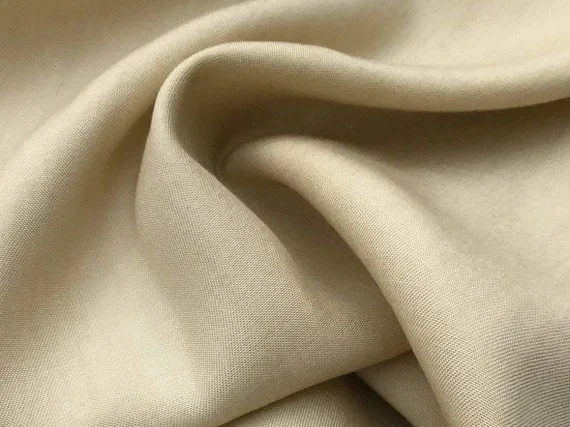
Which Tencel Fabric Should Brands Choose?
Choose Tencel Lyocell fabric by starting with the finished dress rather than the fiber name. Define the required silhouette, opacity, stretch, surface, care method and target cost, then compare weight, weave or knit, blend and finish. The final decision should be based on tested swatches and a complete garment sample because GSM alone cannot predict drape or stability.
Weight and Construction
GSM measures grams per square meter and provides a useful reference for fabric weight, but it does not directly describe thickness, opacity or drape. A compact 140 GSM twill can feel more substantial than a loosely woven 165 GSM plain weave. For this reason, weight should always be assessed beside weave density, yarn size, finish and the way the fabric behaves over the body.
Lightweight woven dresses commonly begin around 100-150 GSM, while slip, wrap and soft midi styles often fall near 120-180 GSM. Shirt dresses and more controlled office silhouettes may require approximately 160-220 GSM. Stretch knits frequently need higher weights because the fabric is pulled across the body. These ranges are practical development references, not universal standards, and the finished post-dyeing weight should be the value used for approval.
Pure or Blended
A 100% Lyocell fabric often gives the clearest expression of the fiber’s soft hand and fluid movement. It can be excellent for relaxed wovens, slip dresses and wrap silhouettes, but it may also show wrinkles or surface changes more clearly. A blend is not automatically better, yet it can solve a specific problem involving structure, recovery, texture, crease behavior or cost.
Lyocell-cotton blends are useful for shirt dresses and casual styles that need a familiar, slightly firmer hand. Lyocell-linen blends can preserve linen’s dry texture while softening its stiffness, which suits resort collections. Elastane supports fitted knits, although recovery depends on knit structure, weight and finishing rather than elastane percentage alone. Polyester can improve stability and crease recovery, but it changes the hand, moisture response and material story, so its role should be deliberate.
Fabric Direction | Typical Development Range | Suitable Dress Uses | Key Approval Point |
Light plain weave | 95-140 GSM | Resort, tiered and lined summer dresses | Transparency and seam slippage |
Fine Lyocell twill | 120-170 GSM | Wrap, slip and soft shirt dresses | Drape, skew and shrinkage |
Medium twill | 160-220 GSM | Utility, office and casual midi dresses | Body, crease behavior and lot consistency |
Lyocell satin | 110-180 GSM | Slip, occasion and evening-inspired styles | Snagging, shine direction and puckering |
Lyocell-linen woven | 130-210 GSM | Resort and warm-weather dresses | Wrinkles, slubs and color variation |
Stretch jersey | 170-240 GSM | Soft fitted and ruched dresses | Recovery and garment growth |
Rib or interlock blend | 200-300 GSM | Bodycon and substantial knit dresses | Width stability and measurement control |
Color, Finish and Hand
Color can alter the apparent quality of the same base fabric. Dark shades make wet rubbing, surface whitening and abrasion easier to see, while pale shades increase concerns about transparency, lining visibility and yellowing. Bright fashion colors may need closer review for shade consistency. For deep navy, black, burgundy and saturated tones, dry and wet rubbing tests should be reviewed before approving the fabric for close-fitting or light-colored accessory contact.
Finishing has an equally strong influence. Enzyme treatments can improve softness, while sanding or mechanical treatment can create a peach surface. These effects may make the first swatch highly attractive, but they can also introduce lot variation when the finishing recipe is not well controlled. Hand feel should be judged against a sealed standard rather than memory, and the team should compare the original fabric, washed fabric, pressed fabric and finished garment after the intended care cycle.
Cost and Repeatability
The lowest price per meter is not always the lowest garment cost. A fabric with unstable width, excessive shrinkage, directional shading or frequent defects can increase consumption, cutting loss, inspection time and rework. Usable width, one-way cutting, defect allowance, shrinkage and print placement should be included when calculating realistic consumption instead of comparing prices on the quotation alone.
Repeatability is equally important for brands that plan core styles or replenishment. The sourcing team should ask whether the mill can reproduce the same yarn, construction, color and finish next season. Stock-supported colors may reduce development pressure but offer less exclusivity, while custom dyeing and special finishes often create separate minimums for each shade. A slightly more expensive article with stable width and repeatable finishing can be a stronger commercial choice than a cheaper material that must be redeveloped for every order.
How Is Tencel Made Into Dresses?
Tencel Lyocell dresses are produced through fabric inspection and relaxation, shrinkage testing, controlled cutting, suitable seam construction, careful pressing and staged sample approval. Soft Lyocell fabrics can move, grow or show surface marks, so bulk production should begin only after the fabric, pattern, sewing method, care process and finished garment have been tested together.
Preparation and Cutting
Bulk fabric should be inspected and allowed to relax before final measurements or cutting decisions are made. Rolled textiles can retain tension from finishing, inspection and packing. If the material is cut immediately after unrolling, panels may change width or length as that tension releases. The production team should confirm stable measurements rather than applying one fixed relaxation period to every woven and knit construction.
Cutting direction matters because satin, brushed twill and washed surfaces can show directional shine or shade change. One-way cutting may increase consumption, but mixing panel directions can make a finished dress look as though it was assembled from different colors. Markers should also account for usable width, bow, skew, shrinkage, defects, print placement and grain. Long bias panels may need to hang before hemming because a fluid skirt can grow after sewing.
Sewing and Pressing
Needle size, point type, thread and stitch density should be confirmed through sewing trials on the approved production fabric. A needle that is too large can leave visible holes, while excessive stitch density can create puckering or local stiffness. Lightweight woven Lyocell may need fine overlocking, narrow binding or enclosed seams, depending on the desired finish and the fabric’s resistance to fraying or seam slippage.
Operators should avoid stretching the fabric while feeding it through the machine. Uneven presser-foot pressure and differential movement can create wavy seams, distorted necklines and mismatched panel lengths. Pressing also needs controlled heat, moisture and pressure. Smooth twills and satins can show shine, seam impressions or flattened texture when pressed too aggressively. A press cloth, suitable padding and written operation standards help preserve the approved surface.
Fit, Lining and Support
Lyocell’s drape can make a pattern look elegant, but it can also reveal weak fit decisions. A neckline that remains stable in crisp poplin may stretch in a soft woven, while a waist seam can grow when it is cut on a diagonal. Stay tape, stable zipper tape, lightweight interfacing and controlled seam allowances should be added where they solve a defined risk rather than being used indiscriminately.
Lining should support opacity and movement without fighting the shell. A heavy, static-prone lining can make the outer skirt cling or pull upward, while a lining cut too short may show through the hem after the shell relaxes. For fitted knits, the pattern must reflect measured stretch and recovery. Copying dimensions from a polyester-spandex dress into a Lyocell-blend knit can create growth during wear even when the original fitting appears acceptable.
Testing Before Bulk
Testing should match the destination market, intended use and care instruction. A washable resort dress needs a different plan from a lined occasion dress marked for professional dry cleaning. Dimensional change should be measured in both directions, and skew or bow should be checked before cutting because these issues can create twisted side seams and uneven hems even when individual garment measurements appear correct.
Laboratory results should be reviewed beside a complete garment. A fabric specimen can meet a numerical requirement while the dress still shows zipper waves, lining exposure, pressing marks or an uneven hem. The most useful approval combines fiber and fabric records, test data, on-body fitting, wash or care testing, packing review and a sealed pre-production sample. That combination gives the production line a realistic standard rather than an abstract pass report.
Check | What It Reveals | When to Complete | Practical Decision |
Fiber composition | Accuracy of declared percentages | Before final labeling | Confirm content and product description |
Finished GSM and width | Consumption and specification consistency | Costing and bulk arrival | Recalculate marker if outside tolerance |
Dimensional change | Length and width change after care | Before pattern sealing | Adjust process, allowance or care method |
Skew and bow | Risk of twisting seams and uneven hems | Before cutting | Reject, correct or alter marker placement |
Colorfastness | Color change, staining and rubbing transfer | Before color approval | Improve dyeing or restrict end use |
Pilling and surface review | Fuzz, pills and abrasion appearance | Before fabric approval | Change finish, construction or material |
Seam performance | Slippage, breakage and puckering | During sample development | Adjust seam, thread or allowance |
Garment care test | Combined fabric, trim and construction behavior | On final sample | Approve only after complete review |
Measurement audit | Fit consistency through production | PP stage and inline | Correct pattern or sewing process |

How Do Brands Source Tencel Dresses?
Brands should source Tencel dresses by preparing a complete product specification, verifying the fiber and fabric identity, developing a fitted and care-tested sample, and linking bulk production to approved standards. The safest process connects the tech pack, fabric article, color, test results, pre-production sample, quality plan and packing instructions so every team works from the same version.
Build the Specification
A request that says only “Tencel summer dress” is too broad for accurate costing or sampling. It does not tell the manufacturer whether the design needs a 120 GSM flowing woven, a 190 GSM twill or a stretch knit. Suppliers responding to the same brief may therefore quote completely different materials, which creates misleading price comparisons and slows development when the first samples do not match the intended product.
A useful tech pack should define the target composition or acceptable blend range, finished GSM, woven or knitted construction, required drape, surface, opacity, stretch, care method, color, lining, measurements and critical construction details. Reference garments and swatches are valuable when their purpose is explained. The development team needs to know whether the reference represents the desired fit, hand, weight, finish or sewing method, rather than being expected to copy every feature without context.
Verify Fiber and Claims
Verification begins with the fabric quotation and continues through purchase documents, test reports and garment labeling. Composition information should agree across the mill sheet, invoice, laboratory report and care label. When a collection will use the TENCEL™ name in customer-facing marketing, the brand should request reasonable documentation supporting the branded-fiber claim instead of assuming that a familiar market description is sufficient.
Environmental language should remain within the evidence available for the actual fabric and order. A certificate held by one fiber producer or mill does not automatically cover every fabric supplied through a trader. Good records connect the supplier, mill, article number, purchase order, fiber declaration, dye lot and production batch. This paperwork is useful not only for marketing claims, but also when investigating bulk differences or reproducing a successful style in a later season.
Control Sample to Bulk
Sampling should answer technical questions rather than only produce a photograph. The first sample establishes the design direction, a fit sample confirms measurements and balance, and revised samples resolve construction or fabric problems. The pre-production sample should represent the approved material, color, trims, workmanship, labeling and finishing as closely as possible. Bulk should not begin while the team is still deciding how the garment should fit, wash or be pressed.
When production fabric arrives, it should be checked against the approved swatch for shade, hand, weight, usable width and surface. Multiple dye lots should be shade-grouped so noticeably different panels are not combined in one garment. Inline inspection is especially valuable with soft Lyocell fabrics because stretching, pressing and handling problems build gradually. Waiting until final inspection can reveal hundreds of dresses with the same distorted neckline, zipper wave or twisted hem.

Choose the Right Manufacturer
A capable dress manufacturer should understand how fabric selection, pattern shape, sewing method and finishing affect one another. A supplier that asks about care method, fabric weight, stretch, color, lining and target fit is usually trying to protect the project. The stronger warning sign is a supplier that agrees to every request immediately, offers a precise bulk price without enough product information, and does not identify any risk in a sensitive material.
Since 2008, Jinfeng Apparel has supported custom women’s fashion development from fabric sourcing and pattern making through sampling, bulk production, quality control, private-label packaging and export coordination. Its production system includes six owned women’s fashion factories, more than ten long-term satellite production partners and custom production starting from 200 pieces per style and color, depending on fabric, color, construction and schedule. This model is intended for brands with clear development requirements and realistic bulk plans.
For a practical Tencel Lyocell dress quotation, send the tech pack or reference images, expected fabric character, order quantity, size range, target market, care preference and launch timing. The development team can then compare suitable Lyocell constructions, explain where lining or stabilization may be needed, identify test requirements and prepare a quotation based on the actual dress. Clear information at the beginning produces a more accurate sample, a more reliable cost and fewer surprises during bulk production.
Share This Article :

Jerry Lee
Categories

Latest blogs


Table of Contents
Here, developing your OEM/ODM private label clothing collection is no longer a challenge—it’s an excellent opportunity to bring your creative vision to life.

