 Skip to content
What Is the Best Mesh for Sheer Dresses? A Guide to Stretch, Transparency, Fit, and Fabric Choice

Your trusted Women’s Apparel Manufacturer from China

A sheer dress can look almost weightless on the body, but the material decisions behind that effect are anything but simple. Two mesh fabrics may look nearly identical when folded on a sourcing table, yet one can fall smoothly over the body while the other turns stiff, exposes too much skin when stretched, bags around the hips, or feels rough after an hour of wear. The real challenge is not finding the thinnest mesh. It is finding a mesh whose transparency, stretch, recovery, hand feel, stability, and lining behavior suit the exact silhouette being developed.
The best mesh for a sheer dress is the one that matches the garment’s stretch, transparency, support, and comfort requirements. Soft stretch mesh is usually the most versatile option for fitted and ruched styles; power mesh suits areas needing firmer recovery or support; fine illusion mesh works for near-invisible panels; and tulle is better when structure matters more than elasticity. Final selection should always be confirmed on a sample garment.
That last point saves more development time than it seems. A mesh swatch can look elegant when relaxed but become dramatically more transparent across the bust or hips. A soft mesh may create beautiful ruching yet fail to stabilize a deep neckline. A firmer mesh may solve that problem while making a full sleeve uncomfortable. Once the design moves from an inspiration image into a production sample, the useful question changes from “Which mesh looks best?” to “What does this mesh have to do in this exact part of the dress?” The rest of this guide answers that question from a garment-development perspective.
What Mesh Is Best for Sheer Dresses?
The best mesh depends on the job the fabric performs. Choose soft stretch mesh for body-following, ruched, and flexible styles; power mesh for areas requiring stronger recovery or support; fine illusion mesh for subtle transparent panels; and tulle or a more rigid net when shape matters more than elasticity. The fabric should be judged while stretched, lined, sewn, and worn rather than only as a flat swatch.
What Makes a Good Sheer Mesh?
A good sheer mesh has to balance appearance and performance at the same time. Transparency may attract attention first, but it is only one part of the decision. Stretch direction, recovery, hand feel, hole size, surface finish, edge stability, snag sensitivity, and lining compatibility can all change how the finished dress behaves. The importance of each factor also changes according to placement. A transparent sleeve needs mobility and softness, a fitted body panel needs recovery, and an illusion neckline may need more stability than either of them.
The most reliable evaluation starts with the garment rather than the fabric label. For a fitted dress, the mesh should extend comfortably over the bust, waist, and hips and then return close to its original dimensions. For an overlay, drape and visual refinement may matter more than elastic power. For a deep neckline or cut-out, the edge should remain close to the body without rippling. A fabric that performs beautifully in one of these roles can still be a poor choice in another, which is why “premium mesh” is not a useful specification by itself.
Color also changes the way the mesh is perceived. Black mesh can make the knitted grid more obvious against lighter skin, while carefully selected nude tones can visually recede. Pale mesh may appear acceptable under soft indoor light but noticeably more transparent under daylight, studio flash, or strong backlighting. In practical development, transparency should therefore be evaluated under the lighting and body tension that the garment will actually experience, not only by holding an unstretched swatch against the hand.
Is Stretch Mesh the Best Overall Choice?
Stretch mesh is often the most versatile starting point for modern sheer dresses because so many fashion silhouettes depend on movement. Bodycon dresses, ruched mini dresses, transparent sleeves, fitted overlays, and cut-out styles all benefit from elasticity. However, the commercial term “stretch mesh” covers a wide range of fabrics. One quality may extend easily with a soft hand, while another with a similar fiber composition can feel much firmer because of yarn size, knit density, finishing, and the amount of elastane used.
A simple development measurement helps separate appearance from performance. Mark a relaxed 10 cm section, extend it comfortably in one direction, and record the new length. A section that reaches 12 cm has 20% extension; 14 cm represents 40%; 15 cm represents 50%. The same test should be repeated in the other direction because widthwise and lengthwise behavior can differ greatly. The useful number is comfortable working extension, not the absolute maximum achieved by pulling as hard as possible.
Stretch alone is not enough. The material must also recover after repeated movement. A mesh that reaches 50% extension but remains visibly longer after release can create neckline growth, loose elbows, hip bagging, or a dress that feels less fitted after several hours. Soft stretch mesh is therefore a strong general-purpose choice only when the recovery, transparency under tension, and hand feel also match the pattern and lining.
When Is Power Mesh Better?
Power mesh is more useful when a transparent area needs firmer elastic resistance and stronger recovery. It is often considered for supportive panels, fitted waist sections, stabilized cut-outs, corset-inspired details, or areas where very soft mesh would stretch away from the body. The difference becomes clear around a deep neckline. A soft mesh may initially sit flat but gradually ripple as the wearer moves; a firmer mesh can help the edge remain controlled because it resists deformation more strongly.
That strength comes with a trade-off. More resistance is not automatically more premium. If firm power mesh is used across a full sleeve or an entire close-fitting dress, the garment may feel compressed and less fluid than the design requires. Ruching can also look heavier because the fabric resists gathering. The most effective use is often selective: a softer mesh across the main body, a firmer mesh in high-tension zones, or localized reinforcement where stability is needed.
This selective approach is common in experienced development rooms because different parts of the same dress perform different jobs. The neckline needs control, the sleeve needs movement, the hip needs comfortable extension, and the decorative overlay may need only drape. Choosing one fabric for convenience can simplify sourcing, but it can also force unnecessary compromises into the finished garment.
Is There One Best Mesh?
There is no single mesh specification that can be called the best for every sheer dress. Even two dresses with a similar visual appearance may place very different demands on the material. A loose resort overlay can tolerate softness and movement that would be unacceptable in a fitted party dress. A ruched mini dress needs easy gathering and recovery, while an illusion neckline needs a finer appearance and more reliable edge control. An embroidered evening overlay may require enough stability to carry added decoration without sagging.
Fiber composition does not solve the problem by itself. Two polyester-spandex meshes with similar percentages can differ in knit density, yarn thickness, finishing, usable extension, recovery force, and hand feel. The more practical specification begins with five questions: where is the mesh located, how much does that area need to move, how transparent should it look while stretched, does it carry tension or decoration, and will it remain in direct contact with the skin for long periods?
Those questions quickly turn a vague fabric search into a development decision. They also make communication with a manufacturer more precise. Instead of asking for “a high-quality sheer mesh,” a brand can describe a soft four-directional stretch feel for a ruched body, firmer recovery at a cut-out waist, controlled transparency over nude lining, or a fine illusion effect at a neckline. That level of detail makes sampling more predictable and reduces the number of fabrics that must be tested blindly.
Which Mesh Types Work Best?
Stretch mesh, power mesh, illusion mesh, tulle, and decorated mesh each solve different dress-development problems. Stretch mesh favors movement and close fit; power mesh provides firmer recovery; illusion mesh prioritizes visual subtlety; tulle creates shape and volume; and printed or embroidered mesh adds surface design. The best choice depends on silhouette, placement, lining, decoration, and the amount of tension the fabric must carry.
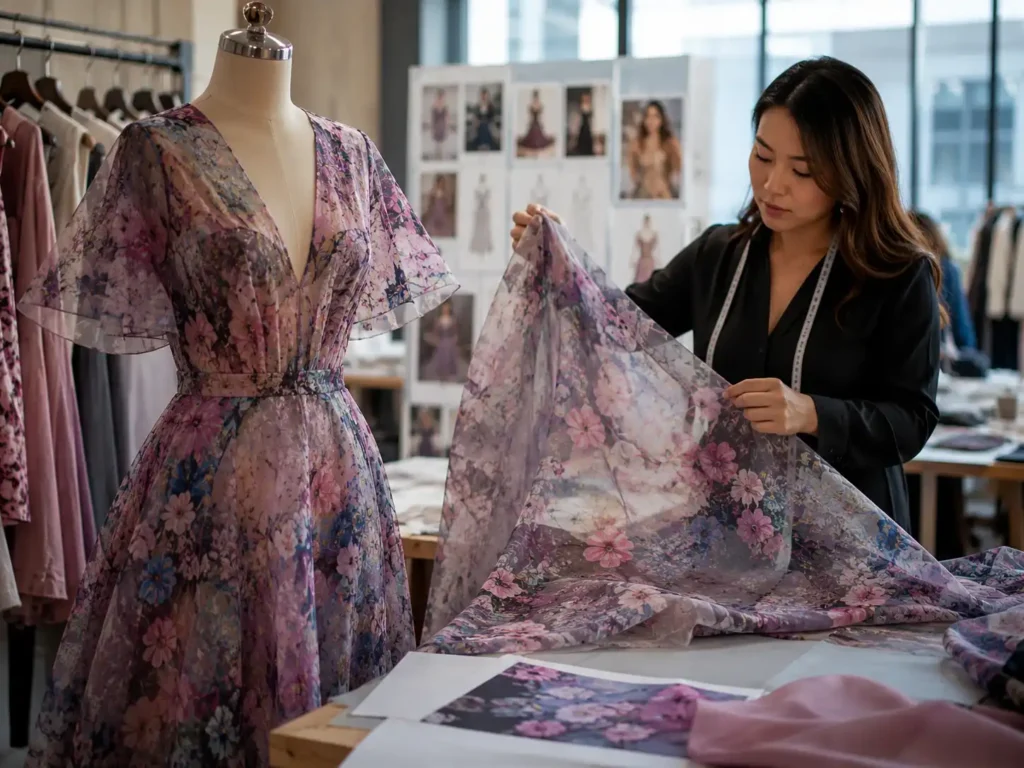
What Is Stretch Mesh?
Stretch mesh is widely used in fitted womenswear because it combines transparency with body movement. It can function as the main outer layer, a transparent sleeve, a ruched surface, a cut-out insert, or a second-skin overlay over a jersey lining. Its value is not simply that it stretches, but that it can move with areas such as the bust, shoulders, elbows, waist, and hips without requiring the generous ease that a rigid net would need.
The fabric should be tested in both directions before the pattern is finalized. Some meshes extend strongly across the width but only slightly along the length, while others provide useful multidirectional stretch. That difference changes pattern orientation, sleeve mobility, neckline behavior, garment length, and how much negative ease can be built into the style. A bodycon dress cut from a width-stretch-only mesh may behave very differently from the same pattern cut in a four-way stretch quality.
Hand feel should also be evaluated after sewing. A mesh that feels soft between the fingers can become irritating when seam allowances, elastic, binding, or several layers are added. A useful fitting includes walking, sitting, raising the arms, bending the elbows, and twisting the torso. If the fabric pulls at the shoulder, scratches under the arm, or fails to return at the hip, the problem will not disappear simply because the swatch looked beautiful on the sourcing table.
What Is Power Mesh?
Power mesh is generally firmer than lightweight fashion mesh and is chosen when transparency must be combined with more resistance and recovery. It is useful in areas that need to stay close to the body under tension, such as side-waist panels, fitted midsections, corset-inspired sections, or cut-out structures. In those applications, a soft fashion mesh may stretch enough but fail to maintain the shape intended by the pattern.
The strongest power mesh is not automatically the best option. High resistance can change the character of a fashion dress, making it feel more compressive and less fluid. It can also increase pressure at seam intersections and make gathering heavier. For this reason, power mesh is often most effective when it is treated as a functional component rather than the default fabric for the whole garment.
A practical sampling approach is to compare two or three mesh options on the same critical panel. If a waist cut-out is the risk area, sew that panel in a soft stretch mesh and a firmer power mesh using the same pattern. Compare edge stability, comfort, transparency, and recovery after movement. That focused comparison gives a much clearer answer than judging two loose swatches by hand.
What Is Illusion Mesh?
Illusion mesh is selected primarily because it can visually disappear against the skin while still connecting or stabilizing other parts of the garment. It is common at deep necklines, shoulders, transparent backs, sleeves, and cut-out inserts where the design should appear more open than the construction really is. Fine yarns, small openings, low surface shine, and an appropriate color usually help create that effect, although actual performance varies widely among suppliers.
Color matching is more complex than choosing a generic “nude.” Skin tones vary greatly, and a mesh that looks close on a cutting table may contrast noticeably on the wearer. Yarn sheen can also make the fabric visible under strong lighting even when the color is good. For important occasionwear or campaign samples, it is worth reviewing several tones on a representative model or against approved skin-tone references rather than making the decision from a catalog photograph.
Illusion mesh must still be structurally reliable. A deep neckline panel may need to stop two bodice sections from opening further, and an embellished illusion back may carry lace, rhinestones, or appliques. In those cases, the most invisible-looking mesh is not necessarily the best. A slightly more substantial option can produce a cleaner final dress if it supports the edge and decoration more consistently.
Is Tulle the Same as Mesh?
Tulle belongs to the wider family of open net-like fabrics, but in dress development it should not be treated as a direct substitute for stretch mesh. Many tulles have little usable elasticity and are chosen because they hold shape, create volume, or build a light transparent layer away from the body. Stretch mesh, by contrast, is commonly selected when the fabric must follow body movement and remain close to the silhouette.
This distinction affects pattern construction. A fitted sleeve cut in soft multidirectional stretch mesh can accommodate elbow movement and changes in upper-arm circumference. The same sleeve in rigid tulle may require more ease, altered shaping, a closure, or a different armhole approach. On the other hand, a layered skirt intended to float away from the legs may benefit from the crispness that would be undesirable in a second-skin bodycon dress.
Mesh Type | Relative Stretch | Relative Structure | Common Sheer-Dress Use | Main Development Risk |
Soft stretch mesh | Medium to high | Soft | Bodycon, ruching, sleeves, overlays | Growth or excess transparency under tension |
Power mesh | Medium to high | Firm | Cut-outs, fitted support panels, waist sections | Excess resistance or compression |
Fine illusion mesh | Low to high, depending on construction | Fine to medium | Necklines, backs, sleeves, inserts | Visibility or edge distortion when stretched |
Tulle | Usually low | Crisp | Skirts, layered overlays, volume | Restricted movement in fitted areas |
Printed mesh | Usually medium to high | Soft to medium | Party dresses, ruched fashion styles | Print distortion and placement shift |
Embroidered mesh | Varies | Medium to firm | Occasionwear, evening overlays | Added weight, snagging, reduced stretch |
Actual performance should always be confirmed from physical samples because commercial fabric names are not standardized enough to predict behavior on their own. Two suppliers can use the same term for fabrics with noticeably different stretch, resistance, openness, finish, and recovery. For dress development, the swatch, sewn panel, and fit sample provide more reliable evidence than the category name printed on a fabric card.
How Do Mesh Properties Affect a Dress?
Mesh performance is controlled by more than fiber content. Stretch direction, usable extension, recovery, knit density, yarn size, fabric weight, hole structure, finish, and hand feel all influence the final dress. A mesh can look ideal while relaxed yet become more transparent, looser, harsher, or less stable once it is stretched over the body, joined to lining, or subjected to repeated movement.
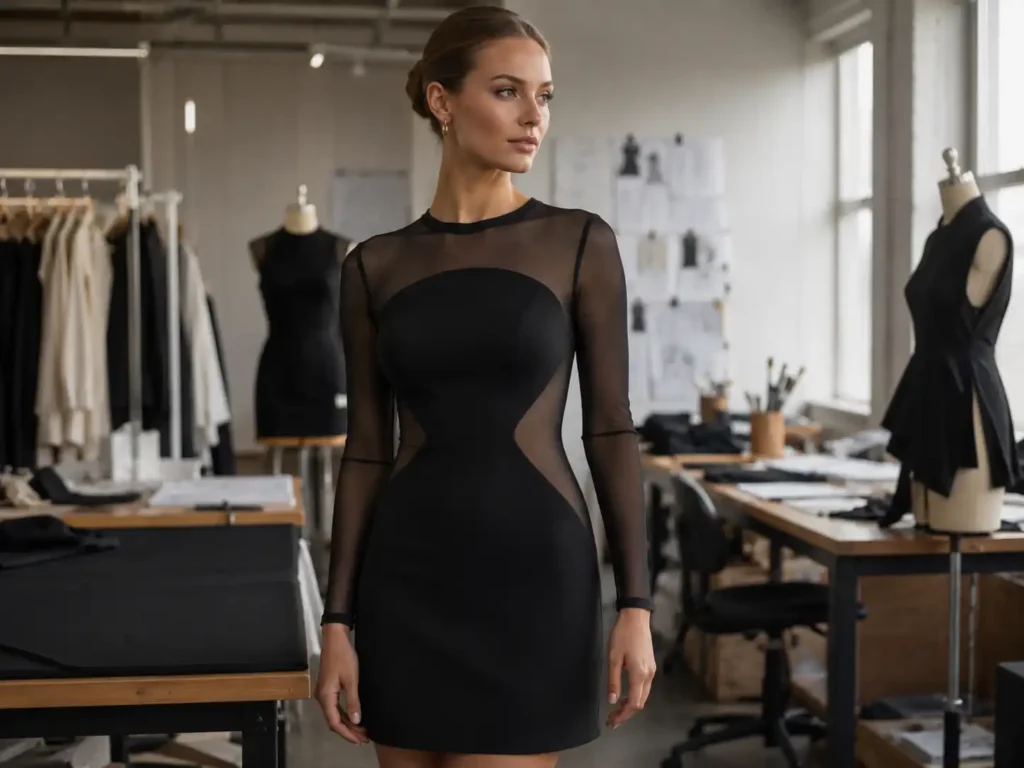
How Much Stretch Is Needed?
There is no universal stretch percentage that makes a mesh suitable for every dress. A loose overlay may need very little elasticity, while a fitted bodycon style can depend heavily on it. The sleeve, shoulder, bust, hip, and narrow neck opening may also require different movement from the center front or a decorative panel. The useful approach is to calculate extension and then compare it with the pattern rather than choosing a fabric because the supplier simply describes it as “high stretch.”
A 10 cm gauge makes the calculation straightforward. If the fabric comfortably reaches 12 cm, the extension is 20%; 14 cm gives 40%; 15 cm gives 50%; 16 cm gives 60%. This does not create an automatic pass or fail. The same 50% extension can feel very different in two fabrics if one reaches it easily and the other requires high force. For a fashion dress, comfortable working extension is usually more relevant than the maximum stretch that can be forced in a laboratory or by hand.
Pattern negative ease must be considered at the same time. If the garment is intentionally smaller than the body at the bust or hip, the mesh has to expand to the wearing measurement without excessive pressure. At the same time, the openings in the knit should not become so large that the visual concept changes. This is why extension and transparency should be tested together instead of recorded as unrelated specifications.
How Does Recovery Affect Fit?
Recovery describes how well the fabric returns toward its original dimensions after it has been stretched. Poor recovery is responsible for many fit problems that appear only after the dress has been worn for a while. A neckline may begin to ripple, elbows can bag, hip areas can relax, and a clean cut-out can lose its intended edge. These problems may not be visible during the first few minutes of a fitting, which is why repeated movement matters.
A simple internal record can start with a 10 cm gauge. If the fabric is extended to 15 cm and returns immediately to 10.4 cm, the temporary growth is 4%. If it later settles at 10.2 cm, the residual growth is 2%. These figures are useful for comparison, not universal acceptance limits. What matters is whether the remaining growth is visually and functionally acceptable for the style being developed.
Repeated cycles provide more useful information than one pull. Extend the sample several times and then examine the same high-movement zones that will exist in the garment. A mesh that recovers well after one extension but gradually relaxes after repeated cycles may still create bagging during real wear. For bodycon, sleeve, and cut-out styles, recovery should therefore be confirmed on the finished sample as well as on the fabric piece.
Does GSM Determine Sheerness?
GSM measures fabric mass per square meter, but it does not determine transparency by itself. Two meshes with similar GSM can look very different because visual openness also depends on yarn thickness, knit geometry, hole size, surface finish, color, and the amount of tension applied. A heavier mesh can remain highly transparent if its yarns form larger openings, while a lighter fine mesh can look smoother and visually denser because its structure distributes the yarns more evenly.
For that reason, a sourcing specification such as “80 GSM mesh” is incomplete. Weight is useful when comparing repeat lots or confirming that a supplier has not changed the construction dramatically, but it should be recorded beside stretch direction, usable extension, recovery, hole appearance, and transparency at target wearing tension. The same principle applies to fabric width and composition: each parameter contributes information, but none of them can replace an actual garment test.
A more useful evaluation sheet pairs measured properties with visual observations. Record the weight if relevant, then photograph the fabric relaxed, moderately stretched, and stretched to the approximate garment condition. Compare the images over the intended lining and under similar lighting. This combination of measurement and visual evidence is far more useful for sheer dresses than treating GSM as a shorthand for opacity.
How Does Hand Feel Affect Comfort?
Mesh frequently touches sensitive and high-friction areas, so hand feel has a direct effect on wearability. Underarms, necklines, shoulders, elbows, waist edges, inner thighs, and bust seams can all rub repeatedly during normal movement. A texture that feels acceptable when touched briefly may become irritating after several hours, particularly when heat, perspiration, tight fit, or decorative elements increase friction.
The finished edge often matters as much as the fabric surface. A soft mesh can still become uncomfortable when paired with a rough elastic, bulky seam allowance, scratchy embroidery backing, or poorly finished binding. Conversely, a somewhat firmer mesh may be perfectly comfortable when used only as an outer overlay with no direct contact against sensitive skin. Comfort should therefore be evaluated in the actual construction, not just from the roll.
A practical sample review can rate surface softness, edge softness, stretch resistance, snag sensitivity, skin friction, and heat buildup on a consistent internal scale. The purpose is not to claim scientific precision from a subjective score; it is to make comparisons repeatable across candidate fabrics. When several mesh options look similar, a consistent comfort review can reveal the quality difference that a photograph or spec sheet will never show.
Which Mesh Fits Each Dress Style?
Different silhouettes need different mesh behavior. Bodycon and ruched dresses usually require soft extension with dependable recovery; illusion panels need fine appearance and stable edges; sleeves need mobility and comfort; overlays may prioritize drape or structure; and embellished areas need enough stability to carry added weight. The right fabric is the one that supports the intended silhouette without creating unnecessary stiffness, exposure, or production risk.
Which Mesh Is Best for Bodycon Dresses?
Bodycon dresses place some of the highest demands on mesh because the material is stretched across several body zones at once. Bust, waist, hips, seat, and thighs may all experience different levels of extension, yet the surface should still look consistent. Soft stretch mesh is often a strong choice when the intended effect is lightweight and close to the body, while power mesh can be useful where the design requires greater support or stronger recovery.
The lining needs to be considered with the outer mesh rather than after it. If the mesh stretches easily but the jersey lining is much firmer, the lining becomes the true limiting layer and can create pressure or unexpected wrinkles. If the lining stretches far more easily than the outer mesh, the surface may pull unevenly. For fitted dresses, the two layers should be tested together so their stretch direction, recovery, and seam behavior work as a system.
During fitting, pay close attention to the widest points of the bust and hip because these often become the most transparent zones. Side seams should remain visually vertical instead of being pulled forward or backward by uneven stretch. The hem should also be observed while walking and sitting, because highly elastic bodycon mesh can climb upward if the pattern, lining, or recovery is not balanced correctly.
Which Mesh Is Best for Ruched Dresses?
Ruched dresses usually benefit from a softer stretch mesh that gathers easily without creating heavy, stiff folds. The fabric needs enough elasticity to follow the body beneath the ruching while maintaining recovery so the gathered areas do not gradually relax. The amount of fullness built into the pattern also affects transparency because heavily gathered zones can create the equivalent of two or more layers, while flatter sections remain much more sheer.
Printed mesh adds another level of difficulty. Motifs stretch wider over the bust and hips, compress where fabric is gathered, and can shift away from the intended position if cutting and sewing are not controlled. Large graphics and geometric patterns expose these changes more clearly than small, irregular prints. When the visual placement matters, the pattern pieces should be mapped against the print before bulk cutting rather than treating the fabric as a random all-over design.
During sample fitting, check whether the ruching remains distributed after walking and sitting, whether it springs back after being pulled, whether side seams become excessively thick, and whether transparency changes in a way that still suits the concept. For commercially important styles, it is worth photographing the dress before and after movement so the team can see whether the surface remains stable rather than relying on memory from a short fitting.
Which Mesh Is Best for Illusion Panels?
Illusion panels require an unusual balance: the fabric should visually disappear while mechanically supporting the surrounding garment. Fine mesh in an appropriate skin-related tone is usually the starting point, but the most invisible option is not always the most reliable. A deep neckline panel may need enough resistance to prevent two bodice sections from opening too far, while a transparent shoulder panel may carry the weight of an attached sleeve or decorative trim.
Color and surface reflection need to be evaluated on the wearer. A mesh can look close to a skin tone on a table yet appear noticeably different once it is stretched, viewed under flash, or photographed from a distance. Fine shiny yarns can catch light and reveal the panel even when the hue is good. For important samples, testing several mesh colors under real campaign or showroom lighting can be more valuable than choosing from a color card alone.
If the illusion area carries rhinestones, lace, applique, beadwork, or embroidery, attach the real decoration before final approval. Added weight can pull a very fine mesh downward, and dense stitching can block stretch locally. The final decision should therefore be based on the decorated panel, not only the plain mesh, because the fabric-plus-decoration combination is what the customer will actually wear.
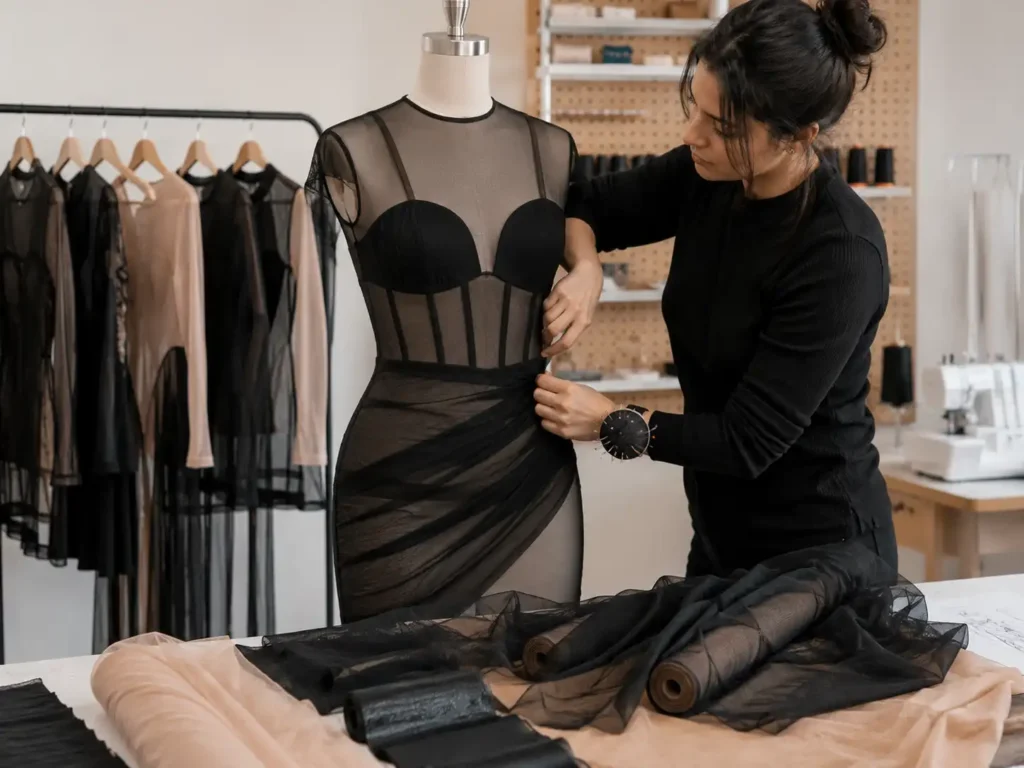
Which Mesh Is Best for Sleeves and Overlays?
Sleeves normally benefit from softer mesh with comfortable multidirectional movement because the shoulder and elbow change shape constantly. A firm material can look excellent while the model is standing still but become restrictive when the arms are raised, crossed, or extended forward. Sleeve fitting should therefore include active movement rather than a single front-view photograph. Watch for tension lines, armhole pulling, neckline distortion, and pressure around the upper arm.
Overlays have different priorities because they may carry little of the garment’s fit. Soft mesh can create fluid movement over an opaque slip or lining, while tulle can create more volume and separation from the body. For occasion and resort styles, that difference changes the entire visual character: one layer follows the body and moves with it, while the other can float away and create shape around it.
Embroidered or embellished overlays need additional support because decoration adds weight. Concentrated beads or sequins near the hem can pull lightweight mesh downward, while dense embroidery can make one part of the panel much stiffer than another. Whenever possible, approve the fabric after the actual finishing process. A plain base mesh may drape beautifully but behave very differently once the design work is applied.
How Do You Control Sheerness?
Sheerness is controlled through mesh density, color, stretch, layering, lining, and where coverage is placed. A fabric that appears moderately transparent while relaxed can become far more revealing when stretched. Instead of treating an entire dress as simply “sheer” or “not sheer,” define the target coverage separately for the bust, waist, hips, sleeves, back, cut-outs, and decorative areas.
Do Sheer Dresses Need Lining?
Many sheer dresses need some form of lining, but that does not mean every style needs a full opaque inner dress. The coverage strategy should follow the design. A party dress may use a mini-length jersey lining under a longer transparent layer, a cut-out dress may line only the bust and lower body, and an illusion gown may leave the shoulders and sleeves unlined while adding carefully shaped coverage at the front.
The lining also changes the mechanics of the garment. If the outer mesh stretches easily but the lining is much firmer, the inner layer can restrict movement and change the fit. If both layers stretch but recover differently, surface wrinkles or rippling can develop. Heat and thickness also increase when multiple layers are added, which can matter for summer, party, resort, and occasion styles that are worn for several hours.
For this reason, lining should be selected at the same stage as the mesh rather than added only after a sample looks too transparent. Sampling the two materials together allows the pattern maker to judge ease, seam behavior, drape, recovery, and final coverage in one system. It also gives the brand a much clearer picture of what the finished garment will look like in photography and real wear.
How Does Lining Color Matter?
Lining color can change the visual effect of the same mesh dramatically. Matching black lining under black mesh usually creates a denser, more unified appearance, while a skin-tone lining can preserve the illusion of exposed skin while giving practical coverage. A contrasting color can intentionally emphasize the knitted structure and turn the mesh itself into a graphic element. None of these choices is inherently better; they simply create different design outcomes.
Skin-tone lining deserves particular care because there is no single universal nude. Brands serving diverse markets may need several options, or they may decide that tonal lining is more appropriate than trying to imitate skin. The final choice should be reviewed under daylight, indoor lighting, and strong directional light because a pairing that looks subtle in a fitting room can appear very different under studio photography.
Mesh and Lining Condition | Typical Visual Effect | Practical Use | Key Check |
Mesh over matching lining | Lowest contrast, denser appearance | Commercial bodycon and party styles | Does the surface still look intentionally sheer? |
Mesh over skin-tone lining | Illusion of skin with coverage | Occasionwear, cut-outs, illusion panels | Is the tone suitable for the intended wearer? |
Mesh over contrast lining | Strong graphic contrast | Fashion-led collections | Does contrast emphasize seams or wrinkles? |
Double mesh, no opaque lining | Softer transparency with depth | Ruched and layered styles | Do both layers stretch and recover together? |
Single mesh, no lining | Maximum transparency | Resort layers, selected panels | Is exposure appropriate when the fabric stretches? |
The most reliable approval uses the final mesh and lining combination rather than separate swatches, because the interaction between the two materials creates the appearance the customer actually sees. It also reveals whether the inner and outer layers stretch at compatible rates, whether seams remain smooth, and whether the chosen color still produces the intended sheer effect after the garment is fitted on the body.
Is Double-Layer Mesh Better?
Double-layer mesh can reduce transparency, soften the appearance of the openings, create richer ruching, and provide moderate additional stability without introducing an opaque lining. It is particularly useful when a designer wants the garment to remain visually sheer but needs more coverage over the bust or hip. Two layers can also produce more dimensional color because the overlapping open structures create depth.
Doubling is not a neutral change, however. Two layers may shift during cutting, stretch at slightly different rates, or become thicker at seams. If they are highly elastic, they can also move against each other during sewing and create ripples. The garment may feel warmer and less fluid than the same design in a single layer. These effects should be considered before the entire dress is automatically doubled.
Selective layering is often more refined. A dress might use two mesh layers over the bust, one through the waist, opaque jersey at the lower body, and a single transparent sleeve. A reinforced cut-out edge may use a narrow second layer only where tension is concentrated. This targeted approach keeps the intended sheer effect while solving stability and coverage problems only where they actually occur.
Does Stretch Change Transparency?
Yes. Stretch can increase transparency substantially because the knitted structure opens as the fabric is extended. This is one of the most common reasons a mesh dress looks acceptable on a hanger but becomes much more revealing during fitting. The change is usually most obvious at the bust, hips, elbows, and other areas where the fabric is pulled farther than it is across flatter parts of the body.
A better transparency review examines several conditions instead of making a single judgment. Photograph the mesh relaxed, moderately stretched, stretched to the approximate garment extension, over the intended lining, in double-layer construction, and under strong backlight. Keep the camera distance and lighting as consistent as possible so the team can compare the results rather than relying on a different impression each time.
There is no universal “correct” transparency level because fashion concepts vary from subtle illusion effects to deliberately revealing resortwear. The purpose of the test is consistency. Once the brand approves a visual target, the sample room and production team need a reference that shows what acceptable coverage looks like under realistic tension. Transparency becomes much easier to control when it is treated as a worn condition rather than a vague property of the fabric roll.
How Do You Test Mesh Before Production?
Mesh should be tested under conditions that resemble the finished dress. Check extension and recovery in both directions, transparency at realistic wearing tension, edge stability, snag and hole risk, lining compatibility, and incoming bulk fabric against the approved sample. The strongest development process combines simple measurements with an actual fit sample because the pattern, lining, seam construction, and fabric influence one another.
How Do You Test Stretch and Recovery?
Begin with a relaxed reference length, and 10 cm is convenient because the percentage calculation is straightforward. Extend the sample gradually to a realistic working point rather than the absolute maximum. A 10 cm section reaching 12 cm represents 20% extension; reaching 14 cm represents 40%; 15 cm represents 50%; and 16 cm represents 60%. Repeat the measurement across both fabric directions because the garment may rely on them differently.
Recovery should be recorded immediately after release and again after a consistent waiting period. If a 10 cm gauge returns to 10.4 cm immediately, the temporary growth is 4%. If it later settles at 10.2 cm, residual growth is 2%. These values are best used to compare candidate fabrics or production lots rather than as universal pass-fail standards. The acceptable result depends on whether the style is a loose overlay, fitted sleeve, cut-out bodycon dress, or another construction.
Test Step | Example Measurement | Calculation or Observation | Development Meaning |
Original gauge | 10.0 cm | Baseline | Reference before extension |
Moderate extension | 12.0 cm | 20% stretch | Useful for low-extension areas |
Strong extension | 15.0 cm | 50% stretch | Illustrates higher body-following demand |
Immediate recovery | 10.4 cm | 4% temporary growth | Check for short-term relaxation |
Later recovery | 10.2 cm | 2% residual growth | Compare long-term shape retention |
Visual hole check | Same sample | Relaxed vs stretched | Confirm transparency does not exceed target |
The most revealing test repeats the extension several times and then checks the same areas on a garment after walking, sitting, twisting, and raising the arms. This matters because some meshes recover well after a single pull yet relax progressively under repeated movement. When recovery problems appear, fabric, pattern dimensions, lining, and edge stabilization should be reviewed together rather than trying to solve every issue by changing only one component.
How Do You Check Transparency and Edges?
Transparency should be checked at realistic extension and over the actual lining solution. Review the fabric from normal viewing distance as well as close up. Strong directional light is useful because it exposes differences that soft factory lighting can hide, particularly in pale mesh and skin-tone illusion fabrics. For photo-driven fashion collections, studio flash can also reveal coverage problems that are not obvious during a normal fitting.
Exposed edges deserve a separate inspection because necklines, armholes, backs, sleeve hems, and cut-outs can deform even when the central fabric looks stable. The construction may require elastic, binding, narrow facing, clear reinforcement, or another stabilization method depending on the design. The correct choice depends on how much the edge has to stretch and how visually clean it needs to remain.
Edge tests should be performed on sewn samples rather than raw fabric alone. A neckline can behave very differently after stitching because thread tension, needle penetration, seam allowance, and applied elastic all influence the result. If the sample begins to wave or gape after repeated stretching, the team may need to change the mesh, reduce tension, alter the finishing method, or reinforce only the critical area.
How Do You Check Mesh Damage?
Mesh can be vulnerable to broken yarns, snags, pulled loops, small holes, needle damage, and distorted openings. These defects may be difficult to see when the fabric is gathered or printed, but they can become highly visible once the dress is stretched over the body. Cut-outs and narrow seam allowances are particularly sensitive because there is less material available to distribute tension around the edge.
Inspection should focus on the raw fabric, the cut components, and the sewn garment. During sampling, check whether the chosen needle and stitch formation create visible holes, whether seam intersections become damaged after stretching, and whether decorative attachment points begin to tear or distort. Printed mesh also needs placement checks because a small cutting shift can move motifs away from the intended position, especially on fitted panels and ruched styles.
Packaging and handling deserve attention as well. Fine mesh can snag on rough metal edges, hook-and-eye components, exposed zipper teeth, rhinestone settings, or even another decorated garment in the same production area. A quality-control process that catches damage before packing is more efficient than discovering small holes after the dress has been folded, shipped, and opened by the customer.
How Do You Confirm Bulk Fabric?
An approved sample does not guarantee that every bulk roll will behave exactly like the development fabric. Knitting variation, dyeing, finishing, heat setting, and batch differences can affect shade, width, hand feel, extension, recovery, and transparency. Before bulk cutting, incoming material should therefore be compared with the approved reference using the properties that matter to the specific style rather than relying only on the supplier code.
A practical bulk confirmation record can include fabric code, color or dye lot, usable width, fabric weight where specified, widthwise extension, lengthwise extension, recovery observation, transparency at target extension, hand feel, surface defects, shade consistency, and lining compatibility. The goal is not to create unnecessary paperwork. It is to identify a meaningful material change before hundreds or thousands of garment panels have already been cut.
For mesh dress projects, Jinfeng Apparel typically reviews fabric choice together with stretch direction, transparency, lining, neckline stability, sample fit, and bulk consistency rather than treating the swatch as an isolated purchase. That kind of development conversation is especially useful when a collection includes bodycon, cut-out, ruched, illusion, or decorated mesh styles, because a fabric that works visually can still create production problems if its recovery or construction behavior is not confirmed early.
Conclusion
The best mesh for a sheer dress is not defined by one fiber composition, one GSM number, or one marketing name. It is defined by how well the material performs the job assigned to it in the garment. Soft stretch mesh is often the most versatile choice for fitted and ruched fashion dresses, power mesh helps where stronger recovery is needed, fine illusion mesh supports visually subtle panels, and tulle is valuable when the design needs volume or shape rather than close-fitting stretch.
The most reliable development process looks at the mesh as part of a complete garment system. Stretch should be evaluated together with recovery, transparency should be checked under real tension, lining should be sampled with the outer fabric, and decorative work should be tested on the finished panel rather than on a plain swatch. Once those decisions are confirmed in a wearable sample and then checked again against bulk fabric, the sheer effect becomes far more predictable. For brands developing mesh dress collections, that predictability is what turns a strong visual concept into a style that can be repeated consistently in production.
Share This Article :

Jerry Lee
Categories

Latest blogs
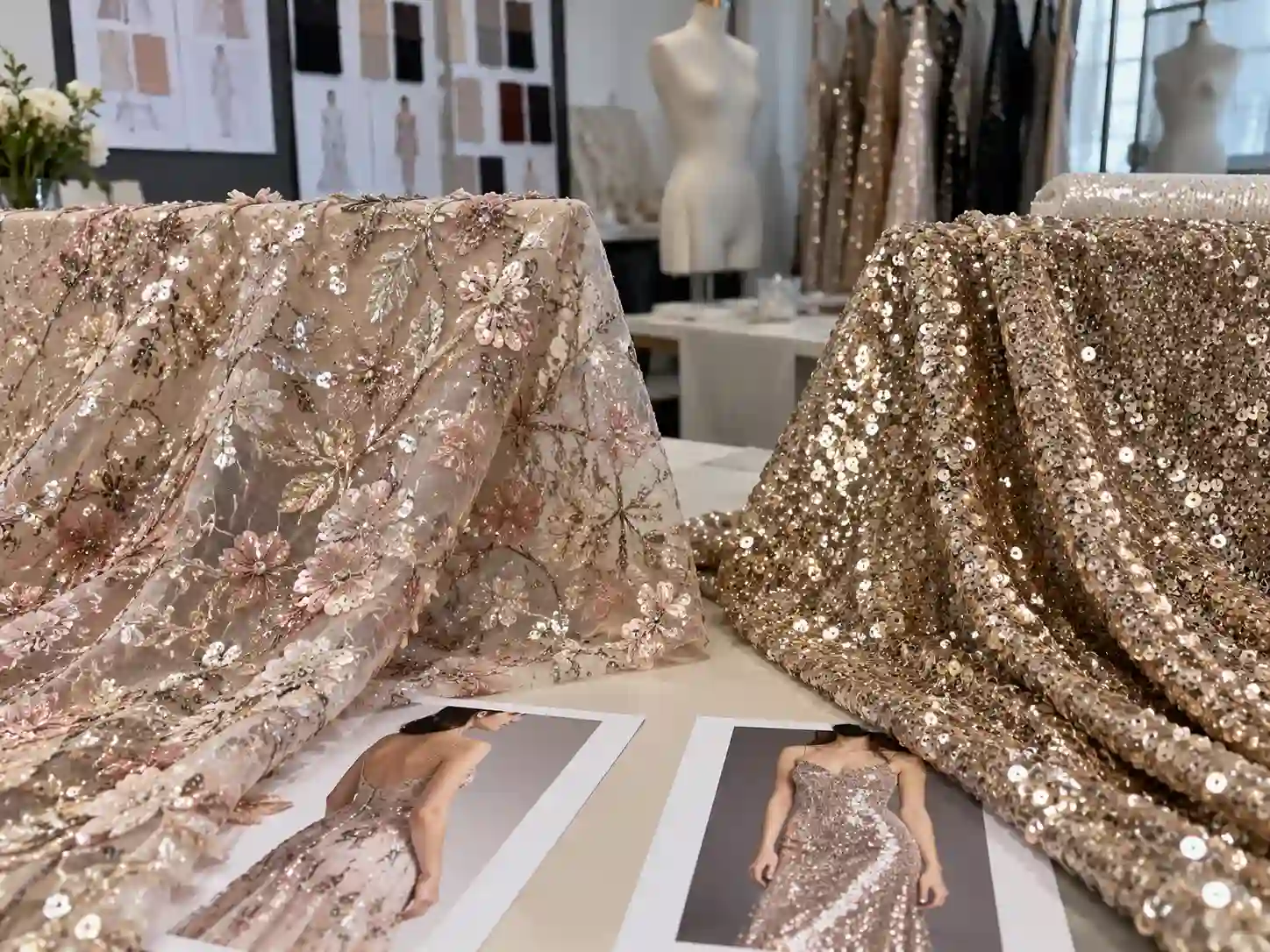
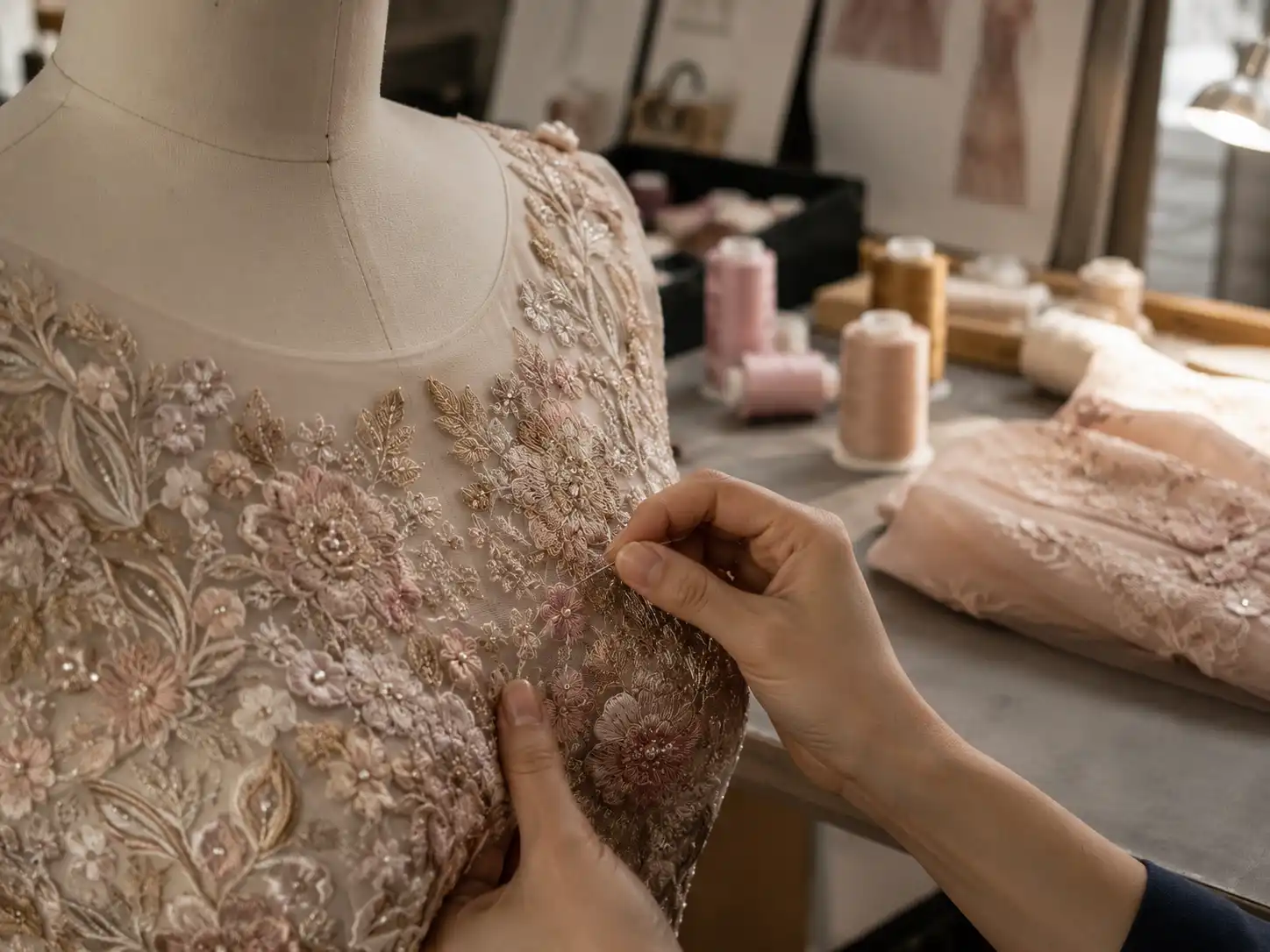
Table of Contents
Here, developing your OEM/ODM private label clothing collection is no longer a challenge—it’s an excellent opportunity to bring your creative vision to life.

