 Skip to content
Rhinestone Dress Manufacturing Explained

Your trusted Women’s Apparel Manufacturer from China

A rhinestone dress can make a customer stop scrolling in one second. It catches light, photographs well, and instantly signals party, celebration, confidence, and occasionwear. But behind that glossy product photo, rhinestone dress manufacturing is far more technical than many buyers expect. The factory is not only sewing a dress. It is controlling fabric behavior, stone weight, attachment strength, stretch recovery, placement accuracy, wearer comfort, packing protection, and bulk consistency. A rhinestone sample may look beautiful in the showroom, but the real test is whether 500, 2,000, or 10,000 pieces can be repeated with the same fit, shine, and quality standard.
Rhinestone dresses are manufactured by developing the dress pattern, selecting compatible fabric, planning rhinestone placement, choosing the right application method, making and correcting samples, testing adhesion and stretch, controlling bulk production, inspecting placement and measurements, and packing the finished garments to protect the decoration during shipment.
For fashion brands, the real question is not simply whether a supplier can add rhinestones. The stronger question is whether the supplier can manage shine, structure, cost, quality, and delivery at the same time. One buyer once approved a stunning rhinestone bodycon sample, only to find during bulk production that the stones restricted hip stretch and caused the side seams to twist. That is the kind of problem this guide helps you avoid.
What Is a Rhinestone Dress in Manufacturing?
A close-up editorial photo of a rhinestone evening dress on a dress form inside a professional garment factory, showing stone placement, pattern lines, measuring tape, fabric swatches, and quality inspection tools, clean modern lighting, realistic B2B apparel manufacturing style.
A rhinestone dress is a fashion garment where decorative stones are planned as part of the product structure, not simply added after sewing. In manufacturing, the factory must control fabric strength, stone placement, attachment method, garment stretch, weight balance, comfort, quality inspection, and packing protection so the approved sample can be repeated consistently in bulk production.
Product Meaning
In retail language, a rhinestone dress may sound like a simple sparkly dress. In manufacturing language, it is a sensitive embellished garment with more risk points than a regular dress. Rhinestones add weight, change the surface behavior of the fabric, create extra handling steps, and introduce more inspection details. A plain satin mini dress and a satin mini dress with rhinestone straps may look similar in silhouette, but they do not carry the same production logic.
The most important difference is that rhinestones affect both appearance and function. If stones are placed near the bust, neckline, waist, hip, side seam, slit, or straps, they can change how the garment sits on the body. Dense stone placement can make soft fabric feel firmer. Heavy trims can pull the garment downward. Poor placement can make a high-value design look unbalanced or cheap.
This is why a rhinestone dress should be treated as an engineered fashion product. The design, fabric, trim, pattern, application method, quality standard, and packing plan must work together before bulk production starts. For serious fashion brands, a rhinestone dress is not decoration first. It is a fit-and-quality product with decoration built into the system.
Common Styles
Rhinestones are most often used on dresses designed for high visual impact. These include party dresses, club dresses, birthday dresses, cocktail dresses, evening dresses, prom dresses, homecoming dresses, performance-inspired dresses, and premium occasionwear. They also work well on bodycon dresses, corset dresses, mesh dresses, satin dresses, velvet dresses, halter dresses, strapless dresses, backless dresses, one-shoulder dresses, and cut-out styles.
Each style uses rhinestones differently. A clubwear bodycon dress may need scattered rhinestones across stretch mesh to create movement under light. A cocktail dress may use rhinestone straps or neckline trim to look polished without becoming too heavy. A formal evening dress may use controlled stone detailing around the waist, slit, neckline, or bodice to add refinement rather than full-body sparkle.
For fashion brands, the question is not only where sparkle can be added. The better question is where sparkle helps the customer understand the product faster. Rhinestones should strengthen the main selling point of the dress, whether that is body shape, neckline, luxury surface, party mood, or event-ready styling.
Decoration Types
Rhinestones can be applied as hotfix stones, glue-set stones, sewn rhinestone trims, rhinestone chains, transfer motifs, decorative mesh panels, or mixed decoration. Each type has a different look, cost level, production rhythm, and quality risk.
Rhinestone Form | Common Use | Typical Control Point | Buyer Concern |
Hotfix stones | Motifs, scattered layouts, logos, gradients | Heat, pressure, cooling, adhesion | Will heat damage the fabric? |
Glue-set stones | Irregular layouts, delicate areas, mixed sizes | Glue amount, curing time, placement | Will stones fall after wearing? |
Rhinestone trims | Straps, necklines, waistlines, hems | Stitching, back-side comfort, tension | Will the trim scratch the skin? |
Rhinestone chains | Jewelry-like accents, cut-outs, straps | Weight, attachment strength, balance | Will the chain pull the dress down? |
Rhinestone panels | High-coverage decorative zones | Panel size, stiffness, seam handling | Will it feel too heavy or rigid? |
The best option depends on the dress body. A stretch mesh mini dress may need smaller stones and flexible spacing. A satin cocktail dress may work better with rhinestone trim. A corset dress may support more decoration because the structure is stronger. A good factory does not force one method onto every design; it selects the method after reviewing fabric, fit, target price, and bulk quantity.
Planning Logic
Rhinestone dresses need early planning because decoration mistakes become expensive later. If the fabric cannot hold stones, the application method must change. If the layout restricts stretch, the pattern may need correction. If the trim irritates the wearer, lining or placement must be revised. If the stones press into the fabric during packing, the packing method may need protection.
A practical product review usually starts with five checks: fabric compatibility, stone layout, attachment method, fit impact, and packing risk. These are not separate issues. A heavier layout may require stronger fabric. A delicate fabric may require lighter decoration. A tight silhouette may require more spacing between stones.
For bulk production, repeatability matters more than one beautiful sample. The approved sample should become a production standard that workers can follow across colors, sizes, and batches. Jinfeng Apparel operates as a premium custom women’s fashion manufacturer based in Guangdong, China, supporting custom dress development, sampling, bulk production, quality control, private-label packaging, and export delivery for global fashion brands and mid-to-large apparel clients. Its production model is built for brand clients with clear product direction, sampling needs, and bulk production plans.
Which Fabrics Work for Rhinestone Dresses?
A realistic fashion factory material table with satin, stretch mesh, velvet, jersey, lace, and sequin swatches placed beside rhinestone samples, color cards, trim cards, and a dress tech pack, premium women’s fashion manufacturing atmosphere.
The best fabrics for rhinestone dresses are fabrics that can support decoration without losing shape, comfort, or surface quality. Satin, stretch satin, mesh, power mesh, velvet, jersey, ponte, crepe, tulle, organza, lace, and sequin fabrics can all work, but each fabric requires a different rhinestone method, testing process, and quality-control focus.
Fabric Stability
Fabric stability is the first decision in rhinestone dress manufacturing. Rhinestones sit on the textile surface, so the base fabric must handle weight, heat, glue, pressure, folding, stretching, and wearing movement. A beautiful swatch is not enough. The fabric must perform as part of a finished garment.

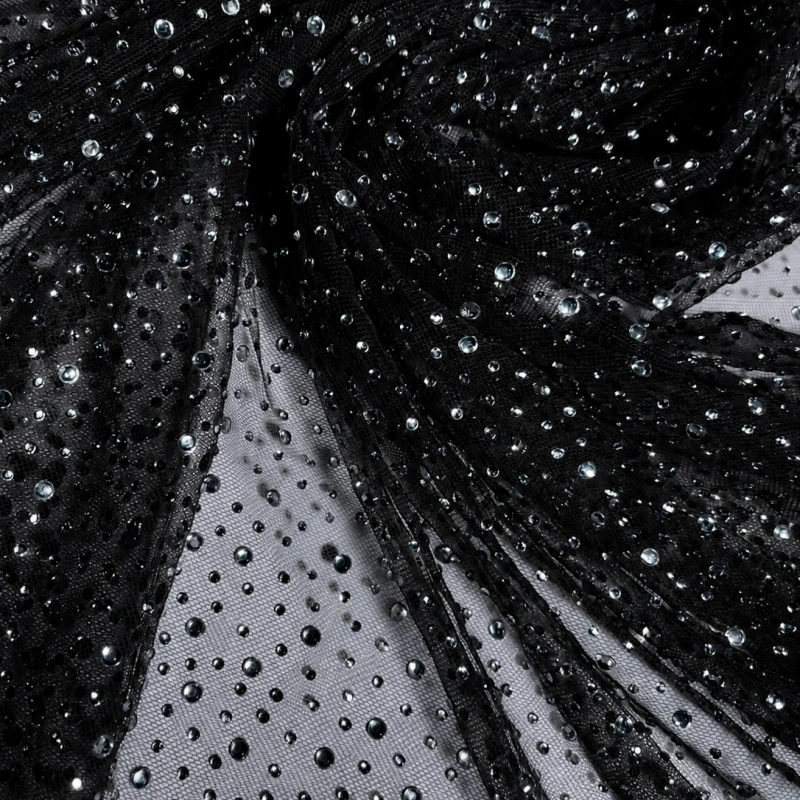
Smooth satin can create a premium eveningwear effect, but it may show glue marks or heat pressure if the process is not controlled. Mesh and power mesh create a light, sexy, high-impact look, but the contact area for stones may be limited. Velvet gives a rich partywear surface, but pile direction and heat sensitivity need testing. Jersey and ponte are useful for fitted styles, but dense stones may reduce stretch recovery.
The safest approach is to test rhinestones on the actual bulk fabric or a confirmed production-equivalent fabric. Similar fabric is not always good enough. A slightly different stretch ratio, coating, surface texture, or dye finish can change adhesion performance. This is why experienced manufacturers usually check fabric behavior before locking the application method.
Jinfeng Apparel works with a broad womenswear fabric range, including chiffon, satin, stretch satin, lace, mesh, power mesh, jersey, rib knit, ponte, crepe, velvet, sequin fabric, organza, tulle, rayon, viscose, linen, denim, suiting fabric, cotton blends, polyester blends, and spandex blends. For rhinestone styles, the key is not only sourcing the fabric but also checking drape, stretch, transparency, shrinkage, wrinkle behavior, color difference, sampling risk, bulk risk, QC focus, and cost level.
Stretch Fabrics
Stretch fabrics can work very well for rhinestone dresses, especially for bodycon, clubwear, birthday, and party styles. The challenge is that fabric stretches, but rhinestones do not stretch in the same way. If stones are applied too densely across the bust, waist, hip, or back body, the garment may become tight, stiff, or unstable.
A fitted stretch dress should be tested after rhinestone application, not only before. The sample may look correct on a flat table, but the real test is how it behaves when pulled over the body, worn for movement, and stretched around high-tension areas. If stones fall during basic stretch handling, the spacing, glue, heat setting, or fabric choice needs adjustment.
For stretch fabrics, smaller stones, scattered layouts, gradient spacing, and flexible placement often perform better than dense, rigid blocks. Another practical method is to keep heavy decoration away from the highest-stretch zones or use decorative focus around lower-tension areas such as neckline edges, straps, lower skirt panels, or selected front motifs.
A good stretch rhinestone dress should still feel like a dress, not a hard decorative shell. Comfort and movement are part of product quality. Buyers should ask for fit photos, stretch checks, or model review where possible, especially for tight silhouettes.
Satin, Mesh, Velvet
Satin, mesh, and velvet are three of the most common fabric directions for rhinestone dresses, but they require different thinking.
Satin works well for cocktail, evening, and occasionwear because it already has a clean shine. Rhinestones should usually be controlled and intentional on satin. Straps, waistlines, necklines, slits, and bodice highlights often create stronger value than random full coverage. The main risks are heat marks, glue visibility, surface pulls, and packing pressure marks.
Mesh and power mesh are popular for clubwear, partywear, and bodycon dresses. Rhinestones can create an illusion-sparkle effect that photographs well. The risk is stretch distortion and skin comfort. Stones near underarms, side seams, inner arms, or high-friction areas need extra review.
Velvet gives a rich, evening-focused look. Rhinestones can look expensive on velvet, but heat and pressure can flatten pile. The factory should test pile direction, stone adhesion, and post-application surface appearance before confirming the process.
Bulk Risks
Bulk fabric risk often appears after the sample stage. A black fabric may hide small glue marks, while a light color exposes them. A stretch mesh may perform well in size S but distort in XL. A satin fabric may look smooth after sampling but show pressure marks after carton packing. A velvet style may photograph beautifully but show pile damage if heat settings are not controlled.
Fabric Type | Suitable Styles | Common Rhinestone Risk | Practical Control |
Satin / Stretch Satin | Cocktail, evening, party dresses | Heat marks, glue visibility, surface pulls | Test pressure, glue clarity, packing fold |
Mesh / Power Mesh | Clubwear, illusion, bodycon dresses | Stretch distortion, weak contact area | Stretch test after application |
Velvet | Party, evening, winter occasionwear | Pile crushing, uneven shine | Low-pressure testing, pile direction control |
Jersey / Ponte | Bodycon, fitted party styles | Reduced recovery, stiffness | Check stretch zones and stone spacing |
Sequin Fabric | High-impact eventwear | Excess weight, visual overload | Use controlled rhinestone highlights |
The practical rule is simple: select fabric and rhinestone method together. If fabric is chosen only for appearance and rhinestones are decided later, production risk rises. When fabric behavior, stone density, dress fit, and packing method are reviewed together, the final product becomes easier to reproduce in bulk.
How Is the Design Developed Before Sampling?
A product development desk for a rhinestone dress collection, showing a tech pack, reference dress sketch, rhinestone placement artwork, size chart, fabric swatches, trim samples, and a sample dress under development in a clean apparel studio.
Rhinestone dress development should begin with product direction, reference images, tech pack details, target fabric, rhinestone layout, size range, quantity plan, application method, budget range, and quality expectations. A strong sample does not only show the design; it tests whether the fabric, fit, decoration, comfort, cost, and bulk production method can work together.
Required Inputs
The best sampling results come from clear starting materials. A factory can develop from different types of inputs, but the less information the brand provides, the more assumptions the factory must make. Assumptions create sample revisions, cost changes, and timeline pressure.
Useful inputs include a tech pack, reference photo, original sample, sketch, line sheet, moodboard, size chart, fabric swatch, rhinestone artwork, trim requirement, target quantity, color plan, and packing requirement. If the brand does not have a complete tech pack, a strong reference image plus size direction and fabric preference can still start the discussion, but it should not be treated as final production data.
For rhinestone dresses, the most important missing detail is often the decoration standard. A brand may say “same as photo,” but the factory still needs to know stone size, density, placement range, front and back coverage, stone color, application method, and whether the decoration must change by size.

Jinfeng Apparel supports OEM and ODM womenswear development based on tech packs, reference photos, original samples, line sheets, or sketches, with fabric sourcing, trim sourcing, pattern making, sampling, bulk production, QC, private-label packing, and export delivery. The company’s MOQ starts from 200 pieces per style/color, depending on fabric availability, color development, trims, construction complexity, and production schedule.
Placement Planning
Rhinestone placement is not just an artwork issue. It is a garment engineering issue. The factory must map the decoration onto body zones, seam lines, darts, waist position, bust shape, hip curve, strap tension, zipper placement, lining, and size grading.
A flat rhinestone pattern may look beautiful on a table but shift visually when worn. This is especially true for bodycon dresses and stretch mesh dresses. A motif placed at the waist may stretch wider on larger sizes. A vertical rhinestone line may curve after the dress wraps around the body. A decorative neckline may pull unevenly if one side carries more weight.
The factory must decide whether stones are applied to fabric panels before sewing, applied to the finished garment, or added through trims during assembly. Each approach has trade-offs. Panel application can improve flat placement, but seams may interrupt the design. Finished-garment application can improve final visual alignment, but curved areas are harder to process.
For brands, the safest placement plan is one that considers both photo impact and wearing movement. A dress that looks good only when flat is not ready for the market.
Tech Pack Discipline
Tech packs reduce sampling errors by turning a visual idea into measurable production instructions. For rhinestone dresses, a basic garment tech pack is not enough. The decoration itself needs specification.
Tech Pack Item | Practical Detail |
Base fabric | Composition, weight, stretch direction, color, lining |
Stone specification | Size, color, finish, quantity estimate, supplier reference if available |
Placement artwork | Front, back, side view, spacing, coverage zone |
Application method | Hotfix, glue-set, sewn trim, chain, panel, mixed method |
Measurements | Bust, waist, hip, length, strap, slit, neckline, tolerance |
Fit notes | Tight fit, relaxed fit, stretch level, body zone concern |
Quality standard | Adhesion, symmetry, missing stone rules, glue mark limits |
Packing notes | Folding method, tissue, polybag, carton protection |
This level of detail is useful because it aligns the brand, merchandiser, pattern maker, sample room, trim sourcing team, production team, and QC team. It also makes repeat orders easier. If the style sells well, the factory can develop new colors, new lengths, or new stone patterns from a controlled base instead of restarting from memory.
Cost Balance
Cost control in rhinestone dresses is not about removing value. It is about putting value where the customer notices it most. Stones add material cost, labor time, inspection time, and production risk. More stones do not always create a better product.
For example, rhinestone straps may create strong perceived value with lower body restriction. A focused front motif may photograph well for e-commerce while keeping the back comfortable. A gradient layout can look rich without the stiffness of all-over coverage. A mixed design using satin, mesh, and controlled rhinestone trim may look more premium than full scattered stones on a weak fabric.
The sample stage should answer three commercial questions. First, does the dress look strong enough for the target price point? Second, can the customer wear it comfortably? Third, can the factory repeat it in bulk without excessive rework?
A smart supplier may suggest smaller stones, reduced density, alternative trims, better placement zones, or a fabric with a more suitable surface. These adjustments are not shortcuts. They are the difference between a beautiful one-piece sample and a product that can survive a real sales season.
How Are Rhinestones Applied to Dresses?
A professional garment production scene showing workers applying rhinestones to dress panels using heat transfer, hand placement, and sewn rhinestone trims, with quality control samples and finished embellished dresses nearby, realistic factory lighting.
Rhinestones are applied to dresses through hotfix application, glue setting, sewn rhinestone trims, rhinestone chains, pre-made decorative panels, or mixed methods. The best method depends on the fabric surface, stretch level, heat tolerance, stone density, placement area, comfort requirement, order quantity, and expected quality standard.
Hotfix Application
Hotfix rhinestones have adhesive backing that activates under heat and pressure. This method is often used for motifs, logos, scattered layouts, gradients, and repeatable decorative patterns. When the fabric is suitable, hotfix can create clean spacing and efficient production.
The key controls are temperature, pressure, time, placement accuracy, cooling, and post-application handling. If heat is too low, adhesion may be weak. If heat is too high, the fabric may mark, shrink, discolor, or lose stretch. Pressure also matters. Too little pressure reduces bonding; too much pressure may damage satin, velvet, mesh, or delicate stretch fabrics.
Hotfix is not automatically the best method for every rhinestone dress. It works better on fabrics that can accept heat and provide enough surface contact. Before confirming bulk production, the factory should test the actual fabric, not only a substitute. A small test panel can show whether the stone bonds properly, whether the fabric surface changes, and whether the design still looks clean after cooling.
For buyers, hotfix approval should include both appearance and durability checks.
Glue-Set Stones
Glue-set rhinestones are attached with adhesive, usually by hand or semi-manual process. This method is useful for delicate fabrics, curved areas, irregular patterns, mixed stone sizes, lace sections, neckline details, cut-outs, and places where heat application may damage the fabric.
The advantage of glue setting is flexibility. Workers can place stones around seams, trims, curves, and sensitive areas. It can create a more customized look than simple transfer application. It is also helpful during sampling because the design can be adjusted more easily.
The risk is consistency. Glue amount must be controlled. Too much glue may create visible marks, especially on satin or light-colored fabric. Too little glue can lead to falling stones. Curing time is also important. If garments are moved, folded, packed, or pressed too soon, adhesion may weaken.
For bulk production, glue-set rhinestones require a clear standard: glue type, stone placement, drying time, inspection method, and handling process. It is slower than many automated methods, but for the right design, it can produce a more refined result.
Trims and Chains
Rhinestone trims and chains are often used when the design needs linear shine, jewelry-like detail, or structural decoration. Common positions include shoulder straps, necklines, waistlines, front cut-outs, side seams, sleeve openings, hems, slits, and back openings.
Trims can sometimes give stronger perceived value than scattered stones. A satin mini dress with rhinestone straps can look premium without requiring full-body decoration. A mesh dress with rhinestone chain along the neckline can create a strong partywear look while keeping the body more comfortable. A waist trim can create shape and visual focus.
The production risk is different from stone application. Trims and chains must be attached securely and comfortably. The back side should not scratch the skin. Straps must handle tension. Neckline trims should not twist. Waist trims should not pull the fabric out of shape. If trims are heavy, the pattern may need support or reinforcement.
Jinfeng Apparel’s trims and accessories system includes rhinestone trims, bead chains, sequins, zippers, invisible zippers, buttons, hooks, strap sliders, elastic bands, bra cups, boning, lace trims, woven labels, size labels, care labels, hangtags, polybags, and cartons for custom dresses and private-label womenswear collections.
Method Selection
The right application method is chosen by looking at the whole garment, not just the stone. Fabric, silhouette, stretch, stone density, body placement, comfort, quantity, cost, and lead time all matter.
Hotfix is useful for repeatable layouts, but it needs heat-safe fabric. Glue-set application gives more control, but it requires careful labor and curing. Sewn trims create premium edge details, but they must be comfortable. Rhinestone chains can look expensive, but they add weight and tension. Panels can create strong coverage, but they may affect fit and stiffness.
Many good rhinestone dresses use mixed methods. For example, a dress may use hotfix stones on the front body, sewn rhinestone trim on straps, and hand-applied stones near a cut-out where machine placement is difficult. The mixed approach often gives the best balance of look, comfort, and production control.
For brand clients, the goal is not to choose the most expensive method. The goal is to choose the method that gives the desired visual effect while protecting fit, comfort, delivery, and return risk.
How Do Factories Control Fit and Quality?
A quality control table in a women’s dress factory with inspectors checking a rhinestone dress on a mannequin, measuring tape, inspection checklist, close-up of rhinestone placement, folded garments with tissue protection, realistic professional production environment.
Factories control rhinestone dress fit and quality by checking fabric behavior, garment measurements, stone placement, adhesion strength, stretch recovery, visual symmetry, sewing quality, trim security, comfort, finishing, packing, and final shipment condition. Quality control should begin during sampling and continue through cutting, rhinestone application, sewing, finishing, and packing.
Fit Balance
Rhinestone weight can change how a dress fits. This is one of the most common issues buyers underestimate. A plain sample may fit well, but after stones are added, the neckline may pull, the waist may feel tighter, the side seams may twist, or the skirt may hang differently.
Fit balance is especially important in strapless dresses, bodycon dresses, corset dresses, mesh dresses, and dresses with rhinestone straps. Heavy decoration around the bust may need extra support. Dense stones around the hip may reduce stretch. Rhinestone chains on one side may create uneven weight. Decorative straps must be tested for tension, not just appearance.
A proper fit review should happen after the decoration is applied. The garment should be checked on a form or model, not only measured flat. The reviewer should look at bust position, waistline, hip fit, neckline stability, side seam direction, hem balance, and wearing comfort.
In real production, quality is not only whether the measurements match the chart. Quality is whether the dress still wears correctly after decoration.
Stretch Testing
Stretch testing is essential for rhinestone dresses made from mesh, power mesh, jersey, rib, ponte, stretch satin, scuba-like fabrics, or spandex blends. These fabrics are popular because they shape the body well, but rhinestone decoration can reduce flexibility.
The factory should test high-tension zones such as bust, waist, hip, back body, side seams, sleeve openings, neckline, and hem. The goal is to check whether the stones stay attached, whether the artwork distorts, whether the fabric recovers, and whether the dress remains comfortable.
A simple practical test may include hand stretching, fitting on a dress form, checking after movement, and inspecting stones after the garment returns to rest. For tight party dresses, the sample should be pulled and worn in a realistic way. If the dress cannot survive normal dressing movement, it is not ready for customers.
Stone layout may need adjustment after testing. Wider spacing, smaller stones, lower-density zones, or different placement can often solve the problem without removing the sparkle effect.
Visual Inspection
Rhinestone quality is highly visual. A missing stone, tilted stone, uneven motif, crooked neckline trim, visible glue mark, or unbalanced left-right layout can make the dress look cheap even if the sewing is acceptable.
Inspection should compare bulk pieces against the approved sample and artwork standard. The team should check front placement, back placement, side balance, symmetry around the bust and waist, spacing consistency, trim alignment, glue marks, heat marks, fabric pulls, and color consistency.
Visual inspection should not happen only at final packing. If stones are applied to panels before sewing, panels should be checked before assembly. If stones are applied after sewing, the garment should be checked before finishing. If trims are sewn into straps or necklines, they should be checked during sewing and after final pressing.
QC Stage | What to Check | Why It Matters |
Fabric inspection | Surface, stretch, shade, defects | Prevents decoration on unstable fabric |
After application | Missing stones, glue marks, heat marks, placement | Catches rhinestone defects early |
After sewing | Seams, trim security, fit, distortion | Confirms decoration survives assembly |
Final inspection | Measurements, symmetry, adhesion, packing | Protects shipment quality |
Packing review | Folding, tissue, pressure, carton loading | Reduces damage during transport |
A clean inspection process protects the brand from complaints that customers often describe simply as cheap quality.
Shipment Control
Packing is part of rhinestone dress quality. A finished dress can pass inspection and still arrive damaged if folded poorly. Rhinestones can press into satin, scratch mesh, catch on lace, or mark nearby surfaces. Heavy trims can create pressure points inside polybags and cartons.
The packing method should match the garment. Dresses with dense front rhinestones may need tissue protection between layers. Rhinestone straps may need careful positioning so they do not twist or scratch the garment. Satin and velvet styles may need softer folding and reduced pressure. Dresses with chains or heavy trims may need extra handling instructions.
Before shipment, the factory should check labels, hangtags, care labels, polybags, carton marks, size sorting, color sorting, and packing ratio. For private-label brands, presentation matters as much as protection. A premium rhinestone dress should not arrive wrinkled, scratched, or crushed.
Jinfeng Apparel supports private-label womenswear production with woven labels, size labels, care labels, hangtags, barcode stickers, SKU labels, polybags, stickers, thank-you cards, cartons, carton marks, and warehouse labels, which is important for brands shipping rhinestone dresses into retail or e-commerce channels.
How Do Brands Choose a Rhinestone Dress Manufacturer?
A B2B apparel sourcing meeting scene with a fashion buyer reviewing rhinestone dress samples, tech packs, fabric swatches, QC reports, and private-label packaging in a modern women’s fashion manufacturer showroom.
Brands should choose a rhinestone dress manufacturer by checking product development ability, fabric and trim knowledge, rhinestone application experience, fit control, sampling discipline, bulk consistency, QC process, private-label support, communication quality, confidentiality, and repeat-order capability. The right manufacturer should understand both fashion appearance and production risk.
Capability Check
A rhinestone dress manufacturer should be able to manage the full workflow: design review, fabric sourcing, trim sourcing, pattern development, sampling, rhinestone testing, application control, sewing, fitting, inspection, packing, and export delivery. If the supplier only handles one part of the process, the buyer may face gaps between the sample and bulk production.
The first capability to check is product understanding. Does the factory understand party dresses, occasionwear, bodycon dresses, mesh dresses, satin dresses, lace dresses, sequin dresses, corset dresses, and fitted fashion styles? Can it explain why a design may be risky before sampling? Can it suggest alternatives when the fabric and rhinestone layout do not match?
The second capability is process control. A good factory should know how to turn the approved sample into a repeatable production standard. That means documented measurements, placement references, trim specifications, application method, inspection points, packing requirements, and communication records.
The third capability is brand support. For serious buyers, private labels, packaging, confidentiality, repeat orders, and multi-style production are often as important as sewing skill.
Supplier Questions
Before placing a rhinestone dress order, buyers should ask direct, practical questions. The answers reveal whether the supplier is thinking like a manufacturer or simply quoting a style.
Useful questions include: What fabric do you recommend for this rhinestone layout? Which application method is safest for this design? Can the stones survive stretch in the bust, waist, and hip? Will the rhinestone weight affect fit? How will the placement be controlled across sizes? Can trims be tested before bulk? What defects are checked during production? How should the dress be packed?
A good supplier will not answer every question with “no problem.” A better answer may sound like this: “This area needs testing,” “This fabric may show glue marks,” “This placement may restrict stretch,” or “This trim may need lining protection.” Those warnings are not negative. They are evidence of experience.
Jinfeng Apparel is positioned as a premium custom women’s fashion manufacturer for global fashion brands and mid-to-large apparel clients, not as a ready-stock wholesaler, dropshipping supplier, no-MOQ factory, low-end price-driven vendor, or micro-order workshop.

Bulk Readiness
A manufacturer is ready for bulk rhinestone dress production when it can repeat the approved sample across sizes, colors, and batches. A beautiful sample is only the beginning. Bulk readiness depends on fabric supply, trim consistency, application process, worker training, quality inspection, production schedule, and packing protection.
Buyers should confirm the expected order quantity, number of colors, size range, stone density, application method, and delivery timeline before approving the final sample. Rhinestone work can add significant handling time compared with plain dress production, especially when the design includes hand placement, dense coverage, or trims that require careful sewing.
The buyer should also ask how the factory handles PP samples and production standards. A PP sample should represent the approved fabric, color, construction, rhinestone method, measurement, and finishing standard. Once approved, it becomes the control reference for bulk production.
Jinfeng Apparel operates 6 owned women’s fashion factories and works with 10+ long-term satellite production partners, allowing production matching by style type, fabric attribute, process complexity, order quantity, and delivery requirement for custom womenswear orders.
Long-Term Value
Long-term cooperation matters because rhinestone dress production improves when the manufacturer understands the brand’s fit, customer, quality level, price position, and launch rhythm. The first order builds the technical base. Later orders become faster and more accurate when pattern files, fabric records, trim notes, measurement standards, and packing requirements are kept properly.
For example, a brand may start with one rhinestone mesh mini dress. If the style sells well, the next request may be a new color, a longer version, a different neckline, or a matching set. If the factory has retained the original pattern, fabric reference, stone layout, and measurement standard, development becomes easier. If nothing was documented, the brand has to repeat the same communication again.
Long-term cooperation also helps with cost and risk control. Once the factory knows the brand’s preferred fit and retail positioning, it can suggest better fabrics, smarter stone density, safer trims, or packaging improvements before problems occur.
Jinfeng Apparel supports NDA-based cooperation and protects client tech packs, samples, patterns, trims, private-label details, unpublished designs, and order information throughout the development and production process. This confidentiality is especially important for rhinestone dresses developed for seasonal launches, private-label collections, and unreleased fashion campaigns.
Ready to Develop Custom Rhinestone Dresses?
A rhinestone dress can sell a mood in one photo: party, confidence, occasion, celebration, nightlife, glamour. But behind that photo, the product still has to pass the real tests of fashion manufacturing: fit, comfort, durability, repeatability, cost, and delivery. If the rhinestones are not planned correctly, the dress may look strong in the sample room and weak in the customer’s hands. If the fabric, application method, pattern, and QC process are aligned from the beginning, rhinestone dresses can become high-value styles in a brand’s seasonal collection.
Jinfeng Apparel helps fashion brands develop custom dresses from product direction, fabric sourcing, trim selection, pattern development, sampling, bulk production, quality control, private-label packaging, and export delivery. The company specializes in premium custom womenswear including party dresses, occasion dresses, cocktail dresses, evening dresses, club dresses, bodycon dresses, mesh dresses, satin dresses, lace dresses, sequin dresses, jumpsuits, matching sets, and private-label women’s collections.
For rhinestone dress projects, the best starting point is simple: send your reference image, tech pack, target fabric, rhinestone direction, size range, color plan, order quantity, and launch schedule. The more clearly your team defines the product, the faster Jinfeng Apparel can evaluate fabric risk, application method, sampling path, estimated production complexity, and bulk feasibility.
Share This Article :

Jerry Lee
Categories

Latest blogs
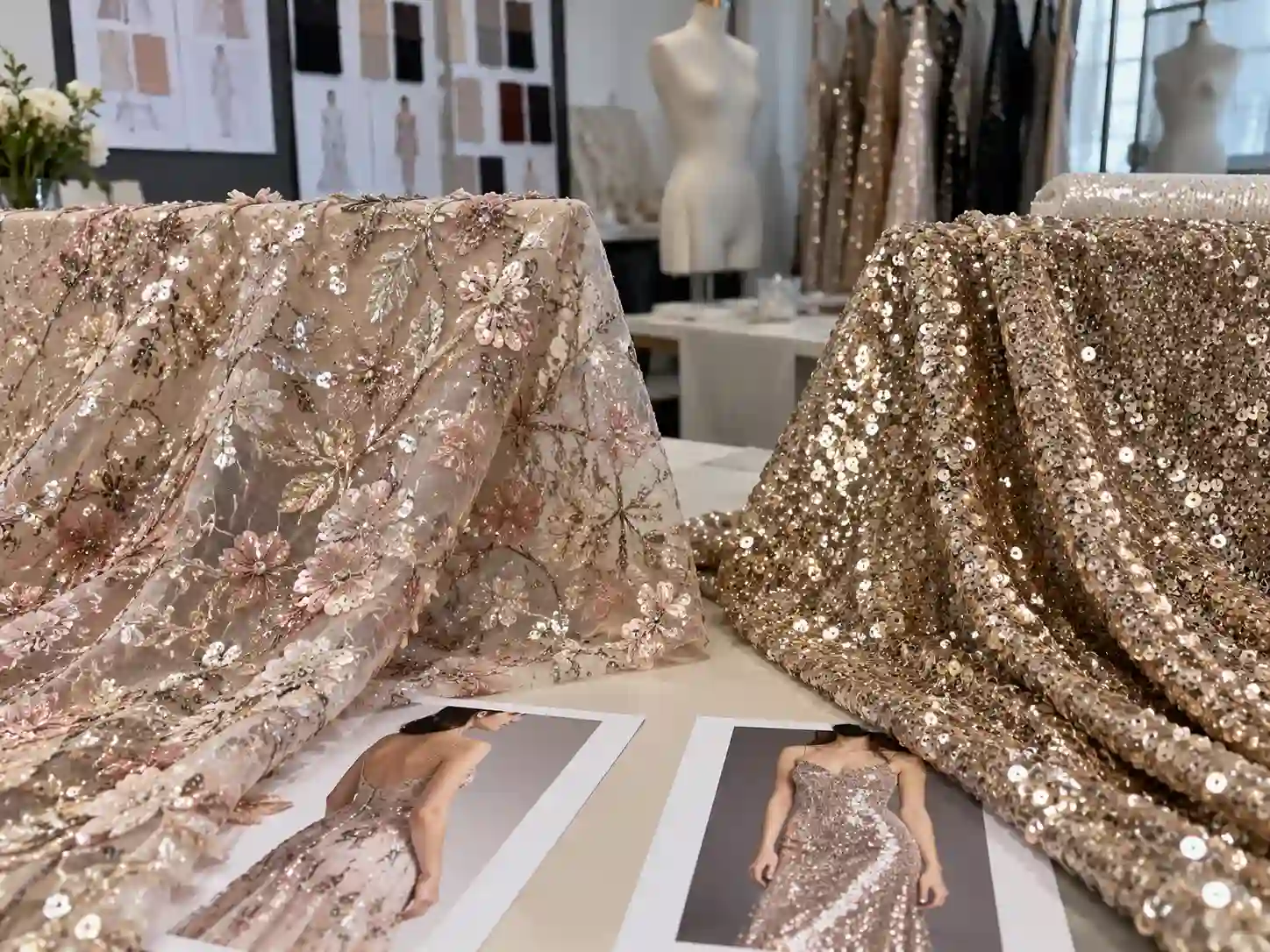
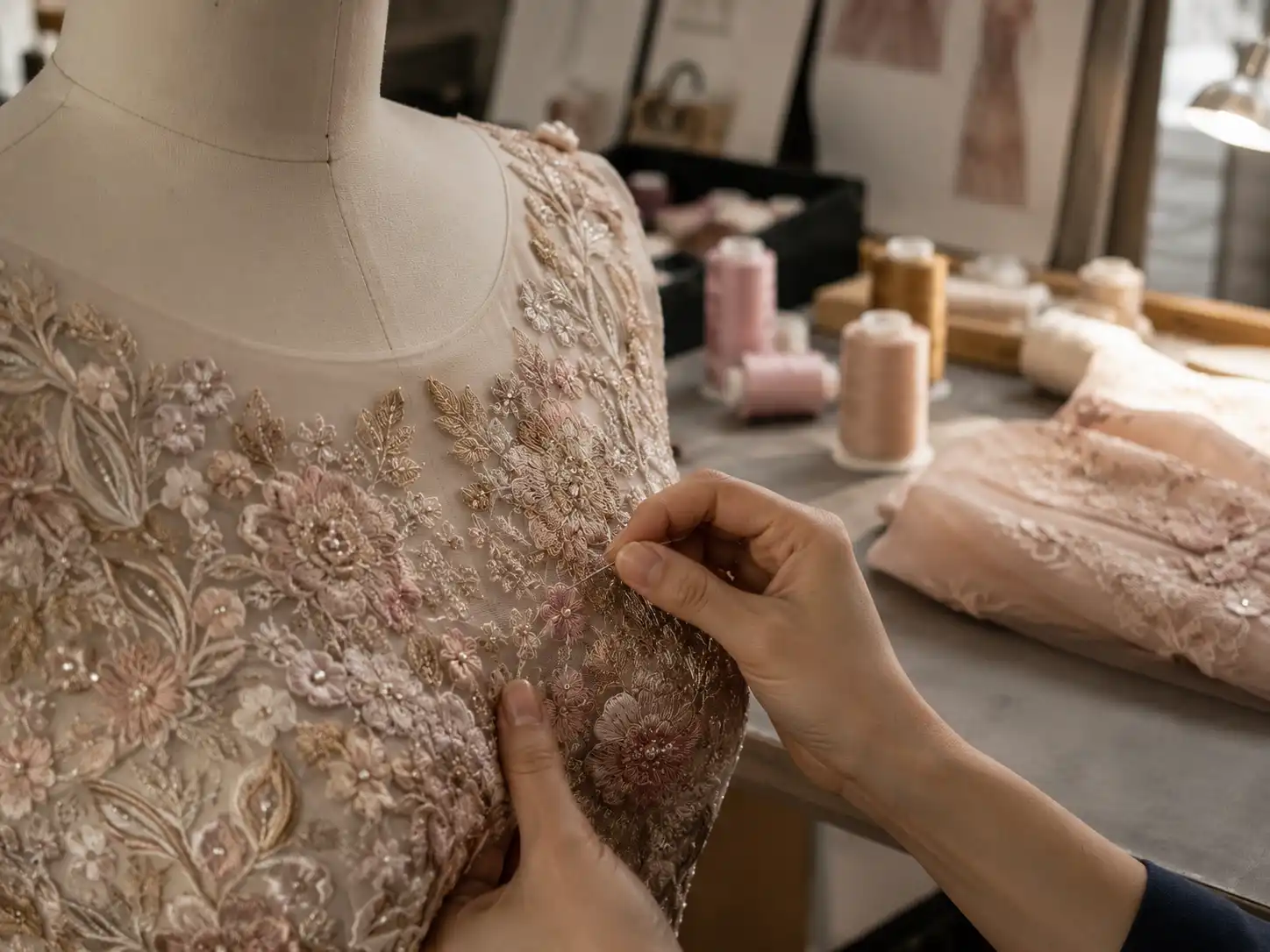
Table of Contents
Here, developing your OEM/ODM private label clothing collection is no longer a challenge—it’s an excellent opportunity to bring your creative vision to life.

