
How to Specify Packaging Requirements in an RFQ for Apparel

Your trusted Women’s Apparel Manufacturer from China

Packaging is often discussed after garment development, yet it begins affecting cost and delivery from the moment a factory prepares a quotation. A line such as “individual polybag and export carton” may look adequate in an early request, but it leaves unanswered questions about bag material, finished dimensions, label placement, folding, barcode data, pack ratios, carton limits, artwork approval, and inspection. Two suppliers can therefore quote the same dress program on very different packaging assumptions, making the lower price less useful than it first appears.
To specify apparel packaging requirements in an RFQ, define every packaging level from garment preparation and individual packing to labels, barcodes, assortment ratios, master cartons, and shipping marks. Give measurable materials, dimensions, artwork references, quantities, tolerances, approval steps, and inspection criteria, then require suppliers to separate packaging costs, minimums, setup fees, and lead times.
A strong packaging RFQ creates one commercial baseline for every quotation and one production reference for development, packing, quality control, and shipping. It also exposes unresolved decisions before they become expensive. Consider a seasonal order with twenty styles and several size ratios: the garments can pass final inspection, yet one incorrect barcode file or one vague carton instruction can still delay warehouse receiving. The sections below show how to turn packaging from an assumed finishing step into a controlled part of the apparel order.
What Packaging Details Belong in an RFQ?
An apparel RFQ should cover garment preparation, folding, individual packaging, private-label items, barcode and SKU data, assortment packs, master cartons, shipment marks, approvals, and inspection. Each item needs a measurable specification, quantity basis, artwork reference, tolerance, responsible party, and clear status showing whether it is included, excluded, provisional, or quoted separately.
Packaging Levels
Packaging is easier to specify when it is divided into levels that follow the garment from the finishing area to the destination warehouse. The first level is garment preparation: thread trimming, pressing, fastening closures, shaping cups or collars, checking removable accessories, and deciding the condition in which the garment enters the bag. These instructions matter because packaging cannot correct poor finishing. A satin dress packed before it has cooled after pressing may set new creases, while a structured neckline can lose shape if hooks, straps, or internal supports are left in the wrong position.
The next levels are individual packing, identification, assortment packing, and shipment protection. Individual packing covers polybags, hangers, tissue, inserts, dust bags, or retail boxes. Identification includes main labels, care labels, hangtags, price tickets, barcode stickers, and warehouse labels. Assortment packing defines the size and color mix within each inner pack or carton. Shipment protection covers master cartons, sealing, carton marks, pallets, straps, corner boards, and routing labels. Dividing the requirement in this way makes missing information visible and allows every cost to be connected to a physical packing step.
Packaging Level | RFQ Fields to Define | Main Risk if Left Vague |
Garment preparation | Pressing, closure position, inserts, protective film, fold readiness | Creasing, distortion, snagging, uneven presentation |
Individual pack | Bag or box material, size, thickness, closure, warning print | Poor fit, tearing, excess material, unplanned cost |
Identification | Labels, hangtags, barcode, SKU, price, placement | Receiving errors, relabeling, unsellable units |
Assortment pack | Units per pack, size ratio, color ratio, mixed-SKU rules | Wrong allocation to stores or fulfillment centers |
Master carton | Dimensions, board, quantity, weight, sealing, marks | Damage, excess freight, handling problems |
Shipment level | Pallet, stretch wrap, routing labels, destination data | Rejected delivery, rework, missed booking |
Reference Files
Written instructions should be supported by controlled reference files. “Fold neatly” can produce several acceptable-looking results, but a folding diagram showing the front-facing direction, sleeve position, fold points, tissue placement, accessory location, and finished pack size gives the factory something that can be repeated and inspected. Label placement diagrams are equally useful because a position described as “near the side seam” may be interpreted differently by the sample room, production line, and packing team.
The RFQ package should normally include a packaging specification sheet, fold diagram, label and hangtag artwork, barcode data file, polybag print artwork, carton-mark template, and any warehouse routing guide. Files should carry a revision number and date. A name such as `Style-D204_Polybag_V03_2026-07-10.ai` is safer than `final-new.ai`, especially when several artwork versions have circulated. Barcode information belongs in a structured spreadsheet that links style, color, size, SKU, and encoded number. Packaging producers may also request vector artwork, outlined fonts, Pantone references, or physical color standards before confirming price and lead time.
Measurable Specifications
A packaging requirement is detailed enough when a supplier can quote it, make a sample, produce it, and inspect it without guessing. “Clear polybag” does not meet that standard. A usable line identifies the polymer or approved alternative, finished width and length, thickness, closure style, ventilation holes, warning language, print color, recycling mark, and sticker position. The same approach applies to woven labels, care labels, hangtags, tissue, cartons, tape, and warehouse labels.
Measurements should use one unit system throughout the RFQ, and each dimension should be identified as flat, finished, internal, or external. Tolerances should reflect function rather than appearance alone. A small variation in tissue position may be harmless, while a barcode number allows no variation. Where specifications remain undecided, the RFQ can request two or three priced options instead of inserting a false level of precision. Asking for 30-micron and 40-micron bag options, for example, creates a real cost comparison while keeping the decision open until the packed sample has been reviewed.
Ownership and Assumptions
Each requirement should state who supplies the information and who approves the result. The brand may own barcode assignments, care-label wording, retail prices, and artwork, while the manufacturer may propose the bag size and carton plan after testing the approved garment. A third-party warehouse may control routing labels and appointment rules. Without named ownership, unresolved items tend to remain hidden until packing is about to begin, when artwork changes or material shortages can affect the shipment date.
The supplier should also record every commercial assumption used in the quotation. Blank fields are risky because one side may read them as included while the other reads them as unnecessary. A disciplined RFQ asks the supplier to mark each line as included, excluded, quoted separately, pending information, or not applicable. It also asks whether substitute materials are allowed and whether the price is firm or provisional. Visible assumptions do not weaken a quotation; they make it more useful by showing exactly what must be confirmed before the order moves into development.

Which Apparel Packaging Specifications Matter Most?
The specifications with the greatest operational impact are folding method, protective materials, polybag construction, label and barcode accuracy, pack ratios, carton limits, and shipping marks. They should be defined by garment structure and destination channel, because a sequin dress, molded corset, satin gown, and jersey style do not tolerate the same folding pressure or protective method.
Folding and Protection
Folding instructions should begin with the garment, not with an available bag size. Lightweight jersey can usually accept a compact fold, while satin may retain pressure marks, mesh may snag, sequins may scratch nearby panels, and molded cups may collapse under stacked cartons. A long dress may need two fold points for shipping efficiency, but the position of those folds should avoid the most visible areas of the bodice and skirt. Delicate trims, belts, removable straps, and spare components also need a defined location so they do not damage the main garment or disappear during unpacking.
The RFQ should show whether sleeves fold behind or across the body, whether zippers and hooks remain open or closed, whether cups receive tissue or shaped inserts, and whether embellishment surfaces are separated. For crease-sensitive garments, the factory should pack one unit using the proposed method and leave it under realistic carton pressure before approval. An immediate visual check can miss marks that develop after storage. The final fold should be judged on protection, presentation, labor time, and carton efficiency rather than on carton volume alone.
Pressing and cooling instructions belong beside the fold diagram. Garments packed while warm can develop new lines and trapped moisture, especially when fabric layers are compressed quickly. Structured dresses may need time to recover after steaming before they enter a bag. When a collection includes several construction types, creating two or three packaging groups is usually more reliable than forcing one method across every style. The groups can share common brand materials while using different protection, bag sizes, or carton quantities where the garment requires it.
Polybags and Individual Packs
The individual bag specification should cover material, thickness, finished size, closure, warning text, ventilation, recycling marks, transparency, print, and label placement. Apparel programs commonly use specifications in the 25- to 50-micron range, but thickness should be selected according to bag size, garment weight, sharp trims, warehouse handling, and destination requirements. A thinner bag may reduce material use, yet it can tear during tagging or carton loading. A heavier bag may add cost without solving a poor fit or weak seal.
Bag dimensions should be based on the finished fold, including lining, padding, embellishment, and accessories. A bag that fits an early sample may become tight after the bodice structure changes or a belt is added. Excessively loose bags also create problems: the garment can shift, stickers can fold around an edge, and unused plastic increases. The specification should clarify whether measurements refer to the open bag, usable area below the seal, or fully finished dimensions. A physical sample remains more reliable than choosing a size only from a packaging catalogue.
Individual packs may include tissue, a card insert, foam, hanger, dust bag, or retail box. Each element should have a clear purpose. Tissue can separate delicate surfaces or help hold a fold, but it should not be added merely because a previous program used it. Card inserts may improve presentation but can increase weight and complicate recycling. When an ecommerce channel requires a ready-to-ship mailer or a retail chain requires hanger packing, the RFQ should separate those channel-specific requirements from the standard factory export pack.
Labels and Barcode Data
Private-label garments may require a main label, size label, care label, hangtag, price ticket, barcode sticker, SKU label, color sticker, security tag, or warehouse label. Listing them as one line called “labels” hides different materials, lead times, data owners, and approval steps. Each item should specify finished size, substrate, fold, print or weave method, colors, attachment method, and exact placement. For hangtags, include paper weight or thickness, surface finish, hole location, string, fastener, and whether price information is printed or applied later.
Barcode control requires more than checking whether black bars are visible. The RFQ should identify the symbology, encoded number, human-readable number, sticker size, orientation, quiet space, adhesive, and position. The master data file should link every style, color, and size to the correct SKU. Printed samples should be scanned and compared against the approved file before mass application. A code that scans successfully but opens the wrong product record is still a serious packing defect.
Care-label text deserves separate approval because fiber content, care instructions, country of origin, importer details, and language may differ by destination. A manufacturer can help create and place the label, but the legal wording should come from the brand or its compliance adviser. The approved artwork should match the declared product composition and shipping documents. When one garment contains shell, lining, mesh, padding, or trim components, the label file should clearly identify which materials must be listed and in what order.
Cartons and Pack Ratios
Carton instructions connect factory packing with warehouse receiving. Solid cartons contain one style, color, and size, while ratio cartons contain a defined assortment. A ratio such as XS 2, S 4, M 5, L 3, and XL 2 is useful only when the RFQ also explains what happens to balance units that do not complete a full ratio. The brand may require a separate balance carton, allow a controlled variation, or request solid packing for the remaining quantity.
Carton limits should cover external dimensions, target and maximum gross weight, board or performance requirement, units per carton, sealing, printed marks, and warehouse labels. Dimensions should be finalized after the packed garment and size assortment are available. Larger sizes and structured garments can change the result significantly. Carton marks should be treated as controlled artwork and should show the required purchase order, style, color, size, quantity, carton sequence, destination, and any handling symbol in the exact format expected by the receiving location.
Specification | Example RFQ Entry | Point to Confirm |
Garment fold | Sleeves behind; skirt folded once; tissue at embellished panel | Finished packed size and visible crease risk |
Polybag | 320 x 420 mm; 35 microns; self-seal; two vent holes | Usable size below flap and destination warnings |
Barcode label | 40 x 30 mm; EAN-13; lower-right position | SKU mapping, quiet space, scan result |
Pack ratio | XS 2 / S 4 / M 5 / L 3 / XL 2 | Balance-unit rule and color separation |
Carton limit | Target 16 units; maximum 18 kg gross | External dimensions after final folding trial |
Carton marks | PO, style, color, size, quantity, carton number | Printed sides, layout, warehouse data source |

How Do Packaging Choices Affect the Quote?
Packaging changes the quotation through materials, printing setup, packing labor, supplier minimums, wastage, storage, development time, carton volume, and freight. Custom labels, printed bags, boxes, and inserts may have minimum quantities and lead times that differ from garment production. Itemized pricing reveals those differences and prevents basic export packing from being compared with retail-ready delivery as though they were equal.
Separate Cost Lines
A garment unit price should identify the packaging included in its commercial basis. One supplier may include a plain bag, one size sticker, and a standard carton. Another may include woven labels, hangtags, barcode application, tissue, a printed bag, assortment packing, and warehouse labels. If both quotes show only one garment price, procurement cannot see whether the difference comes from sewing, material, finishing, or packing. Separate cost lines make later changes easier because a new hangtag or carton method can be priced without reopening the entire garment calculation.
The RFQ should normally request separate prices for woven and printed labels, hangtags, strings, barcode stickers, polybags, tissue, inserts, retail boxes, master cartons, packing labor, proofs, testing, plates, dies, and tooling. Each charge should be identified as a unit cost, one-time setup fee, or order-level amount. Setup charges should not be hidden in the first-order unit price if they will not repeat. At the same time, the supplier should state whether storage, handling, and future release of unused packaging materials carry additional fees.
Wastage deserves a visible line in the commercial discussion. Printed labels, stickers, and bags are rarely purchased in exactly the garment quantity because production losses and supplier pack quantities must be covered. The RFQ should ask how much overage is assumed, who owns unused stock, how it will be counted, and what happens when artwork changes. Excess packaging may support a repeat order, but it can also become unusable inventory if the brand changes a legal line, barcode format, logo, or retail price.
MOQ and Price Breaks
Garment MOQ and packaging MOQ are separate commercial questions. A clothing order may meet the factory’s production minimum while a printed bag, specialty box, woven label, or custom insert requires a larger run from the packaging producer. The RFQ should request the minimum, price break, order multiple, and expected excess quantity for every custom component. Unit price alone can be misleading when a cheaper item requires several times the quantity actually needed.
Minimums are commonly influenced by print method, color count, custom-dyed materials, special paper, recycled content, foil, embossing, lamination, custom dimensions, and tooling. A useful way to control fragmentation is to keep brand-wide components universal and place variable information on smaller SKU labels. One standard printed polybag, for example, may serve several styles, colors, and sizes while a separate sticker carries the unique barcode. The same approach can work with hangtags, tissue, and master cartons when warehouse rules allow it.
Price breaks should be evaluated against forecast use rather than against the lowest quoted unit cost. Ordering 10,000 labels for a 2,000-piece program may lower the label price but increase cash use and obsolescence risk. A better quotation shows the total spend at the required quantity, the next price break, and the storage plan for any remainder. For custom womenswear programs, basic private-label support may align with the garment order, while printed polybags, special boxes, or other custom materials can carry independent supplier minimums.
Packaging Item | Main Cost Drivers | Typical MOQ Risk | Schedule Sensitivity |
Woven label | Size, yarn colors, fold, weaving density | Medium | Usually manageable after artwork approval |
Printed care label | Material, sides, color count, variable content | Low to medium | Data approval is the main control point |
Hangtag | Paper, thickness, finish, foil, string, fastener | Medium | Special finishes can extend sampling |
Printed polybag | Size, thickness, print area, color count | Medium to high | Longer than standard stock bags |
Retail box | Structure, board, print, lamination, insert | High | Often among the longest packaging items |
Barcode sticker | Size, adhesive, data variation, print quality | Low | Late data can delay application |
Master carton | Dimensions, board strength, print, quantity | Low to medium | Final plan depends on approved fold |
Custom insert | Material, shape, die or mold | High | Development and tooling can add time |
Lead-Time Impact
Packaging can become the critical path even when garment production is running on schedule. Artwork must be approved before many printed components can enter production, and a delay in barcodes, care-label wording, hangtag files, or carton marks can leave completed garments waiting in the packing area. The RFQ should therefore request separate timelines for artwork review, physical sample approval, bulk packaging production, delivery to the garment factory, and final packing.
The latest acceptable artwork-release date should be linked to the planned ex-factory date. Complex packaging should begin development alongside the garment rather than after the pre-production sample. The exact bag size or box depth may depend on the approved garment, but material selection, structural review, supplier booking, and artwork preparation can start earlier. Repeat orders should also confirm whether stored materials remain current, whether quantities are sufficient, and whether any legal or brand information has changed since the previous production run.
Substitution rules belong in the RFQ before a delay occurs. A brand may accept a plain bag for a partial urgent shipment but reject any change to a retail box or barcode label. The factory should know which elements are mandatory, which can use an approved alternative, and who can authorize the decision. Without those rules, a last-minute substitution may protect the shipping date while creating a warehouse, presentation, or compliance problem at destination.
Freight and Volume
Packaging affects landed cost through actual weight, dimensional weight, carton count, handling, and container utilization. Airfreight often makes volume particularly important, so reducing unnecessary carton space can produce a meaningful saving across a large shipment. Sea freight also rewards efficient cartons, but stacking strength and protection during a longer transit become more important. The smallest carton is not automatically the best carton if it creates permanent creasing, crushed cups, broken embellishment, or unsafe handling weight.
The supplier should provide proposed external carton dimensions, units per carton, estimated net and gross weight, total carton count, and total cubic volume. For programs with delicate and simple styles, separate carton plans may be more economical than one universal size. A structured dress may require 12 or 16 units, while a lightweight jersey style may pack safely at 24 units. Comparing two scenarios helps the brand see the trade-off between protection, packing labor, carton count, and freight.
The carton calculation should be updated when the final size ratio changes. Larger sizes usually occupy more volume, and a carton developed around the smallest sample can underestimate both height and weight. Accessories, spare buttons, tissue, inserts, and retail boxes also add space. Freight estimates are most reliable after the final packed sample and assortment are confirmed, but the RFQ should still require an initial estimate so that an inefficient packaging concept is identified before bulk materials are ordered.
How Are Packaging Requirements Approved and Inspected?
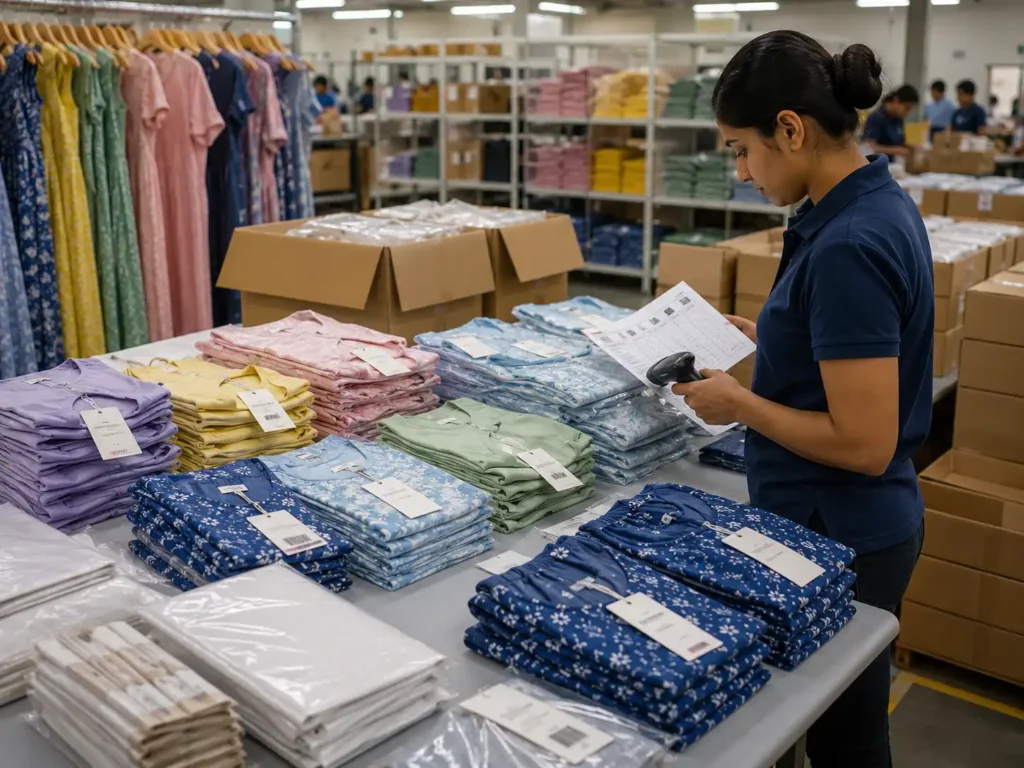
Packaging should be approved through digital artwork proofs, physical component samples, a complete packed garment, and a confirmed carton. Final inspection then checks label content, barcode accuracy, folding, bag condition, pack ratios, carton marks, dimensions, weight, and quantity against the approved revision. Data errors require tighter control than minor presentation differences because they can disrupt inventory and warehouse receiving.
Approval Sequence
A reliable approval sequence moves from inexpensive corrections to complete physical confirmation. Digital proofs come first because they can expose spelling errors, incorrect SKU numbers, missing warnings, poor layout, and outdated artwork before materials are produced. The approver should review not only appearance but also dimensions, color references, data source, revision number, and intended placement. A proof marked only with “approved” is weaker than one connected to a controlled specification and a named approver.
Physical component samples follow. Woven labels should be checked for finished size, fold, edge, weave clarity, color, hand feel, and sewing suitability. Hangtags need review of board, thickness, print, finish, hole, string, and fastener. Polybags need review of material, thickness, dimensions, closure, print, odor, transparency, and strength. Barcode stickers should be printed on the actual stock and scanned. These checks reveal issues that a digital proof cannot show, including stiffness, delamination, weak adhesive, color shift, or an unsuitable fold.
The strongest packaging approval is a complete packed garment. It confirms the final fold, component placement, protection, bag fit, presentation, packed dimensions, and barcode position as one system. Delicate garments should remain packed under realistic pressure before review. A complete carton should then be assembled to confirm quantity, size ratio, internal arrangement, marks, sealing, external dimensions, weight, and stacking behavior. Photographs, sample reference, revision, date, and approval comments should be recorded so the packing team and inspectors work from the same result.
Packaging QC
Packaging inspection must verify both product presentation and data accuracy. A dress can be beautifully folded and still be commercially unusable if the size sticker or barcode belongs to another SKU. Inspection should cover main, size, and care labels; hangtags; barcode and SKU mapping; garment fold; accessory placement; bag material and closure; protective components; units per carton; ratio accuracy; carton marks; carton dimensions; gross weight; and total quantity.
The severity of a defect should reflect its operational impact. A slightly uneven tissue fold may be minor, while a wrong barcode, country-of-origin statement, or carton destination can affect an entire shipment. The inspection plan should therefore apply tighter controls to data and traceability. Some programs may sample visual packing quality while requiring full or near-full verification of SKU labels, depending on retailer rules, automation, and risk. The RFQ should state which records or scan reports are expected before shipment.
Random carton opening is more reliable than checking only packer records or the first completed carton. Cartons should be selected across packing dates, colors, sizes, lines, and locations within the shipment. Inspectors should compare outside marks with the garments inside and reconcile the selected cartons against the packing list. When ratios are complex, a carton map or packing worksheet helps the team identify repeated errors before all cartons are sealed and moved to the shipping area.
Barcode Verification
Barcode control begins with the approved master file. Each encoded number should be linked to the correct style, color, size, SKU, and destination. Data should be imported or copied through a controlled process rather than retyped from emails. Before bulk printing, a proof should be checked visually and electronically. After printing, sample stickers should be scanned and the result compared with the master file, not merely accepted because a scanning device produces a number.
Placement also affects barcode performance. Labels should remain flat, visible, and clear of seals, folds, bag wrinkles, or reflective print areas that interfere with scanning. When the barcode sits on a polybag, the bag material, transparency, and garment pattern behind it can affect readability. Warehouse labels on cartons should be positioned where they remain visible after stacking or pallet wrapping. The RFQ should show exact placement and specify whether one, two, or more carton sides require the label.
Bulk verification frequency should match the consequences of an error. Programs with many visually similar colors and sizes need more control than a single-SKU shipment. Scanning can be integrated into packing, applied by sample, or supported by reconciliation reports. Whichever method is selected, the responsibility should be clear. The final check should confirm that the garment barcode, polybag SKU label, carton label, and packing list all describe the same product and quantity.
Revision Control
Packaging changes are normal during apparel development. A longer skirt may require a larger bag, added padding may reduce carton capacity, a retailer may issue a new routing label, or a legal review may change care-label wording. The risk comes from uncontrolled changes, not from the change itself. Every revision should update the main specification, identify what changed, show the approval date, and withdraw the old file from production use.
The change record should include cost and lead-time impact, especially when materials have already been ordered. The brand and supplier need a decision for obsolete stock: use it with approval, rework it, store it, ship it separately, or dispose of it. These decisions affect cost and should not remain inside a chat thread. A numbered revision history gives the sample room, packaging producer, packing team, inspector, and logistics coordinator one shared reference.
Tolerances should be connected to function. A label may allow a small positional variation, while barcode data and legally required text allow none. Carton dimensions can vary slightly through normal manufacture, but a warehouse maximum weight may be absolute. Substitutions should also require written approval. Two materials that look similar may differ in seal strength, print durability, adhesive performance, recyclability, or storage behavior, so “equivalent” should never be decided informally during bulk packing.
What Should the Final RFQ Checklist Confirm?
The final RFQ should confirm that every supplier is quoting the same packaging scope and that all assumptions, exclusions, unresolved decisions, costs, minimums, lead times, approval gates, inspection rules, delivery terms, and destination requirements are visible. It should prevent production from starting until barcode data, artwork, folding, pack ratios, and carton instructions have named owners and controlled versions.

Commercial Basis
Before comparing prices, confirm that every quotation uses the same garment quantity, color split, size range, packaging level, units per carton, inspection scope, delivery term, and destination. A quote based on basic export packing cannot be compared directly with one that includes retail labels, barcode application, ratio packing, and warehouse-ready cartons. The total order scenario matters more than one isolated garment price.
The quotation should identify what is included, excluded, optional, or provisional. Setup, tooling, proof, testing, and storage charges should be visible, along with the price-validity period and currency. Where specifications remain open, each supplier should state the assumption used. A lower price may simply reflect a thinner bag, fewer labels, a larger carton, or a missing warehouse step. Standard response fields make those differences easier to find and reduce the time spent interpreting unrelated quotation formats.
Open Decisions
The final review should list unresolved items with an owner and deadline. Common examples include care-label wording, barcode assignment, bag thickness, hangtag finish, fold approval, size ratio, carton dimensions, destination marks, routing labels, and the treatment of balance units. “Pending” is not enough. The RFQ should name the person or team responsible and the latest release date that protects material ordering and shipment timing.
Some decisions legitimately depend on the approved garment. Carton dimensions, for example, may remain provisional until the final fold and full size assortment are tested. The quotation can still include an estimated carton cost, but the basis should be labeled. Open decisions should also be connected to approval gates. Bulk packaging materials should not be released before artwork approval, and bulk packing should not begin before the complete packed sample and carton method have been confirmed.
Final RFQ Checklist
Checkpoint | What the RFQ Must Confirm | Evidence or File |
Packaging hierarchy | Garment, individual pack, assortment, carton, shipment levels | Packaging specification index |
Artwork | File name, revision, format, color, approval owner | Controlled artwork folder |
Polybags | Material, size, thickness, closure, warning, ventilation | Bag specification and sample |
Labels and hangtags | Type, material, dimensions, fold, placement, attachment | Artwork and placement diagram |
Barcode and SKU | Symbology, encoded number, mapping, scan result, position | Master data file and scan proof |
Folding and protection | Fold points, tissue, inserts, accessories, facing direction | Fold diagram and packed sample |
Pack ratio | Size and color quantities, mixed-SKU rule, balance units | Packing worksheet |
Cartons | Dimensions, board, units, sealing, gross-weight limit | Approved carton plan |
Carton marks | PO, style, color, size, quantity, destination, sequence | Carton-mark artwork |
Commercial terms | Unit cost, setup, tooling, labor, testing, excess stock | Itemized quotation |
MOQ and lead time | Minimum for each item, proof time, bulk time, release date | Supplier confirmation |
Inspection | Checks, sampling level, defect severity, reports required | Packing inspection standard |
Revision control | Version, approval, cost impact, obsolete-material decision | Revision history |
Logistics | Incoterm, destination, pallet, warehouse and routing rules | Shipping instruction |
Preventing Late Errors
Most late packaging failures begin with incomplete language rather than poor execution. Phrases such as “normal packing,” “retail standard,” or “same as last time” should be removed unless they point to an approved reference. A shared history can help an established supplier relationship, but it should not replace a controlled specification. Repeat orders also need a packaging review because artwork, legal text, prices, barcodes, destinations, and warehouse requirements can change even when the garment style remains the same.
Another common failure is approving every component separately without testing the complete packed garment. A polybag can meet its dimensions but still be too tight after a lining, belt, or cup insert is added. A carton can meet its strength specification but still create unacceptable pressure marks. The complete pack should be reviewed as a system, then checked again when the production size ratio and carton quantity are known.
A well-built RFQ gives the manufacturer enough information to source packaging, confirm supplier minimums, plan approvals, prepare packing instructions, and quote freight more accurately. It also gives the brand a clear basis for comparing proposals and approving changes. For apparel teams managing several styles, colors, sizes, and destinations, this control is not administrative excess. It is one of the simplest ways to protect launch timing, warehouse accuracy, and the condition in which the garment reaches its sales channel.
Prepare Your Packaging RFQ
Jinfeng Apparel supports custom womenswear programs from product development and sampling through bulk production, quality control, private-label packing, and export coordination. Packaging support can include woven labels, size labels, care labels, hangtags, barcode stickers, SKU labels, polybags, stickers, cartons, carton marks, and warehouse labels. Production MOQ starts from 200 pieces per style and color, while custom packaging materials may follow separate minimums set by packaging suppliers.
Send the tech pack, style list, order quantity, size and color breakdown, target market, current packaging specification, and any warehouse routing guide available. The team can review missing information, identify packaging items that need separate quotations, and confirm which details must be approved before production. Clear inputs at RFQ stage lead to cleaner costing, fewer revisions, and a packing standard that can be repeated across bulk orders and future replenishment.
Share This Article :

Jerry Lee
Categories

Latest blogs


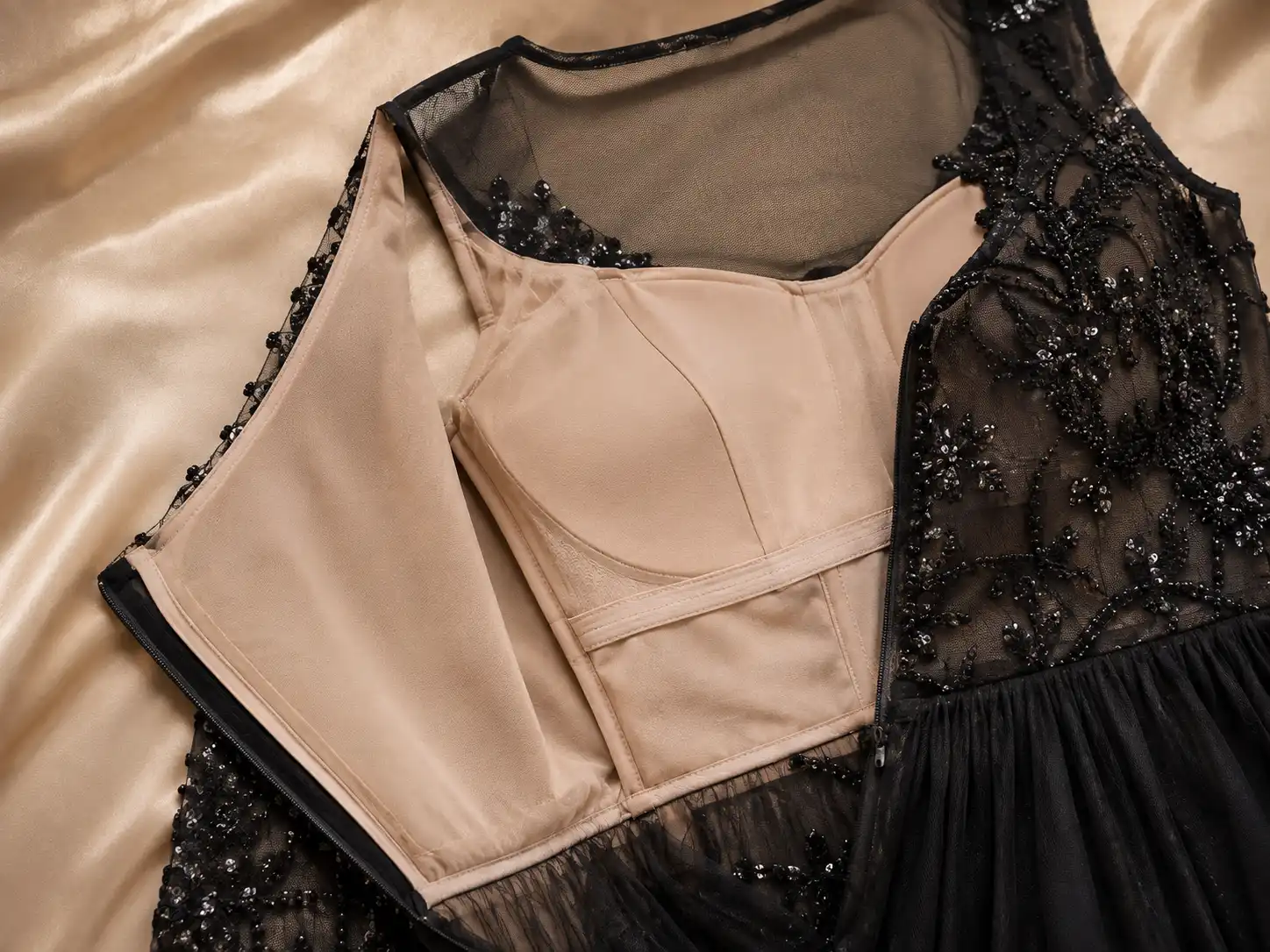
Table of Contents
Here, developing your OEM/ODM private label clothing collection is no longer a challenge—it’s an excellent opportunity to bring your creative vision to life.

